The right preparation can turn an interview into an opportunity to showcase your expertise. This guide to Leukotriene Modifiers interview questions is your ultimate resource, providing key insights and tips to help you ace your responses and stand out as a top candidate.
Questions Asked in Leukotriene Modifiers Interview
Q 1. What are leukotrienes and their role in inflammation?
Leukotrienes are lipid mediators derived from arachidonic acid, playing a crucial role in inflammation and immune responses. Specifically, they’re potent bronchoconstrictors and increase mucus secretion, vascular permeability, and inflammatory cell recruitment. Think of them as key players in the body’s inflammatory orchestra, contributing to the swelling, redness, and other hallmarks of allergic reactions and asthma.
During an allergic reaction, for example, the immune system releases leukotrienes. These molecules act on specific receptors in the airways, causing them to constrict, making it difficult to breathe. Simultaneously, they trigger increased mucus production, further obstructing the airways. This process contributes significantly to the symptoms experienced in conditions like asthma and allergic rhinitis.
Q 2. Explain the mechanism of action of leukotriene modifiers.
Leukotriene modifiers work by blocking the effects of leukotrienes on their target receptors. They don’t directly reduce leukotriene production, but rather prevent these inflammatory molecules from binding to and activating their receptors on cells in the airways and other tissues. This prevents the cascade of inflammatory responses that lead to bronchoconstriction, mucus secretion, and inflammation.
Imagine leukotrienes as keys trying to unlock doors (receptors) in your body’s cells. Leukotriene modifiers act as blockers, preventing these keys from entering and triggering an inflammatory response. By preventing this interaction, the inflammatory cascade is interrupted, alleviating symptoms.
Q 3. What are the different classes of leukotriene modifiers?
The main classes of leukotriene modifiers are leukotriene receptor antagonists (LTRAs) and 5-lipoxygenase inhibitors.
- Leukotriene Receptor Antagonists (LTRAs): These are the most commonly used class. They selectively block the cysteinyl leukotriene receptors (CysLT1 and CysLT2), which are responsible for many of the inflammatory effects of leukotrienes. Examples include montelukast and zafirlukast.
- 5-Lipoxygenase Inhibitors: These drugs inhibit the enzyme 5-lipoxygenase, which is crucial in the biosynthesis of leukotrienes. Zileuton is an example of this class. It acts upstream, directly reducing leukotriene production, unlike LTRAs which only block receptor action.
Q 4. Compare and contrast the efficacy and side effects of montelukast and zafirlukast.
Both montelukast and zafirlukast are LTRAs, but they differ slightly in their efficacy and side effect profiles. Generally, both drugs show similar efficacy in managing asthma and allergic rhinitis symptoms. However, montelukast has a longer half-life, allowing for once-daily dosing, which is often preferred for patient convenience.
In terms of side effects, both are generally well-tolerated, but montelukast has been associated with a slightly higher risk of neuropsychiatric effects like depression, anxiety, and insomnia in some individuals. Zafirlukast, on the other hand, can cause more gastrointestinal side effects such as abdominal pain and diarrhea. The choice between the two often depends on patient-specific factors, including co-morbidities and prior drug history.
Q 5. Describe the clinical indications for leukotriene modifiers.
Leukotriene modifiers are primarily indicated for the prophylaxis and chronic treatment of asthma, both in adults and children. They are also effective in managing allergic rhinitis symptoms. Specifically, they are useful in preventing exercise-induced bronchospasm and for those who don’t respond well to inhaled corticosteroids alone or in combination with other medications. They are frequently used as add-on therapy to improve asthma control.
For instance, a patient with persistent asthma symptoms despite using an inhaled corticosteroid might benefit from adding a leukotriene modifier to enhance their control and reduce the frequency of exacerbations.
Q 6. What are the contraindications for using leukotriene modifiers?
Contraindications for leukotriene modifiers are generally few, but some caution is warranted. Known hypersensitivity or allergy to the specific drug is a major contraindication. For example, patients with a history of allergic reactions to montelukast should not use this drug. Additionally, rare instances of serious liver injury have been reported with zileuton, requiring careful monitoring of liver function tests, especially during the initial phase of treatment.
It’s crucial to always obtain a thorough patient history before prescribing any leukotriene modifier to ensure there are no potential contraindications based on individual factors.
Q 7. How do leukotriene modifiers interact with other medications?
Leukotriene modifiers generally have minimal clinically significant interactions with other commonly used medications. However, there are some notable exceptions. For instance, concurrent use of zileuton with theophylline can lead to increased theophylline levels, potentially causing toxicity. Therefore, monitoring theophylline levels is important if a patient is taking both medications.
Although interactions are rare, it’s always best practice to review a patient’s complete medication profile before initiating leukotriene modifier therapy to minimize potential drug-drug interactions and ensure patient safety.
Q 8. What are the common side effects associated with leukotriene modifiers?
Leukotriene modifiers, while generally well-tolerated, can cause several side effects. These are usually mild and don’t require treatment discontinuation, but it’s crucial to be aware of them. Common side effects include headache, abdominal pain, diarrhea, and nausea. Less frequently, patients may experience increased risk of infections, particularly upper respiratory infections. In rare cases, more serious side effects such as allergic reactions (rash, itching, swelling) or psychiatric effects (like mood changes, insomnia) have been reported. It’s important to note that the frequency and severity of these side effects can vary significantly between individuals and the specific leukotriene modifier used.
Q 9. How do you monitor patients on leukotriene modifier therapy?
Monitoring patients on leukotriene modifier therapy involves a multifaceted approach. Regular follow-up appointments are crucial to assess the efficacy of the medication and identify any potential side effects. This includes reviewing the patient’s asthma symptoms – frequency of wheezing, coughing, shortness of breath, need for rescue inhalers – and overall well-being. We also inquire about any new or worsening symptoms, including those listed as potential side effects. Laboratory tests, such as complete blood counts (CBC), might be indicated if there are concerns about infection or other hematologic effects. For children, growth monitoring is also important, as some studies have suggested a possible, although not conclusive, slight impact on growth in a small subset of patients. The monitoring strategy should be tailored to the individual patient’s needs and risk factors.
Q 10. What are the potential drug interactions of leukotriene modifiers?
Leukotriene modifiers can interact with other medications, although these are relatively infrequent. One notable interaction is with theophylline, a bronchodilator. Concomitant use can lead to increased theophylline levels, potentially increasing the risk of theophylline-related side effects. Also, some studies suggest a possible interaction with certain anticoagulants, possibly increasing bleeding risk, although further research is warranted to establish a definitive causal relationship. Always carefully review the patient’s medication list to identify potential drug interactions and adjust dosages or treatment plans accordingly. This is especially crucial for patients taking multiple medications.
Q 11. Discuss the role of leukotriene modifiers in the treatment of asthma.
Leukotriene modifiers play a significant role in asthma management, particularly in preventing and controlling inflammation. They are effective in reducing airway inflammation, bronchospasm, and mucus production. They are often used as add-on therapy to inhaled corticosteroids for patients whose asthma isn’t adequately controlled with corticosteroids alone, or as a monotherapy for mild-to-moderate asthma. Leukotriene modifiers are also particularly helpful for patients with aspirin-exacerbated respiratory disease (AERD) where they can reduce the severity of reactions. While not a first-line treatment for all asthma patients, they can be a valuable addition to a comprehensive asthma management plan, improving symptom control and reducing exacerbations.
Q 12. How do leukotriene modifiers compare to other asthma medications (e.g., inhaled corticosteroids)?
Leukotriene modifiers and inhaled corticosteroids (ICS) are both crucial in asthma management, but they target different aspects of the disease. ICS are primarily anti-inflammatory agents, directly reducing airway inflammation. Leukotriene modifiers also reduce inflammation, but they work by blocking the effects of leukotrienes, inflammatory mediators involved in bronchoconstriction and mucus production. ICS are generally preferred as first-line therapy for persistent asthma due to their potent anti-inflammatory effects and overall efficacy. Leukotriene modifiers often serve as an add-on therapy when ICS alone is insufficient, or as an alternative for patients who cannot tolerate ICS. In essence, they complement each other, offering different yet complementary mechanisms of action in the battle against asthma.
Think of it like this: ICS are like firefighters directly extinguishing the flames of inflammation, while leukotriene modifiers are like cutting off the fuel supply that keeps the fire going.
Q 13. What are the advantages and disadvantages of using leukotriene modifiers in pediatric patients?
Leukotriene modifiers are generally well-tolerated in pediatric patients, offering a convenient once-daily oral administration. This is advantageous as it simplifies medication adherence, a significant challenge in managing pediatric asthma. However, concerns exist regarding potential growth effects, although studies have been inconclusive on this matter, and more research is needed. Another consideration is the potential for liver enzyme elevation in some children. Therefore, close monitoring of liver function, including regular laboratory checks during the initial phase of treatment, may be necessary. The decision to use leukotriene modifiers in children should be carefully weighed against the benefits and risks, considering the child’s age, asthma severity, and potential for drug interactions with other medications.
Q 14. How do you manage adverse events associated with leukotriene modifier therapy?
Managing adverse events associated with leukotriene modifier therapy depends on the nature and severity of the event. Mild side effects, like headache or abdominal pain, often resolve spontaneously or with supportive care (e.g., recommending over-the-counter pain relievers). For more significant adverse effects such as allergic reactions (rash, swelling), immediate discontinuation of the medication is often necessary, along with appropriate symptomatic treatment. In case of severe reactions or concerning symptoms, immediate medical attention should be sought. If a patient experiences persistent or severe side effects, the clinician may need to consider alternative therapies or adjust the dosage. A detailed history and physical examination are paramount in guiding the management strategy. The approach should be individualized, prioritizing patient safety and well-being.
Q 15. Discuss the use of leukotriene modifiers in the treatment of allergic rhinitis.
Leukotriene modifiers are valuable in treating allergic rhinitis, a common condition causing nasal congestion, sneezing, and itching. They work by blocking the effects of leukotrienes, inflammatory chemicals involved in the allergic response. Think of leukotrienes as messengers that trigger the symptoms of allergies. Leukotriene modifiers silence these messengers, thus reducing the inflammation and symptoms.
In practice, they are often used as an alternative or add-on therapy to other treatments like antihistamines or nasal corticosteroids, especially in patients who don’t respond sufficiently to those alone or experience significant side effects from them. For instance, a patient with persistent nasal congestion despite using an antihistamine might find significant relief by adding a leukotriene modifier to their treatment plan. This combination approach often leads to better symptom control and improved quality of life.
Career Expert Tips:
- Ace those interviews! Prepare effectively by reviewing the Top 50 Most Common Interview Questions on ResumeGemini.
- Navigate your job search with confidence! Explore a wide range of Career Tips on ResumeGemini. Learn about common challenges and recommendations to overcome them.
- Craft the perfect resume! Master the Art of Resume Writing with ResumeGemini’s guide. Showcase your unique qualifications and achievements effectively.
- Don’t miss out on holiday savings! Build your dream resume with ResumeGemini’s ATS optimized templates.
Q 16. Explain the pharmacodynamics of leukotriene modifiers.
The pharmacodynamics of leukotriene modifiers revolve around their antagonism of leukotriene receptors. Specifically, they competitively inhibit the binding of leukotrienes (like leukotriene D4, LTD4, a potent bronchoconstrictor and inflammatory mediator) to their receptors, namely CysLT1 and CysLT2 receptors, located on various cells involved in inflammation such as mast cells, eosinophils, and airway smooth muscle cells. This inhibition prevents the downstream effects of leukotrienes, leading to reduced bronchoconstriction (narrowing of the airways), vascular permeability (leakiness of blood vessels), and mucus secretion. The result is a lessening of inflammation and allergic symptoms.
Different leukotriene modifiers may have slightly varying affinities for these receptors, contributing to nuances in their efficacy and potential side-effect profiles. Understanding these receptor interactions is key to predicting the therapeutic response and potential drug interactions.
Q 17. Describe the pharmacokinetics of leukotriene modifiers.
The pharmacokinetics of leukotriene modifiers vary depending on the specific drug, but generally involve oral absorption, hepatic metabolism (breakdown in the liver), and excretion primarily through feces and urine. For example, montelukast, a commonly used leukotriene modifier, exhibits high bioavailability (the extent to which a drug is absorbed and becomes available at the site of action) after oral administration. It’s largely metabolized by the liver, with a relatively long elimination half-life (the time it takes for half the drug to be eliminated from the body), usually around 2-5 hours. This relatively long half-life allows for once-daily dosing, improving patient compliance.
This pharmacokinetic profile is important for determining the appropriate dosage regimen and considering potential interactions with other medications metabolized by the liver. Patients with liver impairment might require dosage adjustments to prevent drug accumulation and potential side effects.
Q 18. What are the long-term effects of leukotriene modifier therapy?
Long-term effects of leukotriene modifier therapy are generally considered to be well-tolerated. However, while rare, some potential long-term issues need consideration. There’s limited data on exceptionally long-term use (many years). While some studies suggest a possible link to increased risk of depression, anxiety, and behavioral changes in children, these associations remain under investigation and aren’t consistently observed across all studies.
Regular monitoring for any concerning side effects, especially psychiatric symptoms in children and adolescents, is crucial. It’s essential to weigh the benefits of long-term control of allergic symptoms against any potential long-term risks in individual patient cases.
Q 19. How do you counsel patients on the proper use of leukotriene modifiers?
Patient counseling is crucial for successful leukotriene modifier therapy. I explain to patients that it’s a preventative medication, meaning it works best when taken consistently, even when symptoms are absent. I emphasize that it’s not a rescue medication for immediate relief like an albuterol inhaler for asthma. The medication should be taken as prescribed, even if symptoms improve.
I also discuss potential side effects, which are generally mild and include headache, nausea, and diarrhea. Importantly, I address their concerns and answer their questions, ensuring they understand how the medication works and how to manage any potential side effects. I always advise them to contact me or their doctor if they experience any significant or concerning side effects.
Q 20. What are the current guidelines for the use of leukotriene modifiers?
Current guidelines often recommend leukotriene modifiers as a second-line treatment for allergic rhinitis, particularly in patients who don’t respond adequately to first-line therapies like intranasal corticosteroids or experience significant side effects from them. These guidelines often consider the patient’s age, severity of symptoms, and presence of co-morbidities (like asthma) when determining the appropriateness of leukotriene modifier therapy.
They also emphasize the importance of individualized treatment plans and close monitoring for both efficacy and safety. The specific guidelines vary slightly depending on the organization or country, but the core principles of appropriate use and patient monitoring remain consistent across different guidelines.
Q 21. What are some emerging research areas related to leukotriene modifiers?
Emerging research areas related to leukotriene modifiers are focused on several key areas:
- Improved drug delivery systems: Research is exploring novel drug delivery systems to enhance efficacy and reduce side effects.
- Combination therapies: Studies are evaluating the effectiveness of combining leukotriene modifiers with other medications to optimize treatment outcomes.
- Personalized medicine: Research is investigating genetic factors that influence the response to leukotriene modifiers, which could lead to more personalized treatment strategies.
- Understanding long-term effects: Ongoing studies are aimed at comprehensively understanding the long-term effects of leukotriene modifier therapy to address concerns about potential risks.
These advancements aim to improve the effectiveness and safety of leukotriene modifiers, making them an even more valuable tool in managing allergic diseases.
Q 22. How do you differentiate between leukotriene receptor antagonists and leukotriene biosynthesis inhibitors?
Leukotriene modifiers are a class of drugs used to treat asthma and allergies by targeting leukotrienes, inflammatory molecules. They are broadly classified into two main categories: leukotriene receptor antagonists (LTRAs) and leukotriene biosynthesis inhibitors. The key difference lies in their mechanism of action.
Leukotriene receptor antagonists (LTRAs), such as montelukast and zafirlukast, work by blocking the receptors on cells that leukotrienes would normally bind to. Think of it like blocking a keyhole – the leukotriene (the key) can’t get in and trigger inflammation. This prevents the inflammatory cascade triggered by leukotrienes.
Leukotriene biosynthesis inhibitors, primarily zileuton, target an earlier step in the process. They inhibit 5-lipoxygenase (5-LO), the enzyme responsible for synthesizing leukotrienes. This is like stopping the production of the key altogether, preventing leukotrienes from being made in the first place. Therefore, there are no leukotrienes to bind to the receptors and trigger inflammation.
In summary: LTRAs block the effect of already-produced leukotrienes, while biosynthesis inhibitors prevent leukotriene production.
Q 23. Describe a situation where you had to troubleshoot a problem related to leukotriene modifier therapy.
I once encountered a patient on montelukast for asthma who experienced a significant increase in symptoms despite good adherence to the medication. Initial investigations ruled out infections or other exacerbating factors. We considered several possibilities, including:
- Inadequate dosage: We increased the dose of montelukast, a relatively simple adjustment.
- Medication interaction: We reviewed his other medications for potential interactions. None were identified.
- Underlying issues: We considered a possible underlying condition like aspirin sensitivity or nasal polyps, often associated with increased leukotriene production, that may have necessitated additional treatment.
- Poor medication absorption: We explored if there were any issues with how his body absorbed the medication. For example, some gastrointestinal issues could interfere with proper absorption.
Ultimately, we discovered that the patient had unknowingly started taking an over-the-counter NSAID that could interact with his asthma medication. After discontinuing the NSAID, his symptoms gradually improved. This case highlighted the importance of a thorough medication review and patient education to rule out potential interactions and ensure optimal efficacy of leukotriene modifier therapy. This experience reinforced the crucial role of careful clinical assessment and investigation when troubleshooting treatment issues.
Q 24. Explain the role of leukotriene modifiers in managing exercise-induced bronchospasm.
Exercise-induced bronchospasm (EIB) is a common problem for asthmatics, where physical exertion triggers bronchoconstriction. Leukotriene modifiers play a valuable role in managing EIB. Leukotrienes contribute significantly to the bronchoconstriction, inflammation, and mucus production associated with this condition.
By either inhibiting leukotriene production (like zileuton) or blocking their action at the receptor (like montelukast), these medications effectively reduce the severity and frequency of EIB. This allows individuals to participate in physical activity with less risk of experiencing symptoms. In practice, a prophylactic dose of a leukotriene modifier before exercise can help prevent an episode, or the medication can be used as part of ongoing asthma management to reduce overall symptom burden, including EIB.
Q 25. Discuss the potential use of leukotriene modifiers in other inflammatory diseases.
While primarily used for asthma and allergic rhinitis, the inflammatory role of leukotrienes suggests potential applications for leukotriene modifiers in other inflammatory diseases. Research is ongoing in several areas:
- Chronic obstructive pulmonary disease (COPD): Leukotrienes contribute to the inflammation in COPD, and some studies suggest benefits with LTRAs in improving lung function.
- Rheumatoid arthritis: The inflammatory process in rheumatoid arthritis involves leukotrienes, and there’s ongoing research exploring their role in this condition, though current evidence isn’t conclusive for widespread therapeutic use.
- Atopic dermatitis (eczema): Leukotrienes contribute to the skin inflammation associated with atopic dermatitis, and some pre-clinical evidence suggests potential benefit. More clinical research is needed.
- Ulcerative colitis: Though still early stages of research, there’s growing recognition of leukotrienes’ role in the inflammation involved in ulcerative colitis. This warrants further investigation into the potential benefits of leukotriene modifiers.
It’s crucial to note that the efficacy and safety of leukotriene modifiers in these conditions are still under investigation. Clinical trials are necessary before these medications can be routinely used in non-asthma/allergy settings.
Q 26. What are the differences between leukotriene receptor antagonists and 5-lipoxygenase inhibitors?
Both leukotriene receptor antagonists (LTRAs) and 5-lipoxygenase (5-LO) inhibitors are leukotriene modifiers, but their target is different, resulting in subtle differences in their effects.
5-LO inhibitors (like zileuton) target the enzyme 5-lipoxygenase, which is responsible for producing leukotrienes. They reduce the overall production of all leukotrienes. This can be advantageous as it blocks the production of various leukotrienes involved in inflammation. However, this may not be as effective as LTRAs in blocking the effects of leukotrienes that are already produced.
LTRAs (like montelukast and zafirlukast) act downstream by specifically blocking the leukotriene receptors (CysLT1 receptors primarily). This means they block the actions of leukotrienes that have already been produced. This approach directly inhibits the inflammatory effects caused by leukotrienes, even if the source of leukotriene production has not been addressed. However, they don’t affect the overall production of leukotrienes like 5-LO inhibitors.
In summary, 5-LO inhibitors prevent leukotriene synthesis, while LTRAs block leukotriene action. Both approaches can be effective, but their mechanisms of action and clinical implications differ.
Q 27. What are the challenges in developing new leukotriene modifiers?
Developing new leukotriene modifiers presents several challenges:
- Specificity: Leukotrienes have various subtypes and roles, so developing drugs that target specific leukotriene pathways with minimal off-target effects is crucial to reduce side effects. A drug that excessively inhibits certain leukotriene pathways could have unintended consequences.
- Metabolic stability: Many promising compounds may be quickly metabolized by the body, limiting their efficacy. Developing compounds with enhanced stability and bioavailability is a key challenge.
- Drug interactions: Certain drugs may interact with leukotriene modifiers, potentially reducing their effectiveness or causing adverse reactions. Thorough preclinical and clinical testing is required to identify and manage such interactions.
- Clinical trial design: Demonstrating clinical benefit in large-scale clinical trials can be costly and time-consuming. The improvement in outcomes needs to be substantial enough to justify the use of a new leukotriene modifier when effective agents are readily available.
Addressing these challenges requires sophisticated drug design, advanced pharmacological testing, and rigorous clinical trials.
Q 28. What are some future directions in the research and development of leukotriene modifiers?
Future directions in leukotriene modifier research and development include:
- Developing more potent and specific inhibitors: Focusing on improving the selectivity and potency of 5-LO inhibitors or developing novel LTRA analogs that target specific leukotriene subtypes more effectively.
- Targeting other leukotriene pathways: Exploring new targets within the leukotriene pathway that may offer novel therapeutic approaches and improve efficacy.
- Combination therapies: Investigating the combination of leukotriene modifiers with other anti-inflammatory agents to achieve synergistic effects. This could lead to more effective treatments for resistant cases of asthma and other inflammatory diseases.
- Personalized medicine approaches: Developing strategies to personalize leukotriene modifier therapy based on individual genetic profiles, disease severity, and other patient characteristics.
- Novel drug delivery systems: Exploring innovative drug delivery systems, like inhalers, to optimize drug delivery directly to the affected tissues, especially in respiratory conditions like asthma, reducing potential systemic side effects.
These advances aim to enhance the therapeutic benefits of leukotriene modifiers, improve patient outcomes, and broaden their therapeutic applications in various inflammatory diseases.
Key Topics to Learn for Leukotriene Modifiers Interview
- Mechanism of Action: Understand the detailed pathways leukotriene modifiers target, including the different types of leukotrienes and their roles in inflammation.
- Clinical Applications: Discuss the specific conditions where leukotriene modifiers are indicated, such as asthma, allergic rhinitis, and other inflammatory diseases. Be prepared to discuss treatment guidelines and patient selection criteria.
- Pharmacokinetics and Pharmacodynamics: Explain the absorption, distribution, metabolism, and excretion of common leukotriene modifiers. Discuss the relationship between drug concentration and therapeutic effect.
- Adverse Effects and Drug Interactions: Be familiar with the potential side effects of different leukotriene modifiers and their interactions with other medications. This demonstrates a commitment to patient safety.
- Comparison of Leukotriene Modifiers: Compare and contrast the different classes of leukotriene modifiers (e.g., leukotriene receptor antagonists, 5-lipoxygenase inhibitors) highlighting their strengths and weaknesses.
- Monitoring and Evaluation of Treatment: Describe methods for assessing the effectiveness and safety of leukotriene modifier therapy, including relevant clinical parameters and laboratory tests.
- Case Studies and Problem Solving: Be prepared to analyze clinical scenarios involving the use of leukotriene modifiers, including appropriate dosage adjustments and management of adverse effects.
Next Steps
Mastering Leukotriene Modifiers demonstrates a strong foundation in respiratory pharmacology and will significantly enhance your career prospects in pharmaceutical sales, clinical research, or medical affairs. A well-crafted resume is crucial for showcasing your expertise and securing interviews. Make sure your resume is ATS-friendly to navigate Applicant Tracking Systems effectively. To help you build a powerful and impactful resume, we recommend using ResumeGemini. ResumeGemini provides a streamlined process for creating professional resumes, and we have examples specifically tailored to highlight experience with Leukotriene Modifiers available for your review.

Clinical Research Associate (CRA) Resume Sample
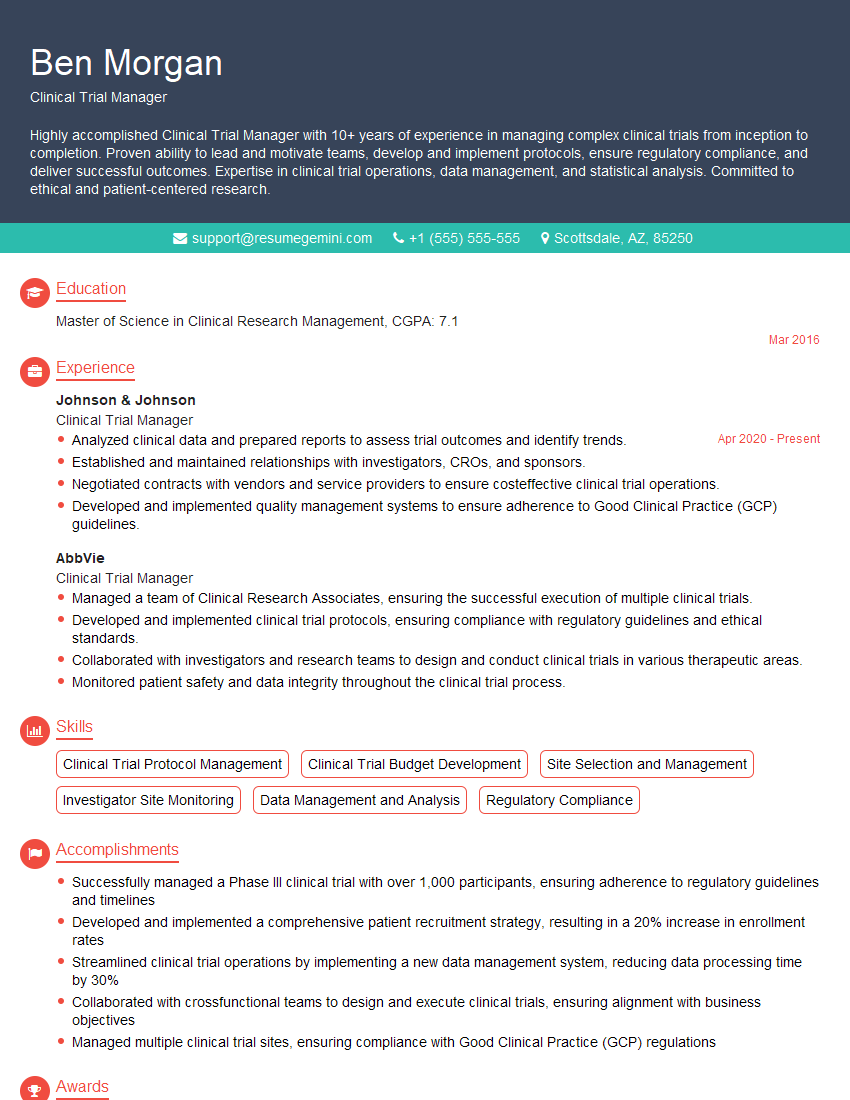
Clinical Trial Manager Resume Sample

Regulatory Affairs Specialist Resume Sample

Biostatistician Resume Sample

Toxicologist Resume Sample

Medical Scientist Resume Sample
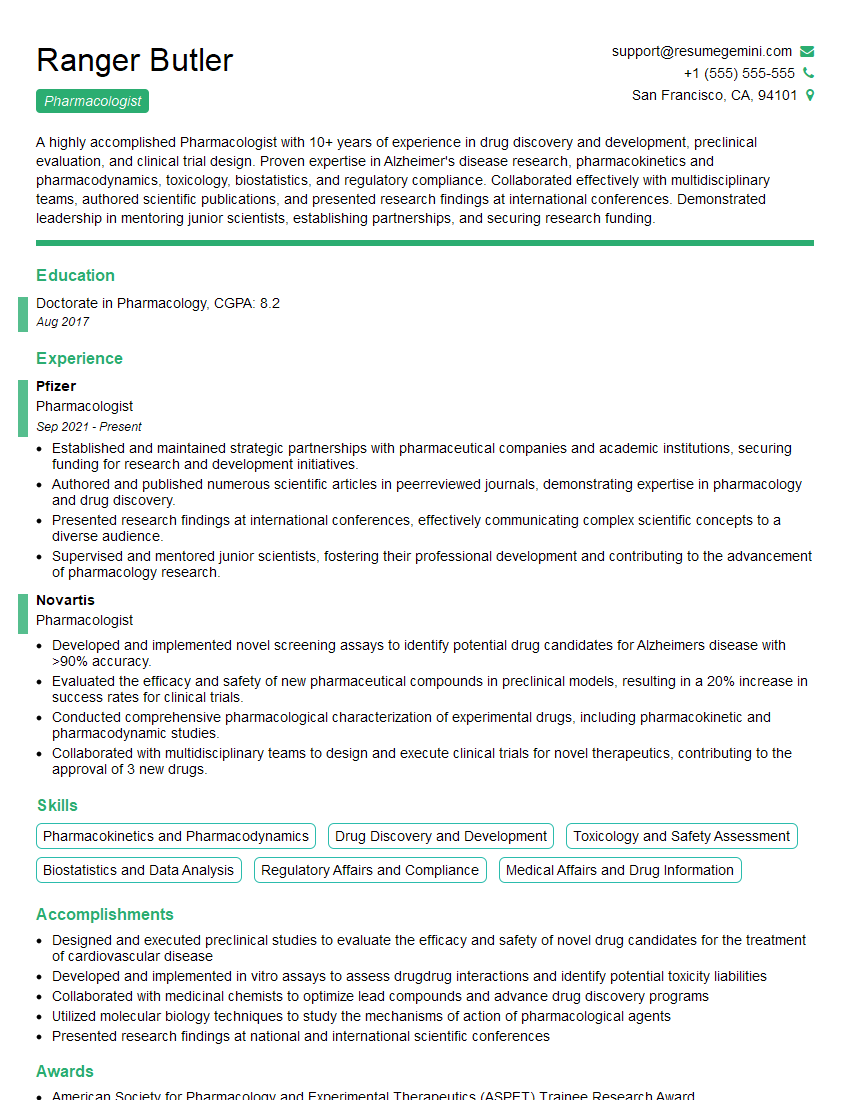
Pharmacologist Resume Sample

Health Economist Resume Sample

Nurse Practitioner Resume Sample

Medical Writer Resume Sample

Clinical Pharmacist Resume Sample

Physician Assistant Resume Sample

Pulmonologist Resume Sample

Allergist/Immunologist Resume Sample
Explore more articles
Users Rating of Our Blogs
Share Your Experience
We value your feedback! Please rate our content and share your thoughts (optional).
What Readers Say About Our Blog
To the interviewgemini.com Webmaster.
Very helpful and content specific questions to help prepare me for my interview!
Thank you
To the interviewgemini.com Webmaster.
This was kind of a unique content I found around the specialized skills. Very helpful questions and good detailed answers.
Very Helpful blog, thank you Interviewgemini team.