Are you ready to stand out in your next interview? Understanding and preparing for Life Cycle Inventory (LCI) Analysis interview questions is a game-changer. In this blog, we’ve compiled key questions and expert advice to help you showcase your skills with confidence and precision. Let’s get started on your journey to acing the interview.
Questions Asked in Life Cycle Inventory (LCI) Analysis Interview
Q 1. Explain the difference between Life Cycle Assessment (LCA) and Life Cycle Inventory (LCI).
Life Cycle Assessment (LCA) is a holistic, comprehensive method for evaluating the environmental impacts associated with a product or service throughout its entire life cycle, from cradle to grave. Life Cycle Inventory (LCI), on the other hand, is a crucial part of LCA. Think of it like this: LCA is the entire recipe, while LCI is the detailed ingredient list. LCI focuses specifically on compiling and quantifying the inputs and outputs of materials and energy associated with each stage of the product’s or service’s life cycle. Essentially, LCI provides the quantitative data that LCA uses to assess the overall environmental impacts.
For example, an LCA might conclude that Product A has a lower overall environmental impact than Product B. The LCI would provide the underlying data – the amounts of energy consumed, greenhouse gases emitted, water used, and waste generated – at each stage of both Product A’s and Product B’s life cycles, which then informs the LCA’s conclusion. Without the LCI’s detailed data, the LCA’s conclusions would be impossible to support.
Q 2. What are the key stages of a Life Cycle Inventory (LCI) study?
A typical LCI study involves several key stages:
- Defining the Goal and Scope: This involves specifying the product system, the functional unit (the standardized unit of service provided by the product), the geographical boundaries, and the time horizon of the study. A clear definition here is paramount to avoid ambiguity and ensure the LCI results are relevant.
- System Boundary Definition: Determining which processes and materials are included in the LCI. This involves identifying all upstream and downstream processes related to the product’s life cycle.
- Data Collection: Gathering quantitative data on all inputs and outputs identified in the previous stage, using various methods (discussed in the next question).
- Data Processing and Allocation: This involves converting the collected data into a consistent format, dealing with missing or uncertain data, and allocating inputs and outputs to different product systems when necessary (e.g., co-products).
- LCI Results Reporting: Presenting the results in a clear and concise manner, showing the inventory data in a standardized format such as a spreadsheet or database. This usually involves reporting the total amounts of inputs and outputs associated with each life cycle stage.
Q 3. Describe the different data collection methods used in LCI.
LCI data collection relies on several methods, often used in combination:
- Process-based data: Collecting primary data directly from manufacturing processes, using material and energy balances, process flow diagrams, or direct measurement. This is often the most accurate but can be time-consuming and expensive.
- Mass and energy balances: Analyzing the inputs and outputs of a process to ensure mass and energy are conserved. This helps identify missing data or inconsistencies.
- Literature review: Using existing published data from scientific literature, industry reports, and databases. This is often more readily available, but may lack precision or specificity.
- Surveys and questionnaires: Collecting data from companies, suppliers, or other stakeholders through surveys. This is useful for obtaining industry-specific data, but requires careful design and validation.
- Database use: Employing publicly available LCI databases (discussed further below) to obtain standardized data for various materials and processes. This speeds up the process significantly but might require data adjustments to fit the specific study.
Q 4. How do you handle data uncertainty and variability in LCI analysis?
Data uncertainty and variability are inherent in LCI studies due to the complexity of product systems and the diverse data sources. Several methods address this:
- Sensitivity analysis: Examining how variations in input data affect the LCI results. This helps identify which data points are most critical and warrant further investigation.
- Monte Carlo simulation: Using statistical methods to generate multiple LCI scenarios based on probabilistic distributions of input data. This allows for the assessment of uncertainty ranges in the LCI results.
- Data quality assessment: Evaluating the reliability and accuracy of the collected data by assessing their origin, methodology, and associated uncertainties. A detailed description of data quality increases the credibility of the study.
- Uncertainty propagation: Quantifying how uncertainties in individual data points propagate through the LCI model to affect the overall results. This provides a measure of the overall uncertainty associated with the LCI.
- Using multiple data sources: Collecting data from various sources can help reduce bias and uncertainty. Comparing results from different sources helps in identifying inconsistencies and highlighting potential areas of further investigation.
Transparency in documenting the data and methods used to handle uncertainty is essential for the credibility and reproducibility of the LCI study.
Q 5. What are some common LCI databases and software packages you’re familiar with?
I am familiar with several LCI databases and software packages. Some prominent databases include ecoinvent, GaBi, and Brightway2. These databases contain extensive inventories of materials and processes, often with associated uncertainty data. Popular software packages for LCI analysis include SimaPro, GaBi software, and openLCA. These programs facilitate the organization, processing, and analysis of LCI data, and often offer functionalities for uncertainty analysis and visualization.
Choosing the appropriate database and software depends on factors such as the product system being studied, the available resources, and the desired level of detail and accuracy. It’s also crucial to consider data consistency across different databases as some might use different methodologies or units.
Q 6. Explain the concept of functional unit in LCI and its importance.
The functional unit in LCI is a standardized unit of service or function provided by the product system being studied. It’s crucial because it provides a basis for comparing the environmental impacts of different products that provide the same service. Without a functional unit, comparing, for example, the environmental impact of a diesel car to an electric car would be meaningless, as they provide different amounts of transportation service.
For instance, a functional unit could be ‘1 passenger-kilometer traveled’ for comparing cars, or ‘1 ton-kilometer of freight transported’ for comparing trucks. A well-defined functional unit ensures that the LCI results are meaningful and comparable across different product systems.
Q 7. How do you define the system boundaries in an LCI study?
Defining system boundaries is critical in LCI. It involves determining which processes and materials are included and excluded from the study. The boundaries should be clearly defined to ensure that the LCI results are relevant and comprehensive, yet manageable. It’s a balance between completeness and practicality.
Several factors guide the boundary definition. First, the scope of the study greatly influences the boundary’s extent. A cradle-to-gate analysis, for example, would only include processes from raw material extraction to the factory gate, excluding distribution and end-of-life stages. Conversely, a cradle-to-grave analysis encompasses the entire life cycle. Second, the intended use of the LCI results will also shape the boundaries. A study focusing on greenhouse gas emissions might have different boundaries than one focusing on water consumption. Lastly, data availability and resources play a significant role in setting realistic boundaries.
A clearly defined system boundary with a detailed explanation of the rationale behind its selection is essential for ensuring the transparency and reproducibility of the LCI study.
Q 8. What are some limitations of LCI analysis?
LCI analysis, while powerful, has inherent limitations. One major limitation is data availability and quality. Comprehensive and reliable data for all processes and materials isn’t always readily accessible. This can lead to uncertainties and gaps in the inventory, impacting the accuracy of the overall assessment. Think of it like trying to build a house with incomplete blueprints – you might get a structure, but it might not be entirely sound.
Another limitation is the system boundary definition. Defining the exact scope of the system being analyzed can be subjective. For instance, should you include transportation impacts from raw material extraction to the factory? Or only the manufacturing process itself? The chosen boundary significantly affects the results.
Further, temporal and geographical variations exist. Data from one region or time period might not accurately reflect conditions elsewhere or in the future. A factory using renewable energy in one country might not be representative of global practices.
Finally, simplifications and assumptions are often necessary due to data limitations and complexity. These can introduce biases and inaccuracies. For example, we might use average emission factors instead of site-specific data, losing precision.
Q 9. Describe the allocation methods used when dealing with co-products in LCI.
Allocation methods are crucial when dealing with co-products – multiple products produced simultaneously from a single process. They aim to fairly apportion the environmental impacts to each co-product. Several methods exist, each with its strengths and weaknesses:
- Mass Allocation: The simplest method, dividing impacts based on the relative mass of each co-product. Imagine a refinery producing gasoline and diesel – mass allocation would split emissions proportionally to the weight of gasoline and diesel produced.
- Energy Allocation: Impacts are divided based on the relative energy content of each co-product. This is more suitable when energy is the key driver of environmental impacts. For instance, with biofuel production, this method might be preferred.
- Economic Allocation: Impacts are distributed based on the economic value of each co-product. This approach reflects the market value and perceived importance of each output but can be biased by market fluctuations.
- Substantive Allocation (also called Process-Based Allocation): A more refined approach where you allocate based on physical flows and processes. It is better in many cases but often requires more data and can be more complex to implement.
Choosing the appropriate allocation method is critical and depends heavily on the system under study and the available data. There’s no single “best” method; the choice should be transparently documented and justified.
Q 10. How do you assess the quality of LCI data?
Assessing LCI data quality is paramount for reliable results. We use several criteria:
- Data Source Credibility: Does the data come from reputable sources, like government agencies, peer-reviewed studies, or established industry databases? We always prefer primary data over secondary data to minimize uncertainty.
- Data Completeness: Is the data comprehensive and free of significant gaps? Missing data points can severely weaken the analysis.
- Data Consistency: Do data points align with other similar data and follow expected trends? Inconsistencies are red flags and might point to errors.
- Data Accuracy: How precise is the data? This includes considering uncertainties and variability. It is important to document the uncertainties associated with each data point.
- Data Relevance: Is the data relevant to the geographic location and time period of interest? Data from a different region or era might not be applicable.
- Data Uncertainty: Are uncertainties associated with the data adequately documented and quantified? This often involves using ranges or distributions instead of single values.
In practice, I often use a scoring system or a checklist to evaluate data quality systematically, documenting the assessment for transparency and traceability.
Q 11. Explain the concept of cut-off criteria in LCI.
Cut-off criteria in LCI define the limits of the inventory by specifying the minimum impact threshold or percentage to be included. It’s a practical way to manage the complexity of analyzing intricate supply chains. Imagine trying to map every single component of a car – it’s overwhelming! Cut-off criteria allow us to focus on the most significant contributors.
We can apply cut-off criteria based on:
- Mass fractions: Only including materials that contribute above a certain mass percentage.
- Energy fractions: Only considering processes that contribute significantly to the total energy consumption.
- Environmental impact scores: Focusing on processes contributing above a certain threshold of a specific impact category.
Setting cut-off criteria requires careful consideration. While it simplifies the analysis, it can also lead to omitting relevant impacts. Therefore, the criteria are carefully chosen, justified, and their potential impact is critically assessed. It’s a balance between simplification and accuracy.
Q 12. What are the main environmental impact categories considered in LCA?
The environmental impact categories considered in LCA are standardized to allow for comparison across studies. Popular frameworks such as ReCiPe and IMPACT 2002+ categorize impacts into several broad areas:
- Climate Change (Global Warming Potential): The contribution to greenhouse gas emissions.
- Acidification (Acidification Potential): The potential to acidify soil and water.
- Eutrophication (Eutrophication Potential): The excess nutrients contributing to algae blooms.
- Ozone Depletion (Ozone Depletion Potential): The depletion of the stratospheric ozone layer.
- Human Toxicity (Human Toxicity Potential): The potential harm to human health from exposure to substances.
- Ecotoxicity (Ecotoxicity Potential): The potential harm to ecosystems and organisms from exposure to substances.
- Resource Depletion (e.g., fossil fuel depletion, water depletion): The consumption of finite resources.
- Land Use (Land Use Change): The conversion of land for different purposes.
The choice of impact categories depends on the specific study goals and context. It’s crucial to clearly define and justify the selected categories for transparency and reproducibility.
Q 13. How do you interpret and present LCI results effectively?
Effective interpretation and presentation of LCI results are crucial for communicating findings. I typically use a combination of methods:
- Tables: To present the inventory data in a structured and easily understandable format. This shows the exact mass and energy flows and associated emissions.
- Charts and Graphs: To visualize the main findings and highlight key contributors. For example, a bar chart to show the relative contribution of each process to a particular impact category or a Sankey diagram to visualize material and energy flows.
- Narrative Summary: To provide context, discuss the limitations of the analysis, and draw conclusions in plain language, avoiding excessive technical jargon. The story behind the data must be told clearly and accurately.
- Uncertainty Analysis: To communicate the uncertainty inherent in the data and results. Using ranges or error bars in graphs helps present the data accurately and realistically.
The presentation should be tailored to the intended audience, with technical details adjusted accordingly. For example, a report for scientists will have more detailed information than a summary for stakeholders.
Q 14. Describe your experience with data management and quality control in LCI projects.
Data management and quality control are central to my LCI workflow. I’ve worked on numerous projects, using databases and software like SimaPro or Gabi to manage inventory data. Key aspects of my approach include:
- Structured Data Entry: Using pre-defined templates and data entry protocols to maintain consistency and minimize errors.
- Data Validation: Implementing checks and balances at every stage, including data screening, plausibility checks (are values realistic?), and cross-referencing data from multiple sources.
- Version Control: Tracking data changes and revisions using version control systems. This ensures transparency and traceability.
- Data Documentation: Maintaining meticulous records of data sources, assumptions, and uncertainties, crucial for ensuring reproducibility and accountability. This includes detailed metadata about all datasets and parameters.
- Data Backup and Security: Implementing robust backup and recovery procedures to protect against data loss.
For example, in a recent project assessing the LCI of a new type of packaging material, I developed a dedicated database to organize material specifications, manufacturing process data, and transportation information. This systematic approach minimized errors and ensured the data’s reliability, ultimately leading to more robust and credible results.
Q 15. Explain the process of creating an LCI database from primary data.
Creating an LCI database from primary data is a meticulous process involving data collection, processing, and quality assurance. It begins with defining the system boundaries – clearly specifying what processes and materials are included in the analysis. Next, we conduct data collection through various methods, like direct measurement using instruments (e.g., measuring energy consumption of a machine), process flow diagrams and material balances, and questionnaires/interviews with industry personnel. This raw data needs to be carefully checked for completeness and consistency before converting it into a standardized format that fits the chosen LCI database software. This often involves unit conversions and data validation steps. For instance, if measuring energy use, we need to ensure consistent units (kWh) across all data points. Finally, all the data is organized and entered into a database, where each elementary flow (a single material or energy input or output) is assigned a unique identifier and its associated characteristics (mass, energy, environmental impacts). This database serves as the foundation for all subsequent LCI studies.
For example, in assessing the LCI of a coffee cup, primary data collection could involve measuring the energy used in manufacturing the plastic, the water consumed during cleaning, and emissions from the transport process. Each of these data points becomes an elementary flow in the database.
Career Expert Tips:
- Ace those interviews! Prepare effectively by reviewing the Top 50 Most Common Interview Questions on ResumeGemini.
- Navigate your job search with confidence! Explore a wide range of Career Tips on ResumeGemini. Learn about common challenges and recommendations to overcome them.
- Craft the perfect resume! Master the Art of Resume Writing with ResumeGemini’s guide. Showcase your unique qualifications and achievements effectively.
- Don’t miss out on holiday savings! Build your dream resume with ResumeGemini’s ATS optimized templates.
Q 16. What are the challenges of performing LCI for complex products or processes?
Performing LCI for complex products or processes presents several significant challenges. Data acquisition becomes exponentially more difficult – tracing all materials and energy inputs across multiple supply chains and manufacturing stages requires extensive effort and collaboration. Allocating impacts across co-products and multiple functions within a system is another major issue. For example, a car’s LCI needs to consider the many parts sourced globally, their manufacturing impacts, and the car’s various uses (passenger transport, freight). This process can involve sophisticated allocation methods, like mass or energy allocation, each with its own limitations. System boundaries become increasingly intricate, with more uncertainty in identifying all relevant processes. Finally, the sheer volume of data generated requires advanced software and specialized skills to manage, analyze, and interpret the results, making the analysis time-consuming and computationally expensive. In short, the complexity escalates the difficulty of achieving both high quality and reasonable effort.
Q 17. How do you ensure consistency and traceability in your LCI analysis?
Ensuring consistency and traceability in LCI analysis is crucial for its credibility. We maintain consistency through rigorous use of established standards and guidelines such as ISO 14040/44. This involves using consistent units, methodologies for data collection and processing, and clearly documented assumptions and uncertainties. Traceability is paramount; every data point in the LCI should be linked back to its original source, with complete documentation of the methodology. We use version-controlled databases to track changes over time. A comprehensive metadata system provides details about the data sources, assumptions made, and any data transformations performed. For instance, a detailed process description is included with each elementary flow entry along with references. This allows independent verification and replication of the analysis, ensuring transparency and building confidence in the results. A clear audit trail demonstrates that proper procedures have been followed throughout the analysis.
Q 18. Explain the concept of sensitivity analysis in LCI.
Sensitivity analysis in LCI assesses the impact of uncertainties in input data on the overall results. It’s essential because LCI data often involves uncertainty due to limited data availability, measurement errors, or variability in processes. This analysis systematically varies input parameters (e.g., energy consumption, emission factors) within their estimated ranges and observes the changes in the overall environmental impact scores. For instance, we might vary the energy consumption of a manufacturing process by +/- 10% to see how this affects the total carbon footprint. The results highlight which data inputs are most influential, helping focus data collection efforts on critical areas. A high sensitivity to a particular parameter suggests that further research is needed to refine the data or modelling of that step.
This allows for a better understanding of the robustness of the conclusions. It also helps communicate the uncertainties associated with the LCI findings more effectively, enhancing transparency and avoiding overinterpretation of the results. Techniques such as Monte Carlo simulations are commonly used for sensitivity analysis.
Q 19. How do you validate LCI results?
Validating LCI results involves comparing them with independent data sources and examining their internal consistency. One approach involves comparing aggregated results with independently reported emissions or energy consumption data for similar processes. For example, we might compare our calculated greenhouse gas emissions for a manufacturing plant to the facility’s own reported emissions. Internal consistency checks involve verifying that the mass and energy balances within the system are closed (inputs equal outputs) and that the characterization of environmental impacts are consistent with the chosen impact assessment methodology. Peer review by other LCI experts is highly beneficial for detecting potential errors and biases. Data plausibility checks ensure that the values calculated align with physical and chemical limitations. Rigorous validation builds confidence in the LCI’s accuracy and reliability.
Q 20. Discuss your experience with different LCI software (e.g., SimaPro, Gabi, Brightway2).
I have extensive experience with SimaPro, Gabi, and Brightway2, each offering unique strengths. SimaPro is a widely adopted commercial software known for its comprehensive impact assessment methods and user-friendly interface. I’ve used it extensively for various product LCIs, appreciating its robust database and reporting capabilities. Gabi is another commercial platform known for its detailed background data and integration with other software. I’ve found it valuable when needing a detailed product-specific dataset or highly specialized impact categories. Brightway2 is an open-source platform, offering flexibility and transparency. While it demands more technical expertise, it’s well-suited for projects requiring customized impact assessment methodologies or complex system modelling. My experience with these platforms has allowed me to select the most suitable tool for each specific LCI project, leveraging the strengths of each to optimize the results.
Q 21. How do you handle missing data in LCI analysis?
Handling missing data in LCI is a common challenge. The best approach depends on the context and the nature of the missing data. If only a small amount of data is missing, and the data point is relatively insignificant to the overall result, we might choose to exclude that data point from the analysis, noting this limitation in the report. However, if significant data is missing, several strategies exist. One is to use data from similar processes or products; this requires careful consideration of the similarity and potential biases. Another is to replace missing values with estimated values based on statistical methods such as interpolation or regression analysis. This requires careful documentation and sensitivity analysis to determine the impact of these estimations. Finally, using expert judgment to fill in missing data can be effective if based on reliable information, however, it’s crucial to clearly state and document those assumptions.
The choice of method should be clearly documented and justified. The sensitivity of the results to the missing data should also be evaluated to assess the impact of uncertainty on the conclusions.
Q 22. How do you address potential biases in LCI data?
Addressing biases in LCI data is crucial for the reliability of LCA studies. Bias can creep in from various sources, including data scarcity, inconsistent methodologies, and the geographic limitations of datasets. We mitigate these biases through a multi-pronged approach.
- Data Validation and Selection: I meticulously evaluate the quality and reliability of data sources. This involves assessing the methodology used for data collection, the age of the data, and the representativeness of the data for the specific application. I prioritize peer-reviewed studies and data from reputable organizations like ecoinvent or GaBi.
- Uncertainty Analysis: LCI data inherently contains uncertainties. I employ uncertainty analysis techniques, such as Monte Carlo simulation, to quantify and propagate these uncertainties throughout the LCA. This provides a range of potential results, rather than a single point estimate, giving a more realistic picture.
- Sensitivity Analysis: I perform sensitivity analysis to identify the parameters that most significantly influence the LCA results. This allows me to focus on refining data for the most critical aspects of the study and to communicate the relative importance of uncertainties to stakeholders.
- Allocation Methods: When dealing with multi-output processes, choosing the appropriate allocation method (e.g., mass, energy, economic) significantly impacts the results. I carefully select the allocation method based on the system boundary and the goal of the study, justifying my choice transparently in the final report. Often, avoiding allocation altogether through system expansion is preferred.
- Geographic Considerations: Recognizing that data from one region might not be representative of another, I consider regional variations in energy production, material sourcing, and transportation networks when possible.
For example, in an LCA of a clothing item, using data for cotton production from a region with intensive pesticide use versus organic farming will yield significantly different results. A thorough data selection and validation process is essential to avoid this type of bias.
Q 23. Describe your experience working with different life cycle inventory databases.
I have extensive experience working with several prominent life cycle inventory databases, including ecoinvent, GaBi, and Brightway2. Each database has its own strengths and weaknesses, and my choice depends on the specific project requirements.
- ecoinvent: This is a widely recognized database known for its comprehensiveness and high quality data, particularly for European contexts. Its standardized methodology makes it suitable for various applications. I frequently utilize it for its detailed background data and consistent data structure.
- GaBi: GaBi offers a user-friendly interface and strong visualization capabilities. I often leverage GaBi’s intuitive software for large and complex LCIA projects, especially when collaborations require diverse software proficiency levels. It’s also notable for its focus on material flows and the integration of impact assessment methods.
- Brightway2: This open-source platform provides great flexibility and customization capabilities, particularly for advanced users. I’ve used Brightway2 for developing custom LCI databases and performing unique analysis focusing on specific impact categories or regional variations not covered in the commercially available databases.
Choosing the right database is a critical first step in an LCI analysis, impacting the accuracy, scope and interpretation of the results. The selection requires a careful evaluation of the database’s content, methodology, and alignment with the study’s objective. For example, If the study involves a product made from regionally sourced materials, a database that includes regional-specific data is crucial.
Q 24. How do you communicate complex technical LCI information to non-technical audiences?
Communicating complex LCI information to non-technical audiences requires careful planning and the use of clear, concise language. I avoid jargon and technical terms whenever possible, replacing them with easily understood analogies and visual aids.
- Visualizations: Charts, graphs, and infographics are invaluable tools for presenting complex data in an accessible way. For example, instead of presenting a table of data on greenhouse gas emissions, I might use a bar chart comparing the emissions of different product options.
- Storytelling: I frame the LCI results within a narrative, explaining the findings in a clear and engaging way. This helps to maintain the audience’s interest and ensure they understand the significance of the results.
- Focus on Key Findings: I focus on the most important findings and avoid overwhelming the audience with too much detail. A summary of key environmental impacts, communicated using plain language, can be impactful.
- Interactive Tools: Tools such as interactive dashboards can enhance engagement and allow the audience to explore the data at their own pace.
- Analogies and Real-World Examples: Relating abstract concepts to familiar scenarios helps improve understanding. For instance, comparing the carbon footprint of a product to the emissions from driving a car for a certain distance creates a tangible benchmark.
In a presentation to a board of directors, for instance, I would highlight the key environmental hotspots and their business implications, rather than delve into the intricacies of the LCI methodology. Simplicity and relevance are key to effective communication.
Q 25. What are the emerging trends in LCI analysis?
Several emerging trends are shaping the future of LCI analysis, driven by advancements in data collection, computation, and the need for more comprehensive and impactful assessments.
- Big Data and AI: The increasing availability of large datasets, combined with advancements in artificial intelligence (AI), is enabling the development of more sophisticated LCI models that can account for complex interactions and uncertainties. AI can automate data processing, improve data quality, and assist in identifying patterns and trends.
- LCA Software Development: Software tools are constantly improving, becoming more user-friendly and incorporating advanced features, such as integrated uncertainty analysis, sensitivity analysis, and improved data management.
- Focus on Circular Economy: The circular economy is gaining prominence, and LCI methods are adapting to address the complexities of material flows in closed-loop systems. There’s a growing emphasis on incorporating aspects like product end-of-life, reuse, and recycling into LCAs.
- LCA of Services: The focus is expanding beyond physical products to encompass the environmental impacts of services. This involves developing methods to quantify the environmental impacts of activities such as transportation, tourism, and healthcare.
- Integration with other frameworks: LCI is being integrated with other sustainability frameworks like the Sustainable Development Goals (SDGs) to broaden its scope and relevance.
For example, the use of AI could allow for more precise prediction of future environmental impacts, providing more effective information for decision making regarding sustainable product design. The shift towards the circular economy is leading to the development of new LCI methods for assessing the environmental performance of recycling and reuse processes.
Q 26. Explain your understanding of the ISO standards related to LCA.
My understanding of ISO standards related to LCA is comprehensive, informed by years of practical application. The most relevant standards are ISO 14040 and ISO 14044.
- ISO 14040:2006 (Environmental Management – Life Cycle Assessment – Principles and Framework): This standard defines the principles and framework for conducting an LCA. It outlines the four phases of an LCA: goal and scope definition, inventory analysis, impact assessment, and interpretation.
- ISO 14044:2006 (Environmental Management – Life Cycle Assessment – Requirements and Guidelines): This standard provides detailed requirements and guidelines for each phase of the LCA, including data quality assurance, uncertainty analysis, and reporting. It emphasizes transparency and reproducibility.
These standards provide a robust framework for ensuring the quality, consistency, and credibility of LCA studies. They are crucial for generating comparable and reliable results across different projects and organizations. Adherence to these standards is essential for building trust and confidence in the findings of an LCA, promoting reliable decision-making.
In my work, I rigorously adhere to these standards. This includes clearly defining the study’s goals and scope, using a systematic approach to data collection and analysis, and providing transparent documentation of the methodology used, and thoroughly addressing uncertainties. This ensures the robustness and reliability of my LCAs.
Q 27. How do you integrate LCI results into decision-making processes?
Integrating LCI results into decision-making processes requires a strategic approach that focuses on clearly communicating the findings and presenting them in a format that is relevant to the decision-makers.
- Decision-Making Context: Understanding the specific decision-making context is crucial. What are the stakeholders’ priorities and objectives? What information do they need to make an informed decision?
- Prioritization of Impact Categories: Not all environmental impacts are equally relevant to every decision. I often focus on a subset of impact categories that are most relevant to the decision-making context. This prioritization avoids information overload and highlights what matters most.
- Scenario Comparison: LCI results can be used to compare the environmental performance of different design options, technologies, or scenarios. Presenting this comparative information clearly helps decision-makers evaluate trade-offs and make informed choices.
- Quantitative and Qualitative Data: While quantitative data from LCI is important, it’s often equally beneficial to incorporate qualitative information, such as stakeholder perspectives and social considerations, to provide a holistic picture.
- Visualizations and Reports: Reports and visualizations are crucial for communication. Tailoring the communication style to the audience is key. A detailed technical report might be necessary for experts, while a simplified summary would be more appropriate for a broader audience.
For example, when assessing the sustainability of packaging options for a food product, I might compare the environmental impact of various materials (plastic, paper, etc.). This allows the company to consider not only the cost but also the overall environmental impact when making purchasing decisions.
Q 28. Describe your experience with using LCI data to support sustainable product development.
I have extensive experience leveraging LCI data to support sustainable product development. My work involves using LCI results to identify environmental hotspots in a product’s life cycle and to inform design improvements that minimize the product’s environmental footprint.
- Hotspot Analysis: I use LCI to identify the stages of a product’s life cycle that have the greatest environmental impacts. This allows us to focus our efforts on areas where we can have the biggest positive impact.
- Material Selection: LCI helps evaluate the environmental performance of different materials. This allows for the selection of more environmentally friendly alternatives, considering factors such as material sourcing, manufacturing, and end-of-life management.
- Design Optimization: LCI can inform design choices that minimize resource consumption, waste generation, and emissions throughout the product’s lifecycle. This could involve optimizing product weight, packaging design, or manufacturing processes.
- Supply Chain Optimization: LCI can be used to assess the environmental performance of different supply chain options. This helps companies choose suppliers and transportation modes that minimize environmental impacts.
- Eco-labeling and Certifications: LCI provides the data required for eco-labeling and certification programs, helping companies communicate the environmental benefits of their products to consumers.
For example, I worked with a client to develop a more sustainable packaging for their product. By using LCI data, we identified the use of specific materials and transportation as significant sources of environmental impact. We were able to recommend alternative materials and optimized logistics to significantly reduce the product’s carbon footprint.
Key Topics to Learn for Life Cycle Inventory (LCI) Analysis Interview
- Defining System Boundaries and Functional Unit: Understanding how to clearly define the scope of your LCI analysis and establish a consistent functional unit for accurate comparison.
- Data Collection and Quality Assurance: Exploring various data sources (e.g., databases, literature reviews, life cycle impact assessment (LCIA) software), techniques for data validation, and handling data uncertainty.
- Allocation and Partitioning Methods: Mastering different allocation techniques for multi-product systems and understanding their implications on the overall results.
- LCI Software and Databases: Familiarizing yourself with commonly used LCI software (e.g., SimaPro, Gabi) and databases (e.g., ecoinvent) to demonstrate practical experience.
- Interpreting and Communicating LCI Results: Developing the ability to clearly present complex data, highlighting key findings and their implications for decision-making.
- Critical Review and Uncertainty Analysis: Understanding the limitations of LCI studies and how to assess the uncertainty associated with the data and methodology used. This showcases a critical and analytical approach.
- Life Cycle Impact Assessment (LCIA): While not strictly LCI, understanding the connection between LCI and LCIA is crucial for a holistic perspective. Knowing how LCI data feeds into impact assessment is a valuable skill.
- Case Studies and Real-World Applications: Reviewing successful LCI studies across various industries to demonstrate your understanding of practical applications and problem-solving in diverse contexts.
Next Steps
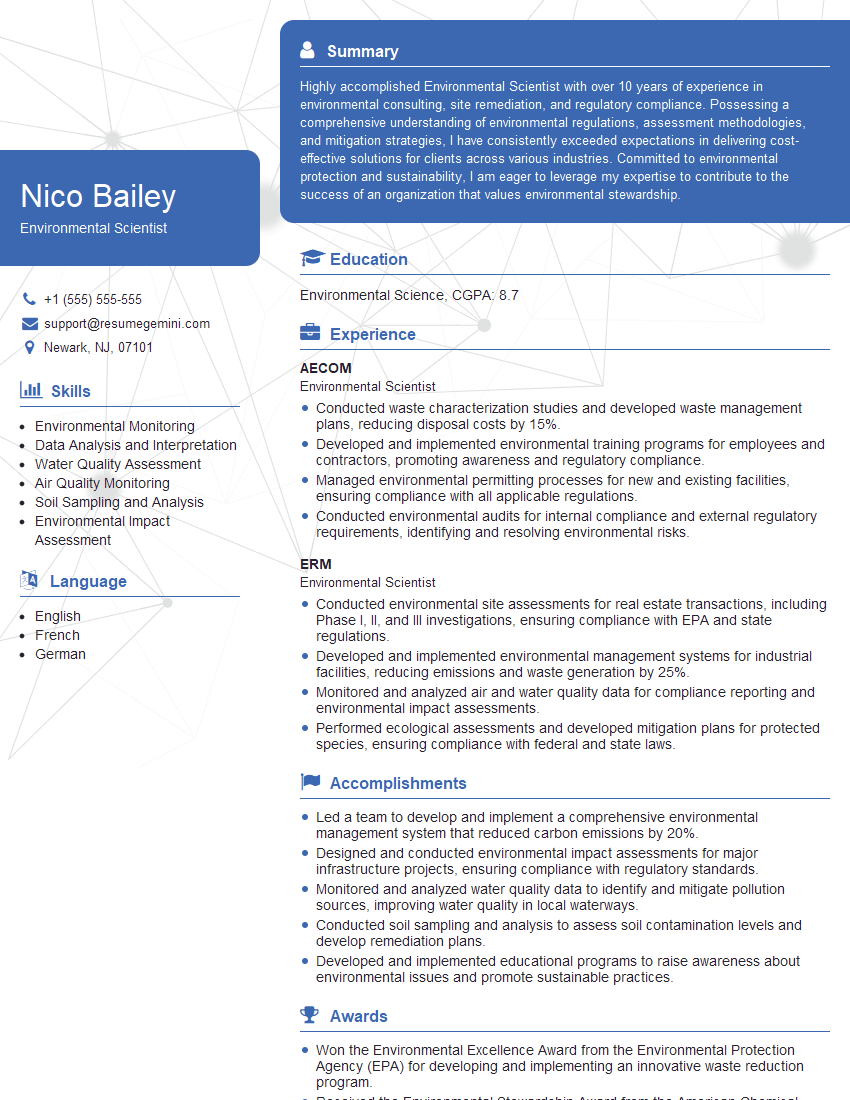
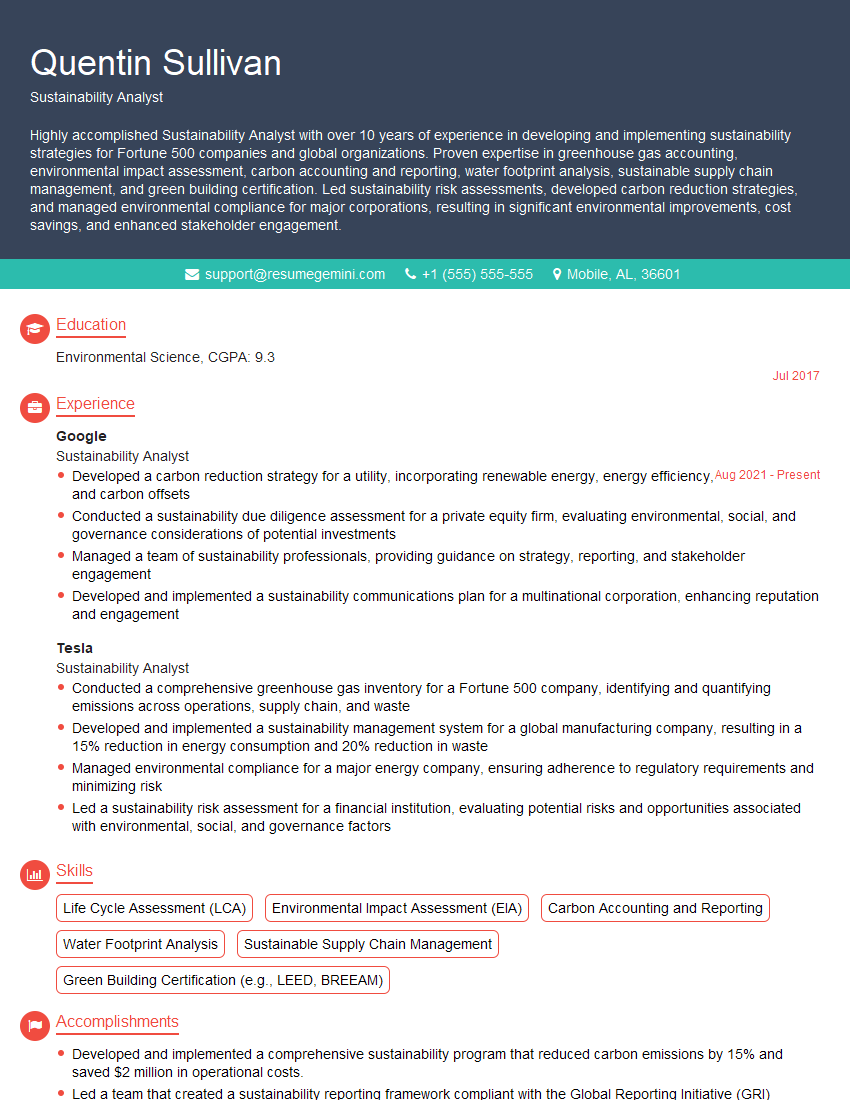
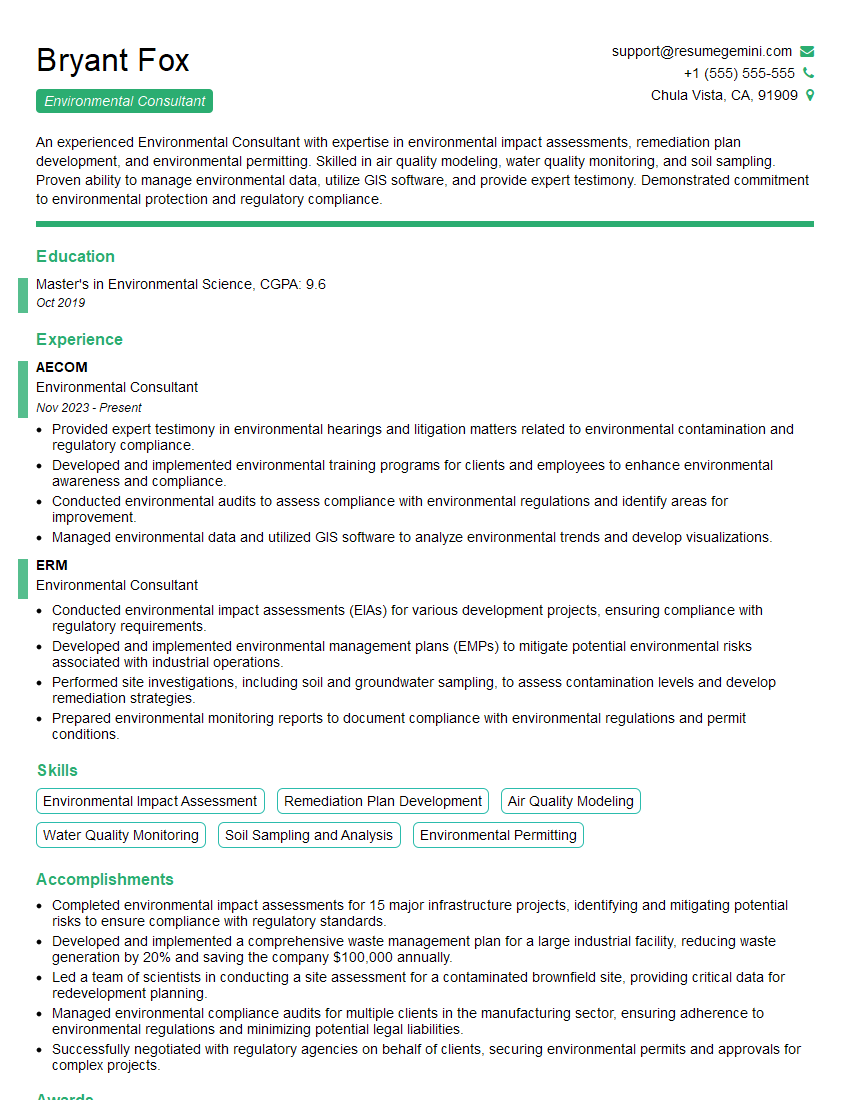
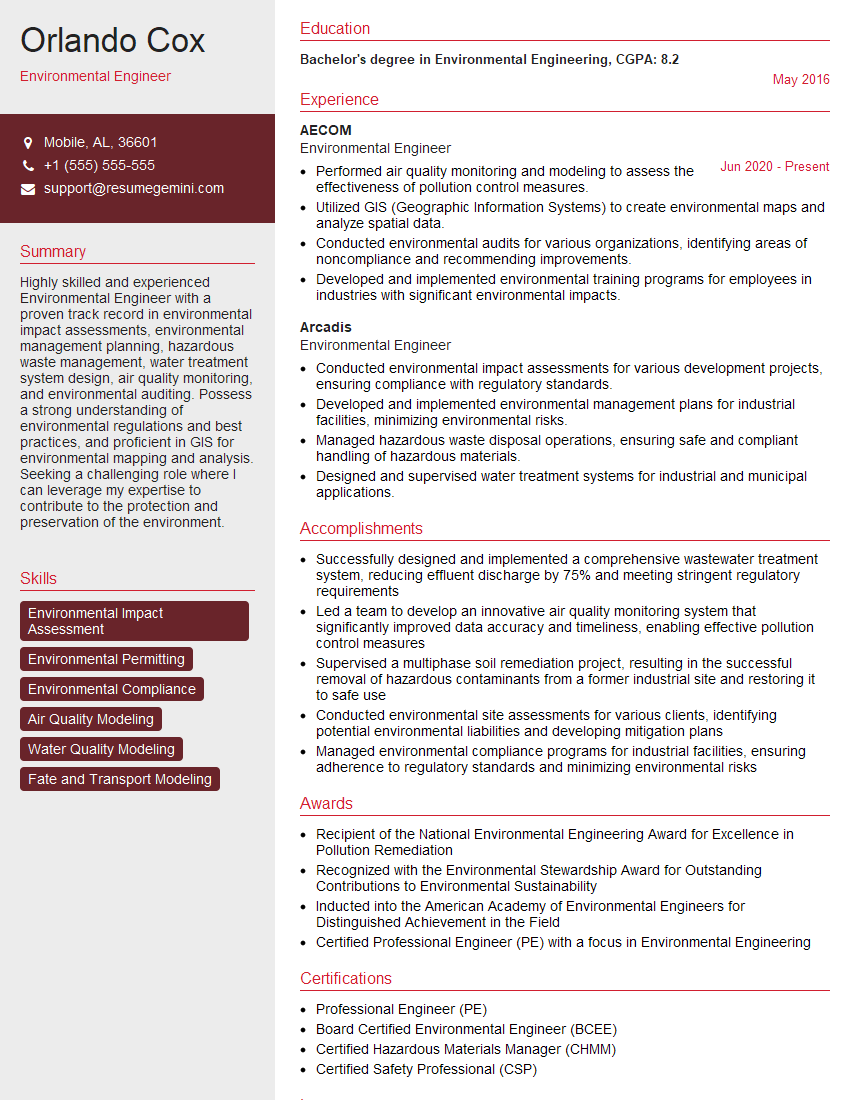
Mastering Life Cycle Inventory (LCI) Analysis significantly enhances your marketability in the environmental sustainability field, opening doors to exciting and impactful career opportunities. A well-crafted resume is crucial for showcasing your skills and experience effectively. To make sure your qualifications shine, focus on building an ATS-friendly resume that highlights your LCI expertise and accomplishments. ResumeGemini can be a trusted partner in this process, offering valuable tools and resources to create a professional and compelling resume. Examples of resumes tailored to Life Cycle Inventory (LCI) Analysis are available to provide further guidance.


Explore more articles
Users Rating of Our Blogs
Share Your Experience
We value your feedback! Please rate our content and share your thoughts (optional).
What Readers Say About Our Blog
To the interviewgemini.com Webmaster.
Very helpful and content specific questions to help prepare me for my interview!
Thank you
To the interviewgemini.com Webmaster.
This was kind of a unique content I found around the specialized skills. Very helpful questions and good detailed answers.
Very Helpful blog, thank you Interviewgemini team.