The thought of an interview can be nerve-wracking, but the right preparation can make all the difference. Explore this comprehensive guide to Low-E glass installation interview questions and gain the confidence you need to showcase your abilities and secure the role.
Questions Asked in Low-E glass installation Interview
Q 1. Explain the principle of Low-E coatings and their impact on energy efficiency.
Low-E glass, or Low-Emissivity glass, utilizes microscopically thin, transparent metallic or metallic oxide coatings applied to one or more surfaces of the glass pane. These coatings work by selectively reflecting infrared (IR) radiation, the primary component of heat transfer through windows. In the summer, they reflect the sun’s heat back outdoors, keeping the interior cooler, and in the winter, they reflect heat radiating from inside back into the room, reducing energy loss.
Think of it like a highly selective mirror: it lets visible light pass through so you still have good visibility, but it reflects the invisible heat waves. This significantly improves energy efficiency by reducing the amount of heating and cooling required, leading to lower energy bills and a smaller carbon footprint. The impact is most noticeable in climates with significant temperature swings, where the energy savings can be substantial.
Q 2. Describe different types of Low-E coatings and their respective applications.
Several types of Low-E coatings exist, each with slightly different properties optimized for particular applications:
- Hard-coated Low-E: Applied directly to the glass during the manufacturing process, these coatings are durable and highly resistant to scratching. They are often used in commercial applications where durability is paramount.
- Soft-coated Low-E: Applied in a vacuum after the glass panes are assembled into an insulating glass unit (IGU). These coatings offer superior performance in terms of solar heat gain coefficient (SHGC) and U-value (insulation). However, they are less scratch-resistant than hard-coated versions and require more careful handling during installation.
- Spectrally Selective Coatings: These advanced coatings are designed to optimize performance for specific climatic conditions. Some prioritize reducing heat gain in hot climates, while others focus on maximizing solar heat gain in colder regions.
The choice of coating depends on factors like climate, building orientation, and the desired balance between solar heat gain and visible light transmission. For instance, a building in a hot, sunny climate might benefit from a soft-coated Low-E with a low SHGC, while a building in a cold climate might use a coating that maximizes solar heat gain while still providing good insulation.
Q 3. What are the key considerations for selecting the appropriate Low-E glass for a specific project?
Selecting the right Low-E glass involves careful consideration of several factors:
- Climate: The climate dictates the balance between heat gain and heat loss requirements. Hot climates need coatings that minimize solar heat gain, while cold climates need coatings that maximize solar heat gain while minimizing heat loss.
- Building Orientation: South-facing windows receive more direct sunlight and require different coatings compared to north-facing windows.
- Energy Codes and Regulations: Local building codes often specify minimum performance standards for windows, influencing the choice of Low-E glass.
- Budget: Different Low-E coatings offer varying levels of performance at different price points. A cost-benefit analysis helps determine the optimal balance between performance and cost.
- Aesthetic Considerations: The visible light transmission (VLT) of the coating affects the amount of light entering the building. A balance must be struck between energy efficiency and desired levels of natural light.
For example, a project in Florida might require Low-E glass with a very low SHGC to reduce cooling loads, while a project in Minnesota might benefit from a coating that maximizes solar heat gain during winter.
Q 4. How do you ensure proper installation techniques to maintain the integrity of Low-E coatings?
Proper installation is crucial to maintain the integrity of Low-E coatings and ensure optimal performance. Key techniques include:
- Careful Handling: Gloves should always be worn to prevent fingerprints and scratches. Low-E glass should be handled by its edges to avoid pressure points.
- Protective Film: The protective film on the Low-E coating should remain in place until the glass is fully installed to prevent damage.
- Clean Installation Environment: Dust and debris can compromise the coating’s performance. A clean and controlled installation environment is essential.
- Proper Spacer Selection: For insulated glass units (IGUs), proper spacers are crucial for maintaining the gas fill and preventing moisture infiltration, which can degrade the Low-E coating.
- Professional Installation: Employing experienced professionals who are well-versed in the nuances of Low-E glass installation is crucial for avoiding damage and ensuring long-term performance.
Ignoring these techniques can lead to premature coating degradation, reduced energy efficiency, and potential warranty issues.
Q 5. What are the common issues encountered during Low-E glass installation, and how do you address them?
Common issues during Low-E glass installation include:
- Scratches and Abrasions: Caused by improper handling or inadequate protection. These can significantly impact the coating’s performance.
- Contamination: Dust, dirt, or fingerprints can reduce the coating’s effectiveness. Thorough cleaning is essential before and after installation.
- Improper Sealing: Inadequate sealing of IGUs can lead to gas leakage, moisture infiltration, and coating degradation. Proper sealing techniques are paramount.
- Installation Errors: Incorrect installation procedures, like excessive pressure or improper handling, can damage the glass and compromise the Low-E coating.
Addressing these issues involves careful attention to detail, using appropriate tools and techniques, and employing thorough quality control measures. In case of damage, replacement with a new Low-E unit may be necessary.
Q 6. Describe your experience with various types of window frames and their compatibility with Low-E glass.
I have extensive experience with various window frame materials, including aluminum, vinyl, wood, and fiberglass. The compatibility with Low-E glass primarily relates to ensuring proper sealing and preventing moisture penetration. Aluminum frames, though durable, require careful attention to thermal bridging and condensation prevention. Vinyl frames offer good insulation and are relatively easy to work with. Wood frames, while aesthetically pleasing, require careful preparation and sealing to prevent moisture damage. Fiberglass frames provide good insulation and structural rigidity.
The key in all cases is to ensure a proper airtight seal around the glass unit to prevent air and moisture infiltration. This seal is crucial to maintain the integrity of the IGU and the effectiveness of the Low-E coating. I always choose appropriate sealants and gaskets based on the frame material and the environmental conditions.
Q 7. How do you handle damaged or defective Low-E glass units during installation?
Handling damaged or defective Low-E glass requires immediate action to prevent further issues and potential safety hazards. The first step is to carefully assess the extent of the damage. If the damage is minor, such as a small scratch not affecting performance, it might be acceptable depending on the project’s requirements and client expectations. However, for significant damage, replacement is usually necessary.
In case of a defective unit, it’s crucial to work with the supplier to obtain a replacement under warranty. During replacement, strict adherence to proper installation techniques is vital to prevent similar problems with the new unit. Proper documentation and photographic evidence of the damage and replacement process are kept for record-keeping and potential warranty claims.
Q 8. Explain the importance of proper sealant and spacer selection for Low-E glass installations.
Proper sealant and spacer selection are paramount in Low-E glass installations because they directly impact the unit’s long-term performance and durability. The sealant creates an airtight and watertight seal, preventing moisture intrusion which can lead to fogging, condensation, and ultimately, failure of the insulating properties. The spacer, typically made of aluminum, stainless steel, or warm-edge technology materials, maintains the gap between the glass panes, creating the insulating air or gas space. Choosing the wrong sealant can lead to premature failure, while an inappropriate spacer can compromise energy efficiency.
- Sealant Selection: I always prioritize sealants specifically designed for insulating glass units (IGUs) and that meet the requirements of the project’s climate and environmental conditions. For example, a sealant with superior UV resistance is crucial in regions with high solar radiation. The sealant’s compatibility with the glass and spacer material is also key. Incorrect sealant choice can lead to chemical reactions, compromising the seal’s integrity.
- Spacer Selection: The spacer significantly influences the IGU’s thermal performance. Traditional aluminum spacers conduct heat, reducing the insulation value. Warm-edge spacers, often made of composite materials, minimize heat transfer, improving energy efficiency and reducing condensation. The choice depends on the desired thermal performance and budget. For instance, in colder climates, warm-edge spacers are often preferred for their superior insulation capabilities.
In my experience, failing to choose appropriate sealants and spacers is a frequent cause of premature IGU failure, resulting in costly repairs and customer dissatisfaction. Thorough material selection is therefore the cornerstone of successful Low-E installation.
Q 9. What safety precautions do you follow when handling and installing Low-E glass?
Safety is paramount when handling Low-E glass. It’s significantly more fragile than standard glass, and the Low-E coating adds an extra layer of sensitivity. My safety procedures include:
- Personal Protective Equipment (PPE): Always wear safety glasses, gloves, and cut-resistant gloves, especially during cutting and handling.
- Proper Lifting Techniques: Use suction cups or other lifting devices specifically designed for glass to prevent breakage and injury. Never lift heavy glass alone; always have a helper.
- Careful Handling: Avoid sharp impacts or dropping the glass. Use soft padding and protective film to prevent scratching or damage to the coating.
- Clean Workspace: Maintain a clean and organized workspace to minimize tripping hazards and prevent accidental breakage.
- Edge Protection: Use edge protectors to prevent chipping or scratching during transport and installation.
- Sharp Objects Awareness: Exercise extreme caution around sharp objects that could damage the glass surface.
One time, I witnessed a colleague accidentally drop a Low-E glass unit because he wasn’t using a suction cup. It shattered, resulting in a significant waste of materials and a delay in the project. This incident reinforced the importance of adhering strictly to safety procedures.
Q 10. Describe your experience with different glazing methods (e.g., wet glazing, dry glazing).
I have extensive experience with both wet and dry glazing methods for Low-E glass installation. Each has its advantages and disadvantages:
- Wet Glazing: This involves using a sealant to bed the glass into the window frame. It’s commonly used for larger windows and offers excellent water sealing. The sealant creates a flexible bond, helping to accommodate minor frame movement. However, it requires more precise application and careful curing time to ensure a proper seal.
- Dry Glazing: This method uses a variety of mechanical fasteners and compression to secure the glass. It’s often quicker and potentially less messy, making it suitable for smaller windows or projects where speed is essential. However, precise fitting and a strong frame are crucial to ensure a tight and secure seal.
My experience has shown that the optimal glazing method depends on several factors including window size and design, the type of frame, and project-specific requirements. I always assess the project’s specific needs before recommending a particular method. For example, in a heritage building restoration, a traditional wet glazing technique may be preferred to maintain the building’s historical integrity, while in a modern high-rise construction project, a dry glazing system may be more efficient.
Q 11. How do you measure and cut Low-E glass accurately to ensure a precise fit?
Accurate measurement and cutting of Low-E glass are crucial for a precise fit. I use a combination of techniques to ensure accuracy:
- Precise Measurements: I use a high-quality measuring tape, ensuring accuracy to the nearest millimeter. I take multiple measurements from different angles to account for any variations in the frame.
- Template Creation: For complex shapes, I create a cardboard template from the window opening to serve as a cutting guide. This ensures accuracy and minimizes waste.
- Specialized Cutting Tools: I employ a glass cutter specifically designed for Low-E glass, which allows for clean, precise cuts without compromising the integrity of the Low-E coating. I use a scoring and snapping technique to minimize chipping.
- Safety Procedures: I always wear cut-resistant gloves and safety glasses during cutting to prevent injuries from sharp glass edges.
- Double-Checking: I double-check the measurements and cut lines before making the final cut. A single mistake can result in a significant waste of material and time.
One time, I had to cut a very unusual shaped piece of Low-E glass. Creating a precise cardboard template beforehand, as opposed to ‘eyeballing’ it, ensured the perfect fit with zero waste. This underscores the importance of taking detailed measurements and using the correct tools for a clean and accurate cut.
Q 12. What tools and equipment are essential for efficient and safe Low-E glass installation?
Efficient and safe Low-E glass installation requires a range of specialized tools and equipment:
- Glass Cutter: A high-quality glass cutter specifically designed for Low-E glass is essential for clean, precise cuts.
- Suction Cups: These are crucial for safely lifting and handling the glass sheets, preventing breakage and injury.
- Measuring Tape: A high-precision measuring tape is necessary for accurate measurements.
- Glass Clamps: These securely hold the glass during cutting, installation, and sealing.
- Sealant Applicators: These ensure the even and precise application of the sealant, crucial for a watertight seal.
- Spacer Placement Tools: Tools designed to accurately and efficiently place spacers within the IGU.
- Safety Glasses and Gloves: Essential for protecting the installer from potential injury.
- Edge Protectors: Used to prevent scratching and chipping of the glass edges.
- Putty Knives: for applying and smoothing sealant.
- Handheld Vacuum: Removes any glass dust or debris after cutting.
Investing in high-quality equipment not only ensures safety but also improves efficiency and the overall quality of the installation. Using substandard tools can lead to errors, delays, and increased costs.
Q 13. Explain your understanding of building codes and regulations related to Low-E glass installation.
Understanding building codes and regulations is crucial for compliant Low-E glass installation. These codes vary by location and often address:
- Energy Efficiency Standards: Many regions have regulations mandating minimum energy performance standards for windows, influencing the choice of Low-E glass and gas fills.
- Safety Standards: Codes often specify requirements for glass thickness and impact resistance, particularly in areas prone to high winds or other potential hazards.
- Weather Resistance: Regulations often outline requirements for weatherproofing, including sealant types and application techniques to ensure the IGU withstands various weather conditions.
- Accessibility Requirements: Codes may address accessibility concerns related to window placement and operation, such as requirements for operable windows in certain areas.
Before starting any project, I thoroughly research and understand the relevant building codes and regulations for that specific location. I maintain up-to-date knowledge of these codes, ensuring every installation complies with all applicable requirements and is properly documented. Non-compliance can lead to project delays, costly revisions, and legal issues.
Q 14. How do you ensure the proper alignment and sealing of Low-E glass units within window frames?
Ensuring proper alignment and sealing of Low-E glass units within window frames is critical for performance and aesthetics. My approach involves:
- Precise Positioning: Before sealing, I carefully position the Low-E glass unit within the frame, ensuring it is perfectly aligned and level. This is often done with temporary supports to maintain the unit’s position.
- Consistent Sealant Application: I apply the sealant evenly and consistently around the perimeter of the glass unit, ensuring complete contact with both the glass and the frame. Using the right type and sufficient amount of sealant prevents gaps or leaks.
- Proper Curing Time: I allow the sealant to cure completely according to the manufacturer’s recommendations. Premature handling or exposure to extreme temperatures can compromise the seal’s integrity.
- Quality Control Checks: After installation, I thoroughly inspect the unit for proper alignment, seal integrity, and any signs of leaks or defects.
Improper alignment or sealing can lead to air leaks, water infiltration, and ultimately IGU failure. A meticulous approach during installation minimizes these risks and ensures the long-term success of the project. I once encountered a project where the initial installation had gaps in the sealant. Rectifying this involved careful removal of the failed sealant, thorough cleaning, and re-application, highlighting the importance of attention to detail.
Q 15. How do you troubleshoot issues with condensation or air leaks in Low-E glass installations?
Condensation between panes of Low-E glass indicates a seal failure, allowing moisture ingress. Air leaks, on the other hand, usually manifest as drafts or inconsistent temperatures near the window. Troubleshooting starts with a visual inspection, checking for visible cracks or gaps in the sealant around the glass unit. We then use a thermal imaging camera to pinpoint areas of heat loss, which often correspond to air leaks. For condensation, we might carefully press on the glass to check for any sponginess indicating trapped moisture. If problems are detected, we need to determine if the issue is with the glass unit itself or improper installation. Seal failures require replacing the entire glass unit; air leaks often originate from inadequate caulking or gaps around the frame, easily rectified with proper sealing techniques. Think of it like a thermos – if the seal is broken, the insulation is compromised. In severe cases, we might use pressure testing equipment to quantify the extent of the leak.
Career Expert Tips:
- Ace those interviews! Prepare effectively by reviewing the Top 50 Most Common Interview Questions on ResumeGemini.
- Navigate your job search with confidence! Explore a wide range of Career Tips on ResumeGemini. Learn about common challenges and recommendations to overcome them.
- Craft the perfect resume! Master the Art of Resume Writing with ResumeGemini’s guide. Showcase your unique qualifications and achievements effectively.
- Don’t miss out on holiday savings! Build your dream resume with ResumeGemini’s ATS optimized templates.
Q 16. Describe your experience with different types of glass (e.g., tempered, laminated).
My experience encompasses various glass types commonly used with Low-E coatings. Tempered glass, known for its strength, is crucial for safety glazing, particularly in areas prone to impact. It’s much stronger than annealed glass but is more brittle and susceptible to chipping during installation. Laminated glass, composed of multiple layers bonded together by a polymer interlayer (often PVB), offers enhanced safety and acoustic insulation. The interlayer holds the glass fragments together in case of breakage, preventing shattering. I’ve worked extensively with both in Low-E applications, carefully considering the specific project requirements. For instance, tempered Low-E is ideal for storefront windows, while laminated Low-E might be preferred for high-traffic areas or sound-sensitive environments like schools. The choice depends on the balance of safety, acoustic requirements, and energy efficiency needs.
Q 17. What are the benefits and drawbacks of using Low-E glass in different climate zones?
Low-E glass offers significant benefits in diverse climates. In hot climates, the Low-E coating reflects solar heat, reducing cooling loads and lowering energy costs. Think of it as a highly effective sunscreen for your building. However, in extremely cold climates, while it reduces heat loss during winter, it can also slightly reduce solar heat gain during the shorter, colder days. This might necessitate a slightly more robust heating system. The optimal Low-E coating type depends on the climate. For instance, a coating with high solar heat rejection is best suited for hot, sunny climates, while a coating with better visible light transmittance might be more appropriate for climates with less sunlight. We always assess the specific climate data and building orientation before specifying the Low-E glass type to optimize performance.
Q 18. How do you maintain the quality and longevity of Low-E glass installations?
Maintaining Low-E glass involves careful handling during installation and regular cleaning. Avoiding harsh chemicals and abrasive cleaners is crucial; using a soft cloth and a mild soap solution is recommended. Regular inspection of the window frames and sealant is essential to detect any signs of damage or deterioration early on. Protecting the glass from impact damage is vital, especially during construction. Proper installation, including the use of high-quality sealant and adherence to manufacturer guidelines, is fundamental in ensuring the longevity of the installation. Thinking ahead, we educate clients on proper maintenance to extend the lifespan of their Low-E windows. This proactive approach avoids costly repairs and ensures optimal energy performance over many years.
Q 19. What are the environmental considerations associated with Low-E glass installation and disposal?
Environmentally, Low-E glass contributes to reduced energy consumption, lessening the carbon footprint of buildings. The manufacturing process does involve energy use, but the long-term energy savings usually outweigh this. Disposal presents a challenge. Low-E glass should be handled separately from regular waste and recycled appropriately. Many communities offer specialized recycling programs for construction and demolition waste, including glass. It’s vital to follow local regulations and work with responsible disposal companies to ensure environmental responsibility. Sustainable practices start from the selection process: Choosing Low-E glass is an environmentally responsible choice.
Q 20. Explain the importance of proper cleaning and handling of Low-E glass to prevent damage.
Proper handling and cleaning are essential for preserving the integrity of Low-E glass. The coating is delicate and can be scratched or damaged by abrasive materials. We always use soft cloths and non-abrasive cleaners. Avoid ammonia-based or harsh chemical cleaners as these can damage the coating. Gloves are typically worn to prevent transferring oils and dirt from our hands. During installation, we take extra precautions to prevent scratching or chipping, using protective films and careful handling techniques. Even minor scratches can compromise the Low-E coating’s performance. Think of the Low-E coating as a very fine layer of protection – treat it with the care it deserves.
Q 21. How do you work effectively as part of a team during large-scale Low-E glass installations?
Effective teamwork is paramount in large-scale Low-E glass installations. Clear communication and coordination are crucial. We use detailed project plans and regular progress meetings to keep everyone informed. Before any project begins, I brief the team on specific requirements – including safety protocols and the handling of Low-E glass. Each team member has clearly defined responsibilities, ensuring efficient workflow. Collaborative problem-solving is important; we encourage open dialogue and utilize the expertise of every member. A collaborative environment increases efficiency and enhances the quality of work, ultimately delivering a successful project. My experience shows that a well-coordinated team is the key to successful and efficient installations.
Q 22. Describe your experience working with different types of substrates (e.g., wood, vinyl, aluminum).
My experience spans a wide range of substrates commonly used in Low-E glass installation. I’ve worked extensively with wood frames, both new and historic, understanding the nuances of proper flashing and sealant application to prevent moisture intrusion. With vinyl frames, I’m adept at handling the material’s flexibility and ensuring a secure, airtight seal. Aluminum frames, while seemingly straightforward, require precise measurements and careful consideration of thermal expansion and contraction to prevent issues later on. For example, on a recent project involving a historic Victorian home with original wood windows, I utilized specialized shims and flexible sealants to accommodate the irregularities in the window frames while ensuring a perfect fit for the new Low-E glass units. With vinyl windows, pre-drilling pilot holes was crucial to avoid cracking. Each material presents unique challenges, and understanding these individual properties is key to a successful installation.
Q 23. How do you manage your time effectively to meet project deadlines while ensuring high-quality installation?
Effective time management is crucial in this field. My approach involves a three-pronged strategy: meticulous planning, efficient execution, and proactive communication. Before starting any project, I thoroughly review the architectural drawings, specifications, and material delivery schedules to create a detailed timeline. This includes accounting for potential delays and allocating buffer time for unforeseen issues. During the installation phase, I prioritize tasks to optimize workflow and utilize lean principles to minimize waste and maximize efficiency. Regular communication with the project manager and other tradespeople ensures everyone is on the same page and potential conflicts are identified and resolved early. For instance, on a large commercial project, I meticulously scheduled the glass delivery and the glazing team’s work to avoid any bottlenecks and stay ahead of schedule, which ultimately allowed us to finish the project ahead of the deadline.
Q 24. What are the different types of sealants used with Low-E glass and their respective properties?
The choice of sealant is critical for long-term performance of Low-E glass installations. Several types are commonly used, each with specific properties. Silicone sealants offer excellent adhesion, flexibility, and weather resistance, making them ideal for exterior applications and areas subjected to significant temperature fluctuations. Polyurethane sealants are known for their high strength and rapid curing, suitable for larger gaps and areas needing a robust seal. Butyl sealants provide excellent air and water sealing properties, often used as a primary sealant in insulating glass units (IGUs). The selection depends on factors such as substrate material, climate, and the specific requirements of the manufacturer’s guidelines. I always ensure compatibility between sealants and the surrounding materials to avoid premature failure. For example, I would use a high-performance silicone sealant on an exterior aluminum frame, prioritizing its resistance to UV degradation and temperature cycling.
Q 25. How do you interpret architectural drawings and specifications to accurately install Low-E glass?
Interpreting architectural drawings and specifications is fundamental to a successful Low-E glass installation. My process begins with a thorough review of all relevant documentation, including window schedules, details, and manufacturer specifications. I pay close attention to dimensions, glass type, sealant requirements, and any special installation instructions. I then cross-reference these drawings with on-site measurements to verify accuracy and account for any discrepancies. Any ambiguities are clarified with the architect or project manager before proceeding. Using digital tools like CAD software can be helpful in visualizing the installation and resolving any potential conflicts between the design and existing conditions. For instance, on a recent project with complex curved glass panels, I meticulously reviewed the shop drawings and 3D models to fully understand the installation sequence and necessary adjustments before commencing work.
Q 26. Describe your experience with using specialized tools and equipment for Low-E glass installation.
My experience encompasses the use of a range of specialized tools and equipment. This includes various types of suction cups and lifting devices for handling large and delicate glass sheets, ensuring safe and damage-free handling. I’m proficient in using glazing tools like spacers, shims, and setting blocks for precise alignment and installation of the glass units within the frames. I also utilize specialized measuring tools, such as laser levels and digital calipers, for accurate measurements. Furthermore, I’m well-versed in the use of pneumatic tools for efficient and precise sealant application. The proper selection and safe operation of these tools are paramount to prevent accidents and ensure high-quality installation. One instance where specialized equipment proved critical involved the installation of large, oversized glass panels. Using a vacuum-lifting system allowed us to safely position and install these panels without risk of damage or injury.
Q 27. How do you ensure compliance with manufacturer’s installation guidelines for Low-E glass products?
Compliance with manufacturer’s guidelines is non-negotiable. Before commencing any installation, I thoroughly review the manufacturer’s installation instructions, paying close attention to details such as recommended sealants, spacing requirements, and handling procedures. I maintain detailed records of the glass type, batch numbers, and installation date. I use only approved sealants and techniques to ensure the warranty remains valid. Non-compliance can lead to premature failure of the glass units, resulting in costly repairs and potential warranty issues. For instance, on a recent project involving high-performance Low-E glass, I meticulously followed the manufacturer’s recommendations for surface preparation, sealant selection, and curing time to ensure that the product performed as designed and the warranty remained valid. This proactive approach reduces the risk of future problems and protects the client’s investment.
Q 28. What are your strategies for resolving conflicts or disagreements with other tradespeople on a project site?
Conflicts can arise on any construction site. My approach to resolving disagreements involves open communication and collaboration. I begin by actively listening to the concerns of the other tradespeople, striving to understand their perspective. I then clearly articulate my own position, supported by relevant documentation and building codes. If a resolution cannot be reached through direct discussion, I engage the project manager to mediate. Maintaining a professional demeanor and focusing on finding mutually beneficial solutions are essential. For example, on a job where a plumbing issue impacted my window installation schedule, I proactively communicated the potential delay to the project manager, collaborated with the plumber to find a workaround, and jointly presented a revised schedule that accommodated both trades.
Key Topics to Learn for Low-E Glass Installation Interview
- Understanding Low-E Coatings: Explore the different types of Low-E coatings (hard, soft, etc.), their properties (emissivity, reflectivity), and how they impact energy efficiency.
- Installation Techniques: Master the practical aspects of installing Low-E glass, including proper handling to avoid damage, sealant application, and adherence to safety regulations.
- Window Frame Compatibility: Learn about the different types of window frames and how to select the appropriate Low-E glass for optimal performance and compatibility. Understand potential challenges in installation based on frame material.
- Measuring and Cutting Glass: Develop proficiency in accurate measurements and precision cutting techniques for Low-E glass to ensure a perfect fit and minimize waste.
- Troubleshooting and Problem-Solving: Prepare to discuss common installation issues, such as air leaks, condensation, and glass breakage, and your approaches to resolving them efficiently.
- Safety Procedures and Regulations: Familiarize yourself with relevant safety protocols for handling glass, using power tools, and working at heights. Understanding OSHA or equivalent regulations is crucial.
- Energy Efficiency Calculations and Codes: Gain a basic understanding of how Low-E glass contributes to energy savings and how this aligns with building codes and energy efficiency standards.
- Tools and Equipment: Be prepared to discuss the various tools and equipment used in Low-E glass installation, their proper use, and maintenance.
Next Steps
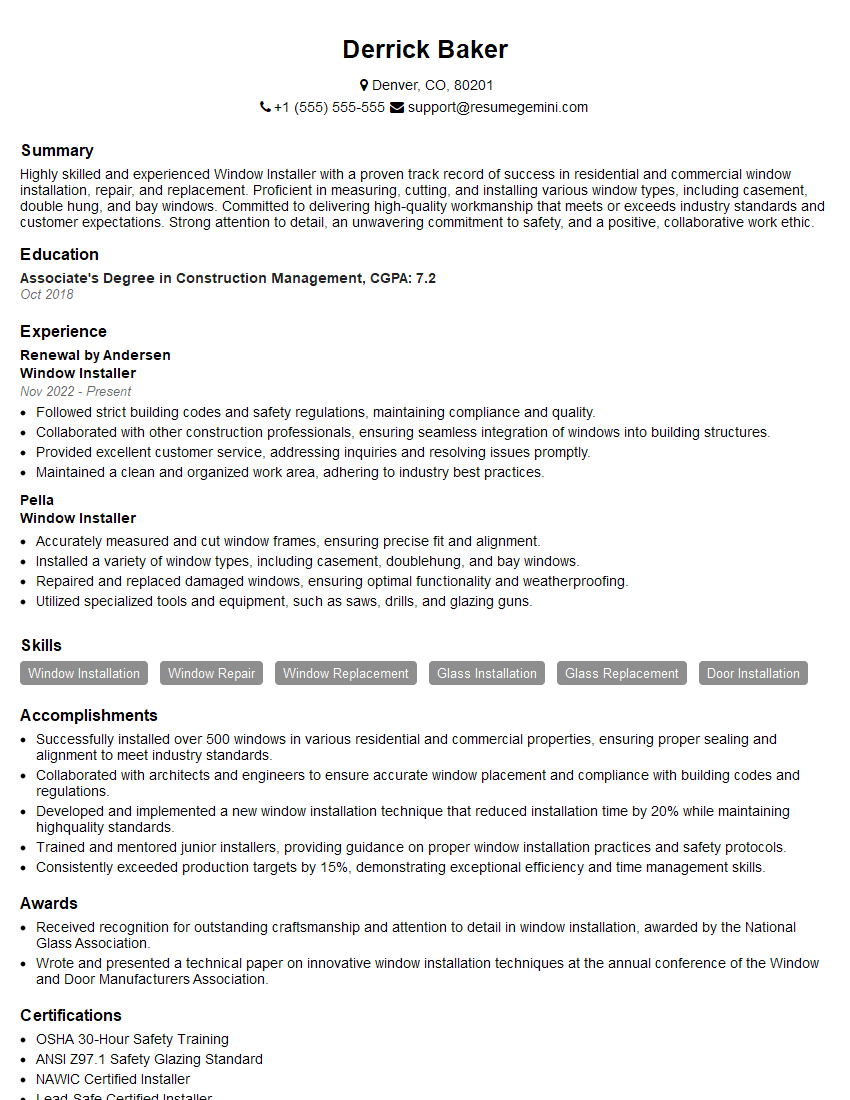
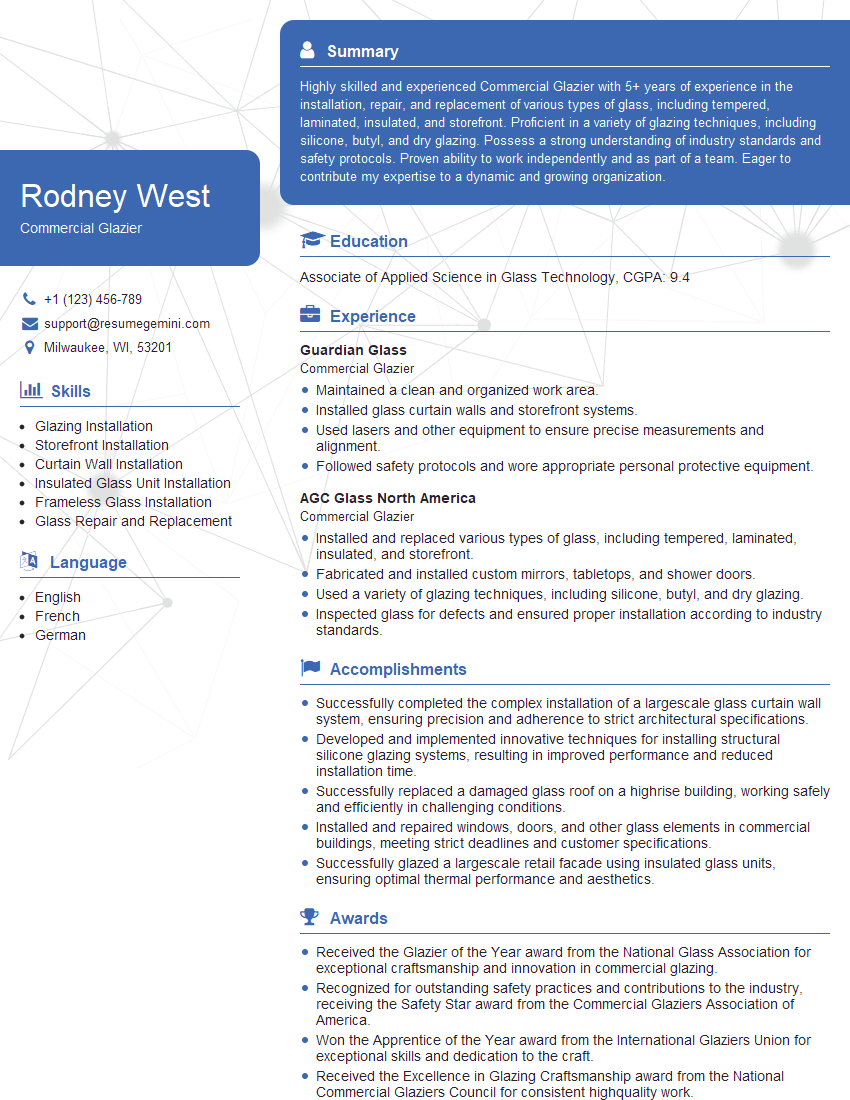
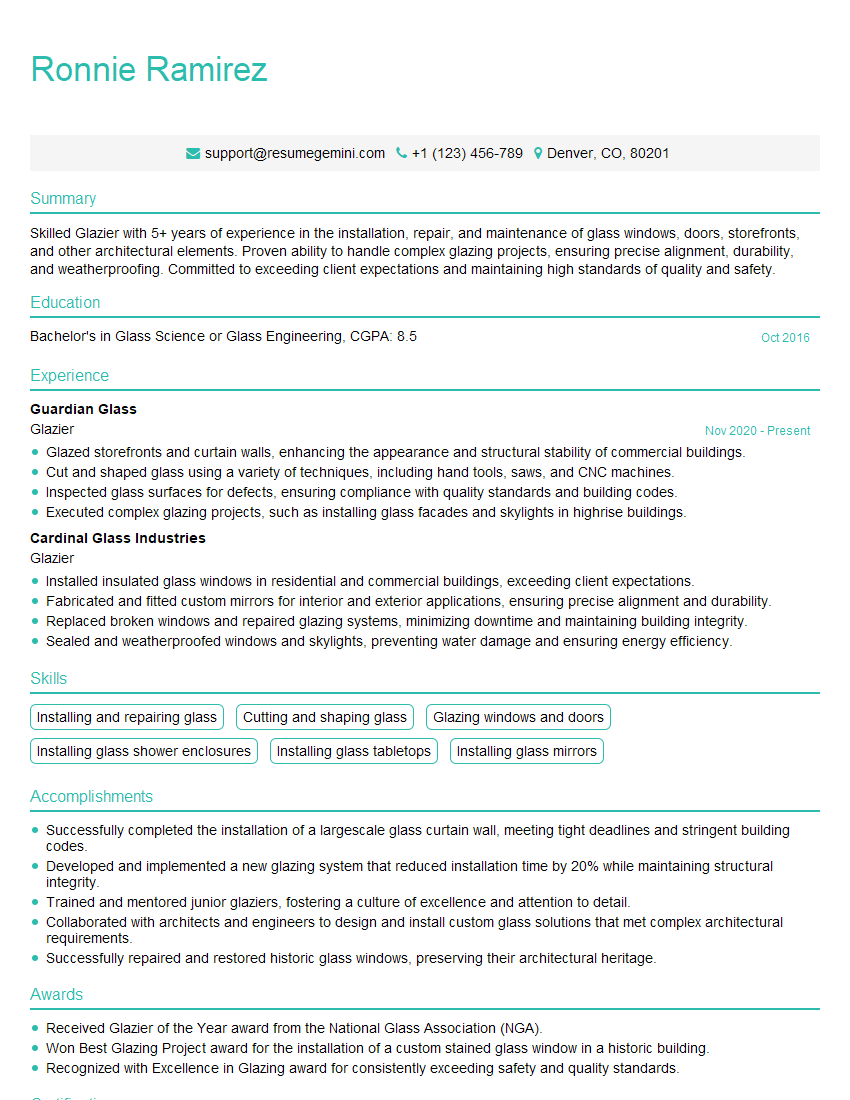
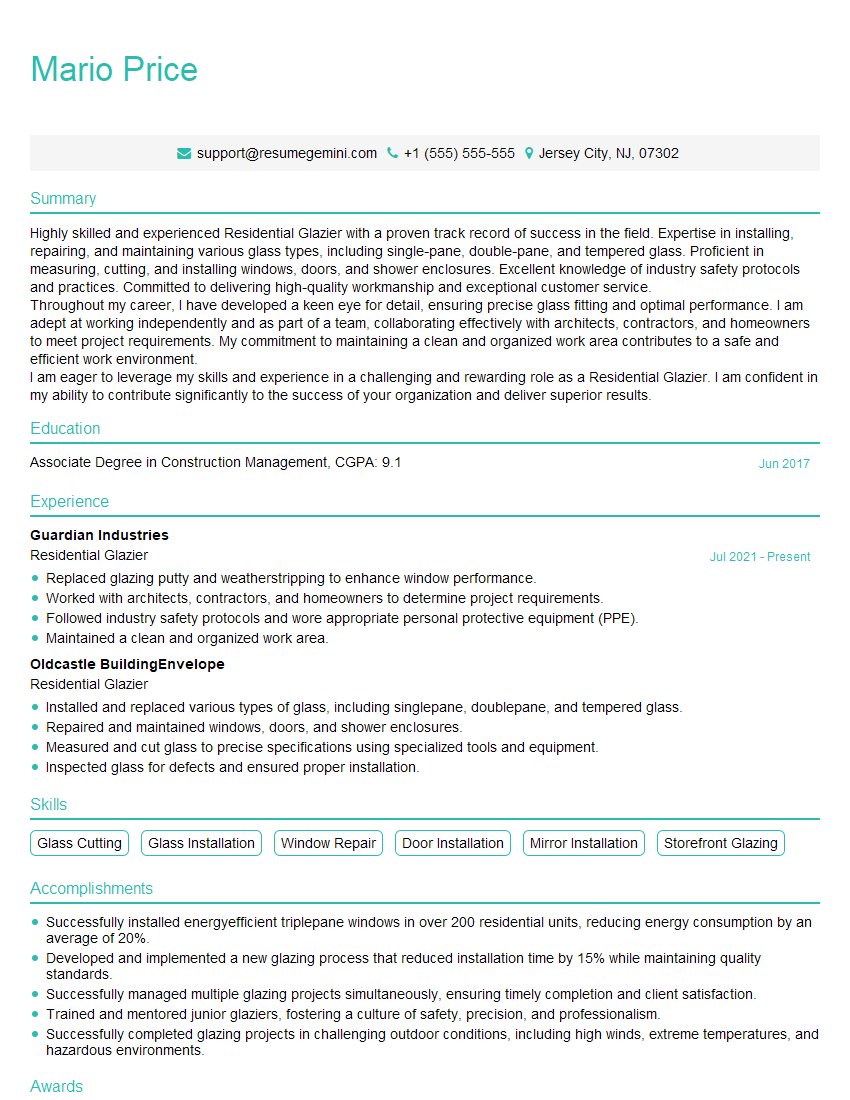
Mastering Low-E glass installation opens doors to rewarding career opportunities in a growing green technology sector. This specialized skill is highly sought after, leading to competitive salaries and advancement prospects. To maximize your job search success, it’s vital to have an ATS-friendly resume that highlights your skills and experience effectively. We strongly encourage you to leverage ResumeGemini to build a professional and impactful resume that stands out to recruiters. ResumeGemini offers tools and resources to create a compelling narrative, and examples of resumes tailored to Low-E glass installation are available to help guide you.
Explore more articles
Users Rating of Our Blogs
Share Your Experience
We value your feedback! Please rate our content and share your thoughts (optional).
What Readers Say About Our Blog
To the interviewgemini.com Webmaster.
Very helpful and content specific questions to help prepare me for my interview!
Thank you
To the interviewgemini.com Webmaster.
This was kind of a unique content I found around the specialized skills. Very helpful questions and good detailed answers.
Very Helpful blog, thank you Interviewgemini team.