Feeling uncertain about what to expect in your upcoming interview? We’ve got you covered! This blog highlights the most important Low Vision Aids Training interview questions and provides actionable advice to help you stand out as the ideal candidate. Let’s pave the way for your success.
Questions Asked in Low Vision Aids Training Interview
Q 1. Explain the different types of low vision aids.
Low vision aids are tools designed to help individuals with visual impairments enhance their ability to see and perform daily tasks. They range from simple magnifiers to sophisticated electronic devices. They can be broadly categorized as optical, non-optical, and electronic aids.
- Optical Aids: These devices use lenses to magnify images. Examples include hand-held magnifiers, stand magnifiers, spectacles with magnification, and telescopic lenses. The choice depends on the task and the individual’s needs; a hand magnifier might suffice for reading a newspaper, while a stand magnifier is better for extended reading. Telescopic lenses are best for viewing distant objects.
- Non-optical Aids: These aids don’t use lenses but enhance visual input in other ways. Examples include high-contrast materials (e.g., large-print books, yellow overlays), large-button phones, and adaptive lighting. These are often used in conjunction with optical aids.
- Electronic Aids: These use technology to magnify images and often incorporate other features like text-to-speech. Examples include Closed-Circuit Television (CCTV) systems and electronic magnifiers. CCTV systems magnify documents and objects onto a screen, while electronic magnifiers are handheld devices offering magnification and other features like adjustable contrast and brightness.
The selection process for a particular aid depends heavily on the client’s specific visual impairment, their lifestyle, and their preferences.
Q 2. Describe the process of assessing a client’s needs for low vision aids.
Assessing a client’s needs for low vision aids is a multi-step process requiring a thorough understanding of their visual condition and functional limitations. It begins with a comprehensive case history, including their visual acuity, field of vision, and the specific challenges they face in daily life.
Next, a detailed visual examination is performed, often involving assessments of visual acuity, contrast sensitivity, and glare sensitivity. We then conduct a functional assessment, observing the client performing tasks like reading, writing, and recognizing faces. This helps to identify the activities of daily living that are most affected by their vision loss.
We discuss the client’s preferences and lifestyle, determining which activities are most important to them, and their comfort level with different types of technology. This information is crucial to determine what types of low vision aids are best suited and practical for the client. The assessment is not just about visual capabilities but also the client’s overall abilities and preferences, so that the aids are not only effective but also actually used. We may test several different aids to see which one works best for the client, taking careful note of their feedback.
Q 3. What are the key considerations when recommending magnifiers?
When recommending magnifiers, several key considerations are paramount:
- Type of Magnification: Simple magnifiers provide a limited field of view but are portable. Stand magnifiers provide a larger field of view but are less portable. The choice depends on the client’s needs and tasks. For example, a simple magnifier is perfect for quick checks on labels, while a stand magnifier is better suited for reading a book.
- Magnification Power: The magnification power must be appropriate for the client’s residual vision. Too much magnification can lead to image distortion and reduced clarity, while too little magnification may be ineffective. We carefully assess this with the client to find the sweet spot.
- Working Distance: The distance between the magnifier and the material being viewed affects both magnification and comfort. We ensure the selected magnifier allows for a comfortable working distance preventing strain and fatigue. For instance, some clients will need a longer working distance due to their physical limitations.
- Illumination: Adequate lighting is essential. Some magnifiers come with built-in lighting, while others require external lighting. This is particularly crucial for clients with reduced contrast sensitivity.
- Size and Weight: The magnifier should be comfortable to hold and use, especially for prolonged periods. For clients with dexterity challenges, a larger, lighter magnifier is more suitable.
We always demonstrate various magnifiers to the client, letting them choose the most comfortable and effective one for their needs.
Q 4. How do you teach a client to use a CCTV system?
Teaching a client to use a CCTV system involves a structured approach. It starts with introducing the basic functionalities of the system – turning it on, adjusting the focus, and controlling the zoom.
We then guide them through the different features. This typically includes demonstrating how to adjust brightness, contrast, and color settings. We highlight the benefits of each setting, for instance, how adjusting contrast can improve readability for materials with low contrast. We introduce the different viewing modes, such as the split-screen, which allows comparing different parts of a document.
Hands-on practice is crucial. We start with simple tasks, like reading a newspaper headline, and gradually progress to more complex ones, such as reading a lengthy document or working with smaller print. We continuously provide feedback and guidance, encouraging them to experiment with the settings to find what works best for them. We also discuss troubleshooting common issues such as adjusting lighting to optimize image quality. Throughout the training, we emphasize building confidence and independence. We conclude by providing written instructions and contact information for ongoing support.
Q 5. Explain the benefits and limitations of electronic magnifiers.
Electronic magnifiers offer several advantages over traditional optical aids:
- Variable Magnification: They provide a wide range of magnification levels, allowing for easy adjustment depending on the task at hand.
- Additional Features: Many include features like adjustable contrast, brightness, and color, which can greatly enhance readability and reduce eye strain. Some even offer text-to-speech capabilities.
- Portability: Many electronic magnifiers are lightweight and portable, allowing clients to use them in various settings.
However, there are also limitations:
- Cost: Electronic magnifiers are typically more expensive than optical aids.
- Technical Complexity: Some clients may find the technology challenging to learn and use. This is where thorough training is absolutely crucial.
- Battery Life: Battery life can be a concern, especially with extended use.
- Screen Size: The screen size might limit the viewing area, especially when dealing with large documents.
Carefully weighing these benefits and limitations against individual needs is key to making an informed recommendation. Sometimes, a combination of an electronic and an optical device works best.
Q 6. How do you adapt training methods for clients with different cognitive abilities?
Adapting training methods for clients with different cognitive abilities is crucial for effective low vision aid use. We utilize a personalized approach, tailoring the training to the individual’s specific needs and capabilities.
For clients with mild cognitive impairment, we may use a step-by-step approach with clear instructions and frequent repetition. We break down complex tasks into smaller, manageable steps. Visual aids and demonstrations are extensively used, and we provide regular feedback. We may also use memory aids, like checklists or written instructions, to help them remember the steps involved in using the device.
For clients with more significant cognitive impairment, we may need to simplify the training even further. We might focus on teaching only the most essential functions of the aid. We prioritize simple, clear instructions with minimal technical jargon and use a lot of visual cues. The training sessions might be shorter and more frequent to avoid cognitive overload. We often work closely with caregivers to ensure consistent support and reinforcement of the learning process. We also use positive reinforcement to motivate and encourage learning.
In all cases, patience, flexibility, and a focus on the client’s individual learning style and pace are paramount. The goal is not just to teach them *how* to use the device, but also to foster their confidence and independence.
Q 7. Describe your experience with various types of optical low vision devices.
My experience encompasses a wide range of optical low vision devices, including hand-held magnifiers of various magnification powers and lens types, stand magnifiers with different illumination options, and spectacle-mounted magnifiers and telescopes. I’ve worked extensively with different types of lenses—aspheric, aplanatic, and others—understanding their strengths and limitations for specific visual impairments. For instance, aspheric lenses minimize distortion at higher magnification powers, proving advantageous for clients reading smaller text.
I’ve also had extensive experience assessing and fitting clients with telescopic lenses. This requires careful consideration of factors like the desired magnification, field of view, and working distance, and requires an understanding of how various lens configurations influence the resulting image. I always consider the individual’s needs and lifestyle to provide the most effective and practical solution. For example, a client needing to see things at a distance would need a different telescopic lens configuration than a client with a preference for close-up reading using telescopic assistance.
Beyond individual devices, I am experienced in evaluating the interplay between different devices. For instance, a client may need a combination of a hand-held magnifier for quick tasks and a stand magnifier for extended reading. My expertise involves helping the client understand how to most effectively utilize a combination of aids, maximizing functionality and comfort.
Q 8. How do you address client frustration or difficulty in adapting to low vision aids?
Adapting to low vision aids can be challenging, often leading to frustration. My approach focuses on empathy, understanding, and a gradual, individualized training process. I begin by acknowledging the client’s feelings, validating their difficulties, and emphasizing that learning to use new aids takes time and practice. We collaboratively set realistic, achievable goals, breaking down complex tasks into smaller, manageable steps. For example, instead of immediately focusing on using a CCTV for reading entire books, we might start with practicing reading a single paragraph. Positive reinforcement and celebrating small successes are crucial. If frustration persists, we might adjust the training plan, explore alternative aids, or refer the client to additional support services like counseling or support groups.
I also utilize various techniques to encourage adaptation. For instance, I often use analogies to connect new concepts to familiar experiences. Explaining how a magnifier works by comparing it to a magnifying glass that they already understand can make the transition easier. We also involve the client in troubleshooting, empowering them to become active participants in their rehabilitation.
Q 9. What is your approach to troubleshooting technical issues with low vision aids?
Troubleshooting technical issues requires a systematic approach. I always begin by asking the client to clearly describe the problem, noting the specific device, the error message (if any), and the sequence of events leading up to the issue. This helps me quickly narrow down the possible causes. My process then involves:
- Checking the basics: Verifying power source, correct connections, and software updates.
- Inspecting the device: Examining for physical damage, loose components, or obstructions.
- Testing different settings: Adjusting contrast, brightness, magnification, and other settings to see if the problem is resolved.
- Using remote assistance: If needed, I utilize remote access software to troubleshoot the problem directly on the client’s device.
- Contacting technical support: If the issue persists after initial troubleshooting, I contact the manufacturer’s technical support for assistance.
For instance, if a client is having trouble with a screen reader not recognizing text, I’d first check the screen reader’s settings to ensure it’s properly configured and updated. I would then check for any software conflicts, and if the problem still persists, I might reach out to the screen reader’s manufacturer for support.
Q 10. How do you ensure client safety when using new assistive technology?
Client safety is paramount. Before introducing any new assistive technology, I conduct a thorough assessment of the client’s environment and capabilities to identify potential hazards. This includes considering physical limitations, cognitive abilities, and the layout of their home. For example, if a client is using a new mobility aid, I ensure their walking path is clear of obstacles. When introducing electronic devices, I explain safe handling procedures, emphasizing the importance of avoiding water damage and overheating. I also provide clear instructions on device usage and emergency procedures. A key component is providing training in a safe and comfortable environment, allowing ample time for practice and questions.
Additionally, we discuss potential risks associated with the specific device. For instance, with electronic magnifiers, we discuss the importance of proper posture to avoid neck or back strain. If using a mobility aid, we review safety protocols to avoid falls. We document all safety considerations in the client’s training plan.
Q 11. Describe your experience with training clients on the use of screen readers.
I have extensive experience training clients on screen readers, including JAWS, NVDA, and VoiceOver. My approach is highly individualized, recognizing that each client has unique learning styles and technical proficiency. Training begins with a thorough needs assessment, understanding their specific reading requirements and technological expertise. Then, I tailor the training plan to address these individual needs. We start with the basics – navigating the computer, opening programs, and customizing settings. We then progress to more advanced features like text-to-speech customization and keyboard shortcuts.
I utilize a hands-on approach, encouraging active participation and providing ample opportunities for practice. I break down complex concepts into smaller, manageable tasks, using a combination of demonstrations, guided practice, and independent exercises. Regular follow-up sessions ensure continued support and address any emerging challenges. For instance, I might create personalized practice documents containing text types the client frequently encounters (like emails or financial documents) to build confidence and proficiency. I also teach effective strategies for troubleshooting common issues independently.
Q 12. Explain the principles of proper lighting and its impact on low vision.
Proper lighting is crucial for individuals with low vision. The principles revolve around minimizing glare, maximizing contrast, and providing sufficient illumination. Glare, caused by direct or reflected light, can significantly reduce visual acuity and increase discomfort. To mitigate glare, we can use anti-glare filters on screens, adjust window coverings, and use indirect lighting sources. Contrast refers to the difference in brightness between objects and their background. High contrast makes it easier to see objects, so we encourage the use of high-contrast backgrounds and text for reading materials and digital devices.
Sufficient illumination doesn’t mean excessively bright light; rather, it’s about providing enough light to comfortably perform tasks without causing eye strain or glare. Different lighting solutions might be necessary depending on the task: a bright task light for reading, or softer ambient lighting for general illumination. The type of light also matters; warmer light can be more comfortable for some individuals. We also consider the client’s preferences and specific visual needs when recommending lighting solutions.
Q 13. How do you incorporate family members into the low vision rehabilitation process?
Incorporating family members is vital for successful low vision rehabilitation. They play a significant role in providing support, implementing strategies at home, and facilitating the client’s independence. I encourage family members to attend training sessions whenever possible, fostering a shared understanding of the client’s needs and the operation of assistive technology. We discuss the importance of patience and understanding, emphasizing that the adaptation process takes time and may involve setbacks. I also provide families with education on the specific challenges faced by the client and strategies for promoting a supportive environment.
For example, I might teach family members how to properly adjust the lighting in the home or how to assist with setting up electronic devices. I also offer resources and support groups where families can connect with others facing similar challenges. Open communication and collaborative problem-solving are crucial. We work together to create a realistic and sustainable plan that caters to the client’s needs while considering the capabilities and limitations of the family support system.
Q 14. How do you assess a client’s visual field and its impact on device selection?
Assessing a client’s visual field is critical for selecting appropriate low vision aids. I typically use a combination of methods, including visual field testing (e.g., confrontation testing) to determine the extent of their peripheral vision. This helps me understand how much of their visual field is affected and tailor device recommendations accordingly. For example, a client with severely restricted peripheral vision might benefit from a device with a narrow field of view, as a wider field might be overwhelming or cause visual confusion.
The impact of visual field loss on device selection is substantial. A client with tunnel vision might need a device that provides magnification with a very narrow field of view, while a client with scotomas (blind spots) might benefit from a device that allows for scanning or that can compensate for the areas of vision loss. Considering the client’s visual field alongside their other visual limitations (e.g., acuity, contrast sensitivity) ensures that we select the most appropriate and effective low vision aid. We always involve the client in the device selection process, allowing them to try different devices and choose what works best for their individual needs and preferences.
Q 15. Describe your experience working with different types of visual impairments.
My experience encompasses a wide spectrum of visual impairments, from mild refractive errors requiring simple correction to profound vision loss resulting from conditions like macular degeneration, glaucoma, and retinitis pigmentosa. I’ve worked with individuals experiencing various levels of visual acuity, contrast sensitivity, and visual field restrictions. For instance, I’ve trained clients with central vision loss who needed to learn strategies for using peripheral vision, and others with tunnel vision who required training in scanning techniques. Each case requires a personalized approach, considering the specific challenges presented by their unique visual profile and functional needs. I also have experience working with individuals who have additional challenges such as cognitive impairment or mobility issues, which often impact their ability to learn and use low vision aids.
Career Expert Tips:
- Ace those interviews! Prepare effectively by reviewing the Top 50 Most Common Interview Questions on ResumeGemini.
- Navigate your job search with confidence! Explore a wide range of Career Tips on ResumeGemini. Learn about common challenges and recommendations to overcome them.
- Craft the perfect resume! Master the Art of Resume Writing with ResumeGemini’s guide. Showcase your unique qualifications and achievements effectively.
- Don’t miss out on holiday savings! Build your dream resume with ResumeGemini’s ATS optimized templates.
Q 16. What are some common challenges encountered during low vision aid training?
Common challenges in low vision aid training often stem from a combination of factors. Firstly, adaptation can be a significant hurdle. Many clients find it difficult to adjust to using new devices and strategies, particularly if they’ve had significant vision loss for a long period. Secondly, motivation can be an issue; feelings of frustration, loss of independence, and depression can hinder progress. Thirdly, cognitive abilities play a critical role; clients with cognitive impairments may struggle with the learning process itself, making the training more time-consuming and challenging. Finally, access to appropriate technology and resources can present a barrier, limiting the effectiveness of the training.
- Example: A client with macular degeneration initially resisted using a magnifier because they felt it was cumbersome. We overcame this by gradually introducing it during familiar activities, demonstrating its effectiveness in increasing their reading speed and improving comfort.
Q 17. How do you measure the effectiveness of low vision aid training?
Measuring the effectiveness of low vision aid training involves both objective and subjective assessments. Objective measures include pre- and post-training assessments of visual acuity, contrast sensitivity, and reading speed. We might use standardized tests like the MNREAD chart to track reading performance. Subjective measures rely on client feedback and self-reported improvements in daily living activities. This includes questionnaires evaluating their independence in tasks like reading, writing, cooking, or managing medications. We also assess their overall satisfaction with the aids and the training process itself. For instance, we might track the number of times a client uses a particular aid successfully in a given week, or gauge their confidence in using it independently.
Q 18. What strategies do you use to motivate clients who are struggling?
Motivating struggling clients requires a multifaceted approach that prioritizes empathy, understanding, and positive reinforcement. I start by actively listening to their concerns and validating their feelings. Setting realistic and achievable goals, breaking down complex tasks into smaller, manageable steps, and celebrating small successes are crucial. Positive reinforcement helps build confidence and motivation. I often use a collaborative approach, involving the client in decision-making regarding the training process and the selection of aids, empowering them to take ownership of their learning. Sometimes, incorporating activities they enjoy – for example, reading their favorite newspaper or writing letters to loved ones – can significantly boost their motivation and demonstrate the practical benefits of the training.
Q 19. Explain your knowledge of various assistive technology software programs.
My knowledge of assistive technology software encompasses a range of programs designed to enhance accessibility for individuals with visual impairments. This includes screen readers like JAWS and NVDA, which convert text and on-screen information into synthesized speech or Braille. I’m also proficient with screen magnification software like ZoomText and Magnifier, which enlarge text and on-screen content. Furthermore, I have experience with optical character recognition (OCR) software like ReadIris and ClaroRead, which convert images of text into editable digital text. My training also covers specialized software for specific tasks, such as voice-activated word processors and adaptive web browsers. I teach clients how to configure these programs effectively according to their individual needs and preferences.
Q 20. How do you stay current with advancements in low vision technology?
Staying current with advancements in low vision technology requires continuous professional development. I regularly attend conferences and workshops, participate in online courses and webinars, and actively read professional journals and publications focusing on assistive technology and low vision rehabilitation. I also maintain contact with colleagues in the field and participate in professional organizations like the American Academy of Ophthalmology and the Vision Rehabilitation Therapy Certification Board to stay informed about best practices and the latest technological developments. This ensures I can provide my clients with the most up-to-date information and access to the most effective strategies and equipment. I also encourage my clients to engage in ongoing learning by participating in online tutorials and communities dedicated to low vision technology.
Q 21. Describe your experience with different funding sources for low vision aids.
My experience with funding sources for low vision aids is extensive. I’m familiar with navigating the complexities of Medicare, Medicaid, and private insurance plans. I understand the eligibility criteria, documentation requirements, and reimbursement processes for various low vision devices and services. Additionally, I’m knowledgeable about state and local programs and charitable organizations that provide financial assistance for low vision aids. I regularly assist clients in applying for funding and provide guidance on managing their claims. Sometimes, this involves advocating on behalf of clients to ensure they receive the necessary financial support to access the aids that will best help them regain independence and improve their quality of life.
Q 22. How do you maintain client confidentiality and ethical practice?
Maintaining client confidentiality and ethical practice is paramount in my work. I adhere strictly to HIPAA regulations and all relevant professional guidelines. This means all client information, including their diagnosis, training progress, and personal details, is stored securely in password-protected electronic files and locked physical files, accessible only to authorized personnel. I never discuss client information with anyone outside of the relevant care team without explicit consent. For instance, if I’m discussing a client’s progress with their ophthalmologist, I only share information directly related to their visual needs and assistive device use. I always obtain informed consent before starting any training or sharing information and ensure clients understand their rights regarding their data.
Ethical practice also includes maintaining professional boundaries, being respectful of client autonomy, and avoiding conflicts of interest. I treat each client with dignity and respect, recognizing their individual needs and preferences. For example, I might adjust my training style based on a client’s cultural background or personal communication style to ensure a comfortable and effective learning experience.
Q 23. What is your approach to documenting client progress and training sessions?
Documenting client progress and training sessions is crucial for tracking improvement and informing future interventions. I use a structured system that includes a detailed initial assessment documenting the client’s visual acuity, functional limitations, and goals. Following each session, I record the specific techniques taught, the client’s responses and progress, and any challenges encountered. This documentation is detailed enough to track subtle improvements, for instance, noting the client’s improvement in reading speed or accuracy. I might write ‘Client successfully improved reading speed from 20 words per minute to 30 words per minute, with improved accuracy from 70% to 85%’ This data is crucial for demonstrating the effectiveness of the training to other healthcare professionals and for insurance purposes.
I use a combination of digital and paper-based records. Digital records offer easy accessibility and searchability while paper records offer a backup and comply with regulations, depending on the client’s and agency preferences. All records are securely stored, and access is restricted to authorized personnel.
Q 24. How do you adapt training to different learning styles and preferences?
Adapting training to diverse learning styles is fundamental to effective low vision rehabilitation. I recognize that individuals learn in different ways – some are visual learners, some are auditory, and some are kinesthetic. I assess each client’s preferred learning style early in the process. For visual learners, I might use visual aids like diagrams and charts; for auditory learners, I might use verbal explanations and demonstrations; and for kinesthetic learners, I might involve hands-on practice and simulations.
For example, one client might benefit from reading practice with large-print books and magnifiers, while another might respond better to audio books or screen readers. Some clients learn best through direct instruction, while others thrive in a more collaborative environment. I adapt my teaching methods accordingly and incorporate a variety of techniques to cater to these individual preferences. I also tailor the pace of learning to meet each individual’s needs, avoiding rushed sessions and celebrating every milestone along the way.
Q 25. What are some common misconceptions about low vision aids?
Several misconceptions surround low vision aids. One common misconception is that low vision aids can restore sight to its original level. While aids significantly improve functional vision, they do not cure vision loss. Another misconception is that all low vision aids work for everyone. The best aid varies greatly depending on the individual’s specific vision impairment, lifestyle, and personal preferences. A third misconception is that these aids are expensive and inaccessible. While some aids are indeed costly, many affordable and effective options exist, with various funding and support programs available.
Finally, some individuals believe that using low vision aids signifies defeat or a limitation. I emphasize that these devices are empowering tools that facilitate independence and enhance quality of life, not signs of giving up. My role is to help clients understand the full range of options and integrate these aids seamlessly into their everyday routines, fostering confidence and self-reliance.
Q 26. How would you handle a situation where a client is dissatisfied with their low vision aid?
Client dissatisfaction with their low vision aid requires a careful and empathetic approach. I would start by actively listening to the client’s concerns, validating their feelings, and avoiding any defensive reactions. I would ask open-ended questions to understand the specific issues they’re experiencing, such as difficulty using the device, discomfort, or unmet expectations. I’d review the training plan to determine if any modifications or clarifications are needed.
For example, if a client finds a magnifier too cumbersome, I’d explore alternative options like electronic magnifiers or larger-print materials. If the client has unmet expectations about the capabilities of the aid, I will reiterate its limitations and strengths and explore more suitable options based on their needs. If necessary, I would consult with other professionals, like an ophthalmologist or occupational therapist, to reassess the client’s visual needs and explore additional options. The goal is to work collaboratively to find a solution that meets the client’s needs and improves their satisfaction.
Q 27. Describe your experience collaborating with other healthcare professionals (e.g., ophthalmologists, occupational therapists).
Collaboration with other healthcare professionals is essential for providing holistic care. I frequently work alongside ophthalmologists, who provide the initial diagnosis and manage medical aspects of vision loss. My role complements theirs by focusing on functional rehabilitation and assistive technology. For instance, I collaborate with ophthalmologists to ensure that the chosen low vision aid aligns with the client’s visual diagnosis and recommendations.
I also regularly collaborate with occupational therapists, especially when addressing daily living skills impacted by vision impairment. We might co-treat clients to address adaptive strategies for cooking, dressing, or medication management, ensuring a comprehensive approach to maximizing independence. For example, an occupational therapist might suggest adaptive kitchen tools while I provide training on using a magnifier to read food labels. This collaborative approach delivers better results, ensuring the client’s overall well-being is addressed holistically.
Key Topics to Learn for Low Vision Aids Training Interview
- Understanding Low Vision: Defining low vision, its various causes, and the impact on daily life. This includes understanding the different types of visual impairments and their associated challenges.
- Assistive Technology: Gaining a comprehensive understanding of available low vision aids, including magnification devices (electronic and non-electronic), optical aids, and assistive software. Practical application involves describing the functionality and limitations of various devices and software.
- Rehabilitation Techniques: Learning about adaptive strategies and techniques to help individuals with low vision improve their independence and quality of life. This includes understanding visual efficiency strategies, orientation and mobility techniques, and assistive technology training methodologies.
- Assessment and Consultation: Mastering the process of assessing an individual’s needs, recommending appropriate aids, and providing effective training and support. This includes understanding the ethical considerations and patient communication skills involved.
- Legal and Ethical Considerations: Familiarity with relevant laws and regulations regarding the provision of low vision services and the ethical responsibilities of professionals in this field. Consider implications for patient privacy and data security.
- Client Communication and Education: Developing effective communication strategies to explain complex information clearly and empathetically to individuals with low vision and their families. This involves understanding the emotional impact of vision loss and tailoring your approach accordingly.
- Troubleshooting and Maintenance: Developing practical problem-solving skills to address common issues encountered with low vision aids, including troubleshooting technical malfunctions and providing maintenance guidance.
Next Steps
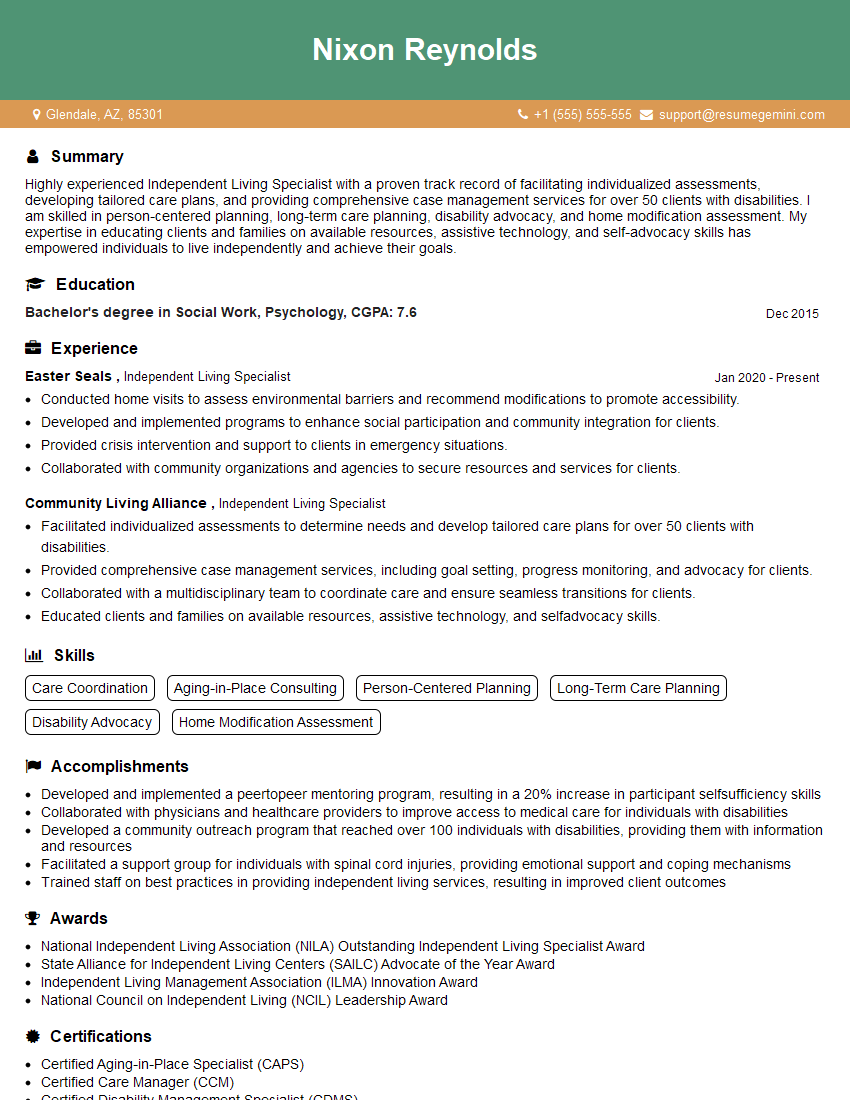
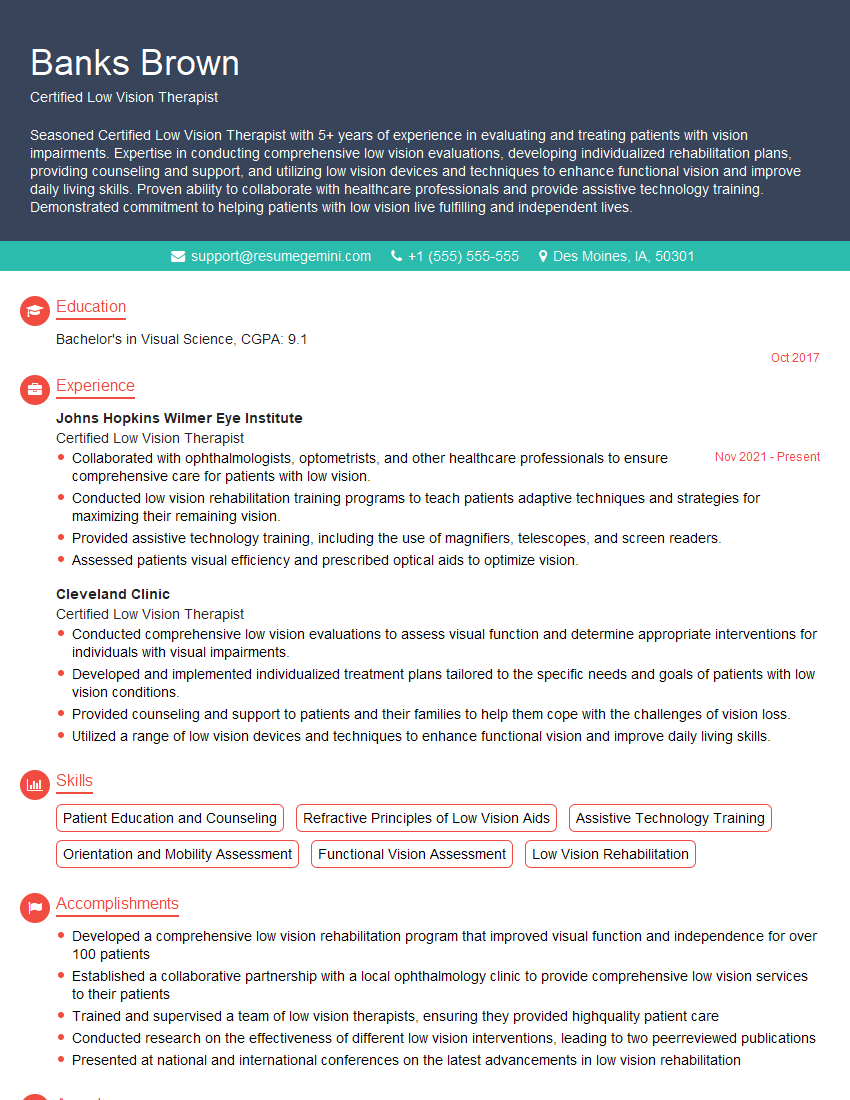
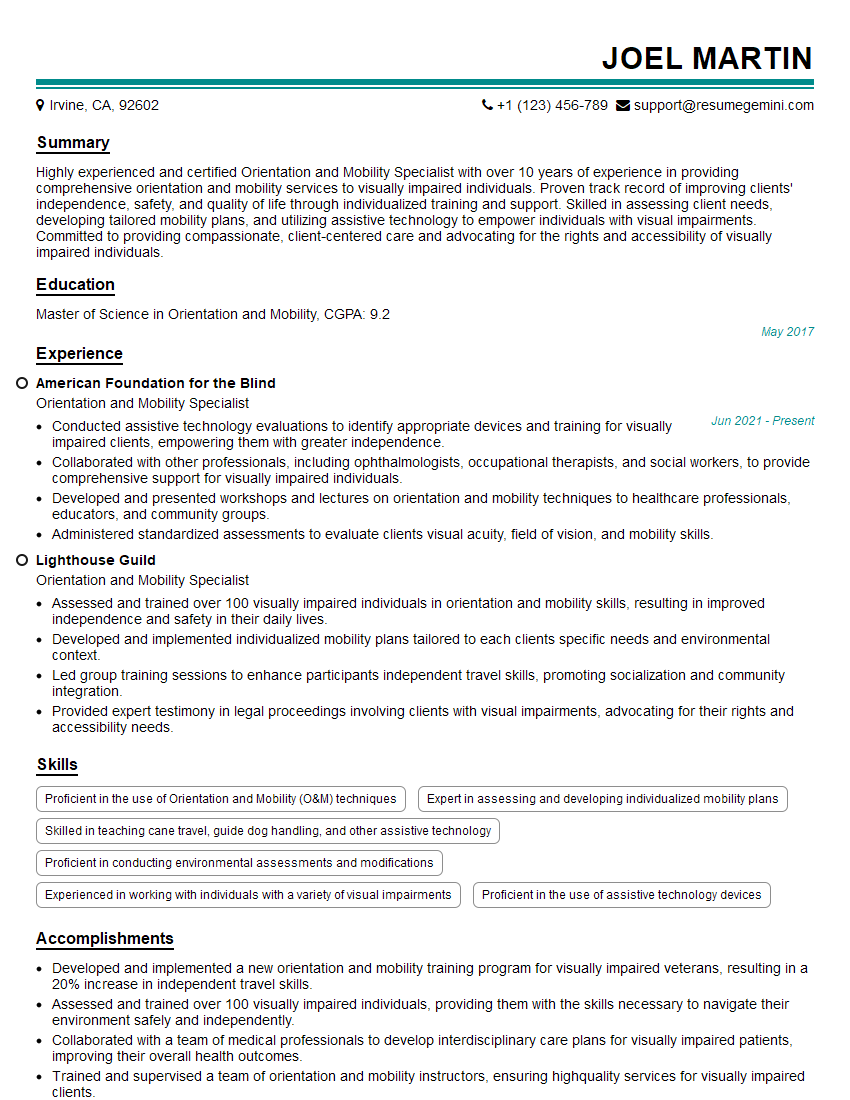
Mastering Low Vision Aids Training opens doors to a rewarding career helping individuals regain independence and improve their quality of life. To maximize your job prospects, it’s crucial to present your skills and experience effectively. Building an ATS-friendly resume is key to getting your application noticed by recruiters. ResumeGemini is a trusted resource that can help you craft a professional and impactful resume, ensuring your qualifications shine. Examples of resumes tailored to Low Vision Aids Training are available to help guide you through the process. Take the next step and create a resume that highlights your expertise and secures your dream role.
Explore more articles
Users Rating of Our Blogs
Share Your Experience
We value your feedback! Please rate our content and share your thoughts (optional).
What Readers Say About Our Blog
To the interviewgemini.com Webmaster.
Very helpful and content specific questions to help prepare me for my interview!
Thank you
To the interviewgemini.com Webmaster.
This was kind of a unique content I found around the specialized skills. Very helpful questions and good detailed answers.
Very Helpful blog, thank you Interviewgemini team.