Preparation is the key to success in any interview. In this post, we’ll explore crucial Lumber Press Operation interview questions and equip you with strategies to craft impactful answers. Whether you’re a beginner or a pro, these tips will elevate your preparation.
Questions Asked in Lumber Press Operation Interview
Q 1. Describe your experience operating different types of lumber presses.
My experience encompasses a wide range of lumber presses, including cold presses, hot presses, and various configurations within those categories. I’ve worked extensively with hydraulic presses, which are common for larger operations and offer precise pressure control. I also have experience with smaller, more manual presses, often used for specialized or smaller-scale projects. For example, I’ve operated a 10-ton hydraulic cold press for gluing up large panels and a smaller, screw-type press for creating laminated beams. The differences in operation involve understanding the specific controls, pressure capabilities, and safety mechanisms of each type of press. The key is adapting my techniques to the machine’s unique characteristics to achieve optimal results.
Q 2. Explain the process of setting up a lumber press for a specific job.
Setting up a lumber press for a specific job is a multi-step process that begins with understanding the job’s requirements. First, I assess the dimensions and species of the lumber. This dictates the size and configuration of the press caul plates and the necessary pressure. Then, I select the appropriate glue, ensuring compatibility with the wood type and the intended application. Following that, I meticulously clean the press platens to ensure a consistent bond and to prevent glue from building up, potentially causing damage. The lumber is carefully positioned within the press, ensuring proper alignment and consistent spacing between boards to avoid uneven pressure. Finally, I carefully adjust the press pressure according to the project specifications and the glue manufacturer’s recommendations. Incorrect pressure can lead to either insufficient bonding or damage to the wood.
For instance, if I’m gluing up a large table top from hardwood, I’d use wider caul plates, a higher pressure setting, and a longer press time compared to a smaller project using softer wood. I always refer to detailed work orders and specifications to ensure proper setup.
Q 3. How do you ensure the quality of the lumber produced by the press?
Ensuring quality lumber from the press involves a combination of careful preparation, precise operation, and thorough inspection. Before pressing, I meticulously inspect the wood for defects like knots, cracks, or warping. I also check for consistent moisture content as this directly impacts bonding and the final product’s stability. During the pressing process, I monitor the pressure gauge to ensure it’s within the specified parameters. After the press cycle, I carefully inspect the finished piece for any defects in the bond or evidence of uneven pressure. I might use a moisture meter to verify that the moisture content is within the desired range and check for any glue squeeze-out. In cases of inconsistent results, I’ll analyze the process and make adjustments to improve quality. Regular calibration of the press and maintenance of its components are vital in maintaining consistency.
Q 4. What are the common maintenance tasks performed on a lumber press?
Regular maintenance is crucial for the longevity and efficiency of a lumber press. This includes daily checks of hydraulic fluid levels (for hydraulic presses), lubrication of moving parts, and inspection for any signs of wear or damage on the platens, caul plates, and other components. Weekly maintenance involves a more thorough cleaning of the press, including removing any glue residue or debris. Monthly tasks might involve more detailed inspections, such as checking the hydraulic system for leaks or the electrical components for any malfunctions. Scheduled preventative maintenance, often conducted annually, might involve a professional inspection and servicing of the hydraulic system or replacement of worn parts. Keeping detailed maintenance logs is essential for tracking performance and identifying potential issues before they become significant problems. This minimizes downtime and maximizes the lifespan of the equipment.
Q 5. How do you troubleshoot common problems encountered during lumber press operation?
Troubleshooting lumber press issues often involves systematic investigation. For instance, if I encounter uneven pressure distribution, I would first check the alignment of the lumber and the caul plates. A common issue is insufficient glue application. In that case, I would review the glue application process and ensure adequate coverage. If the press isn’t achieving the desired pressure, I would inspect the hydraulic system for leaks or check the pressure gauge calibration. Electrical malfunctions might necessitate a check of power supply and fuses. Documenting each issue, the troubleshooting steps taken, and the resolution allows for improved efficiency in future problem-solving. Working systematically helps to rule out potential issues and identify the root cause effectively.
Q 6. What safety procedures do you follow when operating a lumber press?
Safety is paramount when operating a lumber press. Before starting any operation, I always ensure that all safety guards are in place and functioning correctly. I never operate the press with loose clothing or jewelry that could get caught in moving parts. I use appropriate personal protective equipment (PPE), including safety glasses and gloves, and I always follow the manufacturer’s safety instructions. I never attempt to adjust the press while it’s in operation. I ensure the work area is clear of obstructions and that there’s adequate ventilation, especially when working with certain glues. Regular safety training keeps me informed on the best practices and up-to-date on any new safety guidelines for operating a lumber press.
Q 7. What is your experience with different types of press platens and their applications?
My experience includes working with various press platens, including steel, aluminum, and even specialized platens designed for specific applications, such as those with built-in heating elements for hot pressing. Steel platens are durable and suitable for high-pressure applications, but can be heavy. Aluminum platens are lighter but might require more frequent maintenance. Platens with heating elements are crucial for certain glue types and for creating laminated wood with enhanced bonding strength and improved performance. The choice of platen depends heavily on the material being pressed, the desired outcome, and the type of glue being used. I understand the limitations and advantages of each material, including their thermal conductivity and susceptibility to wear and tear. Choosing the right platen is critical for achieving quality and efficient production.
Q 8. Explain your understanding of pressure, temperature, and time parameters in lumber pressing.
In lumber pressing, pressure, temperature, and time are intricately linked parameters crucial for achieving the desired bond strength and product quality. Think of it like baking a cake: you need the right heat (temperature), pressure (to compact the ingredients), and time (to allow the chemical reactions to complete). Insufficient pressure results in a weak bond, too much pressure can cause damage. Inadequate temperature hinders the adhesive’s curing process, while excessive temperature can lead to scorching or degradation. Similarly, insufficient time prevents proper curing, whereas excessive time can lead to unnecessary energy consumption and potential quality issues.
- Pressure: This is the force applied per unit area to compress the lumber layers and facilitate the adhesive’s flow. Measured in PSI (pounds per square inch) or MPa (megapascals), it ensures intimate contact between the wood layers and the adhesive.
- Temperature: The optimal temperature accelerates the curing of the adhesive, achieving the desired bond strength more quickly. This is usually controlled using steam or heated platens within the press. Different adhesives have different optimal temperature ranges.
- Time: This is the duration the lumber remains under pressure and temperature, allowing the adhesive to cure completely. The required time depends on the type of adhesive, temperature, and pressure applied. Insufficient time results in a weak bond, while excessive time may not significantly improve bond strength but increases energy costs.
Q 9. How do you monitor and adjust the press parameters to achieve optimal results?
Monitoring and adjusting press parameters is a continuous process demanding careful attention. I utilize a combination of sophisticated sensors and real-time data analysis. For instance, pressure sensors embedded within the press provide precise readings, ensuring uniform pressure distribution across the entire lumber stack. Temperature sensors monitor the platen temperatures and ensure consistency throughout the pressing cycle. We regularly check these readings against pre-set parameters and make adjustments as needed using the press’s control system. We also visually inspect the finished product for any defects like glue squeeze-out or uneven bonding. This feedback loop allows for continuous optimization and ensures consistent product quality. I’ve found that a slight adjustment in pressure or temperature can significantly influence the final product’s quality. We maintain detailed logs of all parameters for each press cycle, enabling us to identify trends and optimize the process further. This data-driven approach is key to achieving optimal results and minimizing waste.
Q 10. Describe your experience with different types of adhesives used in lumber pressing.
My experience encompasses a wide range of adhesives used in lumber pressing, including polyvinyl acetate (PVAc), polyurethane (PU), and melamine-urea-formaldehyde (MUF) resins. Each adhesive possesses unique properties impacting its application and the final product’s characteristics. PVAc is known for its water-based nature, making it environmentally friendly, but it might exhibit lower water resistance compared to PU. PU adhesives offer superior strength and water resistance, often preferred for exterior applications. MUF resins are commonly used in engineered wood products due to their strength and durability. The choice of adhesive depends on the intended application of the final product; for instance, outdoor furniture demands water-resistant adhesives like PU, while interior applications might utilize less expensive PVAc. I’ve found that proper adhesive selection and application significantly impact the final product’s performance and longevity. I always follow manufacturer’s specifications for application and curing conditions to ensure optimal results.
Q 11. How do you handle variations in lumber dimensions during the pressing process?
Variations in lumber dimensions can pose challenges during the pressing process. Uneven lumber thicknesses can lead to inconsistent pressure distribution, resulting in weak bonds or glue squeeze-out in certain areas. To address this, we employ several strategies. Firstly, we use high-precision automated measuring systems to accurately gauge lumber dimensions before the pressing process. This allows us to sort lumber based on thickness, enabling us to create stacks with consistent dimensions for optimal pressing. Secondly, we use shims or caul plates where necessary to compensate for minor variations within a stack. These devices ensure even pressure distribution despite minor inconsistencies in lumber thickness. Finally, we meticulously inspect the pressed product for defects, and we have established procedures to correct inconsistencies or replace defective components.
Q 12. What is your experience with automated lumber press systems?
I have extensive experience operating and maintaining automated lumber press systems. These systems offer significant advantages over manual presses, such as increased efficiency, improved consistency, and reduced labor costs. Automated presses often incorporate features such as automated loading and unloading, precise pressure and temperature control, and real-time data monitoring and analysis. I’m proficient in operating various PLC (Programmable Logic Controller) systems that control automated presses and troubleshooting common issues like sensor malfunctions or software glitches. I’ve also been involved in the setup and commissioning of new automated press lines, ensuring proper integration with other equipment within the production process. My expertise includes preventative maintenance, enabling optimal performance and minimizing downtime. Automated systems are crucial for achieving high-volume production while maintaining consistent product quality.
Q 13. Describe your understanding of the relationship between pressure, temperature, and time on the final product.
The relationship between pressure, temperature, and time is synergistic, influencing the final product’s bond strength, durability, and overall quality. Think of it as a three-legged stool: all three components must be balanced for stability. Adequate pressure ensures intimate contact between the lumber layers and the adhesive, promoting a strong bond. Sufficient temperature accelerates the chemical reactions within the adhesive, leading to faster curing and increased bond strength. And finally, appropriate time allows for complete curing, ensuring the adhesive reaches its full potential. A deficiency in any of these parameters can result in a weakened bond, compromising the product’s quality and performance. For example, insufficient pressure may result in a weak bond, despite adequate temperature and time. Similarly, insufficient time may yield a weak bond even if sufficient pressure and temperature are applied. Optimized parameter combinations are determined through testing and experience to produce high-quality products.
Q 14. How do you identify and address issues related to glue spread and distribution?
Issues related to glue spread and distribution can significantly impact the final product’s quality. Uneven glue distribution leads to weak bonds in areas with insufficient adhesive, while excessive glue squeeze-out causes surface imperfections and waste. To address these issues, we carefully monitor several factors. Firstly, the adhesive application method is crucial; consistent and uniform glue application is paramount, often achieved through precise metering systems or roller coaters. Secondly, we regularly inspect the glue spread using visual checks and sometimes using specialized measuring equipment. Thirdly, we address variations in glue application by adjusting the settings on the glue application equipment. Finally, proper control of pressing parameters also plays a crucial role. Insufficient pressure might not distribute the glue evenly, leading to inadequate bonding, while excessive pressure can cause excess glue squeeze-out. By maintaining a balanced approach across all these stages, we can produce high-quality products with minimal glue-related defects. A systematic approach to both glue application and press parameters is essential for achieving high-quality results and minimizing waste.
Q 15. How do you maintain accurate production records and logs?
Maintaining accurate production records is crucial for efficiency and quality control in a lumber press operation. We utilize a combination of digital and manual methods to ensure data integrity. Our primary system is a computerized production management software that tracks every cycle: the type of wood, dimensions, press settings (pressure, temperature, time), and the resulting product’s measurements and quality checks. This data is automatically logged and timestamped. For instance, we record the number of boards processed per hour, any rejects, and the reason for rejection. Additionally, a daily logbook is maintained where manual checks and observations are documented, such as operator notes on material variations or equipment performance. This dual system allows for both automated data collection and human oversight, creating a robust and reliable record-keeping process.
Think of it like a doctor’s chart – the computer system provides the objective data (vital signs), and the logbook provides the subjective observations (patient’s description of symptoms). Combining both offers a complete picture.
Career Expert Tips:
- Ace those interviews! Prepare effectively by reviewing the Top 50 Most Common Interview Questions on ResumeGemini.
- Navigate your job search with confidence! Explore a wide range of Career Tips on ResumeGemini. Learn about common challenges and recommendations to overcome them.
- Craft the perfect resume! Master the Art of Resume Writing with ResumeGemini’s guide. Showcase your unique qualifications and achievements effectively.
- Don’t miss out on holiday savings! Build your dream resume with ResumeGemini’s ATS optimized templates.
Q 16. What are the key indicators of a malfunctioning lumber press?
Several key indicators signal a malfunctioning lumber press. The most obvious is a significant drop in production output. This could be due to slower cycle times, more frequent jams, or an increase in defective products. Other signs include unusual noises like grinding or squealing, inconsistent pressure readings, inconsistent heating or cooling, and unusual vibrations. Furthermore, we monitor hydraulic fluid levels and pressure; leaks or low levels indicate potential problems with the hydraulic system. Finally, inconsistent final product dimensions and quality (e.g., warping, cracking) are clear indicators of a problem, suggesting possible issues with pressure, temperature, or the pressing cycle itself.
For example, if the heating elements are failing, you’ll notice a longer pressing time to achieve the desired temperature, leading to slower production and possibly under-cured wood. A persistent grinding noise might signify worn bearings needing replacement.
Q 17. Explain your experience with preventive maintenance of lumber presses.
Preventive maintenance is the backbone of a smoothly running lumber press operation. Our program is a scheduled, comprehensive approach involving regular inspections, lubrication, and component replacements. We follow a detailed checklist tailored to our specific press model, including checking hydraulic fluid levels and cleanliness, inspecting heating elements for wear and tear, lubricating moving parts, and checking the integrity of the press platens and beams for any signs of damage or wear. We also have a strict schedule for replacing worn components such as seals and gaskets, before they lead to major failures. This proactive approach minimizes downtime, extends the lifespan of the press, and ensures consistent product quality. For instance, we schedule a full hydraulic system flush every six months, replacing all filters. This prevents the build-up of contaminants that could damage seals or valves.
Preventive maintenance is like regularly servicing your car – small investments in upkeep prevent major breakdowns and costly repairs later.
Q 18. How do you handle emergency situations during lumber press operation?
Emergency situations require immediate, decisive action. Our protocol prioritizes safety and minimizing damage. The first step is to shut down the press immediately using the emergency stop button. Then, we assess the situation: is there a fire, a hydraulic leak, or a mechanical failure? Depending on the nature of the emergency, we’ll follow established procedures, involving a rapid response team trained in emergency protocols, which might include controlling a fire, contacting emergency services if necessary, or initiating repairs. Detailed incident reports are filed, documenting the event, the response, and any resulting damage. The cause of the emergency is thoroughly investigated to prevent recurrence. For example, a hydraulic line rupture will require immediate shutdown, containment of the fluid leak, and repair or replacement of the affected line. Safety is always paramount, ensuring no personnel are in immediate danger during such events.
Our emergency procedures are analogous to a fire drill – regular practice ensures a swift, coordinated response in a critical moment.
Q 19. What is your understanding of the different types of wood used in lumber pressing?
The type of wood significantly influences the pressing process and final product quality. We commonly work with softwoods like pine and fir, and hardwoods like oak and maple. Softwoods generally require less pressure and shorter pressing times, while hardwoods demand higher pressure and longer cycles to achieve the desired density and finish. The moisture content of the wood is also critical; too much moisture can lead to uneven drying and warping during the press cycle, while too little can result in cracking. We meticulously check the wood’s moisture content before pressing using a moisture meter to ensure it falls within the acceptable range for each species. Different species also have varying densities, influencing the final dimensions of the pressed lumber.
Just as a baker uses different ingredients for different recipes, we adapt our process for each type of wood to achieve the desired outcome.
Q 20. How do you ensure the consistency of the finished product?
Consistency in the finished product is paramount. We achieve this through meticulous control of all aspects of the pressing process. This begins with careful selection and preparation of raw materials, ensuring uniform moisture content and dimensions. Precise calibration of the press ensures consistent pressure and temperature across each cycle. Regular monitoring and adjustments of the press parameters, based on real-time data and quality control checks are vital. We regularly perform quality checks on the finished products to identify any deviation from the expected specifications. This involves measuring dimensions, checking for defects such as warping or cracks, and assessing the overall quality of the surface finish. Any discrepancies are documented and used to adjust press parameters or troubleshoot potential issues. Automated data logging provides the historical context necessary for ongoing process optimization.
Consistency is like baking a cake with the same recipe each time – precise measurement and control lead to consistent results.
Q 21. Describe your experience with different types of press cycles and their applications.
We utilize various press cycles depending on the wood type, desired outcome, and production requirements. A standard cycle might involve a gradual increase in pressure and temperature, holding the parameters at the target values for a specific time, and then a slow release. This is suitable for many applications. We also use a rapid cycle for thinner materials needing quick pressing times. Conversely, a longer cycle with multiple pressure stages might be needed for thicker or denser wood to ensure uniform consolidation and minimal internal stress. Each cycle is carefully programmed and monitored to ensure optimal results. Data analysis helps us fine-tune these cycles to improve efficiency and product quality. We may also modify cycles based on specific customer requests or to handle unusual wood properties.
Different press cycles are like adjusting cooking times depending on the thickness and type of meat being cooked – each needs a slightly different approach to achieve the perfect result.
Q 22. How do you optimize the pressing process for different types of wood and glue?
Optimizing the lumber pressing process for different wood types and glues requires a nuanced understanding of material properties and adhesive chemistries. Different woods have varying densities and moisture contents, affecting how they respond to pressure and heat. Similarly, glues have different cure times, temperatures, and pressure requirements.
- Wood Type: Harder woods like oak require higher pressures and potentially longer press times compared to softer woods like pine. The goal is to achieve adequate compression without causing damage like crushing or splintering. For example, I’ve found that using a slightly lower pressure for a longer duration with a softer wood produces better results than high pressure for a short time.
- Glue Type: Polyurethane glues, known for their strong bonds, often require higher temperatures during the pressing process compared to PVA (polyvinyl acetate) glues. I meticulously check the manufacturer’s specifications for each glue to ensure optimal curing. For instance, a specific polyurethane glue I use requires a minimum of 150°F for a complete cure, impacting both press temperature and duration.
- Press Parameters Adjustment: The process involves adjusting key press parameters like pressure, temperature, and time. This requires careful monitoring and often involves trial and error to find the optimal settings for each wood-glue combination. I frequently use data logging systems to track these parameters, which has proven invaluable in process optimization. Data analysis helps in fine-tuning the parameters for the most efficient and effective results.
Ultimately, the optimization process aims to achieve maximum bond strength, consistent quality, and efficient use of resources.
Q 23. Explain your understanding of the environmental considerations in lumber pressing.
Environmental considerations in lumber pressing are crucial for sustainable operation. This involves minimizing waste, reducing energy consumption, and managing emissions.
- Waste Reduction: Careful planning of cuts and efficient use of lumber minimizes waste generation. Implementing a system for sorting and recycling scrap wood significantly reduces landfill burden. For example, we’ve successfully implemented a program to reuse smaller scraps in the production of less demanding products.
- Energy Efficiency: Using energy-efficient presses and optimizing press cycles are vital. Regular maintenance, ensuring proper insulation, and utilizing smart control systems contribute to reduced energy consumption. I’ve been instrumental in improving our press’ efficiency through proactive maintenance scheduling and implementing energy-saving control protocols. This saved the company a substantial amount of money each year and significantly reduced our environmental footprint.
- Emission Control: Using low-VOC (volatile organic compound) glues is essential to minimizing air pollution. Proper ventilation during the pressing process is equally important to control the release of any harmful chemicals. We employ a closed-loop ventilation system to ensure air quality and minimize emissions to the environment.
By embracing these strategies, we can ensure our lumber pressing operation operates responsibly, minimizing its ecological impact.
Q 24. How do you comply with safety regulations and company policies during press operation?
Safety is paramount in lumber press operations. Compliance with regulations and company policies is non-negotiable. My approach involves a multi-faceted strategy:
- Personal Protective Equipment (PPE): Consistent use of PPE, including safety glasses, hearing protection, and appropriate clothing, is mandatory. I always ensure that my team members understand the importance of using the correct PPE for each task.
- Lockout/Tagout Procedures: Strict adherence to lockout/tagout procedures during maintenance and repairs prevents accidental activation of the press, safeguarding personnel. I’ve personally trained new team members on the importance of this process and frequently review its proper application.
- Regular Inspections: Regular inspection of the press, safety systems, and the work area ensures that everything functions correctly. I routinely perform these checks and document them carefully, which is key in preventing accidents.
- Emergency Procedures: A thorough understanding of emergency procedures and appropriate responses in case of malfunctions or accidents is crucial. I participate in regular safety training and drills to stay updated on safety protocols and be ready to react in case of an emergency.
Through continuous vigilance and proactive safety measures, we maintain a safe and productive work environment.
Q 25. Describe your experience with using different types of press control systems.
My experience encompasses various press control systems, from basic hydraulic presses with manual controls to advanced computerized systems with automated features.
- Hydraulic Presses with Manual Controls: These systems require precise manual adjustments of pressure and temperature, demanding experience and skill for optimal operation. My early experience involved mastering these systems, developing a keen eye for detail and sensitivity to the subtle nuances of wood behavior under pressure.
- Computerized Numerical Control (CNC) Presses: These systems offer advanced automation and data logging capabilities, allowing for precise control and process optimization. I’m proficient in programming and operating CNC presses, utilizing their advanced features to achieve consistent product quality and improve efficiency. For instance, I’ve developed customized programs to optimize the press cycle based on specific wood species and glue types, significantly improving production speed and reducing material waste.
- Programmable Logic Controller (PLC) based systems: These provide advanced control and monitoring capabilities, allowing integration with other manufacturing equipment. I have practical experience working with these systems, integrating data acquisition and control logic to enhance the overall efficiency and consistency of the lumber press operation.
My expertise spans different control systems, enabling me to troubleshoot effectively and optimize the pressing process for maximum efficiency and product quality.
Q 26. How do you handle the disposal of waste materials from the lumber pressing process?
Disposal of waste materials adheres to all environmental regulations and company policies. Our process emphasizes waste reduction and responsible disposal.
- Waste Segregation: We meticulously segregate waste materials, separating wood scraps from glue residue and other contaminants. This is crucial for recycling and proper disposal.
- Recycling: Wood scraps are typically recycled, either used as fuel in our boilers (after appropriate safety checks) or sold to companies specializing in wood recycling. This minimizes landfill waste.
- Hazardous Waste Disposal: Glue residues or any other hazardous waste is handled according to local and national regulations. This involves employing licensed hazardous waste disposal contractors to ensure environmentally safe disposal.
- Documentation: We maintain detailed records of waste generation, recycling, and disposal to ensure compliance and track our environmental performance.
Responsible waste management is an integral part of our commitment to environmental sustainability.
Q 27. What is your experience with quality control checks and testing procedures?
Quality control is critical in lumber pressing. Our process incorporates several checks and tests to ensure consistent product quality.
- Visual Inspection: Each pressed lumber piece undergoes a visual inspection to identify any defects like cracks, voids, or uneven surfaces. This is a critical initial step in quality assurance.
- Dimensional Accuracy: Regular measurements ensure that the final dimensions meet specifications. We use calibrated measuring tools to confirm adherence to standards.
- Bond Strength Testing: Random samples undergo bond strength testing to verify the effectiveness of the glue and pressing process. We regularly calibrate our testing equipment and follow established protocols.
- Moisture Content Testing: Moisture content is a crucial factor affecting quality. Regular testing ensures the lumber meets required moisture levels to prevent warping or cracking.
Through a systematic approach of quality control checks and testing, we maintain high product standards and meet customer expectations.
Q 28. Describe your experience working in a team environment within a lumber press operation.
I thrive in team environments. Effective collaboration is key to successful lumber press operation. My experience involves:
- Communication: Open and clear communication is essential for coordinating tasks, troubleshooting issues, and ensuring everyone is on the same page. I regularly communicate with my team members, keeping them informed and facilitating problem-solving.
- Collaboration: I actively participate in brainstorming sessions to improve processes and resolve challenges. I believe in collaborative problem-solving and encourage open dialogue amongst team members. In one instance, a team effort enabled us to identify the cause of inconsistent press output and resolve it by improving press maintenance scheduling and calibration.
- Training and Mentoring: I frequently assist in training new team members, sharing my knowledge and expertise to improve their skills and safety awareness. I believe in fostering a supportive and collaborative environment where everyone feels valued and can contribute their best work.
- Shared Responsibility: I believe in shared responsibility for quality and safety. Each team member plays a vital role, and I foster a sense of collective ownership in maintaining high standards.
My experience working collaboratively contributes to a highly efficient and productive lumber press operation.
Key Topics to Learn for Lumber Press Operation Interview
- Understanding Lumber Properties: Learn about different wood types, their densities, moisture content, and how these factors affect pressing processes and final product quality. Consider the impact of variations in these properties on your operational decisions.
- Press Operation and Maintenance: Familiarize yourself with the mechanical aspects of lumber presses – hydraulic systems, platen alignment, temperature control, and safety mechanisms. Practice explaining troubleshooting procedures and preventative maintenance strategies.
- Production Processes and Optimization: Understand the entire production flow, from raw material handling to finished product stacking. Explore methods for optimizing cycle times, minimizing waste, and improving overall efficiency. Consider the impact of different press settings on the final product.
- Quality Control and Assurance: Learn about the quality control checks performed at various stages of the process. Understand how to identify defects and implement corrective actions to maintain consistent product quality. Be prepared to discuss quality metrics and their importance.
- Safety Procedures and Regulations: Thoroughly understand all safety protocols related to operating lumber presses, including lockout/tagout procedures, personal protective equipment (PPE) usage, and emergency response plans. This is crucial for demonstrating responsibility and commitment to a safe work environment.
- Data Analysis and Reporting: Become proficient in interpreting production data to identify trends, bottlenecks, and areas for improvement. Practice presenting your findings clearly and concisely, using data to support your recommendations.
Next Steps
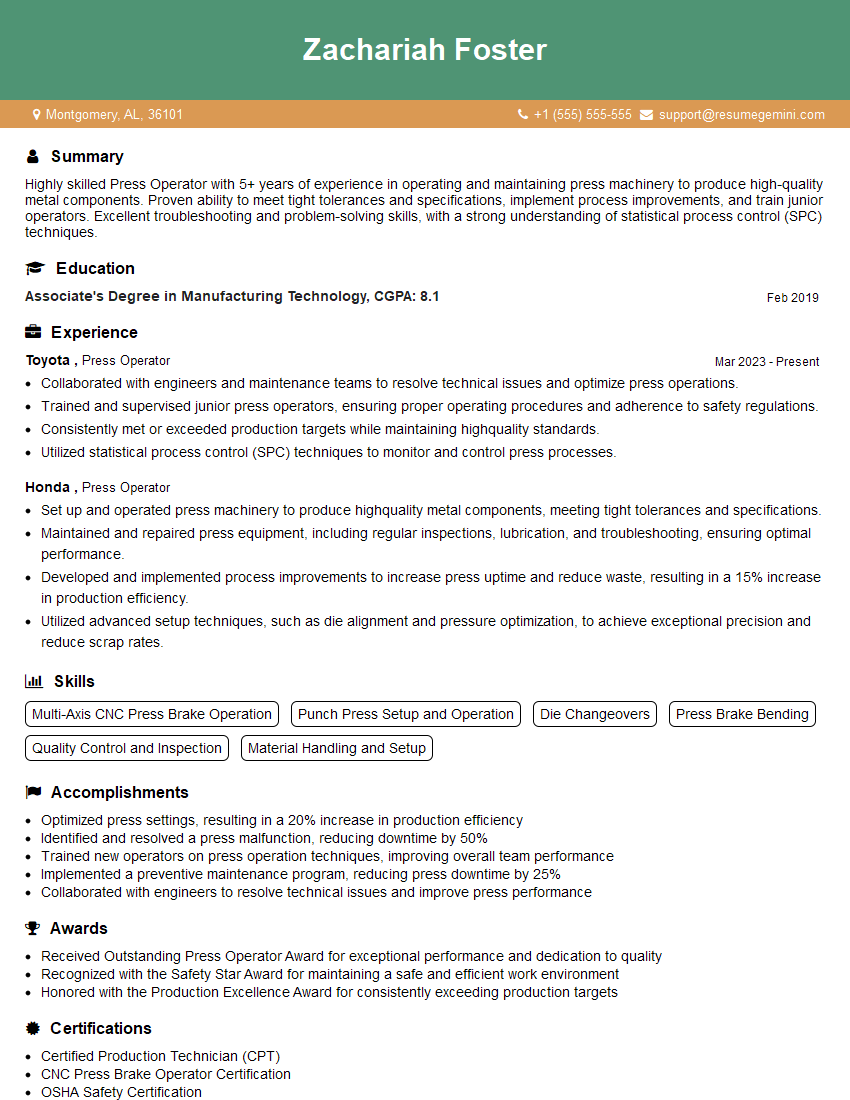
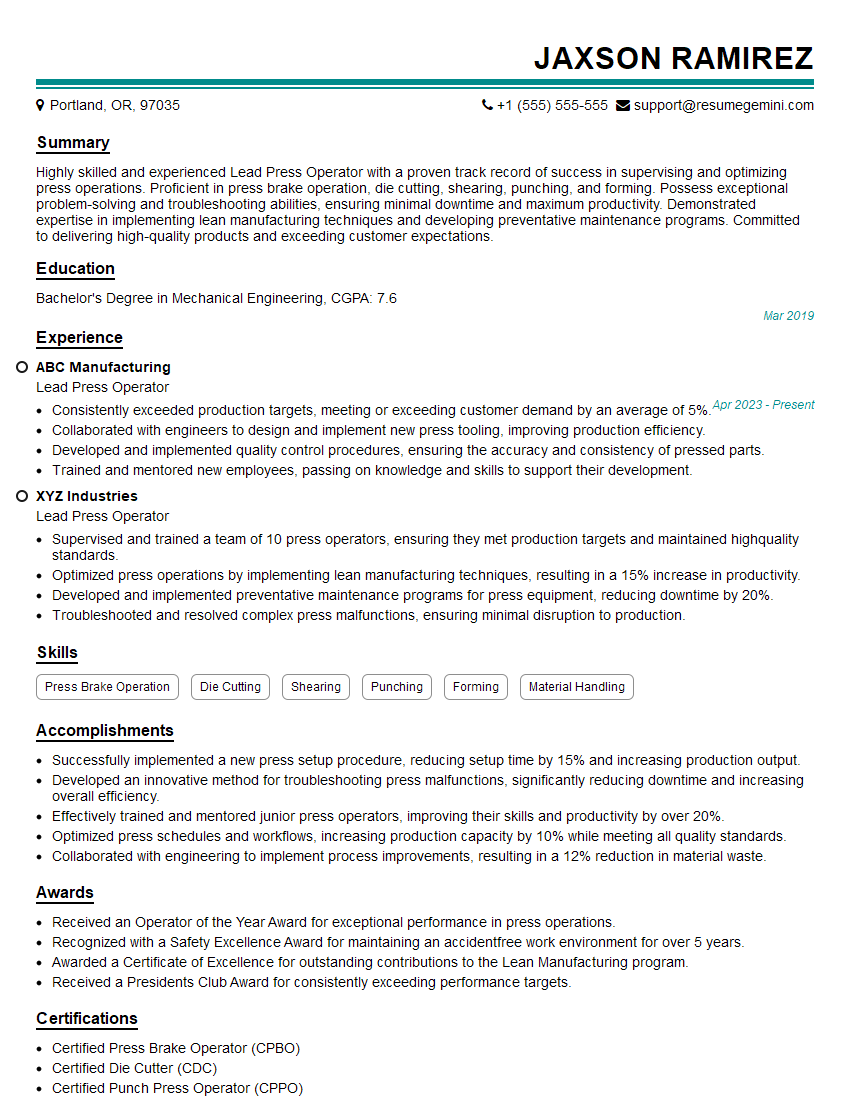
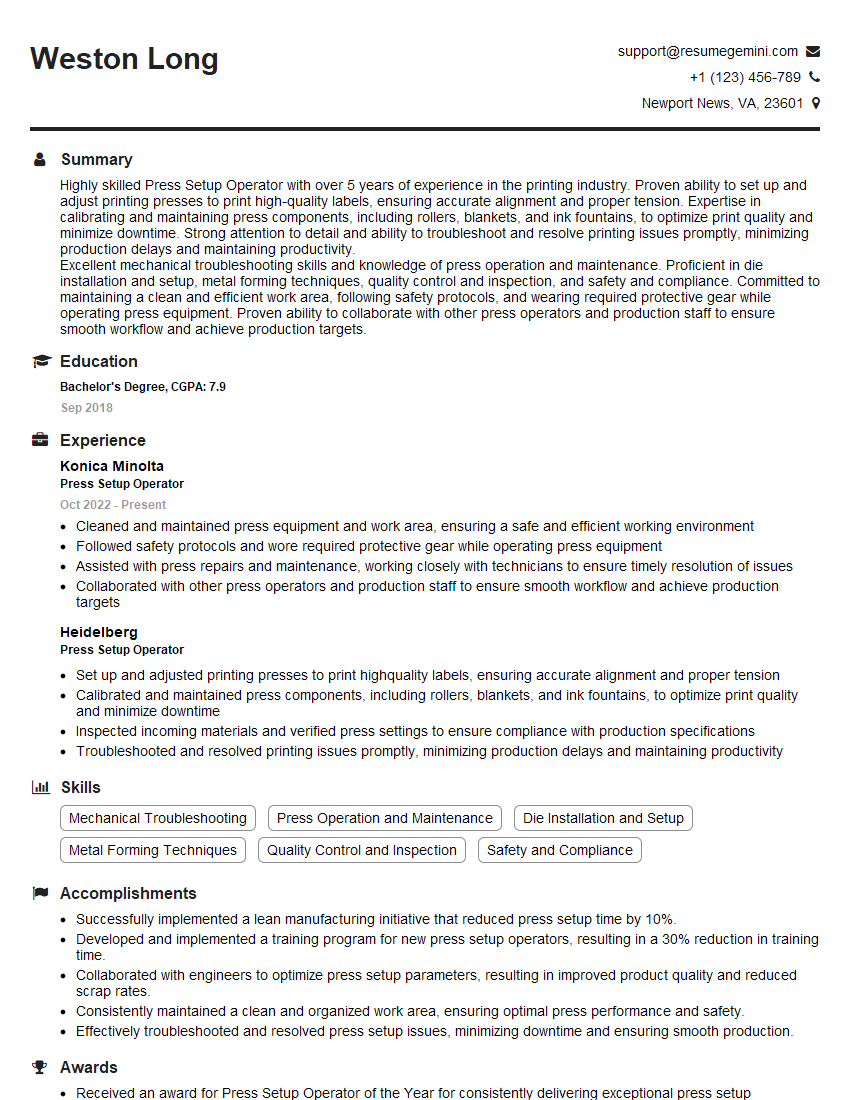
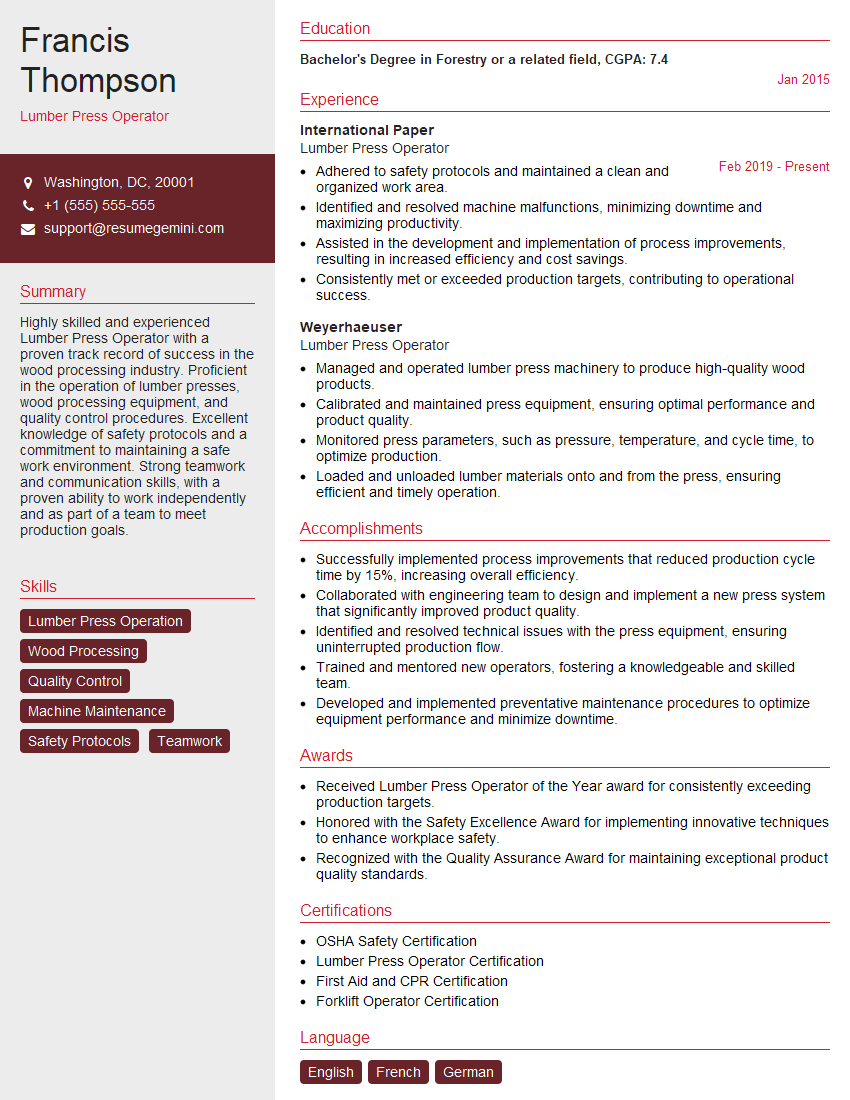
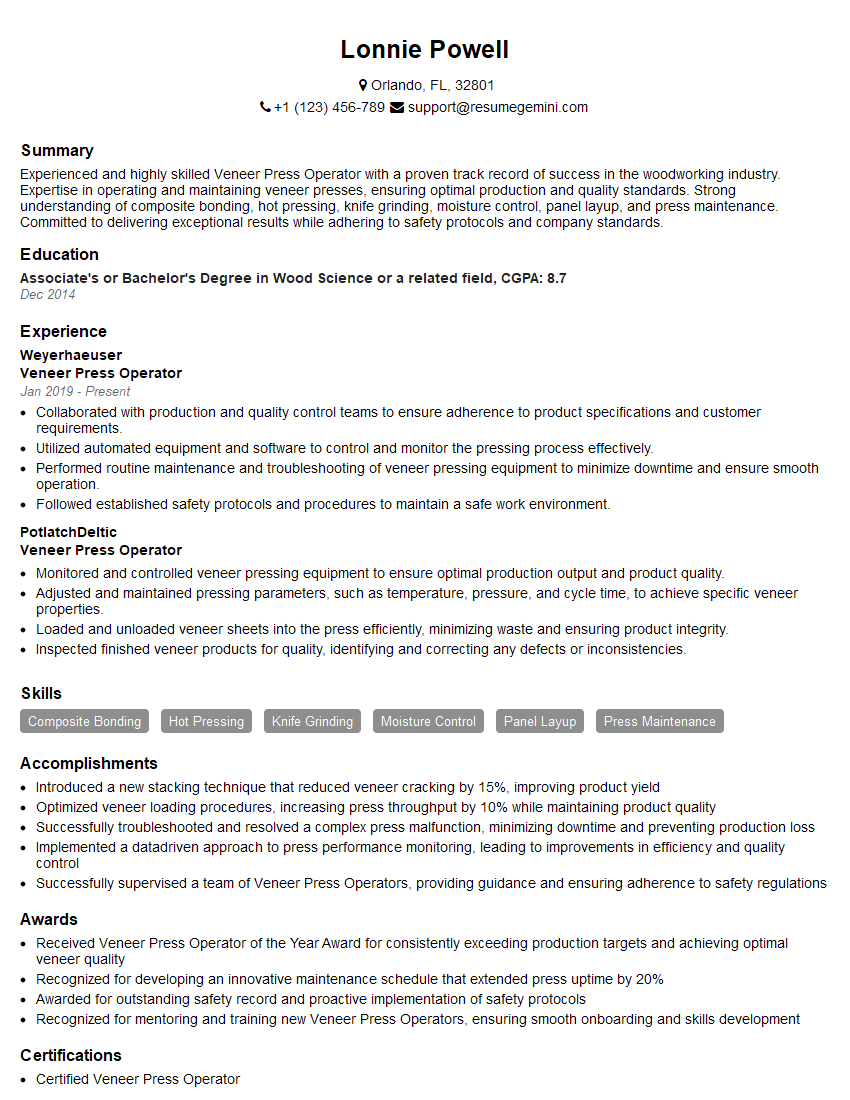
Mastering Lumber Press Operation opens doors to a rewarding career with excellent growth potential within the wood processing industry. Advancement opportunities often include supervisory roles, process improvement initiatives, and specialized training in advanced pressing techniques. To significantly boost your job prospects, creating a strong, ATS-friendly resume is crucial. ResumeGemini is a trusted resource that can help you build a professional and effective resume tailored to the specific requirements of Lumber Press Operation roles. Examples of resumes tailored to this field are available to help guide you.

Explore more articles
Users Rating of Our Blogs
Share Your Experience
We value your feedback! Please rate our content and share your thoughts (optional).
What Readers Say About Our Blog
To the interviewgemini.com Webmaster.
Very helpful and content specific questions to help prepare me for my interview!
Thank you
To the interviewgemini.com Webmaster.
This was kind of a unique content I found around the specialized skills. Very helpful questions and good detailed answers.
Very Helpful blog, thank you Interviewgemini team.