Feeling uncertain about what to expect in your upcoming interview? We’ve got you covered! This blog highlights the most important Machine Safety Standards Compliance interview questions and provides actionable advice to help you stand out as the ideal candidate. Let’s pave the way for your success.
Questions Asked in Machine Safety Standards Compliance Interview
Q 1. Explain the difference between ISO 13849-1 and ISO 14121.
ISO 13849-1 and ISO 14121 are both crucial standards in machine safety, but they address different aspects.
ISO 13849-1 focuses on the safety-related parts of control systems. It provides a framework for designing and validating these systems to achieve the required safety integrity level (SIL), expressed as a Performance Level (PL). Think of it as the ‘brains’ of the machine’s safety system – ensuring the control logic correctly responds to hazards.
ISO 14121, on the other hand, deals with the safety of machinery in general. It covers risk assessment methodologies, hazard identification, risk reduction measures, and safeguarding principles. It’s a broader standard encompassing the entire machine, considering not just the control system but also mechanical hazards, ergonomic issues, and other potential risks.
Imagine a robotic arm. ISO 13849-1 would address the safety of the control system that stops the arm if it detects an obstacle. ISO 14121 would cover the entire design, including the arm’s construction, emergency stops, guarding to prevent access to moving parts, and operator training – a much wider scope.
Q 2. Describe the concept of Performance Level (PL) and how it’s determined.
Performance Level (PL) in ISO 13849-1 quantifies the probability of a safety-related control system failing to perform its safety function. It’s a categorical scale ranging from PL a (lowest) to PL e (highest), representing decreasing risk. A higher PL means a lower probability of failure and thus a higher safety level.
PL is determined through a risk assessment. The severity of the potential harm, the probability of the hazard occurring, and the possibility of risk reduction through other measures are all considered. This assessment determines the required level of safety to mitigate the risk to an acceptable level. For example, a high severity hazard (e.g., amputation) with a high probability of occurrence would necessitate a higher PL (like PL e), while a lower severity hazard (e.g., minor cut) with a low probability might only require PL a or b.
Q 3. How do you calculate the Performance Level (PL) for a safety-related system?
Calculating the PL isn’t a simple formula; it’s an iterative process based on the risk assessment and the architecture of the safety-related system. ISO 13849-1 provides tables and methods to determine the PL based on the following steps:
- Hazard analysis: Identify all potential hazards and assess their severity, probability, and risk reduction potential.
- Safety function definition: Define the specific safety function needed to mitigate each hazard.
- Category determination: Assign a category (Category A, B, C, D or 3, 4, 1, 2) depending on the architecture of the safety-related system and its components. A more complex system with multiple components increases the category number.
- Hardware and Software Selection: Choose the components (sensors, actuators, PLCs) that meet the required technical specifications.
- Calculation of the Probabilistic Safety Integrity Level (PSIL): The calculation process involves determining the probability of failure on demand (PFD) for each component and considering architecture aspects.
- Mapping PSIL to PL: Use tables provided in ISO 13849-1 to map the calculated PSIL to the corresponding PL.
Software tools and expert judgment are frequently used to streamline this process, especially for complex systems. The whole calculation focuses on ensuring that the chosen system’s failure rate is suitably low to meet the required safety level.
Q 4. What are the different categories of safety functions according to ISO 13849-1?
ISO 13849-1 categorizes safety functions based on their architecture and the level of influence they have on the hazard. The categories (originally A, B, C, D, now often presented as 3, 4, 1, 2) are:
- Category 3 / A: Simple systems with a single-channel architecture. These offer the lowest level of safety integrity. Usually used for hazards that have low risk.
- Category 4 / B: Systems that might have additional safety features but typically still only have one channel. This category sits somewhere in the middle of the spectrum.
- Category 1 / C: More complex systems often using multiple channels and/or more sophisticated components, offering enhanced safety integrity. Used for hazards that require medium risk mitigation.
- Category 2 / D: Highest complexity, often with multiple channels and built-in diagnostic mechanisms. This offers the highest level of safety integrity, used for higher-risk hazards requiring high safety integrity.
The category affects the calculation of the PL and the selection of components. A higher category implies more stringent requirements for the components and the overall system design.
Q 5. Explain the role of risk assessment in machine safety.
Risk assessment is the cornerstone of machine safety. It’s a systematic process to identify potential hazards associated with a machine, analyze their risks, and determine appropriate safety measures. Without a thorough risk assessment, it’s impossible to design and implement effective safety controls. It’s like building a house without a blueprint – you’re likely to have significant structural issues.
The risk assessment guides the entire safety lifecycle of the machine, from design and manufacturing to operation and maintenance. It ensures that the appropriate safeguards are in place to prevent accidents or minimize their severity, ultimately protecting workers and others involved.
Q 6. What are the key elements of a safety risk assessment?
A comprehensive safety risk assessment typically includes these key elements:
- Hazard identification: Systematic identification of all potential hazards associated with the machine during its lifecycle (design, manufacturing, operation, maintenance, disposal).
- Hazard analysis: Detailed analysis of each identified hazard, including its potential severity, probability of occurrence, and exposure potential.
- Risk evaluation: Combination of severity and probability to determine the overall risk level associated with each hazard. Often expressed using a risk matrix.
- Risk reduction: Determining the appropriate risk reduction measures to mitigate identified risks to an acceptable level. This involves selecting and implementing suitable safety measures.
- Risk control: Ongoing monitoring and review of the effectiveness of the implemented safety measures. The assessment needs to be updated based on changes to the machine, processes, or operational environment.
- Documentation: Maintaining thorough documentation of the entire risk assessment process, including identified hazards, risk levels, implemented controls, and justification for decisions made.
Q 7. How do you determine the risk reduction measures needed for a given hazard?
Determining the necessary risk reduction measures depends on the risk level associated with a given hazard. The process is iterative and might involve several layers of protection:
- Eliminate the hazard: The most effective approach is to eliminate the hazard entirely from the design. For example, replacing a dangerous moving part with a safer alternative.
- Substitute the hazard: If elimination is not possible, substitute the hazard with a less hazardous one. For example, replacing a sharp edge with a rounded one.
- Incorporate inherent safety measures: Design the machine with inherent safety features to minimize the risk. For example, using low-voltage circuits.
- Implement engineering controls: Add physical safeguards such as guards, interlocks, or light curtains to prevent access to hazardous areas.
- Implement administrative controls: Implement safety procedures, training, and warning signs to reduce the risk of exposure to the hazard.
- Provide personal protective equipment (PPE): As a last resort, provide PPE such as gloves, eye protection, or hearing protection to mitigate the risk.
The selection of appropriate risk reduction measures should follow a hierarchy, prioritizing the most effective and reliable measures. The chosen measures should reduce the risk to an acceptable level, as defined by the risk assessment.
Q 8. What are some common hazards associated with industrial machinery?
Industrial machinery harbors numerous hazards, broadly categorized into:
- Mechanical Hazards: These include crushing, shearing, cutting, entanglement, and nip points (areas where two moving parts come together). Think of a rolling mill, where workers could be crushed between rollers, or a power press, where fingers could be severed.
- Electrical Hazards: Exposure to high voltage, electric shock, and arc flashes are significant risks. Imagine a malfunctioning electrical panel near a conveyor belt; an improperly grounded system could lead to serious injury or death.
- Thermal Hazards: Burns from hot surfaces, molten metal, or steam are common. Working near a furnace or welding equipment necessitates strict thermal safety precautions.
- Chemical Hazards: Exposure to hazardous chemicals, fumes, and dust can cause respiratory problems, skin irritations, or even poisoning. Proper ventilation and personal protective equipment (PPE) are crucial in chemical processing plants.
- Ergonomic Hazards: Repetitive motions, awkward postures, and heavy lifting contribute to musculoskeletal disorders (MSDs). Assembly line workers are particularly susceptible to these hazards.
- Noise Hazards: Prolonged exposure to loud noises can lead to hearing loss. Many industrial settings, such as factories with heavy machinery, require hearing protection.
Understanding these hazards is fundamental to implementing appropriate safety measures.
Q 9. Explain the concept of a safety-related control system (SRCS).
A Safety-Related Control System (SRCS) is a system designed to mitigate or prevent hazards associated with industrial machinery. It’s the heart of machine safety, responsible for detecting hazardous situations and initiating protective actions to reduce risk. Think of it as the ‘brains’ of the safety system.
An SRCS typically involves sensors to detect potential hazards (e.g., light curtains detecting hand entry), a control unit to process this information, and actuators to implement safety functions (e.g., stopping the machine or activating emergency stops). The system’s performance is critical, directly impacting worker safety. Failures in the SRCS can have devastating consequences.
A key aspect is its independence from the main machine control system. Even if the main control fails, the SRCS should still function, ensuring the safety of personnel.
Q 10. Describe the different types of safeguarding methods used in machine safety.
Safeguarding methods are employed to prevent access to hazardous areas of machinery. These methods are often layered for redundancy and enhanced safety. Common types include:
- Fixed Guards: Physically prevent access to hazardous areas. These are typically robust, interlocked, and difficult to bypass (e.g., machine casings). A classic example is a solid metal guard around a rotating shaft.
- Interlocked Guards: These guards are connected to the machine’s power supply. When opened, the machine automatically stops, preventing operation while the guard is open. This ensures the machine cannot be restarted without the guard in place.
- Adjustable Guards: Allow for adjustments to machine setup but still provide protection (often with interlocks to ensure safety during adjustments).
- Two-Hand Control Devices: Require both hands to be engaged in the operation before the machine can function, preventing accidental activation. This is common on power presses.
- Light Curtains: Non-contact sensors creating an invisible safety barrier. If interrupted, the machine stops. Used frequently where objects or personnel may be nearby the machine.
- Presence Sensing Devices: Detect the presence of people or objects within a hazardous zone. This can range from pressure mats to more complex systems.
- Safety Mats and Edges: These detect the presence of an object or person in a hazardous area and initiate safety functions. They can be placed around a machine or in walkways.
Q 11. What are the advantages and disadvantages of each safeguarding method?
Each safeguarding method has its advantages and disadvantages:
- Fixed Guards:
- Advantages: Simple, reliable, cost-effective for simple hazards.
- Disadvantages: Can limit access for maintenance or adjustments, may not be suitable for all applications.
- Interlocked Guards:
- Advantages: Increased safety due to automatic shutdown upon opening.
- Disadvantages: Can be more complex and expensive than fixed guards.
- Adjustable Guards:
- Advantages: Allow flexibility for varying machine setups.
- Disadvantages: Require proper adjustments and careful consideration of safety.
- Two-Hand Control Devices:
- Advantages: Prevents accidental activation, relatively simple to implement.
- Disadvantages: Can be physically demanding, may not be suitable for all applications.
- Light Curtains and Presence Sensing:
- Advantages: Non-contact, flexible, suitable for dynamic applications.
- Disadvantages: Can be more expensive, may require careful alignment and calibration.
- Safety Mats and Edges:
- Advantages: Cover larger areas, simple to use.
- Disadvantages: Can be susceptible to damage, tripping hazards if not properly installed.
The choice of safeguarding method depends on the specific hazards, application, and cost considerations.
Q 12. How do you verify and validate the effectiveness of safety-related systems?
Verifying and validating the effectiveness of safety-related systems is a crucial step in ensuring worker safety. This involves a multi-stage process:
- Verification: This focuses on ensuring the safety system is correctly implemented according to the design specifications. It checks that the system is built and installed correctly. Techniques include inspection, testing individual components, and reviewing documentation.
- Validation: This focuses on demonstrating that the safety system actually achieves the intended safety function. This often involves testing the entire system under realistic conditions. Techniques include functional testing, risk assessment, and performance evaluation.
Specific methods for verification and validation might include:
- Testing with simulated faults: Introduce simulated malfunctions into the system to observe its response and ensure appropriate protective actions are triggered.
- Proof testing: Periodic testing of the safety system to verify its functionality (e.g., testing emergency stops regularly).
- Documentation review: Checking design specifications, risk assessments, and operational manuals to ensure they are complete and accurate.
- Independent audits: Having an external expert audit the system to provide an unbiased assessment of its effectiveness.
Proper documentation is essential throughout the process. This documentation demonstrates compliance with relevant safety standards and provides a history of the system’s performance.
Q 13. Explain the concept of functional safety and its importance in machine safety.
Functional safety is a systematic approach to managing risks associated with hazardous failures in safety-related systems. It focuses on ensuring that the system performs its intended safety function even when things go wrong. It’s not just about preventing failures; it’s about mitigating the consequences of those failures that might occur.
Imagine a car’s airbag system. The goal isn’t to prevent the airbag from ever deploying; it’s to ensure it deploys reliably when needed (in a crash). Functional safety applies the same principle to industrial machinery, focusing on reducing the risk of harm from equipment malfunctions or failures.
Its importance lies in minimizing the likelihood and severity of accidents, ultimately protecting workers and the environment. This is achieved through a structured methodology involving hazard analysis, risk assessment, selection of safety components, and rigorous testing and validation.
Q 14. Describe the different safety integrity levels (SILs) used in functional safety.
Safety Integrity Levels (SILs) are a qualitative measure of the risk reduction provided by a safety-related system. They range from SIL 1 (lowest) to SIL 4 (highest), with SIL 4 representing the most stringent requirements for safety.
The SIL assigned to a safety function depends on the severity of the potential hazard and the probability of its occurrence. A higher SIL implies a lower acceptable risk and, consequently, more rigorous design, implementation, and testing requirements. For instance, a system with a SIL 4 designation requires far more extensive verification and validation activities than one with a SIL 1 designation.
The assignment of SILs is typically determined through a risk assessment process that considers factors such as:
- Severity of potential harm: Catastrophic injury or death vs. minor injury.
- Probability of hazard occurrence: Frequent vs. rare events.
- Risk reduction required: The level of risk reduction needed to achieve an acceptable safety level.
Understanding and correctly applying SILs is crucial in ensuring the appropriate level of safety is achieved for a given application. Incorrect SIL assignment can lead to inadequate safety measures, leaving workers exposed to unnecessary risks.
Q 15. How do you determine the appropriate SIL for a safety-related function?
Determining the appropriate Safety Integrity Level (SIL) for a safety-related function is crucial for ensuring adequate risk reduction. SIL is a measure of the probability of a safety-related system failing to perform its required function. It’s determined through a risk assessment, which analyzes the severity, probability, and potential exposure to hazards. The higher the SIL, the lower the acceptable probability of failure.
The process typically involves these steps:
- Hazard Identification and Risk Assessment: Identifying all potential hazards associated with the machine and assessing the risks associated with each hazard. This might involve using techniques like Failure Modes and Effects Analysis (FMEA) or HAZOP (Hazard and Operability Study).
- Defining Safety Requirements: Specifying what safety functions are needed to mitigate the identified hazards. For example, an emergency stop function or a protective device.
- SIL Determination: Based on the risk assessment, assigning a SIL level (SIL 1 to SIL 4, with SIL 4 being the highest) to each safety function. This involves considering the severity of potential harm, the probability of the hazard occurring, and the effectiveness of the safety function in mitigating the harm. Industry standards like IEC 61508 provide guidelines for this.
- Safety Requirement Specification: Defining the technical requirements for the safety function, based on the assigned SIL. This includes parameters like Mean Time Between Failures (MTBF), availability, and diagnostics coverage.
- Verification and Validation: Ensuring the implemented safety functions meet the specified SIL through testing, simulation, and analysis.
Example: Consider a robotic arm in a factory. If the arm malfunctions and strikes a worker, the severity is high. If the probability of malfunction is low, but the potential injury is severe, a higher SIL (e.g., SIL 3) might be assigned to the emergency stop function. Conversely, a lower SIL (e.g., SIL 1) might suffice for a less critical safety function.
Career Expert Tips:
- Ace those interviews! Prepare effectively by reviewing the Top 50 Most Common Interview Questions on ResumeGemini.
- Navigate your job search with confidence! Explore a wide range of Career Tips on ResumeGemini. Learn about common challenges and recommendations to overcome them.
- Craft the perfect resume! Master the Art of Resume Writing with ResumeGemini’s guide. Showcase your unique qualifications and achievements effectively.
- Don’t miss out on holiday savings! Build your dream resume with ResumeGemini’s ATS optimized templates.
Q 16. What is a safety lifecycle and its stages?
The safety lifecycle is a systematic approach to managing machine safety from the initial concept to decommissioning. It ensures that safety is considered at every stage of a machine’s life. The stages typically include:
- Concept and Feasibility Study: Initial hazard identification and risk assessment to determine feasibility and overall safety concept.
- Design and Development: Incorporating safety features into the design, selecting suitable components and technologies, and creating detailed safety specifications.
- Manufacturing and Assembly: Ensuring that the manufacturing process adheres to the safety requirements and the machine is built according to specifications. Quality checks are vital here.
- Installation and Commissioning: Safe installation and testing of the machine to ensure correct functioning of safety systems before operation.
- Operation and Maintenance: Regular maintenance and inspection to ensure the continued effectiveness of safety functions. This includes training operators and maintenance personnel.
- Decommissioning: Safely dismantling and disposing of the machine at the end of its life, minimizing risks to personnel and the environment.
Each stage has specific documentation requirements, and it’s crucial that every stage is properly documented to support compliance with safety standards.
Q 17. What is the importance of documentation in machine safety compliance?
Documentation is paramount in machine safety compliance. It serves as evidence that all necessary steps have been taken to ensure the safety of the machine and its users. Comprehensive documentation helps in several ways:
- Demonstrates Compliance: A well-maintained documentation package shows regulatory bodies that safety standards have been followed throughout the machine’s lifecycle.
- Facilitates Audits: Auditors use documentation to verify safety measures and identify potential areas for improvement.
- Supports Troubleshooting and Maintenance: Documentation aids in quickly understanding the machine’s design, safety features, and maintenance procedures.
- Improves Safety Culture: A strong focus on documentation encourages a positive safety culture within the organization.
- Reduces Liability: Thorough documentation can significantly reduce liability in the event of an accident.
Lack of proper documentation can lead to fines, legal issues, and, most importantly, potential harm to individuals.
Q 18. What are the key elements of a machine safety file?
A machine safety file is a comprehensive collection of documents that demonstrates compliance with safety standards. Key elements include:
- Risk Assessment Reports: Detailed analysis of hazards and associated risks.
- Safety Requirements Specification: Formal statement of the safety requirements for the machine.
- Design and Functional Safety Documentation: Drawings, schematics, and other documents detailing the design and functionality of safety-related systems.
- Verification and Validation Reports: Results of testing and analysis performed to verify that safety requirements are met.
- Safety Instructions and Manuals: Information for operators and maintenance personnel on how to safely operate and maintain the machine.
- Maintenance Logs and Records: History of maintenance and repairs performed on the machine.
- Certificates of Conformity: Proof that components and systems comply with relevant safety standards.
- Accident/Incident Reports: Documentation of any accidents or incidents involving the machine, along with corrective actions taken.
The specific contents of a machine safety file will vary depending on the machine’s complexity and the applicable safety standards.
Q 19. Describe your experience with different safety standards, such as IEC 61508 or ISO 14121.
I have extensive experience working with several safety standards, most notably IEC 61508 and ISO 14121. IEC 61508 is the foundational standard for functional safety of electrical/electronic/programmable electronic safety-related systems. It provides a framework for determining SIL levels and verifying the safety integrity of safety systems. My experience includes applying this standard across numerous projects involving complex control systems. I’ve used techniques like FMEA and fault-tree analysis to identify potential hazards and determine appropriate safety measures.
ISO 14121 focuses on the safety of machinery and addresses hazards associated with mechanical aspects of machines. My practical experience includes applying this standard to ensure compliance with safeguards like guarding, emergency stops, and other mechanical safety features. I’ve designed and implemented several systems that comply with both standards, often working with collaborative robots and high-speed automated systems.
I’m also familiar with other relevant standards, like ISO 13849 (safety of machinery – safety-related parts of control systems) and EN ISO 13849-1, which are often used in conjunction with IEC 61508. This broad knowledge allows me to navigate the nuanced differences between these standards and ensure comprehensive safety solutions are implemented.
Q 20. How do you handle conflicts between different safety standards or requirements?
Conflicts between safety standards or requirements are not uncommon, especially in complex projects involving multiple systems and technologies from different vendors. When such conflicts arise, I follow a systematic approach:
- Identify the Conflict: Clearly define the conflicting requirements or standards.
- Evaluate the Severity: Assess the impact of each conflicting requirement on the overall safety of the system.
- Determine the Hierarchy: Identify which standard or requirement takes precedence. In some cases, local regulations might supersede international standards.
- Seek Clarification: If the conflict cannot be easily resolved, seek clarification from the relevant regulatory authorities or industry experts.
- Document the Resolution: Clearly document the chosen resolution and the rationale behind it.
- Implement and Verify: Implement the chosen solution and verify its effectiveness through testing and analysis.
Example: A conflict might arise between a national standard requiring a specific type of emergency stop button and an international standard recommending a different type. I would thoroughly evaluate the risks associated with both options, considering factors like ergonomics and ease of use, before making an informed decision and documenting it.
Q 21. Explain your experience with different safety-related technologies, such as PLCs or safety relays.
I’ve worked extensively with various safety-related technologies, including Programmable Logic Controllers (PLCs) and safety relays. PLCs are frequently used in implementing safety functions, requiring careful programming to ensure adherence to safety standards. My experience includes programming PLCs to manage emergency stops, light curtains, and other safety devices. I understand the importance of using safety-rated PLCs and adhering to coding standards to ensure the integrity of safety functions.
Safety relays provide a hardware-based solution for safety functions, offering redundancy and fail-safe operation. I’ve integrated safety relays into various systems, ensuring their proper configuration and testing to meet the required SIL. My experience encompasses selecting the appropriate safety relays based on the application’s requirements and implementing diagnostic features to monitor their status. I’m also comfortable with other safety technologies like E-stops, pressure switches, and proximity sensors, understanding their applications and limitations within the context of a complete safety system.
I understand the differences and advantages of hardware and software-based safety solutions. The best approach depends heavily on the specific application requirements, the associated risks and complexity, and the required SIL.
Q 22. How do you ensure the ongoing maintenance and upkeep of safety-related systems?
Ensuring the ongoing maintenance and upkeep of safety-related systems is crucial for preventing accidents and maintaining compliance. It’s not a one-time task, but a continuous process requiring a structured approach. Think of it like regularly servicing your car – neglecting it leads to breakdowns and potential danger.
- Preventive Maintenance Schedules: We develop and strictly adhere to detailed preventative maintenance schedules for all safety-critical components. This includes regular inspections, lubrication, testing, and replacement of parts according to manufacturer recommendations and best practices. For example, we might schedule monthly inspections of emergency stop buttons, quarterly testing of light curtains, and annual servicing of pressure safety valves.
- Documentation and Records: Meticulous record-keeping is essential. All maintenance activities, including dates, personnel involved, and findings, are meticulously documented. This allows us to track performance, identify potential issues early, and demonstrate compliance during audits.
- Training and Competency: Maintenance personnel receive comprehensive training on the safe operation and maintenance of all safety-related equipment. Regular competency assessments ensure they possess the necessary skills and understanding. This is akin to a pilot undergoing regular flight simulator training.
- Spare Parts Management: We maintain a readily available inventory of critical spare parts to minimize downtime during repairs. This reduces the risk of safety systems being out of service for extended periods.
- Continuous Improvement: Regular reviews of maintenance procedures and performance data allow for continuous improvement and identification of areas for optimization. This might involve implementing new technologies or adjusting maintenance schedules based on performance data.
Q 23. Describe a situation where you had to troubleshoot a machine safety issue.
During a production run, a robotic arm malfunctioned, causing it to unexpectedly move outside its programmed range. Fortunately, the emergency stop system functioned correctly, preventing an accident, but the root cause needed investigation.
Our troubleshooting process involved:
- Immediate Isolation: We immediately isolated the robot from the production line to prevent further incidents.
- Data Analysis: We reviewed the robot’s control system logs to identify any error codes or unusual activity leading up to the malfunction. This often involves examining PLC (Programmable Logic Controller) logs for relevant data points.
- Visual Inspection: A thorough visual inspection of the robot’s mechanical components, sensors, and cabling was conducted to rule out any physical damage or loose connections. We looked for things like worn gears, damaged sensors, or frayed wires.
- Testing and Calibration: We performed functional tests on the sensors, actuators, and other critical components to verify their proper operation. In this case, we found a faulty proximity sensor that caused the robot’s incorrect positioning.
- Corrective Action: After identifying the faulty proximity sensor, we replaced it with a new one, retested the system, and updated the maintenance schedule to include more frequent inspections of similar sensors. We also implemented additional safety measures to mitigate the risk of similar incidents in the future.
This incident highlighted the importance of regular maintenance, thorough documentation, and proactive safety measures.
Q 24. How do you communicate effectively with various stakeholders regarding machine safety?
Effective communication is critical for ensuring machine safety. Stakeholders include engineers, operators, maintenance personnel, management, and potentially external regulatory bodies. My approach is multifaceted:
- Clear and Concise Language: I avoid technical jargon whenever possible. If technical terms are necessary, I explain them clearly. I use simple language and visuals to ensure everyone understands the safety message.
- Targeted Communication: I tailor my communication to the audience. A technical report for engineers will be different from a safety briefing for operators. For instance, operators might need visual aids, while engineers might benefit from detailed technical data.
- Multiple Channels: I utilize various communication channels such as meetings, emails, training materials, and visual aids to ensure maximum reach and understanding. This could include safety posters, instructional videos, and interactive training modules.
- Feedback Mechanisms: I encourage feedback from all stakeholders to ensure that my communications are effective and address their concerns. This could involve conducting surveys or creating open forums.
- Documentation: All safety-related communications, including meeting minutes, training records, and inspection reports are meticulously documented for audit trails and future reference.
Open and honest communication fosters a safety culture and helps prevent accidents.
Q 25. What is your approach to staying up-to-date on the latest developments in machine safety?
Staying current in the rapidly evolving field of machine safety requires a proactive and multi-pronged approach:
- Professional Organizations: I am an active member of professional organizations such as [Mention relevant professional organizations, e.g., ANSI, ISO, etc.], which provide access to industry best practices, training opportunities, and networking with other experts.
- Industry Publications and Journals: I regularly read industry publications and journals to stay abreast of new technologies, regulations, and case studies. This helps keep me updated on emerging trends and potential hazards.
- Conferences and Seminars: Attending conferences and seminars provides valuable insights and networking opportunities. This allows me to learn from the experience of other professionals and directly interact with leading experts.
- Online Resources: I actively utilize online resources, including reputable websites, webinars, and online courses, to expand my knowledge and skills. This is particularly useful for accessing specialized information on specific technologies or regulatory changes.
- Regulatory Updates: I closely monitor changes in relevant regulations and standards to ensure our practices remain compliant. Staying up-to-date with legislative developments is vital for maintaining compliance.
Continuous learning is essential in this field to ensure we adopt the most current and effective safety measures.
Q 26. Describe your experience with machine safety audits and inspections.
I have extensive experience conducting machine safety audits and inspections, adhering to recognized standards such as [Mention relevant standards, e.g., ISO 14121, ANSI B11]. My approach is systematic and thorough:
- Pre-Audit Planning: Before commencing the audit, I carefully review the machine’s documentation, including design specifications, risk assessments, and maintenance records. This allows me to focus my inspection on critical areas and optimize the process.
- On-Site Inspection: During the on-site inspection, I meticulously examine all aspects of the machine, including guarding, emergency stops, safety interlocks, and control systems, using checklists based on relevant standards. I also observe the machine’s operation to assess its safety in practice.
- Documentation Review: I carefully review all safety-related documentation, ensuring that it is complete, accurate, and up-to-date. This includes risk assessments, safety manuals, and training records.
- Interviews with Personnel: I conduct interviews with machine operators and maintenance personnel to gather their feedback and insights on the machine’s safety and usability. This often reveals practical issues that may not be evident from a purely technical examination.
- Report Generation: After the audit, I prepare a comprehensive report outlining any identified hazards or non-compliances, along with recommended corrective actions. This report is typically prioritized according to the severity of the findings.
My goal is to identify potential hazards and recommend corrective actions to improve machine safety and prevent accidents.
Q 27. How do you ensure that safety is prioritized throughout the entire machine design process?
Prioritizing safety throughout the entire machine design process is crucial, preventing costly and potentially dangerous retrofits later. This requires a proactive and integrated approach, often employing a safety lifecycle model:
- Hazard Identification and Risk Assessment: At the outset, we conduct a thorough hazard identification and risk assessment, systematically identifying potential hazards associated with the machine’s design, operation, and maintenance. Techniques such as HAZOP (Hazard and Operability Study) are frequently used.
- Incorporation of Safety Features: We incorporate appropriate safety features into the machine’s design from the beginning, considering standards such as ISO 13849 (Safety-related parts of control systems). This might include implementing guarding, emergency stops, interlocks, and safety sensors.
- Design Reviews: Regular design reviews are conducted throughout the design process, involving safety experts to ensure that safety is a paramount consideration. This provides an opportunity for early detection and correction of design flaws.
- Validation and Verification: We use rigorous validation and verification techniques, including simulations and testing, to ensure that the implemented safety features work as intended. This might involve functional testing and simulations using software tools.
- Documentation: Comprehensive documentation, including risk assessments, design specifications, and safety manuals, is maintained throughout the design process. This allows for traceability and ensures that everyone understands the machine’s safety features and operating procedures.
Safety should not be an afterthought, but rather an integral part of the design process.
Q 28. Describe a situation where you had to balance safety requirements with production efficiency.
Balancing safety requirements with production efficiency is a common challenge. The key is to find optimal solutions that minimize risks without significantly impacting productivity. It’s like finding the right balance between speed and safety when driving – you need to be efficient, but also safe.
In one instance, we needed to increase the production speed of a packaging line. Adding speed inherently increased the risk of operator injury. Instead of simply increasing the speed without considering safety, we:
- Risk Assessment: We conducted a thorough risk assessment focusing on the increased speed. This identified potential hazards, such as increased risk of pinch points and operator fatigue.
- Mitigation Strategies: We implemented several mitigation strategies including enhanced guarding around moving parts, improved machine ergonomics to reduce operator fatigue, and improved operator training focusing on safe operating procedures at higher speeds.
- Cost-Benefit Analysis: We analyzed the cost of implementing the safety improvements versus the potential cost of accidents and lost production due to injuries. This helped justify the investment in safety improvements.
- Phased Implementation: We implemented the changes in phases, starting with the most critical safety enhancements and gradually increasing production speed while monitoring performance and operator feedback. This allowed us to make adjustments if needed.
This approach allowed us to achieve increased production efficiency without compromising worker safety. It’s about finding the right balance, not sacrificing one for the other.
Key Topics to Learn for Machine Safety Standards Compliance Interview
- Risk Assessment and Mitigation: Understanding methodologies like HAZOP and FMEA, and their practical application in identifying and mitigating hazards in machinery design and operation.
- Safety Standards and Regulations: Familiarity with relevant standards like ISO 13849, ISO 14121, and relevant regional regulations (e.g., OSHA, CE marking). Practical application includes interpreting standard requirements and applying them to specific machine designs.
- Safety Devices and Control Systems: Understanding the function and application of safety devices such as emergency stops, light curtains, pressure mats, and interlocks. This includes knowledge of safety-related control systems architectures and their design considerations.
- Machine Guarding and Safety Design Principles: Knowledge of various guarding methods (fixed, interlocked, adjustable) and their selection based on risk assessment. Understanding ergonomic considerations and principles of safe machine design.
- Lockout/Tagout Procedures and Safe Work Practices: Understanding and implementing safe procedures for isolating energy sources during maintenance and repair activities. Practical application includes training and supervision of workers.
- Documentation and Compliance: Understanding the importance of maintaining comprehensive safety documentation, including risk assessments, safety manuals, and machine safety files. Practical application includes creating and maintaining compliant documentation.
- Troubleshooting and Problem Solving: Applying knowledge of safety standards and principles to diagnose and resolve safety-related issues in existing machinery. This includes identifying potential hazards and implementing corrective actions.
Next Steps
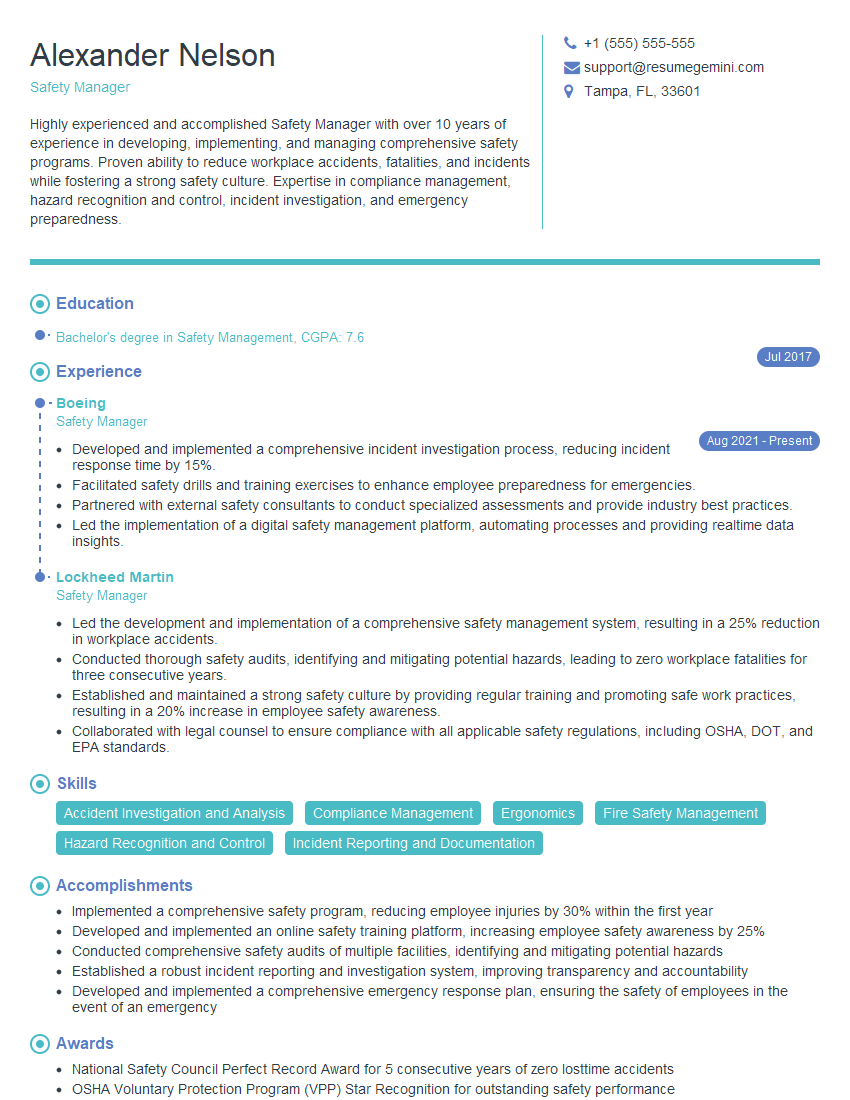
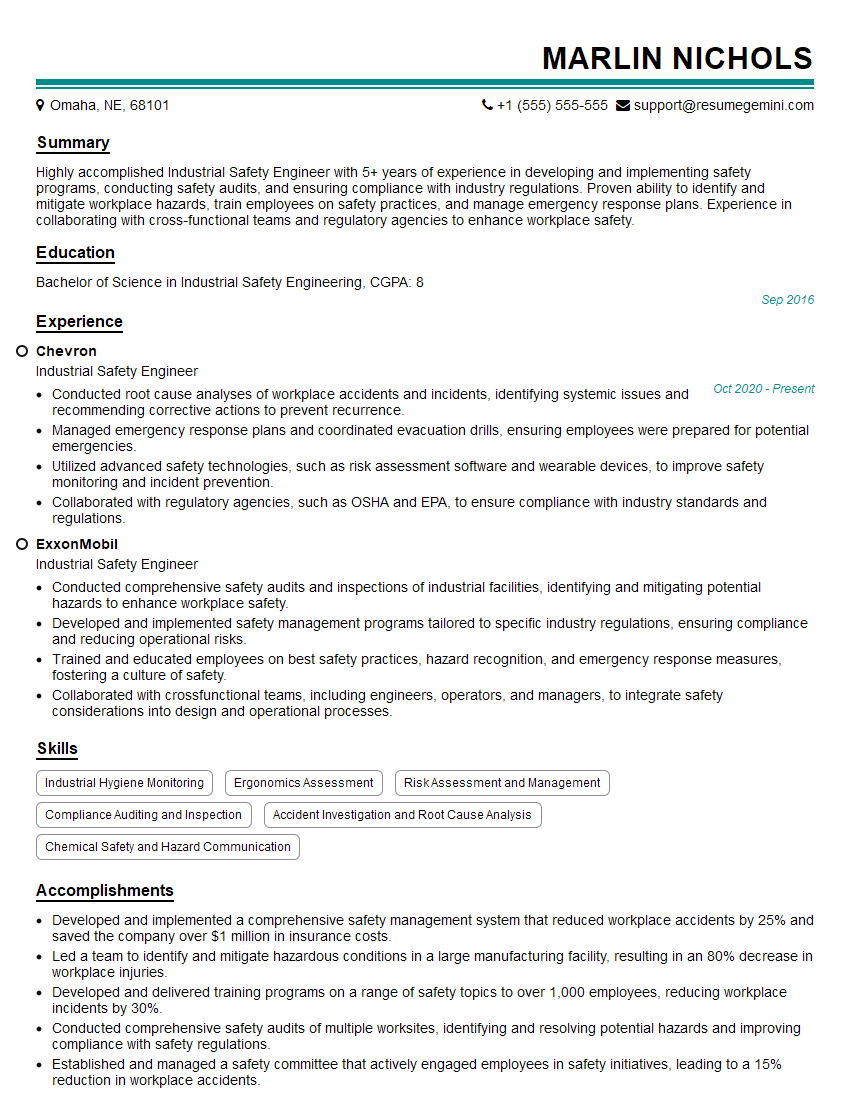
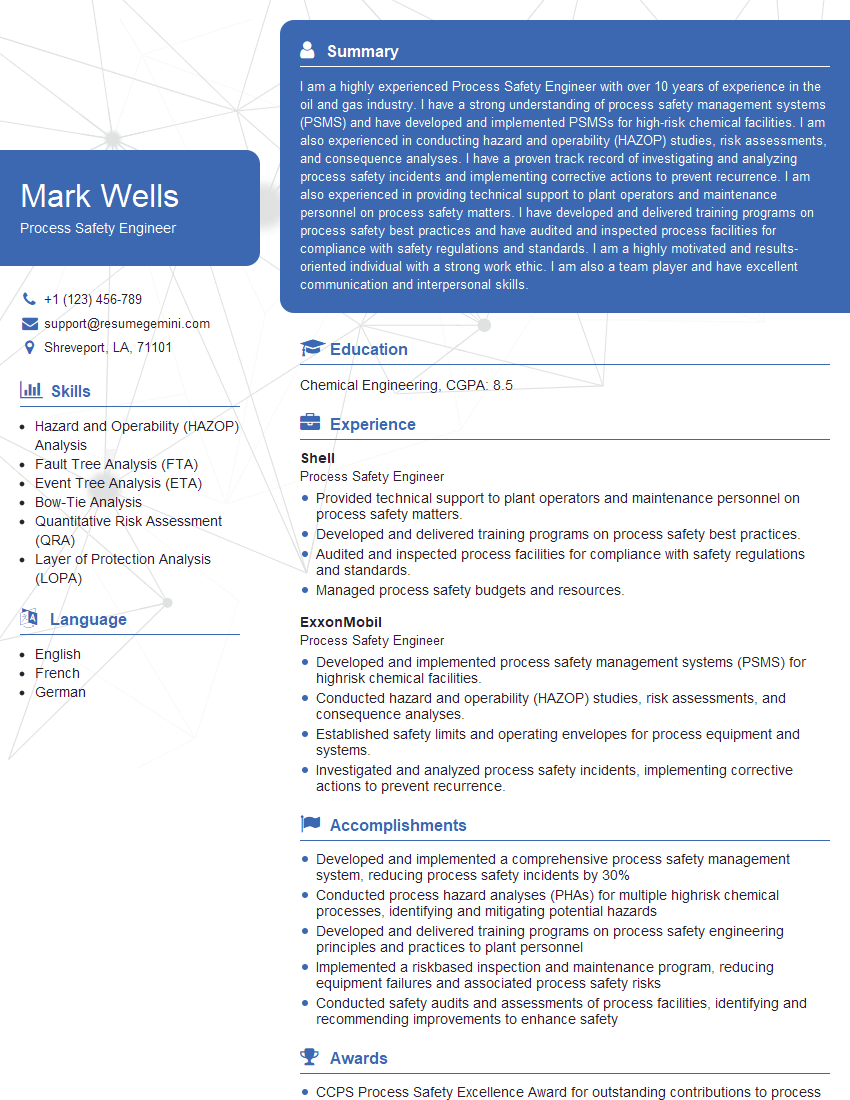
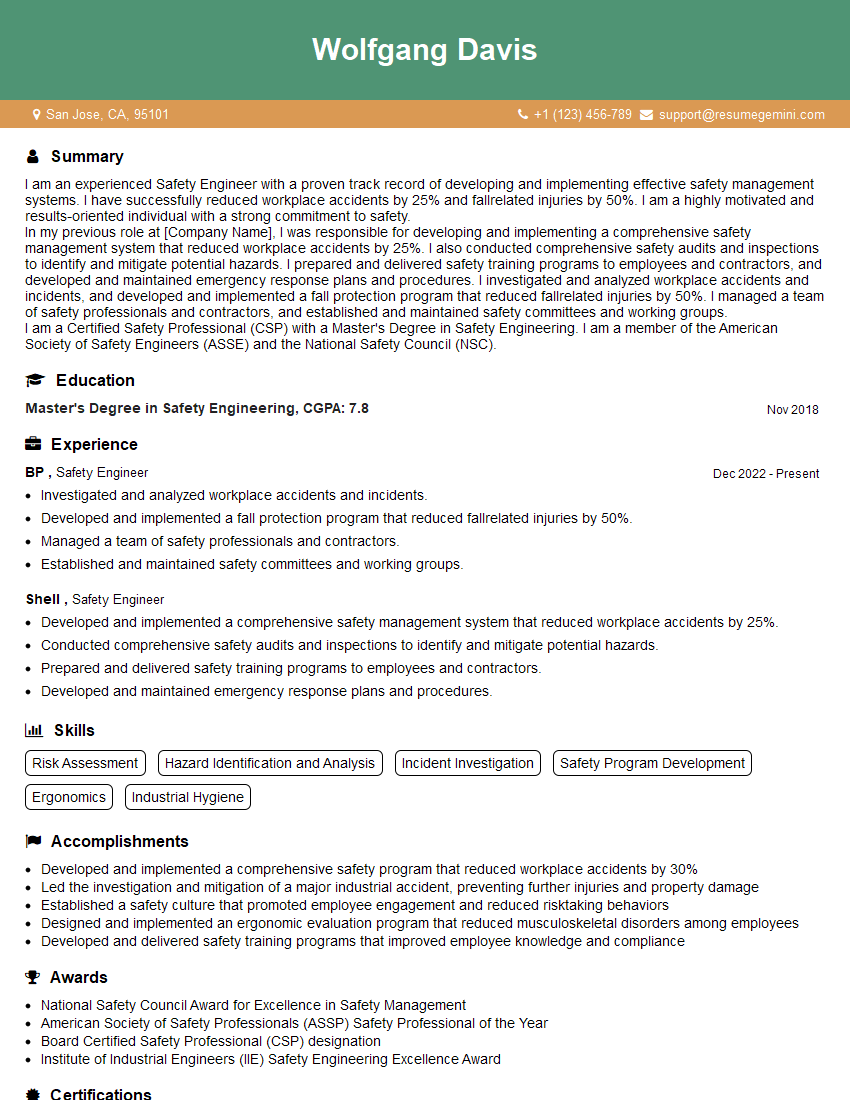
Mastering Machine Safety Standards Compliance is crucial for career advancement in manufacturing and related fields. A strong understanding of these principles demonstrates commitment to workplace safety and significantly enhances your value to potential employers. To maximize your job prospects, create an ATS-friendly resume that effectively highlights your skills and experience. ResumeGemini is a trusted resource to help you build a professional and impactful resume. Examples of resumes tailored to Machine Safety Standards Compliance are available to guide you.
Explore more articles
Users Rating of Our Blogs
Share Your Experience
We value your feedback! Please rate our content and share your thoughts (optional).
What Readers Say About Our Blog
To the interviewgemini.com Webmaster.
Very helpful and content specific questions to help prepare me for my interview!
Thank you
To the interviewgemini.com Webmaster.
This was kind of a unique content I found around the specialized skills. Very helpful questions and good detailed answers.
Very Helpful blog, thank you Interviewgemini team.