Interviews are opportunities to demonstrate your expertise, and this guide is here to help you shine. Explore the essential Medicare and Medicaid Benefits Counseling interview questions that employers frequently ask, paired with strategies for crafting responses that set you apart from the competition.
Questions Asked in Medicare and Medicaid Benefits Counseling Interview
Q 1. Explain the difference between Medicare Part A, Part B, Part C, and Part D.
Medicare has four parts, each covering different aspects of healthcare. Think of it like building a house: each part adds a crucial element.
Part A (Hospital Insurance): This is typically premium-free if you or your spouse worked and paid Medicare taxes for at least 10 years. It covers inpatient hospital stays, skilled nursing facility care, hospice, and some home healthcare. Imagine this as the foundation of your healthcare house – the essential structure.
Part B (Medical Insurance): This covers doctor visits, outpatient care, some preventive services, and medical equipment. There’s a monthly premium, and it’s like the walls and roof – providing essential protection against medical expenses.
Part C (Medicare Advantage): This is an alternative to Original Medicare (Parts A and B) offered by private companies. These plans often include Part D prescription drug coverage and may offer extra benefits like vision or dental care. Think of this as a pre-fabricated house – a complete package that bundles everything together, often with added features.
Part D (Prescription Drug Insurance): This helps cover the cost of prescription medications. You must enroll separately and pay a monthly premium. It’s like the utilities and appliances within your healthcare house – the essentials to keep things running smoothly.
Q 2. Describe the process for applying for Medicare.
Applying for Medicare is straightforward, but timing is crucial. Most people automatically enroll in Part A when they turn 65, provided they are eligible. Part B enrollment usually requires a separate application, typically three months before your 65th birthday, during the month of your birthday, or three months after. There are penalties for late enrollment. You can apply online at Social Security’s website, by phone, or in person at a Social Security Administration office. You’ll need your Social Security number, proof of age, and possibly other documentation. Imagine it as registering for a vital service – crucial for receiving your healthcare benefits.
For those already receiving Social Security retirement benefits, enrollment is often automatic. The Social Security Administration will notify you of your eligibility and provide you with further instructions. You’ll want to confirm your details are accurate with Social Security to avoid any delays or complications in receiving your Medicare card.
Q 3. What are the eligibility requirements for Medicaid?
Medicaid eligibility is determined by your income and assets, and varies by state. Generally, you must be a U.S. citizen or legal immigrant, have low income (below a certain threshold), and may need to meet other requirements, such as being pregnant, disabled, or a parent of a dependent child. Each state sets its own income limits and eligibility criteria, so what qualifies in one state might not in another. Think of it like a financial safety net – a crucial resource for individuals and families who need assistance with healthcare costs.
For example, some states may offer broader coverage to pregnant women or children, while others might have stricter asset limits. It is essential to check the requirements of your specific state. Many states offer online tools that allow you to check your eligibility based on your specific circumstances.
Q 4. How does the Medicaid application process vary by state?
The Medicaid application process differs significantly across states. Some states use a centralized application system, while others have a more decentralized approach. The application itself can be completed online, by mail, or in person. Some states might require an in-person interview, while others primarily rely on documentation submitted electronically. Each state also establishes its own documentation requirements; some states require more extensive documentation than others. It’s like navigating different routes to the same destination – each with its unique set of rules and regulations.
For instance, one state may require extensive documentation of income and assets, while another might focus on verifying residency. It’s best to contact your state’s Medicaid agency to understand its specific process and required documents. Their websites typically offer comprehensive guidance and resources to assist applicants.
Q 5. Explain the concept of a Medicare Advantage plan (Part C).
Medicare Advantage (Part C) plans are offered by private companies approved by Medicare. They’re an alternative to Original Medicare (Parts A and B). These plans usually cover everything in Original Medicare and often include Part D prescription drug coverage. They may also offer additional benefits, such as vision, dental, and hearing coverage, that Original Medicare doesn’t provide. Think of it as a bundled package—all the essentials plus extras, but often with limitations on which doctors and hospitals you can see.
Medicare Advantage plans have a monthly premium, which can vary significantly between plans. They have networks of doctors and hospitals that you must use to get the most from your coverage. Choosing a Medicare Advantage plan requires careful consideration of your healthcare needs and preferences.
Q 6. What are the different types of Medicare Advantage plans?
There are several types of Medicare Advantage plans, each with its own structure and features. Some common types include:
Health Maintenance Organizations (HMOs): These plans typically require you to choose a primary care physician (PCP) who coordinates your care. You’ll usually need referrals to see specialists. It’s like having a healthcare team leader managing your care.
Preferred Provider Organizations (PPOs): These plans allow you to see any doctor or hospital, but you typically pay less if you use in-network providers. It gives you more freedom in choosing your healthcare providers.
Private Fee-for-Service (PFFS): These plans provide greater flexibility, but the costs might be higher than HMOs or PPOs. You can choose any provider you want.
Special Needs Plans (SNPs): These plans are designed for people with specific chronic conditions or those who live in certain institutions (e.g., nursing homes).
The best plan for you depends on your individual health needs and preferences. Each plan has its own network of doctors, hospitals, and pharmacies, so it’s essential to choose a plan that includes providers you currently use or are comfortable seeing.
Q 7. What is a Medicare Supplement Plan (Medigap)?
A Medicare Supplement Plan, also known as Medigap, is a private insurance policy that helps pay some of the costs that Original Medicare doesn’t cover. It’s like having an extra layer of protection on top of Original Medicare, covering things like copayments, deductibles, and coinsurance. It doesn’t cover everything, but it can help to reduce your out-of-pocket costs significantly. Think of it as a safety net to capture any remaining expenses after Medicare pays its share.
Medigap plans are sold by private insurance companies, and the premiums vary depending on the plan and the insurance company. It is important to note that Medigap plans cannot be used with Medicare Advantage plans. If you have Original Medicare, it can be extremely helpful in reducing out-of-pocket costs; however, Medigap plans should be carefully considered to determine if it’s a cost-effective option for the individual.
Q 8. How do you determine a client’s eligibility for both Medicare and Medicaid (dual eligibility)?
Determining dual eligibility for Medicare and Medicaid requires a careful assessment of the individual’s income and resources. Medicare eligibility is primarily based on age (65 or older) or disability, while Medicaid eligibility is determined by income and resource limits, which vary by state. A person can be eligible for both programs simultaneously.
The process typically involves:
- Gathering necessary documents: This includes proof of age, income (Social Security statements, tax returns), and asset information (bank statements, property deeds).
- Submitting applications: Separate applications are usually required for Medicare and Medicaid. The State Medicaid agency handles Medicaid applications, and Social Security Administration (SSA) handles Medicare enrollment.
- Income and resource verification: The relevant agencies verify the information provided to confirm eligibility.
- Determining Medicaid eligibility based on state-specific criteria: Each state has its own income and resource limits for Medicaid. This means a person could be eligible in one state but not another.
Example: Mrs. Smith, age 67, has a low income and limited assets. She is automatically enrolled in Medicare Part A (hospital insurance) due to her age. However, to cover the cost of her Medicare Part B (medical insurance) premiums and other healthcare costs, she applies for and qualifies for Medicaid, which helps pay these expenses. This is dual eligibility.
Q 9. What are the common challenges faced by beneficiaries navigating the Medicare system?
Navigating the Medicare system can be challenging for several reasons:
- Complexity of the system: Medicare has four parts (A, B, C, D), each with its own rules and regulations, leading to confusion.
- High costs: Even with Medicare coverage, beneficiaries can face significant out-of-pocket expenses, particularly for Part B premiums, deductibles, and co-pays.
- Understanding coverage gaps: Medicare doesn’t cover everything, and understanding what is and isn’t covered can be difficult.
- Enrollment periods and deadlines: There are specific times to enroll in Medicare, and missing these deadlines can lead to penalties or coverage gaps.
- Finding the right healthcare providers: Choosing doctors and other healthcare providers who accept Medicare assignment can be a challenge.
- Appealing denials: Understanding the appeals process for denied claims can be complex and frustrating.
Example: A beneficiary might struggle to understand the difference between Medicare Part B and Part D, leading to difficulty in managing their prescription drug costs.
Q 10. How do you explain complex Medicare and Medicaid information to clients with varying levels of health literacy?
Explaining complex Medicare and Medicaid information requires adapting communication styles to the client’s health literacy level. This means using plain language, avoiding jargon, and employing various communication techniques.
- Use plain language and avoid jargon: Replace medical terms with everyday words. For instance, instead of ‘premium,’ say ‘monthly payment’.
- Visual aids: Use charts, graphs, or brochures to illustrate complex concepts.
- Simplify explanations: Break down information into smaller, manageable chunks.
- Active listening and checking for understanding: Ask questions to ensure the client grasps the information. Use the ‘teach-back’ method where you ask the client to explain the information back to you in their own words.
- Tailor explanations to the individual’s needs and concerns: Focus on the information most relevant to the client’s specific situation.
- Use multiple methods: Combine verbal explanations with written materials, videos, or other resources to accommodate different learning styles.
Example: For a client with low health literacy, I might use a simple diagram to show the relationship between Medicare Parts A, B, C, and D, rather than a lengthy explanation.
Q 11. What resources are available to assist clients with Medicare and Medicaid enrollment?
Many resources are available to help clients with Medicare and Medicaid enrollment and understanding benefits.
- State Health Insurance Assistance Programs (SHIPs): These programs offer free, unbiased counseling to Medicare beneficiaries.
- Medicare.gov: This website provides information on Medicare benefits, coverage, and enrollment.
- Social Security Administration (SSA): The SSA assists with Medicare enrollment and benefit information.
- Medicaid agencies: Each state’s Medicaid agency provides information and assistance with Medicaid enrollment.
- Community organizations: Many community organizations offer assistance with navigating the Medicare and Medicaid systems.
Example: A client could contact their local SHIP for help understanding their Medicare options and completing their enrollment forms.
Q 12. Describe the process of appealing a denied Medicare or Medicaid claim.
Appealing a denied Medicare or Medicaid claim involves a multi-step process. The specifics vary depending on the program and the reason for the denial.
- Review the denial letter carefully: Understand the reason for the denial and gather any supporting documentation.
- File a timely appeal: There are specific deadlines for appealing denials, usually within a certain timeframe.
- Follow the appeals process: Each program has a specific appeals process, often involving several levels of review.
- Provide additional documentation: Include any necessary medical records or other evidence to support the appeal.
- Seek assistance if needed: If the process is confusing, seek help from a SHIP counselor, advocate, or legal aid organization.
Example: If a Medicare claim is denied because of insufficient documentation, the beneficiary can submit the necessary medical records as part of the appeal process.
Q 13. How do you handle a client’s concerns or complaints regarding their benefits?
Addressing client concerns and complaints requires empathy, active listening, and a systematic approach.
- Listen actively and validate their feelings: Show the client you understand their concerns.
- Gather information: Ask clarifying questions to understand the specific issue.
- Investigate the issue: Check records and relevant policies to determine the facts of the case.
- Explain the situation clearly and honestly: Provide the client with a straightforward and factual explanation of the situation.
- Offer solutions or options: Explore possible solutions or alternatives, such as filing an appeal or connecting them with additional resources.
- Follow up: Check in with the client to ensure the issue is resolved to their satisfaction.
Example: If a client is upset about a high medical bill, I would first listen to their concerns, then explain the billing process and the client’s coverage, offering options for payment plans or appeals if appropriate.
Q 14. What are the key differences between Original Medicare and Medicare Advantage?
Original Medicare (Part A and Part B) and Medicare Advantage (Part C) are both ways to receive Medicare benefits, but they differ significantly.
- Original Medicare: This is the traditional Medicare plan. Part A covers hospital insurance and Part B covers medical insurance. Beneficiaries usually pay a monthly Part B premium, deductibles, and co-pays.
- Medicare Advantage: This is an alternative way to receive Medicare benefits through private insurance companies. It combines Parts A, B, and usually Part D (prescription drug coverage) into a single plan. Medicare Advantage plans have their own networks of doctors and hospitals. They may have lower monthly premiums than Original Medicare, but they may also have higher out-of-pocket costs.
Key Differences Summarized:
| Feature | Original Medicare | Medicare Advantage |
|---|---|---|
| Coverage | Parts A & B (separately) | Parts A, B, and often D (combined) |
| Network | No network restrictions | Specific network of providers |
| Premiums | Part B premium (and possibly Part D) | Vary by plan; may be lower or higher than Original Medicare |
| Cost-sharing | Deductibles and co-pays | Vary by plan; may be different than Original Medicare |
Example: A beneficiary on Original Medicare might pay separate premiums for Part B and Part D and have higher out-of-pocket expenses for hospital stays than a person with a Medicare Advantage plan that offers lower co-pays and comprehensive coverage.
Q 15. Explain the role of the Medicare Savings Programs (MSPs).
Medicare Savings Programs (MSPs) are state-funded programs designed to help low-income Medicare beneficiaries pay for their Medicare premiums, deductibles, and coinsurance. Think of them as a safety net, reducing out-of-pocket costs to ensure access to vital healthcare. They’re not a direct benefit from Medicare itself, but rather a partnership between the state and federal government to assist vulnerable populations.
- They help individuals afford their Medicare premiums, preventing them from losing coverage.
- They cover Part A and Part B costs that individuals might otherwise struggle to pay.
- Eligibility is based on income and resource limits, which vary by state.
For example, a low-income senior might be eligible for an MSP that covers their Part B premium, preventing them from being disenrolled due to non-payment.
Career Expert Tips:
- Ace those interviews! Prepare effectively by reviewing the Top 50 Most Common Interview Questions on ResumeGemini.
- Navigate your job search with confidence! Explore a wide range of Career Tips on ResumeGemini. Learn about common challenges and recommendations to overcome them.
- Craft the perfect resume! Master the Art of Resume Writing with ResumeGemini’s guide. Showcase your unique qualifications and achievements effectively.
- Don’t miss out on holiday savings! Build your dream resume with ResumeGemini’s ATS optimized templates.
Q 16. What is the Qualified Medicare Beneficiary (QMB) program?
The Qualified Medicare Beneficiary (QMB) program is one of the most comprehensive MSPs. It helps individuals with very limited income and resources pay for almost all their Medicare costs. This includes Part A and Part B premiums, deductibles, and coinsurance. It’s a significant financial aid program to ensure access to necessary medical care.
- Covers Part A and B premiums, deductibles, and coinsurance.
- Income and resource limits are very low, making it accessible to only the neediest seniors.
- Applicants must apply through their state Medicaid agency.
Imagine a QMB beneficiary who needs expensive surgery. The program covers the majority of the cost, drastically reducing the financial burden for the individual and their family.
Q 17. What is the Specified Low-Income Medicare Beneficiary (SLMB) program?
The Specified Low-Income Medicare Beneficiary (SLMB) program is another MSP, but it offers less comprehensive coverage than QMB. SLMB helps individuals pay only their Medicare Part B premium. While it doesn’t cover deductibles and coinsurance like QMB, it’s a crucial lifeline for those struggling to afford this essential monthly cost.
- Covers only Part B premiums.
- Income and resource limits are higher than for QMB but still significantly lower than the general population.
- Application is through the state Medicaid agency.
For instance, a client might be ineligible for QMB but meet the criteria for SLMB, providing crucial assistance with the monthly Part B premium.
Q 18. What is the Qualified Disabled and Working Individuals (QDWI) program?
The Qualified Disabled and Working Individuals (QDWI) program is specifically designed to assist individuals who are disabled, working, and have limited income. They might be enrolled in Medicare due to disability but still have some employment income, making them ineligible for other MSPs. QDWI helps with Part A and Part B premiums.
- Covers Part A and B premiums.
- Income and resource limits are tailored for working disabled individuals.
- Eligibility requirements focus on disability and employment status alongside income limitations.
This program exemplifies the government’s commitment to supporting those who are both disabled and trying to maintain employment, acknowledging their unique financial challenges.
Q 19. Describe the process for enrolling a client in a Medicare prescription drug plan (Part D).
Enrolling a client in a Medicare Part D plan requires careful attention to detail and understanding of their individual needs. It’s a multi-step process that needs to be carefully guided.
- Determine Eligibility: Ensure the client is eligible for Medicare Part A and Part B.
- Annual Enrollment Period (AEP): Enroll them during the AEP (October 15 – December 7) to avoid a penalty for late enrollment. Explain the importance of timely enrollment.
- Compare Plans: Use Medicare.gov or a trusted comparison tool to compare available plans based on the client’s medications, cost, and coverage.
- Medication Review: Review the client’s medications to ensure their preferred drugs are covered under the chosen plan and understand the tier system.
- Enrollment Form Completion: Assist the client with completing the enrollment application accurately and completely.
- Follow-up: After enrollment, confirm that the plan is active and that the client understands their coverage and out-of-pocket costs.
Remember to discuss the client’s budget and help them choose a plan that fits their financial capabilities while adequately covering their medications.
Q 20. How do you help clients understand their Part D formularies?
Understanding Part D formularies is crucial for maximizing coverage and minimizing out-of-pocket costs. A formulary is a list of medications covered by a specific Part D plan, categorized by tiers reflecting cost-sharing. Explaining this to a client requires clear and patient communication.
- Tier System Explanation: Clearly explain the different tiers (e.g., Tier 1: generic drugs, Tier 2: preferred brand, Tier 3: non-preferred brand) and how they affect the client’s cost-sharing. Use visual aids or simple examples.
- Medication Location: Locate the client’s medications on the formulary and discuss their tier status, cost-sharing, and any prior authorization requirements.
- Alternative Medications: Discuss potential alternative medications if the client’s preferred drug is not covered or is in a high-cost tier.
- Updates and Changes: Emphasize that formularies can change annually, so it’s essential to review them each year during the AEP.
A simple analogy: Think of a formulary like a menu at a restaurant. Each tier represents a price range, with cheaper options (generics) at the lower tiers and more expensive choices at the higher tiers.
Q 21. What are the consequences of missing a Medicare Part B premium payment?
Missing a Medicare Part B premium payment can have serious consequences. The severity depends on the length of non-payment. It’s essential to emphasize the importance of timely payments to clients.
- Initial Delay: There’s usually a grace period of several months before penalty takes effect.
- Premium Increase: Once the grace period ends, a late payment penalty will be added to the monthly premium, increasing the cost permanently.
- Coverage Termination: If the premium isn’t paid after an extended period, Part B coverage will be terminated, meaning the client loses access to doctor’s visits and many other services. It’s important to help clients reinstate their coverage as soon as possible.
To prevent this, set up automatic payments, and always follow up with clients who may have trouble making timely payments. We can explore various options like assistance programs or other resources that could resolve their financial challenges.
Q 22. What is the role of a Medicare Secondary Payer (MSP)?
A Medicare Secondary Payer (MSP) is an entity, other than Medicare, that is required to pay for a beneficiary’s medical expenses before Medicare does. Think of it as a ‘payer of last resort’ rule. Medicare doesn’t want to pay for something that another entity is primarily responsible for. This ensures that Medicare resources are used efficiently.
Several entities can be MSPs, including:
- Workers’ Compensation: If someone is injured on the job, Workers’ Compensation should pay for their medical care first.
- Liability Settlements: If someone receives a settlement or judgment from a lawsuit related to their injury or illness, that money should cover medical expenses before Medicare is billed.
- Automobile Insurance: Similar to liability settlements, auto insurance should cover medical expenses before Medicare if the injury resulted from a car accident.
- Group Health Plans: Employer-sponsored health insurance usually pays first. Medicare is the secondary payer.
Identifying the correct MSP and ensuring proper coordination of benefits can be crucial for beneficiaries and prevent unnecessary out-of-pocket expenses for them. Failure to do so may lead to Medicare recovering funds from the beneficiary, even after they’ve already paid out-of-pocket.
Q 23. How do you identify potential fraud or abuse in Medicare and Medicaid programs?
Identifying fraud and abuse in Medicare and Medicaid requires a multi-faceted approach that utilizes both data analysis and human investigation. We look for patterns and anomalies that suggest wrongdoing.
Examples of potential fraud or abuse include:
- Billing for services not rendered: This could involve billing for visits that never happened, or billing for a more expensive procedure than was actually performed.
- Upcoding: Billing for a more expensive service code than the one that was actually provided to receive higher reimbursement.
- Unnecessary services: Ordering excessive tests or procedures solely to increase revenue.
- False claims: Submitting false information in applications or claims.
- Kickbacks: Receiving payments or other benefits in exchange for referrals.
Detection methods involve using data analytics to identify outliers in billing patterns, conducting audits of provider records, and employing investigative techniques to verify the legitimacy of claims. Whistleblower reports and complaints from beneficiaries are also crucial sources of information.
Q 24. Explain the concept of cost-sharing in Medicare and Medicaid.
Cost-sharing refers to the portion of medical expenses that beneficiaries are responsible for paying. This is common in both Medicare and Medicaid, albeit with different structures.
Medicare cost-sharing includes:
- Premiums: Monthly payments made by beneficiaries to enroll in Medicare Part A (hospital insurance) and Part B (medical insurance).
- Deductibles: A fixed amount the beneficiary must pay out-of-pocket before Medicare begins to cover costs.
- Coinsurance: A percentage of costs that the beneficiary pays after meeting the deductible.
- Copayments: A fixed amount the beneficiary pays for certain services.
Medicaid cost-sharing varies significantly by state, but generally involves copayments, deductibles, and other cost-sharing requirements. The amount a beneficiary pays depends on their income, the state they live in and the specific services. Many Medicaid beneficiaries have very low or no cost-sharing.
For example, a Medicare Part B beneficiary might have a $200 annual deductible and then pay 20% coinsurance after meeting the deductible. Conversely, Medicaid beneficiaries might have no cost sharing for preventative care, but have small co-pays for other services.
Q 25. What is the role of a State Medicaid Agency?
State Medicaid Agencies (SMAs) are responsible for administering the Medicaid program within their respective states. They are the primary implementers of the federal Medicaid program. This involves numerous functions:
- Eligibility Determination: Determining which individuals are eligible for Medicaid based on income and other factors. This often involves complex rules.
- Benefit Administration: Managing the provision of benefits, including setting reimbursement rates for providers and ensuring quality of care.
- Payment of Claims: Processing and paying claims from healthcare providers.
- Program Oversight: Monitoring the program to identify and address issues with fraud and abuse.
- Compliance: Ensuring that the state’s Medicaid program is compliant with all federal requirements and regulations.
The SMA’s responsibilities make it a vital component of the healthcare system, ensuring access to healthcare for low-income individuals and families.
Q 26. What are the key differences in how Medicare and Medicaid are funded?
Medicare and Medicaid are both government health insurance programs, but their funding mechanisms and target populations differ significantly.
Medicare is primarily funded through payroll taxes, general revenue, and beneficiary premiums. The federal government plays the dominant role in funding and regulating Medicare.
Medicaid is a joint federal and state program. The federal government provides matching funds to the states based on a formula that considers each state’s per capita income. Each state administers its own Medicaid program but must adhere to federal guidelines. The states have significant flexibility in designing their programs, while the feds set a baseline.
In short: Medicare is mostly federally funded, while Medicaid is a partnership between federal and state governments.
Q 27. How do changes in federal and state regulations impact Medicare and Medicaid benefits?
Changes in federal and state regulations significantly impact Medicare and Medicaid benefits. These changes can affect eligibility criteria, covered services, payment rates, and cost-sharing amounts.
For example:
- Changes to income eligibility thresholds for Medicaid can lead to a significant increase or decrease in the number of individuals who qualify for the program.
- Modifications to Medicare Part D drug formularies can affect the drugs that are covered and the cost of prescription drugs for beneficiaries. The addition or removal of certain drugs affects beneficiaries differently based on their conditions.
- New federal regulations mandating the coverage of specific services under Medicaid would force changes in state Medicaid programs and often increase state expenditures.
- Changes in the federal medical loss ratio (MLR) requirements for private Medicare Advantage plans can impact the benefits offered by these plans and influence the premiums for beneficiaries.
Staying updated on legislative and regulatory changes is critical for anyone providing Medicare and Medicaid benefits counseling. It’s essential to constantly be learning and refining practices to keep our counseling accurate and effective.
Key Topics to Learn for Medicare and Medicaid Benefits Counseling Interview
- Medicare Parts A, B, C, and D: Understanding the intricacies of each part, including eligibility criteria, coverage specifics, and cost-sharing responsibilities. Practical application: Explain how to determine the best plan for a client based on their individual needs and financial situation.
- Medicaid Eligibility and Enrollment: Mastering the eligibility requirements, application process, and ongoing maintenance of Medicaid benefits. Practical application: Demonstrate your ability to guide a low-income individual through the complex application process, ensuring they receive the necessary assistance.
- Medicare Savings Programs (MSPs): Understanding the various MSPs and how they assist beneficiaries with Medicare premiums, deductibles, and co-pays. Practical application: Explain how to determine a client’s eligibility for MSPs and help them apply for the appropriate program.
- Dual Eligibility (Medicare and Medicaid): Thorough knowledge of the complexities of dual eligibility, including the coordination of benefits and the responsibilities of each program. Practical application: Illustrate how to help clients navigate the intricacies of both programs to maximize their benefits.
- Appeals and Grievances Processes: Familiarity with the procedures for appealing denials of coverage or resolving complaints related to Medicare and Medicaid benefits. Practical application: Describe the steps involved in filing an appeal and advocate for a client’s rights.
- Ethical Considerations and Client Confidentiality: Understanding the importance of maintaining client confidentiality and adhering to ethical guidelines in the provision of benefits counseling. Practical application: Discuss situations requiring ethical judgment and the appropriate course of action.
- Health Insurance Marketplace (Affordable Care Act): Understanding the relationship between the ACA and Medicare/Medicaid and how to assist clients navigating the marketplace. Practical application: Explain how a client’s Medicare/Medicaid coverage might affect their options on the marketplace.
Next Steps
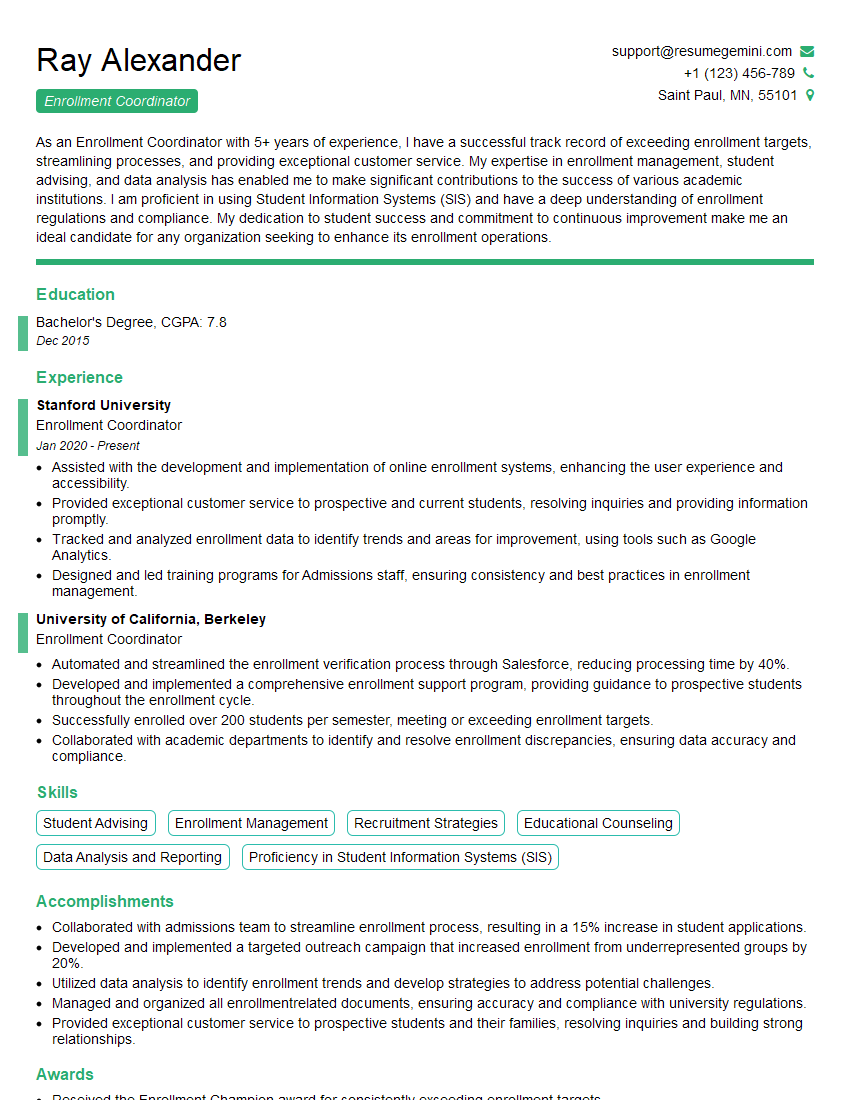
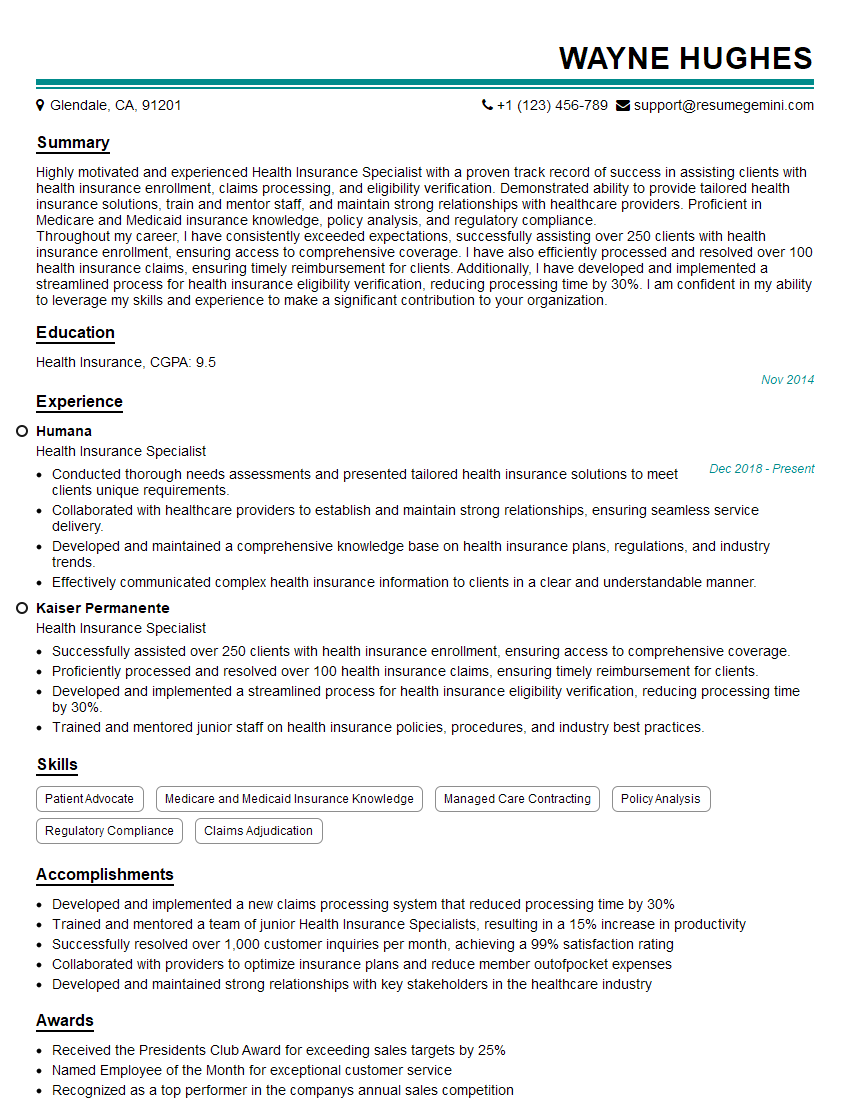
Mastering Medicare and Medicaid Benefits Counseling opens doors to a rewarding career dedicated to helping vulnerable populations access essential healthcare. This expertise is highly sought after, offering excellent career growth opportunities. To significantly enhance your job prospects, creating a strong, ATS-friendly resume is crucial. ResumeGemini is a trusted resource that can help you build a professional resume that highlights your skills and experience effectively. They provide examples of resumes tailored to Medicare and Medicaid Benefits Counseling, ensuring your application stands out from the competition. Take the next step in your career journey and build a compelling resume today!
Explore more articles
Users Rating of Our Blogs
Share Your Experience
We value your feedback! Please rate our content and share your thoughts (optional).
What Readers Say About Our Blog
To the interviewgemini.com Webmaster.
Very helpful and content specific questions to help prepare me for my interview!
Thank you
To the interviewgemini.com Webmaster.
This was kind of a unique content I found around the specialized skills. Very helpful questions and good detailed answers.
Very Helpful blog, thank you Interviewgemini team.