Cracking a skill-specific interview, like one for Mirror Safety Glazing, requires understanding the nuances of the role. In this blog, we present the questions you’re most likely to encounter, along with insights into how to answer them effectively. Let’s ensure you’re ready to make a strong impression.
Questions Asked in Mirror Safety Glazing Interview
Q 1. Explain the different types of safety glazing films used for mirrors.
Safety glazing films for mirrors are designed to hold the glass fragments together in case of breakage, preventing injury and damage. Several types exist, each with varying properties:
- Polymeric Films: These are the most common type, typically made from strong, flexible polymers like vinyl or polyurethane. They are applied directly to the mirror’s surface and offer excellent shatter resistance. Thicker films offer greater protection. Think of it like a strong, invisible net holding the glass together.
- Laminated Safety Films: This involves bonding a safety film between two sheets of glass, creating a laminated mirror. This is a more robust solution offering superior protection compared to simply applying a film to a single glass sheet. This method is often employed for larger mirrors and high-risk areas. This is like making a glass sandwich with the safety film as the filling.
- Specialty Films: Some specialized films offer additional features like UV protection, anti-reflective properties, or even decorative patterns alongside safety. The choice depends on the specific application and requirements.
The selection of film depends on factors like the mirror’s size, location, and the level of risk assessment.
Q 2. Describe the installation process for a large-scale mirror safety glazing project.
Installing safety glazing on a large-scale mirror project requires meticulous planning and execution. Here’s a typical process:
- Site Survey and Preparation: Thoroughly assess the mirror’s dimensions, location, and surrounding environment to determine the appropriate film type and installation method. Prepare the surface by cleaning it meticulously to ensure proper adhesion.
- Film Cutting and Application: Using precise measurements, cut the safety film to the exact size of the mirror. Apply the film using a squeegee, removing air bubbles to ensure a seamless bond. Special tools and techniques are used for large mirrors to prevent wrinkles and ensure uniform coverage.
- Curing and Inspection: Allow the film to cure completely according to the manufacturer’s instructions. A thorough inspection is then carried out to ensure the film is properly adhered and there are no imperfections.
- Mounting and Securing: The mirror, now protected by the safety film, is mounted using appropriate techniques for its size and location. This might involve specialized framing, anchoring, or other support structures.
- Final Inspection and Documentation: A final inspection is performed, documenting the installation process and ensuring compliance with safety regulations. This documentation is crucial for future maintenance and insurance purposes.
For extremely large mirrors, specialized teams and equipment might be needed, potentially involving scaffolding and advanced application techniques.
Q 3. What are the key safety regulations and standards relevant to mirror safety glazing?
Regulations governing mirror safety glazing vary depending on location, but common themes include adherence to building codes and safety standards. Key aspects include:
- ASTM Standards: ASTM International publishes standards for glass and glazing, specifying performance requirements for safety glass. These standards provide a benchmark for manufacturers and installers.
- Building Codes: Local building codes often mandate the use of safety glazing in specific high-risk areas, such as public spaces, gyms, and commercial facilities. These codes might specify minimum impact resistance requirements.
- Impact Resistance Testing: Many jurisdictions require proof of impact resistance through testing. This involves subjecting the glazed mirror to standardized impact tests to verify its ability to withstand potential damage.
- Occupational Safety and Health Administration (OSHA): In some jurisdictions OSHA regulations might indirectly influence mirror safety glazing by dictating workplace safety measures, particularly in industries where mirrors are used.
It’s crucial to consult with relevant authorities and obtain necessary permits before any installation.
Q 4. How do you assess the risk of mirror breakage in different settings?
Risk assessment for mirror breakage depends on several factors:
- Location: Mirrors in high-traffic areas or areas prone to impacts (e.g., gyms, children’s play areas) pose a greater risk.
- Mirror Size and Type: Larger mirrors and those made of thinner glass are inherently more vulnerable to breakage.
- Mounting Method: Poorly mounted mirrors are more likely to fall and break. Secure mounting is critical.
- Environmental Factors: Extreme temperature fluctuations or vibrations can weaken mirrors over time, increasing the risk of failure.
- Intended Use: The intended purpose of the mirror influences the level of risk. Mirrors used in high-impact scenarios require more robust safety measures.
A thorough risk assessment involves considering all these factors to determine the appropriate level of safety glazing and installation techniques. This might involve using thicker glass, reinforced mounting, or applying multiple layers of safety film.
Q 5. What are the common causes of mirror failure and how can they be prevented?
Mirror failure can stem from various causes:
- Impact Damage: Physical impact from objects or accidents is a primary cause of mirror breakage.
- Thermal Stress: Sudden temperature changes can cause stress within the glass, leading to cracks or shattering.
- Improper Installation: Poor mounting or insufficient support can lead to the mirror falling or cracking under its own weight.
- Manufacturing Defects: Flaws in the glass during the manufacturing process can weaken it, making it more prone to breakage.
- Corrosion: In some environments, corrosion of the mirror’s backing or frame can lead to weakening and subsequent failure.
Prevention involves careful selection of materials, proper installation and mounting, regular inspection for damage, and protection against environmental factors. For example, using tempered glass or laminated mirrors significantly reduces the risk of shattering, while secure mounting ensures the mirror won’t fall. Regularly checking for stress fractures or corrosion also helps in proactive risk mitigation.
Q 6. Explain the process of repairing damaged mirror safety glazing.
Repairing damaged mirror safety glazing depends on the extent of the damage:
- Minor Scratches or Chips: Minor surface damage may not compromise safety and might require only cleaning or polishing.
- Cracks or Shattering within the Film: If the safety film has cracked but the glass remains intact, the damaged portion of the film might be carefully trimmed and replaced with a patch of new film, ensuring seamless integration.
- Glass Breakage: If the glass itself is broken, the entire mirror needs to be replaced. Repairing a broken mirror by simply patching the glass is usually not a safe option.
In cases of extensive damage or uncertainty, it’s always best to replace the entire mirror rather than attempt a complex repair. Safety should be the priority.
Q 7. Describe your experience with various mirror mounting techniques.
My experience encompasses various mirror mounting techniques, selected based on mirror size, weight, location, and intended use:
- Direct Adhesive Mounting: Suitable for smaller, lighter mirrors, using specialized adhesives designed for mirror applications that ensure strong bonding and prevent slippage. This is common for smaller mirrors in residential settings.
- Frame Mounting: Common for larger mirrors, this involves a frame to distribute the weight evenly and provide additional support. The frame needs to be securely anchored to the wall or surface.
- Z-Clips or Channel Mounting: Ideal for larger mirrors, these systems offer adjustable mounting and allow for easier installation and removal if needed.
- Point-Fixing Systems: These involve attaching the mirror to the wall using strategically placed fasteners. These methods require careful planning to prevent stress concentrations.
- Specialized Mounting Systems: For very large or unusually shaped mirrors, or those in high-impact areas, custom-designed mounting systems are frequently employed.
Choosing the appropriate method is critical to prevent accidental breakage or damage. Incorrect mounting can lead to premature failure, posing significant safety risks.
Q 8. How do you ensure compliance with building codes and safety regulations?
Ensuring compliance with building codes and safety regulations for mirror safety glazing is paramount. We achieve this through meticulous adherence to standards like ANSI Z97.1 (for safety glazing materials) and relevant local building codes. This involves careful material selection, ensuring that all our mirror installations meet the required impact resistance and shatter-resistance criteria. For example, we’d only use safety glazing certified to withstand impacts specified for the location’s risk assessment. We meticulously document every step of the process, from material sourcing and testing to installation and inspection, providing certifications and reports as needed to building inspectors. We also stay updated on any changes to regulations and incorporate them into our procedures. This proactive approach minimizes risks and ensures legal compliance, protecting both the building occupants and our company.
Q 9. What are the different types of mirror substrates and their properties?
Mirror substrates play a crucial role in safety glazing. The most common types include:
- Float Glass: This is the most prevalent base material, known for its flatness, clarity, and relatively low cost. Its high quality contributes to a superior reflection.
- Tempered Glass: This is safety glass that’s heat-treated to increase its strength and shatter resistance. When it breaks, it fragments into small, relatively harmless pieces, significantly reducing the risk of injury. This is crucial for safety glazing.
- Laminated Glass: This type consists of two or more layers of glass bonded together with a strong interlayer, usually PVB (polyvinyl butyral). Even if the glass breaks, the interlayer holds the fragments together, preventing them from scattering. This is particularly important in high-traffic areas.
The choice of substrate depends on the specific application and the required level of safety and performance. For instance, a high-traffic gym would require tempered or laminated glass for maximum safety, while a less-critical application might suffice with float glass, providing cost savings.
Q 10. How do you handle challenging installations, such as curved or unusually shaped mirrors?
Handling challenging installations like curved or unusually shaped mirrors requires specialized techniques and expertise. We use a combination of precision cutting, specialized adhesives, and meticulous installation methods. For curved mirrors, we often utilize heat-bending techniques to shape the glass before installation. This requires carefully controlled temperatures and precise timing to prevent cracking or distortion. For unusually shaped mirrors, we use templates and jigs to ensure accurate cutting and placement. This often involves digitally designing patterns and having mirrors custom cut by specialized glass fabricators.
We also rely on strong, flexible adhesives designed for the specific substrate and application. The adhesive’s properties, such as its bonding strength and flexibility, are carefully chosen to accommodate the mirror’s shape and the mounting surface, whether it’s a wall, ceiling, or a curved structure. This precise process minimizes risks during installation and ensures a long-lasting, aesthetically pleasing result.
Q 11. What are the limitations of different safety glazing methods for mirrors?
Different safety glazing methods have their limitations. While tempered glass is highly impact-resistant, it can still fail under extreme loads or from concentrated impacts. Laminated glass, while effective at holding shards together, might still result in a visible crack, affecting the aesthetic appeal. The choice of adhesive is also critical; incorrectly applied or unsuitable adhesives can weaken the overall structure, compromising its integrity. Furthermore, environmental factors, such as extreme temperatures or humidity, can affect the performance of safety glazing over time. We account for these limitations by carefully assessing the risk factors specific to each application and selecting the optimal combination of substrates, adhesives, and installation methods.
Q 12. Explain the importance of proper maintenance for mirror safety glazing.
Proper maintenance is essential for extending the lifespan and maintaining the safety of mirror safety glazing. Regular inspections help identify any potential issues such as cracks, delamination, or damaged edges. We recommend checking for any damage after an impact, however minor. A damaged mirror should be replaced immediately. Cleaning should be done gently with appropriate cleaning solutions to avoid scratching or damaging the surface. Avoid using abrasive cleaners or sharp objects. Harsh chemicals can also compromise the integrity of the adhesive over time. By following a routine maintenance plan, we ensure that the safety glazing system continues to function as intended and that potential hazards are addressed promptly.
Q 13. How do you select the appropriate safety glazing for specific applications?
Selecting the appropriate safety glazing for specific applications involves a thorough risk assessment. Factors considered include the location’s traffic, potential impact forces, environmental conditions, and aesthetic requirements. High-traffic areas, such as public restrooms or gyms, require higher levels of impact resistance, often necessitating tempered or laminated glass. For areas with less potential for impact, such as residential settings, a less-expensive option might be suitable. We always consider the building codes and regulations relevant to the location. We may even consult with architects or building engineers to ensure that the chosen glazing solution meets all safety and design requirements. Finally, the aesthetic requirements, like desired reflectivity and clarity, play a crucial role in selecting the final solution.
Q 14. Describe your experience with different types of mirror adhesives and sealants.
My experience encompasses a wide range of mirror adhesives and sealants. We use structural silicones extensively; they offer excellent bonding strength, durability, and flexibility. These silicones are specifically formulated for glass and are resistant to UV degradation and environmental factors. For certain applications, we also use polyurethane-based adhesives, known for their strong bonding and quick curing times. The choice of adhesive depends on several factors, including the type of substrate, the size and weight of the mirror, the mounting surface, and the environmental conditions. We meticulously follow the manufacturer’s instructions for each adhesive to ensure proper adhesion and longevity. Our team is rigorously trained to select and apply the most appropriate adhesive, adhering to safety protocols, and ensuring a secure and long-lasting installation.
Q 15. How do you address potential hazards during the installation process?
Safety is paramount during mirror safety glazing installation. We mitigate hazards through meticulous planning and execution. This begins with a thorough site survey to identify potential risks like uneven surfaces, electrical wiring, or obstructions. We then develop a detailed safety plan, including designated work zones, proper material handling techniques, and specific procedures for each stage of the installation.
- Fall Protection: Working at heights requires harnesses, anchored safety lines, and scaffolding with appropriate guardrails.
- Sharp Edges: We use protective gloves and clothing to prevent cuts from sharp glass edges. Tempered glass, while strong, can still shatter, creating dangerous fragments.
- Heavy Lifting: Mirrors, especially large ones, are heavy. We utilize appropriate lifting equipment like suction cups and specialized glass carriers, along with a team lift strategy to prevent injuries.
- Debris Management: A designated area for debris collection and proper disposal is essential. This prevents accidents from slipping or stumbling.
For instance, during a recent installation in a high-ceilinged atrium, we used a specialized crane and harness system for safe handling and installation of extremely large mirror panels.
Career Expert Tips:
- Ace those interviews! Prepare effectively by reviewing the Top 50 Most Common Interview Questions on ResumeGemini.
- Navigate your job search with confidence! Explore a wide range of Career Tips on ResumeGemini. Learn about common challenges and recommendations to overcome them.
- Craft the perfect resume! Master the Art of Resume Writing with ResumeGemini’s guide. Showcase your unique qualifications and achievements effectively.
- Don’t miss out on holiday savings! Build your dream resume with ResumeGemini’s ATS optimized templates.
Q 16. What safety equipment and personal protective equipment (PPE) do you utilize?
Personal Protective Equipment (PPE) is mandatory. We utilize:
- Safety Glasses: Protect eyes from flying debris during cutting and handling.
- Gloves: Cut-resistant gloves are essential to prevent injuries from sharp glass edges.
- Safety Boots: Steel-toed boots prevent foot injuries from dropped objects.
- Hard Hats: Protect the head from falling objects, especially on construction sites.
- High-Visibility Clothing: Increases visibility, particularly in busy environments.
- Respiratory Protection: Depending on the environment and materials used (e.g., working with adhesives), respirators might be necessary.
- Harness and Fall Protection System: For work at heights.
Beyond PPE, we ensure all tools are in good working condition and regularly inspected. This includes glass cutters, suction cups, and any power tools used.
Q 17. How do you manage a project budget and timeline for mirror safety glazing?
Project budget and timeline management is crucial. We begin with a detailed estimate that includes:
- Materials: Cost of mirrors, adhesives, framing, and other materials.
- Labor: Hours required for site survey, preparation, installation, and cleanup.
- Equipment Rental: Costs associated with any specialized equipment like cranes or suction cups.
- Contingency: A buffer for unforeseen issues or delays.
We use project management software to track progress against the timeline. Regular client updates and proactive communication prevent budget overruns and schedule delays. For example, if material delivery is delayed, we immediately notify the client and explore alternative solutions to mitigate the impact.
Q 18. Describe your experience with quality control procedures for mirror installations.
Quality control is a continuous process. We implement checks at each stage:
- Pre-Installation Inspection: Verification of mirror dimensions, quality, and absence of defects.
- Installation Process Oversight: Careful adherence to manufacturer’s instructions for adhesives and installation techniques.
- Post-Installation Inspection: Thorough inspection for proper alignment, absence of defects, and secure installation.
- Client Sign-Off: Ensuring the client is satisfied with the installation and approves the final work.
We meticulously document all aspects, including photographs at each stage and a final report detailing the project, any challenges encountered, and solutions implemented. This ensures accountability and helps us improve our processes.
Q 19. Explain your understanding of tempered glass and its role in mirror safety.
Tempered glass is heat-treated to increase its strength and safety. Unlike annealed glass, which shatters into sharp shards when broken, tempered glass fragments into small, relatively harmless pieces, reducing the risk of injury. This makes it ideal for mirrors in high-traffic areas or where breakage is a concern.
In mirror safety glazing, the mirror is typically bonded to a sheet of tempered glass, creating a safety layer. If the mirror breaks, the tempered glass holds the fragments in place, preventing them from scattering and causing harm. This is a key aspect of ensuring that mirrors are not only aesthetically pleasing but also safe.
Q 20. How do you communicate effectively with clients and other stakeholders?
Effective communication is essential. We maintain open communication channels with clients and stakeholders throughout the project. This includes:
- Regular Updates: Providing timely updates on project progress, potential challenges, and solutions.
- Detailed Reporting: Offering clear and concise reports, including photographs and documentation of all aspects of the project.
- Responsiveness: Promptly addressing client queries and concerns.
- Professionalism: Maintaining a high level of professionalism and respect in all interactions.
We utilize various communication methods such as email, phone calls, and project management software depending on client preference and project complexity. Clear and consistent communication builds trust and ensures a positive experience for all involved.
Q 21. Describe a challenging mirror installation project and how you overcame the obstacles.
One challenging project involved installing a large, curved mirror in a high-end retail store. The curvature required precise measurements and a custom-fabricated frame. The tight timeframe and the need to work around existing store operations added complexity. The primary obstacle was the precise alignment and installation of the curved mirror to avoid distortion or gaps.
We overcame this by:
- 3D Modeling: Creating a detailed 3D model to ensure perfect alignment before installation.
- Precision Cutting: Employing highly skilled technicians with precision cutting tools to achieve perfect fit.
- Phased Installation: Breaking down the installation into smaller, manageable phases to minimize disruption to store operations.
- Collaboration: Working closely with the store management team and other contractors to coordinate schedules and address any challenges promptly.
Through careful planning, precise execution, and effective teamwork, we successfully completed the project on time and to the client’s complete satisfaction.
Q 22. How do you resolve conflicts or disagreements on a project site?
Resolving conflicts on a project site hinges on clear communication and a collaborative approach. My first step is always to listen actively to all parties involved, understanding their perspectives and concerns. I then work to identify the root cause of the disagreement, focusing on facts rather than emotions. This often involves reviewing project specifications, drawings, or relevant safety regulations. For example, if there’s a disagreement about the type of adhesive to use, I’ll refer to the approved specifications and perhaps even consult the manufacturer’s guidelines. Once the root cause is identified, I facilitate a discussion to find a mutually agreeable solution that prioritizes safety and project completion. If a compromise can’t be reached, I escalate the issue to the project manager, providing a detailed summary of the conflict and the steps already taken to resolve it. I firmly believe in maintaining a professional and respectful atmosphere, even in stressful situations.
Q 23. What are your strategies for preventing accidents and injuries during installation?
Preventing accidents during mirror safety glazing installation requires a multi-pronged approach. Before any work begins, a thorough risk assessment is crucial, identifying potential hazards like falls from heights, cuts from sharp edges, and back injuries from lifting heavy mirrors. Based on this assessment, I implement a comprehensive safety plan, which includes the use of appropriate personal protective equipment (PPE) such as safety glasses, gloves, and steel-toe boots. We always use proper lifting techniques, potentially employing mechanical lifting devices for larger mirrors. The work area is kept clean and clutter-free to minimize tripping hazards. Regular toolbox talks reinforce safe work practices and address any emerging concerns. Furthermore, I emphasize the importance of proper training for all team members, ensuring everyone is proficient in using the necessary tools and equipment and understands the risks associated with mirror handling and installation. For instance, if we’re working at heights, we’ll always use scaffolding and harnesses. This proactive approach significantly reduces the likelihood of accidents and injuries.
Q 24. Describe your experience with different types of mirror frames and their impact on safety.
My experience encompasses a wide range of mirror frames, each influencing safety in distinct ways. Aluminum frames, for example, are lightweight and easy to handle, reducing the risk of back injuries. However, they can be prone to damage during installation if not handled with care. Wooden frames offer a more traditional aesthetic but require careful consideration of moisture content to prevent warping and potential structural failure. Steel frames provide excellent strength and durability but are heavier and can be more challenging to work with, increasing the risk of injuries during handling. The frame’s design also plays a role—a frame with sharp edges presents a higher risk of cuts than one with rounded corners. In addition, the method of attachment to the mirror—whether it uses mechanical fasteners or adhesive—can impact the overall safety and longevity of the installation. For example, improperly secured fasteners could compromise the integrity of the installation, increasing the risk of shattering and potential injury. I always select the frame type and installation method based on a comprehensive risk assessment considering the mirror size, location, and the overall environment.
Q 25. What are your preferred methods for inspecting completed mirror safety glazing installations?
Inspecting completed mirror installations involves a meticulous process. I begin by visually assessing the entire installation, checking for any signs of damage to the mirror or frame. This includes looking for cracks, chips, or any other imperfections. Then I carefully examine the adhesive bond, ensuring it’s complete and secure across the entire surface. I pay close attention to the seams and edges, making sure there are no gaps or areas where the mirror might be loose. Next, I test the mirror’s stability by gently applying pressure to different areas, confirming it’s firmly fixed in place and won’t easily move. Finally, I check for compliance with all relevant safety standards and building codes. This may involve using specialized tools to measure the adhesive strength or confirming the correct type of safety film was used. A thorough inspection report is then created and shared with the client, outlining any observations and recommendations.
Q 26. How familiar are you with relevant industry certifications and standards (e.g., ANSI, ASTM)?
I am very familiar with relevant industry certifications and standards such as those from ANSI (American National Standards Institute) and ASTM International (formerly known as the American Society for Testing and Materials). Specifically, I am well-versed in standards concerning glass and glazing, including those related to impact resistance, safety glazing, and installation practices. My understanding extends to interpreting these standards to ensure compliance throughout the project lifecycle, from material selection to final installation and inspection. These standards provide a benchmark for quality and safety, and adhering to them is paramount in my work. For example, ANSI Z97.1 covers the safety requirements for architectural glass, and understanding these requirements ensures that the mirrors installed meet the necessary safety standards for the intended application.
Q 27. Explain your knowledge of different types of impact resistant films.
Impact-resistant films used in safety glazing are designed to hold the glass fragments together in case of breakage, preventing injury from sharp shards. I have experience with several types, including polyvinyl butyral (PVB) interlayers, which are commonly used in laminated glass, offering excellent impact resistance and clarity. Another type is ethylene vinyl acetate (EVA), which is often used in less demanding applications, offering a cost-effective solution with moderate impact resistance. More specialized films, such as those incorporating nano-technology, are also available, offering enhanced strength and other features like UV protection. The choice of film depends on several factors, including the anticipated impact forces, the desired level of transparency, and budget constraints. For example, in high-traffic areas or those with a higher risk of impact, PVB interlayers with higher thickness are often preferred for their superior strength and ability to withstand greater impact forces.
Q 28. How do you handle customer complaints regarding mirror safety glazing installations?
Handling customer complaints effectively is crucial for maintaining positive client relationships. My approach is to listen empathetically to the customer’s concerns, ensuring I fully understand their perspective. I then investigate the complaint thoroughly, reviewing project documentation, photographs, and potentially conducting a site visit to assess the situation firsthand. Depending on the nature of the complaint—whether it’s a damaged mirror, faulty installation, or a concern about safety—I develop a solution that addresses the root cause. This might involve repairing or replacing the damaged mirror, rectifying the installation issue, or providing further explanation and reassurance. Open communication is key throughout the process, keeping the customer informed of the investigation’s progress and the proposed resolution. Ultimately, my goal is to resolve the complaint fairly and efficiently, ensuring the customer feels heard and valued. Even if a situation is complex, I approach it with patience and professionalism, aiming for a resolution that fosters trust and satisfaction.
Key Topics to Learn for Mirror Safety Glazing Interview
- Material Science: Understanding the properties of different glass types used in mirror safety glazing (e.g., tempered glass, laminated glass) and their respective strengths, weaknesses, and applications.
- Manufacturing Processes: Familiarize yourself with the techniques involved in producing mirror safety glazing, including cutting, polishing, laminating, and safety film application. Consider the impact of different manufacturing choices on product quality and safety.
- Safety Standards and Regulations: Thoroughly understand relevant safety standards and building codes pertaining to mirror safety glazing installation and usage. This includes knowledge of relevant testing procedures and certifications.
- Installation Techniques: Learn about proper installation methods, including considerations for substrate preparation, adhesive selection, and securing techniques to ensure optimal performance and longevity.
- Failure Analysis: Develop an understanding of common causes of mirror safety glazing failure (e.g., impact damage, improper installation, environmental factors) and the methods used to diagnose and prevent them.
- Maintenance and Repair: Explore recommended maintenance practices and common repair procedures for damaged or compromised mirror safety glazing systems.
- Cost Analysis and Budgeting: Gain insight into the cost implications associated with material selection, installation, and maintenance of mirror safety glazing systems.
Next Steps
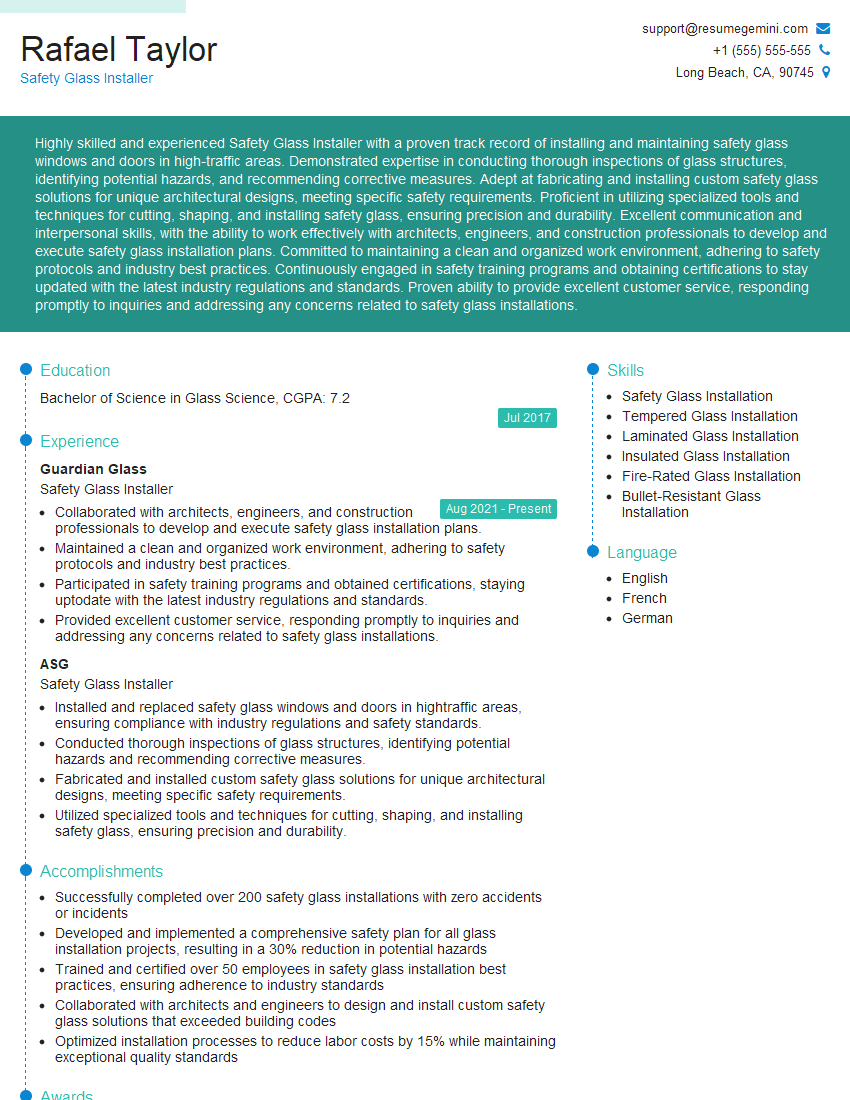
Mastering the intricacies of mirror safety glazing opens doors to exciting opportunities in the construction, design, and manufacturing sectors. A strong understanding of this specialized field significantly enhances your career prospects and positions you as a valuable asset to any team. To maximize your chances, crafting an ATS-friendly resume is crucial. ResumeGemini is a trusted resource that can help you build a professional and impactful resume, highlighting your skills and experience effectively. We provide examples of resumes tailored to the Mirror Safety Glazing industry to help you create a document that truly showcases your potential.
Explore more articles
Users Rating of Our Blogs
Share Your Experience
We value your feedback! Please rate our content and share your thoughts (optional).
What Readers Say About Our Blog
To the interviewgemini.com Webmaster.
Very helpful and content specific questions to help prepare me for my interview!
Thank you
To the interviewgemini.com Webmaster.
This was kind of a unique content I found around the specialized skills. Very helpful questions and good detailed answers.
Very Helpful blog, thank you Interviewgemini team.