Feeling uncertain about what to expect in your upcoming interview? We’ve got you covered! This blog highlights the most important Molding Materials Handling interview questions and provides actionable advice to help you stand out as the ideal candidate. Let’s pave the way for your success.
Questions Asked in Molding Materials Handling Interview
Q 1. Explain the different types of material handling equipment used in molding.
Molding material handling relies on a variety of equipment to efficiently move raw materials, semi-finished goods, and finished products. The specific equipment depends on factors such as the size and weight of the parts, the production volume, and the facility layout. Common types include:
- Conveyors: Belt conveyors, roller conveyors, and chain conveyors transport materials between different stages of the molding process. Think of them as the ‘roads’ within the factory, moving parts from the injection molding machine to the next operation.
- Robots: Articulated robots are extensively used for handling hot, delicate, or precisely positioned parts. They’re incredibly versatile and can perform intricate tasks like picking parts directly from the mold and placing them onto conveyors. Imagine them as the ‘skilled workers’ who perform precise movements.
- Automated Guided Vehicles (AGVs): These driverless vehicles transport large quantities of materials throughout the facility. They are the ‘trucks’ of the factory, moving pallets of raw materials or finished goods to storage or shipping areas.
- Forklifts: Essential for handling heavier loads like raw material pallets or finished goods stacked on pallets. These are the powerful ‘cranes’ moving larger volumes.
- Overhead Cranes: Primarily used for moving heavier equipment or large molds within the facility. They’re like the ‘heavy-lifters’ for the most demanding tasks.
- Hoppers and Bins: Used for storing and feeding raw materials into the molding machines. Consider them as the ‘reservoirs’ holding the raw ingredients.
The choice of equipment often involves a careful balancing act between efficiency, cost, and safety.
Q 2. Describe your experience with automated guided vehicles (AGVs) in a molding environment.
In my previous role at Acme Plastics, we implemented an AGV system to automate the transport of finished parts from the molding machines to the packaging area. Before the AGVs, this was a manual process, prone to bottlenecks and delays. The AGVs significantly improved efficiency by reducing transportation time and labor costs. We used a fleet of three AGVs, each programmed with a specific route and tasked with transporting different types of parts. The system included a sophisticated control software that monitored the AGV location, battery levels, and potential conflicts, ensuring smooth operation. The transition required careful planning, including mapping the facility’s floor plan, defining AGV routes, and training personnel on the system’s operation and safety protocols. The overall impact was a 25% reduction in material handling time and a notable decrease in human error.
One crucial aspect was integrating the AGV system with the existing manufacturing execution system (MES). This allowed real-time tracking of parts and provided valuable data for production optimization. For example, we could identify bottlenecks by analyzing AGV utilization rates and adjust the production schedule accordingly.
Q 3. How do you ensure the safety of materials handling personnel in a molding facility?
Safety is paramount in molding material handling. My approach focuses on a multi-layered strategy, combining engineering controls, administrative controls, and personal protective equipment (PPE).
- Engineering Controls: This involves designing the facility and equipment to minimize hazards. Examples include implementing light curtains and safety sensors on robots to prevent collisions, using interlocks on machinery to prevent access during operation, and providing adequate lighting and space for safe movement.
- Administrative Controls: This encompasses establishing clear safety procedures, providing comprehensive training to all personnel, implementing regular safety inspections, and conducting thorough risk assessments. We often use a ‘lockout/tagout’ system for preventative maintenance to prevent accidental equipment start-up.
- Personal Protective Equipment (PPE): Providing and enforcing the use of appropriate PPE, such as safety glasses, hearing protection, steel-toed boots, and gloves, is essential for protecting workers from potential hazards. We conduct regular training on proper PPE usage and fit.
Regular safety meetings and incident reporting are critical for continuous improvement and maintaining a safe working environment. Furthermore, we utilize data analysis to identify trends in near misses or accidents to proactively implement corrective actions.
Q 4. What are the common challenges in materials handling for injection molding?
Injection molding presents unique challenges for material handling. Some common issues include:
- Part fragility: Many molded parts are delicate and can be easily damaged during handling. This necessitates careful handling techniques and equipment.
- High temperatures: Parts emerging from the molding machine are often very hot, requiring specialized handling equipment and procedures to prevent burns.
- Material flow disruption: Material shortages or unexpected machine downtime can disrupt the entire flow, impacting production output. Robust inventory management is key.
- Space constraints: Efficient use of space within a molding facility is critical, and optimized layout is paramount to avoiding congestion.
Addressing these challenges often involves implementing automation, utilizing appropriate handling equipment, and establishing robust inventory management and quality control systems.
Q 5. How do you optimize the flow of materials in a molding production line?
Optimizing material flow in a molding production line involves a systematic approach. This often begins with a thorough analysis of the current process, identifying bottlenecks and areas for improvement. Lean manufacturing principles are frequently applied. Techniques like Value Stream Mapping helps visualize the process and identify waste. Here’s a step-by-step strategy:
- Value Stream Mapping: Create a visual representation of the entire material flow, from raw material intake to finished goods storage. This helps to easily pinpoint bottlenecks.
- Process Improvement: Implement changes based on the mapping. This might involve reorganizing the factory layout, implementing automation, or optimizing equipment utilization.
- Kanban System: Consider using a Kanban system for managing inventory and work-in-progress. This ensures that materials are supplied to the production line only when needed, minimizing storage and reducing waste.
- 5S Methodology: Implement 5S (Sort, Set in Order, Shine, Standardize, Sustain) to create a more organized and efficient work environment.
- Data Analysis: Utilize data from the production line (cycle times, machine utilization, defect rates) to identify patterns and areas for improvement. This is where sensors and MES become invaluable.
Continuous improvement is key. Regular reviews and adjustments are necessary to ensure the material flow remains optimized.
Q 6. What are your strategies for minimizing material waste in molding operations?
Minimizing material waste in molding operations requires a holistic approach targeting various stages of production. Strategies include:
- Process Optimization: Fine-tuning the molding process parameters (injection pressure, temperature, holding time) to minimize defects and scrap. Careful consideration of mold design is also critical.
- Material Selection: Choosing the most appropriate resin for the application, minimizing material consumption while ensuring product quality and durability.
- Preventive Maintenance: Regular maintenance of molding machines and tooling to prevent unexpected downtime and material waste. Regular mold cleaning and maintenance are key.
- Quality Control: Implementing strict quality control measures throughout the molding process to identify and correct defects early on, reducing the amount of scrap generated.
- Scrap Recycling: Establishing a system for collecting, sorting, and recycling plastic scrap generated during molding. Many companies resell scrap or use it to create other products.
- Lean Manufacturing Principles: Employing Lean principles, such as eliminating waste (muda) and improving efficiency, significantly reduces overall material consumption.
Continuous monitoring and data analysis help track the effectiveness of these strategies, allowing for ongoing improvements.
Q 7. Explain your experience with inventory management systems in a molding facility.
My experience with inventory management systems in molding facilities involves implementing and utilizing Enterprise Resource Planning (ERP) systems and Material Requirements Planning (MRP) software. These systems provide real-time visibility into inventory levels, enabling better forecasting and planning. At one company, we used an ERP system that tracked raw materials, work-in-progress, and finished goods inventory. The system generated reports on inventory turnover rates, helping to identify slow-moving items and optimize stock levels. The MRP module allowed us to create accurate production schedules based on anticipated demand and available materials. This integration minimized stockouts and prevented overstocking. Data-driven decision making is key here. We analyzed historical data on material consumption and demand to optimize our inventory levels, reducing storage costs and preventing waste from obsolescence. Regular inventory audits ensured accuracy and helped maintain data integrity.
Q 8. How do you track and manage materials throughout the molding process?
Tracking and managing materials in the molding process is crucial for efficiency and quality control. We utilize a combination of methods, starting with a robust inventory management system. This system usually involves barcoding or RFID tagging of each material batch, allowing for real-time tracking from the moment it enters the facility until it’s incorporated into a finished product. We integrate this system with our manufacturing execution system (MES) to provide visibility into material location, quantity, and movement throughout the molding process.
For example, a batch of resin might be scanned upon arrival, then tracked as it’s moved to storage, then to the hopper of a molding machine. The system logs every step, providing complete traceability. If there’s an issue with a finished product, we can easily trace back to the specific batch of materials used to pinpoint the root cause. Regular audits and reconciliation checks ensure data accuracy and prevent discrepancies. We also utilize Kanban systems or similar visual management tools to signal when more materials are needed, ensuring a smooth and uninterrupted workflow.
Q 9. Describe your experience with different types of conveyors used in molding.
My experience encompasses a wide range of conveyors. Belt conveyors are common for transporting bulk materials like resin pellets from storage to the molding machines. These are reliable and adaptable to various material types and flow rates. Roller conveyors are often used for moving larger, finished molded parts, allowing for easier manual handling and sorting. Screw conveyors are excellent for precise metering of granular materials, particularly useful when exact resin quantities are required. Finally, vibratory conveyors are useful for moving smaller parts or delicate components, minimizing the risk of damage. The choice of conveyor depends heavily on the specific material properties (size, weight, fragility), the production rate, and the overall layout of the molding facility. For instance, a high-volume production line might utilize a more robust belt conveyor system, while a smaller operation might opt for a simpler roller conveyor setup. We also consider factors like maintenance needs and cost-effectiveness when choosing the right conveyor.
Q 10. How do you handle damaged or defective materials in a molding environment?
Handling damaged or defective materials requires a structured approach. First, we have a clear process for identifying and isolating defective materials. This involves visual inspection at various stages, often aided by automated quality control systems. Once a defect is identified, we meticulously document it, recording the type, quantity, and potential cause. This information is crucial for root cause analysis and preventing future occurrences. Depending on the nature and extent of the damage, the materials might be repaired (if feasible), segregated for rework, or scrapped. Scrapped materials are disposed of according to environmental regulations, often through recycling programs to minimize waste. A detailed tracking system ensures complete accountability for damaged materials, from initial identification to final disposal. Regular training for our operators enhances their ability to promptly identify and report defects, contributing to proactive quality control.
Q 11. What are the best practices for storing raw materials in a molding facility?
Proper raw material storage is critical for maintaining material quality and ensuring smooth production. We prioritize a clean, dry, and well-organized storage area, away from direct sunlight and sources of moisture or extreme temperature fluctuations. Materials are stored on pallets or in bins, clearly labeled with identifying information (batch number, material type, date of receipt). This organized system prevents confusion and simplifies inventory management. We also employ FIFO (First-In, First-Out) inventory management to ensure that older materials are used before newer ones, preventing degradation or obsolescence. Regular inspections are conducted to check for any signs of deterioration or contamination. The storage area should be designed to allow for efficient material flow, minimizing unnecessary movement and maximizing space utilization. The specific storage requirements will vary depending on the material’s sensitivity to environmental factors. For example, hygroscopic materials (those that absorb moisture) might require special sealed containers or controlled environmental storage.
Q 12. Describe your experience with FIFO (First-In, First-Out) inventory management.
FIFO (First-In, First-Out) inventory management is a cornerstone of our material handling practices. This method ensures that the oldest materials are used first, minimizing the risk of material degradation or spoilage. We implement FIFO by utilizing clearly marked storage locations and a strict rotation system. Materials are stored in a manner that facilitates easy identification and retrieval of the oldest batches. Our inventory management system automatically tracks material expiry dates (if applicable) and flags items approaching their expiration date. We use a variety of visual cues, such as clearly marked storage bins with dates or color-coded labels, to reinforce FIFO principles and make it easily understood by all personnel. Regular inventory audits verify that FIFO principles are being consistently followed. For example, when receiving a new shipment of resin, it’s placed behind the existing stock, ensuring that the older resin is used first. This meticulous approach minimizes waste and guarantees that only the freshest materials are used in the molding process.
Q 13. How do you ensure the timely delivery of materials to the molding machines?
Timely delivery of materials to molding machines is essential for maintaining production schedules. We use a combination of strategies to ensure this. First, our inventory management system provides real-time information on material levels, triggering automated alerts when stock levels fall below a pre-defined threshold. This allows for proactive reordering and prevents production delays. Second, we carefully plan material delivery routes and schedules to minimize transportation time. This involves optimizing the layout of the facility to reduce material handling distances. Third, we often use dedicated material handlers or automated guided vehicles (AGVs) to quickly and efficiently transport materials from storage to the molding machines. These methods allow for a just-in-time delivery approach, minimizing the need for large material buffers. Finally, we collaborate closely with our suppliers to ensure timely deliveries of raw materials, proactively addressing any potential supply chain disruptions. Regular performance monitoring identifies bottlenecks and enables us to make necessary adjustments to the delivery process.
Q 14. Explain your experience with lean manufacturing principles in materials handling.
Lean manufacturing principles are deeply integrated into our materials handling approach. We focus on eliminating waste in all its forms, including overproduction, waiting, transportation, inventory, motion, over-processing, and defects. For example, we utilize Kanban systems to signal material needs, reducing unnecessary inventory and minimizing storage space. We streamline material flow by optimizing the layout of our facilities, reducing transportation distances and improving efficiency. We continually analyze our processes to identify and eliminate bottlenecks and non-value-added activities. This might involve implementing 5S methodologies (Sort, Set in Order, Shine, Standardize, Sustain) for a more organized and efficient workspace. Continuous improvement initiatives, such as Kaizen events, are regularly conducted to identify and implement improvements in our materials handling processes. By embracing lean principles, we reduce lead times, improve productivity, and lower overall costs. We also focus on empowering our employees to identify and solve problems, contributing to a culture of continuous improvement.
Q 15. How do you improve efficiency in materials handling in a molding facility?
Improving efficiency in molding materials handling requires a holistic approach, focusing on optimizing the entire flow, from raw material delivery to finished product storage. Think of it like a well-oiled machine – every part needs to work smoothly and in sync.
- Lean Manufacturing Principles: Implementing techniques like 5S (Sort, Set in Order, Shine, Standardize, Sustain) to minimize waste and maximize workflow. This could involve reorganizing storage areas for faster retrieval or standardizing material handling procedures to reduce errors.
- Automation: Integrating robotic arms, automated guided vehicles (AGVs), and conveyor systems can significantly reduce manual handling, speeding up processes and minimizing human error. For instance, a robotic arm can automatically load and unload molding machines, freeing up human workers for higher-value tasks.
- Process Optimization: Analyzing the current material flow and identifying bottlenecks. This often involves mapping the entire process, from material arrival to finished product shipment, to pinpoint areas for improvement. For example, analyzing the time it takes to move materials between different stages of the molding process and streamlining the workflow.
- Inventory Management: Implementing a robust inventory management system (e.g., using RFID tags) to ensure just-in-time delivery of materials, preventing storage inefficiencies and material shortages. This allows for a more efficient use of space and minimizes the risk of damaged or obsolete materials.
- Employee Training: Well-trained personnel are crucial for efficient operation. Providing regular training on safe and efficient material handling techniques can greatly improve productivity and safety.
For example, in one facility, we implemented an AGV system to transport raw materials from the warehouse to the molding machines. This reduced material handling time by 40%, freeing up workers and increasing overall output.
Career Expert Tips:
- Ace those interviews! Prepare effectively by reviewing the Top 50 Most Common Interview Questions on ResumeGemini.
- Navigate your job search with confidence! Explore a wide range of Career Tips on ResumeGemini. Learn about common challenges and recommendations to overcome them.
- Craft the perfect resume! Master the Art of Resume Writing with ResumeGemini’s guide. Showcase your unique qualifications and achievements effectively.
- Don’t miss out on holiday savings! Build your dream resume with ResumeGemini’s ATS optimized templates.
Q 16. What are the key performance indicators (KPIs) for materials handling in molding?
Key Performance Indicators (KPIs) for materials handling in molding track efficiency, safety, and cost-effectiveness. These are critical for monitoring performance and identifying areas for improvement.
- Throughput: The number of parts produced per unit of time, directly impacted by efficient material flow.
- Material Handling Time: The time it takes to move materials through the entire process. Reducing this time is key to increasing productivity.
- Defect Rate: The percentage of defective parts produced, often linked to material handling errors.
- Inventory Turnover: How quickly materials are used and replenished. A high turnover rate indicates efficient inventory management.
- Safety Incidents: The number of accidents related to material handling, highlighting the importance of safety procedures.
- Cost per Unit: The cost of material handling per part produced. This is essential for maintaining profitability.
- On-Time Delivery Rate: The percentage of orders delivered on time, reflecting the efficiency of the entire supply chain including material handling.
By regularly monitoring these KPIs, we can identify trends, address potential problems proactively, and make data-driven decisions to enhance efficiency.
Q 17. How do you handle material shortages or delays in a molding operation?
Material shortages or delays are critical events in a molding operation that require immediate attention. A well-defined contingency plan is essential.
- Emergency Procurement: Establish relationships with multiple suppliers to source materials from alternative vendors in case of delays. This is like having a backup plan for your car – you’ll be glad you have it when you need it.
- Prioritization: Prioritize urgent orders and adjust production schedules to minimize the impact of the shortage. Focus on fulfilling the most critical orders first.
- Inventory Review: Conduct a thorough review of existing inventory to identify any available substitutes or alternative materials that can be used temporarily. This might require some minor adjustments to the molding process.
- Communication: Openly communicate with customers about potential delays and adjust expectations accordingly. Transparency builds trust and minimizes disruption.
- Root Cause Analysis: After resolving the immediate issue, conduct a thorough analysis to understand the cause of the shortage or delay and implement preventative measures to avoid similar situations in the future. This is critical for long-term stability.
For instance, we once experienced a sudden shortage of a key raw material due to a supplier issue. Our pre-existing plan allowed us to quickly source the material from an alternate vendor, minimizing production downtime and avoiding significant customer impact.
Q 18. Describe your experience with different types of robotic arms used in material handling.
My experience encompasses various robotic arms used in material handling, each suited to specific tasks in a molding facility. Selection depends heavily on payload capacity, reach, speed, and precision requirements.
- Articulated Robots: These are highly versatile robots with multiple joints, allowing them to reach into confined spaces and perform complex movements. They are ideal for tasks like loading and unloading molding machines, particularly in complex setups.
- SCARA Robots (Selective Compliance Assembly Robot Arm): These robots are known for their speed and precision in planar motion. They are excellent for pick-and-place operations and handling smaller, lighter parts.
- Cartesian Robots: These robots move along three linear axes (X, Y, Z), making them perfect for simple, repetitive tasks with high precision, like dispensing materials or moving parts along a conveyor belt.
- Delta Robots: These are incredibly fast robots suitable for high-speed pick-and-place applications. They excel in tasks requiring quick and precise movements, often used in high-volume production lines.
In a past project, we replaced a manual loading system with a six-axis articulated robot for a high-pressure die-casting cell. The robotic arm significantly improved cycle times, reduced human exposure to hazardous environments, and improved overall product quality by ensuring consistent loading and unloading.
Q 19. How do you ensure the proper identification and traceability of materials?
Proper identification and traceability are paramount in ensuring quality control and efficient inventory management. It’s like keeping meticulous records in a library, allowing you to find exactly what you need when you need it.
- Barcodes/QR Codes: Using barcodes or QR codes on materials allows for quick and efficient identification throughout the process. A scanner can instantly provide all necessary information about the material.
- RFID Tags: Radio-Frequency Identification (RFID) tags offer superior tracking capabilities, allowing for real-time monitoring of materials as they move through the facility. They are particularly useful for tracking large quantities of materials or in harsh environments.
- Database Management: Integrating a robust database system to manage material information, including lot numbers, manufacturing dates, and other relevant data. This allows for easy retrieval of information and analysis of material usage.
- Software Integration: Integrating material identification systems with other manufacturing software to track material flow, manage inventory, and create comprehensive audit trails.
Implementing a comprehensive tracking system, integrating barcode scanners directly into the process, has helped us reduce errors in material selection, eliminate costly mistakes and improve overall productivity.
Q 20. What are the regulatory requirements for materials handling in the molding industry?
Regulatory requirements for materials handling in the molding industry vary depending on location and the specific materials being handled. However, several key regulations commonly apply:
- Occupational Safety and Health Administration (OSHA): OSHA regulations dictate safe handling procedures to protect workers from hazards such as heavy lifting, machinery entanglement, and exposure to harmful materials. This involves following specific guidelines for personal protective equipment (PPE) and proper lifting techniques.
- Environmental Protection Agency (EPA): EPA regulations address the safe handling and disposal of hazardous materials, including waste generated during the molding process. This often involves detailed documentation and adherence to specific disposal protocols.
- Industry-Specific Standards: Several industry-specific standards (e.g., those set by professional organizations like the Society of Plastics Engineers) provide guidance on best practices for material handling, including storage, transport, and processing.
- Local Regulations: Local and regional regulations might impose additional requirements regarding waste disposal, emissions, and worker safety, depending on the specific location of the molding facility.
Staying current with all applicable regulations is crucial for maintaining compliance and preventing potential penalties or legal issues. Regular audits and training programs are necessary for ensuring compliance.
Q 21. How do you maintain and troubleshoot material handling equipment?
Maintaining and troubleshooting material handling equipment is critical for uninterrupted production. It’s like regular car maintenance – preventing small problems from becoming major breakdowns.
- Preventative Maintenance: Implementing a preventative maintenance schedule with regular inspections, lubrication, and component replacements. This significantly reduces the risk of equipment failure and extends the lifespan of the equipment.
- Operator Training: Providing thorough training to operators on the proper operation and maintenance of the equipment. This includes recognizing signs of malfunction and following established procedures for reporting problems.
- Diagnostic Tools: Using diagnostic tools and software to identify potential problems early on. Modern equipment often provides diagnostic codes that help pinpoint the cause of malfunction.
- Spare Parts Inventory: Maintaining a readily available inventory of spare parts to minimize downtime during repairs. This ensures faster repair times and reduces disruption to production.
- Service Contracts: Considering service contracts with equipment manufacturers or specialized maintenance providers. This often provides access to expertise and reduces the burden on in-house maintenance staff.
For example, in a past situation, we implemented a computerized maintenance management system (CMMS) to track all equipment maintenance activities. This helped us optimize our preventative maintenance schedule, reduce equipment downtime by 20%, and extend the lifespan of our material handling systems.
Q 22. What is your experience with preventative maintenance for material handling equipment?
Preventative maintenance is crucial for maximizing the lifespan and efficiency of material handling equipment in a molding facility. It involves proactively addressing potential issues before they lead to costly breakdowns or safety hazards. My approach involves a multi-pronged strategy:
- Scheduled Inspections: Regular inspections, following a pre-defined checklist, are paramount. This includes checking for wear and tear on belts, chains, rollers, and other moving parts; lubrication levels; and the overall structural integrity of conveyors, robots, and AGVs (Automated Guided Vehicles).
- Predictive Maintenance: Employing sensors and data analysis to monitor equipment performance in real-time. For example, vibration sensors can detect imbalances in rotating machinery before they escalate into failures. This allows for timely interventions and prevents unexpected downtime.
- Operator Training: Thoroughly training operators on proper equipment use and reporting potential problems early on is critical. This includes recognizing unusual noises, vibrations, or performance inconsistencies.
- Documentation: Maintaining detailed records of all maintenance activities, including inspections, repairs, and replacements, is vital for tracking equipment history and optimizing maintenance schedules. This data informs future maintenance strategies.
For instance, in a previous role, we implemented a predictive maintenance program using vibration sensors on our injection molding machines’ robotic arms. This allowed us to identify and address minor imbalances before they led to significant damage or production delays, saving thousands of dollars annually.
Q 23. Describe a time you had to solve a material handling problem in a molding facility.
In one facility, we faced a significant bottleneck in our material handling system. The existing conveyor system, designed for a smaller output, couldn’t keep up with increased production demands. This resulted in material backups, delays, and increased risk of damage to parts. To solve this, I employed a systematic approach:
- Problem Definition: Clearly defined the problem as a lack of conveyor capacity, leading to production delays and potential material damage.
- Data Collection: Collected data on production rates, conveyor throughput, and downtime to quantify the extent of the problem.
- Solution Exploration: Explored several solutions, including upgrading the existing conveyor, adding a parallel conveyor line, or implementing a more efficient material handling system.
- Solution Implementation: We opted for a phased approach – first upgrading the existing conveyor with higher capacity motors and improved belts. This was a cost-effective solution that delivered immediate improvement. Simultaneously, we planned for a longer-term solution involving a new automated guided vehicle (AGV) system to increase flexibility and reduce manual handling.
- Monitoring and Evaluation: Post-implementation, we continuously monitored the performance of the upgraded conveyor and AGV system, making adjustments as needed to optimize efficiency and prevent future bottlenecks.
This phased approach allowed for immediate improvements while preparing for a more comprehensive, long-term solution. The result was significantly increased throughput, reduced downtime, and a safer working environment.
Q 24. How do you ensure the cleanliness of materials in a molding environment?
Maintaining cleanliness is paramount in a molding environment to prevent contamination of materials and finished products. My strategy focuses on several key areas:
- Raw Material Handling: Storing raw materials in clean, designated areas, using appropriate containers and covering them to prevent dust or debris contamination. Regular cleaning of storage areas is crucial.
- In-Process Cleaning: Regular cleaning of equipment such as molds, conveyors, and processing machinery. This might involve using compressed air, specialized cleaning agents, and appropriate safety procedures.
- Environmental Control: Implementing measures to minimize dust and debris, such as air filtration systems and regular floor cleaning. Maintaining appropriate humidity and temperature to prevent material degradation is also vital.
- Personnel Hygiene: Encouraging and enforcing strict hand hygiene among personnel and the use of appropriate protective clothing to minimize the risk of contamination.
- Regular Audits: Conducting periodic audits to check for cleanliness and identify areas needing improvement. Implementing a robust cleaning schedule and ensuring proper training for personnel are essential components.
For example, we’ve implemented a color-coded cleaning system where different colored rags are used for different areas to prevent cross-contamination and ensure thorough cleaning.
Q 25. What safety measures do you implement to prevent accidents related to material handling?
Safety is paramount in material handling. My approach focuses on a multi-layered safety program:
- Training: Comprehensive training on safe lifting techniques, operating machinery, and emergency procedures for all personnel involved in material handling.
- Personal Protective Equipment (PPE): Ensuring employees use appropriate PPE, such as safety glasses, gloves, steel-toed boots, and hearing protection.
- Machine Guarding: Ensuring all machinery is equipped with appropriate safety guards to prevent accidental contact with moving parts.
- Ergonomic Design: Optimizing workstations and material handling processes to reduce the risk of musculoskeletal injuries. This involves designing workspaces to minimize lifting and carrying.
- Lockout/Tagout Procedures: Implementing strict lockout/tagout procedures to prevent accidental start-up of machinery during maintenance or repair.
- Regular Inspections: Routine inspections of equipment and work areas to identify and address potential hazards.
- Emergency Response Plan: Developing and regularly practicing emergency response plans for incidents involving material handling equipment or materials.
For instance, in a previous role, we significantly reduced workplace injuries by implementing a standardized lift-assist device program for heavier materials and providing regular training on proper techniques.
Q 26. How familiar are you with different types of plastics and their handling requirements?
My familiarity with different types of plastics and their handling requirements is extensive. Understanding the properties of various plastics is crucial for ensuring efficient and safe handling. This includes understanding factors like:
- Material Density: Affects the weight and stress on equipment and personnel.
- Melting Point: Critical for selecting appropriate handling equipment and avoiding material degradation.
- Chemical Compatibility: Ensuring compatibility with storage containers and handling equipment to prevent reactions or degradation.
- Abrasiveness: Some plastics can be abrasive, requiring specialized handling to prevent equipment damage or operator injury.
- Static Electricity: Certain plastics can generate static electricity, requiring grounding and anti-static measures to prevent sparks and fires.
For example, handling of ABS (Acrylonitrile Butadiene Styrene) requires different considerations than handling of Polypropylene (PP) due to differences in their melting points, stiffness, and potential for static buildup.
Q 27. Explain your experience with ERP (Enterprise Resource Planning) systems related to materials handling.
I have significant experience integrating material handling data into ERP systems. This integration allows for real-time tracking of materials, optimizing inventory management, and improving overall efficiency. My experience includes:
- Inventory Management: Using ERP systems to track material movement from receiving to finished goods, ensuring accurate inventory levels and minimizing waste.
- Production Scheduling: Integrating material handling data with production schedules to ensure that materials are available when and where they are needed.
- Quality Control: Linking material handling data with quality control systems to identify and address any material contamination or damage during the handling process.
- Reporting and Analytics: Using ERP systems to generate reports on material handling performance, such as cycle times, throughput, and downtime, to identify areas for improvement.
In a previous role, we integrated our material handling system with our ERP system using API connections. This enabled real-time visibility into inventory levels, reducing stockouts and improving production scheduling accuracy significantly.
Q 28. How would you improve the ergonomics of material handling processes in a molding facility?
Improving ergonomics in material handling focuses on reducing physical strain on workers. My strategies include:
- Automated Systems: Implementing automated systems such as robotic arms, AGVs, and conveyor systems to reduce manual handling of materials.
- Ergonomic Equipment: Providing ergonomic tools and equipment such as lift assist devices, adjustable workbenches, and ergonomic hand tools.
- Workstation Design: Designing workstations to minimize awkward postures, repetitive motions, and excessive force exertion.
- Job Rotation: Implementing job rotation strategies to prevent workers from performing repetitive tasks for extended periods.
- Training: Training workers on proper lifting techniques, body mechanics, and the importance of reporting any discomfort or pain.
- Material Flow Optimization: Designing material flow to minimize the distance workers need to travel and reduce the weight of materials they need to handle.
For example, in one facility, we implemented a system of powered carts to move heavy molds, reducing back injuries significantly. We also introduced adjustable height workbenches to accommodate workers of different heights.
Key Topics to Learn for Molding Materials Handling Interview
- Material Flow Optimization: Understanding and optimizing the movement of raw materials, in-process materials, and finished goods within the molding process. This includes analyzing bottlenecks and proposing improvements.
- Automation and Robotics in Molding: Familiarity with automated material handling systems, robotic arms, and conveyor systems used in high-volume molding operations. Consider practical applications like integrating new robotic systems or troubleshooting existing ones.
- Inventory Management and Control: Strategies for efficient inventory management, including just-in-time (JIT) delivery, minimizing waste, and optimizing storage space for raw materials and finished products within a molding facility.
- Safety and Ergonomics: Understanding and implementing safety protocols for material handling, focusing on ergonomics and minimizing workplace injuries related to material movement and handling equipment.
- Material Handling Equipment: Knowledge of various equipment used in molding material handling, including forklifts, conveyors, cranes, and automated guided vehicles (AGVs). This includes understanding their capabilities, limitations, and maintenance.
- Quality Control and Assurance in Material Handling: Implementing processes to ensure the quality and integrity of materials throughout the handling process, minimizing damage and contamination.
- Lean Manufacturing Principles in Material Handling: Applying lean principles to eliminate waste and improve efficiency in the material handling process within the molding environment.
- Troubleshooting and Problem-Solving: Developing strategies for identifying and resolving issues related to material flow, equipment malfunctions, and process inefficiencies within the molding operation.
Next Steps
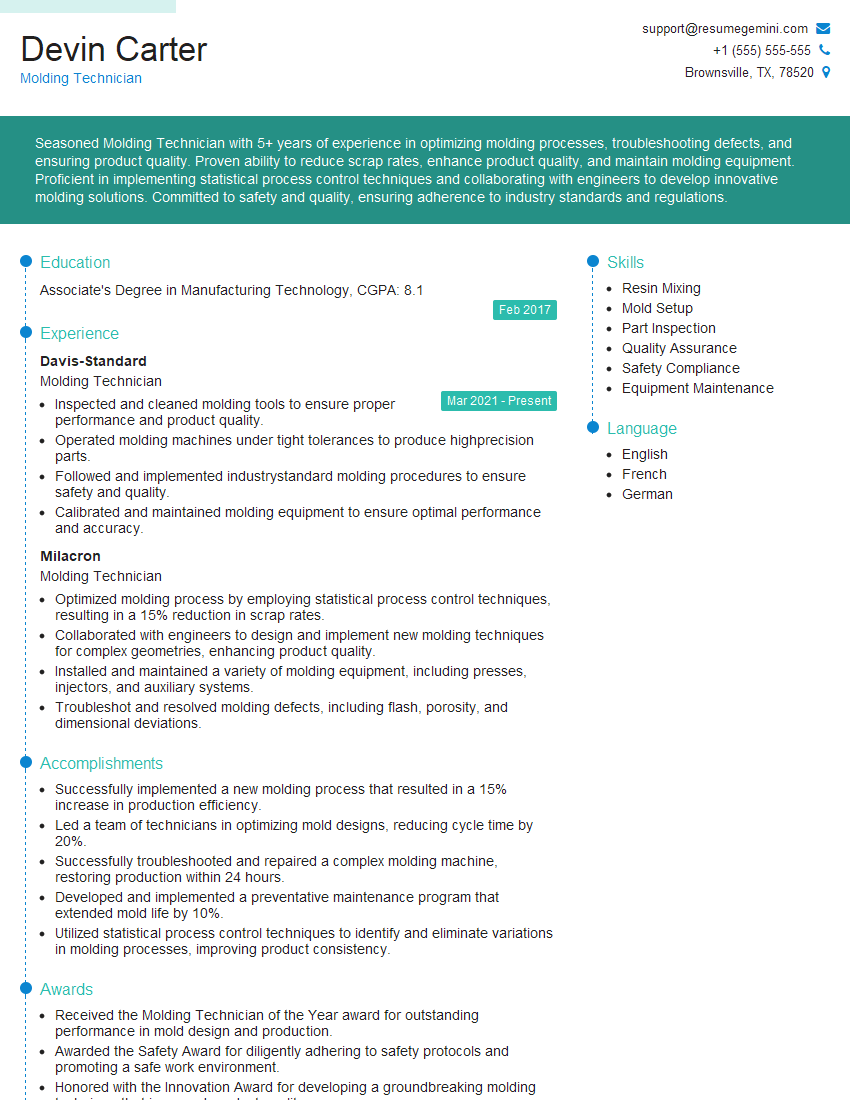
Mastering Molding Materials Handling is crucial for advancing your career in manufacturing and related fields. A strong understanding of these concepts opens doors to higher-paying roles and increased responsibility. To maximize your job prospects, create an ATS-friendly resume that highlights your relevant skills and experience. We highly recommend using ResumeGemini to build a professional and impactful resume. ResumeGemini offers a user-friendly platform and provides examples of resumes tailored to Molding Materials Handling to guide you.
Explore more articles
Users Rating of Our Blogs
Share Your Experience
We value your feedback! Please rate our content and share your thoughts (optional).
What Readers Say About Our Blog
To the interviewgemini.com Webmaster.
Very helpful and content specific questions to help prepare me for my interview!
Thank you
To the interviewgemini.com Webmaster.
This was kind of a unique content I found around the specialized skills. Very helpful questions and good detailed answers.
Very Helpful blog, thank you Interviewgemini team.