The right preparation can turn an interview into an opportunity to showcase your expertise. This guide to Mudding and Taping interview questions is your ultimate resource, providing key insights and tips to help you ace your responses and stand out as a top candidate.
Questions Asked in Mudding and Taping Interview
Q 1. What types of joint compound are you familiar with and what are their applications?
Joint compound, or “mud,” comes in several types, each suited for different stages of drywall finishing. The most common are:
- All-Purpose Compound: This is a versatile choice suitable for most taping and finishing applications. It offers a good balance of working time and drying speed.
- Lightweight Compound: Lighter than all-purpose, it’s ideal for multiple coats as it reduces the weight on the drywall and minimizes sagging. Great for ceilings.
- Setting-Type Compound: This dries quickly, allowing for faster work but requiring more experience to prevent quick setting before application is complete. Useful for large projects where speed is critical.
- Topping Compound: Designed for the final coat, it creates an exceptionally smooth finish, ideal for painting or wallpapering. It’s typically used after the initial coats of all-purpose or lightweight compound.
For instance, I might use all-purpose compound for the initial taping and bedding coats, lightweight compound for subsequent coats on a large ceiling, and topping compound for a flawless final finish before painting.
Q 2. Explain the process of taping drywall seams.
Taping drywall seams is crucial for a smooth, professional finish. Here’s the process:
- Prepare the Seam: Ensure the drywall sheets are tightly butted together, with minimal gaps. Use a utility knife to remove any excess drywall paper or debris.
- Apply the Tape: Unroll the drywall tape (generally paper or fiberglass) along the seam, pressing firmly to ensure good adhesion. A taping knife (typically 6 inches wide) is used to embed the tape into the mud.
- Apply the First Coat (Bedding): Apply a thin coat of joint compound directly over the embedded tape, ensuring complete coverage. Work quickly, smoothly, and avoid leaving any air pockets.
- Let it Dry: Allow the first coat to dry completely. This prevents cracking and ensures the next coat adheres properly. Drying time varies with compound type and environmental conditions.
- Apply Subsequent Coats: Once dry, apply additional coats, feathering the edges of each coat to create a seamless transition with the surrounding drywall. Usually, two to three coats are sufficient.
- Sand (if necessary): Once the final coat is dry, gently sand any imperfections using fine-grit sandpaper (typically 120-220 grit) to achieve a smooth surface.
Think of it like wrapping a gift – the tape is like the ribbon, securing the seams, and the mud is the wrapping paper, smoothing it all out for a nice finish.
Q 3. Describe the different techniques for applying joint compound (e.g., feathering, bedding).
Applying joint compound involves different techniques depending on the stage of the process:
- Bedding: This is the initial coat applied directly over the drywall tape, embedding it and providing the initial layer of covering.
- Feathering: This involves gradually thinning the edges of each coat of joint compound as you apply subsequent layers. This creates a smooth, gradual transition from the mud to the surrounding drywall surface, avoiding sharp edges or ridges.
- Skimming: A thin coat applied across a wider area to fill minor imperfections, usually done as the final coat before sanding.
Imagine feathering like blending colors – a gradual transition between the dark of the seam and the lightness of the surrounding surface. Conversely, bedding is a focused application covering a specific area.
Q 4. How do you prepare a surface for mudding and taping?
Surface preparation is key for successful mudding and taping. This involves:
- Cleaning: Remove any dust, debris, loose paint, or other contaminants from the drywall surface. A broom or vacuum cleaner works well.
- Repairing: Fill any significant holes or gaps with patching compound before applying joint compound to seams. Let this dry thoroughly.
- Priming (Optional): Priming the drywall, especially if it is particularly absorbent, helps prevent the joint compound from drying too quickly and unevenly. This is particularly useful in dry climates.
A clean and properly prepared surface ensures good adhesion and a superior finished product, just like preparing a wall before painting.
Q 5. What tools are essential for efficient mudding and taping?
Essential tools for efficient mudding and taping include:
- Taping Knives: Various sizes (6”, 8”, 10”, and 12”) are needed for different stages of application.
- Putty Knives: For smaller repairs and filling nail holes.
- Drywall Tape: Paper or fiberglass tape, depending on the application.
- Joint Compound: All-purpose, lightweight, and topping compounds, as needed.
- Sandpaper: Various grits (120-220) for smoothing the final finish. A sanding block or pole sander is recommended for larger areas.
- Bucket and Mixing Tray: To mix and work with the joint compound.
- Utility Knife: To prepare the seams and cut tape.
- Sponge or Damp Cloth: To clean tools and remove excess compound.
Having the right tools ensures the job is done correctly and efficiently, much like a chef needs the right knives to prepare a perfect meal.
Q 6. How do you achieve a smooth, seamless finish?
Achieving a smooth, seamless finish requires attention to detail and proper technique throughout the process. Key elements include:
- Thin Coats: Avoid applying thick coats of joint compound. Multiple thin coats are far superior to one thick coat, which is prone to cracking and imperfections.
- Proper Feathering: Meticulously feather the edges of each coat, ensuring a gradual transition.
- Careful Sanding: Gently sand with fine-grit sandpaper, avoiding over-sanding which can damage the drywall surface.
- Patience and Practice: Mastering the techniques takes time and practice. Start with smaller projects before tackling larger ones.
Think of it like sculpting – many thin layers gradually refine the shape into something smooth and perfect.
Q 7. What are the common problems encountered in mudding and taping, and how do you address them?
Common problems include:
- Cracking: This often results from thick coats, improper drying, or movement in the drywall. The solution is thin coats, allowing adequate drying time, and using appropriate joint compound.
- Sagging: This occurs when heavy coats of compound are applied to vertical surfaces or ceilings. The solution is using lightweight compound, applying thinner coats, and working in smaller sections.
- Uneven Texture: This can result from uneven application or insufficient sanding. The solution is careful application and thorough sanding.
- Air Pockets: These create blemishes that are difficult to smooth out. The solution is to press out all air pockets with the taping knife during application.
Addressing these issues requires careful attention to detail, understanding of materials, and experience. Problem-solving is often about identifying the root cause and selecting the proper techniques to remedy it.
Q 8. How do you handle different types of drywall corners (inside, outside)?
Handling drywall corners correctly is crucial for a smooth, professional finish. Inside corners and outside corners require different techniques.
- Inside Corners: For inside corners, I use a flexible corner bead, which is a metal strip that fits snugly into the corner. I apply joint compound to both sides of the bead, ensuring it’s fully embedded and the compound is smooth against the drywall. Multiple coats are usually needed, allowing each to dry completely before sanding. Think of it like building a small, perfectly smooth, internal ridge.
- Outside Corners: Outside corners are handled using either a metal corner bead or a paper corner bead. Metal beads are more durable and resist damage, particularly in high-traffic areas. Applying the joint compound involves covering the bead completely, creating a smooth, even transition between the two drywall surfaces. The technique is similar to inside corners but requires extra attention to ensure a sharp, clean edge. It’s like creating a perfectly defined, external ridge.
In both cases, careful application and sanding are key to achieving a professional finish. Rushing the process often leads to imperfections that are difficult to correct later.
Q 9. What is the importance of proper drying time between coats of joint compound?
Proper drying time between coats of joint compound is absolutely critical. If you apply a new coat before the previous one is completely dry, several problems can arise:
- Cracking: The new coat will shrink as it dries, and this shrinkage can cause the previously applied layer to crack, resulting in an uneven surface that needs to be re-done.
- Peeling: The new coat may not adhere properly to the still-wet layer, leading to peeling or flaking of the compound.
- Uneven Finish: A wet-on-wet application can lead to an uneven, patchy finish that’s difficult to sand smoothly.
The exact drying time depends on factors like humidity and temperature. But as a rule of thumb, I always allow at least 2-4 hours, even overnight, depending on the thickness of the previous coat and ambient conditions. I always touch the surface to check the dryness, making sure there is no wetness before continuing.
Q 10. Explain your process for sanding drywall after mudding and taping.
Sanding is essential for achieving a perfectly smooth wall surface after mudding and taping. My process is methodical and focuses on achieving a smooth finish without excessive sanding, which can damage the drywall.
- Start with coarser grit: I start with a coarser grit sandpaper (e.g., 80-100 grit) to remove the majority of the excess compound. This involves using a sanding block or pole sander to maintain consistent pressure and prevent gouges.
- Gradually increase grit: As the surface becomes smoother, I progressively switch to finer grits (e.g., 120, 150, and finally 220 grit) to refine the finish and eliminate any minor imperfections. This creates a perfectly smooth and ready-to-paint surface.
- Work in sections: I work in manageable sections, ensuring each area is sanded thoroughly before moving on. This prevents me from missing any spots and ensures even sanding.
- Vacuum thoroughly: After sanding, it’s essential to thoroughly vacuum the surface to remove all dust particles. This prevents the dust from interfering with the paint adhesion and creating an uneven look.
I prefer to use a dust mask and safety glasses during sanding to protect my respiratory system and eyes from dust particles.
Q 11. How do you clean your tools after completing a mudding and taping job?
Cleaning my tools immediately after a mudding and taping job is crucial for maintaining their quality and preventing the compound from hardening. My process includes:
- Immediate rinsing: I rinse my tools thoroughly with water as soon as I’m finished using them. This prevents the joint compound from drying and sticking to the tools.
- Scrape off excess: Before rinsing, I use a putty knife to scrape off any excess mud from tools like the taping knives.
- Soap and water: I use warm, soapy water to clean the tools thoroughly, removing any remaining residue. This might also include soaking the tools in soapy water to loosen the compound.
- Thorough drying: I dry my tools completely before storing them to prevent rust and ensure they’re ready for the next use.
For particularly stubborn residues, I may use a wire brush or steel wool. Regular cleaning ensures the longevity of my tools and promotes efficiency on future projects.
Q 12. What safety precautions do you take when mudding and taping?
Safety is paramount in mudding and taping. My precautions include:
- Respiratory Protection: I always wear a dust mask, especially during sanding, to prevent inhaling drywall dust particles, which can irritate the lungs and respiratory system.
- Eye Protection: Safety glasses protect my eyes from flying debris and dust during sanding and while handling tools.
- Hand Protection: Gloves protect my hands from irritation and dryness caused by the joint compound.
- Proper Ventilation: I ensure adequate ventilation in the work area to minimize dust accumulation and improve air quality.
- Proper Lifting Techniques: I always use proper lifting techniques to prevent injuries while working with materials such as bags of joint compound.
Regular breaks are important to avoid fatigue and potential accidents. It’s always better to be safe than sorry.
Q 13. What is your experience with different types of drywall (e.g., fire-resistant)?
I have experience working with various types of drywall, including standard drywall and specialized types like fire-resistant drywall.
- Standard Drywall: This is the most common type used in residential construction and is relatively easy to work with. The techniques for mudding and taping are generally consistent.
- Fire-Resistant Drywall: Fire-resistant drywall, often containing gypsum and additives, is more dense and heavier than standard drywall. This type of drywall requires a slight adjustment to taping techniques. Due to its density, it may require more mud to achieve a smooth finish and needs to be handled carefully to avoid damaging the edges.
Understanding the properties of different drywall types is crucial for selecting the appropriate joint compound and adjusting techniques accordingly to achieve the best results. For instance, certain compounds are designed for use with fire-resistant drywall to enhance its fire-resistant capabilities.
Q 14. How do you handle repairs on damaged drywall?
Repairing damaged drywall depends on the nature and extent of the damage.
- Small Holes and Cracks: For small holes or cracks, I typically use a patching compound and apply it in thin layers, allowing each layer to dry completely before sanding smooth. This involves cleaning the area, applying the compound, and then sanding to create a seamless repair.
- Larger Holes: Larger holes require a more involved approach. I first cut a clean, square or rectangular hole around the damaged area. I then create a backing support, often using a piece of scrap drywall, to ensure stability. The patch is secured in place, and multiple coats of joint compound are applied, carefully feathering the edges to blend with the surrounding wall. This is followed by meticulous sanding for a flawless finish.
- Damaged Corners: Damaged corners require replacement of the corner bead and careful patching and sanding similar to large holes. This is a more delicate process requiring attention to precision and detail.
The key to successful drywall repair is patience and attention to detail. A well-executed repair should be virtually invisible once painted.
Q 15. Describe your experience with various types of taping knives.
My experience with taping knives spans a wide range, from basic 4-inch and 6-inch models to specialized tools like corner knives and 12-inch wide knives for larger surfaces. The choice of knife depends heavily on the task at hand. For example, a 4-inch knife is perfect for tight corners and detailed work, minimizing the risk of excess mud. A 6-inch knife is versatile for most applications, providing a good balance between control and coverage. The wider 12-inch knives are indispensable when needing to cover large, flat areas quickly and efficiently. I also have experience with flexible knives which are extremely useful for contouring around curves and arches. Beyond the size, the quality of the steel also matters. A high-quality stainless steel blade will hold its edge longer, resulting in cleaner, smoother finish. I always ensure my knives are sharp to minimize drag and prevent tearing of the tape.
Career Expert Tips:
- Ace those interviews! Prepare effectively by reviewing the Top 50 Most Common Interview Questions on ResumeGemini.
- Navigate your job search with confidence! Explore a wide range of Career Tips on ResumeGemini. Learn about common challenges and recommendations to overcome them.
- Craft the perfect resume! Master the Art of Resume Writing with ResumeGemini’s guide. Showcase your unique qualifications and achievements effectively.
- Don’t miss out on holiday savings! Build your dream resume with ResumeGemini’s ATS optimized templates.
Q 16. How do you manage your time and prioritize tasks on a mudding and taping project?
Time management on a mudding and taping project is crucial. I typically start by thoroughly assessing the job, breaking it down into manageable sections. This involves identifying high-priority areas (e.g., corners, seams requiring extra attention) and estimating the time needed for each. I then create a schedule, prioritizing tasks based on their complexity and interdependence. For example, I’ll focus on taping corners before moving onto wider seams. Furthermore, I always have a buffer built into my schedule to account for unexpected delays or complications. Maintaining a clean and organized workspace is essential for efficiency. I regularly clear away excess mud and debris, preventing slowdowns and ensuring smooth workflows. This methodical approach, combining planning and execution, helps me consistently deliver projects on time and to a high standard.
Q 17. What are the different levels of drywall finishing (e.g., level 1, level 2, level 3)?
Drywall finishing levels describe the smoothness and quality of the finished surface. Level 1 is the most basic, acceptable for areas that will be covered by wallpaper or paneling. It typically involves minimal mudding, with visible imperfections allowed. Level 2 is a higher standard, suitable for painting. It involves multiple coats of mud, with minimal imperfections, although some minor texture may be present. Level 3 is the highest standard, a professional-grade finish requiring extreme precision, resulting in a completely smooth, flawless surface, ready for painting with high-end finishes. Achieving a Level 3 finish requires significant skill and patience.
Q 18. How do you identify and address imperfections in the drywall surface before taping?
Before taping, it’s crucial to identify and address drywall imperfections. I start by inspecting the entire surface for nail pops, gaps, cracks, and unevenness. Nail pops are gently tapped in, then filled with mud. Gaps are filled with appropriate-sized spackle or drywall compound. Cracks are cleaned and filled with a flexible compound to prevent future cracking. For uneven surfaces, I might use a skim coat of mud to level them out before proceeding with the taping. This preparation is essential. If these imperfections aren’t addressed before taping, they’ll show through the finish, compromising the overall aesthetic quality.
Q 19. What is your experience working with different textures in mudding and taping?
My experience includes working with various textures, from smooth, traditional finishes to more contemporary options like knockdown and orange peel textures. The techniques for each are different. For smooth finishes, the focus is on precision and meticulous blending of mud to achieve a flawless surface. Textured finishes require specific tools and techniques to create the desired effect. For example, knockdown texture involves applying a heavy coat of mud and then using a special knockdown knife to create the unique texture. Orange peel texture involves spraying a thinner coat of mud, resulting in a fine, slightly textured surface. Understanding how each texture is created and adjusting techniques accordingly is vital for producing a professional finish.
Q 20. How do you achieve a consistent coat of mud across the entire surface?
Achieving a consistent coat requires a combination of technique and the right tools. I start by using a high-quality joint compound that is appropriate for the surface and desired finish. I apply the mud in thin, even layers, avoiding overloading the knife. Overloading leads to sagging and uneven drying, which can cause imperfections. I use a consistent pressure and smooth, controlled strokes, feathering the edges to create seamless transitions. Multiple thin coats are better than one thick coat, allowing each layer to dry completely before applying the next. The key is patience and precision. I will often lightly sand between coats to achieve an even surface, and this allows for a uniform drying process. A wet sponge can also help remove any excess mud or lumps.
Q 21. How do you handle large and complex drywall surfaces?
Handling large and complex surfaces necessitates a strategic approach. I start by dividing the area into smaller, more manageable sections. This simplifies the workflow, making it easier to maintain consistency and quality. I then prioritize the more difficult areas like corners and angles before moving to larger flat sections. Working in sections also helps with time management and prevents the mud from drying out prematurely. For very large projects, I might involve additional team members, ensuring clear communication and coordination among all team members. Effective communication is key to efficient teamwork. Teamwork also ensures a good work-life balance and makes the entire process less stressful. This segmented approach, coupled with excellent team coordination, enables the successful completion of large, intricate drywall projects.
Q 22. What is your experience with repairing cracks and holes in drywall?
Repairing cracks and holes in drywall is a fundamental aspect of my work. It involves a series of steps, starting with assessing the damage. Small cracks might only require a light skim coat of joint compound, while larger holes necessitate more involved repairs. For larger holes, I typically use a self-adhesive mesh tape to reinforce the area before applying the joint compound. This prevents the hole from reappearing after the compound dries and shrinks. I then apply multiple coats of joint compound, allowing each to dry completely before sanding smooth. The process requires patience and attention to detail; I always feather the edges of the compound to ensure a seamless blend with the surrounding wall. Think of it like sculpting – you gradually build up the area and smooth it out to create an invisible repair.
For example, a small crack might only need one thin coat, lightly feathered out. A larger hole, say from a removed electrical box, would need a patch of drywall or mesh tape backing, followed by multiple layers of compound, carefully sanded between each application to achieve a smooth, even surface.
Q 23. What is the importance of using proper ventilation while mudding and taping?
Proper ventilation is crucial during mudding and taping for several reasons. First, it significantly reduces the risk of inhaling dust particles created during sanding. Joint compound dust can be irritating and potentially harmful to the respiratory system. Second, adequate ventilation speeds up the drying process of the joint compound. This is important because wet compound can become susceptible to mold and mildew, potentially compromising the integrity of the repair and introducing harmful spores. Finally, good air circulation prevents the buildup of strong odors associated with the joint compound, creating a more pleasant and safe working environment. I always work with open windows and, if possible, use a respirator to minimize dust inhalation.
Q 24. How do you ensure the proper adhesion of the tape to the drywall surface?
Ensuring proper adhesion of the tape is essential for a durable and flawless finish. The surface must be clean, dry, and free of dust or debris. Before applying the tape, I often lightly dampen the drywall surface with a clean sponge – this helps activate the adhesive properties of the tape and prevents it from sticking in a way that produces bumps or air bubbles. The tape needs to be pressed firmly and smoothly onto the surface, working out any air pockets to ensure complete contact. After the tape is applied, the joint compound should be applied immediately. This is crucial because the initial layer of compound seals the tape to the wall and keeps it from pulling up.
I often compare this to applying a bandage – you wouldn’t put a bandage on a dirty wound, and you’d make sure to smooth it down to ensure good contact and keep it from peeling.
Q 25. What experience do you have with skim coating?
Skim coating is a technique I use frequently to create a smooth, even surface on walls. It’s particularly useful when dealing with textured walls or walls with imperfections that aren’t easily patched. The process involves applying a thin layer of joint compound over the entire surface, feathering out the edges to create a seamless transition. This requires a lot of skill because it needs a consistent thickness and smoothness. The success of skim coating heavily relies on prep work. It’s best done after you’ve cleaned and sealed holes and cracks. I usually apply multiple thin coats, sanding each one meticulously before applying the next. The goal is a polished, uniform surface that’s ready for painting.
Imagine it as prepping a canvas before painting a masterpiece; the smother the surface the easier and better it will be.
Q 26. Describe a time you encountered a challenging mudding and taping problem, and how you solved it.
I once encountered a situation where a large section of drywall had been severely damaged by water, resulting in significant bulging and crumbling. Simply patching the damaged areas wouldn’t have been sufficient; the underlying structure was compromised. My solution involved carefully cutting out the damaged section, ensuring I created a clean, square edge. I then installed a new piece of drywall, using construction adhesive and screws for added security. After the adhesive had dried, I applied multiple coats of joint compound, ensuring that each layer was completely dry before sanding. The final result was invisible from afar, blending seamlessly with the original wall. This experience underscored the importance of diagnosing the root cause of the problem before attempting a repair.
Q 27. What are your methods for maintaining quality control during mudding and taping?
Maintaining quality control involves several key steps. First, I meticulously inspect my work after each stage: after taping, after each coat of mud, and after sanding. I use bright lighting to highlight any imperfections. Second, I always use high-quality materials, because substandard products directly impact the final product’s look and durability. Third, I pay strict attention to detail, ensuring even coats and smooth transitions. Finally, I regularly review my work for consistency, looking for any irregularities that might have been missed during initial inspections. It’s a continuous process of evaluation and refinement.
Q 28. What are your preferred brands of joint compound and taping tools?
My preferred brand of joint compound is usually USG Sheetrock, known for its smooth consistency and excellent workability. For taping tools, I favor the tools from the same brand as they are durable and reliable. However, the specific tools I use often depend on the project’s scope and complexity. For example, for larger projects I might use a larger knife whereas smaller projects would suit smaller knives. Ultimately, the best tool is the one that fits comfortably in my hand and allows me to work efficiently and accurately.
Key Topics to Learn for Mudding and Taping Interview
- Understanding Joint Compound: Types of joint compound (all-purpose, lightweight, setting type), their properties, and appropriate applications for different wall and ceiling surfaces.
- Taping Techniques: Mastering the application of tape, including proper techniques for embedding tape in compound, achieving smooth, consistent seams, and minimizing visible tape lines. Explore different taping methods for various substrates (drywall, plaster).
- Mudding Techniques: Learn different mudding techniques, including the “knife-over-knife” method, for achieving smooth, even coats. Understand the importance of thin coats and proper drying times to prevent cracking.
- Surface Preparation: The importance of preparing surfaces before mudding and taping, including cleaning, repairing damage, and priming. This includes understanding how to properly address nail pops and other common drywall imperfections.
- Tools and Equipment: Familiarity with various tools used in mudding and taping, such as taping knives (different sizes), putty knives, trowels, and sanding tools. Understanding the purpose and proper use of each tool is crucial.
- Troubleshooting Common Issues: Identifying and resolving common problems like cracking, sagging, uneven surfaces, and tape showing through. Develop problem-solving skills to anticipate and address these challenges on the job.
- Safety Procedures: Understanding and adhering to all safety regulations and best practices related to the use of tools and materials, including proper personal protective equipment (PPE).
- Finishing Techniques: Mastering finishing techniques for achieving a professional, smooth, and flawless finish. This includes techniques for sanding and preparing the surface for painting.
Next Steps
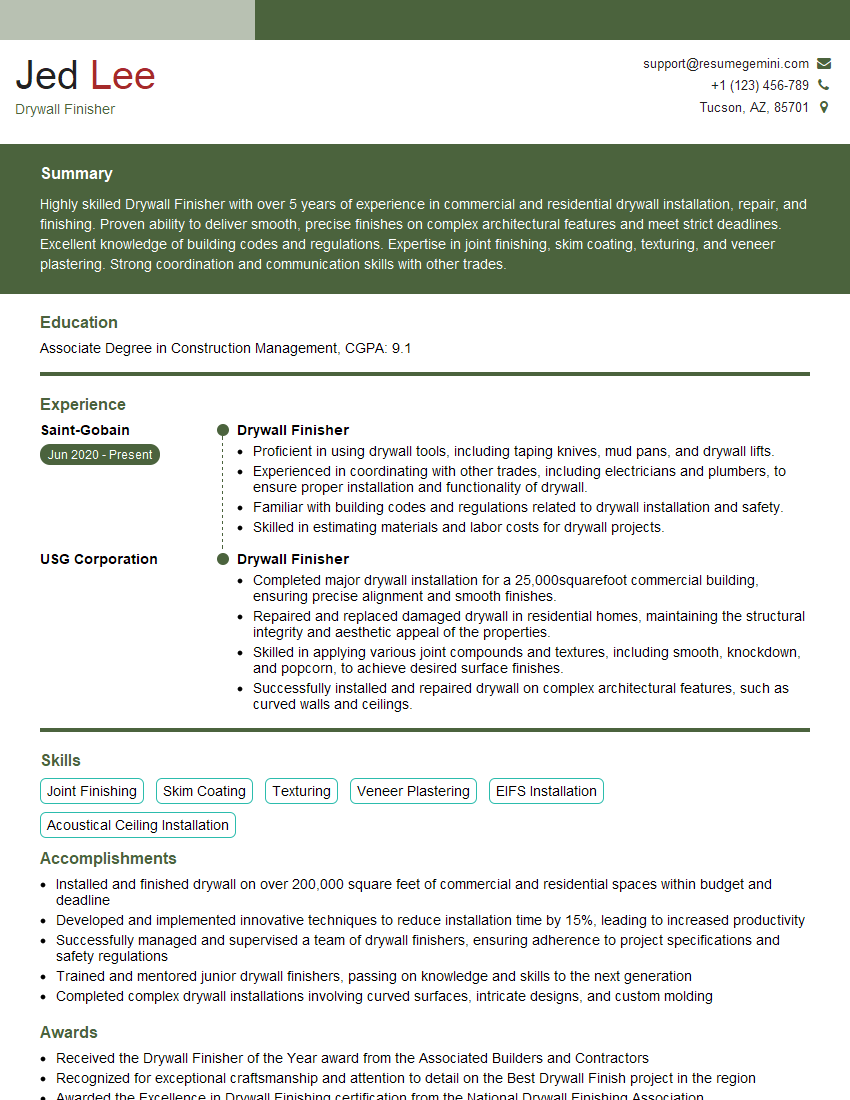
Mastering mudding and taping is vital for a successful career in construction and related fields. Proficiency in these skills demonstrates attention to detail, craftsmanship, and the ability to contribute to high-quality finished products. To stand out to potential employers, creating a strong, ATS-friendly resume is crucial. ResumeGemini is a trusted resource to help you build a professional and effective resume that highlights your skills and experience. Examples of resumes tailored specifically to Mudding and Taping are available to help you get started.
Explore more articles
Users Rating of Our Blogs
Share Your Experience
We value your feedback! Please rate our content and share your thoughts (optional).
What Readers Say About Our Blog
To the interviewgemini.com Webmaster.
Very helpful and content specific questions to help prepare me for my interview!
Thank you
To the interviewgemini.com Webmaster.
This was kind of a unique content I found around the specialized skills. Very helpful questions and good detailed answers.
Very Helpful blog, thank you Interviewgemini team.