Cracking a skill-specific interview, like one for Murals and decorative finishes, requires understanding the nuances of the role. In this blog, we present the questions you’re most likely to encounter, along with insights into how to answer them effectively. Let’s ensure you’re ready to make a strong impression.
Questions Asked in Murals and decorative finishes Interview
Q 1. Describe your experience with different mural painting techniques (e.g., fresco, graffiti, stenciling).
My experience spans a broad range of mural painting techniques. Fresco, for instance, is a time-honored method involving applying pigments to wet plaster, resulting in a durable and long-lasting artwork deeply integrated with the wall. I’ve worked on several fresco projects, carefully preparing the lime plaster and applying the pigments in layers, ensuring proper curing and preventing cracking. Graffiti art, on the other hand, demands a completely different approach – a spontaneous, expressive style often utilizing spray paint on various surfaces. I’ve incorporated graffiti elements into some murals, blending street art aesthetics with more traditional techniques. Finally, stenciling offers a precise and repeatable method, perfect for creating intricate patterns or replicating images. I’ve used stencils effectively for background details and textural elements, adding depth and visual interest to larger mural projects. Each technique presents unique challenges and rewards, demanding a versatile skillset and adaptability to different materials and styles.
Q 2. What are your preferred materials for creating murals, and why?
My material choices depend heavily on the project’s scale, style, and desired longevity. For fresco, lime plaster and natural earth pigments are essential, ensuring the mural’s longevity and environmental friendliness. For acrylic murals, I often opt for high-quality acrylic paints due to their vibrant colors, quick drying time, and resistance to fading. I prefer paints with a high pigment concentration for richer colors and better coverage. For exterior murals, weather-resistant paints are crucial, and I might even incorporate specialized sealants to protect against UV damage and moisture. The supporting materials like primers and sealants are equally important, ensuring proper adhesion and preserving the artwork’s integrity. Choosing the right materials is crucial for both aesthetic success and the long-term preservation of the mural.
Q 3. Explain your process for preparing a wall surface for a mural application.
Wall preparation is paramount to a successful mural. It’s more than just a quick clean; it’s a meticulous process ensuring a smooth, stable, and receptive surface. I begin by thoroughly cleaning the wall, removing any loose paint, dirt, or debris. Cracks or holes are carefully repaired with appropriate fillers, sanded smooth, and primed. The choice of primer depends on the wall’s material and the paint type I’ll be using. For instance, an alkali-resistant primer might be needed for a lime plaster wall. The goal is to create a uniform surface that will allow for optimal adhesion of the paint. A final sanding ensures a flawless, even surface before the painting process begins. This thorough preparation prevents paint issues down the line, ensuring a professional and long-lasting result. I often involve the client in the final inspection of the prepared wall to ensure they are satisfied before we commence painting.
Q 4. How do you ensure color accuracy and consistency in your mural work?
Maintaining color accuracy and consistency is critical. I begin by creating a detailed digital design, ensuring accurate color representation. I use color swatches and color matching systems to select paints that closely match the digital design. For large projects, I often mix paints in batches to ensure consistency across the mural. Throughout the process, I regularly check the colors against my design and make any necessary adjustments. Proper lighting is essential during the painting process; consistent, even lighting prevents discrepancies in color perception. Additionally, I maintain meticulous records of the paint mixes used to facilitate future touch-ups or repairs, and often use digital color-matching tools to document exact color schemes.
Q 5. How do you handle design revisions and client feedback during a mural project?
Client feedback is invaluable, and I incorporate a collaborative approach to revisions. I encourage open communication throughout the project, providing regular updates and soliciting feedback at various stages. Design revisions are handled efficiently through digital tools. I present design options clearly, explaining the rationale behind them. I’m always prepared to adjust the design based on constructive criticism, striving for a mutually satisfying outcome. A record of all agreed-upon revisions is maintained to avoid confusion. Compromise and clear communication are key to successful client collaboration, leading to a finished product that reflects both the client’s vision and my artistic expertise.
Q 6. Describe your experience with different types of decorative finishes (e.g., Venetian plaster, rag rolling, sponging).
My experience with decorative finishes extends to a variety of techniques. Venetian plaster, for instance, offers a luxurious, aged look, achieved through layering and polishing. I’ve used it to create both sleek, modern finishes and richly textured, antique effects. Rag rolling uses a textured fabric to create unique patterns on the wall, resulting in a rustic, handcrafted feel. It’s a fantastic technique for adding visual interest and depth. Sponging, another effective technique, utilizes sea sponges to create a mottled, softer look, providing a sense of depth and warmth, ideal for more relaxed spaces. Each technique brings a distinct aesthetic, demanding specific skills and material choices. The choice depends entirely on the desired ambiance and aesthetic.
Q 7. What are the key differences between various faux finishing techniques?
The key differences between faux finishing techniques lie in the tools, materials, and resulting textures. For instance, Venetian plaster creates a smooth, layered effect with a subtle sheen, whilst rag rolling provides a more textured, irregular finish. Sponging creates softer, more mottled patterns. Other techniques like color washing, combing, and stippling each produce distinct results. The choice of technique dictates the overall feel of the space. A highly textured technique like rag rolling might be ideal for a rustic setting, while a smooth Venetian plaster finish could be more appropriate for a contemporary interior. Understanding these nuances allows me to tailor the finishes to the specific needs and aesthetic goals of each project.
Q 8. How do you choose appropriate materials for different decorative finishing projects?
Choosing the right materials for decorative finishes is crucial for achieving the desired aesthetic and ensuring longevity. It’s a multi-faceted decision, depending heavily on the project’s location, intended use, and the client’s vision. For instance, a mural in a high-traffic area like a restaurant requires durable, washable paints, unlike a piece in a private bedroom which might allow for more delicate, artistic choices.
- Surface Type: Porous surfaces like plaster require primers designed for adhesion, while smooth surfaces like glass may need specialized bonding agents. For example, I once worked on a project with a textured stucco wall. I had to select a primer specifically designed for stucco to ensure the paint adhered properly and prevent peeling.
- Durability: High-traffic areas need finishes resistant to abrasion and cleaning. For outdoor murals, UV-resistant paints are non-negotiable to prevent fading. In a child’s playroom, for example, I’d opt for paints designed for easy cleaning and are resistant to scuffs and scratches.
- Aesthetic Goals: The desired texture, sheen, and color impact material selection. Metallic paints provide a luxurious finish, while textured plasters add depth and visual interest. A client once requested a highly realistic stone effect; this dictated the use of specialized paints and texturing techniques to achieve the desired level of realism.
- Budget: Costs vary significantly. High-end paints and specialty materials are more expensive but often offer superior performance and aesthetics.
Ultimately, material selection is a balance of these factors, and I always consult extensively with clients to ensure their needs and budget are met.
Q 9. Explain your process for creating realistic textures in your decorative finishes.
Creating realistic textures is an art form in itself, requiring a keen eye for detail and a mastery of various techniques. It’s less about specific products and more about skillful application and layering. Think of it as sculpting with paint.
- Layering: Building up texture often involves multiple layers. A base coat establishes the color, followed by layers of varying consistency and application techniques to add depth. I might use a thicker, more impasto style for some areas to build up volume and contrast it with thinner washes to create subtle shifts in tone.
- Tools: The tools are just as important as the materials. Sponges, brushes (natural and synthetic), rags, palette knives, and even textured rollers can all contribute to diverse textures. I’ve even experimented with unusual tools like crumpled paper or textured fabrics to achieve unique effects.
- Techniques: Techniques such as stippling (dabbing paint), scumbling (lightly dragging a dry brush across wet paint), and dragging a comb through wet paint are effective in creating a variety of textures from subtle to dramatic. For instance, creating a wood grain effect involves carefully studying wood grain patterns, then replicating those patterns using controlled strokes and the right tools.
- Reference Materials: Careful observation is key. I always gather reference images—whether photographs, samples of the materials being emulated, or even real-life objects—to ensure accuracy.
It’s a process of experimentation and refinement, constantly adjusting techniques to achieve the desired level of realism. It’s a rewarding process to see a flat surface transform into something with incredible depth and dimension.
Q 10. How do you achieve a specific color or finish requested by a client?
Achieving a client’s specific color or finish requires a collaborative approach and a strong understanding of color theory and paint properties.
- Color Consultation: I begin with a detailed discussion to understand the client’s vision. We might explore mood boards, paint swatches, and even photos of existing spaces for inspiration. I make sure I understand the emotional response they wish to evoke through color.
- Color Matching: If the client provides a specific color sample, I use a colorimeter or spectrophotometer to measure its precise color values (RGB or LAB). This ensures accuracy in mixing the paint to the desired hue.
- Mixing and Testing: I always create test patches on a sample surface similar to the project’s surface. This allows us to fine-tune the color and assess its appearance under various lighting conditions. We might make small adjustments to the paint formula (adding tints or shades) until the client is fully satisfied.
- Finish Considerations: The client’s chosen finish (matte, satin, gloss, etc.) influences the final appearance of the color. A matte finish appears less vibrant than a glossy finish, so that needs to be considered.
The process is iterative; we refine the color until it perfectly aligns with the client’s vision and the project’s aesthetic goals. For example, once a client requested a specific shade of teal to evoke a calming effect. We went through several iterations, adjusting the blue and green pigments, until we arrived at the perfect, serene tone.
Q 11. What is your experience with color matching and mixing?
Color matching and mixing is a fundamental skill for any decorative finisher. My experience spans years of working with various paint systems and pigments, developing a keen eye for color subtleties and a precise understanding of how pigments interact.
- Training and Experience: Through formal training and extensive practice, I’ve developed a strong understanding of color theory, including the color wheel, primary and secondary colors, and the impact of different pigments on the final color.
- Technology: I use digital color matching systems (spectrophotometers) to quickly and accurately measure and replicate colors from samples or digital images. This technology provides a higher degree of consistency and accuracy than traditional methods.
- Traditional Methods: I also retain proficiency in traditional color mixing methods, understanding how different pigments interact and their effects on each other. This allows for flexibility and problem-solving when technical issues arise.
- Troubleshooting: Sometimes, achieving a perfect match requires troubleshooting and experimentation. This involves understanding the chemical properties of pigments and binders to anticipate how they might react when mixed together.
My expertise ensures that the final product is true to the client’s vision, offering a high degree of color consistency throughout the project.
Q 12. Describe your experience working with various types of paints and coatings.
My experience encompasses a wide range of paints and coatings, each with unique properties and applications. Understanding these differences is vital to selecting the correct material for each project and achieving optimal results.
- Acrylic Paints: These are water-based, versatile, and relatively easy to clean up, making them a popular choice for many projects. I frequently utilize them for murals due to their vibrant colors and durability.
- Oil-Based Paints: These offer richer colors and a smoother finish but require solvents for cleanup, necessitating extra safety precautions. They’re often favored for specific effects that require exceptional color depth or gloss.
- Milk Paints: These offer a unique, slightly textured finish and are known for their environmentally friendly characteristics. They are ideal for achieving a vintage or rustic look.
- Specialty Coatings: My experience includes working with metallic paints, faux finishes (e.g., marble, stone), and specialty coatings designed for high-performance environments like kitchens and bathrooms.
- Primers and Sealers: Understanding primers and sealers is critical for ensuring proper adhesion and preventing surface problems. The type of primer used depends heavily on the underlying substrate.
Selecting the appropriate paint and coating is not just about aesthetics; it’s also about ensuring the final piece is durable and stands the test of time. Each project demands a careful selection based on the client’s vision, budget, and the specific environmental conditions.
Q 13. How do you maintain the quality and durability of your mural work?
Maintaining the quality and durability of mural work involves careful planning and execution at every stage, from material selection to the final protective layer.
- Surface Preparation: Thorough surface preparation is paramount. This involves cleaning the surface, repairing any imperfections, and applying appropriate primers to ensure the paint adheres properly and prevents peeling or cracking.
- High-Quality Materials: Using high-quality paints and coatings specifically designed for murals is essential. These materials often offer superior UV resistance, durability, and washability.
- Proper Application Techniques: Applying the paint according to manufacturer’s instructions and using appropriate tools is crucial. This includes thin coats to prevent cracking and proper drying time between coats.
- Protective Coatings: Applying a clear protective coating, such as varnish or sealant, offers additional protection against UV damage, abrasion, and moisture. The type of sealant used depends on the desired level of protection and the specific environment.
- Regular Maintenance: While some murals require minimal maintenance, others may need periodic cleaning. Gentle cleaning with a soft cloth and mild detergent is often sufficient. Avoid harsh chemicals that could damage the paint.
By adhering to these practices, I ensure that my mural work remains vibrant and aesthetically pleasing for many years to come.
Q 14. What safety precautions do you take when working with paints and other materials?
Safety is my top priority. Working with paints and other materials requires a strict adherence to safety protocols to protect myself and the environment.
- Ventilation: Adequate ventilation is crucial when working with paints, especially those containing solvents. I always work in well-ventilated areas or use respirators when necessary.
- Personal Protective Equipment (PPE): I consistently use PPE, including gloves, eye protection, and respirators, to minimize exposure to hazardous materials. This is non-negotiable, regardless of the type of paint being used.
- Proper Disposal: I follow all local regulations for the safe disposal of paints, solvents, and other waste materials. Leftover materials are properly contained and disposed of responsibly.
- Fire Safety: When working with flammable materials, I take extra precautions to prevent fires. This includes keeping flammable materials away from ignition sources and using appropriate fire extinguishers.
- First Aid: I have a well-stocked first-aid kit on hand to address minor injuries. In the event of a serious incident, I immediately seek medical attention.
Safety is not an afterthought; it’s an integral part of my work process. It’s my responsibility to protect myself, my clients, and the environment from potential hazards.
Q 15. Describe your experience in preparing accurate estimates for mural projects.
Accurate estimating for mural projects is crucial for both client satisfaction and my own financial well-being. It’s a multi-step process that goes beyond simply calculating paint costs. I begin by thoroughly understanding the client’s vision, including the size, complexity of the design, and the desired level of detail. I then carefully assess the surface area, considering any challenges like uneven walls or difficult-to-reach areas. This involves site visits and detailed measurements, often using laser measuring tools for precision. Next, I factor in material costs – paints, primers, sealants (depending on the substrate and desired longevity), scaffolding if needed, and even travel expenses. My estimates always include a contingency buffer to account for unforeseen issues. For example, a seemingly simple wall might reveal underlying damage requiring additional preparation work. Finally, I break down the estimate into clear, itemized components for transparency and easy client understanding. This makes it straightforward for the client to see exactly what they are paying for, fostering trust and collaboration.
For instance, for a recent project involving a large-scale outdoor mural on a textured brick wall, my estimate detailed the costs for specialized masonry primer, weather-resistant paints, extensive surface preparation (including cleaning and repairing damaged bricks), scaffolding rental, and multiple coats of sealant to protect the mural from the elements. This detailed approach ensured the client felt confident in the investment and prevented any surprises down the line.
Career Expert Tips:
- Ace those interviews! Prepare effectively by reviewing the Top 50 Most Common Interview Questions on ResumeGemini.
- Navigate your job search with confidence! Explore a wide range of Career Tips on ResumeGemini. Learn about common challenges and recommendations to overcome them.
- Craft the perfect resume! Master the Art of Resume Writing with ResumeGemini’s guide. Showcase your unique qualifications and achievements effectively.
- Don’t miss out on holiday savings! Build your dream resume with ResumeGemini’s ATS optimized templates.
Q 16. How do you manage your time effectively when working on multiple mural projects?
Juggling multiple mural projects simultaneously requires meticulous time management. My approach involves a combination of detailed project planning, prioritized task lists, and flexible scheduling. I utilize a project management system (more on that in the next answer) that allows me to assign specific time blocks to each project, factoring in travel time, material acquisition, and actual painting time. I prioritize tasks based on deadlines and dependencies. For instance, if one project requires a specific type of paint that needs ordering, I schedule that early to avoid delays. I also build in buffer time to accommodate unexpected challenges or delays – a crucial element that prevents project overlap and stress. Finally, I maintain open communication with clients, keeping them informed of my progress and any potential scheduling adjustments. Transparency helps manage expectations and avoid misunderstandings.
Think of it like conducting an orchestra – each instrument (project) needs its own time and attention, but the conductor (me) ensures everything is coordinated for a harmonious performance.
Q 17. Explain your experience with project management software or tools.
I’ve extensively used Asana and Trello for project management. These platforms allow me to create and manage detailed project timelines, assign tasks, track progress, and collaborate with clients and potential subcontractors (if needed for larger projects). For example, in Asana, I can create separate projects for each mural, breaking down each project into stages such as: initial consultation, design development, material procurement, surface preparation, painting, and final sealing/cleanup. Each stage has assigned due dates and checklists to ensure nothing is overlooked. The ability to share files and communicate directly within the platform keeps everyone informed and on the same page, minimizing the need for endless emails or phone calls. The visual timelines and progress tracking features give me a clear overview of all my active projects, allowing for proactive management of time and resources.
While I’m proficient with several platforms, I choose the tool that best fits the project’s complexity and the client’s communication preferences. For smaller, simpler projects, a simple spreadsheet might suffice, but for larger projects with multiple collaborators, Asana or Trello’s collaborative features prove invaluable.
Q 18. How do you handle unexpected challenges or problems that arise during a project?
Unexpected challenges are inevitable in any creative project. My approach involves proactive problem-solving and a flexible attitude. The first step is thorough assessment – identifying the nature and scope of the problem. For example, discovering unexpected damage under the existing paint before starting a mural requires immediate action to address the underlying issue before proceeding with the art. Next, I develop a solution, which may involve adjusting the project timeline, material choices, or even redesigning elements of the mural to mitigate the issue. Open communication with the client is essential at this stage, ensuring that they are aware of the problem, the proposed solution, and any potential impact on the project timeline or budget. Documentation is crucial; I maintain a detailed record of all challenges encountered, solutions implemented, and any adjustments made to the original plan. This documentation is invaluable for future projects and aids in refining my processes. Building contingency into my project estimates also helps absorb minor setbacks without major disruptions.
For example, on a recent project, unexpected moisture damage was discovered beneath the surface. I collaborated with the client, explained the problem, and proposed a solution involving additional priming and a slightly adjusted design. The project timeline was slightly extended, but the overall quality wasn’t compromised, and the client remained satisfied.
Q 19. Describe your experience with different types of substrates (e.g., concrete, drywall, wood).
My experience spans a wide range of substrates, each requiring a unique approach. Concrete, for instance, often needs a specialized masonry primer to ensure proper paint adhesion and prevent peeling or flaking. This primer acts as a bridge between the porous concrete surface and the mural paint. Drywall, while seemingly simpler, needs to be assessed for smoothness and stability. Any imperfections need to be addressed with joint compound and sanding before priming and painting. Wood, depending on its type and condition, may require different primers and sealants to prevent moisture absorption and warping. The type of wood, its age, and pre-existing finishes all influence preparation and paint selection. Understanding the unique properties of each substrate and selecting the appropriate primers, paints, and sealants is fundamental to creating a lasting mural. I also consider the environmental factors impacting the substrate; for example, an outdoor mural on wood requires different protection compared to an indoor mural on drywall.
For instance, I recently completed a mural on a reclaimed barn wood wall. The wood’s texture and varied tones created an exciting artistic challenge, but I needed to ensure the paint adhered properly and the wood wasn’t damaged by moisture. This involved using a specialized wood primer designed to penetrate and seal the wood, preventing warping and ensuring the mural’s longevity.
Q 20. How do you ensure the longevity and preservation of your mural work?
The longevity and preservation of mural work depend on several factors, starting with proper substrate preparation, as discussed earlier. The use of high-quality, weather-resistant paints and sealants is crucial, especially for outdoor murals. UV protection is paramount; paints and sealants should be chosen to prevent fading and cracking from sun exposure. Regular maintenance also plays a vital role. Depending on the location and environmental factors, occasional cleaning to remove dirt and grime can significantly extend the mural’s lifespan. In high-traffic areas or exposed environments, more frequent maintenance may be necessary. Clear communication with the client regarding maintenance recommendations is crucial; providing them with instructions on proper cleaning methods prevents accidental damage and ensures the mural’s longevity. In some cases, I might recommend periodic touch-ups or recoating to maintain the mural’s vibrancy and integrity.
For outdoor murals, I often advise clients on the importance of regular inspections to check for any damage caused by weather or vandalism. Early detection of problems enables prompt and effective remediation.
Q 21. What software or technologies do you use for design and planning?
My design and planning process relies heavily on a combination of software and technologies. Adobe Photoshop is my primary tool for developing detailed designs and exploring color palettes. I use it to create high-resolution digital mockups, allowing clients to visualize the final product before the actual painting begins. This collaborative process minimizes misunderstandings and ensures client satisfaction. I also use Adobe Illustrator for precise vector graphics, which are beneficial for creating scalable designs and intricate details. For larger-scale projects, I might incorporate 3D modeling software to create a virtual representation of the mural, giving both myself and the client a more realistic perspective of the final product, especially concerning scale, perspective, and overall composition. Finally, I employ digital projectors to transfer the design onto the wall accurately and efficiently, ensuring precise placement and proportions.
These tools allow me to translate a client’s vision into a tangible design, providing them with a clear understanding of the final outcome and minimizing the risk of alterations during the painting process.
Q 22. Describe your process for creating a mock-up or sample of a mural design.
Creating a mural mockup involves a multi-step process that ensures the client’s vision aligns with the final product. It starts with a thorough understanding of the client’s brief – their desired style, color palette, imagery, and the wall’s dimensions. I then create several design concepts, typically digital sketches incorporating the specified elements. These are presented in low-resolution, allowing for quick iteration and feedback.
Once a design is approved, I create a high-resolution digital mock-up, often incorporating textures and realistic paint effects to simulate the final appearance. This high-resolution version is crucial for clients to fully visualize the scale and impact of the mural. For very detailed designs, I might even create a small physical sample using the chosen paints and techniques on a test surface, allowing the client to examine the texture and color variations firsthand. This sample provides a tactile experience, crucial for understanding the final aesthetic. For example, a client might choose a specific type of Venetian plaster, and a physical sample helps them confirm the final look and feel.
Q 23. How do you communicate effectively with clients and other team members?
Effective communication is paramount in this collaborative field. I utilize a variety of methods, starting with detailed initial consultations to thoroughly understand the client’s needs and expectations. Regular updates throughout the project are critical, employing methods such as email updates with progress photos or videos, and scheduling regular meetings—in person or virtual—to discuss progress, address concerns, and obtain approvals at key stages. For team collaborations, I rely heavily on project management software to track progress, share files, and manage communication efficiently. Clear, concise language and visual aids, like mood boards and preliminary sketches, are key to ensuring everyone understands the vision. For example, a weekly progress report with a photograph of the completed section and a detailed description of the following week’s plan ensures transparency and keeps everyone informed.
Q 24. Explain your experience with various project scales, from small to large-scale murals.
My experience spans a wide range of projects. I’ve worked on small-scale murals, such as decorative accents in residential spaces, using delicate techniques like hand-painted floral designs or stencils. These require meticulous attention to detail and a focus on precision. Conversely, I’ve also undertaken large-scale public art projects covering entire building facades, demanding strong organizational skills, proficient scaffolding and safety protocols, and the ability to manage a team effectively. One memorable large-scale project involved a multi-story mural in a city center, where meticulous planning was required to ensure minimal disruption to the public and adherence to strict city regulations. My experience successfully navigating these diverse scales allows me to adapt my approach, skills, and team composition to suit the project’s unique requirements.
Q 25. Describe your experience working both independently and as part of a team.
I’m equally comfortable working independently and as part of a team. Independent work allows for creative freedom and direct control over the artistic process, which is invaluable for smaller, intricate projects. However, collaborative projects often bring diverse perspectives and skill sets, leading to more innovative and impactful results. For example, working independently, I can focus intensely on the nuances of a highly detailed botanical mural. However, during a large-scale community project, I leverage the strengths of team members skilled in scaffolding, paint mixing, and project management, achieving a more efficiently and impactful final result.
Q 26. How do you stay updated on the latest trends and techniques in mural art and decorative finishes?
Staying current is crucial in a dynamic field. I actively engage in several strategies: I subscribe to industry publications and online resources, attend workshops and conferences, and actively participate in online forums and communities dedicated to mural art and decorative finishes. Following leading artists and designers on social media platforms like Instagram and Pinterest provides valuable exposure to new techniques and styles. Furthermore, experimenting with new materials and techniques in my personal practice is crucial for continued growth and innovation. This ongoing learning ensures my skills and knowledge base remain at the forefront of the industry. For example, exploring the use of digital projection techniques combined with traditional painting methods opened doors to a dynamic new artistic style.
Q 27. What are your professional goals and aspirations in the field of murals and decorative finishes?
My professional aspirations focus on continued growth and innovation within the field. I aim to expand my portfolio with larger, more complex projects that push creative boundaries while utilizing sustainable and eco-friendly materials. I also aspire to mentor emerging artists, sharing my knowledge and experience to nurture the next generation of muralists. Ultimately, I envision establishing my own studio, creating a collaborative space where artists can experiment, collaborate, and push the boundaries of mural art and decorative finishes. This ambition reflects my passion for the art form and my dedication to making a lasting contribution to the industry.
Q 28. Are you familiar with industry health and safety regulations?
Yes, absolutely. Health and safety are paramount in my practice. I’m thoroughly familiar with relevant regulations concerning working at heights, handling hazardous materials (such as certain paints and solvents), and appropriate personal protective equipment (PPE). For larger projects, I ensure a detailed risk assessment is conducted, and I meticulously follow safety protocols, including proper scaffolding, fall protection, and appropriate ventilation. Compliance with these regulations is non-negotiable and directly contributes to a safe and productive work environment for myself and my team. For example, before commencing any work at height, a comprehensive risk assessment including detailed fall protection procedures will be drafted and followed to the letter, ensuring a safe working environment.
Key Topics to Learn for Murals and Decorative Finishes Interview
- Surface Preparation: Understanding different wall types (plaster, drywall, concrete), appropriate primers, and surface treatments for optimal adhesion and longevity of murals and finishes.
- Material Selection: Knowledge of various paints (acrylic, fresco, etc.), plaster techniques (Venetian, stucco), metallic finishes, and their suitability for different projects and design aesthetics. This includes understanding material limitations and potential challenges.
- Design and Composition: Familiarity with design principles like balance, scale, proportion, and color theory as they apply to mural creation and decorative finishes. Ability to discuss compositional choices and their impact on the overall design.
- Application Techniques: Practical understanding of various painting techniques (brushwork, rollers, airbrushing), plaster application methods, and the use of specialized tools for creating textures and patterns. Demonstrating hands-on experience is crucial.
- Project Management: Ability to discuss project planning, budgeting, timelines, and client communication. This includes problem-solving scenarios, such as addressing unexpected issues during application or material failures.
- Health and Safety: Understanding and adhering to safety regulations regarding the use of paints, solvents, and other materials. Knowledge of proper ventilation, personal protective equipment (PPE), and waste disposal procedures.
- Maintenance and Preservation: Knowledge of techniques for preserving and maintaining murals and decorative finishes, including cleaning methods and restorative techniques.
- Historical Context and Styles: Understanding the history and evolution of mural painting and decorative finishes, including various styles and techniques throughout different periods. This demonstrates a broader understanding of the field.
Next Steps
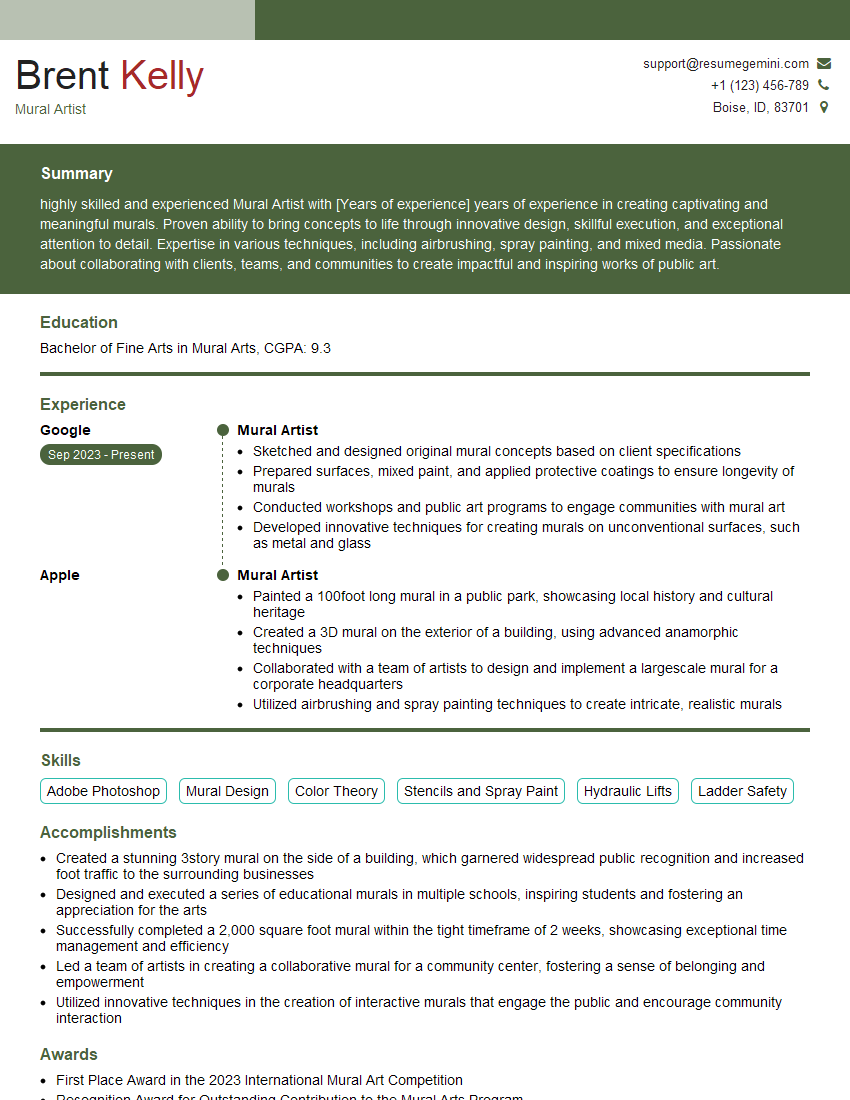
Mastering murals and decorative finishes opens doors to exciting career opportunities in the design and construction industries. A strong understanding of these techniques showcases your artistic talent and technical skills, making you a highly sought-after professional. To maximize your job prospects, it’s essential to have an ATS-friendly resume that effectively highlights your skills and experience. ResumeGemini is a trusted resource to help you build a professional resume that stands out. ResumeGemini provides examples of resumes tailored to the Murals and decorative finishes field, ensuring your application makes a lasting impression.
Explore more articles
Users Rating of Our Blogs
Share Your Experience
We value your feedback! Please rate our content and share your thoughts (optional).
What Readers Say About Our Blog
To the interviewgemini.com Webmaster.
Very helpful and content specific questions to help prepare me for my interview!
Thank you
To the interviewgemini.com Webmaster.
This was kind of a unique content I found around the specialized skills. Very helpful questions and good detailed answers.
Very Helpful blog, thank you Interviewgemini team.