The thought of an interview can be nerve-wracking, but the right preparation can make all the difference. Explore this comprehensive guide to Painting and Sandblasting interview questions and gain the confidence you need to showcase your abilities and secure the role.
Questions Asked in Painting and Sandblasting Interview
Q 1. What types of surface preparation techniques are used before painting?
Proper surface preparation is crucial for a long-lasting, high-quality paint job. Think of it like preparing a canvas for a masterpiece – a rough or dirty surface will never yield a beautiful result. Before painting, we employ several techniques to ensure optimal adhesion and longevity. These include:
- Cleaning: This is the first step, involving removing dirt, grease, oil, and loose debris using solvents, detergents, or pressure washing. Imagine trying to paint over a greasy plate – the paint simply won’t stick!
- Abrasive Blasting (Sandblasting or other methods): This removes old paint, rust, scale, or other contaminants, creating a profile for better paint adhesion. It’s like creating tiny anchor points for the paint to grip onto.
- Mechanical Cleaning: Techniques like wire brushing, scraping, or grinding remove loose materials. This is particularly useful for smaller areas or intricate details where sandblasting might be too aggressive.
- Priming: Applying a primer seals the surface, improves adhesion, and provides a uniform base for the topcoat. It’s like preparing your canvas with a gesso – it helps the paint flow smoothly and prevents it from soaking into the substrate.
The choice of preparation method depends on the substrate (material being painted), the existing surface condition, and the type of paint being used. For instance, a rusty steel beam would require abrasive blasting before painting, while a clean wooden surface might only need a light sanding and priming.
Q 2. Explain the different types of sandblasting media and their applications.
Sandblasting media comes in various forms, each with its own properties and applications. The choice depends on the material being blasted and the desired surface finish:
- Glass Beads: Create a smooth, fine finish ideal for delicate surfaces like aluminum or stainless steel. Imagine polishing fine jewelry – glass beads provide a similar gentle abrasiveness.
- Silicon Carbide (SiC): A very hard abrasive used for removing tough coatings and rust from steel and concrete. It’s like using a diamond-tipped tool for a very difficult task.
- Aluminum Oxide: A versatile media suitable for various applications, providing a balance between aggressiveness and surface finish. It’s a good all-around choice.
- Walnut Shell Media: A softer abrasive often used for cleaning delicate surfaces or removing light coatings. It’s less aggressive than others and leaves a cleaner finish on softer substrates.
- Soda Blasting (Sodium Bicarbonate): An environmentally friendly option for cleaning delicate surfaces or removing graffiti without causing damage to underlying materials. This is a great choice for historic buildings or delicate artworks.
For example, glass beads might be used to prepare a car body for painting, while silicon carbide might be necessary to remove heavy rust from a bridge before repainting.
Q 3. Describe the safety precautions necessary when using sandblasting equipment.
Sandblasting is a powerful technique but carries significant safety risks. Proper safety precautions are paramount to prevent serious injuries. These include:
- Respiratory Protection: Always wear a properly fitted air-supplied respirator to prevent inhaling abrasive particles. This is crucial, as inhaling even small amounts of abrasive media can cause serious lung damage – think of it as wearing a scuba mask underwater.
- Eye Protection: Wear a full-face shield to protect eyes from flying debris. Even small particles can cause serious eye injuries.
- Hearing Protection: Sandblasting is noisy; earplugs or muffs are essential to prevent hearing loss.
- Skin Protection: Wear protective clothing, including a long-sleeved shirt, long pants, and gloves, to protect skin from abrasion and impact.
- Containment: Use proper containment methods to prevent the spread of abrasive media and dust. This can include using blasting booths or shrouds.
- Proper Training: Thorough training on the safe operation of sandblasting equipment is absolutely necessary.
Ignoring these precautions can lead to severe health problems, and proper safety measures are non-negotiable.
Q 4. What are the different types of paints and their suitability for various surfaces?
Paints are categorized by their chemical composition and intended use. Selecting the right paint is critical for a successful project.
- Oil-Based Paints: Durable and offer good resistance to water and abrasion, but have strong odors and require solvents for cleanup. They are ideal for exterior applications or areas requiring durability like doors and windows.
- Water-Based (Latex) Paints: Easy to clean up with water, low odor, and quick drying time, making them popular for interior applications and projects requiring fast turnaround. They are typically less durable than oil-based paints for exterior use.
- Acrylic Paints: Versatile paints suitable for various surfaces, offering good adhesion and durability. They are often used for both interior and exterior work and are a very popular choice.
- Epoxy Paints: Extremely durable and chemically resistant, suitable for industrial applications and areas exposed to harsh chemicals or heavy wear and tear.
- Powder Coatings: Applied electrostatically and cured in an oven, offering exceptional durability, scratch resistance, and a wide range of colors.
For example, epoxy paint is ideal for coating a chemical storage tank, while latex paint is often preferred for interior walls. The choice depends on factors such as the surface material, the environment, and the desired performance characteristics.
Q 5. How do you determine the appropriate paint thickness for a given application?
Determining the appropriate paint thickness is essential for achieving a durable and aesthetically pleasing finish. Too thin a coat won’t provide adequate protection, while too thick a coat might crack or peel. The desired thickness depends on the paint type, the surface being painted, and the number of coats.
Several methods can help determine the correct thickness:
- Wet Film Thickness (WFT) Gauge: This simple tool measures the wet thickness of the paint immediately after application. Manufacturers usually provide recommended WFT values for their products.
- Dry Film Thickness (DFT) Gauge: This instrument measures the dry thickness of the paint after it has fully cured. The DFT is usually a percentage of the WFT and is also specified by paint manufacturers.
- Manufacturer’s Recommendations: Always refer to the paint manufacturer’s instructions for recommended application techniques and film thicknesses. This information is very important and critical for proper application.
Following these guidelines ensures that each coat achieves the desired thickness and ultimately improves paint longevity.
Q 6. Explain the importance of proper surface cleaning before painting.
Proper surface cleaning before painting is absolutely critical for adhesion and longevity. A dirty surface will prevent the paint from adhering properly, leading to premature failure. Imagine trying to glue two dirty pieces of wood together – the bond will be weak and unreliable. Cleaning removes contaminants such as dirt, grease, oil, rust, and old paint, creating a clean surface for the paint to bond with.
The cleaning method depends on the surface and the type of contaminant. Common methods include:
- Solvent Cleaning: Using appropriate solvents to remove grease and oil. This should always be done according to safety precautions to avoid fire hazards.
- Pressure Washing: Using high-pressure water to remove loose dirt and debris. Careful consideration must be taken not to damage the surface.
- Abrasive Cleaning: Using wire brushes, scrapers, or abrasive blasting to remove old paint or rust. This is a more aggressive method requiring caution to prevent damaging the surface.
Thorough cleaning ensures a strong bond between the paint and the substrate, leading to a longer-lasting and more aesthetically pleasing finish.
Q 7. What are the common causes of paint defects and how can they be avoided?
Paint defects can significantly reduce the aesthetic appeal and durability of a paint job. Understanding common causes and prevention strategies is key to success.
- Poor Surface Preparation: This is the most common cause, leading to poor adhesion, peeling, and blistering. Proper cleaning, and surface preparation are crucial.
- Incorrect Paint Selection: Choosing the wrong type of paint for the substrate or environment can lead to premature failure. Using an exterior grade paint indoors is unnecessary expense and poor planning.
- Incorrect Application Techniques: Applying too thick or too thin coats, failing to follow the recommended drying time between coats, or using the incorrect tools can all cause defects. Following manufacturer’s instructions will solve these problems.
- Environmental Conditions: Extreme temperatures, high humidity, or direct sunlight during application can negatively affect the paint film. Planning the paint job for ideal conditions is essential.
- Contamination: Dust, dirt, or other contaminants that settle on the paint surface before it dries can lead to imperfections. Using drop cloths and ensuring a clean work area help avoid these issues.
By addressing these potential issues proactively, one can avoid common paint defects and ensure a high-quality, long-lasting finish. Careful planning and attention to detail are key.
Q 8. Describe your experience with different spray painting techniques.
Spray painting techniques vary greatly depending on the desired finish and the material being painted. My experience encompasses several key methods:
- Airless Spray Painting: This high-volume, low-pressure method uses a pump to force paint through a small nozzle, creating a thick, even coat ideal for large surfaces like houses or fences. I’ve used this extensively on exterior projects, achieving a smooth finish with minimal overspray.
- Conventional Air Spray Painting: This method uses compressed air to atomize the paint, allowing for more control and a finer finish. It’s excellent for intricate details and automotive work. I’ve relied on this technique for projects requiring a high-quality, even finish, like refinishing antique furniture.
- HVLP (High-Volume, Low-Pressure) Spray Painting: This technique offers the best of both worlds – excellent atomization with minimal overspray, making it environmentally friendly and efficient. I frequently use HVLP for both interior and exterior projects where minimizing paint waste and ensuring a smooth, even coat are paramount.
- Electrostatic Spray Painting: This method uses an electrically charged paint spray, attracting the paint particles to the grounded workpiece. This enhances efficiency and reduces overspray, resulting in less waste. I’ve employed this technique for projects involving large metal structures or equipment, especially where even coating is crucial for corrosion protection.
Choosing the right technique depends heavily on the project’s scale, the surface’s complexity, and the desired finish. For example, a large industrial project might benefit from airless spraying for speed, whereas a delicate piece of furniture would necessitate the precision of conventional air spray or HVLP.
Q 9. How do you manage waste materials generated during sandblasting and painting?
Waste management is critical in both sandblasting and painting. For sandblasting, I adhere to strict protocols:
- Proper Containment: Using enclosed blasting cabinets or setting up temporary containment structures to capture dust and spent abrasive. This significantly reduces airborne dust and prevents environmental contamination.
- Vacuum Recovery Systems: Utilizing industrial vacuums designed to handle abrasive materials to recover as much spent abrasive as possible for recycling or disposal.
- Disposal of Spent Abrasive: Following local regulations regarding the disposal of spent abrasive, often involving specialized hazardous waste disposal facilities for materials like silica sand.
Paint waste management involves:
- Proper Disposal of Paint Containers: Emptying and cleaning containers thoroughly before disposal according to local regulations. Many areas have dedicated paint recycling programs.
- Overspray Collection: Using drop cloths and containment systems to minimize overspray and collect any excess paint for proper disposal.
- Filtering Systems: Using filtering systems in spray booths to capture paint overspray. This collected paint can often be recycled or disposed of through appropriate channels.
Accurate record-keeping of waste quantities and disposal methods is essential for compliance.
Q 10. What are the environmental regulations related to paint and sandblasting?
Environmental regulations concerning paint and sandblasting vary by location, but generally focus on air quality, water quality, and waste disposal. Key regulations often address:
- Volatile Organic Compounds (VOCs): Limits on VOC emissions from paints and coatings. Low-VOC or VOC-free paints are often mandated for specific applications.
- Airborne Dust and Abrasive Particles: Regulations governing the amount of dust and particulate matter released during sandblasting, requiring the use of dust suppression techniques and appropriate respiratory protection.
- Hazardous Waste Disposal: Strict regulations on the disposal of spent abrasive materials, especially those containing hazardous substances like lead or chromium.
- Water Pollution: Regulations related to paint runoff and the disposal of wastewater from cleaning processes. Proper containment and filtration are crucial.
Staying up-to-date on local, state, and federal regulations is vital for compliance. I regularly consult environmental agencies and industry best-practice guidelines to ensure my work meets all applicable standards. This ensures not only environmental protection, but also prevents potential legal liabilities.
Q 11. Explain the difference between wet and dry sandblasting.
The main difference between wet and dry sandblasting lies in the presence of water:
- Dry Sandblasting: Uses compressed air to propel abrasive particles (typically sand, but also other materials like glass beads or walnut shells) against the surface to remove coatings or clean the surface. It’s fast and effective for removing heavy coatings, but creates significant dust and is more likely to damage the underlying surface if not carefully controlled.
- Wet Sandblasting: Combines the abrasive particles with water, reducing dust significantly. The water also helps to cool the surface and the abrasive, minimizing damage and increasing precision. It’s a better option for delicate surfaces and situations where dust control is critical.
Choosing between wet and dry depends on the substrate, the coating being removed, and environmental concerns. Dry blasting is usually quicker and cheaper but creates a bigger mess, while wet blasting is cleaner and safer but can be slower and more expensive.
Q 12. How do you select the appropriate pressure for sandblasting a specific surface?
Selecting the appropriate pressure for sandblasting is critical to avoid damaging the substrate while achieving the desired cleaning or surface preparation. Several factors influence the choice:
- Material of the Surface: Harder materials like steel can tolerate higher pressures than softer materials like aluminum or wood.
- Coating Type and Thickness: Thick, heavy coatings require higher pressures than thin coatings or light rust.
- Desired Finish: A rougher finish often requires higher pressure, while a more refined finish may need lower pressure.
- Abrasive Type: Different abrasives have different levels of hardness and impact. Harder abrasives allow for higher pressures, while softer abrasives require lower pressures to avoid damage.
I often start with a lower pressure and gradually increase it as needed, constantly monitoring the surface for signs of damage. Experience and careful observation are essential for selecting the optimal pressure for each job. Incorrect pressure selection can lead to surface pitting or even complete material removal.
Q 13. What is the importance of proper ventilation during painting and sandblasting?
Proper ventilation is paramount during both painting and sandblasting to protect workers’ health and prevent explosions. The primary concern is the inhalation of hazardous materials:
- Painting: VOCs released by paints can be toxic and cause respiratory problems. Ventilation systems—such as spray booths equipped with exhaust fans and filters—remove these fumes from the work area, ensuring a safe environment for the workers.
- Sandblasting: Sandblasting generates significant dust, which can contain silica, a known carcinogen. Adequate ventilation, often coupled with dust collection systems, is crucial to prevent workers from inhaling these dangerous particles. Respiratory protection is also mandatory.
Poor ventilation can lead to serious health issues, ranging from headaches and respiratory irritation to chronic lung diseases. In some cases, inadequate ventilation during painting with flammable materials can even lead to the risk of fire or explosion.
Q 14. How do you ensure the safety of yourself and others while working with these materials?
Safety is my top priority. My approach involves:
- Personal Protective Equipment (PPE): Consistent use of appropriate PPE, including respirators (with the correct filters for the specific materials), safety glasses, gloves, protective clothing, and hearing protection, is essential for both painting and sandblasting. The type of PPE depends on the specific task and the materials involved.
- Proper Training and Procedures: All workers must receive thorough training on the safe handling of paints, abrasives, and equipment. Strict adherence to established safety procedures and protocols is mandatory.
- Equipment Maintenance: Regularly inspecting and maintaining equipment is crucial to prevent accidents. This includes ensuring proper functioning of ventilation systems, spray equipment, and sandblasting apparatus.
- Emergency Preparedness: Having a well-defined emergency plan and readily available emergency equipment, including eyewash stations and first aid kits, is essential.
- Work Area Safety: Maintaining a clean and organized work area, using proper safety signage, and limiting access to unauthorized personnel are all crucial for a safe working environment.
Safety isn’t just about following rules; it’s a mindset. Proactive identification and mitigation of hazards is crucial. I’ve always prioritized a safety-first culture and have instilled this value in the teams I’ve worked with.
Q 15. Describe your experience with different types of paint spray equipment.
My experience with paint spray equipment spans a wide range, from basic airless sprayers to sophisticated HVLP (High Volume Low Pressure) systems and robotic spray painting booths. I’m proficient with both conventional and air-assisted airless sprayers, understanding the trade-offs between material transfer efficiency, finish quality, and overspray. For example, airless sprayers are great for large, fast projects where speed is key, while HVLP systems deliver a finer finish with less overspray, making them ideal for intricate details and high-quality work. I’ve also worked extensively with electrostatic sprayers, particularly useful for achieving uniform coating on complex shapes and ensuring even coverage in hard-to-reach areas. My experience also includes troubleshooting and maintaining these systems, ensuring peak performance and minimizing downtime.
I’ve used various types of spray guns and nozzles within these systems, adapting the choice to the specific paint viscosity and project requirements. For instance, when spraying thick, textured coatings, I’d use a larger nozzle with a higher flow rate; whereas, for fine detail work, a smaller nozzle with a lower flow rate would be better suited. This practical, hands-on experience allows me to select and effectively utilize the optimal equipment for any given project.
Career Expert Tips:
- Ace those interviews! Prepare effectively by reviewing the Top 50 Most Common Interview Questions on ResumeGemini.
- Navigate your job search with confidence! Explore a wide range of Career Tips on ResumeGemini. Learn about common challenges and recommendations to overcome them.
- Craft the perfect resume! Master the Art of Resume Writing with ResumeGemini’s guide. Showcase your unique qualifications and achievements effectively.
- Don’t miss out on holiday savings! Build your dream resume with ResumeGemini’s ATS optimized templates.
Q 16. How do you troubleshoot common problems encountered during the painting process?
Troubleshooting painting problems requires a systematic approach. I begin by identifying the root cause – is it related to surface preparation, paint selection, application technique, or environmental factors? Common issues include orange peel (uneven texture), runs, sags, pinholes, and fisheyes. Orange peel often indicates incorrect spray gun pressure or distance, or inadequate thinning of the paint. Runs and sags usually result from applying too much paint at once or insufficient surface preparation. Pinholes can be due to contaminants in the paint or surface, or improper curing conditions. Fisheyes, the small crater-like imperfections, indicate a lack of compatibility between the paint and the surface.
My troubleshooting process involves:
- Visual Inspection: Carefully examining the affected area to pinpoint the problem.
- Material Review: Checking the paint for proper mixing, viscosity, and expiration date.
- Equipment Check: Inspecting the spray equipment for proper function and settings (pressure, air cap, nozzle size).
- Environmental Factors: Considering temperature, humidity, and air circulation which can all impact paint drying and adhesion.
- Surface Preparation: Assessing whether proper cleaning, priming, and sanding were completed.
For instance, if I encounter excessive orange peel, I’d adjust the spray gun pressure and distance, ensuring consistent overlap. If runs and sags appear, I’d reduce the amount of paint applied per pass and potentially increase the viscosity.
Q 17. What are the different types of protective coatings and their applications?
Protective coatings serve various purposes, from enhancing aesthetics to providing crucial protection against corrosion, abrasion, and chemical attack. The choice of coating depends on the specific application and environmental factors.
- Epoxies: Excellent chemical and abrasion resistance, often used for industrial flooring and protective coatings on metal structures. They offer strong adhesion and a durable finish.
- Polyurethanes: Known for their durability, flexibility, and excellent UV resistance. Commonly used in automotive finishes, marine coatings, and wood sealants.
- Acrylics: Versatile coatings that are easy to apply and offer good durability. Used in many applications, including architectural coatings and general-purpose paints.
- Zinc-rich primers: Provide cathodic protection to steel, preventing rust formation. Essential for rust prevention in harsh environments.
- Powder coatings: Thermally cured polymer coatings that offer excellent scratch and chemical resistance. Widely used in automotive, appliance, and furniture industries.
For example, in a marine environment, I would specify a polyurethane coating due to its excellent UV and water resistance. In an industrial setting with exposure to chemicals, an epoxy coating would be more appropriate due to its superior chemical resistance.
Q 18. How do you determine the appropriate type of paint for a specific project?
Selecting the right paint is crucial for project success. My process involves considering several key factors:
- Substrate: The material being painted (wood, metal, plastic, etc.) will dictate the type of primer and paint that will adhere properly.
- Environment: Exposure to sunlight, moisture, chemicals, or abrasion will influence the required durability and protective properties of the paint.
- Finish: The desired aesthetic look (gloss, semi-gloss, matte, etc.) and texture will determine the specific paint type.
- Performance requirements: The need for specific characteristics like corrosion resistance, heat resistance, or UV resistance will guide the paint selection.
For instance, painting a metal fence exposed to the elements would require a paint with excellent UV and corrosion resistance, such as an acrylic-alkyd blend with a zinc-rich primer. Painting an interior wall, however, requires a paint focused on aesthetic appeal and ease of cleaning, possibly a water-based acrylic.
Q 19. Describe your experience with quality control procedures in painting and sandblasting.
Quality control is paramount in both painting and sandblasting. In sandblasting, it involves ensuring the correct grit size and blasting pressure are used to achieve the desired surface profile without causing damage. Regular checks of the blasting equipment are crucial. Visual inspection is key to confirming proper surface cleaning and the absence of remaining contaminants or rust.
For painting, quality control begins with surface preparation. I rigorously inspect the surface for cleanliness, smoothness, and proper priming. During the painting process, I monitor the paint application, ensuring consistent thickness and even coverage. Regular checks of the spray equipment pressure and viscosity are critical. After each coat, a thorough inspection is conducted to identify and address any defects. The final inspection includes assessing the overall finish for uniformity, color consistency, and absence of defects. Detailed records, including material used, application methods, and quality control checks, are maintained for each project.
For instance, using a calibrated thickness gauge to measure the wet film thickness of the paint during application ensures a consistent coating. After the paint has cured, a visual inspection with appropriate lighting helps to detect any imperfections, ensuring a flawless finish.
Q 20. How do you prepare a surface for powder coating?
Preparing a surface for powder coating is crucial for achieving a durable and aesthetically pleasing finish. The process involves several critical steps:
- Cleaning: Thoroughly cleaning the surface to remove all grease, oil, dirt, and other contaminants. This might involve degreasing, washing, and possibly chemical treatments.
- Surface Preparation: Achieving the proper surface profile, often through sandblasting or abrasive blasting. This creates a suitable anchor for the powder coating to adhere to.
- De-burring and smoothing: Removing any sharp edges or burrs, and smoothing any rough surfaces to ensure a uniform coat.
- Pre-treatment (optional): Applying a chemical pre-treatment, such as a phosphate wash, to enhance adhesion and corrosion resistance. This is especially important for metals.
- Drying: Thoroughly drying the surface before applying the powder coating to prevent moisture from trapping beneath the finish.
The key is to achieve a clean, dry, and properly prepared surface to maximize adhesion and prevent coating failure. Improper surface preparation is a common cause of powder coating defects such as peeling or blistering.
Q 21. What is your experience with different types of masking techniques?
My experience with masking techniques includes a wide variety of methods, chosen based on the complexity of the project and the desired outcome. These techniques are critical for protecting areas that shouldn’t be painted or coated.
- Painter’s Tape: Used for straight lines and simple masking tasks, offering good adhesion and clean lines when applied correctly. Different tapes exist for various substrates and paint types.
- Plastic Sheeting and Drop Cloths: For larger areas, providing protection against overspray and drips.
- Masking Paper: Durable and versatile, suitable for both straight lines and curves. It’s often used with painter’s tape for a professional finish.
- Specialty Masking Films: These provide precise masking, particularly useful for intricate designs or curved surfaces. Some are designed for specific paint types or applications.
- Custom-Cut Stencils: Used to create specific designs or patterns, offering precise control over the painted area.
For instance, when painting a car, I might use masking tape for precise lines, plastic sheeting to protect the interior, and masking paper for larger areas. The choice of masking technique is always driven by the specific requirements of the project to guarantee a clean, professional finish with no overspray on unwanted areas.
Q 22. Describe your experience with working from heights or confined spaces.
Safety is paramount when working at heights or in confined spaces. My experience encompasses years of working on scaffolding, using harnesses and fall arrest systems, and navigating confined spaces like tanks and pipelines. I’m fully certified in all relevant safety procedures, including OSHA regulations for fall protection and confined space entry.
For example, on a recent project repainting a water tower, we meticulously planned the scaffolding setup, ensuring redundancy in the safety lines and regular inspections to prevent any accidents. In a confined space project, such as blasting the interior of a large pipe, we utilized atmospheric monitoring equipment, ensuring sufficient ventilation and oxygen levels before and throughout the procedure, followed by a thorough air quality assessment before exiting. This rigorous approach to safety isn’t just a checklist – it’s ingrained in how I approach every job.
Q 23. How do you handle unexpected problems or delays during a project?
Unexpected problems are inevitable in this line of work. My approach is proactive and systematic. First, I assess the situation calmly, identifying the root cause of the delay or problem. This involves careful observation and communication with the team. Then, I develop a solution, prioritizing safety and quality. This often involves adjusting the schedule, sourcing alternative materials, or exploring different techniques.
For instance, during a sandblasting project, we encountered unexpected corrosion that significantly increased the time required for surface preparation. I immediately documented the issue, consulted with the client, and proposed a revised timeline, alongside cost adjustments for the extra work needed. Open communication and problem-solving are key to maintaining client trust and project success.
Q 24. What are your preferred methods for maintaining painting and sandblasting equipment?
Maintaining equipment is crucial for both safety and efficiency. For sandblasting equipment, this involves regular inspection of hoses for wear and tear, cleaning the blasting pot to prevent clogging, and ensuring the air compressor is functioning correctly. We perform routine maintenance checks based on manufacturer guidelines. This includes oil changes, filter replacements, and general lubrication. For painting equipment, cleaning spray guns meticulously after each use prevents clogging and ensures a consistent finish. We also store equipment properly to protect it from the elements and damage. Proper maintenance extends the lifespan of the equipment, and importantly, prevents costly breakdowns during projects.
Q 25. Explain your understanding of different surface profiles and their importance.
Surface profiles are crucial for paint adhesion. It refers to the roughness of a surface measured in microns (µm). Different profiles are suited to different types of coatings. A smooth surface (low profile) might require more surface preparation to achieve adequate adhesion for a thick paint layer, while a rough surface (high profile) provides better mechanical bonding.
For example, a smooth surface like galvanized steel might need to be abraded to create a profile suitable for epoxy coatings. Conversely, a very rough surface may require a filler to even it out before painting. Understanding surface profile requirements is critical for choosing the right surface preparation technique and ensuring a durable, long-lasting finish. We use specialized instruments like profilometers to measure surface profiles objectively.
Q 26. How do you ensure proper adhesion of paint to the substrate?
Proper paint adhesion relies on several factors: surface preparation (as discussed above), proper surface cleaning (removal of dust, grease, and old paint), correct primer selection, and appropriate application techniques.
In practice, we meticulously clean surfaces before applying primers, ensuring they are free from contaminants that could interfere with adhesion. We carefully select primers compatible with both the substrate and the topcoat. We also ensure that environmental conditions like temperature and humidity are optimal for painting to allow proper drying and curing. Testing adhesion with a pull-off test after the paint has cured is an extra quality assurance step that we follow to ensure the proper bonding.
Q 27. What are your experience with different types of primers and their functions?
Primers are crucial for preparing surfaces for painting. They improve adhesion, enhance corrosion resistance, and can also provide a uniform base color. Different primers cater to various substrates and topcoats.
- Epoxy primers: Offer excellent corrosion resistance, often used on steel structures.
- Acrylic primers: Provide good adhesion and are versatile for many substrates.
- Zinc-rich primers: Provide cathodic protection against corrosion, ideal for steel.
Q 28. How do you calculate the amount of paint needed for a specific project?
Calculating paint quantities requires accurate measurements and consideration of paint coverage. First, we measure the surface area to be painted. This might involve calculating the area of walls, ceilings, and other surfaces. Next, we determine the coverage rate of the specific paint being used, often provided by the manufacturer in square meters per liter or gallons per square foot.
For example, if a wall has an area of 50 square meters and the paint coverage rate is 10 square meters per liter, we would need 5 liters of paint (50 sq m / 10 sq m/liter). It’s always recommended to add a little extra to account for waste and uneven surfaces, usually about 10-15%. Therefore, for this case, we’d purchase roughly 5.5-5.75 liters of paint.
Key Topics to Learn for Painting and Sandblasting Interview
- Surface Preparation: Understanding different surface types (metal, wood, concrete), appropriate cleaning methods, and the importance of proper preparation for optimal paint adhesion.
- Sandblasting Techniques: Mastering various sandblasting techniques (wet vs. dry, abrasive selection), safety protocols, and achieving the desired surface finish.
- Paint Selection and Application: Knowledge of different paint types (epoxy, acrylic, polyurethane), their properties, and application methods (spraying, brushing, rolling) for various substrates.
- Safety Procedures and Regulations: Understanding and adhering to all relevant safety regulations, including proper use of PPE (Personal Protective Equipment), handling hazardous materials, and waste disposal.
- Troubleshooting and Problem-Solving: Identifying and resolving common issues like paint defects (runs, sags, orange peel), uneven finishes, and addressing challenges related to surface preparation and application techniques.
- Project Management and Estimation: Understanding project timelines, material costing, and providing accurate estimates for painting and sandblasting jobs.
- Equipment Maintenance and Operation: Familiarizing yourself with the maintenance and operation of sandblasting equipment, spray guns, and other painting tools.
- Environmental Considerations: Awareness of environmental regulations and best practices for minimizing waste and protecting the environment during painting and sandblasting operations.
Next Steps
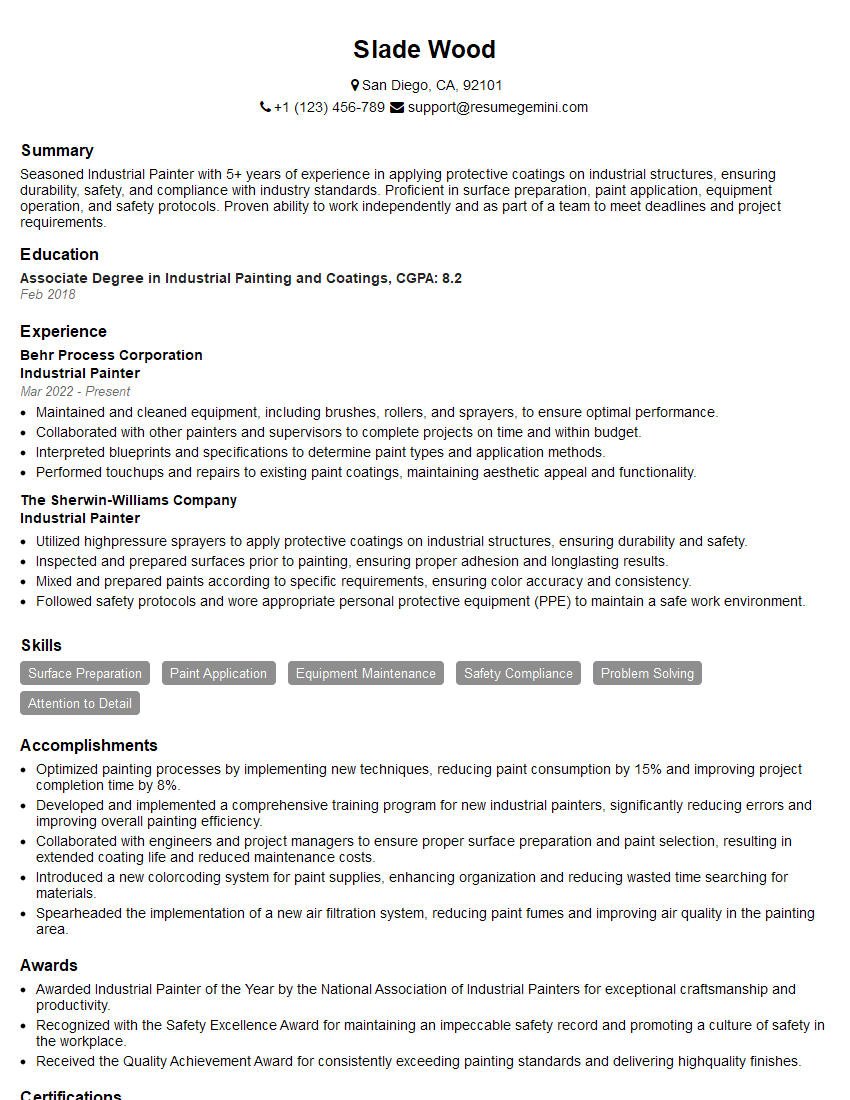
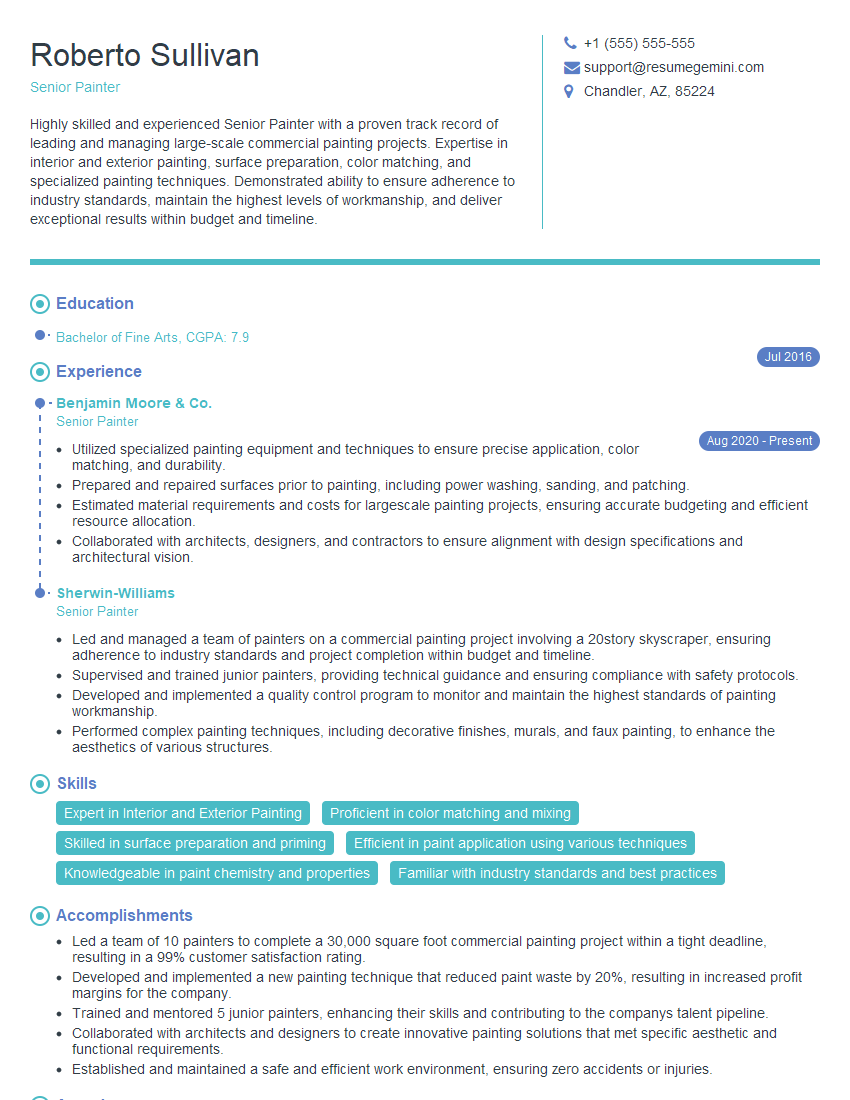
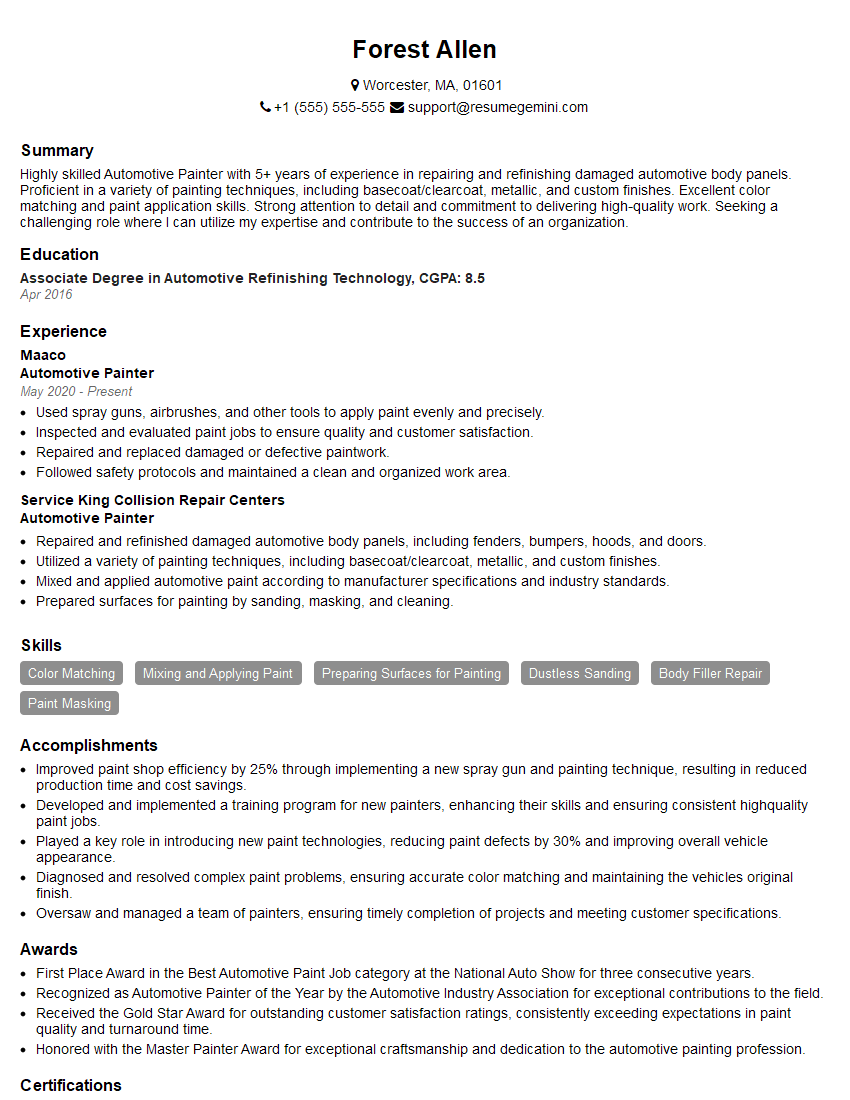
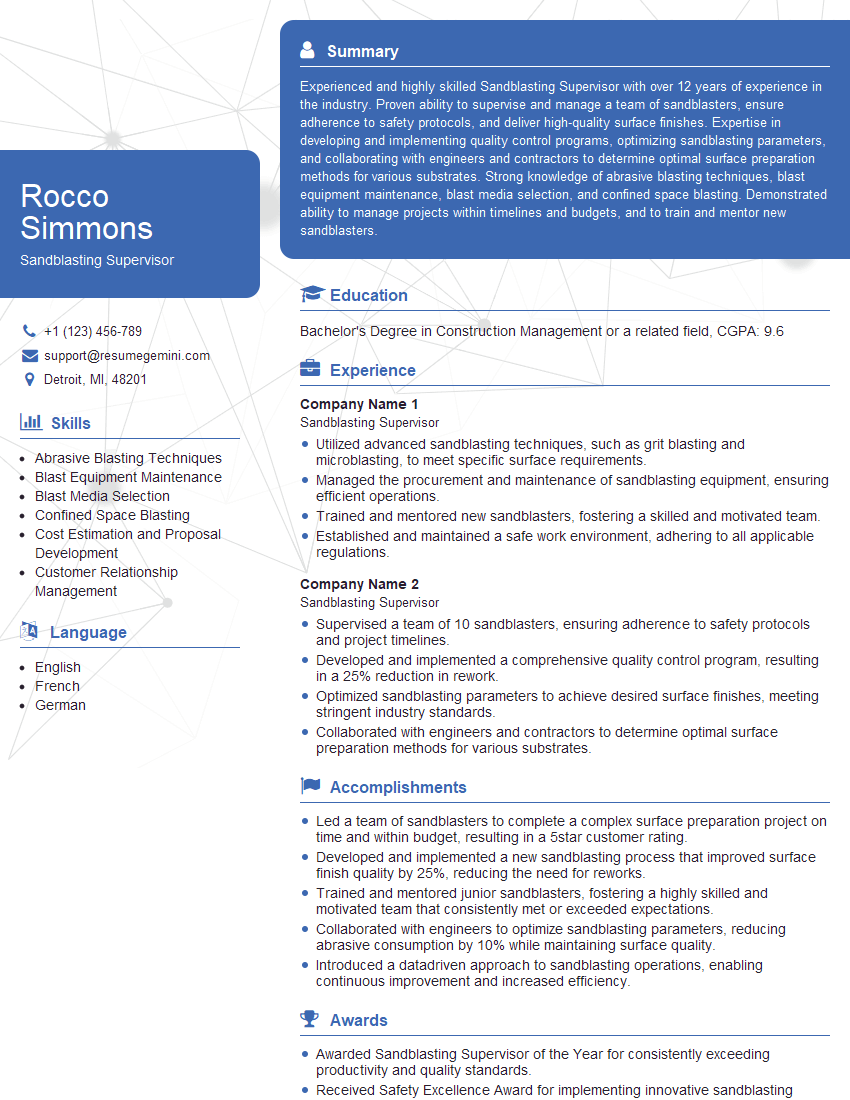
Mastering painting and sandblasting opens doors to diverse and rewarding career opportunities in construction, manufacturing, and industrial maintenance. A strong skill set in these areas is highly sought after, offering excellent potential for career advancement and competitive salaries. To maximize your job prospects, focus on creating a professional and ATS-friendly resume that highlights your skills and experience effectively. ResumeGemini is a trusted resource that can help you build a compelling resume showcasing your expertise in painting and sandblasting. We provide examples of resumes tailored to this industry to guide you in creating a document that truly stands out. Take the next step towards your dream job – build your best resume today!



Explore more articles
Users Rating of Our Blogs
Share Your Experience
We value your feedback! Please rate our content and share your thoughts (optional).
What Readers Say About Our Blog
To the interviewgemini.com Webmaster.
Very helpful and content specific questions to help prepare me for my interview!
Thank you
To the interviewgemini.com Webmaster.
This was kind of a unique content I found around the specialized skills. Very helpful questions and good detailed answers.
Very Helpful blog, thank you Interviewgemini team.