Are you ready to stand out in your next interview? Understanding and preparing for Participatory Planning and Decision-Making interview questions is a game-changer. In this blog, we’ve compiled key questions and expert advice to help you showcase your skills with confidence and precision. Let’s get started on your journey to acing the interview.
Questions Asked in Participatory Planning and Decision-Making Interview
Q 1. Describe your experience facilitating participatory planning processes.
My experience in facilitating participatory planning spans over a decade, encompassing diverse projects from community development initiatives to urban regeneration strategies. I’ve consistently employed a collaborative approach, working closely with stakeholders to define project goals, identify challenges, and develop actionable solutions. This involves not just leading meetings but also actively building relationships, fostering trust, and ensuring that all voices are valued and heard. For example, in a recent project focused on improving local park amenities, I initiated a series of workshops, utilizing various techniques like brainstorming sessions, role-playing exercises, and visual mapping to encourage active participation and ensure inclusivity.
Q 2. What methods have you used to ensure diverse stakeholder voices are heard?
Ensuring diverse voices are heard requires a multi-pronged approach. I begin by proactively identifying all relevant stakeholders—often going beyond the obvious groups to include marginalized or underrepresented communities. Then, I employ a range of methods tailored to their specific needs and communication styles. This might involve:
- Language accessibility: Providing translation services and materials in multiple languages.
- Visual aids: Using maps, diagrams, and other visual tools to facilitate understanding, especially for participants with varying literacy levels.
- Different engagement formats: Offering options like online surveys, in-person workshops, and one-on-one interviews to cater to different preferences and schedules.
- Power dynamics awareness: Actively working to mitigate power imbalances by creating a safe and inclusive space where all participants feel comfortable sharing their perspectives.
For instance, in a project focused on revitalizing a low-income neighborhood, I used visual mapping techniques combined with informal interviews to gather insights from residents who may not have felt comfortable participating in formal meetings.
Q 3. How do you handle conflicts that arise during participatory decision-making?
Conflicts are inevitable in participatory processes. My approach emphasizes proactive conflict management, viewing disagreements not as obstacles but as opportunities for richer discussion and more robust solutions. I use several strategies:
- Establish clear ground rules: At the outset, I set expectations for respectful communication and collaborative problem-solving. This includes emphasizing active listening and avoiding personal attacks.
- Facilitate open dialogue: I create a space where all perspectives can be shared without judgment. I help participants articulate their concerns clearly and find common ground.
- Mediation techniques: When necessary, I use structured mediation techniques to help conflicting parties find mutually acceptable solutions. This might involve identifying underlying interests rather than focusing solely on stated positions.
- Consensus-building: I strive to reach consensus whenever possible, but also recognize that compromise is sometimes necessary.
In a recent project involving competing land-use proposals, I used a facilitated workshop to guide stakeholders through a structured decision-making process, helping them identify shared priorities and negotiate compromises.
Q 4. Explain your approach to analyzing data collected from participatory processes.
Data analysis in participatory planning goes beyond simple quantitative measures. I employ a mixed-methods approach, combining qualitative and quantitative data to gain a holistic understanding. This involves:
- Qualitative data analysis: This involves coding and thematic analysis of interview transcripts, focus group notes, and other qualitative data to identify recurring themes and patterns.
- Quantitative data analysis: This may involve statistical analysis of survey data or other numerical information.
- Data triangulation: I compare and contrast findings from different data sources to validate insights and identify inconsistencies.
- Visual representations: I often use visual aids like charts, graphs, and maps to communicate findings effectively to all stakeholders.
For example, in a community needs assessment, I combined survey data with map-based visualization of resident concerns to pinpoint areas requiring prioritized attention.
Q 5. Describe a time you successfully implemented a participatory planning project.
A particularly successful participatory planning project involved the redevelopment of a neglected waterfront area. The community was deeply divided on the best approach, with conflicting visions for the space. I began by organizing a series of community forums, using visual mapping and participatory budgeting techniques to gather input. We created a shared vision map outlining desired features. Using a modified Delphi process, I facilitated a series of surveys and discussions, distilling community priorities into a shared vision. This collaborative approach led to a plan that incorporated elements from all perspectives, resulting in a vibrant public space that increased community pride and engagement. The project’s success was reflected in the significant increase in community use of the revitalized waterfront area.
Q 6. What are the key principles of effective participatory planning?
Effective participatory planning rests on several key principles:
- Inclusivity: Ensuring that all relevant stakeholders have an opportunity to participate, regardless of their background or social status.
- Equity: Addressing power imbalances and ensuring that all voices are heard equally.
- Transparency: Being open and honest about the planning process, sharing information openly, and providing opportunities for feedback.
- Accountability: Taking responsibility for the planning process and its outcomes, ensuring that decisions are made in a fair and responsible manner.
- Collaboration: Building strong partnerships and fostering a spirit of collaboration among stakeholders.
- Empowerment: Enabling participants to take ownership of the planning process and its outcomes.
These principles are interconnected and essential for achieving successful and sustainable outcomes.
Q 7. How do you ensure transparency and accountability in participatory processes?
Transparency and accountability are crucial in participatory planning. I ensure this by:
- Open communication: Regularly sharing updates on progress with all stakeholders using multiple channels (e.g., newsletters, online platforms, public meetings).
- Documentation: Maintaining detailed records of all meetings, decisions, and data collected.
- Feedback mechanisms: Creating opportunities for feedback throughout the process, such as online surveys or comment forms.
- Public reporting: Sharing summaries of findings and decisions publicly.
- Independent evaluation: Conducting independent evaluations to assess the effectiveness of the process and its outcomes.
This helps build trust among stakeholders and ensures that the planning process is seen as fair and legitimate. For example, creating a project website that regularly displays meeting minutes, survey results, and an updated project timeline, enhances transparency and keeps stakeholders informed.
Q 8. What techniques do you use to build consensus among diverse stakeholders?
Building consensus among diverse stakeholders requires a multifaceted approach that prioritizes active listening, mutual respect, and a commitment to finding common ground. It’s less about forcing agreement and more about facilitating a process where everyone feels heard and valued.
Structured Dialogue: I utilize techniques like facilitated discussions, world cafes, and open space technology to encourage open communication and idea sharing. These formats create a safe space for diverse perspectives to emerge without feeling dominated by a single voice. For instance, in a world cafe, stakeholders rotate through different tables, each focusing on a specific aspect of the plan, allowing for richer interaction and cross-pollination of ideas.
Collaborative Problem-Solving: I employ tools like brainstorming, mind mapping, and multi-criteria decision analysis (MCDA) to collaboratively identify problems, explore potential solutions, and weigh their pros and cons. MCDA, for example, allows stakeholders to assign weights to different criteria, reflecting their priorities, and objectively compare options based on those criteria.
Visual Aids and Representation: Using visual tools like charts, graphs, and maps enhances understanding and facilitates communication, particularly across language barriers. A well-designed visual can quickly illustrate complex issues and common ground.
Negotiation and Compromise: Finding consensus often involves negotiation and compromise. I guide stakeholders towards identifying shared interests and exploring creative solutions that address competing concerns. This might involve finding a compromise between two strongly held positions, or creating a tiered approach that addresses immediate needs alongside longer-term goals.
Q 9. How do you measure the success of a participatory planning initiative?
Measuring the success of participatory planning isn’t solely about achieving a specific outcome. It’s about assessing the process itself and the extent to which it achieved its goals of inclusivity, equity, and effectiveness. I use a mix of quantitative and qualitative methods:
Quantitative Measures: These might include tracking participation rates, the number of diverse voices represented, changes in relevant indicators (e.g., reduced poverty rates in a community development project), or surveys measuring stakeholder satisfaction.
Qualitative Measures: These include conducting focus groups or interviews to gauge stakeholder perceptions of the process, the extent to which their voices were heard, and their sense of ownership over the resulting plan. Document analysis, reviewing minutes of meetings and feedback forms, can also provide valuable insight.
Longitudinal Monitoring: It’s crucial to monitor the implementation of the plan and assess its ongoing impact over time. This helps identify unforeseen consequences and adjust the plan as needed. Regular feedback loops are crucial.
For example, in a community garden project, success might be measured by the number of community members actively involved, the yield of the garden, and qualitative feedback on whether the project met the community’s needs and built stronger social connections.
Q 10. What are the challenges of participatory planning, and how do you address them?
Participatory planning, while highly beneficial, presents several challenges. Addressing these requires proactive planning and a flexible approach.
Power Imbalances: Dominant voices can easily overshadow marginalized groups. I actively work to mitigate this through power-mapping exercises, ensuring equitable representation in decision-making bodies, and using facilitation techniques that amplify quieter voices.
Time Constraints: Participatory processes can be time-consuming. Careful planning, efficient facilitation, and a clear timeline are essential to manage time effectively. Prioritization of key decisions can also alleviate this issue.
Conflicting Interests: Stakeholders often have conflicting goals and priorities. I facilitate constructive conflict resolution by helping stakeholders identify shared interests and explore creative solutions that address everyone’s concerns. Negotiation and compromise are key.
Lack of Resources: Effective participatory planning requires resources, including funding, personnel, and appropriate tools. Securing adequate resources through grant applications or stakeholder contributions is crucial.
Maintaining Engagement: Sustaining stakeholder involvement throughout the planning process can be difficult. I address this by providing regular updates, ensuring transparency, and making the process engaging and relevant to stakeholders.
Q 11. Describe your experience using different participatory decision-making tools (e.g., SWOT analysis, multi-criteria decision analysis).
I have extensive experience using various participatory decision-making tools. Each tool serves a different purpose and is selected based on the specific context and needs of the stakeholders.
SWOT Analysis: I use SWOT (Strengths, Weaknesses, Opportunities, Threats) analysis to collaboratively identify internal strengths and weaknesses, as well as external opportunities and threats relevant to the planning process. This helps stakeholders develop a shared understanding of the context before making decisions.
Multi-Criteria Decision Analysis (MCDA): MCDA is particularly useful for comparing multiple options based on various criteria. Stakeholders collectively define the criteria, assign weights to each, and score each option. This provides a structured and transparent way to make decisions. I’ve used this in comparing different development strategies for a community.
Cost-Benefit Analysis: For projects with clear financial implications, cost-benefit analysis helps stakeholders evaluate the economic viability of different options. This involves estimating both the costs and benefits of each option and comparing their net present value.
Prioritization Matrices: These matrices help stakeholders prioritize tasks or projects based on criteria such as urgency and importance. This ensures that resources are allocated to the most critical aspects of the plan.
Q 12. How do you adapt your approach to participatory planning based on the context and stakeholders involved?
Context and stakeholders are paramount. My approach to participatory planning is highly adaptable. I tailor my methods based on:
Stakeholder Characteristics: The age, cultural background, literacy levels, and technological proficiency of stakeholders influence my choice of tools and communication strategies. For example, I might use visual aids or simpler language with a less literate group. For a younger demographic, I might leverage digital tools and interactive platforms.
Contextual Factors: The geographical location, political climate, and the specific issue at hand all shape my approach. A participatory planning process in a rural community will differ significantly from one in a densely populated urban area.
Project Goals: The overall objectives of the project dictate the specific methods and tools employed. A short-term project might require a more streamlined approach compared to a long-term initiative.
Resource Availability: The available resources (budget, time, personnel) impact the scope and complexity of the participatory process. I adapt the process to make it feasible within the given constraints.
For instance, when working with indigenous communities, I prioritize culturally appropriate methods, ensuring free, prior, and informed consent, and working through their traditional leadership structures.
Q 13. Explain the importance of power dynamics in participatory planning.
Power dynamics are crucial and often invisible forces in participatory planning. Ignoring them can undermine the very principles of inclusivity and equity. Unequal power relationships can silence marginalized groups and lead to plans that reflect the interests of the dominant stakeholders rather than the broader community.
I address power dynamics through:
Power Mapping: This involves identifying and visualizing the various power relationships within a group. It helps to highlight who has influence, who is marginalized, and how these power dynamics might affect the planning process.
Equitable Representation: I ensure that all stakeholders, regardless of their power position, have an opportunity to participate fully and equally in decision-making. This might involve creating structures for proportional representation.
Facilitative Leadership: As a facilitator, I strive to create a safe and inclusive space where all voices are valued and heard. This requires consciously challenging dominant narratives and creating opportunities for marginalized groups to express themselves.
Building Capacity: I empower marginalized groups by building their capacity to participate effectively. This might involve providing training on advocacy skills, communication strategies, or the relevant technical aspects of the project.
Q 14. How do you ensure the inclusion of marginalized or underrepresented groups?
Ensuring the inclusion of marginalized or underrepresented groups is paramount to the success of participatory planning. It requires a proactive, multi-pronged strategy.
Targeted Outreach: I use specific strategies to reach marginalized groups, working through community organizations, faith-based institutions, or other trusted intermediaries. This may involve using culturally appropriate communication channels and languages.
Accessible Methods: I use methods that are accessible to everyone, regardless of physical abilities or literacy levels. This might involve providing translation services, using visual aids, or offering alternative formats for participation (e.g., online participation for those with mobility issues).
Creating a Safe Space: It’s crucial to create a safe and welcoming environment where marginalized groups feel comfortable sharing their views without fear of judgment or discrimination. This requires establishing trust and demonstrating a commitment to respect and inclusivity.
Capacity Building: I provide support and training to help marginalized groups articulate their needs and participate effectively in the planning process. This might involve building their leadership skills or providing technical assistance.
Addressing Systemic Barriers: Sometimes, barriers to participation are systemic – for instance, lack of transportation, childcare, or access to technology. I identify and address these barriers to facilitate meaningful participation.
For example, in urban renewal projects, I would ensure that voices of low-income residents, people of color, and the elderly are actively sought out and heard, and that any proposed solutions address their specific needs and concerns.
Q 15. Describe your experience using technology to support participatory planning processes.
Technology plays a crucial role in modern participatory planning, enhancing accessibility, engagement, and efficiency. My experience encompasses utilizing various digital tools to facilitate collaborative processes. For instance, I’ve used online platforms like Google Workspace (Docs, Sheets, Slides) for collaborative document creation, real-time feedback collection, and data analysis. These tools allowed stakeholders geographically dispersed to participate effectively. Furthermore, I’ve integrated interactive mapping tools, such as ArcGIS Online, to allow stakeholders to visualize project impacts and provide spatial feedback on proposed plans. This is especially useful in land-use planning or infrastructure projects. Finally, I’ve employed survey tools like SurveyMonkey or Qualtrics to gather quantitative data on stakeholder preferences and priorities, ensuring a broader reach and more robust data analysis. The key is selecting technology appropriate to the project scale and the technical capacity of the participants; always offering training and support if necessary.
In one project involving a community garden development, we used a combination of online surveys to gauge community interest in different types of plants and features, followed by online forums to discuss design choices and practical implementation. This blended approach maximized participation while allowing us to systematically collect and analyze data.
Career Expert Tips:
- Ace those interviews! Prepare effectively by reviewing the Top 50 Most Common Interview Questions on ResumeGemini.
- Navigate your job search with confidence! Explore a wide range of Career Tips on ResumeGemini. Learn about common challenges and recommendations to overcome them.
- Craft the perfect resume! Master the Art of Resume Writing with ResumeGemini’s guide. Showcase your unique qualifications and achievements effectively.
- Don’t miss out on holiday savings! Build your dream resume with ResumeGemini’s ATS optimized templates.
Q 16. How do you manage stakeholder expectations in participatory planning?
Managing stakeholder expectations is paramount to successful participatory planning. It starts with clearly defining roles and responsibilities at the outset. This involves setting realistic expectations about the timeline, decision-making processes, and the influence each stakeholder group will have on the final outcome. Transparency is key. Regularly communicating progress, challenges, and decisions, using accessible language tailored to each stakeholder group, helps build trust and manage expectations effectively. It’s important to actively listen to concerns, address them openly, and find compromises where necessary. Regular feedback mechanisms, such as progress reports and stakeholder meetings, provide opportunities to adjust expectations and address any misunderstandings proactively.
For example, in a community revitalization project, we held a series of workshops to clearly outline the planning process, the different stages of decision making and their respective timelines, and the anticipated level of community involvement at each stage. We actively solicited feedback throughout, clearly communicating any limitations or constraints on what we could achieve.
Q 17. What are some common pitfalls to avoid in participatory planning?
Several pitfalls can derail participatory planning. One common mistake is inadequate stakeholder engagement. This might involve failing to identify all relevant stakeholders or using inappropriate engagement methods that exclude certain groups. Another pitfall is insufficient attention to power dynamics. If certain stakeholders dominate the process, it risks marginalizing others and leading to biased outcomes. Lack of clarity on the goals and objectives is also a significant problem. Without a clear vision, the process can become disjointed and unproductive. Furthermore, failure to establish clear decision-making processes can lead to confusion, conflict, and ultimately, an ineffective plan. Lastly, neglecting to build consensus and ownership can result in a plan that isn’t implemented or sustained.
For instance, insufficient attention to power dynamics can lead to unequal representation. We had one project where the local business owners dominated the discussions due to their more assertive communication styles. To address this, we introduced structured facilitation techniques and encouraged quieter participants to share their viewpoints.
Q 18. How do you ensure the sustainability of outcomes from a participatory planning process?
Ensuring the sustainability of outcomes requires a multi-pronged approach. Firstly, it’s crucial to build ownership and commitment among stakeholders throughout the planning process. This involves active participation, shared decision-making, and a sense of collective responsibility for the project’s success. Secondly, integrating the plan into existing institutional structures and policies is essential. This ensures that the plan is not a standalone document, but rather an integral part of ongoing decision-making processes. Thirdly, providing ongoing resources and support for implementation is critical. This may involve securing funding, providing training, and establishing monitoring mechanisms to track progress and adapt the plan as needed. Finally, fostering ongoing communication and collaboration among stakeholders ensures a commitment to the long-term vision.
In a project focused on improving local transit, we worked closely with the local government to integrate our recommendations into their budget plans and policy frameworks. We also developed a communication strategy to keep residents informed of progress and solicit continued feedback.
Q 19. Describe your experience working with different stakeholder groups (e.g., government, community organizations, businesses).
My experience includes working with diverse stakeholder groups, each with unique perspectives, priorities, and communication styles. I’ve collaborated with government agencies, navigating bureaucratic processes and ensuring alignment with policy objectives. Working with community organizations required building trust, fostering collaboration, and understanding community needs and priorities. I’ve also partnered with businesses, explaining the benefits of participating and addressing their concerns about costs and potential impacts. Successfully navigating these collaborations requires adaptability, strong communication skills, and a deep understanding of each group’s motivations and constraints.
One project involved a community-led initiative to create a neighbourhood park. Working effectively with the local council (for funding and permits), community associations (for organizing volunteers), and local businesses (for sponsorship) required tailoring my approach to address each group’s specific requirements and communication styles.
Q 20. How do you communicate effectively with stakeholders throughout the participatory planning process?
Effective communication is the cornerstone of successful participatory planning. This involves using multiple communication channels to reach diverse stakeholders—meetings, workshops, online forums, newsletters, and social media—depending on the group and their preferences. It’s critical to use clear, concise, and accessible language, avoiding jargon and technical terms. Active listening is essential; I always create spaces for stakeholders to share their ideas, concerns, and feedback. Providing regular updates on progress, challenges, and decisions fosters trust and keeps stakeholders informed. And finally, soliciting feedback throughout the process ensures that the plan reflects the needs and priorities of all involved.
In a recent project, we used a combination of in-person workshops, online surveys, and a dedicated project website to ensure effective communication with all stakeholders. Regular email updates and social media posts kept everyone informed of the process and progress.
Q 21. What are the ethical considerations in participatory planning?
Ethical considerations in participatory planning are paramount. This begins with ensuring equity and inclusivity, guaranteeing that all stakeholders have a fair opportunity to participate regardless of their background, social status, or other factors. Transparency and honesty in communication are vital—clearly outlining goals, processes, and potential impacts. Confidentiality must be maintained regarding sensitive information shared by participants. Power imbalances need to be acknowledged and addressed to prevent marginalization of certain groups. Lastly, it’s important to ensure that the planning process leads to outcomes that are both effective and ethically sound, promoting fairness and avoiding unintended negative consequences.
For example, in a project involving vulnerable populations, we implemented measures to ensure confidentiality and data privacy, and we used culturally sensitive language and communication strategies to make sure everyone felt safe and respected during participation.
Q 22. How do you deal with situations where stakeholders have conflicting interests?
Conflicting interests are inevitable in participatory planning, as different stakeholders often have varying priorities and perspectives. My approach involves several key strategies to navigate these conflicts constructively. First, I prioritize open communication and transparency. This involves creating a safe space for stakeholders to express their concerns and perspectives without fear of judgment. I use active listening techniques to understand each stakeholder’s needs and concerns. Second, I facilitate collaborative problem-solving. Rather than viewing conflicting interests as obstacles, I frame them as opportunities for creative solutions that address everyone’s needs to a certain degree. This often involves brainstorming sessions, compromise and finding common ground. Techniques like interest-based negotiation and multi-criteria decision analysis can be invaluable tools here. Third, I employ mediation techniques if necessary, guiding stakeholders towards a mutually agreeable outcome, always ensuring fairness and impartiality. Fourth, when compromise isn’t possible, I strive for transparency regarding the decision-making process, clearly outlining the rationale behind the chosen path and acknowledging the trade-offs involved. Finally, I document everything – all concerns, proposals, compromises – to maintain accountability and transparency.
Q 23. Describe your approach to documenting and reporting on participatory planning processes.
Documentation and reporting are critical to ensuring the legitimacy and effectiveness of participatory planning. My approach is multi-faceted. I maintain a detailed process record, including meeting minutes, notes from individual consultations, feedback forms, and any other relevant documentation. This record-keeping is not just for administrative purposes; it serves as a living document that captures the evolution of the planning process, demonstrating how decisions were made. The final report goes beyond a simple summary; it tells a story of the entire participatory process. It includes: (1) A clear description of the participatory methods employed; (2) A summary of stakeholder involvement, highlighting the diversity of perspectives and participation levels; (3) A detailed account of the decision-making process; (4) A transparent presentation of both the agreed upon plan and any unresolved conflicts; (5) A section outlining recommendations for future initiatives, based on lessons learned. The report should be accessible and engaging, possibly incorporating visuals like maps, charts, and photographs to effectively communicate the process and outcomes to a wider audience. Using plain language ensures everyone can understand the results, regardless of their background.
Q 24. What are your strengths and weaknesses in facilitating participatory planning?
My strengths lie in my ability to build rapport with diverse stakeholders, fostering a sense of trust and mutual respect. I excel at actively listening to diverse perspectives and facilitating inclusive discussions. I am adept at translating complex information into easily understandable terms, and have a solid understanding of various participatory methods, allowing me to tailor my approach to the specific context. I also am highly organized and adept at managing the logistical aspects of complex participatory processes. However, I am aware of my need to further refine my skills in conflict resolution in particularly high-stakes situations. While I effectively manage disagreements, I aim to enhance my skills in mediating deeply entrenched conflicts to achieve more optimal outcomes. I’m also actively working on enhancing my skills in data analysis to improve my capacity to use qualitative data more effectively in generating insightful reports and recommendations.
Q 25. How do you ensure the legitimacy and credibility of participatory planning processes?
The legitimacy and credibility of participatory planning hinges on several crucial elements. First, it’s essential to ensure that the process is inclusive and representative of all affected stakeholders. This requires proactive outreach to marginalized or underrepresented groups, providing accessible participation opportunities, and ensuring their voices are heard. Second, the process must be transparent and accountable. This means clearly outlining the decision-making process from the outset, documenting all steps, and making this information readily available to all participants. Third, it is critical to use appropriate and effective participatory methods. The choice of methods must align with the context and the needs of the stakeholders. Fourth, the process needs to be fair and equitable. This means ensuring that all voices are given equal weight and that decisions are made based on sound evidence and reasoned arguments, not power dynamics. Fifth, external validation can enhance credibility. This could involve engaging independent experts or utilizing established quality assurance frameworks. Finally, it’s important to actively address any concerns or challenges raised during the process, acknowledging shortcomings and taking corrective action when necessary. This demonstrates commitment to transparency and fairness.
Q 26. Explain the difference between consultation and participation.
Consultation and participation are often confused, but represent distinct levels of stakeholder involvement. Consultation is a one-way process where information is gathered from stakeholders, but the stakeholders themselves don’t directly influence the decisions. Think of a public hearing where officials present a plan and receive feedback, but the final decision rests solely with the authorities. In contrast, participation entails a shared decision-making process where stakeholders actively shape the plan’s development and implementation. It involves meaningful influence over the outcomes. A participatory approach might involve stakeholders collaboratively designing a community garden, where their input directly determines the garden’s location, size, and features. The difference lies in the power dynamics: consultation is top-down; participation is shared power.
Q 27. Describe a situation where participatory planning failed and what you learned from it.
In a past project involving the development of a new park, the participatory planning process initially failed due to insufficient stakeholder engagement. We focused primarily on easily accessible groups, neglecting marginalized communities whose perspectives were crucial. This led to a plan that didn’t fully reflect the needs and preferences of the entire community, resulting in significant dissatisfaction and even protests after the park’s completion. The key lesson learned was the absolute necessity of a comprehensive outreach strategy to ensure the inclusion of all stakeholders, regardless of their socioeconomic status, access to resources or any other barrier. We realized that simply holding public meetings wasn’t enough; we needed to actively seek out marginalized groups through community centers, door-to-door visits, and translation services, among other methods. This experience significantly improved my understanding of the critical importance of inclusivity in achieving successful and equitable outcomes in participatory planning.
Q 28. How would you apply participatory planning principles to a specific scenario (e.g., urban development, environmental management)?
Let’s consider urban development. Applying participatory planning principles to a new housing development would begin with identifying all relevant stakeholders: residents of the surrounding area, potential future residents, local businesses, environmental groups, and government agencies. Following a process of needs assessment and visioning, I would use a range of methods to engage stakeholders, including workshops, online surveys, mapping exercises and focus groups. These would help to understand each groups’ priorities regarding things like housing density, affordability, community facilities, green spaces, traffic management, and environmental impact. This information would be used to collaboratively create several alternative development plans, each addressing different stakeholder preferences and priorities. A clear process for weighing the different options would then be established, ensuring transparency and accountability. For example, we might use a multi-criteria decision analysis framework, allowing stakeholders to assign weights to different criteria, based on their importance. The final plan would be the result of this collaborative decision-making process and would reflect a balance of competing interests, incorporating robust feedback mechanisms to ensure ongoing responsiveness to the community’s evolving needs. This iterative approach – constantly adjusting to the community’s voice – is central to effective participatory urban planning.
Key Topics to Learn for Participatory Planning and Decision-Making Interview
- Defining Participatory Planning and Decision-Making (PPDM): Understanding the core principles, philosophies, and different models of PPDM.
- Stakeholder Analysis and Engagement: Identifying key stakeholders, understanding their interests and concerns, and developing effective engagement strategies (e.g., workshops, surveys, interviews).
- Facilitating Collaborative Processes: Mastering techniques for effective group discussion, conflict resolution, and consensus building in diverse settings.
- Power Dynamics and Equity in PPDM: Recognizing and addressing power imbalances to ensure equitable participation and decision-making.
- Data Collection and Analysis in PPDM: Utilizing qualitative and quantitative data to inform planning and decision-making processes.
- Practical Applications of PPDM: Discussing real-world examples in various sectors (e.g., community development, environmental management, urban planning).
- Evaluation and Monitoring of PPDM Processes: Assessing the effectiveness of participatory processes and identifying areas for improvement.
- Ethical Considerations in PPDM: Understanding the ethical implications of participatory approaches and ensuring transparency and accountability.
- Challenges and Limitations of PPDM: Acknowledging potential challenges such as time constraints, resource limitations, and difficulties in achieving consensus.
- Emerging Trends in PPDM: Exploring innovative approaches and technologies used to enhance participatory processes (e.g., online platforms, digital tools).
Next Steps
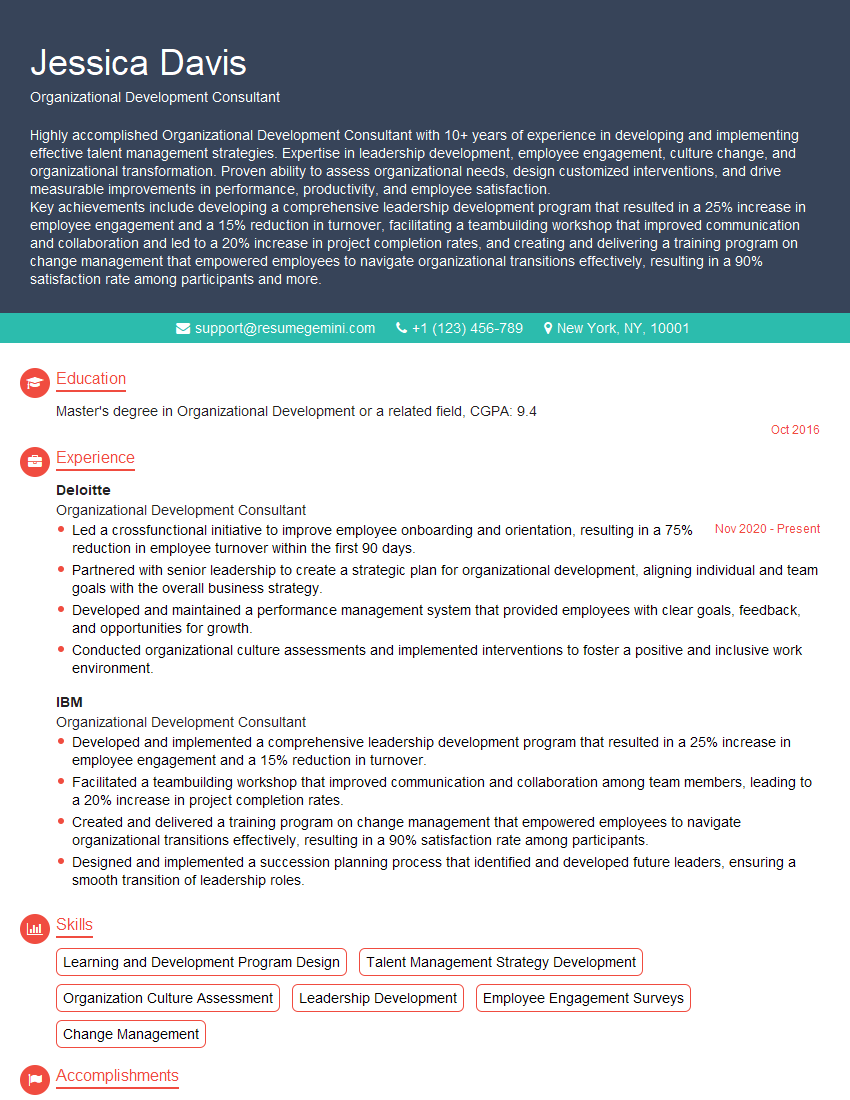
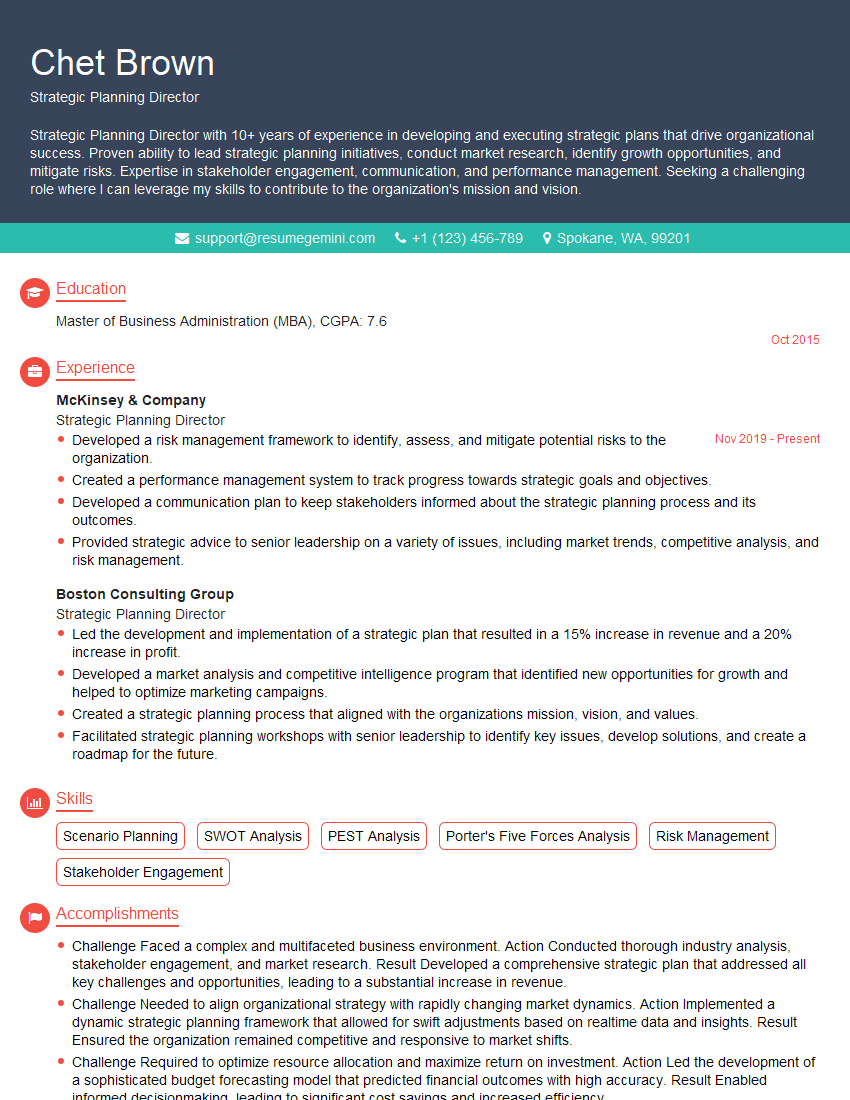
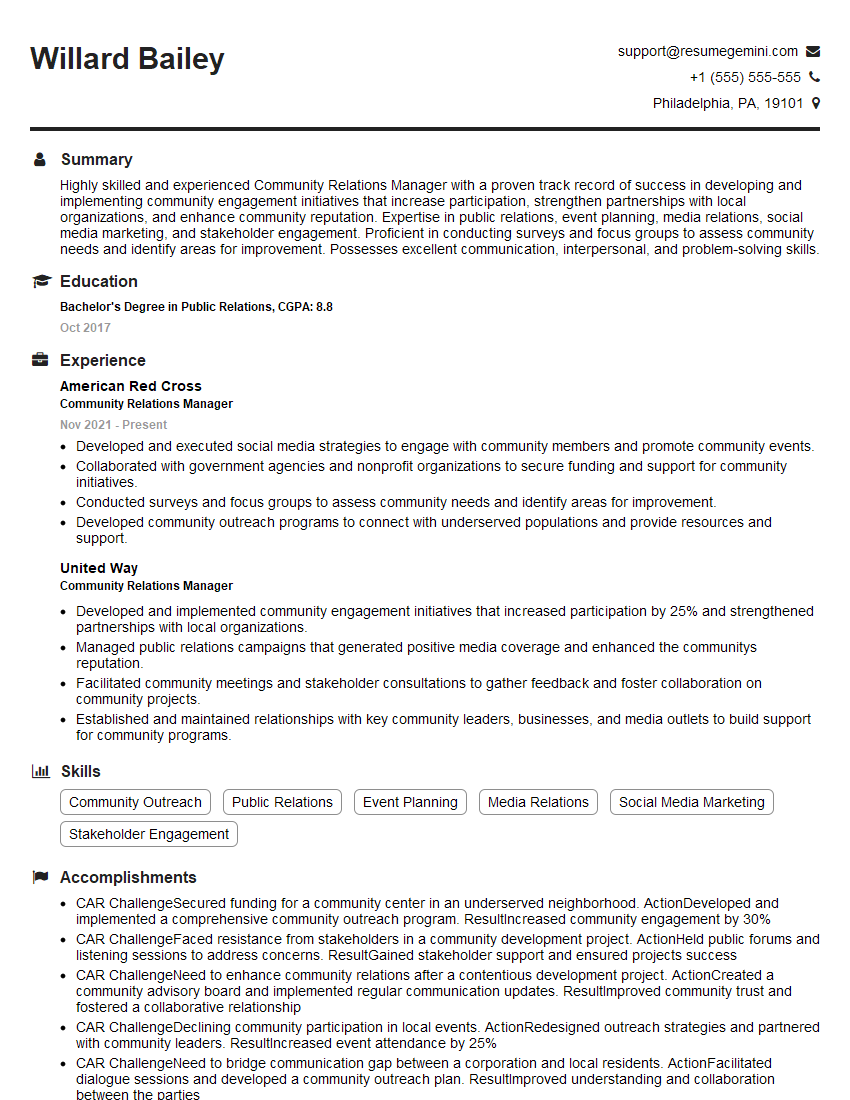
Mastering Participatory Planning and Decision-Making is crucial for career advancement in fields requiring strong collaboration and community engagement skills. A well-crafted resume is your key to unlocking exciting opportunities. Building an ATS-friendly resume significantly increases your chances of getting noticed by recruiters. We recommend using ResumeGemini to create a professional and effective resume that highlights your skills and experience in PPDM. ResumeGemini provides examples of resumes tailored specifically to Participatory Planning and Decision-Making roles, helping you showcase your qualifications effectively.
Explore more articles
Users Rating of Our Blogs
Share Your Experience
We value your feedback! Please rate our content and share your thoughts (optional).
What Readers Say About Our Blog
To the interviewgemini.com Webmaster.
Very helpful and content specific questions to help prepare me for my interview!
Thank you
To the interviewgemini.com Webmaster.
This was kind of a unique content I found around the specialized skills. Very helpful questions and good detailed answers.
Very Helpful blog, thank you Interviewgemini team.