Unlock your full potential by mastering the most common Pediatric Occupational Therapy interview questions. This blog offers a deep dive into the critical topics, ensuring you’re not only prepared to answer but to excel. With these insights, you’ll approach your interview with clarity and confidence.
Questions Asked in Pediatric Occupational Therapy Interview
Q 1. Describe your experience with sensory integration therapy in pediatric patients.
Sensory integration therapy is a crucial aspect of pediatric occupational therapy, focusing on how children process sensory information from their bodies and the environment. It’s based on the understanding that difficulties processing sensory input (touch, sight, sound, smell, taste, movement, and balance) can significantly impact a child’s ability to learn, play, and interact socially. My experience encompasses working with children exhibiting various sensory processing challenges, including sensory over-responsivity (e.g., extreme sensitivity to noise or touch) and sensory under-responsivity (e.g., seeking intense sensory input).
For example, a child who is hypersensitive to touch might struggle with dressing or participating in group activities involving physical contact. In such cases, I’d use sensory integration strategies to help them gradually tolerate touch. This might involve incorporating weighted blankets or deep pressure massage into therapy sessions. Conversely, a child who seeks intense sensory input might constantly bump into things or engage in rough play. For them, I might use activities like swinging or jumping on a trampoline to provide appropriate sensory input and regulation. My approach is always individualized, based on a thorough assessment of the child’s unique sensory profile and needs.
A key element is collaboration with parents and other professionals to create a consistent therapeutic environment across settings (home, school, and therapy). This ensures the child’s progress is supported in all aspects of their life.
Q 2. Explain your approach to assessing fine motor skills in children.
Assessing fine motor skills involves a comprehensive evaluation of a child’s hand-eye coordination, dexterity, and manipulation skills. I typically begin with an observation of the child’s spontaneous play and activities. This gives me an initial impression of their motor skills. Next, I employ standardized assessments like the Peabody Developmental Motor Scales (PDMS-2) or the Bruininks-Oseretsky Test of Motor Proficiency (BOT-2) which provide objective data on performance in various fine motor tasks.
Beyond standardized tests, I conduct hands-on evaluations that involve observing the child’s ability to perform specific tasks. This might include activities such as:
- Drawing and coloring:
Assessing their grasp, pencil control, and ability to execute lines and shapes.
- Buttoning and zipping:
Evaluating their hand dexterity and coordination.
- Cutting with scissors:
Observing their hand strength, coordination, and ability to control the scissors.
- Building with blocks or Lego:
Assessing their fine motor precision, planning skills, and problem-solving abilities.
I also consider the child’s age and developmental stage when interpreting the results of the assessments. A crucial component is understanding the underlying cause for difficulties and crafting a treatment plan that addresses both the motor skills and any underlying sensory, cognitive, or other related issues.
Q 3. How do you adapt treatment plans based on a child’s developmental stage?
Adapting treatment plans to a child’s developmental stage is paramount. I take into account a child’s chronological age, cognitive abilities, and their developmental level across different domains (motor, cognitive, social-emotional). My approach is always play-based and developmentally appropriate.
For example, a toddler’s treatment might focus on fundamental skills like grasping, reaching, and exploring objects, using age-appropriate toys and activities. For a preschooler, the focus shifts to more complex fine motor tasks like cutting, drawing, and building, incorporating social interaction and imaginative play. A school-aged child’s therapy might be aimed at improving handwriting, organization, and participation in school-related tasks, using more advanced tools and activities.
I use a variety of strategies depending on the child’s developmental stage. These might include adapting the physical environment (e.g., using smaller equipment for younger children), modifying tasks to increase or decrease challenge (e.g., using larger crayons for children with poor grasp), or implementing techniques like scaffolding to guide and support their learning.
Regular reassessment and adjustment of the treatment plan are essential to ensure ongoing progress and successful outcomes. The collaboration with parents and educators is vital in this process because it allows the therapy to support the child’s development in all settings.
Q 4. What are some common adaptive equipment used in pediatric occupational therapy?
Adaptive equipment plays a significant role in supporting children with disabilities. The selection is very individualized, depending on the child’s specific needs and goals. Commonly used equipment includes:
- Adaptive writing tools: These include pencil grips, weighted pencils, and ergonomic writing tools designed to improve grasp and writing control.
- Adaptive eating utensils: These can range from built-up handles to specialized spoons and forks to help children with limited hand function or dexterity.
- Positioning devices: Such as wedges, cushions, and chairs that provide proper postural support and encourage optimal alignment for improved motor control and task performance.
- Assistive technology: This may involve using switches, touch screens, or other technology to access communication devices or other needed tools. Examples include sip and puff switches for accessing electronics.
- Sensory tools: Weighted blankets, therapy balls, and textured toys help regulate sensory input and improve self-regulation.
The choice of equipment depends on a thorough assessment of the child’s needs and functionality. For instance, a child with cerebral palsy might require a specialized feeding chair for postural support, whereas a child with fine motor difficulties might benefit from adaptive writing tools. The equipment must be effective, safe and easy for the child to use.
Q 5. Describe your experience with children diagnosed with Autism Spectrum Disorder.
My experience with children diagnosed with Autism Spectrum Disorder (ASD) has been extensive. I understand that ASD presents a wide range of challenges, including difficulties with social interaction, communication, repetitive behaviors, and sensory processing. My therapeutic approach is tailored to each child’s unique profile. A key aspect is to focus on building social skills, communication abilities and improving sensory regulation.
For instance, I might use visual supports such as schedules or picture cards to help a child understand routines and expectations, or social stories to teach social skills in a clear, structured way. Sensory strategies, including creating calming spaces or incorporating sensory activities into therapy, are often crucial to help children self-regulate and manage sensory sensitivities. I also work closely with parents and educators to create consistency in the child’s environment and promote generalization of skills learned in therapy.
Play-based therapy is particularly effective with children with ASD. Play provides a natural context for practicing social skills, communication, and problem-solving. I might use play scenarios that involve turn-taking, sharing, and following instructions. The goal is to promote engagement, build confidence, and improve functional skills within a fun and engaging context.
Q 6. How do you incorporate play-based therapy into your sessions?
Play-based therapy is the cornerstone of my practice. It’s not just about fun and games; it’s a powerful therapeutic tool that allows children to learn and develop essential skills in a natural and engaging way. I use play to assess a child’s abilities, strengths, and challenges, and to address their specific needs. For example, building a tower with blocks can assess fine motor skills, problem-solving, and planning. Pretend play provides opportunities to practice social interaction, language, and emotional regulation.
The type of play incorporated depends on the child’s age, interests, and goals. Younger children might engage in sensory play with sand or water, while older children might participate in more complex games that require collaboration, negotiation, or rule-following. I always ensure the play is purposeful and aligned with the child’s therapeutic goals.
For a child struggling with social skills, I might use games that involve turn-taking or collaboration. For a child with fine motor challenges, I might incorporate activities that require precise hand movements, like building with small objects or playing with playdough. Through play, children learn to regulate emotions, improve problem-solving abilities, and develop social and communication skills in a natural and engaging context.
Q 7. Explain your understanding of developmental milestones in children.
Understanding developmental milestones is critical for effective pediatric occupational therapy. Milestones are age-related benchmarks that indicate typical progress in various developmental areas, such as gross motor skills (walking, jumping), fine motor skills (grasping, writing), language (talking, understanding), social-emotional skills (sharing, empathy), and cognitive skills (problem-solving, memory). These milestones provide a framework for assessing a child’s progress and identifying any potential delays or difficulties.
I use a variety of resources, including standardized developmental scales and my own clinical experience, to assess a child’s developmental level and compare it to age-appropriate expectations. If a child is not meeting expected milestones, it might indicate a need for intervention. However, it’s important to remember that developmental timelines are not rigid. Some children might reach milestones earlier or later than average, and this does not necessarily indicate a problem. My goal is to identify children who are significantly delayed or experiencing difficulties that impact their daily functioning.
Knowing developmental milestones helps me tailor therapy to meet the child’s specific needs. For example, if a child is struggling with handwriting, understanding typical handwriting development helps to determine appropriate interventions, targeting specific skills, like pre-writing strokes or letter formation, based on their current developmental stage. This ensures that the therapy is effective and developmentally appropriate.
Q 8. How do you collaborate with other healthcare professionals (e.g., therapists, educators)?
Collaboration is the cornerstone of effective pediatric occupational therapy. I regularly participate in interdisciplinary team meetings with teachers, special education staff, physical therapists, speech-language pathologists, psychologists, and physicians. This ensures a holistic approach to the child’s needs. For example, if a child is struggling with handwriting, I might collaborate with the teacher to modify assignments, the physical therapist to improve postural control, and the psychologist to address any underlying anxiety contributing to the difficulty. We share assessment data, treatment plans, and progress updates, ensuring everyone is working towards the same goals. Communication is key; we use various methods like email, phone calls, and individual or group meetings to maintain open lines of communication and adjust strategies as needed. Effective collaboration ultimately leads to better outcomes for the child.
Q 9. Describe your experience with pediatric feeding therapy.
Pediatric feeding therapy is a specialized area requiring a deep understanding of both oral motor skills and sensory processing. My experience encompasses a wide range of feeding challenges, from picky eating to severe oral-motor dysfunction. I assess children using standardized and non-standardized assessments, such as the Feeding-EAT-10, to identify underlying issues. Treatment plans are highly individualized and may involve strategies like sensory integration therapy (to reduce food aversions), oral-motor exercises (to improve muscle strength and coordination), and behavioral modification techniques (to increase food acceptance). For instance, I worked with a child who had a severe gag reflex and refused most solid foods. Through gradual exposure, desensitization techniques, and tailored exercises, we were able to expand his food repertoire significantly. I often involve parents in the process, providing them with strategies to implement at home, creating a consistent therapeutic environment across different settings.
Q 10. What strategies do you use to manage challenging behaviors in pediatric patients?
Managing challenging behaviors in pediatric patients requires a thoughtful and individualized approach. I use a combination of strategies rooted in positive behavior support (PBS). This framework focuses on understanding the function of the behavior – what the child is communicating through their actions. Once the function is identified, we develop proactive strategies to prevent the behavior from occurring in the first place. This might include environmental modifications, such as structuring the therapy session to minimize triggers, providing increased choices, and adjusting the task demands. If the behavior does occur, we implement positive reinforcement strategies to reward appropriate behaviors. For example, a child who exhibits disruptive behavior when frustrated might benefit from visual schedules to provide predictability, frequent breaks, and immediate positive reinforcement for attempts at self-regulation. I collaborate closely with parents and teachers to ensure consistency across settings, thereby maximizing the effectiveness of the interventions.
Q 11. How do you assess and address handwriting difficulties in school-aged children?
Assessing handwriting difficulties requires a comprehensive approach. I typically begin by observing the child’s writing in different contexts – in-class, during therapy, and in informal settings. I then use standardized assessments, such as the Test of Handwriting Skills for Children (TOHSC), to identify specific areas of weakness. These areas might include letter formation, spacing, speed, and legibility. Based on the assessment, I develop an individualized intervention plan. This may involve addressing underlying fine motor skills, visual-perceptual skills, or sensory processing challenges. Strategies might include exercises to improve hand strength and dexterity, visual perceptual training to enhance spatial awareness, and adaptive writing tools such as pencil grips or slant boards. Furthermore, collaboration with the teacher is crucial to implement modifications in the classroom, such as allowing for increased time for assignments or providing alternative ways to express ideas.
Q 12. Explain your experience with assistive technology for pediatric patients.
Assistive technology plays a crucial role in enhancing the independence and participation of many pediatric patients. My experience includes recommending and training children and families on a variety of assistive technologies, ranging from low-tech solutions like adapted writing tools and visual supports, to high-tech options like augmentative and alternative communication (AAC) devices and specialized computer software. For a child with limited fine motor skills, for example, I might recommend a specialized keyboard or alternative input device for computer use. For a child with expressive language difficulties, an AAC device can significantly improve communication. The key to successful implementation lies in careful assessment of the child’s needs and preferences, followed by appropriate training and ongoing support. I work closely with families to integrate the assistive technology into their daily routines, ensuring its effective use and long-term success.
Q 13. Describe your approach to parent/caregiver education and involvement.
Parent and caregiver involvement is paramount in pediatric occupational therapy. I believe in a collaborative partnership model, where families are active participants in the therapy process. I begin by building a strong therapeutic alliance, actively listening to their concerns and perspectives. I explain the assessment and treatment plan in a clear and concise manner, using simple language and avoiding jargon. I provide parents with strategies and activities they can implement at home, ensuring consistency and generalization of skills learned in therapy. Regular communication is maintained through phone calls, emails, and progress reports. I also encourage parents to observe therapy sessions, empowering them to participate actively in their child’s progress. Family-centered care ensures that the interventions are relevant and sustainable, optimizing the child’s outcomes in the long run.
Q 14. How do you document your progress notes for Pediatric OT services?
My documentation adheres to the highest professional standards and reflects the requirements of my practice setting. Progress notes are detailed and objective, using clear and concise language. They typically include the date, the services provided, the child’s performance on specific tasks, goals addressed, and observations regarding behavior and participation. I use standardized terminology and codes as required by the electronic health record (EHR) system. For example, I might use codes from the International Classification of Functioning, Disability and Health (ICF) to describe the child’s functional limitations and the interventions employed to address them. The documentation must accurately reflect the child’s progress towards established goals, any modifications to the treatment plan, and future plans for therapy. This comprehensive record ensures effective communication among healthcare professionals and provides evidence of the child’s progress to parents, payers, and other stakeholders.
Q 15. What is your experience with various assessment tools used in Pediatric OT?
My experience with pediatric occupational therapy assessment tools is extensive and spans a wide range of standardized and non-standardized measures. I regularly utilize tools that assess fine motor skills (e.g., Peabody Developmental Motor Scales, Second Edition (PDMS-2), Bruininks-Oseretsky Test of Motor Proficiency, Second Edition (BOT-2)), gross motor skills (e.g., Gross Motor Function Measure (GMFM)), visual-motor integration (e.g., Beery-Buktenica Developmental Test of Visual-Motor Integration, Sixth Edition (Beery VMI)), sensory processing (e.g., Sensory Profile 2), and adaptive functioning (e.g., Vineland Adaptive Behavior Scales, Third Edition (VABS-3)). The choice of assessment depends heavily on the child’s age, developmental level, and suspected areas of difficulty. For example, with a preschooler struggling with handwriting, I might use the Developmental Test of Visual-Motor Integration, alongside a more informal assessment of pencil grip and in-hand manipulation. With an older child exhibiting challenges with daily living skills, the VABS-3 would provide a comprehensive evaluation. Beyond standardized tests, I also heavily rely on observational assessments, parent interviews, and teacher reports to build a holistic understanding of the child’s functional abilities and challenges in their natural environments.
Career Expert Tips:
- Ace those interviews! Prepare effectively by reviewing the Top 50 Most Common Interview Questions on ResumeGemini.
- Navigate your job search with confidence! Explore a wide range of Career Tips on ResumeGemini. Learn about common challenges and recommendations to overcome them.
- Craft the perfect resume! Master the Art of Resume Writing with ResumeGemini’s guide. Showcase your unique qualifications and achievements effectively.
- Don’t miss out on holiday savings! Build your dream resume with ResumeGemini’s ATS optimized templates.
Q 16. Explain your approach to working with children with cerebral palsy.
My approach to working with children with cerebral palsy (CP) is highly individualized and focuses on maximizing their functional independence and participation. It’s crucial to understand that CP affects individuals differently, so a standardized approach doesn’t work. I begin with a thorough assessment focusing on the child’s specific motor impairments, cognitive abilities, and communication skills. This guides the development of a personalized intervention plan that addresses their unique needs. This might include adaptive equipment training (e.g., using specialized utensils for eating or modified writing tools), techniques to improve motor control (e.g., constraint-induced movement therapy, CIMT, or task-specific training), and strategies to enhance mobility (e.g., gait training, wheelchair management). I strongly collaborate with families, educators, and other therapists (physical therapists, speech therapists) to ensure a cohesive and supportive approach across settings. For example, I might work with a child on improving their hand function for writing at school, while collaborating with their physical therapist to improve their postural control for sitting. Regular reassessment and adjustments to the treatment plan are vital to ensure progress and adaptation to the child’s evolving needs.
Q 17. How do you adapt therapy for children with visual impairments?
Adapting therapy for children with visual impairments requires a deep understanding of their specific visual needs and limitations. I use a variety of strategies to compensate for visual challenges and promote participation. This includes using tactile and auditory cues extensively, replacing visual instructions with verbal or kinesthetic guidance. For example, instead of showing a child a picture of how to tie their shoes, I might guide their hands through the process while providing verbal instructions. I utilize adaptive materials, such as textured surfaces for tactile exploration, large print materials, or braille. Collaboration with the child’s ophthalmologist and orientation and mobility specialist is crucial in determining the most effective adaptations. I also focus on developing compensatory strategies, such as using auditory cues to navigate a space, or enhancing their sense of touch to identify objects. The goal is to empower the child to use their remaining senses to actively participate in their environment.
Q 18. Describe your experience with children with ADHD.
My experience with children with ADHD involves creating structured and engaging therapy sessions tailored to their specific needs and challenges. Children with ADHD often benefit from highly structured routines, clear expectations, and frequent positive reinforcement. I use techniques like visual schedules and timers to help them understand the flow of the session and manage transitions. To maintain engagement, I incorporate activities that cater to their interests and incorporate movement breaks to manage their energy levels. Cognitive strategies, such as self-monitoring techniques and organizational tools, are taught to help them manage their attention and impulsivity in daily tasks. Collaboration with the child’s parents and teachers is essential to ensure consistency across different settings. For instance, I might work with a child on improving their attention during handwriting tasks, teaching them strategies that their teacher can also implement in the classroom. Behavior modification strategies, in collaboration with behavioral specialists or psychologists, may be incorporated if needed.
Q 19. How do you address the emotional and social needs of your pediatric patients?
Addressing the emotional and social needs of pediatric patients is an integral part of my practice. I create a safe and supportive therapeutic environment where children feel comfortable expressing their feelings. I incorporate play-based activities to build rapport and allow for natural expression of emotions. I actively listen to their concerns and anxieties, validating their experiences. I use therapeutic approaches such as play therapy, which allows them to work through challenges symbolically through play. For children facing social challenges, I might incorporate role-playing to practice social skills and improve communication, confidence-building activities and opportunities for peer interaction within the therapeutic setting. I work closely with parents and caregivers to understand the child’s social context and home dynamics, fostering collaboration in creating a cohesive support system that promotes the child’s emotional and social well-being.
Q 20. Explain your knowledge of different intervention strategies in pediatric OT.
My knowledge of intervention strategies in pediatric OT encompasses a broad range of approaches, drawing from developmental, neurodevelopmental, and sensory integration perspectives. I utilize techniques such as:
- Sensory integration therapy: This approach addresses sensory processing difficulties by providing carefully planned sensory experiences to help children regulate their responses to sensory input.
- Motor skill training: This focuses on improving fine and gross motor skills through targeted exercises and activities, including activities of daily living (ADLs) training.
- Adaptive equipment training: This involves teaching children how to use assistive devices and adaptive equipment to increase independence in daily tasks.
- Cognitive behavioral therapy (CBT) for children: This addresses the cognitive and behavioral aspects of difficulties, teaching coping strategies and problem-solving skills.
- Play therapy: This uses play as a medium to facilitate emotional expression, enhance self-esteem, and improve social skills.
- Developmental approaches: These focus on supporting children’s development across different domains, such as cognitive, social-emotional, and physical development, at their individual developmental stage.
Q 21. Describe your approach to goal setting and measuring progress in Pediatric OT.
Goal setting and progress measurement in pediatric OT is a collaborative and ongoing process. I work closely with parents, caregivers, and educators to establish achievable and meaningful goals that are functional and relevant to the child’s daily life. These goals are typically SMART goals: Specific, Measurable, Achievable, Relevant, and Time-bound. For example, instead of a vague goal like “improve handwriting,” a SMART goal might be “Increase the legibility of the child’s handwriting from 20% to 80% within three months, as measured by a standardized handwriting assessment.” Progress is regularly tracked using a combination of standardized assessments, observational measures, and informal assessments of functional performance in natural settings. I maintain detailed documentation of therapy sessions, progress notes, and data gathered from assessments. Regular feedback sessions with families and caregivers are crucial to track progress, address any challenges, and make adjustments to the intervention plan as needed. This collaborative and data-driven approach ensures that we’re constantly refining the plan to maximize the child’s progress towards achieving their goals.
Q 22. How do you ensure safety during your therapy sessions?
Safety is paramount in pediatric occupational therapy. My approach is multifaceted and begins with a thorough assessment of the child’s developmental level, physical capabilities, and potential risks. This informs the creation of a safe and stimulating therapy environment.
- Environment Modification: I carefully assess the treatment area, removing any hazards like sharp objects or tripping hazards. For example, if a child is working on mobility, I ensure the area is clear and padded as needed.
- Adaptive Equipment: I utilize adaptive equipment and assistive technology appropriately, always ensuring it’s properly fitted and used correctly. For instance, I might use adapted utensils for a child with fine motor difficulties, making sure the grips are comfortable and functional.
- Supervision and Monitoring: Constant supervision is crucial, particularly with younger children or those with challenging behaviors. The level of supervision adapts to the child’s needs and the activity; some activities require close one-on-one supervision, others allow for slightly more independence under observation.
- Emergency Preparedness: Knowing the location of emergency exits and having a plan in place for emergencies is essential. This includes familiarity with the facility’s emergency procedures and having the contact information readily available for parents/guardians and other members of the healthcare team.
- Communication and Collaboration: Open communication with parents and other healthcare professionals is key. I always discuss any concerns and safety protocols before and after sessions.
For example, I once had a child who was prone to impulsive movements. By modifying the environment to reduce stimulation and using specific strategies to manage his behavior, I created a safer space for him to engage in therapy while still being challenging and fun.
Q 23. What are some ethical considerations specific to pediatric occupational therapy?
Ethical considerations in pediatric occupational therapy are crucial. They revolve around the best interests of the child, maintaining confidentiality, and ensuring culturally sensitive and equitable care.
- Confidentiality: Protecting a child’s privacy and maintaining the confidentiality of their information is paramount. This includes securely storing records, only sharing information with authorized individuals, and obtaining appropriate consent before disclosing any information.
- Informed Consent: Obtaining informed consent from parents or legal guardians is essential before starting any therapy. This involves providing clear and comprehensive information about the treatment plan, risks, benefits, and alternatives.
- Cultural Competence: Understanding and respecting the child’s cultural background, beliefs, and values is crucial. Therapy should be adapted to be culturally sensitive and relevant.
- Non-Discrimination: Providing equitable care to all children regardless of their race, ethnicity, gender, socioeconomic status, or disability is vital.
- Beneficence and Non-Maleficence: Always acting in the best interests of the child and avoiding harm are fundamental ethical principles.
- Professional Boundaries: Maintaining professional boundaries with children, families, and colleagues is essential.
For instance, I once worked with a family whose cultural beliefs impacted their approach to therapy. By carefully listening to their concerns and adapting my treatment plan, I was able to build trust and ensure effective therapy while respecting their cultural values.
Q 24. How do you manage your caseload effectively?
Effective caseload management is vital for providing quality care. My strategy involves prioritizing, scheduling efficiently, and utilizing technology effectively.
- Prioritization: I prioritize cases based on urgency and the child’s needs. For example, children with significant functional limitations may require more frequent sessions.
- Efficient Scheduling: I utilize a digital calendar and scheduling system to optimize appointment times, minimizing gaps and maximizing productivity. This also ensures optimal time for documentation and administrative tasks.
- Time Management: I utilize time-management techniques such as time blocking and task prioritization to balance direct patient care with administrative tasks like documentation and communication with families and other healthcare professionals.
- Technology Integration: I leverage electronic health records (EHRs), telehealth platforms (where appropriate), and other technology to streamline administrative tasks and improve communication efficiency.
- Delegation and Collaboration: Collaboration with other therapists and healthcare professionals allows for shared responsibility and optimized workflow.
Using a combination of these strategies, I can effectively manage my caseload and ensure that each child receives the individualized attention they need.
Q 25. Describe your familiarity with the latest evidence-based practices in pediatric OT.
I actively stay updated on the latest evidence-based practices in pediatric occupational therapy through continuous professional development.
- Professional Journals: I regularly read journals such as the American Journal of Occupational Therapy and other relevant publications to stay abreast of new research and clinical advancements.
- Conferences and Workshops: I attend professional conferences and workshops to learn from experts and network with other practitioners.
- Continuing Education Courses: I actively participate in continuing education courses to maintain my license and enhance my expertise in specific areas of pediatric occupational therapy.
- Mentorship and Collaboration: I actively seek mentorship from experienced colleagues and collaborate with other professionals to share knowledge and learn from diverse perspectives.
For example, I recently incorporated sensory integration techniques based on updated research, improving treatment outcomes for children with sensory processing difficulties. My practice reflects a commitment to applying the most current and effective methods for the benefit of my patients.
Q 26. What are your strengths and weaknesses as a pediatric occupational therapist?
As a pediatric occupational therapist, my strengths lie in my ability to build rapport with children and families, adapt my therapy to individual needs, and maintain a positive and encouraging therapeutic environment.
- Strengths: Creative problem-solving, strong communication skills, excellent rapport-building abilities, adaptability, and a passion for working with children.
- Weaknesses: Like any professional, I strive to continuously improve my time management skills and refine my ability to delegate tasks effectively when needed to maintain an optimal workflow.
I actively work on addressing my weaknesses through professional development and seeking support from colleagues. For example, I am currently implementing new time management strategies to balance my clinical work with administrative tasks more effectively. I view my weaknesses as areas for growth and improvement rather than limitations.
Q 27. How do you handle disagreements or differing opinions with other members of the healthcare team?
Disagreements with other healthcare team members are opportunities for collaborative problem-solving. My approach emphasizes respectful communication and finding common ground.
- Respectful Communication: I always strive to express my opinions and concerns respectfully, actively listening to the perspectives of others.
- Collaborative Problem-Solving: I approach disagreements as opportunities to find solutions that are in the best interest of the child. I actively seek to understand the reasoning behind differing viewpoints.
- Evidence-Based Approach: I support my opinions with evidence-based research and clinical experience.
- Compromise and Negotiation: I am willing to compromise and negotiate to find a solution that satisfies all parties involved while prioritizing the child’s well-being.
- Seeking Mediation if Needed: If disagreements persist, I am open to seeking mediation from a supervisor or other neutral party to facilitate a resolution.
In one instance, there was a disagreement about the best approach for a child’s motor skill development. By respectfully discussing our different perspectives and considering the research supporting both viewpoints, we were able to develop a combined plan that integrated elements from both approaches, resulting in better outcomes for the child.
Key Topics to Learn for Pediatric Occupational Therapy Interview
- Developmental Theories: Understanding key developmental milestones across different age groups (e.g., Piaget, Erikson, Maslow) and how they inform therapeutic interventions.
- Assessment and Evaluation: Familiarize yourself with various assessment tools used in pediatric OT (e.g., standardized tests, observational scales) and how to interpret results to create individualized treatment plans.
- Sensory Integration: Grasp the principles of sensory integration and how sensory processing difficulties impact a child’s development and daily functioning. Be prepared to discuss practical applications for sensory modulation strategies.
- Adaptive Equipment and Assistive Technology: Demonstrate knowledge of various adaptive equipment and assistive technologies used to promote independence and participation in daily activities. Be ready to discuss specific examples and their appropriate applications.
- Fine and Gross Motor Skills Development: Understand the typical progression of fine and gross motor skills and common challenges children may face. Be able to discuss therapeutic strategies to address these challenges.
- Play Therapy: Highlight the importance of play in pediatric OT and explain different play-based intervention strategies.
- Collaboration and Communication: Emphasize the importance of effective communication and collaboration with parents, educators, and other healthcare professionals.
- Ethical Considerations: Demonstrate an understanding of ethical considerations in pediatric OT practice, including confidentiality, informed consent, and cultural sensitivity.
- Case Management and Documentation: Showcase your understanding of effective case management techniques and proper documentation practices.
- Evidence-Based Practice: Discuss your familiarity with using research and evidence to inform your therapeutic decisions.
Next Steps
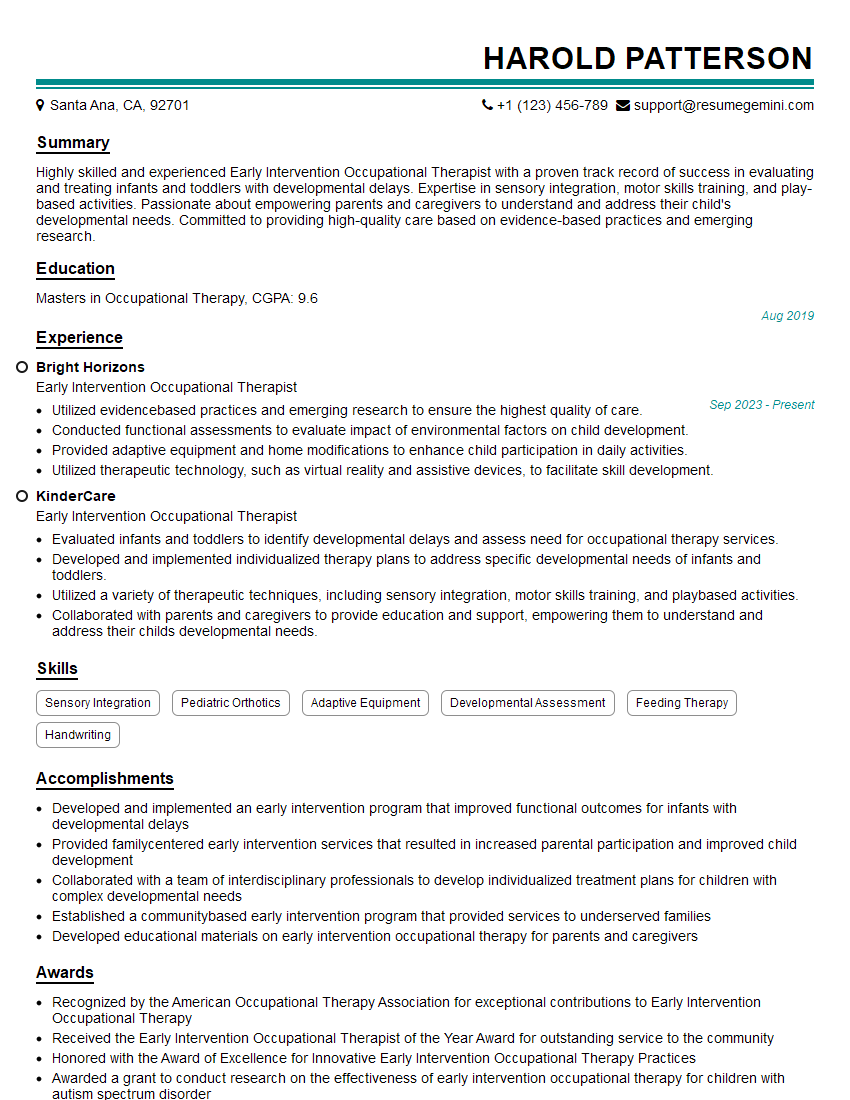
Mastering Pediatric Occupational Therapy opens doors to a rewarding career with diverse opportunities for growth and specialization. To maximize your job prospects, crafting a strong, ATS-friendly resume is crucial. ResumeGemini is a trusted resource that can help you build a professional and impactful resume that highlights your skills and experience effectively. Examples of resumes tailored specifically to Pediatric Occupational Therapy are available to guide you through the process. Invest time in creating a compelling resume – it’s your first impression on potential employers.
Explore more articles
Users Rating of Our Blogs
Share Your Experience
We value your feedback! Please rate our content and share your thoughts (optional).
What Readers Say About Our Blog
To the interviewgemini.com Webmaster.
Very helpful and content specific questions to help prepare me for my interview!
Thank you
To the interviewgemini.com Webmaster.
This was kind of a unique content I found around the specialized skills. Very helpful questions and good detailed answers.
Very Helpful blog, thank you Interviewgemini team.