Interviews are opportunities to demonstrate your expertise, and this guide is here to help you shine. Explore the essential Periodic Limb Movement Disorder interview questions that employers frequently ask, paired with strategies for crafting responses that set you apart from the competition.
Questions Asked in Periodic Limb Movement Disorder Interview
Q 1. Define Periodic Limb Movement Disorder (PLMD).
Periodic Limb Movement Disorder (PLMD) is a sleep-related movement disorder characterized by repetitive, involuntary movements of the limbs, primarily the legs, during sleep. These movements, typically brief flexions or extensions of the legs, occur at regular intervals throughout the night, often disrupting sleep and leading to daytime fatigue and other sleep-related issues. Imagine it like a slight jerking or twitching of the legs that happens repeatedly and unconsciously while you’re asleep.
Q 2. Differentiate PLMD from restless legs syndrome (RLS).
While both PLMD and Restless Legs Syndrome (RLS) are sleep disorders involving leg movements, they differ significantly. RLS is characterized by an irresistible urge to move the legs, usually accompanied by uncomfortable sensations, and often occurs before sleep onset. The urge to move is the primary symptom. PLMD, on the other hand, is defined by the actual movements themselves during sleep, which are often detected only by polysomnography (PSG). A person with PLMD might not even be aware of these movements, unlike someone with RLS, who actively experiences the urge to move their legs. Think of it this way: RLS is the feeling of needing to move, while PLMD is the actual movement itself during sleep, often without the person’s conscious awareness.
Q 3. Describe the diagnostic criteria for PLMD.
Diagnosing PLMD requires a thorough clinical evaluation and primarily relies on polysomnography (PSG). The diagnostic criteria generally include:
- Periodic limb movements (PLMs) occurring at least 5 times per hour of sleep, identified through PSG.
- Each PLM is typically a brief (0.5 to 5 seconds), repetitive flexion or extension of the legs, knees, or feet.
- These movements occur periodically (every 20 to 40 seconds) throughout sleep stages.
- Symptoms of sleep disturbance and daytime sleepiness are often present, although not strictly required for diagnosis.
Q 4. What are the common symptoms associated with PLMD?
The most prominent symptom of PLMD is the periodic limb movements themselves, often unnoticed by the individual. However, these movements significantly disrupt sleep architecture, leading to several observable symptoms, including:
- Daytime sleepiness and fatigue
- Insomnia or difficulty staying asleep
- Difficulty concentrating and impaired cognitive function
- Irritability and mood disturbances
- Reduced quality of life
Q 5. Explain the role of polysomnography in diagnosing PLMD.
Polysomnography (PSG) is the gold standard for diagnosing PLMD. PSG is an overnight sleep study that measures various physiological parameters during sleep, including brainwave activity (EEG), eye movements (EOG), muscle activity (EMG), heart rate, and breathing. The EMG component is crucial for detecting the periodic limb movements characteristic of PLMD. The PSG recordings clearly show the characteristic periodic bursts of muscle activity in the legs at regular intervals during sleep. This objective measurement is essential for confirming the diagnosis, as many people with PLMD are unaware of the movements.
Q 6. What are the limitations of using polysomnography for PLMD diagnosis?
While PSG is the gold standard, it does have limitations.
- Cost and accessibility: PSG is expensive and not readily available in all settings, limiting access for many individuals.
- Subjectivity in scoring: There can be some subjectivity in scoring the PSG data, although standardized criteria help minimize this. Slight variations in movement characteristics could lead to variations in diagnosis.
- PLM frequency variations: The frequency of PLMs can vary from night to night, meaning that a single PSG study might not accurately reflect the typical PLM activity of the individual. Multiple studies may be necessary.
- Doesn’t diagnose the underlying cause: PSG diagnoses PLMD but doesn’t identify the underlying cause or specific contributing factors like iron deficiency or other medical conditions.
Q 7. Discuss different treatment approaches for PLMD.
Treatment approaches for PLMD are multifaceted and aim to improve sleep quality and reduce daytime symptoms. Common strategies include:
- Pharmacological treatments: Dopamine agonists (like pramipexole or ropinirole), commonly used for RLS, are often effective for PLMD. Other medications may include benzodiazepines or certain antidepressants in specific cases.
- Lifestyle modifications: Regular exercise, maintaining good sleep hygiene (consistent sleep schedule, comfortable sleep environment), and addressing any underlying iron deficiency can significantly help manage symptoms.
- Cognitive Behavioral Therapy for Insomnia (CBT-I): CBT-I can help individuals develop better sleep habits and manage sleep-related anxieties, indirectly improving PLMD symptoms.
Q 8. What are the pharmacological treatments for PLMD?
Pharmacological treatments for Periodic Limb Movement Disorder (PLMD) primarily focus on managing the underlying symptoms and improving sleep quality. The choice of medication depends on the individual’s specific needs and other health conditions. There isn’t a single ‘cure’ for PLMD, but these medications can significantly alleviate symptoms.
Dopamine agonists: These medications, such as pramipexole and ropinirole, are often the first line of treatment. They work by mimicking the effects of dopamine in the brain, which is a neurotransmitter involved in movement control. They are effective for many, but side effects like nausea, dizziness, and daytime sleepiness can occur and need to be monitored.
Benzodiazepines: These medications, such as clonazepam, can be helpful in reducing the severity of PLMD movements. However, they are generally used short-term due to the potential for dependence and daytime sedation. They address the symptoms, but don’t target the underlying cause.
Other medications: In some cases, other medications like gabapentin or opioids may be considered, although their effectiveness for PLMD is less well-established and they often come with side effect profiles that limit their use. These are generally reserved for situations where other treatments haven’t been effective.
It’s crucial to work closely with a sleep specialist or neurologist to determine the most appropriate medication and dosage. They’ll carefully monitor for side effects and adjust the treatment plan as needed. The goal is to find the right balance between symptom relief and minimizing potential adverse effects.
Q 9. What non-pharmacological treatments can be used for PLMD?
Non-pharmacological treatments for PLMD offer a valuable alternative or complement to medication, focusing on lifestyle changes and behavioral therapies to improve sleep and reduce symptoms.
Regular Exercise: Moderate, regular physical activity can improve sleep quality and reduce the frequency of PLMD episodes. Think of a consistent routine, like a daily 30-minute walk.
Sleep Hygiene Improvements: This involves establishing a consistent sleep schedule, creating a relaxing bedtime routine, ensuring a dark, quiet, and cool sleep environment, and avoiding caffeine and alcohol before bed. A consistent sleep cycle is vital.
Cognitive Behavioral Therapy for Insomnia (CBT-I): CBT-I can be particularly helpful in addressing underlying sleep disturbances that may exacerbate PLMD. It involves identifying and modifying unhelpful sleep-related thoughts and behaviors.
Stress Management Techniques: Stress can worsen PLMD symptoms. Techniques like meditation, yoga, or deep breathing exercises can help manage stress levels and promote relaxation before sleep.
Iron Supplementation (if needed): In some cases, iron deficiency can contribute to PLMD. A blood test can determine if iron supplementation is necessary.
The effectiveness of these non-pharmacological treatments can vary depending on the individual. Combining several approaches often yields the best results. For instance, a patient might find that regular exercise, improved sleep hygiene, and stress reduction techniques significantly lessen their PLMD symptoms, reducing their reliance on medication.
Q 10. Describe the potential long-term effects of untreated PLMD.
Untreated PLMD can lead to significant long-term consequences, impacting both physical and mental health. The chronic sleep disruption caused by PLMD can have cascading effects on various aspects of life.
Excessive daytime sleepiness: This can lead to reduced productivity, impaired cognitive function, and increased risk of accidents.
Mood disorders: The lack of restorative sleep can contribute to irritability, anxiety, and depression. This is due to the sleep deprivation and impact on hormone levels.
Cardiovascular problems: Studies have suggested a potential link between untreated PLMD and an increased risk of cardiovascular diseases. This is likely related to the chronic sleep disruption and stress on the body.
Impaired quality of life: The persistent discomfort, sleep deprivation, and daytime consequences of PLMD can significantly reduce an individual’s overall quality of life, impacting their relationships and ability to function effectively.
It’s vital to seek medical attention if you suspect you have PLMD. Early intervention can help mitigate these long-term effects and improve overall well-being.
Q 11. How do you assess the severity of PLMD in patients?
Assessing the severity of PLMD involves a multi-faceted approach, combining subjective patient reports with objective polysomnographic (PSG) data. The PSG is crucial for a definitive diagnosis.
Patient History and Symptoms: This includes documenting the frequency, duration, and intensity of leg movements, as well as the impact on sleep and daytime functioning. This is subjective, based on the patient’s reported experience.
Polysomnography (PSG): This sleep study measures various physiological parameters during sleep, including brain waves, eye movements, muscle activity, and breathing. It specifically detects periodic limb movements during sleep, enabling quantification of their frequency and amplitude. This is objective data.
Sleep diaries: Patients are often asked to keep sleep diaries to track their sleep patterns, symptoms, and any factors that may influence them. This is a helpful tool for correlation with other data.
Severity is often expressed in terms of the number of periodic limb movements per hour of sleep (PLMs/hour). A higher number indicates greater severity. However, the impact on sleep quality and daytime function should also be considered when determining overall severity. For example, a patient with a moderate number of PLMs/hour who experiences significant daytime sleepiness would be considered more severely affected than a patient with a higher PLMs/hour count but minimal daytime impairment.
Q 12. Explain the relationship between PLMD and sleep apnea.
PLMD and sleep apnea often coexist, sharing a complex relationship. While not directly causing each other, they can exacerbate each other’s symptoms and impact sleep quality. The exact nature of their relationship isn’t fully understood, but several factors are believed to contribute to their association:
Shared Underlying Mechanisms: Both conditions may involve dysfunction in similar brain regions or neurotransmitter systems, explaining the overlap. Some research points to common genetic factors.
Exacerbating Effects: Sleep apnea can disrupt sleep, leading to increased arousal and potentially triggering or worsening PLMD episodes. Conversely, the leg movements in PLMD can interrupt sleep, potentially contributing to sleep apnea symptoms.
Shared Risk Factors: Certain factors, like obesity, aging, and certain medical conditions, can increase the risk of both PLMD and sleep apnea.
It is important to consider the possibility of both conditions when evaluating a patient with symptoms suggestive of either disorder. Proper diagnosis requires a comprehensive assessment, including a thorough history, physical examination, and sleep studies (PSG) which can detect both PLMD and sleep apnea.
Q 13. Discuss the role of genetics in PLMD.
Genetics play a significant role in the development of PLMD. While not solely determined by genetics, family history is a strong indicator of increased risk. Research suggests a hereditary component, although the precise genetic mechanisms are still being investigated.
Twin Studies: Studies comparing identical and fraternal twins have demonstrated a higher concordance rate for PLMD in identical twins, indicating a genetic influence.
Family History: A positive family history of PLMD increases the likelihood of developing the disorder, suggesting the involvement of specific genes or gene variants.
Ongoing Research: Researchers are actively pursuing the identification of specific genes and genetic pathways linked to PLMD. This research could lead to more targeted diagnostic and therapeutic approaches.
While family history is a risk factor, not everyone with a family history will develop PLMD, and many individuals with PLMD don’t have a family history. This implies that environmental or other interacting factors also influence the development of the condition.
Q 14. What are the potential complications associated with PLMD?
The complications associated with PLMD are primarily related to its chronic disruption of sleep and consequent effects on overall health.
Excessive daytime sleepiness: This can lead to reduced productivity, impaired cognitive function, increased risk of accidents, and difficulties in maintaining social relationships.
Mood disorders: The chronic sleep deprivation linked to PLMD can contribute to anxiety, depression, and irritability.
Cardiovascular issues: Some studies suggest a link between untreated PLMD and increased risk of cardiovascular problems, possibly due to chronic sleep disruption and associated stress.
Reduced quality of life: The persistent discomfort, sleep deprivation, and associated daytime consequences can have a significant negative impact on an individual’s overall quality of life.
Complications from Medications: Treatment with medications can also lead to side effects, such as nausea, dizziness, or daytime sleepiness, which need to be carefully managed.
Addressing PLMD effectively, through medication, lifestyle changes, and other therapies, can significantly mitigate these complications and improve the patient’s overall health and well-being.
Q 15. How do you counsel patients about PLMD management?
Counseling patients with PLMD involves a multi-faceted approach focusing on education, symptom management, and lifestyle adjustments. First, I explain what PLMD is – repetitive leg movements during sleep that disrupt sleep architecture and lead to daytime fatigue. I emphasize that it’s a treatable condition, alleviating anxieties. We then discuss the patient’s specific symptoms, sleep quality, and impact on their daily life. This allows for a personalized approach.
Management strategies vary. For mild cases, lifestyle changes like regular exercise, improved sleep hygiene (consistent sleep schedule, relaxing bedtime routine), and avoiding caffeine and alcohol before bed are recommended. For moderate to severe cases, medication may be necessary. I explain the benefits and side effects of various medications, such as dopamine agonists (pramipexole, ropinirole) or other medications like gabapentin or clonazepam, making sure to choose the most appropriate option based on the individual’s health profile and comorbidities. Regular follow-up appointments are crucial to monitor treatment effectiveness and adjust the plan as needed. I encourage patients to maintain a sleep diary to track their symptoms and response to treatment. Finally, I stress the importance of patience and persistence, as finding the optimal treatment plan can take time.
Career Expert Tips:
- Ace those interviews! Prepare effectively by reviewing the Top 50 Most Common Interview Questions on ResumeGemini.
- Navigate your job search with confidence! Explore a wide range of Career Tips on ResumeGemini. Learn about common challenges and recommendations to overcome them.
- Craft the perfect resume! Master the Art of Resume Writing with ResumeGemini’s guide. Showcase your unique qualifications and achievements effectively.
- Don’t miss out on holiday savings! Build your dream resume with ResumeGemini’s ATS optimized templates.
Q 16. Describe the process of interpreting a PLMD polysomnogram.
Interpreting a PLMD polysomnogram (PSG) involves carefully reviewing the data from multiple channels. The key is identifying periodic limb movements (PLMs) – brief, repetitive movements of the legs, typically involving the ankle and knee, lasting for 0.5-5 seconds, occurring at intervals of 5-90 seconds, and occurring during sleep. We look at the number of PLMs per hour of sleep (PLM index, or PLMI). A PLMI of 15 or more is usually considered indicative of PLMD. However, the clinical picture is paramount and the PLMI alone shouldn’t determine the diagnosis. We also consider the patient’s subjective complaints of sleep disruption and daytime sleepiness, in conjunction with the PLMI. Furthermore, we assess the sleep architecture – are the PLMs disrupting sleep stages? Are there other sleep disorders present, like sleep apnea or periodic breathing? A complete interpretation requires consideration of all the data, combining the objective findings (PLMs) with the subjective symptoms reported by the patient.
Q 17. How do you differentiate PLMD from other movement disorders during sleep?
Differentiating PLMD from other movement disorders during sleep requires a careful clinical evaluation and comprehensive polysomnography. For instance, PLMD’s periodic nature (occurring in clusters with regular intervals) differentiates it from other movement disorders like restless legs syndrome (RLS) which may have less periodic limb movements, and often includes other symptoms of a need to move legs and uncomfortable sensations. Similarly, benign sleep-related movements, like simple twitches, are less repetitive and of shorter duration. Other conditions like myoclonus (spontaneous muscle twitches) have distinct characteristics, generally occurring throughout the sleep cycle. In some cases, neuromuscular diseases can also cause sleep-related movements, often requiring further neurological investigations for accurate diagnosis. A thorough history, a physical exam, and potentially additional neurological testing help rule out other potential causes.
Q 18. What are the current research directions in PLMD?
Current research in PLMD focuses on several key areas. One area is the exploration of underlying pathophysiology, aiming to understand the genetic and neurochemical mechanisms driving PLMD. This includes investigating the role of dopamine and iron in the disease process, as well as genetic susceptibility. Another focus is on developing more effective and better-tolerated treatments. Researchers are exploring new pharmacologic agents and non-pharmacologic interventions such as cognitive behavioral therapy for insomnia (CBT-I) and other behavioural interventions. Furthermore, efforts are underway to refine diagnostic criteria and improve diagnostic methods. This might involve using more advanced polysomnographic techniques or developing alternative, less invasive assessment methods for wider applicability. Finally, there’s a growing interest in the long-term consequences of PLMD on cardiovascular health, cognitive function, and overall well-being, exploring links between PLMD, poor sleep quality, and various health outcomes.
Q 19. Discuss the use of actigraphy in assessing PLMD.
Actigraphy is a non-invasive method that uses a small, wrist-worn device to measure movement throughout the day and night. While it doesn’t directly measure PLMs, it can provide valuable information in assessing PLMD. Actigraphy helps in determining sleep-wake cycles, total sleep time, and overall movement during sleep. Although it cannot provide the detailed information on PLM characteristics as PSG, changes in the sleep architecture detected by actigraphy could support the diagnosis when considered alongside the patient’s history. High levels of nocturnal movement detected by actigraphy may suggest the presence of PLMD or other sleep movement disorders and warrant further investigation. Actigraphy can be used as a screening tool, helping to identify potential PLMD cases that require further evaluation with polysomnography. It’s also useful in monitoring the effectiveness of treatment, providing a measure of overall sleep quality and nighttime movement, especially in patients who are not candidates for PSG.
Q 20. How do you manage patients with both PLMD and RLS?
Managing patients with both PLMD and RLS requires a comprehensive approach that addresses the symptoms of both conditions. Often, the same medications are effective for both disorders. Dopamine agonists (pramipexole, ropinirole) are commonly used and may effectively treat both. However, individual responses vary, and a careful titration of dosage may be needed to optimize treatment for both conditions. In some cases, adding medications like gabapentin or clonazepam might provide further benefit, depending on the dominant symptoms and their severity. Lifestyle modifications remain essential: regular exercise, good sleep hygiene, and avoiding caffeine and alcohol. We need to discuss the importance of compliance with the medication regimen and the need for regular follow-ups. Open communication with the patient is vital in adjusting the therapy as needed. For instance, if one medication has significant side effects, we might try alternatives or consider a combination of approaches. The goal is to improve both sleep quality and daytime functioning.
Q 21. Explain the impact of PLMD on daytime function.
PLMD significantly impacts daytime function due to its disruptive effect on sleep. The repeated leg movements throughout the night fragment sleep, leading to reduced sleep efficiency and impaired sleep continuity. This results in excessive daytime sleepiness (EDS), impacting cognitive function, mood, concentration, and productivity. Patients may report difficulties with work performance, impaired memory, reduced attention span, and increased irritability. They may also experience decreased alertness and increased risk of accidents. The consequences can extend to social and family life, affecting relationships and social interactions. Furthermore, it’s important to consider the impact of the associated sleep deprivation on overall health, increasing susceptibility to other medical conditions and decreasing the quality of life. The severity of the daytime impairments varies depending on the severity of PLMD and other co-occurring conditions. It’s crucial to assess and address these daytime functional limitations during the comprehensive management of PLMD.
Q 22. What are the ethical considerations involved in PLMD treatment?
Ethical considerations in PLMD treatment primarily revolve around balancing the benefits of treatment with potential risks and side effects. Informed consent is paramount. Patients must understand the nature of PLMD, the treatment options, their potential benefits and drawbacks (including side effects), and the possibility of no treatment at all. This is especially crucial when considering medications, as they can have significant side effects. Another key ethical aspect is the allocation of resources. PLMD treatment, particularly polysomnography, can be expensive, leading to potential disparities in access based on socioeconomic factors. We need to ensure equitable access to diagnosis and treatment. Finally, clinicians must avoid over-treating or under-treating patients, carefully weighing the severity of symptoms against potential risks. For example, a patient with mild symptoms might not require medication, and opting for lifestyle changes or conservative management is perfectly ethical.
Q 23. Describe different scoring methods for PLMD severity.
Several scoring methods assess PLMD severity. The most common is the Periodic Limb Movement Index (PLMI), calculated from a polysomnography (PSG) recording. The PLMI represents the number of periodic limb movements (PLMs) per hour of sleep. A PLMI of 5 or greater is generally considered suggestive of PLMD.
Another approach is to visually score the PSG recordings for the presence of PLMs, noting their amplitude, duration, and frequency. This is often done in combination with the PLMI to provide a more holistic picture. There is no universally agreed-upon cutoff for severity; treatment decisions rely on a combination of the PLMI, the patient’s subjective experience (daytime sleepiness, fatigue, etc.), and the presence of other sleep disorders. For example, a PLMI of 15 might be well-tolerated by one patient but severely debilitating for another. Hence, a personalized approach is essential.
Q 24. Discuss the role of patient education in PLMD management.
Patient education is foundational to successful PLMD management. It empowers patients to actively participate in their care and improves adherence to treatment plans. Explaining what PLMD is, how it affects sleep and daily functioning, and dispelling common myths are crucial first steps. Educating patients about the diagnostic process – including the role of PSG – helps them understand why certain tests are necessary. Furthermore, providing detailed information on treatment options – from lifestyle modifications like regular exercise and improved sleep hygiene to medication – allows patients to make informed decisions. Finally, patients should be educated about the potential side effects of treatment and what to expect throughout the process. A good analogy is teaching someone how to manage diabetes; it’s not just about medication but also lifestyle adjustments and ongoing monitoring. Providing written materials and follow-up appointments can significantly reinforce learning.
Q 25. How do you approach patients with suspected PLMD but negative polysomnography?
A negative PSG for PLMD despite clinical suspicion is a common challenge. Several possibilities exist: 1. The patient’s symptoms are not truly caused by PLMD. Other sleep disorders, such as restless legs syndrome (RLS) without PLMs, insomnia, or even underlying medical conditions can mimic PLMD. 2. The PSG study had technical limitations or artifacts that obscured PLMs. 3. The patient didn’t exhibit PLMs during the PSG recording due to the artificial nature of the sleep environment.
The approach involves a thorough reassessment, exploring other potential diagnoses. This may include further history-taking focusing on sleep quality, daytime symptoms, and family history. Additional sleep studies (such as actigraphy to monitor movement during sleep) or neurological evaluations may be warranted. In some cases, a trial of medication for RLS (often effective even in the absence of PLMs) might be considered. It’s a process of elimination to arrive at an accurate diagnosis and appropriate management plan.
Q 26. What are the common challenges in treating PLMD?
Treating PLMD presents several challenges. Firstly, diagnosis can be difficult; relying on PSG can be costly and inconvenient. Secondly, symptom variability makes it challenging to assess treatment effectiveness. What works well for one patient might be ineffective for another. Thirdly, side effects of medications can limit their tolerability. Fourthly, long-term adherence to treatment plans (especially lifestyle modifications) can be a significant hurdle. Fifthly, comorbid sleep disorders – like RLS, sleep apnea, or insomnia – complicate management. A significant challenge is patient education as described before. Finally, the lack of understanding of the underlying pathophysiology of PLMD hinders the development of more targeted and effective therapies.
Q 27. Discuss the role of iron deficiency in PLMD.
Iron deficiency is strongly implicated in the pathophysiology of restless legs syndrome (RLS), and it can also play a role in PLMD. While not all individuals with PLMD have iron deficiency, a significant proportion do. Iron is crucial for dopamine production, and dopamine dysfunction is believed to be involved in both RLS and PLMD. Low iron levels can exacerbate symptoms in some individuals. Therefore, assessing iron status – including ferritin levels – is crucial in the evaluation of patients with suspected PLMD. Treatment with iron supplementation can sometimes improve symptoms, especially when iron deficiency is present. This highlights the importance of a comprehensive approach, considering not just the PLM activity but also the underlying biochemical factors contributing to the condition.
Q 28. What are the potential side effects of common PLMD medications?
Commonly used medications for PLMD, often dopamine agonists or other medications, have potential side effects. Dopamine agonists, for example, can cause nausea, vomiting, drowsiness, dizziness, and orthostatic hypotension. In some cases, more serious side effects, such as impulse control disorders (e.g., compulsive gambling, hypersexuality), can occur, though this is relatively rare. Other medications used for PLMD, such as clonazepam, can cause sedation and cognitive impairment. The specific side effects and their severity vary depending on the medication, the dosage, and individual patient factors. Careful monitoring of patients is essential to detect and manage any adverse effects. Open communication with the patient regarding potential side effects and strategies for managing them is critical for treatment adherence and safety.
Key Topics to Learn for Periodic Limb Movement Disorder Interview
- Definition and Diagnostic Criteria: Understand the precise definition of PLMD, including differentiating it from restless legs syndrome (RLS) and other sleep disorders. Master the diagnostic criteria used by healthcare professionals.
- Epidemiology and Prevalence: Familiarize yourself with the prevalence of PLMD across different demographics and potential contributing factors.
- Pathophysiology: Grasp the underlying mechanisms and neurological pathways involved in the development of PLMD. This includes understanding the role of neurotransmitters and potential genetic influences.
- Clinical Presentation and Symptoms: Be able to describe the typical symptoms experienced by patients, including the characteristic periodic limb movements during sleep.
- Differential Diagnosis: Understand how to distinguish PLMD from other sleep disorders and neurological conditions presenting with similar symptoms.
- Treatment Approaches: Review various treatment options, including pharmacological interventions and lifestyle modifications. Be prepared to discuss the efficacy and limitations of each approach.
- Impact on Sleep Quality and Overall Health: Understand the significant impact PLMD has on sleep quality, daytime functioning, and overall health and well-being.
- Polysomnography (PSG) Interpretation: Become familiar with the interpretation of PSG data in diagnosing and managing PLMD, including identifying periodic limb movements in sleep.
- Research and Current Trends: Stay updated on the latest research findings and emerging treatment strategies for PLMD.
- Ethical Considerations: Consider the ethical implications surrounding diagnosis, treatment, and patient care related to PLMD.
Next Steps
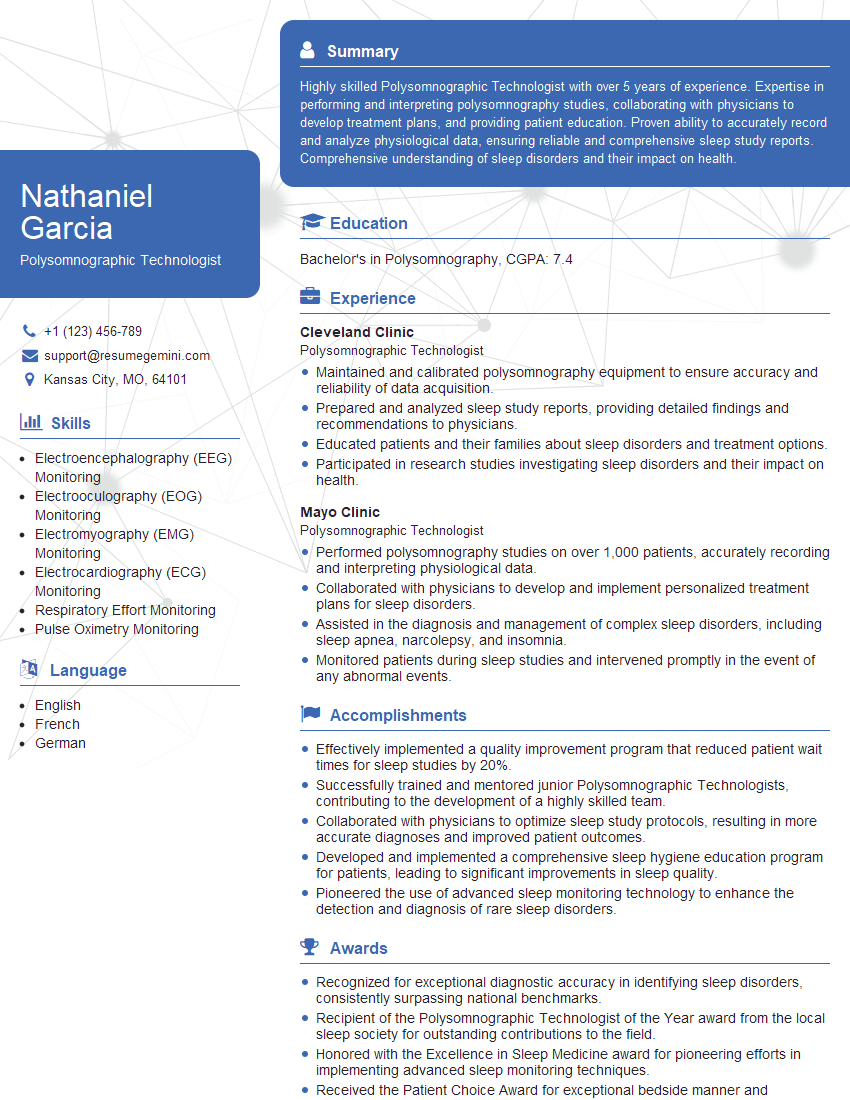
Mastering Periodic Limb Movement Disorder is crucial for career advancement in sleep medicine and related fields. A strong understanding of PLMD demonstrates expertise and enhances your candidacy for a variety of positions. To secure your dream role, a well-crafted, ATS-friendly resume is paramount. ResumeGemini is a trusted resource that can help you build a professional resume tailored to highlight your skills and experience. Take advantage of the examples of resumes tailored to Periodic Limb Movement Disorder provided to optimize your application materials and significantly increase your job prospects.




Explore more articles
Users Rating of Our Blogs
Share Your Experience
We value your feedback! Please rate our content and share your thoughts (optional).
What Readers Say About Our Blog
To the interviewgemini.com Webmaster.
Very helpful and content specific questions to help prepare me for my interview!
Thank you
To the interviewgemini.com Webmaster.
This was kind of a unique content I found around the specialized skills. Very helpful questions and good detailed answers.
Very Helpful blog, thank you Interviewgemini team.