Feeling uncertain about what to expect in your upcoming interview? We’ve got you covered! This blog highlights the most important Plan and schedule maintenance and repairs interview questions and provides actionable advice to help you stand out as the ideal candidate. Let’s pave the way for your success.
Questions Asked in Plan and schedule maintenance and repairs Interview
Q 1. Explain your experience with CMMS software (Computerized Maintenance Management System).
My experience with CMMS software is extensive. I’ve worked with several platforms, including UpKeep, Fiix, and IBM Maximo, utilizing them to manage everything from preventative maintenance schedules to work order tracking and inventory control. For instance, in my previous role at a large manufacturing plant, we implemented UpKeep to streamline our maintenance operations. This involved migrating existing data, training the maintenance team, and customizing workflows to fit our specific needs. We saw a significant improvement in maintenance response times and a reduction in downtime after implementing the system. Beyond data entry and scheduling, I’m proficient in using CMMS reporting features to generate key performance indicators (KPIs) for management, demonstrating the value of the system and identifying areas for improvement. This includes generating reports on equipment downtime, maintenance costs, and technician productivity.
Q 2. Describe your process for prioritizing maintenance tasks.
Prioritizing maintenance tasks requires a strategic approach. I typically use a combination of methods, including criticality, urgency, and cost. I employ a system that assigns each task a priority level based on these factors.
- Criticality: This assesses the impact of equipment failure on overall operations. A critical piece of equipment with a high potential for major disruption would get top priority.
- Urgency: This considers the immediacy of the need for repair. An imminent failure demands immediate attention regardless of its criticality.
- Cost: This looks at the cost of the repair versus the cost of downtime. A small repair that can prevent significant downtime gets priority over a large repair with minimal risk of disruption.
For example, a critical compressor in a manufacturing line failing imminently would be prioritized over a minor repair on a less-essential piece of equipment. I regularly review and adjust priorities based on changing operational needs and risk assessments.
Q 3. How do you develop a preventive maintenance schedule?
Developing a preventive maintenance schedule involves a structured process. First, I conduct a thorough assessment of all equipment, identifying critical components and their recommended maintenance intervals from manufacturer specifications or industry best practices. This often involves working closely with equipment vendors and engineering teams. Next, I create a schedule that outlines specific tasks, frequencies, and responsibilities for each piece of equipment. This schedule may be based on calendar intervals (e.g., monthly inspections), operating hours (e.g., lubrication after 1000 hours), or a combination of both. The schedule is then input into the CMMS software, generating automated work orders. For example, a conveyor belt might require a monthly lubrication check, a quarterly inspection for wear and tear, and an annual major overhaul. I also build in flexibility within the schedule to accommodate unexpected events and adjust the frequency of maintenance based on equipment performance and historical data.
Q 4. What metrics do you use to measure the effectiveness of a maintenance plan?
Several key metrics are used to measure the effectiveness of a maintenance plan. These include:
- Mean Time Between Failures (MTBF): This measures the average time between equipment failures. A higher MTBF indicates improved reliability.
- Mean Time To Repair (MTTR): This measures the average time it takes to repair failed equipment. A lower MTTR indicates faster response and resolution times.
- Overall Equipment Effectiveness (OEE): This holistic metric considers availability, performance, and quality to reflect the overall productivity of the equipment.
- Maintenance Costs as a Percentage of Production Costs: This helps assess the efficiency of the maintenance budget.
- Preventive Maintenance vs. Corrective Maintenance Ratio: This indicates the balance between proactive and reactive maintenance. A higher ratio of preventive maintenance is usually desired.
By tracking these metrics over time, I can identify areas for improvement and demonstrate the return on investment (ROI) of maintenance activities.
Q 5. How do you handle unexpected equipment failures?
Unexpected equipment failures require a swift and systematic response. My approach involves:
- Immediate Assessment: Quickly assessing the severity of the failure and its impact on operations.
- Emergency Response: Dispatching the appropriate personnel and resources to address the issue immediately to minimize downtime.
- Temporary Repairs: If complete repair isn’t immediately possible, implementing temporary fixes to restore partial functionality.
- Root Cause Analysis: Initiating a root cause analysis to understand the underlying reason for the failure to prevent future occurrences.
- Permanent Repair: Scheduling the permanent repair of the failed equipment based on priority.
- Documentation: Thoroughly documenting the entire process, including repairs, costs, and analysis findings within the CMMS system.
For example, if a critical pump fails, we’d immediately switch to a backup pump (if available), assess the damage, order replacement parts, and schedule the repair while simultaneously investigating why the pump failed.
Q 6. Explain your approach to managing maintenance budgets.
Managing maintenance budgets effectively involves strategic planning and rigorous tracking. I start by forecasting the maintenance needs for the coming period, considering planned maintenance, potential repairs, and unexpected issues. This forecasting is often based on historical data, equipment condition assessments, and projected production levels. Next, I allocate funds across various categories, such as preventative maintenance, repair parts, labor, and contract services. The allocation will reflect the priorities identified during maintenance task prioritization. Regular monitoring of actual spending against the budget is critical. Any significant variances require investigation and corrective actions. This includes reviewing the initial budget, examining the cost of completed repairs and the cost-effectiveness of different maintenance approaches. I regularly report on the budget’s performance to upper management, highlighting any issues and recommending necessary adjustments. I also actively explore opportunities for cost reduction without compromising reliability, such as negotiating better deals with suppliers or optimizing maintenance procedures.
Q 7. Describe your experience with root cause analysis for equipment failures.
Root cause analysis (RCA) is crucial for preventing equipment failures. I use various techniques, including the ‘5 Whys’ method and fishbone diagrams, to systematically investigate the underlying causes of equipment malfunctions. The ‘5 Whys’ involves repeatedly asking ‘why’ to drill down to the root cause. For example, if a machine overheated:
- Why did the machine overheat? – Insufficient coolant.
- Why was there insufficient coolant? – The coolant pump failed.
- Why did the coolant pump fail? – The pump bearings were worn.
- Why were the pump bearings worn? – Lack of preventative maintenance.
- Why was there a lack of preventative maintenance? – Inadequate scheduling process.
The fishbone diagram provides a more visual representation of potential causes, categorized by factors like people, methods, machines, materials, and environment. After identifying the root cause, I implement corrective actions to prevent recurrence, which might involve equipment upgrades, improved maintenance procedures, operator training, or changes to the preventative maintenance schedule. All findings and implemented solutions are thoroughly documented.
Q 8. How do you ensure that maintenance tasks are completed safely?
Safety is paramount in maintenance. My approach is multifaceted, starting with a robust risk assessment for every task. This involves identifying potential hazards – from electrical shock to working at heights – and implementing control measures. These controls could include lock-out/tag-out procedures for electrical equipment, providing appropriate personal protective equipment (PPE) like hard hats and safety glasses, and establishing clear work permits with defined safety protocols.
Beyond the planning phase, I emphasize ongoing supervision. Regular safety checks are conducted during the maintenance process to ensure adherence to safety protocols. Team members are empowered to stop work if they identify any unsafe conditions. We conduct regular safety training to refresh knowledge on best practices and address emerging risks. For example, we recently introduced augmented reality training to simulate hazardous situations and reinforce safe working procedures.
Finally, we meticulously document all safety incidents, near misses, and corrective actions. This data informs continuous improvement in our safety management system, ensuring that lessons learned are incorporated into future maintenance plans. A detailed incident report, including root cause analysis and preventative measures, is mandatory after any safety incident.
Q 9. What strategies do you use to improve maintenance efficiency?
Improving maintenance efficiency requires a strategic approach that incorporates several key strategies. First, we leverage Computerized Maintenance Management Systems (CMMS). These software platforms centralize work orders, track maintenance history, and provide valuable data analysis for better decision-making. For instance, our CMMS helps identify recurring issues and allows for proactive scheduling of preventative maintenance, minimizing downtime.
Secondly, we optimize maintenance schedules using techniques like preventive maintenance scheduling (PMS). Instead of reacting to failures, we proactively schedule tasks based on equipment lifespan and manufacturer recommendations. This reduces unexpected breakdowns and extends equipment lifespan. For example, we developed a PMS schedule for our HVAC systems, resulting in a 20% reduction in unscheduled downtime.
Thirdly, we continuously strive to improve our technicians’ skills through targeted training and knowledge sharing sessions. Empowering our team with the right tools and knowledge reduces repair time and improves the quality of work. We recently implemented a mentorship program pairing experienced technicians with newer ones, accelerating skill development.
Finally, we employ lean methodologies to streamline maintenance processes, identifying and eliminating waste. This might involve optimizing inventory management, improving work flow, or implementing standardized procedures. We’ve seen significant improvements in efficiency by implementing a 5S methodology (Sort, Set in Order, Shine, Standardize, Sustain) in our maintenance workshop.
Q 10. How do you communicate maintenance schedules and updates to stakeholders?
Effective communication is critical. We employ a multi-channel approach to keep stakeholders informed. Our CMMS provides real-time updates on maintenance schedules, progress, and any delays. This data is accessible to authorized personnel, ensuring transparency and accountability.
For critical updates or unplanned outages, we use email alerts and SMS notifications to ensure timely communication. Regular meetings with key stakeholders, including operations and production teams, provide a forum for discussing upcoming maintenance activities and addressing concerns. We also maintain a central online portal that provides a comprehensive view of the maintenance schedule, including anticipated impacts on production. This allows stakeholders to plan their activities accordingly. For complex maintenance projects, we hold pre-work meetings to thoroughly brief everyone involved, covering potential challenges and solutions.
Q 11. What is your experience with different types of maintenance (preventive, predictive, corrective)?
My experience encompasses all three types of maintenance: preventive, predictive, and corrective.
Preventive Maintenance (PM): This involves scheduled maintenance to prevent equipment failure. I’ve implemented numerous PM programs, resulting in significant reductions in downtime and maintenance costs. For example, I designed a PM program for our manufacturing line’s robotic arms, which extended their lifespan by 15% and reduced repair costs by 20%.
Predictive Maintenance (PdM): This utilizes data analysis and sensors to predict potential failures. I have experience using vibration analysis, oil analysis, and thermal imaging to identify equipment issues before they become critical. This allows for proactive intervention, minimizing disruptions. For instance, we implemented vibration analysis on our pumps, predicting a bearing failure a week in advance, allowing for a planned replacement that avoided a costly emergency shutdown.
Corrective Maintenance (CM): This addresses equipment failures after they occur. While reactive, efficient CM is crucial. I’ve overseen CM activities, emphasizing rapid response times and thorough root cause analysis to prevent recurrence. We recently implemented a system for tracking CM incidents, identifying patterns, and improving our response time by 10%.
Q 12. Explain your experience with spare parts inventory management.
Effective spare parts inventory management is crucial for minimizing downtime. My experience includes implementing and managing inventory systems using both manual and automated methods. I’ve worked with various inventory control techniques such as ABC analysis (categorizing parts based on their value and criticality), and economic order quantity (EOQ) calculations to optimize order sizes and minimize storage costs.
We utilize a CMMS to track spare part usage, predict future needs, and manage stock levels. This ensures that critical parts are readily available when needed, while minimizing the cost of holding excess inventory. We also conduct regular inventory audits to verify stock levels and identify any discrepancies. For example, by implementing ABC analysis, we were able to reduce our overall inventory holding costs by 15%, while maintaining sufficient stock levels for critical parts. We also established a robust system of vendor relationships which ensured reliable and timely supplies.
Q 13. How do you coordinate maintenance activities with other departments?
Coordinating maintenance with other departments is essential for minimizing disruptions. I facilitate this through proactive communication and collaboration. Before scheduling any maintenance activity, I consult with relevant departments—production, operations, safety—to understand their needs and potential impacts. This includes identifying critical production periods to avoid scheduling work during peak times.
We use a shared calendar system and regular meetings to ensure everyone is informed of planned maintenance and potential downtime. This collaborative approach allows for adjustments and mitigates potential conflicts. For example, we worked closely with the production team to schedule a major maintenance project during a planned production downtime, minimizing disruption to the overall production schedule. We also proactively communicate any potential impacts on other departments, so they can adapt their plans accordingly.
Q 14. Describe your experience with maintenance contract negotiation.
Negotiating maintenance contracts requires a thorough understanding of both technical and financial aspects. My approach starts with a detailed assessment of our maintenance needs and identifying key performance indicators (KPIs). This forms the basis for our negotiation strategy. I then carefully analyze proposals from various vendors, comparing their offerings based on price, service level agreements (SLAs), and their track record.
During negotiations, I prioritize clear and concise communication, focusing on specific requirements and expectations. I also leverage my knowledge of industry best practices and benchmark data to ensure we obtain a fair and competitive agreement. For example, in a recent negotiation, by highlighting the importance of specific KPIs and our historical maintenance data, we were able to secure a contract with a lower overall cost and improved SLAs. This involved a detailed analysis of several competitor proposals, careful consideration of the SLAs, and a strategic approach to negotiation. We successfully negotiated a better warranty duration and included several performance-based incentives.
Q 15. How do you handle conflicts between planned and unplanned maintenance?
Prioritizing maintenance tasks is crucial. When unplanned maintenance arises, it often clashes with the meticulously planned schedule. My approach involves a multi-step prioritization process. First, I assess the severity of the unplanned issue – is it a safety hazard, a critical system failure, or a minor inconvenience? This dictates its urgency. Then, I analyze the impact on planned maintenance. Can the planned work be postponed or adjusted? If not, I explore options like reallocating resources or extending the planned maintenance window. This might involve leveraging overtime or bringing in external contractors. Ultimately, the decision hinges on a risk assessment: what’s the potential cost and disruption of delaying either the planned or unplanned work? For instance, if an unplanned breakdown of a critical production machine threatens a significant production loss, it takes precedence over a scheduled, less critical preventative maintenance task. I document all such decisions, including the rationale, in a maintenance log for transparency and future reference.
Software tools play a big role. Scheduling systems with real-time alerts and flexible scheduling capabilities help streamline this process. Prioritizing based on a combination of severity and impact allows informed decision-making during conflicting situations.
Career Expert Tips:
- Ace those interviews! Prepare effectively by reviewing the Top 50 Most Common Interview Questions on ResumeGemini.
- Navigate your job search with confidence! Explore a wide range of Career Tips on ResumeGemini. Learn about common challenges and recommendations to overcome them.
- Craft the perfect resume! Master the Art of Resume Writing with ResumeGemini’s guide. Showcase your unique qualifications and achievements effectively.
- Don’t miss out on holiday savings! Build your dream resume with ResumeGemini’s ATS optimized templates.
Q 16. How do you track and report on key maintenance performance indicators (KPIs)?
Tracking and reporting KPIs is vital for demonstrating maintenance effectiveness and identifying areas for improvement. We use a computerized maintenance management system (CMMS) to capture and analyze data. Key KPIs we monitor include:
- Mean Time Between Failures (MTBF): This measures the average time between equipment failures, reflecting reliability. A higher MTBF indicates better equipment reliability.
- Mean Time To Repair (MTTR): This indicates the average time it takes to fix a failed piece of equipment. Lower MTTR is the goal, showcasing efficient repair processes.
- Maintenance Costs (per unit, per hour): Tracking these costs helps evaluate the economic efficiency of our maintenance strategies. Identifying high-cost areas allows for focused improvements.
- Maintenance Backlog: Monitoring the number of outstanding maintenance requests helps prioritize tasks and prevent bottlenecks.
- Planned vs. Unplanned Maintenance Ratio: A higher ratio of planned to unplanned maintenance shows proactive maintenance is effective.
We generate regular reports (weekly, monthly, quarterly) showing trends in these KPIs. These reports help identify emerging problems and inform decisions about resource allocation, spare parts inventory management, and preventive maintenance schedules. Data visualization tools are crucial – charts and graphs make it much easier to identify trends and outliers.
Q 17. Describe a time you had to optimize a maintenance schedule due to resource constraints.
In a previous role, we faced budget cuts that dramatically limited our maintenance crew. Initially, our carefully planned preventative maintenance schedule was at risk. To optimize it, we utilized a combination of strategies:
- Prioritization based on criticality: We prioritized equipment vital to production. Less critical equipment had their maintenance schedules extended slightly.
- Improved planning and scheduling: We used software to more effectively group tasks geographically to minimize travel time.
- Enhanced preventative maintenance: We focused on preventative measures to reduce the likelihood of unplanned breakdowns, thus reducing the pressure on resources.
- Contract outsourcing: We outsourced less urgent maintenance tasks to external contractors when it was cost-effective.
This process required careful communication with all stakeholders. Though some preventative maintenance was slightly delayed, this multi-pronged approach ensured critical equipment was properly maintained while minimizing disruptions and staying within the budget.
Q 18. What is your experience with reliability-centered maintenance (RCM)?
Reliability-centered maintenance (RCM) is a systematic approach to maintenance that focuses on minimizing the risk of equipment failure. It’s not about simply scheduling maintenance tasks based on time; instead, it analyzes each component of a system to understand the potential failure modes and their effects. My experience with RCM includes conducting FMEA (Failure Mode and Effects Analysis) studies to identify potential failure points. These analyses help prioritize maintenance tasks based on their potential consequences, ensuring the most critical systems receive the most attention. We’ve also implemented RCM principles to design preventative maintenance plans, incorporating condition monitoring techniques (vibration analysis, oil analysis, etc.) to detect anomalies before they lead to failures. This proactive approach minimizes unplanned downtime and improves overall equipment effectiveness (OEE). One successful RCM implementation involved analyzing a critical pump system. By identifying a specific wear point through FMEA, we were able to implement a predictive maintenance strategy, avoiding a costly production halt.
Q 19. Explain your understanding of total productive maintenance (TPM).
Total Productive Maintenance (TPM) is a philosophy that goes beyond traditional reactive and preventative maintenance. It aims to involve all employees in improving equipment effectiveness and reducing losses. It’s not just about fixing equipment but optimizing its performance and maximizing its uptime. My understanding of TPM incorporates the following key elements:
- Autonomous Maintenance: Empowering operators to perform basic maintenance tasks on their equipment. This reduces reliance on specialized maintenance personnel and enhances ownership.
- Planned Maintenance: Systematic scheduling of preventative maintenance tasks to minimize the likelihood of failures.
- Early Management of Equipment: Actively managing the equipment from its installation to its eventual disposal, ensuring proper operation and longevity.
- Quality Maintenance: Integrating quality control measures into maintenance activities to prevent defects from recurring.
- Education and Training: Investing in training for both operators and maintenance personnel to improve their skills and knowledge.
TPM requires a strong commitment from all levels of the organization and fosters a culture of continuous improvement.
Q 20. How do you ensure compliance with safety regulations during maintenance activities?
Safety is paramount during all maintenance activities. Our procedures rigorously adhere to relevant safety regulations (OSHA, etc.). Before commencing any work, we conduct thorough risk assessments, identifying potential hazards (e.g., electrical shock, chemical exposure, confined space entry). We then implement appropriate control measures, such as lockout/tagout procedures for electrical equipment, providing personal protective equipment (PPE), and establishing safe work permits. We ensure all personnel receive adequate safety training, including hazard recognition, safe work practices, and emergency response procedures. Regular safety audits are conducted to identify potential improvements in safety processes. Furthermore, we maintain comprehensive safety records, including incident reports and near-miss reports, which are regularly reviewed to prevent future incidents. We use a ‘safety first’ mentality, where any work deemed unsafe is halted until appropriate precautions are in place.
Q 21. Describe your experience using data analytics to improve maintenance outcomes.
Data analytics are instrumental in improving maintenance outcomes. We use our CMMS to collect vast amounts of data on equipment performance, maintenance activities, and costs. This data is then analyzed to identify trends, predict failures, and optimize maintenance strategies. For example, we can use predictive modeling based on historical data to forecast when specific equipment components are likely to fail. This allows us to schedule maintenance proactively, preventing unexpected downtime. We also use statistical process control (SPC) charts to track key maintenance KPIs and identify areas where performance is deviating from expected levels. By analyzing the data, we can pinpoint inefficiencies in our processes and implement targeted improvements. An example of a successful data-driven initiative was the analysis of pump failure data. Identifying a correlation between pump failures and specific operating parameters led to adjustments in operational procedures, resulting in a significant reduction in pump failures.
Q 22. How do you identify and address potential maintenance risks?
Identifying and addressing potential maintenance risks involves a proactive, multi-step approach. It begins with a thorough understanding of the assets you’re managing – their age, operating conditions, historical performance data, and inherent vulnerabilities. Think of it like a doctor performing a regular check-up: you’re looking for potential problems *before* they become critical.
Risk Assessment: We use techniques like Failure Mode and Effects Analysis (FMEA) to systematically identify potential failure modes, their severity, and the likelihood of occurrence. This allows us to prioritize risks. For example, a leaking roof in a data center poses a much higher risk than a chipped paint on a wall.
Predictive Maintenance: Incorporating technologies such as vibration analysis, infrared thermography, and oil analysis allows us to detect anomalies before they lead to significant failures. This is like detecting a slight engine knock before it becomes a catastrophic engine failure.
Preventive Maintenance Schedules: We develop detailed maintenance schedules based on manufacturer recommendations, historical data, and risk assessments. This ensures regular inspections and servicing to prevent issues before they escalate. This is akin to regular servicing of your car to prevent major breakdowns.
Corrective Actions: When problems do arise, a robust root cause analysis is crucial. We don’t just fix the symptom, we identify the underlying cause to prevent recurrence. This is like a detective investigating a crime scene to find the real culprit, not just the weapon.
By combining these methods, we can proactively mitigate risks, minimize downtime, and optimize maintenance costs.
Q 23. What is your experience with different scheduling techniques (e.g., critical path method)?
I have extensive experience with various scheduling techniques, including the Critical Path Method (CPM), Gantt charts, and priority-based scheduling. CPM is particularly useful for complex projects where tasks are interdependent. It visually represents the sequence of tasks and identifies the critical path – the sequence of tasks that determines the shortest possible project duration.
For example, in a major plant overhaul, we might use CPM to schedule tasks like equipment dismantling, cleaning, repairs, and reassembly. The critical path might involve tasks that need to be completed in a specific sequence, with delays affecting the entire project timeline. We use software like MS Project to create and manage CPM schedules, allowing us to track progress, identify potential delays, and make informed decisions about resource allocation.
Gantt charts offer a more visual representation of project timelines and task dependencies. While simpler than CPM, they are effective for smaller projects or for providing a high-level overview of a larger project’s schedule. Prioritization techniques are often used alongside these methods to determine which tasks to focus on first, based on factors such as urgency and importance.
Q 24. How do you manage the workload of your maintenance team?
Managing the workload of a maintenance team requires careful planning and efficient resource allocation. I utilize several strategies to ensure optimal performance and minimize burnout:
Work Order System: A robust computerized maintenance management system (CMMS) is crucial for assigning tasks, tracking progress, and measuring team productivity. This ensures transparency and avoids task duplication.
Skill-Based Assignments: I ensure that tasks are assigned to team members with the appropriate skills and experience. This increases efficiency and reduces errors.
Prioritization and Scheduling: We prioritize work orders based on urgency and criticality. This ensures that the most important tasks are addressed promptly.
Regular Team Meetings: Frequent meetings facilitate communication, address any roadblocks, and ensure everyone is on the same page. It’s vital for feedback and morale.
Performance Monitoring and Feedback: We regularly review team performance, identify areas for improvement, and provide constructive feedback. This helps in fostering continuous improvement and skill development.
Balancing workload is a continuous process that demands proactive management and open communication.
Q 25. Describe a time you had to troubleshoot a complex maintenance issue.
During a major production shutdown, a critical piece of equipment – a large industrial compressor – experienced a catastrophic failure. Initial diagnosis pointed to a motor winding fault. However, after several attempts at repair, the problem persisted. This was impacting production significantly, and pressure was mounting.
I initiated a thorough investigation, going beyond the initial assumptions. We conducted detailed electrical tests, pressure tests, and examined the equipment’s operational history. This revealed that while the motor windings were damaged, the root cause was a series of unnoticed vibrations that had gradually weakened a critical component inside the compressor housing, ultimately causing the failure. Simply replacing the motor would have resulted in another failure.
The solution involved replacing both the motor and the damaged internal component, implementing a vibration monitoring system to detect similar issues in the future, and revising the maintenance schedule to include more frequent vibration checks on similar equipment. This experience highlighted the importance of thorough root-cause analysis and the benefits of predictive maintenance strategies.
Q 26. How do you ensure accurate record-keeping for all maintenance activities?
Accurate record-keeping is essential for efficient maintenance operations and regulatory compliance. We leverage a CMMS (Computerized Maintenance Management System) to ensure that all maintenance activities are meticulously documented.
The CMMS allows us to record information such as:
Work orders: Detailed descriptions of the work performed, including the assigned personnel, start and completion times, materials used, and costs incurred.
Preventive maintenance schedules: Planned maintenance tasks, their frequency, and completion status.
Asset history: Comprehensive records of each asset’s performance, maintenance history, and repairs.
Spare parts inventory: Tracking of spare parts, their location, and usage.
This system provides real-time access to maintenance data, facilitating reporting, trend analysis, and informed decision-making. Regular data backups and security protocols ensure data integrity and prevent data loss.
Q 27. What is your experience with developing and implementing a maintenance improvement plan?
Developing and implementing a maintenance improvement plan requires a systematic approach. It begins with a thorough assessment of the current maintenance practices, identifying areas for improvement and setting specific, measurable, achievable, relevant, and time-bound (SMART) goals.
For example, in a previous role, we identified high equipment downtime as a major concern. We analyzed historical data to pinpoint the most frequent causes of downtime and discovered that inadequate preventive maintenance was a significant contributor. Our improvement plan included:
Implementing a more robust preventive maintenance program: This involved developing detailed preventive maintenance schedules based on manufacturers’ recommendations and historical data.
Investing in new equipment: Some of our equipment was outdated and prone to failures, so we advocated for, and obtained, funding to replace it.
Training for maintenance staff: We provided additional training to the maintenance team on new equipment operation and maintenance procedures.
Using a CMMS: We implemented a CMMS to track work orders, spare parts inventory, and maintenance history.
We monitored the effectiveness of the plan using key performance indicators (KPIs) such as equipment downtime, maintenance costs, and mean time between failures (MTBF). This data-driven approach allowed us to make adjustments as needed and demonstrate the value of the improvements made.
Q 28. How do you stay current with the latest maintenance technologies and best practices?
Staying current with the latest maintenance technologies and best practices is crucial for maintaining a competitive edge. I actively engage in several strategies to ensure I remain up-to-date:
Professional Development: I regularly attend industry conferences, workshops, and seminars to learn about new technologies and best practices.
Industry Publications: I subscribe to relevant industry journals and magazines, keeping abreast of the latest research and advancements in the field.
Online Resources: I utilize online resources such as technical websites, online courses, and professional forums to expand my knowledge.
Networking: I actively network with other maintenance professionals through industry associations and online communities to share experiences and best practices.
Vendor Partnerships: I maintain relationships with equipment vendors to stay informed about product updates, maintenance recommendations, and emerging technologies.
Continuous learning is essential in this rapidly evolving field. It allows me to apply innovative solutions and optimize maintenance strategies for improved efficiency and effectiveness.
Key Topics to Learn for Plan and Schedule Maintenance and Repairs Interview
- Preventive Maintenance Strategies: Understanding the principles of preventative maintenance, including identifying potential failure points, scheduling routine inspections, and implementing proactive repair strategies.
- Reactive Maintenance Procedures: Mastering efficient troubleshooting techniques, prioritizing urgent repairs, and effectively managing unplanned downtime. This includes understanding root cause analysis.
- Scheduling and Resource Allocation: Developing effective maintenance schedules, optimizing resource allocation (personnel, parts, tools), and managing workloads efficiently. Consider both short-term and long-term planning.
- Maintenance Management Software: Familiarity with CMMS (Computerized Maintenance Management Systems) or similar software used for scheduling, tracking, and reporting maintenance activities. Understanding their functionalities and limitations.
- Budgeting and Cost Control: Developing and managing maintenance budgets, tracking expenses, and identifying cost-saving opportunities. This includes understanding the cost-benefit analysis of various maintenance approaches.
- Safety Regulations and Compliance: Adhering to relevant safety regulations and industry best practices related to maintenance and repairs, including lockout/tagout procedures and risk assessments.
- Communication and Teamwork: Effectively communicating maintenance schedules and progress to stakeholders, collaborating with technicians and other team members, and escalating issues appropriately.
- Problem-Solving and Decision-Making: Applying critical thinking skills to diagnose equipment malfunctions, assess repair options, and make informed decisions under pressure.
Next Steps
Mastering the art of planning and scheduling maintenance and repairs is crucial for career advancement in many industries. It demonstrates your organizational skills, technical proficiency, and ability to contribute to a smooth and efficient operation. To maximize your job prospects, crafting a compelling and ATS-friendly resume is essential. ResumeGemini is a trusted resource to help you build a professional resume that highlights your skills and experience effectively. Examples of resumes tailored to Plan and schedule maintenance and repairs are provided to guide you in showcasing your unique qualifications. Invest the time to create a strong resume – it’s your first impression on potential employers.
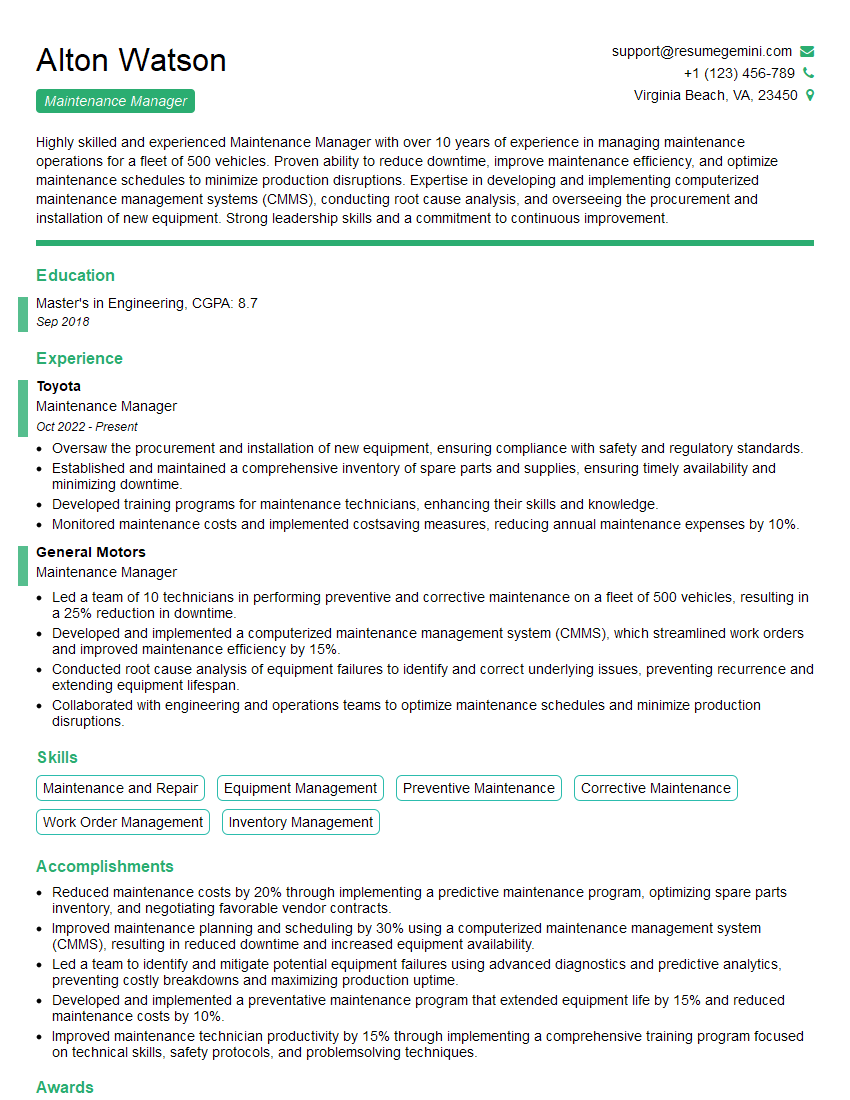
Maintenance Manager Resume Sample
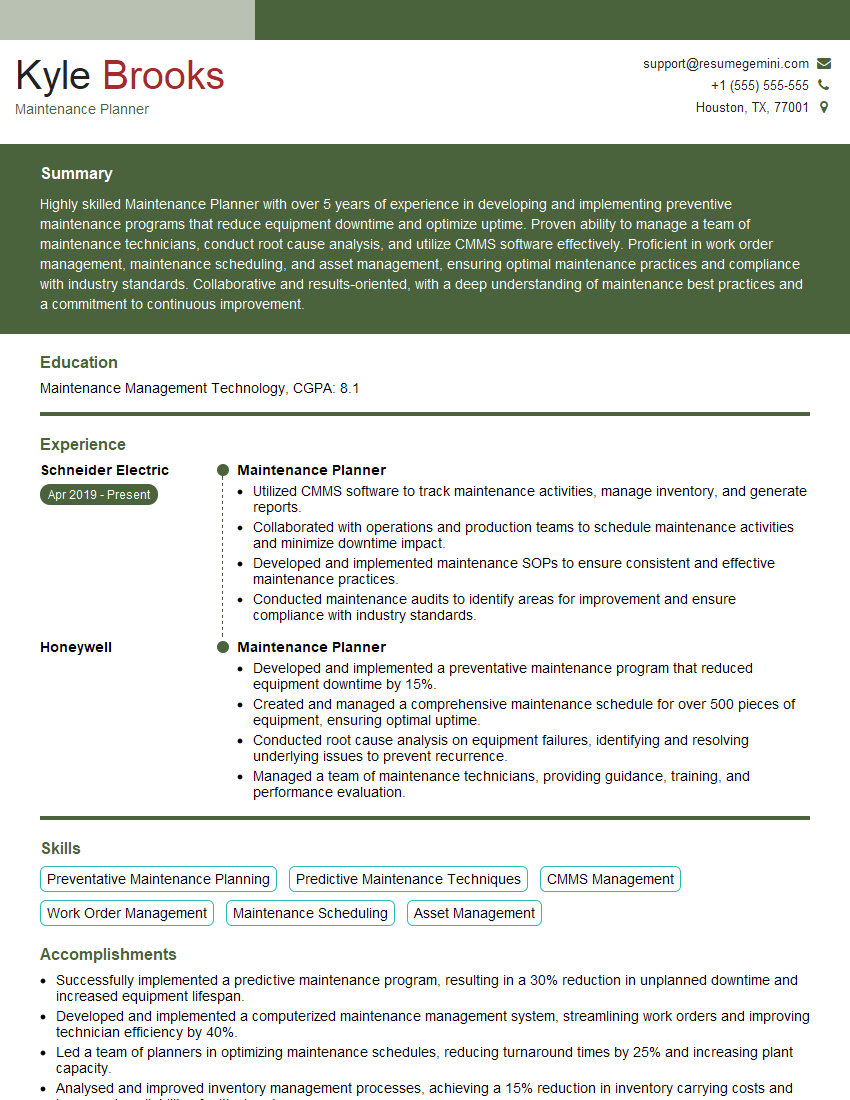
Maintenance Planner Resume Sample
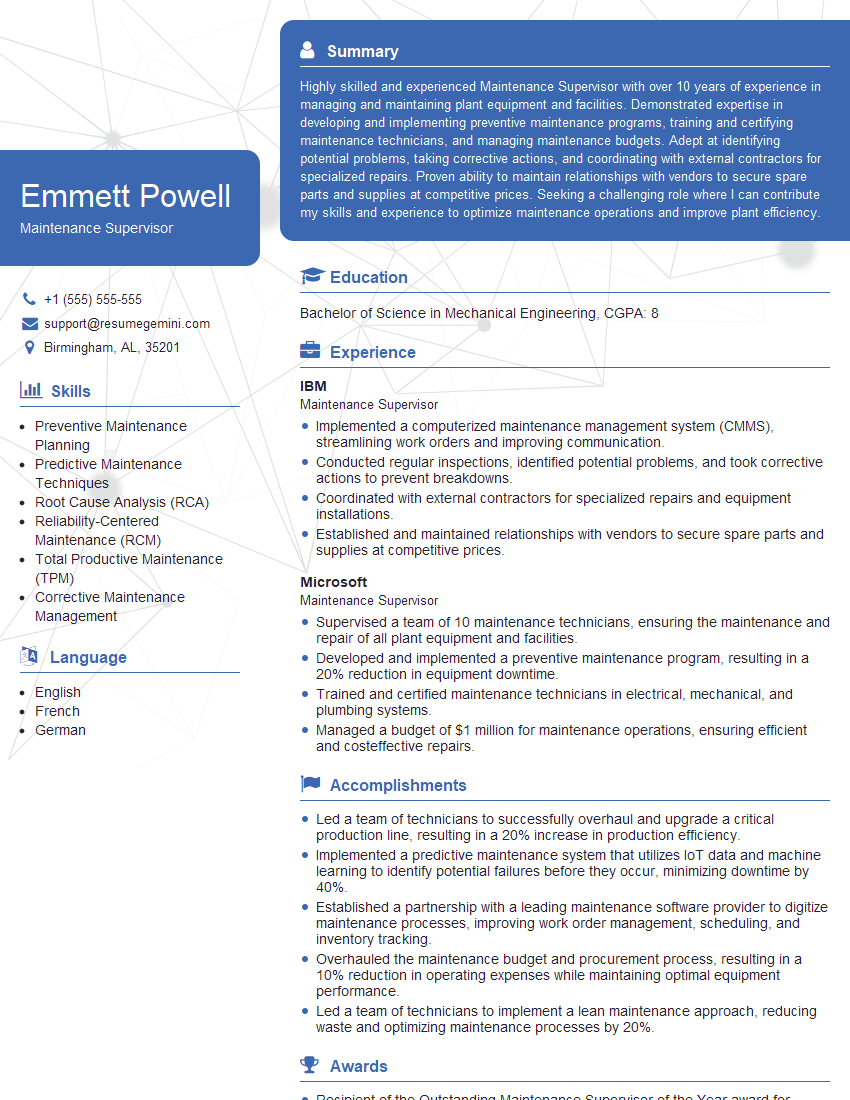
Maintenance Supervisor Resume Sample
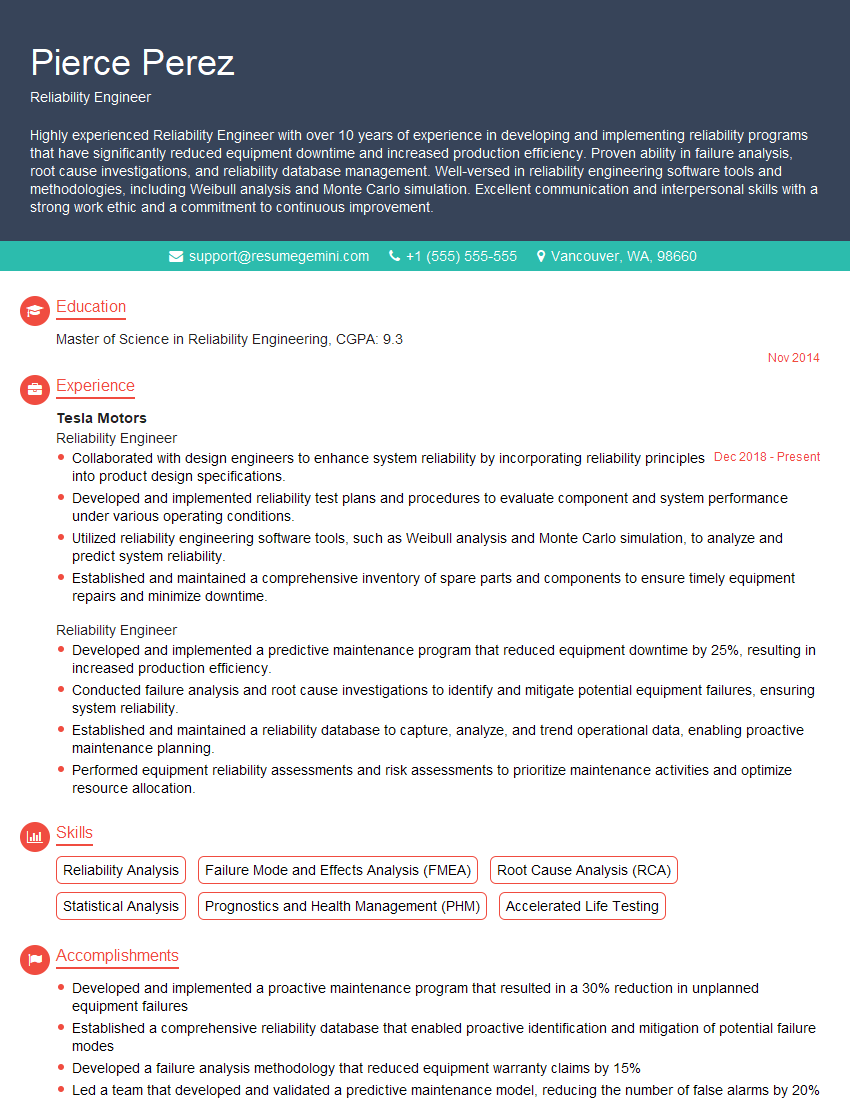
Reliability Engineer Resume Sample
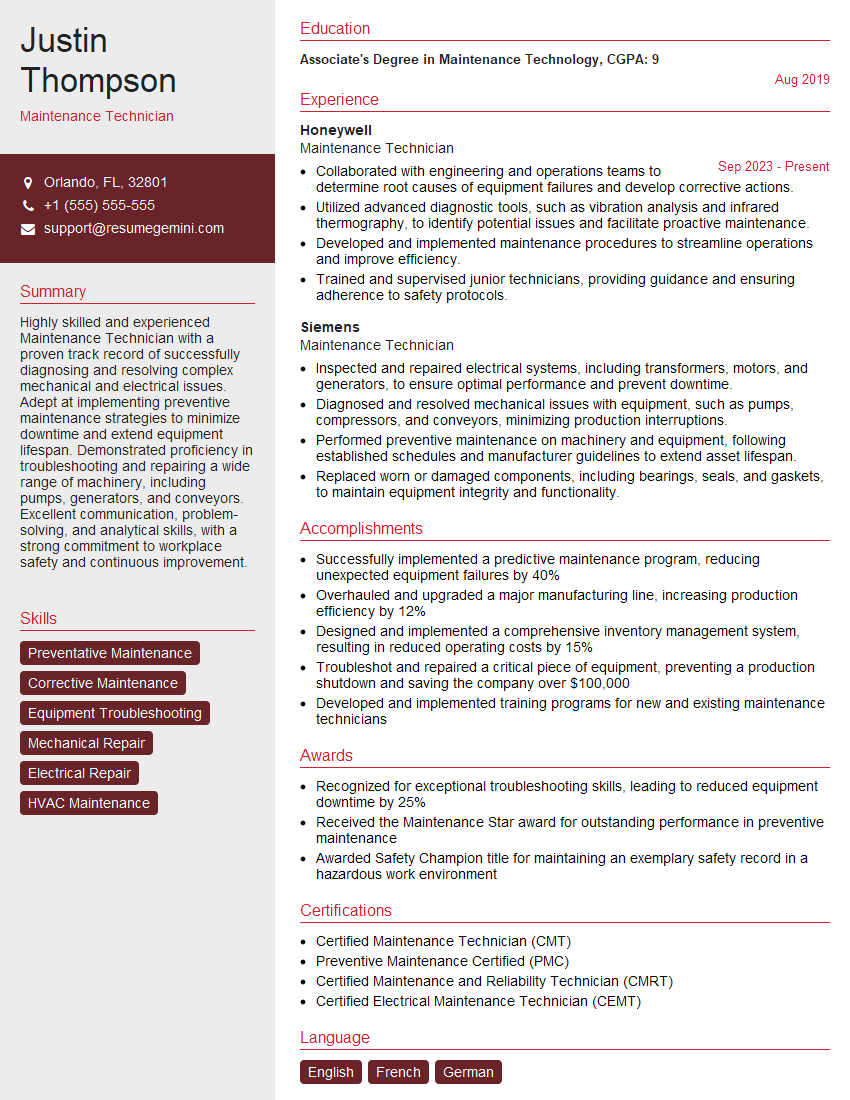
Maintenance Technician Resume Sample
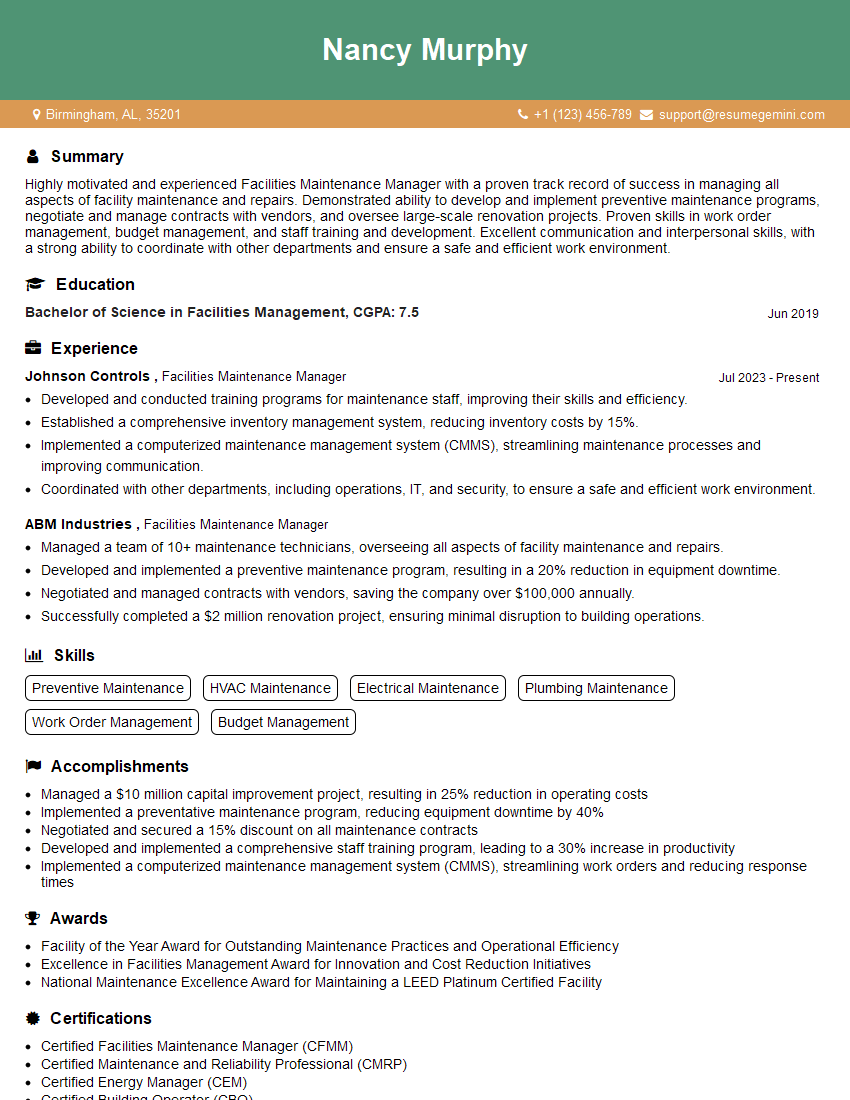
Facilities Maintenance Manager Resume Sample
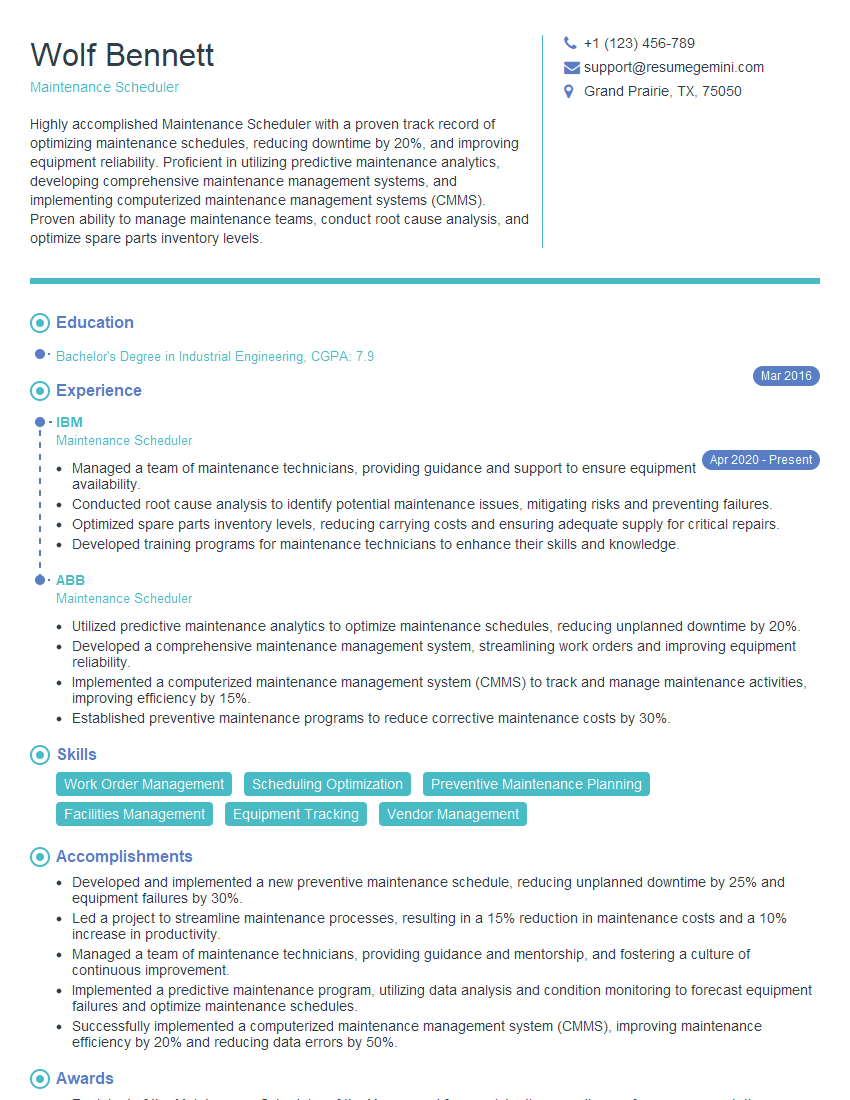
Maintenance Scheduler Resume Sample
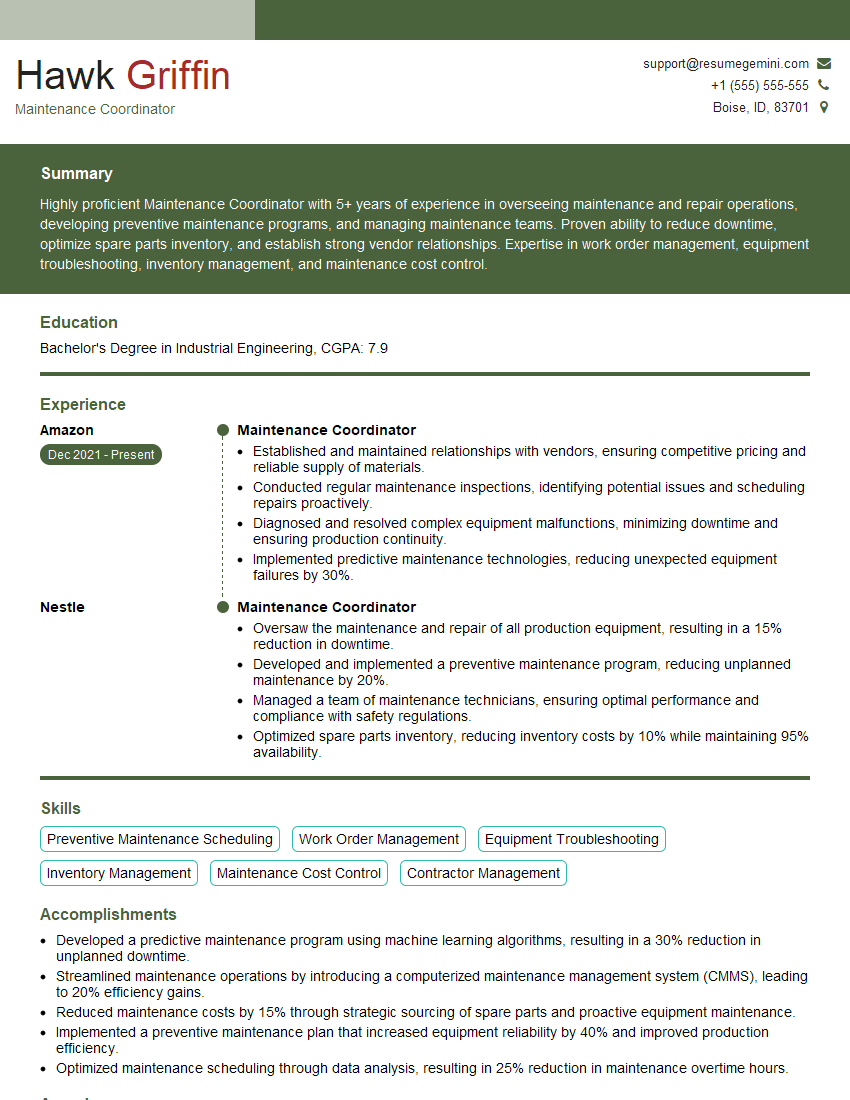
Maintenance Coordinator Resume Sample
Explore more articles
Users Rating of Our Blogs
Share Your Experience
We value your feedback! Please rate our content and share your thoughts (optional).
What Readers Say About Our Blog
To the interviewgemini.com Webmaster.
Very helpful and content specific questions to help prepare me for my interview!
Thank you
To the interviewgemini.com Webmaster.
This was kind of a unique content I found around the specialized skills. Very helpful questions and good detailed answers.
Very Helpful blog, thank you Interviewgemini team.