Unlock your full potential by mastering the most common Pole and Structure Inspection and Maintenance interview questions. This blog offers a deep dive into the critical topics, ensuring you’re not only prepared to answer but to excel. With these insights, you’ll approach your interview with clarity and confidence.
Questions Asked in Pole and Structure Inspection and Maintenance Interview
Q 1. Describe your experience with various pole inspection methods.
My experience encompasses a wide range of pole inspection methods, chosen based on the pole material, age, and environmental conditions. For wooden poles, I utilize visual inspection, supplemented by advanced techniques like ground-penetrating radar (GPR) to detect internal decay not visible on the surface. For steel structures, I employ visual inspection, supplemented by non-destructive testing (NDT) methods such as ultrasonic testing (UT) to evaluate wall thickness and identify corrosion. Concrete poles are inspected visually, checking for cracks, spalling, and deterioration of the reinforcing steel. I also utilize climbing and close-up examination for detailed assessments.
- Visual Inspection: This involves a thorough examination of the pole for cracks, decay, insect infestation, broken hardware, or evidence of past repairs.
- Ground Penetrating Radar (GPR): GPR uses radar pulses to create a subsurface image of the pole, revealing internal decay that might not be visible externally. Think of it like an ultrasound for a wooden pole.
- Ultrasonic Testing (UT): UT uses sound waves to measure the thickness of steel poles, identifying areas of corrosion or thinning.
- Climbing Inspection: Direct visual inspection from the ground may miss crucial defects. Climbing allows close-up inspection of the entire pole, including the groundline where decay is most prevalent.
Q 2. What are the common signs of pole deterioration?
Common signs of pole deterioration vary depending on the material. However, some general indicators include:
- Wood Poles: Cracks, decay (often indicated by discoloration, softness, or fungal growth), insect infestation (evidence of holes or tunnels), checking (small, surface cracks), and significant weathering or erosion.
- Concrete Poles: Cracks (both longitudinal and transverse), spalling (chipping or flaking of the concrete surface), corrosion of reinforcing steel (often indicated by rust staining), and significant surface damage.
- Steel Poles: Corrosion (rust, pitting, or scaling), significant dents or bends, weakening of the pole’s structural integrity due to mechanical damage, or evidence of significant welding defects.
It’s crucial to remember that these signs often appear together and can compound the deterioration process.
Q 3. How do you identify and assess wood pole decay?
Identifying and assessing wood pole decay requires a multi-faceted approach. I start with a thorough visual inspection, looking for discoloration, softness, or fungal growth. The presence of fruiting bodies (mushrooms) is a clear sign of advanced decay. To determine the extent of decay, I may use a probing tool to assess the firmness of the wood. Advanced techniques, like GPR, provide a subsurface profile, allowing a more accurate assessment of the decay’s severity and depth. Sometimes, I even need to use an increment borer to obtain wood samples for laboratory analysis to determine the specific type and extent of decay.
Imagine trying to determine the condition of an apple—a visual inspection will show bruising or discoloration, but only cutting it open reveals the extent of rot. Similarly, wood pole assessment often requires intrusive methods to confirm suspicions.
Q 4. Explain your experience with concrete pole inspection.
My experience with concrete pole inspection focuses on identifying structural damage and signs of deterioration. Visual inspection is crucial, focusing on cracks, spalling, and corrosion of reinforcing steel. Cracks are categorized by size, location (longitudinal, transverse, or diagonal), and severity, as they can indicate significant structural weakness. Spalling is assessed for depth and extent. The presence of rust staining often indicates corrosion of the reinforcing steel within the concrete, significantly weakening the structure. I may use a chain hammer to check for loose concrete and to assess the structural integrity of the pole. Additionally, I document the general condition of the pole and the presence of any embedded metallic objects.
For example, a hairline crack might be acceptable, but a large crack extending significantly along the length of the pole might signal a serious problem and the need for repair or replacement.
Q 5. How do you inspect steel structures for corrosion and damage?
Inspecting steel structures for corrosion and damage involves a combination of visual inspection and NDT methods. Visual inspection looks for signs of rust, pitting, scaling, and other surface defects. The extent and depth of corrosion are important indicators of the structure’s integrity. Then, I’ll use non-destructive testing (NDT) methods such as ultrasonic testing (UT) to measure the remaining wall thickness of the steel and identify areas of thinning caused by corrosion. I also check for evidence of mechanical damage, such as dents, bends, or fractures. Documentation using photography and detailed written reports is critical. The objective is to accurately assess the structural integrity of the steel and determine the level of any necessary repair or replacement.
Imagine a ship’s hull – the slightest corrosion can lead to catastrophic failure. Similarly, seemingly minor corrosion on a steel structure can compromise its overall integrity.
Q 6. What safety protocols do you follow during pole and structure inspections?
Safety is paramount during all inspections. I always follow established safety protocols, including the use of appropriate personal protective equipment (PPE), such as safety harnesses, hard hats, safety glasses, and high-visibility clothing. Before starting any inspection, I conduct a thorough site survey to identify potential hazards, such as overhead power lines, underground utilities, and unstable ground conditions. I develop a safe work plan and communicate it to my team and any other workers on-site. If working at heights, I use fall protection equipment, and if working near traffic, I implement traffic control measures. Regular safety briefings and adherence to company safety policies are crucial aspects of my work.
Safety isn’t just a guideline; it’s a non-negotiable commitment to protect myself and others.
Q 7. What are your skills in using inspection tools and equipment?
I am proficient in using a variety of inspection tools and equipment. This includes:
- Ground Penetrating Radar (GPR): For detecting internal decay in wood poles.
- Ultrasonic Testing (UT) equipment: For measuring wall thickness and identifying corrosion in steel structures.
- Climbing equipment: Including harnesses, ropes, and ascenders for safe access to elevated structures.
- Probing tools: To assess the firmness of wood in poles.
- Increment borers: To extract wood samples for laboratory analysis.
- Measuring tapes and rulers: For documenting the dimensions of defects.
- Cameras and photographic equipment: To document findings thoroughly.
My experience with these tools and my ability to interpret their output is crucial to accurate and reliable pole and structure assessments.
Q 8. Describe your experience with documentation and reporting of inspection findings.
Thorough documentation and reporting are critical for effective pole and structure maintenance. My process involves a multi-step approach beginning with a pre-inspection checklist to ensure consistency. During the inspection, I utilize a standardized form, capturing details like pole number, location, material, dimensions, and any observed defects with photographs and precise descriptions. I use a clear rating system (e.g., 1-5 scale) to indicate the severity of each issue found, documenting its location on the pole with precise measurements and sketches when necessary. This ensures clarity for anyone reviewing the report. After the inspection, I generate a comprehensive report that summarizes findings, includes all supporting documentation (photos, sketches, measurements), and clearly outlines recommended actions. The report includes priority levels for repairs, facilitating efficient resource allocation. For instance, a significant crack near the base of a power pole supporting high-voltage lines would receive top priority and be clearly flagged in both the report and the field documentation.
I’m proficient in various software programs for report generation, including specialized asset management software commonly used in the utility industry. This ensures compatibility with existing systems and facilitates easy data analysis and tracking of repairs over time. I also maintain a meticulous system for archiving inspection reports, ensuring easy access to historical data for trend analysis and long-term planning.
Q 9. How do you prioritize repairs based on inspection results?
Prioritizing repairs depends on a risk assessment considering several factors: the severity of the damage, its potential impact on public safety and infrastructure functionality, and the urgency of the repair. I use a matrix that weighs these factors to create a prioritized list. For example, a small surface crack on a pole in a low-traffic area might be given a lower priority than a significant crack near the base of a pole in a densely populated area, especially if the pole supports vital infrastructure like power lines or communication cables. This matrix helps me allocate resources effectively, focusing on the most critical issues first to minimize potential risks.
My approach involves close collaboration with engineers and maintenance teams. Urgent repairs are flagged immediately for immediate action; others are scheduled into the maintenance plan, considering factors like weather conditions and resource availability. Regular review and updates of the prioritized list are crucial to account for changing conditions and newly discovered defects.
Q 10. What is your experience with different types of pole treatments?
My experience encompasses various pole treatments, primarily focused on extending their lifespan and protecting them from environmental degradation. These include:
- Creosote Treatment: A traditional method offering excellent long-term protection against rot and insect infestation, although environmental concerns have led to its reduced use.
- Pentachlorophenol (PCP) Treatment: Previously widely used, but now largely phased out due to its toxicity.
- Chromated Copper Arsenate (CCA) Treatment: Another effective treatment, but its use is also being restricted due to arsenic concerns. Careful handling and disposal are paramount.
- Water-borne preservatives: Environmentally friendlier alternatives are becoming increasingly popular, offering good protection with reduced toxicity.
- Polymer-based treatments: These offer excellent protection against moisture, UV degradation, and other environmental factors. They can be applied as coatings or through impregnation.
I am familiar with the application methods, safety precautions, and regulatory compliance for each type of treatment. Choosing the appropriate treatment depends on factors like the pole material, its intended use, local regulations, and environmental considerations. I always adhere to all safety guidelines and best practices during application and disposal.
Q 11. How familiar are you with relevant safety standards (e.g., OSHA)?
I am thoroughly familiar with relevant safety standards, including OSHA (Occupational Safety and Health Administration) regulations for working at heights, confined spaces, and handling hazardous materials. I have completed several OSHA-compliant safety training courses and hold relevant certifications. My experience includes developing and implementing site-specific safety plans, conducting regular safety briefings with crew members, and ensuring all work is conducted in strict accordance with established safety protocols. This includes the use of appropriate personal protective equipment (PPE), such as fall protection harnesses, hard hats, safety glasses, and appropriate clothing. I regularly review and update my knowledge of these standards to ensure compliance with the latest regulations.
Understanding and adhering to these standards is non-negotiable, as safety is paramount in this field. A single lapse can have severe consequences. My practical experience reinforces the importance of a proactive safety-first approach.
Q 12. Describe your experience with climbing and rope access techniques.
I am a certified climber with extensive experience in climbing and rope access techniques, specifically tailored to pole and structure inspection and maintenance. My training includes various ascent and descent methods, using both fixed and mobile rope systems. I am proficient in the use of various climbing equipment, including harnesses, ascenders, descenders, carabiners, and specialized tools for working at heights. I understand the importance of proper knot tying, equipment inspection, and rescue procedures. Safety is paramount; I never compromise safety for speed or convenience.
I’ve undertaken hundreds of climbs on various structures, including utility poles, communication towers, and light poles, in various weather conditions and terrains. My experience includes both solo and team climbs, emphasizing effective communication and teamwork for safe and efficient operations.
Q 13. How do you handle unexpected findings during an inspection?
Unexpected findings are a common occurrence during inspections. My procedure involves immediately documenting the finding with photographs, detailed descriptions, and measurements. I prioritize safety first, ensuring the area is secured if necessary. Then, I assess the severity of the unexpected finding, determining if it presents an immediate safety hazard. If so, I take immediate corrective action or implement temporary measures to mitigate the risk and notify relevant stakeholders immediately.
For less urgent findings, I update the inspection report, noting the unexpected issue and its potential impact. I would then discuss this with my supervisor or engineering team to determine the appropriate course of action, which might involve further investigation, additional testing, or a revised repair schedule. A clear communication chain ensures efficient and effective problem-solving.
Q 14. How do you determine the remaining life expectancy of a pole?
Determining the remaining life expectancy of a pole involves a comprehensive assessment considering several factors: the pole’s material (wood, concrete, steel), its age, its condition (including any defects or damage), environmental factors (e.g., soil conditions, climate), and its loading history. I use a combination of visual inspection, non-destructive testing methods (NDT) such as ultrasonic testing or ground penetrating radar, and historical data to estimate the remaining lifespan.
Software programs and predictive models can also be employed to aid in this assessment. The analysis considers factors like decay, cracks, insect infestation, and the effects of weathering on the pole’s structural integrity. The assessment produces a report that outlines the remaining life expectancy, highlighting any potential risks and recommended maintenance or replacement schedules. The decision of whether to repair or replace depends on various factors such as cost, safety, and the overall risk assessment. For instance, a pole showing significant signs of decay nearing the end of its expected life would likely be scheduled for replacement.
Q 15. What software or programs do you use for data analysis and reporting?
For data analysis and reporting in pole and structure inspections, I utilize a suite of software tools tailored to the specific needs of each project. This often includes spreadsheet software like Microsoft Excel or Google Sheets for organizing and analyzing collected data such as measurements, material properties, and defect locations. I then leverage specialized software for generating reports, often incorporating geographic information system (GIS) data. For instance, I might use ArcGIS to create maps showing the locations of poles and their condition, allowing for efficient visualization of inspection results. Finally, I frequently use database management systems (DBMS) like Access or MySQL to store and manage large datasets efficiently, ensuring data integrity and accessibility. This multi-faceted approach ensures comprehensive data analysis and clear, concise reporting.
For example, in a recent project involving the inspection of 1000+ utility poles, I used Excel to input the inspection data, ArcGIS to map the pole locations and conditions, and a custom database to track maintenance actions and their associated costs. This allowed for a detailed report including a risk-assessment map showing the criticality of repairs, and a cost-benefit analysis justifying maintenance priorities.
Career Expert Tips:
- Ace those interviews! Prepare effectively by reviewing the Top 50 Most Common Interview Questions on ResumeGemini.
- Navigate your job search with confidence! Explore a wide range of Career Tips on ResumeGemini. Learn about common challenges and recommendations to overcome them.
- Craft the perfect resume! Master the Art of Resume Writing with ResumeGemini’s guide. Showcase your unique qualifications and achievements effectively.
- Don’t miss out on holiday savings! Build your dream resume with ResumeGemini’s ATS optimized templates.
Q 16. How do you communicate your findings effectively to clients or supervisors?
Effective communication of findings is paramount. I tailor my communication style to the audience. For clients, I focus on concise summaries of key findings, emphasizing the implications for safety, reliability, and cost-effectiveness. I utilize clear, non-technical language where appropriate, supplementing this with visual aids like maps, charts, and photos from the inspection. For supervisors, I provide a more detailed technical report, including data tables, analysis methodologies, and potential future risks. Interactive presentations, either in person or via video conferencing, are often employed to allow for a dynamic discussion and the addressing of any questions or concerns.
For instance, when presenting to a client concerned primarily with budget implications, I’d lead with a cost-benefit analysis of recommended repairs, showing a clear ROI. Conversely, when communicating to engineers, I’d focus on the specific types of deterioration, the underlying causes, and potential remedial solutions.
Q 17. Explain your understanding of different types of pole materials.
Pole materials significantly impact a structure’s lifespan and performance. Common materials include:
- Wood: Traditionally prevalent, various species like cedar, pine, and redwood offer different strength and decay resistance properties. Treatment with preservatives like creosote or CCA (chromated copper arsenate) is crucial for extending service life. However, environmental concerns are leading to the phasing out of CCA.
- Steel: Steel poles offer high strength and durability, making them suitable for high-stress applications. They’re often galvanized or coated to prevent corrosion. Their weight necessitates robust foundations.
- Concrete: Concrete poles are increasingly popular, offering good strength and corrosion resistance. They can be pre-stressed or reinforced with steel for added durability. However, they’re susceptible to damage from impacts and environmental factors.
- Composite materials: Newer materials like fiberglass or polymer-based composites are gaining traction. They offer high strength-to-weight ratios, corrosion resistance, and reduced maintenance. But costs are currently higher compared to traditional materials.
The selection of pole material depends on factors like soil conditions, environmental exposure, load requirements, budget constraints, and local regulations.
Q 18. How familiar are you with GIS mapping and its application in pole inspections?
I’m highly proficient in utilizing GIS mapping in pole inspections. GIS software allows for efficient management and analysis of large datasets related to pole locations, condition, and maintenance history. I use GIS to create maps showing the spatial distribution of poles, identify areas with high concentrations of deteriorated poles, and track maintenance activities over time. This helps prioritize inspections and maintenance, optimize resource allocation, and facilitates informed decision-making. Real-time GPS data during inspections can be directly integrated into the GIS system, improving accuracy and efficiency.
For example, overlaying pole data with data on soil type, rainfall patterns, and proximity to underground utilities allows for a more accurate assessment of pole lifespan and vulnerability to specific failure modes. This data-driven approach enables proactive maintenance scheduling and avoids reactive, costly emergency repairs.
Q 19. What is your experience with non-destructive testing (NDT) methods for poles?
My experience with non-destructive testing (NDT) methods for poles is extensive. NDT methods allow assessment of pole condition without causing damage. Common techniques I employ include:
- Visual inspection: A fundamental method to identify visible defects like cracks, decay, insect infestation, and corrosion.
- Sounding: Using a hammer or specialized tool to assess the pole’s sound for hollowness, indicating potential internal decay.
- Ground Penetrating Radar (GPR): For investigating subsurface conditions and detecting potential foundation issues.
- Ultrasonic testing: Using sound waves to detect internal flaws like voids and cracks. This provides quantitative data about the extent of damage.
The choice of NDT method depends on the type of pole material, the suspected type of defect, and access constraints. Integrating data from multiple NDT methods often provides the most comprehensive evaluation of pole condition.
Q 20. Describe your knowledge of different types of pole foundations.
Pole foundations are crucial for stability and load transfer. Several types exist:
- Direct embedment: The pole is simply buried directly into the ground. This is suitable for stable soil conditions.
- Concrete footings: A concrete base is poured around the base of the pole, providing increased support, especially in less stable soil.
- Driven piles: Piles are driven into the ground to provide deep foundation support, suitable for weak or unstable soil conditions.
- Auger cast piles: A hole is bored into the ground, and concrete is poured into the hole, forming a pile that supports the pole. These are suitable for various soil conditions.
Foundation design considerations include soil bearing capacity, pole loading, and environmental factors like freeze-thaw cycles. Incorrect foundation design can lead to premature pole failure.
Q 21. How do you determine the cause of pole failure?
Determining the cause of pole failure involves a systematic investigation. I start with a thorough visual inspection, noting the location and nature of the failure. This is followed by a review of historical data, including maintenance records, weather events, and soil conditions. NDT techniques are employed to investigate internal damage. Analysis of the failed structure, including material testing, can reveal the underlying causes. Possible causes include:
- Rot and decay: Often caused by moisture intrusion and fungal growth in wooden poles.
- Corrosion: In steel and metallic components, corrosion weakens the structure.
- Overloading: Excessive loads can exceed the pole’s capacity, leading to failure.
- Foundation failure: Poorly designed or damaged foundations can lead to instability and failure.
- Environmental factors: Factors like extreme weather, soil erosion, and seismic activity can contribute to failure.
A comprehensive report detailing findings and recommendations for preventing future failures is crucial. For example, finding extensive rot in a wooden pole indicates the need for improved preservation practices. A failed foundation points to the need for re-evaluation of foundation design.
Q 22. What is your experience with preventative maintenance programs?
Preventative maintenance programs are crucial for extending the lifespan of utility poles and structures, minimizing costly repairs, and ensuring operational reliability. My experience encompasses developing and implementing comprehensive programs tailored to specific client needs and asset types. This involves a detailed assessment of the existing infrastructure, identifying potential failure points through risk assessment, and scheduling routine inspections and maintenance activities based on factors like pole age, material, environmental conditions, and load-bearing capacity.
For example, I’ve developed a program for a large utility company that incorporated a tiered approach to inspection frequency. High-risk poles located in areas prone to severe weather or high traffic received more frequent inspections using a combination of visual inspection and advanced non-destructive testing methods. Lower-risk poles were inspected less frequently, optimizing resources while still maintaining safety standards.
The program also included detailed documentation, reporting, and a system for tracking maintenance activities, enabling predictive maintenance by identifying trends and patterns in pole degradation.
Q 23. Describe a challenging inspection scenario you faced and how you resolved it.
One challenging inspection involved a series of aging wooden poles in a remote, swampy area. Access was extremely difficult, requiring the use of specialized equipment, including amphibious vehicles and elevated platforms. The challenging terrain hampered conventional methods and increased safety risks.
To resolve this, I first employed aerial inspection using drones equipped with high-resolution cameras and thermal imaging to assess the overall condition of the poles from a safe distance. This allowed for a preliminary assessment and identification of critical areas needing closer examination. Then, I developed a phased approach, carefully planning access routes to minimize environmental impact and maximize safety. We used a combination of ground-penetrating radar to assess potential subsurface issues and climbing techniques with specialized safety gear to conduct close-up visual inspections on selected poles. Thorough documentation, including detailed photographic and video evidence, was meticulously maintained throughout the process.
Q 24. How do you ensure the accuracy and reliability of your inspection reports?
Ensuring the accuracy and reliability of inspection reports is paramount. My approach involves a multi-faceted strategy focusing on standardization, verification, and documentation.
- Standardized Procedures: I adhere to industry best practices and relevant codes (e.g., ANSI, ASCE) using standardized checklists and forms to ensure consistent data collection across all inspections.
- Multiple Inspection Methods: I often employ various methods like visual inspection, non-destructive testing (NDT) techniques such as ultrasonic testing or ground-penetrating radar, and where feasible, advanced technologies like LiDAR for comprehensive data gathering.
- Independent Verification: A second review of findings by a senior inspector ensures accuracy and reduces potential human error. This involves comparing notes, images, and test results for consistency and thoroughness.
- Detailed Documentation: Reports include comprehensive photographic and video evidence, GPS coordinates, detailed descriptions of defects, and recommendations for repair or replacement. All data is securely stored and easily accessible.
Think of it like a medical diagnosis: You need multiple tests and a second opinion to confidently diagnose an issue and recommend the right treatment. That’s the same approach we take in ensuring the accuracy and reliability of our pole inspection reports.
Q 25. What are your skills in using aerial inspection technologies (drones, etc.)?
I possess significant experience using aerial inspection technologies, primarily drones, to enhance the efficiency and safety of pole inspections, particularly in hard-to-reach areas or those posing high safety risks. I am proficient in operating various drone models, equipped with high-resolution cameras, thermal imaging, and LiDAR. This allows me to capture detailed imagery and data, including 3D models of the structures, facilitating precise defect identification and assessment.
My skills include planning safe and effective drone flight paths, processing and analyzing drone imagery using specialized software, and integrating the aerial data with ground-based inspection findings for a comprehensive report. I am also well-versed in adhering to all relevant regulations for drone operation and data privacy.
Q 26. How do you stay current with industry standards and best practices?
Staying current in this field is essential. I actively participate in industry conferences and workshops, such as those organized by IEEE or ASCE, to stay abreast of the latest technologies, best practices, and regulatory changes. I’m a member of relevant professional organizations, subscribing to industry publications and online resources. I also actively participate in continuing education courses focused on new inspection techniques, NDT methods, and software upgrades related to data analysis and report generation. It’s an ongoing commitment to ensure that my skills and knowledge remain at the forefront of the industry.
Q 27. Describe your experience with regulatory compliance related to pole inspections.
My experience encompasses a deep understanding of regulatory compliance related to pole inspections, including OSHA regulations regarding worker safety, environmental regulations concerning handling of hazardous materials, and utility-specific compliance requirements. I have extensive experience working with different regulatory bodies, ensuring all inspections adhere to local, state, and federal guidelines. This includes understanding the documentation needed for compliance audits and preparing reports that meet stringent regulatory requirements.
For example, I’m familiar with the different reporting requirements for wooden, concrete, and steel poles, including the specific details needed for each material type to demonstrate compliance. I also understand the implications of different soil conditions and environmental factors on the required maintenance and inspection frequencies, and ensure these are reflected in my reports and recommendations.
Q 28. What are your salary expectations?
My salary expectations are commensurate with my experience, skills, and the specific requirements of the role. I am open to discussing a competitive salary range based on the details of the position and the compensation structure offered. I’m more interested in a challenging and rewarding role where I can contribute my expertise and further develop my skills within a growth-oriented organization than in solely focusing on a specific numerical figure.
Key Topics to Learn for Pole and Structure Inspection and Maintenance Interview
- Safety Regulations and Procedures: Understanding OSHA regulations, fall protection, and safe work practices in relation to pole and structure maintenance.
- Visual Inspection Techniques: Mastering the art of identifying defects such as cracks, decay, corrosion, and insect infestation through thorough visual examination.
- Material Properties and Degradation: Knowledge of different pole materials (wood, steel, concrete), their strengths, weaknesses, and typical modes of failure. Understanding the factors contributing to material degradation.
- Testing and Assessment Methods: Familiarity with various non-destructive testing (NDT) methods, including ground penetrating radar (GPR), ultrasonic testing, and visual inspection tools, and their appropriate application.
- Repair and Maintenance Techniques: Understanding various repair methods for different types of poles and structures, including patching, bracing, and replacement. Knowledge of appropriate materials and techniques for each repair.
- Documentation and Reporting: Proficiency in accurately documenting inspection findings, creating detailed reports, and effectively communicating assessment results to supervisors and clients.
- Risk Assessment and Mitigation: Ability to identify potential hazards, assess risks, and implement mitigation strategies to ensure worker safety and structural integrity.
- Climbing and Access Techniques (if applicable): Safe climbing practices and the use of specialized equipment for accessing and inspecting structures at height.
- Troubleshooting and Problem-Solving: Ability to analyze inspection results, identify potential problems, and propose effective solutions to prevent future failures.
- Industry Best Practices: Staying updated with the latest industry standards, guidelines, and advancements in pole and structure inspection and maintenance.
Next Steps
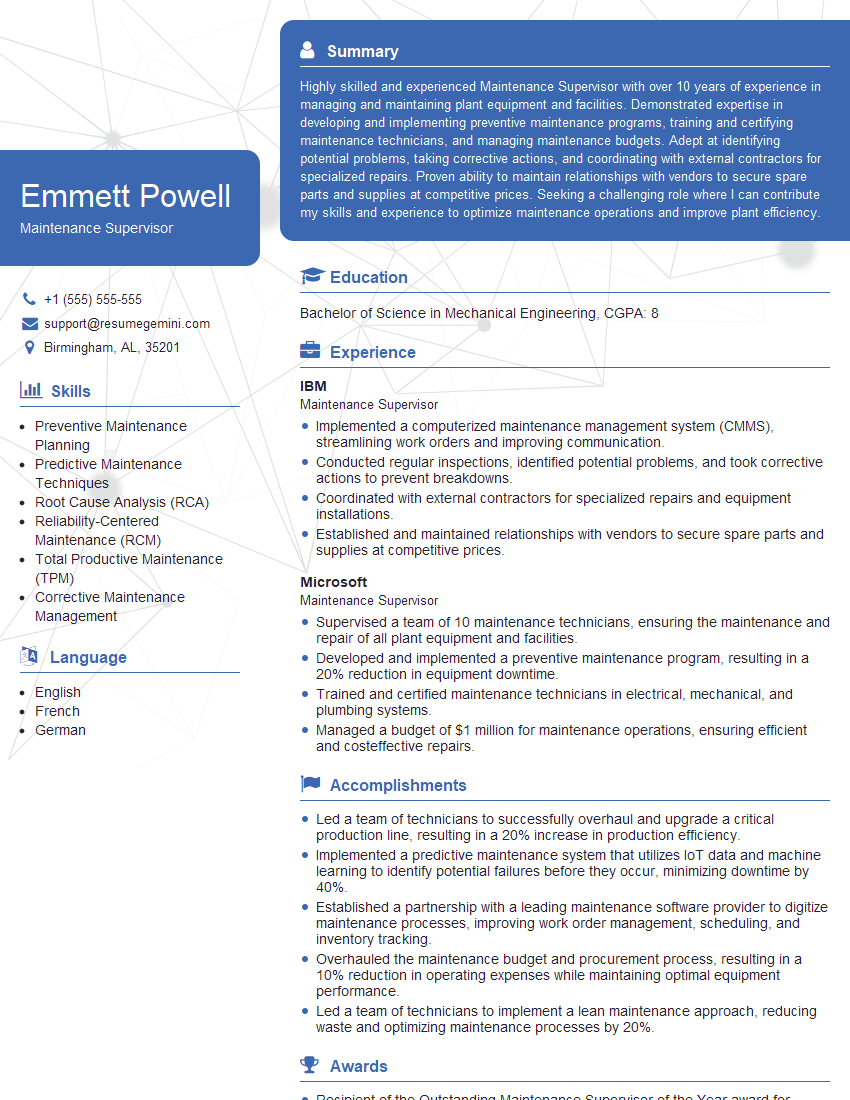
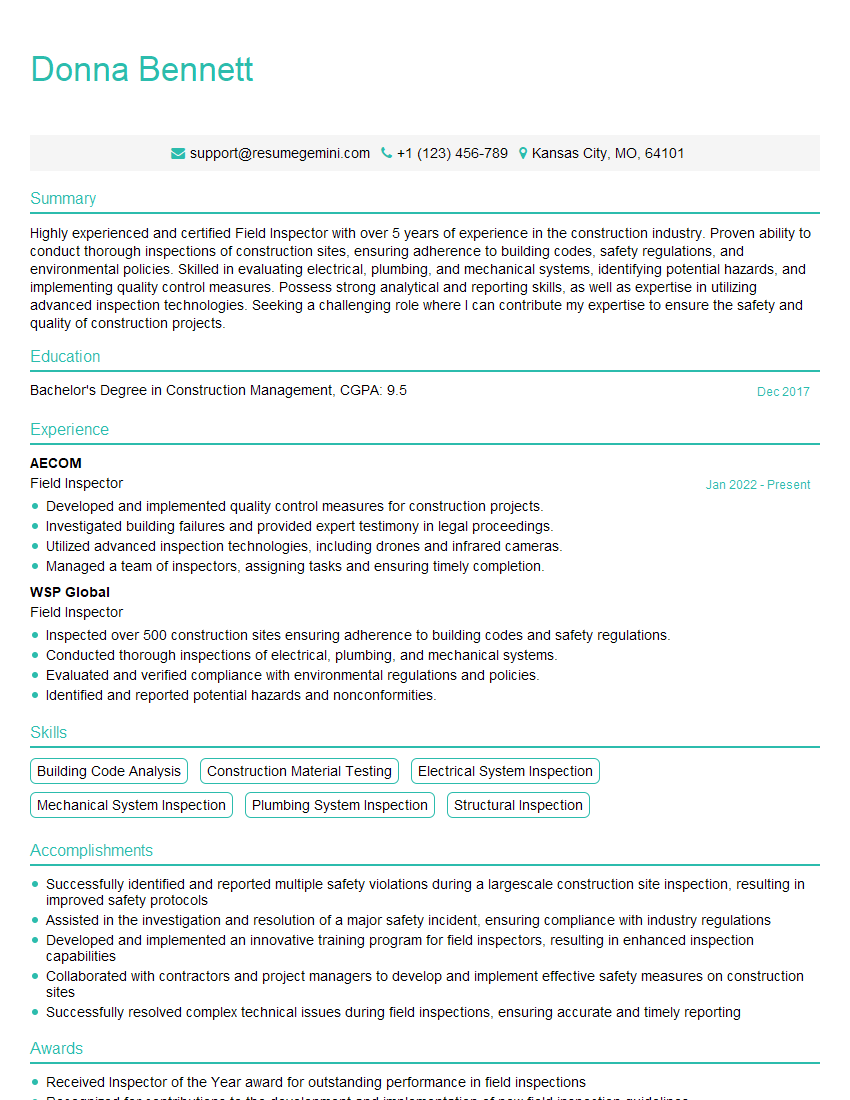
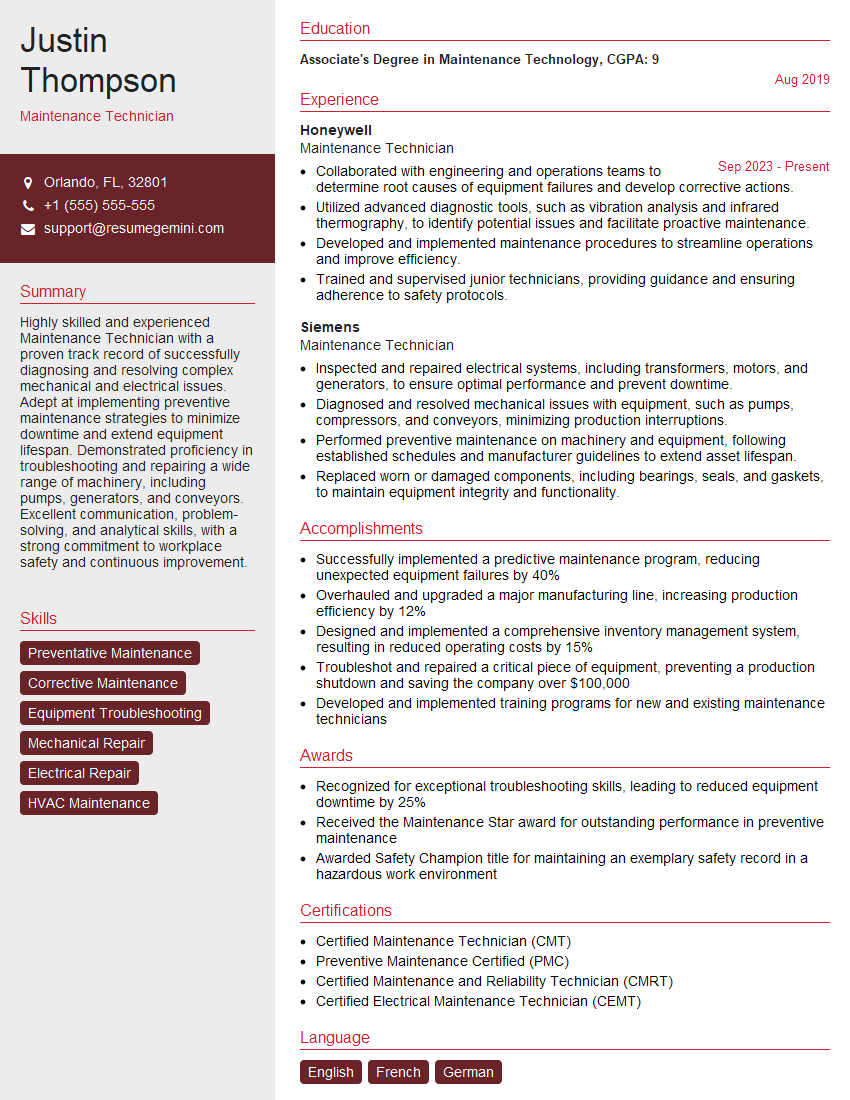
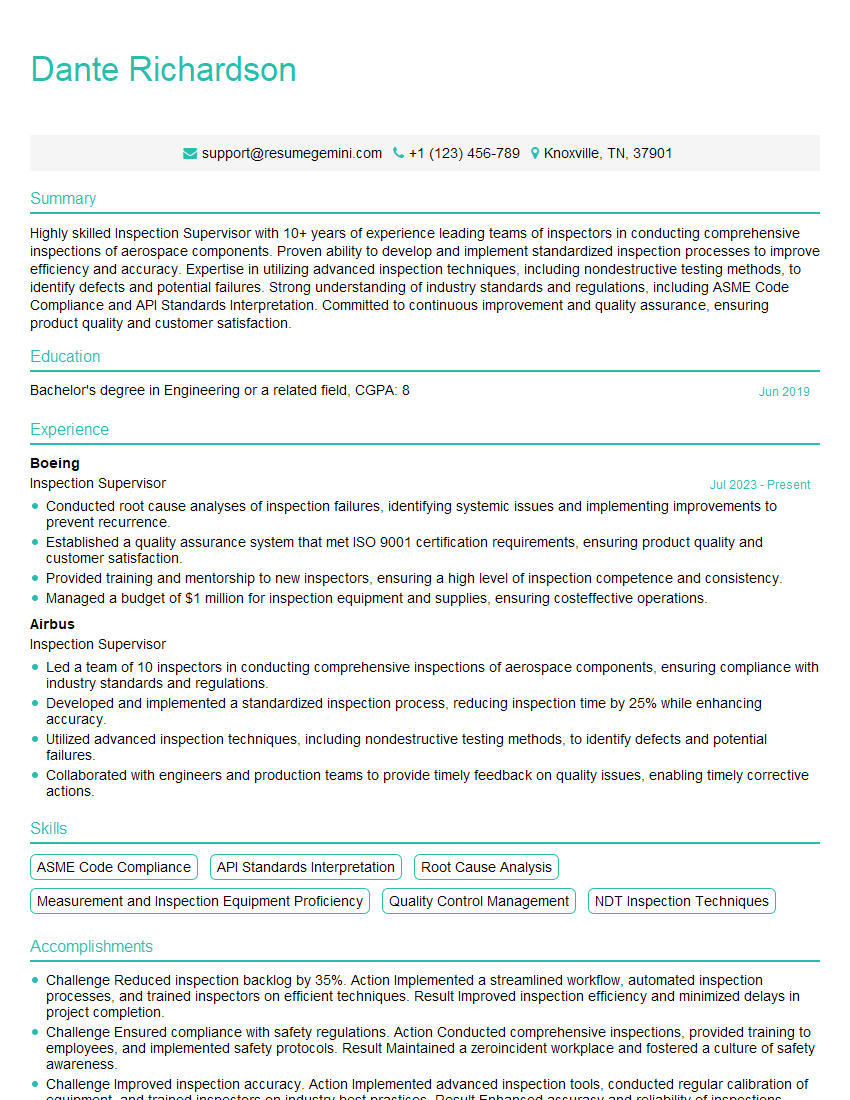
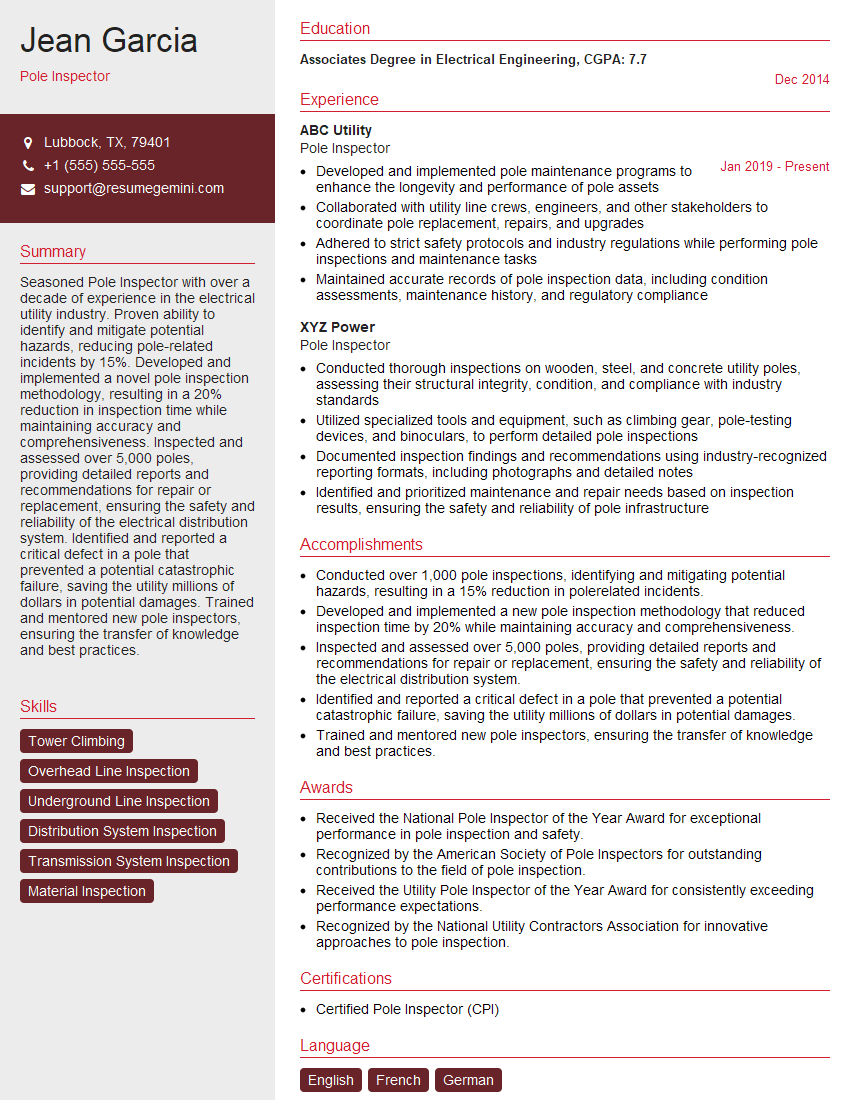
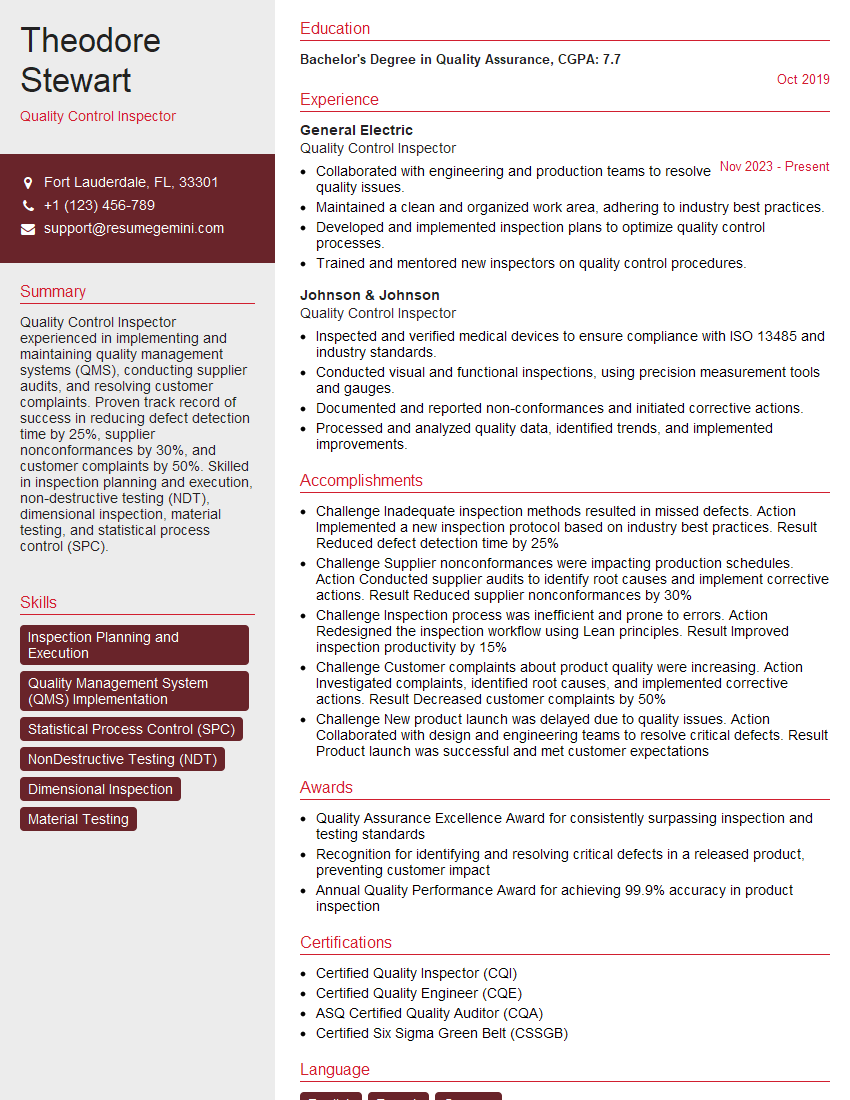
Mastering Pole and Structure Inspection and Maintenance opens doors to a rewarding career with excellent growth potential, offering opportunities for specialization and advancement within the industry. A strong resume is crucial for showcasing your skills and experience to potential employers. Creating an ATS-friendly resume significantly increases your chances of getting your application noticed. To help you build a compelling and effective resume, we recommend using ResumeGemini. ResumeGemini provides tools and resources to create a professional resume, and examples of resumes tailored to Pole and Structure Inspection and Maintenance are available to guide you. Invest in your future; craft a resume that reflects your expertise and secures your ideal position.
Explore more articles
Users Rating of Our Blogs
Share Your Experience
We value your feedback! Please rate our content and share your thoughts (optional).
What Readers Say About Our Blog
To the interviewgemini.com Webmaster.
Very helpful and content specific questions to help prepare me for my interview!
Thank you
To the interviewgemini.com Webmaster.
This was kind of a unique content I found around the specialized skills. Very helpful questions and good detailed answers.
Very Helpful blog, thank you Interviewgemini team.