Cracking a skill-specific interview, like one for Policy Advocacy and Analysis, requires understanding the nuances of the role. In this blog, we present the questions you’re most likely to encounter, along with insights into how to answer them effectively. Let’s ensure you’re ready to make a strong impression.
Questions Asked in Policy Advocacy and Analysis Interview
Q 1. Describe your experience in conducting policy research and analysis.
My policy research and analysis experience spans over ten years, encompassing a wide range of methodologies and sectors. I’ve conducted quantitative analyses using statistical software like R and Stata to evaluate the impact of various policies, from healthcare reforms to education initiatives. For instance, in one project, I analyzed the effect of a new teacher training program on student test scores, using regression analysis to control for confounding factors like socioeconomic status and prior academic performance. My qualitative work involves in-depth interviews, focus groups, and document analysis to understand the lived experiences of individuals affected by policies. For example, I conducted a series of interviews with low-income families to assess the impact of a new housing policy on their access to affordable housing. I also have extensive experience in literature reviews, synthesizing existing research to inform policy recommendations. Finally, I’m proficient in utilizing diverse data sources, including government statistics, academic publications, and non-governmental organization reports.
Q 2. Explain your understanding of the policy-making process.
The policy-making process is a complex, iterative cycle. It typically begins with agenda-setting, where issues gain public attention and become priorities for policymakers. Think of this as the problem identification phase; a growing homelessness crisis, for instance, might reach the agenda. Next comes policy formulation, involving the development of potential solutions. This stage includes research, consultations with experts, and consideration of different perspectives. Then comes policy adoption, where a formal decision is made – a law is passed, a regulation is implemented. Policy implementation follows, putting the chosen policy into practice. This is often the most challenging phase, requiring resources, coordination, and effective communication. Finally, there’s policy evaluation, assessing the impact of the policy and identifying areas for improvement. This might involve tracking key indicators, conducting surveys, and comparing outcomes to pre-set goals. It’s important to note that this process isn’t always linear; it can loop back on itself as new information emerges or circumstances change.
Q 3. How do you identify key stakeholders in a policy issue?
Identifying key stakeholders is crucial for successful policy advocacy. I employ a multi-faceted approach. First, I define the scope of the policy issue precisely. For example, if the policy concerns environmental protection, I’d need to specify the area (e.g., air quality in a particular city). Then, I identify individuals and groups directly affected by the policy – this might include residents, businesses, and environmental groups. Next, I pinpoint individuals or groups with power to influence policy outcomes – this could encompass government officials, industry lobbyists, and influential community leaders. I also consider those who hold significant knowledge or expertise on the issue, such as academics, researchers, and non-profit organizations. Mapping these stakeholders using tools like stakeholder analysis matrices helps visualize their interests and influence, allowing for strategic engagement.
Q 4. What strategies do you employ to effectively advocate for a specific policy?
Advocating for a policy requires a strategic approach combining research, communication, and coalition-building. I begin by meticulously documenting the problem the policy addresses, using strong evidence from research and data to support the need for change. I then craft compelling narratives that resonate with the public and policymakers, highlighting the benefits of the policy and addressing potential concerns proactively. Effective communication is key – this includes writing policy briefs, giving presentations, engaging in media outreach, and actively participating in public forums. Furthermore, building coalitions with diverse stakeholders significantly strengthens advocacy efforts. By working with allies who share common goals, we can leverage their networks and resources to amplify our message and exert greater influence on the decision-making process. This could involve mobilizing grassroots support, lobbying legislators, and collaborating with other organizations.
Q 5. How do you analyze the potential impact of a policy on different groups?
Analyzing a policy’s impact on different groups requires a thorough understanding of the policy’s mechanisms and the characteristics of the affected population. I utilize various methods, including cost-benefit analysis to quantify the economic impacts on different income brackets, equity impact assessments to evaluate the distribution of costs and benefits across various demographic groups, and qualitative methods like interviews and focus groups to capture the lived experiences and perspectives of diverse populations. For example, when assessing a new tax policy, I would examine its effects on low-income households, middle-income households, and high-income households, considering factors like tax burdens, disposable income, and access to social services. The goal is to identify potential disparities or unintended consequences and recommend adjustments to minimize negative effects on vulnerable populations.
Q 6. How do you evaluate the effectiveness of a policy after its implementation?
Evaluating policy effectiveness post-implementation involves a rigorous process of data collection and analysis. I use both quantitative and qualitative methods to determine whether the policy achieved its intended goals. Quantitative evaluation might involve analyzing statistical data on relevant indicators, such as crime rates (if evaluating a crime prevention policy), or employment levels (if evaluating a job creation program). Qualitative methods, such as surveys or interviews, help understand the experiences and perspectives of individuals affected by the policy. A critical aspect is comparing outcomes to pre-set goals and benchmarks established before implementation. It’s crucial to acknowledge unforeseen consequences and consider external factors that may have influenced outcomes. This often requires a counterfactual analysis, attempting to estimate what would have happened in the absence of the policy. The findings of this evaluation then inform recommendations for policy adjustments or future policy design.
Q 7. Describe your experience in writing policy briefs or reports.
I have extensive experience in writing policy briefs and reports, tailored to different audiences. My approach prioritizes clarity, conciseness, and strong evidence. A policy brief typically summarizes key findings and recommendations concisely, aimed at influencing policymakers or stakeholders. I structure these briefs with a clear problem statement, evidence-based arguments, feasible policy options, and a call to action. Reports, on the other hand, provide more detailed analyses, including methodology, data, and supporting documentation. I ensure that both briefs and reports are well-organized, visually appealing (using charts and graphs where appropriate), and use plain language, avoiding jargon unless absolutely necessary. For example, I recently authored a report analyzing the effectiveness of a national health initiative and a policy brief summarizing the findings and recommendations for policymakers. Both were carefully formatted and distributed to relevant individuals and organizations.
Q 8. How do you use data and evidence to support your policy recommendations?
Data and evidence are the cornerstones of effective policy advocacy. My approach involves a multi-step process: first, identifying the specific problem the policy aims to address. This requires a thorough understanding of the context, including existing research and relevant statistics. Next, I meticulously collect and analyze data from various sources – government reports, academic studies, surveys, and even anecdotal evidence, carefully assessing its reliability and validity. This analysis allows me to quantify the problem, identify potential solutions, and predict the impact of proposed policies. For example, when advocating for improved public transportation, I wouldn’t just rely on anecdotal evidence of overcrowding; I’d use ridership data, commute time statistics, and air quality measurements to demonstrate the need and the potential benefits of increased funding or route expansions. Finally, I present this evidence clearly and persuasively in reports, presentations, and policy briefs, using visuals like charts and graphs to make the data easily understandable for policymakers and the public.
Q 9. Explain your experience with budget analysis related to policy proposals.
Budget analysis is crucial for shaping realistic and effective policy proposals. My experience involves a detailed examination of existing budgets to identify funding gaps, assess the fiscal implications of proposed policies, and develop cost-benefit analyses. This often involves working with spreadsheets and financial modeling software to project potential costs and savings over different time horizons. For instance, during my work on a proposal to expand early childhood education programs, I had to model the costs of hiring additional teachers, providing training, and acquiring necessary resources, comparing these costs with potential long-term savings in areas like reduced healthcare costs and increased tax revenue from a more skilled workforce. This allowed me to showcase the policy’s economic viability and prioritize specific funding allocations for maximum impact.
Q 10. How do you navigate conflicting interests and perspectives in policy discussions?
Navigating conflicting interests is inherent in policy work. I approach these situations by fostering open communication and collaborative dialogue. I begin by actively listening to all stakeholders, understanding their perspectives and concerns. Then, I identify common ground and shared objectives, even if the approaches differ. This often involves finding creative compromises, reframing issues to highlight mutual benefits, and focusing on the overarching goals rather than getting bogged down in specific details. For example, in a debate about environmental regulations, I might find common ground between environmental groups and industry by focusing on innovative solutions that both protect the environment and promote economic growth. Finally, I advocate for a transparent and participatory process, making sure all voices are heard and considered in the final decision-making process.
Q 11. How do you build consensus and gain support for a policy proposal?
Building consensus requires a strategic approach. It starts with identifying key stakeholders and understanding their interests and influence. I then tailor my communication to resonate with each group, highlighting the aspects of the policy that address their specific concerns. This involves building relationships based on trust and mutual respect, engaging in active listening, and providing clear, concise information. To gain broader support, I employ various strategies such as targeted outreach campaigns, public awareness initiatives, and coalitions with like-minded organizations. For example, when advocating for a new park, I would engage local businesses, community groups, and environmental organizations to build a broad-based coalition that could effectively lobby local government for approval and funding.
Q 12. Describe your experience working with government agencies or legislators.
I have extensive experience working with government agencies and legislators at both the local and state levels. This includes providing technical assistance on policy proposals, conducting stakeholder consultations, and presenting policy recommendations to legislative committees. For instance, I worked with a state environmental agency to develop a comprehensive plan for managing water resources, collaborating with their staff to gather data, analyze scenarios, and develop policy options. This involved understanding the agency’s internal processes, navigating bureaucratic procedures, and effectively communicating complex information to diverse audiences. My collaborative approach allows for efficient and impactful policy development.
Q 13. How familiar are you with relevant legislation and regulations?
My familiarity with relevant legislation and regulations is extensive. I regularly monitor changes in legislation and case law relevant to my policy areas. This includes using legal databases, attending legislative hearings, and collaborating with legal experts to ensure my recommendations are legally sound and compliant. I am proficient in interpreting complex legal texts and translating legal requirements into actionable policy recommendations. I understand how regulations impact policy implementation, and I consider this crucial to effective policy design. For example, before drafting any policy concerning data privacy, I thoroughly review relevant data protection laws to ensure compliance and to understand the legal constraints and opportunities within the existing regulatory framework.
Q 14. What software or tools do you use for policy analysis?
My toolkit for policy analysis includes a range of software and tools. I utilize spreadsheet software (like Excel) for data analysis and budget modeling. Statistical software packages (like R or STATA) allow me to conduct more sophisticated quantitative analyses. Geographic Information Systems (GIS) software helps in visualizing spatial data. I also use presentation software (like PowerPoint) and document preparation tools (like Word) for creating effective communications. Finally, I leverage online databases and research tools to access relevant information efficiently.
Q 15. How do you stay current on relevant policy developments and trends?
Staying current in the dynamic world of policy requires a multi-faceted approach. It’s not just about reading reports; it’s about actively engaging with the information landscape.
- Subscription to reputable news sources and journals: I subscribe to publications like the Congressional Quarterly, the Brookings Institution reports, and relevant academic journals depending on my area of focus. This ensures I’m aware of breaking news and in-depth analysis.
- Monitoring government websites and agencies: I regularly check websites like the Federal Register (in the US context) or equivalent government portals in other countries to track proposed and finalized regulations. This is crucial for understanding the practical implications of policy changes.
- Networking and attending events: I actively participate in conferences, workshops, and seminars. These events offer invaluable opportunities to learn from experts, network with policymakers, and stay abreast of emerging trends. This includes both in-person and virtual events.
- Utilizing social media and online platforms: While requiring careful discernment, platforms like Twitter and LinkedIn can be useful for tracking policy discussions, engaging with influencers, and receiving timely updates. I follow key individuals and organizations relevant to my area of interest.
- Developing strong relationships with policymakers and stakeholders: Building trust and rapport with individuals involved in policymaking ensures access to insider perspectives and allows me to influence policy discussions proactively.
This combination of strategies enables me to synthesize information from diverse sources, providing a comprehensive and nuanced understanding of policy developments.
Career Expert Tips:
- Ace those interviews! Prepare effectively by reviewing the Top 50 Most Common Interview Questions on ResumeGemini.
- Navigate your job search with confidence! Explore a wide range of Career Tips on ResumeGemini. Learn about common challenges and recommendations to overcome them.
- Craft the perfect resume! Master the Art of Resume Writing with ResumeGemini’s guide. Showcase your unique qualifications and achievements effectively.
- Don’t miss out on holiday savings! Build your dream resume with ResumeGemini’s ATS optimized templates.
Q 16. Describe a challenging policy issue you’ve worked on and how you approached it.
One particularly challenging issue I tackled involved advocating for improved access to mental healthcare for underserved communities. The challenge stemmed from a complex interplay of factors: insufficient funding, lack of qualified professionals, societal stigma, and systemic barriers within the healthcare system itself.
My approach was structured and involved several key steps:
- Thorough needs assessment: I began by conducting extensive research, including analyzing existing data on mental health disparities, interviewing community members, and consulting with mental health professionals. This helped me identify the most pressing needs and tailor my advocacy to specific community challenges.
- Developing a data-driven strategy: I compiled the findings into a comprehensive report, highlighting the economic and social costs associated with inaction. This evidence-based approach helped build a compelling case for policy reform.
- Building coalitions: To amplify our voice, I collaborated with various organizations, including mental health advocacy groups, community leaders, and healthcare providers. This strengthened our advocacy efforts and broadened our reach.
- Engaging policymakers: We directly engaged with legislators, presenting our research, highlighting the human cost of inaction and proposing specific, actionable policy recommendations – such as increased funding for community-based mental health services and initiatives to reduce stigma.
- Public awareness campaigns: We implemented a public awareness campaign to raise community awareness about mental health issues and available resources, contributing to destigmatization and increased access.
While complete success takes time, our collaborative efforts resulted in increased funding for community-based mental health services and a renewed focus on addressing systemic barriers. This demonstrates the power of combining robust research, strategic partnerships, and targeted advocacy.
Q 17. How do you prioritize competing policy issues?
Prioritizing competing policy issues requires a strategic framework. It’s not simply about choosing the ‘most important’; it’s about considering various factors and aligning them with overarching goals. I use a multi-criteria decision analysis (MCDA) approach, which involves the following steps:
- Identifying all competing issues: First, I create a comprehensive list of all policy issues needing attention.
- Defining criteria for prioritization: This involves identifying key criteria such as urgency (immediate impact), potential impact (long-term effects), feasibility (likelihood of success), alignment with organizational goals, and resource requirements (funding, personnel).
- Weighing criteria: Assigning weights to each criterion reflects their relative importance, based on strategic objectives. For example, a crisis might warrant higher urgency weighting.
- Scoring each issue: I score each issue against the criteria, generating numerical ratings. This process provides a structured and quantifiable way to compare seemingly disparate issues.
- Ranking based on weighted scores: The issues are then ranked according to their weighted scores, providing a clear prioritization based on objective evaluation.
This systematic approach ensures a transparent and defensible prioritization process, enabling efficient allocation of resources and maximizing advocacy impact.
Q 18. Explain your experience in lobbying or advocacy.
My lobbying and advocacy experience spans several years and encompasses various strategies. I’ve engaged in direct lobbying, grassroots advocacy, and public awareness campaigns.
- Direct lobbying: This involves directly meeting with policymakers and their staff to present our arguments, provide data, and build relationships. I’ve effectively presented policy proposals, testified before legislative committees, and negotiated compromises.
- Grassroots advocacy: This includes mobilizing public support for our cause through community outreach, citizen engagement, and email campaigns. I’ve helped organize letter-writing campaigns, facilitated town hall meetings, and built broad-based coalitions.
- Public awareness campaigns: These initiatives use various communication channels to educate the public about policy issues and influence public opinion. I’ve developed and executed press releases, social media campaigns, and informational websites.
My experience includes working with both legislative and executive branches of government, as well as engaging with various levels of government (local, regional, national, and international). My success lies in adapting my approach based on the specific policy issue and the context.
Q 19. How do you measure the success of your advocacy efforts?
Measuring the success of advocacy efforts isn’t always straightforward; it’s about tracking progress toward specific, measurable, achievable, relevant, and time-bound (SMART) goals. My approach involves a combination of quantitative and qualitative measures:
- Quantitative measures: This involves tracking concrete outcomes, such as the number of policy changes achieved, the amount of funding secured, the number of people reached through outreach programs, or changes in public opinion based on surveys. For example, we might track an increase in funding for a particular program or a decrease in a specific negative outcome following advocacy efforts.
- Qualitative measures: This includes assessing the impact of our efforts on stakeholder relationships, changes in public discourse, improved media coverage, and the overall progress in achieving our policy goals. We would analyze media mentions and sentiment toward our campaign as a measure of influence, and conduct interviews and focus groups to assess impact on community understanding and practices.
- Process Evaluation: Evaluating the effectiveness of our strategies and outreach is important to refine future efforts and learn what resonated most effectively with our targets.
Combining quantitative and qualitative data provides a more complete picture of our advocacy’s impact, allowing for continuous improvement and informed decision-making in future endeavors.
Q 20. Describe your understanding of cost-benefit analysis in policy.
Cost-benefit analysis (CBA) is a crucial tool in policymaking, providing a structured framework for evaluating the economic efficiency of a policy intervention. It involves systematically comparing the total costs of a policy with its total benefits, expressed in monetary terms.
The process typically involves:
- Identifying all relevant costs: This includes direct costs (e.g., program implementation, staff salaries) and indirect costs (e.g., opportunity costs of resources used elsewhere).
- Identifying all relevant benefits: This encompasses both tangible benefits (e.g., increased productivity, reduced healthcare costs) and intangible benefits (e.g., improved public health, environmental protection). Quantifying intangible benefits often requires creative approaches, such as assigning monetary values based on willingness-to-pay studies.
- Discounting future costs and benefits: Because costs and benefits often occur over time, they need to be discounted to their present value using a discount rate that reflects the time value of money.
- Calculating the net present value (NPV): The NPV is calculated by subtracting the present value of total costs from the present value of total benefits. A positive NPV indicates that the policy is economically efficient.
- Sensitivity analysis: It’s crucial to conduct sensitivity analysis to assess how changes in key assumptions (e.g., discount rate, cost estimates) might affect the NPV. This helps understand the robustness of the CBA results.
While CBA is a valuable tool, it’s essential to acknowledge its limitations. It may not fully capture all social, ethical, or environmental considerations and can be highly sensitive to the data and assumptions used. Therefore, CBA should always be complemented by other forms of policy analysis.
Q 21. How do you present complex policy information to different audiences?
Presenting complex policy information effectively requires tailoring the message to the specific audience. My approach focuses on clarity, relevance, and engagement.
- Understanding the audience: I begin by identifying the audience’s level of knowledge, their interests, and their needs. A presentation to policymakers will differ significantly from a presentation to the general public.
- Simplifying complex concepts: I avoid jargon and technical language whenever possible, using plain language and clear examples to illustrate key concepts. I use analogies and real-world examples to help the audience understand abstract ideas.
- Visual aids: I utilize graphs, charts, infographics, and other visual aids to present data in a visually compelling and easily digestible format. Complex datasets are best summarized with key findings, rather than overwhelming the audience with raw numbers.
- Storytelling: I use storytelling techniques to make the information more engaging and memorable. Human-interest stories can help illustrate the impact of policy decisions on real people’s lives.
- Interactive sessions: Depending on the setting, I incorporate interactive elements, such as Q&A sessions and discussions, to foster engagement and ensure a better understanding of the information.
By adapting my communication style and utilizing appropriate visual aids, I ensure that complex policy information is accessible and impactful for diverse audiences.
Q 22. How do you deal with ambiguity and uncertainty in policy analysis?
Ambiguity and uncertainty are inherent in policy analysis, as we often grapple with incomplete data, conflicting values, and unpredictable future scenarios. My approach involves a structured process to navigate these challenges. First, I meticulously define the problem, identifying the core issues and uncertainties. Then, I employ scenario planning, systematically exploring different potential futures and their implications for the policy in question. This helps to prepare for a range of outcomes. For example, when analyzing the impact of a proposed carbon tax, I wouldn’t just model one outcome; I would explore scenarios with varying levels of public acceptance, technological innovation, and international cooperation. Simultaneously, I utilize sensitivity analysis to identify which variables have the greatest influence on the policy’s effectiveness. This helps prioritize data collection and further research. Finally, I embrace transparency by clearly communicating the limitations and uncertainties in my analysis, ensuring decision-makers understand the range of possible outcomes.
Q 23. How do you anticipate and manage potential risks associated with policy implementation?
Anticipating and managing risks in policy implementation is crucial for successful outcomes. My strategy begins with a thorough risk assessment, identifying potential obstacles and challenges at each stage of implementation. This often involves stakeholder mapping to understand who might be affected and how they may respond. For example, in a policy promoting renewable energy, potential risks might include resistance from fossil fuel industries, lack of public support, or technological hurdles. Following the risk assessment, I develop a mitigation strategy, outlining specific actions to address these risks. This might include public awareness campaigns, regulatory adjustments, or pilot projects to test the policy’s effectiveness in a controlled environment before full-scale deployment. I also build in mechanisms for monitoring and evaluation, enabling early detection of problems and allowing for timely adjustments to the policy or its implementation strategy. Regular reporting and feedback loops with stakeholders are crucial elements of this process.
Q 24. Explain your understanding of different policy evaluation methods.
Policy evaluation methods are diverse, each with its strengths and weaknesses. I’m familiar with several key approaches. Before-and-after studies compare outcomes before and after a policy’s implementation. However, confounding factors can affect interpretation. Controlled experiments, like randomized controlled trials, provide more robust causal inferences by comparing outcomes in treatment and control groups. However, they can be ethically and practically challenging. Qualitative methods such as case studies and interviews provide rich contextual understanding, revealing nuances that quantitative data often miss. Quantitative methods, including statistical regression analyses, allow for the examination of large datasets and the identification of correlations. Ultimately, the most effective approach often involves a mixed-methods strategy combining quantitative and qualitative techniques to gain a holistic understanding of the policy’s impact. The choice of method depends greatly on the specific research question, the available resources, and ethical considerations.
Q 25. Describe your experience working collaboratively on policy projects.
Collaboration is central to effective policy work. I have extensive experience working in multidisciplinary teams, including economists, sociologists, political scientists, and community representatives. In one project, focusing on improving access to healthcare in underserved communities, I worked closely with a team to gather data from various sources, analyze the findings, and develop policy recommendations. My role involved facilitating communication and consensus-building among team members with diverse perspectives. I believe in fostering open communication, clear role definition, and regular meetings to ensure everyone stays informed and engaged. Utilizing collaborative tools like shared online documents and project management software is also essential for efficient teamwork. Successful collaborations hinge on mutual respect, shared understanding of goals, and a willingness to compromise and adapt.
Q 26. How do you adapt your advocacy strategies to different contexts?
Adapting advocacy strategies to different contexts is crucial. My approach emphasizes understanding the specific political, social, and economic environment. For example, advocating for stricter environmental regulations in a country with a strong environmental movement requires a different approach than in a country where environmental concerns are less prominent. I adapt my message, tailoring my arguments to resonate with the specific audience and stakeholders. I might employ different communication channels, utilizing social media in some cases and direct lobbying in others. Building relationships with key influencers and decision-makers is also critical. This includes understanding the power dynamics and navigating potential obstacles. Finally, I assess the political feasibility of different policy options, prioritizing strategies with the highest likelihood of success given the specific context. Flexibility and responsiveness are key to effective advocacy in diverse settings.
Q 27. How do you ensure the ethical conduct of your policy advocacy work?
Ethical conduct is paramount in policy advocacy. My work adheres to principles of transparency, objectivity, and accountability. This includes openly disclosing any potential conflicts of interest and ensuring that my analysis is rigorous and unbiased. I strive to present information accurately and avoid misleading or manipulative tactics. I prioritize equity and social justice, ensuring that policies promote fairness and address inequalities. Furthermore, I am committed to respecting the rights and dignity of all stakeholders. Ethical considerations guide every stage of my work, from research design to policy recommendations. For instance, when working with vulnerable populations, I prioritize their safety and well-being, obtaining informed consent and ensuring data privacy.
Q 28. How do you stay informed about emerging policy challenges?
Staying informed about emerging policy challenges requires a multifaceted approach. I regularly monitor reputable news sources, academic journals, and government reports for relevant information. I also participate in professional networks and conferences, engaging with experts in the field and staying abreast of the latest research and developments. I actively seek out diverse perspectives, consulting with stakeholders from various backgrounds to gain a comprehensive understanding of emerging issues. Utilizing advanced search tools and utilizing various database searches are also key components of my information gathering strategy, allowing me to quickly identify relevant information related to a specific policy area.
Key Topics to Learn for Policy Advocacy and Analysis Interview
- Policy Analysis Frameworks: Understand different models for analyzing policy effectiveness (e.g., cost-benefit analysis, impact assessment) and their practical application in evaluating existing policies or proposing new ones.
- Stakeholder Analysis and Engagement: Learn to identify key stakeholders, understand their interests and influence, and develop strategies for effective communication and collaboration in the policy process.
- Research and Data Analysis: Master the skills to collect, analyze, and interpret qualitative and quantitative data to inform policy recommendations. This includes understanding statistical methods and data visualization techniques.
- Policy Writing and Communication: Develop clear, concise, and persuasive writing skills to articulate policy positions and recommendations effectively to diverse audiences. Practice presenting complex information simply and convincingly.
- Legislative Processes: Gain a working knowledge of how policies are developed, implemented, and evaluated within your specific jurisdiction (local, state, national, or international). This includes understanding the roles of different governmental bodies.
- Ethical Considerations in Policy Advocacy: Explore ethical dilemmas and best practices in advocating for policy changes, ensuring fairness, transparency, and accountability.
- Problem Framing and Solution Development: Practice identifying the root causes of policy problems and developing creative, evidence-based solutions. Learn to present well-defined, achievable policy goals.
- Policy Evaluation and Monitoring: Understand how to assess the impact of policies after implementation, using data-driven methods to measure success and identify areas for improvement.
Next Steps
Mastering Policy Advocacy and Analysis is crucial for career advancement in government, non-profit organizations, and the private sector. It opens doors to influential roles where you can make a tangible difference. To maximize your job prospects, focus on creating a compelling and ATS-friendly resume that highlights your relevant skills and experience. ResumeGemini is a trusted resource to help you build a professional resume that stands out. Examples of resumes tailored specifically for Policy Advocacy and Analysis positions are available to guide you.
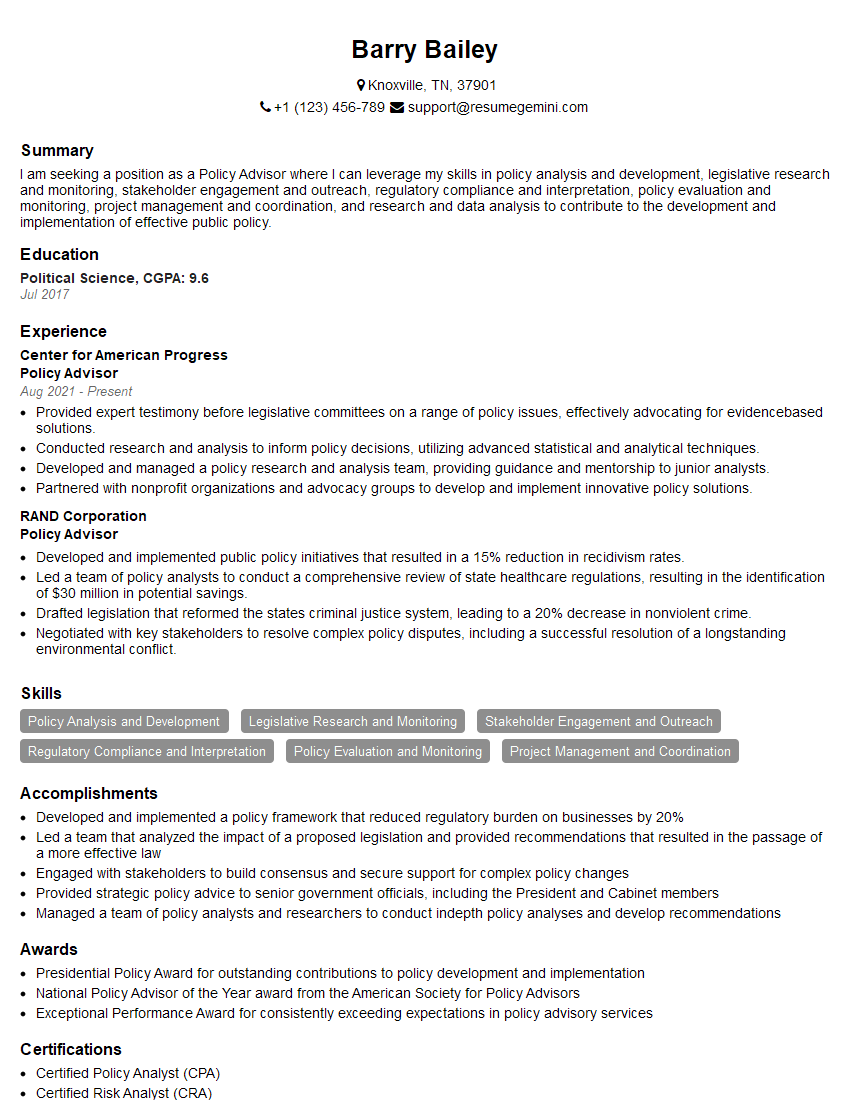
Policy Advisor Resume Sample
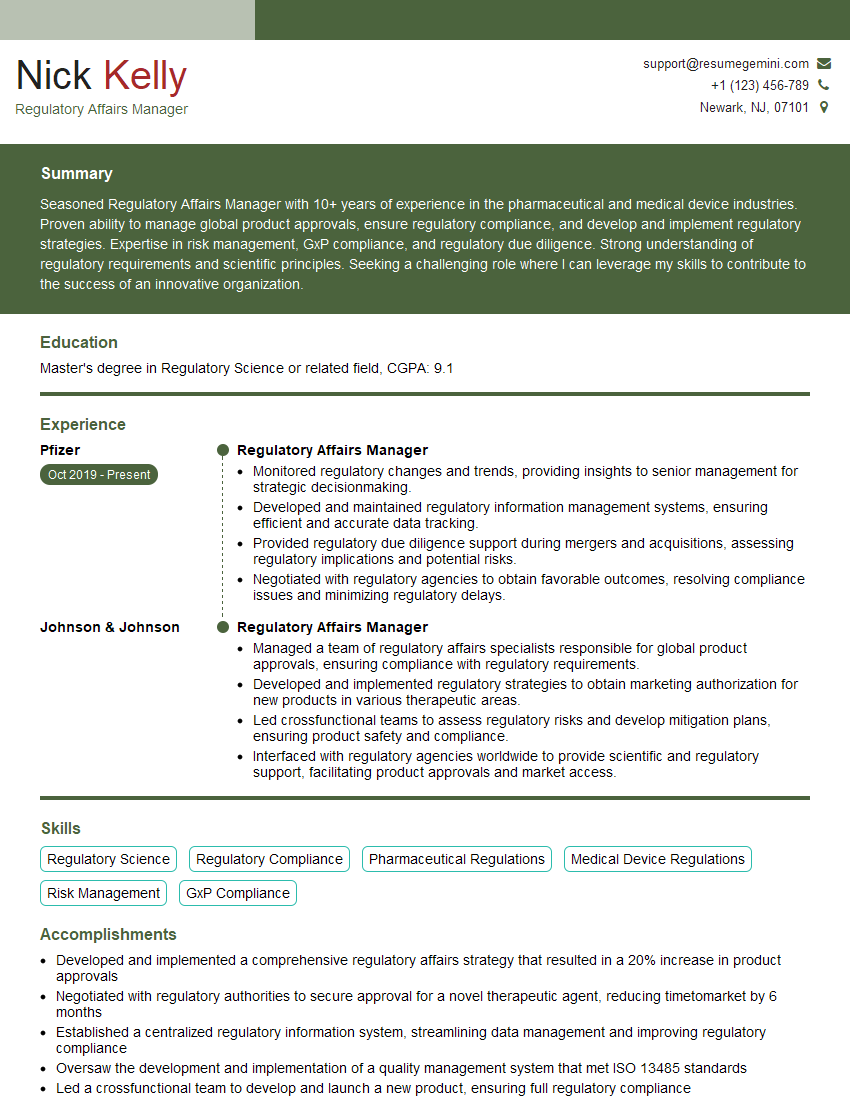
Regulatory Affairs Manager Resume Sample
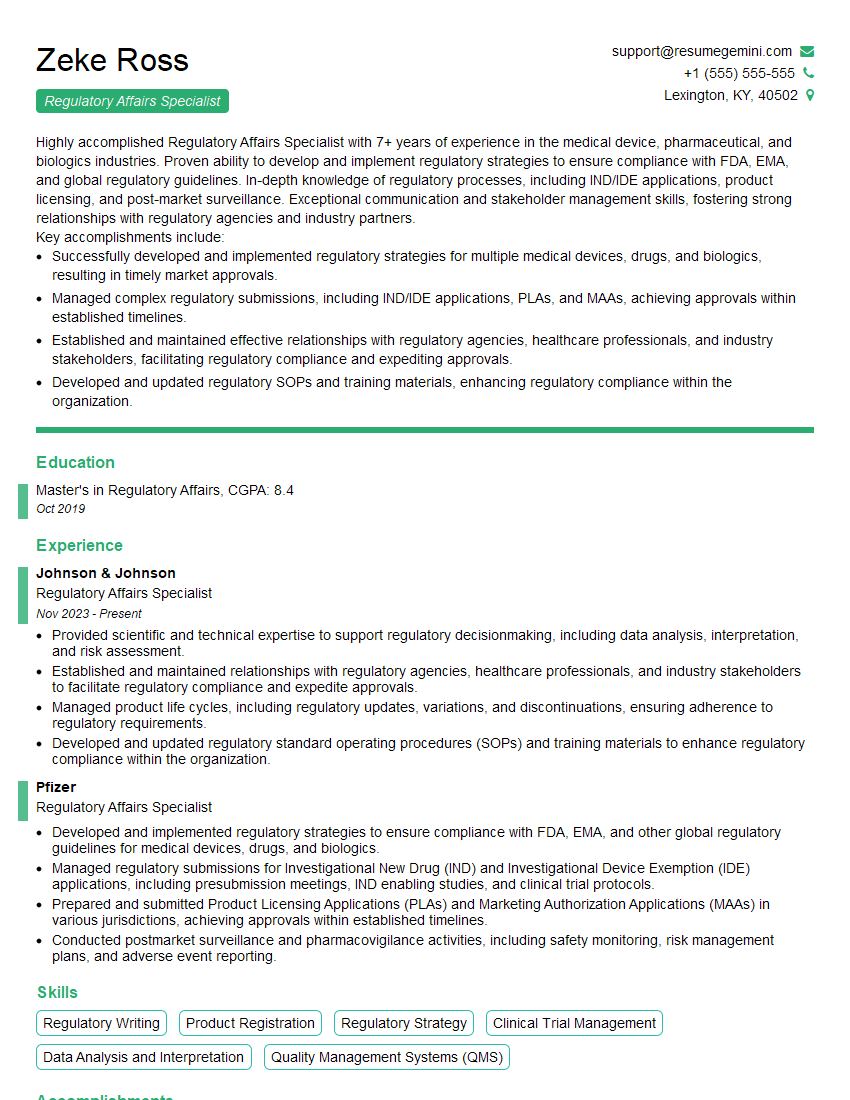
Regulatory Affairs Specialist Resume Sample
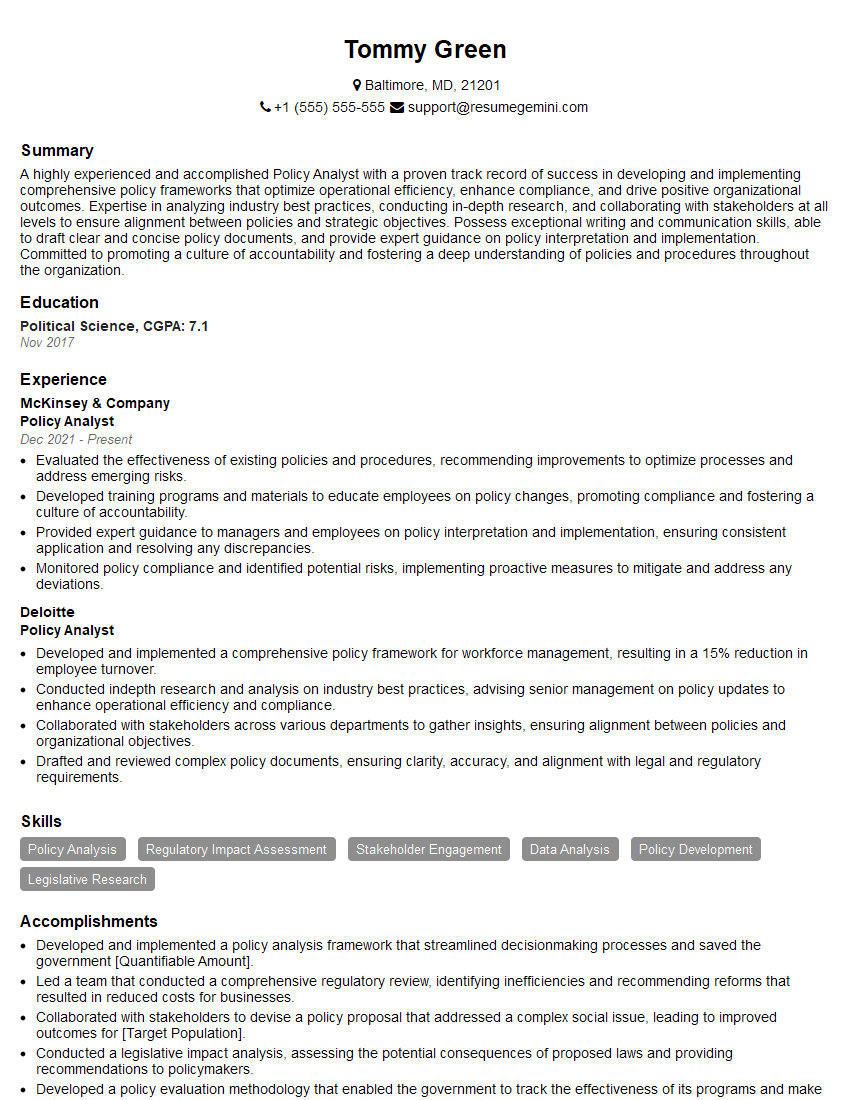
Policy Analyst Resume Sample
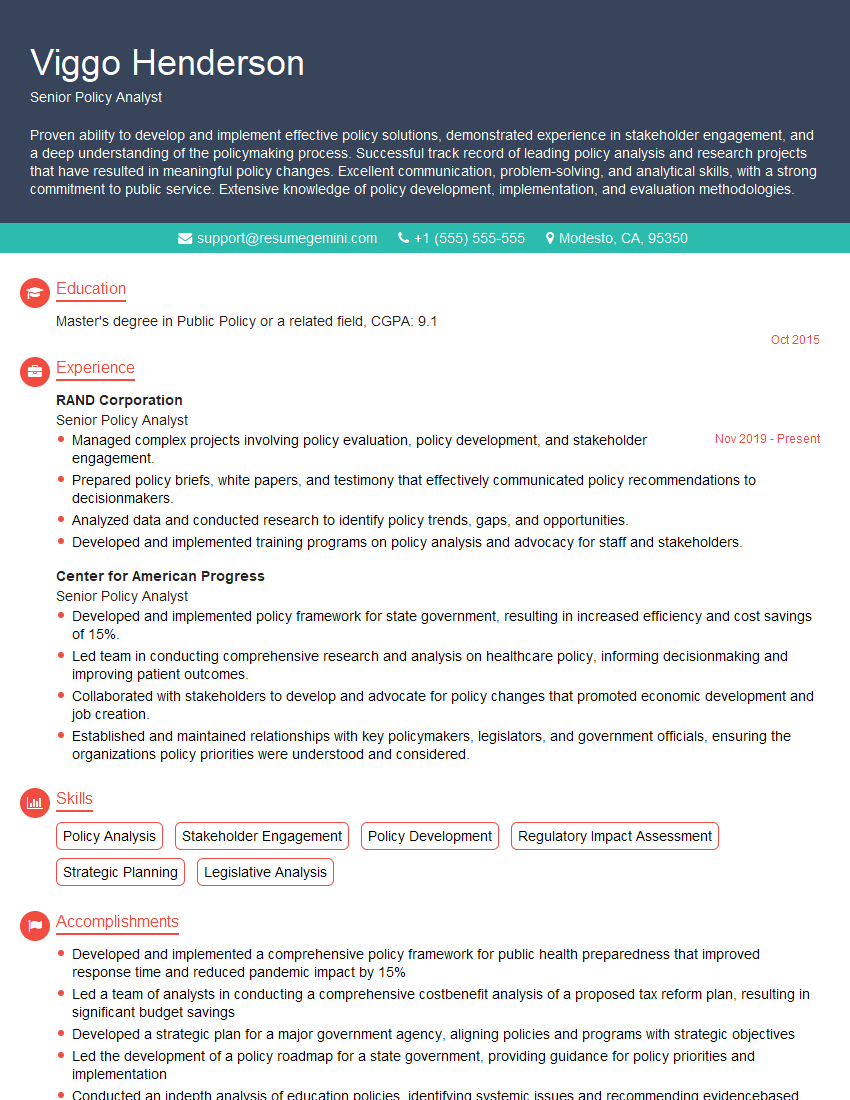
Senior Policy Analyst Resume Sample
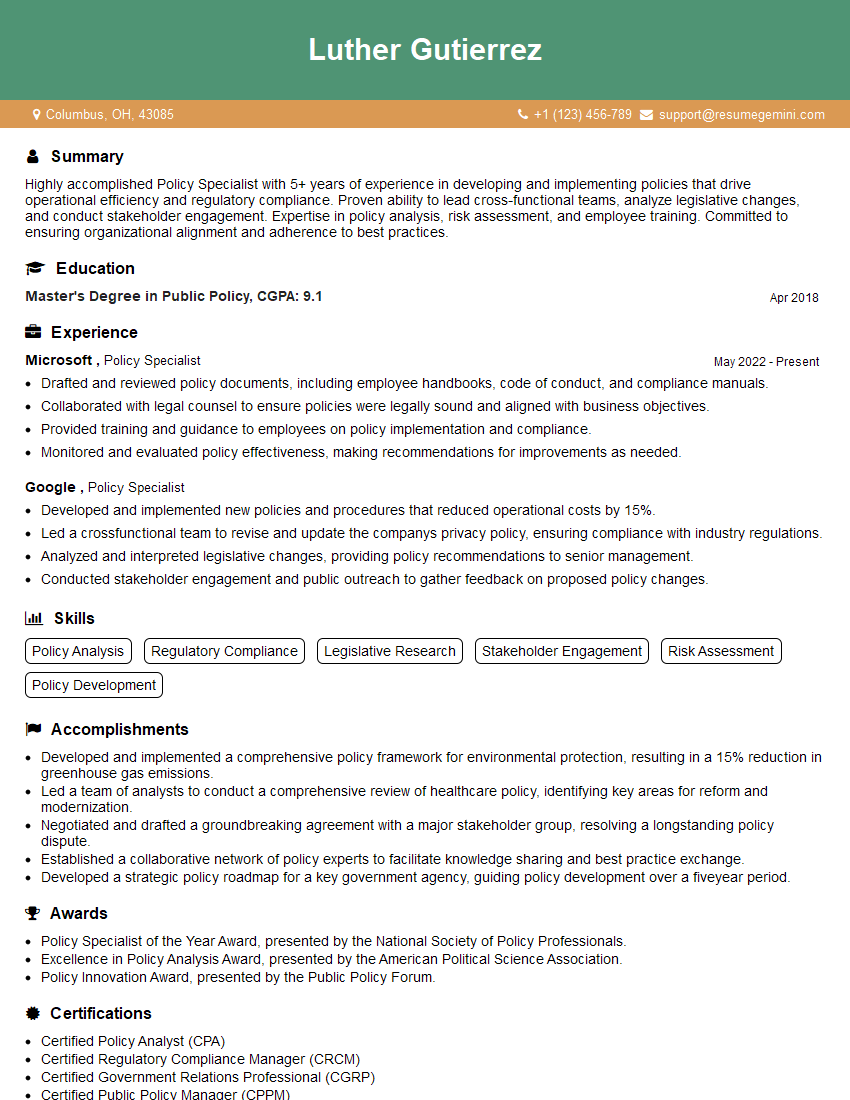
Policy Specialist Resume Sample
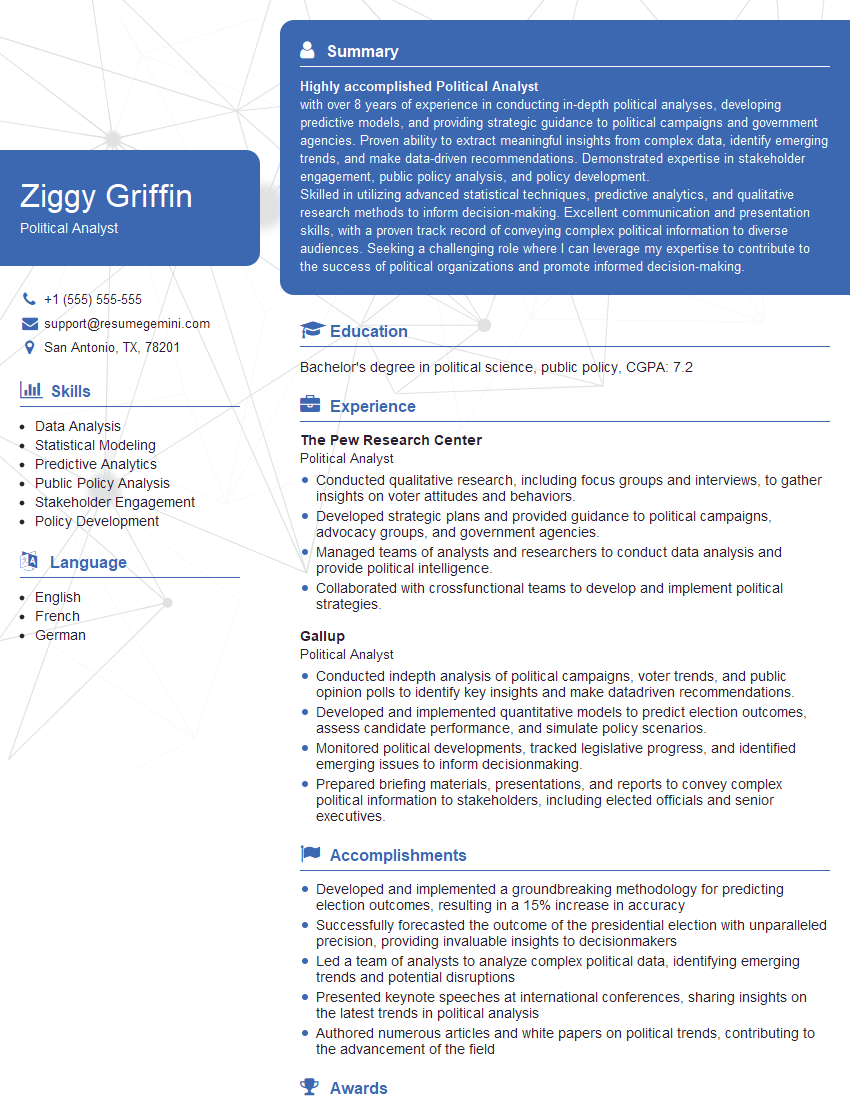
Political Analyst Resume Sample
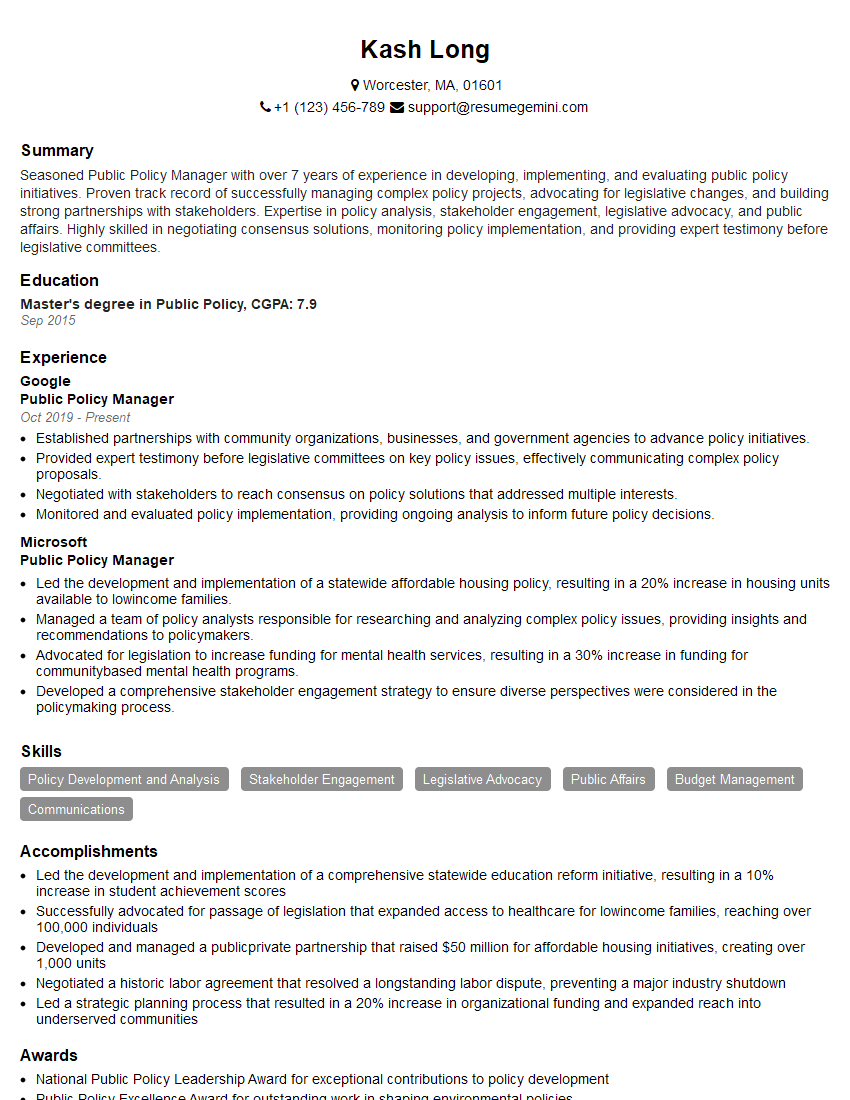
Public Policy Manager Resume Sample
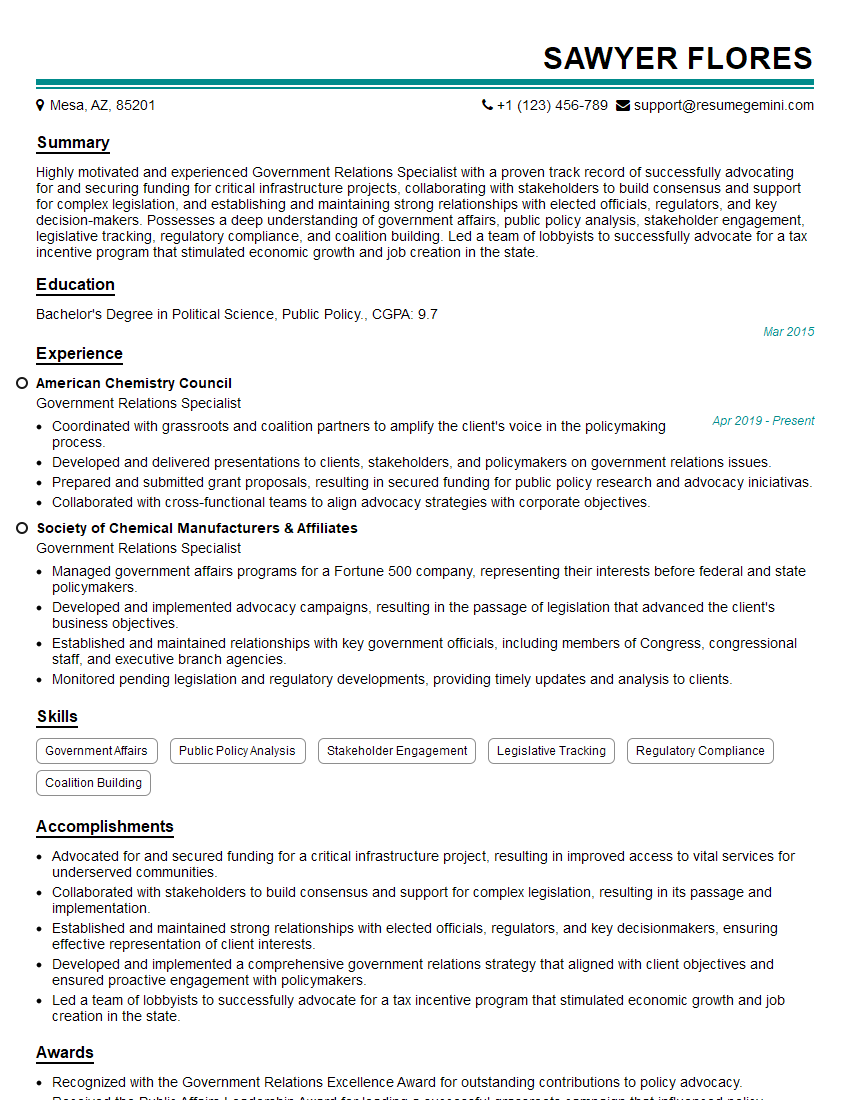
Government Relations Specialist Resume Sample
Explore more articles
Users Rating of Our Blogs
Share Your Experience
We value your feedback! Please rate our content and share your thoughts (optional).
What Readers Say About Our Blog
To the interviewgemini.com Webmaster.
Very helpful and content specific questions to help prepare me for my interview!
Thank you
To the interviewgemini.com Webmaster.
This was kind of a unique content I found around the specialized skills. Very helpful questions and good detailed answers.
Very Helpful blog, thank you Interviewgemini team.