Preparation is the key to success in any interview. In this post, we’ll explore crucial Population Dynamics and Modeling interview questions and equip you with strategies to craft impactful answers. Whether you’re a beginner or a pro, these tips will elevate your preparation.
Questions Asked in Population Dynamics and Modeling Interview
Q 1. Explain the difference between density-dependent and density-independent population regulation.
Density-dependent and density-independent factors are two broad categories that influence population growth. Density-dependent factors’ impact on a population’s growth rate changes with the population density. Conversely, density-independent factors affect population size regardless of population density.
- Density-dependent factors: These are often biotic factors (related to living organisms). Examples include competition for resources (food, water, shelter), predation, disease, and parasitism. As population density increases, the intensity of these factors also increases, slowing down population growth. Imagine a group of deer: when their numbers are low, food is plentiful. But as their population grows and exceeds the available food, competition intensifies, leading to reduced birth rates or increased death rates.
- Density-independent factors: These are primarily abiotic factors (related to non-living components of the environment). Examples include natural disasters like floods, fires, earthquakes, extreme weather events, and human-induced factors such as habitat destruction or pollution. These factors can decimate a population regardless of its size. A wildfire, for example, will kill a large percentage of a population irrespective of whether the population is large or small.
Understanding the interplay between these two types of factors is crucial for accurate population modeling and effective conservation strategies.
Q 2. Describe the logistic growth model and its limitations.
The logistic growth model is a more realistic representation of population growth than the exponential model because it incorporates the concept of carrying capacity. It describes a population’s growth rate slowing as it approaches its carrying capacity (K), the maximum sustainable population size in a given environment.
The model is represented by the equation: dN/dt = rN(1 - N/K) where:
dN/dtrepresents the rate of population changeris the intrinsic rate of increase (per capita birth rate minus per capita death rate)Nis the current population sizeKis the carrying capacity
Initially, when N is small, the growth is nearly exponential. As N approaches K, the term (1 - N/K) approaches zero, slowing down the growth rate. The population eventually stabilizes around K.
Limitations of the logistic growth model:
- Assumes a constant carrying capacity: Carrying capacity is not always constant; it can fluctuate due to environmental changes.
- Ignores the effects of stochasticity: It doesn’t account for random fluctuations in birth and death rates due to environmental variability.
- Simplified interactions: It often simplifies complex interactions between species, such as competition and predation.
- Time lags: It doesn’t account for time lags between changes in population size and the response of density-dependent factors.
Despite its limitations, the logistic model provides a valuable framework for understanding population dynamics and serves as a foundational model for more complex models.
Q 3. What are the key assumptions of the exponential growth model?
The exponential growth model assumes idealized conditions and describes a population growing at a constant rate without limitations. Its key assumptions include:
- Unlimited resources: The population has access to unlimited resources (food, water, space) to support continuous growth.
- No competition: There is no competition between individuals within the population for resources.
- Constant birth and death rates: The per capita birth and death rates remain constant over time. This means no age structure, all individuals have equal reproductive potential.
- No migration: There is no immigration or emigration; the population is closed.
- No genetic variation: The population is genetically homogenous, and there is no influence of genetic factors on birth and death rates.
In reality, these assumptions are rarely met, making the exponential model a simplification, although useful for understanding fundamental population growth principles and for short-term projections under specific conditions, such as a newly established population in a resource-rich environment.
Q 4. How do you incorporate environmental stochasticity into population models?
Environmental stochasticity refers to unpredictable fluctuations in environmental conditions that affect population growth rates. Incorporating this into population models is crucial for a more realistic representation of population dynamics.
Several methods exist for incorporating environmental stochasticity:
- Stochastic differential equations: These equations introduce random variability into the parameters of deterministic models, such as the logistic growth model. For example, the intrinsic growth rate (r) or carrying capacity (K) could be modeled as random variables.
- Monte Carlo simulations: These involve running the model multiple times with different randomly generated values for stochastic parameters. This generates a distribution of possible population trajectories, providing a measure of uncertainty around predictions.
- Adding noise to parameters: Directly adding random noise (e.g., using random number generators) to model parameters in the population growth equation creates variability. This noise could be added to the birth or death rate, reflecting fluctuations due to unforeseen environmental factors.
The choice of method depends on the specific model and the nature of the stochasticity being considered. Analyzing the results of these simulations allows us to understand the range of possible population outcomes and the likelihood of extinction or population collapse under different environmental scenarios. This is important for conservation planning and risk assessment.
Q 5. Explain the concept of carrying capacity.
Carrying capacity (K) is the maximum population size of a biological species that can be sustained indefinitely by a given environment, considering the limiting factors such as food, water, habitat, and other necessary resources. It’s a dynamic value that changes with environmental conditions, and it represents an equilibrium point where the birth rate equals the death rate. Think of it as the environment’s ‘saturation point’ for a given species.
For example, an island with limited vegetation might only be able to support a certain number of goats before food becomes scarce, leading to increased competition, starvation, and reduced population growth. This limit, in this example, would be the carrying capacity for goats on that island. The carrying capacity can shift due to things like habitat loss, climate change, or introduction of invasive species.
Q 6. Describe different methods for estimating population size (e.g., mark-recapture).
Estimating population size is crucial in ecology and conservation biology. Various methods exist, each with its strengths and limitations:
- Complete count: This involves counting every individual in the population. It’s highly accurate but often impractical for large or mobile populations.
- Sampling methods: These involve counting individuals in a subset of the habitat and extrapolating to the entire population. Quadrat sampling (counting individuals within defined areas) and line transects (counting individuals along a line) are examples.
- Mark-recapture: This is a powerful technique for estimating population size of mobile animals. A portion of the population is captured, marked, and released. After a period, a second sample is taken, and the proportion of marked individuals in the second sample is used to estimate the total population size. The formula used is often:
N = (M*C)/RwhereNis the estimated population size,Mis the number of marked individuals in the first capture,Cis the number of individuals in the second capture, andRis the number of marked individuals in the second capture. Assumptions are made about the even distribution of the marked animals in the population and no migration during sampling. - Remote sensing: Techniques like aerial photography or satellite imagery can be used to estimate population size, particularly for large, easily identifiable populations.
The choice of method depends on the species, habitat, and resources available. It’s important to understand the limitations and potential biases associated with each method to ensure accurate estimations.
Q 7. What are the challenges in modeling human population dynamics?
Modeling human population dynamics presents unique challenges compared to other species:
- Complex social and cultural factors: Human populations are influenced by social structures, cultural norms, economic development, access to education, and healthcare—factors not typically considered in animal population models.
- Technological advancements: Technological progress constantly impacts human mortality and fertility rates, adding further complexity.
- Migration patterns: Human migration is a significant factor affecting population size and distribution, making it difficult to define closed populations.
- Data availability and accuracy: Obtaining accurate and complete data on human populations, especially in developing countries, can be challenging.
- Predicting future trends: Forecasting future population size and distribution requires making assumptions about many uncertain factors such as technological innovation, resource availability, and climate change.
Addressing these challenges requires integrating demographic, economic, sociological, and environmental data into complex models. Agent-based modeling and system dynamics models are increasingly used to explore the interplay of these factors and predict future scenarios.
Q 8. How do you account for migration in population models?
Migration significantly impacts population size and structure. In population models, we account for it by incorporating migration rates – both immigration (inflow) and emigration (outflow) – into the model’s equations. These rates can be expressed as absolute numbers (e.g., 1000 individuals immigrated) or as rates (e.g., 2% of the population emigrated).
A simple approach is to add immigration and subtract emigration from the overall population change equation: ΔN = (B - D) + (I - E), where ΔN is the change in population size, B is births, D is deaths, I is immigration, and E is emigration. More sophisticated models might consider age-specific migration rates, geographic details, and even the push and pull factors driving migration patterns. For instance, a model for a city might incorporate migration driven by job opportunities, while a model for rural areas could incorporate migration due to agricultural changes.
For example, imagine modeling the population of a small town. If we know that each year, 50 people move into the town and 30 move out, we would incorporate those figures (+50, -30) into our population growth model, influencing the final population projection.
Q 9. Explain the concept of age-structured population models.
Age-structured population models account for the fact that populations aren’t homogeneous; individuals have different vital rates (birth and death rates) at different ages. This contrasts with simpler models that assume a constant birth and death rate for the entire population. Age-structured models divide the population into age classes and track the population size within each class over time. This allows for a more realistic representation of population dynamics, especially in species with complex life cycles or when considering the impact of factors like age-specific mortality from diseases.
Think of it like this: a human population’s birth rate is much higher among individuals in their reproductive years than among children or the elderly. An age-structured model would capture this variation, leading to a more accurate prediction than a model that ignores age.
Q 10. What are Leslie matrices and how are they used?
Leslie matrices are a powerful mathematical tool used in age-structured population modeling. They’re square matrices that describe the transitions between age classes within a population over a specific time interval (e.g., one year). The matrix contains information on survival rates (probability of surviving from one age class to the next) and fecundity rates (average number of offspring produced by individuals in each age class).
A Leslie matrix is multiplied by a vector representing the current age structure of the population to project the population size in each age class in the next time step. Repeated multiplication allows for long-term population projections.
Example:
Let’s say we have three age classes (0-14, 15-44, 45+). The Leslie matrix would look like this:
\[ \begin{bmatrix} f_1 & f_2 & f_3\\ s_1 & 0 & 0\\ 0 & s_2 & 0 \end{bmatrix} \]where fi are the fecundity rates for each age class and si are the survival rates. Multiplying this matrix by a vector representing the current population in each age class gives the population in each age class in the next time step. This allows for dynamic analysis of age-specific influences on population growth.
Q 11. Describe different types of population projections (e.g., cohort component, stochastic).
Population projections are forecasts of future population size and structure. Different methods exist, each with its strengths and weaknesses:
- Cohort-component method: This is a deterministic method that projects population based on age-specific fertility, mortality, and migration rates. It’s widely used and relatively simple to implement, providing detailed age and sex-specific projections. The accuracy depends heavily on the accuracy of the input data.
- Stochastic methods: Unlike deterministic methods, stochastic methods incorporate randomness or uncertainty into the model. This acknowledges that vital rates are not fixed but fluctuate. These models provide a range of possible future scenarios rather than a single projection, reflecting the inherent uncertainty in population forecasting. Stochastic models are more computationally intensive but offer a more realistic representation of population variability.
- Other methods can incorporate additional factors such as economic and social changes. For example, a population model of a city might include variables such as housing availability and employment rates.
The choice of method depends on the specific application, the availability of data, and the level of detail required.
Q 12. How do you assess the goodness-of-fit of a population model?
Assessing the goodness-of-fit of a population model involves comparing the model’s predictions to observed data. Several statistical methods can be used:
- Visual inspection: Plotting model predictions against observed data allows for a quick visual assessment of the model’s accuracy.
- Goodness-of-fit statistics: These include measures like R-squared (for linear models), root mean squared error (RMSE), and mean absolute error (MAE). Lower values of these statistics indicate better model fit. Consider using time series analysis techniques if your data is sequential.
- Model comparison: Multiple models can be developed and compared using information criteria (AIC, BIC) to select the best performing model.
It’s crucial to consider both the statistical fit and the biological plausibility of the model. A statistically good fit doesn’t automatically mean that the model correctly reflects the underlying biological processes. Understanding the limitations and assumptions of your model is essential for a proper evaluation.
Q 13. Explain the role of life tables in population analysis.
Life tables are fundamental tools in population analysis. They summarize age-specific mortality and survival rates within a population. A life table tracks a cohort (a group of individuals born at the same time) through their lifespan, recording the number surviving at each age, the proportion surviving to each age, and the average lifespan.
Life tables provide essential information for understanding population dynamics and projecting future population size. They are used to calculate key demographic measures such as life expectancy, age-specific mortality rates, and the proportion of the population in different age groups.
For instance, a life table for a particular species might reveal high mortality rates in the early life stages, indicating that many young individuals die before reaching adulthood. This information helps to understand the species’ vulnerability and inform conservation strategies.
Q 14. What are some common software packages used for population modeling?
Several software packages are widely used for population modeling. The choice often depends on the complexity of the model and the user’s familiarity with the software.
- R: A powerful and versatile statistical software with extensive packages for population modeling (e.g.,
popbio,demography). - MATLAB: A widely used numerical computing environment with strong capabilities for matrix operations, making it well-suited for Leslie matrix models.
- Python: With packages like
NumPy,SciPy, andpandas, Python offers flexibility and a large community for support. - Specialized population software: There are commercial and open-source software packages specifically designed for demographic analysis (e.g., PopTools).
Selecting the right package depends on your specific needs and computational skills. Each offers different strengths and weaknesses, and your choice should reflect the balance between capabilities and your level of comfort using that software.
Q 15. Describe your experience with statistical analysis techniques relevant to population dynamics.
Statistical analysis is fundamental to population dynamics. My experience encompasses a wide range of techniques, focusing on both descriptive and inferential statistics. For descriptive statistics, I frequently use methods to summarize and visualize population data, including calculating means, medians, variances, and creating histograms, scatter plots, and box plots to understand data distributions and identify trends. For inferential statistics, I employ techniques such as regression analysis (linear, generalized linear, and nonlinear) to model relationships between population size and environmental factors. Time series analysis, including ARIMA models, is crucial for understanding population fluctuations over time. I also utilize survival analysis to examine factors influencing lifespan and mortality rates within populations. Furthermore, I’m proficient in employing hypothesis testing to assess the significance of observed patterns and differences between populations. For instance, I recently used generalized linear mixed models to analyze the impact of habitat fragmentation on bird species richness, controlling for factors like elevation and rainfall. The results indicated a significant negative impact of fragmentation, highlighting the importance of habitat connectivity for biodiversity conservation.
Career Expert Tips:
- Ace those interviews! Prepare effectively by reviewing the Top 50 Most Common Interview Questions on ResumeGemini.
- Navigate your job search with confidence! Explore a wide range of Career Tips on ResumeGemini. Learn about common challenges and recommendations to overcome them.
- Craft the perfect resume! Master the Art of Resume Writing with ResumeGemini’s guide. Showcase your unique qualifications and achievements effectively.
- Don’t miss out on holiday savings! Build your dream resume with ResumeGemini’s ATS optimized templates.
Q 16. How do you handle missing data in population datasets?
Handling missing data is a critical aspect of population modeling. The best approach depends on the nature and extent of the missing data. Simply discarding incomplete records often introduces bias. I typically employ several strategies, starting with careful investigation of the missing data pattern – is it missing completely at random (MCAR), missing at random (MAR), or missing not at random (MNAR)? If the data is MCAR or MAR, I might use imputation techniques. Simple imputation involves replacing missing values with the mean, median, or mode of the available data. More sophisticated methods include multiple imputation, which creates multiple plausible datasets, each with imputed values, followed by analysis and pooling of the results. This helps quantify the uncertainty introduced by the missing data. For MNAR data, which is more challenging, I might consider using maximum likelihood estimation or specialized statistical models designed to handle missing data mechanisms. In a recent project studying fish populations, we used a combination of multiple imputation and a state-space model to account for missing data in catch records, ensuring more robust population estimates.
Q 17. Explain the concept of population viability analysis (PVA).
Population viability analysis (PVA) is a powerful tool for assessing the long-term risk of extinction for a population. It integrates demographic data (birth rates, death rates, sex ratios, age structure) with environmental stochasticity (random fluctuations in environmental conditions) and potentially demographic stochasticity (random fluctuations in birth and death events due to small population size). PVA uses computer simulations to project population trajectories under different scenarios, providing estimates of extinction probabilities and the time to extinction. The results can inform conservation management strategies, highlighting factors most likely to influence the population’s persistence. For example, PVA was used to assess the viability of a critically endangered bird species facing habitat loss. Simulations revealed that habitat restoration efforts would significantly reduce the extinction risk, informing conservation priorities.
Q 18. How do you incorporate uncertainty into population projections?
Incorporating uncertainty is crucial for realistic population projections. We never have perfect knowledge of population parameters (e.g., birth rates, death rates), and environmental conditions are inherently unpredictable. Several techniques address this: First, sensitivity analysis helps identify parameters that most strongly influence population projections. This allows focusing conservation efforts on managing these key factors. Second, stochastic modeling explicitly incorporates random variations in parameters and environmental conditions, using methods like Monte Carlo simulations. This generates a range of possible future population sizes, rather than a single deterministic projection. Third, Bayesian methods allow incorporating prior knowledge and updating beliefs about parameters as new data become available. For example, in a study projecting the impact of climate change on a species, we used a Bayesian state-space model that incorporated uncertainty in climate change projections and population parameters. The results provided a probability distribution of future population sizes, highlighting the risk of extinction under different climate scenarios.
Q 19. Describe your experience with spatial population modeling.
Spatial population modeling is essential for understanding how spatial factors influence population dynamics. My experience includes using spatially explicit individual-based models (IBMs) and metapopulation models. IBMs simulate the movements, interactions, and life history events of individual organisms within a landscape, allowing investigation of spatial heterogeneity in resources and habitat quality. These models are particularly useful for understanding species’ responses to habitat fragmentation or changes in resource availability. I have used IBMs to study the dispersal patterns and population dynamics of endangered mammals, incorporating detailed spatial information on habitat suitability and connectivity. The results helped identify key areas for conservation management. Furthermore, I’m proficient in using Geographic Information Systems (GIS) for mapping and analysis of spatial data relevant to population dynamics.
Q 20. Explain the concept of metapopulations.
A metapopulation is a group of spatially separated subpopulations connected by dispersal. Individuals can move between subpopulations, influencing the dynamics of the entire metapopulation. Metapopulation models consider factors such as the rate of extinction and colonization of subpopulations, and the connectivity between them. These models are critical for understanding species persistence in fragmented landscapes. The classic Levins metapopulation model provides a basic framework, but more complex models consider factors like habitat quality variation, dispersal limitations, and environmental stochasticity. I have used metapopulation models to assess the conservation value of habitat corridors and the impact of habitat loss on the persistence of endangered species. For instance, I used a spatially explicit metapopulation model to examine the effects of road construction on the connectivity and viability of a butterfly metapopulation. The results highlighted the importance of mitigation strategies to maintain connectivity between subpopulations.
Q 21. How do you interpret the results of a population model?
Interpreting population model results requires careful consideration of several factors. First, it’s crucial to evaluate the model’s assumptions and limitations. No model perfectly reflects reality, so understanding its strengths and weaknesses is essential. Second, the results should be presented clearly and concisely, using appropriate visualizations (e.g., graphs, maps) to highlight key findings. Third, uncertainty associated with model parameters and projections must be explicitly addressed. For example, confidence intervals or probability distributions should be provided for key estimates. Fourth, the results should be interpreted in the context of the specific ecological question being addressed. Finally, the implications of the model’s results for conservation or management decisions should be discussed. In a recent project, we used a population projection model to assess the effects of different harvesting strategies on a fish population. The results, presented with uncertainty bounds, informed the development of a sustainable harvesting plan that minimized risk to the population’s viability.
Q 22. What are the ethical considerations in population modeling?
Ethical considerations in population modeling are crucial because the models’ outputs often inform policy decisions with significant societal impacts. We must be mindful of potential biases in data collection and model assumptions that could lead to unfair or discriminatory outcomes.
- Data Privacy: Ensuring anonymity and secure handling of sensitive individual-level data is paramount. Using aggregated or anonymized data whenever possible is essential.
- Bias and Fairness: Models should be rigorously tested for bias related to race, gender, socioeconomic status, or other factors. Ignoring such biases can lead to inaccurate predictions and reinforce existing inequalities.
- Transparency and Explainability: The model’s structure, assumptions, and limitations should be clearly documented and communicated to stakeholders. ‘Black box’ models, where the decision-making process is opaque, are ethically problematic.
- Use and Misuse of Predictions: Predictions should be presented cautiously, avoiding overconfident statements or interpretations that might not be justified by the data or model limitations. We need to be aware of how our predictions might be misused to justify harmful policies.
- Informed Consent: Where individual-level data is used, obtaining informed consent is vital. Participants must understand how their data will be used and protected.
For example, a model predicting the spread of an infectious disease must not inadvertently stigmatize specific communities. Careful consideration of data sources and model design is critical to mitigate such risks.
Q 23. Describe a situation where you had to overcome a challenge in a population modeling project.
In a project modeling the impact of climate change on a migratory bird population, we encountered a significant challenge: limited and patchy data on breeding success in key habitat areas. Traditional approaches to parameter estimation were proving unreliable due to the data sparsity.
To overcome this, we implemented a Bayesian hierarchical model. This approach allowed us to incorporate prior knowledge from related species and expert opinion to inform the parameters for breeding success, supplementing the sparse empirical data. We used Markov Chain Monte Carlo (MCMC) methods, specifically the Metropolis-Hastings algorithm, to sample from the posterior distribution of the parameters. This gave us a more robust and reliable estimate of the population dynamics under various climate change scenarios, even with limited data. We validated our model using cross-validation techniques and sensitivity analysis, ensuring the results were not overly reliant on the priors.
# Example (Conceptual): # Prior distribution for breeding success (e.g., Beta distribution) prior <- rbeta(10000, alpha_prior, beta_prior) # Likelihood function based on observed data (e.g., binomial likelihood) # ...Bayesian inference using MCMC... # Posterior distribution for breeding success posterior <- ... This example highlights the power of Bayesian methods in handling uncertainty and incorporating prior knowledge in population modeling, particularly when faced with incomplete data.
Q 24. How do you communicate complex population modeling results to a non-technical audience?
Communicating complex population modeling results to a non-technical audience requires careful planning and effective visualization. The key is to translate technical jargon into plain language and use visuals to convey key findings effectively.
- Use clear and concise language: Avoid technical terms and jargon. Explain concepts using analogies and relatable examples.
- Visualizations are crucial: Graphs, charts, and maps are far more effective than tables of numbers. Focus on showing the key trends and patterns.
- Focus on the story: Frame the results within a narrative that is easy to follow. Highlight the key implications of the model’s findings.
- Interactive elements: Consider using interactive dashboards or presentations to allow the audience to explore the data themselves.
- Tailor to the audience: Adjust the level of detail and the style of communication to match the audience's background and knowledge.
For instance, instead of saying “the model predicts a 20% decline in population size with a 95% credible interval of 15-25%,” you might say, “Our analysis suggests the population will likely shrink by about one-fifth, and we are fairly certain this decline will be somewhere between one-sixth and one-quarter.”
Q 25. What are some emerging trends in population dynamics and modeling?
Several emerging trends are shaping the field of population dynamics and modeling:
- Increased use of agent-based models (ABMs): ABMs simulate individual behaviors and interactions to understand emergent population-level patterns. This allows for a more nuanced understanding of complex social and ecological dynamics.
- Integration of big data and machine learning: Vast datasets from various sources (e.g., social media, mobile phone data, remote sensing) are increasingly incorporated into population models, improving prediction accuracy and providing more real-time insights.
- Advancements in Bayesian methods: Bayesian methods are becoming increasingly sophisticated, facilitating more robust parameter estimation and uncertainty quantification.
- Coupled human-natural systems modeling: Models are increasingly integrating human behaviors and decision-making processes into ecological models to better understand the interplay between human activities and population dynamics.
- Focus on climate change impacts: Modeling the effects of climate change on populations is a growing area of research, as it is crucial for conservation and resource management.
For example, ABMs are being used to model the spread of infectious diseases, considering individual-level behaviors like social distancing and vaccination decisions. The integration of big data improves our ability to anticipate and respond to population-level changes in a timely manner.
Q 26. Explain your experience with Bayesian methods in population modeling.
I have extensive experience using Bayesian methods in population modeling. I find them particularly useful for incorporating prior knowledge, handling uncertainty, and quantifying parameter uncertainty. This is especially critical when dealing with limited or noisy data.
I’ve applied Bayesian techniques, including Markov Chain Monte Carlo (MCMC) algorithms like Metropolis-Hastings and Gibbs sampling, to estimate parameters in various models, such as state-space models, integrated population models (IPMs), and agent-based models. For instance, in a study on endangered species, I used a Bayesian state-space model to estimate population size and trends while incorporating uncertainty in the observation process (e.g., imperfect detection).
Bayesian methods allow us to obtain a full probability distribution for model parameters, instead of just point estimates. This provides a more complete picture of the uncertainty in the model and its predictions. We use this to create credible intervals, providing a range within which the true value likely lies, rather than just a single best guess. This is significantly more informative for decision-making.
Q 27. How do you validate a population model?
Model validation is a crucial step in population modeling to ensure the model accurately represents the real-world system. It involves comparing the model’s outputs to independent data not used in model development.
- Goodness-of-fit tests: These assess how well the model reproduces observed patterns in the data. Examples include comparing model-predicted population trajectories to observed time series data using statistical metrics such as the root mean square error (RMSE) or R-squared.
- Sensitivity analysis: This investigates how sensitive model predictions are to changes in model parameters or assumptions. A robust model should not produce drastically different results from small changes in input parameters.
- Predictive validation: This involves using the model to predict future population dynamics and comparing these predictions to subsequent observations. This is a more stringent test of model accuracy.
- Cross-validation: The data is split into multiple subsets. The model is trained on some subsets and validated on the remaining ones, reducing the risk of overfitting to a specific dataset.
- Qualitative validation: Comparing the model’s outputs to expert knowledge and qualitative observations can also be valuable, particularly when quantitative data is scarce.
For example, if a model predicts a population crash and this crash is subsequently observed in reality, this strengthens the model’s credibility. However, if the model consistently over- or underestimates the population size, it may require recalibration or adjustments.
Q 28. Describe your experience with different types of population data (e.g., census data, survey data).
My experience encompasses a wide range of population data types. Each type has its strengths and limitations, and choosing the right data source is crucial for a successful project.
- Census data: Provides comprehensive counts of the population at a specific point in time. However, it may not capture finer details such as age structure or socioeconomic characteristics accurately and can be expensive and time-consuming to collect.
- Survey data: Offers valuable information on various aspects of the population, like demographics, behaviors, and attitudes. However, survey data can suffer from sampling bias, non-response bias, and measurement error. Careful sampling design and rigorous statistical analysis are critical.
- Vital registration data: Includes records of births, deaths, marriages, and divorces. This data is essential for understanding population growth and mortality patterns. The quality of vital registration varies considerably across countries and regions.
- Remote sensing data: Satellite imagery and other remote sensing technologies provide valuable information for estimating population density, especially in remote or inaccessible areas. However, this data can be challenging to interpret and requires careful processing.
- Administrative data: Collected by various government agencies and institutions, such as school enrollment data or healthcare records, which can provide complementary information to other data sources. However, data integration can be complex due to inconsistencies in data structure and definitions.
The choice of data source depends on the specific research question and the resources available. Often, a combination of data sources is necessary to obtain a comprehensive and accurate picture of population dynamics.
Key Topics to Learn for Population Dynamics and Modeling Interview
- Population Growth Models: Understand exponential, logistic, and other growth models; be prepared to discuss their assumptions, limitations, and applicability to different scenarios.
- Demographic Transition Theory: Explain the stages of demographic transition and their implications for population structure and resource allocation. Be ready to analyze real-world examples.
- Life Table Analysis: Demonstrate your understanding of constructing and interpreting life tables, including key metrics like life expectancy and mortality rates. Discuss their use in population projections.
- Matrix Population Models: Explain the principles of matrix models and their use in projecting population size and structure, incorporating age-specific vital rates.
- Spatial Population Dynamics: Discuss the factors influencing spatial distribution of populations, including dispersal, migration, and habitat suitability. Be able to explain relevant modeling techniques.
- Stochasticity in Population Models: Understand the role of randomness and uncertainty in population dynamics and how to incorporate stochasticity into models.
- Applications in Conservation Biology: Discuss how population models are used to assess conservation status, manage endangered species, and design protected areas.
- Applications in Epidemiology: Explain how population dynamics principles inform the spread and control of infectious diseases.
- Data Analysis and Modeling Software: Demonstrate familiarity with relevant software packages used for population data analysis and modeling (e.g., R, MATLAB). Showcase your ability to interpret results.
- Model Evaluation and Validation: Explain different methods for evaluating the accuracy and reliability of population models and interpreting model outputs.
Next Steps
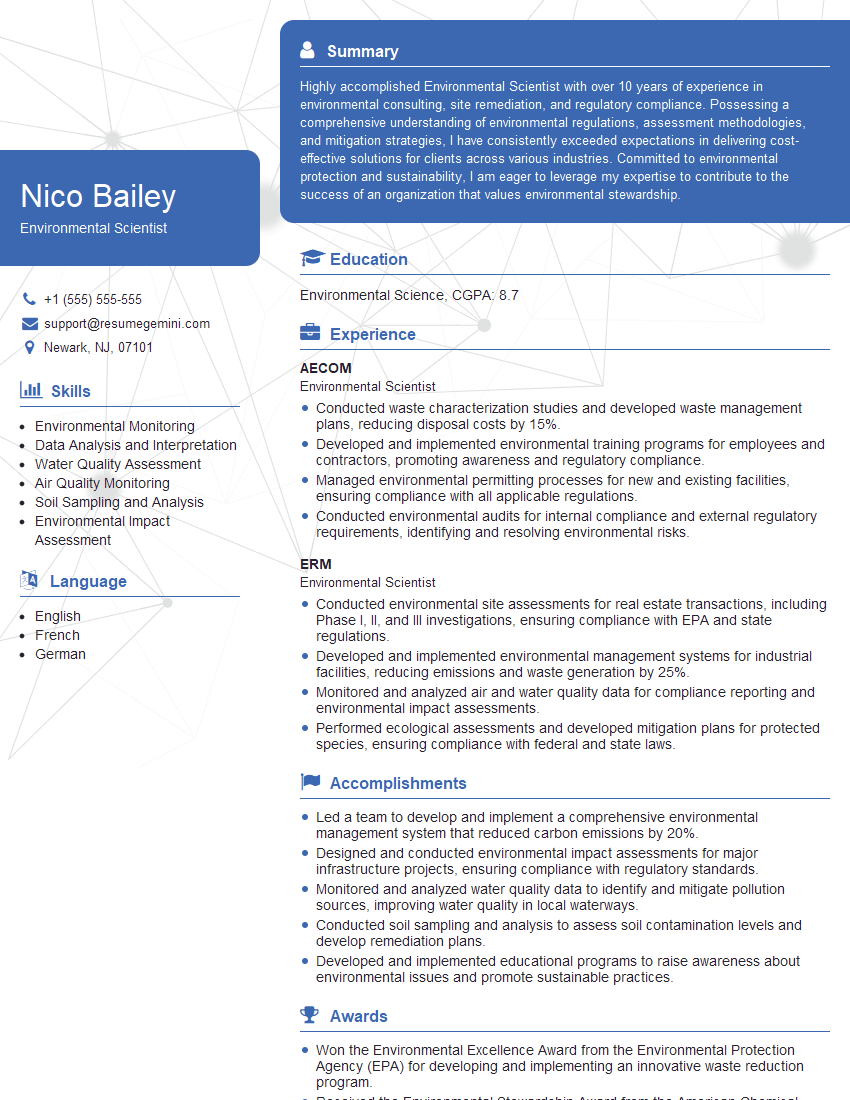
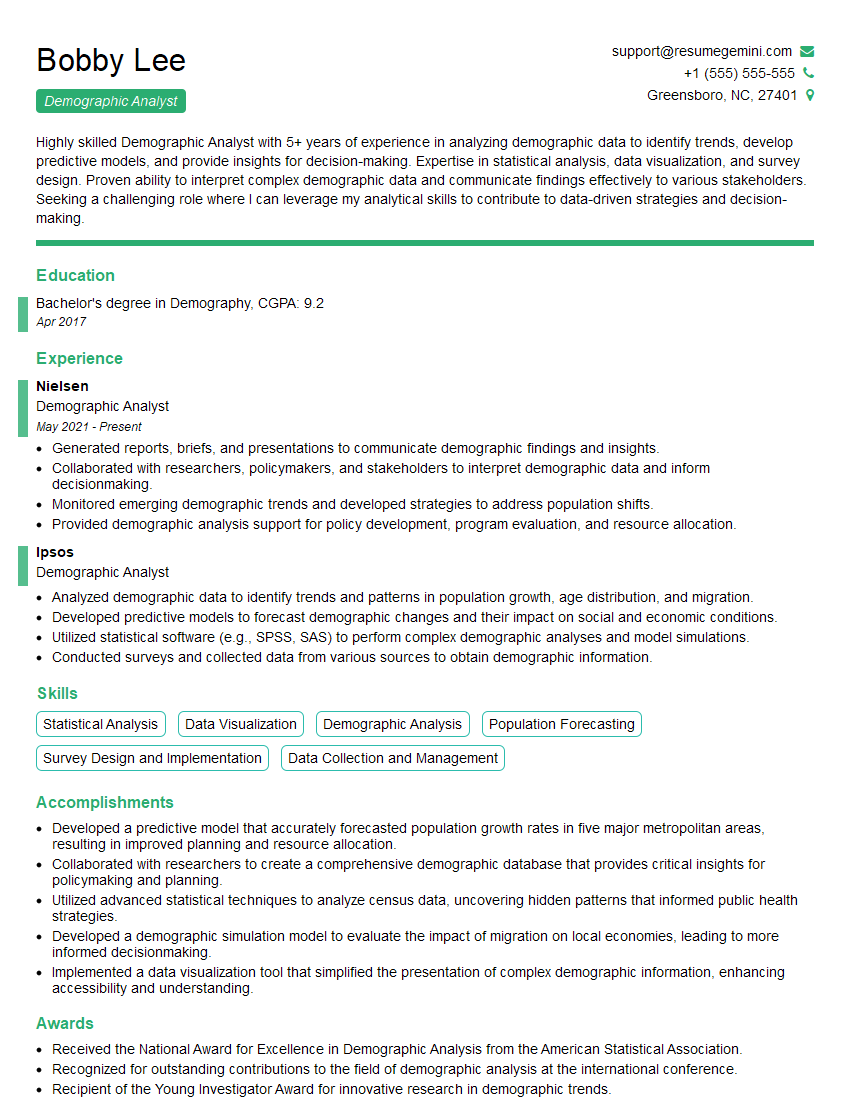
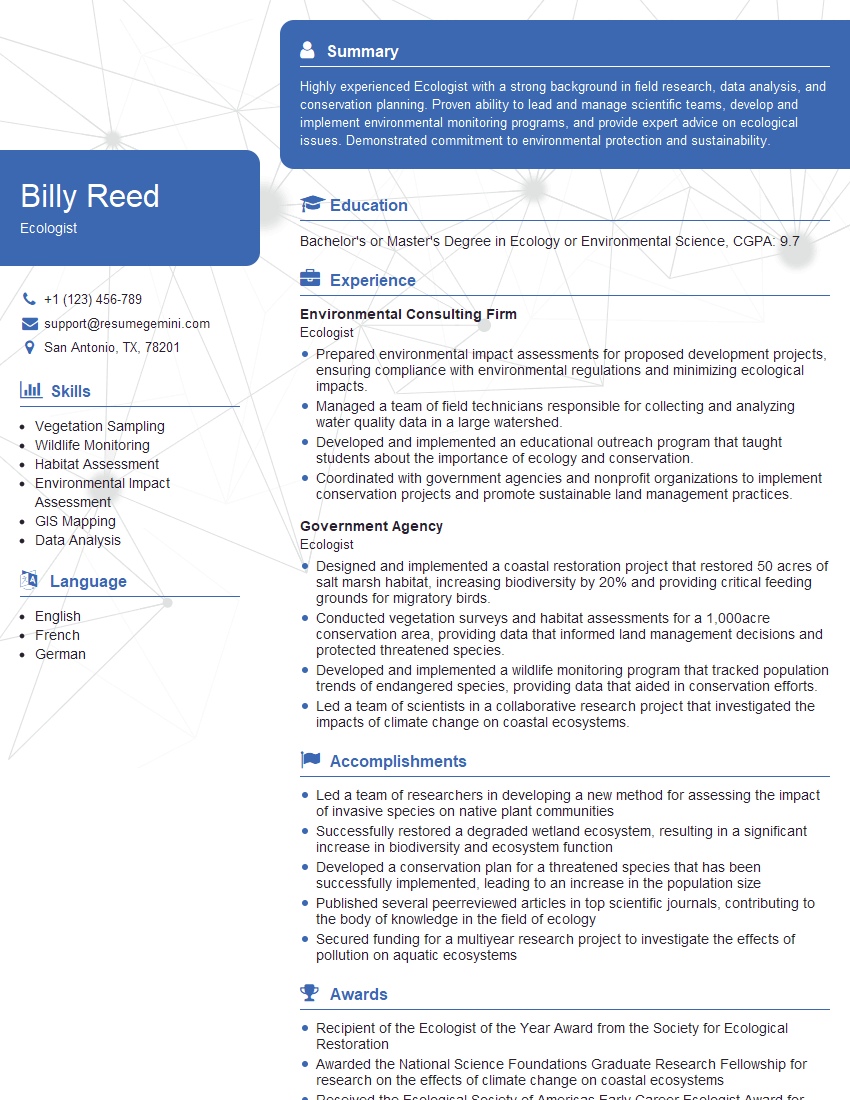
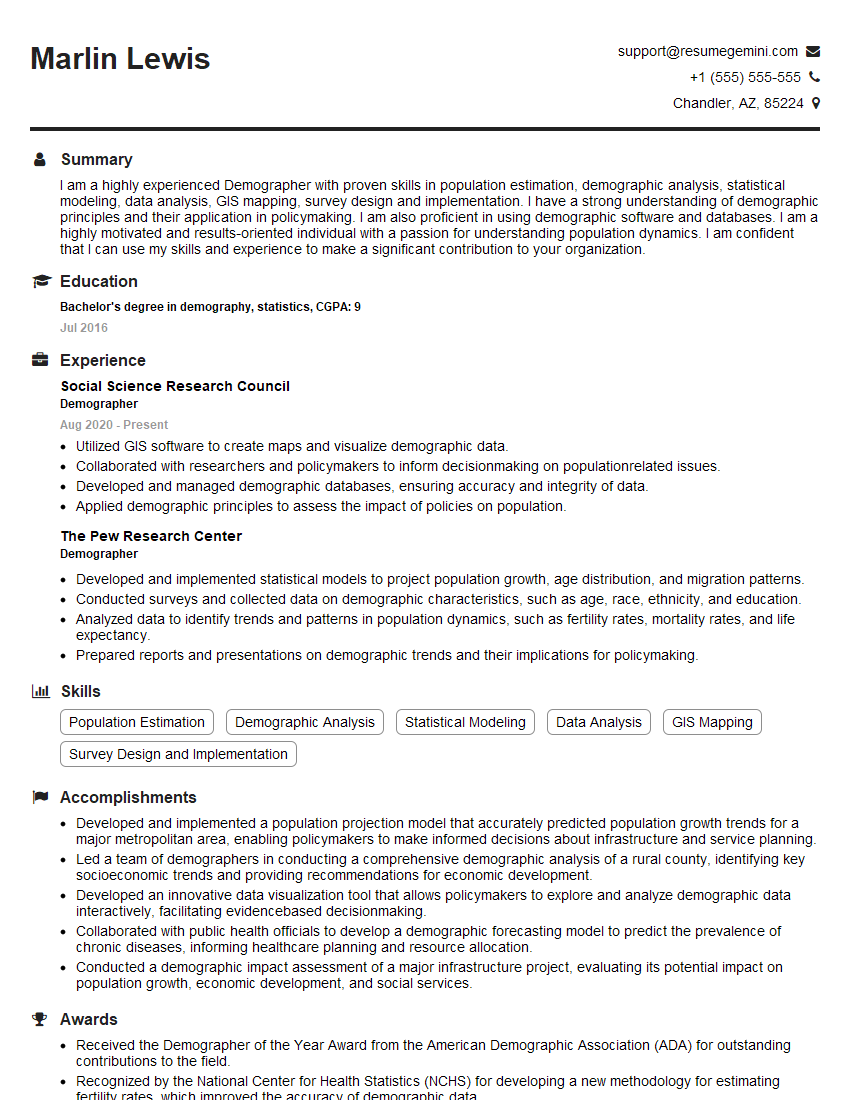
Mastering Population Dynamics and Modeling opens doors to exciting careers in research, conservation, public health, and environmental management. To maximize your job prospects, it's crucial to present your skills effectively. Creating an ATS-friendly resume is key to getting your application noticed by recruiters. We strongly encourage you to leverage ResumeGemini, a trusted resource, to build a professional resume that highlights your qualifications. ResumeGemini provides examples of resumes tailored to Population Dynamics and Modeling, helping you craft a compelling document that showcases your expertise and experience.




Explore more articles
Users Rating of Our Blogs
Share Your Experience
We value your feedback! Please rate our content and share your thoughts (optional).
What Readers Say About Our Blog
To the interviewgemini.com Webmaster.
Very helpful and content specific questions to help prepare me for my interview!
Thank you
To the interviewgemini.com Webmaster.
This was kind of a unique content I found around the specialized skills. Very helpful questions and good detailed answers.
Very Helpful blog, thank you Interviewgemini team.