Feeling uncertain about what to expect in your upcoming interview? We’ve got you covered! This blog highlights the most important Prevention Education interview questions and provides actionable advice to help you stand out as the ideal candidate. Let’s pave the way for your success.
Questions Asked in Prevention Education Interview
Q 1. Describe your experience developing and implementing prevention programs.
My experience in developing and implementing prevention programs spans over 10 years, encompassing a wide range of initiatives targeting substance abuse, bullying, and risky sexual behaviors. I’ve been involved in every stage, from initial needs assessments and program design to implementation, monitoring, and evaluation. For example, in one project addressing youth substance abuse, I collaborated with community stakeholders to develop a comprehensive program incorporating school-based education, community outreach, and family support components. We utilized a multi-pronged approach, including interactive workshops, peer mentorship programs, and parent education sessions. The program was designed to be culturally relevant and sensitive to the specific needs of the community we served. Another project focused on developing an anti-bullying campaign that leveraged social media and peer-to-peer education to reach a broad audience of young people.
Q 2. Explain your understanding of evidence-based prevention strategies.
Evidence-based prevention strategies are those that have been rigorously evaluated and shown to be effective in achieving their intended outcomes. This means that their effectiveness is supported by strong scientific evidence, typically from randomized controlled trials or quasi-experimental studies. These strategies aren’t just ‘best guesses’; they are grounded in research showing what works and what doesn’t. For example, the ‘Scared Straight’ programs were popular for a time, but rigorous research demonstrated they were actually ineffective and could even be harmful. In contrast, programs based on social cognitive theory, which emphasizes the interplay between personal factors, behavioral factors, and environmental factors, have a much stronger evidence base and demonstrated effectiveness in various prevention contexts. I rely heavily on the work of organizations like the CDC and SAMHSA to access and incorporate these evidence-based strategies into my work.
Q 3. How do you assess the needs of a community to tailor prevention programs?
Assessing community needs is paramount to creating effective prevention programs. It’s not a one-size-fits-all approach. My process involves a multi-faceted approach including:
- Data Analysis: Reviewing existing data on relevant issues such as crime rates, school suspension rates, health statistics, and community surveys to identify areas of concern.
- Community Forums and Focus Groups: Conducting community forums and focus groups to gather firsthand information from residents, stakeholders, and youth. This helps uncover unspoken needs and concerns not necessarily reflected in the data.
- Key Informant Interviews: Interviewing key stakeholders like teachers, law enforcement officials, healthcare providers, and community leaders to gain their perspectives and insights.
- Surveys and Questionnaires: Utilizing standardized surveys and questionnaires to collect quantitative data on specific behaviors, attitudes, and risk factors.
Q 4. What are some common challenges in prevention education, and how have you overcome them?
Challenges in prevention education are numerous. Funding limitations are often a major hurdle, as are issues with community engagement and buy-in. Resistance to change, stigma surrounding certain issues (like mental health), and lack of parental involvement can also hinder progress. I’ve overcome these challenges by:
- Building Strong Partnerships: Collaborating with multiple organizations and community leaders creates a strong support network and access to diverse resources.
- Tailoring Messaging: Using culturally relevant messaging and approaches enhances community engagement and buy-in.
- Data-Driven Advocacy: Utilizing data to showcase the impact of prevention programs can help secure funding and demonstrate the value of our work to stakeholders.
- Creative Program Delivery: Using diverse approaches like peer education, social media campaigns, and community events enhances program reach and relevance.
Q 5. Describe your experience evaluating the effectiveness of prevention programs.
Evaluating the effectiveness of prevention programs is crucial for demonstrating impact and informing future improvements. My approach incorporates both qualitative and quantitative methods. Quantitative methods might involve pre- and post-program surveys measuring changes in knowledge, attitudes, and behaviors. Qualitative methods include focus groups and interviews to understand participants’ experiences and perceptions of the program. I frequently utilize statistical analysis to determine the significance of observed changes. For instance, in evaluating a bullying prevention program, we compared rates of bullying incidents before and after implementation, using statistical tests to determine if the changes were statistically significant. We also conducted follow-up interviews to understand the program’s long-term impact and any unanticipated consequences. This comprehensive approach allows us to determine whether the program is effective, identify areas for improvement, and justify the need for continued funding.
Q 6. How do you utilize data to inform your prevention work?
Data is the backbone of my prevention work. I use data to:
- Identify Needs: As mentioned earlier, data analysis helps pinpoint areas needing intervention.
- Design Programs: Data helps tailor program content and strategies to the specific needs of a community.
- Monitor Progress: Tracking key indicators allows for real-time assessment of program effectiveness.
- Evaluate Outcomes: Data analysis helps determine the overall impact of a program.
- Advocate for Resources: Strong data demonstrating program success helps secure funding and support.
Q 7. Explain your experience working with diverse populations.
Working with diverse populations is essential in prevention education. I recognize that cultural differences, language barriers, and socioeconomic factors can significantly impact program effectiveness. My approach includes:
- Culturally Responsive Programming: Adapting program materials and delivery methods to resonate with the cultural norms and values of the community.
- Language Accessibility: Providing materials and services in multiple languages.
- Community Partnerships: Collaborating with community leaders and organizations that serve specific populations.
- Culturally Competent Staff: Ensuring staff have the knowledge and skills to work effectively with diverse groups.
Q 8. How do you build relationships and partnerships to support prevention efforts?
Building strong relationships and partnerships is fundamental to successful prevention efforts. It’s about creating a collaborative ecosystem where diverse stakeholders work together towards a common goal. This involves actively engaging with communities, organizations, and individuals who share a vested interest in prevention.
- Community Engagement: I prioritize building trust with community members through active listening, attending local events, and fostering open communication. For instance, in a previous role, I organized community forums to understand local concerns regarding youth substance abuse, directly involving parents, teachers, and young people in the discussion. This helped shape our prevention program to be relevant and effective.
- Collaboration with Organizations: I actively seek partnerships with schools, healthcare providers, law enforcement, and non-profit organizations. A successful collaboration I was part of involved partnering with a local school district to integrate evidence-based prevention curricula into their health education programs. This ensured consistent messaging and maximized reach.
- Strategic Alliances: Establishing formal partnerships through Memoranda of Understanding (MOUs) ensures clear roles, responsibilities, and shared goals. This is particularly important when securing funding and implementing large-scale prevention initiatives.
Ultimately, building strong relationships is about recognizing the unique contributions of each partner and fostering a spirit of mutual respect and collaboration. It’s not just about securing resources, but about creating a sustainable network dedicated to prevention.
Q 9. Describe your experience with grant writing or fundraising for prevention programs.
Grant writing and fundraising are crucial for securing the resources necessary to implement effective prevention programs. My experience encompasses all aspects of the process, from identifying funding opportunities to crafting compelling proposals and managing awarded grants.
- Needs Assessment and Program Design: Before applying for grants, I conduct thorough needs assessments to identify specific gaps in prevention services and design targeted programs that address those needs. This allows me to tailor my grant proposals to specific funding priorities.
- Compelling Narrative: I craft compelling narratives that highlight the problem, the proposed solution, the expected outcomes, and the program’s sustainability. Strong storytelling is key to captivating grant reviewers and demonstrating the value of the proposed program.
- Budget Development and Management: I develop detailed and realistic budgets that justify the costs of personnel, materials, and program activities. Effective budget management is crucial for demonstrating fiscal responsibility and ensuring program sustainability.
- Reporting and Evaluation: I ensure meticulous reporting and evaluation to demonstrate program effectiveness and the impact of the funding received. This data is vital for securing future funding and demonstrating the return on investment for grant-makers.
For example, I successfully secured a $200,000 grant from a national foundation to implement a youth substance abuse prevention program in a high-risk community. This involved a rigorous grant-writing process, including developing a comprehensive proposal, securing letters of support, and navigating the competitive grant application landscape.
Q 10. What are your preferred methods for delivering prevention education?
My preferred methods for delivering prevention education are multifaceted and tailored to the specific audience and context. I believe in utilizing a variety of approaches to maximize engagement and retention.
- Interactive Workshops: I frequently employ interactive workshops, incorporating role-playing, group discussions, and hands-on activities to enhance learning and participation. For example, I’ve used simulation exercises to illustrate the consequences of risky behaviors.
- Peer-to-Peer Education: I leverage peer-to-peer education strategies where trained youth leaders deliver messages to their peers. This approach builds trust and relatability, making the information more impactful.
- Technology-Enhanced Learning: I utilize online platforms, interactive games, and multimedia resources to engage participants and cater to diverse learning styles. For instance, using gamification to teach about decision-making skills proved to be extremely effective.
- Community-Based Interventions: I’m a strong advocate for integrating prevention education into community settings, like after-school programs or community centers. This helps reach a broader audience and ensures the relevance of the information.
The choice of method always depends on the audience’s age, learning styles, and the specific prevention topic. A flexible approach is essential to ensure maximum effectiveness.
Q 11. How do you adapt your communication style to different audiences?
Adapting communication style is crucial for effective prevention education. Different audiences require different approaches to ensure the message is received and understood.
- Age Appropriateness: When working with children, I use simple language, relatable examples, and engaging activities. With adolescents, I employ more sophisticated communication, acknowledging their developmental stage and incorporating peer influence strategies. Adults benefit from data-driven presentations and discussions focused on community impact.
- Cultural Sensitivity: I ensure that my communication is culturally sensitive and respects the values and beliefs of diverse communities. This may involve using interpreters or adapting materials to reflect the cultural nuances of the target group.
- Communication Channels: I choose the appropriate communication channels for each audience. This might involve social media for younger populations, community meetings for older adults, or targeted email campaigns for specific stakeholder groups.
- Active Listening and Feedback: I emphasize active listening and encourage feedback from the audience to ensure that the message is clear and resonates with the target group. This provides valuable insights for refining future communication strategies.
For instance, while discussing substance abuse with adolescents, I avoid lecturing and instead facilitate a dialogue about the risks and consequences, using real-life scenarios to illustrate the points.
Q 12. How do you address resistance or skepticism towards prevention messages?
Addressing resistance or skepticism towards prevention messages requires empathy, understanding, and a tailored approach. It’s about building trust and fostering open dialogue.
- Empathetic Listening: I begin by actively listening to understand the source of resistance. This might involve acknowledging concerns, validating feelings, and demonstrating respect for differing perspectives.
- Addressing Misconceptions: I directly address misconceptions and provide factual information using credible sources. This may involve presenting data, sharing personal stories, or clarifying misunderstandings.
- Collaborative Problem-Solving: Instead of imposing solutions, I collaborate with the audience to develop strategies that address their concerns. This demonstrates respect and empowers individuals to take ownership of their choices.
- Promoting Self-Efficacy: I emphasize the importance of individual agency and empower individuals to make healthy choices. This involves highlighting success stories and focusing on the positive outcomes of prevention.
For example, when encountering skepticism about the effectiveness of a particular prevention program, I might share data on its success rate in similar communities, or showcase testimonials from participants who have benefited from the program.
Q 13. How do you measure the impact of your prevention efforts?
Measuring the impact of prevention efforts is critical for demonstrating effectiveness and informing future programs. This involves a combination of quantitative and qualitative methods.
- Quantitative Data: I use quantitative data, such as surveys, pre- and post-tests, and statistical analysis to measure changes in knowledge, attitudes, and behaviors. For example, I might track rates of substance use among adolescents before and after implementing a prevention program.
- Qualitative Data: I collect qualitative data through focus groups, interviews, and case studies to gain a deeper understanding of the program’s impact on participants’ lives. This provides rich insights into the experiences and perspectives of those involved.
- Process Evaluation: I conduct process evaluation to assess the implementation fidelity of the program, ensuring that it was delivered as intended. This may involve monitoring program activities, tracking participant attendance, and documenting challenges encountered.
- Outcome Evaluation: Outcome evaluation focuses on measuring the long-term effects of the program. This might involve tracking changes in health outcomes, school performance, or involvement in criminal activities.
By using a mixed-methods approach, I can gain a comprehensive understanding of the program’s impact and identify areas for improvement. This data informs the refinement of future prevention programs and ensures that resources are allocated effectively.
Q 14. Describe your experience using technology to support prevention programs.
Technology plays a vital role in supporting modern prevention programs, enhancing reach, engagement, and impact. I have extensive experience using various technologies to enhance prevention efforts.
- Online Platforms and Learning Management Systems (LMS): I utilize online platforms and LMSs to deliver prevention education, track participant progress, and provide access to resources 24/7. This expands reach beyond geographical limitations.
- Mobile Apps and Gamification: I’ve incorporated mobile apps and gamification techniques to make prevention education more engaging and accessible, particularly for younger audiences. Interactive games can effectively teach about decision-making and risk reduction.
- Data Analytics and Reporting: I utilize data analytics tools to track program outcomes, identify trends, and measure the effectiveness of different interventions. This provides valuable insights for program improvement and resource allocation.
- Social Media and Digital Marketing: I leverage social media platforms and digital marketing strategies to disseminate prevention messages, raise awareness, and engage with target audiences. This can be crucial for reaching young people where they already are.
For instance, I developed a mobile app that provides adolescents with evidence-based information on substance abuse prevention, along with interactive exercises and self-assessment tools. The app also includes a peer-to-peer communication feature to promote social support. This technology-driven approach proved to significantly enhance participant engagement and knowledge retention.
Q 15. What are your strengths and weaknesses in prevention education?
My strengths in prevention education lie in my ability to build strong relationships with diverse communities, develop culturally relevant programs, and effectively evaluate program outcomes. I’m adept at translating complex research into accessible, engaging materials for various audiences. I’m also skilled in facilitating participatory program development, ensuring community ownership and sustainability. A weakness I’m actively working on is delegation. While I’m highly committed to program success, I sometimes struggle to let go of certain tasks, hindering overall team efficiency. To address this, I’m implementing time management strategies and actively focusing on empowering my team members.
Career Expert Tips:
- Ace those interviews! Prepare effectively by reviewing the Top 50 Most Common Interview Questions on ResumeGemini.
- Navigate your job search with confidence! Explore a wide range of Career Tips on ResumeGemini. Learn about common challenges and recommendations to overcome them.
- Craft the perfect resume! Master the Art of Resume Writing with ResumeGemini’s guide. Showcase your unique qualifications and achievements effectively.
- Don’t miss out on holiday savings! Build your dream resume with ResumeGemini’s ATS optimized templates.
Q 16. Describe a situation where you had to adapt a prevention program mid-implementation.
During a youth substance abuse prevention program, we initially focused on a lecture-based approach. However, mid-implementation, we noticed low engagement and retention. We adapted by incorporating interactive games, role-playing exercises, and peer-led discussions. This shift required immediate changes to the program schedule and training materials. We also surveyed the youth to gain feedback and understand their preferences. This adaptability was crucial; the revised, more interactive approach significantly boosted engagement and participation, ultimately improving program outcomes. We documented this change thoroughly, including its rationale, implementation, and the impact on the program’s effectiveness, offering valuable lessons for future projects.
Q 17. How do you stay current with best practices in prevention education?
Staying current in prevention education requires a multi-pronged approach. I regularly attend professional development conferences and workshops organized by organizations like SAMHSA (Substance Abuse and Mental Health Services Administration) and CDC (Centers for Disease Control and Prevention). I actively subscribe to relevant journals such as Prevention Science and Health Education & Behavior. I also actively engage in professional networks, participating in online forums and discussions with other prevention specialists. This constant learning ensures I’m familiar with the latest research, best practices, and evidence-based interventions.
Q 18. Describe your experience working with stakeholders (e.g., schools, community organizations).
My experience working with stakeholders is extensive. I’ve collaborated with school districts to integrate prevention programs into their curriculum, working closely with administrators, teachers, and counselors to ensure smooth implementation. I’ve also partnered with various community organizations, such as faith-based groups and youth centers, to reach diverse populations. This requires strong communication, active listening, and the ability to build consensus. For example, while working with a school district, we faced resistance to a particular program due to concerns about its content. Through open dialogue and collaborative modification of the program, we addressed their concerns and successfully implemented the adapted program. This demonstrated the importance of collaboration and flexibility in stakeholder engagement.
Q 19. How do you ensure program sustainability after funding ends?
Ensuring program sustainability beyond funding requires careful planning from the outset. This involves building community ownership by training local individuals to deliver the program, fostering partnerships with local organizations that can provide ongoing support, and integrating the program into existing community structures. We also develop a strong evaluation plan to demonstrate program effectiveness and attract future funding sources. Furthermore, exploring alternative funding streams, such as grants, private donations, and community fundraising, is critical. In essence, the goal is to create a program that’s deeply rooted within the community and demonstrates its lasting value.
Q 20. What is your approach to addressing ethical considerations in prevention education?
Ethical considerations are paramount in prevention education. My approach involves ensuring cultural competence and sensitivity in all program materials and interactions. Protecting participant confidentiality is critical, employing strict data privacy measures. Informed consent is always obtained before participation. Transparency about program goals and methodologies is key, and we actively address potential power imbalances, ensuring equitable access and representation. For instance, if a program involves sensitive topics like substance abuse, we prioritize establishing a safe and supportive environment, providing resources for participants who may need additional support, and ensuring that the program does not inadvertently stigmatize vulnerable populations.
Q 21. Describe your experience with program budgeting and resource allocation.
My experience with program budgeting involves a detailed needs assessment, identifying all program costs including personnel, materials, training, evaluation, and dissemination. I then develop a comprehensive budget proposal, justifying each expense and demonstrating value for money. Resource allocation involves prioritizing activities based on their impact and cost-effectiveness. I frequently utilize data-driven decision-making to allocate resources effectively. For example, if evaluation data show a specific component of the program is less effective, we may reallocate resources to enhance other, more impactful aspects. This approach ensures we maximize our resources to achieve the greatest positive impact.
Q 22. How do you handle conflict or disagreements among program participants?
Handling conflict among program participants requires a proactive and sensitive approach. It’s crucial to create a safe and respectful environment from the outset, clearly establishing ground rules for communication and interaction. This often involves emphasizing active listening, empathy, and respectful disagreement.
When conflict arises, I facilitate a structured discussion, ensuring all parties have a chance to express their perspectives. I guide them toward identifying the root cause of the disagreement, helping them understand different viewpoints. Sometimes, this involves mediating, clarifying misunderstandings, and helping participants find common ground. If the conflict is severe or escalates beyond my ability to manage it, I don’t hesitate to involve supervisors or other appropriate resources.
For example, in a youth substance abuse prevention program, two participants once clashed over differing opinions on the program’s activities. By creating a neutral space for discussion and focusing on their shared goal of a drug-free lifestyle, I helped them understand their perspectives better and eventually collaborate on a new project together.
Q 23. Describe a time you had to make a difficult decision related to a prevention program.
One difficult decision involved allocating limited resources within a community-based HIV prevention program. We had two promising initiatives: a peer-led education program targeting high-risk youth and a comprehensive outreach program focusing on testing and linkage to care for adults. Both were vital, but funding only allowed for one to be fully implemented in the first year.
After careful consideration of the epidemiological data, community needs assessment, and available resources, I decided to prioritize the peer-led youth program. The rationale was that preventing new infections among young people could have a longer-term, more significant impact on reducing the overall HIV burden. This was a hard choice, as the adult outreach program was also urgently needed, but the data supported the youth program’s potential for a higher return on investment in the long run. We developed a phased implementation plan for the adult program to be rolled out in the following year.
Q 24. How familiar are you with relevant health regulations and policies?
I am very familiar with relevant health regulations and policies, particularly those concerning privacy (HIPAA), data security, and ethical research practices. My understanding extends to state and local health department guidelines related to prevention programs, including reporting requirements for communicable diseases and mandates for specific health education curricula. I stay updated on changes in legislation and guidelines through professional development activities, subscriptions to relevant journals, and participation in professional organizations.
For instance, I’m proficient in navigating HIPAA regulations to ensure participant confidentiality during program activities and data collection. I’m also well-versed in obtaining informed consent according to ethical research principles. My understanding of these policies is crucial for ensuring program compliance, maintaining participant trust, and preventing legal and ethical breaches.
Q 25. Describe your understanding of health disparities and how they impact prevention efforts.
Health disparities refer to the systematic differences in health outcomes between different population groups, often based on socioeconomic status, race, ethnicity, gender, geographic location, sexual orientation, or other factors. These disparities significantly impact prevention efforts because they create inequities in access to resources, services, and opportunities for health improvement. For example, communities with limited access to healthcare, healthy food options, or safe environments may experience higher rates of chronic diseases, substance abuse, and mental health issues.
Ignoring these disparities can lead to ineffective prevention strategies. A program designed for a specific population may not be relevant or accessible to others facing different social determinants of health. Addressing health disparities requires a culturally sensitive and tailored approach, considering the unique needs and challenges of each community.
Q 26. How do you promote health equity in your prevention work?
Promoting health equity in my prevention work involves designing and implementing programs that actively address health disparities. This begins with a thorough community needs assessment to understand the specific barriers faced by different groups within the community. This assessment guides program development to ensure interventions are culturally appropriate, accessible, and address the unique social determinants of health impacting the target population.
Strategies include tailoring program messaging to resonate with different cultural contexts, offering services in multiple languages, providing transportation assistance, addressing potential barriers like childcare needs, and establishing collaborations with community organizations trusted by the target population. For instance, engaging community health workers who share cultural backgrounds with the target population can significantly enhance engagement and trust, thereby increasing program effectiveness.
Q 27. Explain your experience with community-based participatory research (CBPR).
Community-Based Participatory Research (CBPR) is an approach where researchers and community members collaborate as equal partners throughout the entire research process. My experience with CBPR has been extensive, involving various projects focusing on drug prevention and health promotion. In one project, we partnered with a local neighborhood organization to address youth violence. We worked together to define the research question, collect data, analyze findings, and disseminate results back to the community.
The CBPR approach fosters trust and ownership within the community. The community’s input is essential in guiding research priorities, ensuring the relevance and cultural appropriateness of the intervention, and maximizing program adoption. This collaborative model improves the program’s impact and sustainability by ensuring that it truly meets the community’s needs and preferences. Furthermore, it strengthens relationships and builds capacity within the community.
Q 28. What are some innovative approaches to prevention education you are familiar with?
Several innovative approaches in prevention education are gaining traction. One is the use of technology, such as mobile apps and online games, to deliver engaging and interactive health information. These tools can reach larger and more diverse audiences, providing convenient access to prevention education materials. Another promising approach is the use of storytelling and narrative-based interventions to connect with individuals on an emotional level. Stories can be powerful tools to encourage behavior change by highlighting real-life experiences and demonstrating the impact of prevention strategies.
Furthermore, integrating prevention education into existing community settings, such as schools, workplaces, and faith-based organizations, can increase reach and engagement. This approach leverages existing social networks and creates opportunities for embedding prevention messages into daily routines. Finally, using social marketing principles to design prevention campaigns enhances their impact by using compelling messaging, appropriate channels, and strategies to promote behavioral change.
Key Topics to Learn for Prevention Education Interview
- Understanding Prevention Frameworks: Explore various models and theories of prevention (e.g., ecological model, social cognitive theory) and their application in different settings.
- Needs Assessment and Program Planning: Learn how to conduct thorough needs assessments to identify target populations and design effective prevention programs. This includes understanding data analysis and program evaluation methodologies.
- Curriculum Development and Implementation: Gain expertise in developing engaging and culturally relevant educational materials and delivering effective prevention programs. Consider different teaching methodologies and learning styles.
- Community Partnerships and Collaboration: Understand the importance of building and maintaining strong relationships with community stakeholders to achieve program goals. This involves effective communication and negotiation skills.
- Program Evaluation and Data Analysis: Master the skills to evaluate program effectiveness, analyze data, and use findings to improve program delivery and outcomes. Familiarize yourself with various evaluation methods.
- Ethical Considerations and Cultural Competency: Develop a strong understanding of ethical principles in prevention education and the importance of cultural sensitivity and inclusivity in program design and implementation.
- Risk and Protective Factors: Gain a solid understanding of the various risk and protective factors that influence health behaviors and how to incorporate this knowledge into program design.
- Prevention Strategies and Interventions: Familiarize yourself with a range of evidence-based prevention strategies and interventions for various health issues (e.g., substance abuse, violence prevention, mental health promotion).
Next Steps
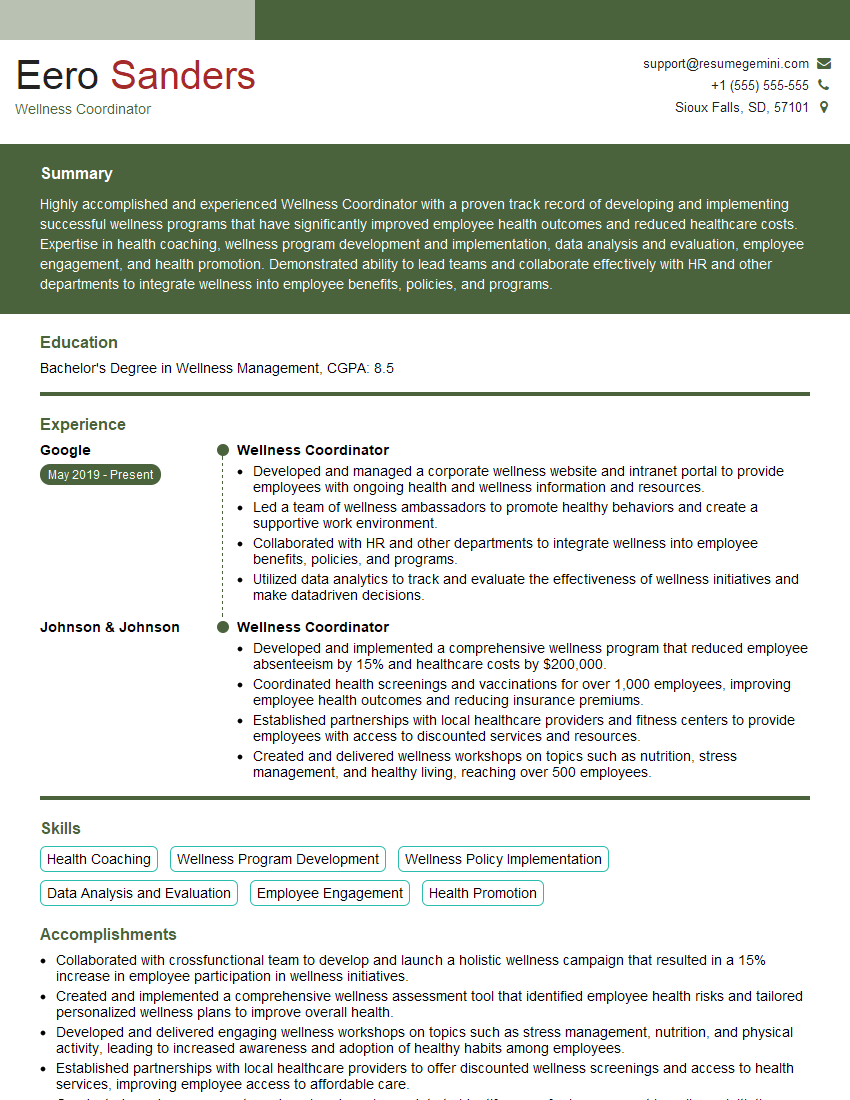
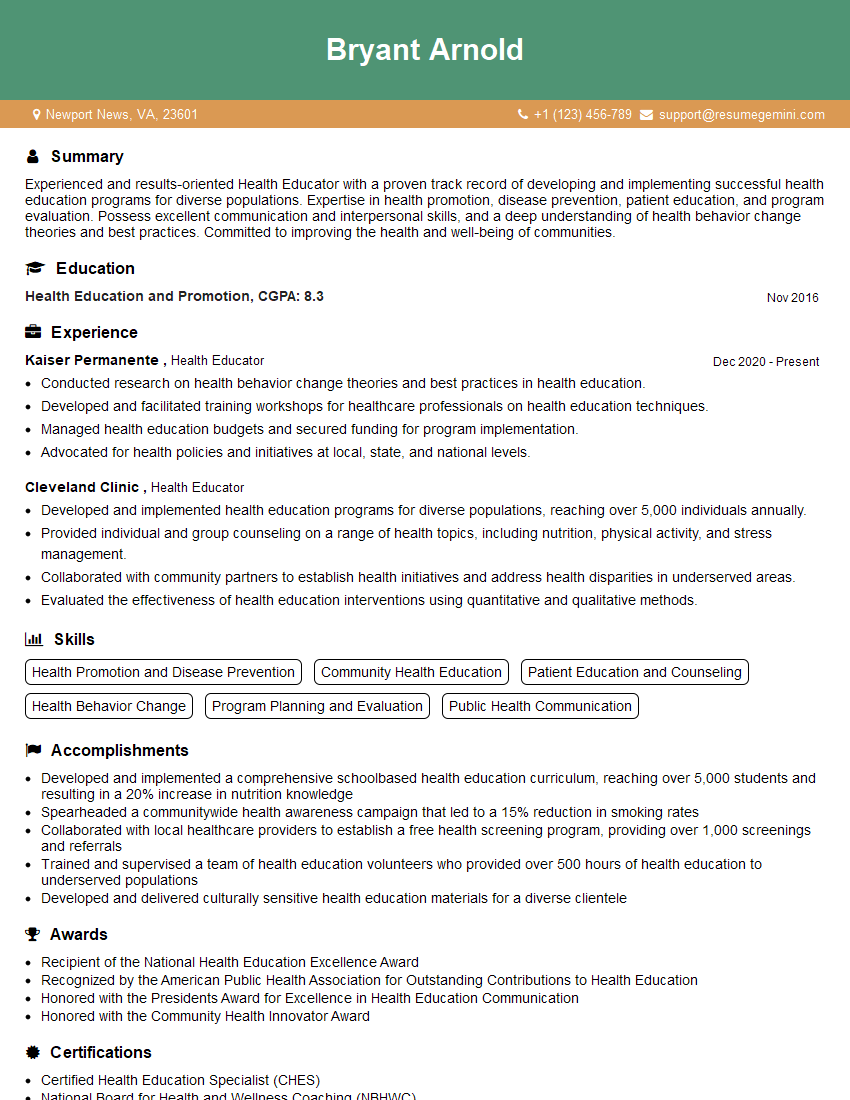
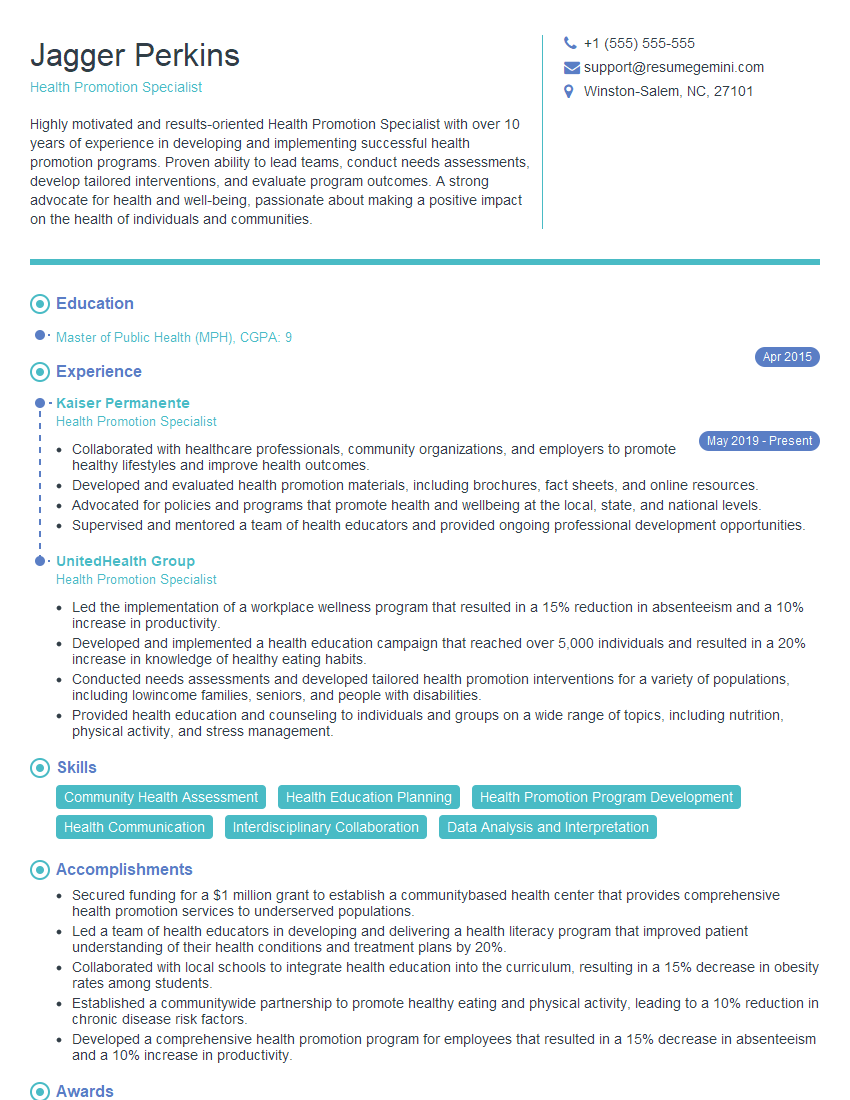
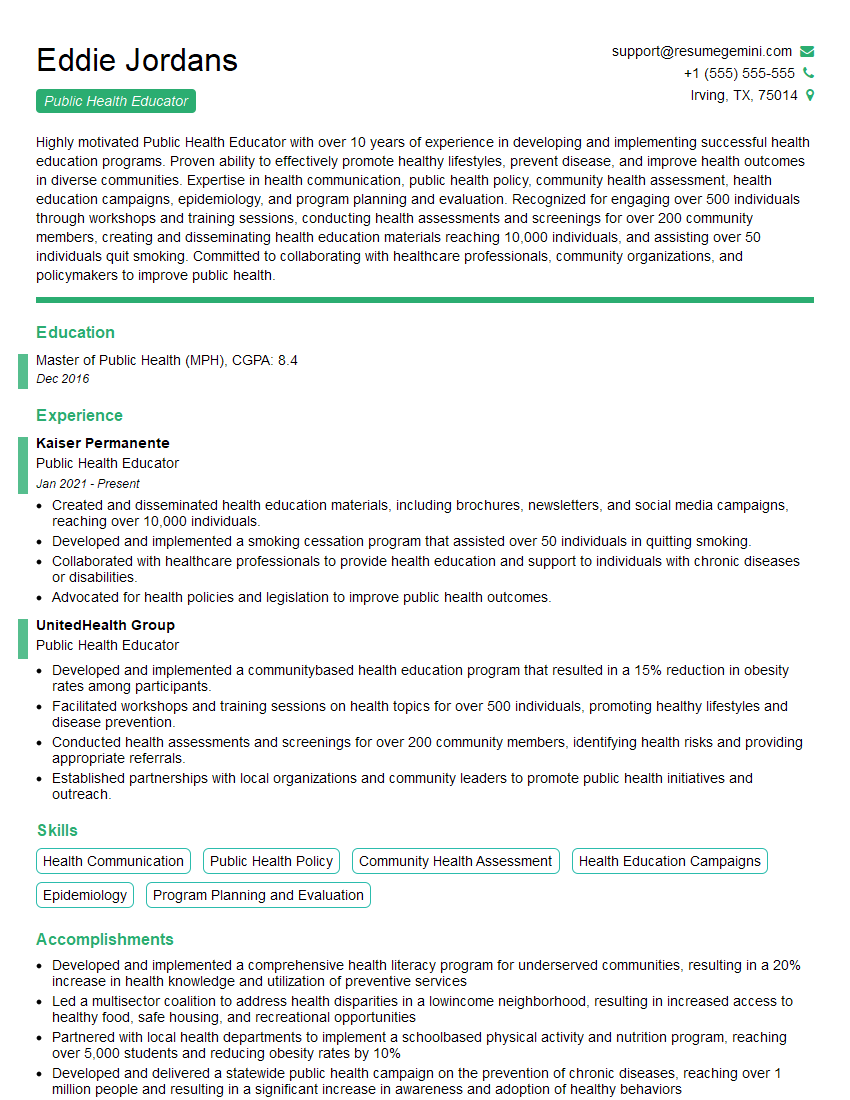
Mastering Prevention Education opens doors to a rewarding career with significant positive impact. To maximize your job prospects, creating a strong, ATS-friendly resume is crucial. ResumeGemini is a trusted resource that can help you build a professional resume that highlights your skills and experience effectively. We provide examples of resumes tailored to Prevention Education to guide you. Take the next step towards your dream career – build a compelling resume that showcases your expertise and passion for making a difference.
Explore more articles
Users Rating of Our Blogs
Share Your Experience
We value your feedback! Please rate our content and share your thoughts (optional).
What Readers Say About Our Blog
To the interviewgemini.com Webmaster.
Very helpful and content specific questions to help prepare me for my interview!
Thank you
To the interviewgemini.com Webmaster.
This was kind of a unique content I found around the specialized skills. Very helpful questions and good detailed answers.
Very Helpful blog, thank you Interviewgemini team.