Unlock your full potential by mastering the most common Proficiency in Electronic Health Records interview questions. This blog offers a deep dive into the critical topics, ensuring you’re not only prepared to answer but to excel. With these insights, you’ll approach your interview with clarity and confidence.
Questions Asked in Proficiency in Electronic Health Records Interview
Q 1. Explain the difference between an EHR and an EMR.
While the terms are often used interchangeably, there’s a key distinction between an Electronic Health Record (EHR) and an Electronic Medical Record (EMR). Think of it like this: an EMR is a digital version of a patient’s chart, containing their medical history within a single practice. An EHR is broader; it’s a comprehensive record encompassing a patient’s entire medical history across multiple healthcare settings, including hospitals, clinics, and specialists. An EMR focuses on the individual provider’s perspective, while an EHR provides a more holistic, longitudinal view accessible to all authorized healthcare providers involved in the patient’s care.
For example, an EMR might contain a record of a patient’s visit to their primary care physician, including notes from the appointment, lab results from that specific visit, and prescribed medications. An EHR would include this information, but also records from specialists, hospital stays, imaging results, and other relevant data from different providers, offering a complete picture of the patient’s health journey.
Q 2. Describe your experience with different EHR systems (e.g., Epic, Cerner, Meditech).
Throughout my career, I’ve gained extensive experience with several leading EHR systems, including Epic, Cerner, and Meditech. My experience with Epic involved managing patient data, configuring user roles and access levels, and troubleshooting system issues. I’ve witnessed firsthand its robust reporting capabilities and how its sophisticated interface enhances workflow efficiency. With Cerner, I’ve focused on implementing new modules, customizing workflows to match specific practice needs, and providing training to healthcare professionals. The system’s advanced analytics tools were particularly impactful in improving care coordination. Finally, with Meditech, I’ve worked on data migration projects, system integration, and optimizing the system’s performance to enhance its responsiveness and reliability. Each system possesses unique strengths; understanding their nuances has been crucial for successful implementation and optimization in diverse healthcare settings.
Q 3. How do you ensure data integrity and accuracy within an EHR system?
Maintaining data integrity and accuracy in an EHR system requires a multi-faceted approach. It starts with robust data entry practices, including comprehensive training for all users on accurate data input and adherence to standardized terminologies (like SNOMED CT and LOINC). Regular audits are vital to detect and correct inconsistencies. We employ data validation rules and checks to prevent the entry of invalid data, such as incorrect date formats or impossible values. In addition, system-level controls, such as version control and audit trails, track every change made to a record, enabling us to identify and correct any errors. Reconciliation of data from different sources is crucial, ensuring consistency and accuracy between various systems. Finally, regular data backups are essential to safeguard against data loss due to hardware failure or other unforeseen events. Imagine it like a meticulous accountant carefully tracking every financial transaction – the same rigor is needed for patient health information.
Q 4. What are some common challenges in implementing a new EHR system?
Implementing a new EHR system presents several challenges. Data migration can be complex and time-consuming, requiring careful planning and execution to ensure the integrity and accuracy of the transferred data. User adoption is another major hurdle; effective training and ongoing support are essential to minimize resistance and maximize the system’s utilization. Workflow disruption is inevitable during the transition, requiring careful planning to minimize the impact on patient care. Integration with existing systems can be problematic, necessitating careful consideration of interoperability and data exchange standards. Finally, budgetary constraints and the need for ongoing system maintenance and upgrades can present significant challenges. Overcoming these challenges requires a well-defined implementation plan, strong project management, and consistent communication with all stakeholders.
Q 5. Explain your experience with EHR reporting and analytics.
My experience with EHR reporting and analytics includes extracting data for performance monitoring, identifying trends, and generating reports for regulatory compliance. I’ve used tools such as Crystal Reports and custom SQL queries to create customized reports for various stakeholders. For instance, I developed a report that tracked the readmission rates of patients with heart failure, allowing for timely interventions to improve patient outcomes. Analyzing data from various EHR systems to identify areas for improvement in patient care has been a crucial part of my work. This involves using data visualization techniques to represent complex data effectively and communicate findings to non-technical audiences. I have extensive experience in using this information for quality improvement initiatives and operational efficiency enhancements.
Q 6. Describe your experience with EHR security and compliance (HIPAA).
EHR security and HIPAA compliance are paramount. My experience includes implementing and maintaining security protocols to protect patient data, including access controls, encryption, and regular security audits. We adhere strictly to HIPAA regulations by ensuring appropriate authorization for data access and maintaining detailed audit logs of all system activities. Employee training on HIPAA regulations and security best practices is crucial, and we conduct regular security awareness training to mitigate risks. We’ve also implemented breach response plans to effectively handle security incidents, ensuring the confidentiality, integrity, and availability of patient data. Think of it as safeguarding a highly sensitive vault – every precaution must be taken to prevent unauthorized access and protect the valuable assets within.
Q 7. How do you handle EHR system downtime or technical issues?
Handling EHR system downtime or technical issues requires a proactive and organized approach. We have established disaster recovery plans to ensure business continuity during system outages, including the use of backup systems and procedures for offline data entry. A clear communication plan is in place to keep staff and patients informed during downtime. We utilize ticketing systems to track and prioritize reported issues, ensuring timely resolution by our IT team. Root cause analysis is conducted following any significant downtime to prevent future occurrences. We regularly test our disaster recovery plans through drills and simulations, ensuring the systems and staff are prepared to respond effectively to any eventuality. It’s like having a well-rehearsed emergency response team, ready to handle any situation efficiently and effectively.
Q 8. How do you train healthcare providers on a new EHR system?
Training healthcare providers on a new EHR system requires a multi-faceted approach that combines various learning styles and levels of engagement. We start with a needs assessment, identifying the specific roles and tasks of each provider group to tailor training accordingly. This ensures that training isn’t overloaded with irrelevant information and focuses on skills directly applicable to their daily work.
- Phased Rollout: We implement a phased rollout, starting with a pilot group to identify and address any unforeseen issues before a full-scale launch. This minimizes disruption and allows for iterative improvements to the training materials.
- Blended Learning Approach: We combine online modules with hands-on workshops and one-on-one mentoring. This allows for self-paced learning, immediate feedback, and personalized support for different learning styles. Online modules cover foundational concepts, while hands-on workshops provide practical experience using simulated patient data and real-world scenarios.
- Job Aids and Quick Reference Guides: We provide readily accessible job aids, cheat sheets, and video tutorials that providers can refer to when they encounter challenges. These resources are designed to be concise, practical, and easy to use during their workday.
- Ongoing Support and Feedback Mechanisms: We establish ongoing support mechanisms like help desks, email support, and regular feedback sessions to address any ongoing issues or questions that arise after the initial training. Regular competency assessments help evaluate knowledge retention and identify areas needing further refinement in the training.
For example, during the implementation of Epic at a large hospital system, we saw significant improvement in user satisfaction and proficiency by using this approach. We focused on role-specific training for physicians, nurses, and administrative staff, with tailored content and interactive simulations reflecting each role’s unique tasks.
Q 9. What are your strategies for troubleshooting EHR errors?
Troubleshooting EHR errors requires a systematic approach. It’s crucial to first identify the error type: is it a data entry error, a system malfunction, or an integration issue? We employ a structured troubleshooting methodology:
- Reproduce the Error: The first step involves documenting the exact steps to reproduce the error. Screenshots and detailed descriptions are extremely important.
- Check for Known Issues: Consult the EHR vendor’s knowledge base or support documentation for known bugs or issues that might be related to the observed error.
- Verify Data Integrity: Ensure that the data being entered is accurate and follows the EHR’s data validation rules. This often involves checking for data entry typos, inconsistent formats, or missing required fields.
- Examine System Logs: Investigate the system logs for any error messages or events that might provide clues about the root cause. These logs can often reveal more technical information than user-facing error messages.
- Test in Different Browsers/Devices: Sometimes, the error is related to browser compatibility or device limitations. Test the functionality across different platforms to determine if the issue is isolated to a specific environment.
- Contact Vendor Support: If the issue cannot be resolved through internal troubleshooting, contact the EHR vendor’s support team. Have the documentation and logs prepared for a faster resolution.
For instance, if a provider reports an inability to access a patient’s chart, we first verify the user’s login credentials and access rights. Then, we check the system logs to see if there are any network connectivity issues or system outages. If the issue persists, we involve the vendor’s support team.
Q 10. Explain your experience with EHR data migration.
EHR data migration is a complex process that requires meticulous planning and execution. It involves the systematic transfer of patient data from one EHR system to another, ensuring data integrity and compliance with regulatory requirements like HIPAA. My experience includes:
- Data Mapping and Cleansing: This critical step involves mapping data fields from the source system to the target system and cleaning the data to ensure accuracy and consistency. This often involves resolving data discrepancies, correcting errors, and standardizing data formats.
- Data Validation: We perform rigorous data validation checks before, during, and after the migration to verify that the data has been transferred accurately and completely. This often includes comparing data sets, running checksums, and performing record counts.
- Testing and Validation: Thorough testing and validation are vital to ensure the migrated data functions correctly within the new system. This involves creating test datasets and verifying various data points to spot any unexpected behaviors.
- Go-Live Support: A critical aspect is providing support during and after the go-live phase to address any issues that may arise from the data migration. This typically involves monitoring the system, addressing any reported problems, and performing post-migration audits.
In one project, we migrated data from a legacy system to a new cloud-based EHR. The meticulous data mapping phase, which involved manually reviewing thousands of records, was key to the successful transition. We employed several automated validation tools along with manual verification to ensure data accuracy and reduce the risk of errors.
Q 11. How do you ensure patient data privacy and confidentiality within the EHR?
Ensuring patient data privacy and confidentiality is paramount. We implement a multi-layered approach:
- Access Control: Implementing robust access control measures, using role-based access control (RBAC) to grant access only to authorized personnel based on their roles and responsibilities. This ensures that only those who need access to specific data can view or modify it.
- Data Encryption: Encrypting both data at rest and data in transit to protect against unauthorized access or interception. Encryption safeguards data even if a system is breached.
- Audit Trails: Maintaining comprehensive audit trails to track all access and modifications to patient data. This allows for the identification of any unauthorized access attempts or data breaches.
- Regular Security Assessments and Penetration Testing: Conducting regular security assessments and penetration testing to identify and address any vulnerabilities in the EHR system. This proactive approach mitigates risks and identifies weaknesses before they can be exploited.
- Employee Training: Providing thorough training to all employees on HIPAA regulations, data privacy, and security best practices. This ensures that all staff members understand their responsibilities in protecting patient data.
Think of it like a bank vault: multiple layers of security—access codes, surveillance, and physical barriers—are needed to protect the valuable assets inside. Similarly, multi-layered security measures are necessary to protect sensitive patient data.
Q 12. What are your strategies for improving EHR workflow efficiency?
Improving EHR workflow efficiency involves a combination of strategies focused on optimizing processes, reducing clicks, and leveraging automation:
- Workflow Optimization: Analyzing current workflows to identify bottlenecks and inefficiencies. This involves mapping out the steps involved in various tasks and identifying areas where streamlining can occur.
- Template and Macro Utilization: Creating standardized templates and macros to automate repetitive tasks and reduce data entry time. This allows providers to focus on patient care rather than administrative tasks.
- Customization and Personalization: Customizing the EHR to meet the specific needs of individual users and departments. This can involve adjusting screen layouts, creating custom reports, and personalizing notification settings.
- Integration with other systems: Integrating the EHR with other healthcare systems, such as laboratory information systems (LIS) and radiology information systems (RIS), to automate data exchange and reduce manual data entry.
- Training and Change Management: Providing proper training and support to staff members to ensure they are comfortable and efficient in using the new workflows and tools.
For example, we implemented a system that automatically pulled lab results into patient charts, eliminating the need for manual entry and reducing delays in treatment decisions. We also developed custom templates for common clinical scenarios, reducing documentation time and improving consistency.
Q 13. Describe your experience with different EHR interfaces and integrations.
My experience encompasses a variety of EHR interfaces and integrations. I’ve worked with various HL7 interfaces (e.g., ORU, ADT) to exchange data with different systems, including pharmacy systems, lab systems, and imaging systems. Understanding different interface standards is critical for seamless data exchange and interoperability.
HL7 (Health Level Seven): This is the most common standard for exchanging healthcare data between different systems. I have extensive experience implementing and troubleshooting HL7 interfaces using various messaging protocols like MLLP (Minimum Lower Layer Protocol). For example, I worked on integrating an EHR with a new picture archiving and communication system (PACS) using HL7’s imaging messages.
FHIR (Fast Healthcare Interoperability Resources): I’m also familiar with FHIR, a more modern standard designed for greater flexibility and interoperability. FHIR is particularly useful for enabling API-based integrations, allowing for easier data access and exchange between applications.
Other Integrations: We’ve also used various custom interfaces and APIs to connect to specialized systems or third-party applications. This requires a strong understanding of data structures, API protocols (e.g., REST, SOAP), and security considerations.
Successful integration requires careful planning, testing, and ongoing maintenance to ensure data integrity and security.
Q 14. How do you manage multiple EHR systems within an organization?
Managing multiple EHR systems within an organization presents unique challenges. A strategic approach is crucial to ensure data consistency, interoperability, and efficient operations. Key strategies include:
- Centralized Data Governance: Establishing a centralized data governance team responsible for overseeing data standards, data quality, and data security across all EHR systems. This team ensures consistency in data management practices.
- Standardized Processes and Workflows: Implementing standardized processes and workflows across all systems to minimize confusion and improve efficiency. This ensures that data is managed consistently regardless of the specific EHR system.
- Data Integration and Interoperability: Implementing robust data integration strategies to enable seamless data exchange between different EHR systems. This may involve using HL7 interfaces, APIs, or other integration tools.
- Regular System Audits and Compliance: Performing regular system audits and compliance checks to ensure that all EHR systems meet regulatory requirements and security standards. This helps maintain data integrity and minimizes risks.
- Vendor Management: Effectively managing relationships with multiple EHR vendors to ensure timely support and updates across all systems. A well-defined service level agreement (SLA) with each vendor is vital.
For example, in a large healthcare system with different EHRs in different departments, we implemented a centralized data warehouse to consolidate data from all systems, providing a unified view for reporting and analytics. We also established standardized data entry protocols and training programs to ensure data consistency across all departments. This approach minimized data silos and improved the overall efficiency of the organization.
Q 15. Describe your experience with EHR system upgrades and maintenance.
EHR system upgrades and maintenance are crucial for ensuring optimal performance, security, and compliance. My experience encompasses the entire lifecycle, from initial planning and testing through to post-implementation support. This includes collaborating with IT teams, vendors, and clinical staff to assess the need for upgrades, evaluate new functionalities, and develop comprehensive implementation plans.
For example, during a recent upgrade to Epic, I led a team of clinical staff through the transition. We utilized a phased rollout approach, starting with pilot training in a low-volume area, then expanding across departments, allowing us to identify and resolve issues proactively. This minimized disruption to patient care and ensured a smooth transition. We also developed comprehensive training materials and conducted hands-on sessions to empower clinical users to effectively utilize the new system features.
Maintenance involves ongoing monitoring of system performance, addressing user issues, performing regular backups and disaster recovery planning. This proactive approach prevents significant problems and ensures continuous data integrity.
Career Expert Tips:
- Ace those interviews! Prepare effectively by reviewing the Top 50 Most Common Interview Questions on ResumeGemini.
- Navigate your job search with confidence! Explore a wide range of Career Tips on ResumeGemini. Learn about common challenges and recommendations to overcome them.
- Craft the perfect resume! Master the Art of Resume Writing with ResumeGemini’s guide. Showcase your unique qualifications and achievements effectively.
- Don’t miss out on holiday savings! Build your dream resume with ResumeGemini’s ATS optimized templates.
Q 16. What is your experience with using EHR systems for telehealth?
My experience with EHR systems in telehealth settings is extensive. I’ve worked with platforms like Zoom and Doximity, integrating them securely with our EHR to facilitate virtual consultations, remote monitoring, and e-prescribing. This includes ensuring patient privacy and security through HIPAA-compliant video conferencing and secure messaging systems.
A key aspect of successful telehealth integration is ensuring seamless data flow between the telehealth platform and the EHR. This involves configuring interfaces and APIs to accurately record patient encounters, vital signs, and other data directly into the patient’s electronic chart. For instance, we implemented a system that automatically uploads telehealth visit notes and vital signs collected via a connected medical device directly into the EHR, eliminating manual data entry and reducing the potential for errors.
Beyond technical integration, I’ve also focused on streamlining workflows to optimize efficiency and patient experience in telehealth encounters. This includes developing standardized templates for virtual visits and creating user-friendly guides for both providers and patients.
Q 17. How do you identify and resolve discrepancies in patient data within the EHR?
Identifying and resolving data discrepancies in the EHR requires a systematic approach combining technical skills and clinical knowledge. It starts with establishing clear data quality standards and using system reports to identify inconsistencies. These might include conflicting medication lists, differing allergy information, or discrepancies between recorded and entered data.
My approach typically involves:
- Reviewing the patient’s complete chart: This provides context and helps understand potential sources of discrepancies.
- Comparing data from different sources: This could include comparing information entered by different providers, or with external data sources like labs or pharmacies.
- Utilizing data reconciliation tools within the EHR, if available.
- Contacting relevant healthcare providers or departments to verify and resolve conflicting information.
- Documenting all corrections and resolutions clearly and concisely within the EHR, maintaining an audit trail.
For example, if I find a discrepancy in a patient’s medication list, I would first check for prescription refill history from the pharmacy interface within the EHR. If there’s a conflict, I’d reach out to the prescribing physician to verify the current medication regimen and update the EHR accordingly. All changes are documented with notes clearly indicating the source of the error and the corrective actions taken.
Q 18. Explain your understanding of HL7 standards.
HL7 (Health Level Seven) standards are crucial for interoperability between different healthcare systems. They define a set of protocols and formats for exchanging electronic health information. My understanding of HL7 encompasses various versions and message types, including ADT (Admission, Discharge, and Transfer), ORM (Order), and ORU (Observation Result).
I’m proficient in interpreting HL7 messages and identifying errors in data transmission. This is vital for ensuring accurate and timely exchange of patient data between different systems such as EHRs, laboratory systems, and radiology systems. For instance, I have experience configuring and troubleshooting HL7 interfaces to ensure seamless integration of data from our EHR to a third-party billing system. Understanding HL7 also ensures compliance with regulatory requirements for data exchange.
Understanding HL7 allows for a deeper understanding of the technical infrastructure of the EHR, enabling more effective problem solving in the event of data integration issues.
Q 19. What is your experience with data validation and cleansing in an EHR?
Data validation and cleansing are essential for maintaining the accuracy and integrity of patient data within the EHR. This involves identifying and correcting errors, inconsistencies, or incomplete data. My experience involves utilizing both automated tools and manual processes to ensure data quality.
Automated processes might involve using built-in EHR functionalities for data validation checks, such as ensuring date formats are correct or verifying that numerical values fall within a certain range. Manual cleansing may require a more in-depth review of the data to identify and correct inaccuracies such as typographical errors or missing information. This often requires careful attention to detail and clinical knowledge to ensure that corrections are accurate and appropriate.
A real-world example would be running a report to identify patients with missing allergy information. This could trigger a manual review of their charts and contacting the patients or referring physicians to obtain the necessary information and update the EHR.
Q 20. How do you ensure compliance with Meaningful Use regulations?
Meaningful Use (MU) regulations incentivized the adoption and meaningful use of EHRs to improve healthcare quality and efficiency. Ensuring compliance requires a comprehensive understanding of these regulations, which have evolved over time. This includes meeting specific requirements related to data capture, exchange, and reporting.
My experience includes working with our organization to implement processes and technologies to meet MU requirements. This has involved configuring the EHR to capture specific data elements, implementing secure messaging, and submitting required data to government agencies. It also includes ongoing monitoring of our compliance status to ensure we maintain adherence to the evolving regulatory landscape. For example, we ensured that the EHR was configured to automatically collect and report measures related to patient engagement, care coordination, and clinical quality.
Staying current with changes in MU and other relevant regulations is essential to maintaining compliance.
Q 21. What experience do you have with EHR audits?
EHR audits are critical for ensuring data integrity, compliance, and security. My experience involves participating in both internal and external audits, including preparing for audits, responding to auditor inquiries, and documenting findings and corrective actions.
Internal audits help identify areas for improvement in data quality, security, and compliance within our organization. External audits are often conducted by regulatory bodies or third-party organizations to verify compliance with relevant regulations. Preparation for these audits involves reviewing policies, procedures, and documentation; ensuring the accuracy and completeness of data; and making sure that systems and processes are functioning as intended.
For instance, I’ve been involved in audits focused on ensuring the accurate reporting of clinical quality measures, compliance with HIPAA regulations, and adherence to data governance policies. Audits help to identify weaknesses and implement improvements to ensure the continuous security and integrity of patient data.
Q 22. Describe your experience with electronic prescribing within an EHR.
Electronic prescribing (e-prescribing) within an EHR streamlines the process of writing and sending prescriptions electronically. Instead of handwritten prescriptions, physicians use the EHR system to directly transmit prescription data to the patient’s pharmacy. This significantly reduces errors, improves medication safety, and enhances workflow efficiency.
My experience encompasses using various e-prescribing modules within different EHR systems. I’m proficient in navigating medication databases to select the correct drug, dosage, and frequency. I understand the importance of verifying patient allergies and interactions before sending prescriptions. For instance, in one case, the system flagged a potential interaction between a patient’s existing medication and a newly prescribed drug, preventing a potentially harmful outcome. I’ve also utilized e-prescribing to send controlled substance prescriptions, following all applicable state and federal regulations, which often requires additional authentication steps and careful documentation. This experience includes troubleshooting technical issues related to e-prescribing, such as network connectivity problems or pharmacy-specific software compatibility issues. I’m adept at resolving these issues quickly to ensure timely medication access for patients.
Q 23. How do you utilize EHR data for quality improvement initiatives?
EHR data is a goldmine for quality improvement (QI) initiatives. We can analyze this data to identify trends, gaps in care, and areas for improvement. For example, we can track medication adherence rates by examining prescription refill patterns and patient encounters. Low adherence might suggest a need for patient education programs or medication reconciliation strategies.
Another example involves analyzing patient satisfaction scores. Low scores could highlight areas where patient communication or access to care needs improvement. We can use this data to create reports and dashboards that visualize key metrics, allowing us to track progress toward QI goals. I have personally used EHR data to identify a significant increase in readmissions for heart failure patients within a specific timeframe. By analyzing patient charts and lab results, we were able to pinpoint gaps in discharge planning and implement new protocols, leading to a reduction in readmissions. This involved collaborations with nurses, pharmacists, and social workers, emphasizing the importance of teamwork in effective QI.
Q 24. What is your experience with creating and maintaining EHR templates?
Creating and maintaining EHR templates is crucial for efficient documentation and standardization of care. Well-designed templates guide clinicians to consistently capture essential patient information, resulting in improved data quality and better clinical decision-making.
My experience includes developing templates for various clinical settings, including progress notes, admission assessments, and discharge summaries. I understand the importance of using standardized terminology (like SNOMED CT and LOINC, discussed further in question 4) to ensure data interoperability and accurate reporting. For example, I developed a template for managing diabetes that included structured fields for documenting blood glucose levels, HbA1c results, medications, and patient education. The template also incorporates prompts for documenting specific details related to diabetic foot exams and risk assessments. Maintaining these templates involves regular reviews to ensure accuracy and relevance. This includes adapting templates to reflect updates in clinical guidelines and incorporating feedback from clinicians on usability and efficiency.
Q 25. Describe your familiarity with different EHR terminology (e.g., SNOMED CT, LOINC).
SNOMED CT (Systematized Nomenclature of Medicine – Clinical Terms) and LOINC (Logical Observation Identifiers Names and Codes) are crucial standardized terminologies used in EHR systems. SNOMED CT provides a comprehensive, hierarchical classification of clinical findings, procedures, and diagnoses. LOINC standardizes laboratory and clinical observation results. Using these ensures consistency and facilitates data exchange between different healthcare systems.
My familiarity extends to understanding how these terminologies are implemented within EHR systems. I know how to select the correct codes when documenting patient information and understand the impact of using inaccurate or outdated codes. For instance, using the correct SNOMED CT code for a particular diagnosis is crucial for accurate disease tracking and epidemiological studies. Similarly, using the correct LOINC code for a lab result ensures the data can be accurately interpreted and analyzed across different systems. I understand the importance of using these standardized terminologies for reporting and data analysis, improving the overall quality and reliability of information captured in the EHR.
Q 26. How do you handle requests for patient health information from authorized individuals?
Handling requests for patient health information requires strict adherence to privacy regulations (like HIPAA in the US). I have extensive experience in fulfilling these requests while maintaining patient confidentiality. This involves verifying the identity and authorization of the requesting individual and ensuring the request is compliant with applicable laws and regulations.
The process usually begins with verifying the requester’s identity, often through multiple forms of identification. Then, the scope of the request is reviewed to ensure that only the necessary information is released. This might include specific portions of the patient’s record, rather than the entire file. Once the authorization is validated, I would use the EHR system’s secure tools to retrieve the information and appropriately transmit it. I understand the importance of carefully documenting each step in this process, maintaining a secure audit trail. In cases where the request is deemed inappropriate or incomplete, I am trained to handle the rejection respectfully yet firmly, ensuring adherence to the established protocols and protecting patient privacy.
Q 27. Explain your understanding of different EHR access control mechanisms.
EHR access control mechanisms are essential for ensuring patient data security and privacy. These mechanisms regulate who can access what information within the system. Several controls are commonly employed. Role-based access control (RBAC) grants access privileges based on an individual’s role (e.g., physician, nurse, administrative staff). Access is often further restricted based on specific patient data (e.g., only the treating physician can access a patient’s allergy information).
Another common mechanism involves data masking, where sensitive information (such as social security numbers or addresses) is partially hidden from users who don’t need access to that specific data, while still allowing access to other data fields. Audit trails provide a record of all access attempts, allowing tracking of who accessed what information and when. My experience includes understanding and applying these access controls to ensure that only authorized personnel have access to appropriate patient information, complying with all relevant regulations.
Q 28. What is your experience with EHR system customization and configuration?
EHR system customization and configuration involve tailoring the system to meet the specific needs of a healthcare organization or practice. This can include modifying existing workflows, creating custom reports, and integrating with other healthcare systems.
My experience involves working with EHR vendors to implement necessary changes, ensuring that the system supports the organization’s operational needs and clinical workflows. This might involve configuring user roles, customizing forms and templates, or setting up automated alerts. For instance, in a previous role, I worked with the vendor to customize the order entry system to better align with our hospital’s standardized order sets. This included adding validation rules to ensure orders are compliant with established protocols. I also have experience configuring interfaces with other systems, such as a laboratory information system (LIS) or a pharmacy system, allowing for seamless data exchange. This involves a thorough understanding of both the EHR system and the external systems being integrated.
Key Topics to Learn for Proficiency in Electronic Health Records Interview
- Data Entry and Management: Understand the nuances of accurate and efficient data entry, including patient demographics, medical history, and diagnostic results. Consider the implications of data errors and strategies for data integrity.
- Clinical Documentation: Master the process of creating complete and concise clinical documentation within the EHR system. Practice documenting patient encounters, procedures, and medication administration. Explore different documentation styles and their impact on care coordination.
- Medical Terminology and Abbreviations: Demonstrate a strong grasp of medical terminology and commonly used abbreviations within the context of EHR systems. Understand how misinterpretations can lead to errors and how to avoid them.
- EHR System Navigation and Functionality: Become proficient in navigating the specific EHR system relevant to the job description. Explore features like order entry, results review, and patient messaging. Be prepared to discuss your experience with different EHR interfaces.
- Reporting and Analytics: Understand how to generate reports and analyze data from the EHR system. Practice interpreting key performance indicators (KPIs) and using data to identify trends and improve workflows. This includes understanding data privacy and security in reporting.
- Security and Compliance: Demonstrate a strong understanding of HIPAA regulations and data security best practices within the EHR environment. Discuss measures to protect patient privacy and maintain data integrity.
- Workflow Optimization and Process Improvement: Discuss strategies for optimizing workflows within the EHR system to improve efficiency and reduce errors. Be ready to provide examples of how you’ve contributed to process improvement in the past.
- Problem-Solving and Troubleshooting: Be prepared to discuss your approach to problem-solving within the context of EHR systems. How do you handle technical glitches, system errors, or data inconsistencies?
Next Steps
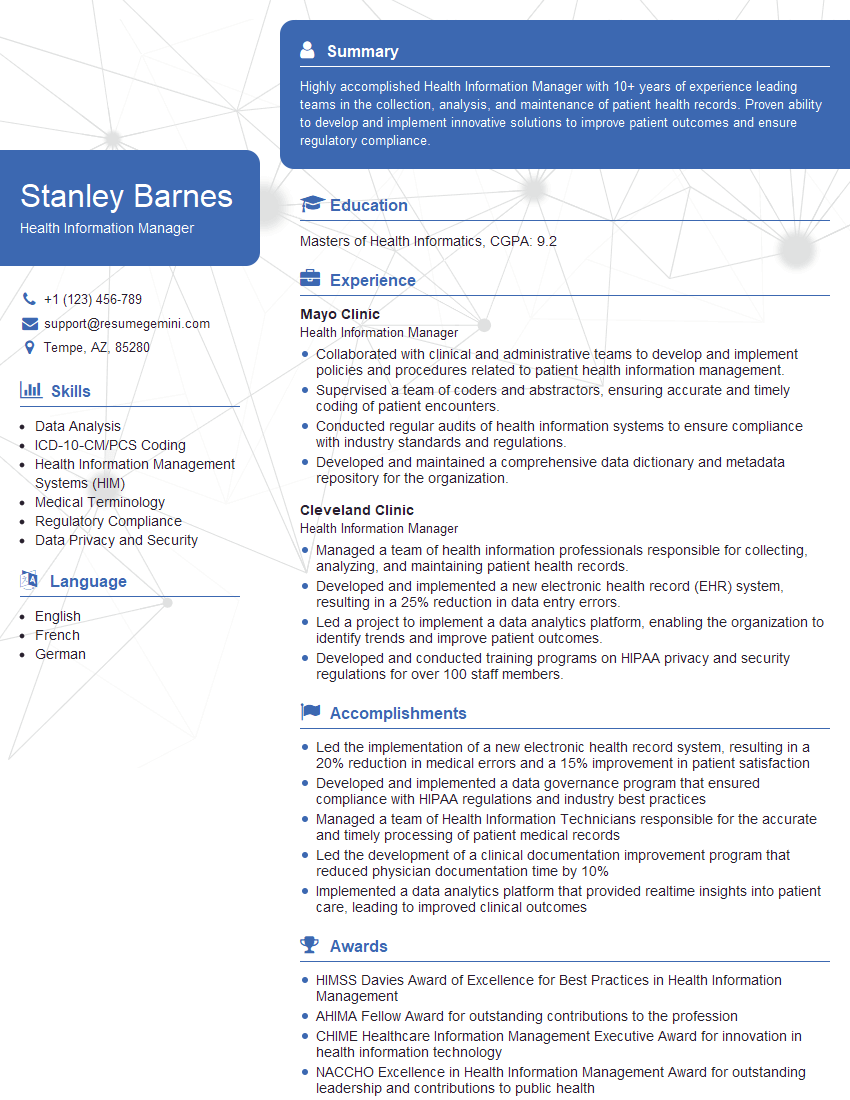
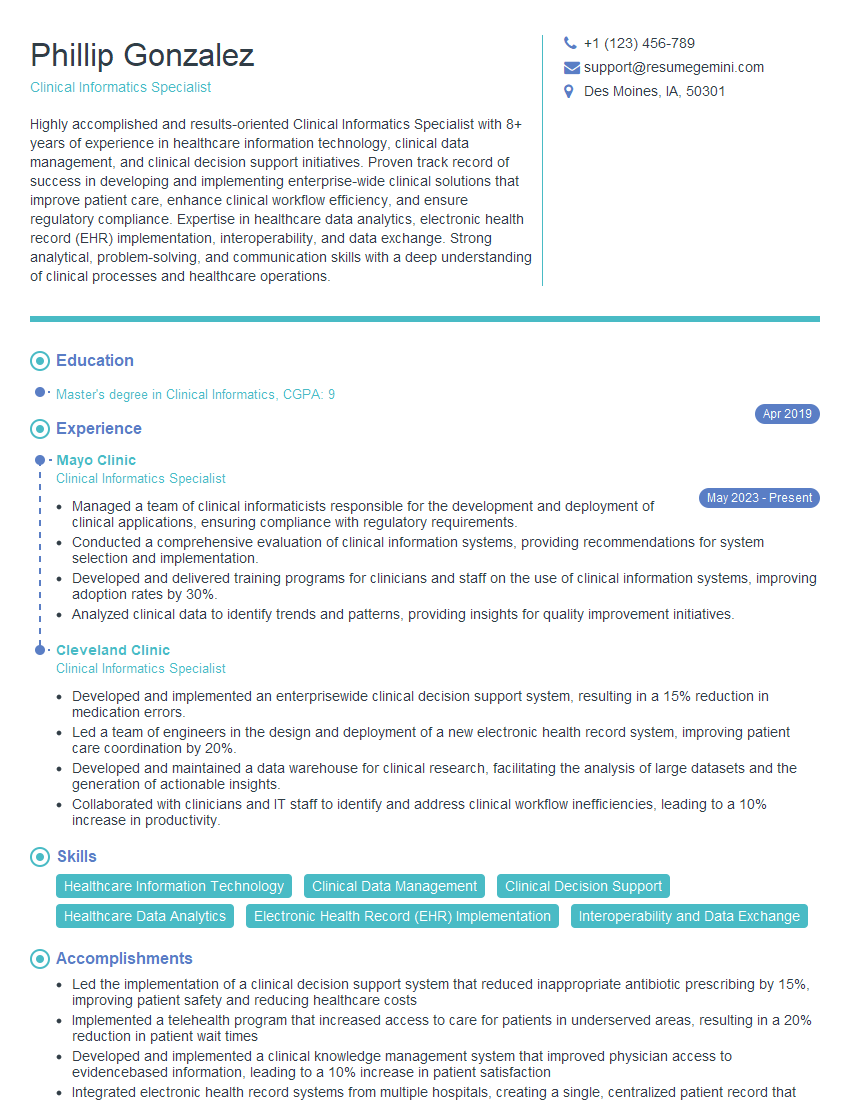
Mastering proficiency in Electronic Health Records is crucial for career advancement in healthcare. It demonstrates your ability to navigate the increasingly complex digital landscape of modern medicine, enhancing your value to any healthcare organization. To significantly improve your job prospects, create an ATS-friendly resume that highlights your skills and experience effectively. We strongly encourage you to utilize ResumeGemini, a trusted resource, to craft a compelling resume that showcases your expertise in Electronic Health Records. ResumeGemini provides examples of resumes tailored to this specific skillset, helping you present your qualifications in the best possible light.
Explore more articles
Users Rating of Our Blogs
Share Your Experience
We value your feedback! Please rate our content and share your thoughts (optional).
What Readers Say About Our Blog
To the interviewgemini.com Webmaster.
Very helpful and content specific questions to help prepare me for my interview!
Thank you
To the interviewgemini.com Webmaster.
This was kind of a unique content I found around the specialized skills. Very helpful questions and good detailed answers.
Very Helpful blog, thank you Interviewgemini team.