The right preparation can turn an interview into an opportunity to showcase your expertise. This guide to Proficiency in Measuring and Cutting Equipment interview questions is your ultimate resource, providing key insights and tips to help you ace your responses and stand out as a top candidate.
Questions Asked in Proficiency in Measuring and Cutting Equipment Interview
Q 1. What types of measuring instruments are you proficient with?
My proficiency extends to a wide range of measuring instruments, crucial for ensuring accuracy in any cutting operation. This includes:
- Vernier Calipers: I’m adept at using vernier calipers for precise linear measurements, down to 0.01mm or 0.0005 inches. For instance, I regularly use them to measure the thickness of sheet metal before cutting.
- Micrometers: For even greater precision, I utilize micrometers to measure extremely small dimensions, vital when working with delicate or intricate components. I’ve used them extensively in measuring the diameter of small holes or the thickness of thin wires.
- Dial Indicators: These instruments are indispensable for checking surface flatness and parallelism, which are critical aspects of achieving accurate cuts. I’ve used dial indicators to ensure a workpiece is perfectly aligned before laser cutting.
- Measuring Tapes and Steel Rules: For larger dimensions, I rely on reliable measuring tapes and steel rules, calibrated to ensure accurate measurements. These are essential when working with larger materials such as wooden panels or metal sheets.
- Digital Laser Distance Meters: These tools are invaluable for quick and accurate measurements over greater distances, especially beneficial when measuring across a large workshop floor or setting up workpieces.
My experience spans various materials and applications, guaranteeing precise measurements regardless of the project’s complexity.
Q 2. Describe your experience with different cutting methods (e.g., laser, plasma, waterjet).
My experience encompasses several cutting methods, each with its unique characteristics and applications:
- Laser Cutting: I’m highly proficient in operating laser cutting machines, from setting up the CAD files to controlling the laser parameters for various materials like acrylic, wood, and metal. The precision and speed of laser cutting make it ideal for intricate designs and high-volume production. I’ve used it to create everything from custom signage to intricate metal components.
- Plasma Cutting: Plasma cutting is my go-to method for thicker metals. I understand how to adjust parameters like amperage and gas flow to optimize cutting speed and quality. I’ve used plasma cutters to cut through steel plates for large-scale fabrication projects.
- Waterjet Cutting: This method is particularly useful for cutting hard materials or those that are sensitive to heat. I’ve utilized waterjet cutting for precise cuts in stone, glass, and composites, Its versatility is perfect for projects requiring intricate shapes or thin cuts.
I understand the advantages and limitations of each technique and can select the most appropriate method based on material type, thickness, and desired precision.
Q 3. How do you ensure accuracy and precision in your measuring and cutting tasks?
Accuracy and precision are paramount in my work. I achieve them through a multi-faceted approach:
- Calibration: Regular calibration of measuring instruments is crucial. I maintain a strict schedule for calibration, verifying the accuracy of all measuring tools against certified standards.
- Proper Technique: Using each instrument correctly is vital. This includes understanding the zeroing process, parallax errors in reading scales, and appropriate pressure when using calipers or micrometers.
- Machine Maintenance: Cutting equipment needs regular maintenance to ensure precision. This includes cleaning, lubrication, and checking for alignment issues. A well-maintained machine contributes significantly to accuracy.
- Material Handling: Properly supporting and securing the material during cutting minimizes distortion and ensures accurate cuts.
- Test Cuts: Before starting a production run, I always perform test cuts to verify the accuracy of settings and the quality of the cut. This allows me to adjust parameters as needed.
Through these steps, I minimize errors and deliver consistently accurate results.
Q 4. Explain the importance of following safety protocols when operating cutting equipment.
Safety is my top priority. Operating cutting equipment necessitates strict adherence to safety protocols, including:
- Personal Protective Equipment (PPE): Always wearing appropriate PPE, such as safety glasses, hearing protection, and gloves, is non-negotiable. The type of PPE varies based on the cutting method and material. For instance, when working with lasers, special laser safety glasses are crucial.
- Machine Guards: Ensuring that all machine guards are in place and functioning correctly is essential for preventing injuries. Never operate a machine with a faulty guard.
- Emergency Shut-Offs: Familiarizing myself with the location and operation of emergency stop buttons is crucial. I always have a clear escape route planned in case of an emergency.
- Fire Safety: For processes that generate sparks or flames (like plasma cutting), having a fire extinguisher nearby and knowing how to use it is vital.
- Proper Training: Ongoing training and certification are key to maintaining a high level of safety awareness.
By consistently adhering to these protocols, I prevent accidents and maintain a safe working environment.
Q 5. What are the common causes of inaccuracies in measuring and cutting processes?
Inaccuracies in measuring and cutting can stem from several sources:
- Improper Tool Calibration: Uncalibrated or poorly maintained measuring instruments lead to inaccurate measurements.
- Incorrect Measurement Techniques: Errors from parallax or incorrect reading of measuring scales.
- Machine Malfunction: Mechanical issues with cutting equipment, such as misalignment or worn parts, can affect cutting accuracy.
- Material Defects: Imperfections in the material itself, such as warping or internal stress, can lead to inconsistent cuts.
- Environmental Factors: Temperature variations or humidity can affect both measurements and the cutting process.
- Software Errors: Mistakes in CAD/CAM programming can result in inaccurate cutting paths.
Identifying and addressing these potential sources is key to improving the overall accuracy of the process.
Q 6. How do you troubleshoot issues with cutting equipment malfunctions?
Troubleshooting cutting equipment malfunctions involves a systematic approach:
- Safety First: Turn off the machine and ensure it’s safe to approach before beginning any troubleshooting.
- Identify the Problem: Observe the malfunction carefully – what exactly is happening? Is there an error code? This pinpoints the area of concern.
- Check the Obvious: Start with the simplest checks, such as power supply, gas supply, and air pressure (depending on the machine type).
- Consult Manuals: The machine’s operating manual will often have troubleshooting sections with common problems and solutions.
- Inspect Components: Check for loose connections, worn parts, or obstructions.
- Test Components: If possible, test individual components to identify the faulty part.
- Seek Expert Assistance: If the problem is complex or beyond my expertise, I will seek assistance from qualified technicians or engineers.
A methodical approach, combined with my experience, allows for efficient troubleshooting and minimizes downtime.
Q 7. Describe your experience with CAD/CAM software for cutting applications.
I have extensive experience with various CAD/CAM software packages used in cutting applications, including AutoCAD, SolidWorks, and Mastercam. My skills encompass:
- Design and Modeling: Creating accurate 2D and 3D models of parts and components.
- Toolpath Generation: Programming CNC machines by generating optimized toolpaths based on the design, material, and cutting method.
- Simulation: Utilizing software simulations to preview and optimize the cutting process before actual production.
- Post-Processing: Generating machine-specific code (G-code) to control the cutting machine.
- Optimization: Adjusting cutting parameters to minimize material waste, maximize cutting speed, and maintain accuracy.
My experience extends to adapting designs and toolpaths for different machines and materials. I use this expertise to ensure the efficient and accurate fabrication of complex parts.
Q 8. What materials have you worked with using various cutting techniques?
My experience encompasses a wide range of materials, each requiring a tailored approach. I’ve worked extensively with metals – from soft aluminum and stainless steel to harder materials like titanium and tool steel. Different cutting techniques are crucial here; for example, laser cutting is ideal for intricate designs in thinner sheets of stainless steel, while milling is necessary for heavier, more robust parts. I’ve also worked with various plastics, including acrylic, polycarbonate, and ABS, adapting techniques like waterjet cutting for precise, burr-free edges and routing for larger, less detailed cuts. Finally, I have experience with wood, using techniques ranging from precise sawing for joinery to CNC routing for complex shapes. The choice of material always dictates the best cutting technique for optimal results.
- Metals: Aluminum, Stainless Steel, Titanium, Tool Steel (Laser Cutting, Milling, Waterjet Cutting)
- Plastics: Acrylic, Polycarbonate, ABS (Waterjet Cutting, Routing, Laser Cutting)
- Wood: Various hardwoods and softwoods (Sawing, CNC Routing)
Q 9. How do you interpret technical drawings and specifications related to cutting and measuring?
Interpreting technical drawings is fundamental to my work. I start by carefully reviewing the overall design, noting dimensions, tolerances, and material specifications. I then break down the drawings into individual components, identifying critical features and the required cutting processes. Detailed specifications, such as surface finish requirements and edge profiles, guide my selection of cutting tools and parameters. For example, a drawing specifying a +/- 0.05mm tolerance necessitates precise setup and the use of high-precision equipment like a CNC machine. Understanding the drawing’s annotation is crucial; symbols indicating cutting directions, depths, and angles are all integral to ensuring accurate execution.
Think of it like reading a map: the overall view gives context, while the details guide you step-by-step to your destination. In this case, the destination is a precisely cut part that conforms to the design specifications.
Q 10. Explain the concept of tolerance in precision cutting.
Tolerance in precision cutting refers to the permissible variation from the specified dimension. It’s the acceptable range of error. Imagine trying to cut a piece of wood exactly 100mm long. A tolerance of +/- 0.1mm means the actual length can be anywhere between 99.9mm and 100.1mm and still be considered acceptable. Smaller tolerances require greater precision and more sophisticated equipment. Tight tolerances are crucial in applications where precise fit and functionality are essential, such as aerospace or medical device manufacturing. Conversely, looser tolerances are acceptable where high precision isn’t a critical requirement.
Think of it like making a puzzle: too much tolerance, and the pieces won’t fit; too little, and it’s incredibly difficult to assemble.
Q 11. What quality control measures do you implement to ensure accurate cuts?
Quality control is paramount. My approach involves several steps. First, I always meticulously check the cutting tools for sharpness and wear before starting. Second, I perform a test cut on a scrap piece of the same material to verify the machine settings and cutting parameters. Third, I use calibrated measuring instruments – like micrometers and calipers – to verify dimensions of the finished parts, checking against the blueprint specifications. Finally, I visually inspect the cut surfaces for imperfections such as burrs, chips, or surface irregularities. Any discrepancies trigger a thorough investigation into the cause and corrective actions. Data logging and record-keeping are essential to track quality and identify trends.
This systematic approach ensures high consistency and adherence to quality standards. I treat every cut as an opportunity to enhance my precision and technique.
Q 12. How do you maintain and clean measuring and cutting equipment?
Maintaining and cleaning equipment is critical for accuracy, longevity, and safety. This includes regular cleaning of cutting surfaces to remove debris that can affect accuracy, lubricating moving parts to ensure smooth operation, and checking for wear and tear. For example, I always clean laser cutting heads after each use to prevent residue buildup, which can lead to inaccurate cuts or damage the equipment. Regular calibration of measuring instruments like calipers and micrometers is also crucial to ensure accurate measurements. Following manufacturer guidelines for maintenance schedules and employing appropriate safety measures are vital aspects of this process.
Think of it like maintaining a car: regular maintenance prevents bigger problems down the road, improving both safety and performance.
Q 13. Describe your experience with different types of cutting tools and their applications.
My experience covers a wide range of cutting tools. For example, I’m proficient with various saws – from hand saws for fine woodworking to band saws for precise curves. I’m also experienced with milling machines, using various end mills for precise material removal and shaping. Laser cutters offer high precision for intricate designs in various materials. Waterjet cutting is ideal for thicker materials and produces very clean cuts. Each tool has its unique strengths and weaknesses; the choice depends heavily on the material, desired accuracy, and the complexity of the design. My expertise lies in selecting the right tool for the job and optimizing its use for the best results.
- Saws: Hand saws, Band saws, Circular saws
- Milling Machines: Various end mills, drills
- Laser Cutters: CO2 and Fiber Lasers
- Waterjet Cutters: Abrasive waterjet systems
Q 14. How do you handle unexpected variations in material properties during cutting?
Unexpected variations in material properties – such as inconsistencies in thickness, hardness, or composition – can significantly impact cutting accuracy. My approach involves careful material inspection before cutting, selecting appropriate cutting parameters, and employing adaptive control techniques where available. For instance, if I encounter a thicker-than-expected section in a sheet of metal during laser cutting, I might need to adjust the laser power and cutting speed to prevent burning or incomplete cuts. Similarly, variations in hardness can necessitate changes in feed rate and tool selection during milling. Careful monitoring of the cutting process and making real-time adjustments are critical to maintain accuracy and prevent damage to the equipment or the workpiece. Detailed documentation of these adjustments helps prevent similar issues in the future.
It’s like navigating a winding road: you have a map, but unexpected road conditions require adjusting your speed and path to reach the destination safely and efficiently.
Q 15. What is your experience with different types of cutting fluids?
My experience with cutting fluids spans a wide range, encompassing various types tailored to different materials and machining processes. I’m proficient in using water-soluble coolants, which are environmentally friendly and effective for many applications. I also have extensive experience with synthetic fluids, offering better lubricity and longer tool life in demanding operations. For specialized applications like high-speed machining or difficult-to-machine materials, I’ve worked with oil-based fluids and even cryogenic cooling. The selection of the appropriate fluid hinges on factors such as the material being machined (steel, aluminum, titanium, etc.), the cutting operation (milling, turning, drilling), and the desired surface finish.
For instance, when machining aluminum, a water-soluble coolant is generally preferred for its effective cooling and chip evacuation, preventing built-up edge and ensuring a good surface finish. However, when working with titanium, which is known for its high reactivity, a specially formulated synthetic fluid might be necessary to prevent chemical reactions and extend tool life. My approach always involves carefully considering the specific needs of the material and operation to optimize efficiency and prevent damage.
Career Expert Tips:
- Ace those interviews! Prepare effectively by reviewing the Top 50 Most Common Interview Questions on ResumeGemini.
- Navigate your job search with confidence! Explore a wide range of Career Tips on ResumeGemini. Learn about common challenges and recommendations to overcome them.
- Craft the perfect resume! Master the Art of Resume Writing with ResumeGemini’s guide. Showcase your unique qualifications and achievements effectively.
- Don’t miss out on holiday savings! Build your dream resume with ResumeGemini’s ATS optimized templates.
Q 16. How do you select the appropriate cutting parameters for a specific material and application?
Selecting appropriate cutting parameters is crucial for achieving optimal results and preventing tool wear or workpiece damage. This involves a careful consideration of several interdependent factors: the material being machined, the cutting tool geometry, the machine’s capabilities, and the desired surface finish. The key parameters include cutting speed, feed rate, and depth of cut.
Let’s say we’re milling a piece of stainless steel. I would start by consulting reference materials or manufacturers’ recommendations for appropriate cutting speeds and feeds for stainless steel using my chosen cutting tool. I might start with a conservative approach initially, then carefully monitor the process for signs of tool wear, excessive heat, or poor surface finish. If necessary, I would adjust the parameters incrementally to optimize performance. For instance, if I observe excessive tool wear, I would reduce the cutting speed or feed rate. Conversely, if the surface finish is subpar, I might increase the cutting speed or decrease the feed rate. The process involves a balance of speed, efficiency and quality, and experience allows for a rapid optimization.
Q 17. Explain the difference between different types of measuring tools (e.g., calipers, micrometers).
Calipers and micrometers are both precision measuring instruments, but they differ in their accuracy and application. Calipers, which come in various forms (vernier, digital), are generally used for less precise measurements, offering accuracy to around 0.1mm or 0.001 inches. They are handy for measuring external and internal dimensions, depths, and step heights. Micrometers, on the other hand, are designed for highly precise measurements, offering accuracy down to 0.01mm or 0.0001 inches. Their precise measurement screw mechanism allows for highly accurate readings.
Imagine measuring the diameter of a shaft. A caliper would provide a good initial measurement, while a micrometer would provide the extremely precise value required for close-tolerance applications. The choice between the two depends entirely on the required accuracy of the measurement. In many production scenarios, both are used in a complementary fashion: calipers for initial measurements and micrometers for final, critical verification.
Q 18. How do you ensure the safety of yourself and others while operating cutting equipment?
Safety is paramount in my work. Before operating any cutting equipment, I always ensure the machine is properly maintained and guarded. I rigorously follow the manufacturer’s instructions and company safety protocols. This includes wearing appropriate personal protective equipment (PPE), such as safety glasses, hearing protection, and cut-resistant gloves. I carefully inspect the workpiece and cutting tools for any defects before starting the operation. Furthermore, I maintain a clean and organized work area to prevent accidents.
A crucial aspect is ensuring that the machine is properly secured and that all safety interlocks are functioning correctly. I never operate equipment if I’m tired or feeling unwell. Before starting any operation, I conduct a thorough risk assessment and ensure all colleagues are aware of potential hazards and safe operating procedures. Continuous awareness and attention to detail are vital to preventing accidents.
Q 19. What are the common safety hazards associated with using measuring and cutting equipment?
The common safety hazards associated with measuring and cutting equipment are numerous and range from minor injuries to serious accidents. These hazards include:
- Cuts and lacerations: From sharp cutting tools and workpieces.
- Crush injuries: From moving parts of machinery.
- Eye injuries: From flying debris or splashes of cutting fluids.
- Hearing loss: From the noise generated by machinery.
- Burns: From hot metal or sparks.
- Electrocution: From faulty electrical equipment.
It is critical to implement comprehensive safety measures to mitigate these risks. Regular machine inspections, proper training, adherence to safety procedures, and use of appropriate PPE are essential in creating a safe work environment.
Q 20. Describe your experience with preventive maintenance of cutting equipment.
Preventive maintenance is a critical aspect of ensuring the safe and efficient operation of cutting equipment. My experience includes a wide range of maintenance tasks, from regular lubrication and cleaning to more complex procedures like blade sharpening and component replacement. I’m familiar with different types of cutting equipment maintenance schedules and follow manufacturer guidelines meticulously. This involves regular inspections to identify potential problems early on, ensuring timely repairs or replacements of worn-out parts. A well-maintained machine is more efficient, accurate and, most importantly, safer.
For example, I perform regular lubrication checks on the moving parts of a milling machine to ensure smooth operation and prevent premature wear. I also regularly inspect the cutting tools for wear and replace them as needed. Keeping detailed maintenance logs helps track these tasks and aids in predicting when future maintenance will be required. This proactive approach prevents costly breakdowns and ensures that the equipment operates at peak efficiency.
Q 21. How do you handle rejected parts due to inaccuracies in cutting?
Handling rejected parts due to cutting inaccuracies involves a systematic approach that emphasizes root cause analysis and corrective action. My process begins with carefully examining the rejected part to determine the nature and extent of the inaccuracy. This involves using precision measuring tools to identify the exact deviations from the specifications. Once the cause is identified, I investigate the potential contributing factors. These could include improper machine setup, dull cutting tools, variations in material properties, or even programming errors.
Once the root cause is identified, I take appropriate corrective action. This could involve readjusting the machine, replacing worn tools, recalibrating the measuring instruments, or reviewing and correcting the cutting program. It might even require adjustments to the material handling process. Documentation is key; I meticulously record the details of the rejected part, the root cause analysis, and the corrective actions taken. This helps prevent similar issues in the future and supports continuous improvement in the manufacturing process.
Q 22. What is your understanding of different types of cutting processes and their applications?
Cutting processes are diverse, each suited to specific materials and desired outcomes. Let’s explore some key methods:
- Shearing: This involves applying force to cut through a material, typically using a guillotine or shears. It’s excellent for sheet metal and fabrics, offering clean cuts with minimal deformation, particularly for thinner materials. Think of cutting paper with scissors.
- Sawing: This uses a toothed blade to progressively remove material. Band saws, circular saws, and jigsaw saws are common examples, offering versatility across various materials like wood, metal, and plastics, depending on the blade type. The cut’s quality depends on the blade’s tooth design and the operator’s skill.
- Abrasive Cutting: This employs abrasive materials to erode the material, often seen in grinding or sanding. This method is good for shaping and finishing but generally less precise for intricate cuts. Think of using sandpaper to refine a shape.
- Waterjet Cutting: A high-pressure stream of water, often mixed with an abrasive, cuts through various materials with remarkable precision. This method is ideal for intricate designs and materials that are difficult to cut with other methods. It’s popular for ceramics and composites.
- Laser Cutting: A highly precise method using a laser beam to melt and vaporize material, ideal for intricate designs and various materials. Common applications include cutting acrylic, wood, and metal sheets.
- Plasma Cutting: This uses a high-temperature plasma arc to melt and cut through electrically conductive materials like metals. It’s fast and efficient for thicker materials but might produce a rougher cut compared to laser cutting.
The choice of cutting process depends heavily on factors such as material properties, desired cut quality, production volume, and cost.
Q 23. How do you calculate material waste during the cutting process?
Calculating material waste is crucial for optimizing production and minimizing costs. It involves a combination of careful planning and accurate measurement.
The process generally involves:
- Nest Design: Efficiently arranging parts on the material sheet to minimize unused space. Software like AutoCad or specialized nesting software can significantly help in this process.
- Material Dimensions: Precisely measuring the dimensions of the raw material sheet.
- Part Dimensions: Accurately measuring the dimensions of each part to be cut.
- Kerf Allowance: Accounting for the width of the cut made by the cutting tool. This is especially important for processes like sawing and laser cutting, where the kerf (the width of the cut) can add up.
- Waste Calculation: Subtracting the total area of the parts from the total area of the material sheet, including the kerf allowance. This gives you the area of waste material.
- Waste Percentage: Expressing the waste area as a percentage of the total material area. This allows for comparison across different nesting designs or projects.
For example, if you have a 1m x 1m sheet (1 sq m) and cut out parts totaling 0.7 sq m, with a kerf allowance of 0.02 sq m, the total waste is 1 sq m – 0.7 sq m – 0.02 sq m = 0.28 sq m. The waste percentage is (0.28 sq m / 1 sq m) x 100% = 28%.
Q 24. What software or programs are you proficient in for design or operation of cutting equipment?
Proficiency in software is critical for efficient operation and design in this field. I’m experienced with several programs:
- AutoCAD: For creating detailed 2D and 3D designs of parts and nesting layouts. I’m comfortable using its drafting tools, creating accurate measurements and annotations.
- SolidWorks: For 3D modeling, simulation, and design verification of complex parts and assemblies. This helps to ensure the designs are feasible and optimize for manufacturing.
- Specialized Nesting Software (e.g., SigmaNest, Radan): These programs are specifically designed for optimizing material usage by automatically nesting parts on sheets, minimizing waste and maximizing efficiency. I understand the parameters involved in optimizing nesting and their effect on material usage.
- CNC Machine Control Software: I am familiar with operating CNC machines using their dedicated software, understanding G-code and M-code programming, and performing setup and adjustments to ensure accurate cutting.
My proficiency extends beyond software usage to include interpreting design specifications, generating cutting paths, and troubleshooting potential software-related issues.
Q 25. How do you manage your time and prioritize tasks in a fast-paced manufacturing environment?
In a fast-paced manufacturing setting, effective time management is essential. My approach involves:
- Prioritization: Using methods like the Eisenhower Matrix (urgent/important) to identify tasks requiring immediate attention and those that can be delegated or scheduled. This helps to avoid being overwhelmed.
- Planning: Creating detailed schedules for the day or week, considering potential delays and allowing for flexibility. I utilize project management software to track progress and maintain visibility.
- Efficient Workflow: Streamlining processes by optimizing the sequence of operations, minimizing downtime between tasks and utilizing available resources effectively. This includes proper setup and changeover procedures.
- Communication: Maintaining open communication with team members, supervisors, and clients to ensure everyone is informed and on the same page. This helps in anticipating potential roadblocks and coordinating tasks effectively.
- Continuous Improvement: Constantly seeking ways to optimize workflows and improve efficiency. This might involve identifying bottlenecks and implementing solutions, such as process automation or improved tooling.
Ultimately, it’s about balancing speed and accuracy to maintain high quality and meet deadlines without compromising precision.
Q 26. Describe a time you had to troubleshoot a complex cutting issue. What was the solution?
During a project involving laser cutting intricate metal components, we experienced inconsistent cut quality – some parts were cleanly cut, others had significant burn marks or incomplete cuts. After systematically eliminating potential causes (material inconsistencies, laser power settings, and focus), we traced the issue to subtle variations in the material’s thickness.
The Solution: We implemented a two-pronged approach:
- Adaptive Cutting Parameters: We integrated a sensor into the laser cutting system to monitor material thickness in real-time. This allowed the machine to automatically adjust laser power and speed, compensating for variations in thickness, ensuring a consistent cut quality.
- Improved Material Selection: We implemented a stricter quality control process for incoming materials, ensuring consistent thickness and surface finish, minimizing variability at the source.
This experience highlighted the importance of thorough troubleshooting and the benefits of incorporating feedback mechanisms and process improvements for consistently high-quality results.
Q 27. What are your strengths and weaknesses when it comes to working with measuring and cutting equipment?
Strengths: My strengths lie in my precision, attention to detail, and problem-solving abilities. I’m adept at operating various measuring and cutting equipment, proficient in interpreting technical drawings, and adept at identifying and resolving issues. I’m efficient at utilizing nesting software to optimize material usage and reduce waste.
Weaknesses: While I am highly proficient, there is always room for improvement. One area I’m focused on developing is my familiarity with newer, more advanced cutting technologies as they emerge in the market. I also actively seek opportunities to expand my knowledge of different material types and their unique cutting requirements.
Q 28. Where do you see yourself in five years regarding your expertise in measuring and cutting?
In five years, I envision myself as a highly skilled and experienced professional in measuring and cutting technologies, possibly in a supervisory role. I aim to deepen my expertise in advanced manufacturing processes like additive manufacturing and robotics integration in cutting systems. I also plan to stay updated with the latest software and hardware developments in the field, enhancing efficiency and accuracy in manufacturing processes.
Furthermore, I am keen to contribute to process improvement initiatives, potentially leading teams and mentoring junior colleagues. My ultimate goal is to contribute significantly to a company’s operational excellence in manufacturing through my expertise in this specialized field.
Key Topics to Learn for Proficiency in Measuring and Cutting Equipment Interview
- Understanding Measurement Systems: Mastering various units of measurement (metric and imperial), precision instruments (calipers, micrometers, rulers), and their applications in different cutting scenarios.
- Cutting Equipment Operation: Demonstrate practical knowledge of operating various cutting tools (e.g., laser cutters, CNC machines, shears, saws). This includes safe operation procedures, tool maintenance, and troubleshooting common issues.
- Material Selection and Properties: Understanding the characteristics of different materials (wood, metal, fabric, etc.) and their impact on cutting techniques and tool selection. This includes knowing how material properties affect cutting speed, precision, and finish.
- Blueprint Reading and Interpretation: Accurately interpreting technical drawings and specifications to ensure precise cuts and dimensions. This involves understanding scale, tolerances, and annotations.
- Quality Control and Inspection: Implementing quality control measures to ensure accuracy and precision in cutting. This includes using inspection tools and techniques to identify and rectify errors.
- Safety Procedures and Regulations: Demonstrate a thorough understanding of safety protocols and regulations associated with the operation of measuring and cutting equipment, including personal protective equipment (PPE) requirements.
- Troubleshooting and Problem-Solving: Ability to identify, diagnose, and resolve common problems encountered during the measuring and cutting process. This includes understanding the causes of inaccuracies and implementing corrective actions.
- Advanced Techniques and Technologies: Explore advanced cutting techniques (e.g., waterjet cutting, plasma cutting) and the latest technologies used in the field.
Next Steps
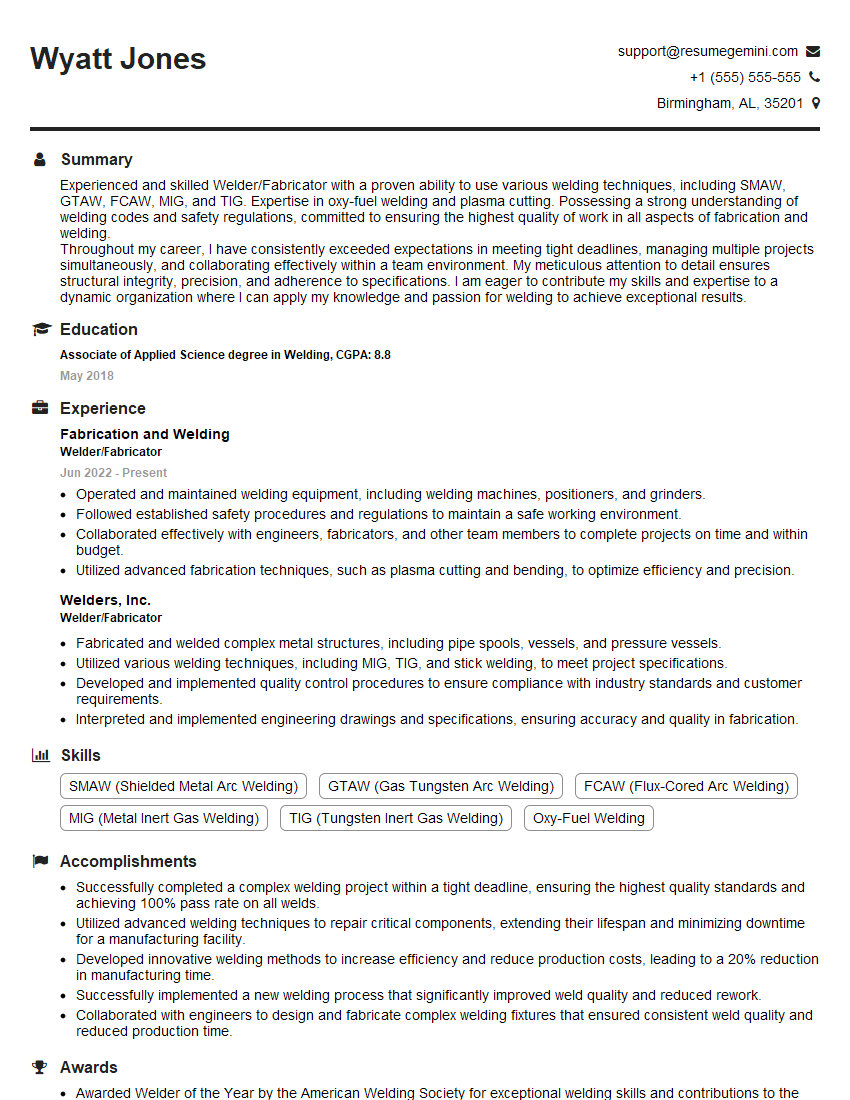
Mastering proficiency in measuring and cutting equipment is crucial for career advancement in numerous manufacturing, construction, and design fields. A strong understanding of these skills translates directly into higher earning potential and increased job security. To maximize your job prospects, it’s essential to create an ATS-friendly resume that highlights your skills and experience effectively. We recommend using ResumeGemini to build a professional and impactful resume. ResumeGemini provides examples of resumes tailored to Proficiency in Measuring and Cutting Equipment, offering a valuable resource to help you showcase your qualifications and land your dream job.





Explore more articles
Users Rating of Our Blogs
Share Your Experience
We value your feedback! Please rate our content and share your thoughts (optional).
What Readers Say About Our Blog
To the interviewgemini.com Webmaster.
Very helpful and content specific questions to help prepare me for my interview!
Thank you
To the interviewgemini.com Webmaster.
This was kind of a unique content I found around the specialized skills. Very helpful questions and good detailed answers.
Very Helpful blog, thank you Interviewgemini team.