Cracking a skill-specific interview, like one for Reading and Interpreting Electrical Blueprints, requires understanding the nuances of the role. In this blog, we present the questions you’re most likely to encounter, along with insights into how to answer them effectively. Let’s ensure you’re ready to make a strong impression.
Questions Asked in Reading and Interpreting Electrical Blueprints Interview
Q 1. What are the standard symbols used in electrical blueprints?
Electrical blueprints utilize a standardized set of symbols to represent various components and features of an electrical system. These symbols are crucial for efficient communication and understanding among electricians, engineers, and other professionals. Think of them as a universal language for electrical systems.
- Power Source: Often depicted as a circle with a plus (+) and minus (-) symbol, representing positive and negative terminals.
- Circuit Breaker: A rectangle with a switch symbol inside, indicating a protective device that interrupts the circuit in case of overload or short circuit.
- Switch: Typically shown as a simple switch symbol, differentiated by type (single-pole, double-pole, etc.).
- Receptacle (Outlet): Represented by a circle with a half-circle or a symbol resembling a plug.
- Light Fixture: Often shown as a circle with radiating lines, sometimes with specific symbols indicating the type of fixture.
- Conduit: Depicted as a double line indicating the pathway for the wiring, often with a diameter specification.
- Motor: Represented by a circle with an ‘M’ inside, or a more detailed symbol depending on the level of detail of the blueprint.
The specific symbols used might vary slightly depending on the standard followed (e.g., ANSI, IEC), but the core concepts remain consistent across different sets. Reference sheets are often included with the blueprints to clarify any ambiguous symbols.
Q 2. Explain the difference between a single-line diagram and a three-line diagram.
Single-line and three-line diagrams are both schematic representations of electrical systems, but they differ in their level of detail. Think of a single-line diagram as a simplified overview, while a three-line diagram provides a more comprehensive view.
A single-line diagram shows only one line for each phase of the electrical system, regardless of the number of conductors. It’s primarily used for illustrating the overall layout, connections, and power flow of a system. It’s great for quickly grasping the system’s organization but lacks detail on individual wiring.
A three-line diagram, on the other hand, shows all three phases (and a neutral if applicable) of a three-phase system. It provides more detail on wiring configurations, including the arrangement of conductors within a conduit or raceway. This level of detail makes it valuable during the construction and installation phases. Imagine it as a detailed instruction manual compared to the single-line diagram’s overview.
For example, a single-line diagram might show a motor connected to a power source via a circuit breaker, while a three-line diagram would explicitly show the three-phase connections to the motor and the respective conductors within the conduit running to it.
Q 3. How do you interpret conduit sizing information on an electrical blueprint?
Conduit sizing information on an electrical blueprint typically indicates the diameter of the conduit, often expressed in inches or millimeters (e.g., 1/2″, 3/4″, 1″, etc.). This information is crucial for ensuring proper wire routing and protection, preventing overheating and maintaining code compliance.
The conduit size is selected based on the number and size of conductors within it, along with the fill percentage (the amount of space occupied by the wires). Overfilling a conduit can lead to installation difficulties and potential safety hazards. Electrical codes specify allowable fill percentages to prevent overheating and ensure ease of pulling wires.
For instance, you might see a notation near a conduit symbol on the blueprint like 1" SCH 40 PVC Conduit. This means the conduit is 1 inch in diameter, made of Schedule 40 Polyvinyl Chloride (PVC) material. This detail guides the installer in selecting the correct material and size.
Q 4. What are the different types of electrical drawings?
Several types of electrical drawings contribute to a complete set of documentation for an electrical system. These drawings cater to different aspects of the design and installation process.
- One-line diagrams: Simplified representations showing the main power flow.
- Three-line diagrams: Detailed diagrams showcasing all phases and conductors.
- Schematic diagrams: Detailed diagrams illustrating the electrical connections between components.
- Wiring diagrams: Show specific wiring paths and connections.
- Panel schedules: List the circuit breakers and their associated circuits within a panel board.
- Plan view drawings: Show the location of electrical equipment within a building.
- Details: Show specific design components in greater detail.
A comprehensive set typically includes a combination of these drawings, ensuring all aspects of the electrical system are clearly documented for installation and future maintenance. Think of it like building a house—different blueprints handle different parts (foundation, framing, electrical, plumbing, etc.).
Q 5. How do you identify different voltage levels on an electrical schematic?
Voltage levels are indicated on electrical schematics through various methods depending on the complexity of the drawing. They are critical for safety and proper operation of the electrical equipment.
Simple schematics may directly label voltage levels near power sources or equipment (e.g., 120V, 240V, 480V). More complex schematics use voltage designations near symbols for transformers, indicating the input and output voltages. For instance, a transformer might be labeled with 480V/120V, indicating a step-down transformer.
Line diagrams often use voltage designations on lines themselves, often through a combination of symbols, colors, and text. Color-coding of wires also often aligns with voltage levels, further clarifying the system. It is essential to reference the drawing’s legend to interpret voltage designations fully.
Q 6. Explain the significance of wire color codes in electrical blueprints.
Wire color codes are essential for identifying the function and voltage of individual wires within an electrical system. They greatly aid electricians in proper wiring and troubleshooting. Think of it as a visual guide for the electrical system’s pathways.
In North America, common color codes include:
- Black, Red, Blue: Typically represent the three phases in a three-phase system.
- White or Gray: Usually designates the neutral conductor.
- Green or Green with Yellow Stripe: Represents the grounding conductor.
However, it’s crucial to remember that color codes can vary by country and application. Always reference the drawing’s legend or the applicable electrical code for the specific project to avoid misinterpretations and ensure safety.
Q 7. How do you determine the amperage rating of a circuit from a blueprint?
Determining a circuit’s amperage rating from a blueprint involves looking for specific information associated with the circuit’s breaker or protective device. This is essential for ensuring the circuit doesn’t overload and cause damage or fire hazards.
Typically, the amperage rating will be directly stated on the blueprint, either next to the circuit breaker symbol or in a panel schedule. For instance, a circuit breaker symbol might be labeled 20A, indicating a 20-ampere rating. The panel schedule will list all breakers and their associated ratings in a tabular format. If not explicitly stated on the drawing, one must refer to the specification documents or the calculations made during the design phase of the system to determine the correct amperage.
Sometimes, the wire gauge used might be specified. In such cases, one can refer to electrical code tables to determine the amperage capacity of the specified wire gauge based on the type of wire and installation method. This method, however, relies on having additional information available.
Q 8. How do you interpret panel schedules on an electrical drawing?
Panel schedules are essentially the ‘parts list’ for your electrical system. They provide a comprehensive summary of all the electrical equipment within each panelboard. Think of a panelboard as a central distribution point for circuits. The schedule details every circuit breaker within the panel, its rating (amperage and voltage), the circuit number, and the location it serves. For example, a panel schedule might show ‘Breaker #1: 20A, 120V, Lighting – Office’. This tells us that breaker number one is a 20-amp, 120-volt breaker supplying power to the office lighting. You’ll also find information on the panel’s manufacturer, model number, and sometimes even the location of the panel itself within the building. Understanding panel schedules is crucial for troubleshooting, maintenance, and system upgrades, as it provides a quick overview of the entire panel’s functionality.
Imagine you’re troubleshooting a power outage in a section of the building. By consulting the panel schedule, you can quickly identify which breaker controls that specific area and then easily check its status. This saves valuable time and resources.
Q 9. What are the safety considerations when working with electrical blueprints?
Safety is paramount when working with electrical blueprints. Never assume anything; always verify. Before starting any work, you must understand the voltage and amperage ratings of all circuits shown on the drawings. Always treat all circuits as energized until you have verified that they are de-energized with appropriate safety procedures. You should also be aware of the location of grounding and bonding systems as depicted in the drawings, ensuring they’re properly installed and functional. Personal protective equipment (PPE) like safety glasses, insulated gloves, and arc flash protection is a must. Furthermore, lock-out/tag-out procedures are essential to prevent accidental energization while working on electrical equipment. Familiarize yourself with the specific safety regulations and standards applicable to your region and project.
For example, imagine a scenario where you’re working with a high-voltage system. Without proper PPE and a clear understanding of the blueprint, the risk of a severe electrical shock is very real. Following safety protocols outlined in relevant standards (such as OSHA standards in the US) is critical to preventing accidents and injuries.
Q 10. Explain how to calculate voltage drop using information from the blueprint.
Calculating voltage drop is essential to ensure sufficient power reaches the load (e.g., a light fixture or motor). The blueprint provides the necessary information – wire size, cable length, and the load’s current draw. The formula for voltage drop is:
Voltage Drop = 2 × Current (I) × Length (L) × Resistance (R)
Where:
Iis the current in amperes.Lis the one-way length of the conductor in feet.Ris the resistance of the conductor per 1000 feet, which can be obtained from wire tables based on the wire’s material (usually copper or aluminum) and gauge.
Let’s say the blueprint shows a 100-foot run of 12 AWG copper wire carrying 15 amps. Using wire tables, the resistance of 12 AWG copper is approximately 1.6 ohms per 1000 feet. The calculation would be:
Voltage Drop = 2 × 15A × 100ft × (1.6 ohms / 1000ft) = 4.8 volts
This result (4.8 volts) needs to be compared to the acceptable voltage drop limits, generally a percentage of the supply voltage (e.g., 3%). Exceeding the limit might necessitate using a larger wire gauge to reduce resistance.
Q 11. How do you identify grounding symbols and their significance?
Grounding symbols are crucial for safety. They typically show a connection to earth, protecting against electrical shocks and preventing equipment damage. Common grounding symbols include a triangle with a vertical line, a ground symbol with three prongs, or a simple ground wire symbol. Their significance lies in providing a low-resistance path for fault currents to flow to the earth, ensuring that a short circuit doesn’t cause dangerous voltage build-up. The blueprint should clearly indicate the location of grounding electrodes (e.g., ground rods) and the paths of grounding conductors to various components.
For instance, a ground symbol next to a panel indicates that the panel is connected to a grounding system, providing a safety path for fault currents. Misinterpreting or neglecting grounding symbols can lead to serious safety hazards.
Q 12. How to interpret symbols related to power distribution and transformers?
Symbols for power distribution and transformers often show the transformer’s voltage ratios, winding connections (e.g., delta-delta, wye-wye), and the direction of power flow. Transformers are illustrated as two coils linked by a vertical line, with voltage levels indicated on each coil. Power distribution symbols typically include busbars (thick lines representing the main power conductors) and various switchgear (circuit breakers, fuses) showing the branching of circuits to different parts of the building. Understanding these symbols is crucial for tracing power flow and analyzing system capacity.
Imagine a large industrial facility. Its blueprint would show multiple transformers stepping down voltage for various sections of the factory floor. Tracing power flow from the main distribution panel to smaller sub-panels requires careful interpretation of these symbols.
Q 13. What are the common methods used to indicate cable routing in electrical drawings?
Several methods indicate cable routing in electrical drawings. These can include:
- Line Drawings: Simple lines indicating the path of the cable, often with labels specifying cable type and size.
- Schematic Diagrams: Show the electrical connections but might not accurately reflect the physical layout.
- Cable Schedules: Tables that list cables, their lengths, and termination points.
- Three-Dimensional Models (in some cases): Modern software allows for 3D models which show the exact path and location of cables within the structure.
Often, a combination of these methods is used for clarity. The drawings might use line drawings to show cable routes within a room, with a cable schedule providing more detailed information on cable type and lengths.
For example, in a complex building, using only line drawings might lead to confusion. A combination of line drawings on floor plans combined with a comprehensive cable schedule that lists each cable’s run and connection points is far more effective.
Q 14. How do you interpret information on motor control circuits?
Interpreting motor control circuits requires understanding the components involved and their functions. Blueprints typically use standard symbols for motors, starters (magnetic contactors), overload relays, and control devices (switches, push buttons). The circuit shows the interconnections of these components, indicating how the motor’s operation is controlled. You’ll usually see the power supply connections, the starter coils, motor connections, and often safety interlocks or limit switches for protection. Understanding these circuits involves tracing the flow of power and control signals to understand the complete operation of the motor.
Consider a conveyor system in a factory. The blueprint would show the motor control circuit for each conveyor motor, detailing how the motor starts, stops, and might respond to safety features like emergency stops or sensors to ensure smooth and safe operation. Proper interpretation is crucial for proper installation, maintenance, and troubleshooting.
Q 15. Explain the difference between a wiring diagram and a schematic diagram.
While both wiring diagrams and schematic diagrams illustrate electrical systems, they differ significantly in their purpose and level of detail. Think of a schematic as a high-level map showing the overall flow, while a wiring diagram is like a detailed street-level view.
A schematic diagram uses symbols to represent components and their interconnections, focusing on the functional relationship between elements. It doesn’t show the physical layout of wires. For example, a schematic might show a power supply connected to a microcontroller, but it won’t detail the exact routing of the wires.
A wiring diagram, on the other hand, provides a precise representation of the physical arrangement of wires and components. It details the exact wire paths, terminal connections, and often includes wire colors and sizes. Think of it like an instruction manual for assembling the electrical system. It shows exactly which wire goes where, crucial for installation.
In essence, a schematic is for understanding the system’s function, while a wiring diagram is for building or troubleshooting it.
Career Expert Tips:
- Ace those interviews! Prepare effectively by reviewing the Top 50 Most Common Interview Questions on ResumeGemini.
- Navigate your job search with confidence! Explore a wide range of Career Tips on ResumeGemini. Learn about common challenges and recommendations to overcome them.
- Craft the perfect resume! Master the Art of Resume Writing with ResumeGemini’s guide. Showcase your unique qualifications and achievements effectively.
- Don’t miss out on holiday savings! Build your dream resume with ResumeGemini’s ATS optimized templates.
Q 16. How do you identify and interpret different types of protective devices?
Identifying and interpreting protective devices on an electrical blueprint relies on recognizing their symbols and understanding their function. Common protective devices include circuit breakers, fuses, and ground fault circuit interrupters (GFCIs).
- Circuit Breakers: Represented by a rectangle with a switch symbol inside, circuit breakers protect circuits from overcurrents by automatically interrupting the flow of electricity when a fault occurs. The amperage rating is typically indicated near the symbol.
- Fuses: Shown as a circle with a thin line through it, fuses function similarly to circuit breakers but are one-time use devices. They melt and break the circuit when an overcurrent occurs, requiring replacement after activation.
- Ground Fault Circuit Interrupters (GFCIs): Often symbolized by a circle with a ground symbol inside and an arc indicating a tripping mechanism, GFCIs protect against electrical shocks by rapidly shutting off power when they detect an imbalance between the hot and neutral currents.
Interpreting these symbols requires understanding the context. For instance, a high-amperage circuit breaker in a panel might indicate a large appliance, while a GFCI outlet near a sink indicates safety precautions for a water-prone location. The blueprint usually provides a legend or key that further defines these symbols.
Q 17. Describe how you would identify potential conflicts or errors on an electrical blueprint.
Identifying potential conflicts or errors on an electrical blueprint requires a systematic approach and keen attention to detail. I would follow these steps:
- Component Compatibility: Verify that all components – switches, outlets, lighting fixtures – are compatible with the specified voltage and amperage ratings of the circuits they’re connected to.
- Circuit Continuity: Trace each circuit from its source to its termination point, ensuring there are no gaps or unexpected breaks in the wiring. Look for inconsistencies in the wiring diagrams.
- Overloading: Check the total load on each circuit against the circuit breaker rating. An overloaded circuit poses a fire hazard.
- Code Compliance: Verify adherence to relevant electrical codes like the National Electrical Code (NEC). This includes checking for proper grounding, bonding, and separation of circuits.
- Grounding and Bonding: Ensure that all equipment and metallic structures are properly grounded and bonded to prevent electrical shocks and fires.
- Clearance and Spacing: Check if there’s sufficient clearance around all components for safety and maintainability. I would verify that conduit sizes are appropriate and spacing requirements between conductors are met.
For example, if a circuit is designed to handle 15 amps but the connected loads total 20 amps, it’s a clear conflict. Similarly, missing ground wires or incorrect grounding symbols represent serious errors requiring immediate attention.
Q 18. How do you use electrical blueprints to perform troubleshooting?
Electrical blueprints are invaluable tools for troubleshooting. I use them to systematically trace the flow of electricity and isolate the problem. My approach would be:
- Isolate the Problem: Pinpoint the area where the fault is occurring. Is it a specific outlet, light fixture, or a larger part of the system?
- Trace the Circuit: Using the blueprint, trace the circuit back to its source. Follow the wire paths and note all components along the way.
- Check Protective Devices: Inspect circuit breakers and fuses along the circuit for tripping or blowing. A tripped breaker or blown fuse indicates a short circuit or overload on that section of the wiring.
- Verify Connections: Examine all connections in the problematic section of the circuit, checking for loose wires, corrosion, or damage.
- Test Voltage and Current: Use appropriate test equipment (multimeter) to check voltage and current at various points along the circuit to identify the location of the fault.
For instance, if a light fixture doesn’t work, I’d first check the breaker assigned to that circuit. If it’s tripped, I’d look for overloads or shorts. If the breaker is fine, I’d trace the circuit on the blueprint to systematically check wires and connections at the light fixture and switch.
Q 19. How are lighting fixtures and luminaires specified on the electrical plans?
Lighting fixtures and luminaires are specified on electrical plans using symbols, designations, and specifications. The symbols usually consist of a circle or a more detailed representation of the luminaire type (e.g., recessed, pendant, etc.). These symbols are accompanied by reference numbers that connect to a schedule or specifications.
The schedule lists each fixture’s details such as:
- Reference number: Linking the symbol on the plan to the detailed description.
- Fixture type: Recessed, pendant, surface-mounted, etc.
- Manufacturer and model number: Allowing for accurate procurement.
- Wattage and bulb type: Essential for proper circuit sizing.
- Finish: Color or material of the fixture.
For example, a symbol might show a recessed light with a reference number “L1.” The lighting fixture schedule would then list “L1” with a description like: “Recessed light, 6-inch, 12W LED, white finish, manufacturer XYZ, model ABC.” The location is determined directly from the plan itself.
Q 20. Explain your experience in using various CAD software for electrical design.
I have extensive experience using various CAD software packages for electrical design, including AutoCAD Electrical, Revit, and EPLAN. My proficiency extends beyond simple drafting; I’m adept at utilizing the advanced features these programs offer for schematic capture, panel design, wiring diagrams, and report generation.
In AutoCAD Electrical, for instance, I’ve used the integrated component libraries and automated wiring functions to significantly improve efficiency in project development. With Revit, I’ve integrated electrical models with architectural and structural models to facilitate collaborative design and coordination, ensuring the seamless integration of electrical systems within the overall building design. EPLAN has been crucial in creating comprehensive, detailed documentation for larger projects.
My experience includes creating detailed drawings for various projects, from residential homes to commercial buildings and industrial facilities, always maintaining accuracy and compliance with industry standards.
Q 21. Describe your experience with different electrical standards (e.g., NEC).
I possess a thorough understanding and practical experience applying various electrical standards, most notably the National Electrical Code (NEC) in the US. My understanding extends to other relevant standards depending on the project’s geographical location. I’m familiar with the relevant articles and sections pertaining to wiring methods, grounding techniques, overcurrent protection, and other critical safety measures outlined within these standards.
In my work, I consistently check the design against the applicable electrical codes to ensure compliance, focusing on aspects such as:
- Wiring Methods: Choosing appropriate conduit types, wire sizes, and installation techniques based on load requirements, environmental conditions, and code regulations.
- Grounding and Bonding: Implementing proper grounding and bonding systems to protect against electrical shocks and ensure safety.
- Overcurrent Protection: Selecting suitable circuit breakers and fuses with appropriate ratings to protect circuits from overloads and short circuits.
- Arc Flash Hazard Mitigation: Applying strategies and methods to reduce the risks of arc flash incidents, as per the latest NEC requirements.
This ensures that the electrical systems I design are not only functional but also safe and compliant with all applicable regulations.
Q 22. How do you ensure that an electrical design complies with relevant safety codes?
Ensuring electrical designs comply with safety codes is paramount. It’s not just about avoiding legal issues; it’s about protecting lives and property. My approach involves a multi-step process. First, I thoroughly familiarize myself with all applicable codes, such as the National Electrical Code (NEC) in the US or equivalent standards in other regions. This includes staying updated on revisions and amendments. Second, I meticulously check the design against these codes at every stage, from initial conceptualization to final drafting. This involves verifying things like wire sizing, grounding techniques, overcurrent protection device selection (breakers and fuses), and the proper installation methods for various components. For example, I’d ensure that the wiring for a kitchen appliance circuit meets the NEC’s requirements for branch circuits serving appliances, including appropriate ampacity and conductor type. Third, I utilize specialized electrical design software that often incorporates code checking features, flagging potential violations automatically. Finally, I conduct thorough peer reviews and incorporate feedback from experienced colleagues to catch any overlooked issues. A final check usually involves simulating the electrical load to validate the design under different scenarios to minimize the chances of failure or overload.
Q 23. What are your preferred methods for reviewing and checking electrical drawings?
My review process for electrical drawings is systematic and thorough. It involves a combination of visual inspection and technical analysis. Visually, I start with a comprehensive overview, checking for clarity, completeness, and consistency in notation. Next, I meticulously examine each element, ensuring proper labeling, referencing, and adherence to drafting standards. Technically, I verify calculations for things like voltage drop, short-circuit current, and load balance. I use software tools to simulate the electrical system and identify potential problems before construction begins. I also look for potential conflicts between different systems (e.g., lighting, power, fire alarm). Think of it like solving a complex puzzle; every piece needs to fit perfectly and functionally. For instance, I’d carefully check if the placement of electrical outlets in a room meets spacing requirements and that sufficient capacity is allocated to avoid overloading circuits. A cross-reference check against other building plans (mechanical, structural) is also critical to ensure seamless integration and avoid conflicts.
Q 24. Describe your experience working with electrical contractors or installers.
I’ve had extensive experience collaborating with electrical contractors and installers. Effective communication is key. I’ve learned to translate complex technical drawings into clear, actionable instructions for the field team. This often involves clarifying ambiguous details, providing additional diagrams or specifications, and actively addressing their questions or concerns during the project. For example, I’ve worked with installers to determine the best routing for conduit in a complex building layout, considering factors like structural obstructions and accessibility. In one project, I had to work closely with the installation team to adjust the placement of some junction boxes to accommodate changes in the HVAC system. This collaborative approach ensures that the final installation aligns perfectly with the design specifications, leading to a safe and efficient outcome. Regular site visits and progress meetings further strengthen communication and problem resolution.
Q 25. How do you manage revisions and changes to electrical blueprints?
Managing revisions and changes is crucial in any project. My approach utilizes a formal revision control system, typically implemented through design software or a dedicated platform. Each revision is meticulously documented, including the date, author, description of changes, and an updated drawing number. This system ensures traceability and avoids confusion. I make sure that all stakeholders are informed about changes, including contractors, engineers, and clients. Changes are reviewed thoroughly to ensure they don’t introduce new conflicts or compromise safety. The impact assessment of any alteration is evaluated before implementation, and sometimes necessitates a recalculation of system loads or verification against relevant standards. For example, if a client requests additional lighting fixtures, I’d evaluate whether this change requires a larger circuit breaker and ensure the new wiring complies with the electrical code.
Q 26. Explain your experience with working on large-scale or complex electrical projects.
I have extensive experience with large-scale and complex electrical projects, including high-rise buildings, industrial facilities, and large-scale data centers. These projects often involve multiple teams and disciplines. Effective coordination and clear communication are essential. My strategy involves breaking down these massive projects into smaller, manageable modules. This helps in efficient task delegation and progress monitoring. For instance, in a high-rise building project, we might separate the design into floors, zones, or systems (power, lighting, fire alarm) for easier management and progress tracking. Utilizing advanced software tools like BIM (Building Information Modeling) helps in facilitating collaboration, conflict detection, and managing the massive amount of data associated with these undertakings. Furthermore, strict adherence to the defined project management plan, including schedule and milestones, is vital. Experience has taught me that proactive risk management and contingency planning are indispensable for successfully navigating the complexities of large-scale projects.
Q 27. How do you handle discrepancies or inconsistencies found in electrical blueprints?
Discrepancies or inconsistencies in electrical blueprints are serious issues that must be addressed immediately. My first step is to thoroughly document the inconsistencies. Then, I investigate the source of the error. This may involve comparing different versions of the drawings, verifying calculations, and consulting with other engineers or designers who worked on the project. Sometimes, cross-referencing with other building disciplines (structural, mechanical) is necessary to identify the root cause. For example, a discrepancy in the location of a conduit might be due to a change in the structural design. Once the source is identified, I develop a solution that addresses the issue without compromising safety or functionality. This solution is documented and communicated to all relevant stakeholders. Corrective actions might involve generating a revised drawing, issuing a change order, or conducting a site investigation. It’s a collaborative process that necessitates effective communication to resolve conflicts efficiently and effectively.
Q 28. Explain your understanding of the different types of conduit and their applications.
Understanding conduit types and their applications is fundamental to electrical design. Conduit protects wiring from physical damage and environmental factors. Different types are suitable for different applications. For example:
- Rigid metal conduit (RMC): Offers excellent protection and is commonly used in industrial settings or where high durability is needed. Think of heavy machinery environments or areas with high risk of physical impact.
- Intermediate metal conduit (IMC): Lighter than RMC but still provides good protection, often used in commercial and industrial settings.
- Electrical metallic tubing (EMT): Lightweight and flexible, commonly used in residential and commercial construction for its ease of installation.
- Flexible metal conduit (FMC): Used for short runs where flexibility is needed, such as connecting to equipment.
- Plastic conduit (PVC): Cost-effective and lightweight, often used in underground installations or non-hazardous locations. It’s crucial to specify the right type of PVC for the application to ensure it can handle the conditions (e.g., temperature).
Selecting the right conduit type depends on factors such as the environment (indoor/outdoor, wet/dry), the type of wiring, the anticipated level of physical protection needed, and the overall budget. Incorrect selection can lead to safety hazards or code violations.
Key Topics to Learn for Reading and Interpreting Electrical Blueprints Interview
- Schematic Diagrams: Understanding symbols, components, and their interconnection. Practical application: Identifying voltage levels, current paths, and potential hazards in a given circuit.
- Wiring Diagrams: Interpreting cable routing, termination points, and device connections. Practical application: Troubleshooting wiring faults and tracing signals through a system.
- One-Line Diagrams: Interpreting simplified representations of complex electrical systems. Practical application: Analyzing power distribution and load balancing within a facility.
- Electrical Symbols and Notation: Proficiently recognizing and understanding industry-standard symbols. Practical application: Quickly deciphering blueprint information and identifying components.
- Plan Views and Elevations: Interpreting location and placement of electrical components within a building or structure. Practical application: Coordinating electrical installations with other building systems.
- Calculations and Problem-Solving: Applying Ohm’s Law and other relevant formulas to analyze circuits and predict performance. Practical application: Sizing conductors, calculating voltage drop, and selecting appropriate protection devices.
- Safety Regulations and Codes: Understanding relevant safety standards (e.g., NEC) and their application in blueprint interpretation. Practical application: Ensuring compliance and minimizing risks during installation and operation.
- Troubleshooting and Diagnostics: Applying blueprint knowledge to diagnose electrical problems and develop solutions. Practical application: Using blueprints to trace faults, identify faulty components, and repair electrical systems efficiently.
Next Steps
Mastering the ability to read and interpret electrical blueprints is crucial for advancement in your electrical career, opening doors to more challenging and rewarding roles. A strong, ATS-friendly resume is your key to unlocking these opportunities. To make sure your skills and experience shine, we recommend using ResumeGemini to craft a professional and impactful resume. ResumeGemini provides tools and resources to help you create a compelling document that highlights your abilities. Examples of resumes tailored to professionals in Reading and Interpreting Electrical Blueprints are available to further assist you in this process.

Electrical Estimator Resume Sample

Automation Engineer Resume Sample
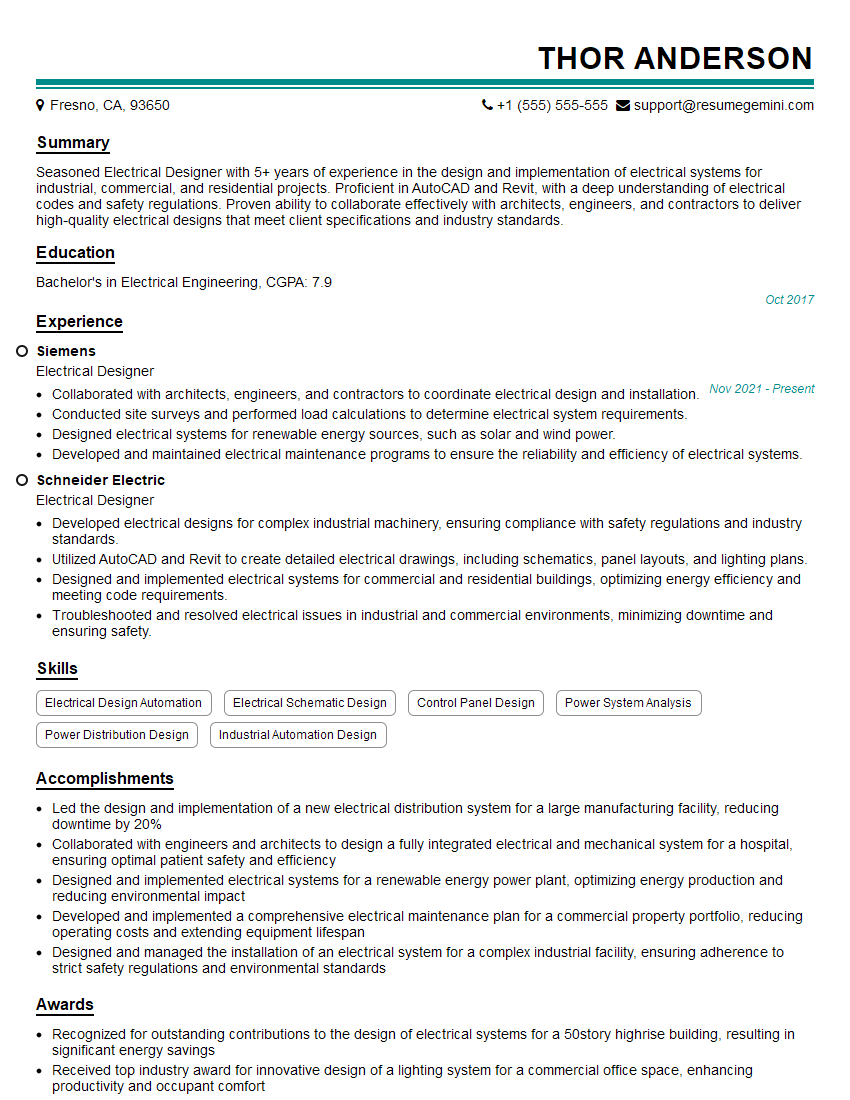
Electrical Designer Resume Sample

Electrical Engineer Resume Sample

Power Systems Engineer Resume Sample

Control Systems Engineer Resume Sample

Electrical Drafter Resume Sample
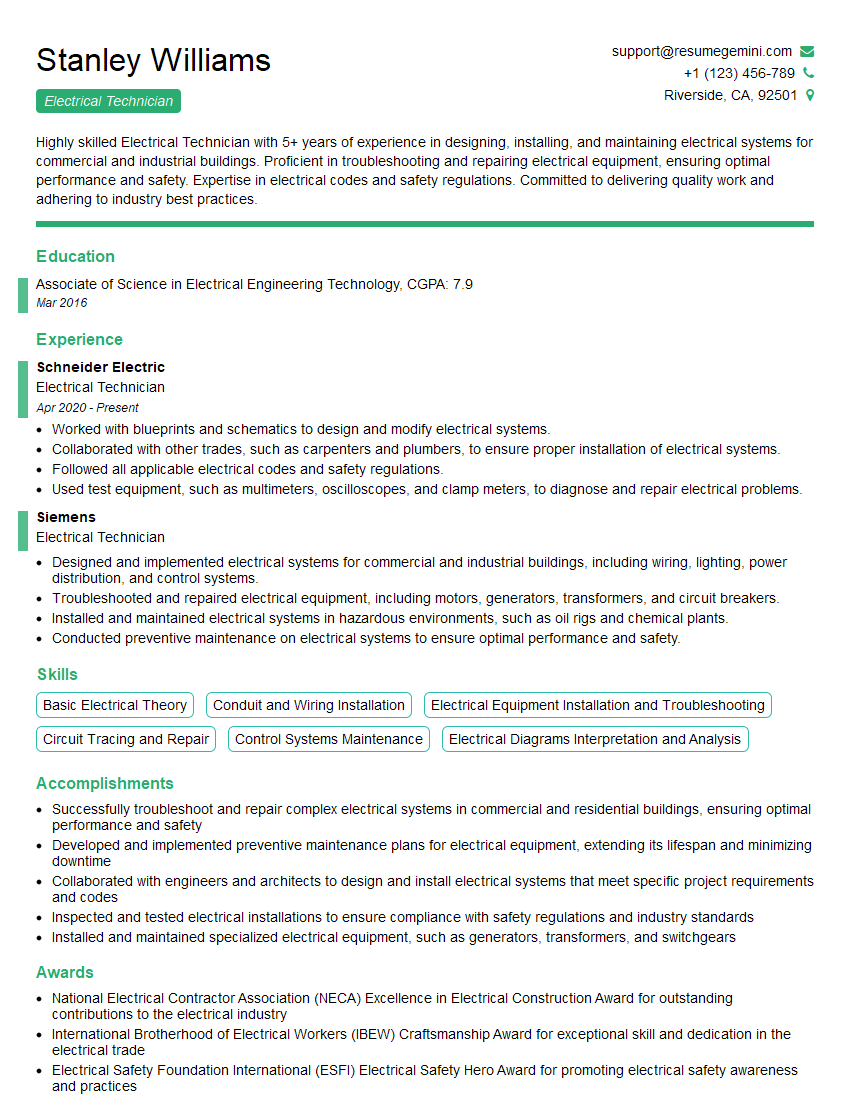
Electrical Technician Resume Sample

Lighting Designer Resume Sample

Electrical Foreman Resume Sample
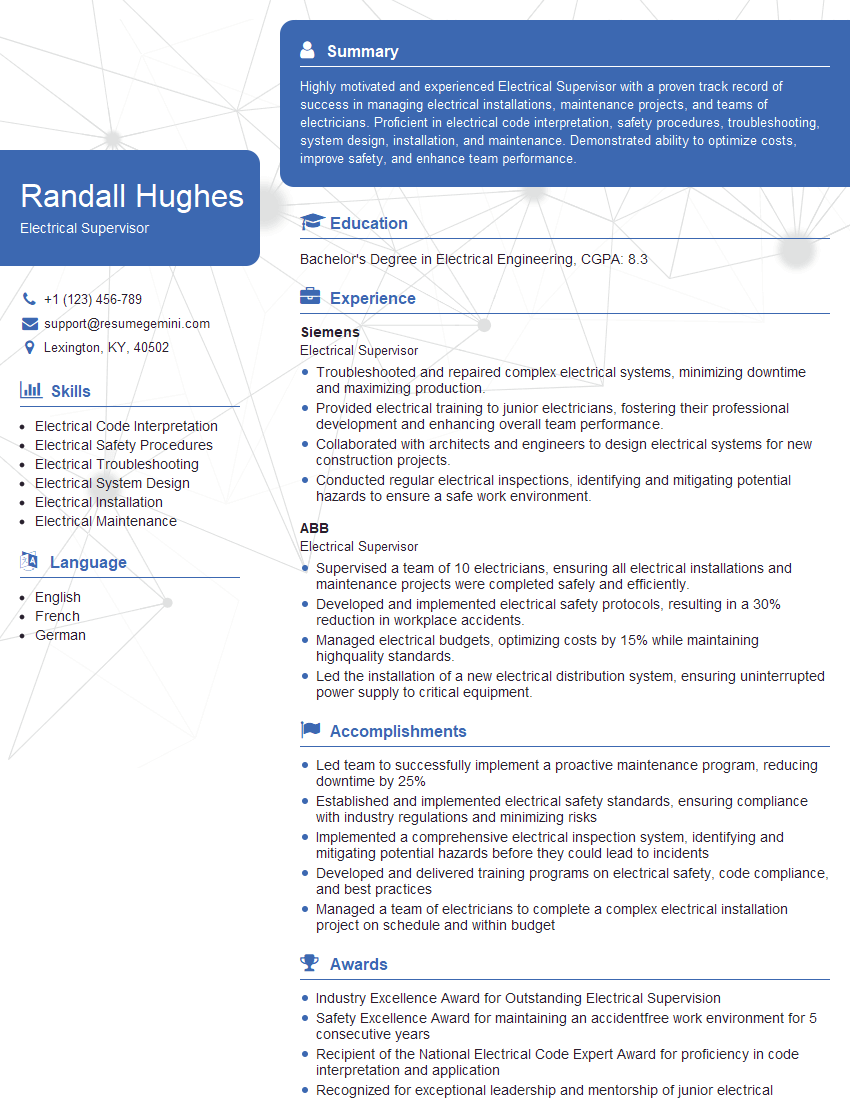
Electrical Supervisor Resume Sample

Construction Electrician Resume Sample

Electrician Resume Sample

Maintenance Electrician Resume Sample
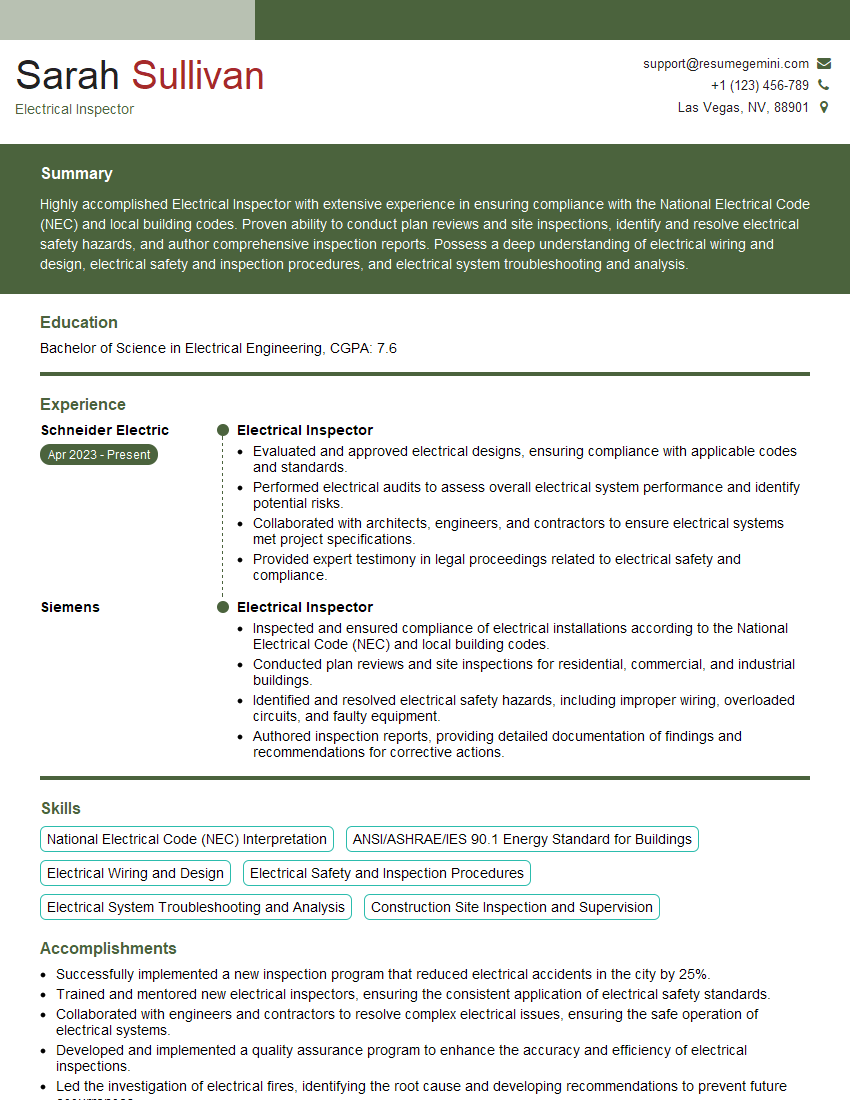
Electrical Inspector Resume Sample
- Electrical Estimator
- Automation Engineer
- Electrical Designer
- Electrical Engineer
- Power Systems Engineer
- Control Systems Engineer
- Electrical Drafter
- Electrical Technician
- Lighting Designer
- Electrical Foreman
- Electrical Supervisor
- Construction Electrician
- Electrician
- Maintenance Electrician
- Electrical Inspector
Explore more articles
Users Rating of Our Blogs
Share Your Experience
We value your feedback! Please rate our content and share your thoughts (optional).
What Readers Say About Our Blog
To the interviewgemini.com Webmaster.
Very helpful and content specific questions to help prepare me for my interview!
Thank you
To the interviewgemini.com Webmaster.
This was kind of a unique content I found around the specialized skills. Very helpful questions and good detailed answers.
Very Helpful blog, thank you Interviewgemini team.