The right preparation can turn an interview into an opportunity to showcase your expertise. This guide to Reading training interview questions is your ultimate resource, providing key insights and tips to help you ace your responses and stand out as a top candidate.
Questions Asked in Reading training Interview
Q 1. Explain the difference between phonological awareness and phonemic awareness.
Phonological awareness and phonemic awareness are both crucial components of literacy development, but they differ in scope. Phonological awareness is a broader umbrella term encompassing the understanding that spoken language can be broken down into smaller units, such as words, syllables, and onsets and rimes. It’s like understanding the building blocks of spoken language without necessarily focusing on individual sounds.
Phonemic awareness, on the other hand, is a more specific skill focusing on the individual sounds (phonemes) within words. It involves the ability to identify, isolate, blend, segment, and manipulate these individual sounds. Think of it as focusing specifically on the smallest units of sound.
Example: Consider the word ‘cat’. Phonological awareness would involve recognizing that ‘cat’ has three sounds, while phonemic awareness goes further to identify those sounds as /k/, /æ/, and /t/, and to manipulate them (e.g., changing /k/ to /h/ to create ‘hat’).
In essence, phonemic awareness is a subset of phonological awareness. A child needs strong phonological awareness to develop phonemic awareness, which is crucial for learning to read and spell.
Q 2. Describe your experience with different reading assessment tools.
Throughout my career, I’ve utilized a wide range of reading assessment tools, adapting my choices based on the student’s age, reading level, and specific needs. These include both informal and formal assessments.
- Informal Assessments: These are often observational and less structured, allowing for a more flexible approach. Examples include running records (observing students read aloud and noting errors), informal reading inventories (IRI’s) to assess reading levels across different skills, and anecdotal records documenting observations of students’ reading behaviours in different contexts.
- Formal Assessments: These are standardized tests with established norms and procedures. I have experience administering tests like the DIBELS (Dynamic Indicators of Basic Early Literacy Skills) for early literacy skills, the Woodcock-Johnson Tests of Achievement for a comprehensive assessment, and the Gray Oral Reading Test (GORT) to assess oral reading fluency.
My experience with these tools goes beyond simply administering them; it involves interpreting the results accurately, using them to inform instructional decisions, and tracking student progress over time. For example, if a student consistently struggles with phoneme segmentation on the DIBELS, it informs my instruction to focus intensely on that specific skill.
Q 3. How do you differentiate instruction to meet the needs of diverse learners in reading?
Differentiating instruction is paramount to effective reading teaching. I employ several strategies to address the diverse needs of learners:
- Flexible Grouping: I utilize various grouping strategies – whole-class instruction, small group work, and individual tutoring – to cater to different learning styles and paces. Small groups allow me to provide targeted support to students struggling with specific skills, while independent work allows for tailored challenges for advanced learners.
- Differentiated Tasks: I assign tasks at varying levels of complexity, offering choices to students so they can select assignments that match their abilities and interests. This might involve providing different reading materials with varying text complexity or asking students to respond to a text in diverse ways (e.g., writing a summary, creating a visual representation, or engaging in a class discussion).
- Multiple Instructional Methods: I incorporate a variety of teaching approaches, including explicit instruction, collaborative learning, and project-based learning. This ensures students can learn through multiple modalities and engage their preferred learning styles. For example, I might use visual aids for visual learners, hands-on activities for kinesthetic learners, and verbal explanations for auditory learners.
- Assessment for Learning: I use ongoing formative assessment (e.g., exit tickets, quick writes, observations) to monitor student progress and adjust my instruction accordingly. This enables me to quickly identify students who need extra help and provide tailored support before they fall behind.
For example, a student with an IEP (Individualized Education Program) might need more explicit phonics instruction and frequent check-ins, while a gifted student might be challenged with advanced literature and independent research projects. Adapting instruction based on individual learning profiles is key to ensuring every student’s success.
Q 4. What strategies do you use to improve students’ reading fluency?
Improving reading fluency involves enhancing both accuracy and rate. I use a multi-pronged approach:
- Repeated Reading: Students repeatedly read a short passage, focusing on accuracy and expression. This builds automaticity and reduces word-by-word reading.
- Choral Reading: Reading aloud in unison with the teacher or a group helps build confidence and improves fluency.
- Partner Reading: Students read aloud with a partner, providing mutual support and encouragement.
- Reader’s Theatre: Students perform a script, enhancing their fluency and expression.
- Audio-Assisted Reading: Students listen to an audio recording of a text while reading along. This helps build automaticity and improve prosody.
- Model Fluent Reading: I model fluent reading myself, showing students what it sounds like to read with expression and pace.
I frequently monitor progress through timed readings and use data to track growth and adjust interventions as needed. For example, if a student’s accuracy is high but their rate is slow, I would focus on repeated reading and choral reading activities to build speed.
Q 5. How do you teach students to improve reading comprehension?
Teaching comprehension involves moving beyond simply decoding words to understanding the meaning of the text. I utilize these strategies:
- Pre-reading Activities: Activating prior knowledge through discussions, brainstorming, or previewing vocabulary builds a foundation for understanding.
- During-reading Strategies: Modeling think-alouds, encouraging students to visualize, question, and make connections to the text actively engages them in the reading process.
- Post-reading Activities: Discussing the text, summarizing key ideas, answering comprehension questions, and engaging in creative responses help solidify understanding.
- Graphic Organizers: Using tools like story maps, character webs, and KWL charts helps students organize information and make connections between ideas.
- Text-Dependent Questions: Asking questions that require students to refer back to the text fosters deeper comprehension.
For example, when reading a historical fiction novel, I would start by activating prior knowledge about the historical period. During reading, I would model my thinking process, showing how I make inferences and draw conclusions based on textual evidence. Post-reading, students might create a timeline of events or write a character analysis, demonstrating their understanding of the text.
Q 6. What are some effective strategies for teaching vocabulary?
Vocabulary acquisition is crucial for reading comprehension. Effective strategies include:
- Direct Instruction: Explicitly teaching vocabulary words, providing definitions, and showing examples in context.
- Contextual Clues: Encouraging students to infer word meanings from surrounding text.
- Vocabulary Notebooks: Students keep a notebook to record new words, definitions, and examples.
- Word Walls: Displaying vocabulary words visually in the classroom.
- Games and Activities: Using games like vocabulary bingo or crossword puzzles to make learning fun and engaging.
- Reading Widely: Encouraging students to read widely exposes them to a vast range of vocabulary.
For instance, when introducing the word ‘ubiquitous’, I wouldn’t just provide the definition. I would show it in a sentence, discuss its synonyms and antonyms, and perhaps even show a picture relating to its meaning. Using the word in different contexts reinforces understanding and helps students retain it.
Q 7. Explain your approach to working with students who have dyslexia.
Working with students who have dyslexia requires a specialized and multi-sensory approach. My approach focuses on:
- Systematic and Explicit Phonics Instruction: Providing intensive and structured phonics instruction, focusing on the alphabetic principle and letter-sound correspondence.
- Multi-sensory Techniques: Using different learning modalities (visual, auditory, kinesthetic) to help students learn and retain information. This might involve using manipulatives, tracing letters, or using colored markers to highlight letter patterns.
- Assistive Technology: Utilizing assistive technologies such as text-to-speech software or audiobooks to support reading.
- Differentiated Instruction: Adapting materials and instruction to meet the student’s individual needs and learning style.
- Collaboration with Specialists: Working closely with special education teachers, reading specialists, and other professionals to develop a comprehensive support plan.
- Building Confidence: Emphasizing strengths and providing positive feedback to build the student’s confidence and motivation.
For example, a student with dyslexia might benefit from using colored overlays to improve reading comfort, practicing with phonics games that involve manipulating letter tiles, and using text-to-speech software to support independent reading. A key element is patience, understanding, and a focus on celebrating small victories along the way.
Q 8. Describe your experience with using data to inform reading instruction.
Data plays a crucial role in informing my reading instruction. I utilize a variety of assessment data, including diagnostic tests (like the Woodcock-Johnson or STAR Reading), progress monitoring assessments (e.g., Aimsweb), and classroom-based observations to identify students’ strengths and weaknesses. For instance, if data reveals a significant number of students struggling with phonics, I adjust my instruction to incorporate more explicit phonics lessons and targeted interventions. I also use data to track individual student progress over time, allowing me to celebrate successes and adjust my approach if a student isn’t making sufficient progress. This data-driven approach ensures my instruction is both effective and responsive to the diverse needs of my learners. I regularly analyze this data to understand trends in reading performance across the class, identify areas where my instruction might need improvement, and tailor interventions to meet individual student needs. This iterative process of assessment, analysis, and adjustment is key to maximizing student learning.
Q 9. How do you collaborate with parents/guardians to support students’ reading development?
Collaboration with parents/guardians is essential for supporting students’ reading development. I regularly communicate with parents through newsletters, parent-teacher conferences, and individual emails, sharing information about their child’s progress, strengths, and areas for growth. I provide them with specific strategies they can use at home to support their child’s reading, such as reading aloud together, engaging in interactive reading activities, and practicing phonics skills. I also encourage parent involvement in classroom activities, such as volunteering to read with students or participate in literacy-focused events. For instance, I might share resources like websites with interactive games or book recommendations tailored to a student’s reading level. Open communication, shared goals, and a partnership approach significantly impact student success. A recent example saw a parent implementing a nightly reading routine with their child after I highlighted the importance of consistent reading practice, resulting in a noticeable improvement in the child’s fluency and comprehension.
Q 10. What are some common reading difficulties encountered by students, and how do you address them?
Students encounter various reading difficulties, including phonological awareness deficits (struggling to hear and manipulate sounds in words), phonemic decoding difficulties (difficulty sounding out words), fluency problems (slow, inaccurate, and labored reading), vocabulary limitations, and comprehension challenges (difficulty understanding what they read). To address these challenges, I use a multi-faceted approach. For phonological awareness, I might use activities like rhyming games and syllable segmentation. For decoding, I employ systematic phonics instruction, using a structured literacy approach. To improve fluency, I use repeated readings and partner reading. Vocabulary development involves explicit instruction, rich reading experiences, and the use of context clues. Finally, comprehension is enhanced through strategies like summarizing, questioning, and making inferences. I also employ differentiated instruction, tailoring my approach to meet the specific needs of each student. For example, a student struggling with decoding might receive extra support through small group tutoring, while a student excelling in decoding might be challenged with more complex texts.
Q 11. What is your experience with different reading intervention programs?
I have experience implementing various reading intervention programs, including Orton-Gillingham-based programs (like Wilson Reading System), Lexia Learning, and Reading Recovery. Each program has its strengths. Orton-Gillingham programs focus on systematic and explicit phonics instruction, beneficial for students with dyslexia. Lexia Learning uses technology to provide personalized instruction and adaptive assessments. Reading Recovery offers intensive, one-on-one tutoring for students in the early stages of reading. My selection of a program depends on the specific needs of the student and the resources available. I find that data from diagnostic assessments help determine the most appropriate intervention. For example, a student exhibiting significant decoding difficulties might benefit most from an Orton-Gillingham approach, while a student needing to improve reading fluency might be better served by a program that emphasizes repeated reading.
Q 12. How do you monitor student progress in reading and adjust instruction accordingly?
Monitoring student progress is continuous and crucial. I use a combination of formative and summative assessments to track student growth. Formative assessments, like quick checks and informal observations during reading activities, provide ongoing feedback to inform instruction. Summative assessments, such as benchmark tests and unit tests, provide a broader picture of student learning. I analyze data from these assessments regularly, looking for patterns and trends. If a student isn’t making sufficient progress, I adjust my instruction accordingly. This might involve modifying my teaching methods, providing additional support, or changing the intervention program. For instance, if a student consistently struggles with a particular phonics skill, I will provide more targeted practice and instruction on that specific skill. I use data-tracking systems to visualize student progress, allowing me to make informed decisions about instruction and celebrate student achievements.
Q 13. Describe your experience with using technology to enhance reading instruction.
Technology significantly enhances my reading instruction. I utilize various educational software programs, such as Lexia Learning and Raz-Kids, to provide students with personalized practice and feedback. Interactive whiteboards and online learning platforms allow for engaging lessons and collaborative activities. Students can access digital books and audiobooks, fostering a love for reading beyond traditional paper-based materials. I also use educational apps to reinforce phonics skills and vocabulary. For instance, students use online games to practice sight words or build vocabulary. These tools cater to diverse learning styles and preferences, making reading instruction more engaging and accessible for all students. I also incorporate educational videos and podcasts to broaden the learning experience, adding visual and auditory elements that enhance comprehension and retention.
Q 14. What is your philosophy on teaching reading?
My philosophy on teaching reading is rooted in a balanced literacy approach, incorporating various elements to ensure students become proficient and confident readers. I emphasize the importance of systematic and explicit phonics instruction, providing students with the foundational skills necessary to decode words. Simultaneously, I nurture a love of reading by creating a classroom environment where students are surrounded by engaging books and have opportunities to read for pleasure. I prioritize fluency development, teaching students to read accurately, quickly, and with expression. Comprehension is a central focus, using a variety of strategies to help students understand and interpret texts. Finally, vocabulary development is crucial, and I actively incorporate rich language experiences into my instruction. My goal is to equip students with the skills and confidence to become lifelong readers and learners, fostering a deep appreciation for literature and its power to inform and inspire.
Q 15. How do you create a positive and supportive learning environment for reading?
Creating a positive and supportive learning environment for reading is crucial for student success. It’s about fostering a sense of community, safety, and joy around reading. This involves several key elements:
- Building Relationships: Get to know your students individually, understanding their interests and learning styles. Building rapport makes them feel comfortable taking risks and participating actively.
- Creating a Print-Rich Environment: Surround the classroom with engaging reading materials – books, magazines, newspapers, posters – at various reading levels. This normalizes reading and makes it accessible.
- Modeling Enthusiasm: Show your own passion for reading! Share your favorite books, read aloud expressively, and talk about what you’re reading.
- Celebrating Successes: Regularly acknowledge and celebrate student progress, both big and small. Positive reinforcement boosts confidence and motivation.
- Providing Choice: Offer students choices in their reading materials, allowing them to select books that genuinely interest them. This increases engagement and fosters a love of reading.
- Collaborative Activities: Incorporate group activities like book discussions, reader’s theatre, or shared reading to promote peer interaction and learning.
For example, I once had a student who was reluctant to read aloud. By creating a buddy reading system where he could read with a supportive peer, his confidence gradually increased, and he eventually blossomed into a confident reader.
Career Expert Tips:
- Ace those interviews! Prepare effectively by reviewing the Top 50 Most Common Interview Questions on ResumeGemini.
- Navigate your job search with confidence! Explore a wide range of Career Tips on ResumeGemini. Learn about common challenges and recommendations to overcome them.
- Craft the perfect resume! Master the Art of Resume Writing with ResumeGemini’s guide. Showcase your unique qualifications and achievements effectively.
- Don’t miss out on holiday savings! Build your dream resume with ResumeGemini’s ATS optimized templates.
Q 16. Explain your understanding of the reading process (phonemic awareness, phonics, fluency, vocabulary, comprehension).
The reading process is complex and involves several interconnected skills:
- Phonemic Awareness: This is the ability to hear and manipulate the individual sounds (phonemes) in spoken words. Activities like rhyming, blending sounds, and segmenting words help develop this crucial skill. For instance, recognizing that ‘cat’ has three sounds: /c/ /a/ /t/.
- Phonics: This involves the understanding of the relationship between letters and sounds. Teaching students to decode words by sounding out letter combinations is essential for reading fluency. For example, knowing that ‘sh’ makes the /sh/ sound.
- Fluency: Fluent readers read accurately, quickly, and with expression. Repeated reading of familiar texts, choral reading, and reader’s theatre help build fluency. A fluent reader reads smoothly, not word-by-word.
- Vocabulary: A strong vocabulary is essential for comprehension. Direct instruction of vocabulary words, using context clues, and providing opportunities for rich language exposure are key strategies. For example, teaching the meaning of ‘ubiquitous’ in context.
- Comprehension: This is the ultimate goal of reading – understanding the meaning of the text. Strategies like asking questions, making predictions, summarizing, and visualizing enhance comprehension. For example, asking students to summarize the main idea of a chapter they just read.
These skills are interconnected and build upon one another. A strong foundation in phonemic awareness and phonics supports fluency, which in turn supports vocabulary development and comprehension.
Q 17. How do you incorporate literature into your reading instruction?
Literature plays a vital role in reading instruction. It’s not just about decoding words; it’s about experiencing the power of stories, characters, and different writing styles.
- Reading Aloud: Regularly read aloud to students from a variety of genres and authors, exposing them to rich language and different narrative structures. This fosters a love of literature and models fluent reading.
- Literature Circles: Students can engage in discussions about their independent reading selections, sharing their interpretations and perspectives. This promotes critical thinking and deeper engagement with texts.
- Thematic Units: Organize instruction around themes, exploring various texts that connect to the theme. For example, a unit on friendship could include picture books, chapter books, and poems about friendship.
- Genre Studies: Introduce students to different genres – fiction, non-fiction, poetry, drama – allowing them to explore the unique characteristics of each.
- Author Studies: Focus on a specific author’s work, analyzing their writing style, themes, and recurring motifs.
For example, after reading a historical fiction novel, students might engage in research to further explore the historical context or create their own historical fiction piece.
Q 18. How do you assess students’ reading skills?
Assessing reading skills requires a multifaceted approach that goes beyond just standardized tests. It involves a combination of formal and informal assessments:
- Informal Reading Inventories (IRIs): These provide a detailed picture of a student’s reading abilities, including accuracy, fluency, and comprehension. They involve oral reading passages and comprehension questions.
- Running Records: This observational assessment tracks a student’s reading accuracy, self-correction rate, and errors. It provides insights into decoding skills and reading fluency.
- Standardized Tests: While important for accountability, standardized tests should be used in conjunction with other assessments to get a complete picture of a student’s reading abilities.
- Observations: Observe students during reading activities, noting their engagement, strategies, and reading behavior.
- Anecdotal Records: Keep brief notes on students’ reading performance, noting strengths and areas for improvement.
- Work Samples: Collect student work samples such as writing pieces, reading logs, and projects that demonstrate reading comprehension and application.
By using a variety of assessment methods, I can tailor my instruction to meet individual student needs and monitor their progress effectively.
Q 19. What are some effective strategies for teaching reading to struggling readers?
Teaching struggling readers requires patience, differentiated instruction, and a focus on building foundational skills. Effective strategies include:
- Explicit Phonics Instruction: Provide systematic and explicit instruction in phonics, focusing on letter-sound relationships and decoding strategies.
- Targeted Intervention: Offer small-group or individual instruction focused on specific areas of need, addressing gaps in phonemic awareness, phonics, fluency, or vocabulary.
- Multisensory Techniques: Use multisensory activities to engage different learning styles. For example, using manipulatives, writing letters in sand, or using visual aids.
- Repeated Reading: Repeated readings of passages at the student’s instructional level can improve fluency and automaticity.
- Assistive Technology: Consider the use of assistive technology, such as text-to-speech software or audiobooks, to support reading comprehension.
- Positive Reinforcement: Celebrate successes and provide consistent positive feedback to build confidence and motivation.
- Collaboration with Parents: Work closely with parents to provide support and consistency at home.
For instance, I’ve worked with a student struggling with fluency by implementing repeated reading with a focus on prosody, improving their pace and expressiveness significantly. This eventually boosted their reading comprehension as well.
Q 20. Describe your experience with providing professional development on reading instruction.
I have extensive experience delivering professional development on reading instruction. My workshops often focus on practical strategies and evidence-based practices.
- Modeling Effective Instruction: I model effective reading instruction techniques, showing teachers how to implement different strategies in the classroom.
- Collaborative Activities: I encourage collaborative activities among teachers, providing opportunities for them to share best practices and learn from one another.
- Differentiated Instruction: I emphasize the importance of differentiated instruction to meet the diverse needs of all learners.
- Assessment Strategies: I train teachers on various assessment techniques to monitor student progress and inform instruction.
- Data-Driven Decision Making: I help teachers use data to inform their instructional decisions and track student growth.
In a recent workshop, I facilitated a session on using data from running records to inform small group instruction. Teachers were able to immediately apply the new strategies to their classroom practices, resulting in improved student outcomes.
Q 21. How do you promote a love of reading among your students?
Promoting a love of reading is essential. It’s not just about teaching skills; it’s about fostering a genuine passion for reading.
- Classroom Library: Create a classroom library filled with a wide variety of books to cater to different interests and reading levels. Make it inviting and accessible.
- Author Visits/Virtual Field Trips: Invite authors to visit the classroom or engage in virtual field trips to connect students with authors and their works.
- Book Talks: Encourage students to share their favorite books with their classmates, sparking interest in new titles.
- Reading Challenges: Organize reading challenges to motivate students and celebrate their reading accomplishments.
- Independent Reading Time: Designate specific time for independent reading, allowing students to choose books that genuinely interest them.
- Connect Reading to Other Subjects: Integrate reading into other subjects, making connections between reading and other areas of study.
For instance, I remember organizing a ‘book character dress-up day’, where students dressed as their favorite book characters, sharing enthusiasm for reading and their chosen characters with the entire class. This activity proved a great success in fostering a love of reading among the students.
Q 22. What are some common challenges faced by reading teachers, and how do you overcome them?
Reading teachers face numerous challenges, often stemming from diverse student needs and limited resources. One common hurdle is addressing the wide range of reading abilities within a single classroom. Some students might be significantly behind their peers, while others are advanced. Another challenge is differentiating instruction to meet these varying needs effectively. Lack of time for individual support and planning is also a significant factor. Finally, obtaining appropriate resources, such as engaging books and specialized software, can be a constant struggle.
To overcome these challenges, I employ several strategies. First, I utilize data-driven instruction, regularly assessing students to identify their strengths and weaknesses. This allows me to tailor my lessons and group students appropriately. Second, I incorporate a variety of instructional methods, including whole-class instruction, small-group work, and one-on-one tutoring, to cater to different learning styles. Third, I collaborate closely with colleagues, administrators, and specialists to leverage their expertise and access additional resources. Finally, I actively seek professional development opportunities to stay abreast of the latest research and best practices in reading instruction. For example, I recently participated in a workshop on using technology to enhance reading comprehension, which has significantly impacted my ability to provide engaging and personalized learning experiences.
Q 23. What resources do you use to support your reading instruction?
My reading instruction is supported by a variety of resources, carefully selected to meet the diverse needs of my students. These resources fall into several categories:
- High-quality literature: I use a wide range of books, including picture books, chapter books, novels, and nonfiction texts, chosen to engage students and align with curriculum standards. I carefully consider text complexity, themes, and student interests when making selections.
- Targeted interventions: I employ evidence-based programs and interventions to support students struggling with specific reading skills, such as phonics, fluency, and vocabulary. Examples include Wilson Reading System and Lexia Learning.
- Technology tools: I utilize educational technology to enhance reading instruction. This includes online reading platforms, interactive games, and digital reading tools that provide immediate feedback and personalized support. Examples include Raz-Kids and Reading A-Z.
- Assessment tools: I utilize various assessment tools, both formative and summative, to monitor student progress and inform instruction. This includes standardized tests, curriculum-based measures, and informal assessments such as running records and anecdotal notes.
- Professional resources: I regularly consult professional journals, research articles, and online resources to stay updated on best practices in reading instruction. I also attend professional development workshops and conferences.
Q 24. Explain your understanding of the Common Core State Standards for Reading.
The Common Core State Standards for Reading (CCSS) provide a framework for college and career readiness. They emphasize the importance of students developing strong reading skills across various genres and text types. The standards are organized around key reading skills, including:
- Reading Foundational Skills: These focus on phonemic awareness, phonics, fluency, and vocabulary development, laying the groundwork for comprehension.
- Reading Informational Text: This emphasizes the ability to analyze, interpret, and synthesize information from various sources, including nonfiction texts, articles, and research materials.
- Reading Literature: This focuses on analyzing literary texts, understanding characters, plot, theme, and literary devices. Students are expected to make inferences and support their interpretations with evidence from the text.
- Reading across the Curriculum: The standards underscore the importance of applying reading skills across all subjects, fostering critical thinking and problem-solving skills.
The CCSS are not a curriculum themselves, but rather a set of standards that guide curriculum development and instruction. They provide a common framework to ensure that students are developing the essential reading skills they need to succeed in college and beyond. For example, a fourth-grade teacher using the CCSS would focus on ensuring students can determine the meaning of general academic and domain-specific words and phrases in a text relevant to a given subject.
Q 25. How do you use formative and summative assessments to evaluate student learning in reading?
Formative and summative assessments are crucial for evaluating student learning in reading. Formative assessments are ongoing checks for understanding, used to monitor student progress and inform instruction. They provide valuable feedback that helps teachers adjust their teaching strategies in real-time. Examples include:
- Exit tickets: Quick, informal assessments given at the end of a lesson to gauge student understanding.
- Observation of students during reading activities:
- Informal reading inventories: Assessments that gauge a student’s reading level and skills.
Summative assessments are used to evaluate student learning at the end of a unit or term. They provide a comprehensive overview of student achievement. Examples include:
- Unit tests: Tests covering the key concepts and skills taught during a unit of study.
- Standardized tests: Large-scale assessments designed to measure student achievement against benchmarks.
- End-of-year exams:
By using a balanced approach to formative and summative assessments, I can gain a holistic understanding of student progress and tailor my instruction to meet their individual needs. For example, if formative assessments show that students are struggling with a particular skill, I can adjust my instruction to provide additional support before administering a summative assessment.
Q 26. Describe your experience with individualized education programs (IEPs) for students with reading difficulties.
I have extensive experience working with students who have Individualized Education Programs (IEPs) for reading difficulties. IEPs are legally binding documents that outline specific learning goals and support services for students with disabilities. My role in working with IEPs includes:
- Participating in IEP meetings: Collaborating with parents, administrators, and other specialists to develop and implement the IEP.
- Providing specialized instruction: Delivering individualized reading instruction tailored to the student’s unique needs and learning style, as outlined in the IEP. This might involve using specialized reading programs, assistive technology, or modified assignments.
- Monitoring student progress: Regularly tracking the student’s progress toward IEP goals using data collected from formative and summative assessments. I document this progress meticulously to inform future instruction.
- Adapting classroom instruction: Modifying my teaching strategies and classroom environment to meet the student’s needs, ensuring inclusivity and accessibility.
For example, I worked with a student with dyslexia who had an IEP that included the use of assistive technology, such as text-to-speech software, and specialized phonics instruction. By working closely with the student, parents, and support staff, we were able to significantly improve their reading abilities.
Q 27. How do you adapt reading instruction for students with different learning styles?
Adapting reading instruction for students with different learning styles is crucial for ensuring their success. Students learn in diverse ways – some are visual learners, others auditory, and still others kinesthetic. I incorporate strategies to cater to these differences through:
- Visual aids: Using graphic organizers, mind maps, and other visual tools to represent information.
- Auditory learning: Incorporating discussions, read-alouds, and audiobooks to engage auditory learners.
- Kinesthetic learning: Employing hands-on activities, role-playing, and movement-based exercises to help kinesthetic learners process information.
- Multi-sensory approaches: Combining visual, auditory, and kinesthetic elements in lessons to cater to multiple learning styles.
- Differentiated instruction: Providing varied levels of support and challenge, utilizing different materials and instructional methods.
For instance, when teaching a complex text, I might provide visual aids for visual learners, a summary for auditory learners, and a hands-on activity for kinesthetic learners. This ensures every student can engage with the material effectively and achieve the learning objective.
Q 28. What are your professional goals related to reading instruction?
My professional goals in reading instruction are focused on continuous improvement and enhancing student outcomes. I aim to:
- Deepen my expertise: Stay abreast of current research and best practices in literacy instruction through ongoing professional development. I plan to pursue a specialist certification in literacy.
- Refine my instructional skills: Continuously refine my ability to differentiate instruction and meet the needs of all learners. This includes experimenting with new teaching strategies and technologies.
- Strengthen school-home connections: Foster stronger partnerships with families to create a supportive learning environment for students both in and out of school.
- Advocate for literacy: Promote the importance of reading and literacy within the school community and beyond.
Ultimately, my goal is to empower students to become confident, capable readers who can access and utilize information effectively. This will better enable them to thrive academically and personally.
Key Topics to Learn for Reading Training Interview
- Reading Comprehension Strategies: Understanding different reading techniques (skimming, scanning, in-depth reading) and applying them effectively based on the material’s purpose.
- Critical Analysis and Interpretation: Developing the ability to identify main ideas, supporting details, inferences, and author’s purpose; practicing analyzing complex texts and forming reasoned opinions.
- Vocabulary Building and Contextual Clues: Expanding your vocabulary and mastering the skill of understanding unfamiliar words through context clues within the text.
- Speed Reading Techniques: Improving reading speed while maintaining comprehension; exploring strategies to enhance efficiency and reduce reading time.
- Information Retention and Recall: Implementing techniques to improve memory and recall of information from read materials; using note-taking and summarization strategies.
- Application to Different Text Types: Practicing reading and analyzing various text types (academic articles, reports, literature, etc.) to demonstrate adaptability.
- Problem-Solving through Reading: Applying reading skills to solve problems presented within texts or requiring information extracted from reading materials.
Next Steps
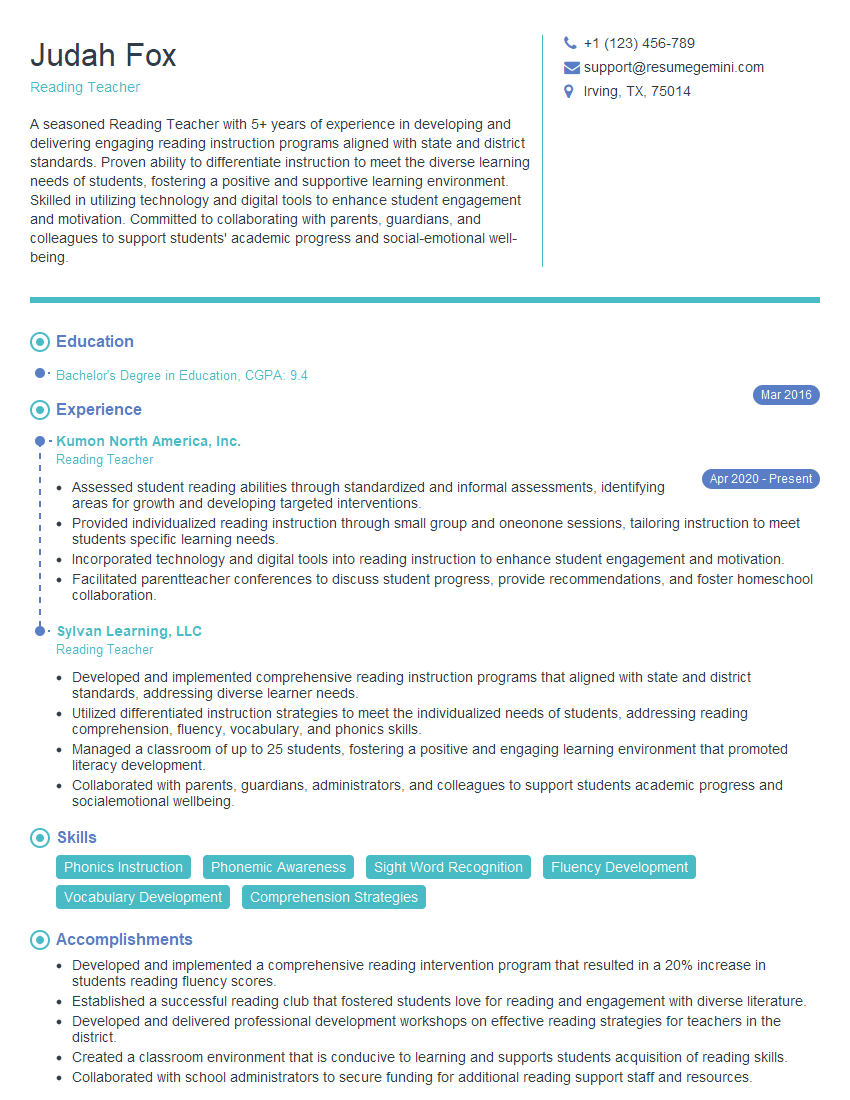
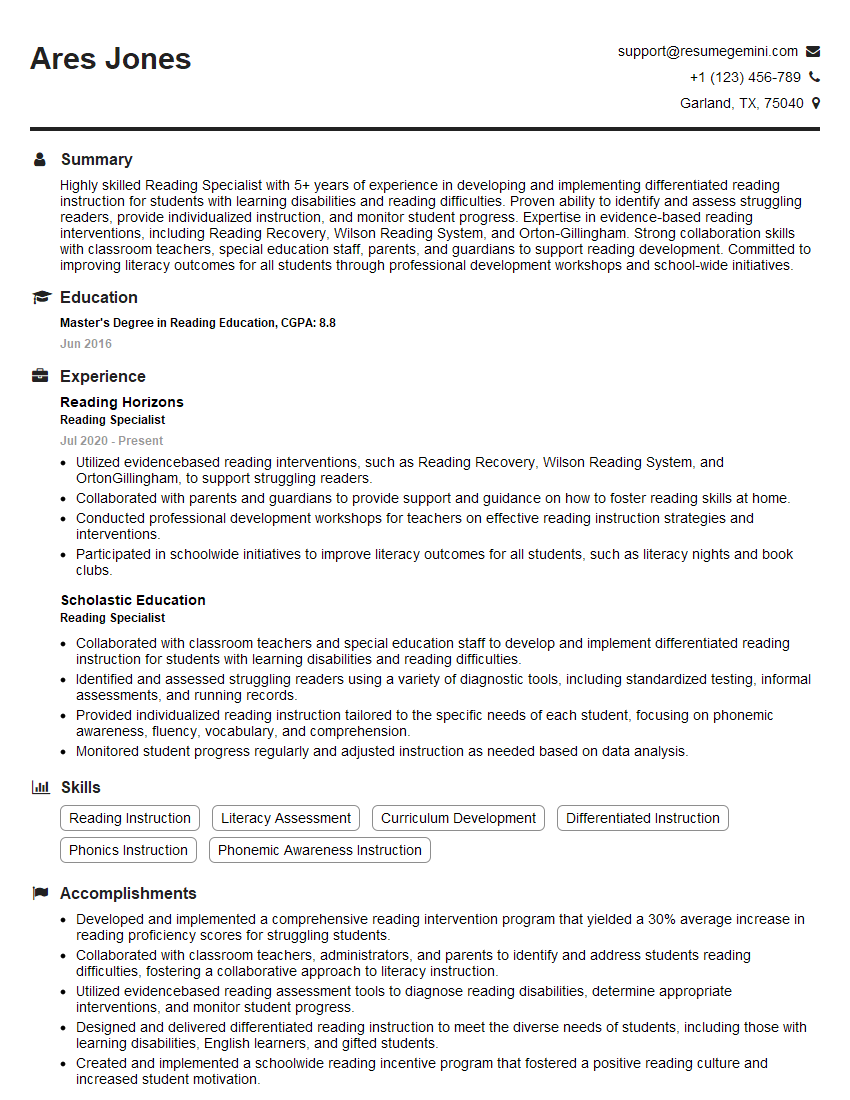
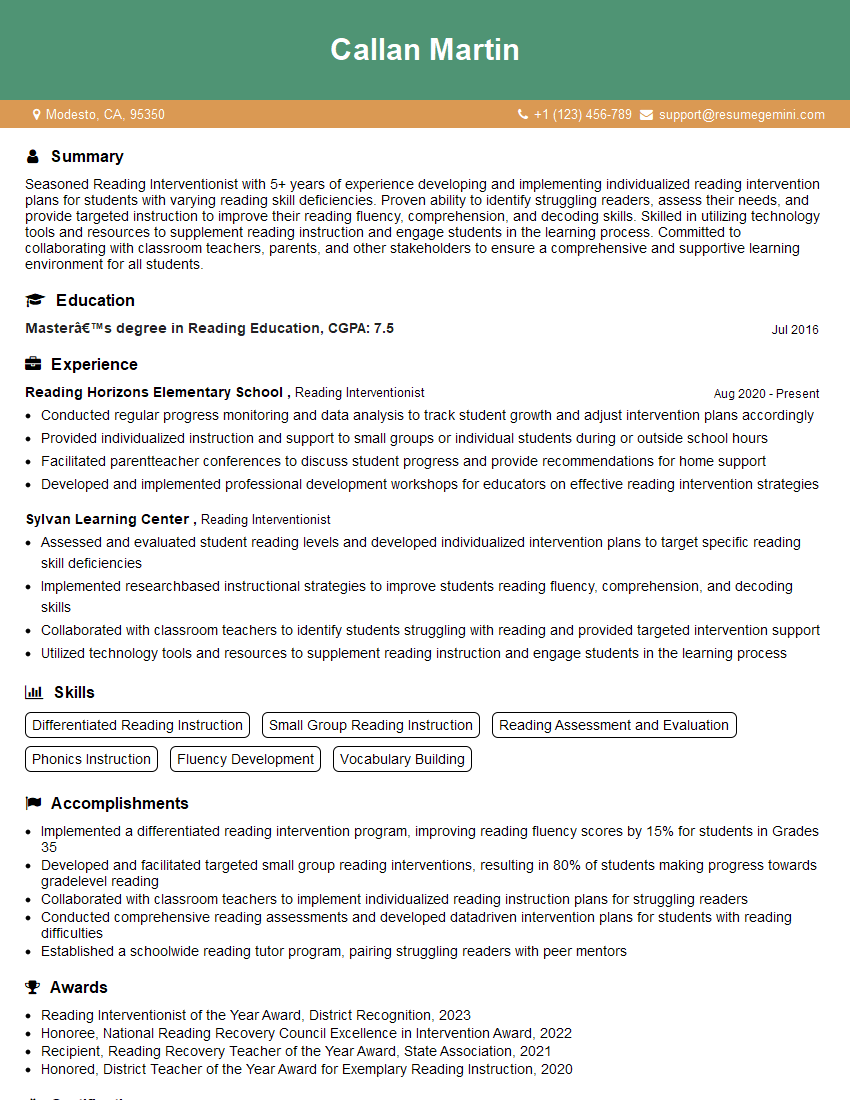
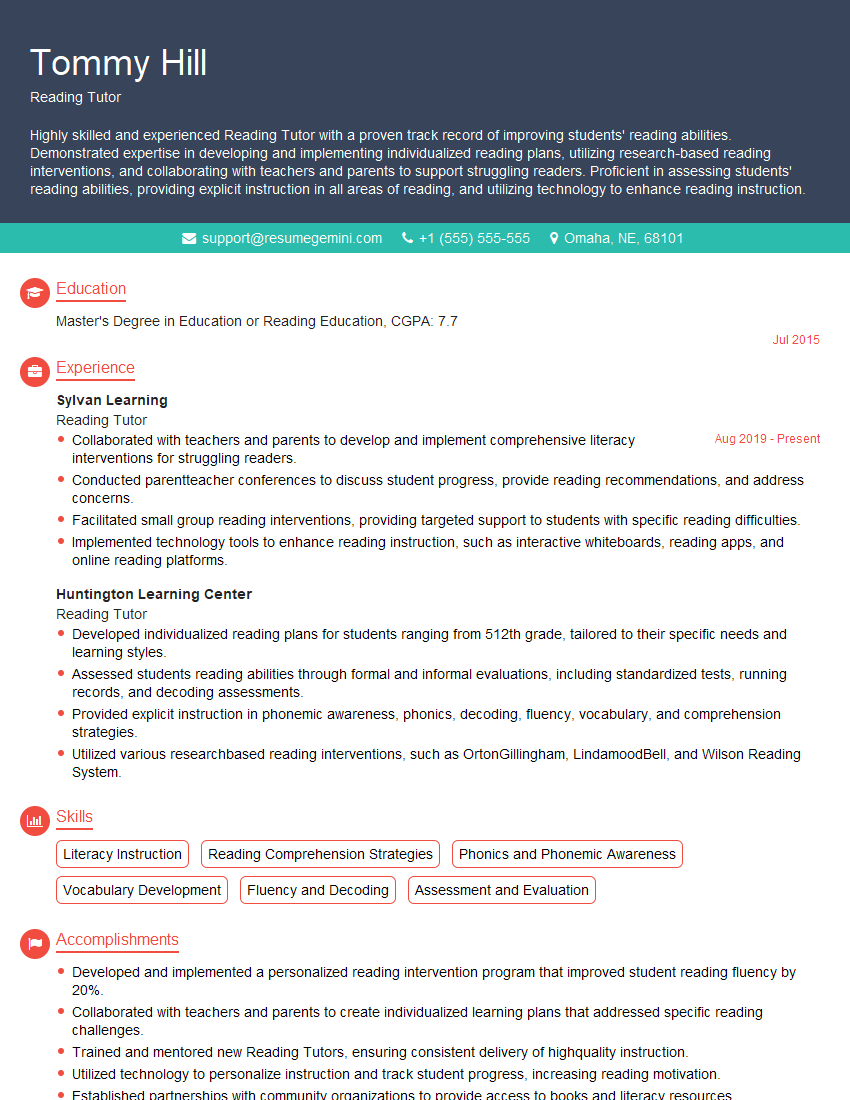
Mastering reading training significantly enhances your analytical skills, critical thinking abilities, and overall comprehension, making you a more valuable asset in any professional environment. To maximize your job prospects, creating an ATS-friendly resume is crucial. This ensures your qualifications are effectively communicated to hiring managers and Applicant Tracking Systems. We strongly recommend using ResumeGemini to build a professional and impactful resume. ResumeGemini provides a user-friendly platform and offers examples of resumes tailored to Reading training to guide you in showcasing your new skills effectively.
Explore more articles
Users Rating of Our Blogs
Share Your Experience
We value your feedback! Please rate our content and share your thoughts (optional).
What Readers Say About Our Blog
To the interviewgemini.com Webmaster.
Very helpful and content specific questions to help prepare me for my interview!
Thank you
To the interviewgemini.com Webmaster.
This was kind of a unique content I found around the specialized skills. Very helpful questions and good detailed answers.
Very Helpful blog, thank you Interviewgemini team.