The thought of an interview can be nerve-wracking, but the right preparation can make all the difference. Explore this comprehensive guide to Residential and Commercial Spray Foam Application interview questions and gain the confidence you need to showcase your abilities and secure the role.
Questions Asked in Residential and Commercial Spray Foam Application Interview
Q 1. What types of spray foam insulation are you familiar with (open-cell, closed-cell)?
In the world of spray foam insulation, we primarily work with two types: open-cell and closed-cell. Think of it like this: open-cell is like a sponge – it’s porous and allows for some air movement. Closed-cell is more like a solid block of foam – dense and airtight.
- Open-cell: Characterized by its lower density and higher breathability. It’s excellent for sound dampening and provides good thermal insulation, but it’s less effective as a moisture barrier.
- Closed-cell: Denser and less permeable to air and moisture. This makes it a superior air and vapor barrier, offering better protection against water damage and providing a higher R-value.
Both have their place depending on the project’s specific needs and climate.
Q 2. Describe the safety precautions involved in spray foam application.
Safety is paramount in spray foam application. We’re dealing with chemicals that require careful handling. Our precautions include:
- Respiratory Protection: We always use appropriate respirators, often supplied air respirators, to prevent inhalation of isocyanates, the main component of spray foam, which are extremely hazardous. This is non-negotiable.
- Protective Clothing: This includes full-body suits, gloves, and eye protection to avoid skin and eye contact. These are disposable after each use.
- Ventilation: Adequate ventilation is crucial to remove fumes and prevent buildup of isocyanates. We often use exhaust fans and ensure proper air circulation. In confined spaces, we might employ specialized ventilation systems.
- Emergency Response Plan: We have a detailed plan in place in case of spills or accidents, including readily available eyewash stations and safety showers.
- Training and Certification: All our applicators are thoroughly trained and certified to handle the chemicals and equipment safely and are well-versed in emergency procedures.
Safety isn’t just a guideline; it’s our top priority, ensuring both our team’s well-being and the safety of those occupying the building.
Q 3. Explain the difference between open-cell and closed-cell spray foam insulation.
The core difference lies in their cell structure and resulting properties. Open-cell foam has many interconnected cells, allowing air to pass through. This gives it flexibility and good sound absorption, while also allowing some moisture vapor to move. Closed-cell foam, conversely, has smaller, sealed cells which make it much denser, more rigid, and less permeable to air and moisture.
Think of it like comparing a sponge (open-cell) to a solid block of plastic (closed-cell). The sponge is softer, more flexible, and absorbent, while the plastic is rigid, less absorbent, and provides a better barrier.
Q 4. What are the R-values for open-cell and closed-cell spray foam?
R-value represents the material’s resistance to heat flow. It’s crucial for determining insulation effectiveness.
- Open-cell spray foam: Typically has an R-value of 3.5 to 3.7 per inch of thickness.
- Closed-cell spray foam: Typically boasts a much higher R-value of 6.0 to 7.0 per inch of thickness.
The actual R-value can vary slightly depending on the specific foam formulation and application methods. A higher R-value signifies better insulation.
Q 5. How do you calculate the amount of spray foam needed for a project?
Calculating spray foam needs requires precise measurements and calculations. It’s not a simple guesstimate.
We first determine the total square footage of the area to be insulated. Then, we calculate the cubic footage by multiplying the square footage by the desired thickness of the foam. This cubic footage is then converted into gallons, taking into account the foam’s expansion ratio (which varies between the type of foam and its application). We typically add an extra 10-15% to account for any potential overspray or loss during application.
For example, a 100 sq ft wall with a desired 4 inch thickness, using a foam with a 1:2 expansion rate will need approximately (100 sq ft * 4 inch / 12 inch/foot) * 2 = 67 cubic feet . Using an appropriate conversion factor (approximately 7.5 gallons per cubic foot for spray foam), we then calculate the needed gallons: 67 cubic feet * 7.5 gallons/cubic foot ≈ 500 gallons . Finally, adding the extra 10-15%, we adjust to roughly 550-575 gallons.
Software and online calculators are also available for this process and I utilize them to double-check my calculations.
Q 6. What are the common challenges encountered during spray foam installation?
Spray foam installation presents unique challenges:
- Moisture Control: Spray foam is sensitive to moisture. Applying it in damp conditions or to wet surfaces can lead to issues like bubbling, poor adhesion, and reduced performance.
- Temperature Sensitivity: Extreme temperatures, both hot and cold, can affect the curing process and the final quality of the insulation. Ideal temperatures are generally between 40 and 90 degrees Fahrenheit.
- Proper Mixing Ratios: Accurate mixing of the two components (isocyanate and resin) is crucial; incorrect ratios lead to weak or improperly cured foam. This is where precise equipment and training are invaluable.
- Air Leaks: Addressing all air leaks in the structure before application is vital to maximize insulation effectiveness. Any remaining air leaks can compromise the whole system.
- Substrate Preparation: Ensuring the surface is clean, dry, and free of debris before application is essential for proper adhesion.
Effective problem-solving involves meticulous preparation, attention to detail, and the use of appropriate techniques and materials to manage these challenges.
Q 7. How do you handle difficult or unusual applications (e.g., curved surfaces)?
Working with difficult surfaces requires specialized techniques and sometimes specialized equipment. For example:
- Curved Surfaces: We use specialized spray guns and techniques to ensure even coverage on curved walls or ceilings, avoiding gaps and ensuring proper adhesion. This may involve multiple passes or the use of different nozzle tips.
- Irregular Spaces: Small, hard-to-reach areas might require manual application techniques or the use of low-pressure equipment for more precise control.
- Difficult-to-Access Areas: We may utilize scaffolding, lifts, or other access equipment depending on the complexity of the space and ensure appropriate safety measures are in place.
Experience plays a key role in adapting to these situations and finding creative solutions that deliver a high-quality, consistent insulation job. It’s all about finding the right tools for the right job and utilizing the correct technique for optimal adhesion and insulation.
Q 8. What are the environmental considerations related to spray foam application?
Environmental considerations in spray foam application are paramount. We’re dealing with isocyanates, which are reactive chemicals, and blowing agents, which can impact air quality and the ozone layer. Minimizing environmental impact requires careful selection of materials and meticulous application techniques.
- Material Selection: We prioritize low-VOC (volatile organic compound) spray foam. These formulations significantly reduce harmful emissions into the atmosphere. Choosing a product with a high recycled content also reduces environmental burden.
- Proper Ventilation: During application, maintaining excellent ventilation is crucial to control airborne isocyanate concentrations, protecting both workers and the surrounding environment. We use respirators and ensure sufficient air circulation throughout the project.
- Waste Management: Leftover foam and containers are disposed of responsibly according to local regulations. This often involves hazardous waste handling and disposal procedures, ensuring they don’t contaminate soil or water sources.
- Spill Response: We have a detailed spill response plan in place addressing accidental spills, including using designated absorbent materials and proper neutralization procedures.
For instance, on a recent large commercial project, we partnered with a local recycling facility to manage leftover foam, minimizing our contribution to landfill waste. This proactive approach demonstrates our commitment to sustainable practices.
Q 9. What types of equipment are used in spray foam application?
Spray foam application requires specialized equipment. The core components include:
- Spray Foam Machine: This machine mixes the two components (isocyanate and polyol) at precise ratios and delivers them under high pressure to the spray gun. Different machines cater to various project scales, from small residential jobs to large-scale commercial projects. We use both plural component and proportioning machines depending on the job.
- Spray Guns: These are the delivery systems, carefully controlling the foam’s flow and pattern. The choice of gun depends on the foam type, application area (e.g., closed-cell vs. open-cell, tight spaces vs. large surfaces), and desired finish.
- Air Compressors: Powerful air compressors provide the necessary pressure for the machine’s operation and the spray gun’s function. Proper air pressure is critical for achieving optimal foam expansion and application.
- Protective Gear: This is essential for worker safety and includes respirators, coveralls, gloves, eye protection, and safety footwear.
- Cleaning Equipment: We use specialized cleaning solvents and tools to clean the equipment after each use to prevent clogging and ensure the equipment’s longevity.
The type and size of equipment selected depend heavily on the project’s specifications. For example, a small residential attic insulation job will necessitate a smaller, more portable machine and gun, while a large commercial building project might require a more powerful, higher-capacity machine with multiple spray guns.
Q 10. How do you maintain and clean spray foam equipment?
Maintaining and cleaning spray foam equipment is critical for longevity and preventing costly downtime. Our process involves:
- Immediate Cleaning: After each application, we immediately clean the spray gun and the machine’s hoses and components with specialized cleaning solvents. Delaying cleaning allows the foam to harden, making it very difficult to remove.
- Solvent Selection: We use the appropriate solvent recommended by the manufacturer for the specific type of spray foam. Using the wrong solvent can damage the equipment or create hazardous chemical reactions.
- Regular Inspection: We regularly inspect the equipment for wear and tear, replacing worn-out parts promptly to maintain optimal performance. This is crucial for consistent application quality and worker safety.
- Proper Storage: When not in use, the equipment is stored in a clean, dry location, protected from the elements.
Imagine not cleaning a spray gun properly – hardened foam inside could cause clogs, leading to uneven application, material waste, and possibly even equipment damage. Our diligent cleaning process ensures this doesn’t happen.
Q 11. Describe your experience with different types of spray foam guns.
I have extensive experience with various spray foam guns, each designed for different applications and foam types. Some examples include:
- Ratio Guns: These are used with plural component machines, providing precise control over the ratio of isocyanate and polyol being mixed, ensuring consistent foam quality. I’ve found them particularly useful for large projects requiring a consistent output.
- Pneumatic Guns: These guns rely on compressed air to atomize and propel the foam. They are commonly used for open-cell foam application, where a lighter texture is desired. However, proper pressure control is crucial.
- Electric Guns: These use electric motors for the dispensing process, providing consistent performance and often offering more precise control. I find them ideal for detailed work and intricate applications.
- High-Pressure Guns: Used for applying thicker, higher-density foam, ideal for areas needing robust insulation and moisture barriers. They require careful handling due to higher pressure.
The choice of gun depends on factors such as the foam type (open-cell or closed-cell), desired texture, and application area (e.g., walls, ceilings, attics). Choosing the right gun is key to achieving the desired results.
Q 12. Explain the process of preparing a surface for spray foam application.
Surface preparation is crucial for successful spray foam application, ensuring proper adhesion and a long-lasting result. The process includes:
- Cleaning: The surface must be free of dust, debris, grease, and any other contaminants. This usually involves pressure washing, brushing, and vacuuming.
- Moisture Control: Spray foam doesn’t adhere well to wet surfaces. Checking for and addressing any moisture issues is essential, possibly involving the use of moisture barriers.
- Repairing: Any cracks, holes, or gaps in the substrate need to be repaired prior to application to prevent uneven application and potential heat bridging.
- Priming (when necessary): Certain substrates may require a primer to enhance adhesion, especially for porous materials like wood. The primer helps create a uniform surface and ensures better foam bonding.
For example, before spraying foam insulation in an attic, I meticulously remove any loose debris, address moisture issues (if any) with proper ventilation and potentially a vapor barrier, and fill any gaps or cracks to ensure uniform insulation. Failing to prepare the surface properly can lead to poor adhesion and significant issues down the road.
Q 13. How do you ensure proper adhesion of spray foam to various substrates?
Proper adhesion is critical for the longevity and effectiveness of spray foam insulation. Different substrates require slightly different approaches:
- Concrete: Thorough cleaning and sometimes the use of a bonding agent are necessary to achieve optimal adhesion. Moisture content needs careful assessment.
- Wood: Proper cleaning and sometimes priming is essential, especially for porous woods. The surface needs to be dry and stable.
- Metal: Cleaning to remove rust, oil, and other contaminants is vital. Depending on the metal type, a specialized primer might improve the adhesion.
- Drywall: Cleaning and potentially sealing seams and cracks to ensure a sound and even surface for the spray foam.
In practice, I always assess the substrate before starting the application. If any concerns arise about adhesion, I discuss these with the client, perhaps suggesting additional steps like priming or the application of a bonding agent to ensure optimal results. Failing to address adhesion issues upfront can compromise the entire project.
Q 14. What are the signs of improper spray foam application?
Several signs indicate improper spray foam application:
- Uneven Application: This shows inconsistent spray patterns or thickness, potentially due to incorrect gun settings, inadequate surface preparation, or operator error.
- Poor Adhesion: The foam pulling away from the substrate indicates insufficient cleaning, incorrect priming, or moisture problems in the substrate.
- Excessive Blowing: Overly expanded foam can indicate incorrect mixing ratios, improper machine settings, or environmental factors influencing the chemical reaction.
- Sagging or Run-off: This suggests that the foam isn’t curing correctly, potentially due to the wrong type of foam for the application, environmental factors such as temperature and humidity, or a failure to follow the manufacturer’s instructions.
- Visible Cracks or Holes: These can indicate issues with the curing process or application technique. It can also be a sign of improper surface preparation.
Addressing these issues promptly, through careful investigation and possibly remediation, is crucial. Ignoring them can lead to reduced insulation efficiency, moisture intrusion, and structural problems in the long run. We use checklists and post-inspection procedures to mitigate risks.
Q 15. How do you troubleshoot common problems during spray foam installation?
Troubleshooting spray foam installation problems requires a systematic approach. I start by identifying the specific issue – is the foam not expanding properly? Is it exhibiting excessive cracking? Is there a discoloration? Each problem has unique causes.
Insufficient Expansion: This often points to incorrect mixing ratios, improper equipment settings (like pressure or temperature), or using expired materials. I’d check the mixing equipment, verify the chemical ratios with the manufacturer’s data sheets, and examine the ambient temperature and humidity.
Excessive Cracking: Cracking can result from rapid expansion, insufficient cure time, or movement in the substrate. I would then assess the application rate, ensure proper curing conditions (temperature and humidity), and check for any substrate movement. Proper preparation of the substrate is crucial, so I carefully examine whether the surface was properly cleaned and primed.
Discoloration: Variations in color might indicate contamination of the chemicals or issues with the equipment. I would thoroughly clean the equipment and check the materials for any signs of degradation or mixing issues.
In each case, I’d document the problem, the steps taken to address it, and the outcome. This helps build a history that is invaluable for future projects and improves my overall problem-solving capabilities.
Career Expert Tips:
- Ace those interviews! Prepare effectively by reviewing the Top 50 Most Common Interview Questions on ResumeGemini.
- Navigate your job search with confidence! Explore a wide range of Career Tips on ResumeGemini. Learn about common challenges and recommendations to overcome them.
- Craft the perfect resume! Master the Art of Resume Writing with ResumeGemini’s guide. Showcase your unique qualifications and achievements effectively.
- Don’t miss out on holiday savings! Build your dream resume with ResumeGemini’s ATS optimized templates.
Q 16. What is your experience with different types of mixing systems?
My experience encompasses a wide range of mixing systems used in spray foam application, from manual, two-component systems to fully automated, high-output machines.
Manual Systems: While less efficient for large projects, understanding manual mixing allows for more precise control and is essential for smaller jobs or specialized applications. It hones my attention to detail and helps in recognizing subtle issues in the mixing process.
Ratio Machines: These are essential for larger jobs, providing precise and consistent mixing ratios. I’m proficient in troubleshooting these machines, understanding their intricacies, and maintaining them to prevent costly downtime. I’ve worked with various brands and models, understanding their strengths and weaknesses.
Automated High-Output Systems: These systems require a higher level of expertise for operation and maintenance. I’m comfortable with the safety procedures and sophisticated controls associated with these machines, ensuring efficient and consistent foam application across extensive projects.
Regardless of the system, I always emphasize safety protocols and adhere strictly to the manufacturer’s guidelines.
Q 17. Describe your experience working with various building codes and regulations.
Navigating building codes and regulations is a crucial aspect of my work. My experience includes working with various local, state, and national codes, including those related to fire safety, energy efficiency, and structural integrity.
Fire Codes: I’m familiar with codes specifying the required fire ratings for spray foam insulation, including its impact on overall building fire safety. This involves using the correct types of foam and ensuring proper installation techniques. For example, understanding the differences between open-cell and closed-cell foam in terms of fire resistance is paramount.
Energy Codes: I’m well-versed in energy codes that mandate specific R-values for insulation in different climate zones. I know how to select the appropriate foam type and thickness to meet or exceed these requirements.
Structural Codes: Understanding how the application of spray foam insulation affects the structural integrity of the building is critical. This involves understanding load-bearing considerations and working within the design specifications.
I meticulously review plans, permits, and regulations before any project begins, and maintain accurate documentation throughout the installation process to ensure compliance. This proactive approach prevents costly delays and legal issues.
Q 18. How do you ensure quality control throughout the spray foam installation process?
Quality control is paramount in spray foam installation. It’s a multi-faceted process that begins before the first can is opened and continues until the project is completed and inspected.
Material Inspection: I always check the materials for proper labeling, expiration dates, and consistent batch numbers to avoid any inconsistencies in performance.
Equipment Calibration: Before each job, I meticulously check and calibrate the mixing and spray equipment to ensure consistent output and accurate mixing ratios.
Substrate Preparation: Proper surface preparation is crucial. I meticulously clean and prime substrates (wood, metal, concrete) to guarantee a strong bond and prevent any issues like delamination.
Application Technique: I maintain consistent spray patterns, application rates, and layer thicknesses to guarantee uniform insulation and prevent defects like voids or pinholes.
Post-Installation Inspection: I conduct a thorough visual inspection post-application, checking for defects and ensuring that all areas are properly insulated according to plans.
Maintaining detailed records, including photographs, material certifications, and equipment logs, is an important part of maintaining a strong quality control system. This meticulous documentation ensures compliance with industry best practices and contractual obligations.
Q 19. What is your experience with different types of substrates (wood, metal, concrete)?
Spray foam adheres to a variety of substrates, but proper preparation is key for a successful and long-lasting installation.
Wood: Wood substrates need to be clean, dry, and free of debris. I typically use a primer to ensure optimal adhesion and prevent moisture absorption.
Metal: Metal surfaces require careful cleaning to remove rust, grease, or other contaminants. Priming is also crucial to enhance adhesion and prevent corrosion.
Concrete: Concrete surfaces need to be thoroughly cleaned and free of dust and debris. Depending on the moisture content, specific primers and curing times may be required. Sometimes, moisture barriers are needed depending on the application.
My experience working with these different substrates ensures that I select the correct primers, application techniques, and understand the potential challenges of each. I’ve worked on diverse projects, from retrofitting historic buildings to constructing new high-rises, showcasing my adaptability to various substrate conditions.
Q 20. How do you handle unexpected site conditions or delays?
Handling unexpected site conditions and delays requires proactive planning and effective communication.
Site Surveys: I always conduct thorough site surveys before starting a project. This helps identify potential issues like unexpected obstructions or site limitations, allowing for adjustments in planning.
Contingency Planning: I build contingency plans into my scheduling to account for potential delays due to weather, material availability, or unforeseen site challenges.
Communication: Maintaining open communication with clients, subcontractors, and suppliers is critical to keep the project on track. Transparent communication minimizes misunderstandings and potential conflicts.
Adaptability: I’m adept at adjusting to unexpected changes. I’m not afraid to make informed decisions on the fly to mitigate risks and find solutions that minimize project disruption.
For example, if unexpected moisture is discovered in a wall, I’ll adjust the plan to address the moisture problem before applying the foam, avoiding future issues. Flexibility is essential in this dynamic industry.
Q 21. What are the different types of foams used in commercial and residential applications?
The spray foam insulation market offers two main categories: open-cell and closed-cell.
Open-Cell Spray Foam: This type of foam has a higher R-value per inch than closed-cell, making it an effective insulator. However, it is more permeable to air and moisture. Open-cell foam is commonly used in residential applications where air permeability isn’t a major concern. It’s lighter and easier to work with, making it suitable for filling irregular spaces.
Closed-Cell Spray Foam: Closed-cell foam is denser, has a lower R-value per inch than open-cell but provides superior air and moisture barriers. It is often used in commercial projects and where moisture control is paramount, such as basements or exterior walls. Because of its dense nature, it provides good structural support and can act as a sound barrier.
The choice between open-cell and closed-cell foam depends on the specific application, budget, and performance requirements. For example, a residential attic might use open-cell for its higher R-value per inch and ease of installation, while a commercial building envelope might opt for closed-cell for superior moisture protection and structural integrity.
Q 22. What are the advantages and disadvantages of using spray foam insulation?
Spray foam insulation offers numerous advantages, but it’s crucial to understand its limitations as well. Let’s start with the pros:
- Exceptional Insulation: Spray foam creates an airtight seal, minimizing air leakage and significantly reducing energy costs. Think of it like wrapping your house in a cozy, energy-efficient hug. This is particularly effective in reducing drafts and improving comfort.
- Superior Air Sealing: This airtight seal also prevents moisture intrusion, a major cause of mold and structural damage. This leads to a healthier and more durable building envelope.
- Versatility: It can be applied to various surfaces and shapes, filling gaps and cracks that traditional insulation struggles with. It’s like a custom-fit solution for any space.
- Improved Sound Dampening: Spray foam’s dense structure effectively reduces noise transmission, creating a quieter indoor environment.
However, there are some drawbacks to consider:
- Cost: Spray foam is generally more expensive upfront than traditional insulation methods. However, the long-term energy savings often offset this initial investment.
- Specialized Application: It requires skilled professionals with specialized equipment for proper application. A poor application can negate the benefits and even cause problems.
- Off-gassing: Some spray foam formulations can release volatile organic compounds (VOCs) after application. Choosing low-VOC or zero-VOC options is crucial for indoor air quality. It’s like buying a new car – that initial smell dissipates over time. Low VOC options minimize this.
- Moisture Sensitivity (in certain cases): While it’s resistant to moisture intrusion, improper installation can leave it vulnerable, especially in closed-cell systems.
Q 23. How do you manage waste generated during spray foam application?
Waste management in spray foam application is critical for environmental responsibility and regulatory compliance. We meticulously plan the project to minimize waste from the outset. This includes accurate measurements and precise application techniques.
Excess or uncured foam is carefully collected and disposed of according to local and state regulations. In many cases, this involves using specialized containers and coordinating with licensed hazardous waste disposal facilities. For example, we’ve used specialized vacuum systems to recover uncured foam and prevent environmental contamination.
We also take steps to reduce waste during the cleanup process. We use appropriate solvents and cleaning agents to remove any spray foam residue from equipment and tools, ensuring these are disposed of responsibly. Proper training is essential for the entire team involved, emphasizing the importance of responsible waste management.
Q 24. Explain your understanding of the health and safety risks associated with the application of spray foam?
Spray foam application involves several health and safety risks, demanding rigorous adherence to safety protocols. The primary concerns include:
- Respiratory Hazards: Spray foam can release isocyanates during application, which can irritate the respiratory system and cause severe reactions in sensitive individuals. We always ensure our team wears appropriate respiratory protection, including supplied-air respirators.
- Skin Irritation: Direct contact with the foam or its components can cause skin irritation or allergic reactions. Protective clothing, including coveralls, gloves, and eye protection, is mandatory for all personnel.
- Fire Hazard: Some spray foam formulations are flammable, especially during the curing process. We take extreme precautions to minimize fire hazards. The work area is well ventilated, and all fire safety measures are followed.
- Exposure to VOCs: As mentioned earlier, some formulations release VOCs. Low-VOC or zero-VOC options are used whenever possible to improve indoor air quality.
Our safety protocols include thorough training, pre-job risk assessments, emergency response plans, and ongoing monitoring to ensure the safety and well-being of our team and the surrounding environment.
Q 25. What are your preferred methods for ensuring a consistent and high-quality spray foam application?
Consistency and high quality in spray foam application are paramount. We achieve this through a multi-faceted approach:
- Experienced Technicians: Our team undergoes rigorous training and certification to ensure proper application techniques. Experience is key to understanding how to adapt to various conditions.
- High-Quality Equipment: We utilize calibrated and well-maintained spray equipment. Regular calibration is essential for consistent output and quality control.
- Precise Measurements: Accurate measurements and calculations ensure we use the appropriate amount of foam for each area, preventing over-application or under-application.
- Proper Surface Preparation: Thorough surface preparation is critical for optimal adhesion. This involves cleaning, and often, the use of primers tailored to different substrates.
- Environmental Monitoring: We monitor ambient conditions, such as temperature and humidity, to ensure optimal foam expansion and curing.
- Quality Control Inspections: Multiple inspections are performed throughout and after the application process, verifying the quality and uniformity of the foam.
We treat each project as a unique challenge, adapting our techniques to meet the specifics of the job.
Q 26. Describe a situation where you had to solve a problem during a spray foam installation project.
During a recent commercial project involving the retrofit of a historical building, we encountered unexpected challenges in applying spray foam around intricate architectural details. The existing structure had many nooks and crannies, making it difficult to achieve a uniform, consistent application without compromising the aesthetic integrity of the building.
Our solution involved a phased approach. First, we used hand-mixing techniques in tight spaces to precisely fill complex areas that our spray equipment couldn’t reach efficiently. Next, we employed low-density spray foam to avoid excessive expansion and potential damage to the historical details. We also conducted meticulous masking to protect delicate elements. This two-pronged approach allowed us to successfully complete the project while preserving the building’s original charm and ensuring optimal insulation. We meticulously documented this process, which has enhanced our understanding of tackling similar situations in the future.
Q 27. What are some common mistakes to avoid during spray foam application?
Several common mistakes can significantly impact the effectiveness and longevity of spray foam insulation. Avoiding these is essential for a successful project.
- Inadequate Surface Preparation: Improper cleaning or priming leads to poor adhesion, creating gaps and voids.
- Incorrect Foam Density: Using the wrong density can compromise insulation performance, leading to inadequate thermal resistance or structural weakness.
- Over-Application or Under-Application: Both lead to problems; over-application wastes material and can cause uneven expansion, whereas under-application leaves areas inadequately insulated.
- Ignoring Environmental Conditions: Extreme temperatures or humidity can affect foam expansion and curing, leading to defects.
- Lack of Proper Safety Precautions: This can lead to serious health consequences for the installers and even occupants.
We emphasize meticulous preparation, careful execution and ongoing quality control to prevent these common pitfalls.
Q 28. How do you stay up-to-date on the latest advancements in spray foam insulation technology?
Staying current with advancements in spray foam insulation technology is crucial for maintaining expertise in this field. We actively engage in several strategies:
- Industry Publications and Journals: We regularly review industry publications and journals to stay abreast of the latest research and innovations. This includes attending industry conferences and workshops, and engaging with online resources.
- Manufacturer Training: We participate in training programs provided by foam manufacturers, learning about new products, improved application techniques, and safety protocols. This hands-on learning is essential for maintaining our skills and ensuring we are at the forefront of industry best practices.
- Networking with Peers: We actively network with other spray foam applicators, sharing knowledge, experiences and challenges faced in the field. This collaborative learning is extremely valuable.
- Continuing Education: We pursue professional development opportunities to keep our licenses and certifications current, demonstrating our commitment to ongoing training.
Staying informed ensures that we provide our clients with the best possible solutions and apply the safest and most efficient methods available.
Key Topics to Learn for Residential and Commercial Spray Foam Application Interview
- Spray Foam Chemistry & Properties: Understanding the different types of spray foam (open-cell, closed-cell), their chemical composition, and their respective advantages and disadvantages in various applications.
- Equipment Operation & Maintenance: Proficiency in operating and maintaining spray foam equipment, including mixing ratios, pressure regulation, and troubleshooting common malfunctions. Practical experience with different brands and models is highly valuable.
- Application Techniques: Mastering the art of achieving consistent, even application across various surfaces, including walls, roofs, and attics. Understanding how to account for different environmental conditions and material properties.
- Safety Procedures & Regulations: In-depth knowledge of relevant safety protocols, including handling of chemicals, personal protective equipment (PPE), and adherence to OSHA guidelines. Understanding local building codes and environmental regulations is crucial.
- Project Planning & Estimation: Ability to accurately estimate material quantities, labor costs, and project timelines. Understanding the process of creating proposals and communicating effectively with clients.
- Troubleshooting & Problem Solving: Experience identifying and resolving common issues encountered during the application process, such as voids, inconsistencies, and curing problems. Demonstrating problem-solving skills is key.
- Insulation Principles & Energy Efficiency: A strong understanding of the principles of thermal insulation and how spray foam contributes to energy efficiency in both residential and commercial buildings. Being able to articulate these benefits to potential clients.
- Commercial vs. Residential Applications: Understanding the differences in scale, complexity, and specific requirements for each type of application. This includes different material choices and project management techniques.
Next Steps
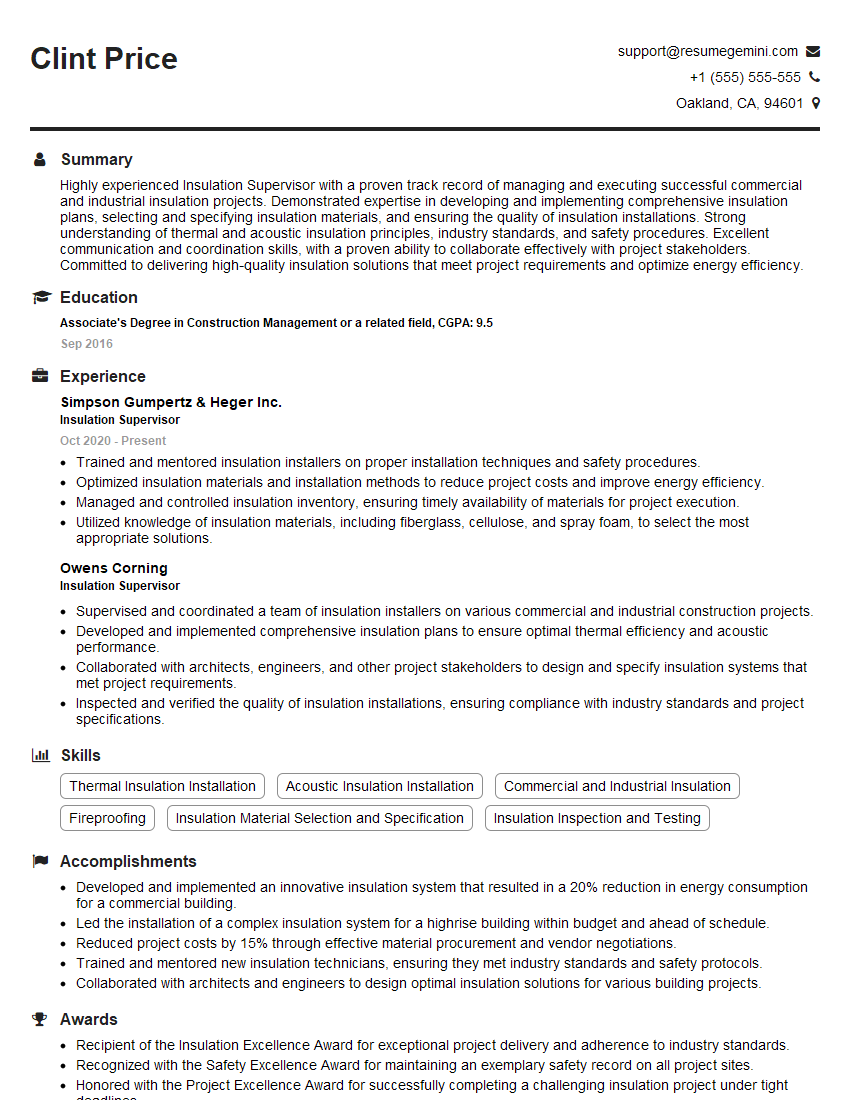
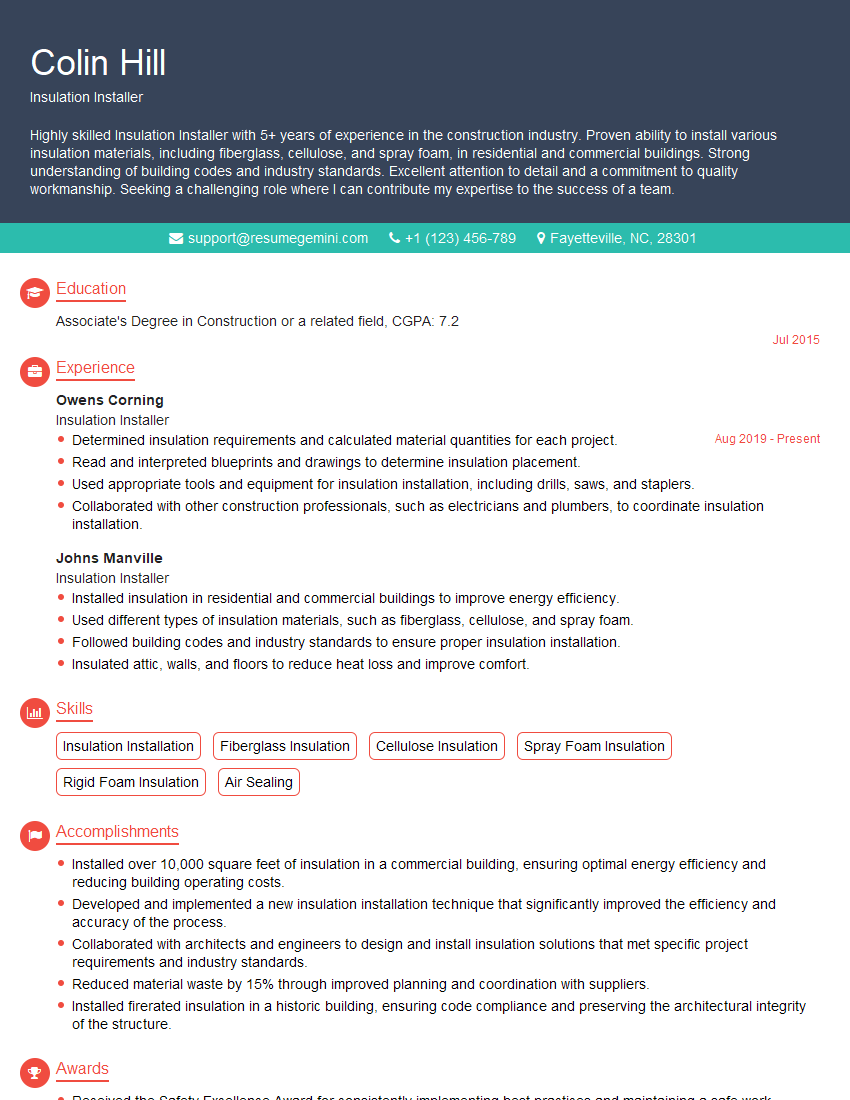
Mastering Residential and Commercial Spray Foam Application opens doors to a rewarding career with excellent growth potential. This specialized skillset is in high demand, offering opportunities for advancement and higher earning potential. To maximize your job prospects, create a compelling and ATS-friendly resume that highlights your skills and experience. ResumeGemini is a trusted resource for building professional resumes that stand out. They provide examples of resumes tailored to the Residential and Commercial Spray Foam Application industry, ensuring your application makes a lasting impression. Invest time in crafting a strong resume – it’s your first step towards securing your dream job.
Explore more articles
Users Rating of Our Blogs
Share Your Experience
We value your feedback! Please rate our content and share your thoughts (optional).
What Readers Say About Our Blog
To the interviewgemini.com Webmaster.
Very helpful and content specific questions to help prepare me for my interview!
Thank you
To the interviewgemini.com Webmaster.
This was kind of a unique content I found around the specialized skills. Very helpful questions and good detailed answers.
Very Helpful blog, thank you Interviewgemini team.