The right preparation can turn an interview into an opportunity to showcase your expertise. This guide to Safety Compliance in Paradi Operation interview questions is your ultimate resource, providing key insights and tips to help you ace your responses and stand out as a top candidate.
Questions Asked in Safety Compliance in Paradi Operation Interview
Q 1. Explain your experience with Paradi-specific safety regulations.
Paradi operations, while I assume you’re referring to a specific high-risk industrial environment (please clarify if this is a specific industry term not widely known), necessitate a rigorous safety regime. My experience encompasses a deep understanding of regulations concerning hazardous materials handling, confined space entry, lockout/tagout procedures, and personal protective equipment (PPE) use, all tailored to the unique challenges of this operational context. For instance, in my previous role at [Previous Company Name], we worked extensively with regulations surrounding [Specific Regulation or Standard, e.g., the handling of Class 1 explosives, the management of high-voltage electrical systems]. This included regular training updates, conducting risk assessments, and implementing strict adherence to the permitted exposure limits for specific hazardous substances.
My experience further involves understanding and implementing regulations around emergency response, including detailed emergency action plans (EAPs), and maintaining comprehensive safety data sheets (SDS) for all materials used.
Q 2. Describe your approach to conducting safety audits in a Paradi operation.
My approach to safety audits in a Paradi operation is methodical and comprehensive, focusing on both compliance and proactive risk mitigation. I begin by reviewing all relevant safety documentation, including permits to work, risk assessments, and maintenance logs. Then, I conduct a thorough site walkthrough, observing actual practices and comparing them against documented procedures. This includes assessing the condition of equipment, the effectiveness of safety controls, and the adherence to PPE requirements. I document all observations, using checklists and photographs as needed, and identify any deviations from safety standards.
Crucially, I don’t just look for violations; I also assess the overall safety culture. I interview employees at all levels to gauge their understanding of safety protocols and their comfort level in reporting hazards. Finally, I present a detailed report outlining findings, recommendations for corrective actions, and a timeline for implementation, always prioritising the most critical safety issues first.
For example, during an audit at [Previous Company Name], I discovered a critical gap in the emergency shutdown procedure for a key piece of machinery. My report, supported with photographic evidence and process maps, highlighted this deficiency, and corrective actions were implemented promptly.
Q 3. How would you identify and mitigate potential hazards in a Paradi setting?
Identifying and mitigating potential hazards in a Paradi operation requires a proactive, multi-faceted approach. I utilize a combination of techniques, including Job Safety Analyses (JSAs), HAZOP studies (Hazard and Operability studies), and regular safety inspections. JSAs break down complex tasks into steps, identifying potential hazards at each stage and implementing appropriate controls. HAZOP is a more systematic approach, examining deviations from normal operating parameters to identify potential hazards. Regular inspections, both planned and unplanned, are critical to identify emerging risks.
My strategy involves using a hierarchical risk assessment model, prioritising hazards based on likelihood and severity. Mitigation strategies can include engineering controls (e.g., implementing safety interlocks), administrative controls (e.g., implementing stricter procedures), and personal protective equipment (PPE). For instance, if a JSA reveals a risk of chemical exposure during a particular task, we might implement engineering controls like a closed-system handling procedure, administrative controls like enhanced training and safety briefings, and PPE like respirators and protective clothing.
Continuous improvement is key. We should regularly review and update risk assessments based on new information, incidents, or changes in operations. The process should be iterative and dynamic, not a static exercise.
Q 4. What are your experiences with incident investigation and reporting in Paradi operations?
Incident investigation and reporting are crucial components of a robust safety management system. My experience involves leading and participating in numerous investigations, adhering to established methodologies such as the ‘5 Whys’ technique to understand the root causes of incidents. This involves gathering evidence, interviewing witnesses, reviewing documentation, and analysing data to determine the sequence of events leading to the incident. The goal is not to assign blame but to identify the underlying systemic issues that contributed to the incident and to implement corrective actions to prevent recurrence.
Reporting follows a strict protocol, with detailed reports compiled and submitted to relevant authorities in a timely manner. The reports include a comprehensive description of the incident, the findings of the investigation, the root causes, and recommended corrective and preventive actions. I am familiar with various reporting software and databases used for tracking incidents and analysing trends to proactively address emerging safety concerns. Following a recent incident involving [brief description without revealing sensitive information], we implemented a new training program to address the identified root cause, dramatically reducing the likelihood of similar incidents.
Q 5. Explain your understanding of risk assessment methodologies in the context of Paradi.
Risk assessment methodologies are fundamental in Paradi operations. I am proficient in various techniques, including qualitative and quantitative methods. Qualitative methods, such as the HAZOP study mentioned previously, focus on identifying and classifying hazards based on their potential severity and likelihood. Quantitative methods involve numerical calculations to estimate the probability and impact of risks, often using software tools. The choice of methodology depends on the complexity and nature of the risks involved. A simple risk matrix, assigning severity and likelihood scores to each hazard, can be used for simpler assessments. For more complex situations, more sophisticated quantitative risk assessments using probabilistic models might be required.
In the context of Paradi operations, a crucial aspect of risk assessment is considering the cascading effects of failures. A seemingly minor failure in one system could trigger a chain of events leading to a major incident. Therefore, a comprehensive risk assessment must consider these potential domino effects and implement appropriate safeguards to mitigate the overall risk.
Q 6. Describe your familiarity with emergency response procedures relevant to Paradi operations.
Familiarity with emergency response procedures is paramount in high-risk environments like Paradi operations. My experience includes developing, implementing, and regularly exercising emergency response plans (ERPs). These plans encompass various scenarios, including fires, explosions, chemical spills, and medical emergencies. They specify roles and responsibilities, communication protocols, evacuation procedures, and the use of emergency equipment. I’m proficient in the use of various emergency response tools and equipment, such as fire extinguishers, emergency showers, and personal protective equipment for different hazards.
Regular drills and training are critical to ensure that personnel are adequately prepared to respond effectively to emergencies. These drills should simulate real-world scenarios, enabling personnel to practice their responses and identify any gaps in the plans. Post-drill evaluations and modifications are essential to continually improve the effectiveness of the ERPs. For instance, during a mock chemical spill exercise, we identified a communication bottleneck, which was promptly addressed by upgrading our communication system.
Q 7. How do you ensure compliance with all applicable safety regulations in a Paradi operation?
Ensuring compliance with all applicable safety regulations in a Paradi operation requires a multi-pronged approach. First, it requires a thorough understanding of all relevant legislation, standards, and guidelines. This understanding should extend beyond just the letter of the law; it should encompass the spirit and intent of the regulations. Regular updates and training on new regulations and best practices are crucial. Second, a robust safety management system (SMS) should be implemented. This SMS should include clear roles and responsibilities, documented procedures, regular inspections, incident reporting mechanisms, and a culture of proactive safety.
Effective communication and training are vital to ensure that all personnel understand and adhere to safety regulations. Training should be tailored to the specific risks associated with each role and should include both theoretical and practical elements. Regular safety meetings, toolbox talks, and audits help reinforce safety awareness and identify potential compliance gaps. Finally, proactive monitoring and auditing are essential to identify and address compliance issues before they result in incidents. This proactive approach, involving both internal audits and external reviews by competent authorities, ensures that the operation continuously meets or exceeds the requirements of all applicable regulations.
Q 8. What are some key performance indicators (KPIs) you would use to measure safety performance in a Paradi operation?
Measuring safety performance in a Paradi operation (assuming ‘Paradi’ refers to a high-risk environment like offshore oil and gas or a similar operation) requires a multi-faceted approach using several key performance indicators (KPIs). These KPIs should focus on lagging indicators (outcomes of incidents) and leading indicators (proactive measures to prevent incidents).
- Lagging Indicators: These tell us what has already happened. Examples include:
- Total Recordable Incident Rate (TRIR): The number of recordable incidents per 200,000 employee hours worked. A lower TRIR indicates better safety performance.
- Lost Time Incident Rate (LTIR): The number of lost-time incidents per 200,000 employee hours worked. Focuses on incidents resulting in time off.
- Days Away, Restricted, or Transferred (DART) Rate: Similar to LTIR but includes days away from work, restricted work, or job transfer due to injury.
- Fatal Incident Rate (FIR): The number of fatalities per 200,000 employee hours worked. This is the most critical indicator.
- Leading Indicators: These predict future performance by focusing on proactive measures. Examples include:
- Near Miss Reporting Rate: The number of near misses reported per employee. A high rate suggests a strong safety culture of reporting.
- Safety Observation Rate: Number of safety observations conducted per employee. Indicates proactive engagement with safety.
- Compliance Rate with Safety Procedures: Percentage of times safety procedures are followed. Tracks adherence to established protocols.
- Safety Training Completion Rate: Percentage of employees who have completed required safety training. Ensures workforce competence.
By tracking both lagging and leading indicators, we get a complete picture of safety performance, allowing for both reactive improvements (after an incident) and proactive prevention measures.
Q 9. How would you communicate safety information effectively to diverse teams in a Paradi setting?
Effective communication in a diverse Paradi setting is crucial for safety. My strategy would involve a multi-pronged approach, tailoring communication to different teams and individuals based on their language skills, literacy levels, and cultural backgrounds.
- Multilingual Materials: Safety information should be translated into all languages spoken by the workforce. Simple, clear language should be prioritized over complex technical terms.
- Visual Aids: Use images, videos, and infographics to convey information effectively, especially for those with limited literacy. Demonstrations and hands-on training are essential.
- Regular Safety Meetings: Conduct regular meetings with each team, using a translator if necessary. These meetings should be interactive, allowing workers to ask questions and share concerns.
- Interactive Training: Incorporate interactive elements into safety training to enhance engagement and knowledge retention. Gamification and simulations can be highly effective.
- Open Communication Channels: Establish multiple channels for reporting safety concerns, such as suggestion boxes, anonymous reporting systems, and open-door policies. Ensure employees feel safe to voice their concerns without fear of reprisal.
- Cultural Sensitivity: Be mindful of cultural norms and beliefs that may influence safety behaviors. Respect individual preferences and communication styles.
For example, I once worked on a project where we used a combination of simple pictograms and videos with voiceovers in multiple languages to communicate emergency procedures. This improved comprehension significantly, reducing misunderstandings and improving response times during drills.
Q 10. Describe your experience with developing and implementing safety training programs for Paradi operations.
My experience in developing and implementing safety training programs involves a structured, needs-based approach that incorporates both theoretical knowledge and practical skills development. I begin by conducting a thorough needs assessment to identify specific safety hazards and training gaps within the Paradi operation.
- Needs Assessment: This involves reviewing incident reports, conducting job hazard analyses (JHAs), and interviewing workers to understand their needs and concerns.
- Curriculum Development: Based on the needs assessment, I design a comprehensive curriculum that covers relevant topics such as hazard identification, risk assessment, emergency procedures, PPE use, and specific equipment operation.
- Training Delivery: I utilize various training methods, including classroom instruction, hands-on training, simulations, and online modules. I employ diverse training techniques to cater to different learning styles.
- Evaluation and Feedback: Regular evaluations are conducted using various methods, such as quizzes, practical assessments, and feedback sessions. This helps to assess knowledge retention and identify areas for improvement.
- Documentation: Detailed records of training participation, assessment results, and feedback are maintained to ensure compliance and continuous improvement.
For instance, in a previous role, I developed and implemented a specialized training program for operating a new piece of equipment. The program involved theoretical instruction, followed by a simulated operation, and finally, hands-on training under strict supervision. This approach helped minimize risks and ensured workers could operate the equipment safely and efficiently. Post-training performance was significantly better than expected.
Q 11. How do you handle safety concerns raised by employees in a Paradi operation?
Handling safety concerns raised by employees is paramount. My approach is based on prompt investigation, transparent communication, and corrective action.
- Prompt Acknowledgement: Every concern must be acknowledged promptly and investigated without delay. This shows employees that their voices are valued.
- Thorough Investigation: A thorough investigation should be conducted to determine the root cause of the concern. This may involve interviewing witnesses, reviewing records, and conducting site inspections.
- Corrective Actions: Appropriate corrective actions must be implemented based on the findings of the investigation. This could involve changing procedures, providing additional training, or modifying equipment.
- Communication of Findings: The findings of the investigation and corrective actions should be communicated transparently to all employees involved. This demonstrates accountability and builds trust.
- Follow-Up: Follow-up actions should be taken to ensure the effectiveness of the corrective actions and prevent similar concerns from arising in the future.
For example, if an employee reports a concern about inadequate lighting in a specific work area, I would immediately investigate. If the concern is validated, I would work with the relevant teams to install better lighting and communicate the solution to the employee and other relevant personnel.
Q 12. Explain your understanding of permit-to-work systems and their application in Paradi.
Permit-to-work (PTW) systems are critical in high-risk environments like Paradi operations. They are formal systems that control potentially hazardous work by ensuring that all necessary precautions are taken before work commences.
A PTW system typically involves several steps:
- Application: The individual or team intending to perform the work completes a PTW application, detailing the work to be done, potential hazards, and necessary precautions.
- Issuance: A designated authorized person reviews the application and issues a permit if the risks are adequately controlled. This person needs appropriate training and authority.
- Execution: The work is carried out under the terms specified in the permit.
- Inspection: Regular inspections are conducted to ensure the work is being done safely and according to the permit.
- Closure: Once the work is completed safely, the permit is formally closed by the authorized person.
In a Paradi operation, PTW systems are vital for tasks like hot work, confined space entry, working at heights, and hazardous material handling. They ensure a structured approach to risk management, minimizing the likelihood of accidents. For instance, a PTW would be required before commencing welding in a potentially flammable area, ensuring proper ventilation and fire prevention measures are in place.
Q 13. How familiar are you with the use of personal protective equipment (PPE) in Paradi operations?
I am very familiar with the use of Personal Protective Equipment (PPE) in Paradi operations. PPE is crucial for protecting workers from various hazards. My understanding encompasses not only the selection and use of appropriate PPE but also its maintenance and proper disposal.
- Hazard Identification: The selection of PPE is driven by a thorough hazard assessment. Different hazards require different types of PPE.
- Selection: The chosen PPE must meet relevant safety standards and fit the individual worker properly. Ill-fitting PPE can be ineffective and even dangerous.
- Training and Use: Workers must receive thorough training on how to use, maintain, and store PPE correctly. This includes understanding limitations and potential failure modes.
- Maintenance and Inspection: Regular inspection and maintenance of PPE are critical to ensure its effectiveness. Damaged or faulty PPE must be replaced immediately.
- Disposal: PPE disposal should be handled correctly to avoid environmental contamination and to prevent reuse of contaminated items.
For example, in a Paradi operation involving working at heights, workers would require safety harnesses, helmets, and appropriate footwear. Regular inspection of these harnesses and other equipment is vital to prevent accidents from falls.
Q 14. Describe your experience with conducting safety inspections and documenting findings.
Conducting safety inspections and documenting findings is a regular part of my work. My approach is systematic, objective, and uses a structured reporting process.
- Planning: Inspections are planned in advance, identifying areas to be inspected and the specific hazards to be checked. Checklists are used for consistency.
- Inspection: Inspections are conducted systematically, using checklists to ensure all critical areas are covered. Observations are recorded with clear descriptions and photographic evidence where applicable.
- Documentation: All findings are documented thoroughly, including observations, non-compliances, and recommendations for corrective actions. Photographs and videos might be included to provide strong evidence.
- Reporting: Inspection reports are prepared promptly and distributed to relevant personnel. This might involve multiple levels, from site management to executive management.
- Follow-Up: Follow-up actions are taken to verify that corrective actions have been implemented effectively. This might involve revisiting the site to confirm improvements.
In my experience, well-documented safety inspections are vital not only for preventing accidents but also for demonstrating compliance with regulations and continuous improvement efforts. A thorough and well-documented report can be used to support decisions on safety investments and training needs.
Q 15. What are some common safety hazards specific to Paradi operations?
Paradi operations, depending on the specific nature of the work (e.g., Paradi is assumed here to be a high-risk industry like offshore oil and gas, or a similar hazardous environment), present a unique set of safety hazards. These can broadly be categorized into:
- Environmental Hazards: These include exposure to extreme weather conditions (high winds, storms, freezing temperatures), hazardous substances (oil spills, gas leaks), and potential for falls from heights (platforms, equipment).
- Operational Hazards: These stem from the complex machinery and processes involved. Examples include equipment malfunctions, explosions, fires, and the risk of heavy object impacts. Confined space entry and working at height are also significant risks.
- Human Factors: Fatigue, stress, inadequate training, lack of communication, and human error contribute significantly to accidents. These are often underlying causes contributing to other hazards.
For example, a failure in a pressure vessel could lead to an explosion, an environmental hazard involving the release of hazardous substances. Human error in maintenance, such as overlooking a critical component, could be the root cause.
Career Expert Tips:
- Ace those interviews! Prepare effectively by reviewing the Top 50 Most Common Interview Questions on ResumeGemini.
- Navigate your job search with confidence! Explore a wide range of Career Tips on ResumeGemini. Learn about common challenges and recommendations to overcome them.
- Craft the perfect resume! Master the Art of Resume Writing with ResumeGemini’s guide. Showcase your unique qualifications and achievements effectively.
- Don’t miss out on holiday savings! Build your dream resume with ResumeGemini’s ATS optimized templates.
Q 16. How would you manage a safety incident in a Paradi operation, from initial response to post-incident analysis?
Managing a safety incident effectively requires a structured approach. My process follows these steps:
- Immediate Response: First, ensure the safety of all personnel. This involves securing the area, providing first aid if necessary, and contacting emergency services if required. The primary focus is to prevent further injuries or damage.
- Investigation: A thorough investigation is conducted to determine the root cause of the incident. This typically involves collecting evidence (witness statements, physical evidence, data logs), interviewing involved personnel, and analyzing the sequence of events.
- Corrective Actions: Based on the investigation, corrective actions are implemented to prevent similar incidents from happening again. This might involve modifying procedures, repairing or replacing equipment, or providing additional training.
- Reporting and Documentation: All aspects of the incident, including the investigation findings, corrective actions, and lessons learned, are meticulously documented and reported to relevant authorities and management.
- Post-Incident Analysis: A formal review is carried out to identify systemic weaknesses and areas for improvement within the safety management system. This goes beyond immediate corrective actions and focuses on preventing future incidents.
For instance, if a crane accident occurred, the investigation might reveal inadequate training of the crane operator, leading to the implementation of enhanced training programs as a corrective action.
Q 17. Explain your understanding of lockout/tagout procedures and their importance in Paradi.
Lockout/Tagout (LOTO) procedures are critically important safety protocols for isolating energy sources before performing maintenance or repair work on equipment. It’s about preventing unexpected energization or release of stored energy that could cause serious injury or death.
The process involves:
- Identify energy sources: This includes electrical, hydraulic, pneumatic, mechanical, and thermal energy.
- Isolate energy sources: Use appropriate lockout devices to disconnect the energy sources.
- Apply lockout devices: Secure the lockout devices to the energy isolating devices, preventing accidental re-energization.
- Verify isolation: Ensure the energy source is truly isolated before beginning work.
- Tagout: Use tags to clearly indicate that the equipment is locked out and should not be operated.
- Removal of lockout devices: Lockout devices are only removed by the person who applied them, after verifying that all work is complete and the area is safe.
In Paradi operations, where working with high-pressure systems, heavy machinery, or hazardous materials is common, LOTO procedures are absolutely mandatory. Failure to follow LOTO could result in catastrophic accidents.
Q 18. Describe your experience with safety management systems (SMS) and their implementation in Paradi.
Safety Management Systems (SMS) are a systematic approach to managing safety risks. My experience involves implementing and maintaining SMS in Paradi-type operations, encompassing these key elements:
- Safety Policy: Establishing a clear safety policy defining the organization’s commitment to safety and setting expectations.
- Hazard Identification and Risk Assessment: Regularly identifying hazards and assessing the associated risks through methods like Job Safety Analyses (JSAs) and risk matrices.
- Risk Control Measures: Implementing controls to mitigate risks, including engineering controls, administrative controls, and personal protective equipment (PPE).
- Training and Competency Assurance: Ensuring personnel are adequately trained and competent to perform their tasks safely.
- Incident Reporting and Investigation: Having a robust system for reporting and investigating incidents to identify root causes and implement corrective actions.
- Audits and Inspections: Conducting regular audits and inspections to ensure compliance with safety regulations and procedures.
- Performance Monitoring: Tracking key safety performance indicators (KPIs) to measure the effectiveness of the SMS and identify areas for improvement.
I’ve been involved in the development and implementation of SMS, using software tools for hazard tracking and risk assessment. For example, a specific project involved analyzing the risks associated with maintenance work on a high-pressure pipeline, leading to improved procedures and PPE requirements.
Q 19. How do you ensure the effectiveness of safety programs in a fast-paced Paradi operation?
Maintaining effective safety programs in a fast-paced environment requires a multi-pronged strategy. Here’s how I approach it:
- Leadership Commitment: Safety must be a top priority, visibly championed by leadership. This sets the tone and fosters a culture of safety.
- Simplified Procedures: Complex safety procedures are counterproductive in a fast-paced environment. Procedures should be clear, concise, and easy to understand and follow.
- Continuous Improvement: Regularly review and update safety procedures based on lessons learned from incidents and best practices. Processes should be streamlined and improved over time.
- Technology: Utilize technology for monitoring key safety performance indicators (KPIs), managing incidents, and providing training, making safety processes more efficient.
- Employee Engagement: Create channels for employees to report hazards, provide feedback, and participate in safety discussions. Their involvement is crucial for program success.
- Incentivize Safety: Reward individuals and teams for positive safety behaviours and achievements. This reinforces the importance of safety.
For example, implementing a mobile app to report safety concerns and provide instant feedback to management can improve safety in a fast-paced environment.
Q 20. What is your approach to promoting a strong safety culture within a Paradi team?
Promoting a strong safety culture is fundamental. My approach is based on these principles:
- Lead by Example: Leaders must consistently demonstrate a commitment to safety in their actions and decisions.
- Open Communication: Create an environment where everyone feels comfortable reporting safety concerns without fear of retribution.
- Teamwork: Foster a team environment where safety is everyone’s responsibility. Encourage collaboration and peer-to-peer support.
- Recognition and Reward: Regularly recognize and reward individuals and teams for their commitment to safety. Celebrate successes.
- Training and Development: Invest in comprehensive safety training programs for all personnel, emphasizing practical skills and hazard awareness.
- Regular Safety Meetings: Conduct frequent safety meetings to discuss safety concerns, review incidents, and share best practices.
A strong safety culture is more than just rules; it’s a mindset where everyone proactively identifies and mitigates hazards. It’s about empowering employees to take ownership of their safety and the safety of others.
Q 21. How do you stay updated on changes and advancements in safety regulations relevant to Paradi operations?
Staying current on safety regulations is paramount. I use a multi-faceted approach:
- Professional Organizations: Membership in professional safety organizations (e.g., relevant industry-specific associations) provides access to updates, publications, and networking opportunities.
- Regulatory Websites: Regularly monitoring government and regulatory agency websites for updates on safety regulations, advisories, and enforcement actions.
- Industry Publications: Staying informed through industry publications, journals, and newsletters that cover safety advancements and best practices.
- Training Courses: Participating in continuing education and training courses to expand knowledge and ensure my expertise is up-to-date.
- Networking: Attending conferences, workshops, and seminars to network with other safety professionals and learn about emerging trends.
Proactive monitoring ensures compliance, enables continuous improvement of safety programs, and keeps my expertise relevant to evolving industry standards.
Q 22. Explain your understanding of the role of human factors in safety incidents within Paradi operations.
Human factors are crucial in understanding safety incidents within Paradi operations, which I assume refers to operations involving complex, potentially hazardous systems, similar to those found in process industries or aviation. They encompass the behavioral and cognitive characteristics of individuals, their interactions with equipment and procedures, and the organizational context that influences their actions. Human error, often stemming from factors like fatigue, stress, inadequate training, or poor communication, frequently contributes to, or is the root cause of, incidents. For example, a lapse in attention due to fatigue might lead an operator to miss a critical alarm, resulting in a system failure.
Understanding human factors requires a systematic approach. We need to analyze not just *what* happened but *why*. This involves considering elements like workload, the design of the control room, the clarity of procedures, and the team’s dynamics. Tools such as Human Reliability Analysis (HRA) techniques, like THERP (Technique for Human Error Rate Prediction) can be used to quantitatively and qualitatively assess the likelihood of human error in various scenarios. By identifying these factors, we can implement targeted solutions such as improved training, ergonomic workstation designs, and standardized procedures to mitigate risks.
Q 23. Describe your experience with using safety software or databases to manage safety data in a Paradi operation.
In my previous role at a similar operation, we utilized a comprehensive safety database – a customized version of a commercially available software package. This system allowed for centralized storage and management of all safety-related data, including incident reports, near misses, audits, training records, and inspection findings. The software incorporated features such as:
- Incident Reporting: A standardized reporting system with predefined fields ensuring consistency and completeness of information.
- Data Analysis & Reporting: Generating customizable reports and dashboards to track key safety indicators (KSIs) and identify trends.
- Trend Analysis: Advanced analytics capabilities enabling identification of patterns and contributing factors to incidents.
- Auditing & Tracking: Managing corrective actions and tracking their completion.
The database facilitated data-driven decision-making, allowing us to allocate resources effectively to address high-risk areas and measure the effectiveness of implemented safety interventions. For instance, by analyzing trends in near misses related to specific equipment, we were able to implement targeted training programs and design modifications resulting in a significant reduction in incidents.
Q 24. How would you contribute to a proactive safety management program in a Paradi operation?
My contribution to a proactive safety management program would involve a multi-faceted approach focusing on prevention rather than reaction. This includes:
- Hazard Identification and Risk Assessment (HIRA): Proactively identifying potential hazards through regular audits, process reviews, and job safety analyses. Applying appropriate risk assessment methodologies (e.g., HAZOP, Bow-tie analysis) to determine the level of risk and prioritize mitigation efforts.
- Developing and Implementing Safe Work Procedures (SWPs): Ensuring clear, concise, and easily understandable procedures are developed and readily accessible to all personnel. Regularly reviewing and updating these procedures to reflect changes in processes or technology.
- Safety Training and Competency Assurance: Developing and delivering comprehensive safety training programs tailored to the specific needs of each role. Implementing a competency assessment system to ensure that personnel possess the required skills and knowledge to perform their tasks safely.
- Promoting a Strong Safety Culture: Creating an environment where safety is a shared value and responsibility. This includes encouraging open communication, reporting of near misses, and active participation in safety initiatives.
- Leading Safety Meetings & Communication: Regularly holding safety meetings to discuss safety concerns, review incidents, and share best practices.
Ultimately, a proactive approach aims to establish a system where safety is integrated into every aspect of the operation, minimizing the likelihood of incidents occurring in the first place.
Q 25. Describe a situation where you had to resolve a safety conflict within a Paradi team.
During a particularly challenging project, two team members had a disagreement over a safety procedure. One believed a shortcut would save time, while the other insisted on adhering strictly to the established procedure, citing safety concerns. The conflict escalated to the point where it threatened productivity and team cohesion.
My approach involved facilitating a constructive dialogue. I started by actively listening to both sides, ensuring each felt heard and understood. I then facilitated a discussion focused on the potential risks associated with the shortcut and the benefits of adhering to the established procedure. We revisited the procedure’s rationale, clarifying the potential consequences of non-compliance. Ultimately, we reached a consensus; the team agreed on the importance of the established procedure, acknowledging the potential risks and the critical nature of safety in our operations.
This experience reinforced the importance of clear communication, active listening, and a collaborative approach to resolving safety-related conflicts. It also highlighted the value of providing teams with the necessary authority and empowerment to raise and address safety concerns without fear of retribution.
Q 26. How do you ensure that all safety procedures are followed consistently in a Paradi operation?
Consistent adherence to safety procedures is paramount. My approach to ensuring compliance involves a multi-pronged strategy:
- Clear Communication and Training: Ensure procedures are easily understood and readily available. Implement regular training programs and refresher courses to reinforce understanding and competency.
- Regular Audits and Inspections: Conduct both planned and unannounced audits and inspections to monitor compliance and identify any deviations.
- Observation and Feedback: Conduct regular workplace observations to directly observe employees’ adherence to procedures. Provide constructive feedback and coaching.
- Accountability and Consequences: Establish clear accountability mechanisms for non-compliance, but with a focus on learning and improvement rather than punishment. This needs to be fair and consistent.
- Technology and Automation: Where appropriate, utilize technology such as lockout/tagout systems, interlocks, and automated safety systems to enforce procedural compliance.
- Leading by Example: Senior management and supervisors must model safe behavior and consistently follow all safety procedures.
By combining these methods, we create a culture of safety where compliance is not just expected but actively promoted and reinforced at all levels.
Q 27. What are your experiences with the investigation of near misses and their application to prevent future accidents in Paradi?
Investigating near misses is critical. They are often precursors to more serious incidents, offering valuable opportunities for proactive risk mitigation. My approach involves a thorough investigation, focusing on understanding the root cause and not just the surface-level events. This typically includes:
- Gathering Information: Interviewing witnesses, reviewing documentation (e.g., operating logs, maintenance records), and examining the physical evidence.
- Identifying Contributing Factors: Analyzing the sequence of events leading to the near miss, identifying any human errors, equipment failures, or procedural deficiencies.
- Root Cause Analysis: Employing techniques such as the “5 Whys” or Fishbone diagrams to delve deeper and uncover the underlying causes of the near miss.
- Developing Corrective Actions: Based on the root cause analysis, formulating specific corrective actions to prevent similar incidents in the future.
- Implementing and Monitoring Corrective Actions: Implementing the corrective actions and monitoring their effectiveness to ensure they address the identified root causes.
The key is to use near misses as learning experiences, sharing findings across the organization to prevent future incidents. A robust near miss reporting system where employees feel comfortable reporting without fear of reprisal is vital for the success of this process. We need to learn from our mistakes, both big and small, to improve safety performance.
Q 28. How would you use data analysis to improve safety performance in a Paradi operation?
Data analysis is indispensable for enhancing safety performance. By leveraging data from various sources (incident reports, near misses, audits, maintenance records, training records etc.), we can identify trends, patterns, and contributing factors to incidents. This data-driven approach allows for targeted interventions and resource allocation.
My approach would involve the following steps:
- Data Collection and Cleaning: Collecting relevant data from various sources, ensuring data quality and consistency. This might involve creating standardized reporting forms and implementing data validation procedures.
- Descriptive Statistics: Calculating key safety indicators (KSIs), such as the incident rate, lost-time injury frequency rate (LTIFR), and near miss rate. Visualizing the data through charts and graphs to identify trends.
- Advanced Analytics: Using statistical modeling techniques (e.g., regression analysis) to identify factors associated with incidents. This could include exploring the relationship between employee training, equipment maintenance, and incident rates.
- Predictive Modeling: Developing predictive models to anticipate potential incidents based on historical data and leading indicators. This enables proactive risk mitigation and resource allocation.
- Reporting and Communication: Presenting findings to stakeholders through clear and concise reports, highlighting key insights and recommendations for improvements.
Data analysis provides a powerful tool for understanding safety performance, identifying areas for improvement, and measuring the effectiveness of implemented safety interventions. Ultimately, it enables data-driven decision-making, leading to a safer and more efficient Paradi operation.
Key Topics to Learn for Safety Compliance in Paradi Operation Interview
- Paradi Operation-Specific Regulations: Understanding the unique safety regulations and compliance standards governing Paradi operations, including any industry-specific legislation and best practices.
- Hazard Identification and Risk Assessment: Applying methodologies like HAZOP (Hazard and Operability Study) or other relevant risk assessment techniques to identify potential hazards within Paradi operations and develop mitigation strategies. Practical application includes case studies and real-world scenarios.
- Emergency Response Procedures: Detailed knowledge of emergency response plans, including evacuation procedures, communication protocols, and the roles and responsibilities of personnel during various emergency situations within a Paradi operational setting.
- Incident Investigation and Reporting: Understanding the process of thoroughly investigating safety incidents, accurately documenting findings, and implementing corrective actions to prevent recurrence. This includes familiarity with root cause analysis techniques.
- Safety Training and Communication: Developing and delivering effective safety training programs tailored to the specific needs of Paradi operations personnel, ensuring clear communication of safety procedures and expectations.
- Permit-to-Work Systems: Knowledge of implementing and managing permit-to-work systems to control high-risk activities in Paradi operations, ensuring adherence to safety protocols before commencing work.
- Personal Protective Equipment (PPE): Understanding the selection, use, maintenance, and limitations of appropriate PPE for various tasks within Paradi operations, emphasizing practical application and selection criteria based on specific hazards.
- Safety Auditing and Inspections: Conducting regular safety audits and inspections to identify potential hazards and ensure compliance with safety regulations within a Paradi operational context. This includes understanding auditing methodologies and reporting standards.
Next Steps
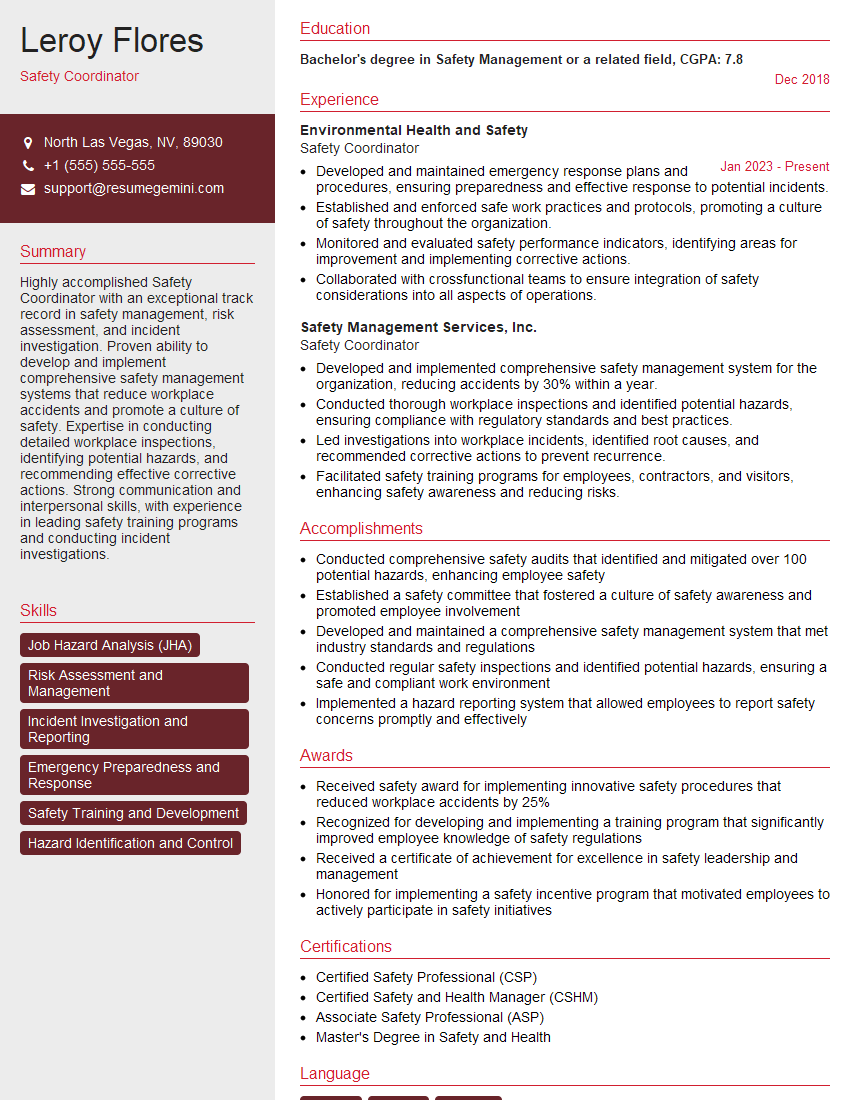
Mastering Safety Compliance in Paradi Operation is crucial for career advancement in this specialized field. Demonstrating a strong understanding of these principles will significantly enhance your job prospects and position you as a valuable asset to any organization. To maximize your chances of success, create an ATS-friendly resume that highlights your relevant skills and experience. We strongly recommend using ResumeGemini, a trusted resource for building professional resumes. ResumeGemini provides examples of resumes tailored to Safety Compliance in Paradi Operation, helping you present your qualifications effectively to potential employers.
Explore more articles
Users Rating of Our Blogs
Share Your Experience
We value your feedback! Please rate our content and share your thoughts (optional).
What Readers Say About Our Blog
To the interviewgemini.com Webmaster.
Very helpful and content specific questions to help prepare me for my interview!
Thank you
To the interviewgemini.com Webmaster.
This was kind of a unique content I found around the specialized skills. Very helpful questions and good detailed answers.
Very Helpful blog, thank you Interviewgemini team.