Cracking a skill-specific interview, like one for Safety Guard Inspection, requires understanding the nuances of the role. In this blog, we present the questions you’re most likely to encounter, along with insights into how to answer them effectively. Let’s ensure you’re ready to make a strong impression.
Questions Asked in Safety Guard Inspection Interview
Q 1. Describe your experience conducting safety guard inspections.
My experience in conducting safety guard inspections spans over eight years, encompassing a wide range of industrial settings, from manufacturing plants to construction sites. I’ve inspected various types of machinery, including presses, saws, and robots, ensuring compliance with OSHA and other relevant safety standards. I’m proficient in identifying both obvious and subtle hazards, using a methodical approach to thoroughly assess each guard’s functionality and integrity. For example, I once identified a faulty interlock system on a punch press during a routine inspection, preventing a potential serious injury. This involved not just visually inspecting the system but also testing its functionality to ensure it would reliably stop the machine if the guard was opened.
Q 2. What are the key components of a comprehensive safety guard inspection checklist?
A comprehensive safety guard inspection checklist should cover several key areas. Think of it like a multi-layered defense system; each element contributes to overall safety.
- Guard Type and Integrity: This involves verifying the type of guard (e.g., fixed, interlocked, adjustable) and checking for damage, wear, or corrosion. Are there any cracks, missing parts, or signs of bending?
- Functionality: Does the guard effectively prevent access to hazardous moving parts? For interlocked guards, does the machine shut down reliably when the guard is opened? For adjustable guards, is the adjustment mechanism secure and easy to use?
- Securing Mechanisms: Are all bolts, screws, and fasteners tight and in good condition? Are there any signs of tampering or modifications that might compromise the guard’s effectiveness?
- Accessibility and Visibility: Can the guard be easily accessed for maintenance or inspection? Does it obstruct the operator’s view unnecessarily? This last point is often overlooked, but an improperly placed guard can create new hazards.
- Documentation: All inspection findings, including any issues or deficiencies, need to be meticulously documented with photos and descriptions. This is crucial for tracking corrective actions.
Using a standardized checklist ensures consistency and thoroughness, minimizing the risk of overlooking critical safety issues.
Q 3. How do you identify and document safety hazards during an inspection?
Identifying and documenting safety hazards requires a systematic approach. I always start with a visual inspection, looking for any obvious signs of damage or malfunction. Then I conduct functional tests, operating machinery (where safe and authorized) to verify guard performance. During this process, I meticulously record all findings, including:
- Description of the hazard: A clear and concise description of the potential safety issue.
- Location: Precise location of the hazard within the facility or on the machine.
- Severity: Assessment of the potential harm the hazard could cause (e.g., minor injury, serious injury, fatality).
- Photographs/Videos: Visual evidence documenting the hazard.
- Recommendations: Suggested actions to correct or mitigate the hazard.
For instance, if I find a loose bolt on a safety guard, I would document this, noting the location (e.g., ‘south-west corner of press #3, upper right guard bracket’), the severity (e.g., ‘potential for guard to become dislodged, resulting in serious injury’), and the recommendation (e.g., ‘tighten bolt and inspect for further damage’). The photographs would show the loose bolt and the surrounding area.
Q 4. Explain your process for reporting inspection findings.
My reporting process is designed to ensure prompt corrective action. I typically use a digital reporting system that allows me to input all inspection data, including photos and any necessary comments. The report is then immediately sent to the relevant supervisor or maintenance team. The report will include:
- Date and time of inspection.
- Inspector’s name and contact information.
- Machine or equipment inspected.
- List of identified hazards, severity level and location.
- Recommendations for corrective actions.
- Photos and/or videos of identified hazards.
I follow up on the reported issues to ensure that corrective actions have been taken and the hazards have been eliminated or mitigated. This follow-up is crucial for ensuring continuous improvement in workplace safety. I might even schedule a re-inspection to verify the effectiveness of the corrective measures.
Q 5. What are the common types of safety violations you encounter?
Common safety violations I encounter relate to guard deficiencies. These include:
- Guards missing or damaged: This is a significant hazard, as it leaves workers exposed to moving parts.
- Guards improperly adjusted or installed: This renders the guard ineffective and increases the risk of injury.
- Guards bypassed or disabled: Workers sometimes bypass safety guards to increase efficiency, which is a serious safety violation.
- Inadequate guarding for specific hazards: This is often due to a lack of proper risk assessment or understanding of applicable safety standards.
- Lack of maintenance: Regular maintenance is crucial, and neglecting it can lead to guard failures.
I’ve seen instances where workers have removed or modified safety guards, creating significant hazards. In one case, a worker removed part of a guard on a woodworking machine to improve access, resulting in a serious hand injury. This highlights the importance of proper training and enforcement of safety regulations.
Q 6. How do you ensure compliance with relevant safety regulations and standards?
Ensuring compliance with relevant safety regulations and standards is paramount. My approach involves staying updated on OSHA regulations, ANSI standards, and any industry-specific guidelines applicable to the facilities I inspect. I use these standards as a benchmark when conducting inspections and evaluating the effectiveness of safety guards.
For example, I’ll cross-reference my findings against the relevant OSHA standards for machine guarding to determine if there are any violations. I also maintain a library of these standards and readily access them during inspections. Regular training and professional development sessions keep me updated on the latest regulations and best practices.
Q 7. Describe your experience using inspection software or databases.
I have extensive experience using various inspection software and databases. I’m proficient with systems that allow for digital reporting, data analysis, and scheduling of inspections. These systems often include features for generating reports, tracking corrective actions, and managing safety documentation. A particular system I’ve used extensively is ‘SafeGuard Pro,’ which includes mobile capabilities for on-site data entry, automated report generation, and integration with our company’s maintenance management system.
The use of these digital tools greatly improves efficiency and ensures consistent, accurate record-keeping. Data collected over time can be used to identify trends, pinpoint areas needing improvement, and demonstrate overall compliance with safety regulations.
Q 8. How do you prioritize safety hazards based on severity and risk?
Prioritizing safety hazards involves a systematic approach combining severity and likelihood. We use a risk matrix, often a simple table, to categorize hazards. Severity considers the potential consequences – a minor injury versus a fatality. Likelihood assesses the probability of the hazard occurring – rare versus almost certain. The intersection of severity and likelihood determines the priority. For example, a hazard with high severity (fatality) and high likelihood (constant exposure) would be a top priority, demanding immediate action. Conversely, a low severity (minor cut) and low likelihood (unlikely event) hazard might be addressed later.
Example: Imagine a leaky pipe (hazard). If it’s a small leak in a non-critical area (low severity, low likelihood), it’s lower priority than a large leak near electrical equipment (high severity, high likelihood – risk of electrocution).
- High Severity, High Likelihood: Immediate action required.
- High Severity, Low Likelihood: Implement preventative measures.
- Low Severity, High Likelihood: Address promptly.
- Low Severity, Low Likelihood: Monitor and address when resources allow.
Q 9. What are your strategies for communicating safety concerns to management and employees?
Effective communication is crucial. I utilize multiple channels to ensure safety concerns reach everyone. For management, I prepare detailed reports with photographic evidence and recommendations. I emphasize the urgency and potential consequences using clear, concise language, focusing on the impact on productivity, legal compliance, and employee well-being. For employees, I hold regular safety meetings, toolbox talks, and utilize visual aids like posters and safety checklists. I encourage open communication, making it easy for employees to report hazards without fear of reprisal.
Example: If I discover damaged scaffolding, my report to management will detail the extent of damage, the potential for falls, the number of employees at risk, and suggest immediate remediation, including shutdown of the affected area and scheduling repairs. For employees, I would conduct a brief toolbox talk about fall protection, emphasizing the importance of reporting any concerns immediately.
Q 10. How do you handle disagreements or conflicts regarding safety issues?
Disagreements are addressed professionally and constructively. I begin by actively listening to all perspectives, seeking to understand the concerns. I present objective data from my inspection findings, referencing relevant safety regulations or standards. If the disagreement persists, I involve a higher authority, such as a safety manager or supervisor, to mediate. The goal is to reach a consensus based on safety and compliance, not personal opinion. Documentation is key, ensuring that all discussions and decisions are recorded.
Example: If a foreman disagrees with my recommendation to shut down a machine due to a safety violation, I would present my findings, including photographic evidence of the malfunction, and cite the relevant OSHA regulation. If the disagreement continues, I would involve the safety manager to resolve the issue.
Q 11. Explain your understanding of OSHA regulations (or relevant local regulations).
My understanding of OSHA regulations (or equivalent local regulations) is comprehensive. I’m familiar with the General Duty Clause, which requires employers to provide a workplace free from recognized hazards. I’m also well-versed in specific standards related to my area of inspection, including fall protection, lockout/tagout procedures, hazard communication, personal protective equipment (PPE), and emergency response plans. I understand the importance of record-keeping, incident reporting, and employee training requirements. Staying up-to-date on changes and amendments is essential, as regulations are frequently updated.
Example: I ensure all employees working at heights are properly trained and equipped with approved fall protection equipment, adhering to OSHA’s 1926 Subpart M (Fall Protection) regulations. This includes regular inspections of the equipment and the work environment.
Q 12. Describe a time you had to make a difficult decision regarding safety.
During a routine inspection, I discovered a significant electrical hazard – exposed wiring in a high-traffic area. The immediate solution was to shut down the area, affecting production. However, the production manager argued against the shutdown due to tight deadlines. This was a difficult decision as stopping production had significant financial implications. I explained the severe risk of electrocution and presented evidence of the violation. I ultimately decided to prioritize safety and recommended the immediate shutdown, suggesting a temporary solution to minimize production delays. The decision was supported by management after understanding the potential liabilities and the severity of the hazard.
Q 13. How do you ensure the accuracy and completeness of your inspection reports?
Accuracy and completeness are paramount. I utilize a standardized checklist during inspections to ensure consistency. All findings, including photographs and video evidence, are meticulously documented. I double-check my work to eliminate errors and ensure all relevant information is captured. Reports are clear, concise, and objectively written, avoiding subjective opinions. I also cross-reference findings with previous inspection reports to identify trends and potential long-term risks.
Q 14. How do you stay current with changes in safety regulations and best practices?
Staying current requires a proactive approach. I regularly review updates from relevant regulatory bodies (e.g., OSHA), industry publications, and professional organizations. I participate in continuing education courses and workshops to learn about new technologies and best practices. Networking with other safety professionals helps share knowledge and insights. I also subscribe to relevant safety newsletters and online resources to keep abreast of changes in regulations and standards.
Q 15. What are your experience with different types of safety equipment?
My experience with safety equipment spans a wide range, encompassing personal protective equipment (PPE) like hard hats, safety glasses, high-visibility clothing, and fall protection harnesses, to more specialized tools such as gas detectors, lockout/tagout devices, and electrical testing equipment. I’m proficient in using and inspecting various types of fire suppression systems, including fire extinguishers, sprinkler systems, and fire alarm panels. I also have hands-on experience with machinery guarding systems, ensuring their proper function and compliance with safety regulations. For example, in a recent inspection of a manufacturing plant, I identified a faulty emergency stop button on a conveyor belt, preventing a potential serious incident.
- PPE Inspection: Regularly checking for damage, proper fit, and expiry dates on all PPE, ensuring employees understand the appropriate use and limitations of each item.
- Lockout/Tagout Devices: Verifying the correct application of lockout/tagout procedures to prevent accidental energization of equipment during maintenance or repair.
- Gas Detectors: Utilizing portable gas detectors to identify and mitigate potential hazards in confined spaces or areas with potential gas leaks, ensuring readings are documented and any necessary corrective actions are taken.
Career Expert Tips:
- Ace those interviews! Prepare effectively by reviewing the Top 50 Most Common Interview Questions on ResumeGemini.
- Navigate your job search with confidence! Explore a wide range of Career Tips on ResumeGemini. Learn about common challenges and recommendations to overcome them.
- Craft the perfect resume! Master the Art of Resume Writing with ResumeGemini’s guide. Showcase your unique qualifications and achievements effectively.
- Don’t miss out on holiday savings! Build your dream resume with ResumeGemini’s ATS optimized templates.
Q 16. How do you assess the effectiveness of existing safety programs?
Assessing the effectiveness of existing safety programs involves a multi-faceted approach. I start by reviewing the program documentation, including policies, procedures, training records, and incident reports. This initial review helps identify gaps or areas needing improvement. I then conduct site observations, observing employee behavior, the condition of safety equipment, and the overall workplace environment. This is crucial for understanding the practical implementation of safety protocols. Finally, I interview employees at various levels to understand their perception of the safety program’s effectiveness and identify any unmet needs or concerns. For example, a low incident reporting rate might initially seem positive but could actually indicate a lack of trust in the reporting system or a culture of fear of reprisal. A thorough investigation is required to determine the true cause.
I utilize key performance indicators (KPIs) such as the incident rate, near-miss reporting rates, and employee safety training completion rates to quantify the program’s effectiveness. Analyzing trends in these metrics provides valuable insights into areas requiring attention. A data-driven approach ensures objective assessment and identifies areas for optimization.
Q 17. Explain your familiarity with different types of safety audits.
My familiarity with safety audits includes a variety of approaches, tailored to the specific needs of the facility and industry. I’m experienced in conducting both planned audits, scheduled at regular intervals, and unplanned audits triggered by specific events or concerns. These audits can range from general safety inspections focusing on compliance with regulations and industry best practices to more specialized audits targeting specific hazards, like confined space entry procedures or hazardous materials handling.
- Compliance Audits: Assessing adherence to relevant safety regulations, codes, and standards (e.g., OSHA, ISO 45001).
- Process Safety Audits: Evaluating the safety of industrial processes, identifying potential hazards and recommending improvements to prevent incidents.
- Environmental Safety Audits: Inspecting environmental aspects and assessing compliance with environmental regulations and minimizing potential environmental impacts.
Each audit involves a thorough documentation process, producing a detailed report with findings, recommendations, and a timeline for corrective actions. I use checklists, observation techniques, and interviews to gather evidence and ensure a comprehensive assessment.
Q 18. Describe your experience in incident investigation and root cause analysis.
My approach to incident investigation and root cause analysis is based on a systematic and thorough methodology. I begin by securing the scene (if necessary), gathering facts and evidence, and interviewing witnesses. This is followed by a detailed reconstruction of the events leading to the incident. I utilize various analytical techniques including fault tree analysis (FTA), fishbone diagrams (Ishikawa diagrams), and the ‘5 Whys’ method to identify the root causes of the incident, not just the immediate causes. For example, a worker might have tripped (immediate cause) because of a loose floorboard (underlying cause) which was neglected due to insufficient maintenance funding (root cause).
My experience includes investigating incidents ranging from minor injuries to serious accidents, ensuring each investigation is unbiased, thorough, and results in effective corrective actions to prevent recurrence. The findings are documented in a comprehensive report, which includes recommendations for corrective and preventive actions.
Q 19. How do you develop and implement corrective actions for safety violations?
Developing and implementing corrective actions for safety violations requires a structured approach. First, the nature and severity of the violation are assessed to determine the appropriate response. This often involves prioritizing actions based on risk level. I then collaborate with management and affected employees to develop specific and measurable corrective actions, which are documented and assigned to responsible parties with clear deadlines. For example, if a safety guard is found to be improperly installed, the corrective action might involve immediate shutdown of the equipment, detailed repair by a qualified technician, and retraining of personnel on proper installation procedures.
Effective implementation involves regular monitoring and verification to ensure that the corrective actions are completed on time and to the required standard. Follow-up inspections are conducted to verify the effectiveness of implemented solutions and assess if any further actions are needed to prevent similar violations in the future. All corrective actions are documented and tracked to ensure accountability and continuous improvement.
Q 20. What are your skills in using inspection tools and equipment (e.g., multimeters, thermal cameras)?
I’m highly proficient in using various inspection tools and equipment. This includes multimeters for electrical safety testing (checking for voltage, continuity, and insulation resistance), thermal cameras for identifying potential overheating issues in electrical panels and machinery, and sound level meters to assess noise levels in the workplace. I’m also adept at using gas detection equipment, including fixed and portable gas detectors, to monitor atmospheric conditions and identify potential hazards in various environments.
My skills extend to interpreting the data obtained from these instruments, ensuring accurate assessment of potential hazards and informing appropriate corrective actions. For instance, a thermal camera can pinpoint a hot spot in an electrical connection, highlighting a potential fire hazard before it escalates. The proper use and maintenance of these tools are fundamental to my role.
Q 21. How familiar are you with risk assessment methodologies?
I am very familiar with various risk assessment methodologies. My experience includes using qualitative methods like HAZOP (Hazard and Operability Study) and What-If analysis to identify potential hazards and their consequences, and quantitative methods like fault tree analysis (FTA) and event tree analysis (ETA) to assess the probability and severity of risks. I’m also proficient in applying bow-tie analysis, which provides a comprehensive overview of the hazards, potential causes, consequences, and preventive and mitigating controls.
In practice, I often use a combination of these methods tailored to the specific context. For instance, a HAZOP study might be used to assess the inherent risks of a complex process, while a bow-tie analysis might be used to comprehensively manage and control a particular identified risk. The chosen methodology will consider the complexity of the operation, available data, and the desired level of detail in the assessment. Ultimately, my goal is to effectively identify and evaluate risks to proactively implement measures that minimize the likelihood and impact of accidents.
Q 22. What is your experience with emergency response procedures?
My experience with emergency response procedures is extensive. I’ve participated in numerous emergency drills and real-world responses across various industrial settings. This includes incidents ranging from minor equipment malfunctions to major chemical spills and building fires. My training encompasses OSHA guidelines and HAZMAT protocols, emphasizing immediate action, scene assessment, employee evacuation, and first aid/CPR administration. I understand the critical chain of command in emergency situations and am proficient in utilizing communication systems, including two-way radios and emergency contact lists, to ensure prompt and efficient responses. For example, during a recent incident involving a forklift malfunction, my immediate actions ensured the safe evacuation of personnel, the securing of the area, and the timely arrival of emergency services. My role in post-incident reporting and investigation further solidified the improved safety protocols subsequently implemented.
Q 23. How would you handle a situation where a safety violation poses an immediate threat?
When confronted with an immediate safety threat, my response is guided by a structured, prioritized approach. First, I would immediately isolate the hazard to prevent further exposure. This may involve shutting down equipment, cordoning off an area, or evacuating personnel. Second, I would assess the severity of the threat and identify immediate casualties requiring first aid. Concurrently, I’d initiate emergency procedures, including contacting emergency services and following established protocols. Finally, after securing the area and addressing immediate threats, I would begin a thorough investigation to pinpoint the root cause of the violation, prevent future occurrences, and document all actions taken. For instance, if I discovered a significant gas leak, my immediate action would be to shut down the gas supply, evacuate the area, and alert emergency responders while ensuring the safety of all personnel. Detailed reporting and root cause analysis would follow.
Q 24. What are your strengths in record-keeping and documentation?
My record-keeping and documentation are meticulous and compliant with all relevant regulations. I maintain comprehensive inspection reports that are clear, concise, and readily accessible. These reports include detailed descriptions of inspection findings, photographic evidence, and corrective action plans. I utilize various software applications to manage and organize this data ensuring efficient retrieval. My documentation adheres to strict chronological order, maintaining a chain of custody of all evidence. I am also proficient in using digital reporting systems, enabling efficient data sharing and analysis. This meticulous approach ensures consistency and accuracy, providing crucial information for ongoing safety improvements and potential legal proceedings.
Q 25. How do you ensure the confidentiality of sensitive information discovered during inspections?
Confidentiality of sensitive information is paramount. I am rigorously trained on data privacy practices and adhere strictly to company policies regarding the handling of confidential data. All inspection findings, particularly those involving sensitive employee information or proprietary data, are handled with utmost discretion. Access to these records is limited to authorized personnel only, and all electronic data is protected with appropriate security measures, including strong passwords and encryption. Furthermore, I am committed to responsible data disposal, securely shredding or deleting sensitive paper and electronic documents once their purpose is fulfilled. This is crucial for maintaining trust and upholding ethical responsibilities.
Q 26. Describe a time you had to deal with a difficult or uncooperative employee regarding safety.
I once encountered an employee who consistently disregarded safety protocols despite repeated warnings. My approach was to first engage in constructive dialogue, clearly explaining the safety risks and potential consequences. I presented the issue in a non-confrontational manner, emphasizing the importance of their safety and the safety of their colleagues. When verbal warnings proved ineffective, I documented the violations meticulously and escalated the matter to the supervisor, following established disciplinary procedures. The key was to focus on collaboration and education, while firmly enforcing company regulations. Ultimately, a combination of training and disciplinary measures resolved the issue, leading to a noticeable improvement in the employee’s adherence to safety standards.
Q 27. How do you adapt your inspection approach to different work environments and industries?
Adaptability is crucial in safety guard inspection. My approach is tailored to the specific requirements of each work environment and industry. I understand that a construction site requires a different inspection approach than a chemical plant or a hospital. I adapt my checklists, procedures, and communication styles to effectively address the unique hazards associated with each industry. Before commencing any inspection, I conduct thorough research to understand specific safety regulations, industry best practices, and potential risks. This proactive approach ensures thoroughness and identifies potentially overlooked hazards specific to the environment.
Q 28. What are your career goals related to Safety Guard Inspection?
My career goals center on becoming a leading expert in safety guard inspection, contributing to the enhancement of workplace safety standards across various industries. I aspire to expand my knowledge and expertise by pursuing advanced certifications and staying abreast of the latest safety regulations and technologies. I am eager to take on increasing responsibility, potentially mentoring junior inspectors and leading safety initiatives within the organization. My ultimate ambition is to create a safer work environment for all, minimizing risks and promoting a culture of safety awareness.
Key Topics to Learn for Safety Guard Inspection Interview
- Regulatory Compliance: Understand relevant safety regulations, standards (OSHA, etc.), and legal frameworks governing safety guard inspections. Be prepared to discuss how these regulations impact inspection procedures and documentation.
- Hazard Identification and Risk Assessment: Discuss methodologies for identifying potential hazards associated with machinery and equipment. Explain how to conduct a thorough risk assessment, prioritizing hazards based on severity and likelihood.
- Types of Safety Guards and Their Applications: Familiarize yourself with various types of safety guards (interlocks, light curtains, pressure mats, etc.) and their appropriate applications based on machine function and potential hazards.
- Inspection Procedures and Documentation: Detail the systematic approach to conducting a safety guard inspection, including checklists, data recording, and report generation. Be ready to discuss best practices for clear and concise documentation.
- Troubleshooting and Problem-Solving: Prepare examples demonstrating your ability to identify malfunctioning safety guards, diagnose the cause of failure, and propose effective solutions, emphasizing safety and compliance.
- Preventive Maintenance and Inspection Schedules: Discuss the importance of regular inspections and preventive maintenance in maintaining safety guard effectiveness and prolonging their lifespan. Be ready to discuss appropriate scheduling strategies.
- Communication and Teamwork: Explain your approach to collaborating with engineers, operators, and management to ensure safety guard effectiveness and address any concerns.
Next Steps
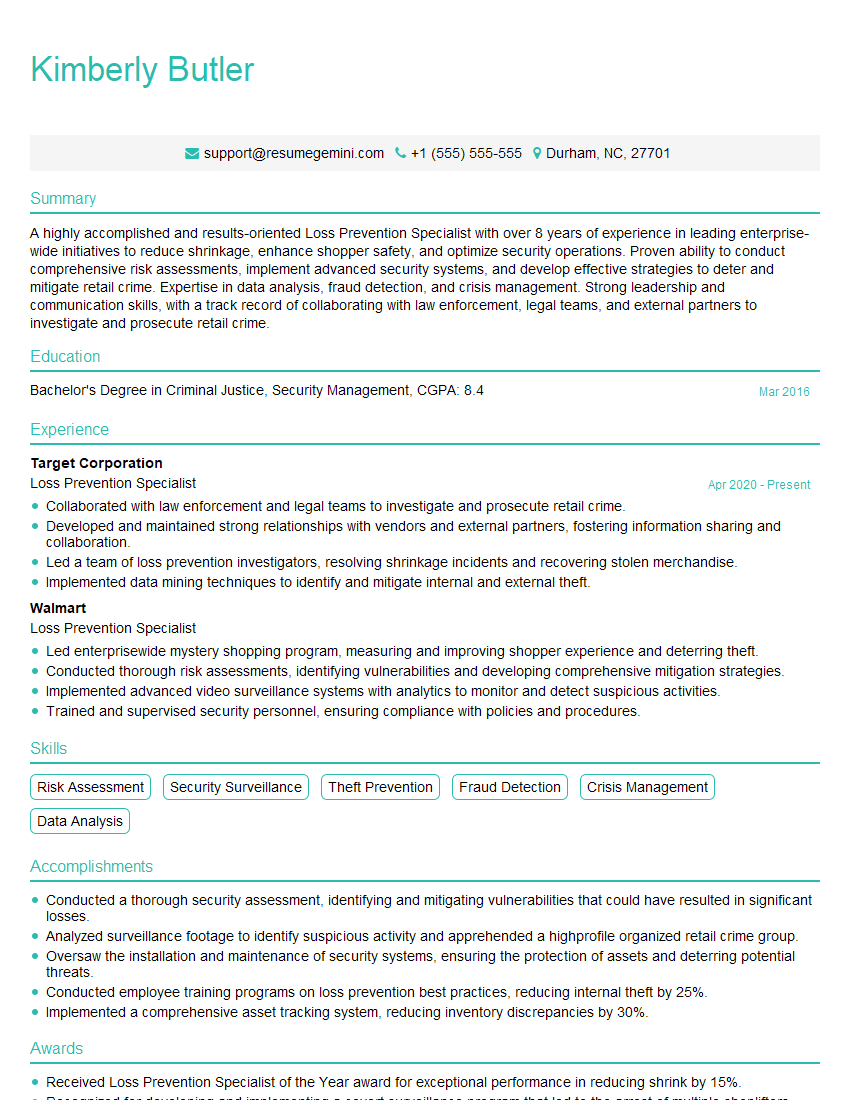
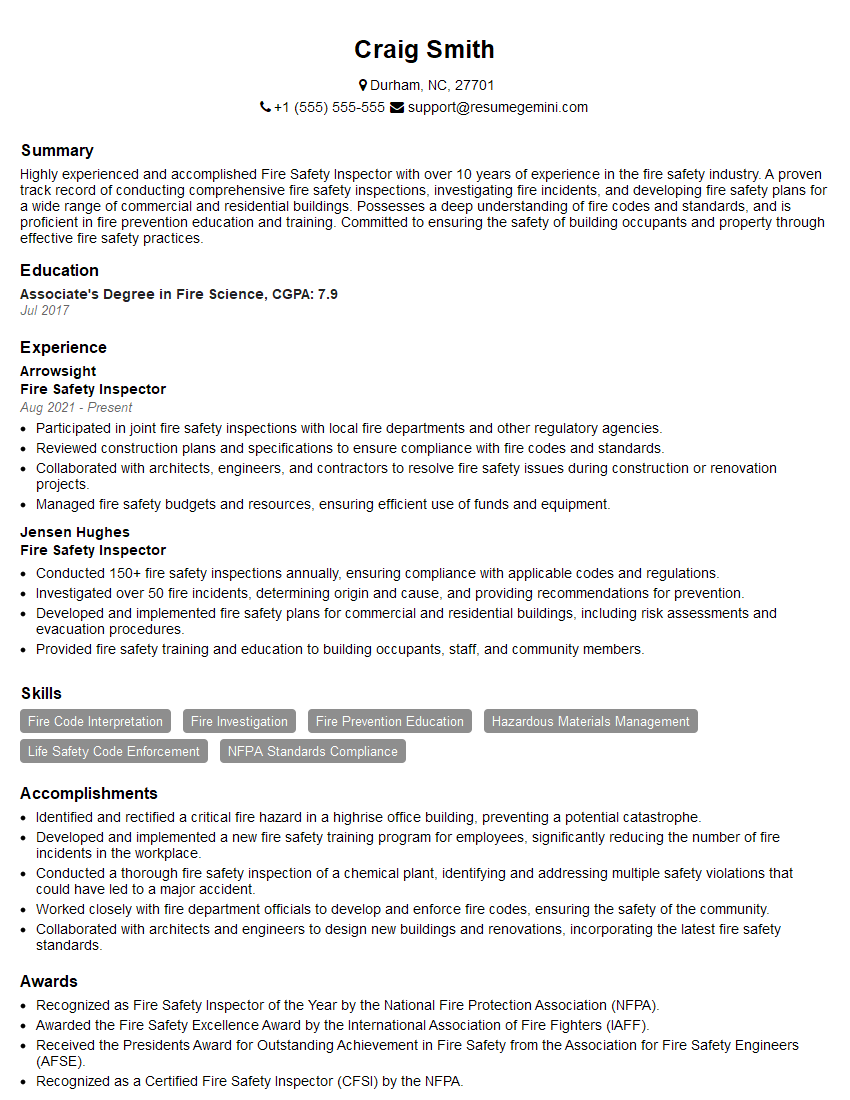
Mastering Safety Guard Inspection opens doors to rewarding careers in safety management and engineering, demonstrating your commitment to workplace safety and operational efficiency. To maximize your job prospects, create an ATS-friendly resume that highlights your skills and experience effectively. ResumeGemini is a trusted resource for building professional resumes, helping you present your qualifications compellingly. Examples of resumes tailored to Safety Guard Inspection are available to help guide your resume creation process.
Explore more articles
Users Rating of Our Blogs
Share Your Experience
We value your feedback! Please rate our content and share your thoughts (optional).
What Readers Say About Our Blog
To the interviewgemini.com Webmaster.
Very helpful and content specific questions to help prepare me for my interview!
Thank you
To the interviewgemini.com Webmaster.
This was kind of a unique content I found around the specialized skills. Very helpful questions and good detailed answers.
Very Helpful blog, thank you Interviewgemini team.