Feeling uncertain about what to expect in your upcoming interview? We’ve got you covered! This blog highlights the most important Safety Lockout/Tagout Procedures interview questions and provides actionable advice to help you stand out as the ideal candidate. Let’s pave the way for your success.
Questions Asked in Safety Lockout/Tagout Procedures Interview
Q 1. Define Lockout/Tagout (LOTO).
Lockout/Tagout (LOTO) is a safety procedure used to control hazardous energy sources during maintenance or repair work. It’s a crucial safety measure designed to prevent accidental start-up or release of stored energy, thus protecting workers from serious injury or death. Think of it as a safety ‘pause’ button for potentially dangerous equipment.
Q 2. What are the five steps of LOTO?
While the exact steps might vary slightly depending on the specific workplace and equipment, the core five steps of a LOTO procedure generally include:
- Preparation: Identify all energy sources connected to the equipment, gather the necessary LOTO devices (locks, tags, appropriate tools), and consult the equipment’s lockout/tagout procedure. This might involve reviewing schematics, consulting operation manuals, and identifying all potential energy sources – including electricity, hydraulics, pneumatics, and stored energy like springs or gravity.
- Energy Isolation: Safely shut down and isolate all identified energy sources. This isn’t just flipping a switch; it often involves turning off breakers, closing valves, and physically disconnecting equipment components. Verification that energy is isolated is crucial.
- Lockout/Tagout Application: Secure each energy isolation point with a lockout device (lock) and a tagout device (tag). The lock prevents unauthorized access, while the tag provides clear information about who has locked out the equipment and why. Never rely on a tag alone.
- Verification of Isolation: Before beginning work, verify that the energy is isolated using appropriate testing methods. For example, using a voltage tester to confirm that power is truly off. This is a critical step to ensure that the LOTO procedure is effective.
- Release/Removal: After work is complete, the LOTO devices are removed only by the person who applied them. This ensures that no one accidentally re-energizes equipment while others are still working on it. Each isolation point must be checked before releasing.
Q 3. Describe the purpose of a lockout/tagout device.
Lockout/Tagout devices serve as physical barriers that prevent the unexpected energization or startup of equipment. The lock physically prevents the operation of the energy source, while the tag provides visual warning and crucial information, like the worker’s name and the reason for the lockout. Imagine a padlock preventing someone from turning on a machine switch—that’s the lockout. The tag is the written warning that clarifies why the switch is locked.
Q 4. What are the differences between lockout and tagout?
While both lockout and tagout are crucial parts of the procedure, they have distinct roles:
- Lockout: A physical device, typically a padlock, that prevents the operation of the energy isolating device. It provides a physical barrier against unauthorized re-energization.
- Tagout: A visual warning device that alerts others that equipment is locked out. It provides information such as who performed the lockout, the date, and the reason for the lockout. However, a tag alone is insufficient to prevent unauthorized re-energization.
Essentially, a lockout offers physical protection, while a tagout provides visual warning and documentation. Effective LOTO always involves both.
Q 5. Explain the importance of proper energy isolation in LOTO.
Proper energy isolation is the cornerstone of effective LOTO. It’s about completely eliminating any potential for the release of hazardous energy. Without proper isolation, the lockout and tagout devices become ineffective, exposing workers to significant risk. For example, if a worker only partially isolates power to a machine, a surge or unexpected restart could occur, causing injury. The goal is to create a completely safe working environment by removing all energy sources.
Q 6. Who is authorized to perform LOTO procedures?
Only authorized employees who have received specific training in LOTO procedures and have demonstrated competency are permitted to perform them. This training should cover the specific hazards associated with the equipment, the proper use of LOTO devices, and the step-by-step procedure. Companies designate these employees and maintain records of their training.
Q 7. What is the role of an authorized employee in LOTO?
An authorized employee’s role in LOTO is critical. They are responsible for:
- Following the established LOTO procedures precisely.
- Verifying the isolation of energy sources.
- Applying and removing lockout/tagout devices correctly.
- Ensuring that the work area is safe before allowing others to start work.
- Communicating effectively with other workers.
Their actions directly impact worker safety, and any deviation from the procedure can have serious consequences.
Q 8. What is the role of an affected employee in LOTO?
An affected employee is anyone whose job tasks could be impacted by the energy isolation procedure. Their role in LOTO is crucial for safety. They are not directly involved in the lockout/tagout process itself, but their cooperation is essential. Before any work begins, the affected employee must be informed and their work area must be clear of any hazardous energy sources. They might need to relocate, temporarily halt their work, or assist in the safe preparation of their equipment. Think of it this way: the LOTO technician is the mechanic working on a car, while the affected employee is the driver who needs to be sure the car is completely off and won’t unexpectedly start while the mechanic is working.
For example, if a maintenance crew is performing work on a conveyor belt, the affected employees are the workers who use that conveyor belt to move materials. Their job is to ensure that their area is clear before the lockout/tagout occurs and to await the authorized person’s clearance before resuming work.
Q 9. Describe the process for verifying energy isolation.
Verifying energy isolation is a critical step to ensure that the equipment is truly de-energized and safe to work on. It’s not enough to just switch off the power; you must verify that the energy source is completely disconnected and cannot be re-energized unexpectedly. This typically involves multiple steps and the use of appropriate testing equipment, specific to the type of energy being controlled (electrical, hydraulic, pneumatic, etc.).
- Visual Inspection: Check that all switches, breakers, and valves are in the ‘off’ or ‘locked-out’ position. Look for any indicators showing the energy is still present.
- Lockout/Tagout Device Verification: Ensure that your personal lockout devices are securely attached to the energy-isolating devices. Verify that the devices are correctly installed and locked.
- Energy Source Testing: Use appropriate testing equipment (voltmeter for electricity, pressure gauge for hydraulics, etc.) to confirm the absence of hazardous energy. This step is crucial and must be performed before any work begins. Never assume that simply turning something off is enough.
- Test Run (if applicable): In some situations, a test run might be performed to ensure the equipment remains inactive after the energy isolation. Always adhere to the manufacturer’s recommendations on how to safely conduct this test.
For instance, when working on electrical equipment, a qualified electrician must test for the presence of voltage using a voltmeter to confirm the absence of power before beginning work.
Q 10. What are the hazards associated with failing to follow LOTO procedures?
Failing to follow LOTO procedures can lead to serious and potentially fatal consequences. The hazards are directly related to unexpected energization of the equipment while someone is working on it.
- Electrical Shock/Burns: Unexpected energization of electrical equipment can cause severe burns, electrocution, or death.
- Crushing Injuries: Failure to properly isolate mechanical equipment, such as presses or conveyor belts, can lead to crushing injuries.
- Burns/Scalds: Improper isolation of thermal energy sources (steam, hot liquids) can result in severe burns.
- Release of Hazardous Materials: Failure to properly isolate pneumatic or hydraulic systems can lead to the release of hazardous chemicals or fluids under high pressure.
- Fire/Explosion: In situations involving flammable materials or combustible substances, a lack of proper LOTO can lead to ignition and severe fires or explosions.
Q 11. What are the potential consequences of an incomplete LOTO procedure?
An incomplete LOTO procedure is essentially a recipe for disaster. It leaves energy sources uncontrolled, creating significant risk. The consequences mirror the hazards mentioned above but with added complications:
- Increased Risk of Accidents: The chance of unexpected equipment start-up is significantly higher, increasing the potential for serious injury or death.
- Legal Liability: Employers are legally responsible for the safety of their employees. An incomplete LOTO procedure demonstrates negligence and can lead to significant fines and legal repercussions.
- Damage to Equipment: Unauthorized energization of equipment can lead to damage to equipment, requiring costly repairs and downtime.
- Loss of Productivity: Accidents cause disruption and loss of productivity. The impact can extend far beyond the immediate incident and potentially result in production delays and financial losses.
- Reputational Damage: Serious accidents can severely impact an organization’s reputation, creating mistrust among employees, customers, and the public.
Remember that a thorough LOTO procedure is about more than just ticking boxes; it’s about safeguarding lives and protecting assets.
Q 12. How often should LOTO procedures be reviewed and updated?
LOTO procedures should be reviewed and updated regularly, at minimum, annually, or whenever there is a change in the workplace, equipment, processes, or relevant regulations. Think of it like this: your car’s maintenance schedule helps you keep it running smoothly, similarly, your LOTO procedures need regular updates to account for changes and new hazards.
This review should include:
- Equipment Modifications: Any changes to equipment must be reflected in the updated LOTO procedures.
- Process Changes: New workflows or changes to existing ones might affect the LOTO requirements.
- Regulatory Updates: Compliance with OSHA or other relevant safety regulations is crucial.
- Incident Investigations: Any incidents involving LOTO procedures should trigger a review to identify and correct deficiencies.
- Employee Feedback: Employees who perform LOTO tasks should be encouraged to provide feedback to improve the procedures.
Regular reviews ensure procedures remain effective and reflect the current working conditions and safety requirements. This proactive approach safeguards workers and prevents potential accidents.
Q 13. Describe the proper use of a lockout device.
A lockout device is a physical barrier that prevents the operation of a piece of equipment. It’s typically a lock with a unique key, which only the authorized person possesses, preventing unauthorized access or operation. Proper use involves selecting an appropriately sized and rated lock for the energy-isolating device, ensuring that it is securely fastened and preventing any bypass or manipulation.
- Secure Placement: The lock should be attached directly to the energy-isolating device (switch, valve, breaker, etc.), not to a nearby surface.
- Individual Lockout: Each person involved in the lockout/tagout must use their own unique lock and not share locks.
- Multiple Locks: If more than one person is working on the equipment, each individual should attach their own lock.
- High-Visibility Locks: Use locks that are easily visible and distinctive.
- Lockout Device Durability: Choose locks designed to withstand the working environment and resist tampering.
For example, a worker might use a keyed padlock to secure an electrical breaker, preventing it from being turned on while they’re working on related equipment.
Q 14. Describe the proper use of a tagout device.
A tagout device is a warning device, usually a tag, attached to the energy-isolating device to warn others not to energize the equipment. It serves as a visual reminder and supplemental to the lockout device. While tagout can stand alone in certain low-risk situations as defined by regulations, it is typically used in conjunction with a lockout. Proper use involves clearly communicating the reason for the tagout, identifying the authorized person, and ensuring it is visibly affixed to the energy-isolating device.
- Clear and Concise Information: The tag should clearly state the reason for the lockout/tagout, the date and time it was applied, and the name or identification of the authorized person.
- Durable Material: The tag should be made from a durable material that resists tearing, fading, and damage.
- Secure Attachment: The tag must be securely affixed to the energy-isolating device to prevent it from being accidentally removed or lost.
- Standardized Format: Utilize a standardized format for the tag to ensure clear communication of important information.
- Multiple Tags: Similar to lockouts, if multiple people are involved, each person can affix a tag with their information.
For instance, a tag might state ‘Do Not Operate – Maintenance in Progress – John Doe’ and be attached to a valve before performing maintenance.
Q 15. What are the requirements for proper labeling of energy sources?
Proper labeling of energy sources is crucial for effective Lockout/Tagout (LOTO) procedures. Labels must clearly identify the type of energy (electrical, mechanical, hydraulic, pneumatic, thermal, chemical, etc.), and the specific hazard it presents. They should also include clear instructions, warnings, and any relevant safety precautions. Think of it like a warning sign on a hazardous chemical – it needs to be immediately understandable to anyone approaching it.
- Clarity: Avoid ambiguous terms. Instead of ‘DANGER,’ use specific wording like ‘DANGER – HIGH VOLTAGE – DO NOT TOUCH.’
- Visibility: Labels must be easily visible from a safe distance and in good condition. Faded or damaged labels should be replaced immediately.
- Durability: Labels need to withstand the environment they’re in (e.g., weatherproof for outdoor equipment). Consider using durable materials like vinyl or laminated paper.
- Standardization: Use a consistent format and color-coding across all your energy source labels. This creates familiarity and helps workers quickly identify hazards.
Example: A label on an electrical panel should state ‘DANGER – HIGH VOLTAGE – LOCKOUT/TAGOUT REQUIRED BEFORE SERVICING.’ A label on a compressed air line might say ‘DANGER – COMPRESSED AIR – DO NOT OPEN WITHOUT LOTO.’ The key is that these labels are not just warnings; they are instructions for safe work procedures.
Career Expert Tips:
- Ace those interviews! Prepare effectively by reviewing the Top 50 Most Common Interview Questions on ResumeGemini.
- Navigate your job search with confidence! Explore a wide range of Career Tips on ResumeGemini. Learn about common challenges and recommendations to overcome them.
- Craft the perfect resume! Master the Art of Resume Writing with ResumeGemini’s guide. Showcase your unique qualifications and achievements effectively.
- Don’t miss out on holiday savings! Build your dream resume with ResumeGemini’s ATS optimized templates.
Q 16. How do you handle a situation where a lockout device is missing or broken?
Finding a missing or broken lockout device is a serious safety violation. It means the energy isolation method is compromised, leading to potential injury or fatality. Immediate action is required.
- Identify the hazard: Determine the energy source affected and the potential risks.
- Isolate the energy source: If possible, use a secondary method to isolate the energy. This could be a different type of lockout device or temporarily shutting down the system through other means. This is a temporary measure while you obtain the correct equipment.
- Report the incident: Immediately notify your supervisor and safety personnel about the missing or broken device. This ensures a thorough investigation and ensures the appropriate replacement is secured.
- Do not proceed with work until it is repaired: Work cannot resume until the energy source is properly isolated with a functioning lockout device. This is non-negotiable.
- Investigate the cause: Determine why the device was missing or broken. Was it misplaced, damaged, or misused? This is crucial to prevent future incidents.
- Replace and repair: The missing or broken device should be replaced with a proper, functioning device, and any damage to the equipment should be repaired before work resumes.
Example: If a padlock is broken on a valve, you should immediately stop work, inform your supervisor, and use a different method of isolation (such as a secondary valve) until the padlock can be replaced. The original system should never be used again unless it has been properly repaired and tested.
Q 17. Explain the importance of documenting LOTO procedures.
Documentation of LOTO procedures is essential for several reasons. It ensures consistent application of safety protocols, provides a record for audits and inspections, aids in training, and facilitates incident investigations. Think of it as the safety manual for your LOTO program – it’s the cornerstone of keeping everything safe and consistent.
- Compliance: Proper documentation helps ensure compliance with OSHA (or relevant) regulations.
- Consistency: It maintains consistency in the implementation of procedures across different work shifts and personnel.
- Training: It serves as a crucial resource for employee training and reference.
- Auditing and Inspection: Documentation helps streamline the auditing process and enables efficient detection of areas for improvement.
- Incident Investigation: In case of an accident, the documentation helps to determine the root causes.
Example: Documentation should include a detailed procedure for each piece of equipment, including step-by-step instructions on isolating energy sources, applying lockout devices, and verifying isolation.
Q 18. What are the best practices for training employees on LOTO procedures?
Effective LOTO training is paramount to safety. It should be hands-on, cover all types of energy sources encountered in the workplace, include both theoretical knowledge and practical application, and emphasize the consequences of non-compliance.
- Interactive training: Go beyond simple lectures. Include simulations, case studies, and demonstrations to make the training relatable.
- Hands-on practice: Employees should participate in practical exercises using actual lockout devices and equipment.
- Regular refreshers: LOTO training shouldn’t be a one-time event. Provide refresher courses regularly, especially after incidents or changes in equipment.
- Competency assessment: Regularly assess employee knowledge and skills through tests and observations to ensure proficiency.
- Focus on hazard identification: Training must include thorough hazard identification and risk assessment techniques related to all types of energy sources in the workplace.
- Use of multiple learning styles: Use varied training methods such as visual aids, videos, and group discussions to accommodate various learning preferences.
Example: A good training program will include practical sessions where employees actually perform LOTO procedures on various machines under the supervision of a trained instructor.
Q 19. How do you address employee resistance to following LOTO procedures?
Addressing employee resistance to LOTO procedures requires a multifaceted approach emphasizing education, engagement, and consequences.
- Clearly communicate the importance of LOTO: Explain how it saves lives and reduces workplace accidents. Use real-world examples or case studies.
- Involve employees in the process: Seek input and feedback on the LOTO procedures. This makes workers feel ownership and increases buy-in.
- Address concerns: Listen to employees’ concerns about the procedures and find solutions. Are the procedures too time-consuming? Are the tools inadequate?
- Provide adequate training: Ensure employees receive thorough and competent training and are comfortable with the procedures.
- Positive reinforcement: Recognize and reward employees who consistently follow LOTO procedures.
- Enforce consequences for non-compliance: Clearly communicate the consequences of not following procedures, such as disciplinary action. This shows that LOTO compliance is not optional.
Example: If workers complain that a certain procedure is too time-consuming, work together to streamline it while ensuring safety isn’t compromised.
Q 20. What are the common violations related to LOTO procedures?
Common LOTO violations include bypassing procedures, using improper devices, failing to de-energize equipment fully, inadequate training, and poor documentation.
- Bypassing procedures: This is the most dangerous violation, often stemming from time pressure, complacency, or lack of understanding. It involves skipping steps or ignoring protocols completely.
- Improper devices: Using devices not designed for the specific energy source or using damaged devices.
- Incomplete energy isolation: Failure to completely isolate the energy source before commencing work, creating potential for unexpected re-energization.
- Inadequate training: Employees who are not adequately trained on LOTO procedures are more likely to make mistakes.
- Poor documentation: Failure to document procedures, training, or incidents undermines the effectiveness of the entire LOTO program.
Example: Using a zip tie instead of a proper lockout device, failing to lock out all relevant energy sources, or not verifying that the energy is truly isolated before beginning maintenance are all major violations that increase the risk of accidents.
Q 21. How do you identify potential energy sources in a workplace?
Identifying potential energy sources requires a systematic approach and a keen understanding of the workplace environment. It’s not just about the obvious; you need to consider all forms of energy that could cause harm.
- Electrical: This includes power lines, electrical panels, circuits, and appliances.
- Mechanical: Rotating equipment like motors, gears, and shafts; stored energy like springs and flywheels.
- Hydraulic: Compressed fluids in hydraulic systems and cylinders.
- Pneumatic: Compressed air or gas in pneumatic systems.
- Thermal: Heat sources like furnaces, boilers, and hot surfaces.
- Chemical: Reactive chemicals, corrosive materials, and flammable substances.
- Gravitational: Objects that could fall and cause injury.
Methodology: Start with a thorough walk-through of the workplace, focusing on areas where machinery or equipment is used. Consider the operating principles of all machinery to determine potential energy sources. Create a detailed inventory of all potential energy sources, including drawings and schematics where necessary.
Example: In a manufacturing plant, you might identify electrical power to the assembly line, pneumatic cylinders operating machinery, hydraulic presses, and stored energy in compressed air tanks as potential energy sources requiring lockout.
Q 22. What is the role of the employer in ensuring LOTO compliance?
The employer plays a crucial role in ensuring LOTO (Lockout/Tagout) compliance. Their responsibilities extend far beyond simply providing equipment; they are legally obligated to create a safe work environment. This starts with a comprehensive LOTO program.
- Developing and Implementing a Program: The employer must develop a written LOTO program that outlines procedures, training requirements, and responsibilities. This program must be specific to the hazards present in their workplace and regularly updated.
- Providing Training: Employees must receive thorough and regular training on the correct application of LOTO procedures. This training must cover various aspects, including recognizing hazardous energy sources, selecting the appropriate lockout devices, and understanding the steps involved in a proper lockout.
- Providing Equipment: The employer is responsible for supplying adequate and properly maintained lockout devices to all employees who require them. This includes padlocks, tagout devices, and other relevant equipment.
- Auditing and Inspections: Regular audits and inspections are critical to ensure the LOTO program’s effectiveness. This involves checking for compliance with procedures, inspecting equipment, and identifying areas for improvement.
- Enforcement: Finally, the employer must enforce the LOTO program consistently. This means disciplinary action for non-compliance to ensure workplace safety.
For example, a manufacturing plant would need a detailed LOTO program covering machinery like presses, conveyors, and power tools. Failure to provide adequate training or equipment could result in serious injury and legal repercussions.
Q 23. How do you investigate and report a LOTO-related incident?
Investigating a LOTO-related incident requires a systematic approach. The goal is to understand the root cause, not just assign blame. A thorough investigation helps prevent future incidents.
- Secure the Scene: Immediately secure the area to prevent further injury or damage.
- Gather Information: Interview witnesses, review equipment logs, and collect any relevant evidence, such as photos or videos.
- Identify the Root Cause: Analyze the collected information to determine the underlying cause of the incident. This might involve human error, equipment failure, or inadequacies in the LOTO program.
- Develop Corrective Actions: Based on the root cause analysis, implement corrective actions to prevent recurrence. This might involve improved training, equipment upgrades, or changes to procedures.
- Report the Incident: Document the incident thoroughly, including the root cause analysis and corrective actions. This report should be submitted to relevant authorities and used for continuous improvement of the LOTO program.
Imagine a scenario where an employee is injured due to a machine restarting after a lockout. The investigation might reveal that the lockout device was improperly installed, leading to a gap in the safety procedures. This would necessitate retraining and a review of the procedure’s detailed steps.
Q 24. Explain the importance of regular audits and inspections related to LOTO.
Regular audits and inspections of the LOTO program are vital for maintaining a safe workplace. They are not just a box-ticking exercise; they are a proactive measure to identify and address potential hazards before they lead to incidents.
- Identifying Deficiencies: Audits and inspections allow for the identification of weaknesses in the program, such as inadequate training, faulty equipment, or non-compliance with procedures.
- Ensuring Compliance: Regular checks ensure consistent compliance with OSHA standards and company policies.
- Improving the Program: The feedback from audits and inspections helps improve the LOTO program over time. This is a continuous improvement cycle that aims to enhance safety.
- Employee Involvement: Involving employees in the audit process can lead to greater buy-in and improvement suggestions. They are on the front lines and often have valuable insights.
For instance, a regular inspection might reveal that some lockout devices are damaged or nearing the end of their lifespan, prompting timely replacements. Similarly, observation of employee practices can highlight training gaps.
Q 25. What are the differences between normal and emergency LOTO procedures?
Normal and emergency LOTO procedures share the core principle of isolating energy sources to prevent accidental startup, but they differ significantly in their context and execution.
- Normal LOTO: This is performed during routine maintenance, repair, or servicing of equipment. It’s a planned procedure with a defined scope and timeline. The process involves a detailed step-by-step procedure, often with multiple individuals involved in verifying each step.
- Emergency LOTO: This is implemented in unexpected situations that pose an immediate threat to safety, like an equipment malfunction or a power surge. Emergency procedures prioritize speed and safety, often involving a more streamlined process compared to normal LOTO. The focus is on immediately isolating the energy source to mitigate the immediate danger.
Consider a planned maintenance shutdown of a conveyor belt (normal LOTO) versus an immediate power cut due to a short circuit near the conveyor (emergency LOTO). The latter needs faster, less formal, yet safe action to isolate the energy source.
Q 26. Describe your experience with different types of lockout devices.
My experience encompasses a wide range of lockout devices. The choice of device depends on the specific energy source and the application.
- Padlocks: These are commonly used for isolating mechanical energy sources like valves and switches. I’ve worked with various types, including those with different keyways to prevent unauthorized access.
- Tagout Devices: These are used in conjunction with padlocks or as a standalone device for less hazardous situations. Their primary purpose is to provide clear visual warnings.
- Circuit Breakers with Lockout Mechanisms: For electrical energy sources, these breakers allow for safe isolation. I’ve used various types incorporating different locking mechanisms.
- Valve Locks: Specifically designed for isolating pneumatic and hydraulic systems, these devices ensure that valves remain in the off position.
- Group Lockout Boxes: These centralize the lockout devices of multiple workers involved in a single task. This ensures coordinated and safe energy isolation.
In my experience, the effectiveness of a lockout device relies as much on its proper selection as on its correct application, highlighting the need for proper training.
Q 27. How do you ensure that LOTO procedures are compliant with OSHA standards?
Ensuring LOTO procedures are compliant with OSHA standards involves a multifaceted approach. OSHA’s requirements are comprehensive, outlining detailed procedures and responsibilities.
- Energy Isolation: Procedures must ensure the complete isolation of all hazardous energy sources before any work is performed.
- Device Selection: Appropriate lockout devices must be selected and used according to the energy source. Improper devices can render the system vulnerable.
- Procedure Development: Written procedures must be clear, concise, and easily understood by all employees.
- Training: All employees involved in LOTO procedures must receive comprehensive training, encompassing the theory, procedures, and practical application.
- Program Evaluation: Regular audits and inspections should assess the effectiveness of the program and identify areas for improvement.
- Record Keeping: Comprehensive records must be maintained to demonstrate compliance. This includes training records, incident reports, and audit findings.
Compliance is crucial; any failure to meet these standards can result in significant penalties and, more importantly, serious accidents.
Q 28. Describe a time you had to troubleshoot a LOTO-related problem.
During a routine maintenance task on a large industrial press, we encountered a problem with the lockout device. The mechanism, designed to prevent the press from operating, failed to engage properly. The machine seemed to be safely locked out, but further investigation revealed a subtle flaw in the interlocking mechanism.
My troubleshooting process involved:
- Safety First: We immediately ceased all work and evacuated the area to avoid any risk.
- Inspection: A thorough inspection of the lockout mechanism was carried out, identifying a slight misalignment of the locking pin.
- Root Cause Analysis: We determined that routine wear and tear might have caused the misalignment, highlighting the need for regular maintenance checks on lockout devices.
- Repair/Replacement: The locking pin was carefully realigned; however, we recommended its replacement to prevent future issues.
- Procedure Review: We re-evaluated the existing LOTO procedure to clarify the inspection requirements for all locking mechanisms.
This experience reinforced the criticality of regular maintenance, inspection, and procedure review to maintain a safe working environment.
Key Topics to Learn for Safety Lockout/Tagout Procedures Interview
- Energy Isolation: Understanding different energy sources (electrical, mechanical, hydraulic, pneumatic, etc.) and methods for effectively isolating them before maintenance or repair.
- Lockout/Tagout Device Selection and Application: Proper selection and use of locks, tags, and other devices, ensuring compliance with OSHA standards and company-specific procedures.
- Procedure Development and Implementation: Creating and implementing comprehensive lockout/tagout procedures tailored to specific equipment and tasks, including pre-job planning and hazard identification.
- Inspection and Testing: Regularly inspecting lockout/tagout devices and conducting periodic testing to verify their effectiveness and identify potential issues.
- Group Lockout/Tagout: Understanding procedures for multiple employees working on the same equipment simultaneously, emphasizing communication and coordination.
- Emergency Procedures: Knowing how to handle unexpected situations, such as accidental energy release, and having a clear plan for emergency response.
- Regulatory Compliance: Familiarity with relevant OSHA standards (29 CFR 1910.147) and other applicable regulations regarding lockout/tagout procedures.
- Practical Application: Be prepared to discuss real-world scenarios and explain how you would apply lockout/tagout procedures in different situations, including troubleshooting and problem-solving.
- Documentation and Record Keeping: Importance of maintaining accurate and complete records of lockout/tagout procedures, inspections, and training.
Next Steps
Mastering Safety Lockout/Tagout Procedures demonstrates a crucial commitment to workplace safety and significantly enhances your value to any organization. This expertise is highly sought after, opening doors to advanced roles and increased earning potential. To showcase these skills effectively, a strong, ATS-friendly resume is essential. ResumeGemini is a trusted resource that can help you build a professional resume that highlights your qualifications and catches the eye of recruiters. We offer examples of resumes specifically tailored to Safety Lockout/Tagout Procedures to guide you through the process. Invest the time in creating a compelling resume – it’s your key to unlocking your career aspirations.
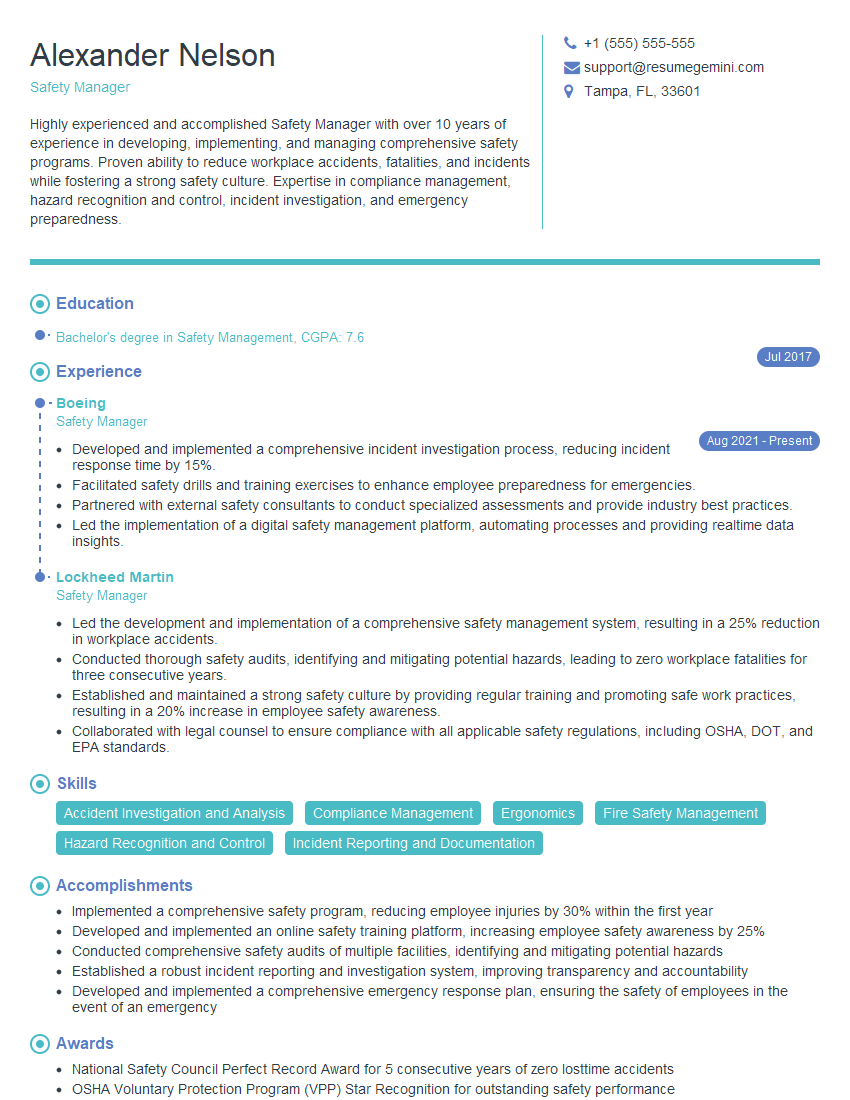
Safety Manager Resume Sample

Facility Manager Resume Sample

Operations Manager Resume Sample
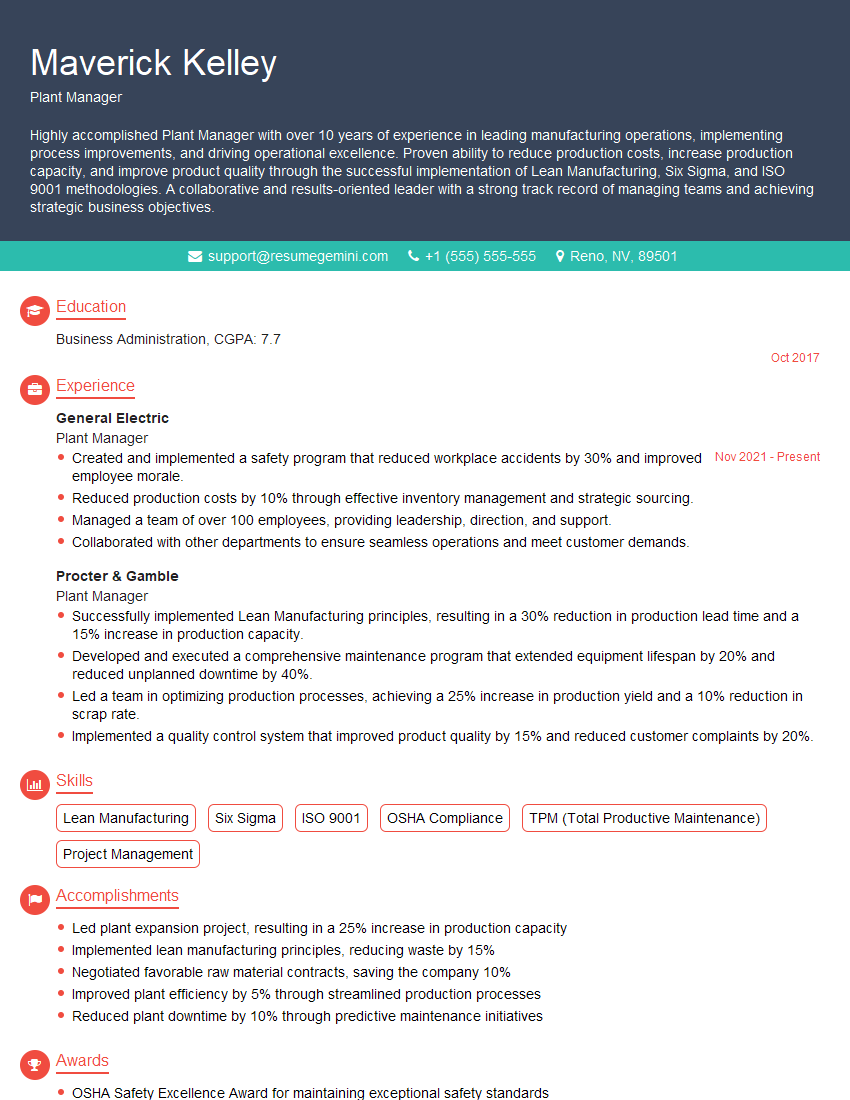
Plant Manager Resume Sample

Maintenance Manager Resume Sample

Maintenance Planner Resume Sample

Production Supervisor Resume Sample
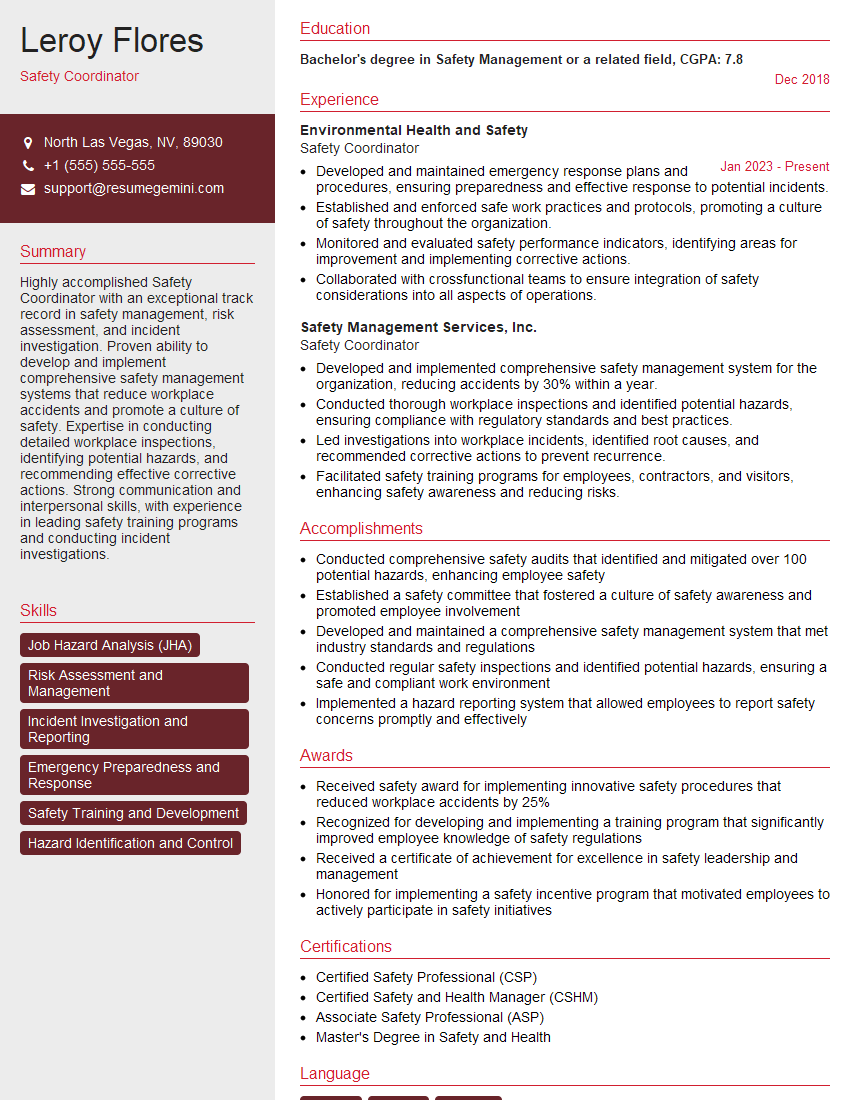
Safety Coordinator Resume Sample

Compliance Officer Resume Sample

Risk Manager Resume Sample

Reliability Engineer Resume Sample
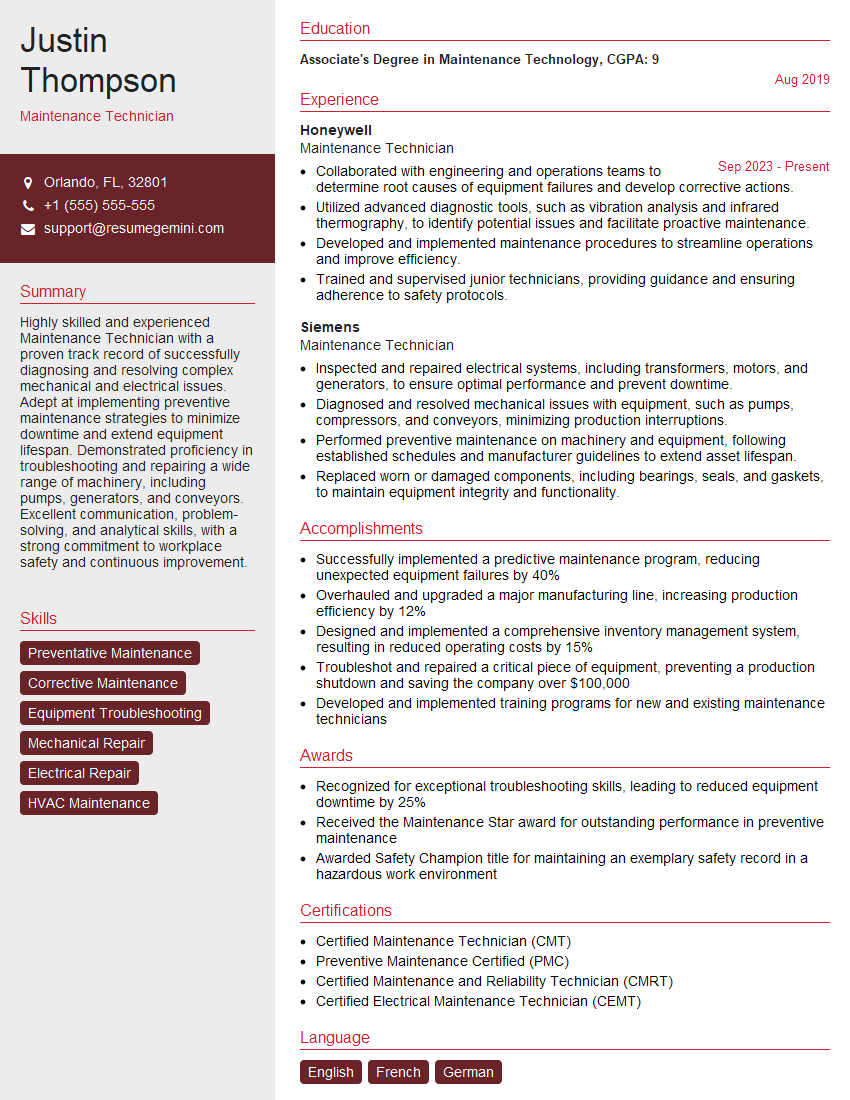
Maintenance Technician Resume Sample

Process Safety Engineer Resume Sample

Safety Engineer Resume Sample
Instrumentation Technician Resume Sample
Process Technician Resume Sample

Electrician Resume Sample

Industrial Mechanic Resume Sample
- Safety Manager
- Facility Manager
- Operations Manager
- Plant Manager
- Maintenance Manager
- Maintenance Planner
- Production Supervisor
- Safety Coordinator
- Compliance Officer
- Risk Manager
- Reliability Engineer
- Maintenance Technician
- Process Safety Engineer
- Safety Engineer
- Instrumentation Technician
- Process Technician
- Electrician
- Industrial Mechanic
Explore more articles
Users Rating of Our Blogs
Share Your Experience
We value your feedback! Please rate our content and share your thoughts (optional).
What Readers Say About Our Blog
To the interviewgemini.com Webmaster.
Very helpful and content specific questions to help prepare me for my interview!
Thank you
To the interviewgemini.com Webmaster.
This was kind of a unique content I found around the specialized skills. Very helpful questions and good detailed answers.
Very Helpful blog, thank you Interviewgemini team.