The right preparation can turn an interview into an opportunity to showcase your expertise. This guide to Sags and Tensions Calculation interview questions is your ultimate resource, providing key insights and tips to help you ace your responses and stand out as a top candidate.
Questions Asked in Sags and Tensions Calculation Interview
Q 1. Explain the relationship between sag, tension, and conductor weight in overhead transmission lines.
Sag, tension, and conductor weight in overhead transmission lines are intrinsically linked. Imagine a rope hanging between two poles; the weight of the rope pulls it downwards, creating sag. The tension in the rope resists this downward pull, determining how much sag is present. The heavier the rope (conductor), the greater the downward force and consequently, the more sag you’ll see for a given tension. Conversely, higher tension reduces sag, but excessively high tension risks damaging the conductor.
Mathematically, this relationship can be expressed (in simplified form) through the catenary equation, where sag is directly proportional to the weight of the conductor and inversely proportional to the tension. A heavier conductor will have a greater sag for the same tension, and increasing the tension will decrease the sag.
Q 2. Describe different methods for calculating sag in transmission lines.
Several methods exist for calculating sag, each with its own level of accuracy and complexity. The choice of method depends on the desired accuracy and the available data. Common methods include:
- Parabolic Method: This is a simplified approach that assumes the conductor follows a parabolic curve. It’s relatively easy to calculate and provides a reasonable approximation for sag in most practical scenarios, particularly when the sag is small compared to the span length. The formula is often expressed as:
sag = (w*L^2)/(8*T)where ‘w’ is the weight per unit length of the conductor, ‘L’ is the span length, and ‘T’ is the horizontal tension. - Catenary Method: This method provides a more accurate solution as it considers the exact shape of the conductor, which follows a catenary curve. It’s more complex to solve, often requiring iterative numerical techniques. The catenary equation is transcendental and doesn’t lend itself to a simple, direct solution.
- Graphical Methods: These involve using diagrams and charts to estimate sag based on known parameters. These methods are less precise but can be useful for quick estimations.
- Software-Based Methods: Specialized software packages are commonly used in professional practice to perform detailed sag calculations, accounting for various factors like temperature, wind, and ice loading. These programs utilize advanced numerical techniques to solve the catenary equation or variations thereof.
Q 3. What are the effects of temperature changes on sag and tension?
Temperature significantly influences both sag and tension. As temperature increases, the conductor expands, leading to an increase in sag and a decrease in tension. Conversely, a decrease in temperature causes the conductor to contract, reducing sag and increasing tension. This effect is substantial, particularly for long spans.
This is why engineers consider temperature variations when designing transmission lines. They often use design temperatures (e.g., maximum and minimum expected temperatures) to ensure the conductor remains within safe operational limits and avoids excessive stress or ground clearance issues. The thermal coefficient of expansion of the conductor material is crucial in these calculations.
Q 4. How does wind loading affect sag and tension calculations?
Wind loading exerts a horizontal force on the conductor, increasing its sag and affecting tension. The wind pressure increases the effective horizontal tension in the conductor, essentially pulling the conductor horizontally. This additional force causes the conductor to sag more than it would under its own weight alone. The magnitude of the effect depends on the wind speed and the projected area of the conductor.
Wind loading calculations typically incorporate wind speed data and a wind pressure coefficient related to the conductor’s shape and size. These are integrated into the sag calculations, often requiring iterative solutions to find the equilibrium state considering both weight and wind effects.
Q 5. Explain the concept of catenary and its application in sag calculations.
The catenary is the curve assumed by a flexible, inextensible cable or chain hanging freely under its own weight. It’s the theoretical shape a conductor would take if only gravity were acting upon it. While the parabolic approximation simplifies calculations, the catenary provides a more accurate representation of the conductor’s shape, especially for longer spans and higher sag-to-span ratios.
In sag calculations, the catenary equation is used to determine the exact shape and tension of the conductor. Solving the catenary equation is complex and usually involves numerical methods. Its application ensures more precise predictions of sag and tension, critical for safety and efficient line operation. Software tools are commonly employed to tackle the mathematical challenges involved.
Q 6. What is the significance of the parabolic approximation in sag calculations?
The parabolic approximation simplifies the catenary curve, approximating it as a parabola. This simplification significantly reduces the computational complexity of sag calculations. The parabolic approximation is valid when the sag is small compared to the span length. This condition is typically met in many practical situations. Using the parabolic approximation avoids the need for iterative solutions required for the catenary equation, providing a quick, reasonably accurate estimate.
While less accurate than the catenary, the parabolic approximation remains a valuable tool for preliminary calculations or when high precision isn’t crucial. It allows engineers to quickly assess sag and tension and make preliminary design decisions. The ease of calculation makes it useful for initial design stages and for simpler scenarios.
Q 7. How do you account for ice loading in sag and tension calculations?
Ice loading significantly increases the weight of the conductor, leading to a substantial increase in sag. The weight of the ice accumulation is added to the conductor’s weight per unit length, affecting the sag calculation directly. The amount of ice accumulation depends on several factors, including geographic location, weather patterns, and the conductor’s diameter. Ice loading is often expressed as an equivalent weight per unit length of the conductor, representing the added weight due to ice accretion.
To account for ice loading in sag and tension calculations, engineers typically use data from meteorological records or historical ice accumulation patterns to determine the expected weight of ice per unit length. This additional weight is then incorporated into the sag calculation, using either the parabolic or catenary method, resulting in a more realistic estimation of the conductor’s sag under severe ice conditions. Safety factors are often incorporated to ensure adequate ground clearance even under extreme conditions.
Q 8. What are the safety factors considered in sag and tension calculations?
Safety factors in sag and tension calculations are crucial for ensuring the longevity and safety of overhead transmission lines. They account for uncertainties and variations in various parameters that influence the conductor’s behavior. These factors act as a buffer, ensuring the conductor operates well within its safe limits even under unexpected conditions.
- Material Properties: The strength of the conductor material may vary slightly from batch to batch. A safety factor accounts for this variability, preventing premature failure due to lower-than-expected tensile strength.
- Environmental Factors: Wind, ice, and temperature fluctuations significantly impact sag and tension. Safety factors incorporate these variations, ensuring the line remains stable even in extreme weather conditions. For example, a heavier ice load than initially estimated would place increased stress on the conductor. A proper safety factor ensures that the conductor can handle this extra load without breaking.
- Manufacturing Tolerances: Slight variations in the conductor’s diameter and other physical characteristics during manufacturing necessitate a safety factor to compensate for these imperfections.
- Aging and Degradation: Conductors degrade over time due to corrosion and other factors. Safety factors consider this degradation, ensuring that the line remains safe throughout its operational life.
- Unexpected Events: Unforeseen events such as short circuits leading to large electromagnetic forces can create unexpected stresses. The safety factor accounts for such occurrences.
Typical safety factors range from 1.5 to 2.5, depending on the specific application, conductor material, and environmental conditions. The higher the safety factor, the greater the margin of safety, but also the higher the cost (larger conductors or more robust structures).
Q 9. Explain the difference between static and dynamic sag.
The difference between static and dynamic sag lies in how the conductor’s behavior is considered. Static sag represents the conductor’s shape under the influence of its own weight and a constant tension, at a specific temperature, neglecting any dynamic effects like wind or ice.
Static Sag: Imagine a slack rope hanging between two points. The curve it forms is essentially the static sag. It’s calculated using simple equations considering the conductor’s weight, span length, and tension.
Dynamic Sag: This is the actual sag of the conductor under real-world conditions, taking into account dynamic forces like wind, ice accumulation, and conductor vibrations. These dynamic forces significantly increase the sag and stress on the conductor. Calculating dynamic sag is more complex and usually involves sophisticated simulations or empirically derived adjustments to the static sag calculations. For example, a strong wind gust could increase the sag significantly. We can imagine the rope from our earlier example being pushed by the wind to swing sideways. This swing represents an increase in dynamic sag.
In essence, static sag provides a baseline, while dynamic sag represents the more realistic and critical scenario for design and safety.
Q 10. Describe the impact of conductor elongation on sag and tension.
Conductor elongation significantly affects sag and tension. As temperature increases, the conductor expands, causing increased sag and reduced tension. Conversely, a decrease in temperature leads to contraction, resulting in decreased sag and increased tension. This thermal expansion and contraction is a major factor in transmission line design.
Impact on Sag: Elongation directly translates into increased sag. If a conductor elongates significantly without adjusting the tension, its sag will dramatically increase, potentially leading to ground clearance issues or interference with other lines. Think of a rubber band stretching when warmed. That stretching is analogous to conductor elongation.
Impact on Tension: The impact on tension is less direct. While a decrease in temperature causes the conductor to contract and increase tension, to maintain clearance from the ground, the tension may need to be reduced and compensated through higher initial sag. This means that the increased tension from contraction can be counteracted to keep a safer operating tension.
To account for elongation, engineers use empirical relationships and temperature correction factors in their calculations. These factors allow them to predict the sag and tension under various temperature conditions and ensure that the line remains within safe operating limits throughout its operational temperature range.
Q 11. How do you determine the appropriate tension for a conductor?
Determining the appropriate tension for a conductor is a critical aspect of transmission line design. The goal is to find an optimal balance between minimizing sag and ensuring the conductor’s safety and longevity. Too high a tension increases stress on the conductor, leading to fatigue and potential failure. Too low a tension leads to excessive sag, potentially causing ground clearance issues or interference with other structures.
Several factors influence the appropriate tension:
- Conductor material and properties: Different materials have different tensile strengths and elastic limits.
- Span length: Longer spans generally require higher tensions to maintain adequate ground clearance.
- Environmental conditions: Temperature variations, wind loads, and ice accumulation all influence the tension in the conductor. More extreme conditions might dictate a lower initial tension to avoid exceeding the conductor’s operational limits in such conditions.
- Safety factors: These factors provide a margin of safety to account for uncertainties and variations in material properties, environmental conditions, and other unforeseen events.
- Regulatory requirements: Various standards and regulations specify permissible tension limits.
The process often involves iterative calculations and simulations, using specialized software or analytical methods, to find a tension value that satisfies all these constraints. This process carefully balances the forces at play and allows a solution that minimizes the risk of failure, within regulatory limits and cost constraints.
Q 12. What are the limitations of using simplified sag calculation methods?
Simplified sag calculation methods, such as the parabolic formula, are useful for quick estimations, but they have limitations. They typically assume a parabolic shape for the conductor’s curve. However, this simplification is only accurate for relatively small sag-to-span ratios.
Limitations include:
- Inaccuracy for large sag-to-span ratios: In long spans or with heavy conductors, the conductor’s shape deviates significantly from a parabola, leading to inaccurate sag calculations. The actual shape approaches a catenary curve. If the simplification doesn’t capture the catenary form, then estimates can be wrong.
- Neglect of dynamic effects: Simplified methods often ignore wind, ice, and other dynamic loads, which can significantly influence the sag. This omission can lead to underestimation of the sag and associated risk.
- Assumption of uniform conductor properties: The simplified formula assumes a uniform conductor weight and properties across the entire span length, which may not be true in real-world scenarios due to factors such as manufacturing variations or conductor degradation.
- Limited applicability to complex situations: Simplified methods cannot easily handle unequal spans, varying support heights, or complex terrain.
Therefore, while simplified methods are useful for preliminary assessments, accurate and comprehensive analysis requires more sophisticated methods, such as numerical techniques or specialized software, that account for the full complexity of the catenary curve and various dynamic loads.
Q 13. How do you handle unequal spans in sag and tension calculations?
Handling unequal spans in sag and tension calculations requires more advanced techniques than those used for uniform spans. The simple parabolic formula does not apply. The conductor’s shape is no longer symmetrical and the tension varies along the line.
Methods for handling unequal spans typically involve:
- Numerical methods: These techniques, such as iterative solutions or finite element analysis, solve the catenary equation numerically, considering the variations in span lengths and support heights. These solutions are commonly performed through specialized software.
- Influence factors: These are tabulated values or equations that account for the influence of unequal spans on the sag and tension in each section of the line. They are based on the catenary curve solution and are a simplification for quick calculation. The influence factor depends on the geometry of the unequal spans.
- Subdivision of spans: Breaking down the line into smaller, approximately equal spans can simplify calculations, enabling the use of simpler methods on each section. However, this approach introduces approximations and might not be accurate enough for all scenarios.
Regardless of the approach, ensuring that the calculated tensions and sags in each span are within safe operational limits is paramount. It is important to note that numerical methods often have higher accuracy, which is essential for larger projects or complex terrains.
Q 14. Explain the role of support structures in influencing sag and tension.
Support structures play a vital role in influencing sag and tension. The height, position, and rigidity of support structures (towers, poles) directly affect the conductor’s shape and the tension within it. These structures are the boundary conditions which govern the sag calculation.
Impact on Sag: The height of the support structures directly influences the sag. Higher supports generally result in longer spans and increased sag, while lower supports reduce sag. However, too low support structure will increase the tension in the conductor.
Impact on Tension: The rigidity and spacing of support structures impact the tension. More rigid structures and closer spacing tend to increase the tension, while flexible structures or widely spaced supports lower the tension. The horizontal displacement of the support structure significantly impacts the tension in the spans connected to it. Any displacement would change the angle at the supports.
Design Considerations: Engineers must consider these factors during design. Proper selection of support structure height, material, and spacing is crucial for maintaining appropriate sag and tension, ensuring ground clearance, and minimizing stress on the conductor. For example, in mountainous areas, varied support heights need to be considered for accurate sag calculations across varying spans.
In summary, support structures aren’t just passive elements; they are active participants in determining the overall sag and tension profile of the transmission line.
Q 15. What are the consequences of excessive sag in transmission lines?
Excessive sag in transmission lines poses several significant risks. Imagine a clothesline sagging too low; the same principle applies, but with far greater consequences. Primarily, excessive sag increases the risk of ground clearance violations, potentially leading to short circuits or even catastrophic failure if the conductor comes into contact with vegetation, structures, or the ground itself. This can cause power outages, equipment damage, and even safety hazards. Furthermore, increased sag leads to higher conductor tension at other points along the line, potentially weakening the line’s structure and increasing the likelihood of failure in those areas. Finally, excessive sag can negatively impact the line’s electrical performance due to increased inductance and reduced clearances.
For instance, during periods of extreme temperature changes, a line designed with insufficient initial sag might experience dangerously high sag in hot conditions, leading to the very real possibility of a ground fault. Conversely, inadequate sag compensation could lead to excessive tension in very cold conditions, resulting in a catastrophic conductor break.
Career Expert Tips:
- Ace those interviews! Prepare effectively by reviewing the Top 50 Most Common Interview Questions on ResumeGemini.
- Navigate your job search with confidence! Explore a wide range of Career Tips on ResumeGemini. Learn about common challenges and recommendations to overcome them.
- Craft the perfect resume! Master the Art of Resume Writing with ResumeGemini’s guide. Showcase your unique qualifications and achievements effectively.
- Don’t miss out on holiday savings! Build your dream resume with ResumeGemini’s ATS optimized templates.
Q 16. Describe the impact of conductor material properties on sag and tension.
Conductor material properties significantly influence sag and tension. Think of it like stretching different types of rubber bands – some are more elastic, while others are stiffer. The primary properties are the conductor’s material’s tensile strength (its resistance to stretching), its coefficient of thermal expansion (how much it expands or contracts with temperature changes), and its weight (or unit weight). A conductor with high tensile strength can withstand greater tension before breaking. A low coefficient of thermal expansion means less sag variation with temperature changes, and a lighter conductor will naturally have less sag.
For example, aluminum conductors have a lower tensile strength than steel-reinforced aluminum conductors (ACSR), so ACSR is often preferred for longer spans where high tension is expected. The coefficient of thermal expansion for aluminum is relatively high, resulting in substantial sag variations between summer and winter. This needs to be accounted for in the design. Different materials also exhibit different levels of creep (slow, permanent deformation under sustained load) over time, which adds another layer of complexity to the calculations.
Q 17. What software or tools do you use for sag and tension calculations?
Several software packages and tools are used for sag and tension calculations. These range from simple spreadsheets with embedded formulas to sophisticated commercially available programs. I’ve used programs such as PLS-CADD, which is industry-standard software for transmission line design. These programs automate the calculations by considering various factors like conductor properties, terrain, wind, ice loading, and temperature. They often include robust graphical interfaces to visualize the line’s profile and stress distribution. Additionally, I’m proficient with custom Python scripts that utilize specialized libraries for numerical calculations and data visualization, enabling customized approaches and faster analysis in specific situations.
Spreadsheet software like Excel can also be used for simpler calculations, particularly for smaller projects or preliminary assessments, but it lacks the comprehensive capabilities and validation checks offered by specialized software.
Q 18. Explain the process of validating sag and tension calculations.
Validation of sag and tension calculations is crucial for safety and reliability. This involves several steps. First, a thorough review of the input data is essential to ensure accuracy. This includes conductor properties, terrain data, environmental factors, and loading conditions. Then, comparing the results from different calculation methods or software packages helps to identify potential discrepancies. A third method involves comparing the calculated values to field measurements. This can involve direct measurement of sag using surveying techniques, but also includes comparison of sag and tension values from in-service lines with those calculated via the software. Finally, conducting sensitivity analyses helps to assess the impact of uncertainties in the input data on the final results. This allows engineers to understand potential variations in line behavior and make appropriate design choices.
For example, if calculated sag exceeds the specified clearance, the design needs revision, possibly through rerouting or employing a different type of conductor. If there are significant discrepancies between calculated and measured values, an investigation is needed to identify the source of the error.
Q 19. How do you incorporate terrain variations into sag and tension calculations?
Incorporating terrain variations into sag and tension calculations is vital as it greatly influences the line’s profile and tension distribution. Imagine a roller coaster – the ups and downs of the track affect the tension and forces on the cars. Similarly, uneven terrain impacts the sag and tension of transmission lines. Sophisticated software packages use digital terrain models (DTMs) to accurately represent the ground elevation along the line’s route. The calculations then account for the variations in support heights, resulting in a more realistic simulation of the line’s behavior. The software divides the line into segments based on support locations and uses iterative methods to solve the equations that govern the catenary curve (the shape a hanging cable forms under its own weight). This process usually considers the effects of wind and ice loading as well, which are significantly influenced by local terrain.
Neglecting terrain variations can lead to significant errors in sag and tension calculations, resulting in potentially unsafe designs.
Q 20. What are some common errors to avoid in sag and tension calculations?
Several common errors should be avoided in sag and tension calculations. One of the most frequent errors is using inappropriate or inaccurate input data. For instance, using outdated conductor specifications or incorrect temperature data can result in significant inaccuracies. Another frequent mistake is neglecting the influence of environmental factors such as wind and ice loading. These forces significantly impact the sag and tension, particularly in harsh climates. Furthermore, overlooking the effects of temperature variations throughout the year, along with creep effects, can lead to under- or overestimation of sag. Finally, neglecting the appropriate consideration of support structures and their flexibility can also lead to faulty results.
A thorough understanding of the applicable standards and guidelines is critical for avoiding many common errors. Always double-check your data, review calculations carefully, and validate the results through various methods.
Q 21. How does the conductor’s ampacity affect sag and tension?
A conductor’s ampacity (its current-carrying capacity) indirectly affects sag and tension. While ampacity itself doesn’t directly feature in the sag-tension calculation equations, increased current flow leads to higher conductor temperatures due to I²R losses (resistance heating). Higher temperatures cause the conductor to expand, increasing sag. This increased sag can, in turn, lead to a decrease in tension in some areas of the span and an increase in tension in others. Therefore, the design needs to incorporate appropriate temperature derating to account for the expected operating current and ensure the sag remains within acceptable limits. In summary, although ampacity doesn’t appear directly in the calculations, it’s a vital consideration because it indirectly impacts the operating temperature, which then influences sag and tension.
For instance, a conductor operating at its maximum ampacity will experience more sag than the same conductor operating at a lower current, thereby impacting the safety and reliability of the transmission line. This effect needs to be carefully considered during the design process.
Q 22. Explain the concept of stringing charts and their use in sag calculations.
Stringing charts are essentially graphical representations of the relationship between conductor tension, sag, and temperature. They’re crucial for sag calculations because they provide a quick and efficient way to determine the sag of a conductor for a given span length and temperature, considering the conductor’s physical properties. Instead of complex calculations each time, engineers can simply look up the appropriate values on the chart. Imagine it like a lookup table, but visual and more intuitive.
For example, if you know the span length is 500 meters and the temperature is 30°C, you find the intersection of these parameters on the chart, and read off the corresponding sag and tension values. These charts account for factors like conductor weight, material properties (e.g., coefficient of thermal expansion), and the catenary effect (the curve a hanging cable forms). They are essential in the planning and construction phases of overhead transmission lines.
Q 23. How do you account for the effects of creep in conductor sag calculations?
Creep, the slow, permanent elongation of a conductor under sustained stress, significantly impacts sag over time. It’s not a linear effect; it’s accelerated in the initial years of operation and then gradually tapers off. We account for creep by employing a creep factor, which is usually expressed as a percentage increase in conductor length. This factor is applied to the initial conductor length used in sag calculations.
For instance, if a conductor has a 1% creep factor after the first year, we add 1% to its original length in subsequent calculations. Sophisticated sag calculation software often includes creep models which estimate the sag at various time intervals throughout the conductor’s operational life. Ignoring creep can lead to significant errors in sag estimations, potentially resulting in insufficient ground clearance or increased tension, threatening the line’s safety and reliability.
Q 24. What is the difference between a catenary curve and a parabola?
While both catenary and parabolic curves describe the shape of a hanging cable, there’s a key difference: the catenary curve is the true shape assumed by a flexible cable under its own weight and uniformly distributed load, while a parabola is an approximation. The parabolic curve is a simplification that’s reasonably accurate for spans with relatively small sag-to-span ratios. The parabola equation is much simpler to solve than the catenary equation, making it easier for hand calculations.
In reality, especially for longer spans or heavier conductors, the catenary is the more accurate model. The difference between the two curves becomes more pronounced with increased sag. For most transmission line applications, using the catenary curve is essential for accurate calculations, although many software packages allow the user to select either model depending on the required precision and available computational resources.
Q 25. How do you determine the optimal sag for a given span length?
Determining the optimal sag involves balancing conflicting factors: minimizing sag reduces the conductor length and thus the material cost but increases tension, risking conductor failure. Conversely, increasing the sag lowers tension but requires more conductor material and may compromise ground clearance. The optimal sag is usually a compromise that satisfies safety requirements and minimizes overall cost.
We determine this using a combination of engineering judgment, design codes (that set minimum ground clearance and maximum tension limits), and iterative calculations. We often start by considering the maximum allowable tension for the chosen conductor, ensuring it remains well below the conductor’s breaking strength with a sufficient safety factor. This maximum tension is then used in sag calculations, along with the given span length, to find the corresponding sag. Software tools automate this process, offering different sag scenarios, allowing engineers to assess the trade-offs involved.
Q 26. Explain the importance of accurate sag and tension calculations for line stability.
Accurate sag and tension calculations are paramount for line stability and safety. Incorrect calculations can lead to several critical issues:
- Conductor failure: Excessive tension due to underestimated sag can lead to conductor breakage.
- Insufficient ground clearance: If the sag is underestimated, the conductor might hang too low, causing problems with obstacles or posing a safety hazard.
- Vibration and galloping: Inaccurate calculations can lead to excessive conductor vibrations or galloping (large-amplitude oscillations), both causing fatigue and potential failure.
- Environmental impacts: Excessive sagging can also lead to conductor interaction with vegetation or other structures, causing damage or interruptions.
Therefore, precise calculations ensure the line operates safely and reliably within design parameters, avoiding costly repairs and service disruptions.
Q 27. Describe your experience with different sag calculation softwares.
Throughout my career, I’ve worked with several industry-standard sag calculation software packages, including PLS-CADD, TOWER, and EasyPower. Each has its strengths and weaknesses. PLS-CADD is widely known for its robust capabilities for modeling complex transmission lines, including terrain modelling and environmental factors. TOWER excels in structural analysis and is often integrated into the design process. EasyPower is beneficial for simpler system modelling and analysis. My proficiency in these tools enables me to choose the most suitable software based on the project’s complexity and requirements. Beyond specific software, my experience also includes developing custom scripts and algorithms for sag calculations in MATLAB, tailoring them to specific engineering needs when required.
Q 28. How do you troubleshoot discrepancies between calculated and measured sag values?
Discrepancies between calculated and measured sag values can stem from several sources. First, we must carefully check for errors in input data. Are the conductor properties, span length, and temperature measurements accurate? Secondly, environmental factors, such as wind and ice loading (if unaccounted for in the calculations), can significantly affect the measured sag. Third, the accuracy of the initial survey data and measurements of the actual installed line can have a substantial impact.
My troubleshooting approach involves systematically investigating each of these potential causes. This starts with a thorough review of all input data, followed by an on-site inspection of the line if necessary. If differences remain, more advanced investigation might be needed, including a more detailed analysis of the line’s environment and additional measurements at various points along the span. Using specialized software to model the effects of wind and ice and comparing it to the measured sag can also prove beneficial. The goal is to identify the root cause of the discrepancy and make the necessary adjustments to the model or calculations to improve accuracy.
Key Topics to Learn for Sags and Tensions Calculation Interview
- Fundamental Principles: Understanding the underlying physics of sag and tension, including the impact of weight, span, and material properties.
- Parabolic and Catenary Curves: Differentiating between these curve models and applying the appropriate equations for different scenarios. Knowing the limitations of each model is crucial.
- Calculating Sag and Tension: Mastering the formulas and methodologies for calculating sag and tension in various configurations, including both static and dynamic conditions.
- Influence of Environmental Factors: Analyzing the impact of wind, ice, and temperature on sag and tension calculations. Understanding how these factors affect safety and design considerations.
- Practical Applications: Exploring real-world applications, such as power line design, bridge construction, and cable-stayed structures. Be prepared to discuss specific examples.
- Numerical Methods and Software: Familiarity with numerical techniques and software tools used for complex sag and tension calculations. This could include finite element analysis or specialized engineering software.
- Safety Factors and Design Codes: Understanding the importance of safety factors and adherence to relevant design codes and standards in sag and tension calculations.
- Troubleshooting and Problem-Solving: Demonstrate your ability to identify and solve problems related to sag and tension, such as identifying potential failure points or optimizing designs for minimal sag.
Next Steps
Mastering sag and tension calculations is vital for career advancement in many engineering disciplines. A strong understanding of these principles opens doors to challenging and rewarding roles with significant growth potential. To maximize your job prospects, create an ATS-friendly resume that showcases your skills and experience effectively. ResumeGemini is a trusted resource that can help you build a professional resume that stands out to recruiters. Examples of resumes tailored to Sags and Tensions Calculation are available through ResumeGemini, assisting you in highlighting your expertise in this critical area. Invest time in crafting a compelling resume; it’s your first impression on potential employers.

Engineering Manager Resume Sample

Principal Engineer Resume Sample

Project Engineer Resume Sample

Research Scientist Resume Sample

Technical Specialist Resume Sample

Design Engineer Resume Sample

Telecommunications Engineer Resume Sample

Civil Engineer Resume Sample

Structural Engineer Resume Sample

Cable Engineer Resume Sample

Electrical Engineer Resume Sample

Field Engineer Resume Sample
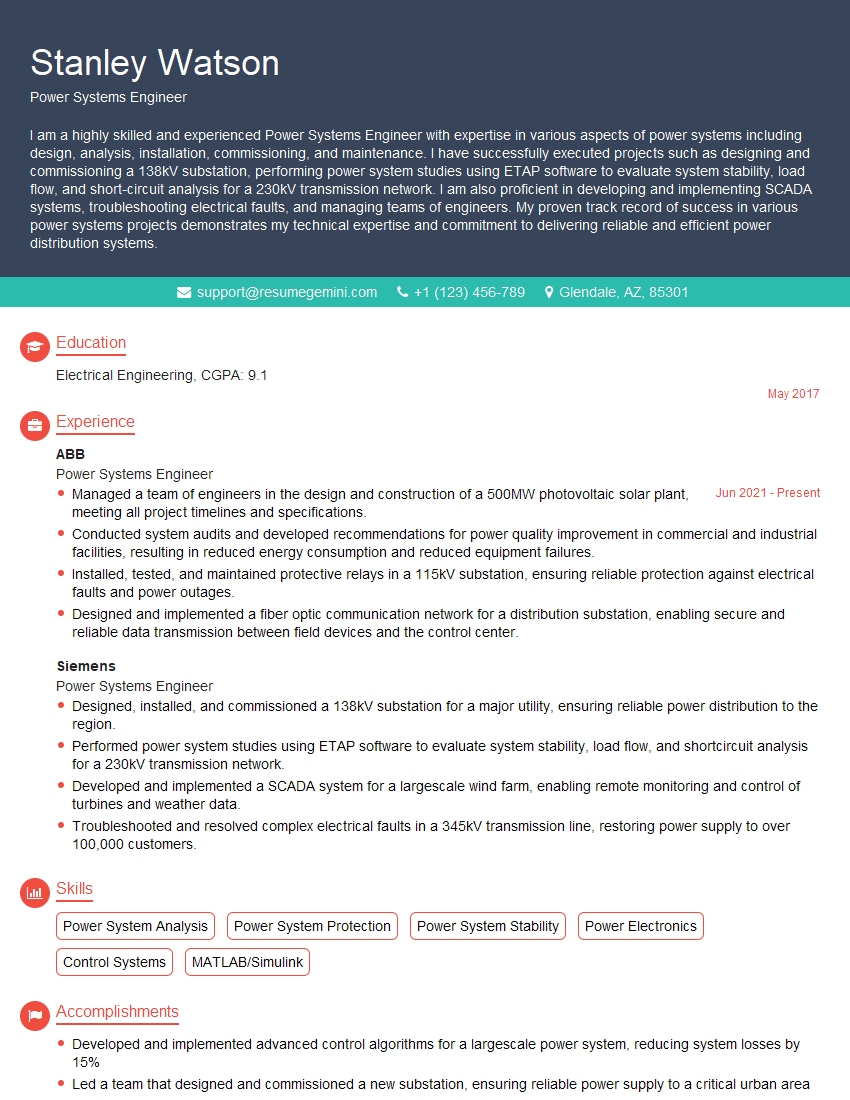
Power Systems Engineer Resume Sample

Senior Engineer Resume Sample
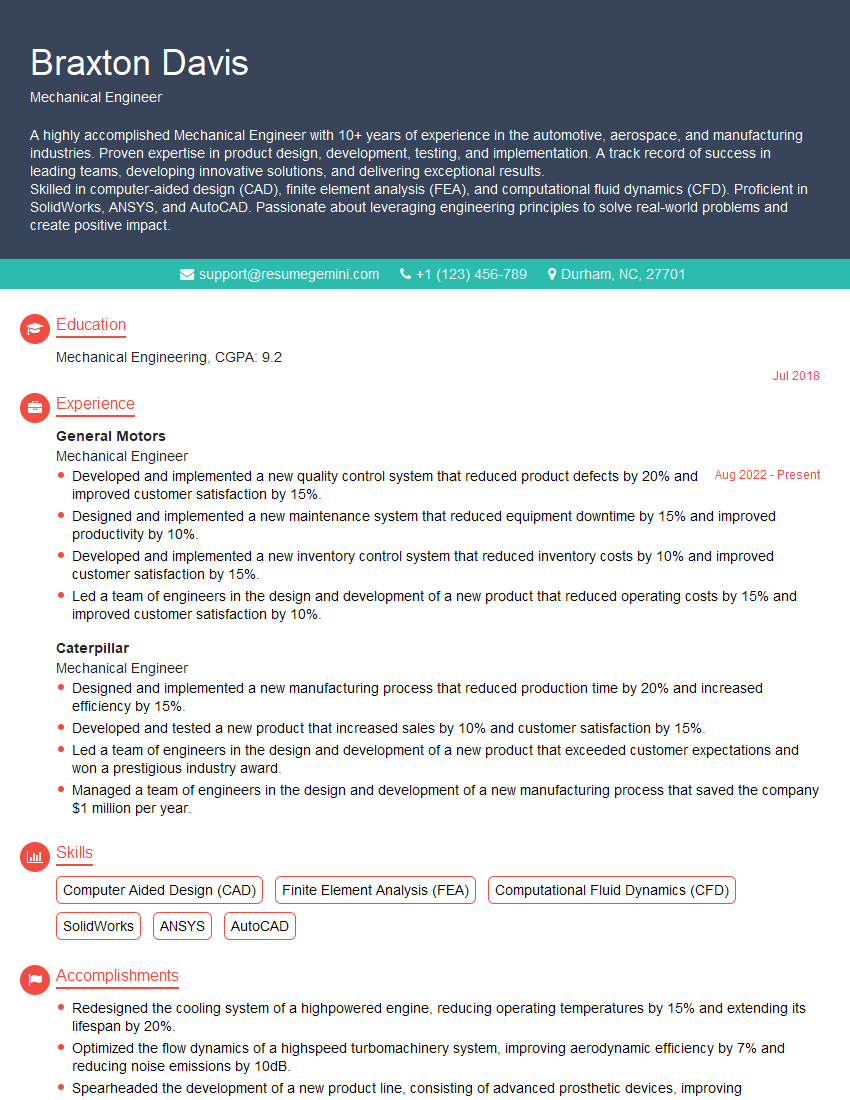
Mechanical Engineer Resume Sample
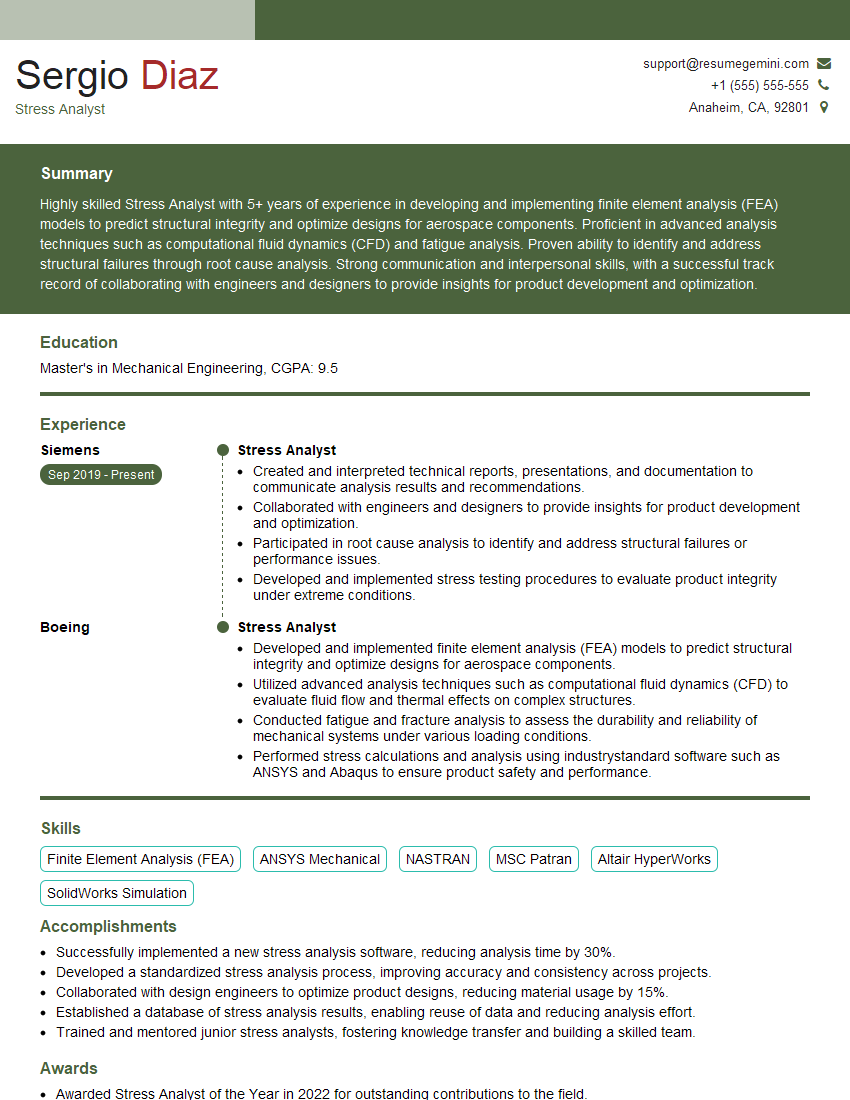
Stress Analyst Resume Sample

Engineering Consultant Resume Sample

Engineering Analyst Resume Sample

Professor of Engineering Resume Sample
- Engineering Manager
- Principal Engineer
- Project Engineer
- Research Scientist
- Technical Specialist
- Design Engineer
- Telecommunications Engineer
- Civil Engineer
- Structural Engineer
- Cable Engineer
- Electrical Engineer
- Field Engineer
- Power Systems Engineer
- Senior Engineer
- Mechanical Engineer
- Stress Analyst
- Engineering Consultant
- Engineering Analyst
- Professor of Engineering
Explore more articles
Users Rating of Our Blogs
Share Your Experience
We value your feedback! Please rate our content and share your thoughts (optional).
What Readers Say About Our Blog
To the interviewgemini.com Webmaster.
Very helpful and content specific questions to help prepare me for my interview!
Thank you
To the interviewgemini.com Webmaster.
This was kind of a unique content I found around the specialized skills. Very helpful questions and good detailed answers.
Very Helpful blog, thank you Interviewgemini team.