The right preparation can turn an interview into an opportunity to showcase your expertise. This guide to Scatterometer interview questions is your ultimate resource, providing key insights and tips to help you ace your responses and stand out as a top candidate.
Questions Asked in Scatterometer Interview
Q 1. Explain the principle of operation of a scatterometer.
A scatterometer is a type of radar that measures the backscatter of microwave radiation from the Earth’s surface. Imagine throwing a ball at a wall – the way the ball bounces back tells you something about the wall’s texture. Similarly, a scatterometer sends out microwave pulses and analyzes the strength of the signal that returns. This backscattered signal is highly sensitive to the roughness of the surface, which, in the case of oceans, is largely determined by wind speed. The stronger the returned signal, generally, the rougher the surface and the higher the wind speed.
More specifically, the instrument transmits microwave pulses at different angles (incidence angles) and polarizations. The received signal strength, after accounting for the transmitted power and distance, provides information on the surface’s scattering properties.
Q 2. Describe different types of scatterometers (e.g., pencil-beam, fan-beam).
Scatterometers are categorized primarily by their antenna beam shape:
- Pencil-beam scatterometers: These use a narrow beam, similar to shining a flashlight, providing high spatial resolution but covering a limited swath of the Earth’s surface during each scan. This type of scatterometer is excellent for highly accurate measurements in a small area.
- Fan-beam scatterometers: These utilize a wider, fan-shaped beam, akin to a spotlight, allowing for broader swath coverage in a single scan. This increases the efficiency of data acquisition but reduces the spatial resolution compared to pencil-beam systems. They are often preferred for large-scale mapping of wind fields.
- Conical-scanning scatterometers: These rotate the antenna, systematically illuminating a swath. This technique is a common choice for spaceborne applications, blending features of both pencil-beam and fan-beam designs to achieve a balance between resolution and coverage.
The choice of scatterometer type depends on the specific application. For example, a coastal monitoring system might benefit from a high-resolution pencil-beam design, while global weather forecasting relies on the broader coverage offered by fan-beam or conical-scanning instruments.
Q 3. What are the advantages and disadvantages of using scatterometers for wind speed retrieval?
Advantages:
- Large-scale coverage: Scatterometers can monitor vast areas of the ocean, providing synoptic wind field measurements crucial for weather forecasting and climate studies.
- All-weather capability (to a degree): While heavy rain can affect measurements, scatterometers can generally operate under cloudy conditions, unlike instruments reliant on optical sensors.
- Day and night operation: Microwaves are unaffected by sunlight, enabling continuous monitoring irrespective of time of day.
Disadvantages:
- Limited spatial resolution: Compared to in-situ measurements (like buoys), scatterometers have lower spatial resolution, leading to some ambiguity in the wind field estimations, especially in complex coastal regions.
- Sensitivity to surface conditions: Factors such as rain, sea ice, and unusual sea states can significantly impact the accuracy of the retrieved wind speeds, requiring careful data processing and quality control.
- Ambiguity in wind direction: Scatterometers inherently measure the backscattered signal strength which mostly reflects the wind speed. Determining the precise wind direction requires sophisticated algorithms and often involves a combination of measurements at different incidence angles and polarizations. This is known as the ‘retrieval ambiguity’.
Q 4. Explain the concept of Normalized Radar Cross Section (NRCS).
The Normalized Radar Cross Section (NRCS, often denoted as σ0) represents the backscattering strength of a surface per unit area. It’s normalized to account for the incident power and distance to the target, effectively expressing the reflectivity of the surface independent of the radar system’s parameters. Think of it as a measure of how ‘reflective’ the ocean surface is to the microwaves. A higher NRCS indicates a rougher surface and usually stronger winds.
The NRCS is typically expressed in decibels (dB) and is a function of incidence angle, frequency, polarization, and surface conditions. For example, σ0 = -10 dB indicates a relatively low backscatter, while σ0 = 0 dB suggests a much stronger return.
Q 5. How is wind speed derived from scatterometer measurements?
Wind speed derivation from scatterometer measurements is a complex process involving several steps:
- Measurement of NRCS: The scatterometer measures the backscattered signal strength at various incidence angles and polarizations, which is then converted into NRCS.
- Geophysical Model Function (GMF): This model relates the NRCS to the wind speed and direction. These models are empirically derived from extensive observations and theoretical understanding of microwave scattering from the ocean surface.
- Retrieval Algorithm: Sophisticated algorithms utilize the measured NRCS and the GMF to estimate wind speed and direction. This step often involves iterative procedures and accounts for the inherent ambiguities in wind direction.
- Quality Control: The retrieved wind speeds are subjected to rigorous quality control procedures to eliminate errors and inconsistencies due to rain, ice, or other factors.
The process is not straightforward and requires advanced signal processing techniques, statistical models, and calibration against other sources of wind data like buoys or weather stations to improve accuracy.
Q 6. Describe the impact of different surface conditions (e.g., sea state, rain) on scatterometer measurements.
Different surface conditions significantly impact scatterometer measurements:
- Sea State: Rougher seas (higher waves) generally lead to higher NRCS values, resulting in higher estimated wind speeds. Calm seas produce lower NRCS.
- Rain: Rain can significantly attenuate the microwave signal, leading to underestimation of wind speed and introducing errors in the retrieved wind direction. Advanced algorithms attempt to correct for rain effects using other satellite data.
- Sea Ice: Sea ice strongly reflects microwave radiation, leading to very high NRCS values. Distinguishing between sea ice and high winds is a challenge and necessitates specialized algorithms.
- Foam and Whitecaps: The presence of foam and whitecaps on the ocean surface alters the backscatter, influencing the accuracy of wind speed estimation. These effects need to be accounted for in the GMFs and retrieval algorithms.
Understanding these impacts is critical for accurate interpretation of scatterometer data. Data quality control procedures are designed to identify and mitigate these influences whenever possible, but uncertainties remain.
Q 7. What are the limitations of scatterometer data?
Limitations of scatterometer data include:
- Spatial Resolution: The relatively coarse spatial resolution can lead to uncertainties, particularly in areas with complex wind fields, such as near coastlines or in the presence of mesoscale eddies.
- Wind Direction Ambiguity: The retrieval of wind direction is inherently ambiguous due to the symmetrical nature of the backscattered signal, requiring advanced techniques to resolve this.
- Sensitivity to Surface Conditions: The influence of rain, sea ice, and other surface factors can significantly affect the accuracy of the retrieved wind speeds and must be carefully considered.
- Retrieval Errors: The complex retrieval algorithms involved introduce uncertainties, and these errors can propagate into the derived wind fields, affecting their accuracy.
- Data Gaps: Landmasses and other obstructions inevitably cause data gaps in the spatial coverage of scatterometer measurements.
Despite these limitations, scatterometers provide valuable information on large-scale wind fields, crucial for numerous applications, and ongoing research and improvements in the algorithms and instrumentation constantly strive to mitigate these limitations.
Q 8. Explain the concept of ambiguity in scatterometer measurements and how it is resolved.
Scatterometer measurements suffer from a fundamental ambiguity: the backscattered signal received by the instrument doesn’t uniquely determine the wind vector (speed and direction). Imagine throwing a ball – you can get the same backscatter (the ball’s return trajectory) from different combinations of throwing speed and angle. Similarly, different wind speeds and directions can produce the same radar backscatter. This is because the radar signal is sensitive to the roughness of the ocean surface, which is influenced by both wind speed and direction in a complex, non-linear way.
This ambiguity is typically resolved using a technique called ambiguity removal. This involves combining measurements from multiple viewing angles (obtained from different satellite passes or antenna beams) or incorporating information from other sources, such as numerical weather prediction (NWP) models. The algorithms sift through possible wind vectors, selecting the one that best explains the complete set of observations. This often involves iterative processes and statistical methods that weight the likelihood of each possible solution based on its consistency with the data and the prior knowledge from NWP.
Q 9. Describe different geophysical model functions (GMFs) used in scatterometer data processing.
Geophysical Model Functions (GMFs) are mathematical relationships that link the measured radar backscatter (σ0) to geophysical parameters, primarily wind speed and direction. These functions are crucial for converting raw scatterometer data into meaningful wind products. Different GMFs exist, tailored to various conditions and instruments. Some common types include:
- Empirical GMFs: These are derived from statistical relationships between observed backscatter and in-situ wind measurements. They are often specific to a particular instrument and region. An example would be a GMF calibrated using buoy data from the North Atlantic.
- Semi-empirical GMFs: These combine empirical observations with physical models of the ocean surface. They attempt to capture the underlying physics more accurately than purely empirical GMFs and might be used for wider geographical regions.
- Physically-based GMFs: These are based on theoretical models of ocean wave dynamics and radar backscattering. These are often more complex but can offer better performance in diverse conditions. They are also commonly used for simulating backscatter under different conditions and testing new algorithms.
The choice of GMF significantly impacts the accuracy and reliability of the derived wind products. The selection depends on factors like the scatterometer’s characteristics, the geographical region, and the desired accuracy.
Q 10. How is calibration performed for a scatterometer?
Scatterometer calibration is a critical process that ensures the accuracy and consistency of the measurements over time. It involves comparing the instrument’s measured backscatter to known standards, allowing corrections to be applied for any systematic biases or drifts. The process typically involves several steps:
- Pre-launch Calibration: Thorough testing in a controlled environment before launch to establish the instrument’s baseline performance. This sets the foundational reference for subsequent calibrations.
- In-flight Calibration: This uses various techniques throughout the satellite’s operational life. These techniques include:
- Internal Calibration: Using onboard calibration targets to monitor the instrument’s internal stability.
- Cross-calibration: Comparing measurements with other instruments (e.g., another scatterometer on a different satellite or even different sensors on the same platform). This helps identify any inconsistencies between instruments.
- Vicarious Calibration: Comparing measurements to independent in-situ measurements (e.g., buoys, ships). This is crucial for relating instrument readings to actual geophysical quantities.
Calibration data are typically incorporated into the processing chain to correct for variations in instrument response, ensuring that wind products are consistent and reliable across time and geographical regions.
Q 11. What are common error sources in scatterometer measurements?
Scatterometer measurements are susceptible to several error sources, including:
- Noise: Random fluctuations in the radar signal due to electronic noise in the instrument or interference from other sources.
- Calibration Errors: Inaccuracies or drifts in the instrument’s calibration parameters, leading to systematic biases in the measurements.
- Atmospheric Effects: Attenuation and scattering of the radar signal by rain, clouds, or atmospheric gases can affect the measured backscatter.
- Land Contamination: Scatterometer measurements over land can contaminate nearby ocean measurements, especially near coastlines. Algorithms are necessary to mitigate these effects.
- Ionospheric Effects: For high-frequency scatterometers, these effects can introduce significant errors in the measured backscatter, particularly at high latitudes.
- Sea State Biases: The assumption of a simple relationship between wind and backscatter might not hold under extreme sea states (high waves), leading to significant errors in wind retrieval. Advanced GMFs try to account for this.
- Model Errors: The GMF itself might not perfectly capture the complex relationship between wind and backscatter.
Careful consideration of these error sources is crucial in both data processing and uncertainty estimation. Advanced techniques like error covariance matrices are used to quantify and propagate uncertainties through the wind retrieval process.
Q 12. Explain the process of scatterometer data pre-processing.
Scatterometer data pre-processing aims to prepare the raw measurements for geophysical processing. This often involves several steps:
- Radiometric Correction: Correcting for instrument-specific effects such as antenna pattern variations and range effects. This ensures consistent measurements across different scan angles.
- Calibration: Applying calibration coefficients to remove instrument biases and drifts, as discussed in the previous answer.
- Noise Reduction: Filtering out random noise using various techniques such as median filtering or wavelet transforms.
- Clutter Removal: Identifying and removing measurements contaminated by land, ice, or rain. This might involve using ancillary data (e.g., land masks) and sophisticated algorithms.
- Quality Control: Flagging measurements that are likely unreliable due to various error sources. This is essential to prevent bad data from impacting further processing.
The quality of pre-processing significantly affects the quality of the final wind products. Robust pre-processing methods are essential to obtain reliable and accurate results.
Q 13. Describe various methods for scatterometer data gridding and interpolation.
Scatterometer measurements are typically made along the satellite’s ground track, resulting in sparse, non-uniform data coverage. Gridding and interpolation techniques are employed to create a regular gridded wind field. Common methods include:
- Objective Analysis: This statistical method uses a weighted average of nearby observations to estimate wind speed and direction at grid points. The weights are often determined based on the distance from the observations and the estimated errors. Examples include Barnes analysis and Optimal Interpolation.
- Kriging: A geostatistical technique that uses spatial correlation models to estimate values at ungauged locations. It accounts for the spatial structure of the data and provides estimates along with uncertainty measures.
- Spline Interpolation: This method fits a smooth surface through the data points, creating a continuous wind field. Different types of splines (e.g., cubic splines) offer various levels of smoothness and accuracy.
- Nearest Neighbor Interpolation: This is a simpler approach where the value at a grid point is assigned the value of the nearest observation. It’s computationally efficient but can produce less smooth and accurate results than other methods.
The choice of method often involves trade-offs between accuracy, computational cost, and the desired smoothness of the gridded wind field. The specific choice depends on the application and the characteristics of the scatterometer data.
Q 14. How is scatterometer data validated and compared to in-situ measurements?
Scatterometer data validation involves comparing the satellite-derived wind products to independent in-situ measurements, such as those from buoys, ships, or a network of coastal wind stations. This is crucial for assessing the accuracy and reliability of the scatterometer data. The comparison involves:
- Statistical Analysis: Calculating metrics such as bias, root mean square error (RMSE), and correlation coefficients to quantify the agreement between scatterometer winds and in-situ measurements. These provide quantitative measures of accuracy.
- Spatial and Temporal Comparisons: Examining differences in wind speed and direction at various spatial and temporal scales. This helps to identify any systematic biases or regions where the scatterometer performance is less accurate.
- Scatter Plots: Visualizing the relationship between scatterometer and in-situ winds using scatter plots. This can reveal non-linear relationships or systematic biases that are not captured by simple statistical metrics.
Validation studies are essential for understanding the limitations of scatterometer measurements and improving retrieval algorithms. Regular validation is an integral part of the operational use of scatterometer data and ensuring data quality.
Q 15. Explain the use of scatterometer data in numerical weather prediction (NWP).
Scatterometer data plays a crucial role in Numerical Weather Prediction (NWP) by providing vital information about near-surface wind speed and direction over the ocean. These data are assimilated into NWP models, improving the accuracy of weather forecasts, particularly for areas with limited in-situ observations. Think of it like adding a crucial piece to a jigsaw puzzle – the more accurate wind information, the more complete the picture of the atmospheric conditions, leading to better predictions of storms, rainfall, and other weather phenomena.
Specifically, scatterometer-derived winds are used to initialize and constrain the atmospheric boundary layer within NWP models. This is critical because the boundary layer, where the atmosphere interacts most directly with the ocean, is highly variable and difficult to observe directly, especially over vast oceanic areas. The incorporation of scatterometer data significantly reduces the uncertainties related to wind fields, resulting in more accurate forecasts for various weather events and atmospheric conditions.
Career Expert Tips:
- Ace those interviews! Prepare effectively by reviewing the Top 50 Most Common Interview Questions on ResumeGemini.
- Navigate your job search with confidence! Explore a wide range of Career Tips on ResumeGemini. Learn about common challenges and recommendations to overcome them.
- Craft the perfect resume! Master the Art of Resume Writing with ResumeGemini’s guide. Showcase your unique qualifications and achievements effectively.
- Don’t miss out on holiday savings! Build your dream resume with ResumeGemini’s ATS optimized templates.
Q 16. Describe the applications of scatterometer data in oceanography.
Scatterometer data has numerous applications in oceanography. Primarily, it’s invaluable for studying ocean surface winds, which drive ocean currents and influence phenomena such as wave generation, upwelling, and mixing. These surface winds are essential components of ocean circulation models and climate models, making scatterometers a crucial tool for oceanographic research.
- Ocean Current Monitoring: By mapping surface winds, scatterometers indirectly help understand ocean currents, because surface winds act as the main driver of ocean surface currents.
- Air-Sea Interaction Studies: Scatterometer data enables scientists to investigate the complex interactions between the atmosphere and the ocean, helping us understand the exchange of energy and momentum between these two crucial components of the Earth’s system.
- Wave Forecasting: Wind speed and direction, provided by scatterometers, are crucial input parameters for wave models, improving the accuracy of wave forecasts vital for shipping and coastal management.
- Upwelling Detection: Scatterometers can indirectly detect upwelling – a process where deep, nutrient-rich water rises to the surface – by observing changes in surface wind patterns and sea surface temperature.
Q 17. Discuss the role of scatterometers in climate monitoring.
Scatterometers contribute significantly to climate monitoring by providing a long-term record of global surface wind speeds. This data is crucial for understanding climate variability and change, particularly in relation to the ocean’s role in the climate system. Consistent, long-term monitoring of global winds allows scientists to detect trends, identify anomalies, and evaluate the impact of climate change on wind patterns and ocean currents. These long-term records are also essential for validating climate models and improving their accuracy in predicting future climate scenarios.
For instance, long-term scatterometer data can reveal changes in the intensity and frequency of tropical cyclones, which are significantly influenced by sea surface temperature and wind patterns. This information is crucial for climate change impact assessments and disaster preparedness strategies.
Q 18. How are scatterometer data used for sea ice monitoring?
Scatterometer data provides valuable information for sea ice monitoring by distinguishing between open water and sea ice based on the microwave backscatter response. Sea ice has a significantly higher backscatter signal compared to open water. By analyzing these backscatter signatures, scatterometers can map the extent, concentration, and type of sea ice. This information is vital for navigation, climate research, and understanding the Earth’s cryosphere.
The information is used in several ways: Mapping sea ice extent helps assess the overall health of the Arctic and Antarctic sea ice. The data also aids in monitoring sea ice dynamics, tracking the changes in sea ice concentration and movement. This information is crucial for predicting seasonal changes and identifying areas with potential dangers for shipping.
Q 19. Explain the difference between active and passive microwave remote sensing.
The key difference between active and passive microwave remote sensing lies in how they obtain information about the Earth’s surface. Passive sensors, like microwave radiometers, simply measure the naturally emitted microwave radiation from the Earth’s surface and atmosphere. Think of it like listening to a radio station – you’re passively receiving the signal being transmitted. Active sensors, like scatterometers, emit their own microwave radiation and measure the backscattered signal from the surface. This is like using a radar; you send out a signal and analyze the echo that comes back.
Scatterometers, being active sensors, offer advantages in measuring surface wind speeds because the backscattered signal is strongly influenced by surface roughness, which is directly related to wind speed. Passive sensors provide information on surface temperature and other properties but do not directly measure wind speed with the same precision.
Q 20. Describe your experience with specific scatterometer datasets (e.g., ASCAT, QuikSCAT).
I have extensive experience working with both ASCAT (Advanced Scatterometer) and QuikSCAT datasets. ASCAT, with its multiple beams and higher spatial resolution, offers detailed wind field information over a wide swath. I have utilized ASCAT data extensively for applications such as near real-time wind field generation for numerical weather prediction models and for validating and comparing model outputs. QuikSCAT, while no longer operational, provided a valuable long-term dataset that’s been critical for studying climate trends and variability in global wind patterns. I’ve leveraged QuikSCAT data primarily for long-term climate studies, focusing on trends in tropical cyclone activity and the influence of climate change on ocean winds.
My work has involved quality control, data gridding, and bias correction of both datasets to ensure accuracy and reliability for the various applications. For example, I have developed algorithms to filter out rain contamination in ASCAT data and to correct for instrumental biases in QuikSCAT data.
Q 21. Explain your experience with scatterometer data processing software.
My experience with scatterometer data processing software encompasses a range of tools, from command-line interfaces to graphical user interfaces. I’m proficient in using tools such as Gdal and python libraries (xarray, numpy, scipy) for data manipulation, analysis, and visualization. I’m comfortable working with various data formats, including NetCDF and HDF5. My expertise also extends to using specialized software for scatterometer data processing, such as those developed by EUMETSAT and NASA. I am skilled in creating custom scripts to automate data preprocessing steps, such as data quality control, gridding, and interpolation. This automation is critical in managing the large volumes of data generated by scatterometers.
Furthermore, I’m experienced in developing data visualization tools using matplotlib and cartopy in Python for effectively communicating complex datasets and research results.
Q 22. Describe your experience with programming languages used in scatterometer data analysis (e.g., MATLAB, Python).
My experience with programming languages for scatterometer data analysis is extensive. I’m highly proficient in both MATLAB and Python, leveraging their strengths for different aspects of the workflow. MATLAB, with its built-in signal processing and image processing toolboxes, is invaluable for initial data exploration, quick prototyping of algorithms, and visualization of complex datasets. For instance, I’ve used MATLAB’s powerful interpolation functions to fill in gaps in scatterometer data caused by sensor limitations. Python, on the other hand, offers superior flexibility and scalability, particularly when dealing with very large datasets. I frequently use libraries like NumPy, Pandas, and Xarray for efficient data manipulation and analysis, and Scikit-learn for implementing machine learning techniques for tasks like data quality control and geophysical parameter retrieval. I’ve even developed custom Python scripts to automate repetitive tasks, saving considerable time and effort.
For example, I wrote a Python script using GDAL to efficiently read and process large GeoTIFF files containing scatterometer data, performing various pre-processing steps before feeding the data into a machine learning model built with Scikit-learn for sea ice classification.
Q 23. Explain your understanding of different coordinate systems used in scatterometer data.
Understanding coordinate systems is crucial in scatterometer data analysis. Scatterometer data is typically provided in several coordinate systems, each with its advantages and disadvantages. The most common are:
- Geographic Coordinates (latitude and longitude): This is a user-friendly system representing locations on the Earth’s surface. However, it doesn’t accurately represent the distances and areas, especially near the poles.
- Projected Coordinates (e.g., UTM, Lambert Conformal Conic): These systems project the spherical Earth onto a plane, allowing for accurate distance and area calculations within a limited region. The choice of projection depends on the geographical area of interest.
- Sensor Coordinates: These represent the location of a measurement relative to the scatterometer’s sensor. They’re essential for understanding the geometry of the measurement and correcting for sensor-specific biases.
For example, when analyzing scatterometer data over a large area like the Arctic Ocean, I would typically use a polar stereographic projection to minimize distortion. Transformations between these coordinate systems are often necessary and are usually handled using specialized software libraries or tools available within the MATLAB and Python environments.
Q 24. Describe your experience working with large datasets and high-performance computing.
Working with large scatterometer datasets and high-performance computing (HPC) is an integral part of my work. Scatterometer data can easily reach terabytes in size, demanding efficient processing techniques. I’m experienced in leveraging HPC resources, specifically using parallel processing techniques to speed up computationally intensive tasks such as gridding, interpolation, and geophysical model inversion. I am familiar with using queuing systems like SLURM or PBS to efficiently manage jobs on cluster environments.
For instance, during a recent project involving the analysis of a year’s worth of global scatterometer data, I developed a parallel Python script using the ‘multiprocessing’ library to distribute the processing workload across multiple CPU cores. This drastically reduced the processing time from several days to a few hours, allowing for quicker results and more efficient analysis.
Q 25. How do you handle missing data in scatterometer measurements?
Missing data is a common issue in scatterometer measurements due to various factors like cloud cover, rain, and sensor malfunctions. Handling missing data appropriately is crucial to avoid biased results. My approach involves a combination of techniques depending on the extent and pattern of the missing data:
- Simple imputation techniques: For small gaps, I might use simple methods like filling missing values with the mean, median, or the value from a nearby location (spatial interpolation).
- Advanced interpolation methods: For more extensive missing data, more sophisticated spatial interpolation techniques, such as kriging or inverse distance weighting are applied. The choice of method depends on the spatial characteristics of the data.
- Data assimilation: In some cases, I integrate scatterometer data with other datasets (e.g., model outputs) using data assimilation techniques to improve data coverage and quality. This can leverage information from other sources to estimate missing values more effectively.
It is crucial to carefully document the methods used for missing data handling, as this can influence the interpretations of the results. I always evaluate the impact of different missing data handling strategies on downstream analysis to ensure robustness of the results.
Q 26. Describe your experience in quality control and quality assurance of scatterometer data.
Quality control (QC) and quality assurance (QA) are paramount when working with scatterometer data. My experience involves implementing rigorous QC procedures at various stages of the data processing pipeline. This includes checking for:
- Outliers: Identifying and removing or correcting values that significantly deviate from the expected range.
- Systematic errors: Detecting and correcting biases in the measurements caused by instrumental effects or atmospheric conditions.
- Data consistency: Ensuring consistency across different time periods and geographical regions.
- Comparison with other datasets: Validating scatterometer data by comparing it with independent measurements (e.g., from buoys, in situ measurements, or other remote sensing instruments).
I typically employ automated QC techniques using scripts and algorithms which flag or correct problematic values. Manual QA checks also regularly occur to ensure the automation is correct and identify any edge cases that require human intervention. This thorough QC/QA process is critical for ensuring data accuracy and reliability.
Q 27. Explain your understanding of the limitations of using scatterometer data in different geographic regions.
Scatterometer data has inherent limitations in certain geographical regions. The accuracy and reliability of measurements can be affected by factors like:
- Land contamination: Land surfaces often return strong backscatter signals that can contaminate nearby ocean measurements. This is particularly challenging in coastal regions and near islands.
- High winds and precipitation: Extreme weather conditions can affect the accuracy of measurements and may lead to data loss. Tropical regions are often significantly affected by this.
- High incidence angles: The signal received by the scatterometer is weak at higher incidence angles, leading to reduced accuracy in these regions. This is especially problematic at high latitudes.
- Sea ice: Sea ice can produce strong backscatter signals that are often difficult to distinguish from those of open water. Accurate sea ice discrimination requires specialized algorithms and careful consideration of the limitations of the sensor.
Understanding these limitations is crucial for accurate interpretation. In my work, I always account for these limitations by carefully selecting appropriate data processing techniques, validation procedures, and error estimates, and always present these caveats and limitations in my reports and presentations.
Q 28. Discuss your experience in presenting and interpreting scatterometer data to different audiences.
Presenting and interpreting scatterometer data to diverse audiences requires clear communication and appropriate visualization techniques. I have considerable experience presenting complex results to both technical and non-technical audiences. For technical audiences (e.g., fellow scientists), I focus on detailed analysis, presenting specific algorithms, uncertainties, and comparisons with other datasets. Visualization often includes maps, graphs, and timeseries, using software such as MATLAB, Python (Matplotlib, Seaborn), and GIS software (ArcGIS).
When communicating with non-technical audiences, I emphasize the key findings and their implications using simpler language, avoiding technical jargon. I focus on visually compelling representations of the data, using clear and concise summaries, and analogies to help illustrate the concepts. For example, I’ve used visual metaphors (e.g., comparing wind speeds to familiar experiences) to communicate the strength and direction of wind fields inferred from scatterometer data. Adapting my communication style to my audience is vital for ensuring effective knowledge transfer.
Key Topics to Learn for Scatterometer Interview
- Fundamentals of Microwave Remote Sensing: Understand the principles behind microwave backscatter and its interaction with the Earth’s surface.
- Scatterometer Measurement Principles: Grasp how scatterometers measure wind speed and direction using radar signals. Familiarize yourself with different antenna configurations and measurement techniques.
- Data Processing and Calibration: Learn about the techniques used to process raw scatterometer data, including noise reduction, calibration, and geophysical retrieval algorithms.
- Error Analysis and Uncertainty Quantification: Understand the sources of error in scatterometer measurements and how to quantify the uncertainty in derived wind products.
- Practical Applications in Oceanography and Meteorology: Explore the use of scatterometer data in weather forecasting, oceanographic modeling, and climate studies. Be ready to discuss specific applications and their significance.
- Algorithm Development and Implementation: Consider your experience with developing or implementing algorithms related to scatterometer data processing or analysis. Be prepared to discuss relevant programming languages and software.
- Data Assimilation and Model Integration: Understand how scatterometer data is integrated into numerical weather prediction models and ocean circulation models.
- Advanced Topics (depending on the role): Consider exploring topics like polarimetric scatterometry, spaceborne scatterometer design, or specific applications related to your target role.
Next Steps
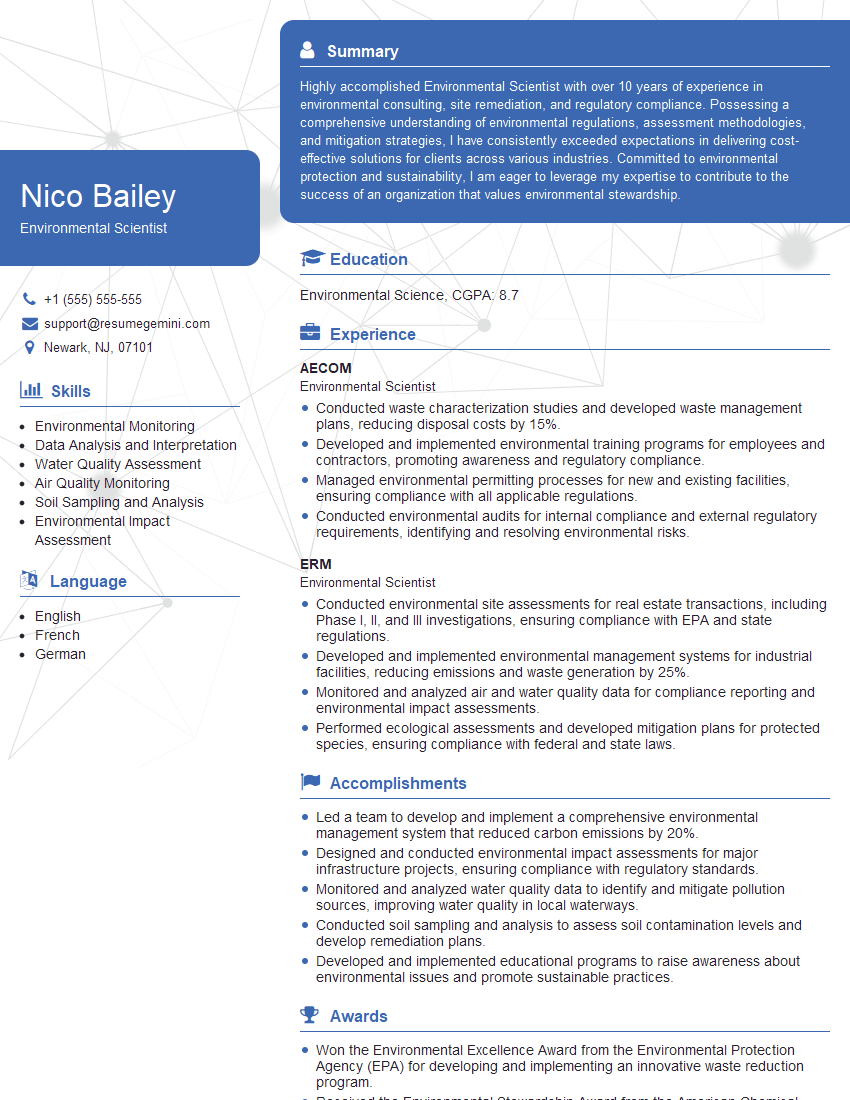
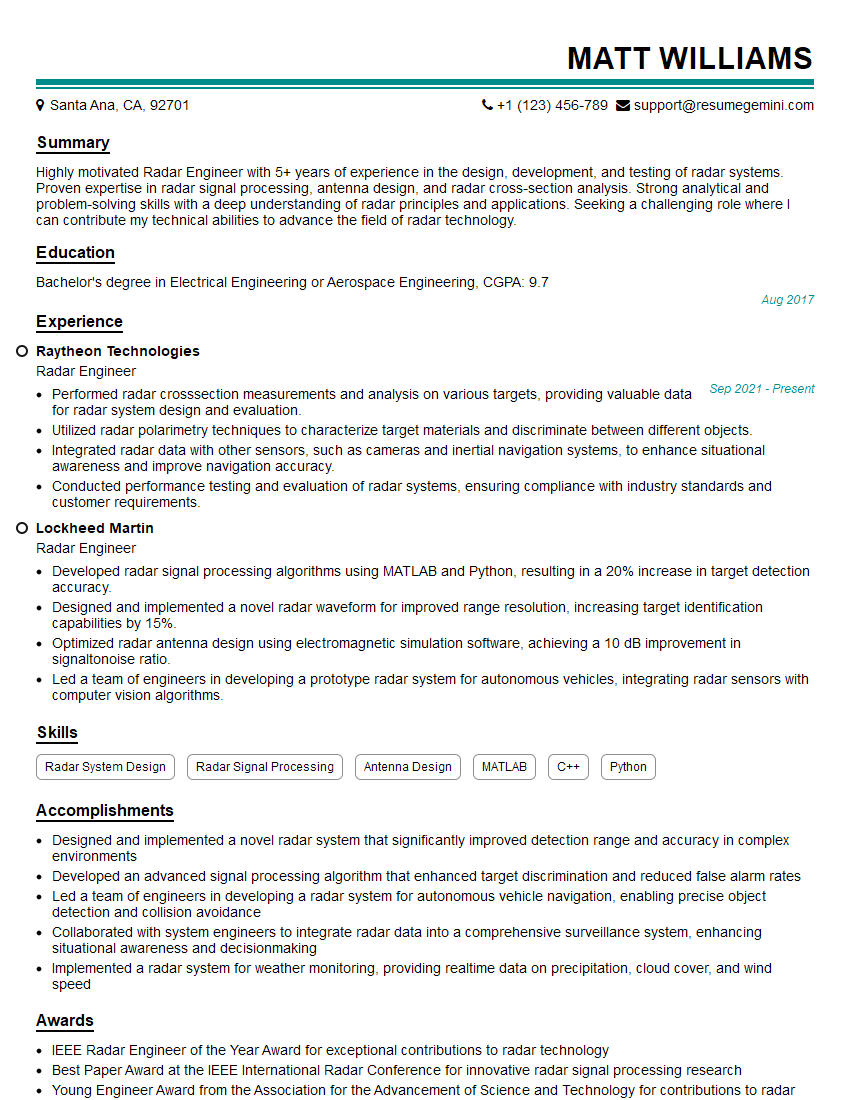
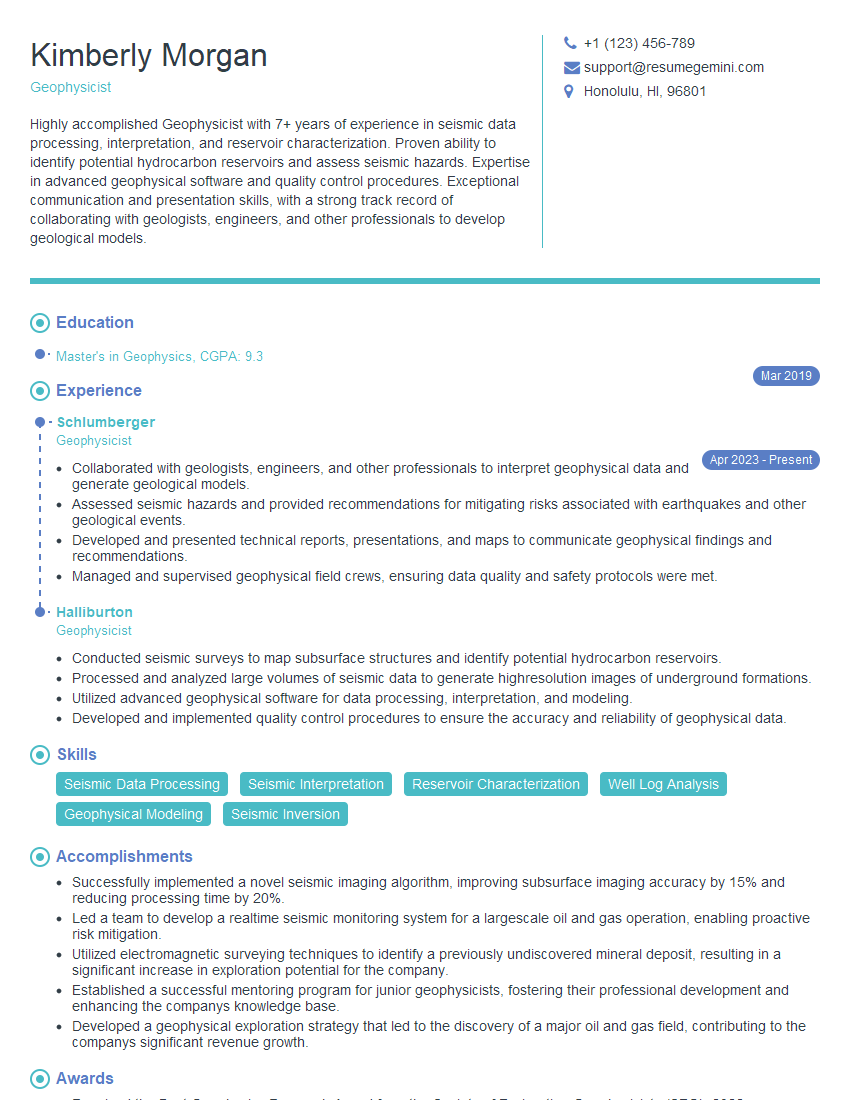
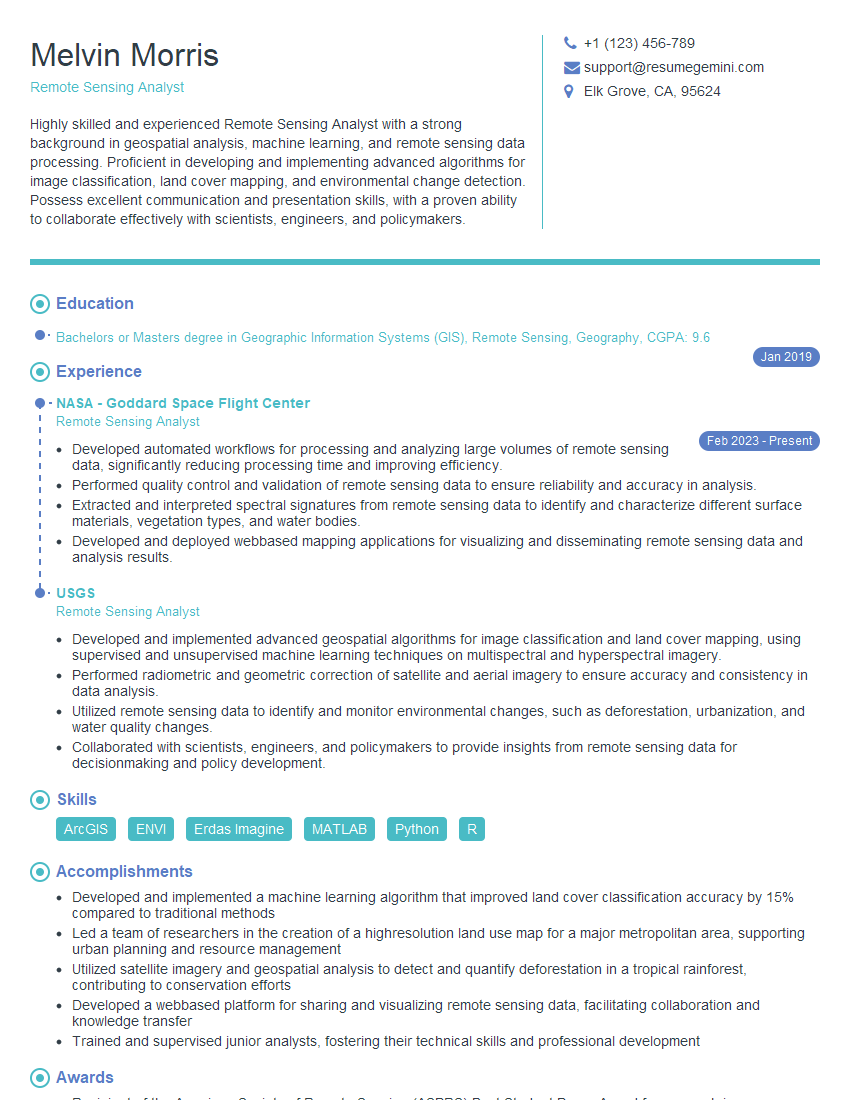
Mastering Scatterometer principles and applications opens doors to exciting career opportunities in remote sensing, meteorology, and oceanography. A strong understanding of this technology significantly enhances your value to potential employers. To increase your chances of landing your dream job, focus on building an ATS-friendly resume that effectively highlights your skills and experience. ResumeGemini is a trusted resource that can help you craft a professional and impactful resume tailored to your specific goals. Examples of resumes tailored to Scatterometer positions are provided to guide you.


Explore more articles
Users Rating of Our Blogs
Share Your Experience
We value your feedback! Please rate our content and share your thoughts (optional).
What Readers Say About Our Blog
To the interviewgemini.com Webmaster.
Very helpful and content specific questions to help prepare me for my interview!
Thank you
To the interviewgemini.com Webmaster.
This was kind of a unique content I found around the specialized skills. Very helpful questions and good detailed answers.
Very Helpful blog, thank you Interviewgemini team.