Interviews are opportunities to demonstrate your expertise, and this guide is here to help you shine. Explore the essential Scholarship Search Assistance interview questions that employers frequently ask, paired with strategies for crafting responses that set you apart from the competition.
Questions Asked in Scholarship Search Assistance Interview
Q 1. What are the primary sources you utilize for scholarship searching?
My scholarship search process relies on a multi-pronged approach utilizing diverse, reputable sources. I start with comprehensive scholarship databases like Fastweb and Scholarships.com, which aggregate numerous opportunities from various organizations. These platforms allow filtering by criteria such as major, GPA, ethnicity, and intended field of study. Beyond these databases, I delve into institutional resources. Each college and university maintains its own scholarship portal, often listing opportunities exclusive to their students. I also explore state and local scholarship programs, many of which are overlooked but offer substantial funding. Finally, I directly research specific organizations and corporations known for their scholarship initiatives, often finding hidden gems not listed on general databases. Think about professional associations related to a student’s chosen field – many offer scholarships to their members’ children or those pursuing related studies. This combined approach ensures comprehensive coverage of available options.
Q 2. Explain your experience with different types of scholarships (merit-based, need-based, etc.).
My experience encompasses a wide range of scholarship types. Merit-based scholarships reward academic excellence, talent, or specific achievements. For example, a student with a 4.0 GPA might qualify for a merit-based scholarship offered by their high school or college. Need-based scholarships, conversely, are awarded based on demonstrated financial need, assessed through factors like family income and assets. These are often crucial for students from low-income backgrounds. Then there are scholarships with specific criteria, which could include factors like ethnicity, religion, intended major, or participation in extracurricular activities. For example, a scholarship might be targeted exclusively toward students pursuing engineering degrees or those who are actively involved in community service. Understanding these nuances allows me to strategically target applications to scholarships that best align with the student’s profile, maximizing their chances of success.
Q 3. How do you verify the legitimacy of scholarship opportunities?
Verifying scholarship legitimacy is paramount. I always cross-reference information found on a scholarship website with independent sources. If a scholarship seems too good to be true, it probably is. Legitimate scholarship providers will never ask for upfront fees or banking information. Red flags include unsolicited emails or requests for personal financial information before the application is submitted. I check the organization’s website independently, looking for contact information, an established online presence, and verifiable claims. I also utilize online search engines to look for reviews or mentions of the scholarship program. A quick search can often reveal scams or fraudulent opportunities. Reputable scholarships are usually listed on trusted databases mentioned earlier, providing further verification.
Q 4. Describe your process for organizing and managing scholarship applications.
My organizational approach for managing scholarship applications is meticulous and systematic. I begin by creating a spreadsheet that tracks each scholarship’s details: deadline, required documents, essay prompts, application link, and personal notes. This allows for clear visualization of all deadlines and crucial details. I then utilize a calendar system with reminders to ensure timely submission. For essay preparation, I encourage students to create a master document containing information they can adapt to different prompts. This saves time and prevents repetitive work. Finally, I encourage students to create a centralized folder to store all documents for easy access. Maintaining this structured system significantly reduces stress and ensures that no application is missed.
Q 5. How do you handle conflicting deadlines for multiple scholarship applications?
Conflicting deadlines are a common challenge. My strategy involves prioritizing based on the scholarship’s potential award amount and the student’s likelihood of success. I work with students to create a realistic timeline, prioritizing the most lucrative or attainable scholarships first. We then allocate dedicated time slots for each application, focusing on completing sections like essays and transcripts well in advance of the deadlines. This involves prioritizing tasks effectively and potentially strategically withdrawing from less appealing options when faced with too many competing high-priority deadlines. Open communication and realistic expectations are key in managing this efficiently.
Q 6. What strategies do you use to help students identify scholarships that align with their profile?
I employ several strategies to help students discover suitable scholarships. First, we thoroughly explore their academic background, extracurricular involvement, and career aspirations. This creates a profile that allows for targeted searching. For instance, a student interested in STEM fields will be directed towards scholarships from engineering associations or technology companies. We also consider the student’s demographic background. Many organizations offer scholarships specifically to students from underrepresented groups. Furthermore, utilizing keyword searches within scholarship databases and employing advanced filtering options within the databases helps to refine the search to highly relevant opportunities. It’s a process of matching the student’s unique attributes to available scholarships.
Q 7. How familiar are you with FAFSA and CSS Profile applications?
I am highly familiar with both FAFSA (Free Application for Federal Student Aid) and CSS Profile applications. FAFSA is a crucial step for accessing federal financial aid, including grants and loans, while the CSS Profile is utilized by many private colleges and scholarship programs to assess financial need. I understand the intricacies of both applications, including the required documentation, deadlines, and the various sections involved. I guide students through the process, ensuring they accurately complete all sections and submit the applications on time. This includes assisting them with gathering the necessary tax information, and ensuring a smooth submission process to avoid any delays in receiving their financial aid awards.
Q 8. Describe your experience with creating compelling scholarship essays.
Crafting a compelling scholarship essay is more than just good writing; it’s about showcasing a student’s unique potential and aligning it with the scholarship’s values. I approach this process by first deeply understanding the prompt. This involves identifying keywords, understanding the organization’s mission, and discerning what specific qualities they seek in a recipient. Then, I work with the student to identify their most relevant experiences, achievements, and personal qualities that showcase these desired attributes.
For instance, if a scholarship emphasizes community involvement, we’ll highlight volunteer work, leadership roles, or initiatives the student spearheaded. If it values academic excellence, we’ll showcase strong GPA, challenging coursework, and significant academic projects. The essay itself is structured with a strong narrative arc, a captivating introduction, compelling supporting details, and a powerful conclusion that reiterates the student’s suitability. We brainstorm memorable anecdotes, use vivid language, and ensure the writing is clear, concise, and error-free. Finally, we revise multiple times, ensuring the essay is both persuasive and reflects the student’s authentic voice.
I’ve helped students successfully craft essays that highlighted their overcoming adversity, demonstrating resilience, and showcasing their unique talents. One student, initially unsure of her qualifications, was awarded a full scholarship after we collaboratively refined her essay to powerfully articulate her passion for sustainable agriculture and her plans to implement innovative solutions in her community.
Q 9. How do you track application submissions and deadlines?
Efficient tracking of scholarship applications and deadlines is crucial for success. I utilize a combination of digital tools and strategies. I typically employ a spreadsheet – think Google Sheets or Excel – that serves as a central hub for all scholarship information. Each row represents a scholarship, with columns dedicated to critical information such as the scholarship name, application deadline, website link, required materials, submission method (online portal, mail), and the status of the application (e.g., application in progress, submitted, awarded, rejected).
In addition to the spreadsheet, I leverage calendar reminders (Google Calendar, Outlook) to set alerts for upcoming deadlines. This ensures timely submission, allowing sufficient time for revisions and unforeseen issues. I also encourage students to use similar tracking systems, either using my template or their preferred method, emphasizing the importance of consistent updates. Regular review of the spreadsheet and calendar ensures nothing falls through the cracks. This structured approach minimizes stress and maximizes the chance of a successful application process. I regularly review and update this information, ensuring accuracy and highlighting any changes or new opportunities.
Q 10. What are some common mistakes students make when applying for scholarships?
Many students unknowingly make mistakes that can hinder their scholarship applications. Common pitfalls include:
- Missing Deadlines: Poor time management and lack of organization often lead to missed deadlines, rendering the application invalid.
- Failing to Tailor Applications: Sending generic applications without addressing the specific requirements and values of each scholarship is a significant error. Scholarships seek individuals who genuinely align with their mission.
- Poor Essay Writing: Grammatical errors, weak narrative structure, and lack of focus can significantly weaken an application. Essays need to be polished, persuasive, and reflect the applicant’s unique qualities.
- Incomplete Applications: Failing to submit all required materials or providing incomplete information can lead to immediate disqualification. Thorough review is crucial.
- Not Proofreading: Simple typos or grammatical errors can create a negative impression of the applicant’s attention to detail.
Addressing these common mistakes through careful planning, thorough preparation, and attention to detail can dramatically increase the likelihood of securing scholarships.
Q 11. How do you stay updated on new scholarship opportunities?
Staying updated on new scholarship opportunities requires a multi-pronged approach. I regularly monitor reputable scholarship search websites and databases like [mention some reputable websites without hyperlinks, e.g., Fastweb, Scholarship America, etc.]. I also subscribe to relevant newsletters and follow scholarship organizations on social media platforms. Additionally, I network with guidance counselors, college financial aid offices, and other professionals in the field to gain insights into lesser-known opportunities. Local community organizations and professional associations often offer scholarships specific to their members or geographic region. By actively seeking out information through diverse channels, I ensure that I’m aware of a wide range of scholarship opportunities for my students.
Q 12. Explain your experience using scholarship search databases and websites.
I have extensive experience using various scholarship search databases and websites. I am proficient in navigating the interfaces, understanding their search functionalities, and efficiently filtering results based on criteria such as academic major, GPA requirements, geographic location, and specific interests. I’m adept at identifying trustworthy sources and avoiding scams. I know how to effectively use keywords to refine searches and identify opportunities that align with a student’s profile. Furthermore, I am familiar with the limitations of different databases and understand that a comprehensive search often involves utilizing multiple resources. I frequently assess the credibility of a website or database by checking its source, reviews, and the types of scholarships listed to ensure that the information provided is accurate and legitimate.
Q 13. Describe your method for evaluating a scholarship’s worth and eligibility requirements.
Evaluating a scholarship involves a two-step process: assessing its worth and determining eligibility. ‘Worth’ considers the scholarship amount, any restrictions on use (tuition only, books only, etc.), renewal possibilities, and the overall financial impact on the student. For example, a $500 scholarship might seem small, but it can be significant for a student with limited financial resources. We also calculate the ‘net worth’ – the actual amount the student receives after considering any associated costs, like application fees.
Eligibility assessment is equally crucial. I carefully analyze the criteria, paying close attention to GPA requirements, academic major restrictions, extracurricular involvement stipulations, essays or letters of recommendation needed, and any specific demographic requirements. I help students understand the application process, the required documentation and deadlines, and the application form itself. If a scholarship requires a specific skill, we assess whether the student possesses it and to what extent. For example, if the scholarship requires a certain level of community involvement, I’ll help the student identify and quantify that contribution effectively in their application. By meticulously evaluating both aspects, we can identify scholarships with the best potential for success.
Q 14. How do you build rapport and trust with students and their families?
Building rapport and trust with students and their families is paramount to my success. I achieve this through open communication, active listening, and empathy. I create a safe and supportive environment where students feel comfortable sharing their aspirations, concerns, and challenges. I actively listen to their needs and offer tailored advice based on their unique circumstances. Regular check-ins, both in person and virtually, help maintain a consistent line of communication and demonstrate my commitment to their success. Transparency regarding the scholarship application process, including potential challenges and realistic expectations, is crucial. I also value celebrating their achievements, both big and small, to foster a positive and motivating experience. I believe that building strong relationships founded on mutual respect and trust is fundamental to providing effective scholarship search assistance.
Q 15. How do you handle inquiries from students and parents about scholarship opportunities?
Handling inquiries from students and parents about scholarships involves a multi-step process focused on personalized service and efficient information delivery. I begin by actively listening to understand their specific needs – the student’s academic goals, intended major, GPA, extracurricular activities, and family financial situation. This helps me tailor my search to relevant opportunities.
Next, I utilize a combination of strategies. This includes searching through my extensive database of scholarship providers (both merit-based and need-based), exploring reputable scholarship search engines, and directly contacting relevant organizations. I explain the eligibility criteria clearly and concisely, and answer any questions they may have about the application process. I also emphasize the importance of meeting deadlines and provide a clear timeline for completing the application, including necessary documentation.
For example, if a parent asks about scholarships for STEM majors, I wouldn’t just provide a generic list. I would focus my search on scholarships specifically offered for students pursuing science, technology, engineering, or mathematics. If a student has a strong record in debate, I’d explore scholarships for students with leadership experience.
Career Expert Tips:
- Ace those interviews! Prepare effectively by reviewing the Top 50 Most Common Interview Questions on ResumeGemini.
- Navigate your job search with confidence! Explore a wide range of Career Tips on ResumeGemini. Learn about common challenges and recommendations to overcome them.
- Craft the perfect resume! Master the Art of Resume Writing with ResumeGemini’s guide. Showcase your unique qualifications and achievements effectively.
- Don’t miss out on holiday savings! Build your dream resume with ResumeGemini’s ATS optimized templates.
Q 16. What is your experience with assisting students from diverse backgrounds with scholarship applications?
My experience working with students from diverse backgrounds has been incredibly rewarding. I understand that access to information and resources for scholarship opportunities isn’t always equitable, and many students face unique challenges. I’m adept at identifying and addressing these challenges, such as language barriers, lack of access to technology, or unfamiliarity with the application process.
For instance, I’ve worked with students who are first-generation college-goers, undocumented students, students with disabilities, and students from low-income families. In each case, I adapt my approach to understand their unique circumstances and provide tailored guidance. This includes helping them find scholarships specifically designed for their backgrounds, assisting with translation services where needed, or providing advice on overcoming logistical barriers to completing the application.
I also actively seek out and promote scholarships specifically designed for underrepresented groups, ensuring all students have an equal chance to access financial aid.
Q 17. How do you adapt your approach to scholarship searching based on a student’s individual needs and goals?
Adapting my approach to individual student needs is paramount. A standardized approach simply won’t work. I start by having in-depth conversations with each student to understand their academic aspirations, financial situation, and unique strengths. I then use this information to create a personalized scholarship search strategy.
For example, a student aiming for a prestigious medical school will need a different scholarship strategy than a student pursuing a liberal arts degree. The former would require a focus on scholarships specifically for pre-med students or those interested in healthcare, while the latter might benefit from exploring broader opportunities based on academic merit or community involvement. I also consider the student’s GPA, extracurricular involvement, and any special skills or talents when narrowing down potential opportunities. Sometimes this involves suggesting they bolster their profile (e.g., through volunteer work) to become eligible for more scholarships.
Q 18. How would you handle a situation where a student misses a scholarship deadline?
Missing a scholarship deadline is unfortunately common. My approach is to remain supportive and problem-solve proactively. First, I’d understand *why* the deadline was missed. Was it due to a misunderstanding, a technical issue, or an unforeseen circumstance?
Depending on the situation, I’d explore several options. If there’s a slight delay, I’d contact the scholarship provider to explain the situation and politely inquire about any possibility of an extension. If the deadline was missed significantly, I would help the student identify alternative scholarship opportunities, emphasizing the importance of careful planning and time management for future applications. I always focus on learning from the experience to prevent future issues.
The key here is to shift the focus from the missed opportunity to planning for future success. We’d discuss how to better manage time and deadlines in the future, utilizing tools like calendars and reminders to prevent this from happening again.
Q 19. Describe a time you had to overcome a challenge while assisting a student with scholarship applications.
One challenging experience involved a highly motivated, first-generation college student from a low-income family who faced significant language barriers. She possessed exceptional academic talent but struggled with the complex language used in scholarship applications and essays.
I overcame this challenge by not only helping her find scholarships but also by collaborating with a volunteer translator to assist with her application materials. We also worked together on crafting compelling essays that showcased her skills and potential despite the language barrier. This involved multiple revisions and feedback sessions. The result was a successful application, and she secured several scholarships that allowed her to attend her dream college.
This experience highlighted the importance of going beyond simple scholarship searches and proactively addressing the diverse challenges students face when accessing higher education.
Q 20. How do you measure the success of your scholarship search efforts?
Measuring the success of my scholarship search efforts goes beyond the simple number of scholarships secured. While that’s an important metric, I also focus on the impact my assistance has on students’ college journeys and long-term success.
I track several key indicators: the number of students I’ve helped secure scholarships, the total amount of scholarship money awarded, the number of students who successfully enrolled in college due to my assistance, and student feedback on my support. I regularly follow up with students after they’ve received their awards to ensure they’re successfully managing their funds and adjusting to college life.
Ultimately, the success of my efforts is measured by the positive impact on students’ lives – enabling them to pursue their higher education dreams without the crippling weight of financial burden.
Q 21. What software or tools do you utilize to streamline the scholarship search process?
To streamline the scholarship search process, I leverage a range of software and tools. This includes dedicated scholarship search engines like Fastweb and Scholarships.com which allow me to filter based on criteria like major, GPA, and ethnicity. I also maintain a comprehensive, regularly updated database of scholarship providers that I have curated over years of experience.
In addition, I use project management tools to organize student information, track application deadlines, and manage communication efficiently. This helps me ensure I don’t miss any deadlines and that each student receives timely and personalized support. Spreadsheet software is invaluable for tracking scholarship opportunities, deadlines, and student progress.
Finally, utilizing a CRM (Customer Relationship Management) system would provide efficient tracking of students, communication, and progress on applications. This would ensure personalized attention and efficient record keeping.
Q 22. Describe your knowledge of different types of financial aid, including grants, loans, and work-study.
Financial aid encompasses various resources helping students fund their education. The three main types are grants, loans, and work-study.
- Grants: These are essentially free money awarded based on financial need or merit. They don’t need to be repaid. Examples include Pell Grants (federal) and institutional grants (from colleges). Think of them as scholarships specifically offered by the government or university.
- Loans: Loans are borrowed money that must be repaid with interest after graduation or leaving school. Federal loans like Stafford Loans and PLUS Loans offer lower interest rates than private loans, but all loans accrue debt that needs careful management. It’s like taking out a mortgage for your education.
- Work-Study: This is a program providing part-time jobs to students with financial need. The earnings help cover educational expenses, giving students valuable work experience. Imagine getting paid for working on campus, reducing the need to take out additional loans.
Understanding the differences between these options is crucial for developing a sound financial aid plan. Each has its own eligibility requirements and implications for the student’s long-term financial health.
Q 23. How familiar are you with federal and state regulations related to financial aid?
I possess a strong understanding of federal and state regulations governing financial aid. This includes the Higher Education Act of 1965, which forms the foundation for federal student aid programs. I am familiar with the complexities of Title IV funding, the Free Application for Federal Student Aid (FAFSA) process, and the regulations surrounding disbursement, monitoring, and compliance. State-specific regulations vary, but I’m adept at navigating these differences. My knowledge ensures adherence to all relevant laws and ethical guidelines when assisting students.
I understand the importance of maintaining accurate records, complying with privacy regulations like FERPA (Family Educational Rights and Privacy Act), and navigating the ever-evolving landscape of federal and state financial aid policy. Staying updated through professional development and ongoing research is a top priority.
Q 24. What are your strategies for managing a large volume of scholarship applications?
Managing a large volume of scholarship applications requires a systematic and organized approach. My strategy involves:
- Centralized Database: Utilizing a spreadsheet or dedicated software to track deadlines, application requirements, and progress on each application.
- Prioritization: Identifying high-potential scholarships based on student qualifications and aligning them with the student’s academic and career goals.
- Time Blocking: Dedicate specific time slots for each stage of the application process (research, writing essays, submitting materials).
- Templates and Checklists: Creating reusable templates for common application components and checklists to prevent missing crucial information.
- Collaboration and Delegation (if applicable): Working with a team to divide tasks and ensure efficiency. This could involve delegating tasks like data entry or preliminary research.
This structured approach minimizes stress and maximizes the chances of securing funding. Regular review and adjustments are essential to ensure the strategy remains effective.
Q 25. How do you ensure data accuracy and confidentiality when handling sensitive student information?
Data accuracy and confidentiality are paramount. My approach involves:
- Secure Data Storage: Utilizing password-protected systems and encrypted files to safeguard sensitive student information.
- Data Validation: Implementing double-checking mechanisms to ensure accuracy in data entry and application completion.
- FERPA Compliance: Strict adherence to the Family Educational Rights and Privacy Act (FERPA), which governs the privacy of student education records.
- Limited Access: Restricting access to sensitive data to authorized personnel only.
- Regular Audits: Conducting periodic reviews to assess security protocols and data integrity.
Data breaches can have serious consequences, so maintaining robust security measures is not just a best practice, but a necessity.
Q 26. Explain your experience with providing financial literacy education to students and families.
I have extensive experience providing financial literacy education. My approach is tailored to the audience, whether it be individual students, families, or groups. I use practical examples and relatable analogies to explain complex financial concepts like budgeting, debt management, and saving for college. For example, I often use budgeting apps as a visual aid to help students understand the importance of tracking income and expenses. Workshops are another successful medium for conveying information and starting crucial conversations about long-term financial planning. My goal is to empower students and families to make informed decisions about their finances and prevent future financial struggles.
Q 27. How would you explain the complexities of financial aid to someone with limited knowledge?
Explaining financial aid to someone with limited knowledge requires simplicity and clear language, avoiding jargon. I start by explaining the overall goal: getting money to pay for college. Then I break down the main categories: grants (free money), loans (borrowed money you repay), and work-study (earning money through a part-time job). I use real-world examples, like comparing a grant to a gift and a loan to buying a car. I emphasize the importance of completing the FAFSA to access federal aid and guide them through the process step-by-step. I always stress the importance of understanding the terms and conditions of any aid received. The goal is to ensure they understand the different types of aid available and how each type works without being overwhelmed by technical details.
Q 28. How do you stay current with changes in scholarship availability and eligibility criteria?
Staying current is essential. My strategies include:
- Subscription to Professional Journals and Websites: Regularly reviewing publications dedicated to higher education and financial aid.
- Networking with Professionals: Attending conferences and workshops to learn about recent changes and best practices.
- Utilizing Online Resources: Monitoring updates from government agencies (like the Department of Education) and scholarship databases.
- Regularly Reviewing Scholarship Websites: Checking regularly for new scholarship opportunities and changes in eligibility criteria.
The landscape of financial aid is constantly evolving. Continuous learning ensures I can provide students with the most accurate and up-to-date information.
Key Topics to Learn for Scholarship Search Assistance Interview
- Understanding Student Needs: Identifying the specific financial and academic challenges faced by students seeking scholarships. This includes recognizing diverse needs and varying levels of financial aid awareness.
- Database Management & Search Strategies: Efficiently navigating and utilizing scholarship databases, employing effective keyword searches, and filtering results based on eligibility criteria. Practical application involves demonstrating proficiency in using various search tools and techniques to locate relevant opportunities.
- Eligibility Assessment & Application Guidance: Accurately assessing student eligibility for specific scholarships based on GPA, academic achievements, extracurricular involvement, and other requirements. This includes providing clear and concise application guidance to maximize the chances of success.
- Financial Aid Literacy: A solid understanding of various types of financial aid (grants, loans, scholarships), their implications, and how they impact overall financial planning for students.
- Communication & Client Interaction: Effectively communicating with students, addressing their concerns, providing support, and maintaining professional client relationships. This involves active listening, clear explanations, and empathy.
- Ethical Considerations: Understanding and adhering to ethical guidelines in scholarship search and application processes, including data privacy and responsible representation of students and institutions.
- Data Analysis & Reporting: Tracking application progress, analyzing success rates, and generating reports to assess the effectiveness of strategies and identify areas for improvement. This could involve working with spreadsheets and reporting tools.
Next Steps
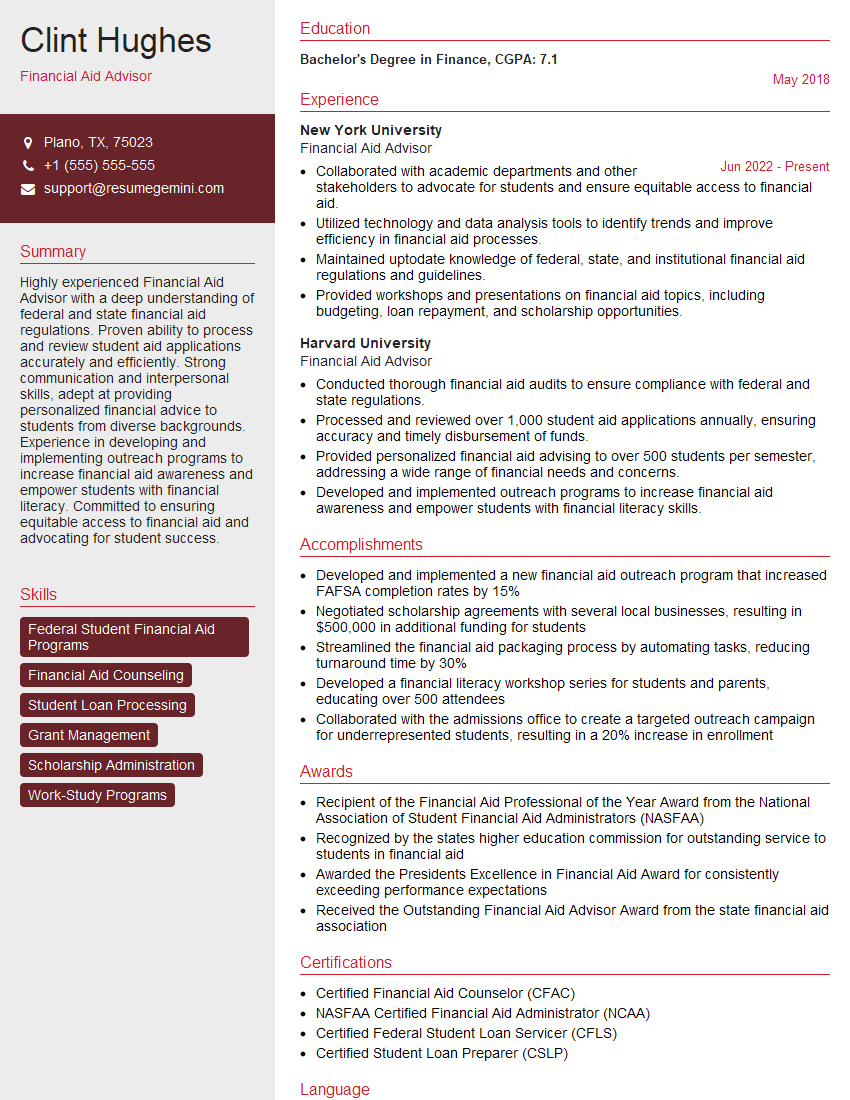
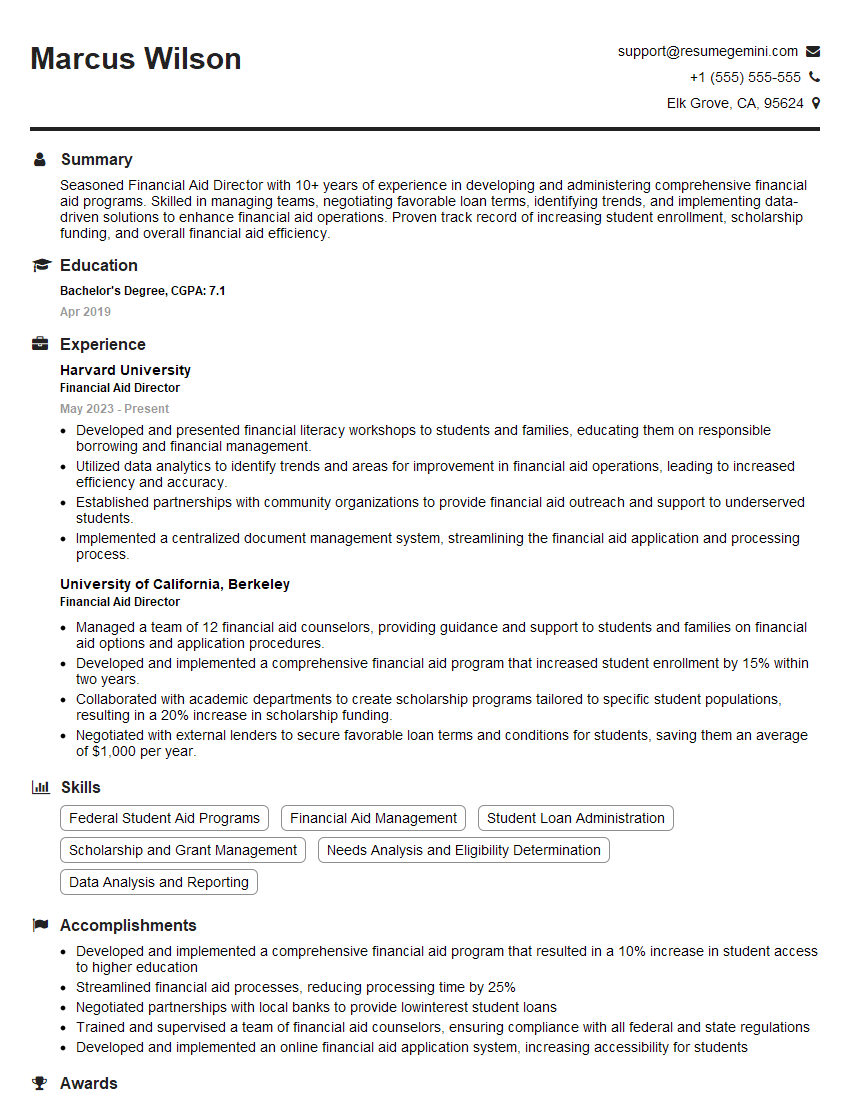
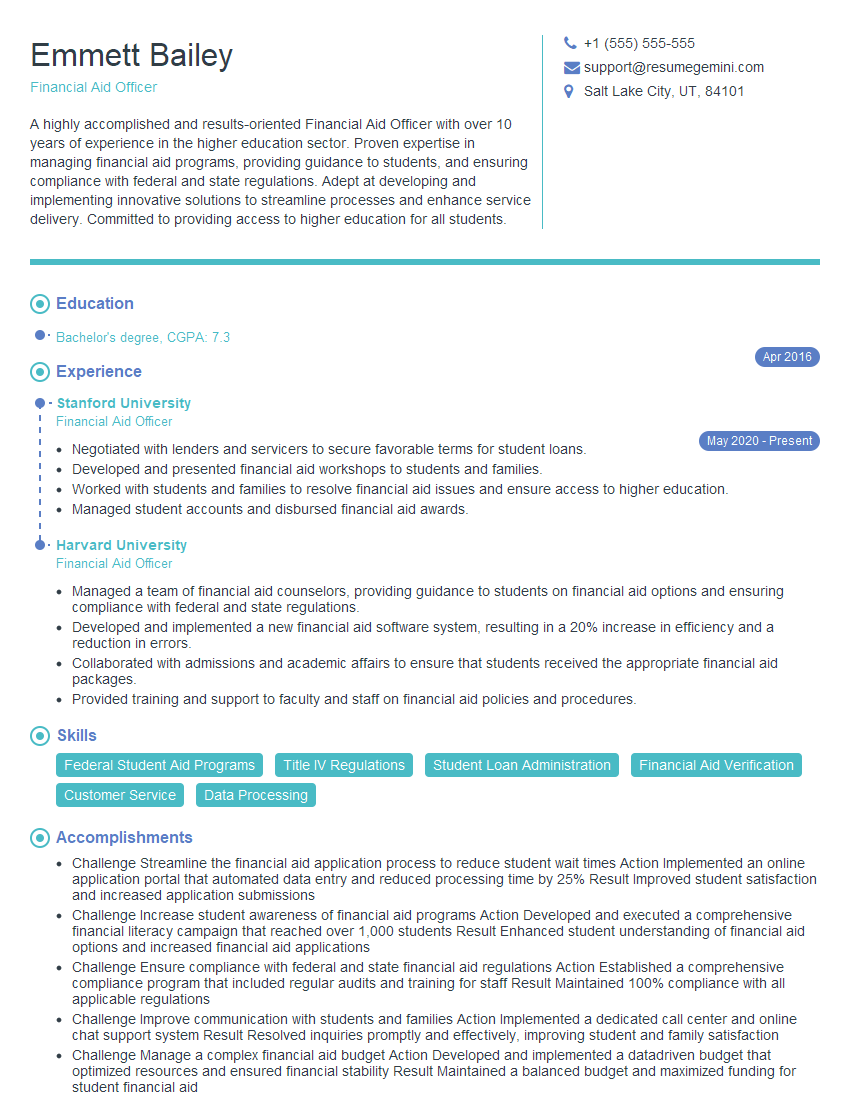
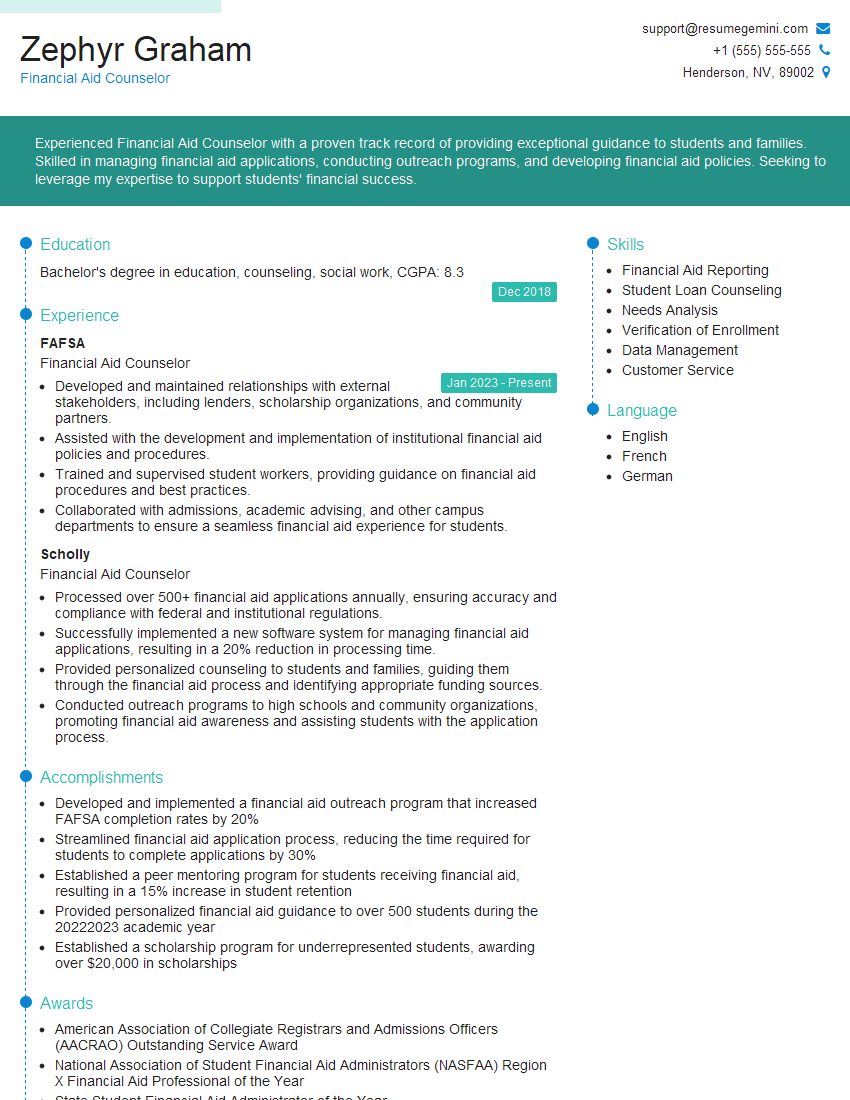
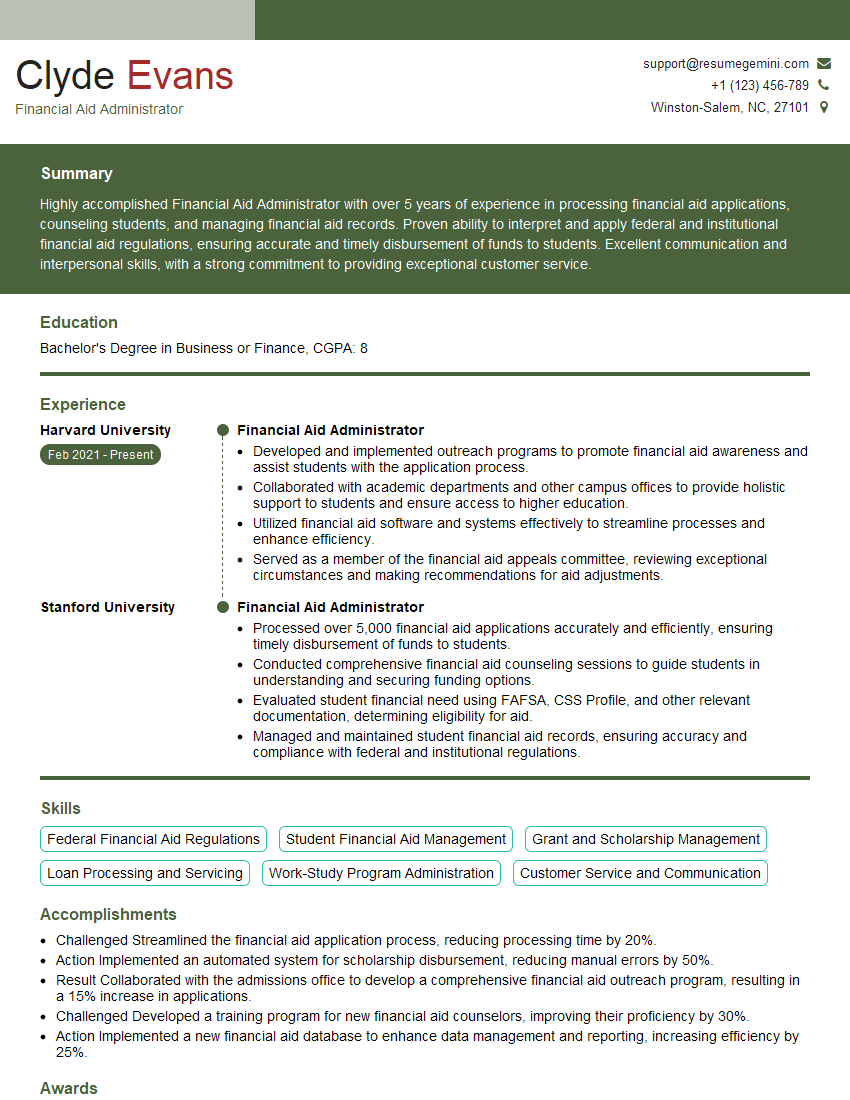
Mastering Scholarship Search Assistance opens doors to rewarding careers in education, student support, and non-profit organizations. Your expertise in guiding students through the complex financial aid landscape is highly valuable. To significantly boost your job prospects, create an ATS-friendly resume that highlights your skills and experience effectively. We strongly recommend using ResumeGemini, a trusted resource, to build a professional resume that showcases your capabilities. Examples of resumes tailored to Scholarship Search Assistance are available to help guide you.
Explore more articles
Users Rating of Our Blogs
Share Your Experience
We value your feedback! Please rate our content and share your thoughts (optional).
What Readers Say About Our Blog
To the interviewgemini.com Webmaster.
Very helpful and content specific questions to help prepare me for my interview!
Thank you
To the interviewgemini.com Webmaster.
This was kind of a unique content I found around the specialized skills. Very helpful questions and good detailed answers.
Very Helpful blog, thank you Interviewgemini team.