Feeling uncertain about what to expect in your upcoming interview? We’ve got you covered! This blog highlights the most important Sensory Discrimination interview questions and provides actionable advice to help you stand out as the ideal candidate. Let’s pave the way for your success.
Questions Asked in Sensory Discrimination Interview
Q 1. Explain the difference between discrimination and recognition in sensory testing.
In sensory testing, discrimination and recognition are distinct yet related processes. Discrimination refers to the ability to detect a difference between two or more stimuli. Think of it as a simple ‘same’ or ‘different’ judgment. Recognition, on the other hand, involves identifying a specific stimulus from a set of alternatives. It’s about knowing what something *is*. For instance, in a taste test, discrimination might involve determining if two samples of cola are different, while recognition would be identifying a specific brand of cola among several others.
Imagine tasting two chocolate bars. Discrimination focuses on whether you can tell if they taste different (e.g., one is sweeter, one is more bitter). Recognition focuses on whether you can identify which chocolate bar is a specific brand you know, like Hershey’s or Lindt.
Q 2. Describe the principles of a triangle test.
The triangle test is a common discrimination test designed to assess a panelist’s ability to distinguish between two samples. Three coded samples are presented to the panelist: two are identical, and one is different. The panelist’s task is to identify the odd sample. The principles are based on probability: If the panelist is guessing randomly, they have a 1/3 chance of being correct. A statistically significant number of correct identifications indicates that the panelist can discriminate between the samples.
For example, a food company might use a triangle test to see if consumers can tell the difference between their existing product and a new formulation with a slightly altered recipe. The higher the correct identification rate above chance, the more likely consumers will be able to distinguish a difference.
Q 3. What are the limitations of using a trained sensory panel?
While trained sensory panels offer several advantages like higher sensitivity and consistency, they also have limitations. One major concern is sensory fatigue. Repeated testing can lead to panelists becoming less sensitive to subtle differences, affecting the reliability of the results. Also, trained panelists may develop biases over time, either consciously or unconsciously. Their expectations might influence their judgments, even if they try to remain objective. Furthermore, the cost associated with maintaining a trained panel can be substantial, requiring regular training sessions and compensation.
For instance, a trained panel evaluating coffee might develop a preference for certain flavour profiles, leading them to rate samples higher that align with this preference, even if objectively there is no significant difference. Therefore, periodic retraining and careful monitoring are crucial.
Q 4. How do you handle outliers in sensory data?
Outliers in sensory data, those data points significantly different from the rest, can be a major problem. The first step is to identify them, often using graphical methods (e.g., box plots) or statistical techniques (e.g., z-scores). Once identified, we need to investigate the cause. Was there an error in sample presentation, a panelist misunderstanding, or a genuine difference? If the outlier is due to a clear error, it can be removed. However, if the cause is unknown or if removing the outlier significantly alters the results, more cautious approaches like using robust statistical methods (less affected by outliers) or reporting the data with a clear note about the outliers are more appropriate.
Imagine a sensory test for sweetness where one panelist consistently rates all samples as much sweeter than the rest. Investigation might reveal this panelist mis-understood instructions or has an unusually high sensitivity to sweetness. This calls for either retraining or exclusion of data from that panelist.
Q 5. What statistical methods are used in sensory analysis?
Sensory analysis relies on various statistical methods, depending on the specific test and research question. Commonly used methods include:
- Analysis of Variance (ANOVA): Compares means across different groups (e.g., different product formulations).
- t-tests: Compares the means of two groups (e.g., comparing a control to a treatment).
- Non-parametric tests (e.g., Friedman test, Wilcoxon signed-rank test): Used when data doesn’t meet the assumptions of parametric tests (like normality).
- Principal Component Analysis (PCA): Reduces the dimensionality of data to visualize patterns and relationships between different sensory attributes.
- Regression analysis: Examines the relationship between sensory attributes and consumer preferences.
The choice of method depends on the type of data collected (e.g., rating scales, ranking data) and the study design.
Q 6. Explain the concept of sensory thresholds (detection, recognition, difference).
Sensory thresholds describe the minimum level of stimulus intensity needed to elicit a specific sensory response.
- Detection threshold (absolute threshold): The lowest intensity of a stimulus that can be detected 50% of the time. For example, the quietest sound a person can hear.
- Recognition threshold: The lowest intensity of a stimulus that can be correctly identified. It’s higher than the detection threshold because it requires not only detecting the stimulus but also knowing what it is. Imagine smelling coffee; detection is simply noting a smell; recognition involves identifying it as coffee.
- Difference threshold (just noticeable difference – JND): The smallest detectable difference between two stimuli. For example, the smallest change in sweetness that a person can detect in two cola samples.
Understanding these thresholds is essential for product development and quality control, ensuring that product differences are perceivable to consumers.
Q 7. How do you control for bias in sensory testing?
Controlling bias in sensory testing is crucial for ensuring the validity of results. Key strategies include:
- Blind testing: Samples are presented without revealing their identity (e.g., using random three-digit codes).
- Balanced presentation: Samples are presented in a randomized order to avoid order effects (e.g., taste fatigue, adaptation).
- Use of trained panelists: While presenting limitations, trained panelists are more consistent and less prone to some biases.
- Panelist selection and training: Selecting panelists with appropriate sensory capabilities and training them on proper sensory evaluation techniques can help minimize bias.
- Control of environmental conditions: Testing in a standardized environment with controlled lighting, temperature, and background noise can minimize external influences on perception.
- Regular calibration: Periodically checking the panelists’ performance against standard samples can help identify any shifts in their sensitivity or biases.
By employing these methods, we can reduce the impact of various subjective factors and increase the objectivity of sensory test results.
Q 8. What are the different types of sensory tests and when would you use each?
Sensory tests are crucial for evaluating the sensory properties of products. They fall into several categories, each serving a distinct purpose.
- Difference tests: These determine if a perceptible difference exists between two or more samples. Examples include paired comparison (choosing which sample is sweeter), triangle test (identifying the odd sample out of three), and duo-trio test (choosing the sample that matches a reference). These are used early in product development to detect formulation changes or to assess the impact of ingredient substitutions.
- Descriptive tests: These aim to quantify the sensory attributes of a product using trained panelists. Techniques like Quantitative Descriptive Analysis (QDA) employ a panel to rate the intensity of specific sensory attributes (e.g., sweetness, bitterness, aroma intensity) on a numerical scale. This is valuable for detailed product profiling and competitor benchmarking.
- Affective tests: These gauge consumer preferences and acceptance. Common methods include hedonic scaling (rating liking on a scale), ranking (ordering samples based on preference), and check-all-that-apply (selecting descriptive terms that apply to the sample). These tests provide crucial insights into consumer acceptance and guide product optimization for market success.
The choice of test depends entirely on the research objective. Are you trying to detect subtle differences? Understand detailed sensory attributes? Or gauge consumer liking? The appropriate test will directly address these questions.
Q 9. Describe the process of developing a sensory profile for a new product.
Developing a sensory profile for a new product is a systematic process. It begins with defining the product’s target audience and its key sensory attributes. Then, a trained sensory panel is selected, screened, and trained to recognize and rate these attributes consistently. The training involves repeated exposure to reference samples and exercises that standardize their perception.
Next, the actual sensory evaluation commences. Typically, a QDA method is employed, with panelists rating the intensity of each attribute on a structured scale. The data is then statistically analyzed, and a detailed sensory profile is created, summarizing the key sensory attributes of the product (e.g., creamy texture, sweet taste, intense chocolate aroma). This profile can be used as a benchmark for subsequent production batches or for competitor comparisons.
Finally, the sensory profile is reviewed and validated. This process might involve further panel testing, or comparison with competitor products. Remember that effective communication of the sensory profile to product developers is critical for successful product launch.
Q 10. How do you manage and interpret sensory data from different panellists?
Managing and interpreting sensory data from multiple panelists requires statistical analysis to account for individual differences and ensure reliability. We use statistical techniques, such as analysis of variance (ANOVA) and principal component analysis (PCA), to identify significant differences between samples. ANOVA helps determine if there are significant differences in sensory attributes between samples and PCA helps reduce the dimensionality of the data and visualize the relationship between different sensory attributes.
Individual panelist data is also carefully examined for outliers and inconsistencies. Training, consistent procedures, and statistical analysis minimize bias and improve data reliability. We also look at the consistency of each panelist’s responses (their repeatability) and their ability to discriminate between different samples (their discriminative ability) to identify top-performing panelists. By focusing on statistically significant results and eliminating outliers we can trust the overall sensory profile generated.
Q 11. What is the importance of proper sample preparation in sensory evaluation?
Proper sample preparation is paramount for reliable sensory evaluation. Inconsistencies in temperature, presentation, or sample size can drastically affect panelists’ perceptions and lead to biased results. Consider these crucial aspects:
- Temperature Control: Samples should be served at a consistent, optimal temperature, depending on the food. For example, ice cream needs to be served at a certain temperature to prevent melting, influencing taste.
- Uniform Appearance: Samples must appear visually similar to avoid bias. For example, if testing ice cream, make sure each sample has similar serving sizes and similar amounts of toppings.
- Sample Coding: Samples should be coded randomly (e.g., three-digit numbers) to prevent bias from sample identification.
- Presentation: Samples should be presented in identical, clean containers to minimize visual cues influencing the panelists.
- Sufficient Quantity: Enough sample should be provided for each panelist to avoid rushed judgments.
Adherence to these procedures ensures that any differences perceived are due to the product itself, not artifacts of preparation.
Q 12. Explain the concept of hedonic scaling in sensory evaluation.
Hedonic scaling measures the degree of liking or disliking a product. Panelists rate their preference for a sample on a structured scale, often using a numerical scale (e.g., 1-9, where 1 represents extreme dislike and 9 represents extreme liking) or a graphic scale (e.g., faces representing different levels of liking). This provides a direct measure of consumer preference.
For example, a 9-point hedonic scale might ask panelists to rate their liking of a new yogurt flavor on a scale of 1 (extremely dislike) to 9 (extremely like). The results show the overall liking of the product and can be compared between different samples or across different consumer groups. This is a powerful tool for guiding product development and identifying areas for improvement to enhance consumer acceptance.
Q 13. How do you ensure the reliability and validity of sensory testing results?
Ensuring the reliability and validity of sensory testing requires careful planning and execution. Reliability refers to the consistency of results, while validity refers to the accuracy of the assessment. To ensure reliability, we employ techniques such as:
- Proper Panelist Selection and Training: Screening panelists for sensory acuity and providing thorough training improves consistency.
- Standardized Procedures: Using standardized procedures and instructions minimizes variations in testing conditions.
- Replicate Tests: Conducting replicate tests (e.g., testing the same sample on multiple occasions or using multiple panels) enhances reliability.
To ensure validity, we must consider:
- Appropriate Test Selection: Choosing the appropriate sensory test for the specific objective.
- Control of Extraneous Variables: Minimizing any external factors that might influence panelists’ perceptions.
- Statistical Analysis: Using appropriate statistical methods to analyze the data and identify significant differences.
By adhering to rigorous methodologies, we minimize bias and increase the confidence in the sensory test results.
Q 14. Describe the difference between affective and descriptive sensory analysis.
Affective and descriptive sensory analyses differ in their objectives and methodologies. Affective tests measure consumer preferences and liking, while descriptive tests aim to characterize the sensory attributes of a product objectively.
Affective analysis utilizes methods like hedonic scaling or ranking to quantify consumer preferences. It focuses on the overall liking and acceptance of the product. The data obtained helps in understanding consumer reactions and guiding product development toward increased market appeal.
Descriptive analysis uses trained panelists to systematically evaluate and quantify the sensory characteristics of a product. Methods like QDA provide a detailed profile of the sensory attributes, their intensity, and their relationships. This information is critical for quality control, product optimization, and competitor benchmarking.
In short, affective tests tell you if consumers like it, while descriptive tests tell you why consumers like or dislike it. Often, both methods are employed in a comprehensive sensory evaluation to gain a complete understanding of a product.
Q 15. What are some common sensory attributes used to describe food products?
Sensory attributes are the characteristics of a food product that we perceive using our senses. Describing food involves a holistic sensory experience, not just taste. Common attributes fall into several categories:
- Appearance: This includes color (e.g., bright red, pale yellow), size and shape (e.g., uniform cubes, irregular pieces), texture (e.g., smooth, rough, crystalline), and gloss (e.g., shiny, dull).
- Aroma/Odor: This describes the volatile compounds we smell. Descriptors can range from fruity and floral to spicy, earthy, or meaty. We often use aroma wheels to categorize and standardize descriptions.
- Taste: This is often broken down into the basic tastes: sweet, sour, salty, bitter, and umami. However, there are many nuanced flavor notes beyond these, often described with terms like buttery, chocolatey, or peppery.
- Texture: This describes the physical properties of the food, perceived through touch and mouthfeel. Descriptors include crunchy, creamy, chewy, soft, hard, viscous, etc. Texture is crucial for overall enjoyment.
- Sound: While less prominent, the sound a food makes when bitten (e.g., a crisp crackle) can contribute to its overall sensory experience.
For example, describing a strawberry might include attributes like ‘bright red color,’ ‘sweet and slightly tart taste,’ ‘aromatic and fruity aroma,’ and ‘slightly soft and juicy texture’.
Career Expert Tips:
- Ace those interviews! Prepare effectively by reviewing the Top 50 Most Common Interview Questions on ResumeGemini.
- Navigate your job search with confidence! Explore a wide range of Career Tips on ResumeGemini. Learn about common challenges and recommendations to overcome them.
- Craft the perfect resume! Master the Art of Resume Writing with ResumeGemini’s guide. Showcase your unique qualifications and achievements effectively.
- Don’t miss out on holiday savings! Build your dream resume with ResumeGemini’s ATS optimized templates.
Q 16. How do you handle participant fatigue during lengthy sensory evaluations?
Participant fatigue is a significant concern in lengthy sensory evaluations because it leads to unreliable data. Tired panelists become less attentive and their judgments can be inconsistent. To mitigate this:
- Keep sessions short: Avoid overwhelming panelists with too many samples in a single session. Breaks are essential.
- Provide breaks: Include regular breaks, offering water, palate cleansers (e.g., crackers, plain bread), and even short periods of rest for the eyes and mind.
- Vary the order of samples: Randomizing the order of presentation minimizes the effect of sensory adaptation or fatigue from repeatedly encountering similar samples.
- Counterbalance samples: If you have many samples, use a balanced design so that similar samples aren’t always next to each other.
- Monitor panelist performance: Look for inconsistencies in the data. If a panelist’s performance seems significantly affected by fatigue, consider excluding their data or repeating the evaluation.
- Use appropriate sample sizes: This helps to minimize the number of samples each panelist has to judge.
In practice, I often schedule sensory evaluations throughout the day with short, carefully planned sessions to minimize fatigue and ensure the integrity of the data collected.
Q 17. What are some ethical considerations in conducting sensory tests?
Ethical considerations are paramount in sensory testing. We need to ensure that the participants are treated with respect and their well-being is protected. Key considerations include:
- Informed consent: Panelists must be fully informed about the purpose of the study, the procedures involved, the time commitment required, and any potential risks or discomforts. They should be free to withdraw at any time.
- Confidentiality: Panelist responses should be kept confidential, protecting their identity and opinions.
- Compensation: Panelists should be appropriately compensated for their time and effort. This compensation could be financial or in the form of a gift.
- Avoid bias: Researchers should carefully design the testing protocols to minimize bias, preventing influence on panelists’ responses.
- Data integrity: All data should be handled carefully to maintain its accuracy and validity.
- Participant safety: Ensure that the test product is safe for consumption and that the environment is comfortable and hygienic.
For example, if testing a spicy product, we would inform participants in advance and have appropriate measures in place in case of adverse reactions.
Q 18. How would you design a sensory test for comparing two similar products?
To compare two similar products, a difference test is ideal. The specific type of difference test depends on the objective. Here’s how I would design a test:
- Define the objective: What specific difference are we trying to detect? Is it overall preference, a specific sensory attribute (e.g., sweetness, texture), or a general difference?
- Choose the appropriate test: A duo-trio test (where the panelist identifies which sample matches a reference) or a paired comparison test (where panelists indicate which sample is stronger in a given attribute) are suitable for detecting differences. A triangle test (where the panelist identifies the odd one out among three samples) is ideal for subtle differences.
- Sample preparation: Samples must be prepared identically and coded to avoid bias. They should be served at a consistent temperature in appropriate serving vessels.
- Panelist selection: Recruit a panel of trained or untrained panelists, depending on the test’s objective. For preference tests, you often use consumer panels; for discrimination tests, trained panels are often better.
- Instructions and training: Provide clear, concise instructions and if necessary, train panelists on the evaluation scale and specific sensory attributes to assess.
- Statistical analysis: Use appropriate statistical tests (e.g., binomial test for duo-trio or triangle tests) to determine if a statistically significant difference exists between the two products.
For example, to compare two types of yogurt, I might use a paired comparison test, asking panelists to indicate which sample has a ‘creamier’ texture.
Q 19. Explain the role of sensory science in product development.
Sensory science plays a vital role throughout the entire product development lifecycle. It helps ensure that products meet consumer expectations and are competitive in the market. Here’s how:
- Product concept and ideation: Sensory science helps generate new product ideas based on consumer preferences and market trends. Sensory experts use creative ideation sessions to brainstorm new flavor profiles or textural combinations.
- Formulation and development: Sensory evaluations guide the optimization of product formulations. By assessing the impact of different ingredients and processing methods on sensory attributes, manufacturers can fine-tune recipes to achieve the desired taste, texture, and appearance.
- Quality control: Sensory evaluations help maintain product consistency and quality throughout the manufacturing process. Regular sensory testing ensures that each batch meets the established sensory profile.
- Shelf-life studies: Sensory assessments are crucial in determining the shelf life of products by tracking changes in sensory attributes over time. This data helps to set appropriate expiration dates and packaging strategies.
- Competitive analysis: Sensory comparisons with competitor products help manufacturers understand the strengths and weaknesses of their own offerings and inform product improvements.
- Consumer acceptance testing: This is crucial for understanding if a new product or reformulation will resonate with the target market.
In essence, sensory science acts as a bridge between the manufacturer and the consumer, ensuring that products are developed and marketed based on actual sensory perceptions and preferences.
Q 20. How do you incorporate consumer feedback into sensory evaluation?
Incorporating consumer feedback is essential for successful product development. There are several ways to integrate this into sensory evaluations:
- Focus groups: These provide qualitative feedback, where consumers can express their opinions and preferences in an open-ended format. The discussion can be led by a trained moderator.
- Consumer panels: These use quantitative methods (e.g., rating scales, ranking) to assess consumer preferences for specific product attributes. The data are statistically analyzed.
- Surveys: These are commonly used to collect consumer opinions on a broader scale, enabling efficient gathering of feedback through a large sample size.
- Social media and online reviews: While less controlled, these can be valuable resources to identify trends in consumer sentiment and uncover areas needing attention.
- Home-use tests: Providing consumers with products to test in their own environments offers valuable insight into real-world usage scenarios and feedback.
It’s critical to carefully analyze the feedback, recognizing potential biases and limitations of the methods used. For example, a focus group’s feedback may be influenced by strong personalities, while a survey may suffer from low response rates.
Q 21. Describe your experience with different sensory test methodologies (e.g., duo-trio, ranking).
My experience spans several sensory test methodologies. Each method has its strengths and weaknesses, making it suitable for different objectives:
- Duo-trio test: This is a simple difference test where a reference sample and two coded samples (one matching the reference) are presented. Panelists identify the sample that matches the reference. I have used this extensively to assess differences in flavor or aroma. The statistical analysis is straightforward.
- Triangle test: This is another difference test involving three coded samples—two identical, one different. The panelist identifies the odd sample. It’s sensitive for detecting smaller differences than the duo-trio, but it requires more samples and more concentration from panelists.
- Paired comparison test: Two coded samples are presented, and panelists indicate which sample is superior or stronger in a specific sensory attribute (e.g., sweetness, intensity). This helps determine which product excels in a particular area. This is valuable during product development and optimization.
- Ranking test: Several samples are presented simultaneously, and panelists rank them in order of preference or intensity of a specific attribute. It’s suitable for comparing several products along a preference dimension, and I have used it for both trained and consumer panels.
- Rating scales: Panelists rate samples based on the intensity of specific attributes on a numerical scale (e.g., 1-9 scale). This provides quantitative data and is useful for measuring the intensity of specific sensory attributes.
The choice of methodology depends on the research question and the level of sensitivity required. I always ensure the appropriate statistical analysis is conducted for accurate interpretation of the results. I’ve found that combining different methods can provide a more comprehensive understanding of sensory differences.
Q 22. How do you interpret a sensory map or a PCA analysis?
Sensory maps and Principal Component Analysis (PCA) are crucial tools for visualizing and interpreting complex sensory data. A sensory map, often a 2D or 3D plot, represents products based on their sensory profiles. Each point on the map corresponds to a product, and the proximity of points indicates similarity in sensory attributes. For instance, two ice creams plotted close together might have similar sweetness and creaminess levels. PCA, a statistical technique, reduces the dimensionality of the data while preserving the most important information. It identifies principal components (PCs), which are linear combinations of the original sensory attributes. These PCs often represent underlying sensory dimensions (e.g., PC1 might represent overall sweetness, and PC2 might represent fruitiness). Interpreting a PCA involves analyzing the loadings (how much each original attribute contributes to each PC) and the scores (the position of each product on the PC axes) to understand the relationships between products and attributes. For example, a high positive loading of ‘chocolate’ on PC1 suggests that products with high scores on PC1 are perceived as more chocolatey.
Imagine a study comparing different coffee brands. A sensory map might show that Arabica coffees cluster together, distinct from Robusta coffees, reflecting differences in their aroma and taste profiles. A PCA might reveal that PC1 is strongly related to bitterness and acidity, while PC2 reflects the intensity of fruity/floral aromas.
Q 23. Describe the challenges of testing products with complex aromas or flavors.
Testing products with complex aromas or flavors presents unique challenges. The sheer number of volatile compounds and their interactions can make it difficult to identify and quantify individual sensory attributes. For example, the aroma of wine involves hundreds of compounds, creating a complex and nuanced sensory experience. Another challenge lies in the subjective nature of sensory perception. What one panelist perceives as ‘fruity,’ another might describe as ‘floral’. This variability necessitates rigorous training and careful selection of panelists. Furthermore, aroma fatigue and adaptation can affect panelist performance, requiring strategies to mitigate these effects, such as using shorter sessions and incorporating rest periods. Finally, designing appropriate descriptive sensory attributes and scales can be demanding. A detailed aroma wheel or vocabulary list may need to be developed specifically for the product category. This requires considerable expertise and pilot testing.
Q 24. What software or tools are you familiar with for sensory data analysis?
I’m proficient in several software packages commonly used for sensory data analysis. XLSTAT and SensoryXpert offer a comprehensive suite of statistical tools including PCA, multidimensional scaling (MDS), and analysis of variance (ANOVA) specifically tailored for sensory data. I’m also familiar with R, a powerful statistical programming language, providing flexibility for advanced analysis and customization. SPSS is another widely used statistical package that can be effectively employed for sensory data analysis. Finally, I have some experience with specialized sensory software like FIZZ, which aids in managing sensory tests and data collection.
Q 25. How do you ensure the panelists are properly trained and motivated?
Proper panelist training and motivation are critical for reliable sensory data. Training usually starts with sensory acuity tests to ensure panelists can discriminate between different intensities of sensory attributes. This involves threshold tests and difference tests, followed by extensive training sessions on product-specific attribute vocabulary and scales. The training includes reference samples and practical exercises to establish common understanding and reduce variability. To maintain motivation, I incorporate elements of gamification, provide regular feedback on their performance, and ensure the process is engaging and interesting. This can include clear explanations of the purpose of the study and its impact, regular breaks, and recognition of their contributions. Creating a positive and collaborative atmosphere fosters better engagement and reduces panel fatigue.
Q 26. How would you approach a sensory evaluation for a new beverage?
A sensory evaluation for a new beverage would involve a structured approach. First, we would define the objective, which might include determining consumer preferences, identifying key sensory attributes, and comparing it to competitors. Then, I would recruit and train a panel of appropriate panelists. Next, a suitable sensory test methodology would be chosen based on the objective. This might involve a descriptive analysis (DA), utilizing trained panelists to quantify sensory attributes, or an affective test (e.g., hedonic scaling), involving consumer panelists rating liking scores. The design would need to control for factors like order effects and fatigue. Data analysis would follow using appropriate statistical methods (e.g., ANOVA, PCA) to interpret the results, providing insights into the sensory profile of the beverage and consumer acceptability. Finally, a comprehensive report summarizing the findings and recommendations would be prepared for the client. For example, if the objective was to identify sensory attributes of a new fruit juice, a descriptive analysis with specific attribute scales for sweetness, tartness, fruit flavor intensity etc. would be ideal.
Q 27. What is your experience with sensory attribute language development?
I have extensive experience in sensory attribute language development. This is crucial for ensuring that panelists use a consistent and meaningful language to describe sensory attributes. This involves a thorough literature review of existing terminologies, brainstorming sessions with experts (e.g., food scientists, chefs, flavorists), and pilot studies to refine and validate the language. This process can be iterative, involving multiple rounds of testing and feedback until a robust and reliable attribute set is established. For instance, in developing a vocabulary for coffee, we might initially generate a long list of terms, like ‘nutty,’ ‘chocolatey,’ ‘floral,’ and ‘citrusy’. We then refine this list based on feedback from pilot testing, removing ambiguous or redundant terms and ensuring the terms adequately capture the sensory dimensions of interest. The final vocabulary should be unambiguous, concise, and easily understood by all panelists.
Q 28. How do you deal with inconsistent results from sensory panelists?
Inconsistent results from sensory panelists can stem from various factors, including poor training, lack of motivation, or inadequate test methodology. Addressing this involves a multi-pronged approach. First, I would review the training protocol to ensure thoroughness and consistency. Next, I would analyze the data to identify specific panelists who consistently deviate from the group. This may involve calculating individual repeatability measures or examining their responses for outliers. If inconsistencies are persistent, those panelists might be excluded from further analysis or receive additional training. Improvements in the test design, such as reducing session length or improving sample presentation, can also be implemented. Statistical techniques can help in managing inconsistencies. For instance, using robust statistical methods less sensitive to outliers might be appropriate. Furthermore, clear and concise instructions, controlled environment, and using appropriate reference standards are crucial in minimizing inconsistencies.
Key Topics to Learn for Sensory Discrimination Interview
- Sensory Thresholds & Difference Thresholds: Understand the concepts of absolute thresholds, difference thresholds (just noticeable difference), and their application in various sensory modalities (vision, hearing, taste, smell, touch).
- Signal Detection Theory: Learn how this theory explains the detection of sensory signals amidst background noise, including concepts like hits, misses, false alarms, and correct rejections, and its practical implications in fields like quality control and medical diagnosis.
- Sensory Adaptation: Explore how our senses adapt to constant stimulation, its underlying mechanisms, and its implications for product design and user experience.
- Cross-Modal Interactions: Examine how different sensory modalities interact and influence each other (e.g., the McGurk effect), and how this understanding can be applied in areas like sensory marketing and virtual reality.
- Psychophysics: Grasp the fundamental principles of psychophysics, the quantitative study of the relationship between physical stimuli and sensory experience. This includes methods for measuring sensory thresholds and scaling sensory magnitudes.
- Sensory Evaluation Methods: Familiarize yourself with various techniques used in sensory testing, such as paired comparison, ranking, rating scales, and triangle tests. Understand their strengths, weaknesses, and applications in different contexts.
- Sensory Disorders and Deficiencies: Gain a basic understanding of common sensory disorders and their impact on individuals. This knowledge can enhance your problem-solving skills during the interview.
- Applications in Different Industries: Explore the role of sensory discrimination in various fields, including food science, consumer product testing, perfume development, and quality control in manufacturing. Consider specific examples within these fields.
Next Steps
Mastering sensory discrimination principles significantly enhances your prospects in diverse fields demanding keen observation and analytical skills. A strong understanding of these concepts translates to a competitive edge in the job market, opening doors to exciting career opportunities.
To maximize your chances of securing your dream role, crafting an ATS-friendly resume is crucial. A well-structured resume effectively communicates your skills and experience to recruiters and applicant tracking systems, significantly increasing your chances of getting shortlisted for interviews.
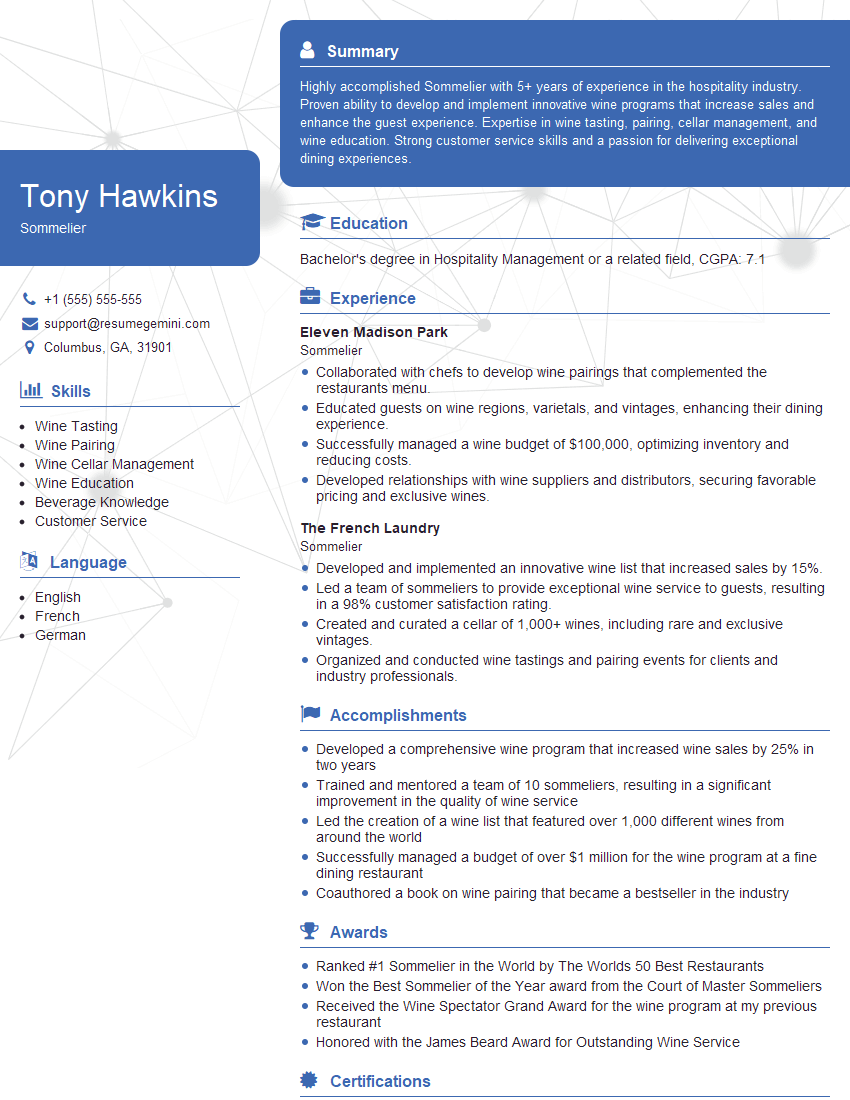
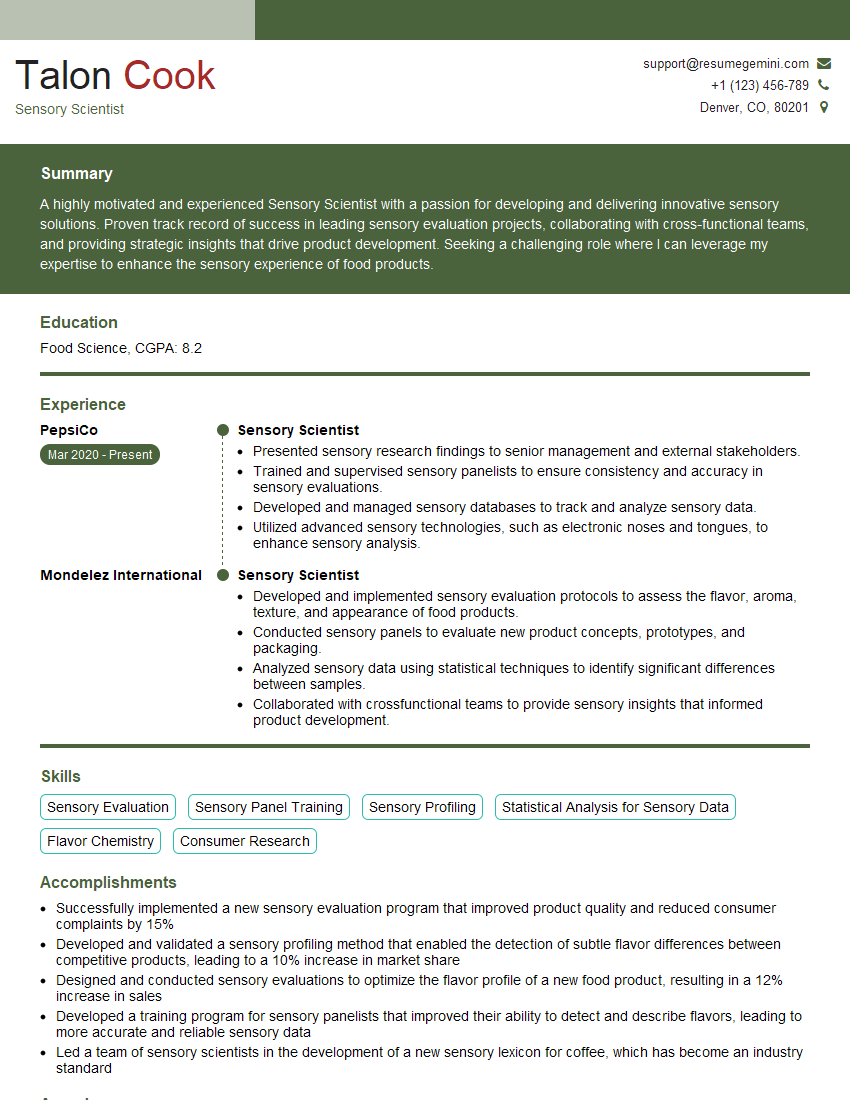
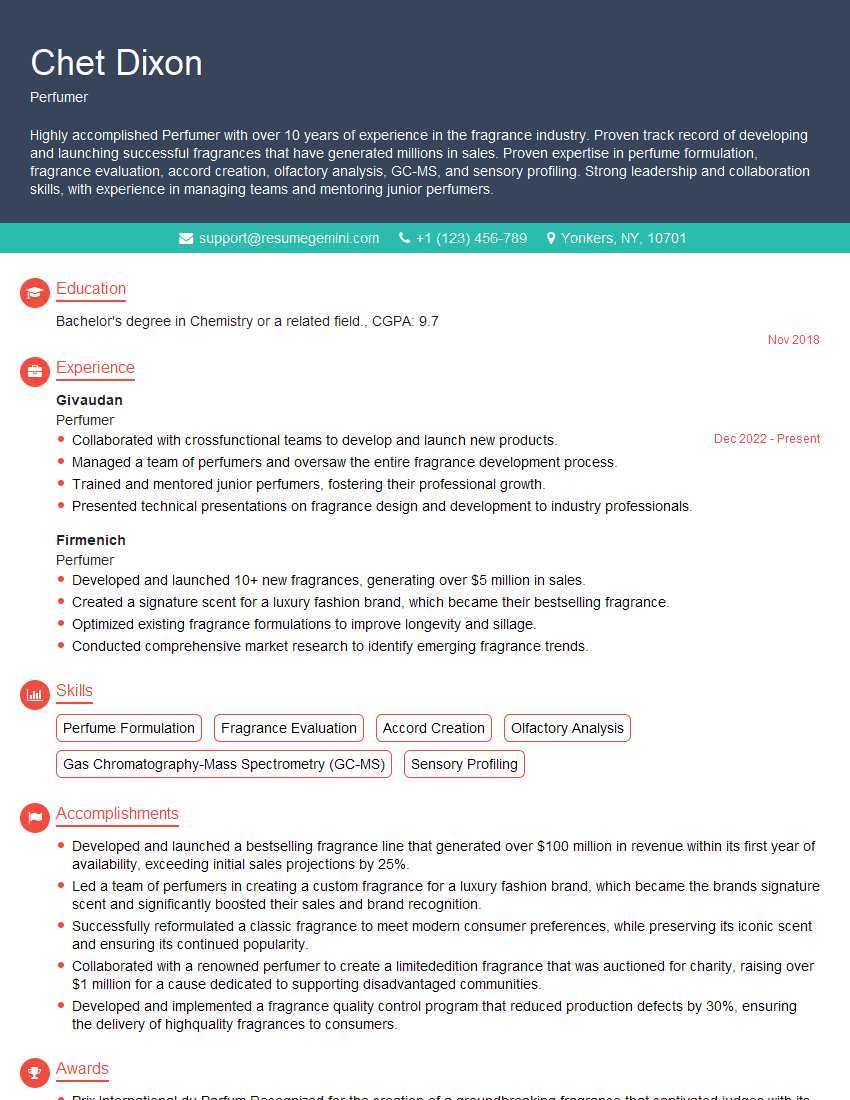
We highly recommend using ResumeGemini to build a professional and effective resume. ResumeGemini provides a user-friendly platform and valuable resources to create a compelling resume that showcases your expertise in Sensory Discrimination. Examples of resumes tailored to this field are available to guide you.
Explore more articles
Users Rating of Our Blogs
Share Your Experience
We value your feedback! Please rate our content and share your thoughts (optional).
What Readers Say About Our Blog
To the interviewgemini.com Webmaster.
Very helpful and content specific questions to help prepare me for my interview!
Thank you
To the interviewgemini.com Webmaster.
This was kind of a unique content I found around the specialized skills. Very helpful questions and good detailed answers.
Very Helpful blog, thank you Interviewgemini team.