Unlock your full potential by mastering the most common Sewage Treatment Process Optimization interview questions. This blog offers a deep dive into the critical topics, ensuring you’re not only prepared to answer but to excel. With these insights, you’ll approach your interview with clarity and confidence.
Questions Asked in Sewage Treatment Process Optimization Interview
Q 1. Explain the activated sludge process and its key parameters.
The activated sludge process is the most common method for secondary wastewater treatment. Imagine it like a miniature ecosystem where beneficial microorganisms consume the organic pollutants in wastewater. It involves mixing wastewater with a concentrated mass of microorganisms (activated sludge) in an aeration tank. These microorganisms, primarily bacteria, break down the organic matter through aerobic respiration – meaning they need oxygen to do their job. The resulting mixture then moves to a clarifier where the sludge settles, separating the treated effluent from the activated sludge. A portion of this settled sludge is recycled back to the aeration tank to maintain the microbial population, while the excess is removed as waste (waste activated sludge).
- MLSS (Mixed Liquor Suspended Solids): This measures the total amount of solids in the aeration tank, representing the microbial biomass. A healthy MLSS is crucial for efficient treatment.
- MLVSS (Mixed Liquor Volatile Suspended Solids): This focuses on the organic solids within the MLSS, providing a better estimate of active biomass.
- F/M Ratio (Food-to-Microorganism Ratio): This is a key parameter, representing the amount of organic matter (food) available to the microorganisms per unit mass of microorganisms. A balanced F/M ratio is vital for optimal performance; too high, and you risk incomplete treatment, too low, and the microorganisms starve and lose efficiency.
- Sludge Retention Time (SRT): This is the average time microorganisms remain in the system. A longer SRT allows for more complete biomass growth and better treatment, but comes with increased sludge production.
- Dissolved Oxygen (DO): Maintaining sufficient DO in the aeration tank is essential for aerobic respiration by the microorganisms. Low DO levels hinder treatment efficiency.
Q 2. Describe different types of wastewater treatment processes (e.g., anaerobic digestion, MBR).
Wastewater treatment employs diverse processes based on the characteristics of the wastewater and treatment goals. Beyond activated sludge, several other methods exist:
- Anaerobic Digestion: This process uses microorganisms that thrive in the absence of oxygen. It’s particularly effective for stabilizing sludge, producing biogas (a mixture of methane and carbon dioxide) which can be used as a renewable energy source. Think of it as a natural composting process on a much larger scale.
- Membrane Bioreactor (MBR): MBR combines the activated sludge process with membrane filtration. This provides a high-quality effluent, significantly reducing the size of the footprint and enhancing treatment efficiency. Imagine it as adding an extra layer of filtration to a traditional activated sludge system, resulting in crystal-clear effluent.
- Trickling Filters: Wastewater is sprayed onto a bed of media (e.g., rocks, plastic) where microorganisms form a biofilm and consume organic matter. It’s a more passive system compared to activated sludge, requiring less energy but achieving lower treatment efficiency.
- Lagoons: These are large, open basins where wastewater undergoes natural treatment processes. They are cost-effective but require substantial land area and can be sensitive to climate variations.
Q 3. How do you optimize the performance of an activated sludge process?
Optimizing an activated sludge process involves a multifaceted approach. It’s like fine-tuning an engine for maximum efficiency. Key strategies include:
- Monitoring Key Parameters: Continuously monitoring MLSS, MLVSS, F/M ratio, SRT, and DO is critical. Regular monitoring allows for prompt adjustments to maintain optimal performance.
- Adjusting Aeration: Oxygen levels are crucial. Insufficient aeration leads to anaerobic conditions and poor treatment, while excessive aeration increases energy consumption unnecessarily. Automated control systems help maintain optimal DO levels.
- Waste Sludge Management: Carefully managing the amount of waste sludge removed is important. Too little removal leads to sludge bulking (poor settling), and too much reduces the microbial biomass, hindering treatment.
- Process Control Strategies: Implementing advanced control strategies, such as dissolved oxygen control, pH control, and nutrient monitoring allows for precision management, optimizing treatment and minimizing energy costs.
- Regular Maintenance: Regular inspections, cleaning, and equipment maintenance prevent equipment malfunctions and ensure optimal process performance. This reduces the risk of unexpected shutdowns and keeps the plant running smoothly.
Q 4. What are the key indicators of efficient wastewater treatment?
Efficient wastewater treatment is judged by several key indicators, much like evaluating the success of any other engineering project:
- Effluent Quality: This includes measuring BOD (Biochemical Oxygen Demand), COD (Chemical Oxygen Demand), suspended solids, nitrogen, and phosphorus levels. Lower values indicate better treatment efficiency.
- Sludge Production: Lower sludge production is generally preferred, as it minimizes disposal costs and environmental impact.
- Energy Consumption: Efficient plants minimize energy use per unit of treated wastewater.
- Process Stability: A stable process operates consistently over time, minimizing fluctuations in effluent quality and operational issues.
- Compliance with Regulations: Meeting discharge permits and regulations is paramount. This ensures that the plant adheres to legal requirements for environmental protection.
Q 5. Explain the role of aeration in wastewater treatment.
Aeration plays a vital role, providing the oxygen necessary for aerobic microorganisms to break down organic matter in the wastewater. Think of it as providing the microorganisms with the air they need to ‘breathe’ and perform their job efficiently. Without adequate aeration, anaerobic conditions develop, resulting in the production of foul-smelling gases and incomplete treatment, rendering the wastewater potentially harmful to the environment.
Aeration is typically achieved using mechanical aerators (rotating impellers or diffusers) or diffused aeration (air bubbles injected into the tank). The choice of aeration method depends on several factors such as tank design, wastewater characteristics, and energy costs.
Q 6. How do you troubleshoot issues in a wastewater treatment plant?
Troubleshooting in a wastewater treatment plant requires a systematic approach. Imagine it like diagnosing a car problem—you need to identify the symptoms, isolate the cause, and implement the appropriate solution.
- Identify the Problem: Observe the symptoms—is there poor effluent quality, sludge bulking, unusual odor, equipment malfunction?
- Analyze Data: Review operational data (flow rates, DO levels, MLSS, etc.) to identify patterns and potential causes.
- Investigate the System: Inspect the various components of the treatment process to locate the source of the problem.
- Implement Corrective Actions: Based on the diagnosis, take appropriate corrective actions – adjust aeration, modify SRT, clean equipment, or make process adjustments.
- Monitor the Results: After implementing corrective actions, closely monitor the system to ensure the problem is resolved and the plant returns to normal operation.
For instance, if you observe high BOD levels in the effluent, you might check the DO levels, F/M ratio, and SRT to determine if there is a deficiency in the microbial population or insufficient oxygen. You could then adjust aeration rates or sludge wasting rates accordingly.
Q 7. Describe your experience with SCADA systems in wastewater treatment.
SCADA (Supervisory Control and Data Acquisition) systems are indispensable in modern wastewater treatment plants. They provide real-time monitoring and control of various plant parameters, enabling efficient operation and early detection of problems. My experience involves extensive work with SCADA systems across several plants, encompassing:
- Data Acquisition: I have worked with systems that acquire data from sensors measuring flow rates, levels, DO, pH, and other critical parameters.
- Process Control: I have experience in programming and configuring SCADA systems to automate process control functions, such as aeration control, chemical dosing, and sludge wasting.
- Alarm Management: I’ve configured alarm systems to alert operators to abnormal conditions, allowing for timely intervention and preventing major issues.
- Data Analysis and Reporting: I have used SCADA data for process optimization, identifying trends, and generating reports to support management decisions. These reports helped demonstrate compliance with regulations and optimize energy consumption.
- Troubleshooting and Maintenance: I’ve worked on troubleshooting SCADA system issues, including hardware and software problems. Regular maintenance ensured the system’s continuous reliability.
For example, in one plant, we implemented a sophisticated SCADA system that significantly reduced energy consumption by optimizing aeration based on real-time DO levels. This resulted in substantial cost savings and enhanced environmental performance.
Q 8. How do you ensure compliance with environmental regulations?
Ensuring compliance with environmental regulations in sewage treatment is paramount. It involves a multi-faceted approach, beginning with a thorough understanding of all applicable local, regional, and national discharge permits. These permits specify limits on various pollutants, including BOD (Biochemical Oxygen Demand), COD (Chemical Oxygen Demand), suspended solids, nitrogen, phosphorus, and specific toxic substances.
We maintain meticulous records of all operational data, including influent and effluent quality parameters, sludge production, and chemical usage. This data is regularly analyzed to track our performance against permit limits. Any deviations are investigated immediately, with corrective actions implemented and documented. We also conduct regular internal audits to ensure compliance with our own internal procedures, which are designed to exceed minimum regulatory requirements. For example, we might proactively implement advanced treatment technologies even if not strictly mandated, to minimize our environmental footprint and enhance the quality of our effluent. Finally, we maintain open communication with regulatory agencies, providing them with timely reports and proactively addressing any concerns they may raise.
Q 9. Explain the concept of biological nutrient removal.
Biological Nutrient Removal (BNR) is a crucial process in modern wastewater treatment designed to reduce the levels of nitrogen and phosphorus in the effluent. These nutrients, if left unchecked, can lead to eutrophication in receiving waters, causing harmful algal blooms and oxygen depletion. BNR typically involves two main stages: nitrification and denitrification.
Nitrification is the aerobic conversion of ammonia (NH3) to nitrite (NO2–) and then to nitrate (NO3–) by specific bacteria. This process requires oxygen-rich conditions. Denitrification is the anaerobic conversion of nitrate to nitrogen gas (N2), which is then released into the atmosphere. This step requires an oxygen-deficient environment.
Often, BNR is achieved by employing a modified activated sludge process, incorporating anoxic (low-oxygen) zones alongside aerobic zones. The sequencing of these zones allows for the efficient removal of both nitrogen and phosphorus. The phosphorus removal is typically achieved via biological processes involving the uptake of phosphate by microorganisms under aerobic conditions and its subsequent release under anaerobic conditions. Careful control of dissolved oxygen levels and the sequencing of aerobic and anoxic zones are vital for optimizing BNR performance.
Q 10. What are the different types of sludge treatment methods?
Sludge treatment encompasses several processes designed to reduce the volume and stabilize the sludge generated during wastewater treatment. The goal is to produce a safe and easily manageable byproduct that can be disposed of or reused responsibly. Common methods include:
- Thickening: Concentrates the sludge to reduce its volume, often using gravity or centrifugation.
- Digestion: Uses anaerobic microorganisms to break down organic matter, reducing volume and stabilizing the sludge. This can be either aerobic or anaerobic digestion.
- Dewatering: Removes water from the sludge to create a more solid material, often using techniques like belt filter presses or centrifuges.
- Anaerobic Digestion: Microbes break down organic solids in an oxygen-free environment, producing biogas (a mixture of methane and carbon dioxide) that can be used as an energy source.
- Thermal Drying: Uses heat to evaporate water from sludge. This results in a reduced volume and sterile material suitable for land application or incineration.
- Incineration: Burns sludge at high temperatures, significantly reducing its volume and eliminating pathogens. Ash residue requires careful management.
The choice of method depends on factors such as the type of sludge, available land space, energy costs, and local regulations.
Q 11. Describe your experience with wastewater process modeling and simulation.
I have extensive experience with wastewater process modeling and simulation using software like BioWin, GPS-X, and Aspen Plus. This involves creating mathematical models that represent the biological, chemical, and physical processes within a wastewater treatment plant. These models allow us to predict the performance of the plant under various operating conditions, optimize design parameters, and troubleshoot operational issues before they arise.
For example, we used BioWin to simulate the impact of an influent flow increase on the performance of an activated sludge system. The simulation allowed us to identify potential bottlenecks and recommend changes to aeration rates and sludge wasting strategies, preventing a treatment failure. Similarly, I’ve used these tools to evaluate the feasibility of upgrading existing plants to incorporate BNR processes. By simulating different scenarios, we could choose the most cost-effective and efficient upgrade path, minimizing disruption to plant operations. Model calibration and validation are crucial steps to ensure the accuracy of our simulations, often relying on actual plant data for comparison and refinement.
Q 12. How do you manage and dispose of sludge?
Sludge management and disposal is a crucial aspect of wastewater treatment. After treatment (thickening, digestion, dewatering), the resulting biosolids (treated sludge) can be managed in various ways. Land application as a soil amendment is a common practice, provided it meets stringent quality standards for heavy metals and pathogens. This offers a sustainable approach by recycling nutrients back into the soil. However, careful site selection and monitoring are essential.
Other disposal options include incineration, landfilling, or co-digestion with other organic waste in biogas plants. The selection of the best disposal method depends on local regulations, environmental impact considerations, and economic factors. For example, Incineration is often preferred where land availability is limited, but it can have higher operational costs and produce ash that needs to be managed. Proper record-keeping and documentation are vital for tracking sludge movement and disposal throughout the entire process. This ensures environmental protection and compliance.
Q 13. What are the common causes of foaming in an activated sludge system?
Foaming in activated sludge systems is a common operational problem that can disrupt treatment processes and lead to reduced efficiency. Several factors can contribute to foam formation:
- Excessive microbial growth: High concentrations of certain microorganisms, particularly filamentous bacteria, can produce surface-active substances that lead to foaming.
- High concentrations of soluble microbial products (SMPs): These are byproducts of microbial metabolism, and some can contribute to foaming.
- Presence of detergents or surfactants in the influent: Domestic wastewater frequently contains these substances which act as foaming agents.
- Nutrient imbalances: A lack of essential nutrients or an excess of others can cause microbial imbalances which can lead to foaming.
Troubleshooting typically involves identifying the root cause and implementing corrective measures such as adjusting the aeration rate, modifying the sludge age, optimizing nutrient levels, and adding anti-foaming agents if necessary. In some cases, a process upset or an unusual industrial discharge might cause a temporary foaming problem. Careful monitoring of the activated sludge process is vital to prevent or promptly address foaming issues.
Q 14. How do you handle unexpected influent surges?
Unexpected influent surges, such as those caused by heavy rainfall events, can overwhelm a wastewater treatment plant and compromise treatment efficiency. Handling these surges requires a combination of proactive measures and operational adjustments.
Proactive measures include designing the plant with sufficient capacity to handle anticipated peak flows and incorporating equalization basins to store excess influent temporarily. Operational adjustments might involve increasing aeration rates, adjusting sludge wasting rates to control the solids retention time (SRT), and optimizing the distribution of flows within the treatment system. In some cases, temporary bypasses might be employed to divert a portion of the flow, though this requires careful consideration to avoid environmental impacts. Real-time monitoring of key parameters is critical, allowing operators to quickly identify and respond to any adverse effects of the surge. A well-defined emergency response plan is essential, ensuring a coordinated response and minimizing the environmental and operational consequences.
Q 15. Explain the importance of regular maintenance in wastewater treatment plants.
Regular maintenance in wastewater treatment plants is paramount for ensuring optimal performance, preventing costly breakdowns, and protecting the environment. Think of it like servicing your car – neglecting regular maintenance will eventually lead to major problems. In wastewater treatment, this means proactively addressing issues before they escalate into significant operational disruptions or environmental hazards.
- Preventative Maintenance: This includes scheduled inspections, cleaning, and lubrication of equipment like pumps, blowers, and mixers. Regular checks on instrumentation and control systems ensure accurate data and efficient operation. For example, a clogged aeration system can significantly reduce treatment efficiency, so regular cleaning is vital.
- Corrective Maintenance: This involves repairing or replacing faulty equipment. Quick response to any identified issues minimizes downtime and prevents cascading failures. A broken clarifier, for example, can quickly lead to effluent quality issues, requiring immediate attention.
- Predictive Maintenance: Employing sensors and data analytics allows us to predict potential failures based on performance trends and patterns. This approach allows for proactive interventions, minimizing unexpected downtime and optimizing resource allocation. For instance, monitoring motor vibrations can indicate bearing wear, allowing for replacement before catastrophic failure.
Regular maintenance is not just about fixing problems; it’s about ensuring the plant operates safely, efficiently, and meets stringent environmental regulations. A well-maintained plant ensures consistent effluent quality, minimizes energy consumption, and extends the lifespan of equipment.
Career Expert Tips:
- Ace those interviews! Prepare effectively by reviewing the Top 50 Most Common Interview Questions on ResumeGemini.
- Navigate your job search with confidence! Explore a wide range of Career Tips on ResumeGemini. Learn about common challenges and recommendations to overcome them.
- Craft the perfect resume! Master the Art of Resume Writing with ResumeGemini’s guide. Showcase your unique qualifications and achievements effectively.
- Don’t miss out on holiday savings! Build your dream resume with ResumeGemini’s ATS optimized templates.
Q 16. Describe your experience with instrumentation and control systems in wastewater treatment.
My experience with instrumentation and control systems in wastewater treatment spans over 10 years, encompassing various technologies and plant sizes. I’ve worked extensively with Programmable Logic Controllers (PLCs), Supervisory Control and Data Acquisition (SCADA) systems, and advanced process control strategies. I’m familiar with sensors for monitoring parameters like pH, dissolved oxygen (DO), flow rate, and turbidity.
In one project, I implemented a new SCADA system for a large municipal plant, replacing an outdated system. This involved migrating historical data, programming new control logic, and training plant operators. The upgrade significantly improved data management, process control, and overall plant efficiency. We were able to reduce energy consumption by optimizing aeration control based on real-time DO readings. Another project involved troubleshooting a faulty DO sensor in an activated sludge process. Through systematic diagnostics, I identified a faulty membrane and replaced it, restoring accurate DO measurements and preventing operational disruptions.
My expertise extends to the use of advanced control strategies such as model predictive control (MPC) to optimize various processes, leading to improved effluent quality and reduced operational costs. I’m proficient in analyzing process data to identify areas for improvement and optimize the control strategies to meet the desired treatment objectives.
Q 17. What are the different types of disinfection methods used in wastewater treatment?
Several disinfection methods are used in wastewater treatment to eliminate harmful pathogens before effluent discharge. The choice of method depends on factors such as effluent quality, cost, and regulatory requirements.
- Chlorination: This is a widely used method involving the addition of chlorine gas or hypochlorite solutions. It’s effective against a broad range of pathogens, but residual chlorine can be harmful to aquatic life if not properly managed.
- UV Disinfection: This method uses ultraviolet light to inactivate microorganisms. It’s environmentally friendly as it doesn’t produce harmful byproducts, but its effectiveness can be reduced by turbidity in the effluent.
- Ozone Disinfection: Ozone is a powerful oxidant that effectively inactivates pathogens. It’s very effective but requires specialized equipment and can be more expensive than other methods.
- Chloramine Disinfection: This involves the addition of chloramine, a compound of chlorine and ammonia. It provides longer-lasting disinfection compared to free chlorine but requires careful control to avoid toxicity.
Often, a combination of methods is used to optimize disinfection and meet discharge standards. For example, a plant might use UV disinfection followed by chloramine for added protection and longer-lasting residual disinfection in the distribution system.
Q 18. How do you monitor and control the pH level in wastewater treatment?
pH control is crucial in wastewater treatment as it impacts various biological and chemical processes. Maintaining the optimal pH range is essential for efficient microbial activity in biological treatment processes and the effectiveness of chemical treatments. Think of it like maintaining the right conditions for a garden to flourish – the wrong pH can hinder plant growth. Similarly, the wrong pH in a wastewater treatment plant can significantly impact its efficiency.
Monitoring is done using pH sensors strategically located throughout the plant. These sensors continuously measure the pH of the influent, effluent, and various treatment stages. Control is achieved by adding chemicals such as lime (Ca(OH)2) to raise the pH or acid (like sulfuric acid or hydrochloric acid) to lower it. The addition of these chemicals is often automated through control systems based on setpoint values. Automated systems use feedback from the pH sensors to adjust chemical dosing precisely.
For example, in an activated sludge process, maintaining a slightly alkaline pH (around 7.0 – 7.5) is important for optimal bacterial growth and activity. If the pH drops too low, it can inhibit the bacteria’s ability to break down organic matter, compromising the treatment process. Conversely, too high a pH can also negatively impact biological activity.
Q 19. Explain the concept of dissolved oxygen (DO) control in activated sludge processes.
Dissolved oxygen (DO) control is critical in activated sludge processes, which are the most common biological treatment method in wastewater treatment plants. Oxygen is essential for the aerobic bacteria that break down organic matter in the wastewater. Insufficient DO leads to poor treatment efficiency and the production of foul-smelling anaerobic byproducts. Think of it like providing sufficient air for a fire to burn efficiently – without enough oxygen, the fire will sputter and produce undesirable smoke.
DO is monitored using DO probes in the aeration tanks. These probes continuously measure the DO concentration. Control is achieved by adjusting the aeration rate. This is often done through automated control systems that respond to the DO readings. If the DO level drops below a setpoint, the aeration rate is increased, and vice versa. This ensures that the bacteria have enough oxygen for optimal performance.
Careful DO control also optimizes energy consumption. Over-aeration wastes energy, while under-aeration compromises treatment efficiency. Sophisticated control strategies, like cascade control or model predictive control (MPC), can further refine DO management, leading to significant energy savings while maintaining treatment effectiveness.
Q 20. How do you calculate the sludge retention time (SRT)?
Sludge Retention Time (SRT) is a crucial parameter in activated sludge processes, representing the average time that the microorganisms remain in the aeration tank. It’s a key factor influencing the efficiency of the biological treatment and the quality of the effluent. A longer SRT allows for more complete degradation of organic matter and a higher biomass concentration, leading to better removal of pollutants. However, excessively long SRTs can lead to sludge bulking problems.
The SRT is calculated using the following formula:
SRT = (Mass of sludge in the aeration tank) / (Mass of sludge wasted per day)
The mass of sludge in the aeration tank can be estimated using the volume of the aeration tank and the sludge concentration (measured as Mixed Liquor Suspended Solids, MLSS). The mass of sludge wasted per day is determined by the amount of sludge wasted from the system daily.
For example, if the aeration tank contains 1000 kg of sludge and 10 kg of sludge is wasted per day, the SRT would be 100 days (1000 kg / 10 kg/day). Optimal SRT values vary depending on the wastewater characteristics and desired treatment goals but typically range from 5 to 20 days.
Q 21. Describe your experience with membrane bioreactors (MBRs).
Membrane bioreactors (MBRs) are advanced wastewater treatment systems that combine a biological treatment process (usually activated sludge) with membrane filtration. The membrane acts as a physical barrier, removing suspended solids and other pollutants from the treated effluent, resulting in a high-quality effluent. Think of it like adding a very fine filter to a traditional treatment system.
My experience with MBRs includes design, operation, and optimization. I’ve worked on projects involving the selection of appropriate membranes, design of the membrane modules, and the integration of the MBR into the overall treatment system. This includes consideration of factors such as membrane fouling, cleaning cycles, and energy consumption. I’ve also been involved in troubleshooting operational issues in MBRs, such as membrane fouling and flux decline. This often involves optimization of aeration and sludge wasting strategies to minimize fouling and prolong membrane life.
One project involved optimizing the backwashing strategy in an MBR to reduce energy consumption and extend the membrane life. By carefully analyzing the data and adjusting the backwashing parameters, we achieved significant reductions in energy consumption and membrane replacement costs. MBRs are excellent for producing a high-quality effluent, making them suitable for applications with stringent discharge requirements.
Q 22. How do you optimize energy consumption in a wastewater treatment plant?
Optimizing energy consumption in a wastewater treatment plant (WWTP) is crucial for both economic and environmental reasons. It involves a multifaceted approach targeting various processes.
- Aerobic Processes: Optimizing aeration is key. This includes using dissolved oxygen (DO) control systems to avoid over-aeration, implementing efficient aeration diffusers, and employing aeration strategies like sequencing batch reactors (SBRs) that reduce overall aeration time. For example, we can use online DO sensors coupled with a programmable logic controller (PLC) to adjust the air flow based on real-time DO levels, preventing energy waste from unnecessary aeration.
- Pumping Systems: Implementing variable frequency drives (VFDs) on pumps allows for precise flow control, reducing energy consumption based on demand. Regular pump maintenance and efficient pump selection are also critical. A well-maintained pump can operate at its designed efficiency, significantly reducing energy use.
- Waste Heat Recovery: The heat generated during anaerobic digestion can be harnessed to pre-heat incoming wastewater or power other plant processes. This is a classic example of waste-to-energy and dramatically reduces reliance on external heating sources.
- Process Optimization: Fine-tuning the operational parameters like sludge retention time (SRT) and food-to-microorganism ratio (F/M) in the activated sludge process can improve efficiency and reduce energy demands. We should regularly review plant performance data and adjust setpoints for optimal results.
- Renewable Energy Sources: Exploring solar panels, wind turbines, or biogas cogeneration can significantly reduce reliance on the grid, lowering operational costs and environmental impact.
In my experience, a holistic approach, combining technological upgrades with process optimization, provides the most significant energy savings. A plant I worked on reduced energy consumption by 15% by implementing VFDs on pumps and optimizing aeration strategies.
Q 23. Describe your experience with anaerobic digestion processes.
Anaerobic digestion is a vital process for wastewater treatment, particularly for sludge stabilization and biogas production. My experience spans various aspects, from process design to troubleshooting and optimization.
- Process Design and Operation: I’ve been involved in the design and commissioning of several anaerobic digesters, focusing on reactor type selection (e.g., CSTR, UASB) based on the characteristics of the influent sludge. Operational parameters like temperature, pH, and hydraulic retention time (HRT) are carefully monitored and controlled to ensure optimal performance. For instance, in one project, we optimized the HRT to improve biogas yield by 10%.
- Troubleshooting and Optimization: I’ve encountered various operational challenges, including acidification and foaming. Troubleshooting involved analyzing process parameters, conducting laboratory tests, and implementing corrective measures. This often involved adjusting feed characteristics, modifying process parameters, or implementing biological additives to restore optimal digester performance.
- Biogas Utilization: I have experience in utilizing the biogas produced from anaerobic digestion for energy generation (cogeneration) or upgrading it to biomethane for injection into the natural gas grid. This significantly reduces the reliance on fossil fuels and contributes to a greener operation.
- Advanced Techniques: I’m familiar with advanced anaerobic digestion techniques like thermophilic digestion and two-stage digestion, which can enhance biogas production and reduce digester volume.
My work with anaerobic digestion has consistently focused on optimizing process efficiency, improving biogas quality, and minimizing environmental impact.
Q 24. Explain the principles of chemical coagulation and flocculation.
Chemical coagulation and flocculation are essential pretreatment steps in wastewater treatment aimed at removing suspended solids and other pollutants. They work in tandem to enhance the sedimentation or filtration process.
- Coagulation: This involves adding a coagulant chemical (e.g., alum, ferric chloride) to destabilize the colloidal particles in the wastewater. These particles typically carry a negative charge, and the coagulant neutralizes these charges, causing them to aggregate.
- Flocculation: After coagulation, gentle mixing (flocculation) helps the destabilized particles clump together into larger, heavier flocs. This is usually achieved using mechanical mixers with slow rotational speed. The larger flocs settle more readily in the sedimentation tank or are more easily removed by filtration.
Think of it like this: coagulation is like breaking up a group of friends by introducing a common enemy (the coagulant), and flocculation is like helping those enemies group up into a larger fighting force (flocs). The larger force (flocs) is much easier to deal with than individual enemies.
The choice of coagulant and the optimal dosage depend on various factors like wastewater characteristics (pH, turbidity, temperature) and the desired level of pollutant removal. Effective coagulation and flocculation are crucial for efficient sedimentation and filtration, ensuring efficient removal of suspended solids and reducing the load on subsequent treatment processes.
Q 25. How do you address the issue of odor control in a wastewater treatment plant?
Odor control in a WWTP is crucial for environmental protection and preventing complaints from surrounding communities. Effective strategies combine source control and odor masking/neutralization.
- Source Control: This focuses on minimizing odor-producing compounds at their source. Examples include:
- Proper Sludge Management: Efficient sludge handling and anaerobic digestion minimizes the release of volatile organic compounds (VOCs) responsible for foul odors.
- Aeration and Mixing: Adequate aeration in treatment processes helps to prevent anaerobic conditions, reducing odor production.
- Regular Cleaning: Frequent cleaning of tanks, pipes, and other equipment prevents the accumulation of organic matter and sulfide buildup.
- Odor Masking/Neutralization: If source control is not completely effective, odor masking or neutralization techniques are used.
- Chemical Odor Neutralizers: These chemicals react with malodorous compounds to neutralize or mask unpleasant smells. Examples include activated carbon or chemical scrubbers.
- Biofiltration: This uses microorganisms to degrade odor-causing compounds. Biofilters are effective and sustainable but require careful design and operation.
- Ventilation and Odor Control Systems: These systems collect and treat odorous air streams before releasing them into the atmosphere. They often include scrubbers, biofilters, and activated carbon filters.
A holistic approach integrating source control and odor treatment strategies is essential for effective odor control in WWTPs.
Q 26. Describe your experience with process automation and control strategies.
Process automation and control strategies are essential for efficient and reliable operation of a WWTP. My experience includes designing, implementing, and optimizing various automation systems.
- Supervisory Control and Data Acquisition (SCADA): I’ve worked extensively with SCADA systems to monitor and control various processes, including aeration, pumping, and sludge treatment. SCADA systems provide real-time data visualization, allowing for timely intervention and optimization of the treatment process.
- Programmable Logic Controllers (PLCs): I’m proficient in programming PLCs to automate specific tasks and control equipment. This includes implementing advanced control algorithms like PID (Proportional-Integral-Derivative) control for precise regulation of parameters such as DO levels and flow rates.
- Advanced Process Control (APC): I have experience using APC strategies like model predictive control (MPC) to optimize process performance, minimize energy consumption, and improve effluent quality. MPC is particularly useful in complex processes with interacting variables.
- Data Analytics and Machine Learning: I’m integrating data analytics and machine learning techniques for predictive maintenance and anomaly detection. This reduces downtime and enhances the overall reliability of the treatment plant.
Automation not only improves efficiency but also enhances safety and minimizes human error. For example, in one project, we implemented an automated chlorine dosing system that drastically improved disinfection consistency and reduced the risk of accidental chemical spills.
Q 27. What are the challenges of treating industrial wastewater?
Treating industrial wastewater presents unique challenges due to the wide variety of pollutants and their high concentrations compared to domestic wastewater.
- Highly Variable Influent Characteristics: Industrial wastewater can have highly variable composition, depending on the industry. This necessitates flexible treatment strategies and robust pretreatment methods to handle fluctuations in pollutant concentration and type.
- Toxic and Hazardous Pollutants: Industrial effluents may contain toxic and hazardous substances that require specialized treatment processes, often involving advanced oxidation processes (AOPs), membrane filtration, or bioaugmentation. Careful consideration needs to be given to the disposal or further treatment of resulting sludge and byproducts.
- High Pollutant Concentrations: The high concentrations of pollutants may overload conventional treatment systems, necessitating pretreatment steps or modification of existing processes. This may require upfront capital investment and potentially affect operating costs.
- Regulatory Compliance: Stricter regulatory requirements for industrial discharges often necessitate advanced treatment technologies and detailed monitoring programs to ensure compliance.
- Cost Considerations: Treating industrial wastewater is often more expensive than treating domestic wastewater due to the need for specialized treatment technologies and stringent regulatory compliance.
A thorough understanding of the specific industry and its associated pollutants is crucial for designing and operating an effective industrial wastewater treatment system. A tailored solution, encompassing pretreatment, primary, secondary, and tertiary treatment stages as necessary, is essential to meet discharge standards and minimize environmental impact.
Q 28. How do you manage and interpret laboratory data from a wastewater treatment plant?
Managing and interpreting laboratory data is fundamental to ensuring the effective operation of a WWTP. This involves regular monitoring, data analysis, and proactive adjustments to the treatment process.
- Regular Monitoring: Regular sampling and laboratory analysis are crucial for monitoring key parameters like BOD (Biochemical Oxygen Demand), COD (Chemical Oxygen Demand), suspended solids, pH, and nutrient levels. The frequency of monitoring depends on the specific treatment process and regulatory requirements.
- Data Analysis: Analyzing the data involves tracking trends, identifying anomalies, and correlating process performance with operational parameters. Statistical process control (SPC) charts can be used to detect deviations from normal operating conditions and identify potential issues before they become major problems.
- Process Adjustments: Based on the laboratory data, appropriate adjustments are made to the treatment process to maintain optimal performance. This may involve adjusting chemical dosages, modifying aeration rates, or altering sludge retention time.
- Troubleshooting: Laboratory data is crucial for identifying the root cause of operational issues. For example, a sudden increase in BOD may indicate a malfunction in the activated sludge process, requiring investigation and corrective actions.
- Regulatory Compliance: Laboratory data is essential for demonstrating compliance with regulatory discharge permits. Accurate and reliable data are critical for reporting and auditing purposes.
Effective data management involves using a laboratory information management system (LIMS) to track samples, results, and process adjustments. The ability to interpret this data effectively is crucial to ensure the plant is operating efficiently and meeting regulatory requirements.
Key Topics to Learn for Sewage Treatment Process Optimization Interview
- Process Efficiency & Optimization: Understanding key performance indicators (KPIs) like effluent quality parameters (BOD, COD, TSS, Nitrogen, Phosphorus), energy consumption, and sludge production. Explore methods for improving these metrics.
- Biological Process Control: Mastering the principles of activated sludge processes (e.g., aeration, settling, biomass retention), anaerobic digestion, and nutrient removal (nitrification, denitrification, phosphorus removal). Understand how to optimize these processes for optimal performance and stability.
- Instrumentation and Control Systems: Familiarize yourself with sensors, actuators, and control systems used in wastewater treatment plants. Understand SCADA systems and their role in process monitoring and optimization.
- Modeling and Simulation: Learn about the use of mathematical models and simulation tools to predict plant performance, optimize operational strategies, and assess the impact of process changes.
- Advanced Treatment Technologies: Gain knowledge of advanced treatment technologies such as membrane bioreactors (MBRs), ozonation, and UV disinfection. Understand their applications and advantages in improving effluent quality.
- Sludge Management: Explore different sludge treatment and disposal methods, including thickening, dewatering, digestion, and land application. Understand optimization strategies for minimizing sludge volume and disposal costs.
- Energy Efficiency and Sustainability: Understand strategies for reducing energy consumption in wastewater treatment plants, such as optimizing aeration systems, recovering biogas, and implementing energy-efficient equipment.
- Troubleshooting and Problem Solving: Develop skills in identifying and resolving common operational problems in wastewater treatment plants. Practice using systematic approaches to diagnose and correct process upsets.
- Regulations and Compliance: Familiarize yourself with relevant environmental regulations and discharge permits. Understand how to ensure compliance with these regulations.
Next Steps
Mastering Sewage Treatment Process Optimization is crucial for advancing your career in the environmental engineering field, opening doors to leadership roles and specialized projects. A strong, ATS-friendly resume is essential for showcasing your skills and experience to potential employers. To significantly improve your resume’s impact and get noticed by recruiters, leverage ResumeGemini – a trusted resource for crafting professional and effective resumes. ResumeGemini provides examples of resumes tailored to Sewage Treatment Process Optimization, ensuring your application stands out.
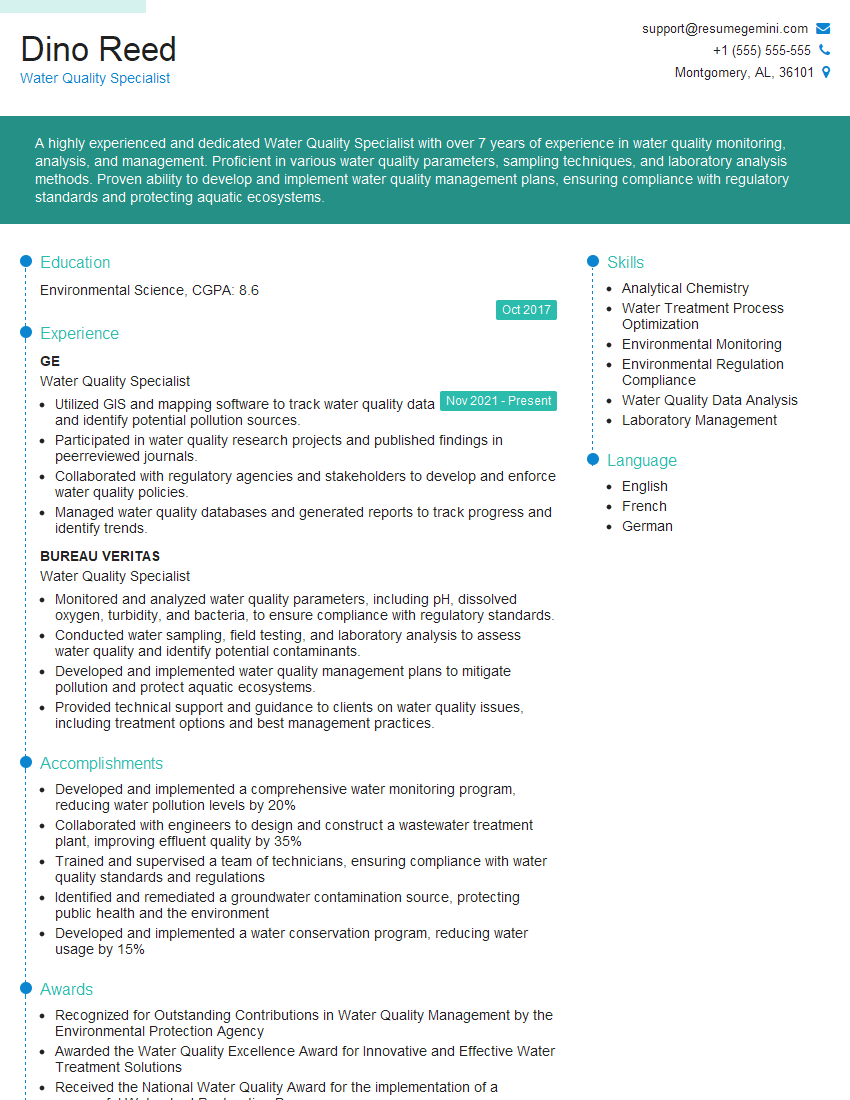
Explore more articles
Users Rating of Our Blogs
Share Your Experience
We value your feedback! Please rate our content and share your thoughts (optional).
What Readers Say About Our Blog
To the interviewgemini.com Webmaster.
Very helpful and content specific questions to help prepare me for my interview!
Thank you
To the interviewgemini.com Webmaster.
This was kind of a unique content I found around the specialized skills. Very helpful questions and good detailed answers.
Very Helpful blog, thank you Interviewgemini team.