Preparation is the key to success in any interview. In this post, we’ll explore crucial Slurry Plant Operation interview questions and equip you with strategies to craft impactful answers. Whether you’re a beginner or a pro, these tips will elevate your preparation.
Questions Asked in Slurry Plant Operation Interview
Q 1. Explain the process of slurry preparation and its importance.
Slurry preparation involves mixing a solid material with a liquid to create a pumpable suspension. Think of it like making mud, but with precise control over the consistency and properties. Its importance stems from the fact that many industrial processes, such as mining, mineral processing, and wastewater treatment, rely on efficient slurry transport and processing. Proper slurry preparation ensures optimal flow characteristics, minimizes pipeline wear, and maximizes process efficiency.
The process typically involves several steps: 1. Material Handling: Accurately weighing and feeding the solid material. 2. Mixing and Dispersion: Thoroughly blending the solid with the liquid using mixers, agitators, or high-shear devices to achieve the desired concentration and consistency. This minimizes settling and clumping. 3. Conditioning (optional): Adding chemicals like flocculants or dispersants to improve the slurry’s rheological properties (how it flows) and prevent settling or aggregation. 4. Screening or Classification (optional): Removing oversized particles or classifying the material by particle size to optimize the process.
For example, in a mining operation, properly prepared slurry ensures efficient pumping of ore from the mine to the processing plant. Incorrect preparation can lead to blockages, increased pump wear, and reduced overall throughput.
Q 2. Describe different types of slurry pumps and their applications.
Several types of slurry pumps exist, each suited for specific applications based on the slurry’s properties (abrasiveness, corrosiveness, particle size, and concentration).
- Centrifugal Pumps: These are the most common, using centrifugal force to move the slurry. They are relatively inexpensive and easy to maintain but are less efficient with highly abrasive slurries.
- Diaphragm Pumps: These pumps use a flexible diaphragm to displace the slurry. They excel in handling highly viscous and abrasive slurries but are generally lower capacity than centrifugal pumps.
- Positive Displacement Pumps: These pumps, like piston or screw pumps, precisely displace a known volume of slurry per stroke. Excellent for high-viscosity, high-pressure, and abrasive slurries, they offer more precise flow control than centrifugal pumps but are more complex and expensive.
- Submersible Pumps: Designed for installation directly in the slurry tank or pipeline, reducing the need for complicated suction lines. Particularly useful in deep pits or wet environments.
The choice of pump depends on the slurry characteristics. For example, a highly abrasive slurry in a mining operation might benefit from a robust positive displacement pump or a centrifugal pump with specialized wear-resistant components. A less abrasive slurry in wastewater treatment might be handled efficiently by a centrifugal pump.
Q 3. What are the common challenges encountered in slurry pipeline operations?
Slurry pipeline operations face several challenges, many related to the inherent properties of the slurry itself. These include:
- Abrasion and Erosion: The solid particles in the slurry can cause significant wear and tear on the pipeline and pumps. This leads to increased maintenance costs and potential failures.
- Blockages and Deposits: Slurry can settle or deposit in the pipeline, leading to blockages that disrupt flow and require costly cleaning.
- Corrosion: The liquid phase of the slurry and certain components of the solid material can be corrosive, impacting the pipeline’s lifespan.
- Pump Cavitation: This occurs when the pressure within the pump drops below the vapor pressure of the liquid, forming vapor bubbles that implode, causing damage to pump components.
- Pipeline Degradation: Continuous flow of the abrasive slurry gradually degrades the pipeline, increasing the risk of leaks and failures.
Effective slurry management strategies, such as careful slurry preparation, appropriate pump selection, and regular pipeline maintenance are crucial to minimize these challenges.
Q 4. How do you ensure efficient slurry transportation and minimize pipeline blockages?
Efficient slurry transportation and minimization of pipeline blockages require a multi-faceted approach:
- Optimized Slurry Preparation: As discussed earlier, proper preparation ensures the slurry has the correct consistency and rheological properties to flow smoothly. This reduces settling and aggregation.
- Appropriate Pipeline Design: The pipeline’s diameter, slope, and material should be designed to minimize pressure drops and settling. Incorporating features like bends with large radii can help mitigate erosion.
- Regular Monitoring and Cleaning: Implementing a robust monitoring system (pressure sensors, flow meters) allows for early detection of potential blockages. Regular pipeline cleaning using pigging (sending a cleaning device through the pipeline) is essential for preventing buildup.
- Flow Rate Control: Maintaining a consistent flow rate prevents settling and minimizes the chances of blockage. A higher flow rate minimizes settling and improves the effectiveness of the pipeline itself.
- Additives: Using specialized additives, such as flow improvers or dispersants, can enhance the flow characteristics of the slurry and prevent settling.
For example, in a long-distance pipeline transporting tailings from a mine, regular pigging is critical to maintain efficiency and prevent costly shutdowns due to blockages.
Q 5. Explain the importance of slurry density control and its methods.
Slurry density control is crucial for optimal process performance and efficiency. It directly impacts factors like pumping energy, settling behavior, and overall product quality. A slurry that is too thick requires more energy to pump, increases wear on equipment, and may lead to blockages. A slurry that is too thin may not carry enough solids to be economically efficient.
Methods for slurry density control include:
- Online Density Measurement: Using sensors like gamma-ray densitometers or ultrasonic sensors provides real-time data on slurry density, allowing for immediate adjustments.
- Feedback Control Systems: Automated systems that adjust the feed rates of solids and liquids based on the measured density to maintain the desired range. This maintains consistency in the slurry and minimizes operational issues.
- Manual Adjustment of Feed Rates: Operators can manually adjust the feed rates of solids and liquids based on visual observations or periodic sampling, but this method is less precise and efficient than automated systems.
In a mineral processing plant, maintaining the optimal slurry density is crucial for efficient separation processes. If the density is too high, separation efficiency may decrease, resulting in product loss.
Q 6. Describe different slurry thickening techniques and their selection criteria.
Slurry thickening involves concentrating the solids in a slurry by removing some of the liquid. This is commonly done before disposal, dewatering, or further processing. Several techniques exist:
- Gravity Thickening: This relies on gravity to settle the solids, which accumulate at the bottom of a large tank. Simple and low cost, but slow and less effective for fine particles.
- Centrifugal Thickening: Using centrifugal force to accelerate the sedimentation process, this technique is faster and more efficient than gravity thickening, particularly for fine particles. It utilizes equipment like centrifuges or hydrocyclones.
- Flocculation Thickening: Adding flocculants, which are chemicals that promote particle aggregation, speeds up settling and increases the solids concentration in the thickened slurry. This enhances the efficiency of other thickening methods.
- Pressure Thickening: Applying pressure to a slurry confined in a filter press forces water out, resulting in a much denser sludge. Requires more complex and expensive equipment.
The selection criteria for a thickening technique depend on several factors, including the particle size and characteristics of the solids, the desired final solids concentration, the capital and operating costs, and the available space.
For example, a tailings pond might use gravity thickening due to low costs, while a mineral processing plant producing a valuable product might opt for centrifugal thickening for higher efficiency and faster processing.
Q 7. How do you monitor and control the particle size distribution in slurry?
Monitoring and controlling particle size distribution (PSD) is critical for slurry optimization. PSD affects slurry rheology, settling behavior, and the efficiency of downstream processes.
Methods for monitoring and controlling PSD include:
- Particle Size Analyzers: Instruments like laser diffraction analyzers or sieve analyzers provide detailed information on the PSD.
- Microscopy: Microscopic examination can provide a visual assessment of particle size and shape, although it’s time-consuming for comprehensive analysis.
- Process Adjustments: Controlling the crushing and grinding processes in the upstream stages of slurry preparation allows you to influence the PSD. For instance, adjusting the mill settings or classifier cut points can modify the final particle size distribution.
- Classification and Screening: Using classifiers such as hydrocyclones or screens allows for separation of particles based on their size, enabling the fine-tuning of the PSD.
In a cement plant, for example, controlling the PSD of the raw materials is critical for achieving the desired cement properties. Too fine a particle size can lead to poor strength development, while too coarse a particle size might reduce reactivity.
Q 8. Explain the role of flocculants in slurry handling.
Flocculants are crucial in slurry handling because they significantly improve the settling and dewatering properties of the slurry. Imagine a muddy river – the mud (solids) is dispersed throughout the water (liquid). Flocculants are like tiny magnets that attract the mud particles, causing them to clump together into larger, heavier flocs. These flocs settle much faster than individual particles, allowing for easier separation of the solids from the liquid. This is essential in processes like thickening, filtration, and dewatering, leading to improved efficiency and reduced water usage.
Different types of flocculants exist, each tailored for specific slurry characteristics. For instance, anionic flocculants are effective in positively charged slurries, while cationic flocculants work best with negatively charged ones. The choice of flocculant depends on factors like slurry composition, pH, and desired settling rate. Incorrect flocculant selection can lead to poor settling and increased operational costs.
Q 9. What are the safety precautions associated with handling slurries?
Safety is paramount when handling slurries. Slurries can be abrasive, corrosive, and potentially toxic depending on their composition. Therefore, comprehensive safety protocols are crucial. These include:
- Personal Protective Equipment (PPE): This is non-negotiable and includes safety glasses, gloves (chemical-resistant for corrosive slurries), respirators (for dust or toxic fumes), and protective clothing. The type of PPE depends on the specific slurry properties.
- Emergency Procedures: Clear spill response plans and procedures must be in place, including containment, cleanup, and reporting protocols. Regular drills should ensure personnel are adequately prepared.
- Confined Space Entry Procedures: If working in confined spaces like tanks or pipelines, strict confined space entry procedures are necessary to prevent asphyxiation or exposure to hazardous materials.
- Lockout/Tagout Procedures: Proper lockout/tagout procedures must be followed before any maintenance or repair work on slurry equipment to prevent accidental starts and injuries.
- Training and Awareness: Regular training programs are vital to ensure all personnel are aware of the hazards associated with slurry handling and the correct safety procedures to follow.
Failing to adhere to these precautions can lead to serious injuries, environmental damage, and costly operational downtime.
Q 10. How do you address slurry spills and leaks?
Slurry spills and leaks require immediate attention to minimize environmental impact and prevent safety hazards. The response strategy involves:
- Immediate Isolation: First, isolate the spill area to prevent further spread. This might involve closing valves, diverting flow, or using containment booms.
- Contain and Control: Use absorbent materials like sand, clay, or specialized spill kits to contain the spilled slurry.
- Cleanup and Remediation: The cleanup method depends on the slurry’s composition. Some slurries can be easily washed away, while others might require specialized cleaning agents or equipment. Disposal of the contaminated materials must adhere to environmental regulations.
- Investigation and Repair: After the spill is cleaned, a thorough investigation is needed to determine the cause of the leak and implement preventative measures to prevent future occurrences. This could involve repairing damaged pipes, replacing worn-out components, or improving the maintenance schedule.
- Documentation: Thorough documentation of the spill, including the cause, cleanup methods, and waste disposal, is crucial for regulatory compliance and future incident prevention.
Effective spill response minimizes environmental damage, prevents safety hazards, and reduces operational disruptions. A well-defined spill response plan, regularly practiced, is essential for efficient and safe handling of such incidents.
Q 11. Describe the different types of slurry filtration systems.
Several types of slurry filtration systems exist, each suited for different slurry characteristics and applications:
- Belt Filter Presses: These use a moving belt to dewater the slurry, squeezing out the liquid. They are suitable for a wide range of slurries and offer high throughput.
- Plate and Frame Filter Presses: These consist of a series of plates and frames that hold filter cloths. Slurry is fed into the chambers, and pressure forces the liquid through the cloths, leaving the solids behind. They are efficient for high solids content slurries.
- Rotary Drum Filters: A rotating drum covered in filter cloth is partially submerged in the slurry. Vacuum draws liquid through the cloth as the drum rotates, leaving a cake of solids on the surface. They are well-suited for continuous operation and large-scale applications.
- Centrifugal Filters: These use centrifugal force to separate solids from liquids. They are often used for fine slurries or those with high liquid content.
- Pressure Leaf Filters: These use a series of leaf filters inside a pressure vessel. Pressure forces liquid through the filter media, leaving a cake of solids. They are effective for highly concentrated slurries.
The selection of a suitable filtration system is determined by factors like slurry characteristics (solids concentration, particle size, viscosity), required throughput, and cost considerations.
Q 12. Explain the importance of regular maintenance in a slurry plant.
Regular maintenance is critical for the efficient and safe operation of a slurry plant. Neglecting maintenance can lead to equipment failures, safety hazards, and increased operational costs. A proactive maintenance program typically includes:
- Scheduled Inspections: Regular visual inspections of equipment, pipelines, and pumps to identify potential issues early on.
- Preventative Maintenance: Scheduled maintenance tasks like lubrication, component replacements, and cleaning to prevent failures before they occur. This is akin to regular car servicing – it’s cheaper and safer than waiting for a breakdown.
- Predictive Maintenance: Using sensors and data analytics to predict potential failures and schedule maintenance proactively. This is like a car’s onboard diagnostics – it alerts you to potential problems before they cause major issues.
- Corrective Maintenance: Repairing or replacing equipment after a failure. While essential, this is often more expensive and disruptive than preventative maintenance.
- Calibration and Testing: Regular calibration of instruments and testing of safety systems to ensure accurate measurements and reliable operation.
A well-structured maintenance program significantly extends the lifespan of equipment, enhances safety, reduces downtime, and optimizes operational efficiency.
Q 13. What are the key performance indicators (KPIs) for a slurry plant?
Key Performance Indicators (KPIs) for a slurry plant help track its performance and identify areas for improvement. These include:
- Throughput: The amount of slurry processed per unit time. A higher throughput indicates greater efficiency.
- Solids Content: The percentage of solids in the slurry. This is crucial for optimizing downstream processes.
- Moisture Content: The percentage of water in the final dewatered product. Lower moisture content indicates better dewatering efficiency.
- Pump Efficiency: The energy efficiency of slurry pumps. Lower energy consumption means lower operational costs.
- Downtime: The amount of time equipment is out of service due to maintenance or repairs. Minimizing downtime is key to maximizing productivity.
- Safety Incidents: The number of safety incidents, including spills, leaks, and injuries. A low rate indicates a safe working environment.
- Operating Costs: The total cost of operating the plant, including energy, labor, and maintenance. Optimizing costs is essential for profitability.
Monitoring and analyzing these KPIs allows for timely identification of problems, optimization of processes, and improvement of overall plant performance.
Q 14. How do you troubleshoot common problems in slurry pumps?
Troubleshooting slurry pumps involves a systematic approach. Common problems and solutions include:
- Reduced Flow Rate: This could be due to clogging, wear and tear of impellers, or suction-side issues. Check for blockages, inspect the impeller for wear, and verify adequate suction pressure.
- Excessive Vibration: This can indicate misalignment, bearing wear, or cavitation. Check alignment, inspect bearings, and adjust the pump’s operating parameters to reduce cavitation.
- High Power Consumption: This might be due to increased friction losses, impeller wear, or inefficient operation. Check for leaks, inspect the impeller and bearings for wear, and optimize the pump’s operating conditions.
- Leaks: Leaks can stem from seals, gaskets, or pipe joints. Inspect seals and gaskets, tighten fittings, and replace damaged components.
- Noise: Excessive noise can suggest cavitation, misalignment, or bearing problems. Address cavitation by adjusting operating parameters, check for misalignment, and inspect bearings.
A systematic approach, using diagnostic tools and understanding the pump’s operating principles, is essential for efficient troubleshooting and minimizing downtime.
Q 15. Explain the principles of slurry dewatering.
Slurry dewatering is the process of separating the liquid phase from the solid phase in a slurry. Think of it like squeezing a sponge – you want to remove as much water as possible, leaving behind a more concentrated solid material. The principles revolve around leveraging the differences in physical properties between the solids and the liquid, primarily through techniques that enhance gravitational settling, filtration, or a combination of both.
Several methods achieve this:
- Thickening: This uses gravity to settle the solids. Imagine a large container; the heavier solids sink to the bottom, allowing the clearer water to be removed from the top. This is often a preliminary step in larger dewatering operations.
- Filtration: This involves forcing the slurry through a filter medium (like a cloth or specialized membrane) that retains the solids while allowing the liquid to pass through. Think of using a coffee filter – the grounds are retained, and the coffee (liquid) passes through.
- Centrifugation: High-speed spinning forces the denser solids to the outside of a rotating container, separating them from the liquid. This is similar to how a washing machine spins clothes to remove water.
- Pressure Filtration: This enhances filtration by applying pressure to the slurry, further forcing the liquid through the filter medium and producing a drier cake of solids. This is often used for more challenging dewatering applications requiring higher dryness.
The choice of method depends on factors such as the type of slurry, desired dryness of the solids, and economic considerations. For instance, thickening is cost-effective for preliminary dewatering, while pressure filtration is more suitable for producing a very dry cake but requires a higher capital investment.
Career Expert Tips:
- Ace those interviews! Prepare effectively by reviewing the Top 50 Most Common Interview Questions on ResumeGemini.
- Navigate your job search with confidence! Explore a wide range of Career Tips on ResumeGemini. Learn about common challenges and recommendations to overcome them.
- Craft the perfect resume! Master the Art of Resume Writing with ResumeGemini’s guide. Showcase your unique qualifications and achievements effectively.
- Don’t miss out on holiday savings! Build your dream resume with ResumeGemini’s ATS optimized templates.
Q 16. Describe the environmental considerations in slurry plant operation.
Environmental considerations in slurry plant operation are paramount, focusing on minimizing negative impacts on air, water, and land. These considerations include:
- Water Management: Careful management of process water is crucial. This includes minimizing water usage, treating wastewater to remove contaminants before discharge, and recycling water wherever possible to reduce overall consumption.
- Air Emissions: Dust and volatile organic compounds (VOCs) can be released during slurry handling and processing. Effective dust suppression systems (e.g., water sprays) and enclosed processes are vital to minimize these emissions.
- Waste Management: Slurry plant operations generate various waste streams, including solid waste (dewatered sludge) and potentially hazardous materials. Safe and environmentally sound disposal or recycling strategies are essential, often involving compliance with stringent regulations.
- Noise Pollution: The operation of heavy machinery can generate significant noise. Noise barriers and equipment maintenance can help mitigate this impact.
- Land Use: Slurry plants require adequate space for storage, processing, and waste disposal. Careful site selection and planning are crucial to minimize the environmental footprint.
A well-designed slurry plant integrates sustainable practices from the outset, using technologies like closed-loop water systems and advanced waste treatment technologies to minimize environmental impact. Regular environmental monitoring is essential to ensure compliance and identify areas for improvement. For example, a mine might need to continuously monitor water quality downstream from their slurry pond to ensure they meet environmental regulations.
Q 17. How do you manage waste from a slurry plant?
Waste management in a slurry plant is a critical aspect of responsible operation. It involves a systematic approach to handling and disposing of various waste streams.
- Dewatered Sludge: This is the primary solid waste. Management strategies include landfilling (often requiring specific liners and leachate collection systems), beneficial reuse (e.g., in construction materials), or incineration (if appropriate and permitted).
- Wastewater: Wastewater requires treatment to remove solids, chemicals, and other contaminants before discharge. Treatment methods range from simple settling ponds to more sophisticated systems using biological treatment or advanced oxidation processes.
- Hazardous Waste: If hazardous materials are present in the slurry, specialized waste management practices are necessary, including segregation, proper labeling, and disposal in accordance with relevant regulations.
- Other Wastes: Other wastes, such as spent chemicals or contaminated equipment, require appropriate handling and disposal according to specific regulations.
A robust waste management plan includes regular monitoring, record-keeping, and adherence to environmental regulations. This might involve regular sampling of wastewater and solid waste to ensure it meets the discharge limits set by the relevant authorities. For example, a power plant using coal slurry might need a permit to dispose of fly ash, including detailed plans for its management, from the very beginning.
Q 18. What are the different types of slurry storage tanks?
Slurry storage tanks vary in design depending on the properties of the slurry and the operational requirements. Common types include:
- Conventional Tanks: These are typically cylindrical or rectangular tanks made of steel, concrete, or other suitable materials. They are suitable for a wide range of slurries but may require regular maintenance.
- Agitated Tanks: These tanks have built-in agitators to keep the slurry mixed and prevent settling, ensuring uniform consistency. This is particularly important for slurries prone to settling or sedimentation.
- Elevated Tanks: These tanks are positioned above ground, providing gravity feed for downstream processes. This eliminates the need for pumping, reducing energy consumption and operational costs. However, they can be more costly to construct.
- Pre-stressed Concrete Tanks: These tanks are designed to withstand high internal pressure and are suitable for larger storage volumes. They are robust and durable, but their construction can be more complex.
- Geomembrane-lined basins: These are large earthworks lined with a waterproof geomembrane. They are suitable for large-volume storage, particularly for less concentrated slurries. However, they require careful construction and maintenance to prevent leaks.
The selection criteria for a storage tank depend on factors such as slurry properties (viscosity, abrasiveness, corrosiveness), storage capacity, required residence time, and environmental considerations. A highly corrosive slurry would necessitate a tank constructed from a corrosion-resistant material, such as stainless steel or a specialized polymer.
Q 19. Explain the importance of process control in a slurry plant.
Process control in a slurry plant is critical for efficient operation, product quality, and safety. It involves monitoring and controlling various parameters to maintain optimal operating conditions.
Key aspects of process control include:
- Flow Rate Control: Maintaining consistent flow rates of slurry throughout the process is crucial for efficient operation and prevents blockages.
- Level Control: Accurate level measurement and control in storage tanks and process vessels is essential to prevent overflow and ensure sufficient feed to downstream equipment.
- Concentration Control: Maintaining the desired solids concentration in the slurry is vital for product quality and efficient dewatering. This often requires careful control of feed rates and addition of reagents.
- pH and Temperature Control: These parameters can influence slurry rheology and chemical reactions. Precise control can be needed, especially in chemical processing applications.
- Pressure Control: Maintaining appropriate pressure in piping systems and process equipment is crucial for safety and preventing leaks. This is particularly important in high-pressure applications such as pressure filtration.
Advanced process control systems, often employing programmable logic controllers (PLCs) and distributed control systems (DCS), are used to automate many aspects of slurry plant operation, leading to improved efficiency and reduced manual intervention. Imagine a system that automatically adjusts the flow rate of water to maintain a consistent slurry concentration – that is the power of process control.
Q 20. How do you ensure the quality control of the final slurry product?
Quality control of the final slurry product ensures consistency and meets the requirements for its intended use. This involves regular monitoring and testing at various stages of the process.
Key aspects of quality control include:
- Solids Concentration: Precise measurement of the solids concentration using methods like hydrometers or online sensors is crucial for ensuring the final product meets specifications.
- Particle Size Distribution: The size distribution of the solid particles affects the slurry’s properties. Sieve analysis or laser diffraction can be used to monitor particle size.
- Chemical Composition: The chemical composition of both the solid and liquid phases may be analyzed to ensure it meets quality standards and is free from impurities.
- Rheological Properties: The viscosity and other rheological properties of the slurry impact its pumpability and processability. Rheometers are often used for such measurements.
- Moisture Content: The moisture content of the final dewatered product is a key quality indicator, particularly in applications requiring a dry solid material.
Regular quality control checks, coupled with robust record-keeping, allow for prompt identification of any deviations from the desired product quality, enabling corrective actions to be taken. A consistent quality control program ensures a uniform and high-quality product, meeting the specific needs of the end-user. For instance, a company using the slurry in the manufacturing of concrete would require strict specifications for the particle size distribution to ensure proper concrete strength.
Q 21. Describe the different types of slurry valves and their selection criteria.
Slurry valves are specialized valves designed to handle the abrasive and often corrosive nature of slurries. Several types exist, each with its own strengths and weaknesses.
- Gate Valves: These are simple, relatively inexpensive valves, but they are not ideal for slurries with high solids content, as the solids can build up and hinder their operation.
- Globe Valves: These offer better flow control than gate valves but are more prone to clogging and wear due to the throttling action.
- Ball Valves: These offer quick on/off action and are relatively easy to maintain. However, they may be less suitable for high-viscosity or abrasive slurries.
- Butterfly Valves: These are compact and offer good flow control, but they can be prone to wear, particularly in abrasive slurries.
- Pinch Valves: These valves use a flexible sleeve to control flow, making them suitable for abrasive and corrosive slurries. They are easy to maintain and clean. However, the flexible sleeve has a limited lifespan.
- Diaphragm Valves: These use a flexible diaphragm to control flow. They are well-suited for slurries containing large solids or those with sticky properties. Maintenance is straightforward.
Selection criteria for slurry valves consider the slurry’s properties (abrasiveness, corrosiveness, viscosity, solids content), flow rate, pressure, required level of control, maintenance requirements, and cost. For example, a highly abrasive slurry would necessitate a valve with a hard-faced trim or one constructed from a highly wear-resistant material such as tungsten carbide. A highly corrosive slurry might demand a valve constructed from corrosion-resistant materials such as stainless steel or specialized alloys. The choice of the right valve is essential for efficient operation, minimizing downtime, and prolonging valve lifespan.
Q 22. What are the common causes of slurry pipeline corrosion?
Slurry pipeline corrosion is a significant concern in slurry plant operations, leading to costly repairs and downtime. It’s primarily caused by a combination of factors, often interacting synergistically. Think of it like rusting, but amplified by the unique nature of slurries.
- Chemical Attack: The slurry itself might be corrosive. For example, acidic slurries (like those containing sulfuric acid) directly attack the pipeline material. The pH of the slurry is a key factor here.
- Electrochemical Corrosion: Different metals in the pipeline system (or even variations in the same metal due to impurities) can create galvanic cells, leading to accelerated corrosion. Imagine it like a tiny battery within the pipe, constantly generating corrosion.
- Microbiologically Influenced Corrosion (MIC): Certain microorganisms thrive in slurry environments and their metabolic processes can produce corrosive byproducts, further accelerating corrosion. This is often overlooked but can be a major contributor.
- Abrasion-Corrosion: The abrasive nature of the slurry can remove protective layers on the pipe’s inner surface, exposing the base metal to chemical attack and speeding up the corrosion process. It’s like constantly sanding away the pipe’s protective coating.
- Erosion-Corrosion: High velocity slurries can create localized erosion, leading to thinning of the pipe wall and increased susceptibility to chemical attack. Think of a river constantly carving away at its banks.
Understanding the specific composition of the slurry and the pipeline material is crucial for effective corrosion management. For instance, in one project involving a highly acidic copper ore slurry, we switched to a more corrosion-resistant alloy, significantly reducing our maintenance costs.
Q 23. How do you mitigate the risks of slurry pipeline erosion?
Erosion in slurry pipelines is a major challenge, potentially leading to pipe failures and significant operational disruptions. Mitigation strategies focus on reducing the impact of the slurry on the pipe’s inner surface. Imagine a sandblaster constantly working against the pipe – that’s the kind of force we need to manage.
- Optimized Pipeline Design: Careful selection of pipe diameter, slope, and velocity profile is critical. Too high a velocity leads to increased erosion. We often utilize computational fluid dynamics (CFD) modeling to optimize design for minimal erosion.
- Slurry Rheology Control: Adjusting the slurry’s properties (viscosity, particle size distribution) to minimize its abrasive potential is vital. Adding flocculants can improve the slurry’s flow characteristics and reduce erosion.
- Durable Pipe Materials: Employing highly wear-resistant materials like high-chromium white iron, hardened steel, or specialized ceramics can significantly extend pipeline life. The choice depends heavily on the slurry’s abrasiveness.
- Pipeline Protection: Employing internal coatings (like epoxy or polyurethane) or linings can create a barrier between the slurry and the pipe material, extending its life considerably. Regular inspection is vital to detect coating damage early.
- Regular Inspection and Maintenance: Implementing a robust inspection program using techniques like inline inspection tools (smart pigs) can detect erosion early on, allowing for timely repairs.
In a previous project involving a highly abrasive coal slurry, we implemented a combination of these strategies, including lining a section of the pipeline with highly wear-resistant ceramic tiles, dramatically reducing erosion rates and extending the pipeline’s lifespan by several years.
Q 24. Describe your experience with different types of slurry instrumentation.
My experience with slurry instrumentation spans a wide range, from basic to highly sophisticated systems. These instruments are essential for monitoring and controlling the slurry’s properties and the pipeline’s performance. Think of them as the vital signs of the slurry system.
- Flow Meters: Various types, including magnetic flow meters, ultrasonic flow meters, and vortex flow meters, are used to measure slurry flow rate accurately. The selection depends on the slurry’s properties and required accuracy.
- Pressure Transmitters: These monitor pressure at various points in the pipeline, crucial for detecting blockages or pressure drops indicating potential problems. Accurate pressure readings are essential for efficient operation.
- Level Sensors: Used in storage tanks and settling ponds to ensure optimal levels are maintained. Different technologies exist, from ultrasonic to radar-based sensors.
- Density Sensors: These measure the slurry’s density, a vital parameter for controlling the slurry’s consistency and predicting potential issues. Variations in density can signify changes in the slurry’s properties.
- Particle Size Analyzers: These instruments provide real-time data on the size distribution of particles in the slurry, helping in optimizing the grinding process and predicting potential erosion problems. Knowing the particle size distribution is key to optimizing plant efficiency.
I have extensive experience troubleshooting instrumentation issues, including calibration and maintenance, and integrating new instruments into existing control systems. In one instance, we upgraded our density sensors to a more robust, less maintenance-intensive model, resulting in significant cost savings.
Q 25. Explain your experience with process automation in a slurry plant.
Process automation in slurry plants significantly enhances efficiency, safety, and control. It’s about moving from manual, reactive control to automated, proactive management. Think of it like having an automated pilot for a complex machine.
- Supervisory Control and Data Acquisition (SCADA) Systems: These systems integrate data from various instruments, providing a centralized view of the entire plant. They allow operators to monitor and control the process remotely, improving efficiency and responsiveness.
- Programmable Logic Controllers (PLCs): These are the brains of the automation system, executing pre-programmed logic to control various plant functions, including pumps, valves, and other equipment. They ensure consistent and reliable operation.
- Distributed Control Systems (DCS): In larger plants, DCS systems offer advanced control capabilities and redundancy for enhanced reliability and safety. DCS are designed for highly complex and critical operations.
- Advanced Process Control (APC): APC strategies use advanced algorithms to optimize plant operations based on real-time data. This allows for improved throughput, reduced energy consumption, and enhanced product quality. APC is where true optimization takes place.
I’ve been involved in several automation projects, including upgrading our SCADA system to a more modern platform and implementing APC strategies to optimize our grinding and pumping operations. This resulted in a significant increase in production efficiency and reduced operating costs.
Q 26. How do you utilize data analytics to optimize slurry plant operations?
Data analytics plays a vital role in optimizing slurry plant operations. By analyzing data from various sources, we can identify trends, predict problems, and make data-driven decisions to improve efficiency and reduce costs. It’s like having a crystal ball, but instead of predicting the future, it’s optimizing the present.
- Predictive Maintenance: Analyzing sensor data from pumps, pipelines, and other equipment to predict potential failures before they occur. This reduces downtime and maintenance costs.
- Process Optimization: Analyzing process parameters like flow rate, pressure, and density to identify opportunities for improving efficiency and reducing energy consumption.
- Anomaly Detection: Using machine learning algorithms to identify unusual patterns in the data, indicating potential problems that might otherwise go unnoticed. This helps detect subtle issues before they escalate.
- Real-time Monitoring and Control: Using data analytics to provide operators with real-time insights into plant performance, enabling them to make timely adjustments to optimize operations.
In one instance, we used data analytics to identify a subtle correlation between pump vibration and slurry density. This allowed us to adjust the slurry’s density to reduce pump wear and extend its lifespan significantly. The savings were substantial.
Q 27. Describe your experience with troubleshooting complex slurry plant issues.
Troubleshooting complex slurry plant issues requires a systematic approach, combining practical experience with a deep understanding of the process. It’s like being a detective, systematically investigating clues to solve a mystery.
- Data Analysis: Begin by collecting and analyzing data from all available sources – historical data, sensor readings, operational logs – to pinpoint potential causes. Look for trends, correlations, and anomalies.
- Process Knowledge: Leverage your understanding of slurry behavior, fluid mechanics, and the specifics of your plant to interpret the data and develop hypotheses.
- Systematic Investigation: Formulate a hypothesis, design tests to validate or refute it, and then iterate. This methodical approach ensures a thorough investigation.
- Collaboration: Work with other specialists, such as mechanical engineers, chemists, and electricians, to gather diverse perspectives and expertise. Often, the solution requires multi-disciplinary knowledge.
- Root Cause Analysis: Once the problem is solved, conduct a root cause analysis to identify the underlying causes and implement preventative measures to avoid recurrence. This is crucial for long-term reliability.
I recall one instance where a sudden decrease in throughput occurred. Through systematic data analysis, we discovered a subtle blockage in a pipeline section not readily detectable through visual inspection. By carefully examining the pressure drops and flow rate data across different sections, we were able to pinpoint the location and resolve the issue.
Q 28. Explain your understanding of safety regulations related to slurry handling.
Safety regulations related to slurry handling are critical due to the inherent risks associated with the material. These regulations cover various aspects, ensuring worker safety and environmental protection. It’s about understanding the potential hazards and implementing measures to mitigate them.
- Personal Protective Equipment (PPE): Strict regulations mandate the use of appropriate PPE, including respirators, protective clothing, safety goggles, and gloves, depending on the slurry’s composition. Proper PPE is the first line of defense.
- Emergency Procedures: Well-defined emergency response plans are vital for handling spills, leaks, or equipment failures. These plans must include appropriate equipment and training for personnel. Regular drills are crucial.
- Environmental Regulations: Strict regulations govern the disposal and handling of slurry waste to prevent environmental pollution. Proper waste management is critical for sustainability.
- Confined Space Entry Procedures: Detailed procedures for safe entry into confined spaces (such as tanks or pipelines) are crucial to prevent asphyxiation or exposure to hazardous materials. These procedures must be followed meticulously.
- Lockout/Tagout Procedures: Safe procedures for locking out and tagging out equipment before maintenance or repair are essential to prevent accidental startup and injuries. This is standard practice in any industrial setting involving moving machinery.
Compliance with these regulations is paramount. I have extensive experience in developing and implementing safety procedures and training programs for slurry plant personnel, always emphasizing proactive safety measures and continuous improvement.
Key Topics to Learn for Slurry Plant Operation Interview
- Slurry Characteristics and Properties: Understanding viscosity, density, particle size distribution, and their impact on plant operation.
- Pumping and Piping Systems: Practical knowledge of slurry pump selection, operation, maintenance, and troubleshooting common piping issues like blockages and erosion.
- Thickening and Dewatering Processes: Familiarity with various thickening technologies (e.g., clarifiers, thickeners) and dewatering methods (e.g., filter presses, belt filters) and their optimization.
- Solids Handling and Storage: Understanding the principles of efficient solids handling, storage techniques, and preventing issues like segregation and bridging.
- Process Control and Instrumentation: Knowledge of sensors, controllers, and automation systems used in slurry plant operation and their role in maintaining optimal process parameters.
- Safety Procedures and Emergency Response: Familiarity with relevant safety protocols, emergency shutdown procedures, and handling of potential hazards in slurry plant environments.
- Environmental Considerations: Understanding environmental regulations and best practices related to slurry handling, waste management, and minimizing environmental impact.
- Troubleshooting and Problem-Solving: Developing practical skills in identifying and resolving operational issues, using both theoretical knowledge and practical experience.
- Data Analysis and Reporting: Ability to collect, analyze, and interpret operational data to optimize efficiency and identify areas for improvement.
- Maintenance and Predictive Maintenance Strategies: Understanding preventative and predictive maintenance techniques to minimize downtime and extend equipment lifespan.
Next Steps
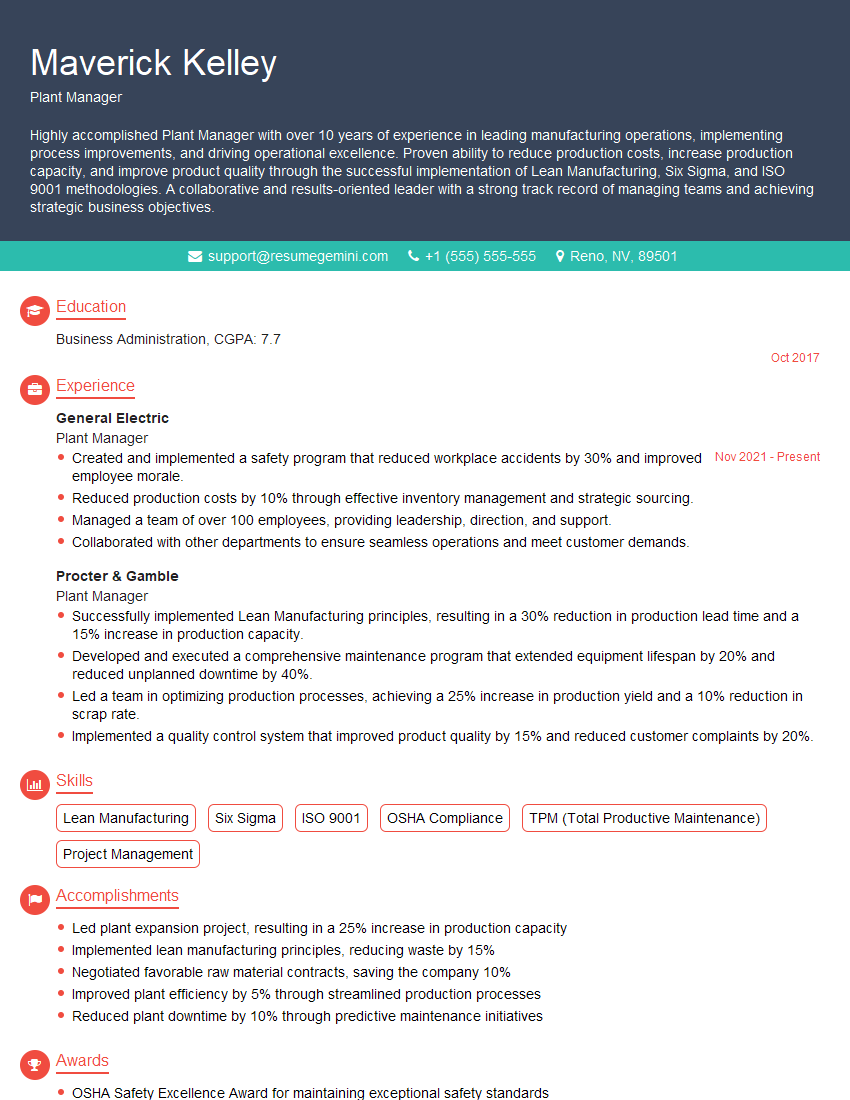
Mastering Slurry Plant Operation opens doors to exciting career opportunities in the mining, mineral processing, and other related industries. A strong understanding of these processes significantly enhances your value to potential employers. To maximize your chances of landing your dream job, create an ATS-friendly resume that effectively showcases your skills and experience. ResumeGemini is a trusted resource that can help you build a professional and impactful resume. They provide examples of resumes tailored to Slurry Plant Operation to guide you through the process, ensuring your application stands out from the competition.




Explore more articles
Users Rating of Our Blogs
Share Your Experience
We value your feedback! Please rate our content and share your thoughts (optional).
What Readers Say About Our Blog
To the interviewgemini.com Webmaster.
Very helpful and content specific questions to help prepare me for my interview!
Thank you
To the interviewgemini.com Webmaster.
This was kind of a unique content I found around the specialized skills. Very helpful questions and good detailed answers.
Very Helpful blog, thank you Interviewgemini team.