Unlock your full potential by mastering the most common Social Theory and Social Change interview questions. This blog offers a deep dive into the critical topics, ensuring you’re not only prepared to answer but to excel. With these insights, you’ll approach your interview with clarity and confidence.
Questions Asked in Social Theory and Social Change Interview
Q 1. Explain the difference between functionalist and conflict perspectives in sociology.
Functionalist and conflict perspectives offer contrasting views on how society operates. Functionalism, pioneered by thinkers like Emile Durkheim and Talcott Parsons, views society as a complex system with interconnected parts working together to maintain stability and order. Each part, or social institution (like family, education, or government), has a function contributing to the overall equilibrium. Think of it like a well-oiled machine – each gear plays its role for the machine to function smoothly.
Conflict theory, conversely, emphasizes power struggles and inequalities as the driving forces of social change. Inspired by Karl Marx and Max Weber, this perspective highlights how different groups compete for scarce resources (wealth, power, prestige), leading to social conflict and inequality. Instead of a harmonious machine, it’s more like a battlefield where different factions vie for dominance. For example, the functionalist perspective might view the education system as socializing individuals and providing skilled labor, while the conflict perspective would examine how it perpetuates inequalities through unequal access to resources and opportunities.
Q 2. Describe the key tenets of symbolic interactionism.
Symbolic interactionism focuses on micro-level interactions and how individuals create meaning through shared symbols and interpretations. Developed by George Herbert Mead and Herbert Blumer, its core tenets include:
- Meaning is socially constructed: We don’t passively receive meaning; we actively create it through interactions. The meaning of a symbol (like a handshake or a national flag) depends on its social context and shared understanding.
- Meaning is negotiated through interaction: We continually refine and redefine meanings through our interactions with others. A simple conversation can subtly reshape our understanding of a situation or a concept.
- Meaning guides our actions: Our interpretations of symbols and situations dictate how we behave. Understanding someone’s intentions often depends on interpreting their nonverbal cues as much as their spoken words.
For example, a simple red light at an intersection. Its meaning as a stop signal isn’t inherent to the color itself but is learned socially through driving education and shared societal understanding. Symbolic interactionism helps us understand how everyday interactions shape our identities, values, and social realities.
Q 3. How does social capital influence social change?
Social capital, encompassing the networks of relationships among people who live and work in a particular society, enabling that society to function effectively, significantly influences social change. Strong social networks facilitate collective action, enabling people to mobilize resources and organize for social change. Think about the Civil Rights Movement in the US – the extensive networks within the African American community were crucial in organizing protests, boycotts, and voter registration drives.
Conversely, weak social capital can hinder social change. If individuals are isolated and lack connections, it becomes more difficult to build momentum for collective action. However, the relationship isn’t always straightforward. Social capital can also reinforce existing inequalities. Strong networks within privileged groups can further consolidate their power and resources, making it harder for marginalized groups to achieve change.
Q 4. What are some limitations of quantitative research in studying social change?
While quantitative research offers valuable insights through numerical data and statistical analysis, it has limitations in studying social change.
- Reductionism: Quantitative methods often reduce complex social phenomena to measurable variables, potentially overlooking nuances and contextual factors crucial for understanding change. For instance, measuring social unrest solely through crime statistics ignores the underlying social, political, and economic factors driving it.
- Lack of Depth: Quantitative studies may lack the depth necessary to explore individual experiences, motivations, and interpretations behind social changes. Surveys, for example, might capture trends but fail to fully capture the richness and complexity of individual lived realities.
- Difficulty Capturing Change Over Time: Studying dynamic social processes requires longitudinal research, which can be costly and time-consuming. Cross-sectional quantitative studies provide a snapshot in time, potentially missing the processes of change themselves.
- Issues with Generalizability: Quantitative studies, particularly those with limited samples, may struggle to generalize findings to broader populations. A small-scale quantitative study on a particular community might not accurately reflect nationwide trends in social change.
Qualitative research methods, which are more focused on understanding the meanings that people attach to their experiences, can complement quantitative methods by providing richer, more contextualized understandings of social change.
Q 5. Analyze the impact of globalization on social inequality.
Globalization has a complex and multifaceted impact on social inequality. While it has created opportunities for economic growth and development in many parts of the world, it has also exacerbated existing inequalities and created new ones.
Increased Inequality: Globalization has led to a concentration of wealth and power in the hands of a few multinational corporations and wealthy individuals. This has widened the gap between the rich and the poor both within and between nations. The rise of global supply chains, for instance, has often led to exploitation of workers in developing countries to maintain low production costs, benefiting largely corporations in developed nations.
New Forms of Inequality: Globalization has also created new forms of inequality, such as the digital divide, which refers to the gap between those who have access to technology and information and those who do not. This creates further inequalities in access to education, employment, and participation in the global economy.
Mitigation Efforts: However, globalization also presents opportunities for addressing inequality. International organizations and NGOs are working to promote fair trade, protect workers’ rights, and reduce poverty. The challenge lies in harnessing the positive aspects of globalization while mitigating its negative impacts on inequality.
Q 6. Discuss the role of social movements in driving societal transformation.
Social movements are crucial actors in driving societal transformation. They are organized collective efforts to promote or resist social change. They challenge existing power structures, raise awareness about social issues, and mobilize public opinion.
Mechanisms of Change: Social movements effect change through various mechanisms. They can use non-violent tactics such as protests, boycotts, and civil disobedience to put pressure on authorities. They can also engage in advocacy and lobbying to influence policy. The success of a social movement depends on various factors, including the level of mobilization, the framing of the issue, and the availability of resources. Successful movements often create new social norms and values, altering societal expectations and institutions. Examples include the women’s suffrage movement, the environmental movement, and the LGBTQ+ rights movement, each significantly reshaping societal norms and laws.
Limitations: It’s important to note that not all social movements achieve their goals, and some can even have unintended consequences. The effectiveness of a movement often depends on the political context, the strength of opposition, and the ability to maintain sustained collective action.
Q 7. Explain the concept of social stratification and its implications.
Social stratification refers to the hierarchical arrangement of individuals and groups in society based on factors like wealth, power, and prestige. It’s a system of structured inequalities that affects access to resources and opportunities.
Dimensions of Stratification: Social stratification typically involves several dimensions:
- Economic Inequality: Differences in income, wealth, and access to economic resources.
- Social Status: Prestige or social standing associated with different occupations, lifestyles, and social groups.
- Political Power: The ability to influence decision-making processes and control resources.
Implications: Social stratification has profound implications for individuals and society. It creates inequalities in education, healthcare, housing, and other life chances. It can perpetuate cycles of poverty and disadvantage, limiting social mobility. Furthermore, stratification can lead to social unrest and conflict, as marginalized groups challenge the existing power structures. Understanding social stratification is critical for addressing social inequalities and building a more just and equitable society.
Q 8. How can theories of social construction be applied to understand social problems?
Social constructionism argues that social problems aren’t inherent, objective realities, but rather are defined and created through social interactions and processes. We don’t simply discover social problems; we actively construct them. Applying this to understanding social problems means examining the ways society defines, labels, and responds to particular issues.
For instance, consider homelessness. Homelessness isn’t simply a lack of shelter; it’s a socially constructed problem shaped by factors like economic inequality, housing policies, and public perceptions. A society that prioritizes individual responsibility might blame the homeless for their situation, while a society emphasizing social support might view homelessness as a systemic failure demanding collective action. By analyzing the language used, the policies enacted, and the media representations surrounding homelessness, we can unpack how it’s socially constructed and, consequently, how solutions are shaped.
Another example is the concept of “mental illness”. The very definition of what constitutes a mental illness has shifted drastically over time and varies across cultures. What is considered a diagnosable disorder in one society might be viewed as a normal variation of human experience in another. Understanding this social construction helps us to critically examine diagnostic practices, treatment approaches, and the stigma associated with mental health.
Q 9. Compare and contrast different theories of power.
Several theories attempt to explain power dynamics. Marxist theory focuses on economic power, arguing that control over the means of production (factories, land, resources) translates into social and political power. The bourgeoisie (owners) dominate the proletariat (workers) through exploitation.
Weber’s theory expands this by incorporating multiple sources of power. He identifies three distinct types: economic power (control over resources), social status (prestige and honor), and political power (authority and influence). These can be interconnected, but don’t always overlap. A celebrity might have high social status but limited economic or political power, for example.
Foucault’s theory shifts the focus to power as a pervasive force dispersed throughout society, rather than concentrated in specific institutions or individuals. Power operates through discourse, knowledge, and social norms, shaping our thoughts, behaviors, and identities. Surveillance and discipline are key mechanisms through which power is maintained. This perspective emphasizes how power relations are constantly negotiated and contested.
Feminist theories critically examine the pervasive impact of gendered power relations. They highlight how patriarchal structures systematically disadvantage women, limiting their access to resources, opportunities, and political influence.
In summary, Marxist theory emphasizes economic power, Weberian theory identifies multiple sources, Foucauldian theory focuses on dispersed power operating through discourse, and Feminist theories examine gendered power dynamics. Each provides a valuable lens for understanding how power shapes society.
Q 10. Describe the ethical considerations involved in social research.
Ethical considerations in social research are paramount. Researchers have a responsibility to protect the rights and well-being of participants. Key ethical principles include:
- Informed consent: Participants must be fully informed about the study’s purpose, procedures, risks, and benefits before agreeing to participate.
- Anonymity and confidentiality: Protecting participants’ identities and ensuring the confidentiality of their data is crucial. Data should be anonymized wherever possible, and appropriate security measures implemented.
- Beneficence: Researchers should strive to maximize benefits and minimize harms to participants. This involves careful consideration of potential risks and the development of mitigation strategies.
- Non-maleficence: Researchers must avoid causing harm to participants, both physical and psychological.
- Justice: Researchers must ensure that the benefits and burdens of research are distributed fairly across different groups.
Ethical review boards (IRBs) play a vital role in overseeing research to ensure ethical guidelines are adhered to. Researchers must meticulously document their methods and justify their decisions to ensure the integrity and ethical soundness of their work.
Q 11. How does social psychology inform our understanding of group dynamics and social change?
Social psychology provides critical insights into group dynamics and social change by examining how individuals’ thoughts, feelings, and behaviors are influenced by the presence of others. Concepts like conformity, group polarization, and social identity theory help explain how groups form, how they make decisions, and how they influence individual attitudes and actions.
Conformity explains how individuals adjust their behavior to align with group norms, even if it contradicts their personal beliefs. The Asch conformity experiments famously demonstrated this phenomenon. Understanding conformity is crucial for understanding social pressure and its impact on social movements.
Group polarization shows how group discussion can amplify pre-existing attitudes, leading to more extreme positions. This process explains how initially moderate views can become radicalized within a group. It’s relevant to understanding the dynamics of extremist groups and the escalation of conflict.
Social identity theory emphasizes the importance of group membership in shaping self-concept and intergroup relations. People derive part of their identity from belonging to groups, leading to in-group favoritism and out-group bias. This theory offers valuable insights into prejudice, discrimination, and conflict between groups, and how social movements utilize group identity to mobilize support.
In short, social psychology helps illuminate how group dynamics influence individuals’ behavior and attitudes, shedding light on the processes driving social change, both positive and negative.
Q 12. What are some effective strategies for community engagement and mobilization?
Effective community engagement and mobilization requires a participatory approach that values local knowledge and empowers community members. Strategies include:
- Needs assessment: Start by understanding the community’s needs and priorities through participatory methods like focus groups, surveys, and interviews.
- Building relationships: Establishing trust and rapport with community members is crucial. This requires consistent presence, active listening, and respect for diverse perspectives.
- Collaborative planning: Involve community members in all stages of planning and decision-making. This ensures ownership and commitment to the initiatives.
- Capacity building: Invest in training and development opportunities for community members to enhance their skills and leadership capacity.
- Resource mobilization: Secure funding and other resources necessary for implementing community initiatives. This may involve applying for grants, seeking partnerships, or leveraging local assets.
- Advocacy and policy change: Engage in advocacy efforts to influence policy decisions that affect the community.
- Communication and dissemination: Use diverse communication channels to disseminate information and ensure transparency.
Successful community engagement is an iterative process requiring ongoing dialogue and adaptation to changing circumstances.
Q 13. Discuss the relationship between social inequality and health outcomes.
Social inequality significantly impacts health outcomes. Individuals from lower socioeconomic groups consistently experience poorer health compared to their more affluent counterparts. This disparity is linked to multiple factors:
- Access to healthcare: Lower income individuals often lack adequate health insurance or access to quality healthcare services, resulting in delayed or forgone care.
- Environmental factors: Lower socioeconomic neighborhoods often have higher rates of pollution, less access to green spaces, and more exposure to environmental hazards, all contributing to poor health.
- Lifestyle factors: Socioeconomic status is linked to lifestyle factors like diet, exercise, and smoking. Individuals with lower incomes may have limited access to healthy food options, less opportunity for physical activity, and higher rates of smoking.
- Stress and mental health: Financial strain, job insecurity, and discrimination contribute to chronic stress and mental health problems, which negatively impact physical health.
- Education and health literacy: Lower levels of education are associated with lower health literacy, making it difficult to navigate the healthcare system and make informed decisions about health.
Addressing social inequality is essential for improving health outcomes. This requires tackling the root causes of inequality through policy interventions addressing poverty, income inequality, and access to education and resources.
Q 14. Explain the concept of social capital and its role in community development.
Social capital refers to the networks of relationships among people who live and work in a particular society, enabling that society to function effectively. It’s essentially the value derived from social connections. Strong social capital is characterized by trust, reciprocity, and a sense of collective efficacy—the belief that people can work together to achieve common goals.
In community development, social capital plays a crucial role. Strong social networks facilitate information sharing, resource mobilization, and collective action. Communities with high social capital are better equipped to address challenges, build resilience, and promote social cohesion.
Examples of social capital in action include neighborhood watch programs, community gardens, and volunteer organizations. These initiatives foster trust, build relationships, and create a sense of shared responsibility. Conversely, communities with low social capital may struggle with isolation, lack of trust, and limited collective action.
Building social capital requires investments in community-building initiatives, creating opportunities for social interaction, and fostering a sense of belonging and shared identity. This can involve supporting local events, promoting civic participation, and developing mechanisms for collective decision-making.
Q 15. How does social media influence social movements and activism?
Social media has fundamentally reshaped social movements and activism, acting as both a catalyst and a constraint. It provides unprecedented opportunities for mobilization, communication, and information dissemination. Think of the Arab Spring, where social media platforms like Twitter and Facebook played a crucial role in coordinating protests and disseminating information, bypassing traditional media censorship.
However, it’s not a panacea. Social media’s algorithms can create echo chambers, reinforcing existing biases and limiting exposure to diverse perspectives. Furthermore, the ease of spreading misinformation and propaganda presents significant challenges. The #MeToo movement, while leveraging social media effectively, also grappled with online harassment and the spread of false accusations. Successful activism now requires a nuanced understanding of how to use social media’s strengths while mitigating its limitations, including strategic media literacy and community building efforts online.
- Enhanced mobilization: Social media facilitates rapid mobilization of supporters through targeted messaging and event announcements.
- Global reach: Issues can gain international attention quickly, increasing pressure on authorities.
- Bypass traditional media: Activists can directly communicate their message to the public, avoiding gatekeepers.
- Challenges of misinformation: False narratives and propaganda can spread rapidly, undermining trust and hindering progress.
- Echo chambers: Algorithmic filtering can limit exposure to diverse perspectives, potentially polarizing opinions.
Career Expert Tips:
- Ace those interviews! Prepare effectively by reviewing the Top 50 Most Common Interview Questions on ResumeGemini.
- Navigate your job search with confidence! Explore a wide range of Career Tips on ResumeGemini. Learn about common challenges and recommendations to overcome them.
- Craft the perfect resume! Master the Art of Resume Writing with ResumeGemini’s guide. Showcase your unique qualifications and achievements effectively.
- Don’t miss out on holiday savings! Build your dream resume with ResumeGemini’s ATS optimized templates.
Q 16. Describe the challenges in measuring the impact of social interventions.
Measuring the impact of social interventions is notoriously complex. It requires a multi-faceted approach that goes beyond simple metrics. For instance, simply counting the number of people attending a workshop doesn’t fully capture its impact on their lives. Challenges include:
- Defining success: What constitutes a ‘successful’ intervention varies greatly depending on the context and goals. Defining clear, measurable objectives beforehand is crucial.
- Causality: It’s difficult to isolate the impact of a specific intervention from other factors that may influence the outcome. Rigorous research designs, such as randomized controlled trials, help address this.
- Long-term effects: The impact of many interventions unfolds over time, making it challenging to assess long-term sustainability and ripple effects.
- Data collection: Gathering reliable and valid data can be difficult, particularly in marginalized communities or when dealing with sensitive issues. Ethical considerations must always be prioritized.
- Unintended consequences: Interventions may have unexpected positive or negative effects that are hard to predict or measure.
Addressing these challenges requires using mixed methods approaches (qualitative and quantitative data), carefully selecting appropriate metrics, establishing a strong baseline before intervention, and incorporating longitudinal follow-up studies to track long-term impacts.
Q 17. What are some key indicators of successful social change initiatives?
Key indicators of successful social change initiatives depend on the specific goals of the initiative, but some common indicators include:
- Shift in attitudes and beliefs: Changes in public opinion, increased awareness, and shifts in social norms.
- Changes in behavior: Measurable changes in individual or collective behavior related to the social issue.
- Policy changes: The successful implementation of new policies or laws that address the social issue.
- Increased access to resources: Improved access to essential resources and services for affected populations.
- Empowerment of marginalized groups: Increased participation and leadership roles for marginalized groups within the social change process.
- Improved well-being: Objective indicators of improved physical and mental health, reduced inequality, or enhanced social cohesion.
- Sustainability: The capacity of the initiative to continue to produce positive changes beyond the initial intervention period.
It’s crucial to track these indicators using both quantitative and qualitative data to obtain a holistic understanding of the initiative’s success. For example, measuring the reduction in poverty rates (quantitative) alongside qualitative data collected through interviews illustrating improvements in people’s lives offers a more complete picture.
Q 18. Analyze the role of policy in addressing social issues.
Policy plays a pivotal role in addressing social issues. Effective policies can create enabling environments for positive social change by:
- Resource allocation: Policies direct funding towards programs and initiatives that tackle social problems.
- Legal frameworks: Laws and regulations can protect vulnerable groups, promote equality, and prohibit discriminatory practices.
- Incentives and disincentives: Policies can incentivize pro-social behavior through tax breaks or subsidies while disincentivizing harmful actions through fines or regulations.
- Raising awareness: Public awareness campaigns launched through policy initiatives can educate the public about social issues.
- Empowering communities: Policies can facilitate community participation in decision-making processes related to social issues.
However, policy interventions can also be ineffective or even counterproductive if they are not well-designed, implemented, or evaluated. For instance, policies that are poorly designed may exacerbate existing inequalities or create unintended negative consequences. Successful policymaking requires careful consideration of the social, economic, and political context, as well as robust evaluation mechanisms to assess impact and make necessary adjustments.
Q 19. Discuss the importance of participatory research in social change.
Participatory research is crucial for social change because it centers the voices and experiences of the communities most affected by the social issue. This approach empowers marginalized groups and ensures that research is relevant and impactful. Unlike traditional research, where researchers are detached observers, participatory research emphasizes collaboration and co-creation of knowledge.
Key elements include:
- Community involvement: Researchers work closely with community members throughout all stages of the research process, from design to dissemination.
- Shared decision-making: Research priorities, methods, and outcomes are collaboratively determined.
- Capacity building: Participatory research often includes training community members in research skills, fostering self-determination and local expertise.
- Action-oriented research: The goal isn’t just to generate knowledge but to use it to promote social change and improve the lives of participants.
For example, in a study on food insecurity, a participatory approach would involve community members identifying the causes and consequences of food insecurity, helping to design the research methods, and ultimately shaping the recommendations for addressing this issue. This ensures that solutions are contextually relevant and sustainable.
Q 20. How can you apply social theory to address a real-world social problem?
Let’s consider the social problem of homelessness. Applying social theory, specifically conflict theory, can help us understand the structural factors contributing to homelessness. Conflict theory suggests that societal inequalities—particularly economic inequality—are the root cause of many social problems. In the case of homelessness, we can analyze how factors like lack of affordable housing, inadequate social safety nets, and discriminatory practices contribute to homelessness.
Applying this understanding:
- Identify power dynamics: Examine the power imbalances between landlords and tenants, government agencies and homeless individuals, and other relevant actors.
- Analyze systemic inequalities: Investigate how societal structures like the housing market, the welfare system, and the labor market create and maintain homelessness.
- Develop solutions: Based on this analysis, we can advocate for policies that address these structural inequalities, such as increasing affordable housing, expanding social welfare programs, and implementing anti-discrimination legislation.
This example demonstrates how social theory provides a framework for understanding the underlying causes of social problems and developing effective, evidence-based solutions that go beyond addressing symptoms.
Q 21. What are the strengths and weaknesses of different research methodologies?
Different research methodologies offer various strengths and weaknesses. The choice of methodology depends on the research question, resources, and ethical considerations.
Quantitative methods (e.g., surveys, experiments) are excellent for collecting large datasets and identifying statistical relationships. However, they may oversimplify complex social phenomena and fail to capture the nuances of lived experiences.
Qualitative methods (e.g., interviews, ethnography) provide rich, in-depth insights into individual experiences and social processes. However, they are often time-consuming, less generalizable, and prone to researcher bias.
Mixed methods approaches combine quantitative and qualitative methods to leverage their respective strengths. This approach can provide a more holistic and nuanced understanding of the social phenomenon being studied. However, it requires more resources and expertise.
Case studies provide in-depth analysis of a specific case, offering rich detail but limited generalizability. Comparative studies examine similarities and differences across multiple cases to increase generalizability. Each methodology has its place, and the best approach depends on the specific research context.
Q 22. Explain the concept of intersectionality and its relevance to social justice.
Intersectionality is a framework for understanding how aspects of a person’s social and political identities combine to create unique modes of discrimination and privilege. It moves beyond looking at single categories of identity, like race or gender, in isolation and instead examines how these categories intersect and interact to shape individual experiences.
For example, a Black woman experiences discrimination differently than a white woman or a Black man because her identity is formed at the intersection of race and gender. She faces both racism and sexism, and the ways these forms of oppression interact can create unique challenges and barriers.
Intersectionality’s relevance to social justice lies in its ability to reveal the complexity of inequality. By acknowledging the interconnectedness of various social categories, it allows for a more nuanced and effective approach to social justice initiatives. It challenges single-issue activism, urging us to address multiple forms of oppression simultaneously. Without an intersectional lens, solutions often fail to account for the unique experiences and needs of marginalized groups.
Q 23. How do societal norms and values shape individual behavior?
Societal norms and values are the unwritten rules and shared beliefs that govern behavior within a society. They are transmitted through socialization—the process by which individuals learn and internalize these norms and values from family, education, media, and other social institutions.
These norms and values act as a powerful force shaping individual behavior. We often conform to them to gain acceptance, avoid disapproval, or simply because we believe they are the ‘right’ way to act. For instance, queuing in line is a societal norm in many cultures, and individuals conform to it to avoid social sanction. Similarly, respect for elders is a value in many societies, influencing how people interact with older individuals.
However, it’s crucial to note that societal norms and values aren’t static; they evolve over time. What was once considered acceptable behavior might become unacceptable, reflecting shifts in societal beliefs and attitudes. The LGBTQ+ rights movement, for example, challenges and changes societal norms related to gender and sexuality.
Q 24. Describe the process of developing a social intervention program.
Developing a social intervention program is a multi-stage process requiring careful planning and evaluation. It starts with identifying a pressing social issue, like poverty or homelessness. Then, thorough research is needed to understand the problem’s root causes and potential solutions. This might involve reviewing existing literature, conducting surveys, and holding focus groups to understand the perspectives of the target population.
Next, a program is designed based on evidence-based strategies, incorporating elements that address identified needs. The program should have clear goals and objectives, outlining measurable outcomes. It should also specify the target population, the services offered, and the program’s delivery mechanisms (e.g., community centers, online platforms).
Implementation requires securing funding, recruiting staff, and building partnerships with community organizations. Monitoring and evaluation are crucial throughout the program lifecycle. Data is collected to assess the program’s progress towards its goals and identify any necessary adjustments. Regular evaluations provide feedback for improvement and demonstrate the program’s impact.
Finally, dissemination of findings is critical. Sharing results with stakeholders, including funders, policymakers, and the community, ensures the program’s impact is maximized and informs future initiatives.
Q 25. What are some challenges in evaluating the effectiveness of social programs?
Evaluating social programs presents significant challenges. One key challenge lies in establishing causality: it’s difficult to definitively prove a program caused observed changes. Other factors could be influencing outcomes. For example, a job training program might show improved employment rates, but it’s hard to isolate the program’s impact from broader economic factors or individual initiative.
Another challenge is the difficulty in measuring intangible outcomes. Social programs often aim to improve well-being or social cohesion, which are difficult to quantify accurately. For instance, how do you measure the success of a program aimed at improving community relations? Subjective measures, like surveys, can be helpful but can be influenced by respondent bias.
Furthermore, ethical considerations are paramount. Researchers need to protect participant confidentiality and ensure the evaluation process doesn’t cause harm. Resource constraints, both in terms of funding and personnel, can also limit the scope and rigor of evaluations.
Finally, achieving long-term follow-up can be challenging. Tracking program participants over extended periods can be difficult, impacting the ability to fully assess long-term program effectiveness. Addressing these challenges requires using robust research designs, including control groups and mixed-methods approaches.
Q 26. Discuss the role of technology in shaping social interactions.
Technology’s influence on social interactions is profound and multifaceted. The rise of social media platforms like Facebook, Twitter, and Instagram has dramatically altered how people connect, communicate, and form relationships. These platforms facilitate both local and global connections, enabling individuals to interact with people across geographical boundaries.
However, this increased connectivity also presents challenges. Social media can contribute to social isolation, cyberbullying, and the spread of misinformation. The curated nature of online profiles can create unrealistic expectations and pressures, affecting self-esteem and mental health. Furthermore, algorithms that govern online platforms can create echo chambers, reinforcing existing biases and limiting exposure to diverse perspectives.
Technology also impacts social movements. The internet and social media have become powerful tools for organizing protests, disseminating information, and mobilizing collective action. However, governments and organizations can also utilize technology for surveillance and censorship, potentially suppressing dissent and limiting freedom of expression.
In essence, technology shapes social interactions by both expanding and limiting access to connection, communication, and information. Understanding these dual effects is crucial for navigating the social implications of an increasingly digital world.
Q 27. Explain the concept of social justice and its implications for policymaking.
Social justice refers to the fair and equitable distribution of resources, opportunities, and rights within a society. It emphasizes that all individuals, regardless of their social group membership, should have equal access to basic necessities and the ability to participate fully in society. This includes addressing systemic inequalities based on factors such as race, gender, class, sexual orientation, and disability.
Social justice has significant implications for policymaking. Policymakers play a crucial role in creating and implementing policies that promote social justice. These policies can take many forms, including affirmative action programs, legislation protecting marginalized groups, and investments in social services that address disparities in access to education, healthcare, and housing.
For example, policies promoting affordable housing address inequalities in access to safe and secure housing. Legislation protecting LGBTQ+ individuals from discrimination contributes to a more inclusive and equitable society. Policies supporting universal healthcare aim to ensure access to healthcare for all, regardless of socioeconomic status. Effective policymaking requires recognizing the complex interplay of social factors contributing to inequality and taking an intersectional approach to address them.
Q 28. How can you use data analysis to inform social change strategies?
Data analysis plays a vital role in informing social change strategies by providing evidence-based insights into social problems and evaluating the effectiveness of interventions. By analyzing data from diverse sources, such as census data, surveys, administrative records, and social media, we can identify trends, patterns, and disparities that contribute to social inequalities.
For example, analyzing crime data can reveal disparities in crime rates across different neighborhoods, helping to pinpoint areas requiring targeted interventions. Analyzing educational data can highlight achievement gaps between different student groups, informing the development of strategies to improve educational equity. Analyzing health data can uncover disparities in health outcomes, aiding the design of interventions to address health inequalities.
Data analysis techniques, such as statistical modeling and machine learning, can help identify causal relationships, predict future trends, and evaluate program effectiveness. By combining quantitative data with qualitative insights from interviews and focus groups, a more complete and nuanced understanding of social issues can be achieved. This comprehensive understanding is crucial for designing effective and equitable social change strategies.
However, it’s important to critically examine data sources for potential biases and limitations. Data often reflects existing inequalities and power dynamics, and interpretations must carefully consider these biases to avoid perpetuating harmful stereotypes or overlooking nuances.
Key Topics to Learn for Social Theory and Social Change Interview
- Classical Sociological Theories: Understand the foundational contributions of Marx, Weber, and Durkheim, and their relevance to contemporary social issues. Consider their differing perspectives on social order, power, and inequality.
- Modern Social Theories: Explore post-structuralism, feminism, critical race theory, and postmodernism. Analyze how these frameworks challenge traditional sociological thought and offer alternative perspectives on social change.
- Social Movements and Collective Action: Examine the dynamics of social movements, including resource mobilization, framing processes, and the role of social networks in driving social change. Be prepared to discuss case studies.
- Globalization and Social Change: Analyze the impact of globalization on social structures, inequalities, and cultural identities. Discuss the challenges and opportunities presented by interconnectedness.
- Social Inequality and Stratification: Understand the different forms of social inequality (class, race, gender, etc.) and the mechanisms that perpetuate them. Explore theories of social stratification and their implications for social change.
- Methods of Social Research: Demonstrate familiarity with qualitative and quantitative research methods used to study social theory and social change. Be prepared to discuss the strengths and limitations of different approaches.
- Social Policy and Intervention: Discuss the role of social policy in addressing social problems and promoting social change. Be prepared to analyze the effectiveness of different social interventions.
- Contemporary Social Issues: Develop a critical understanding of current social issues, such as climate change, technological advancements, and political polarization, and how they relate to social theory and change.
Next Steps
Mastering Social Theory and Social Change is crucial for a successful career in fields like sociology, social work, public policy, and research. A strong understanding of these concepts allows you to critically analyze complex social issues and develop effective solutions. To maximize your job prospects, create a compelling and ATS-friendly resume that highlights your skills and experience. ResumeGemini is a trusted resource that can help you build a professional resume that stands out. We provide examples of resumes tailored specifically to Social Theory and Social Change to give you a head start. Invest time in crafting a strong resume – it’s your first impression!

Nonprofit Director Resume Sample

Sustainability Consultant Resume Sample

Organizational Development Specialist Resume Sample

Behavioral Scientist Resume Sample
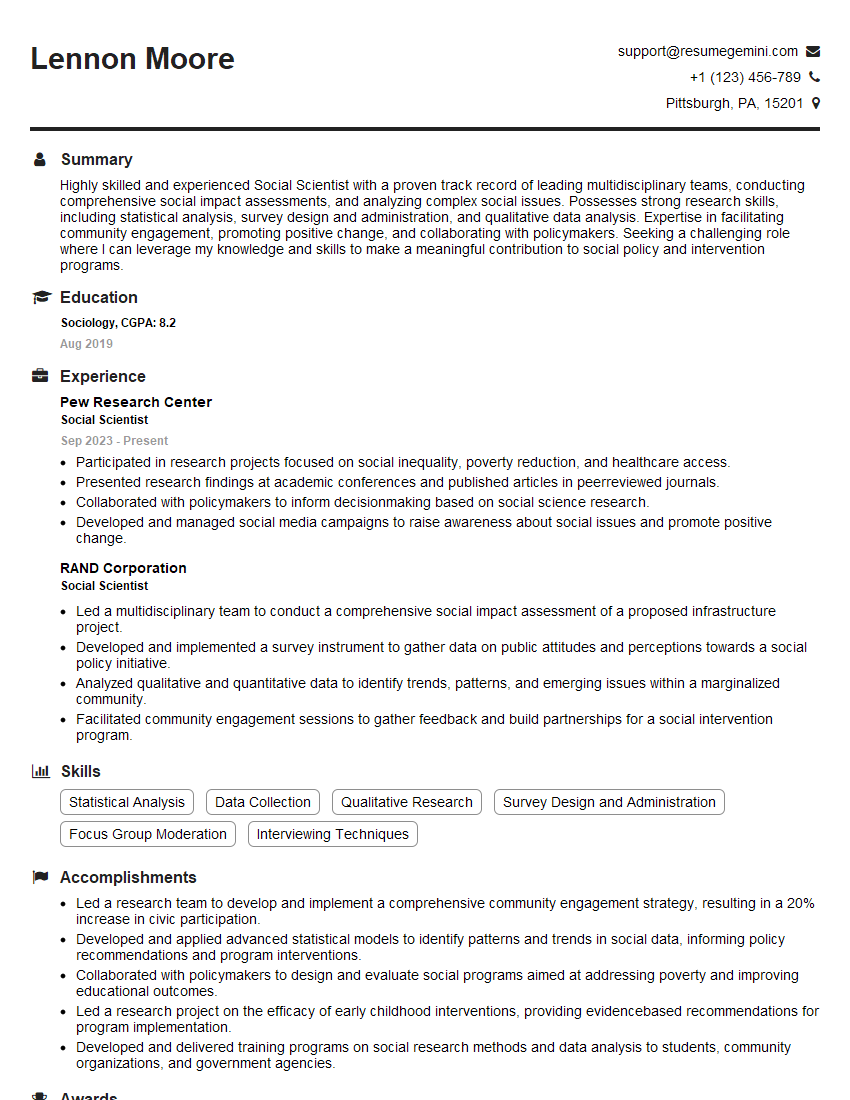
Social Scientist Resume Sample
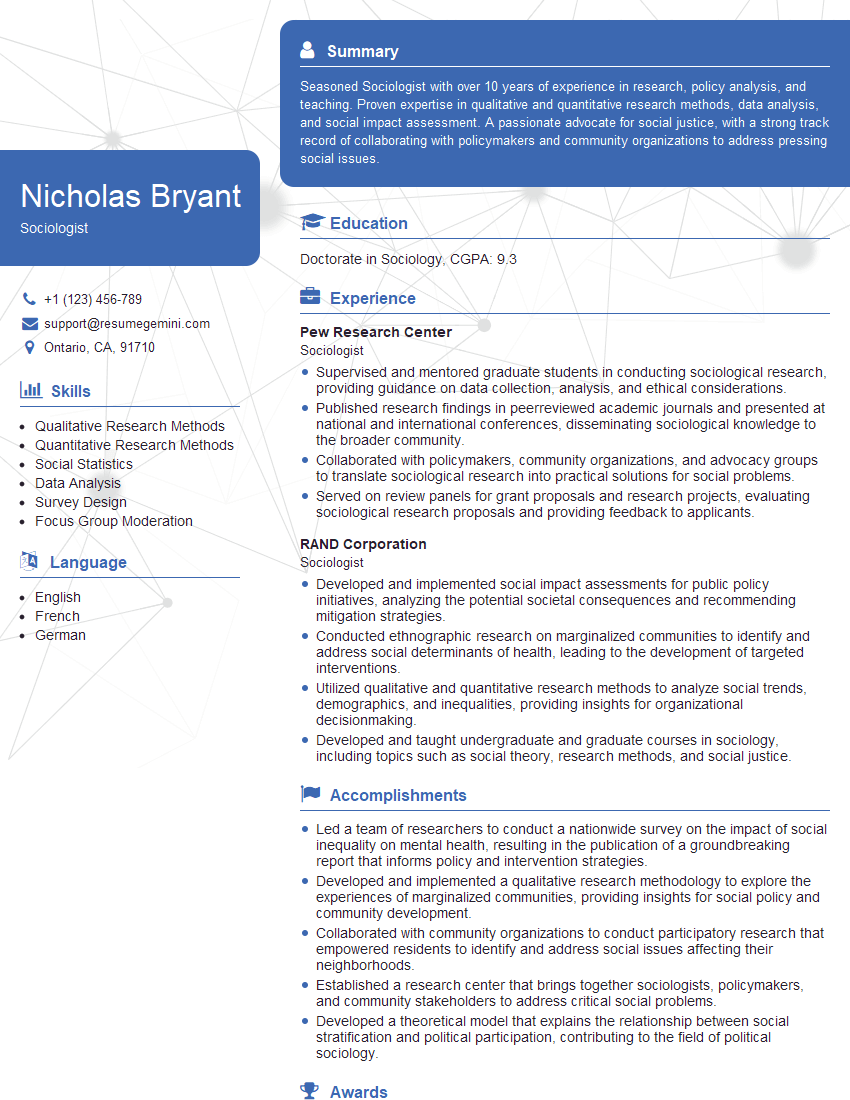
Sociologist Resume Sample
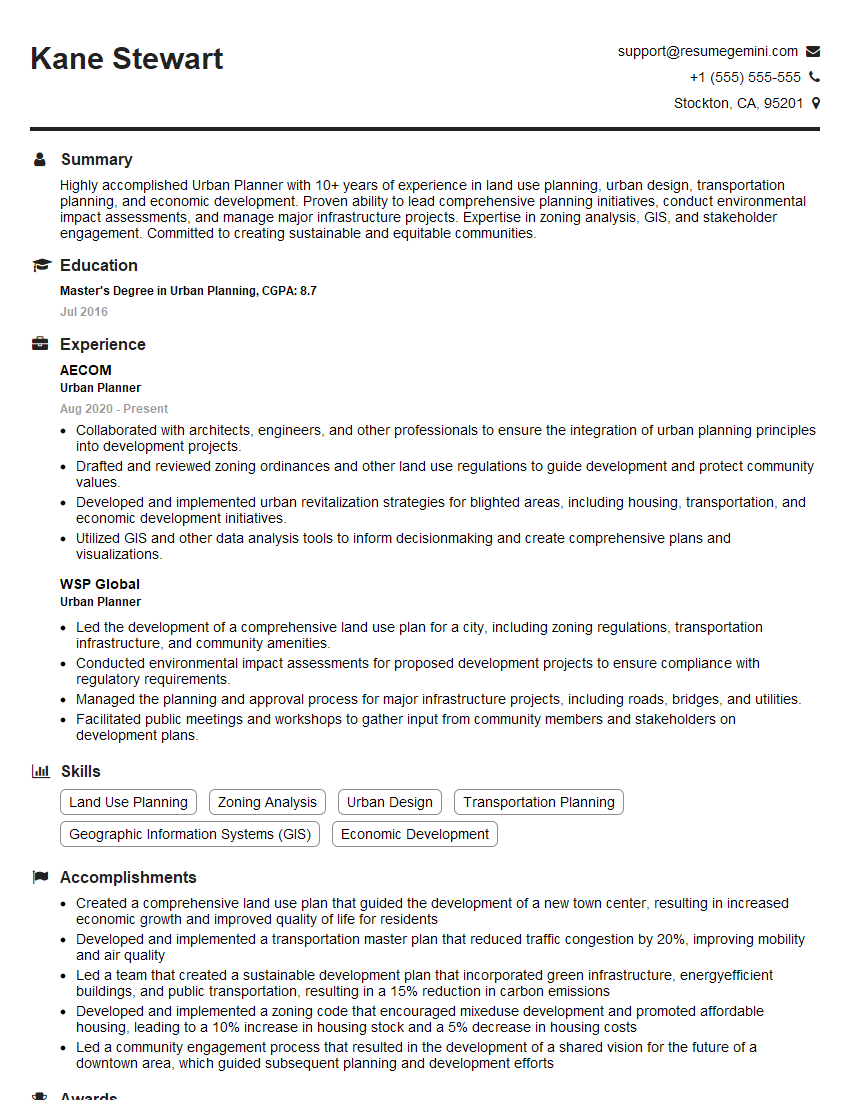
Urban Planner Resume Sample

Community Organizer Resume Sample
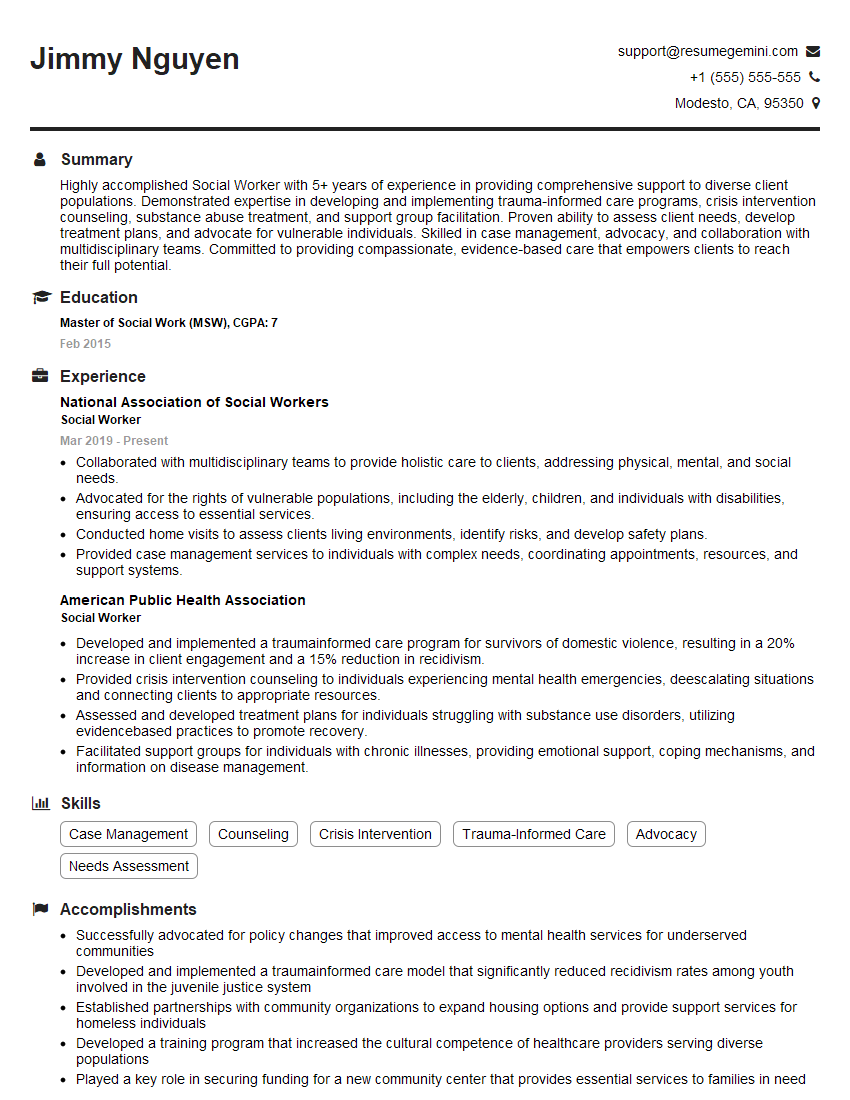
Social Worker Resume Sample

Public Policy Analyst Resume Sample
Explore more articles
Users Rating of Our Blogs
Share Your Experience
We value your feedback! Please rate our content and share your thoughts (optional).
What Readers Say About Our Blog
To the interviewgemini.com Webmaster.
Very helpful and content specific questions to help prepare me for my interview!
Thank you
To the interviewgemini.com Webmaster.
This was kind of a unique content I found around the specialized skills. Very helpful questions and good detailed answers.
Very Helpful blog, thank you Interviewgemini team.