Are you ready to stand out in your next interview? Understanding and preparing for Software Proficiency (e.g., XDS, HKL, SHELXL) interview questions is a game-changer. In this blog, we’ve compiled key questions and expert advice to help you showcase your skills with confidence and precision. Let’s get started on your journey to acing the interview.
Questions Asked in Software Proficiency (e.g., XDS, HKL, SHELXL) Interview
Q 1. Explain the indexing process in XDS.
Indexing in XDS is the crucial first step in crystallographic data processing. It involves identifying the orientation of the crystal in the X-ray beam and assigning Miller indices (hkl) to each diffraction spot. Think of it like figuring out the latitude and longitude of each star in a celestial map – each spot represents a reflection from a specific plane within the crystal lattice. XDS uses a sophisticated algorithm to match observed spot positions with predicted positions based on various crystal lattice parameters. It does this by comparing the positions and intensities of many spots to identify a set of possible lattice parameters and crystal orientations. The program iteratively refines these parameters until a consistent solution is found. If there are multiple solutions (e.g. different crystal orientations), XDS will often identify and offer them, leaving the user to decide which solution represents the actual crystal. The process heavily relies on accurate spot finding and peak integration, and the accuracy is directly reflected in the subsequent processing steps.
Q 2. Describe the integration process in XDS and how to handle poor data.
Integration in XDS is the process of measuring the intensity of each diffraction spot. The intensity is proportional to the number of X-rays diffracted by that specific crystal plane. Accurate integration is paramount for reliable structure solution. XDS uses a profile-fitting method that models the shape of each spot, taking into account the beam profile and detector geometry. This approach improves the accuracy of intensity measurements compared to simple summation methods. Dealing with poor data requires careful consideration. Poor data can manifest as high background noise, weak reflections, or spots with irregular shapes. XDS provides various options to address these. For instance, you can adjust parameters to better fit the spot profiles, mask problematic regions of the detector, or employ more stringent criteria for spot acceptance. Careful inspection of the XDS output files, including the integration log and the spot profiles, is essential for identifying and handling issues. If the data is severely affected by poor quality, it might be necessary to re-evaluate the experimental setup or even collect new data. In a recent project, for example, we had significant background noise due to a faulty detector component. By carefully masking the noisy regions and adjusting integration parameters in XDS, we were still able to obtain a good quality dataset for structure solution.
Q 3. How do you deal with twinning in XDS?
Twinning occurs when multiple crystal lattices intergrow within the same crystal. This leads to overlapping diffraction patterns, making indexing and integration more challenging. XDS can detect and handle some types of twinning. The program looks for systematic absences or intensity patterns that are consistent with twinning. If twinning is detected, XDS will attempt to resolve the individual components and provide separate datasets corresponding to different twin domains. The most important parameter to control in XDS when dealing with twinning is the option specifying the type of twinning law (e.g., merohedral, pseudo-merohedral). The correct choice of twin law is vital. If you choose the incorrect law, the subsequent data processing can lead to problems like incorrect space group determination and ultimately, incorrect structural models. Proper handling often necessitates careful analysis of the diffraction patterns, and knowledge of the crystal system and likely symmetry.
Q 4. What are the advantages and disadvantages of using XDS versus HKL?
XDS and HKL are both powerful crystallographic data processing packages, but they have distinct strengths and weaknesses. XDS, developed by W. Kabsch, is known for its robustness and ability to process challenging datasets, including those with high mosaicity and poor resolution. It’s particularly strong in automation and handling various experimental geometries. However, its interface is primarily command-line driven and might be less user-friendly for beginners compared to HKL. HKL, on the other hand, offers a more graphical user interface (GUI), making it easier to navigate and use, especially for researchers less familiar with the command line. HKL’s GUI facilitates visualization and data analysis. However, it might struggle with particularly difficult datasets where XDS’s powerful algorithms shine. Ultimately, the choice often depends on user experience, dataset complexity, and the research group’s existing workflow. Some labs prefer the robustness of XDS despite the steeper learning curve, while others value HKL’s convenience.
Q 5. Explain the space group determination process using HKL.
Space group determination in HKL typically involves a series of steps. First, the program analyzes the integrated and scaled reflection data, identifying systematic absences – reflections that are systematically missing due to symmetry. The presence or absence of particular reflections is indicative of certain lattice symmetries. HKL then compares the observed systematic absences with those predicted for various space groups. The program uses statistical tools to determine the probability of each space group assignment. The output usually presents a list of possible space groups ranked by likelihood. However, it’s crucial to remember that space group determination relies not only on systematic absences but also on the overall distribution of intensities. Careful visual inspection of the data is always recommended. Furthermore, sometimes a possible solution could correspond to a higher symmetry space group, while a lower symmetry solution would better reflect the final model. This is often determined during the refinement process.
Q 6. How does HKL handle scaling and merging of reflection data?
HKL handles scaling and merging of reflection data using a sophisticated algorithm. Scaling involves adjusting the intensities of reflections to correct for variations caused by factors like detector sensitivity, crystal decay, and absorption. Merging combines multiple measurements of the same reflection to improve the precision of the intensity values. This process typically involves an iterative approach, where the program initially estimates scaling factors and then refines them based on the agreement between multiple measurements of the same reflection. Outliers— reflections that deviate significantly from the expected intensity— are often identified and treated accordingly (either rejected or given less weight). The result is a set of unique reflections with their associated precision estimates, ready for structure solution and refinement. The output from HKL provides detailed statistics, like R-merge, which is a crucial indicator of data quality and redundancy.
Q 7. Describe the refinement process in SHELXL.
Refinement in SHELXL involves iteratively adjusting the atomic positions, thermal parameters (describing the atomic vibrations), and other structural parameters to minimize the difference between the observed and calculated structure factors. It’s like adjusting a three-dimensional puzzle until all the pieces fit together perfectly. SHELXL uses a least-squares method to optimize the model, minimizing the R-factor and the weighted R-factor, which quantify the difference between observed and calculated data. The process often involves several cycles of refinement, with visual inspection and manual adjustments to account for issues like disordered solvent molecules or unusual bond lengths. Important aspects of SHELXL refinement include the use of restraints and constraints, which are used to guide the refinement and prevent overfitting. Restraints impose soft limitations on structural parameters (e.g., bond lengths or angles), while constraints impose strict limitations. SHELXL output provides various R-factors and other metrics that assess the quality of the refined model. The goal is to achieve a model with low R-factors, reasonable geometry, and no significant peaks in the difference Fourier map, indicating a complete and accurate structure.
Q 8. How do you interpret R-factors and other refinement statistics in SHELXL?
R-factors, such as R1 and wR2, are crucial indicators of the quality of a crystal structure refinement in SHELXL. They essentially represent the difference between the observed and calculated structure factors. A lower R-factor indicates a better fit between the model and the experimental data. Think of it like this: imagine you’re trying to build a LEGO model from instructions. The R-factor tells you how well your built model matches the picture on the instruction manual. A low R-factor suggests your model is very close to the ‘correct’ structure.
R1 is based on the observed data only, while wR2 weights the reflections by their variances and is generally considered more reliable for assessing refinement quality, especially when dealing with weak reflections. Other important statistics include goodness-of-fit (GoF), which ideally should be close to 1, indicating good agreement between the model and data. High GoF values often point to problems like incorrect weighting schemes or data issues. You also examine the R-factor for each reflection, as well as the maximum and minimum electron density peak values. Large values may signal missed atoms, solvent disorder, or model bias.
For instance, an R1 of 0.05 and a wR2 of 0.13 might be acceptable for a small-molecule structure, while larger values might require further refinement or investigation. It’s crucial to consider these statistics in context, along with other aspects of the structure, such as the quality of the data and the complexity of the molecule.
Q 9. Explain the use of restraints and constraints in SHELXL.
Restraints and constraints in SHELXL are powerful tools used to guide the refinement process, particularly when dealing with disordered regions, poorly-defined electron density, or complex structures. They act as ‘rules’ for the atomic positions and parameters during refinement.
Constraints are rigid limitations imposed on specific parameters. For example, you might constrain the bond length of a specific bond to a known standard value, if the electron density is too weak to accurately determine this bond length. This ensures the geometry remains chemically reasonable. Think of them as strict rules.
Restraints, on the other hand, are less rigid. They act as penalties, gently pushing the parameters towards target values, rather than rigidly fixing them. For example, you might restrain bond angles or bond lengths to expected values based on prior knowledge or similar compounds, allowing for some flexibility.
DFIX command in SHELXL is frequently used for constraints. SAME command is often applied for restraints. Choosing between constraints and restraints depends on the specific case and the level of confidence in the input parameters. Overuse of constraints can lead to an unrealistic structure, while underuse of restraints can lead to an unstable or unreasonable structure.
For example, in refining a protein structure with flexible loops, it might be appropriate to apply restraints on bond lengths and angles within the loops, which is a very standard practice in macromolecular crystallography.
Q 10. How do you identify and address model bias in SHELXL refinement?
Model bias refers to situations where the refined model is unduly influenced by assumptions or limitations within the refinement process, leading to an inaccurate representation of the true structure. It can manifest in several ways.
One common source of bias is the initial model. If your initial model is significantly incorrect, it will strongly bias the refinement toward this model rather than towards the true underlying structure. Similarly, bias can result from insufficient data resolution, poor data quality, or the incorrect selection of space group.
Identifying model bias requires careful examination of the refinement statistics and the electron density maps. Large peaks and holes in the difference Fourier map (often called the Fo-Fc map) suggest potential errors or omissions in the model. Unexpectedly high or low bond lengths or angles also point to possible issues.
Addressing model bias involves a multi-faceted approach. First, assess the quality of the diffraction data. Second, refine using different strategies, such as restrained refinement, to ensure you’re not forcing your model. Third, use multiple software programs for structure refinement to see if the obtained structure is stable using several different approaches. Fourth, carefully inspect the electron density maps to ensure they support every atom in the model. Finally, if possible, conduct further experiments to improve data quality, like collecting more data or performing experiments at lower temperature.
Q 11. What is the difference between anisotropic and isotropic refinement?
The key difference between anisotropic and isotropic refinement lies in how the thermal motion of atoms is modeled. Thermal motion is represented by the atomic displacement parameters (ADPs), also known as thermal parameters or B-factors, which describes the distribution of atom positions around their average location.
Isotropic refinement assumes that the atoms vibrate equally in all directions, like a sphere. The ADP is represented by a single parameter (Biso or Uiso). It’s simpler computationally, but may not accurately reflect the actual motion of atoms in the crystal lattice, especially for heavier atoms or those in more dynamic environments.
Anisotropic refinement treats the atom’s thermal motion as an ellipsoid, allowing for different vibrations along each of the three crystallographic axes. It’s represented by a 6-parameter tensor (Uij). This provides a more realistic model of atomic motion, particularly when dealing with heavier atoms or structures with significant anisotropy in thermal motion.
In practice, isotropic refinement is often used initially, followed by anisotropic refinement if the data quality and resolution allow it. Anisotropic refinement is particularly important for achieving high-accuracy structural characterization.
Q 12. How do you assess the quality of a crystal structure?
Assessing the quality of a crystal structure involves a holistic evaluation of several factors, including the quality of the diffraction data, refinement statistics, and the reasonableness of the structural model.
Data Quality: High-resolution data, low Rmerge (the agreement between multiple measurements of the same reflection), a high completeness of observed reflections and a good overall signal-to-noise ratio are indicative of better data. The I/σ(I) ratio (intensity to standard deviation) should be reasonably high.
Refinement Statistics: Low R-factors (R1 and wR2) and a goodness-of-fit (GoF) close to 1 are desirable. A good analysis of R-factors against resolution and the lack of significant peaks in the difference Fourier map is essential. Check for unreasonable bond lengths, angles, and thermal parameters.
Structural Model: The model should be chemically reasonable; bond lengths and angles should be consistent with accepted values. The geometry should be physically plausible and the electron density should adequately support all atoms. Analysis of the bond lengths and angles, the torsion angles and overall conformations can provide valuable insights into the quality of the model. The presence of solvent molecules in the electron density map, or the presence of substantial disordered regions in the crystal lattice should be critically evaluated.
Validation tools: Programs like PLATON and CheckCIF are commonly used to automatically check for geometrical errors, potential twinning, and other inconsistencies. These tools provide alerts and highlight any issues requiring attention.
Q 13. Describe the different methods for solving crystal structures.
Solving a crystal structure involves determining the arrangement of atoms within the crystal lattice. The most common methods are:
- Direct Methods: These methods utilize the intensities of diffracted X-rays to directly calculate the phases, then construct an electron density map which reveals the atom positions. They are particularly useful for structures with many light atoms. Software like SHELXS is commonly used for direct methods.
- Patterson Methods: This method relies on the Patterson function which is a map of interatomic vectors. It’s powerful for finding heavy atoms, which then can be used as starting points for phasing. Useful when dealing with structures containing heavy atoms like metal complexes or proteins with heavy atom derivatives.
- Molecular Replacement (MR): This method uses a known structure of a similar molecule as a search model to find its orientation and position within the unit cell. It’s extremely useful in macromolecular crystallography, particularly for proteins. Programs like PHASER or MOLREP are frequently employed.
- Anomalous Dispersion: This method utilizes the anomalous scattering of heavy atoms to determine phases. It’s particularly useful for structures containing heavy atoms, often used in macromolecular structures containing selenomethionine.
The choice of method depends on the type and complexity of the structure, the availability of prior structural information, and the quality of the diffraction data. Often, a combination of these methods is employed.
Q 14. Explain the concept of phasing in crystallography.
Phasing in crystallography is the process of determining the phases of the structure factors, which are complex numbers with amplitude (intensity) and phase components. The amplitudes can be directly determined from the intensities of the diffracted X-rays, but phases are lost during the diffraction process.
Phases are critical for reconstructing the electron density map, which reveals the atomic positions within the crystal. Without the phases, it is impossible to generate an interpretable electron density map from the diffraction data.
Various methods exist for phase determination as described in the previous answer (Direct methods, Patterson Methods, Molecular Replacement, Anomalous Dispersion). Once the phases are determined (or partially determined), they are used in conjunction with the structure factor amplitudes to compute the electron density. This electron density map is then interpreted to build a structural model.
Think of it like this: you have a blurry photo (the diffraction pattern), where the intensities are like the brightness of different parts of the photo. Phasing is like figuring out the correct ‘focus’ and ‘alignment’ to make the picture sharp and clear (the electron density map), revealing all details. Without phasing, the image is useless.
Q 15. What are Patterson maps and how are they used?
A Patterson map is a representation of the vector space of a crystal structure. Instead of showing the positions of atoms directly, it displays the vectors between all pairs of atoms in the unit cell. The peaks in a Patterson map represent interatomic vectors, with the height of the peak proportional to the product of the atomic numbers of the atoms involved. This means heavy atoms, with high atomic numbers, will produce much more prominent peaks.
We use Patterson maps primarily in the early stages of structure determination, particularly when dealing with structures containing heavy atoms. Imagine you’re trying to assemble a very complex jigsaw puzzle with many pieces. A Patterson map acts like a guide showcasing the relative distances between some of the largest, most distinct pieces (heavy atoms). By identifying these major peaks, we can obtain an initial estimate of the heavy atom positions. This information then serves as a starting point for phasing, allowing us to determine the positions of the lighter atoms and complete the overall structure.
For example, if we have a protein with a bound metal ion (a heavy atom), the strong peaks in the Patterson map will correspond to vectors between the metal ion and other atoms in the structure. This provides crucial information for solving the crystal structure. Software like HKL-3000 can generate and interpret Patterson maps.
Career Expert Tips:
- Ace those interviews! Prepare effectively by reviewing the Top 50 Most Common Interview Questions on ResumeGemini.
- Navigate your job search with confidence! Explore a wide range of Career Tips on ResumeGemini. Learn about common challenges and recommendations to overcome them.
- Craft the perfect resume! Master the Art of Resume Writing with ResumeGemini’s guide. Showcase your unique qualifications and achievements effectively.
- Don’t miss out on holiday savings! Build your dream resume with ResumeGemini’s ATS optimized templates.
Q 16. Describe the different types of diffraction data.
Diffraction data in crystallography essentially tells us how X-rays scatter when they hit a crystal. Different types of data arise from various experimental setups and data collection strategies. Here are some key types:
- Native data: This refers to data collected from a crystal without any modification, representing the inherent scattering from the molecule of interest.
- Derivative data: In techniques like MAD (Multiwavelength Anomalous Dispersion) or SAD (Single-Anomalous Dispersion), we use data collected at multiple wavelengths or from crystals containing heavy-atom derivatives to resolve the phase problem. These heavy atoms significantly alter the scattering pattern.
- High-resolution data: Data encompassing a higher range of diffraction angles (i.e., smaller d-spacings) results in higher resolution of the resulting electron density maps, giving a more detailed view of the structure.
- Low-resolution data: This captures lower diffraction angles, offering less detailed information but is often helpful for initial phasing or molecular replacement.
The choice of data type depends on the complexity of the molecule and the available resources. A simple structure might only require native data, while complex molecules may necessitate MAD or SAD data collection for successful structure determination.
Q 17. How do you handle missing data in your crystallographic data?
Missing data in crystallographic datasets is a common problem arising from various factors like crystal imperfections or limitations of the detector. It’s crucial to handle this carefully because missing data can lead to inaccuracies or biases in the final structure.
There are several strategies for handling missing data:
- Data completion: This involves computationally filling in the missing data points based on the existing data. Methods like those implemented in programs like HKL-3000 use statistical techniques to predict the missing intensities.
- Refinement strategies: In programs like SHELXL, refined models are often adjusted to take into account the uncertainties due to missing data during refinement. This might involve weighting schemes that give less emphasis to reflections with high uncertainties, arising from missing data.
- Careful data collection: Often the best approach is to prevent missing data altogether through meticulous experimental design, including optimizing crystal quality, and choosing appropriate data collection strategies.
The best method depends on the extent and pattern of missing data. In some cases, a few missing reflections might have little impact. However, extensive missing data may lead to significant errors, and strategies like data completion become more critical.
Q 18. What are some common problems encountered during data processing?
Data processing in crystallography is prone to several common problems:
- Diffraction spot overlap: In densely packed crystals, diffraction spots can overlap, hindering accurate intensity measurement. This can be mitigated by careful data collection strategies, such as reducing the crystal-to-detector distance.
- Radiation damage: Prolonged exposure to X-rays can damage the crystal, leading to reduced data quality. Careful monitoring and limiting the exposure time can minimize this issue.
- Crystal mosaicity: Imperfections in the crystal lattice lead to broadened diffraction spots and reduced data resolution. Careful crystal selection is essential to minimize this.
- Background noise: Other signals besides diffraction can be picked up by the detector, leading to increased noise in the data. Proper background subtraction is crucial in this case.
- Incorrect unit cell parameters: If the unit cell dimensions are inaccurately determined, it can lead to errors in indexing and integrating the diffraction data.
Careful experimental design, data processing techniques, and thorough quality checks can minimize these issues and ensure high-quality diffraction data. Software packages like XDS are crucial for addressing these processing challenges. For example, XDS is very powerful at identifying and correcting for spot overlaps.
Q 19. How do you validate your crystal structure?
Validating a crystal structure involves a multifaceted approach to ensure its accuracy and reliability. We utilize several criteria:
- R-factors: R-factors (R-work and R-free) quantify the agreement between the observed and calculated structure factors. Low R-factors indicate a good fit, but they shouldn’t be the sole criterion for validation.
- Geometric parameters: We examine bond lengths, bond angles, and torsion angles to check if they fall within reasonable ranges compared to known values and chemical principles. Deviations may suggest errors in the model.
- Ramachandran plot: This plot shows the distribution of phi and psi angles in the protein backbone. Outliers from favored regions may indicate errors in the protein conformation.
- Density fitting: We visually inspect electron density maps to confirm that all atoms are well-defined by the electron density and are in chemically sensible positions.
- Refinement statistics: We examine parameters like the Goodness-of-fit, indicating the overall quality of the refinement process.
- Software validation tools: Programs like MolProbity and PHENIX provide tools to assess the quality of a crystal structure and highlight potential problems.
Structure validation is an iterative process. We address any identified issues through model adjustments and further refinement cycles in SHELXL, for example. A well-validated structure exhibits consistency in all these criteria, ensuring its reliability and scientific validity.
Q 20. Explain your experience with molecular replacement.
Molecular replacement is a powerful technique used to solve crystal structures when a homologous structure (a similar molecule with a known structure) is available. It’s analogous to finding a similar jigsaw puzzle to guide the assembly of a new, yet related, puzzle.
My experience with molecular replacement involves using programs like Phaser and Molrep. The process begins by searching for a suitable homologous structure in the Protein Data Bank (PDB). This structure serves as a search model. We then use this model to search for its orientation and position within the unit cell of the unknown structure. This involves optimizing the fit between the model and the experimental diffraction data through rotation and translation functions. The process often requires iterations and refinement to get an optimal solution. Once a good solution is identified, the resulting model is then improved through refinement against the observed data.
I’ve encountered scenarios where the homology is not perfect, requiring careful consideration of sequence alignment and possible adjustments to the search model before achieving successful molecular replacement. In such cases, careful manual intervention and editing of the initial model is often required. The success of molecular replacement depends heavily on the quality of the experimental data and the degree of similarity between the search model and the target structure.
Q 21. How do you handle outliers in your data?
Outliers in crystallographic data can represent genuine errors, such as mistakes in data collection or processing. It can also be indicators of problems with the crystal itself or experimental noise. Addressing outliers is crucial for obtaining an accurate and reliable crystal structure.
My approach to handling outliers involves a combination of strategies:
- Careful inspection: I visually inspect the data, looking for unusual patterns or individual points deviating significantly from the rest. This often involves inspecting the intensity data and identifying reflections that have unusually high or low values.
- Data reprocessing: In some cases, reprocessing the raw data can reveal the source of outliers. This may involve refining integration parameters or using different data reduction methods to ensure there weren’t any mistakes made in the initial processing. Software like HKL-3000 is very helpful here.
- Refinement strategies: During the structure refinement process in SHELXL, outliers might be downweighted or removed. There are different weighting schemes in SHELXL that deal with potential outliers differently. This minimizes their influence on the final model.
- Investigation of the crystal: Sometimes outliers can indicate a problem with the crystal itself, such as twinning or disorder. In such cases, alternative strategies, including different data collection methods or model building approaches, may be necessary.
The decision to remove or downweight an outlier isn’t taken lightly and should be carefully justified based on the observed data and potential artifacts. It’s vital to document the reasons behind handling any outlier to preserve the integrity of the final structure report.
Q 22. Discuss your experience with different types of crystal structures.
My experience encompasses a wide range of crystal structures, from simple cubic to complex orthorhombic and beyond. I’ve worked extensively with both organic and inorganic materials, encountering various space groups and point symmetries. For instance, I’ve solved structures exhibiting extensive hydrogen bonding networks, common in organic molecules like pharmaceuticals, and also worked on inorganic structures with complex metal coordination geometries, such as those found in zeolites. Understanding the underlying symmetry and the influence of intermolecular interactions is crucial for successful structure solution and refinement. The choice of solving method (e.g., direct methods, Patterson methods) also often depends heavily on the characteristics of the crystal system. I’m proficient in identifying the crystal system through lattice parameters and diffraction patterns, a critical first step in any crystallographic analysis.
For example, in one project involving a novel coordination complex, initial indexing of the diffraction data revealed a monoclinic system with a specific space group. This information guided the subsequent steps, including space group determination and the choice of appropriate phasing and refinement techniques in programs like SHELXS and SHELXL.
Q 23. What are some common errors in crystal structure refinement?
Common errors in crystal structure refinement can be broadly categorized into data-related issues, model-building errors, and issues stemming from the refinement process itself. Data issues often involve poor data quality (high mosaicity, low completeness), incorrectly indexed reflections, or the presence of significant radiation damage. Model-building errors include incorrect placement of atoms or molecules, omission of solvent molecules, and the improper assignment of atom types. Refinement problems often result from incorrect restraints or constraints, problems with anisotropic displacement parameters (ADPs), or neglecting to model disorder.
For instance, systematically high or low ADPs might indicate that you’ve incorrectly assigned atom types. Ignoring twinning can lead to inaccurate atomic positions. I’ve encountered situations where seemingly minor errors in the initial model led to significant difficulties in later stages. The key is a systematic and iterative approach, involving careful inspection of electron density maps, difference Fourier maps, and the refinement statistics (R-factors, Rfree).
Q 24. Describe your experience with structure visualization software (e.g., Coot).
Coot is an indispensable tool in my workflow. I use it extensively for model building, visualization, and validation. I routinely use Coot to inspect and adjust the model based on the electron density maps. This includes correcting the geometry of the structure, identifying and modeling disordered regions, and building in solvent molecules. Coot’s intuitive interface allows for efficient manipulation of the model, and its features for identifying clashes and assessing the quality of the model are crucial. I’ve also found its features for manipulating ligand conformations particularly useful for complex organic molecules.
Beyond Coot, I have experience with other visualization packages like PyMOL, which is excellent for generating publication-quality images and movies. The combination of these programs allows me to thoroughly analyze and present my results.
Q 25. How do you determine the resolution of your diffraction data?
The resolution of diffraction data is determined by examining the falloff of the diffraction intensities as a function of the diffraction angle (2θ). High-resolution data extend to higher angles, while low-resolution data have significant intensity only at lower angles. The resolution is typically expressed as a d-spacing, representing the distance between parallel lattice planes. The resolution is also described in terms of an Ångström value, and generally the lower the Ångström value, the higher the resolution. A common method involves using the intensity data to determine the I/σ(I) ratio (intensity to standard deviation). The resolution is usually defined as the highest d-spacing where the average I/σ(I) ratio falls below a certain threshold (e.g., 2 or 1), often defined within the processing software or reported by the diffractometer.
In practice, you’ll use software like XDS or HKL2000 to process your data. These programs provide statistics that allow for the determination of the overall resolution of your dataset, as well as the completeness at that resolution. Low resolution limits the detail you can see in the structure; whereas high resolution gives more detail.
Q 26. Explain the significance of electron density maps.
Electron density maps are three-dimensional representations of the electron density within a crystal unit cell. They are crucial in crystallography because they provide a direct visual representation of the positions of atoms within the structure. The electron density is calculated from the measured diffraction intensities, and peaks in the map directly correspond to atomic positions. The height of the peak is proportional to the number of electrons in the atom. This is fundamental for building and refining the model during structure determination.
Imagine it like a topographical map: peaks represent the ‘mountains’ (atoms), and valleys the ‘valleys’ (empty space). By interpreting these maps, we can identify the locations of atoms and build an accurate molecular model. The quality of the electron density map directly affects the quality of the final structure model. High-resolution maps show sharp, well-defined peaks, while low-resolution maps exhibit broader, less defined features.
Q 27. How do you assess the completeness of your data?
Data completeness refers to the percentage of theoretically observable reflections that have been actually measured. A complete dataset is essential for accurate structure determination. The completeness is calculated based on the resolution. Ideally, you aim for a high completeness, generally above 90%, at your highest resolution shell. However, it is normal to have lower completeness at the highest resolution shells, particularly with smaller crystals and weaker diffraction. Completeness is checked using the software packages used to process the diffraction data (e.g., XDS, HKL2000).
Low completeness can affect the accuracy of the refined structure, and missing data can introduce bias. For example, missing data in particular regions of reciprocal space can lead to artifacts in the electron density map. The completeness is often reported as a function of resolution, providing a detailed picture of data quality across the entire resolution range. I regularly check completeness statistics to evaluate the quality of my data and to inform decisions about data collection strategies.
Q 28. Describe your approach to troubleshooting problems in structure determination.
Troubleshooting in structure determination requires a systematic approach. I start by carefully examining the data processing statistics (completeness, R-merge, I/σI), looking for any anomalies. Then I analyze the electron density maps for any unusual features. Difference maps can be particularly useful in identifying missing or misplaced atoms. Poor statistics (e.g., high R-values) often indicate underlying issues that need to be addressed.
My troubleshooting strategy involves carefully checking each step of the process. This includes verifying the quality of the diffraction data, ensuring correct indexing and integration, evaluating the accuracy of the initial model, and examining the refinement statistics. If there are problems in the refinement, I check for model errors, such as improper geometry or incorrect restraints. If the problem is related to data, I investigate possible problems during data collection or processing. This might involve re-checking the crystal quality or adjusting the processing parameters. Frequently, the issues are subtle, and careful inspection and iterative refinement are key to solving them.
Key Topics to Learn for Software Proficiency (XDS, HKL, SHELXL) Interview
- XDS: Understanding data processing workflow, including indexing, integration, and scaling. Practical application: Analyzing the impact of different scaling strategies on data quality.
- HKL: Mastering data reduction and scaling techniques. Practical application: Troubleshooting common issues encountered during data processing, such as reflections merging and outlier detection.
- SHELXL: Proficiently using refinement strategies, including model building, refinement parameters, and interpretation of refinement statistics. Practical application: Identifying and resolving model bias and interpreting R-factors and other statistical measures.
- Data Analysis & Interpretation: Understanding and interpreting electron density maps, identifying and resolving model ambiguities, and assessing the overall quality of the refined structure.
- Software Comparison: Understanding the strengths and weaknesses of each software package (XDS, HKL, SHELXL) and when to best utilize each one in a crystallographic workflow.
- Troubleshooting: Developing problem-solving skills related to common errors and issues encountered during data processing and refinement.
- Computational Crystallography Fundamentals: A strong grasp of underlying crystallographic principles, such as space groups, symmetry operations, and unit cell parameters, is crucial.
Next Steps
Mastering software proficiency in XDS, HKL, and SHELXL is paramount for career advancement in crystallography and related fields. These programs are essential tools for structural biologists and chemists, and demonstrated expertise will significantly enhance your job prospects. To maximize your chances of securing your dream role, focus on building an ATS-friendly resume that effectively highlights your skills and experience. ResumeGemini is a trusted resource that can help you craft a professional and impactful resume. Examples of resumes tailored to showcasing XDS, HKL, and SHELXL proficiency are available through ResumeGemini to provide you with guidance and inspiration.

Laboratory Manager Resume Sample

Research Associate Resume Sample

Senior Research Scientist Resume Sample

Senior Scientist Resume Sample

Research Scientist Resume Sample
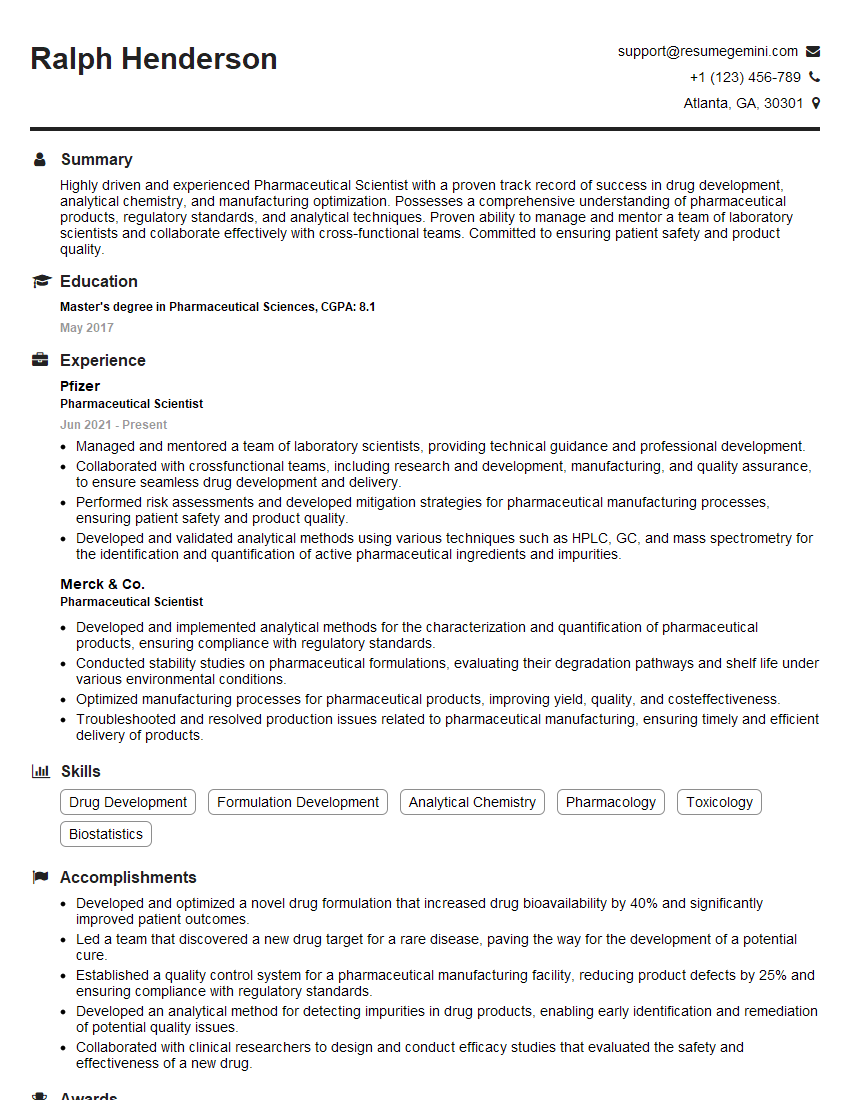
Pharmaceutical Scientist Resume Sample
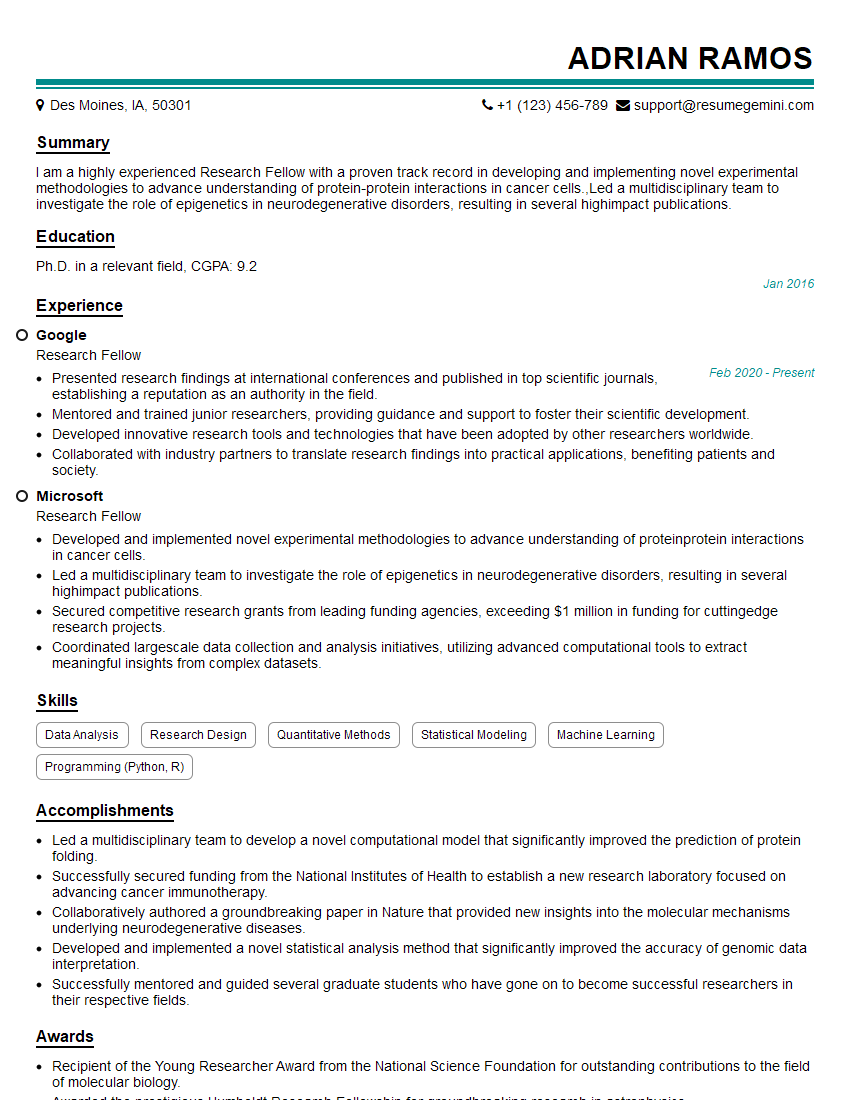
Research Fellow Resume Sample

Bioinformatics Scientist Resume Sample

Computational Biologist Resume Sample

Structural Biologist Resume Sample

Lead Scientist Resume Sample

Principal Investigator Resume Sample

Materials Scientist Resume Sample
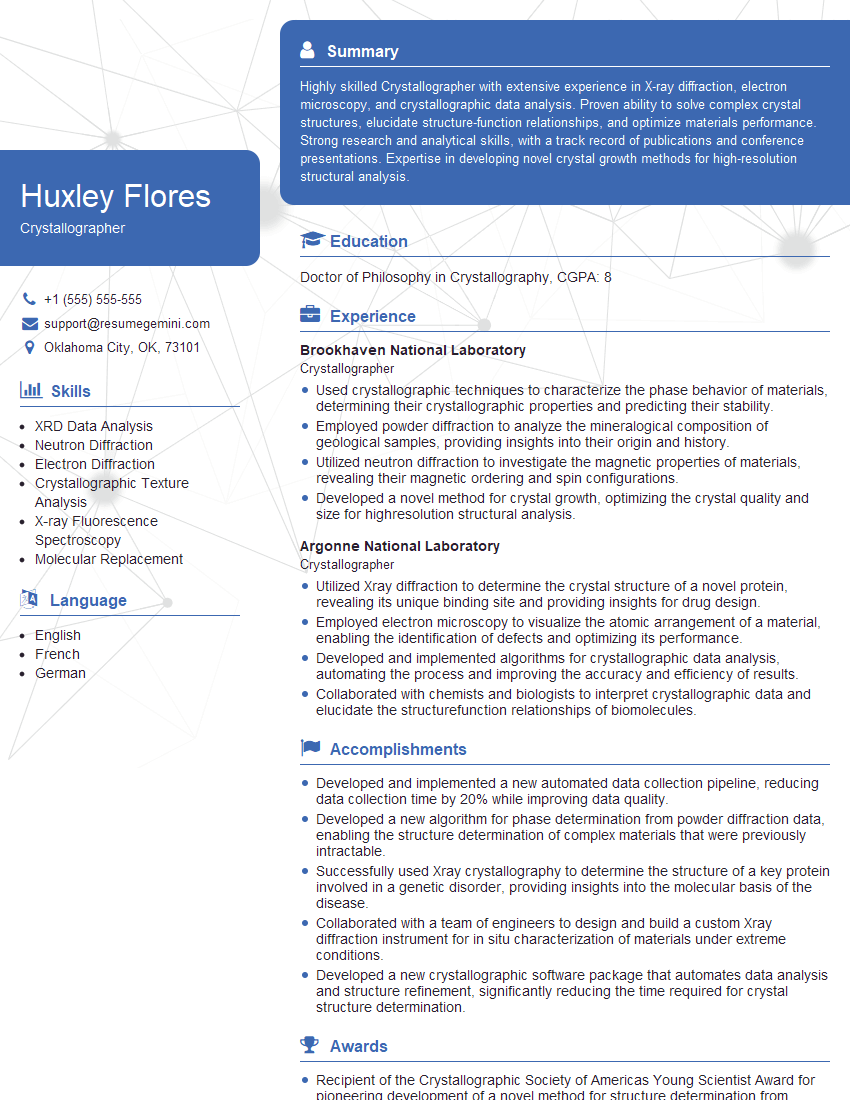
Crystallographer Resume Sample
Explore more articles
Users Rating of Our Blogs
Share Your Experience
We value your feedback! Please rate our content and share your thoughts (optional).
What Readers Say About Our Blog
To the interviewgemini.com Webmaster.
Very helpful and content specific questions to help prepare me for my interview!
Thank you
To the interviewgemini.com Webmaster.
This was kind of a unique content I found around the specialized skills. Very helpful questions and good detailed answers.
Very Helpful blog, thank you Interviewgemini team.