Preparation is the key to success in any interview. In this post, we’ll explore crucial Species at Risk Assessment interview questions and equip you with strategies to craft impactful answers. Whether you’re a beginner or a pro, these tips will elevate your preparation.
Questions Asked in Species at Risk Assessment Interview
Q 1. Define ‘species at risk’ and explain the different categories of risk.
A species at risk, or endangered species, is any species whose population size is declining to the point where it is at serious risk of extinction. These classifications are crucial for prioritizing conservation efforts.
Different jurisdictions use slightly varying terminology and criteria, but generally, categories include:
- Extinct (EX): No known individuals remaining.
- Extinct in the Wild (EW): Only surviving in captivity or outside its historic range.
- Critically Endangered (CR): Extremely high risk of extinction in the wild.
- Endangered (EN): Very high risk of extinction in the wild.
- Vulnerable (VU): High risk of extinction in the wild.
- Near Threatened (NT): Likely to become threatened in the near future.
- Least Concern (LC): Lowest risk.
- Data Deficient (DD): Insufficient data to assess the risk status.
- Not Evaluated (NE): Has not yet been assessed.
For example, the Amur leopard (Panthera pardus orientalis) is critically endangered due to habitat loss and poaching, while the giant panda (Ailuropoda melanoleuca) , though still endangered, has seen population increases due to focused conservation efforts.
Q 2. Describe the process of conducting a species at risk assessment.
Conducting a species at risk assessment is a multi-step process requiring collaboration among experts. It typically involves:
- Defining the scope: Clearly identifying the species, geographical area, and the timeframe for the assessment.
- Gathering data: Collecting information on population size, distribution, habitat quality, threats, and past trends. This often involves field surveys, literature reviews, and consultation with local communities and experts.
- Population viability analysis (PVA): Modelling the species’ future population trajectory considering various factors like birth and death rates, environmental changes, and human impacts (this is discussed in more detail in the next question).
- Threat assessment: Identifying and quantifying the severity and likelihood of various threats facing the species, such as habitat loss, climate change, invasive species, and disease.
- Habitat assessment: Identifying and mapping critical habitat areas essential for the species’ survival.
- Risk classification: Assigning a risk category based on the results of the PVA and threat assessments.
- Report writing: Preparing a comprehensive report documenting the entire assessment process, findings, and recommendations for conservation actions.
For instance, assessing the risk status of a migratory bird might involve tracking its movements using satellite telemetry, surveying breeding grounds and wintering habitats, and modelling the impact of climate change on its food sources.
Q 3. Explain the significance of population viability analysis (PVA) in species at risk assessments.
Population viability analysis (PVA) is a crucial component of species at risk assessments. It uses mathematical models to predict the probability of a species persisting in a given environment over a specified time period. It essentially forecasts a species’ future based on current information.
PVAs incorporate many factors, including:
- Population size and structure: Number of individuals, sex ratio, age distribution.
- Birth and death rates: Factors affecting survival and reproduction.
- Environmental variability: Fluctuations in climate, food availability, and other resources.
- Genetic factors: Inbreeding depression, loss of genetic diversity.
- Threats: Habitat loss, predation, disease.
The output of a PVA is often a probability of extinction within a certain timeframe. A low probability suggests a high risk of extinction, while a high probability indicates a greater chance of survival. This information is vital for determining the urgency and type of conservation interventions.
For example, a PVA might predict that a small, isolated population of a certain plant has a 90% probability of extinction within 50 years if current threats remain unchecked, prompting immediate conservation action.
Q 4. What are the key threats to species at risk, and how are they assessed?
Numerous threats endanger species. Assessing them involves identifying the specific threats, their severity, and their likelihood of occurrence. This often involves a combination of qualitative and quantitative methods.
- Habitat loss and degradation: This is often the leading cause, including deforestation, urbanization, agriculture, and pollution. Assessment involves mapping habitat extent, quality, and fragmentation.
- Invasive species: Non-native species can outcompete native species, introduce diseases, or alter habitats. Assessing their impact requires studying their distribution, abundance, and interactions with native species.
- Climate change: Shifting climate patterns can alter species’ distributions, breeding cycles, and resource availability. Assessments often involve climate modelling and predicting species’ responses to changing conditions.
- Overexploitation: Overfishing, hunting, or harvesting can deplete populations beyond their capacity to recover. Assessments require analyzing harvesting rates and population dynamics.
- Pollution: Air, water, and soil pollution can have devastating effects on species and their habitats. Assessments involve monitoring pollutant levels and assessing their impacts on species’ health and survival.
- Disease: Infectious diseases can rapidly decimate populations. Assessing this requires understanding disease transmission and the species’ susceptibility.
Threat assessment often utilizes scoring systems to rank threats by their impact and likelihood, facilitating prioritization of conservation efforts. For example, a high severity and high likelihood threat (e.g., extensive habitat loss due to mining) would receive a higher priority than a low severity and low likelihood threat (e.g., infrequent disease outbreaks).
Q 5. How do you identify critical habitat for a species at risk?
Identifying critical habitat is a crucial step in protecting species at risk. Critical habitat is the area necessary for the survival and recovery of a species. Identifying it typically involves a multi-faceted approach:
- Defining the species’ needs: Understanding the species’ life history, habitat requirements (food, water, shelter, breeding sites), and behavioral patterns.
- Gathering spatial data: Using field surveys, remote sensing (e.g., satellite imagery), and existing data sets to map the species’ distribution and habitat characteristics.
- Analyzing habitat suitability: Using ecological models and GIS tools to identify areas that meet the species’ requirements and are likely to support viable populations. This might include factors like elevation, slope, vegetation cover, proximity to water sources, etc.
- Considering threats: Identifying and evaluating potential threats to the identified habitat areas, such as development, pollution, or invasive species.
- Determining the minimum area needed: Estimating the size of habitat patches necessary to support a viable population and account for future uncertainties. This often involves Population Viability Analysis (PVA).
- Consultation and stakeholder engagement: Involving relevant stakeholders (e.g., landowners, government agencies, Indigenous communities) in the process to ensure that the identification of critical habitat is inclusive and considers diverse perspectives.
For example, identifying critical habitat for a particular amphibian species might involve mapping breeding ponds, determining the size of surrounding terrestrial habitat needed for foraging and shelter, and assessing the impact of nearby agricultural runoff.
Q 6. Discuss the role of GIS in species at risk assessment and management.
Geographic Information Systems (GIS) are indispensable tools for species at risk assessment and management. They provide the framework to spatially analyze and visualize crucial data, enhancing decision-making and conservation strategies.
GIS applications in this field include:
- Mapping species distributions: Creating maps showing the locations of species occurrences based on field observations and other data sources.
- Analyzing habitat suitability: Using GIS to model and map areas suitable for species based on environmental variables.
- Identifying critical habitat: Delineating areas essential for the species’ survival and recovery.
- Assessing threats: Mapping and analyzing the spatial extent and impact of various threats (e.g., habitat loss, pollution, invasive species).
- Monitoring population trends: Tracking changes in species distribution and abundance over time using GIS.
- Planning conservation actions: Using GIS to design and implement effective conservation strategies, such as protected area establishment, habitat restoration, or translocation programs.
- Communicating findings: Producing maps and other GIS-based outputs to communicate assessment results to stakeholders and the public.
For instance, GIS can be used to overlay maps of a threatened plant’s distribution with maps of land use changes to pinpoint areas where habitat loss is most severe, informing conservation priorities.
Q 7. Explain different recovery strategies for species at risk.
Recovery strategies for species at risk vary widely depending on the specific needs of the species and the nature of the threats it faces. However, common approaches include:
- Habitat protection and restoration: Establishing protected areas, restoring degraded habitats, and managing existing habitats to ensure the species’ needs are met.
- Population management: Implementing measures to increase population size and genetic diversity, such as captive breeding programs, reintroduction efforts, or habitat manipulation.
- Threat mitigation: Addressing the factors that threaten the species, such as reducing pollution, controlling invasive species, regulating hunting or fishing, or implementing climate change adaptation strategies.
- Community engagement: Working with local communities to encourage conservation, raise awareness, and foster stewardship of the species and its habitat.
- Research and monitoring: Conducting research to improve our understanding of the species’ biology, ecology, and threats, and monitoring populations to track their progress and adapt management strategies accordingly.
- Legislation and policy: Developing and implementing laws and regulations to protect the species and its habitat. This can include listing the species under endangered species acts and enacting measures to control threats.
For example, the recovery strategy for the California condor involved captive breeding programs to increase the population, habitat restoration efforts to improve foraging areas, and ongoing monitoring to track the success of the program.
Q 8. What are the legal and regulatory frameworks surrounding species at risk?
Legal and regulatory frameworks surrounding species at risk vary by jurisdiction but generally aim to protect endangered, threatened, and vulnerable species. These frameworks typically involve legislation establishing protected status for listed species, prohibiting activities that harm them (like habitat destruction or hunting), and mandating recovery planning.
For example, in Canada, the Species at Risk Act (SARA) provides the legal framework. SARA identifies species at risk, designates their legal protection status, and mandates the creation of recovery strategies and action plans. Similarly, the United States has the Endangered Species Act (ESA), which serves a comparable purpose. These acts often include provisions for habitat protection, enforcement mechanisms, and collaborations with stakeholders (including Indigenous communities and landowners).
- Legal Protection: Specifies which activities are prohibited, such as harming or harassing listed species.
- Recovery Planning: Requires the development of scientifically-based recovery strategies that outline actions to improve the species’ status.
- Enforcement: Outlines penalties for violating the legislation.
- International Agreements: National laws often integrate with international agreements like CITES (Convention on International Trade in Endangered Species) to address transboundary conservation challenges.
Q 9. How do you evaluate the effectiveness of conservation efforts for a species at risk?
Evaluating the effectiveness of conservation efforts requires a multi-faceted approach, combining quantitative and qualitative data. We need to measure changes in key population parameters (e.g., population size, range, genetic diversity) and indicators of habitat quality. This often involves comparing pre- and post-intervention data.
For instance, if we’re evaluating a habitat restoration project for an endangered bird species, we might monitor:
- Population size and trends: Using surveys, mark-recapture studies, or camera trapping to estimate the number of individuals and track changes over time.
- Habitat quality: Assessing changes in vegetation cover, prey abundance, and the presence of invasive species.
- Genetic diversity: Analyzing genetic samples to assess levels of inbreeding and genetic variation.
- Threats reduction: Evaluating the success of implemented strategies to mitigate threats, such as habitat loss or poaching.
Statistical analysis helps determine if observed changes are statistically significant and attributable to conservation actions. Qualitative data, including interviews with local communities and stakeholders, can provide valuable insights into the social and economic impacts of conservation programs. Adaptive management frameworks—adjusting strategies based on monitoring results—are crucial for maximizing effectiveness.
Q 10. Describe your experience with data collection and analysis in species at risk assessments.
My experience with data collection and analysis in species at risk assessments is extensive. I’ve been involved in numerous projects, employing various techniques depending on the species and its habitat. This typically involves designing robust sampling schemes and using appropriate statistical methods.
Data collection methods often include:
- Field surveys: Visual surveys, acoustic monitoring (for vocalizing species), trapping and marking, camera trapping.
- Remote sensing: Satellite imagery and aerial photography to assess habitat extent and quality.
- Genetic analysis: DNA sampling to assess genetic diversity and population structure.
- Citizen science: Engaging volunteers in data collection efforts.
Data analysis involves applying appropriate statistical tools, including:
- Population viability analysis (PVA): Modeling the probability of a species’ persistence under various scenarios.
- Occupancy modeling: Estimating the probability of species presence in different locations.
- Generalized linear mixed models (GLMMs): Analyzing the relationship between species occurrences and environmental variables.
For example, in a recent project assessing the impact of climate change on a rare plant species, we used a combination of field surveys, remote sensing, and climate models to predict future habitat suitability and inform conservation strategies.
Q 11. How do you incorporate Indigenous Traditional Ecological Knowledge (ITEK) into species at risk assessments?
Incorporating Indigenous Traditional Ecological Knowledge (ITEK) is crucial for effective species at risk assessments. ITEK represents generations of accumulated knowledge about the environment and its species, often including insights not captured in Western scientific approaches. It should be integrated as a vital part of the assessment process, not merely an add-on.
Effective integration involves:
- Building relationships: Establishing trust and respectful collaborations with Indigenous communities.
- Knowledge sharing: Facilitating two-way communication and knowledge exchange between Indigenous knowledge holders and scientists.
- Data collection methods: Adapting data collection methods to incorporate ITEK methodologies, such as participatory mapping or oral history interviews.
- Joint analysis: Analyzing data from both Western science and ITEK perspectives.
- Co-management: Involving Indigenous communities in the development and implementation of conservation strategies.
For example, in assessing the status of a salmon population, ITEK might reveal crucial information about traditional fishing practices, historical distribution patterns, and the impact of environmental changes on fish migration routes—data that would be inaccessible through scientific methods alone.
Q 12. Explain the concept of ecosystem services and their relevance to species at risk.
Ecosystem services are the benefits humans receive from ecosystems. These include provisioning services (e.g., food, water), regulating services (e.g., climate regulation, water purification), supporting services (e.g., nutrient cycling, soil formation), and cultural services (e.g., recreation, spiritual values). Species at risk play a crucial role in maintaining many ecosystem services.
Their decline can disrupt these services, leading to significant consequences for human well-being. For example:
- Pollination: Declines in bee populations can impact crop yields and agricultural productivity.
- Water purification: Loss of wetland habitats can reduce water quality and increase flood risk.
- Climate regulation: Deforestation and the loss of carbon-storing species contribute to climate change.
- Tourism: Loss of iconic species can negatively impact tourism industries.
Incorporating the value of ecosystem services into species at risk assessments helps to highlight the broader societal benefits of conservation efforts, often strengthening arguments for funding and policy support.
Q 13. How do you address uncertainties and limitations in species at risk assessments?
Uncertainties and limitations are inherent in species at risk assessments. Data may be incomplete or unreliable; some threats may be difficult to quantify; and future environmental changes are inherently unpredictable. Addressing these challenges requires:
- Transparency: Clearly acknowledging uncertainties and limitations in the assessment report.
- Sensitivity analysis: Evaluating how results vary based on different assumptions and data inputs.
- Precautionary principle: Applying a cautious approach when dealing with uncertainty, erring on the side of protection.
- Adaptive management: Implementing flexible management strategies that can be adjusted based on new information and monitoring results.
- Qualitative data: Integrating qualitative information, such as expert opinion and traditional ecological knowledge, to supplement quantitative data.
For instance, if data on a particular threat is limited, we might use expert elicitation to estimate its likely impact, acknowledging this as a source of uncertainty. This transparent approach acknowledges the limitations while still providing the best available information for decision-making.
Q 14. Discuss the role of adaptive management in species at risk conservation.
Adaptive management is a structured, iterative process for managing species at risk. It’s based on the recognition that our understanding of ecological systems is incomplete and that management strategies need to be flexible and responsive to new information. It’s not a ‘one-size-fits-all’ approach, but rather a cyclical process of planning, implementation, monitoring, and evaluation.
The key components include:
- Clearly defined objectives: Setting specific, measurable, achievable, relevant, and time-bound (SMART) objectives for conservation.
- Hypothesis-driven management: Formulating testable hypotheses about the effectiveness of different management actions.
- Monitoring: Regularly monitoring key indicators to assess the effectiveness of implemented strategies.
- Evaluation: Evaluating monitoring data to assess whether objectives are being met and to identify areas for improvement.
- Adjustment: Adapting management strategies based on monitoring and evaluation results.
For example, if a habitat restoration project doesn’t yield the expected results after a few years, adaptive management would involve re-evaluating the project design, adapting methods, or even selecting alternative strategies based on new scientific findings or stakeholder input. This cyclical approach ensures that conservation efforts remain responsive and effective over time.
Q 15. What are the ethical considerations in species at risk research and management?
Ethical considerations in species at risk research and management are paramount. We must prioritize the well-being of the species and avoid causing further harm through our actions. This involves several key aspects:
- Minimizing harm to the species: Research methodologies must be designed to minimize disturbance, stress, or injury to the animals. This includes obtaining necessary permits and adhering to strict ethical guidelines established by organizations like the IUCN.
- Respecting Indigenous knowledge and rights: Many Indigenous communities possess invaluable traditional ecological knowledge about at-risk species. Collaboration is crucial, respecting their rights and ensuring benefits sharing from research outcomes.
- Transparency and data sharing: Research findings must be made publicly available, promoting transparency and accountability. Data sharing allows for collaborative conservation efforts and avoids duplication of effort.
- Avoiding conflicts of interest: Researchers and managers should avoid any situations that might compromise their objectivity or lead to decisions that prioritize personal gain over the welfare of the species.
- Balancing conservation needs with human needs: Conservation efforts must be carefully designed to avoid negatively impacting local communities’ livelihoods, especially if the species’ habitat is crucial for their subsistence.
For example, in a study involving endangered whales, researchers must minimize the use of acoustic devices that could disrupt their communication or behavior. Similarly, decisions to protect habitat may need to carefully balance the needs of the species with the needs of local communities who may rely on those resources.
Career Expert Tips:
- Ace those interviews! Prepare effectively by reviewing the Top 50 Most Common Interview Questions on ResumeGemini.
- Navigate your job search with confidence! Explore a wide range of Career Tips on ResumeGemini. Learn about common challenges and recommendations to overcome them.
- Craft the perfect resume! Master the Art of Resume Writing with ResumeGemini’s guide. Showcase your unique qualifications and achievements effectively.
- Don’t miss out on holiday savings! Build your dream resume with ResumeGemini’s ATS optimized templates.
Q 16. Describe your experience with using specific software for species at risk modelling.
I have extensive experience utilizing various software packages for species at risk modeling. One of the most powerful tools is MaxEnt, which is particularly well-suited for species distribution modeling. This software uses presence-only data and environmental variables to predict the probability of a species’ occurrence across a landscape. I’ve used MaxEnt to predict the potential distribution of the endangered mountain caribou, incorporating variables such as forest cover, elevation, and proximity to human development. Another valuable tool is R, a statistical programming language with numerous packages specifically designed for ecological modeling and data analysis. Packages like spatstat and raster are essential for spatial analyses, population viability analysis, and habitat suitability modeling. I’ve used these tools to perform various statistical analysis, like assessing the impact of forest fragmentation on genetic diversity in a threatened plant species. Additionally, I have experience using ArcGIS for geospatial data handling, manipulation, and visualization. This is instrumental in overlaying species distribution maps with land-use data, aiding in prioritization of conservation areas.
Q 17. Explain how climate change impacts species at risk and how to incorporate it into assessments.
Climate change presents a significant threat to species at risk. Shifting temperature and precipitation patterns, altered habitat suitability, increased frequency of extreme weather events, and changes in species interactions all pose substantial challenges. Incorporating climate change into species at risk assessments involves several steps:
- Projecting future climate scenarios: Utilize climate models (e.g., General Circulation Models) to predict future climate conditions under different greenhouse gas emission scenarios.
- Assessing species vulnerability: Evaluate the species’ physiological tolerance to changes in temperature and precipitation, their ability to adapt or migrate to new suitable habitats, and the potential impacts of changes on their prey, competitors, or predators.
- Modeling future distributions: Use species distribution modeling (SDM) software (such as
MaxEnt) incorporating future climate projections to predict how the species’ range might shift over time. - Identifying climate refugia: Identify areas that might remain climatically suitable even under future climate change scenarios, focusing conservation efforts on those areas.
- Incorporating uncertainty: Acknowledge the inherent uncertainties in climate projections and species responses and reflect this uncertainty in conservation planning.
For instance, a study of polar bears might project future reductions in sea ice extent, leading to reduced hunting success and population declines. Conservation strategies could then focus on protecting existing ice habitat and potentially mitigating the impacts of sea ice loss.
Q 18. How do you communicate complex scientific information to diverse audiences?
Communicating complex scientific information to diverse audiences requires tailoring the message to the audience’s background and level of understanding. I employ a multi-pronged approach:
- Using plain language: Avoid jargon and technical terms whenever possible. Use analogies and relatable examples to explain complex concepts.
- Visual aids: Maps, graphs, charts, and images help convey information more effectively than text alone. Keep visuals simple and easy to understand.
- Storytelling: Framing information as a narrative, focusing on individual species or case studies, makes the information more engaging and memorable.
- Interactive presentations: Employing interactive elements, such as Q&A sessions or hands-on activities, fosters engagement and understanding.
- Multiple communication channels: Utilize various platforms—reports, websites, social media, presentations, and public lectures—to reach a broader audience.
For example, when presenting to a group of policymakers, I use concise summaries and focus on the implications for policy decisions. When talking to the general public, I might use more engaging storytelling and visuals.
Q 19. Describe your experience in collaboration with stakeholders on species at risk initiatives.
Collaboration with stakeholders is critical for successful species at risk initiatives. My experience includes working with diverse stakeholders, including:
- Government agencies: Coordinating with federal and provincial agencies to secure funding, permits, and regulatory approvals.
- Indigenous communities: Collaborating on research projects and conservation plans, respecting traditional knowledge and ensuring benefits sharing.
- Landowners and land managers: Working with private landowners to implement conservation practices on their lands, potentially through incentive programs.
- Non-governmental organizations (NGOs): Partnering with NGOs to raise awareness, secure funding, and implement on-the-ground conservation actions.
- Local communities: Engaging with local residents to understand their perspectives and concerns, building consensus on conservation measures.
For example, in a project involving the recovery of an endangered bird species, I worked closely with Indigenous communities to understand their traditional ecological knowledge about the bird’s habitat needs and migration patterns. This collaboration helped us develop more effective conservation strategies.
Q 20. What are the potential impacts of habitat fragmentation on species at risk?
Habitat fragmentation, the breaking up of continuous habitat into smaller, isolated patches, has devastating impacts on species at risk. These impacts include:
- Reduced population size: Smaller patches support smaller populations, increasing the risk of extinction due to factors like genetic bottlenecks and demographic stochasticity (random fluctuations in birth and death rates).
- Increased edge effects: Edges of habitat fragments experience altered environmental conditions, such as increased wind exposure, sunlight, and predation, negatively impacting the species within.
- Loss of genetic diversity: Isolation limits gene flow between populations, leading to reduced genetic diversity and making the species more vulnerable to diseases and environmental changes.
- Increased isolation: Fragmentation hinders dispersal and migration, making it difficult for species to find mates, suitable breeding grounds, or new resources.
- Increased vulnerability to disturbances: Fragmented habitats are more susceptible to disturbances such as wildfires, disease outbreaks, and invasive species.
Think of a forest fragmented by roads and agricultural fields. The remaining forest patches may be too small to support viable populations of large mammals that require large territories for foraging and reproduction. The edges of these patches may also be vulnerable to increased predation from human activities or invasion by non-native species.
Q 21. Explain the concept of minimum viable population (MVP) and its importance.
The minimum viable population (MVP) is the smallest population size of a species that can survive in the wild for a specified period of time, typically 100 years, with a specified probability, often 95%. It’s a critical concept in conservation because it provides a benchmark for determining the population size needed to ensure a species’ long-term survival.
Determining the MVP involves considering various factors:
- Environmental stochasticity: Random fluctuations in environmental conditions.
- Demographic stochasticity: Random fluctuations in birth and death rates.
- Genetic factors: The potential for inbreeding depression or loss of genetic diversity.
- Catastrophic events: The risk of sudden population declines due to extreme events like disease outbreaks or wildfires.
A population below the MVP has a high risk of extinction. Knowing the MVP helps to set conservation goals and prioritize management actions, such as habitat protection and restoration, population augmentation, or captive breeding programs. For example, if a study determines the MVP of a particular endangered bird species to be 500 individuals, conservation efforts would focus on increasing the population size to at least that level and maintaining it above the MVP.
Q 22. How do you determine the appropriate scale for a species at risk assessment?
Determining the appropriate scale for a species at risk assessment is crucial for its effectiveness. The scale should be commensurate with the species’ ecological needs and the threats it faces. Too small a scale might miss critical habitat or population dynamics, while too large a scale can be unwieldy and resource-intensive, compromising the accuracy and detail needed for effective management.
Consider a species like the mountain lion. A local assessment focusing solely on a single national park might be insufficient if the lion’s home range extends far beyond park boundaries. Conversely, attempting a continent-wide assessment for a highly localized species like a rare cave-dwelling beetle would be impractical.
The ideal scale involves a careful consideration of:
- Species distribution and habitat range: Assessments should encompass the entire area where the species occurs, including areas critical for breeding, foraging, and dispersal.
- Threat distribution: The geographic extent of threats such as habitat loss, pollution, or invasive species should be considered to ensure all potential impacts are accounted for.
- Data availability: The scale should be realistic given the available data. If data are limited to a specific region, expanding the scale is not practical or appropriate.
- Management objectives: The desired outcomes of the assessment, for example, guiding local conservation efforts versus national policy, will help define the most appropriate scale.
Ultimately, selecting the appropriate scale often involves an iterative process, where preliminary analyses at broader scales help refine the focus on smaller, more manageable units.
Q 23. Describe your experience with monitoring and evaluating species populations.
My experience with monitoring and evaluating species populations spans over fifteen years, encompassing a variety of taxa and ecosystems. I’ve employed diverse methodologies, from traditional transect surveys and mark-recapture techniques to cutting-edge approaches utilizing camera traps, GPS telemetry, and genetic analysis.
For example, in a project assessing the population status of the endangered Florida panther, we employed a combination of camera trapping and genetic analysis to estimate population size, assess gene flow, and identify critical habitats. Camera traps allowed for non-invasive monitoring of population size and distribution while genetic analysis provided insights into population connectivity and genetic diversity. The integrated approach provided a much richer and more reliable picture of the panther’s status compared to using a single method. This also involved using GIS software to analyze spatial data and model future habitat scenarios.
Evaluating population trends requires analyzing the data collected through monitoring. We often use statistical models to detect changes in population size and distribution over time, accounting for factors like sampling effort and environmental variability. Data analysis allows us to assess the effectiveness of conservation interventions and inform future management decisions. For example, we’ve used population viability analysis (PVA) to predict the probability of species extinction under various scenarios, allowing for proactive management adaptations.
Q 24. What are some examples of successful conservation programs for species at risk?
Several successful conservation programs illustrate the effectiveness of targeted interventions. The recovery of the American bald eagle is a prime example. Through the banning of DDT, protection of nesting sites, and habitat restoration, this iconic species has been removed from the endangered species list.
Similarly, the California condor recovery program, which involved captive breeding, habitat restoration, and lead poisoning mitigation, has dramatically increased the wild population of this critically endangered bird.
Another success story is the protection and management of the black-footed ferret. Through captive breeding, reintroduction programs, and disease control, the species has been saved from the brink of extinction. These successful programs highlight the crucial role of integrated approaches incorporating both in situ (on-site) and ex situ (off-site) conservation efforts.
Key elements of these successful programs include:
- Identifying and mitigating threats: Addressing the root causes of decline, such as habitat destruction, pollution, and invasive species.
- Habitat protection and restoration: Protecting and restoring critical habitats are essential for species survival.
- Monitoring and evaluation: Ongoing monitoring is critical to track population trends and assess the effectiveness of conservation measures.
- Community engagement and collaboration: Involving local communities and stakeholders promotes long-term conservation success.
Q 25. What are the limitations of using surrogate species in conservation efforts?
Surrogate species, often used in conservation because of limited resources or data, are species whose protection indirectly benefits other species. While convenient, relying solely on surrogate species has limitations. The primary limitation is the assumption that the needs of the surrogate and the target species overlap significantly. This is not always the case, potentially leading to insufficient protection for the target species.
For instance, using a wide-ranging, generalist bird species as a surrogate for a narrowly endemic plant might overlook the specific habitat requirements or threats to the plant. The generalist bird might thrive even as the plant declines, masking the plant’s plight.
Other limitations include:
- Uncertainty in ecological relationships: The exact nature and strength of ecological interactions between the surrogate and target species are often poorly understood.
- Scale mismatch: The surrogate species’ range might not adequately encompass the target species’ critical habitat.
- Potential for misdirection: Resources might be focused on protecting the surrogate species at the expense of the target species, especially if the surrogate’s needs are not fully aligned with the target’s.
Therefore, the use of surrogate species should be a complementary approach, not a replacement for targeted conservation efforts focused on the species of actual concern. Ideally, surrogate selection should be carefully justified based on strong ecological evidence supporting significant overlap in their requirements and sensitivity to the same threats.
Q 26. How do you prioritize conservation actions for multiple species at risk?
Prioritizing conservation actions for multiple species at risk often requires a systematic approach using a framework like a cost-effectiveness analysis or a multi-criteria decision analysis (MCDA).
Cost-effectiveness analysis compares the cost of different conservation actions against their expected benefits, often measured by the increase in species population size or the reduction in extinction risk. The actions with the highest benefit-cost ratios are given priority.
Multi-criteria decision analysis (MCDA) incorporates multiple criteria in the prioritization process, such as the species’ extinction risk, its ecological importance, the feasibility of implementing conservation actions, and societal values. MCDA methods, such as weighted scoring or analytical hierarchy process (AHP), allow for a more holistic approach by assigning weights to each criterion and ranking species based on their overall scores.
Beyond these frameworks, several factors influence prioritization:
- Extinction risk: Species facing imminent extinction are usually given higher priority.
- Ecological importance: Keystone species or those playing crucial roles in ecosystem function are prioritized.
- Conservation feasibility: Actions with high chances of success are favored.
- Societal values: Societal preferences and cultural significance may influence prioritization decisions.
Often, iterative processes involving stakeholder engagement are employed to combine scientific data with societal values, leading to more transparent and equitable prioritization decisions. The process should also consider the potential for synergies, where conservation actions for one species benefit other species as well.
Q 27. Describe your experience working with threatened or endangered species in specific ecosystems (e.g., marine, forest, etc.)
My experience with threatened and endangered species encompasses various ecosystems. In marine environments, I participated in projects assessing the population status of several coral species threatened by bleaching and ocean acidification. We used underwater visual censuses and remotely operated vehicles (ROVs) to collect data on coral cover, diversity, and recruitment rates. This required extensive knowledge of marine ecology and the ability to adapt to harsh fieldwork conditions.
In forested ecosystems, I’ve worked extensively on projects related to the conservation of endangered amphibians and birds. Here, we used habitat suitability models to identify critical habitats and evaluate the impact of deforestation and climate change on the species distribution and abundance. This involved using GIS software, statistical modeling, and collaboration with forest ecologists.
In both cases, careful consideration of the unique challenges of each ecosystem was critical. For instance, underwater work requires specialized training and equipment, while forested environments present challenges related to accessibility and weather conditions. Each project also demanded a deep understanding of the ecological interactions within the specific ecosystem, understanding the interplay of biotic and abiotic factors impacting the species of concern.
Q 28. How do you handle conflicting interests in species at risk management decisions?
Handling conflicting interests in species at risk management is a common challenge. These conflicts often arise between conservation needs and economic development, resource extraction, or recreational activities. Effective management necessitates a transparent and participatory approach that acknowledges all perspectives and seeks to find mutually acceptable solutions.
My approach involves:
- Stakeholder engagement: Engaging all affected parties early and often in the decision-making process. This includes government agencies, local communities, industry representatives, and conservation organizations.
- Transparency and communication: Providing clear and accessible information about the species, the threats it faces, and the proposed management actions.
- Negotiation and compromise: Facilitating constructive dialogue to find solutions that balance conservation needs with other societal interests.
- Adaptive management: Implementing flexible management strategies that can be adjusted based on monitoring results and feedback from stakeholders.
- Legal frameworks: Utilizing relevant environmental laws and regulations to guide decision-making and resolve conflicts.
For example, in a situation where logging threatened the habitat of an endangered bird, a successful resolution might involve creating buffer zones around critical nesting areas, implementing sustainable forestry practices, or compensating local communities for lost logging revenue through alternative economic initiatives.
It is vital to remember that effective conflict resolution requires strong communication skills, the ability to understand different perspectives, and a commitment to finding equitable solutions. Prioritizing open communication and building trust between stakeholders are key to successful outcomes.
Key Topics to Learn for Species at Risk Assessment Interview
- Species Identification and Taxonomy: Understanding taxonomic classifications, species distribution, and identification techniques crucial for accurate assessment.
- Population Viability Analysis (PVA): Applying PVA models to predict future population trends and inform conservation strategies. Practical application includes interpreting model outputs and identifying key threats.
- Threat Assessment and Prioritization: Identifying and ranking threats to species, considering factors like habitat loss, climate change, and invasive species. Includes prioritizing threats for effective management.
- Habitat Assessment and Mapping: Utilizing GIS and remote sensing techniques to map and analyze habitat suitability and fragmentation. Practical application involves interpreting habitat maps and identifying critical habitat areas.
- Recovery Planning and Implementation: Developing and implementing recovery strategies for at-risk species. This includes understanding the steps involved in creating a recovery plan and monitoring its effectiveness.
- Legislation and Policy related to Species at Risk: Familiarity with relevant national and international laws and regulations, including understanding the legal frameworks for protecting endangered species.
- Data Analysis and Interpretation: Analyzing population data, demographic information, and threat data to inform conservation decisions. Includes experience with statistical software and data visualization.
- Communication and Collaboration: Effectively communicating assessment findings to stakeholders and collaborating with diverse teams to develop and implement conservation strategies.
Next Steps
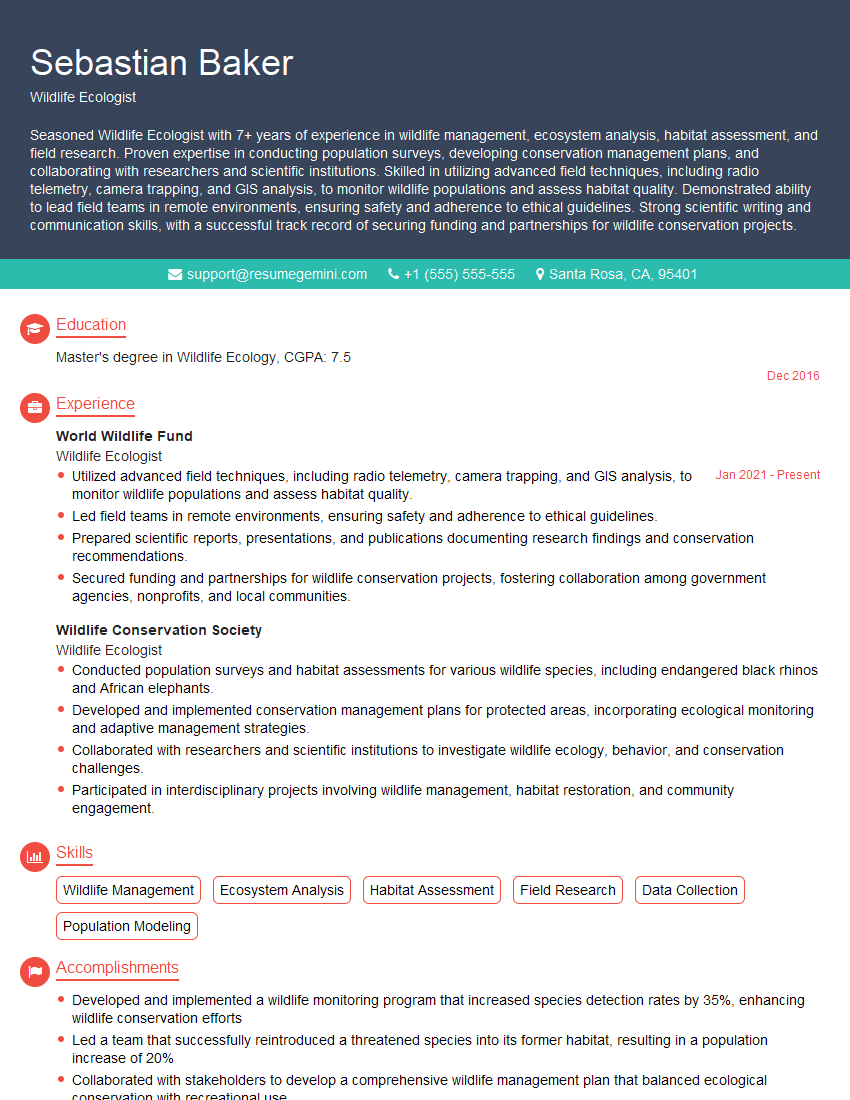
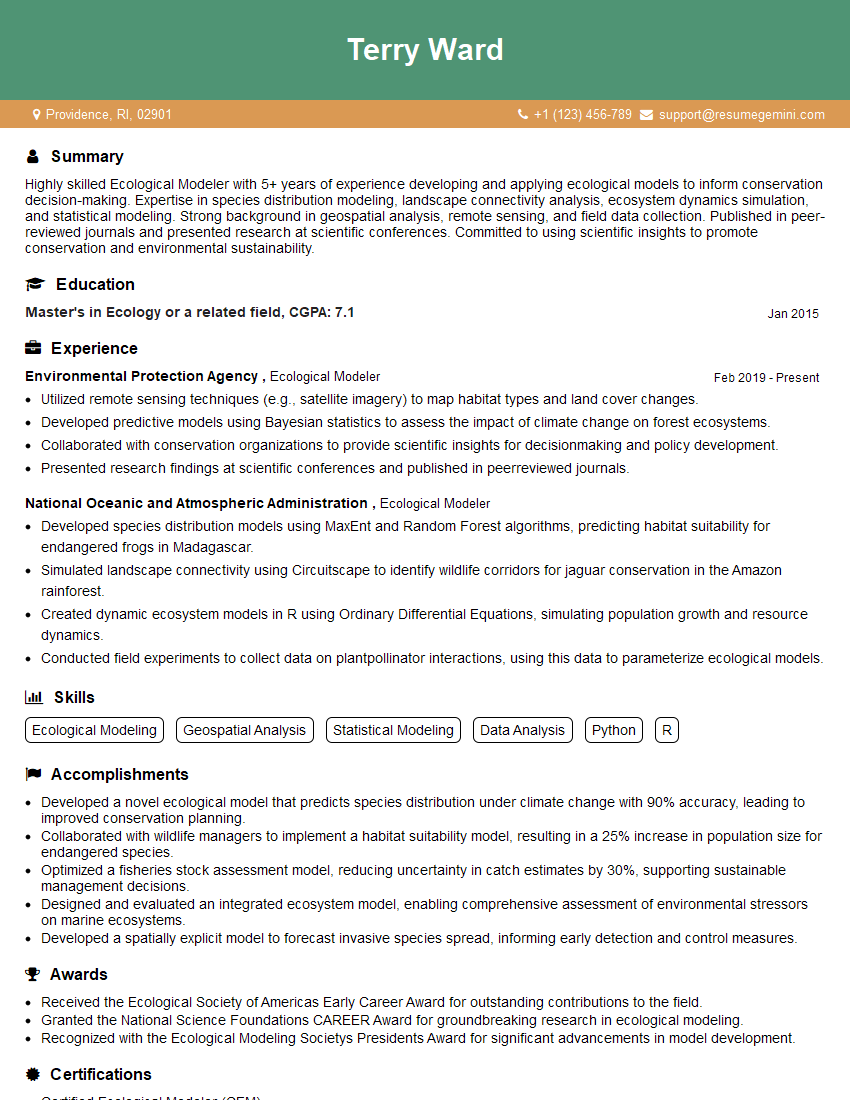
Mastering Species at Risk Assessment opens doors to rewarding careers in conservation biology, environmental management, and government agencies. A strong understanding of these principles is highly sought after by employers. To maximize your job prospects, it’s crucial to present your skills and experience effectively. Creating an ATS-friendly resume is key to getting your application noticed. ResumeGemini is a trusted resource that can help you build a professional and impactful resume, ensuring your qualifications shine. Examples of resumes tailored to Species at Risk Assessment are available within ResumeGemini to guide your preparation. Take this opportunity to showcase your expertise and land your dream job!


Explore more articles
Users Rating of Our Blogs
Share Your Experience
We value your feedback! Please rate our content and share your thoughts (optional).
What Readers Say About Our Blog
To the interviewgemini.com Webmaster.
Very helpful and content specific questions to help prepare me for my interview!
Thank you
To the interviewgemini.com Webmaster.
This was kind of a unique content I found around the specialized skills. Very helpful questions and good detailed answers.
Very Helpful blog, thank you Interviewgemini team.