Are you ready to stand out in your next interview? Understanding and preparing for Splicing and terminating wires interview questions is a game-changer. In this blog, we’ve compiled key questions and expert advice to help you showcase your skills with confidence and precision. Let’s get started on your journey to acing the interview.
Questions Asked in Splicing and terminating wires Interview
Q 1. Explain the difference between crimping and soldering wire terminations.
Crimping and soldering are two distinct methods for terminating wires, each with its own advantages and disadvantages. Crimping uses a crimping tool to mechanically attach a connector to the wire, relying on pressure to create a secure connection. Soldering, on the other hand, uses heat and molten solder to create a metallurgical bond between the wire and the connector.
Think of it like this: crimping is like fastening two pieces of wood together with a clamp, while soldering is like gluing them together with strong adhesive. Crimping is generally faster and simpler, ideal for mass production or field work where speed is crucial. It’s also less prone to damage from heat. However, the connection can be less robust and is susceptible to vibration. Soldering provides a stronger, more reliable connection, especially for higher current applications, but it requires more skill, specialized equipment, and takes longer. It also poses a risk of damaging heat-sensitive components.
For example, in a home network setup, crimping is the preferred method for terminating Ethernet cables because of its speed and ease of use. In contrast, soldering is often used in high-power electrical systems where a highly reliable, robust connection is paramount.
Q 2. Describe the steps involved in terminating a coaxial cable.
Terminating a coaxial cable, like those used for cable TV or internet, requires precision to ensure a good signal. Here’s a step-by-step process:
- Strip the outer jacket: Carefully remove the outer jacket of the coaxial cable, exposing the braided shielding. Be careful not to nick the inner conductor.
- Remove the shielding: Unbraid the shielding for about ½ inch and carefully remove it, avoiding damage to the dielectric (insulating layer) underneath.
- Strip the dielectric: Remove the dielectric, exposing the inner conductor (typically copper) for the appropriate length. Be precise to avoid short circuits.
- Prepare the connector: Insert the inner conductor into the connector’s center pin, ensuring it is fully seated. Then, carefully tuck the braided shield under the connector’s clamping ring.
- Crimp the connector: Use a suitable crimping tool to firmly compress the connector onto the cable. Ensure the connection is snug and secure.
- Test the connection: After termination, use a signal meter or tester to ensure the connection is good and that the signal passes through without significant attenuation.
Improper termination of a coaxial cable can result in signal loss, interference, and poor connection quality. Always use the correct tools and techniques, and be meticulous in each step.
Q 3. What safety precautions must be taken when splicing and terminating wires?
Safety is paramount when splicing and terminating wires. Here are some key precautions:
- Always de-energize circuits: Before working on any electrical wiring, ensure the power is completely turned off and locked out/tagged out to prevent accidental energization. Double-check with a voltage tester to ensure the circuit is indeed dead.
- Use appropriate Personal Protective Equipment (PPE): Wear safety glasses to protect your eyes from flying debris, insulated gloves to prevent electric shock, and appropriate footwear.
- Work in a well-ventilated area: Soldering fumes can be hazardous. Ensure adequate ventilation or use a fume extractor.
- Handle sharp tools carefully: Wire strippers, cutters, and crimpers have sharp edges. Handle them with care to avoid cuts and injuries.
- Dispose of waste properly: Dispose of wire scraps and other waste materials according to local regulations.
- Be aware of potential hazards: Be mindful of any nearby hazards, such as sharp objects, chemicals, or other electrical equipment.
Ignoring these precautions can lead to serious injuries, electrical shocks, fires, or equipment damage.
Q 4. What are the common types of wire strippers and how do you select the appropriate one?
Several types of wire strippers are available, each designed for different wire sizes and types. Common types include:
- Adjustable wire strippers: These allow you to adjust the stripping jaws to fit various wire diameters. This is an all-around choice.
- Automatic wire strippers: These automatically strip the insulation based on the wire size selected. Great for speed and consistency in production lines.
- Ratcheting wire strippers: These feature a ratcheting mechanism to ensure consistent stripping depth. This helps prevent accidentally damaging the wire.
- Self-adjusting wire strippers: These can sense the wire size and automatically adjust to the correct stripping size. Very convenient.
Selecting the appropriate wire stripper depends on the wire gauge, insulation type, and your personal preferences. For most general-purpose applications, an adjustable wire stripper is a good choice. Always check the manufacturer’s instructions to ensure compatibility with your specific wires before use. Using the wrong stripper can lead to damage to the wire, inconsistent stripping, and potential safety issues.
Q 5. How do you identify different types of wires and cables?
Identifying wires and cables involves recognizing various markings and characteristics. Wires usually have color codes for easy identification. For instance, in North America, standard house wiring often uses black (hot), white (neutral), and bare copper or green (ground) wires. Cables, on the other hand, typically have markings printed directly on their outer jacket. These markings specify voltage ratings, gauge, material, type of insulation, and sometimes the manufacturer.
Beyond color codes and markings, you can also identify wires and cables based on their physical characteristics such as the type of insulation (e.g., PVC, Teflon), the number of conductors, and the overall diameter. Specialized tools like wire identification testers can help verify the identity of unknown wires, particularly when dealing with complex wiring harnesses.
Always refer to the wiring diagrams or specifications to accurately identify the wires and cables in a specific application. Incorrect identification can lead to mistakes that can cause malfunction, hazards and safety concerns.
Q 6. Explain the importance of proper wire insulation and its role in preventing short circuits.
Proper wire insulation is crucial for preventing short circuits and ensuring electrical safety. Insulation acts as a barrier, separating the current-carrying conductors and preventing them from contacting each other or exposed metal surfaces. A short circuit occurs when a conductive path exists between two points of different potential, allowing a large current to flow, potentially damaging equipment and causing fires. The insulation’s quality and thickness directly impact its ability to prevent these short circuits.
For example, using damaged or deteriorated insulation can expose the wire conductors, creating a potential path for short circuits. Similarly, using insulation with insufficient thickness for the applied voltage can lead to breakdown and short circuits, especially under high-voltage conditions. Always inspect wiring for damage, and ensure appropriate insulation ratings are used for the operating voltage and environmental conditions.
Q 7. Describe the process of splicing fiber optic cables.
Splicing fiber optic cables is more complex than splicing copper wires. It demands precision and specialized equipment to maintain the signal integrity. The process typically involves the following steps:
- Prepare the fibers: Clean the ends of the fiber optic cables using specialized cleaning tools and techniques to remove any dust or debris that could affect the connection.
- Cleaving the fibers: Using a fiber optic cleaver, create a precise, perpendicular cleave at the end of each fiber to ensure optimal light transmission.
- Splicing the fibers: The splicing technique can vary depending on the method used. Fusion splicing utilizes heat to melt and fuse the fibers together, creating a strong and lossless connection, while mechanical splicing employs a mechanical connector to join the fibers.
- Testing the splice: After splicing, use an optical time-domain reflectometer (OTDR) to verify the quality of the connection and to detect any loss or attenuation.
Splicing fiber optic cables incorrectly can result in significant signal loss, affecting the data transmission. This requires specialized training and high-precision tools. It’s recommended to use only high quality tools and materials.
Q 8. What are the different types of connectors used for wire terminations?
Wire terminations utilize various connectors, each suited for specific applications and wire types. The choice depends on factors like wire gauge, current carrying capacity, environmental conditions, and ease of connection/disconnection.
- Crimp connectors: These are widely used for quick and reliable connections. They involve crimping a metal sleeve onto the wire end, securing it within the connector. Examples include insulated butt connectors, spade terminals, ring terminals, and quick disconnects. The crimp needs to be properly done to avoid weak connections or damage to the wire.
- Screw terminals: These secure the wire by clamping it under a screw. They are robust and often used in high-current applications or where frequent disconnections are needed. Common in electrical panels and power supplies.
- Solder terminals: These require soldering the wire to the terminal, providing a highly reliable connection with good electrical conductivity. More time-consuming and requires soldering skills and equipment, often for sensitive electronics.
- Wire nuts (for splicing): These are plastic caps that twist onto multiple wires, making a mechanically secure connection. Mainly for splicing, not terminations at connection points.
- Connectors for specific cables: Many cables have specific connectors, such as RJ45 connectors (for Ethernet), USB connectors, or HDMI connectors, designed for their respective standards.
Choosing the right connector is crucial for safety and reliability. A poorly chosen or improperly installed connector can lead to overheating, fire hazards, or system malfunction.
Q 9. How do you test the continuity of a wire after termination?
Continuity testing verifies a complete, unbroken electrical path through a wire or circuit after termination. It ensures the connection is sound and there are no breaks or shorts. A multimeter is the most common tool for this test.
- Set the multimeter: Select the continuity test setting (usually indicated by a diode symbol or a tone).
- Connect the probes: Place one probe on the wire at the termination point and the other probe at the other end of the wire. For example, if you terminated a wire to a terminal block, one probe goes to that terminal and the other to the wire’s origin.
- Observe the reading: A continuous tone or a near-zero resistance reading indicates a good connection. Absence of tone or a high resistance indicates a break in the wire or a poor connection.
It’s crucial to test before energizing the circuit to prevent short circuits and damage to equipment. If the connection has a problem, you should trace and fix the fault before continuing.
Q 10. Explain the purpose and use of heat shrink tubing in wire terminations.
Heat shrink tubing is a flexible tube made of thermoplastic material that shrinks when heated. Its primary purpose in wire terminations is to provide insulation, strain relief, and environmental protection.
- Insulation: It provides additional insulation to the connection, preventing shorts and protecting against moisture and abrasions.
- Strain relief: It protects the wire from being pulled or stressed at the connection point, which helps prevent wire breakage.
- Environmental protection: It protects the connections from moisture, dust, and other environmental factors that could cause corrosion or degradation.
Applying heat shrink tubing is relatively straightforward. Select tubing with a diameter slightly larger than the wire and connector. Apply heat using a heat gun or other appropriate heating method until it shrinks tightly around the termination, ensuring it provides a snug fit without damaging the wire. Incorrectly applied tubing is ineffective, leading to compromised insulation or strain relief.
Q 11. What are the different types of wire splices and when would you use each one?
Wire splicing joins two or more wires together to extend a circuit or connect separate wires. Different types cater to various needs and wire gauges.
- Twist-on connectors: These are simple and quick, but less robust than other methods. Suitable for low-current applications with smaller gauge wires, but reliability is questionable for high currents.
- Soldered splices: Provide a strong, reliable connection suitable for higher currents, but require soldering skills and are not easily disconnected. Used frequently in electronics and higher voltage applications.
- Crimped splices: Use a crimping tool to squeeze a metal connector around the joined wires, ensuring a mechanically sound, electrically conductive splice. Preferred for their reliability and ease of use.
- Wire nuts: Simple and fast for joining multiple wires, commonly used in home wiring applications with insulation. They lack the reliability of other methods for more demanding situations.
The choice depends on the application’s current requirements, mechanical stress, and environmental conditions. For critical systems, soldered or crimped splices are preferred over twist-on connectors and wire nuts, given their higher reliability and durability.
Q 12. How do you troubleshoot a faulty wire termination?
Troubleshooting a faulty wire termination involves systematic investigation to identify the problem’s root cause. Start by visually inspecting the termination for obvious issues:
- Visual inspection: Check for loose connections, broken wires, corrosion, or damage to the insulation.
- Continuity testing: Use a multimeter to test continuity at each connection point and along the wire. This helps pinpoint breaks or shorts in the circuit.
- Voltage testing (with caution): For energized circuits, carefully check the voltage at the termination points to ensure it’s consistent with expectations. (Always disconnect power when possible, and use proper safety precautions.)
- Component testing: If the termination appears sound, check the connected components for issues. A faulty component could be masking a problem with the wiring.
- Trace the circuit: If the problem isn’t immediately apparent, systematically trace the circuit from beginning to end. This may involve following the wire paths and testing various points along the way.
Troubleshooting requires patience, systematic investigation, and a good understanding of electrical circuits. Safety should be the top priority when working with electricity.
Q 13. What are the common causes of wire damage and how can they be prevented?
Wire damage can result from various causes, many preventable with careful planning and execution.
- Physical damage: Bending, crushing, or cutting wires during installation or operation. Use proper wire routing and protection to mitigate this.
- Overheating: Exceeding the wire’s current-carrying capacity leads to overheating, insulation damage, and potential fire hazards. Select wires with appropriate gauge for the current draw.
- Corrosion: Exposure to moisture or chemicals can cause corrosion, increasing resistance and potentially leading to failure. Use appropriate insulation and protective coatings.
- Excessive vibration: Continuous vibration can weaken wires and cause fatigue failures over time. Use strain relief measures.
- Improper termination: Poorly crimped or soldered connections can lead to poor contact, resistance, and overheating. Use the correct tools and techniques for each termination.
Prevention involves careful planning, using appropriate materials, following safe installation procedures, and regular inspection of wiring. A stitch in time saves nine – proactive maintenance avoids costly repairs and potential hazards.
Q 14. Describe the proper method for terminating a twisted pair cable.
Terminating a twisted pair cable, like Ethernet cable, requires careful attention to maintain signal integrity. The RJ45 connector is the most common termination point.
- Prepare the cable: Strip the outer jacket to expose the individual wires. Be careful not to cut or nick the individual wires.
- Untwist the pairs: Gently untwist the wire pairs, keeping them as short as possible.
- Arrange the wires: Arrange the wires according to the T568A or T568B standard. Consistency is crucial; choose one standard and stick to it.
- Insert the wires: Insert the wires into the RJ45 connector, ensuring they are fully seated and aligned correctly with the contact pins.
- Crimp the connector: Use a crimping tool specifically designed for RJ45 connectors to securely crimp the connector onto the wires. An improper crimp can lead to intermittent connectivity or complete failure.
- Test the connection: Test the connection using a cable tester to ensure all wires are correctly connected and there are no shorts or opens.
Remember to use the correct crimping tool and to follow the chosen wiring standard precisely. A poorly terminated twisted pair cable can lead to network connectivity issues. Think of the twists as crucial to signal integrity, and careful preparation is key for a robust termination.
Q 15. What is the difference between stranded and solid core wire and when would you use each?
The core difference between stranded and solid core wire lies in their construction and flexibility. Solid core wire, as the name suggests, consists of a single, solid conductor. Stranded wire, on the other hand, is made up of multiple smaller wires twisted together. This fundamental difference dictates their respective applications.
- Solid Core Wire: Ideal for applications where flexibility isn’t critical and a rigid connection is desired. Think of wiring in a wall – it’s typically solid core because it’s not going to be moved or bent significantly. It’s also often less expensive.
- Stranded Wire: Perfect for situations requiring flexibility and movement. Wiring in a vehicle, appliances, or anything that needs to bend or flex repeatedly is best suited to stranded wire. The multiple strands allow it to withstand repeated bending without breaking. However, stranded wire can be more challenging to terminate than solid core.
Choosing the wrong type can lead to problems. Using solid core in a flexible application can result in breakage, whereas stranded wire in a fixed application may be unnecessarily expensive and harder to work with.
Career Expert Tips:
- Ace those interviews! Prepare effectively by reviewing the Top 50 Most Common Interview Questions on ResumeGemini.
- Navigate your job search with confidence! Explore a wide range of Career Tips on ResumeGemini. Learn about common challenges and recommendations to overcome them.
- Craft the perfect resume! Master the Art of Resume Writing with ResumeGemini’s guide. Showcase your unique qualifications and achievements effectively.
- Don’t miss out on holiday savings! Build your dream resume with ResumeGemini’s ATS optimized templates.
Q 16. How do you ensure a proper connection when using a compression connector?
A proper compression connection relies on the connector crimping the wire securely. This creates a solid, gas-tight connection that ensures reliable conductivity and prevents corrosion. Here’s how to ensure a proper connection:
- Proper Wire Stripping: Carefully strip the insulation to the exact length specified by the connector’s manufacturer. Too much insulation can prevent proper contact; too little can expose the conductor to damage or create a weak connection.
- Correct Connector Selection: Use the right size and type of compression connector for the wire gauge. Using an inappropriate connector will result in a loose or damaged connection.
- Complete Crimp: Use a crimping tool that’s designed for the connector type. Ensure that the crimp is complete and even across the entire connector. A poorly crimped connection will fail over time.
- Visual Inspection: Always visually inspect the crimped connection to make sure it looks correctly seated. If it appears loose or damaged, redo the connection.
- Testing: Always test the connection to ensure conductivity. A multimeter is useful for this purpose.
Think of it like squeezing a tube of toothpaste: a weak crimp is like a slightly squeezed tube – it’ll eventually leak. A strong crimp is a fully-squeezed tube, ensuring a tight and reliable seal.
Q 17. Explain the importance of color coding in wire terminations.
Color coding in wire terminations is crucial for safety, troubleshooting, and efficient installation. It provides a visual reference to identify the function and voltage of each wire, reducing the risk of errors and potential hazards. In many cases, color codes are industry standards (e.g., building codes often define standard color codes for hot, neutral, and ground wires in electrical systems). Incorrect wiring can lead to short circuits, equipment damage, and even electric shock.
For instance, in household wiring, you typically see black or red for hot wires, white for neutral, and green or bare copper for ground. Following the established color codes immediately tells a technician the function of each wire. This is particularly important when working on complex systems or when multiple technicians work on the same project.
Q 18. What are the safety regulations related to working with high voltage cables?
Working with high-voltage cables presents significant safety risks. Regulations vary by region and are strictly enforced. Key safety precautions include:
- Lockout/Tagout Procedures: Always de-energize the circuit and use lockout/tagout procedures to prevent accidental re-energization.
- Personal Protective Equipment (PPE): Use appropriate PPE, including insulated gloves, safety glasses, and arc flash suits (if necessary), to protect against electrical shocks and burns.
- Proper Training: Only trained and qualified personnel should work with high-voltage cables.
- Grounding: Ensure that the cables are properly grounded to prevent voltage buildup and potential hazards.
- Safety Inspections: Regular inspections of equipment and work areas are vital to identify and mitigate potential hazards.
- Emergency Procedures: Have a clear understanding of emergency procedures and know where the nearest emergency equipment and contacts are located.
Ignoring these regulations can lead to severe injury or death. It’s crucial to prioritize safety at all times when working with high voltage.
Q 19. Describe the process of using a punch-down tool for terminating telephone lines.
A punch-down tool is used to terminate telephone lines and data cables onto a patch panel or other connection block. It forces the wire into a specific position. The process is as follows:
- Prepare the Wire: Strip the outer sheath and carefully separate the individual wires. The length of the stripped wire needs to be appropriate for the block.
- Insert the Wire: Insert the wire into the correct port on the connection block, ensuring that it is aligned properly. Note the color code to ensure you’re not making a cross-connection.
- Punch Down: Use the punch-down tool to firmly press the wire into the terminal, ensuring secure contact. The tool’s blade cuts through and secures the wire. If you have multiple wires, ensure they are correctly placed.
- Verification: Verify that the connection is secure and that the wire is correctly terminated by checking the continuity using a testing device.
This creates a strong, reliable connection. Incorrectly using a punch-down tool can result in damaged wires, loose connections, and signal interference.
Q 20. What are the advantages and disadvantages of different types of wire connectors?
Various wire connectors exist, each with its own strengths and weaknesses:
- Wire Nuts/Screw-on Connectors: These are simple, inexpensive, and easy to use for low-voltage applications. However, they can be bulky and unsuitable for high-vibration environments.
- Compression Connectors: Provide a strong, reliable connection, especially for higher current applications. However, they require a specialized crimping tool. They are favored for their reliability, even in high-vibration circumstances.
- Solderless Connectors: Quick and easy to use but the connection’s reliability depends heavily on how well the wire is inserted. They often are not suitable for high-current applications.
- Solder Connectors: Offer a very strong, permanent connection, ideal for high-current or critical applications. However, they require soldering skills and are more time-consuming.
The best type of connector depends on the specific application, considering factors such as voltage, current, environment, and ease of use. Each connector type has a unique role and purpose.
Q 21. How do you ensure proper grounding when terminating wires?
Proper grounding is crucial for safety and to prevent electrical shock. It provides a path for stray current to flow safely to the earth. When terminating wires, grounding involves connecting the ground wire to an earth ground point, such as a metal conduit, ground bar, or grounding rod. Here’s how to ensure proper grounding:
- Use the Correct Wire: Employ a designated ground wire, often bare copper or green-colored, for the grounding connection. The grounding wire needs to meet code standards in terms of gauge.
- Secure Connection: Make a secure connection between the ground wire and the grounding point. Avoid loose or corroded connections as they can impair the ground’s effectiveness.
- Inspection: Visually inspect all ground connections for any signs of damage or corrosion. Regular inspection prevents future problems.
- Continuity Testing: Verify the ground connection’s continuity using a multimeter to ensure that there is a path to the earth ground.
Think of grounding as a safety valve. If there’s a surge or fault, the ground provides a safe path for the current, preventing damage and protecting people. A faulty ground can result in dangerous electrical shocks and equipment malfunction.
Q 22. How do you diagnose and repair a broken wire within a cable bundle?
Diagnosing a broken wire in a cable bundle starts with visual inspection. Look for any obvious damage like cuts or kinks. If nothing is visible, I use a continuity tester. This device checks the electrical path; if the wire is broken, there’ll be no continuity. To pinpoint the break, I’ll systematically test sections of the cable, progressively narrowing down the location. Once the break is identified, I carefully expose the damaged section, stripping back the outer jacket and any inner insulation. Then, using appropriate splicing techniques (such as crimping or soldering, depending on the wire gauge and application), I repair the break using a similar gauge and type of wire. Finally, I thoroughly insulate the splice to protect it from moisture and damage, using heat shrink tubing or electrical tape. For example, I once found a broken wire in a car’s wiring harness by using a continuity tester and then systematically testing different segments until the break was precisely located. The repair was done using a solder splice and heat shrink tubing, resulting in a safe and secure connection.
Q 23. What is the importance of using the correct gauge wire for a specific application?
Using the correct wire gauge is crucial for safety and performance. The gauge refers to the diameter of the wire; a smaller gauge number means a thicker wire. A wire that’s too thin for the current it carries will overheat, potentially causing a fire. Conversely, a wire that’s too thick is wasteful and may not be suitable for the application. For example, a high-current appliance like an electric oven requires thick gauge wire to avoid overheating, while low-current applications like a doorbell can use thinner gauge wire. I always consult wire gauge charts and the specific application requirements to ensure I’m using the appropriate wire size to meet both safety and performance standards. This prevents overheating and ensures efficient power delivery.
Q 24. Describe your experience with different types of wire insulation materials.
I have extensive experience with various wire insulation materials, each with its own strengths and weaknesses. Common types include PVC (polyvinyl chloride), which is durable and cost-effective but can become brittle over time; Teflon (PTFE), which is excellent for high-temperature applications; silicone rubber, known for its flexibility and resistance to extreme temperatures; and cross-linked polyethylene (XLPE), frequently used in underground power cables. The choice of material depends on the application’s demands. For instance, I’d use Teflon for wiring in a high-heat environment like an engine bay, while PVC would be suitable for general-purpose wiring in a less demanding location. Each material has a specific temperature rating, voltage rating, and resistance to chemicals and abrasions. Knowing these properties is essential for choosing the right insulation for the job, ensuring longevity and preventing failures.
Q 25. What tools and equipment are essential for splicing and terminating wires?
Essential tools for splicing and terminating wires include wire strippers, to remove insulation without damaging the wire; various types of crimpers, for creating secure mechanical connections; soldering irons and solder, for creating electrical connections; heat shrink tubing, for insulating splices and providing strain relief; wire cutters, for cleanly cutting wires; and a multimeter, for testing continuity and voltage. For more specialized work, I might also use a wire crimping tool with multiple dies for different wire sizes, and a wire harness loom to keep wires organized and protected. Safety is paramount, so I always use safety glasses and appropriate gloves during these tasks. The exact toolset varies depending on the project’s complexity and the specific type of connectors being used.
Q 26. How do you manage your work effectively when working on multiple wire termination projects simultaneously?
Managing multiple wire termination projects requires meticulous organization and planning. I start by creating a detailed schedule, prioritizing projects based on deadlines and urgency. I clearly label all wires and components to avoid confusion. I use a visual system, such as color-coding or labeling, to easily track progress on each project. It’s also crucial to maintain a clean and well-organized workspace, separating materials and completed work to avoid mistakes. I regularly check my work to ensure accuracy and prevent errors. For instance, if I am working on three different projects simultaneously, I’ll dedicate specific times for each, and I ensure that all components and materials related to a specific project are stored separately. Such attention to detail ensures that I meet deadlines and maintain the high standards expected in my work.
Q 27. Explain your experience with different types of cable terminations used in industrial settings.
My experience encompasses various cable terminations used in industrial settings, including screw terminals, for connecting wires to devices; crimp terminals, which provide secure and reliable connections; and various types of connectors, such as RJ45 (for Ethernet), DB9 (for serial communication), and many specialized connectors for industrial machinery. Each termination method has its advantages and disadvantages; for instance, screw terminals are easy to use but can loosen over time, while crimp terminals offer a more reliable connection but require a specialized crimping tool. The selection of termination methods depends on factors like the wire gauge, environmental conditions, and required durability. Working with industrial machinery often requires understanding specific safety requirements and industry standards. For instance, I have worked on projects involving specialized connectors used in high-voltage systems where safety protocols are particularly stringent. Such experience has enhanced my understanding of safety procedures and best practices in industrial settings.
Q 28. What are your strategies for staying updated with the latest techniques and standards in wire splicing and termination?
Staying current in this field requires continuous learning. I regularly attend industry workshops and conferences. I actively participate in professional organizations like IEEE (Institute of Electrical and Electronics Engineers) to stay informed about new standards and best practices. I subscribe to industry publications and online resources to learn about new technologies and techniques in wire splicing and termination. I also regularly review safety regulations and update my knowledge on the latest safety equipment and practices. Continuous learning ensures that I always employ the most current and efficient methods, which in turn, translates to safer and more reliable results.
Key Topics to Learn for Splicing and Terminating Wires Interview
- Wire Stripping Techniques: Understanding different stripping methods for various wire gauges and insulation types, including proper tool selection and avoiding wire damage.
- Crimping Techniques: Mastering crimping procedures for different connector types (e.g., RJ45, terminal blocks) ensuring secure and reliable connections. Practical application includes identifying proper crimping force and recognizing signs of improper crimps.
- Soldering Techniques: Proper soldering practices for creating durable and reliable wire joints, including selecting appropriate solder, flux, and temperature control. Understanding the importance of heat sink usage and clean solder joints.
- Wire Gauges and Ampacity: Knowledge of different wire gauges and their corresponding current carrying capacity (ampacity) to ensure safe and efficient electrical installations. Practical application involves selecting the appropriate wire gauge for a given application.
- Safety Procedures: Understanding and adhering to all relevant safety regulations and procedures when working with electrical wires, including lockout/tagout procedures and personal protective equipment (PPE).
- Troubleshooting Techniques: Developing problem-solving skills to identify and resolve common issues related to spliced and terminated wires, such as poor connections, short circuits, and open circuits. Practical application includes using multimeters for testing continuity and voltage.
- Common Wire Types and Applications: Familiarity with different types of wires (e.g., solid core, stranded wire, shielded wire) and their typical applications in various electrical systems.
- Color Codes and Standards: Understanding industry-standard color codes for electrical wiring to ensure correct connections and avoid errors.
Next Steps
Mastering splicing and terminating wires is crucial for career advancement in numerous electrical and technical fields. A strong foundation in these skills demonstrates your practical abilities and attention to detail – highly valued attributes in today’s competitive job market. To significantly improve your job prospects, focus on creating an ATS-friendly resume that showcases your expertise effectively. ResumeGemini is a trusted resource to help you build a professional and impactful resume. We provide examples of resumes tailored to Splicing and Terminating Wires roles to guide you. Take the next step towards your dream career today!
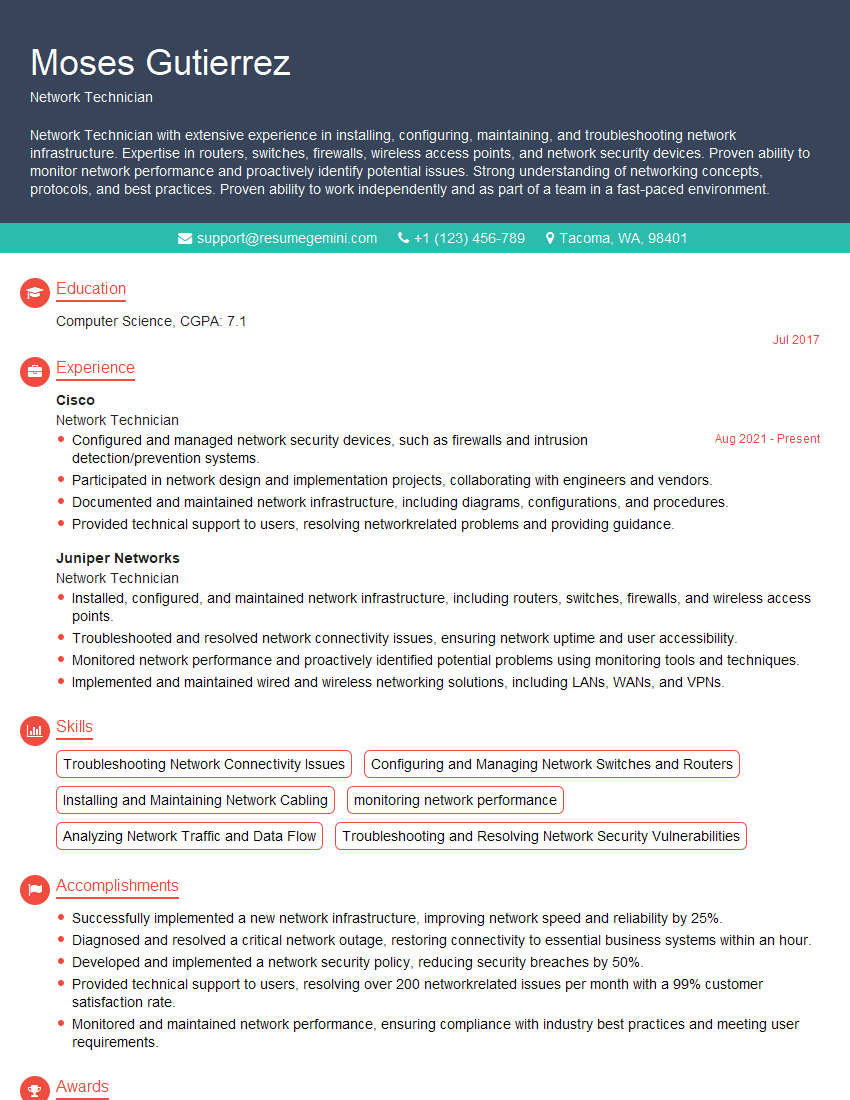
Network Technician Resume Sample

Electronics Technician Resume Sample
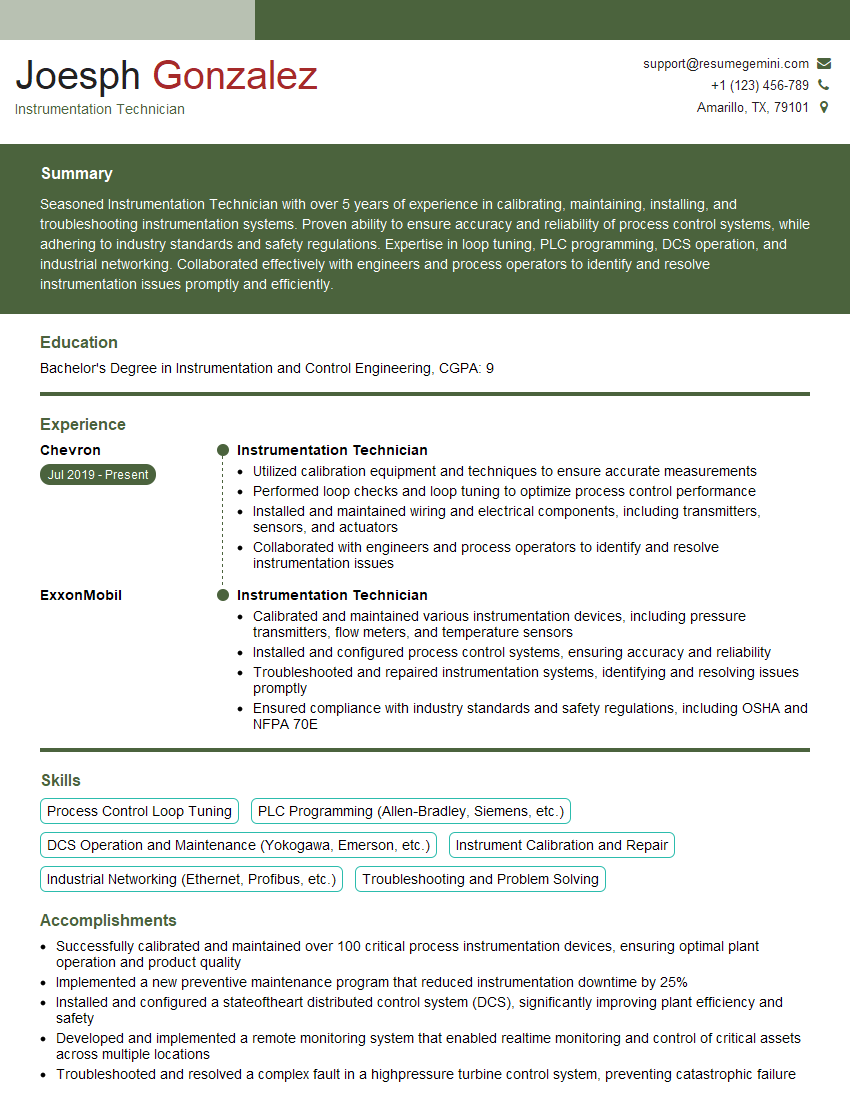
Instrumentation Technician Resume Sample
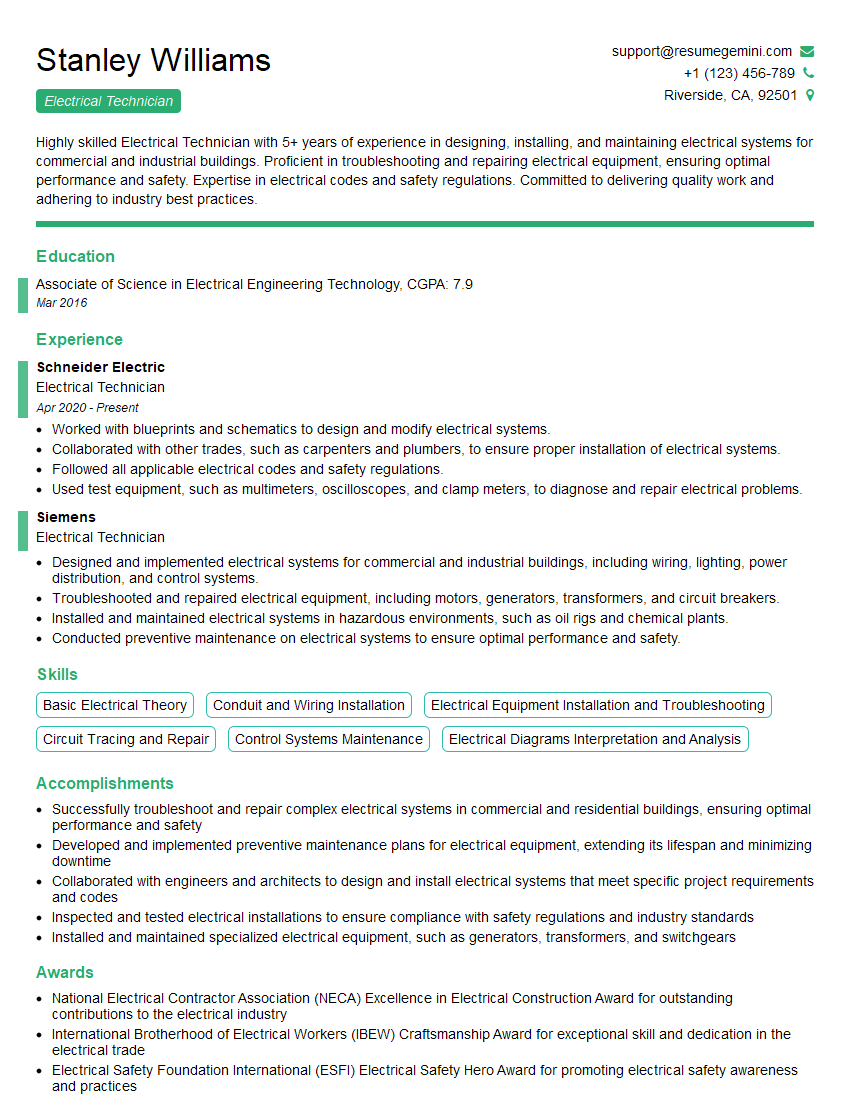
Electrical Technician Resume Sample
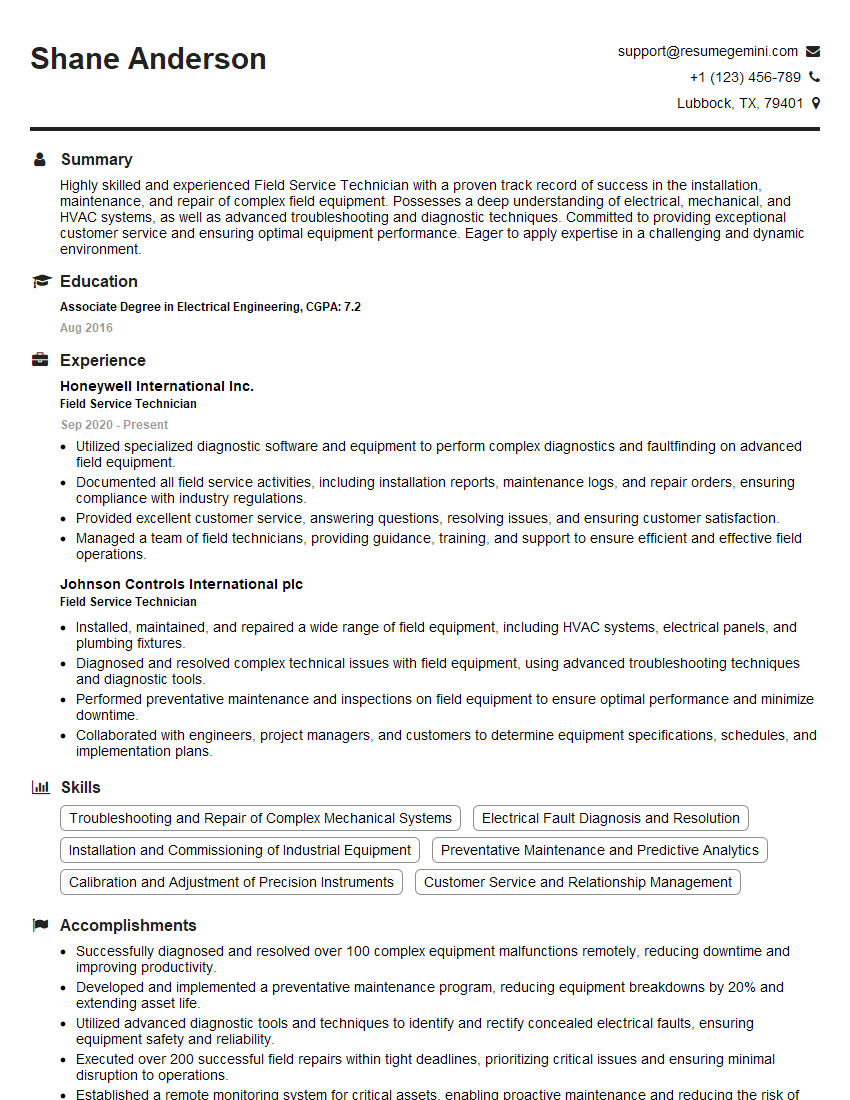
Field Service Technician Resume Sample
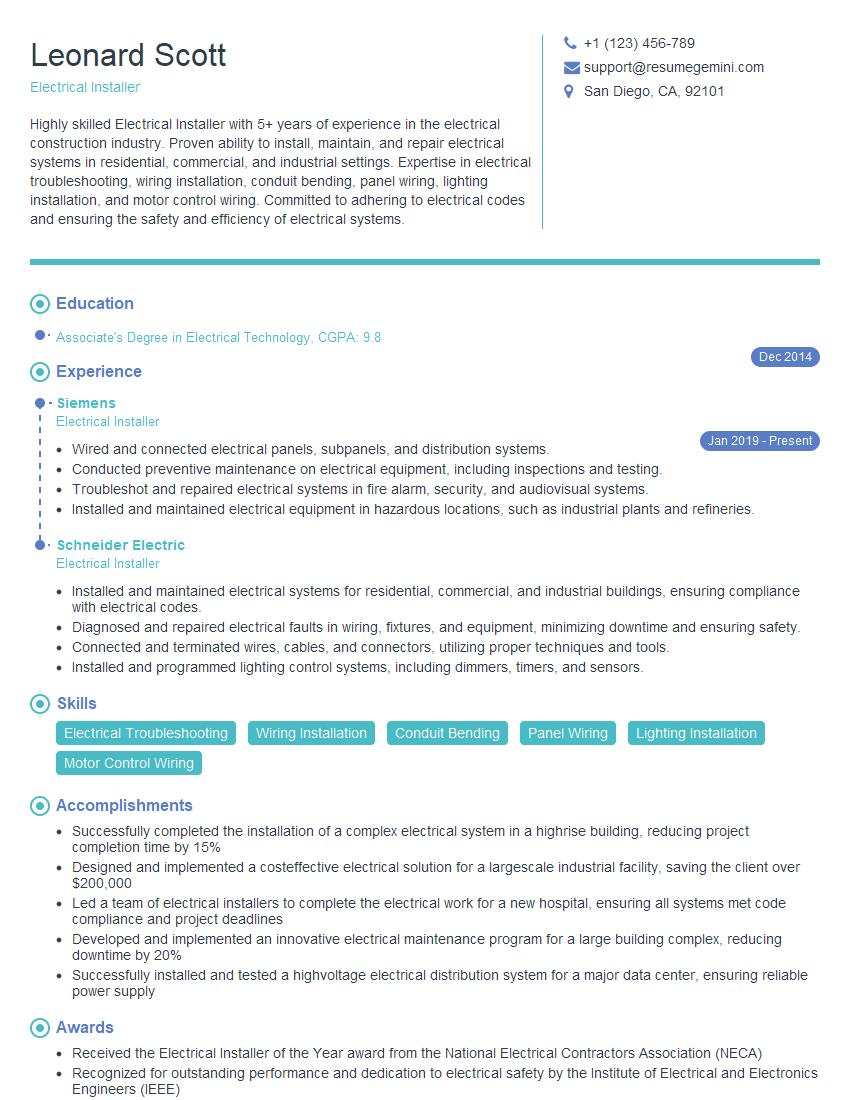
Electrical Installer Resume Sample

Maintenance Electrician Resume Sample
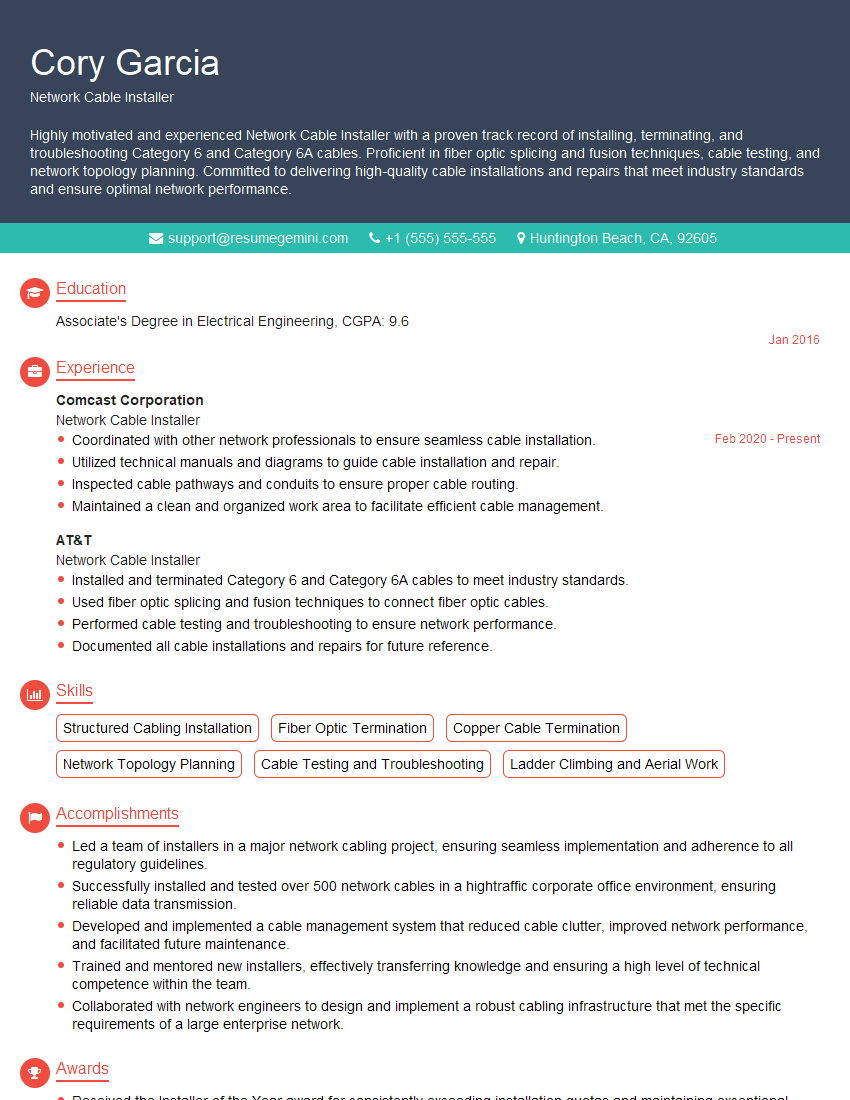
Network Cable Installer Resume Sample
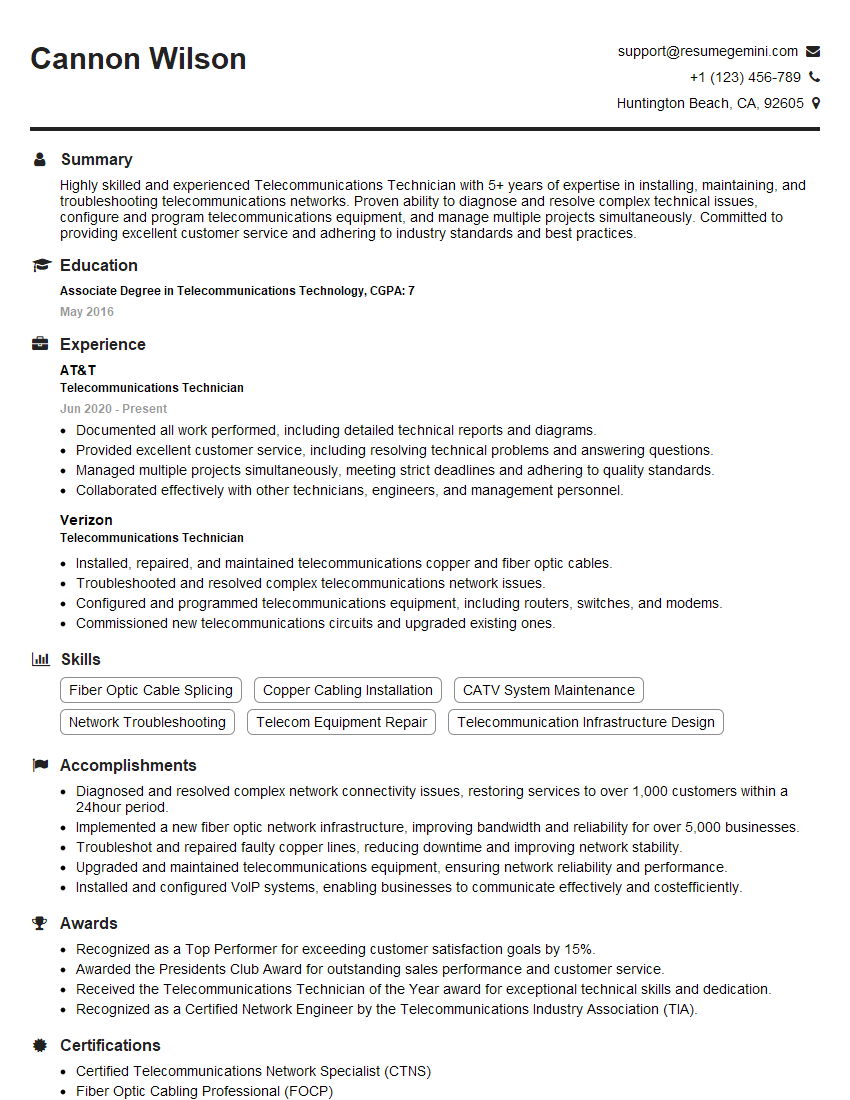
Telecommunications Technician Resume Sample
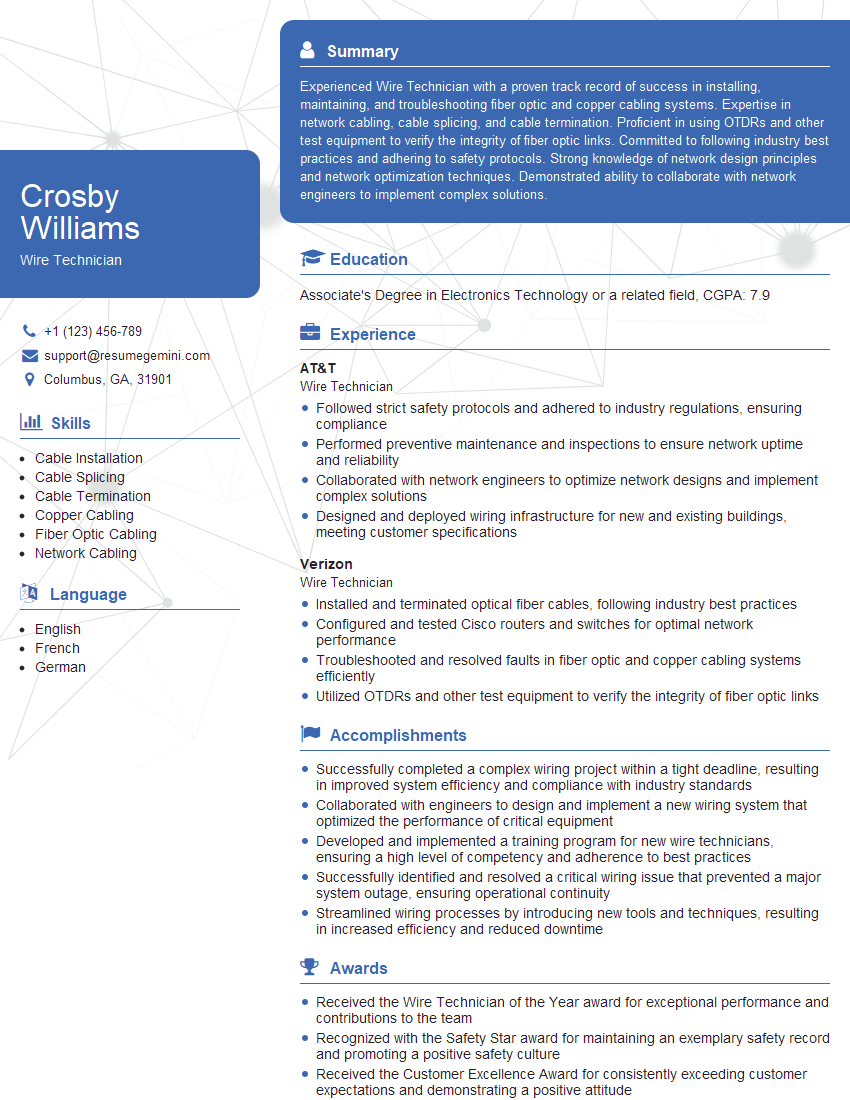
Wire Technician Resume Sample
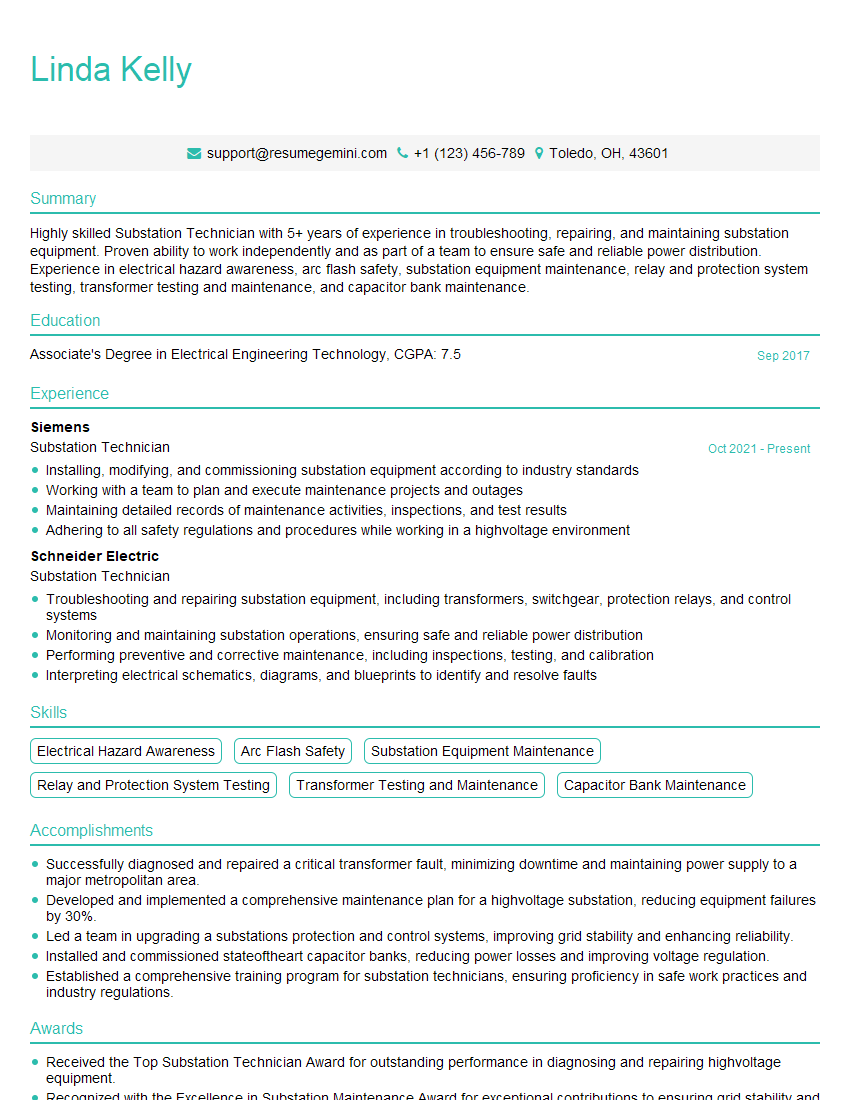
Substation Technician Resume Sample
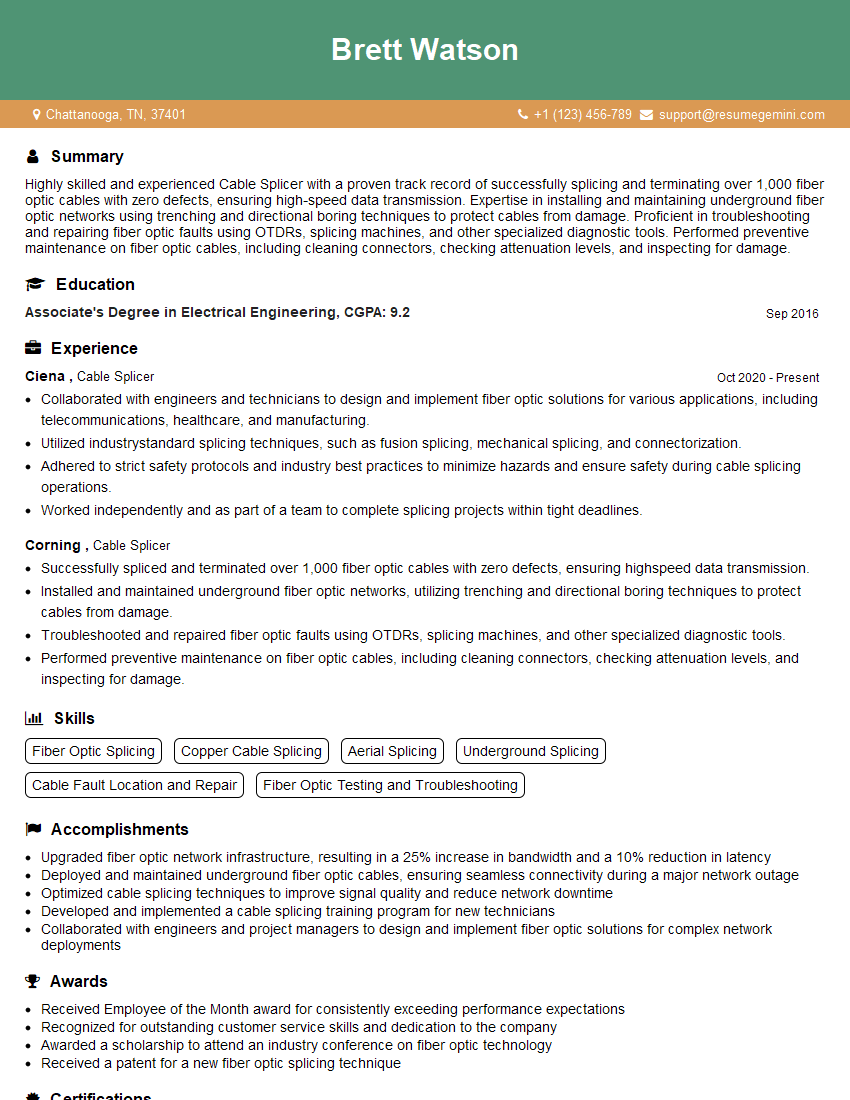
Cable Splicer Resume Sample
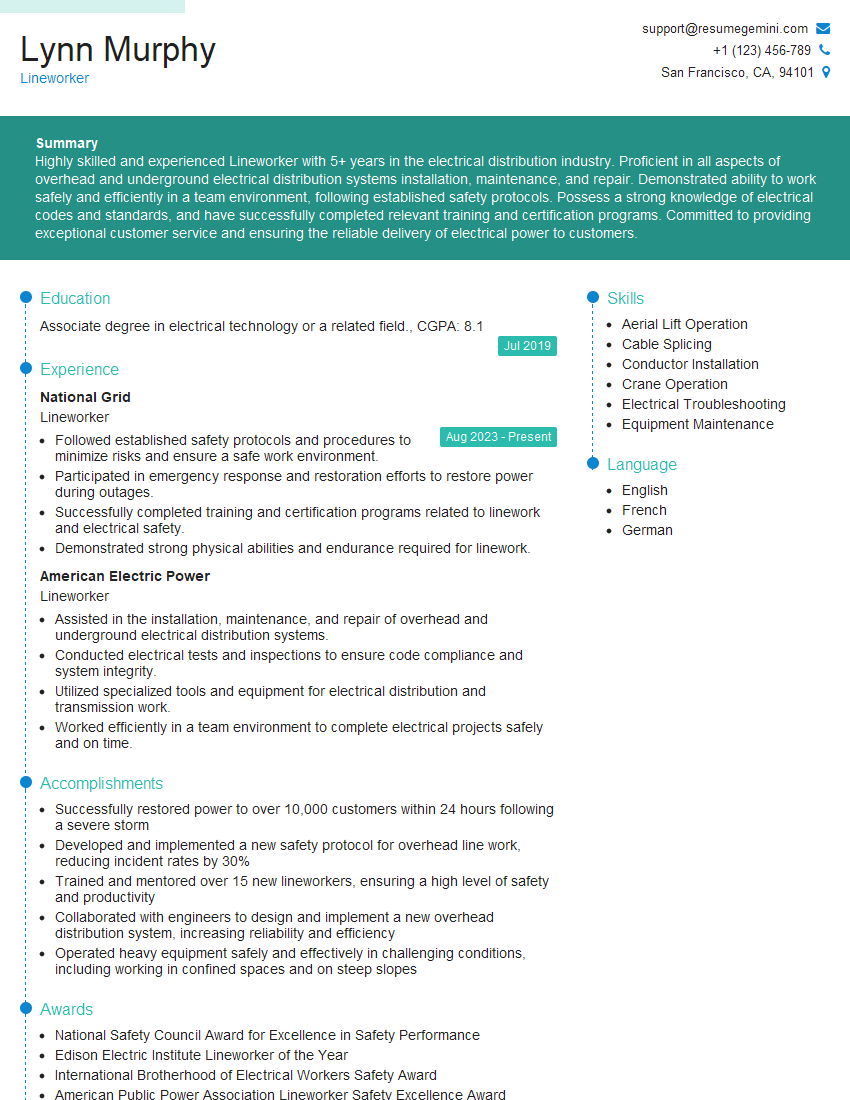
Lineworker Resume Sample
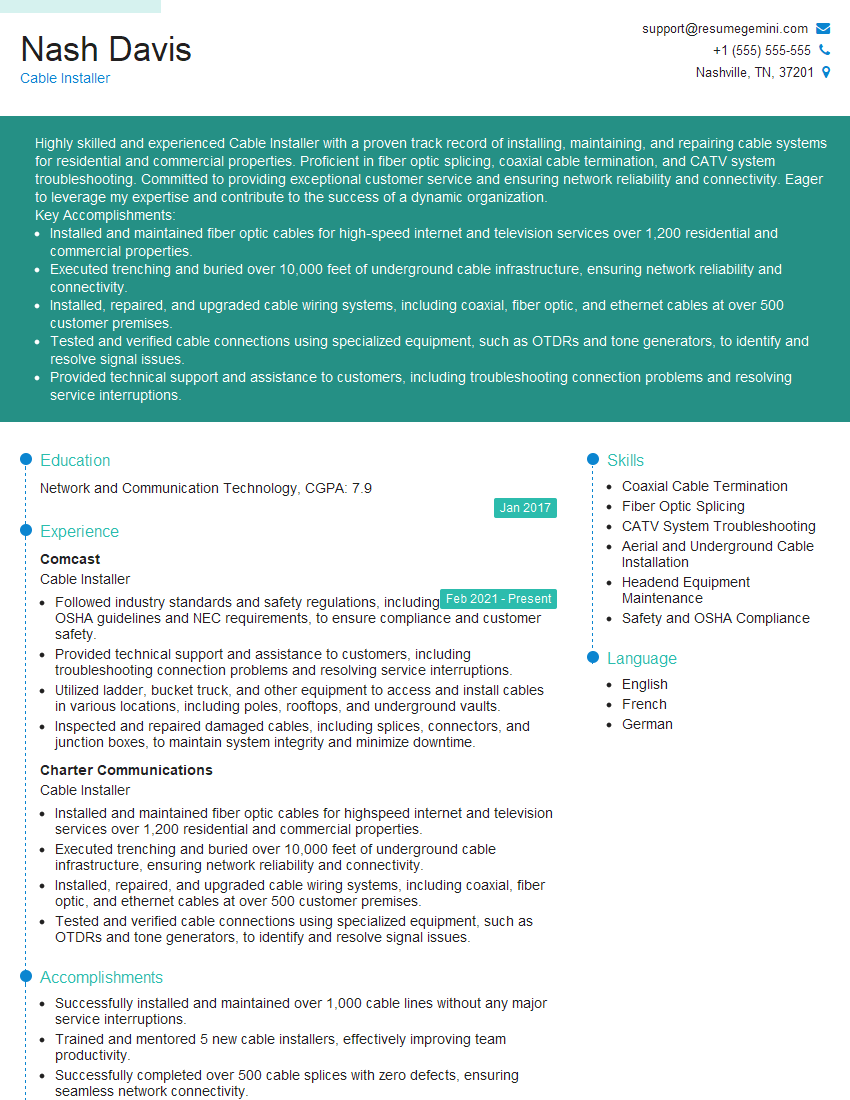
Cable Installer Resume Sample

Fiber Optic Splicer Resume Sample
- Network Technician
- Electronics Technician
- Instrumentation Technician
- Electrical Technician
- Field Service Technician
- Electrical Installer
- Maintenance Electrician
- Network Cable Installer
- Telecommunications Technician
- Wire Technician
- Substation Technician
- Cable Splicer
- Lineworker
- Cable Installer
- Fiber Optic Splicer
Explore more articles
Users Rating of Our Blogs
Share Your Experience
We value your feedback! Please rate our content and share your thoughts (optional).
What Readers Say About Our Blog
To the interviewgemini.com Webmaster.
Very helpful and content specific questions to help prepare me for my interview!
Thank you
To the interviewgemini.com Webmaster.
This was kind of a unique content I found around the specialized skills. Very helpful questions and good detailed answers.
Very Helpful blog, thank you Interviewgemini team.