Cracking a skill-specific interview, like one for Steam and Power Plant Optimization, requires understanding the nuances of the role. In this blog, we present the questions you’re most likely to encounter, along with insights into how to answer them effectively. Let’s ensure you’re ready to make a strong impression.
Questions Asked in Steam and Power Plant Optimization Interview
Q 1. Explain the Rankine cycle and its efficiency limitations.
The Rankine cycle is the thermodynamic cycle that governs the operation of most steam power plants. It’s a closed loop process where water is heated and converted into steam to drive a turbine, generating electricity. The cycle consists of four main processes: 1. Heating/Boiling (constant pressure): Water is heated in a boiler, increasing its temperature and pressure until it turns into superheated steam. 2. Expansion (isentropic): The high-pressure superheated steam expands through a turbine, doing work and generating electricity. The steam’s temperature and pressure drop significantly. 3. Condensation (constant pressure): The low-pressure, low-temperature steam enters a condenser where it’s cooled, converting back into liquid water. 4. Pumping (isentropic): The condensed water is then pumped back into the boiler, completing the cycle.
However, the Rankine cycle isn’t perfectly efficient. Limitations include:
- Irreversible processes: Real-world processes are not perfectly isentropic (constant entropy) like the idealized cycle. Frictional losses in the turbine and pump decrease efficiency.
- Temperature limitations: Boiler and turbine materials have temperature limits, restricting the maximum steam temperature and pressure achievable. Higher temperatures translate to higher efficiency, but exceeding material limits risks failure.
- Heat transfer limitations: Efficient heat transfer between the boiler and steam and the condenser and water is crucial. Inefficiencies in heat exchange reduce the overall cycle efficiency.
- Pump work: The work required to pump water back to the boiler represents a loss in the overall efficiency. While relatively small compared to turbine work, it still affects the total efficiency.
Imagine a water wheel; the higher the water falls, the more energy it generates. Similarly, a larger temperature difference between the boiler and condenser allows for greater work extraction from the steam, resulting in higher efficiency. Improving heat transfer, utilizing better materials for higher temperature operation, and minimizing pressure drops are crucial strategies for improving Rankine cycle efficiency.
Q 2. Describe different types of steam turbines and their applications.
Steam turbines are the heart of steam power plants, converting the thermal energy of steam into mechanical energy to drive generators. Different turbine types cater to specific needs and conditions:
- Impulse Turbines: These turbines utilize the pressure drop of the steam across nozzles to accelerate the steam to high velocity. This high-velocity steam impacts the turbine blades, imparting momentum and generating torque. Impulse turbines are suitable for high-pressure, low-volume steam applications, often used in the first stages of multi-stage turbines where pressure is high.
- Reaction Turbines: These turbines use a combination of pressure drop and velocity increase to generate power. The steam expands gradually across the turbine blades, leading to both pressure and velocity changes. Reaction turbines are more efficient at lower pressures and higher volumes, often making up the later stages of a multi-stage turbine.
- Axial-Flow Turbines: This is the most common type, with steam flowing axially along the turbine shaft. They allow for a high degree of staging, providing efficient energy extraction across a wide pressure range. Most large power plants use axial-flow turbines.
- Radial-Flow Turbines: In these turbines, steam flows radially inward or outward. They are generally less efficient than axial-flow turbines for large power generation but can be advantageous in specific applications.
The choice of turbine type depends on factors like steam conditions (pressure, temperature, flow rate), power output requirements, and cost considerations. For instance, a high-pressure, high-temperature steam application may use a multi-stage turbine with impulse stages at the beginning and reaction stages towards the end for optimized efficiency.
Q 3. How do you optimize boiler efficiency?
Optimizing boiler efficiency is crucial for maximizing power plant performance and minimizing fuel consumption. Several key strategies contribute to this optimization:
- Maintaining proper air-fuel ratio: Precise control of the air-fuel mixture is paramount. Too little air leads to incomplete combustion and reduced efficiency, while too much air increases energy loss through the exhaust gases.
- Ensuring complete combustion: This involves optimizing burner design, fuel quality, and the combustion chamber’s internal environment. Techniques like preheating combustion air can improve the efficiency of the combustion process.
- Minimizing heat losses: Boiler insulation is critical to prevent heat loss to the surroundings. Regular inspections and maintenance are necessary to identify and fix any leaks or damaged insulation.
- Optimizing water treatment: Scaling and corrosion within the boiler reduce efficiency and lead to maintenance issues. Implementing appropriate water treatment processes removes impurities and protects the boiler’s internal surfaces.
- Regular maintenance and cleaning: Periodic cleaning of the boiler tubes, soot blowers, and other components removes deposits that impede heat transfer and reduce boiler efficiency.
- Utilizing advanced technologies: Employing advanced combustion technologies, such as oxygen enrichment or low-NOx burners, can increase efficiency while reducing harmful emissions.
Think of it like cooking—to cook a meal efficiently, you need the right amount of heat applied in the most efficient manner, minimizing heat loss. Similarly, a well-maintained and properly operated boiler ensures that most of the fuel’s energy is converted into steam instead of being wasted.
Q 4. What are the common causes of turbine blade erosion and how to mitigate them?
Turbine blade erosion is a significant concern in steam power plants, leading to reduced efficiency and potential damage. Common causes include:
- Moisture droplets: Wet steam contains moisture droplets that can erode blades at high velocity. These droplets impact the blade surfaces with considerable force, leading to material removal.
- Solid particles: Impurities in the steam, such as ash particles from coal combustion or deposits from the boiler, can abrade the blade surfaces.
- High velocity steam: The high-speed steam flow itself can cause erosion, particularly at the leading edges of the blades. This is often more significant at the high-pressure stages of the turbine.
Mitigation strategies include:
- Steam purification: Installing efficient moisture separators and filters removes moisture droplets and solid particles before they reach the turbine.
- Blade material selection: Using erosion-resistant materials for the blades, such as specialized alloys or coatings, increases their lifespan and reduces erosion rates.
- Optimized steam conditions: Adjusting steam conditions to reduce moisture content and velocity can significantly minimize erosion.
- Regular inspections and maintenance: Routine inspections allow for early detection of erosion and enable timely repairs or replacements of damaged blades.
Imagine sandblasting; a continuous stream of high-velocity particles can wear away any surface. Similarly, moisture droplets and solid particles in steam gradually erode turbine blades. Proper steam cleaning and proactive maintenance help prevent premature damage.
Q 5. Explain the importance of condenser vacuum in power plant operation.
Condenser vacuum plays a vital role in power plant operation by significantly impacting the overall efficiency of the Rankine cycle. A good vacuum lowers the pressure in the condenser, allowing the steam to condense at a lower temperature. This lower temperature increases the temperature difference between the exhaust steam and the cooling water, leading to improved heat transfer and reduced backpressure on the turbine.
Reduced backpressure means the steam can expand more fully in the turbine, generating more work. A higher vacuum translates directly to increased power output and improved thermal efficiency. Monitoring and maintaining an optimal condenser vacuum is a crucial aspect of plant operation.
Think of it like a drain; the better the drainage, the faster the water flows away. Similarly, a good condenser vacuum facilitates better removal of exhaust steam, leading to improved plant efficiency.
Q 6. Describe different methods for feedwater heating.
Feedwater heating is a crucial process in steam power plants designed to preheat the water returning to the boiler. This reduces the amount of heat required in the boiler itself, thereby improving overall plant efficiency. Different methods exist:
- Extraction heating: Steam is extracted from intermediate stages of the turbine and used to heat the feedwater in a series of heaters. This utilizes the otherwise wasted energy from the turbine for preheating, significantly improving efficiency.
- Contact heating: This involves directly mixing the extracted steam with feedwater in a closed heater. The steam condenses, transferring its heat to the water.
- Surface heating: This method uses a heat exchanger to transfer heat from the extracted steam to the feedwater without direct contact between the steam and water. This prevents any potential contamination of the feedwater.
The choice of method depends on various factors, including the plant’s size, steam conditions, and overall design. Multi-stage feedwater heating with a combination of extraction, contact, and surface heaters is commonly used in large power plants to maximize efficiency. This approach enhances the effectiveness of the Rankine cycle by reducing the energy needed in the boiler and maximizing the work generated by the turbine. Imagine preheating the water in a kettle before you start boiling it; you’ll save time and energy. Feedwater heating applies the same principle to a larger scale.
Q 7. What are the key parameters monitored in a steam power plant?
Numerous parameters are continuously monitored in a steam power plant to ensure safe, efficient, and reliable operation. Key parameters include:
- Steam pressure and temperature: At various points in the cycle, these readings provide insights into the boiler’s performance and steam’s condition.
- Turbine speed and power output: These parameters indicate the turbine’s health and electricity generation rate.
- Condenser vacuum: As discussed earlier, monitoring the condenser vacuum is vital for maintaining optimal efficiency.
- Feedwater flow and temperature: These parameters monitor the efficiency of feedwater heating and water supply to the boiler.
- Boiler water level and chemistry: Maintaining optimal water level and chemistry is crucial for boiler efficiency and preventing corrosion.
- Exhaust gas temperature and composition: These values help optimize the combustion process and identify any potential issues.
- Turbine blade vibration: Detecting excessive vibration can indicate potential problems with the turbine blades.
- Generator voltage and current: Ensuring the generator operates within the specified limits is critical for stable power generation.
Monitoring these parameters allows operators to identify deviations from normal operating conditions, enabling timely interventions to prevent equipment damage and ensure the plant’s continued efficient operation. It’s like having a comprehensive health check-up for the power plant; regular monitoring helps diagnose and address issues before they become major problems.
Q 8. Explain the role of a governor in a steam turbine.
A governor in a steam turbine is essentially the brains of the operation, responsible for maintaining a constant speed despite fluctuating loads. Think of it like a cruise control in a car. When the load on the turbine increases (more electricity demanded), the governor automatically increases the steam flow to the turbine, maintaining the desired speed. Conversely, if the load decreases, it reduces the steam flow. This is crucial for stable power generation. It achieves this through a sophisticated mechanism that senses the turbine speed and adjusts the steam supply valve accordingly. Different types of governors exist, such as mechanical-hydraulic governors and electronic governors, each with its own intricacies, but the core function remains consistent.
For example, imagine a factory suddenly starts up many machines. The increased electrical demand would cause the turbine to slow down if it wasn’t for the governor. The governor quickly detects this drop in speed, opens the steam valve further, increases the steam flow to the turbine, and brings the speed back to the setpoint. This prevents the frequency of the electrical grid from fluctuating, which is critical for reliable power delivery.
Q 9. How do you troubleshoot a steam leak?
Troubleshooting a steam leak requires a systematic approach prioritizing safety. First, isolate the area and ensure all safety procedures are followed, including lockout/tagout of affected equipment. Then, locate the leak. This often involves visual inspection, using specialized equipment like thermal cameras to detect temperature variations that indicate steam leakage. Next, determine the severity. A small leak might require simple repair, while a major leak necessitates immediate shutdown and extensive repairs. Identify the source. This could range from a faulty valve, gasket failure, or even a crack in the pipe. Finally, implement the repair, which might involve replacing gaskets, welding, or replacing entire sections of piping. Proper documentation is crucial throughout the entire process.
For instance, if a leak is suspected in a high-pressure steam line, we’d initially shut down the line and isolate it using valves. We’d then use a thermal camera to precisely pinpoint the leak’s location. If the leak is minor and originates from a loose flange, a simple tightening of the bolts might suffice. But if the camera shows a significant leak or pipe damage, we’d need to plan for a complete repair involving a section replacement, which would require further safety measures, planning, and specialized personnel.
Q 10. Describe different types of boiler feed pumps and their selection criteria.
Boiler feed pumps are essential for returning condensate water back to the boiler. Several types exist, each suited for specific applications:
- Centrifugal Pumps: These are the most common type, offering high flow rates at moderate pressures. They’re relatively simple, efficient, and cost-effective. The selection depends on factors like required flow rate, discharge pressure, and available NPSH (Net Positive Suction Head).
- Reciprocating Pumps: These pumps provide high pressures at lower flow rates, making them suitable for high-pressure boiler applications. However, they are typically less efficient and more prone to maintenance than centrifugal pumps.
- Axial Flow Pumps: Designed for high-flow, low-head applications, these are less frequently used in boiler feed systems compared to centrifugal pumps.
Selection criteria depend on factors like boiler pressure, required flow rate, steam cycle parameters, and overall cost optimization. For example, a high-pressure, large-capacity power plant would likely use multiple large centrifugal pumps working in parallel for redundancy and efficient operation. A smaller, low-pressure boiler might only need a single centrifugal pump or even a reciprocating pump depending on the specific requirements.
Q 11. Explain the concept of heat rate and its significance.
Heat rate is a crucial measure of a power plant’s efficiency, representing the amount of heat input required to generate one unit of electricity. It’s typically expressed in BTU/kWh (British Thermal Units per kilowatt-hour) or kJ/kWh (kilojoules per kilowatt-hour). A lower heat rate signifies greater efficiency, as less heat is needed to generate the same amount of power. It’s a key performance indicator (KPI) used to track and optimize the plant’s operation. Analyzing heat rate trends helps identify potential issues, like fouling in the boiler or inefficiencies in the steam cycle.
For instance, a heat rate of 9000 BTU/kWh indicates better efficiency than 10000 BTU/kWh. Improvements in heat rate, even by a small margin, can significantly reduce fuel consumption and operating costs over the plant’s lifetime, highlighting the importance of continuous monitoring and optimization efforts. This can be achieved by implementing actions such as regular maintenance, advanced control strategies, and improvements in the overall steam cycle.
Q 12. How do you calculate plant heat rate?
Plant heat rate calculation involves measuring the total heat input to the plant (usually from fuel consumption) and dividing it by the total electricity generated over a specific period. The formula is:
Heat Rate = Total Heat Input / Total Electricity Generated
For example: If a plant consumes 10,000,000 BTU of fuel and generates 1000 kWh of electricity in an hour, the heat rate would be 10,000 BTU/kWh (10,000,000 BTU / 1000 kWh). Accurate measurement of both heat input and electricity output is crucial for an accurate calculation. This often involves integrating data from various plant instruments, including fuel flow meters, power output meters, and temperature sensors.
Q 13. What are the different types of power plant control systems?
Power plant control systems have evolved significantly. Broadly, they can be categorized as:
- Distributed Control Systems (DCS): These are sophisticated, computer-based systems that monitor and control various plant parameters. They are highly reliable, offer advanced control strategies, and allow for centralized monitoring and diagnostics.
- Supervisory Control and Data Acquisition (SCADA) Systems: SCADA systems provide a supervisory layer over the individual control loops, allowing for overall plant monitoring and management. They often integrate data from various sources across the plant.
- Programmable Logic Controllers (PLCs): PLCs are used for controlling specific processes or equipment within the power plant, often acting as interfaces between the DCS and the field devices.
The choice of control system depends on the plant’s size, complexity, and specific control requirements. Larger power plants typically use DCS, while smaller plants might rely on a combination of PLCs and SCADA systems. Modern power plants increasingly integrate advanced control algorithms and AI-based optimization tools to improve efficiency and reduce emissions.
Q 14. Explain the importance of instrumentation and control in power plant operation.
Instrumentation and control are the backbone of safe and efficient power plant operation. Instrumentation provides accurate and timely data on critical parameters like pressure, temperature, flow rate, and level. This data is then used by the control system to maintain stable and optimal plant operation. Without proper instrumentation, it would be impossible to effectively monitor and control various processes within the power plant, leading to inefficiencies, instability, and potential safety hazards.
For example, accurate temperature sensors in the boiler ensure the steam is generated at the optimal temperature for maximum efficiency. Flow meters monitor the flow of steam to the turbine, allowing the governor to adjust the steam supply according to the load demand. Pressure sensors monitor the pressure in various parts of the plant, ensuring safe operation and preventing equipment damage. In essence, instrumentation and control are essential for preventing accidents and ensuring reliable, cost-effective power generation. Regular calibration and maintenance of these systems are crucial to ensure their accuracy and reliability.
Q 15. What are the common causes of power plant trips and how to prevent them?
Power plant trips, or unplanned shutdowns, are a major concern due to safety risks, economic losses, and the disruption of power supply. Common causes stem from failures in various systems.
- Boiler issues: These include tube leaks, low water levels, fuel supply problems (e.g., insufficient coal or gas), and burner malfunctions. Imagine a boiler as a giant pressure cooker; any disruption can lead to a catastrophic event.
- Turbine problems: Blade failures (due to fatigue or foreign object damage), excessive vibration, and lubrication system failures can all trigger a trip. Think of a turbine as a high-speed spinning engine – a tiny imbalance can cause major damage.
- Generator issues: Overcurrents, insulation failures, and rotor problems can cause generator trips. The generator is the heart of the power plant, converting mechanical energy into electricity; any issue here is critical.
- Electrical system failures: Short circuits, transformer faults, and protection system malfunctions can lead to widespread trips. A well-designed electrical system with appropriate protection relays is crucial to prevent cascading failures.
- Control system failures: Errors in the plant’s control systems or software glitches can trigger safety shutdowns, highlighting the need for regular software updates and rigorous testing.
Prevention strategies involve rigorous maintenance programs, advanced diagnostics (e.g., vibration monitoring), redundant systems (backup components), operator training, and robust safety systems. Regular inspections, predictive maintenance using machine learning, and a culture of safety are essential for minimizing trips.
Career Expert Tips:
- Ace those interviews! Prepare effectively by reviewing the Top 50 Most Common Interview Questions on ResumeGemini.
- Navigate your job search with confidence! Explore a wide range of Career Tips on ResumeGemini. Learn about common challenges and recommendations to overcome them.
- Craft the perfect resume! Master the Art of Resume Writing with ResumeGemini’s guide. Showcase your unique qualifications and achievements effectively.
- Don’t miss out on holiday savings! Build your dream resume with ResumeGemini’s ATS optimized templates.
Q 16. Describe different methods for improving power plant efficiency.
Improving power plant efficiency is crucial for economic and environmental reasons. Several methods exist:
- Heat Rate Optimization: This involves minimizing the heat input required to generate a unit of electricity. Techniques include optimizing boiler operation, improving combustion efficiency (e.g., using advanced burner technologies), reducing heat losses in steam lines (using better insulation), and minimizing turbine internal losses.
- Advanced Control Systems: Implementing sophisticated control systems using AI and machine learning can optimize plant operation in real-time, responding to changing conditions and maximizing efficiency. Think of these systems as a plant’s nervous system, constantly adjusting for optimal performance.
- Combined Cycle Technology: Integrating gas turbines and steam turbines in a combined cycle plant significantly improves overall efficiency by utilizing exhaust heat from the gas turbine to generate steam, as explained further in question 3.
- Waste Heat Recovery: Utilizing waste heat from various processes (e.g., flue gases) for other purposes (e.g., heating or industrial processes) reduces energy waste and boosts overall plant efficiency. This is like squeezing every last drop of energy out of the process.
- Improved Maintenance Practices: Regular maintenance, including predictive maintenance, helps prevent unexpected shutdowns and maintains the plant’s efficiency. This is preventative medicine for the power plant.
Q 17. Explain the concept of combined cycle power plants.
Combined cycle power plants integrate gas turbines and steam turbines to achieve significantly higher efficiencies compared to traditional steam plants. The gas turbine burns fuel (usually natural gas) to generate electricity. However, the exhaust gases from the gas turbine, which are still very hot, are used to generate steam in a heat recovery steam generator (HRSG). This steam then drives a steam turbine, producing additional electricity.
Think of it as a two-stage process. The gas turbine is like a primary engine, and the steam turbine acts as a secondary engine that uses the leftover heat from the first. This combined cycle approach achieves overall efficiencies around 55-60%, much higher than the approximately 35-40% efficiency of a conventional steam plant. This improvement translates to lower fuel consumption, reduced emissions, and better economic performance.
Q 18. What are the environmental concerns related to steam power plants?
Steam power plants, while crucial for electricity generation, present environmental concerns:
- Greenhouse gas emissions: The combustion of fossil fuels (coal, natural gas) releases significant amounts of carbon dioxide (CO2), a major greenhouse gas contributing to climate change.
- Air pollution: Burning fossil fuels produces various pollutants, including sulfur oxides (SOx), nitrogen oxides (NOx), and particulate matter (PM), which negatively impact air quality and human health. SOx contributes to acid rain, while NOx contributes to smog.
- Water consumption: Steam plants require large quantities of water for cooling purposes, potentially depleting water resources in some regions. Thermal pollution from the discharge of heated water into water bodies can also affect aquatic ecosystems.
- Waste disposal: The disposal of ash and other byproducts from coal-fired plants can pose environmental challenges if not managed properly.
Mitigation strategies include adopting cleaner fuels (e.g., natural gas), implementing carbon capture and storage (CCS) technologies, improving combustion efficiency to reduce emissions, and using water-efficient cooling systems (e.g., dry cooling towers).
Q 19. How do you address the issue of water treatment in a power plant?
Water treatment in a power plant is critical to prevent scaling, corrosion, and fouling in the boiler and other systems. Poor water quality can lead to efficiency losses, equipment damage, and costly repairs.
The treatment process typically involves several steps:
- Pre-treatment: This may include clarification, filtration, and softening to remove suspended solids, dissolved minerals, and hardness.
- Chemical Treatment: Adding chemicals like phosphates, amines, and oxygen scavengers to control pH, prevent corrosion, and reduce scaling in the boiler and steam system.
- Deionization: Removing dissolved ions (like calcium and magnesium) to produce high-purity water for boiler feedwater.
- Monitoring and Control: Continuous monitoring of water quality parameters (e.g., pH, conductivity, dissolved oxygen) is essential to adjust treatment accordingly. Automated control systems are often employed to maintain optimal water chemistry.
The specific treatment methods depend on the water source and the plant’s requirements. Regular testing and analysis are crucial to ensure the effectiveness of the treatment program and prevent problems.
Q 20. Explain the principles of steam trapping.
Steam trapping is the process of automatically removing condensate (liquid water) from steam lines and equipment while preventing the escape of steam. Condensate, which forms as steam cools, can reduce the efficiency of steam-powered systems. Steam traps work by separating the condensate from the steam based on differences in their properties (e.g., temperature, pressure).
Several types of steam traps exist, each with its operating principle:
- Thermodynamic traps: These use the difference in temperature between steam and condensate to operate.
- Thermostatic traps: These use a temperature-sensitive element (e.g., a bimetallic strip) to open and close the trap.
- Mechanical traps: These use the difference in pressure between steam and condensate to operate.
Proper steam trapping is essential for maintaining optimal steam system performance, preventing water hammer (damaging pressure surges), and reducing energy losses.
Q 21. How do you perform a thermal performance test on a steam turbine?
A thermal performance test on a steam turbine aims to determine its efficiency and identify areas for improvement. The test involves measuring various parameters and using them to calculate the turbine’s heat rate (heat input per kilowatt-hour of electricity generated).
The process typically includes:
- Instrumentation: Installing instruments to measure steam flow rate, pressure, temperature at various points in the turbine cycle, and electrical output.
- Data Acquisition: Collecting data during steady-state operation under different load conditions.
- Calculations: Performing detailed calculations using thermodynamic principles to determine the heat rate, isentropic efficiency (a measure of turbine’s internal efficiency), and other performance parameters.
- Analysis: Analyzing the test results to identify potential problems, such as blade erosion, nozzle fouling, or leaks, that may affect performance.
These tests are crucial for identifying performance degradation, optimizing operational parameters, and planning maintenance activities. They provide valuable insights into the turbine’s health and efficiency, enabling proactive interventions to maintain optimal performance.
Q 22. What are the different types of steam traps and their applications?
Steam traps are essential components in steam systems, automatically removing condensate (water formed from steam condensation) while preventing steam loss. Different types cater to various applications based on pressure, temperature, and condensate volume.
- Thermodynamic Traps: These rely on the difference in temperature between steam and condensate. They are simple, reliable, and inexpensive, suitable for low-pressure applications like heating systems. However, they can be slow to react and are less effective in higher-pressure environments.
- Thermostatic Traps: These use a temperature-sensitive element to control the valve. They are more responsive than thermodynamic traps and can handle higher pressures. They are a good choice for moderate pressure applications.
- Mechanical Traps: These use a float or bucket mechanism to sense condensate level. They are very reliable, especially for higher condensate volumes, and often used in larger industrial applications. They are less sensitive to pressure fluctuations.
- Inverter Traps: These use a unique internal mechanism with high response speed and high efficiency, often used in modern, high efficiency systems. They are ideal where precise condensate removal is critical.
- Ball Float Traps: These use a simple ball float to control condensate discharge. They are robust and low-maintenance, suitable for applications with relatively constant condensate flow.
Choosing the right trap is critical for optimal system efficiency. For instance, using a thermodynamic trap in a high-pressure system would lead to significant steam loss, while a mechanical trap might be overkill for a low-pressure heating coil. A proper assessment of operating conditions is necessary for selecting the best trap type.
Q 23. Explain the role of superheaters and reheaters in a steam power plant.
Superheaters and reheaters play crucial roles in enhancing the efficiency and performance of a steam power plant. They both increase the temperature of the steam, but at different stages in the cycle.
Superheaters: These components raise the temperature of the steam produced in the boiler above its saturation temperature. Superheated steam possesses higher energy density and can perform more work in the turbine, resulting in increased power output and improved thermal efficiency. Think of it like adding more ‘oomph’ to the steam before it does its work.
Reheaters: These are located after one or more stages of expansion in the turbine. After an initial expansion, the steam is passed back through the reheaters, raising its temperature before further expansion in subsequent turbine stages. This reheating increases the overall work done by the turbine and improves the overall plant efficiency. It’s like giving the steam a ‘second wind’ to continue its work more effectively.
The combined effect of superheating and reheating significantly improves the Rankine cycle’s efficiency, a crucial factor in maximizing power generation and reducing fuel consumption.
Q 24. How do you handle a situation of sudden load increase or decrease in the plant?
Handling sudden load changes requires a coordinated response from various plant systems. The goal is to maintain stable operation and prevent equipment damage or safety hazards.
Sudden Load Increase: The plant needs to quickly generate more power. This involves:
- Increasing fuel input: More fuel is fed to the boiler to increase steam generation.
- Adjusting turbine governor: The turbine governor increases the steam flow to the turbine, allowing it to spin faster and produce more power.
- Monitoring boiler pressure and temperature: Close monitoring prevents overheating and potential damage.
Sudden Load Decrease: The plant needs to reduce power output. This involves:
- Reducing fuel input: Less fuel is fed to the boiler, lowering steam generation.
- Adjusting turbine governor: The turbine governor reduces steam flow to the turbine, slowing it down.
- Managing condenser pressure: Maintaining appropriate condenser pressure is crucial to prevent vacuum collapse.
- Potential use of load shedding: In extreme cases, non-critical loads might be temporarily disconnected.
Modern power plants utilize sophisticated control systems that automate many of these responses, ensuring smooth and efficient handling of load variations. However, operators remain crucial for monitoring and intervention in unexpected scenarios.
Q 25. Describe different methods for reducing plant emissions.
Reducing plant emissions is crucial for environmental responsibility. Several methods are employed, often in combination:
- Improved Combustion Efficiency: Optimizing boiler operation to minimize unburnt fuel reduces emissions of greenhouse gases and particulate matter.
- Low-NOx Burners: Specialized burners reduce the formation of nitrogen oxides (NOx), major air pollutants.
- Selective Catalytic Reduction (SCR): This technology injects ammonia into the flue gas, catalytically reducing NOx emissions.
- Flue Gas Desulfurization (FGD): Removes sulfur dioxide (SO2) from flue gases, mitigating acid rain.
- Electrostatic Precipitators (ESPs) and Fabric Filters (Bag Houses): Capture particulate matter from the flue gas, reducing air pollution.
- Carbon Capture and Storage (CCS): While still under development, CCS technologies aim to capture CO2 emissions and store them underground.
- Switching to Cleaner Fuels: Transitioning to natural gas or renewable energy sources significantly reduces emissions compared to coal.
The specific methods used depend on factors like the type of plant, fuel source, regulatory requirements, and economic considerations. A comprehensive approach, combining multiple techniques, is often the most effective strategy for significant emission reductions.
Q 26. What are the safety procedures related to working in a steam power plant?
Safety in a steam power plant is paramount due to the inherent risks associated with high-pressure steam, high temperatures, and rotating machinery. Strict safety procedures are essential and include:
- Lockout/Tagout Procedures: Before any maintenance or repair work, equipment must be isolated and locked out to prevent accidental energization.
- Personal Protective Equipment (PPE): Workers must use appropriate PPE, including heat-resistant clothing, safety glasses, gloves, and hearing protection.
- Regular Inspections and Maintenance: Preventative maintenance schedules help identify and address potential safety hazards before they cause incidents.
- Emergency Response Plans: Comprehensive plans for various emergencies (e.g., steam leaks, fires, equipment failures) must be in place and regularly practiced.
- Training and Competency: Workers must receive extensive training in safe working practices and emergency procedures.
- Confined Space Entry Procedures: Strict protocols must be followed when entering confined spaces, including atmospheric testing and proper ventilation.
- Hot Work Permits: Permits are required for activities involving open flames or sparks, ensuring adequate safety precautions are in place.
Adherence to these procedures is not just a matter of compliance; it is crucial for protecting the lives and well-being of plant personnel and the environment.
Q 27. Explain the importance of predictive maintenance in power plant operation.
Predictive maintenance is a proactive approach to maintenance that uses data analysis and advanced technologies to anticipate equipment failures before they occur. This contrasts with reactive (fixing problems after they happen) and preventive (scheduled maintenance at fixed intervals) approaches.
In power plants, predictive maintenance is critical due to the high cost and potential for catastrophic consequences of equipment failures. Methods include:
- Vibration Analysis: Monitoring vibration levels can detect early signs of bearing wear, imbalance, or misalignment.
- Thermal Imaging: Identifying hot spots can indicate insulation problems, electrical faults, or impending mechanical failures.
- Oil Analysis: Analyzing oil samples can reveal the presence of contaminants, wear particles, or degradation, allowing for proactive oil changes or component replacement.
- Ultrasonic Testing: Detects leaks, corrosion, and cracks in components.
- Data Analytics: Using machine learning algorithms to analyze sensor data, process parameters, and historical maintenance records can provide early warning of potential failures.
By anticipating and addressing potential problems before they escalate, predictive maintenance reduces downtime, extends equipment lifespan, improves safety, and optimizes plant efficiency. It’s a substantial investment that pays off in terms of reduced operational costs and improved reliability.
Q 28. Describe your experience with power plant optimization software and tools.
Throughout my career, I’ve extensively used various power plant optimization software and tools, ranging from traditional SCADA (Supervisory Control and Data Acquisition) systems to advanced AI-powered analytics platforms.
My experience includes working with SCADA systems for real-time monitoring and control of plant parameters, enabling efficient operation and quick responses to changing demands. I’ve utilized performance monitoring software to analyze historical data, identify areas for improvement, and track the effectiveness of implemented optimizations.
Furthermore, I’ve been involved in projects using advanced analytics tools that leverage machine learning to predict equipment failures, optimize fuel consumption, and enhance overall plant efficiency. These tools often involve analyzing large datasets from various plant sensors and applying sophisticated algorithms to identify patterns and anomalies. Specific examples include using platforms that perform predictive maintenance analytics, optimize boiler efficiency through advanced combustion control, and improve turbine performance through detailed performance analysis.
My expertise extends to understanding and applying optimization techniques to improve various aspects of power plant operations, from fuel efficiency and emission control to overall plant availability and profitability.
Key Topics to Learn for Steam and Power Plant Optimization Interview
- Thermodynamics of Steam Cycles: Understanding Rankine cycle, its efficiency, and various modifications like regenerative and reheat cycles. Practical application includes analyzing cycle performance and identifying areas for improvement.
- Power Plant Equipment and Operations: Detailed knowledge of boilers, turbines, condensers, pumps, and other critical components. Practical application involves troubleshooting malfunctions and optimizing operational parameters.
- Heat Transfer and Fluid Mechanics: Analyzing heat transfer mechanisms in different plant components and understanding fluid flow dynamics within the system. Practical application includes optimizing heat exchanger designs and minimizing pressure drops.
- Instrumentation and Control Systems: Understanding the role of sensors, actuators, and control systems in maintaining optimal plant operation. Practical application involves analyzing control loops and designing strategies for improved efficiency.
- Combustion and Emissions Control: Knowledge of combustion principles, fuel properties, and emission reduction techniques. Practical application includes optimizing combustion parameters for maximum efficiency and minimizing environmental impact.
- Data Analysis and Optimization Techniques: Applying statistical methods and optimization algorithms to analyze plant data and identify areas for improvement. Practical application involves using data-driven insights to improve plant efficiency and reduce operational costs.
- Economic and Environmental Considerations: Understanding the economic aspects of plant operation, including cost-benefit analysis and the environmental impact of power generation. Practical application includes evaluating different optimization strategies based on economic and environmental factors.
Next Steps
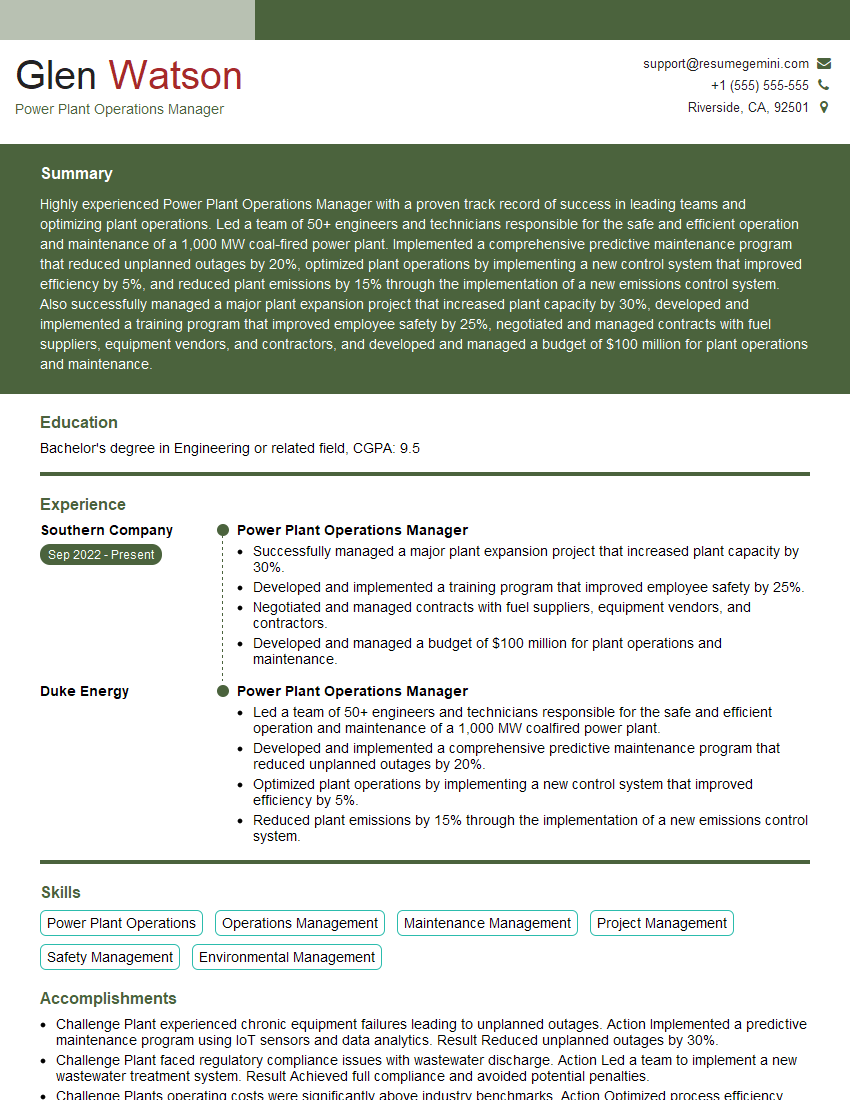
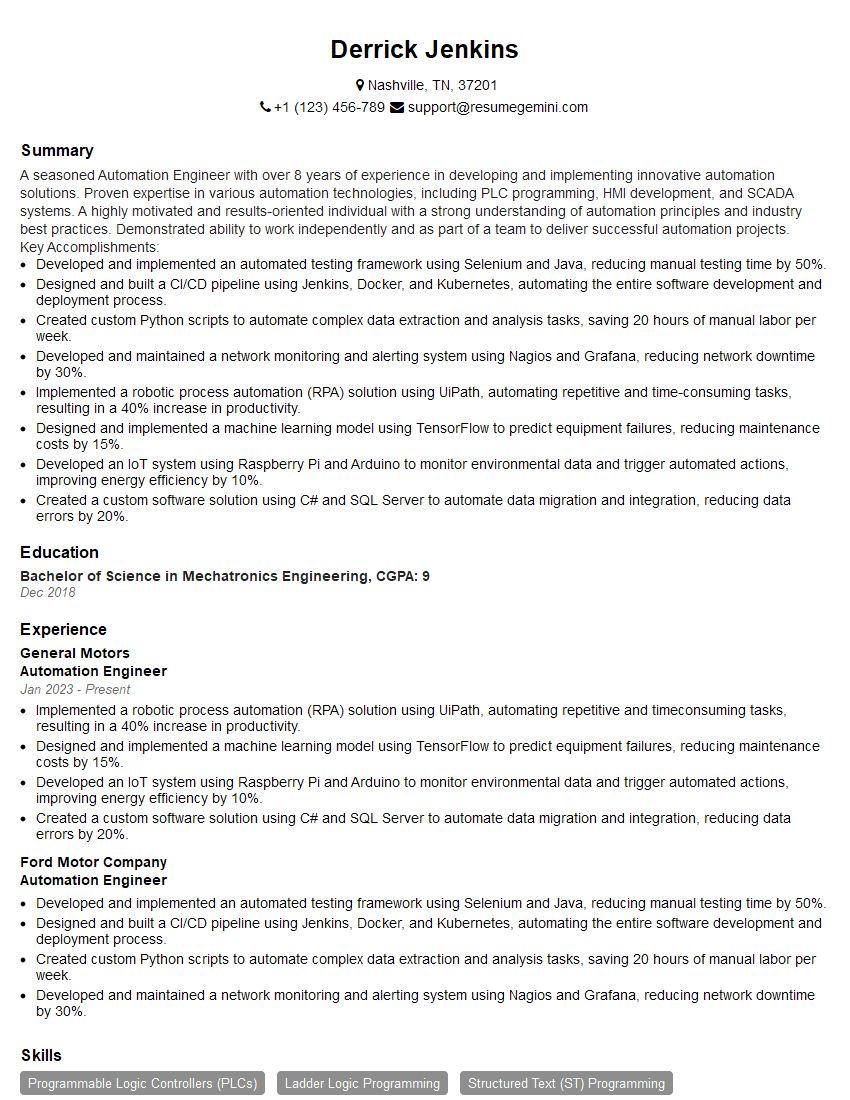
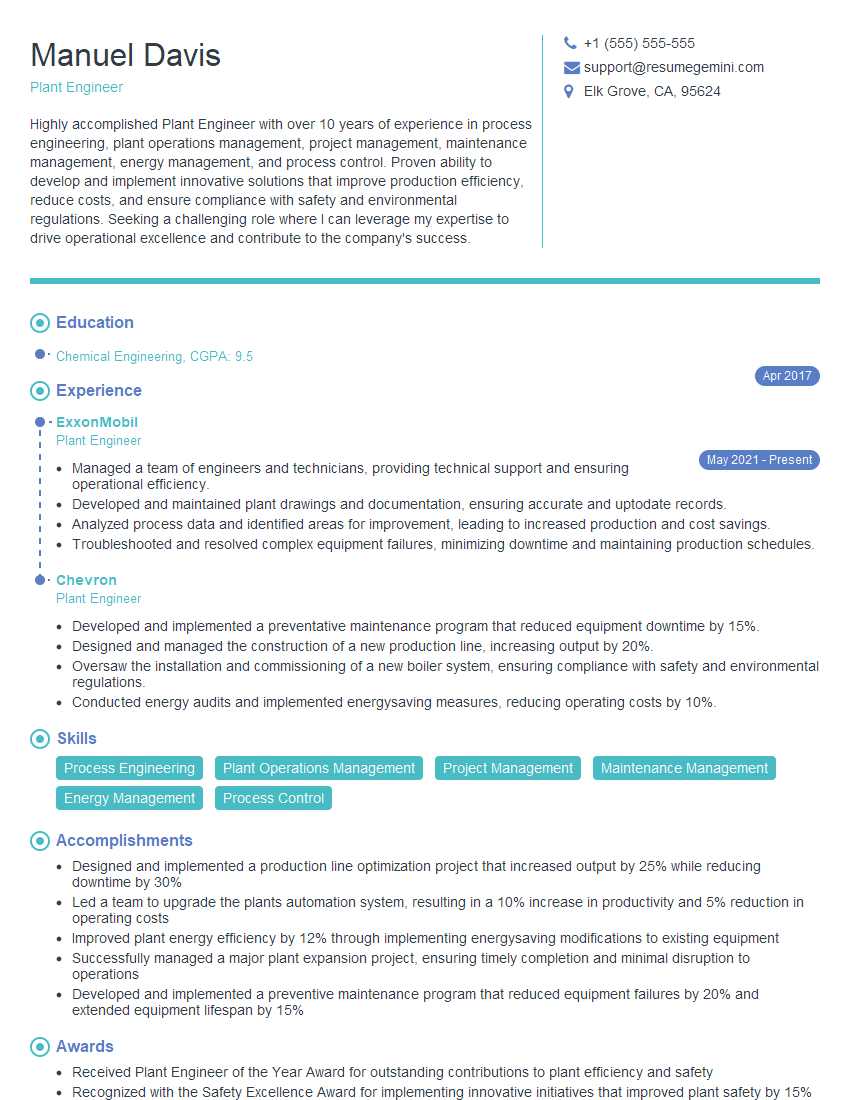
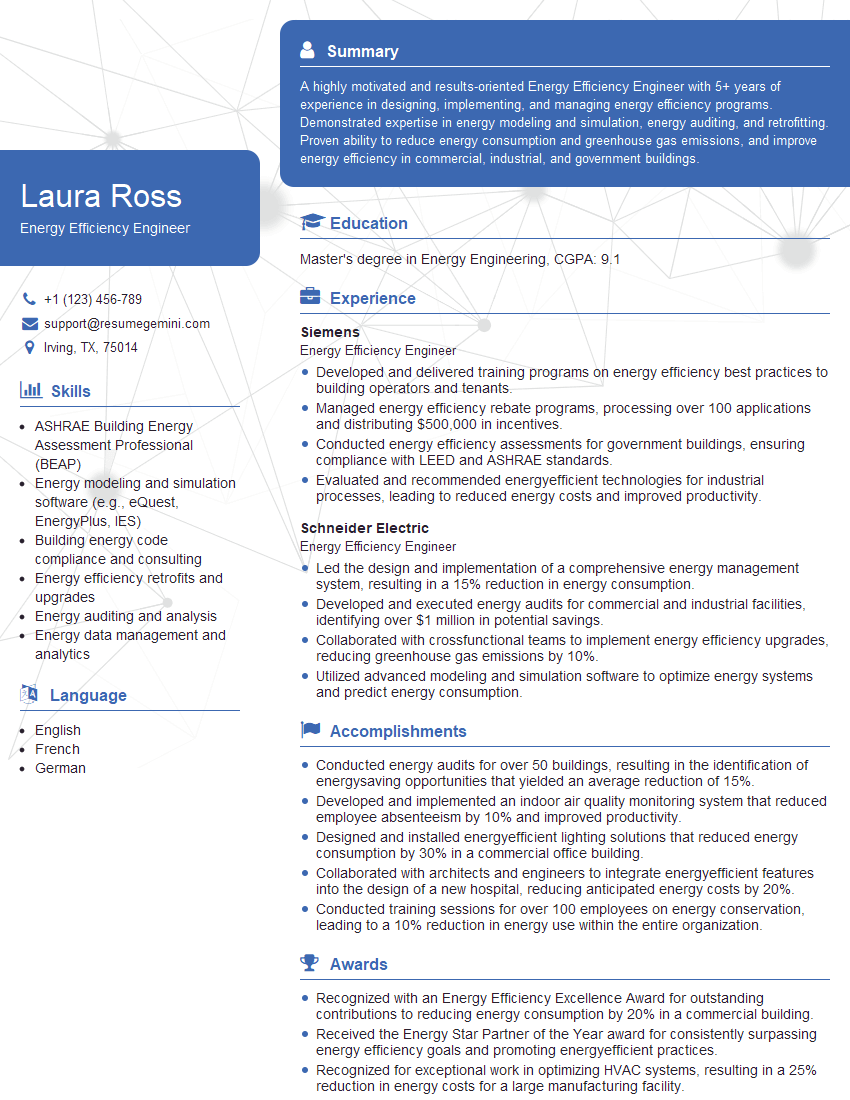
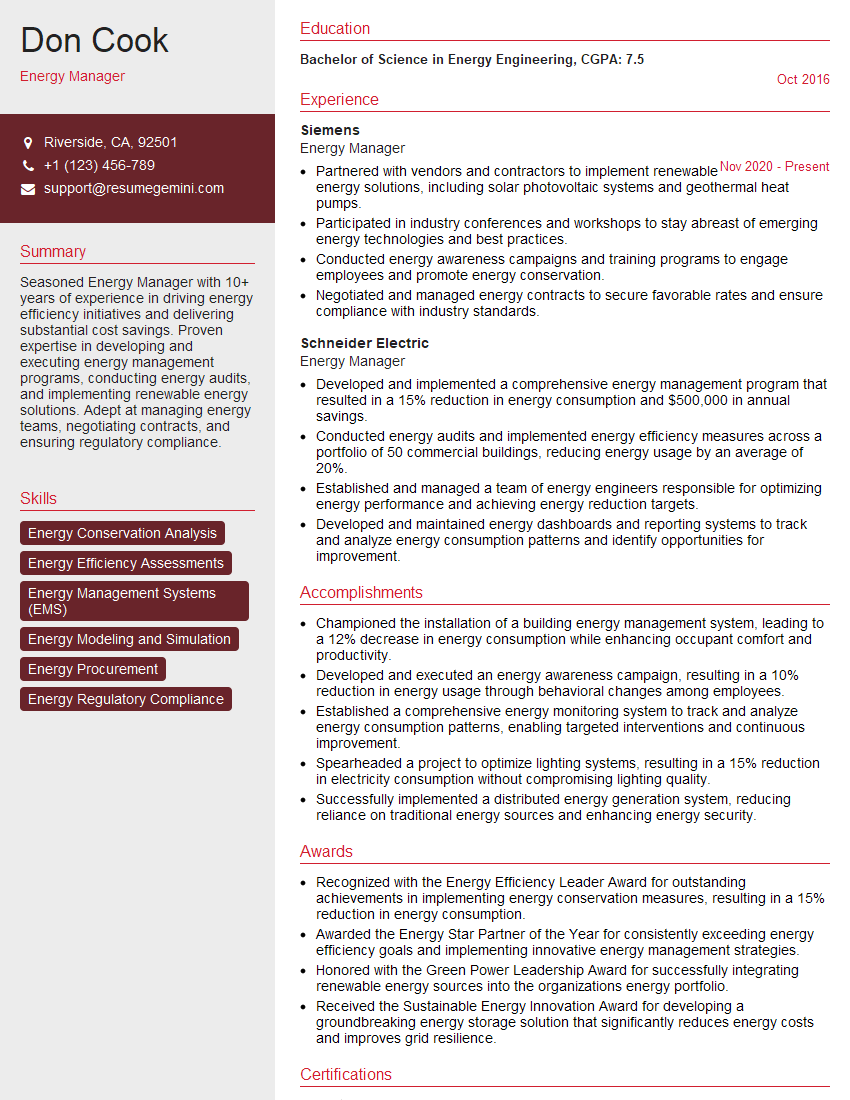
Mastering Steam and Power Plant Optimization opens doors to exciting and high-demand roles in the energy sector, offering excellent career growth potential and opportunities for innovation. To significantly enhance your job prospects, it’s crucial to present your skills and experience effectively. Creating an ATS-friendly resume is essential to navigate applicant tracking systems and ensure your application is seen by the right people. We highly recommend using ResumeGemini, a trusted resource for crafting professional and impactful resumes. ResumeGemini provides examples of resumes tailored to Steam and Power Plant Optimization to guide you in highlighting your unique qualifications. Take the next step in your career journey – build a resume that showcases your expertise and makes you stand out!
Explore more articles
Users Rating of Our Blogs
Share Your Experience
We value your feedback! Please rate our content and share your thoughts (optional).
What Readers Say About Our Blog
To the interviewgemini.com Webmaster.
Very helpful and content specific questions to help prepare me for my interview!
Thank you
To the interviewgemini.com Webmaster.
This was kind of a unique content I found around the specialized skills. Very helpful questions and good detailed answers.
Very Helpful blog, thank you Interviewgemini team.