Preparation is the key to success in any interview. In this post, we’ll explore crucial Structural Integrity and Load-Bearing Analysis interview questions and equip you with strategies to craft impactful answers. Whether you’re a beginner or a pro, these tips will elevate your preparation.
Questions Asked in Structural Integrity and Load-Bearing Analysis Interview
Q 1. Explain the difference between static and dynamic load analysis.
The core difference between static and dynamic load analysis lies in how we treat the applied forces. Static analysis assumes loads are applied slowly and remain constant, allowing the structure to reach equilibrium before significant movement occurs. Think of a building supporting its own weight – a mostly static load. We can use simpler methods and assume the structure remains still. Dynamic analysis, on the other hand, accounts for time-varying forces and the structure’s response to those changes. This is crucial for scenarios like earthquake simulations or impact analysis. The structure’s inertia and acceleration become key factors. Imagine a bridge subjected to a moving truck – the load is dynamic because it changes position, creating vibrations and oscillations.
In static analysis, we typically use simpler equations and methods like hand calculations or basic FEA simulations. Dynamic analysis, however, often requires more sophisticated techniques, including modal analysis (to determine natural frequencies), transient analysis (to simulate time-dependent behavior), and spectral analysis (to assess the response to random vibrations like earthquakes). The choice between static and dynamic analysis depends entirely on the nature of the expected loads and their impact on the structural response.
Q 2. Describe your experience with Finite Element Analysis (FEA) software.
I have extensive experience using various FEA software packages, including ANSYS, Abaqus, and COMSOL Multiphysics. My proficiency spans from model creation and mesh generation to solving complex simulations and interpreting the resulting data. For instance, in a recent project involving the structural integrity of an offshore wind turbine tower, I utilized ANSYS to model the complex interaction between the tower, the foundation, and the environmental loads (wind, waves, current). This involved creating a 3D model, defining material properties, applying boundary conditions, and running simulations to assess stress levels, fatigue life, and potential failure points. The ability to visualize stress and displacement fields within the software provided critical insights for optimizing the tower design and ensuring its long-term stability. Furthermore, my experience extends to using scripting capabilities within these softwares to automate tasks, improve efficiency, and conduct parametric studies for design optimization.
Q 3. How do you determine the appropriate safety factor for a given structural design?
Determining the appropriate safety factor is a crucial aspect of structural design, balancing safety and economy. It’s not a fixed number but depends on several interacting factors:
- Consequences of failure: A bridge collapse has far greater consequences than a minor crack in a furniture leg. Higher consequences necessitate higher safety factors.
- Material properties: The certainty in knowing material strength plays a role. If material properties are well-established, a lower safety factor might suffice. If there’s uncertainty, a higher factor is necessary.
- Load uncertainties: How well can we predict the loads? Are they static, dynamic, or random? Greater uncertainty demands a higher safety factor.
- Fabrication and construction quality: Imperfections introduced during manufacturing or construction necessitate a higher factor to account for these uncertainties.
- Codes and regulations: Building codes and industry standards often specify minimum safety factors for specific applications.
In practice, safety factors are often determined through a combination of engineering judgment, code requirements, and risk assessment. For example, a safety factor of 1.5 might be considered reasonable for a simple structure with well-defined loads and well-known materials, while a factor of 3 or more might be necessary for a critical structure like a nuclear power plant.
Q 4. What are the common failure modes in structural components?
Common failure modes in structural components include:
- Yielding: The material deforms permanently exceeding its yield strength. Imagine bending a paperclip – it yields past a certain point.
- Fracture: Complete separation of the material due to stress exceeding its ultimate tensile strength. Think of a brittle material like glass shattering under stress.
- Buckling: Sudden and large lateral deflection of a slender component under compressive loads. A thin metal column failing under its own weight is a classical example.
- Fatigue: Progressive cracking and eventual failure due to repeated cyclic loading. This is a major concern in aircraft and bridges.
- Creep: Time-dependent deformation under sustained stress, often observed in high-temperature applications. This is relevant in power plant components.
- Corrosion: Deterioration of material properties due to chemical reactions with the environment. This is a significant consideration for structures exposed to seawater or chemicals.
Understanding these failure modes is crucial for designing safe and reliable structures. Analysis must be targeted to evaluate the likelihood of each mode for a given scenario.
Q 5. Explain the concept of stress concentration and how it affects design.
Stress concentration refers to the localized increase in stress around geometric discontinuities like holes, notches, or sharp corners in a component. Imagine a piece of paper; if you poke a hole in it, the paper around the hole is much weaker than the rest. These discontinuities act as stress raisers, significantly amplifying the nominal stress in the region. This can lead to premature failure even if the overall stress level in the component is well below the material’s yield strength.
In design, we account for stress concentrations through several strategies:
- Avoiding sharp corners and discontinuities: Smoothing out the geometry minimizes stress concentration.
- Using fillets and radii: Introducing smooth transitions between different sections of the component reduces stress concentration.
- Employing FEA: Finite Element Analysis allows for precise determination of stress concentrations, providing valuable input for design optimization.
- Increasing the component’s size: If stress concentrations are unavoidable, increasing the size of the component can reduce the stress level.
- Using stronger materials: Selecting a material with a higher yield strength can help mitigate the effect of stress concentration.
Understanding and mitigating stress concentration is essential for preventing premature failures and ensuring structural integrity.
Q 6. How do you account for fatigue in your structural analysis?
Fatigue is a critical consideration in structural analysis, particularly for components subjected to repeated cyclic loading. To account for fatigue, I typically employ a fatigue life analysis using methods like:
- S-N curves: These curves relate stress amplitude (S) to the number of cycles to failure (N) for a given material. They are material-specific and derived from experimental testing.
- Miner’s rule (Palmgren-Miner rule): This rule helps determine the cumulative damage due to multiple loading cycles with varying stress amplitudes.
- Fracture mechanics: This approach considers crack initiation and propagation under cyclic loading, providing a more refined analysis than S-N curves.
In practice, I use FEA software to determine the stress range and the number of cycles experienced by critical locations. This data is then used in conjunction with appropriate fatigue life prediction methods (e.g., S-N curves, Miner’s rule) to estimate the fatigue life of the component. For example, in the design of an aircraft wing, I would use FEA to simulate the cyclic loading during flight, determine the stress cycles at critical locations (e.g., wing root), and compare the predicted fatigue life with the required service life to ensure safety.
Q 7. Describe your experience with different material models (e.g., linear elastic, plastic, etc.).
My experience encompasses a broad range of material models, including:
- Linear Elastic: This model is suitable for materials that deform elastically and return to their original shape after unloading. It’s often a simplification, but efficient for initial analysis.
- Plastic: This model accounts for permanent deformation beyond the yield point, essential for accurate prediction of the structure’s behavior under significant loads. It adds complexity but improves accuracy.
- Viscoelastic: This model captures the time-dependent behavior of materials exhibiting both viscous and elastic characteristics. It’s crucial for materials like polymers and some metals at high temperatures.
- Viscoplastic: This model combines plastic deformation with time-dependent behavior. It is necessary for materials exhibiting time-dependent plasticity under high temperatures and stresses.
- Nonlinear Elastic: This accounts for nonlinear stress-strain relationships in materials where the stiffness is not constant.
- Hyperelastic: This model describes materials that undergo large elastic deformations, commonly found in rubber-like materials.
The choice of material model depends heavily on the application, material properties, and desired accuracy. A simplified model can be appropriate for preliminary design studies, while more complex models are needed for high-fidelity simulations and critical applications. For example, a linear elastic model might suffice for analyzing a simple steel beam under low loads, but a plastic model would be essential for analyzing a structure subjected to extreme loads or impact events. Selecting the appropriate model directly impacts the accuracy of the simulation and design decisions.
Q 8. How do you validate your FEA results?
Validating Finite Element Analysis (FEA) results is crucial for ensuring the accuracy and reliability of your structural design. It’s not just about getting numbers; it’s about trusting those numbers to represent real-world behavior. We employ a multi-pronged approach to validation.
- Comparison with Analytical Solutions: For simpler geometries and loading conditions, we can compare FEA results with analytical solutions derived from classical mechanics. This provides a benchmark for evaluating the accuracy of the FEA model. For example, the deflection of a simply supported beam under a central point load can be calculated using a simple formula, allowing for direct comparison with FEA results.
- Experimental Validation: Whenever feasible, we conduct physical experiments on prototypes or scaled models. This involves applying similar loads and boundary conditions as defined in the FEA model and comparing measured displacements, stresses, and strains with the simulated results. Discrepancies might point to inaccuracies in the model or experimental setup, prompting refinements.
- Mesh Convergence Studies: The accuracy of FEA is dependent on mesh density. A mesh convergence study involves running the analysis with progressively finer meshes and comparing the results. If the results converge towards a stable solution as the mesh refines, it indicates the mesh is sufficiently fine to capture the relevant structural behavior. This is particularly important for complex geometries or stress concentration areas.
- Peer Review and Code Verification: A critical aspect of validation is having another experienced engineer review the FEA model, the methodology, and the results. This independent assessment can help identify potential errors or oversights. Furthermore, ensuring the FEA software is properly configured and calibrated through benchmark problems is vital for confidence in the results.
Ultimately, validation is an iterative process. Discrepancies between FEA predictions and experimental results or analytical solutions lead to model refinement, recalibration, and repeated validation steps to ensure confidence in the final design.
Q 9. Explain the concept of buckling and how to prevent it.
Buckling is a sudden, catastrophic loss of structural stability characterized by a large lateral deflection under a relatively small increase in compressive load. Think of a soda can: you can compress it slightly, but at a certain point, it suddenly buckles and collapses. This happens because the compressed structure finds a lower energy state by deforming laterally.
Preventing buckling involves several strategies:
- Increasing Stiffness: Increasing the cross-sectional area or using a material with higher Young’s modulus (stiffness) directly increases the buckling resistance. A thicker column, for example, will buckle at a higher load.
- Adding Support: Introducing intermediate supports reduces the unsupported length of a structural member, thereby increasing its buckling load. Think of bracing columns in a building to prevent them from buckling under their own weight and other loads.
- Optimizing Geometry: The shape of a member significantly impacts its buckling resistance. For example, a hollow section is more resistant to buckling than a solid section with the same cross-sectional area because the material is distributed farther from the neutral axis.
- Using Bracing or Lateral Supports: These elements resist lateral movements, preventing buckling. They’re commonly used in tall structures and bridges.
- Material Selection: High strength-to-weight ratio materials increase buckling resistance without adding excessive weight.
In FEA, buckling analysis is performed to determine the critical buckling load. This involves solving an eigenvalue problem, identifying the lowest load at which a structure becomes unstable. The design is then modified to ensure the applied load remains well below the calculated critical buckling load, incorporating a substantial safety factor.
Q 10. What are the different types of boundary conditions used in FEA?
Boundary conditions in FEA define how the structure interacts with its surroundings. They specify the constraints on the model’s displacement and/or forces at its boundaries. Incorrect boundary conditions lead to inaccurate results, so selecting them correctly is paramount.
- Fixed Support (Encastre): This condition completely restricts all degrees of freedom (translation and rotation) at a point or surface. Think of a column fixed into a concrete foundation.
- Pinned Support: This condition prevents translation but allows rotation about the support point. Imagine a hinge connection.
- Roller Support: This constraint allows movement in one direction while restricting movement in another. For example, a roller support on a beam allows vertical movement but prevents horizontal movement.
- Symmetry Boundary Condition: Exploiting symmetry in geometry and loading can significantly reduce computational cost. A symmetry boundary condition constrains displacements perpendicular to the plane of symmetry and sets the normal stresses to zero.
- Free Boundary: This condition applies no constraints on the degree of freedom, allowing free movement in all directions. It’s commonly used at the ends of cantilevered beams.
- Prescribed Displacement: This condition specifies the displacement of a specific node or nodes in the model. This is useful for simulating settlements or other prescribed movements.
- Applied Loads: Loads can be applied as concentrated forces, moments, distributed loads, pressures, or thermal loads.
The correct application of boundary conditions depends deeply on the specific problem. Careless selection can lead to inaccurate or misleading results. Therefore, a good understanding of the physical system and its interactions with the environment is essential.
Q 11. How do you handle uncertainties and tolerances in structural design?
Uncertainty and tolerances are inherent in all structural designs. Materials have variations in properties, manufacturing processes introduce imperfections, and loads are seldom perfectly known. We account for these uncertainties using a combination of methods.
- Probabilistic Analysis: This method involves incorporating statistical distributions for material properties, loads, and geometric dimensions. Monte Carlo simulations are often used to generate a large number of possible scenarios, enabling the assessment of the probability of failure. This provides a more realistic representation of the risk involved.
- Safety Factors and Load Factors: Applying safety factors and load factors increases the design loads and reduces the material strengths used in the analysis. These factors provide a margin of safety to compensate for uncertainties and account for unexpected events or loads.
- Sensitivity Studies: These studies investigate the influence of different parameters on the overall structural behavior. They help identify the most critical parameters and allocate more effort to accurately defining these parameters. This involves running FEA analysis with varied input values for those parameters and monitoring its impact on the output parameters of interest.
- Finite Element Model Updating: By integrating experimental results, FEA models can be adjusted and refined to better represent the actual behavior of the structure. This reduces uncertainty by improving model accuracy through a combination of numerical and experimental techniques.
It is crucial to balance safety and cost-effectiveness. Excessively conservative designs increase the cost without proportionate gains in safety, while insufficiently conservative designs pose significant risks.
Q 12. Describe your experience with different types of structural elements (beams, columns, plates, shells).
My experience encompasses a wide range of structural elements. I’ve worked extensively with beams, columns, plates, and shells, understanding their unique behaviors under various loading conditions.
- Beams: I’ve used beam elements extensively for analyzing flexural behavior, including bending moments, shear forces, and deflections. I’m familiar with different beam theories, such as Euler-Bernoulli and Timoshenko beam theories, and their applications. I understand the implications of different support conditions and loading scenarios for beam analysis, with experience in the detailed modeling of beams with various cross-sections (rectangular, I-beams, etc.).
- Columns: My experience includes analyzing columns for buckling, assessing their stability under axial compressive loads. I am skilled in applying various buckling theories, depending on the column’s end conditions and slenderness ratio, and incorporating the effects of imperfections in the geometry and material properties.
- Plates: I’ve modeled plates using shell elements to analyze bending, membrane, and shear behavior. I’m proficient in handling complex loading conditions, including bending moments, in-plane forces, and thermal loads. Understanding the concept of plate buckling and its prevention is crucial in designing plate structures.
- Shells: I have experience modeling complex shell structures like pressure vessels, curved beams, and aircraft fuselages. My expertise lies in selecting the appropriate shell elements and meshing techniques to accurately capture stress concentrations and other important phenomena.
My proficiency extends to selecting appropriate element types and mesh densities for each element type to accurately capture the stresses and displacements. I have also tackled numerous cases involving combined loading conditions, requiring careful consideration of the interaction between different types of stresses.
Q 13. How do you interpret stress and strain results from FEA?
Interpreting stress and strain results from FEA requires a thorough understanding of stress and strain concepts and the limitations of the FEA method itself.
Stress: Represents the internal force per unit area within a material. FEA provides various stress components (normal stresses, shear stresses, principal stresses, von Mises stress). Von Mises stress is a scalar value used to predict yielding in ductile materials. High stress concentrations often indicate potential failure points. It’s important to consider the material’s yield strength and ultimate tensile strength when interpreting stress results. Locations exceeding the yield strength suggest potential yielding, while exceeding ultimate tensile strength suggests potential fracture.
Strain: Represents the deformation of a material under load, expressed as a change in length relative to the original length. FEA outputs various strain components (normal strains, shear strains, principal strains). Strain results can be used to determine displacements and deformations of the structure. Large strains may indicate excessive deformation and potential failure.
Interpretation Considerations:
- Mesh Density: The accuracy of stress and strain results is directly affected by mesh density. Finer meshes usually result in more accurate results, especially in regions with stress concentrations.
- Element Type: The choice of element type influences accuracy. Solid elements are more accurate than shell or beam elements for complex stress states.
- Material Model: The material model used in the analysis should accurately reflect the material’s behavior under load. Linear elastic models are generally simpler but might be inaccurate for large deformations or nonlinear material behavior.
Visualization tools within FEA software, such as contour plots and deformed shapes, are essential for effectively interpreting these results. Furthermore, comparing results with analytical solutions or experimental data provides validation and enhances the reliability of interpretations.
Q 14. Explain the concept of modal analysis.
Modal analysis is a crucial technique in structural dynamics used to determine the natural frequencies and mode shapes of a structure. Natural frequencies are the frequencies at which a structure will vibrate freely if disturbed, and mode shapes represent the corresponding deformation patterns. Understanding these characteristics is critical for preventing resonance and ensuring structural integrity.
In essence, modal analysis solves an eigenvalue problem, determining the eigenvalues (natural frequencies) and eigenvectors (mode shapes) of the structure’s mass and stiffness matrices. The lowest natural frequency is called the fundamental frequency, which is often the most important one from a design perspective.
Applications:
- Preventing Resonance: By knowing a structure’s natural frequencies, we can ensure that operating frequencies (e.g., from machinery or wind) do not coincide, avoiding potentially catastrophic resonance.
- Seismic Design: Modal analysis helps assess how a structure will respond to seismic excitation, identifying potential vulnerabilities.
- Dynamic Loadings: The mode shapes and natural frequencies are critical input for simulating the response of a structure to dynamic loads such as impact forces or blasts.
- Structural Health Monitoring: Changes in natural frequencies can indicate damage to the structure.
The results of a modal analysis are typically presented as a table of natural frequencies and mode shapes. Each mode shape represents a distinct vibration pattern, and the corresponding natural frequency indicates how quickly the structure will oscillate in that pattern. Animation of the mode shapes provides a clear visualization of the structural deformation at each natural frequency.
Q 15. How do you assess the seismic performance of a structure?
Assessing the seismic performance of a structure involves evaluating its ability to withstand earthquake-induced ground motions. This is a complex process that considers several factors, and it’s not simply about ensuring it doesn’t collapse. We aim for functionality even after an event.
- Seismic Hazard Analysis: First, we determine the likelihood and intensity of earthquakes at the site. This involves studying historical seismic data, geological surveys, and fault maps. For example, a building in California will require a far more rigorous seismic design than one in a region with low seismic activity.
- Structural Modeling: A detailed computer model of the structure is created using Finite Element Analysis (FEA) software. This model represents the building’s geometry, material properties, and connections. We account for the non-linear behavior of materials under extreme loads.
- Response History Analysis: We apply recorded ground motion data or artificially generated ground motions to the model. The software then calculates the structure’s response, including displacements, stresses, and internal forces. This helps us understand how the structure will deform and whether critical components will reach their capacity.
- Capacity and Demand Analysis: We compare the structure’s capacity (its ability to resist forces) with the demand (the forces imposed by the earthquake). This allows us to identify potential weak points and areas that require strengthening or modification. A safety factor is always incorporated.
- Performance-Based Design: Modern seismic design often focuses on performance-based objectives. Instead of simply meeting minimum code requirements, we define acceptable performance levels (e.g., limiting damage to non-structural elements during a moderate earthquake, ensuring structural integrity during a major event).
For instance, I worked on a project retrofitting a historical building in San Francisco. By using advanced FEA techniques, we identified weak points in the masonry structure and implemented strengthening measures to ensure its survival during a significant earthquake. The building’s historical significance demanded a solution that maintained its aesthetic integrity while enhancing its seismic resilience.
Career Expert Tips:
- Ace those interviews! Prepare effectively by reviewing the Top 50 Most Common Interview Questions on ResumeGemini.
- Navigate your job search with confidence! Explore a wide range of Career Tips on ResumeGemini. Learn about common challenges and recommendations to overcome them.
- Craft the perfect resume! Master the Art of Resume Writing with ResumeGemini’s guide. Showcase your unique qualifications and achievements effectively.
- Don’t miss out on holiday savings! Build your dream resume with ResumeGemini’s ATS optimized templates.
Q 16. Describe your experience with code compliance (e.g., ASCE, Eurocode).
My experience with code compliance spans several building codes, primarily ASCE 7 (Minimum Design Loads and Associated Criteria for Buildings and Other Structures) in the US and Eurocode 8 (Design of structures for earthquake resistance) in Europe. I’m proficient in interpreting and applying these codes to ensure structural integrity and safety. I’m also familiar with local building codes and regulations, which often add specific requirements to the base codes.
Code compliance is integral to my workflow. It’s not merely a checklist but a guiding framework to ensure safety and functionality. For example, when designing a steel structure, I meticulously verify that all member sizes, connections, and detailing comply with both ASCE 7 and the relevant AISC (American Institute of Steel Construction) specifications. Similarly, when working on a reinforced concrete structure, I strictly adhere to ACI (American Concrete Institute) guidelines and relevant provisions of Eurocode 2, where applicable. I’ve been involved in projects where we’ve had to navigate discrepancies or ambiguities between different code provisions, requiring careful analysis and justification for the chosen approach. This typically involves thorough documentation and potential consultation with authorities.
Q 17. How do you address potential issues related to corrosion or deterioration of structures?
Addressing corrosion and deterioration requires a proactive and multifaceted approach. Simply repairing visible damage is often insufficient; a thorough investigation is necessary.
- Inspection and Assessment: A detailed visual inspection is the first step, often supplemented by non-destructive testing (NDT) methods such as ultrasonic testing, magnetic particle inspection, or ground-penetrating radar to assess the extent of the damage without compromising the structure’s integrity.
- Corrosion Mechanisms Understanding: Determining the root cause of the deterioration is crucial. This may involve considering environmental factors (exposure to chlorides, moisture, etc.), material properties, and design flaws.
- Remediation Strategies: Depending on the severity and location of the damage, various remediation strategies can be employed. These include:
- Cleaning and Surface Preparation: Removing loose material and preparing the surface for repairs.
- Repairing Damaged Sections: Replacing or repairing corroded or deteriorated elements using appropriate materials and techniques.
- Protective Coatings: Applying protective coatings to prevent future corrosion.
- Cathodic Protection: Electrochemically protecting steel structures from corrosion.
- Strengthening: If the deterioration has significantly weakened the structure, strengthening techniques like FRP (Fiber Reinforced Polymer) wrapping may be necessary.
For instance, I was involved in a project where a bridge deck showed significant chloride-induced corrosion in the reinforcing steel. By carefully assessing the corrosion extent, we developed a repair plan that included removing damaged concrete, replacing corroded reinforcement, and applying a durable corrosion-resistant coating. Proper design considerations for future maintenance were also incorporated into the plan.
Q 18. Explain the concept of fracture mechanics.
Fracture mechanics is the field of mechanics concerned with the study of the propagation of cracks in materials. It helps us predict when and how a crack will grow, ultimately leading to failure. Instead of focusing solely on the overall stress, it looks at the stress concentration at the crack tip.
- Stress Intensity Factor (K): This is a key parameter in fracture mechanics. It quantifies the stress field at the crack tip and depends on the crack geometry, applied load, and material properties. A higher K means a higher risk of crack propagation.
- Fracture Toughness (KIC): This material property represents the critical stress intensity factor at which a crack will start to propagate catastrophically. It’s a measure of a material’s resistance to fracture.
- Crack Growth Rate: Fracture mechanics also deals with the rate at which cracks grow under cyclic loading (fatigue). This is influenced by the stress intensity factor range and material properties.
Imagine a pressure vessel with a small crack. Using fracture mechanics principles, we can assess whether that crack will remain stable or propagate under operating conditions. This allows us to predict the remaining life of the vessel or determine appropriate inspection intervals. It’s crucial for preventing catastrophic failures in critical infrastructure and machinery.
Q 19. What is your experience with non-linear analysis?
I have extensive experience with non-linear analysis, a crucial aspect of structural engineering dealing with scenarios where the material response doesn’t follow a linear relationship between stress and strain. This is essential for accurate modeling of real-world structures under various loads.
- Material Non-linearity: This accounts for the non-linear behavior of materials like concrete and steel under high stresses. For example, concrete exhibits significant softening after cracking, while steel yields and undergoes plastic deformation beyond its yield strength.
- Geometric Non-linearity: This addresses the changes in a structure’s geometry under load, which influences its stiffness. Large deflections can significantly alter the stress distribution in a structure.
- Software Proficiency: I am proficient in using FEA software like ABAQUS and ANSYS, capable of performing both material and geometric non-linear analyses. This includes defining appropriate material models, applying boundary conditions, and interpreting results to understand structural behavior accurately.
For example, I used non-linear analysis to model the behavior of a building’s foundation during liquefaction – a phenomenon where saturated soil loses strength due to earthquake shaking. Linear analysis would have been insufficient in this case, as the soil’s behavior is highly non-linear. The non-linear analysis allowed for a more accurate prediction of the foundation’s settlement and stability.
Q 20. How do you handle complex geometries in FEA?
Handling complex geometries in FEA requires careful meshing strategies and often involves advanced techniques.
- Meshing Techniques: The choice of meshing technique is critical. For complex shapes, adaptive meshing, which refines the mesh in areas of high stress gradients, is often necessary to improve accuracy. Structured meshes are suitable for simple geometries, while unstructured meshes provide greater flexibility for complex shapes.
- Mesh Refinement: Mesh density significantly impacts accuracy. Finer meshes are more accurate but computationally expensive. Mesh refinement should focus on critical areas, like stress concentrations or areas with significant geometry changes.
- Mesh Independence Study: A mesh independence study is often conducted to ensure that the results are not significantly affected by the mesh density. This involves running the analysis with different mesh densities and comparing the results.
- Software Capabilities: Utilizing the advanced meshing capabilities of FEA software is crucial. Many packages offer tools for automatic mesh generation, mesh smoothing, and mesh quality assessment.
For instance, I’ve modeled turbine blades with complex aerodynamic features. To accurately capture the stress distribution under aerodynamic loading, we used a combination of structured and unstructured meshing, focusing on finer meshes near the leading and trailing edges where stress concentrations are expected.
Q 21. Explain the difference between static and dynamic analysis.
Static and dynamic analyses differ fundamentally in how they account for the time-dependent nature of loads.
- Static Analysis: Assumes that loads are applied slowly and gradually, and the structure’s response is steady-state. Inertia and damping effects are negligible. It is suitable for analyzing structures under constant or slowly varying loads, like dead loads (the weight of the structure itself) and permanent live loads.
- Dynamic Analysis: Accounts for the time-varying nature of loads and the structure’s dynamic response, including inertial and damping effects. It’s necessary for analyzing structures subjected to rapidly applied loads, such as earthquakes, wind gusts, and impacts. It’s more complex and computationally intensive than static analysis.
Think of it this way: A static analysis is like slowly adding weight to a scale; the weight is added gradually, and the scale’s response is immediate and proportional to the weight. Dynamic analysis is like dropping a weight on the scale; the impact creates vibrations and oscillations that need to be considered to understand the scale’s response.
In practice, I frequently use both. A static analysis forms the basis for preliminary design, followed by dynamic analysis if the structure is subjected to time-varying loads. For example, a tall building’s design involves a static analysis for permanent loads and a dynamic analysis for wind and seismic loads.
Q 22. How would you approach the design of a structure subjected to cyclic loading?
Designing for cyclic loading requires a thorough understanding of fatigue behavior. Unlike static loading where a single load application is considered, cyclic loading involves repeated stress cycles that can lead to fatigue failure, even at stress levels below the material’s yield strength. My approach would involve several key steps:
- Material Selection: Choosing a material with high fatigue strength and good fracture toughness is crucial. Factors like the S-N curve (stress-number of cycles to failure) would be carefully examined.
- Stress Analysis: Finite Element Analysis (FEA) is essential to accurately predict stress concentrations and fatigue hotspots within the structure. This often requires advanced techniques such as rainflow counting to properly analyze the complex stress history.
- Fatigue Life Prediction: Using appropriate fatigue analysis methods (e.g., Palmgren-Miner rule, local stress-strain approaches) based on the stress analysis data and the material’s S-N curve, I would determine the expected fatigue life of the structure under the cyclic loading conditions.
- Design Modifications: Based on the fatigue life prediction, design modifications might include increasing component size, employing fatigue-resistant materials, incorporating stress-relieving features (e.g., fillets, stress risers), or using surface treatments to improve fatigue resistance.
- Safety Factor: Applying an appropriate safety factor based on the criticality of the application and uncertainties involved in the analysis and material properties is also paramount.
For instance, designing a bridge to withstand the repetitive loading from vehicular traffic necessitates considering fatigue behavior. We might model various traffic patterns in FEA, and the results guide the selection of appropriate steel grades and weld design to extend the service life.
Q 23. What are your experiences with experimental validation of structural designs?
Experimental validation is an integral part of ensuring the reliability of any structural design. My experience includes conducting and overseeing various experimental tests, ranging from simple tensile tests to complex fatigue and impact tests. For example, in one project involving a novel composite material for aircraft wings, we conducted extensive fatigue tests with varying loading cycles and amplitudes. These tests were designed according to ASTM standards and were meticulously documented. The experimental data were then compared to the results of our FEA models, allowing for model refinement and validation. Discrepancies were investigated through further analysis and sometimes led to improved material modelling techniques within the FEA.
We also utilize strain gauges and other instrumentation to measure real-world strain distribution during testing, which further improves the accuracy of FEA models by providing real-time feedback. In the aerospace sector specifically, rigorous testing is mandatory for certification processes, so careful comparison of experimental and numerical results is essential. Deviations necessitate revisiting the design and analysis processes to guarantee structural integrity.
Q 24. Explain the concept of creep and its effects on structural behavior.
Creep is the time-dependent deformation of a material under sustained stress at elevated temperatures. Imagine a piece of silly putty under constant pressure; it slowly deforms over time – that’s analogous to creep. It’s a significant concern in structures subjected to high temperatures, such as power plant components or gas turbines.
The effects of creep are gradual, leading to increased deformation and potential failure over time. The rate of creep is highly dependent on temperature, stress level, and material properties. High temperatures and stresses accelerate creep. This deformation can lead to:
- Dimensional changes: Components may permanently deform, leading to misalignment or loss of functionality.
- Reduced strength and stiffness: Creep can weaken the material, making it more susceptible to failure under other loads.
- Fracture: In extreme cases, creep can cause rupture or fracture of the component.
In structural analysis, creep is often accounted for by using time-dependent constitutive models within FEA simulations. These models describe how the material’s stress-strain relationship changes with time at elevated temperatures. Neglecting creep in design can lead to catastrophic failures, especially in high-temperature applications.
Q 25. How do you incorporate material properties into your FEA models?
Incorporating material properties into FEA models is fundamental to obtaining accurate results. Material properties are defined through constitutive models, which describe the relationship between stress and strain. The selection of an appropriate constitutive model depends heavily on the material’s behavior under the anticipated loading conditions. Commonly used models include:
- Linear Elastic: For materials that exhibit linear elastic behavior (stress is proportional to strain up to the yield point), Young’s modulus (E), Poisson’s ratio (ν), and yield strength are essential inputs.
- Nonlinear Elastic: For materials with nonlinear elastic behaviour (rubber, for instance), stress-strain curves must be directly inputted.
- Elastoplastic: For materials that exhibit both elastic and plastic behavior, parameters such as yield strength, tangent modulus, and hardening rules need to be specified.
- Viscoelastic: For materials that exhibit time-dependent behavior, parameters describing the viscoelastic nature of the material are required (e.g., creep compliance).
These material properties are typically obtained from experimental testing (e.g., tensile tests, creep tests) or from material datasheets. In FEA software, these parameters are inputted as material properties, and the software automatically utilizes these values in the calculations.
For example, in the analysis of a steel structure, Young’s modulus, Poisson’s ratio, and yield strength of the steel would be essential inputs. For a composite material, the properties of each constituent material would be defined along with the information regarding their arrangement and interactions.
Q 26. What are the limitations of FEA?
While FEA is a powerful tool, it’s essential to acknowledge its limitations:
- Mesh Dependency: The accuracy of the results can be significantly influenced by the mesh quality and element size. A refined mesh is generally more accurate but computationally expensive.
- Material Model Assumptions: The accuracy of the results hinges upon the accuracy and appropriateness of the material model used. Simplifying assumptions about material behavior can lead to inaccuracies.
- Boundary Conditions: Improper or unrealistic boundary conditions can significantly affect the results. Careful consideration of support conditions and loading scenarios is critical.
- Computational Cost: Analyzing complex structures can be computationally expensive, requiring significant processing power and time.
- Lack of Real-World Effects: FEA may not account for all real-world effects, such as residual stresses, manufacturing imperfections, or complex contact interactions.
It’s vital to use engineering judgment in interpreting the FEA results and to complement the numerical analysis with other methods, such as experimental validation.
Q 27. Describe a challenging structural problem you solved and how you approached it.
One challenging project involved analyzing the structural integrity of a large-diameter pipeline subjected to both internal pressure and external soil loads. The challenge stemmed from the complex interaction between the pipeline and the soil, which is highly nonlinear and difficult to model accurately. The pipeline was also prone to buckling due to its length and slenderness.
My approach involved a phased methodology:
- Simplified Analytical Models: Initial assessments were made using simplified analytical models to gain an understanding of the dominant failure mechanisms.
- Advanced FEA Modeling: A detailed 3D FEA model was created, incorporating sophisticated contact algorithms to capture the soil-pipeline interaction. The soil was modeled using nonlinear constitutive models to reflect its complex stress-strain behavior.
- Sensitivity Studies: Extensive sensitivity studies were conducted to investigate the influence of various parameters, such as soil properties, internal pressure, and pipeline geometry, on the structural response.
- Experimental Correlation: Field tests were conducted to measure the pipeline’s response under operational loading conditions, allowing for validation of the FEA model.
- Design Optimization: Based on the analysis, design modifications were implemented, including changes to the pipeline’s thickness and support system, to improve its stability and prevent buckling.
This integrated approach, combining analytical methods, advanced FEA, experimental validation, and iterative design optimization, was crucial to ensuring the safe and reliable operation of the pipeline.
Q 28. Explain your understanding of different failure theories (e.g., maximum shear stress, von Mises).
Failure theories provide a framework for predicting the onset of yielding or failure in materials subjected to multiaxial stress states. Two common theories are:
- Maximum Shear Stress (Tresca) Theory: This theory assumes that yielding occurs when the maximum shear stress in the material reaches a critical value. It’s relatively simple to apply but can be conservative in certain cases.
- Von Mises (Distortion Energy) Theory: This theory states that yielding occurs when the distortion energy in the material reaches a critical value. It considers the combined effect of all stress components and is generally more accurate than the Tresca theory for ductile materials. It’s based on the premise that yielding occurs when the distortional energy of deformation reaches a critical value.
In practice, the selection of an appropriate failure theory depends on the material’s behavior and the loading conditions. For ductile materials under complex loading, Von Mises is frequently preferred. The FEA software will often calculate both, providing a comparison for better understanding of failure initiation. The results of these calculations, coupled with safety factors, guide the design process to ensure adequate strength and prevent catastrophic failure.
Key Topics to Learn for Structural Integrity and Load-Bearing Analysis Interview
- Stress and Strain Analysis: Understanding stress-strain relationships, material properties (elasticity, plasticity, failure criteria), and their application in structural analysis. Practical applications include predicting component failure under load.
- Finite Element Analysis (FEA): Mastering the fundamentals of FEA, including meshing techniques, element types, and solver algorithms. Practical applications involve simulating real-world structures and predicting their behavior under various loading conditions.
- Failure Theories: Familiarize yourself with various failure theories (e.g., Maximum Shear Stress, von Mises), and their application in determining the safety factor and predicting failure modes. Practical applications are crucial for designing safe and reliable structures.
- Load Paths and Structural Systems: Understanding how loads are transferred through structures and the behavior of different structural systems (e.g., trusses, beams, frames). Practical applications include designing efficient and robust load-bearing structures.
- Buckling and Stability Analysis: Understanding the principles of buckling and how to analyze the stability of slender structural members. Practical applications include designing columns and other slender components to prevent buckling failures.
- Fatigue and Fracture Mechanics: Understanding fatigue failure mechanisms and fracture mechanics principles. Practical applications include designing components to resist fatigue loading and predicting crack propagation.
- Material Selection and Properties: Understanding the mechanical properties of various engineering materials and how to select appropriate materials for specific structural applications. This includes understanding factors such as strength, stiffness, ductility, and toughness.
- Code Compliance and Standards: Understanding relevant building codes and standards related to structural design and analysis. This is essential for ensuring the safety and legality of designed structures.
Next Steps
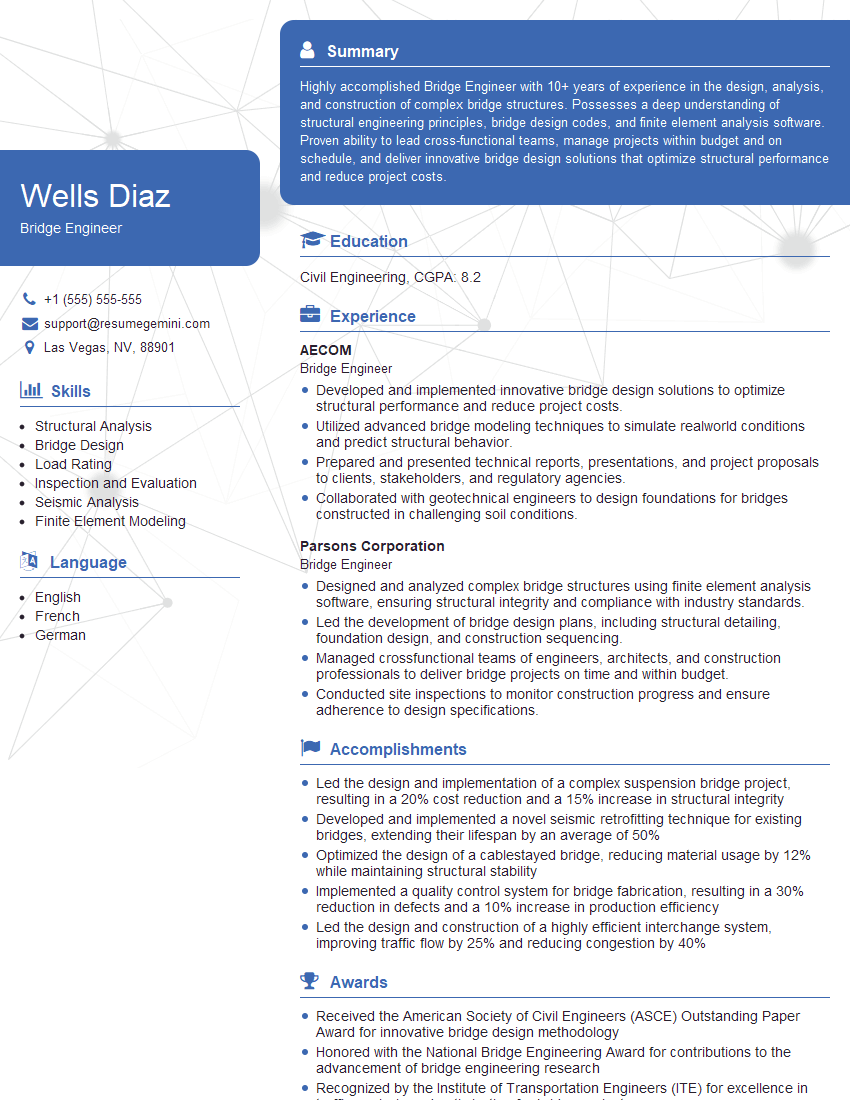
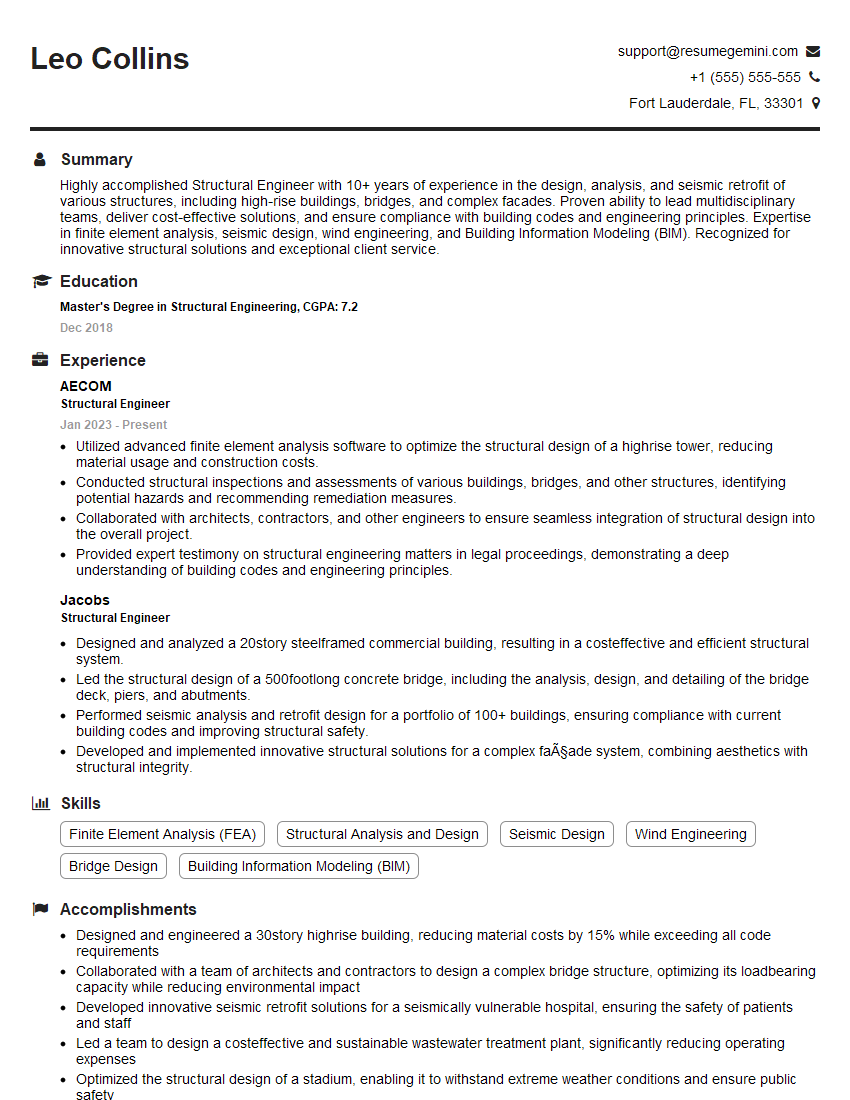
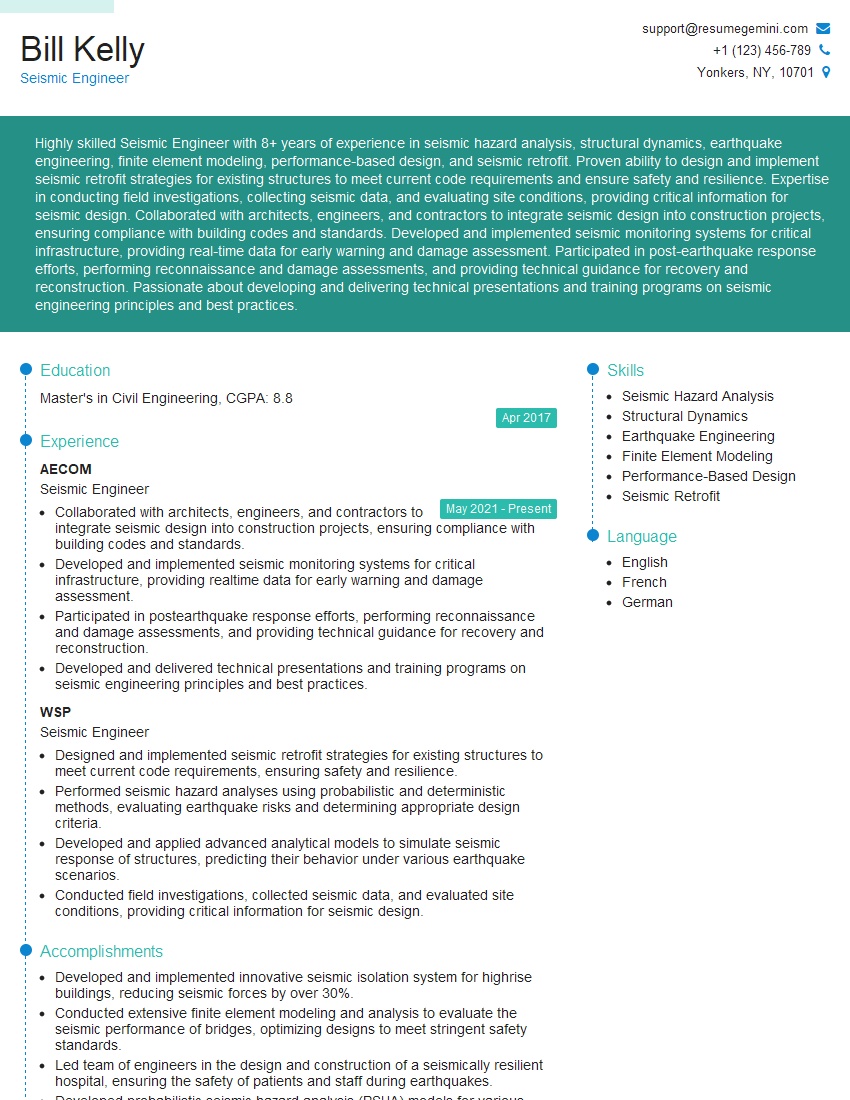
Mastering Structural Integrity and Load-Bearing Analysis is crucial for a successful and rewarding career in engineering. A strong understanding of these principles will open doors to exciting opportunities and contribute to your professional growth. To enhance your job prospects, creating an ATS-friendly resume is essential. ResumeGemini is a trusted resource that can help you build a professional and impactful resume, tailored to highlight your skills and experience in this field. Examples of resumes specifically designed for Structural Integrity and Load-Bearing Analysis professionals are available to help guide your resume creation.


Explore more articles
Users Rating of Our Blogs
Share Your Experience
We value your feedback! Please rate our content and share your thoughts (optional).
What Readers Say About Our Blog
To the interviewgemini.com Webmaster.
Very helpful and content specific questions to help prepare me for my interview!
Thank you
To the interviewgemini.com Webmaster.
This was kind of a unique content I found around the specialized skills. Very helpful questions and good detailed answers.
Very Helpful blog, thank you Interviewgemini team.