The thought of an interview can be nerve-wracking, but the right preparation can make all the difference. Explore this comprehensive guide to Substation Equipment Maintenance interview questions and gain the confidence you need to showcase your abilities and secure the role.
Questions Asked in Substation Equipment Maintenance Interview
Q 1. Explain the importance of preventative maintenance in a substation.
Preventative maintenance in a substation is paramount to ensuring reliable power delivery and preventing costly, potentially catastrophic failures. Think of it like regular servicing your car – you wouldn’t wait for it to break down completely before addressing potential issues. Instead, regular checks and maintenance minimize risks and extend the lifespan of equipment.
- Reduced Downtime: By identifying and fixing minor problems before they escalate, preventative maintenance drastically reduces unplanned outages, saving time and money.
- Extended Equipment Lifespan: Regular inspections and cleaning prevent premature wear and tear, extending the operational life of expensive substation components like transformers and circuit breakers.
- Improved Safety: Regular inspections help identify potential safety hazards, preventing accidents and injuries to personnel.
- Optimized Performance: Preventative maintenance keeps equipment operating at peak efficiency, ensuring optimal power delivery.
For example, regularly inspecting and cleaning insulators prevents flashovers, while timely oil sampling for transformers helps detect early signs of degradation.
Q 2. Describe the process of testing a circuit breaker.
Testing a circuit breaker is a crucial part of substation maintenance, verifying its ability to interrupt fault currents safely and reliably. The process typically involves several stages:
- Visual Inspection: Checking for any physical damage, loose connections, or signs of arcing.
- Mechanical Operation Test: Manually operating the breaker to check its mechanical functionality, ensuring smooth opening and closing. This might involve using a motorized mechanism for larger breakers.
- Insulation Resistance Test (IR Test): Measuring the insulation resistance between different phases and ground to detect any insulation degradation. Low resistance indicates potential faults.
- Dielectric Withstand Test: Applying a high-voltage AC or DC test voltage to verify the insulation’s ability to withstand transient overvoltages. This tests the dielectric strength.
- Contact Resistance Test: Measuring the resistance between breaker contacts to ensure proper contact closure and low resistance during operation. High resistance indicates poor contact.
- Short Circuit Test (if applicable and safe): This is typically performed in a controlled environment and involves injecting a fault current through the breaker to test its interrupting capacity. Safety precautions are paramount here.
The specific tests conducted depend on the type of circuit breaker and its voltage rating. Results are meticulously recorded and compared against manufacturer specifications to determine the breaker’s fitness for service. If any test fails, appropriate remedial actions are taken, which could involve parts replacement or even a complete overhaul.
Q 3. What are the common causes of transformer failures?
Transformer failures can stem from various issues, often impacting both the winding and the insulation system. Common causes include:
- Overheating: Due to overload, insufficient cooling, or blocked ventilation. This leads to insulation degradation and potential winding failures. Think of it like constantly running an engine too hot; it will eventually wear out.
- Insulation Degradation: Ageing of insulation materials due to heat, moisture, or electrical stress. This can lead to short circuits and insulation breakdown.
- Manufacturing Defects: Internal defects or faulty winding construction can lead to premature failure.
- External Factors: Physical damage from lightning strikes, external short circuits, or other environmental factors.
- Overvoltage Transients: Surges caused by lightning or switching operations can damage transformer insulation.
- Oil Contamination: Moisture, gas, or solid contaminants in the transformer oil degrade its insulating properties and reduce cooling efficiency.
Regular oil analysis and monitoring of temperature are vital for early detection of transformer problems and preventative maintenance.
Q 4. How do you troubleshoot a faulty relay?
Troubleshooting a faulty relay involves a systematic approach that combines visual inspection, testing, and understanding the relay’s functionality. Here’s a typical process:
- Gather Information: Understand the relay’s function, the type of fault it’s supposed to detect, and the symptoms of the malfunction.
- Visual Inspection: Check for physical damage, loose connections, or burned components.
- Check the Relay’s Settings: Verify that the relay’s settings are correct and match the system requirements. Incorrect settings are a frequent cause of malfunction.
- Perform Relay Tests: Use a relay test set to check the relay’s operational characteristics, such as pick-up and drop-out settings, timing, and operational logic. This might involve injecting simulated fault signals.
- Analyze the Relay’s Output: Examine the relay’s output signals to identify any anomalies or inconsistencies that may indicate a problem.
- Check Associated Wiring and Connections: Examine wiring for breaks, shorts, or loose connections. These can easily lead to relay malfunctions.
- Review Protective Relaying Scheme: Sometimes, the relay is not faulty, but there is a problem with the overall protection scheme. Review of the scheme may point out a missing or faulty element of the protection network.
Often, using a relay test set and comparing measurements against factory settings is critical in pinpointing the problem. Documentation and a clear understanding of the protection scheme are essential for effective troubleshooting.
Q 5. Explain the operation of a distance protection relay.
A distance protection relay measures the impedance between the relay location and the fault point along a transmission line. It’s a crucial protection device, preventing cascading failures by quickly isolating faulted sections.
Here’s how it works:
The relay measures the voltage and current at its location. Using these measurements, it calculates the impedance (resistance and reactance) to the fault. The calculated impedance is compared to pre-defined zones, typically three. Each zone covers a specific distance along the line. If the calculated impedance falls within a zone, the relay initiates a trip signal to the circuit breaker, isolating the faulted section.
- Zone 1: Covers the closest section of the line, providing the fastest protection.
- Zone 2: Covers a slightly longer distance, acting as a backup if the Zone 1 fails.
- Zone 3: Covers the furthest distance, protecting against faults that might not be detected by Zones 1 and 2. This often involves communication with other relays.
The beauty of distance protection is its ability to operate regardless of the fault’s location. Whether it’s close to the relay or further along the line, the relay will still accurately detect and isolate the fault quickly.
Q 6. What safety precautions are necessary when working on high-voltage equipment?
Safety is paramount when working on high-voltage equipment. There’s no room for shortcuts or complacency. Standard procedures must always be followed religiously. These precautions include:
- Lockout/Tagout (LOTO): This is the most critical procedure. Ensure the power is completely isolated and locked out before any work begins. Multiple locks, with multiple individuals present, may be required depending on the equipment.
- Personal Protective Equipment (PPE): Use appropriate PPE, including insulated gloves, safety glasses, arc flash suits (where applicable), and safety shoes. PPE is critical and must be compliant to regulations and standards.
- Grounding: Thoroughly ground all equipment to safely discharge any residual voltage before touching it. This prevents lethal electric shocks.
- Voltage Verification: Use appropriate voltage testing equipment to confirm that the equipment is de-energized before commencing any work. Do not rely solely on a visual inspection of breakers or switches.
- Training and Competency: All personnel working on high-voltage equipment must have adequate training, experience, and demonstrated competency in safe work practices.
- Permit-to-Work System: Employ a formal permit-to-work system, ensuring that all safety checks are performed and documented before work begins.
- Emergency Response Plan: Have a detailed emergency response plan in place and ensure all personnel are aware of the procedures in case of an accident.
Working with high voltage is incredibly dangerous; proper safety procedures prevent accidents and save lives.
Q 7. Describe your experience with different types of substation insulators.
I have extensive experience with various substation insulators, each offering unique characteristics and applications:
- Porcelain Insulators: These are traditional insulators, known for their high dielectric strength and excellent resistance to weathering. They’re widely used, especially on lower voltage equipment, but can be prone to damage from mechanical stress or impacts.
- Glass Insulators: Glass insulators offer similar dielectric strength to porcelain, but are often more resistant to mechanical damage. However, they are more susceptible to thermal shock.
- Polymer Insulators: These newer insulators are made from composite materials, offering high dielectric strength, hydrophobicity (water repellency), and reduced weight. They are increasingly popular due to their lighter weight, improved performance in polluted environments and less susceptibility to mechanical damage, although some polymers can be degraded by UV light.
- Long-Rod Insulators: Used on transmission lines and at higher voltages, these consist of a long string of individual insulator units, providing high creepage distances to prevent flashovers.
The choice of insulator depends on factors such as voltage level, environmental conditions (pollution, humidity), and mechanical requirements. Regular inspection for signs of damage, such as cracks, discoloration, or tracking, is crucial for all insulator types to ensure operational safety and reliability.
Q 8. How do you perform a partial discharge test on a transformer?
Partial discharge (PD) testing on a transformer is crucial for detecting insulation defects before they lead to catastrophic failure. PD occurs when electrical discharges take place within the transformer’s insulation without completely bridging the gap between conductors. These discharges, though small, can degrade insulation over time, eventually leading to breakdown. The test involves applying high voltage to the transformer and using sensitive sensors to detect these minute discharges.
The process typically involves:
- Preparing the transformer: This includes disconnecting the transformer from the system, grounding it properly, and ensuring the environment is safe for testing.
- Connecting the PD testing equipment: This equipment includes a high-voltage source, coupling capacitors (to prevent damage to the testing equipment), and highly sensitive sensors (ultrasonic or electromagnetic) to detect the PD signals. The sensors are carefully positioned near the transformer windings.
- Applying the test voltage: The voltage is gradually increased to a predetermined level, often near the transformer’s rated voltage, while the sensors monitor for PD activity.
- Analyzing the results: The sensors detect the PD signals, which are usually very weak. A specialized software package then processes and displays these signals, providing information on the location, magnitude, and frequency of the partial discharges. These results are then interpreted by a qualified engineer to assess the severity of the defects.
Example: During a PD test, we detected a significant number of PD pulses originating from one specific winding. This pointed to localized insulation degradation in that particular section of the winding, allowing for targeted repairs instead of a complete winding replacement, saving both time and money.
Q 9. What are the different types of grounding systems used in substations?
Substation grounding systems are critical for safety and equipment protection. They provide a low-impedance path for fault currents to flow to the earth, preventing dangerous voltage buildup and protecting personnel and equipment. Several types exist:
- Solid Grounding: The neutral point of the transformer is directly connected to the earth through a low-impedance path. This system provides excellent fault current clearing and limits transient overvoltages, but it can lead to higher fault currents, demanding higher short-circuit withstand ratings for equipment.
- Resistance Grounding: A resistor is inserted between the neutral point and the earth. This limits the fault current to a safer level, reducing stress on equipment. However, the fault current is not immediately cleared, and this system provides less protection against overvoltages.
- Reactance Grounding: A reactor is used instead of a resistor. This offers a balance between fault current limitation and overvoltage protection. It’s often preferred for higher voltage systems.
- Peterson Coil Grounding (Ungrounded): This system uses a Peterson coil, tuned to the system’s capacitive reactance. It effectively neutralizes the capacitive current associated with a ground fault, minimizing fault current to near zero. This offers excellent overvoltage protection but requires careful tuning and precise system conditions.
The choice of grounding system depends on several factors, including voltage level, fault current capacity, equipment ratings, and environmental considerations.
Q 10. Explain the function of a surge arrester.
Surge arresters, also known as lightning arresters, are crucial for protecting substation equipment from overvoltages caused by lightning strikes or switching surges. They act as a safety valve, diverting excess energy to ground, preventing damage to sensitive equipment like transformers and circuit breakers.
Think of a surge arrester like a pressure relief valve in a boiler. When the pressure becomes too high, the valve opens, releasing steam and preventing an explosion. Similarly, when the voltage exceeds a safe level, the surge arrester conducts, diverting the current to ground and protecting the equipment.
Surge arresters typically employ metal-oxide varistors (MOVs) or silicon avalanche diodes as their primary protective element. These components have a non-linear voltage-current characteristic. Under normal operating voltage, they have high impedance, effectively acting as an open circuit. However, when a surge occurs, their impedance drops dramatically, allowing them to safely conduct the surge current to ground. Once the surge subsides, they return to their high-impedance state.
Q 11. How do you interpret relay settings?
Interpreting relay settings is crucial for ensuring the proper protection of substation equipment. Relays are essentially programmable switches that monitor various electrical parameters and trip circuit breakers when abnormal conditions occur. Understanding their settings is vital for system security.
Relay settings are usually expressed in terms of:
- Time settings: These define the delay before a relay operates. A longer time setting might be used for less critical faults to prevent unnecessary tripping, while a shorter setting would be used for more severe faults.
- Current settings: These determine the amount of current needed to trigger a relay. Higher current settings are usually used for faults further away from the relay, whereas lower settings are used for faults close to the relay.
- Voltage settings: Some relays are sensitive to voltage levels, and their settings define the voltage thresholds for operation. These are often used in conjunction with current settings to provide more precise protection.
- Directional settings: These specify the direction from which a fault current must flow to trigger the relay. This helps prevent unwanted tripping due to faults on neighboring systems.
Example: A distance relay with a time setting of 0.1 seconds and a current setting of 1000 amps would trip the breaker quickly during a high-current fault close to the relay’s location. Conversely, a differential relay has settings designed to detect internal faults within a transformer by comparing currents entering and leaving the transformer.
Relay setting interpretation requires specialized knowledge and experience. Incorrect settings can lead to either insufficient protection, resulting in equipment damage or system instability, or excessive tripping, causing unnecessary outages.
Q 12. Describe your experience with SCADA systems in substations.
I have extensive experience with SCADA (Supervisory Control and Data Acquisition) systems in substations. SCADA systems provide centralized monitoring and control of substation equipment, enabling remote operation and improved efficiency. My experience includes:
- System configuration and design: I’ve been involved in the design and implementation of SCADA systems, selecting appropriate hardware and software components and defining communication protocols.
- Data acquisition and analysis: I’m proficient in using SCADA software to monitor real-time data from substation equipment, analyze trends, and identify potential problems.
- Remote control and automation: I’ve used SCADA systems to remotely control substation equipment, automating tasks like switching operations and fault clearing.
- Troubleshooting and maintenance: I’m adept at troubleshooting SCADA system issues, identifying faults, and performing preventive maintenance to ensure system reliability.
- Human-Machine Interface (HMI) design: I’ve worked on designing user-friendly HMIs that provide operators with clear and concise information, simplifying the control and monitoring of substation equipment. A well-designed HMI ensures fast and accurate decision-making.
Example: During a recent SCADA upgrade, we integrated a new advanced metering infrastructure (AMI) with the existing SCADA system, allowing us to monitor energy flow with greater precision, leading to more efficient grid management.
Q 13. What are the common types of substation busbars and their applications?
Substation busbars are the central conductors that connect various equipment within a substation, such as circuit breakers, transformers, and other protective devices. Different types cater to specific needs:
- Rigid busbars: These are solid, rigid conductors, usually made of copper or aluminum. They offer high current-carrying capacity and are suitable for high-power applications. However, they lack flexibility.
- Flexible busbars: These are made of multiple smaller conductors bundled together, providing greater flexibility in layout and installation. They are often used in areas with limited space or where thermal expansion needs to be accommodated.
- Insulated busbars: These busbars are encased in insulation for added safety. They’re used where there’s a risk of accidental contact or in areas with higher environmental concerns.
- Air-insulated busbars: These are the most common type, where the conductors are exposed to air for insulation. They are simple and cost-effective but require sufficient spacing between conductors for safety.
- Gas-insulated busbars (GIS): These busbars are enclosed in a sealed container filled with an insulating gas, such as sulfur hexafluoride (SF6). GIS busbars are highly compact and suitable for higher voltage applications, offering superior safety and environmental protection. The SF6 gas, however, raises environmental concerns, prompting the industry to explore more eco-friendly alternatives.
The choice of busbar depends on several factors, including voltage level, current rating, space constraints, and safety requirements. For example, high-voltage substations often use gas-insulated busbars due to their compactness and enhanced safety, while lower-voltage substations might use air-insulated or insulated busbars depending on the specific constraints.
Q 14. How do you maintain battery banks in a substation?
Maintaining substation battery banks is essential for reliable backup power during outages. Neglecting this critical aspect can lead to power failures during emergencies.
Maintenance includes:
- Regular inspection: Visual inspections should be conducted regularly to check for corrosion, loose connections, and physical damage. This can reveal potential issues before they become critical.
- Voltage and current measurements: Regular monitoring of cell voltages and overall battery bank voltage is important to detect any imbalances or declining performance. Current measurements help in assessing the charging and discharging efficiency.
- Specific gravity testing: This test measures the electrolyte density, providing an indication of the state of charge of each cell. Low specific gravity suggests potential cell degradation.
- Charging and equalization: Batteries should be regularly charged to maintain full capacity. Periodic equalization charging helps to balance cell voltages.
- Cleaning and tightening: Keep the battery bank clean and free of corrosion by regular cleaning. All connections must be tight and secured to prevent arcing and heat buildup.
- Temperature monitoring: Excessive heat reduces battery life. Temperature monitoring helps in identifying potential issues and preventing damage.
- Capacity testing: Periodic capacity testing helps in evaluating the battery’s ability to deliver its rated power, allowing for timely replacement of failing batteries.
Example: During a routine inspection, we discovered a loose connection in one cell of a battery bank. Tightening the connection prevented a possible failure, ensuring uninterrupted backup power during a subsequent outage.
Q 15. Explain the process of oil sampling and analysis for transformers.
Oil sampling and analysis is crucial for assessing the health of a transformer. It involves extracting a representative sample of the insulating oil from the transformer and analyzing it for various contaminants and degradation products. This helps us predict potential failures and schedule timely maintenance.
The process typically involves:
- Sampling: Using specialized equipment, we extract oil samples from designated points on the transformer, ensuring the sample is representative of the entire oil volume. This often involves using a vacuum pump and a clean, dry sample bottle. We must avoid introducing any contaminants during sampling.
- Laboratory Analysis: The sample is sent to a certified laboratory for analysis. Key parameters include:
- Dissolved Gas Analysis (DGA): This detects gases produced by electrical faults (e.g., arcing, overheating) or chemical degradation. Specific gas ratios can pinpoint the type of fault, like partial discharge or overheating.
- Moisture Content: High moisture content can reduce the oil’s dielectric strength, leading to breakdowns.
- Dielectric Strength: This measures the oil’s ability to withstand high voltage without breaking down. A low dielectric strength indicates potential insulation problems.
- Acidity: Increased acidity indicates degradation, potentially due to oxidation or overheating.
- Interpretation and Action: The lab report is carefully reviewed. Based on the results, we decide on the necessary actions. These could range from minor maintenance to major repairs or even transformer replacement. For example, high levels of acetylene in DGA might indicate an imminent catastrophic failure, requiring immediate attention.
Regular oil sampling and analysis are proactive measures that prevent costly failures and ensure the reliable operation of the transformer.
Career Expert Tips:
- Ace those interviews! Prepare effectively by reviewing the Top 50 Most Common Interview Questions on ResumeGemini.
- Navigate your job search with confidence! Explore a wide range of Career Tips on ResumeGemini. Learn about common challenges and recommendations to overcome them.
- Craft the perfect resume! Master the Art of Resume Writing with ResumeGemini’s guide. Showcase your unique qualifications and achievements effectively.
- Don’t miss out on holiday savings! Build your dream resume with ResumeGemini’s ATS optimized templates.
Q 16. What are the different types of protective relays used in substations?
Substations use a variety of protective relays to safeguard equipment and the power system. They monitor various parameters and trip circuit breakers to isolate faults quickly. The choice of relay depends on the specific application and the type of equipment being protected.
- Overcurrent Relays: These are fundamental relays that detect excessive current flow, indicating short circuits or overloads. They can have various characteristics, like instantaneous, time-delayed, or directional elements. Imagine them as circuit breakers’ ‘safety guards’ that quickly cut off the power when current exceeds a safe limit.
- Differential Relays: These compare the current entering and leaving a protected zone (like a transformer). Any significant difference suggests an internal fault, triggering a trip. They provide extremely fast protection against internal faults.
- Distance Relays: These measure the impedance to a fault along a transmission line. They can protect long transmission lines by isolating the faulty section quickly and efficiently.
- Transformer Protection Relays: These are specialized relays tailored to protect transformers from various internal and external faults, such as overcurrent, overheating, and differential protection. They can monitor winding temperature, oil temperature, and Buchholz relay signals.
- Busbar Protection Relays: These protect the busbars (the main connecting points in a substation) from faults. They often use differential protection schemes to detect internal faults.
Modern substations often use intelligent electronic relays with communication capabilities, allowing for remote monitoring, diagnostics, and advanced protection schemes.
Q 17. Describe your experience with transformer tap changers.
Transformer tap changers are vital components that allow us to adjust the transformer’s voltage ratio under load. This maintains voltage levels within acceptable limits, compensating for variations in load and line voltage. I have extensive experience with both on-load tap changers (OLTCs) and off-load tap changers.
My experience includes:
- Inspection and Maintenance: Regularly inspecting OLTCs for wear and tear, checking the contactors, selector switch, and drive mechanism. We also inspect the oil level and quality within the OLTC.
- Troubleshooting: Diagnosing and rectifying malfunctions in tap changers. This often involves systematically checking the control circuitry, the mechanical components, and the oil condition. Identifying the root cause is key; a faulty selector switch might require replacement, while a problem in the control system might need software adjustments.
- Testing: Performing various tests, including insulation resistance tests, contact resistance tests, and tap position verification to ensure the tap changer’s correct operation and functionality.
- Replacement and Repair: Overhauling or replacing tap changers as needed. This includes planning and execution of the work, ensuring minimal downtime and safety during the process.
I remember a specific incident where an OLTC malfunctioned during a peak load period, threatening a major voltage dip. By quickly diagnosing the faulty contactor and coordinating with the substation crew to facilitate a rapid repair, we prevented a potential widespread power outage. This highlighted the importance of regular maintenance and quick response.
Q 18. How do you troubleshoot communication issues in a substation?
Troubleshooting communication issues in a substation requires a systematic approach. Modern substations rely heavily on communication networks for monitoring, control, and protection. Problems can arise due to faulty hardware, software glitches, or network connectivity issues.
My troubleshooting strategy involves:
- Identify the affected systems: Determine which systems or devices are experiencing communication problems.
- Check physical connections: Inspect cables, connectors, and network devices for physical damage or loose connections.
- Test network connectivity: Use network diagnostic tools (ping, traceroute) to identify points of failure within the network. This helps in isolating the problem to a specific segment of the network.
- Check communication protocols: Verify the proper functioning of communication protocols (e.g., Modbus, IEC 61850). Inspect network configurations and settings for possible mismatches or errors.
- Review logs and alarms: Examine communication logs and alarm messages from the substation’s SCADA (Supervisory Control and Data Acquisition) system or other relevant systems for clues about the problem. These logs often provide detailed information about failures and their time stamps.
- Verify power supply: Ensure that all communication equipment has a stable power supply. Intermittent power can cause communication failures.
- Software updates and patches: Check for any available software updates or patches for communication devices or software applications. Outdated software might contain known vulnerabilities or bugs.
For example, recently I resolved a communication outage between a bay controller and the substation’s SCADA system by simply replacing a faulty network cable. However, another case required intensive investigation involving firmware updates on the relays after checking that the protocols were correctly configured and all physical connections were secure.
Q 19. What are the different types of current transformers and potential transformers?
Current transformers (CTs) and potential transformers (PTs) are essential measuring devices in substations, providing safe and scaled-down representations of high voltage and current for protection and metering equipment. Different types are chosen based on factors like accuracy, application, and voltage level.
Current Transformers (CTs):
- Wound-type CTs: The most common type, using a primary winding around the conductor and a secondary winding connected to measuring devices. They provide a scaled-down current proportional to the primary current.
- Bar-type CTs: A simpler design suitable for high currents, where the primary conductor itself acts as the primary winding. They are compact and cost-effective.
- Ring-type CTs: Used for measuring current in busbars, the current flowing through the bar induces a current in the secondary winding of a core encircling the busbar.
Potential Transformers (PTs):
- Capacitor-coupled PTs: Often used for high-voltage applications to reduce size and cost. They use a capacitor to couple the primary and secondary windings, minimizing the number of turns.
- Wound-type PTs: Similar to wound-type CTs, with a primary and a secondary winding providing a voltage proportional to the primary voltage. These are widely applicable for a range of voltage levels.
- Electrostatic PTs: Used in high voltage applications, these PTs use capacitive coupling and don’t have magnetic coupling between primary and secondary windings.
The choice of CT or PT depends on various factors, including accuracy requirements, voltage and current levels, and application. For protection applications, accuracy and speed are paramount.
Q 20. Explain the importance of insulation resistance testing.
Insulation resistance testing is a crucial diagnostic test to assess the condition of electrical insulation. It measures the resistance of the insulation to the flow of current. A high insulation resistance indicates good insulation quality, while a low value suggests potential insulation degradation, which can lead to safety hazards and equipment failures.
The test involves applying a DC voltage across the insulation and measuring the leakage current. The insulation resistance is then calculated using Ohm’s law. Several factors are important in conducting the test:
- Test voltage: The voltage used must be appropriate for the insulation type and voltage rating of the equipment. Using too high a voltage can damage the insulation while using too low a voltage might not accurately reveal problems.
- Test duration: The test should be conducted for a sufficient period to allow the insulation to stabilize and reach a steady state. We usually wait for the current to stabilise before recording the final value.
- Test environment: Environmental conditions like temperature and humidity can affect the results. These conditions should be noted and considered when interpreting the results.
Low insulation resistance might indicate various problems such as:
- Moisture ingress: Water contamination lowers the insulation resistance.
- Insulation degradation: Ageing or overheating can degrade insulation, reducing its resistance.
- Partial discharges: Internal defects in the insulation can lead to partial discharges, reducing the insulation resistance.
Insulation resistance testing is a preventative maintenance task that helps identify potential problems before they lead to serious consequences. A routine testing schedule, coupled with thorough inspection and timely maintenance actions, ensures equipment safety and operational reliability.
Q 21. Describe your experience with different types of switchgear.
My experience encompasses various types of switchgear, including air-insulated switchgear (AIS), gas-insulated switchgear (GIS), and solid-state switchgear.
- Air-Insulated Switchgear (AIS): AIS uses air as the insulating medium. It’s typically larger and requires more space than GIS, but it offers good visibility and ease of maintenance. I’ve worked extensively on inspecting and maintaining AIS, including the circuit breakers, disconnectors, and current transformers.
- Gas-Insulated Switchgear (GIS): GIS utilizes sulfur hexafluoride (SF6) gas as the insulating medium, enabling compact designs and higher voltage ratings. Maintenance in GIS is generally more complex and requires specialized training and equipment. I have experience in handling GIS maintenance, including inspecting the gas pressure, performing partial discharge measurements, and handling potential gas leaks, which would be safely and responsibly addressed adhering to all safety regulations and environmental protections.
- Solid-State Switchgear: This advanced technology uses solid-state devices for switching and control. It offers enhanced control and protection capabilities but requires specialized expertise for maintenance and repair. I’ve worked on troubleshooting and commissioning solid-state switchgear in several projects. The fast-switching capabilities need precise diagnostic skills and thorough knowledge of the system.
One project involved upgrading an older AIS substation to GIS. The project required careful planning, coordination, and meticulous execution to ensure a seamless transition with minimal disruption to the power supply. This experience provided invaluable insights into the benefits and challenges of different switchgear technologies.
Q 22. How do you identify and mitigate potential hazards in a substation?
Identifying and mitigating potential hazards in a substation is paramount to ensuring worker safety and operational reliability. It involves a systematic approach combining pre-planning, on-site assessments, and ongoing monitoring.
- Pre-task Planning: This includes reviewing substation schematics, identifying energized equipment, and assessing potential hazards like exposed energized conductors, proximity to high voltage equipment, and confined spaces. We utilize lockout/tagout procedures to ensure equipment is de-energized before any work begins.
- On-site Assessment: A thorough visual inspection is critical. We look for damaged insulation, loose connections, signs of overheating, and any evidence of previous incidents. We also verify the effectiveness of safety grounding and use appropriate personal protective equipment (PPE), such as arc flash suits, insulated tools, and safety glasses.
- Ongoing Monitoring: Regular inspections, preventative maintenance schedules, and gas detection systems (for SF6 gas in gas-insulated substations) help us stay ahead of potential problems. We use real-time monitoring systems to track parameters like temperature and current to detect anomalies that may indicate developing hazards.
For example, during a recent maintenance activity, we discovered a loose connection on a current transformer. This could have led to overheating and potentially a fire. By identifying and fixing it proactively, we prevented a major incident.
Q 23. What is your experience with using diagnostic tools for substation equipment?
My experience with diagnostic tools for substation equipment is extensive. I’m proficient in using a variety of instruments to pinpoint issues and prevent equipment failure.
- Partial Discharge (PD) Detectors: These help us identify insulation degradation in high-voltage equipment like transformers and circuit breakers. Early detection can prevent catastrophic failures.
- Infrared (IR) Cameras: IR cameras allow us to detect overheating components, which can indicate loose connections, overloading, or other problems. This non-invasive method allows for quick identification of potential issues.
- Dissolved Gas Analysis (DGA): This technique analyzes gases dissolved in transformer oil to detect early signs of internal faults, such as overheating, arcing, or partial discharges. This is crucial for preventing major transformer failures.
- Relay Testers: We use relay testers to ensure that protective relays function correctly and trip appropriately during fault conditions. This is critical for substation protection.
In one case, using DGA, we identified an incipient fault in a power transformer, allowing us to schedule preventative maintenance and avoid a costly and lengthy outage.
Q 24. Explain your understanding of arc flash hazards and mitigation.
Arc flash is a dangerous electrical hazard resulting from a short circuit or fault in energized equipment. The resulting arc produces intense heat, light, and pressure, posing significant burn and blast injuries.
- Understanding the Hazard: Arc flash severity depends on factors like voltage level, available fault current, and system impedance. Arc flash studies are crucial to determine the incident energy and appropriate PPE required.
- Mitigation Strategies: Effective mitigation involves several approaches including engineering controls (shielding, improved grounding), administrative controls (lockout/tagout procedures, work permits), and the use of appropriate PPE, such as arc flash suits rated for the calculated incident energy.
- Safety Procedures: Thorough training on arc flash hazards and safety procedures, including the use of appropriate PPE and safe work practices, is essential for all substation personnel.
We always conduct arc flash studies before undertaking any maintenance activity on energized equipment, ensuring personnel are adequately protected. This involves calculating the incident energy and selecting PPE that can withstand the potential arc flash.
Q 25. How do you ensure compliance with relevant safety standards and regulations?
Compliance with safety standards and regulations is non-negotiable. We adhere to standards such as IEEE, IEC, and OSHA guidelines to ensure a safe and reliable operation.
- Regular Audits: We conduct regular internal audits to verify adherence to safety procedures and regulations. We document all maintenance activities, inspections, and safety training.
- Record Keeping: Detailed records are maintained for all equipment, including maintenance history, test results, and safety inspections. This ensures traceability and helps identify trends that might indicate potential problems.
- Training: Regular and comprehensive safety training is provided to all substation personnel on hazard identification, risk assessment, lockout/tagout procedures, and the use of appropriate PPE.
- Regulatory Compliance: We remain updated on changes to relevant safety standards and regulations to ensure continued compliance.
We recently implemented a new safety management system, which has improved our tracking of safety compliance and reduced incidents. This system integrates all our safety data and allows us to proactively identify areas for improvement.
Q 26. Describe your experience with commissioning new substation equipment.
Commissioning new substation equipment involves a meticulous process of testing and verification to ensure that everything functions as designed.
- Pre-commissioning Inspection: This includes verifying that the equipment has been delivered according to specifications and that the installation meets the required standards.
- Testing and Verification: We conduct a range of tests, including insulation resistance tests, dielectric strength tests, and functional tests to ensure that all equipment operates correctly and meets performance criteria. This often involves specialized testing equipment and expertise.
- Protection System Testing: This is critical to ensure that the protective relays and other safety systems are functioning correctly and will protect the substation during fault conditions.
- Documentation: All testing results and commissioning procedures are meticulously documented to demonstrate compliance with standards and provide a record for future maintenance and troubleshooting.
During the commissioning of a new substation, we identified a minor wiring error in the protection system during testing. This was corrected before energization, preventing a potential safety hazard.
Q 27. What are your troubleshooting skills for complex substation problems?
Troubleshooting complex substation problems requires a systematic approach combining technical knowledge, diagnostic skills, and problem-solving abilities.
- Gather Information: Start by collecting data from various sources such as alarms, SCADA systems, event recorders, and field observations.
- Analyze Data: Carefully analyze the collected data to identify patterns and potential causes. This may involve using specialized software tools for data analysis.
- Isolate the Problem: Use diagnostic tools and techniques to isolate the root cause of the problem. This might involve testing individual components or using simulation tools.
- Implement Solution: Once the root cause has been identified, implement the necessary corrective actions. This may involve repairs, replacements, or software updates.
- Verification: Verify that the implemented solution has resolved the problem and that the substation is operating safely and reliably.
In one instance, we experienced intermittent tripping of a circuit breaker. By analyzing SCADA data and conducting field tests, we determined that the issue was caused by a faulty current transformer. Replacing the faulty component resolved the problem.
Q 28. How do you prioritize maintenance tasks in a substation environment?
Prioritizing maintenance tasks in a substation environment requires a balanced approach considering safety, reliability, and cost.
- Risk-Based Approach: We prioritize tasks based on their potential impact on safety and operational reliability. Critical equipment requiring high availability is prioritized over less critical equipment.
- Manufacturer’s Recommendations: We adhere to manufacturer’s recommendations for scheduled maintenance intervals and procedures.
- Condition-Based Maintenance: We utilize condition monitoring techniques (e.g., vibration analysis, oil analysis) to assess the health of equipment and prioritize maintenance based on actual condition rather than solely on time-based schedules.
- Resource Allocation: We consider available resources (personnel, equipment, budget) when prioritizing tasks to ensure efficient and effective maintenance activities.
We use a computerized maintenance management system (CMMS) to schedule and track maintenance tasks, ensuring that high-risk and critical tasks are prioritized effectively.
Key Topics to Learn for Substation Equipment Maintenance Interview
- Transformers: Understanding transformer principles, testing methodologies (e.g., Dissolved Gas Analysis, Doble testing), maintenance procedures, and common failure modes.
- Circuit Breakers: Knowledge of various circuit breaker types (e.g., oil, SF6, vacuum), operating mechanisms, testing and maintenance, and troubleshooting arc faults.
- Protective Relays: Familiarity with different relay types and their functions (e.g., overcurrent, differential), relay settings, testing procedures, and coordination schemes.
- Switchgear: Understanding the components and operation of switchgear, including busbars, insulators, and grounding systems, as well as safety procedures during maintenance.
- Insulators: Knowledge of different insulator types (e.g., porcelain, polymer), inspection techniques, and failure mechanisms. Understanding the impact of environmental factors on insulator performance.
- Substation Automation and SCADA Systems: Basic understanding of substation control systems, data acquisition, and remote monitoring capabilities.
- Safety Procedures and Regulations: Thorough knowledge of relevant safety standards, lockout/tagout procedures, and personal protective equipment (PPE) requirements for substation work.
- Preventive and Predictive Maintenance: Understanding the importance of planned maintenance schedules, condition monitoring techniques, and the use of diagnostic tools.
- Troubleshooting and Problem-Solving: Ability to systematically diagnose faults, identify root causes, and implement effective repair strategies. Experience with diagnostic equipment is beneficial.
- Documentation and Reporting: Understanding the importance of accurate record-keeping, maintenance logs, and reporting procedures.
Next Steps
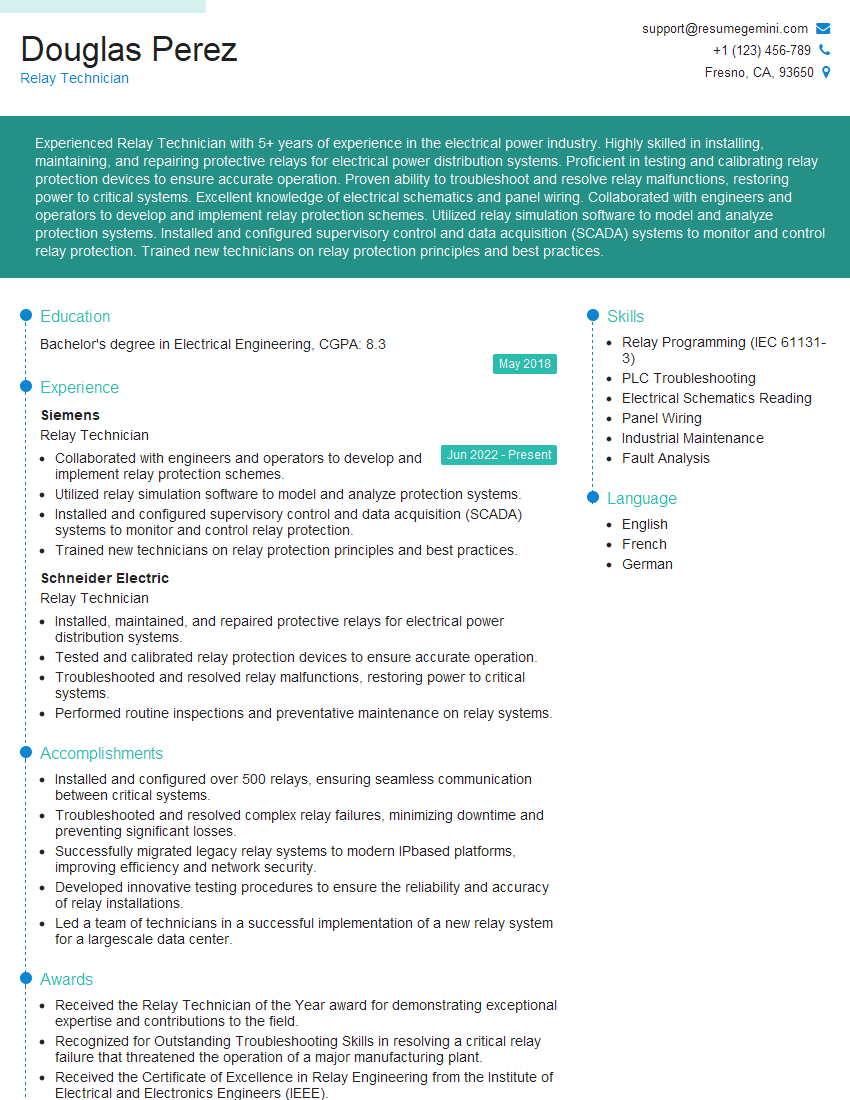
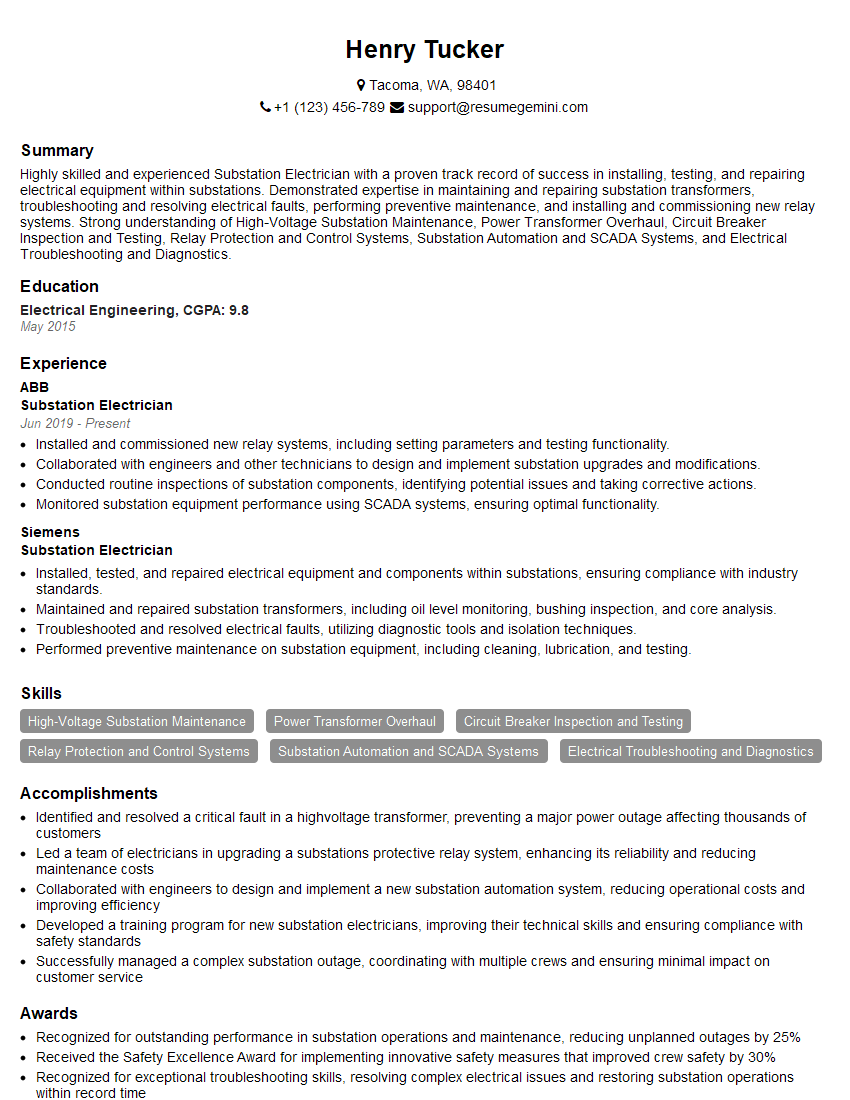
Mastering Substation Equipment Maintenance opens doors to a rewarding career with excellent growth potential. Advancement opportunities often involve specialized roles, supervisory positions, or project management. To significantly boost your job prospects, crafting a compelling and ATS-friendly resume is crucial. ResumeGemini is a trusted resource that can help you build a professional and effective resume tailored to highlight your skills and experience. Examples of resumes specifically designed for Substation Equipment Maintenance professionals are available to help you create a document that showcases your qualifications effectively.
Explore more articles
Users Rating of Our Blogs
Share Your Experience
We value your feedback! Please rate our content and share your thoughts (optional).
What Readers Say About Our Blog
To the interviewgemini.com Webmaster.
Very helpful and content specific questions to help prepare me for my interview!
Thank you
To the interviewgemini.com Webmaster.
This was kind of a unique content I found around the specialized skills. Very helpful questions and good detailed answers.
Very Helpful blog, thank you Interviewgemini team.