Cracking a skill-specific interview, like one for Substation Maintenance and Repair, requires understanding the nuances of the role. In this blog, we present the questions you’re most likely to encounter, along with insights into how to answer them effectively. Let’s ensure you’re ready to make a strong impression.
Questions Asked in Substation Maintenance and Repair Interview
Q 1. Describe your experience with preventative maintenance on power transformers.
Preventative maintenance on power transformers is crucial for ensuring their longevity and reliable operation. It involves a systematic approach encompassing various checks and procedures, aiming to identify and address potential issues before they escalate into major failures. Think of it like a regular health check-up for a vital organ of the power system.
Oil Analysis: We regularly sample the transformer oil and analyze it for contaminants, moisture, and degradation products. This provides early warning signs of potential problems like insulation breakdown. For example, high levels of dissolved gases can indicate partial discharges within the transformer windings.
DGA (Dissolved Gas Analysis): This is a key part of oil analysis. Different gases indicate different faults. For example, high levels of acetylene suggest arcing.
Insulation Resistance Testing: We measure the insulation resistance of the windings to detect any degradation. A drop in resistance indicates weakening insulation and the potential for future failures.
Visual Inspection: A thorough visual inspection of the transformer, including its bushings, tank, and connections, is vital to identify any signs of damage, leakage, or overheating. We look for things like loose connections, corrosion, or physical damage.
Temperature Monitoring: Continuous monitoring of winding and oil temperatures helps us detect any unusual heating patterns that might indicate impending problems, such as overloading or short circuits.
Tap Changer Operation: We test the tap changer mechanism to ensure smooth and reliable voltage regulation. This involves testing the switching sequence and observing for any unusual noises or resistance.
By combining these approaches, we can proactively address potential issues and extend the lifespan of the transformers, preventing costly and disruptive failures.
Q 2. Explain the process of testing and repairing circuit breakers.
Testing and repairing circuit breakers is a critical aspect of substation maintenance, ensuring their ability to interrupt fault currents and protect the power system. The process involves a combination of diagnostic tests and meticulous repair procedures.
Testing: Testing typically involves verifying the breaker’s mechanical operation, contact resistance, dielectric strength, and operating time. We utilize specialized test equipment such as:
- Hi-Pot testing: This checks the insulation resistance between live parts and ground.
- Contact resistance testing: Measures the resistance across the breaker contacts to identify any issues that may lead to overheating or arcing.
- Timing tests: Verify the breaker trips within the specified time to clear a fault.
Repair: If any issues are detected during the testing phase, repair procedures are implemented. This might involve:
- Replacing worn or damaged components, such as contacts, springs, or operating mechanisms.
- Cleaning and lubricating moving parts to ensure smooth operation.
- Rewinding coils if necessary, paying close attention to the insulation.
- Tightening connections to prevent overheating.
Safety is paramount during this process. We follow strict lockout/tagout procedures to ensure the breaker is completely de-energized before any work begins. We also use appropriate personal protective equipment (PPE) throughout the process.
Q 3. How do you troubleshoot a faulty protective relay?
Troubleshooting a faulty protective relay requires a systematic approach combining diagnostic tools, knowledge of relay operation, and understanding of the substation’s protection scheme. Think of it as detective work within the electrical system.
Reviewing Relay Alarms and Events: Start by examining the relay’s fault logs and event records to determine the sequence of events that led to the malfunction.
Inspecting the Relay’s Settings: Check the relay’s operational settings to ensure they are correctly configured for the protected equipment and the system’s characteristics.
Testing Relay Inputs and Outputs: Test the relay’s inputs (current transformers, voltage transformers) and outputs (trip coils) to identify any abnormalities. This might involve using injection testing equipment to simulate fault conditions.
Analyzing Waveform Recordings: Reviewing the relay’s waveform recordings can provide detailed insights into the fault and the relay’s response. This helps determine if the relay malfunctioned or if it was correctly responding to an actual fault.
Using a Relay Test Set: A dedicated relay test set provides precise and controlled signals to test various aspects of the relay’s functionality and allows for comprehensive diagnosis.
If the fault is internal to the relay, replacement may be necessary. If external factors are at play, correcting those issues will be the priority. Documentation throughout the process is crucial to ensure accurate record-keeping and to facilitate future troubleshooting.
Q 4. What are the safety procedures you follow when working on high-voltage equipment?
Safety is paramount when working on high-voltage equipment. We adhere to a strict set of procedures to minimize the risk of electric shock, arc flash, and other hazards. These procedures are not just guidelines; they are life-saving measures.
Lockout/Tagout (LOTO): Before any work commences, we use LOTO procedures to isolate the equipment from the power source, preventing accidental energization. This includes visually verifying the absence of voltage.
Personal Protective Equipment (PPE): Appropriate PPE is always used, including insulated gloves, safety glasses, arc flash suits, and safety footwear.
Grounding: We ensure the equipment is properly grounded before any work begins to divert any residual electrical energy to the ground. This mitigates the risk of shock or arc flash.
Permit-to-Work Systems: Formal permit-to-work systems are followed, ensuring that all relevant personnel are aware of the work being performed and the associated risks.
Training and Competency: All personnel working on high-voltage equipment receive comprehensive training and are certified to perform their specific tasks. Regular refresher training is crucial to maintain competency.
Emergency Response Plan: A clear emergency response plan is in place, including procedures for dealing with electric shocks, arc flashes, and other potential accidents.
These rigorous safety procedures are non-negotiable and are designed to protect both the workforce and the equipment itself. Safety isn’t just a priority; it’s an integral part of our culture.
Q 5. What is your experience with SCADA systems in substation environments?
SCADA (Supervisory Control and Data Acquisition) systems are essential for the remote monitoring and control of substations. My experience involves using SCADA systems to monitor various parameters, such as voltage, current, temperature, and breaker status in real time. This allows for proactive identification of potential issues and timely intervention.
Data Acquisition: SCADA systems acquire data from various sensors and devices throughout the substation, providing a comprehensive overview of the system’s operational status.
Remote Monitoring: We can monitor the substation from a central control room, enabling remote diagnostics and fault detection.
Alarm Management: SCADA systems generate alarms when critical parameters exceed predefined thresholds, alerting operators to potential problems.
Remote Control: In many cases, we can remotely control breakers and other substation equipment through the SCADA system, allowing for swift and efficient responses to faults.
Data Logging and Reporting: SCADA systems record operational data and generate reports that aid in preventative maintenance and performance analysis. This data is invaluable for long-term trend analysis and system optimization.
My experience includes working with different SCADA platforms and protocols, adapting my approach based on specific system configurations. This includes troubleshooting communication issues and ensuring data integrity. A strong understanding of SCADA systems is key for modern substation management.
Q 6. Explain your understanding of different types of insulators used in substations.
Substations employ various types of insulators to provide electrical insulation between energized conductors and grounded structures, preventing short circuits and ensuring safety. The choice of insulator depends on voltage levels, environmental conditions, and specific application requirements.
Post Insulators: These are commonly used for supporting conductors and bushings, featuring a porcelain or glass body with a metal cap and base. They’re robust and well-suited for higher voltages.
Suspension Insulators: These are strung together to create long insulator strings for high-voltage transmission lines. Each unit is a relatively small insulator, and the design allows for a flexible arrangement to accommodate different voltage levels and varying environmental stresses.
Strain Insulators: These are used at the ends of insulator strings or in areas with significant mechanical stress to reinforce the support structure.
Bushings: These provide insulation for conductors passing through the walls of transformers or other equipment. They are usually made of porcelain or composite materials.
Polymer Insulators: These are increasingly common, offering advantages such as lighter weight and improved hydrophobicity (water repellency) compared to porcelain or glass. However, their long-term performance requires careful consideration.
Regular inspection of insulators for cracks, damage, and contamination is vital to prevent flashovers and maintain system reliability. Different types of insulators are suited to different applications, and choosing the right one is key to ensuring safe and reliable operation.
Q 7. How do you identify and address potential grounding issues in a substation?
Grounding is critical in substations to ensure safety and system stability. It provides a low-impedance path for fault currents to flow to earth, preventing voltage build-up and protecting personnel and equipment.
Identifying Grounding Issues: We use various methods to identify grounding problems, including:
Ground Resistance Testing: Measuring the resistance between the grounding system and earth using a ground resistance tester helps identify high-resistance connections.
Potential Gradient Measurement: Measuring the voltage drop between different points in the grounding system helps locate weak points or areas with high potential gradients.
Visual Inspection: Checking for corrosion, loose connections, or damage to grounding conductors and electrodes is important.
Addressing Grounding Issues: Solutions vary depending on the identified problem and may include:
Replacing corroded grounding conductors: Corroded conductors need to be replaced with new ones to improve conductivity.
Improving ground electrode contact: Adding additional electrodes or enhancing the existing ones improves overall ground conductivity.
Tightening loose connections: Simple tightening of connections can solve numerous grounding issues.
Installing grounding supplements: Installing additional grounding elements or modifying the existing design may be necessary.
Effective grounding is essential for safe and reliable substation operation. Regular testing and maintenance are crucial to ensure the grounding system’s integrity and effectiveness, protecting both personnel and equipment.
Q 8. Describe your experience with the commissioning of new substation equipment.
Commissioning new substation equipment is a critical phase ensuring its safe and efficient operation. It involves a meticulous process of testing, inspection, and verification, starting from the initial site preparation to final acceptance testing. My experience includes verifying the correct installation of all equipment, per the manufacturer’s specifications and engineering drawings. This includes checking connections, grounding, and protective relays. Then, we conduct individual component testing, followed by integrated system testing, simulating real-world operating conditions. We meticulously document all test results, ensuring compliance with relevant standards. For example, during the commissioning of a new 230kV substation, I led the team in testing the protection system, which involved simulating various fault conditions to ensure that the relays operated correctly and tripped the circuit breakers within the specified time frame. After thorough testing and validation, we prepare comprehensive commissioning reports and obtain client acceptance before energizing the equipment.
Q 9. What are the common causes of transformer failures, and how can they be prevented?
Transformer failures are costly and can disrupt power supply. Common causes include insulation breakdown due to overheating (often from overloading or poor cooling), winding faults due to manufacturing defects or mechanical stress, and bushing failures due to aging or contamination. Prevention involves regular maintenance, including oil analysis to detect early signs of degradation, infrared thermography to identify hot spots indicative of winding problems, and partial discharge testing to check for insulation defects. We also implement load management strategies to prevent overloading and ensure adequate ventilation for cooling. For instance, in one project, we identified a potential transformer failure due to elevated oil temperature during routine infrared thermography. This allowed us to schedule timely maintenance, preventing a major outage and costly repairs.
Q 10. Explain the principles of arc flash protection and your experience with it.
Arc flash protection is vital for preventing injuries from electrical arcs. An arc flash is a powerful electrical explosion that can cause severe burns and other injuries. The principle behind it involves using protective equipment like arc flash suits, reducing incident energy levels through proper equipment design and maintenance, and installing arc flash relays that quickly detect and interrupt the fault. My experience includes conducting arc flash hazard analyses (AFHA) using software to calculate the incident energy at different locations within the substation, creating arc flash labels, and ensuring workers have appropriate PPE and training. In a recent project, we implemented a new arc flash mitigation strategy, which involved upgrading the substation’s protective relaying system. This reduced incident energy levels by 40%, significantly improving worker safety.
Q 11. How familiar are you with different types of busbars and their applications?
Busbars are the conductors that connect different components in a substation. Different types cater to various applications and voltage levels. Common types include copper or aluminum busbars, insulated busbars, and air-insulated busbars. Copper busbars are commonly used in smaller substations due to their high conductivity and low resistance. Insulated busbars, often used in higher-voltage applications, provide better insulation and improved safety. Air-insulated busbars are also widely used, particularly in larger substations. The choice depends on factors like voltage level, current carrying capacity, space constraints, and safety requirements. For example, in a recent project involving a large industrial substation, we opted for gas-insulated busbars due to their compact design and improved safety features compared to traditional air-insulated busbars.
Q 12. What is your experience with using diagnostic tools for substation equipment?
Diagnostic tools are crucial for preventative maintenance and troubleshooting. I have extensive experience using various tools, including digital multimeters, partial discharge detectors, infrared cameras, and transformer oil testing equipment. These tools help to identify potential problems before they escalate into major failures. For example, using an infrared camera, I can detect hot spots in transformer windings, indicating potential insulation breakdown. Partial discharge detection allows for early identification of insulation degradation in high-voltage equipment. This proactive approach helps to improve reliability and reduce the risk of costly repairs and outages. Regular testing, combined with data analysis, allows us to develop predictive maintenance plans and optimize the lifespan of substation equipment.
Q 13. Describe your experience with working on GIS (Gas Insulated Switchgear).
Gas-insulated switchgear (GIS) offers significant advantages in terms of compactness and safety compared to air-insulated switchgear. My experience includes working with SF6 gas-insulated systems, involving preventive maintenance tasks like gas leak detection and SF6 gas analysis. We also perform routine inspections of the switchgear enclosure and internal components to ensure proper operation and detect any potential issues. Specialized training and safety precautions are vital when working with GIS due to the high voltage and potential health hazards associated with SF6 gas. We always follow strict safety procedures to prevent accidents and environmental contamination. I’ve also been involved in commissioning new GIS equipment and troubleshooting existing systems, requiring a thorough understanding of the system’s operation and protection schemes.
Q 14. How do you ensure compliance with safety regulations during substation maintenance?
Safety is paramount in substation maintenance. We strictly adhere to all applicable safety regulations, including OSHA standards and industry best practices. This involves conducting thorough risk assessments before commencing any work, providing workers with appropriate personal protective equipment (PPE), implementing lockout/tagout procedures to prevent accidental energization, and utilizing appropriate safety barriers and warning signs. We also emphasize comprehensive safety training for all personnel, covering topics such as arc flash protection, working near energized equipment, and emergency response procedures. Regular safety meetings and audits help to identify and mitigate potential hazards, ensuring a safe working environment and preventing accidents. A detailed safety plan is developed for each task, reviewed and approved by relevant authorities before work commences. This approach ensures compliance and promotes a culture of safety within the team.
Q 15. What is your experience with different types of protective relays and their functions?
Protective relays are the nervous system of a substation, instantly detecting faults and initiating protective actions to prevent damage and ensure grid stability. My experience encompasses a wide range of relays, including:
- Overcurrent Relays: These are fundamental, tripping circuits when current exceeds a preset threshold. I’ve worked extensively with both instantaneous and time-delayed overcurrent relays, understanding their crucial role in protecting against short circuits. For instance, I once troubleshooted a faulty overcurrent relay that was causing nuisance tripping on a specific feeder, ultimately identifying a faulty current transformer as the root cause.
- Differential Relays: These compare currents entering and leaving a protected zone. Any discrepancy indicates an internal fault, triggering a rapid trip. I’ve used these extensively on transformers and busbars, ensuring their precise calibration for optimal performance and preventing catastrophic damage from internal faults.
- Distance Relays: These measure the impedance to a fault, determining its location along a transmission line. I have experience with various distance relay schemes, including impedance, reactance, and mho characteristics. A recent project involved upgrading our distance relays to incorporate advanced fault location algorithms, improving the speed and accuracy of fault clearing.
- Ground Fault Relays: These detect ground faults, crucial for safety and equipment protection. I have experience with both sensitive ground fault relays used in critical applications, and less sensitive relays used where ground fault current is relatively higher.
Understanding the nuances of each relay type, their settings, and their interactions is vital for ensuring reliable substation operation. I regularly perform testing and maintenance to ensure these critical components are functioning correctly and are properly coordinated to prevent cascading failures.
Career Expert Tips:
- Ace those interviews! Prepare effectively by reviewing the Top 50 Most Common Interview Questions on ResumeGemini.
- Navigate your job search with confidence! Explore a wide range of Career Tips on ResumeGemini. Learn about common challenges and recommendations to overcome them.
- Craft the perfect resume! Master the Art of Resume Writing with ResumeGemini’s guide. Showcase your unique qualifications and achievements effectively.
- Don’t miss out on holiday savings! Build your dream resume with ResumeGemini’s ATS optimized templates.
Q 16. How do you handle emergency situations during substation maintenance?
Emergency situations during substation maintenance require swift, decisive action. My approach follows a structured process:
- Safety First: Immediate evacuation and isolation of the affected area are paramount. This includes ensuring all personnel are clear of energized equipment and potential hazards.
- Assessment: Quickly assess the situation – what triggered the emergency? Is there a fire, equipment failure, or personnel injury? This involves utilizing available monitoring systems and communicating with the control center.
- Containment: Take immediate steps to contain the emergency. This might involve activating backup systems, isolating faulty equipment, or engaging emergency response teams.
- Reporting: Detailed reporting to superiors and relevant authorities is critical for investigation, corrective actions, and future prevention.
- Restoration: Once the situation is under control and safe to do so, work begins on restoration, focusing on a phased approach to ensure safety and minimize downtime.
I recall an incident where a transformer caught fire during maintenance. By swiftly activating the fire suppression system, isolating the affected transformer, and evacuating personnel, we prevented a much larger incident. Our post-incident investigation led to improved safety protocols and preventative maintenance schedules.
Q 17. What is your experience with substation automation and control systems?
Substation automation and control systems are transforming the way substations operate, enhancing efficiency, reliability, and safety. My experience includes working with various SCADA (Supervisory Control and Data Acquisition) systems and RTUs (Remote Terminal Units). I’m proficient in:
- SCADA system operation and maintenance: This includes monitoring real-time data, managing alarms, and troubleshooting system issues. For example, I recently resolved an issue with a faulty communication link between an RTU and the central SCADA system by tracing the problem to a faulty network cable.
- RTU configuration and programming: I have experience configuring and programming RTUs to communicate with various substation equipment, ensuring seamless data acquisition and control.
- Data analysis and interpretation: I utilize SCADA data to identify trends, predict potential problems, and optimize substation operations. I’ve used this to predict the need for maintenance on equipment based on monitoring parameters, reducing the likelihood of unscheduled downtime.
- Cybersecurity awareness: I understand the importance of securing substation automation systems against cyber threats and am familiar with relevant cybersecurity protocols and best practices.
The integration of automation systems requires a strong understanding of both electrical engineering and IT principles. I view this as an integral aspect of modern substation management, enabling remote monitoring, control, and predictive maintenance, all contributing to improved grid reliability and efficiency.
Q 18. Explain your understanding of different types of substation grounding systems.
Substation grounding systems are crucial for safety and equipment protection. They provide a low-impedance path for fault currents to flow to the earth, minimizing potential hazards and preventing damage. I’m familiar with several types:
- Solid Grounding: This provides a direct path to ground, effectively limiting voltage surges. It’s commonly used in low-voltage systems and where sensitive equipment needs maximum protection. However, it can lead to high fault currents.
- Resistance Grounding: This involves a grounding resistor to limit the fault current, offering a compromise between safety and minimizing fault current magnitude. It’s often used in higher voltage systems to balance safety and equipment protection.
- Reactance Grounding: This uses a reactor instead of a resistor, providing a similar effect but with potentially lower energy losses. It requires a more sophisticated understanding of system dynamics and impedance.
- Peterson Coil Grounding: This is a resonant grounding technique used to effectively neutralize ground fault currents, providing excellent protection in certain systems.
Choosing the right grounding system depends on many factors, including voltage level, fault current levels, and the types of equipment being protected. I have experience designing, installing, and maintaining these systems, always ensuring compliance with relevant safety standards and regulations.
Q 19. How do you interpret substation schematics and one-line diagrams?
Substation schematics and one-line diagrams are essential tools for understanding the system’s layout and functionality. I can confidently interpret both:
- One-line diagrams provide a simplified representation of the substation’s major components and their connections, showing the power flow paths. They’re useful for overall system understanding and fault analysis. I use them frequently for planning maintenance tasks and identifying potential problem areas.
- Substation schematics offer a more detailed view, including all equipment, wiring, and protection devices. They are essential for detailed maintenance planning, troubleshooting, and understanding the specific functionality of protection schemes. I regularly use these diagrams during troubleshooting and repair work.
My proficiency in interpreting these diagrams ensures I can effectively plan maintenance, troubleshoot faults, and ensure the safe and efficient operation of the substation. For example, I recently used a detailed schematic to trace a wiring fault that was causing intermittent tripping of a circuit breaker, saving significant time and resources.
Q 20. Describe your experience with the maintenance of battery banks in substations.
Battery banks are critical for providing backup power during outages and ensuring reliable operation of protective relays and control systems. My experience includes:
- Regular Inspection: I conduct routine inspections to check the battery’s physical condition, terminal connections, electrolyte levels, and specific gravity.
- Testing: I regularly perform load tests and capacity tests to assess the battery’s overall health and ability to deliver its rated capacity. This helps to proactively identify any potential issues before they cause a failure.
- Maintenance: This includes cleaning battery terminals, topping off electrolyte levels (where applicable), and replacing cells as needed. I meticulously record all maintenance activities and test results for tracking and analysis.
- Replacement planning: I help plan for the eventual replacement of aging batteries, factoring in lifecycle costs and the impact on substation reliability.
I understand the importance of maintaining a healthy battery bank. A recent project involved replacing a nearly end-of-life battery bank. Careful planning and coordination ensured the replacement was completed with minimal disruption to substation operation. This involved staging the new batteries and performing a seamless switchover during a scheduled outage.
Q 21. Explain the process of testing and calibrating protective relays.
Testing and calibrating protective relays is crucial for ensuring their accuracy and reliability. This involves a multi-step process:
- Preparation: This includes reviewing the relay’s settings, gathering necessary test equipment (such as relay testers and current transformers), and isolating the relay from the system.
- Testing: This usually involves injecting simulated fault currents and measuring the relay’s response. Different types of relays require different test methods. For instance, I use specialized test equipment to simulate different fault types for overcurrent and distance relays. Detailed logs are maintained for all test activities.
- Calibration: If discrepancies are detected, the relay is calibrated to ensure it operates within its specified tolerances. This often involves adjusting settings using the relay’s internal parameters or replacing faulty components.
- Documentation: Thorough documentation of all testing and calibration activities, including test results and any corrective actions taken, is essential for regulatory compliance and future maintenance. This information is stored in our CMMS (Computerized Maintenance Management System).
Accurate relay testing and calibration are essential for preventing false trips or failures to operate during actual faults, ensuring the safety and reliability of the entire system. I always adhere to strict safety procedures during these activities, ensuring that the relay is de-energized before any testing begins.
Q 22. What is your understanding of different types of fault currents and their effects?
Fault currents in substations are essentially uncontrolled flows of electrical current that can damage equipment and disrupt power supply. They’re categorized based on their origin and characteristics.
- Symmetrical Faults: These are balanced faults where all three phases are equally affected, often caused by a short circuit between all three phases. They are relatively straightforward to analyze.
- Unsymmetrical Faults: These are unbalanced faults, affecting one or two phases. They are more complex to analyze because they create rotating magnetic fields, which can be more damaging to equipment. Examples include single-line-to-ground faults (one phase to ground), line-to-line faults (two phases), and double-line-to-ground faults (two phases and ground).
The effects of fault currents are severe and can include:
- Equipment damage: High currents can melt conductors, damage transformers, and destroy circuit breakers.
- Fire hazards: Arcing faults can generate intense heat, leading to fires.
- Power outages: Protective relays detect faults and trip circuit breakers to isolate the faulted section, leading to temporary power interruptions.
- Personnel safety risks: High currents pose a serious risk of electric shock.
Understanding fault current characteristics is crucial for designing protective relay systems, selecting appropriate equipment ratings, and ensuring overall substation safety.
Q 23. How do you manage and prioritize maintenance tasks in a substation?
Prioritizing substation maintenance is critical for ensuring reliability and safety. We use a combination of techniques:
- Risk-based prioritization: We assess the criticality of each component and the potential consequences of failure. High-voltage equipment, transformers, and circuit breakers receive higher priority. We use failure rate data, age of equipment, and environmental factors to guide this assessment. For example, a transformer failure would have far more severe consequences than a minor issue with a control panel, so the transformer would get priority.
- Preventive maintenance schedules: We have predefined schedules for routine maintenance activities, such as cleaning, inspections, and lubrication, based on manufacturer recommendations and industry best practices. These schedules are built into computerized maintenance management systems (CMMS).
- Predictive maintenance techniques: We utilize advanced technologies like infrared thermography, oil analysis, and partial discharge testing to detect potential problems before they lead to failures. This allows for proactive maintenance and reduces unscheduled outages.
- Corrective maintenance: This addresses failures as they occur. A robust CMMS helps manage work orders, track parts inventory, and ensure repairs are completed efficiently.
The entire process is documented meticulously, ensuring compliance with regulations and providing data for continuous improvement of our maintenance strategies.
Q 24. Describe your experience with using various types of testing equipment (e.g., meggers, hi-pots).
I have extensive experience with various testing equipment used in substation maintenance.
- Meggers (Megohmmeters): These measure insulation resistance, helping us identify insulation degradation in cables, transformers, and other equipment. A low megger reading indicates potential insulation breakdown, requiring immediate attention. For instance, we use meggers to test the insulation of power transformers before energizing them.
- Hi-Pot testers (High-Potential testers): These apply a high voltage to insulation to check its dielectric strength. They’re crucial for identifying weak points in insulation that might not be detected by meggers alone. We use these to test the bushings of circuit breakers and transformers.
- Relay testers: These are used to verify the proper functioning of protective relays, ensuring they trip circuits under fault conditions as designed. Regular testing prevents catastrophic equipment damage and outages.
- Digital multimeters: Essential for basic electrical measurements like voltage, current, and resistance.
Proficiency with these instruments ensures we can accurately assess the health of substation equipment and take timely corrective actions.
Q 25. What are your strategies for optimizing substation maintenance schedules?
Optimizing substation maintenance schedules involves a multifaceted approach:
- Data analysis: We leverage historical maintenance data to identify patterns and trends in equipment failures. This helps to adjust maintenance schedules based on actual equipment performance rather than solely relying on manufacturer recommendations.
- Condition-based maintenance: By utilizing predictive maintenance techniques mentioned earlier, we can schedule maintenance only when necessary, reducing unnecessary downtime. This allows for a shift from time-based to condition-based maintenance.
- CMMS optimization: Regularly reviewing and updating our CMMS to ensure accurate scheduling, efficient work order management, and seamless communication between maintenance teams and other departments.
- Collaboration: Effective collaboration with equipment manufacturers and other utilities allows us to leverage best practices and learn from others’ experiences.
The goal is to minimize unplanned outages, extend equipment life, and reduce overall maintenance costs while maintaining a high level of safety and reliability.
Q 26. How familiar are you with different types of substation communication protocols?
Substation communication protocols are vital for remote monitoring, control, and protection. I am familiar with a number of protocols including:
- IEC 61850: This is a widely adopted standard for substation automation, providing interoperability between different vendor equipment. It allows for seamless data exchange and integrated control systems.
- Modbus: A widely used serial communication protocol for industrial control systems, often used for SCADA (Supervisory Control and Data Acquisition) systems in substations. It’s simpler and more affordable than IEC 61850, but less sophisticated.
- DNP3 (Distributed Network Protocol 3): Another popular protocol used for SCADA systems, particularly in North America. It offers robust features for data transmission and fault detection.
Understanding these protocols is essential for efficient operation, maintenance, and troubleshooting of modern substation systems. I have practical experience troubleshooting communication issues and configuring these protocols in various substation environments.
Q 27. Explain your experience with the repair and replacement of substation components.
My experience encompasses the full spectrum of substation component repair and replacement. This includes:
- Transformers: I’ve participated in the repair and replacement of power and instrument transformers, including tasks like winding repair, oil filtration, and core replacement. This often involves coordination with specialized vendors and adherence to strict safety protocols.
- Circuit breakers: I have experience in inspecting, testing, and replacing circuit breakers of various types, including SF6, vacuum, and oil-filled breakers. This includes diagnosing issues with contactors, mechanisms, and pressure sensors.
- Switchgear: I’ve worked on the repair and maintenance of switchgear, including cleaning, tightening connections, and replacing components like bushings and insulators.
- Relays and Protection Systems: I’ve been involved in replacing and configuring protective relays, ensuring their proper operation in the event of faults. Testing and calibration are key aspects of this.
Every repair and replacement project follows strict safety procedures and industry best practices to ensure the safety of personnel and the reliable operation of the substation. Detailed documentation is maintained for every task.
Q 28. Describe a challenging substation maintenance project you worked on and how you overcame the challenges.
One challenging project involved the unexpected failure of a critical 230kV power transformer during a peak demand period. The transformer was a crucial component of the grid, and its failure threatened a major power outage.
The challenge was multi-faceted:
- Time constraint: Restoring power quickly was paramount to minimize the impact on customers.
- Limited spare parts: Finding a replacement transformer of the same specifications on short notice was difficult.
- Safety concerns: Working on a high-voltage transformer under pressure required strict adherence to safety procedures.
To overcome these challenges, we implemented the following steps:
- Emergency response plan activation: This immediately mobilized our team and coordinated with other utilities to access backup power sources and minimize service disruption.
- Rapid damage assessment: We thoroughly investigated the transformer failure to understand the root cause, while also beginning the process of locating a replacement.
- Negotiation with vendors: We worked closely with transformer vendors to expedite the delivery of a replacement unit, potentially utilizing expedited shipping and other incentives.
- Careful planning and execution: The installation of the replacement transformer was meticulously planned to ensure a quick and safe operation. We had a team working around the clock, with specialized equipment readily available.
Through effective teamwork, resourcefulness, and adherence to safety protocols, we successfully replaced the transformer within a shorter timeframe than anticipated, avoiding a large-scale power outage. This experience underscored the importance of robust emergency response plans, proactive maintenance, and a close-knit team.
Key Topics to Learn for Substation Maintenance and Repair Interview
- Safety Procedures and Regulations: Understanding and applying relevant safety protocols, including lockout/tagout procedures, personal protective equipment (PPE) usage, and hazard identification.
- Transformer Maintenance: Familiarize yourself with transformer testing, oil sampling, and preventative maintenance strategies to ensure optimal performance and longevity. Practical application includes diagnosing potential issues based on test results and implementing corrective actions.
- Switchgear Operation and Maintenance: Gain a comprehensive understanding of different switchgear types, their functionalities, and routine maintenance tasks. Be prepared to discuss troubleshooting common switchgear problems and ensuring safe and reliable operation.
- Protective Relaying Systems: Learn about the principles of protective relaying, including various types of relays and their applications. Understand how to test and troubleshoot these systems to ensure effective fault detection and protection.
- High-Voltage Equipment Handling: Master the safe handling and maintenance procedures for high-voltage equipment, emphasizing safety precautions and compliance with industry standards. Be able to describe practical scenarios and your approach to risk mitigation.
- Substation Automation and SCADA Systems: Familiarize yourself with substation automation systems and Supervisory Control and Data Acquisition (SCADA) technologies. Understand their role in monitoring and controlling substation operations.
- Troubleshooting and Problem-Solving: Develop strong analytical and problem-solving skills. Be ready to discuss your approach to diagnosing faults in substation equipment, identifying root causes, and implementing effective solutions.
- Documentation and Reporting: Understand the importance of accurate and detailed record-keeping, including maintenance logs, inspection reports, and incident reports. This ensures efficient tracking of equipment history and aids in preventative maintenance planning.
Next Steps
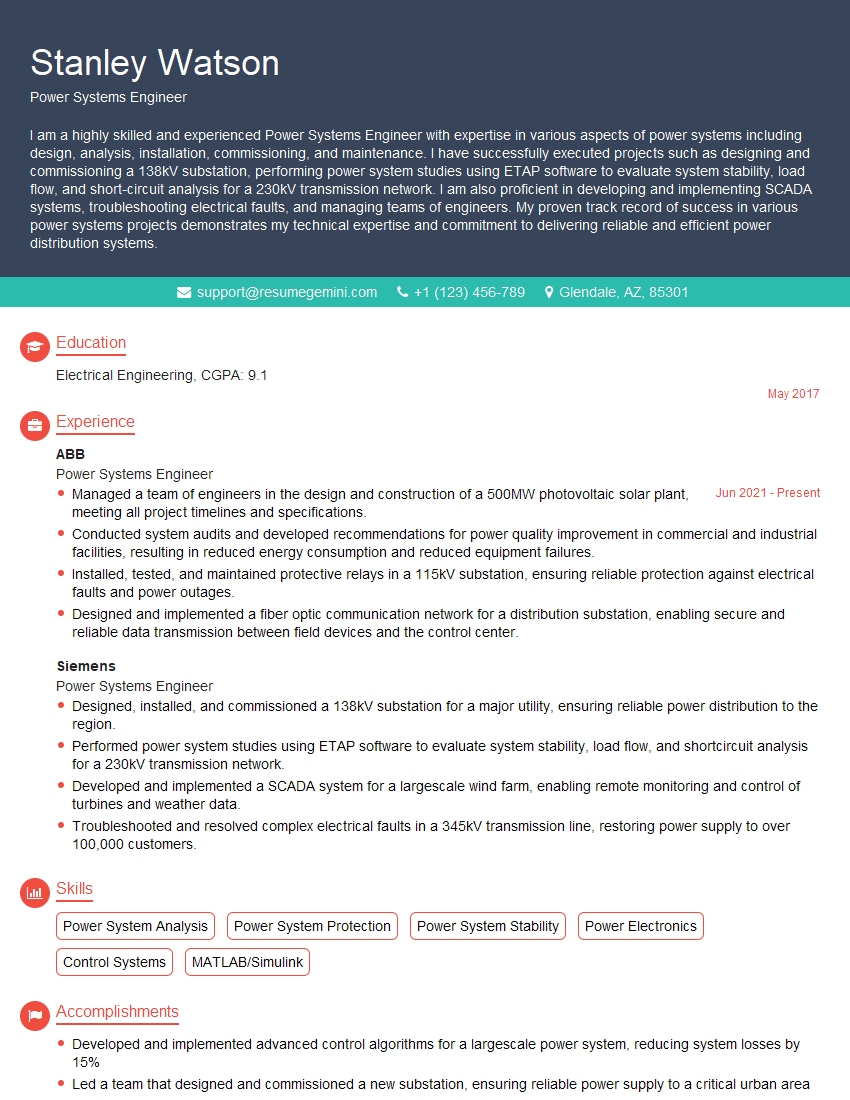
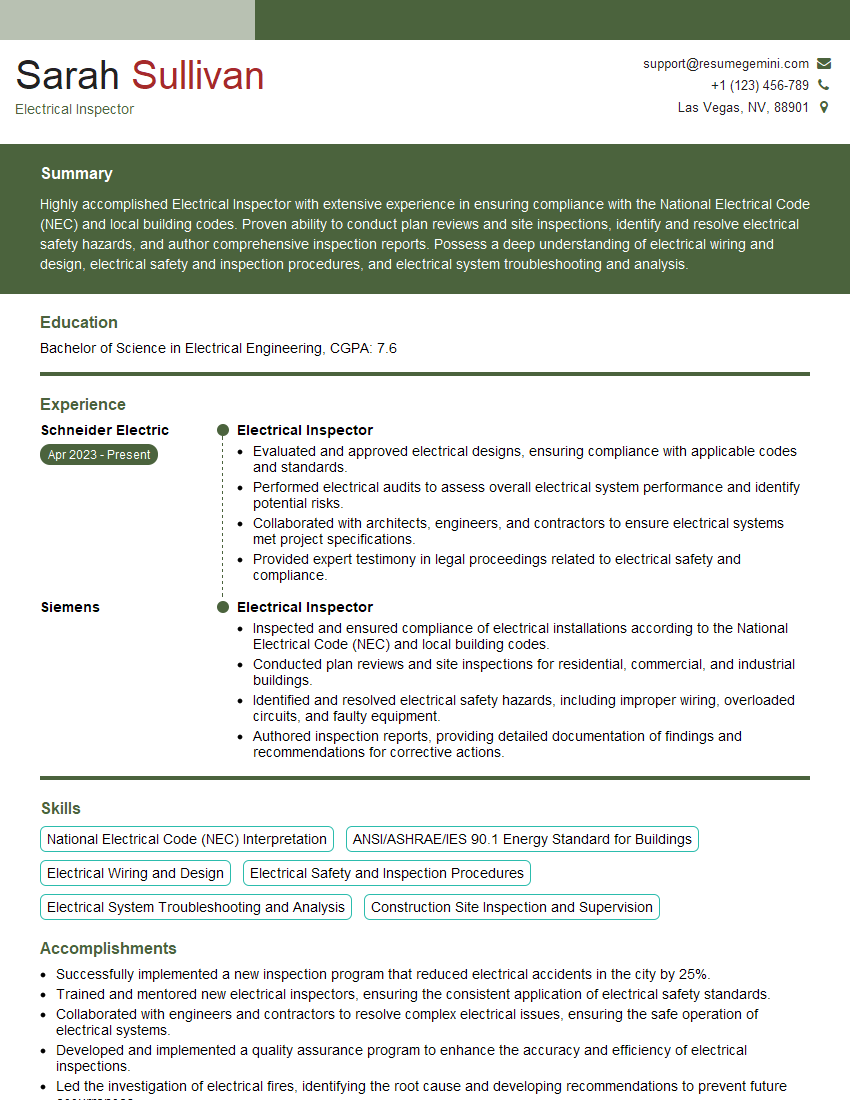
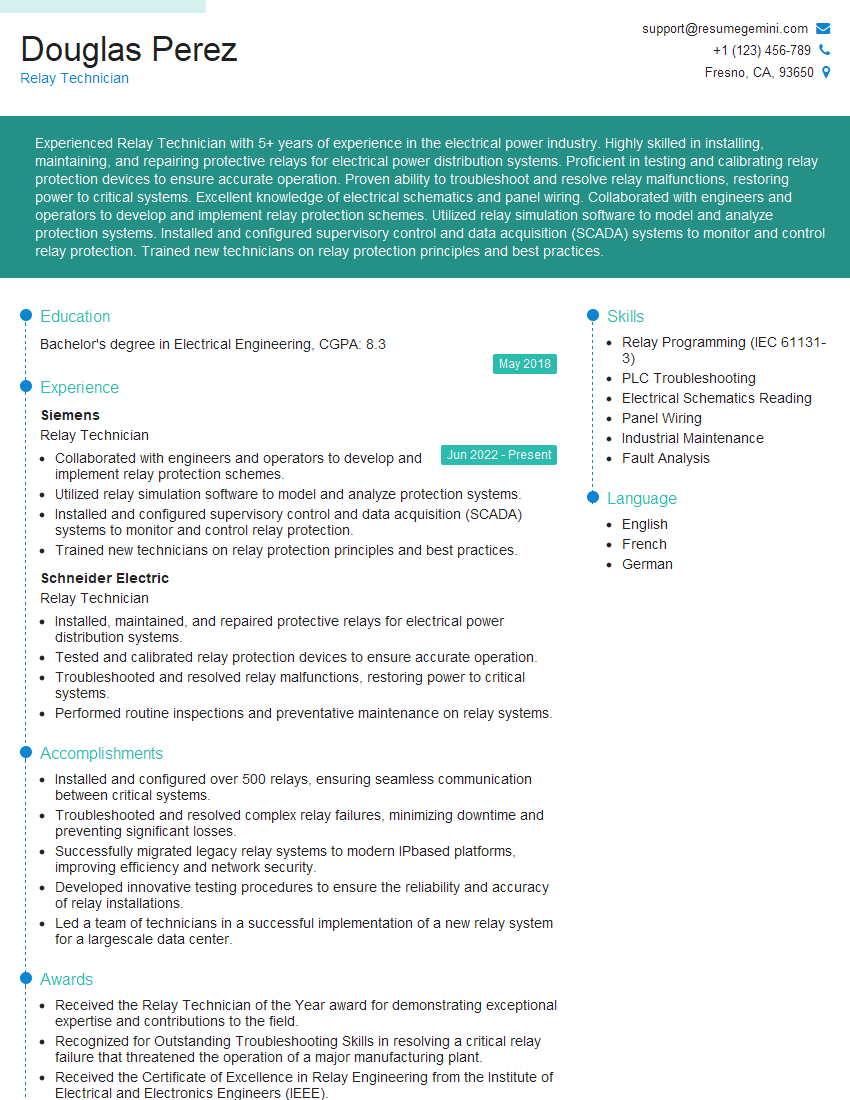
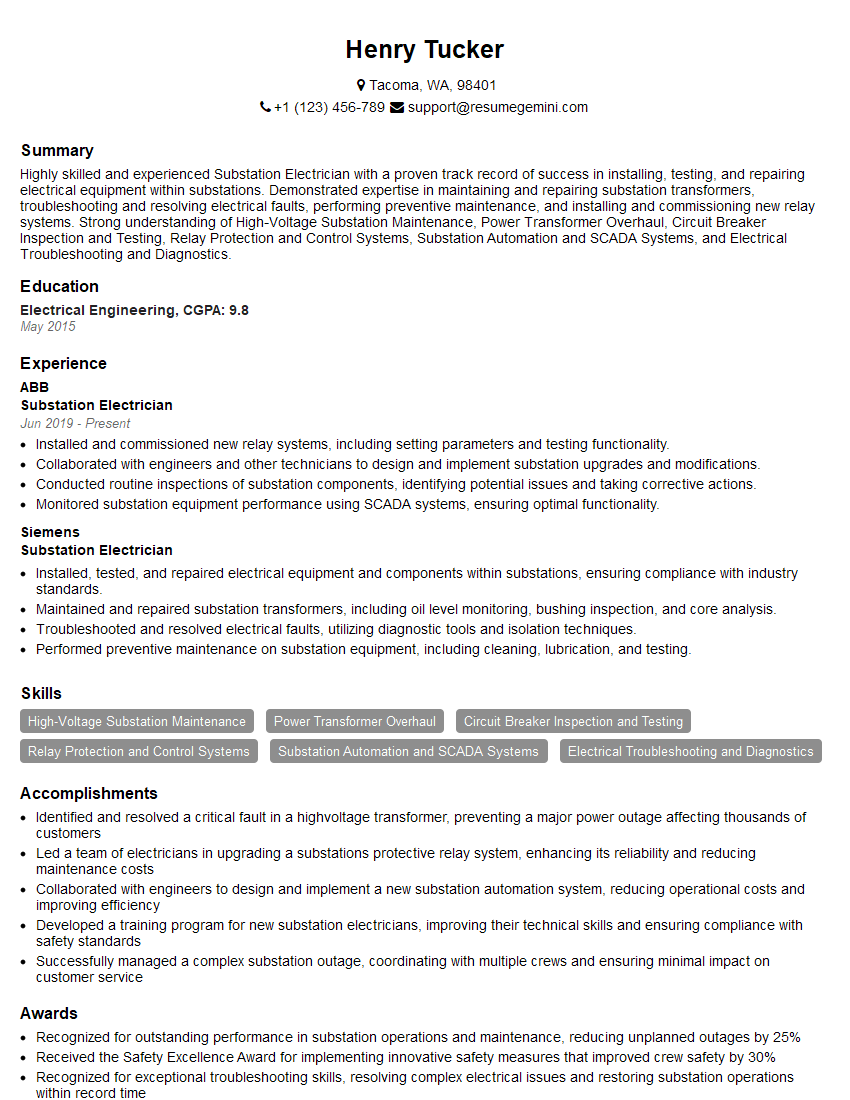
Mastering Substation Maintenance and Repair is crucial for a rewarding and progressive career in the power industry. This specialized skillset is in high demand, offering excellent opportunities for growth and advancement. To maximize your job prospects, creating a strong, ATS-friendly resume is essential. ResumeGemini is a trusted resource that can help you build a professional and effective resume that highlights your skills and experience. Examples of resumes tailored specifically to Substation Maintenance and Repair are available to help you craft the perfect application.
Explore more articles
Users Rating of Our Blogs
Share Your Experience
We value your feedback! Please rate our content and share your thoughts (optional).
What Readers Say About Our Blog
To the interviewgemini.com Webmaster.
Very helpful and content specific questions to help prepare me for my interview!
Thank you
To the interviewgemini.com Webmaster.
This was kind of a unique content I found around the specialized skills. Very helpful questions and good detailed answers.
Very Helpful blog, thank you Interviewgemini team.