Preparation is the key to success in any interview. In this post, we’ll explore crucial Substation Troubleshooting and Repair interview questions and equip you with strategies to craft impactful answers. Whether you’re a beginner or a pro, these tips will elevate your preparation.
Questions Asked in Substation Troubleshooting and Repair Interview
Q 1. Explain the process of diagnosing a faulty circuit breaker.
Diagnosing a faulty circuit breaker involves a systematic approach combining visual inspection, testing, and understanding the breaker’s operational history. Think of it like diagnosing a car problem – you wouldn’t just replace the engine without checking the battery first!
- Visual Inspection: Start by carefully examining the breaker for any obvious signs of damage, such as burned contacts, loose connections, or physical damage to the enclosure. Look for signs of arcing or overheating, which will often leave tell-tale marks.
- Operational Checks: Check the breaker’s mechanism to ensure it’s operating smoothly. Manually try to open and close the breaker (following all safety protocols, of course!), listening for unusual sounds or resistance.
- Testing: This might include measuring the resistance of the contacts, checking the coil voltage and current, and performing insulation resistance tests to ensure that the breaker’s internal insulation is sound. Specialized testing equipment, like a high-pot tester, might be required.
- Relay Testing: If the breaker trips unexpectedly, the associated protective relays need investigation. Their settings need to be verified and tested to ensure they’re correctly configured and functioning within tolerance. A malfunctioning relay can incorrectly trip a perfectly healthy breaker.
- Historical Data Review: Review breaker operation logs and maintenance records to identify any patterns or previous issues. This can provide valuable context and help narrow down the possible causes.
For example, I once diagnosed a faulty breaker that was constantly tripping due to a loose connection on one of its internal terminals. A simple tightening of the screw solved the problem, preventing a potentially costly equipment failure and power outage.
Q 2. Describe your experience with transformer testing and maintenance.
Transformer testing and maintenance are crucial for ensuring reliable power delivery. My experience encompasses a range of tests, from routine checks to more in-depth investigations following incidents.
- Routine Maintenance: This includes regular visual inspections for oil leaks, loose connections, and signs of overheating. Oil sampling for analysis is also performed to detect potential degradation or contamination.
- Testing: I’ve extensive experience conducting various transformer tests, including:
- Insulation Resistance Test (Megger): Measures the insulation resistance between windings and ground to detect insulation degradation.
- Turns Ratio Test: Checks the ratio of the primary to secondary windings to ensure proper voltage transformation.
- Short Circuit Impedance Test: Determines the impedance of the windings, vital for protection relay coordination.
- Dissolved Gas Analysis (DGA): Analyzing the gases dissolved in the transformer oil to detect incipient faults.
- Oil Breakdown Voltage Test: Assessing the dielectric strength of the transformer oil.
- Maintenance Activities: These can involve tasks such as oil filtration, bushing cleaning and testing, and sometimes more extensive repairs or replacements of components.
In one instance, a DGA test revealed high levels of acetylene in a power transformer, indicating a significant arcing fault. This allowed for proactive repairs, preventing a catastrophic failure and ensuring the continued safe operation of the substation.
Q 3. How do you troubleshoot a grounding fault in a substation?
Troubleshooting a grounding fault requires a systematic approach involving safety precautions, testing, and careful analysis. Think of it like finding a leak in a pipe – you need to locate the source before you can fix it.
- Safety First: Always ensure the affected circuit is de-energized and locked out before commencing any troubleshooting activities. This is paramount to prevent serious injury or death.
- Visual Inspection: Look for obvious signs of damage, such as burned conductors or arcing marks. Examine grounding connections for loose or corroded components.
- Testing: Use specialized equipment, such as a ground fault locator or a low-impedance tester, to pinpoint the exact location of the fault. Measuring ground resistance is crucial.
- Grounding System Analysis: Analyze the substation’s grounding system to identify potential weaknesses or design flaws that might contribute to the fault.
- Trace the Fault: Systematically check for damage along the pathway of the circuit to isolate the fault. This might involve checking cables, connections, and equipment.
In a recent scenario, we used a ground fault locator to identify a fault in an underground cable, saving significant time and effort compared to the more extensive excavation previously anticipated.
Q 4. What are the common causes of busbar failures?
Busbar failures are usually the result of excessive current, mechanical stress, or environmental factors. Think of a busbar as a highway for electricity – overload or damage to the road can cause significant problems.
- Overcurrent: This is a primary cause, often due to short circuits, equipment failures, or unexpected surges. The high current density can generate excessive heat, leading to melting or even vaporization of the busbar material.
- Mechanical Stress: Vibrations from nearby equipment or thermal expansion and contraction can create fatigue cracks, particularly at joints and connections.
- Corrosion: Environmental factors like moisture and pollutants can contribute to corrosion, weakening the busbar and reducing its conductivity.
- Loose Connections: Poor workmanship or inadequate maintenance leading to loose bolted connections can result in high resistance and subsequent overheating. This is frequently observed with older substations.
- Arcing Faults: An arc fault between the busbar and another component can damage and ultimately lead to the failure of the busbar.
For instance, I’ve seen busbar failures caused by the combination of excessive vibration from a nearby transformer and corrosion due to exposure to the elements. Proper grounding and vibration dampening measures prevent such occurrences.
Q 5. Explain your understanding of protective relaying schemes.
Protective relaying schemes are the nervous system of a substation, designed to detect faults and automatically isolate the affected equipment. They are crucial for the protection of equipment and personnel and ensure the ongoing stability of the power system.
These schemes employ various types of relays, each designed to respond to specific fault conditions, such as overcurrent, differential protection, distance protection, and ground fault protection. The relays monitor various parameters like current, voltage, and impedance, comparing them against pre-defined settings. Upon detecting an anomaly, the relays initiate the tripping of circuit breakers, isolating the faulted section and preventing further damage.
Sophisticated relay settings are determined through coordination studies, ensuring that only the necessary equipment is tripped, minimizing the impact of an outage on the power system as a whole. This involves careful consideration of fault clearing times and coordination with other protective systems in the network.
For example, a differential protection relay compares the currents entering and leaving a transformer. Any significant discrepancy triggers the relay, isolating the faulty transformer to prevent damage to the rest of the substation. The application of digital relays allows for improved diagnostics and faster response times, enabling enhanced protection and fault isolation.
Q 6. How do you identify and address potential arc flash hazards?
Arc flash hazards are a serious concern in substations. An arc flash is a very intense electrical arc that can occur when a short circuit or fault develops, causing a tremendous release of energy. These can cause severe burns, blindness, and even fatalities.
- Arc Flash Hazard Analysis (AFHA): This is a crucial first step, providing the energy levels for potential arc flashes in the substation, considering the fault current and the equipment impedance.
- Personal Protective Equipment (PPE): Appropriate PPE, including arc flash suits, face shields, and insulated gloves, is absolutely essential. The selection is guided by the results of the AFHA, ensuring adequate protection against the specific hazards present.
- Lockout/Tagout (LOTO) Procedures: Strict LOTO procedures are essential before working on any energized equipment. This ensures that the power is completely isolated and the equipment is safe to work on.
- Engineering Controls: Substation design and equipment selection play a vital role in minimizing arc flash hazards. This includes features such as arc-resistant equipment and reduced fault current levels.
- Training and Awareness: Regular training for substation personnel on arc flash hazards and safety procedures is crucial for risk management.
In one instance, I was involved in a project to upgrade a substation’s protection and control systems to include advanced features that minimized the arc flash energy level. This required close collaboration with engineers, technicians, and safety specialists to ensure the ongoing safety of the workforce.
Q 7. Describe your experience with substation automation and SCADA systems.
Substation automation and SCADA (Supervisory Control and Data Acquisition) systems are transforming the way substations are operated and maintained, providing enhanced monitoring, control, and diagnostics.
My experience encompasses the integration and troubleshooting of various SCADA systems, including the configuration of remote terminal units (RTUs), communication protocols (such as IEC 61850), and human-machine interfaces (HMIs). These systems provide real-time monitoring of critical substation parameters like voltage, current, and breaker status. Remote control functionality allows for efficient operation and reduces the need for on-site personnel for routine tasks.
Furthermore, advanced diagnostics using data analytics capabilities are applied for predicting potential equipment failures and optimizing maintenance schedules. I’ve participated in projects that leverage the data from SCADA systems to optimize substation operations, reducing outages and improving overall reliability. The data generated facilitates advanced troubleshooting, enabling faster fault isolation and faster restoration of service.
For example, we used a SCADA system’s historical data to identify a recurring pattern of transformer overheating, leading to proactive maintenance and preventing a major failure. The data analytics provided valuable insights that couldn’t have been obtained through traditional methods.
Q 8. How do you perform preventative maintenance on substation equipment?
Preventative maintenance on substation equipment is crucial for ensuring reliable operation and preventing costly failures. It involves a systematic approach encompassing inspection, cleaning, testing, and minor repairs. Think of it like regular servicing your car – it prevents major breakdowns down the line.
Visual Inspections: Regularly inspecting all equipment for signs of wear, damage (e.g., cracks, corrosion, loose connections), or overheating. This includes insulators, conductors, bushings, and transformers.
Cleaning: Removing dirt, debris, and contaminants that can cause insulation breakdown or arcing. This often involves specialized cleaning equipment and techniques depending on the equipment type.
Testing: Performing routine tests on critical components such as transformers (oil testing, winding resistance), circuit breakers (contact resistance, operating mechanisms), and insulators (flashover voltage tests). These tests use specialized equipment and require adherence to safety protocols.
Tightening Connections: Checking and tightening all bolted connections to ensure good electrical contact and prevent loosening due to vibration or thermal expansion. Loose connections can be a significant source of problems.
Lubrication: Lubricating moving parts of circuit breakers, disconnect switches, and other electromechanical devices to ensure smooth operation and extend their lifespan. Using the correct lubricant is vital.
Relay Testing: Testing protection relays and control systems to verify proper operation and ensure timely tripping in case of faults. This often involves simulating faults and observing relay responses.
The frequency of preventative maintenance tasks varies depending on the equipment type, environmental conditions, and operational stress. A well-defined maintenance schedule based on manufacturer recommendations and industry best practices is essential.
Q 9. Explain the difference between a current transformer and a potential transformer.
Current transformers (CTs) and potential transformers (PTs) are essential measuring devices in substations, providing scaled-down versions of current and voltage for metering and protection systems. They are like miniature versions of the actual current and voltage, safe for use in control equipment.
Current Transformer (CT): A CT measures the current flowing through a conductor. It does this by using the principle of electromagnetic induction. The high current conductor passes through the CT’s core, inducing a smaller, proportional current in the secondary winding. CTs are typically used for measuring current, operating protective relays, and metering.
Potential Transformer (PT): A PT measures the voltage of a high-voltage line. It steps down the high voltage to a safer, lower voltage (typically 120V) for use by meters, relays, and control systems. This is achieved through a precisely designed transformer with a specific turns ratio. PTs are crucial for metering, voltage monitoring, and protection system operation.
The key difference lies in what they measure: CTs measure current, while PTs measure voltage. Both are essential for safe and reliable substation operation, providing the information needed for monitoring and protection.
Q 10. How do you interpret substation schematics and single-line diagrams?
Substation schematics and single-line diagrams are crucial for understanding the layout and operation of a substation. They are the blueprints of the system, essential for troubleshooting and maintenance.
Single-Line Diagrams: These diagrams show the simplified representation of the substation’s main components, such as transformers, circuit breakers, buses, and lines, using a single line to represent each phase. They are excellent for visualizing the overall power flow and interconnection between equipment. They’re like a road map, showing the path of electricity.
Substation Schematics: These diagrams provide a more detailed representation, showing the connections, control circuitry, and protective devices in detail. They include all the components and their interconnections, allowing for in-depth analysis of the system’s operation and control strategies. These are like detailed architectural plans.
Interpreting these diagrams requires understanding standard symbols and conventions. For example, a circle often represents a busbar, while a rectangle represents a transformer. Tracing the path of power through the system is key to understanding the operation of the substation. Experienced engineers use these diagrams to troubleshoot faults, plan maintenance, and design modifications.
For example, identifying a fault in a specific circuit breaker may involve tracing its connection on the schematic to isolate the affected section of the substation.
Q 11. What are the safety precautions you take when working on high-voltage equipment?
Safety is paramount when working on high-voltage equipment. A single mistake can have fatal consequences. Strict adherence to safety procedures is non-negotiable.
Lockout/Tagout (LOTO): Before starting any work, ensure the equipment is completely de-energized using a LOTO procedure. This involves physically locking out the circuit breakers and tagging the equipment to prevent accidental energization.
Personal Protective Equipment (PPE): Always wear appropriate PPE, including safety helmets, insulated gloves, safety glasses, and arc-flash suits. The specific PPE requirements depend on the voltage level and the type of work being performed.
Grounding: Thoroughly ground the equipment before working on it to prevent unexpected voltages. Grounding ensures that any residual charge is safely dissipated to the earth.
Voltage Testing: Use calibrated voltage testers to verify that the equipment is truly de-energized before starting work. Never trust assumptions when it comes to high voltage.
Trained Personnel: Only trained and qualified personnel should work on high-voltage equipment. Regular safety training is crucial to ensure workers understand the risks and procedures.
Permit-to-Work System: A formal permit-to-work system should be in place to ensure that all necessary safety precautions are taken before work commences. This ensures accountability and a structured approach.
Safety is not just a checklist; it’s a mindset. A culture of safety is crucial for preventing accidents in a high-voltage environment. I always prioritize safety above all else. My personal mantra is: When in doubt, don’t proceed. Always seek clarification or additional assistance if needed.
Q 12. Describe your experience with commissioning new substation equipment.
Commissioning new substation equipment involves a series of tests and verifications to ensure that the equipment is installed correctly, operates as designed, and meets all safety and performance standards. It’s like a final inspection before the equipment goes live. This is a highly structured process.
Pre-Commissioning Inspection: A thorough visual inspection is undertaken to confirm the installation is per specifications, and all cabling, grounding, and protective equipment are in place.
Testing: A series of tests are performed on individual components and the entire system. This includes insulation resistance tests, dielectric tests, functional tests of relays and protection schemes, and verification of control system operation. Documentation of all tests is crucial.
System Integration: Verify seamless integration with the existing substation systems. This may involve testing communication protocols, data exchange, and coordination with SCADA systems.
Protection System Verification: Verify the protection systems are functioning correctly and will provide adequate protection to equipment and personnel in case of faults. This involves simulating faults and observing relay operation.
Performance Testing: Conduct load tests to evaluate the equipment’s performance under operating conditions. This verifies the equipment’s capacity and ensures it meets the specified requirements.
Handover: Once all tests are completed successfully, and documentation is finalized, the equipment is formally handed over to the operating personnel.
I have been involved in numerous commissioning projects, working closely with engineers, technicians, and contractors to ensure a successful outcome. In one particular project, we faced challenges with the communication system integration. Through diligent troubleshooting and collaboration, we were able to resolve the issues and complete the commissioning on schedule.
Q 13. How do you troubleshoot communication issues within a substation’s control system?
Troubleshooting communication issues within a substation’s control system requires a systematic approach. Start with the basics and work your way up. This is like detective work.
Identify the Problem: Precisely define the communication issue. Is it a complete loss of communication, intermittent failures, or slow data transfer? Knowing what’s broken is half the battle.
Check Physical Connections: Inspect cables, connectors, and network devices for physical damage or loose connections. Many issues are simply loose plugs.
Network Diagnostics: Utilize network diagnostic tools (e.g., ping, traceroute) to identify connectivity issues within the network. These tools can pinpoint where the communication is breaking down.
Protocol Analysis: If possible, use protocol analyzers to capture and analyze communication traffic. This can reveal errors or inconsistencies in the communication protocol.
Check Configuration: Verify the configuration of network devices (e.g., routers, switches) and communication settings in the control system. Incorrect settings are a common source of problems.
Software Issues: Check for software bugs or glitches in the control system software or firmware. This might involve system updates or reboots.
System Logs: Examine system logs for error messages or events that might provide clues about the cause of the communication issue. Logs are vital for diagnosis.
I often use a combination of these techniques to isolate and resolve communication problems. For example, in one case, a seemingly complex communication failure was traced to a faulty network cable, highlighting the importance of a methodical approach.
Q 14. Explain your understanding of different types of insulators used in substations.
Insulators are critical components in substations, preventing current leakage and ensuring safe operation. Different types are used depending on voltage levels and environmental conditions. They’re like barriers preventing electricity from escaping.
Porcelain Insulators: These are traditionally made from high-quality porcelain, known for their high dielectric strength and resistance to weathering. They’re strong and reliable, but can be heavy.
Glass Insulators: These offer excellent dielectric strength and resistance to pollution, but are more susceptible to breakage compared to porcelain insulators. They’re more fragile.
Polymer Insulators: These are made from silicone rubber or other polymeric materials, offering advantages such as higher hydrophobicity (water repellency), lower weight, and improved resistance to vandalism. These are a more modern material.
Composite Insulators: These combine a polymer housing with a fiberglass core, offering a combination of strength, high dielectric strength, and resistance to various environmental conditions. These offer a combination of benefits.
The choice of insulator depends on several factors, including voltage level, environmental conditions (pollution, humidity, temperature), and cost considerations. In polluted areas, for example, polymer insulators with hydrophobic properties might be preferred to minimize flashover risk.
Q 15. How do you handle emergency situations in a substation?
Handling substation emergencies requires a calm, systematic approach prioritizing safety. My first step is always to isolate the affected area, ensuring nobody approaches the energized equipment. This involves quickly assessing the situation to identify the problem – a fire, a tripped circuit breaker, smoke, unusual noises, etc. Then I utilize the substation’s SCADA (Supervisory Control and Data Acquisition) system to get a comprehensive view of the network status, understanding the impact of the fault. This allows me to pinpoint the problem area and take appropriate action. We follow a strict lockout/tagout procedure to prevent accidental energization during repairs. Depending on the nature of the emergency, I might need to call for backup – additional technicians, fire services, or even the utility company’s emergency response team. Once the immediate danger is mitigated and the equipment is secured, a thorough investigation is launched to determine the root cause of the failure, prevent recurrence and report to the relevant authorities.
For example, during a recent incident involving a transformer fire, we immediately activated the fire suppression system, initiated a system shutdown, and contacted emergency services. Simultaneously, we used the SCADA system to isolate the affected transformer, preventing the fire from spreading. Post-incident, we conducted a detailed inspection to find the faulty component, which proved to be a winding insulation failure due to age.
Career Expert Tips:
- Ace those interviews! Prepare effectively by reviewing the Top 50 Most Common Interview Questions on ResumeGemini.
- Navigate your job search with confidence! Explore a wide range of Career Tips on ResumeGemini. Learn about common challenges and recommendations to overcome them.
- Craft the perfect resume! Master the Art of Resume Writing with ResumeGemini’s guide. Showcase your unique qualifications and achievements effectively.
- Don’t miss out on holiday savings! Build your dream resume with ResumeGemini’s ATS optimized templates.
Q 16. Describe your experience with different types of circuit breakers (e.g., oil, air, SF6).
My experience encompasses various circuit breaker technologies. Oil circuit breakers (OCBs), though becoming less common due to environmental concerns, utilize oil as an arc-quenching medium. Their operation involves the forceful expulsion of oil to extinguish the arc during a fault. I’ve worked with older substations containing OCBs, understanding their maintenance needs – regular oil sampling and dielectric strength testing are critical. Air circuit breakers (ACBs) use compressed air for arc interruption; they are generally simpler to maintain than OCBs but may require more frequent attention due to potential air leaks. SF6 (sulfur hexafluoride) circuit breakers are the most prevalent in modern substations. SF6 is an excellent insulating and arc-quenching gas. While SF6 breakers offer superior performance, their maintenance involves handling a potent greenhouse gas, necessitating strict adherence to environmental regulations and specialized equipment for gas handling and leak detection.
I’ve been directly involved in the maintenance and troubleshooting of all three types, from routine inspections and preventative maintenance to full-scale repairs and replacements. Understanding the specific operational principles and maintenance requirements of each type is paramount for ensuring the safe and reliable operation of the substation.
Q 17. How do you test and maintain battery systems in a substation?
Substation battery systems are crucial for providing backup power during outages. Regular testing and maintenance are essential to ensure their readiness. This involves both preventative and corrective maintenance procedures. Preventative maintenance includes regularly checking the electrolyte level, specific gravity, and terminal connections. We use a hydrometer to accurately measure the specific gravity, indicating the charge level of each cell. Loose or corroded connections can lead to reduced performance and should be promptly cleaned and tightened. Corrective maintenance might involve replacing faulty cells or repairing damaged connections. We also perform load testing using a calibrated load bank to simulate the battery’s discharge under a heavy load, helping us to assess its overall capacity and identify weak cells. This test can help predict future problems and help us make informed decisions about battery replacement.
Furthermore, we document all testing and maintenance activities meticulously. This comprehensive record enables tracking battery performance over time and predicts potential issues, minimizing costly downtime.
Q 18. Explain the importance of grounding in substation safety.
Grounding in substations is paramount for safety. Its primary purpose is to provide a low-impedance path for fault currents to flow directly to earth, preventing dangerous voltage buildup on equipment and structures. A properly grounded substation ensures personnel safety by minimizing the risk of electric shock. If a fault occurs, the ground system diverts the fault current to the earth, rapidly clearing the fault and minimizing the potential for equipment damage. Improper grounding can lead to dangerous step and touch voltages, significantly increasing the risk of electric shock. Grounding also helps prevent damage to equipment by protecting it from lightning strikes and voltage surges. A comprehensive substation grounding system comprises ground rods, grounding mats, and interconnected conductors, forming a continuous, low-resistance path to the earth. Regular inspection and testing of the grounding system using a ground resistance tester are vital to ensure its efficacy.
Think of it like this: grounding is a safety net. A well-maintained ground system ensures that even if something goes wrong, the risk to both personnel and equipment is drastically reduced.
Q 19. What are the common causes of transformer failures?
Transformer failures can stem from various causes, often interconnected. Overloading is a common culprit, exceeding the transformer’s rated capacity, leading to overheating and insulation breakdown. Aging is another major factor; insulation degrades over time, becoming more susceptible to breakdown. Environmental factors, such as high ambient temperatures, can also accelerate degradation. Manufacturing defects, though less frequent, can also contribute to premature failures. Internal short circuits, often caused by insulation failure, can generate excessive heat and damage the transformer. External factors, like lightning strikes and surges, can cause significant damage to the windings and insulation. Poor maintenance, including lack of regular oil testing and insufficient cooling, further contributes to potential failures. Finally, improper installation or operation can also lead to transformer problems.
A recent case involved a transformer failure due to a combination of overloading and aging. Regular maintenance had been neglected, and a surge in demand exceeded the transformer’s capacity. This resulted in overheating and ultimately a catastrophic failure, highlighting the importance of both preventative maintenance and proper load management.
Q 20. Describe your experience with using diagnostic tools for substation equipment.
I have extensive experience utilizing a range of diagnostic tools for substation equipment. These tools allow for a non-invasive or minimally invasive assessment of equipment health, often pinpointing the source of a problem before it escalates. We routinely use infrared cameras to detect hotspots indicative of overheating, which could signal loose connections, winding faults, or other issues. Partial discharge detectors identify insulation weaknesses within equipment, often before a major breakdown occurs. Oil analysis helps assess the condition of transformer oil, revealing potential contamination or degradation. Specialized testing equipment can measure winding resistance and impedance, providing insights into the transformer’s internal condition. We also employ relay testers to ensure the protective relays are functioning correctly. These tools significantly enhance our ability to perform preventative maintenance and quickly diagnose faults, minimizing downtime and preventing catastrophic failures.
For example, during a routine inspection, an infrared camera revealed a hotspot on a busbar connection. This allowed us to address a loose connection before it caused a more serious issue, preventing a potential arc flash.
Q 21. How do you ensure the accuracy of measurements taken in a substation?
Ensuring accurate measurements in a substation is crucial for safe and reliable operation. This involves using calibrated instruments, following proper measurement techniques, and considering environmental factors. All measuring devices, like multimeters, clamp meters, and potential transformers, are regularly calibrated using traceable standards to ensure their accuracy. Proper measurement techniques, such as using appropriate leads and avoiding ground loops, are meticulously followed to minimize errors. Environmental factors, such as temperature and humidity, can affect measurements; therefore, we consider these factors during data acquisition and analysis. We document all measurements, including instrument details, calibration dates, environmental conditions, and measurement procedures. This documentation is essential for traceability and allows us to identify any anomalies or potential sources of error. Data validation and verification steps are critical to filter out outliers or inaccurate readings.
For instance, temperature corrections are applied to resistance measurements to compensate for temperature variations, which can otherwise lead to inaccurate conclusions about equipment health.
Q 22. Explain your understanding of different types of substation protection schemes.
Substation protection schemes are crucial for ensuring the safe and reliable operation of electrical power systems. They’re designed to detect and isolate faults quickly, preventing damage to equipment and minimizing service interruptions. Different schemes cater to various fault types and system configurations.
- Differential Protection: This compares the currents entering and leaving a protected zone (e.g., a transformer). Any significant difference indicates an internal fault, triggering the protective relay to operate.
- Overcurrent Protection: This is a basic scheme that detects excessive current flow, indicative of a fault somewhere in the system. It utilizes current transformers (CTs) to measure current and relays to trip circuit breakers when thresholds are exceeded. There are various types like instantaneous, time-delayed, and directional overcurrent protection.
- Distance Protection: This measures the impedance to the fault location. It’s particularly useful for long transmission lines, enabling faster isolation of faults far from the substation.
- Busbar Protection: This protects the main busbars within the substation, a critical component of the system. It often uses differential protection or a combination of schemes for comprehensive fault coverage.
- Transformer Protection: This involves multiple protection schemes, including differential, overcurrent, and Buchholz relay protection (detects gas buildup within the transformer tank indicating internal faults).
For example, in a large industrial substation, we might use differential protection for the main power transformers, overcurrent protection for feeder lines, and distance protection for long transmission lines connected to the substation. The selection of specific protection schemes depends heavily on factors such as voltage level, equipment type, and fault statistics. Coordination between different protection schemes is essential to avoid unnecessary tripping and to ensure reliable fault clearing.
Q 23. How do you troubleshoot problems with substation control and instrumentation systems?
Troubleshooting substation control and instrumentation systems requires a systematic approach. It begins with understanding the system architecture, which often involves Programmable Logic Controllers (PLCs), Remote Terminal Units (RTUs), Human Machine Interfaces (HMIs), and communication networks.
My troubleshooting process typically follows these steps:
- Identify the problem: Clearly define the malfunction, noting symptoms like alarms, incorrect readings, or equipment malfunction.
- Gather information: Review logs, alarms, and historical data to pinpoint the timeline and potential causes. This could involve checking PLC program logs, HMI event logs, and SCADA system records.
- Isolate the fault: Use diagnostic tools (e.g., oscilloscopes, multimeters, communication testers) to narrow down the problematic area – is it a sensor, a communication link, the PLC program, or the HMI?
- Verify wiring and connections: Check for loose connections, damaged wiring, and correct signal levels. This might involve tracing signals through the system and verifying proper grounding.
- Test components: Individually test suspected faulty components such as sensors, actuators, and communication modules using appropriate test equipment.
- Software diagnostics: If the issue involves the PLC program, use software tools to step through the code and identify potential logic errors.
- Implement corrective actions: Once the fault is identified, repair or replace the faulty component, correcting software code, or reconfiguring communication settings. Thoroughly test the system to ensure the problem is resolved.
- Document findings: Maintain a detailed record of the troubleshooting steps, findings, and corrective actions taken.
For example, if a remote tank level sensor consistently reports incorrect levels, I’d first check the sensor wiring, then test the sensor itself for proper operation. If the sensor is fine, I’d examine the communication path to the PLC, checking for signal integrity and proper configuration.
Q 24. Describe your experience with working on different voltage levels in a substation.
Throughout my career, I’ve worked on substations spanning a wide range of voltage levels, from low-voltage distribution substations (typically up to 34.5 kV) to high-voltage transmission substations (hundreds of kV). Each voltage level presents unique challenges and safety considerations.
Working with higher voltage levels necessitates stricter safety protocols, specialized equipment, and a deeper understanding of potential hazards. For instance, working on a 230kV substation demands meticulous planning, the use of appropriate Personal Protective Equipment (PPE) including insulating gloves and tools, and rigorous lockout/tagout procedures. Lower voltage substations, while less hazardous, still require careful attention to safety to prevent electrical shock or arc flash incidents.
My experience includes working on projects involving the maintenance and repair of equipment at various voltage levels, including transformers, circuit breakers, protective relays, and other critical substation components. I’ve gained proficiency in using specialized testing equipment suitable for different voltage levels, ensuring the safety and accuracy of my work. This experience has provided a solid understanding of voltage level-specific safety regulations and best practices.
Q 25. How do you document your troubleshooting and repair procedures?
Detailed documentation is vital for efficient troubleshooting and repair in substations. It ensures that future maintenance is streamlined and enables better analysis of recurring problems.
My documentation process involves creating a comprehensive report that includes:
- Problem description: A clear and concise statement of the problem encountered.
- Initial observations: Notes on initial symptoms, alarms, and any relevant data collected.
- Troubleshooting steps: A chronological record of all steps undertaken during troubleshooting, including measurements, tests, and observations.
- Test results: Detailed results of all tests performed, including data readings, waveforms, and error messages.
- Corrective actions: A description of all repairs or replacements made, including part numbers and specifications.
- Verification: Confirmation that the problem has been resolved and the system is operating correctly.
- Photographs/Videos: Supporting visual documentation, where appropriate.
- Schematics/Diagrams: Annotated schematics highlighting the problem area and the repairs performed.
I typically use a combination of digital and paper-based documentation. Digital documentation ensures easy access and searchability, while paper-based records offer a backup and are essential in situations where digital access is limited. The documentation is always maintained according to company standards and regulatory requirements.
Q 26. Explain your experience with using lockout/tagout procedures in a substation.
Lockout/Tagout (LOTO) procedures are paramount for safety in substation work. They ensure that electrical energy is isolated and equipment is rendered inoperable before any maintenance or repair is conducted. I have extensive experience implementing and adhering to LOTO procedures across different voltage levels and equipment types.
The process typically involves:
- Planning and preparation: Identifying the specific equipment needing isolation and the required steps to safely de-energize it. This often involves consulting one-line diagrams and safety procedures.
- Notification: Informing all relevant personnel about the upcoming LOTO work and the affected areas.
- Lockout: Physically locking out the circuit breaker or switchgear to prevent accidental energization. Each person involved places their own lock, ensuring only authorized personnel can restore power.
- Tagout: Attaching tags clearly indicating who has locked out the equipment, the reason for lockout, and the date and time.
- Verification: Testing to confirm the equipment is de-energized before commencing work. This might involve using voltage testers or other verification methods.
- Work execution: Carefully performing the required maintenance or repair.
- Tag removal: Only the person who placed the lock can remove it after verifying the completion of the work and the safety of re-energizing.
- Verification of Restoration: Before releasing the equipment, ensure all personnel are clear and the equipment is properly energized.
LOTO is not just a procedure; it’s a safety culture. I’ve witnessed firsthand how strict adherence to LOTO procedures prevents accidents and protects lives. Any deviation from established procedures is unacceptable, and I always prioritize safety above all else.
Q 27. Describe your understanding of the impact of environmental factors on substation equipment.
Environmental factors significantly impact the lifespan and performance of substation equipment. Understanding these impacts is crucial for effective maintenance and planning.
- Temperature extremes: High temperatures can reduce the lifespan of insulators, transformers, and other components due to increased stress and degradation of materials. Low temperatures can affect the performance of batteries and lubricating oils.
- Humidity: High humidity accelerates corrosion and can lead to flashover incidents. Proper sealing and coatings are crucial for protecting equipment.
- Pollution: Dust, salt spray, and industrial pollutants can accumulate on insulators, reducing their insulation strength and increasing the risk of flashovers. Regular cleaning and maintenance are essential.
- Sunlight (UV radiation): UV radiation can degrade materials, particularly plastics and coatings, causing them to become brittle and fail prematurely.
- Wind and storms: High winds can damage structures and equipment, while storms can cause flooding and lightning strikes. Proper grounding and surge protection are necessary.
For example, in coastal areas, salt spray can cause rapid corrosion of metallic components, requiring more frequent inspections and maintenance compared to inland substations. In desert climates, extreme temperatures and sandstorms pose unique challenges. I’ve been involved in several projects that considered these environmental factors in selecting suitable materials, implementing protective coatings, and scheduling preventative maintenance.
Key Topics to Learn for Substation Troubleshooting and Repair Interview
- Protection Relay Systems: Understanding the operation and troubleshooting of various protection relays (e.g., distance, differential, overcurrent) is crucial. Be prepared to discuss their settings, functionalities, and fault detection capabilities.
- Transformer Testing and Maintenance: Familiarize yourself with common transformer tests (e.g., turns ratio, insulation resistance, oil analysis) and their significance in identifying potential problems. Discuss preventative maintenance schedules and procedures.
- Circuit Breaker Operation and Maintenance: Understand the different types of circuit breakers (e.g., air-blast, SF6), their operating mechanisms, and maintenance requirements. Be able to troubleshoot common circuit breaker issues and explain safe operating procedures.
- High-Voltage Equipment: Develop a strong understanding of the principles and safe handling procedures related to high-voltage equipment, including insulators, bushings, and conductors. Be prepared to discuss safety protocols and potential hazards.
- SCADA Systems and Data Analysis: Familiarize yourself with Supervisory Control and Data Acquisition (SCADA) systems and their role in substation monitoring and control. Practice interpreting data from SCADA systems to identify potential issues.
- Power System Analysis: A solid understanding of power system principles, including fault analysis, load flow studies, and power system stability, will greatly enhance your ability to troubleshoot substation problems effectively.
- Practical Problem-Solving: Focus on developing strong problem-solving skills. Be ready to describe your approach to diagnosing and resolving complex substation issues, highlighting your analytical thinking and methodical approach.
Next Steps
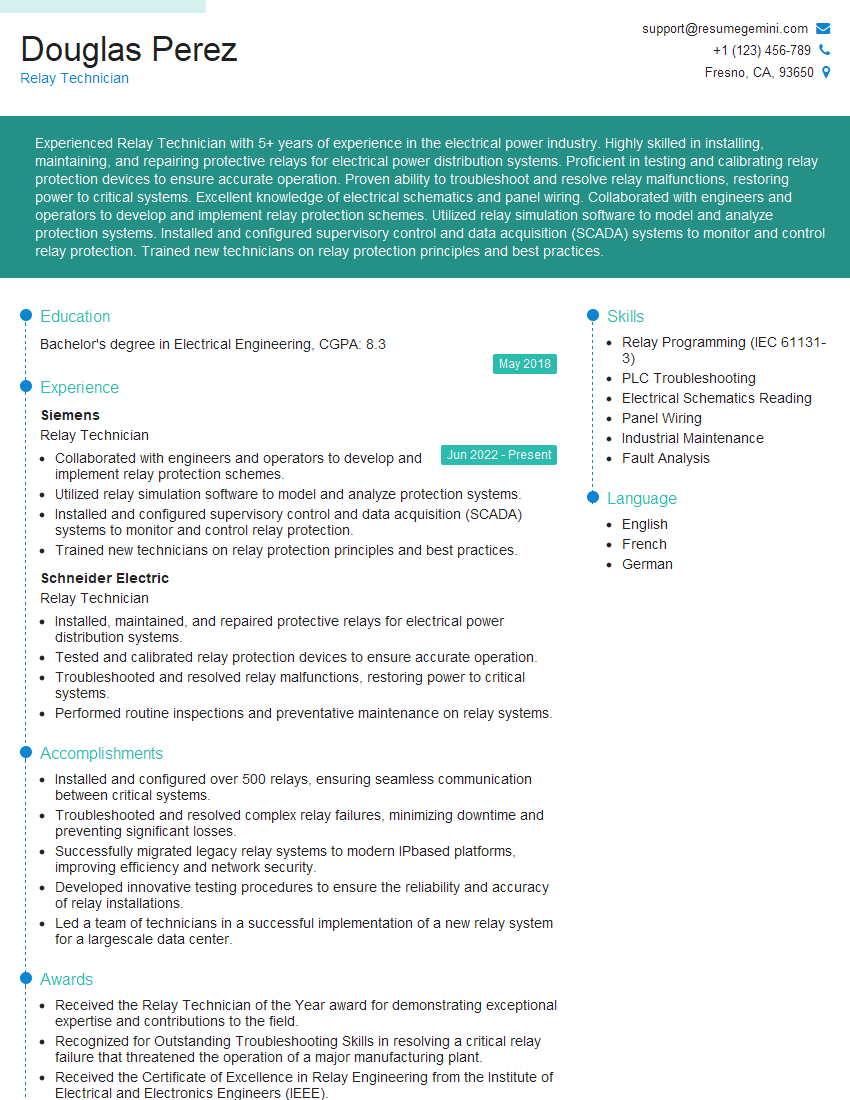
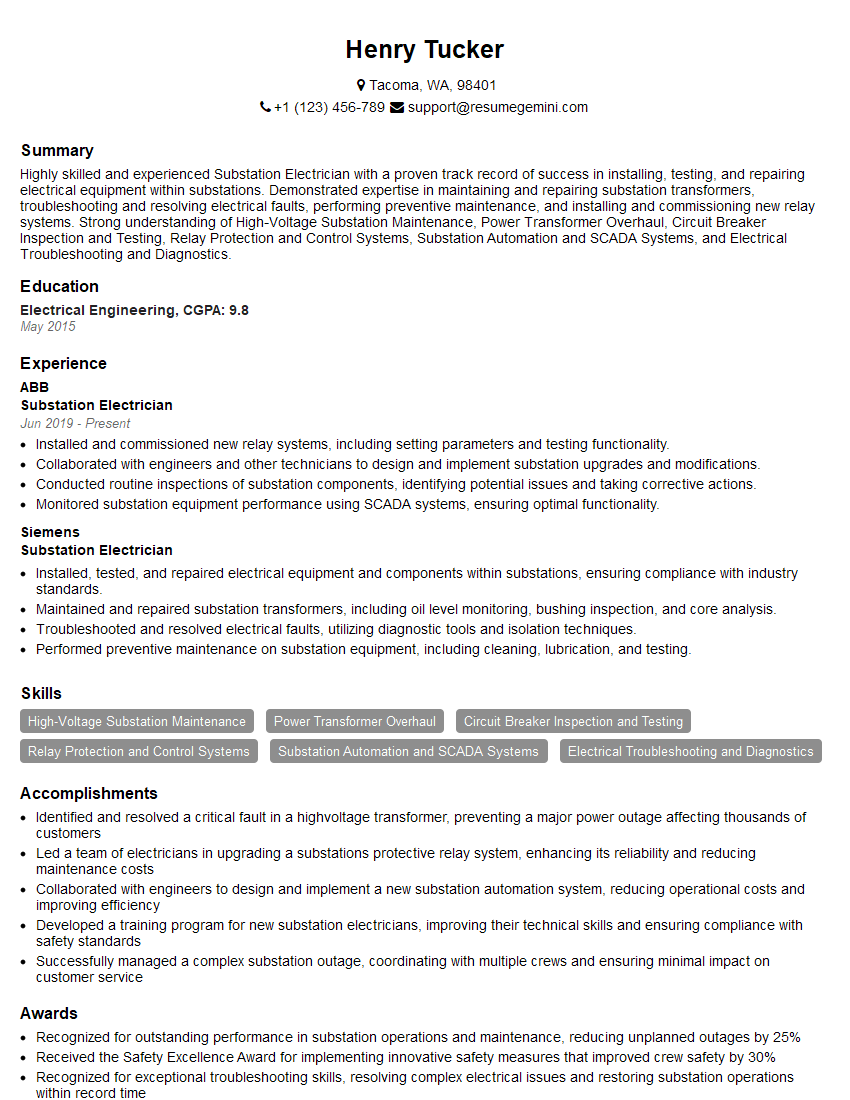
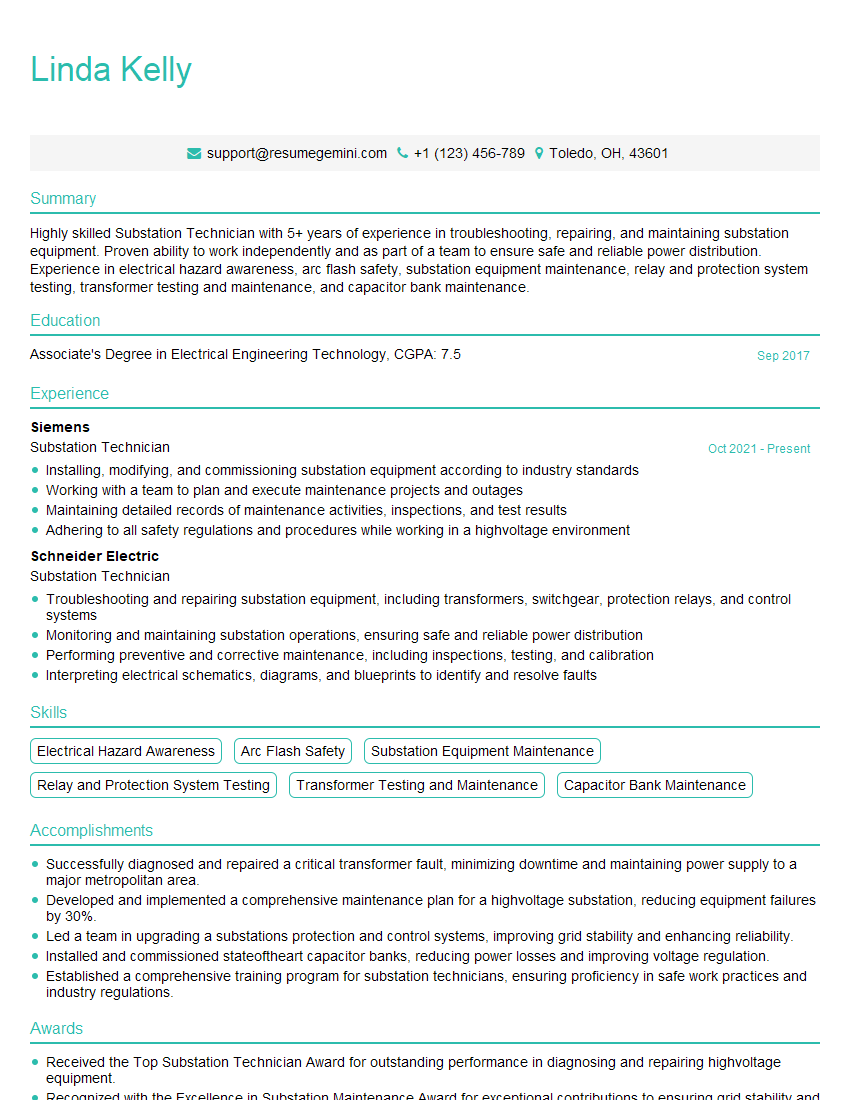
Mastering Substation Troubleshooting and Repair opens doors to exciting career advancements and higher earning potential within the power industry. A strong understanding of these critical skills makes you a highly valuable asset to any utility company or related organization. To maximize your job prospects, creating a compelling and ATS-friendly resume is essential. ResumeGemini is a trusted resource that can help you build a professional and impactful resume, tailored to showcase your expertise in Substation Troubleshooting and Repair. Examples of resumes tailored to this field are provided to help guide you. Invest time in crafting a strong resume – it’s your first impression on potential employers.
Explore more articles
Users Rating of Our Blogs
Share Your Experience
We value your feedback! Please rate our content and share your thoughts (optional).
What Readers Say About Our Blog
To the interviewgemini.com Webmaster.
Very helpful and content specific questions to help prepare me for my interview!
Thank you
To the interviewgemini.com Webmaster.
This was kind of a unique content I found around the specialized skills. Very helpful questions and good detailed answers.
Very Helpful blog, thank you Interviewgemini team.