Feeling uncertain about what to expect in your upcoming interview? We’ve got you covered! This blog highlights the most important Sustainable Design and Construction Practices interview questions and provides actionable advice to help you stand out as the ideal candidate. Let’s pave the way for your success.
Questions Asked in Sustainable Design and Construction Practices Interview
Q 1. Describe your experience with LEED certification processes.
LEED certification, or Leadership in Energy and Environmental Design, is a globally recognized green building rating system. My experience encompasses all phases, from pre-design charrettes where we establish LEED goals and strategies, through construction documentation, and finally, to the commissioning and certification process. I’ve worked on projects achieving various LEED levels, from LEED Certified to LEED Platinum. This involves meticulous documentation of sustainable strategies implemented throughout the project lifecycle. For example, on a recent project, we achieved LEED Platinum by focusing on water efficiency measures, including low-flow fixtures and rainwater harvesting, as well as employing sustainable building materials with recycled content and minimizing waste during construction. We leveraged the LEED online platform to track progress and ensure compliance with all requirements. My expertise includes understanding the specific requirements of each credit category and developing innovative solutions to maximize points earned.
Q 2. Explain the principles of passive design strategies.
Passive design strategies focus on minimizing energy consumption by using the natural environment to its fullest advantage. This involves designing buildings to harness natural light, ventilation, and solar energy, thereby reducing reliance on mechanical systems. Imagine a house designed to naturally cool itself in the summer and stay warm in the winter, without relying heavily on air conditioning or heating. Key principles include:
- Orientation: Positioning the building to maximize solar gain in winter and minimize it in summer.
- Shading: Using overhangs, trees, or other shading devices to prevent direct sunlight during hot months.
- Thermal mass: Using materials that absorb and release heat slowly to regulate indoor temperatures.
- Natural ventilation: Designing buildings to allow for natural airflow to cool and ventilate spaces.
- Insulation: Utilizing high-performance insulation to reduce heat transfer through the building envelope.
For example, in a hot and arid climate, a building might be designed with deep overhangs to shade windows during the day, while strategically placed windows might maximize winter sun exposure. The use of thermal mass materials like concrete or adobe helps moderate temperature fluctuations throughout the day and night.
Q 3. How do you assess the embodied carbon of building materials?
Assessing embodied carbon—the greenhouse gas emissions associated with the manufacturing, transportation, and installation of building materials—requires a comprehensive approach. It involves several steps:
- Material selection: Gathering detailed information on the specific materials proposed for the project, including their sourcing, manufacturing process, and transportation distances.
- Environmental Product Declarations (EPDs): Utilizing EPDs, which provide standardized information on a product’s life-cycle environmental impacts, including embodied carbon. These declarations offer a transparent and comparable way to evaluate the carbon footprint of different options.
- Life Cycle Assessment (LCA) Software: Employing LCA software that uses databases to estimate embodied carbon based on material composition and production processes. This often involves inputting material quantities and types.
- Data verification: Verifying data obtained from EPDs and other sources to ensure accuracy and reliability.
For instance, we might compare the embodied carbon of steel versus cross-laminated timber (CLT) for a structural element. CLT often presents a lower embodied carbon footprint, assuming responsible forestry practices, compared to steel production’s high energy demands. The choice depends on many factors beyond just embodied carbon, including structural performance and cost.
Q 4. What are the key considerations for designing a net-zero energy building?
Designing a net-zero energy building requires a holistic approach that balances energy production and consumption. Key considerations include:
- High-performance building envelope: Minimizing heat transfer through superior insulation, airtight construction, and high-performance windows.
- Passive design strategies: Maximizing natural daylight, ventilation, and solar gain to reduce the need for mechanical systems.
- Energy-efficient systems: Selecting high-efficiency HVAC equipment, lighting, and appliances.
- Renewable energy generation: Integrating on-site renewable energy sources, such as solar photovoltaic (PV) panels, solar thermal collectors, or small wind turbines.
- Energy modeling and simulation: Using energy modeling software to analyze building performance and optimize energy efficiency measures.
A successful net-zero building might incorporate solar PV panels on the roof to generate electricity, while passive design strategies minimize energy losses through the building envelope. High-efficiency HVAC systems would only be needed for supplementary heating and cooling, resulting in minimal or zero net energy consumption over the course of a year.
Q 5. Discuss different strategies for reducing water consumption in buildings.
Reducing water consumption in buildings involves implementing various strategies:
- Water-efficient fixtures: Installing low-flow toilets, showerheads, and faucets to significantly reduce water usage.
- Rainwater harvesting: Collecting rainwater for non-potable uses such as irrigation or toilet flushing.
- Greywater recycling: Recycling wastewater from showers, sinks, and laundry for irrigation or toilet flushing.
- Xeriscaping: Using drought-tolerant landscaping to minimize irrigation needs.
- Smart irrigation systems: Implementing irrigation systems that monitor soil moisture and adjust watering schedules accordingly.
- Water meters and monitoring systems: Tracking water consumption to identify and address leaks and inefficiencies.
For example, a building might incorporate rainwater harvesting to irrigate its landscaping, significantly reducing reliance on municipal water supplies. Greywater recycling could further supplement irrigation needs. By combining these measures, substantial water savings can be achieved.
Q 6. Explain your understanding of life cycle assessment (LCA).
Life Cycle Assessment (LCA) is a comprehensive methodology for evaluating the environmental impacts of a product or system throughout its entire life cycle, from raw material extraction to end-of-life disposal. It considers various environmental impacts, including greenhouse gas emissions, water and energy consumption, waste generation, and resource depletion. Imagine it as a cradle-to-grave analysis of a building material or a whole building. The process typically involves:
- Goal and scope definition: Clearly defining the purpose of the LCA and identifying the boundaries of the assessment.
- Inventory analysis: Quantifying the inputs and outputs associated with each stage of the life cycle.
- Impact assessment: Evaluating the potential environmental impacts of the inputs and outputs.
- Interpretation: Analyzing the results and drawing conclusions about the overall environmental performance.
LCAs are crucial for making informed decisions about material selection, design choices, and operational strategies. By understanding the environmental impacts of different options, we can make more sustainable choices that minimize the overall environmental footprint of buildings.
Q 7. How do you incorporate renewable energy sources into building designs?
Incorporating renewable energy sources into building designs is essential for reducing reliance on fossil fuels. This can involve several approaches:
- Photovoltaic (PV) panels: Integrating solar PV panels on rooftops, facades, or canopies to generate electricity on-site. The design must consider factors like shading, orientation, and the building’s energy needs to maximize energy production.
- Solar thermal collectors: Using solar thermal collectors to heat water for domestic hot water or space heating. These systems are particularly effective in climates with abundant sunshine.
- Wind turbines: Installing small wind turbines, particularly suitable for buildings in areas with consistent winds, to generate electricity. Careful consideration of turbine placement and potential noise pollution is crucial.
- Geothermal energy: Utilizing geothermal energy through ground source heat pumps to provide heating and cooling. This technology is efficient but requires site-specific assessment and potentially higher upfront costs.
The choice of renewable energy source will depend on factors such as the building’s location, climate, energy needs, and available space. For example, a building in a sunny climate might rely heavily on solar PV panels and solar thermal collectors, while a building in a windy area might also incorporate wind turbines. A comprehensive energy analysis is necessary to determine the optimal combination of renewable energy sources to meet the building’s energy demands.
Q 8. What are the benefits and challenges of using recycled materials in construction?
Using recycled materials in construction offers significant environmental and economic benefits, but also presents certain challenges. The benefits stem from diverting waste from landfills, reducing the demand for virgin materials (thus lowering embodied carbon), and potentially lowering construction costs. For example, using recycled steel reduces the energy-intensive process of steel production. Recycled aggregates, like crushed concrete or asphalt, can successfully replace virgin materials in many applications, minimizing the environmental impact of quarrying.
However, challenges exist. The quality and consistency of recycled materials can be variable, requiring rigorous testing and quality control procedures to ensure they meet the required performance standards. There might also be logistical challenges in sourcing and transporting recycled materials, potentially increasing costs if suitable sources are not nearby. Furthermore, some stakeholders may have concerns about the aesthetics or perceived durability of recycled materials, necessitating education and showcasing successful case studies.
- Benefit: Reduced carbon footprint.
- Benefit: Cost savings in material procurement.
- Challenge: Inconsistent material quality.
- Challenge: Supply chain complexities.
Q 9. How do you manage construction waste to minimize environmental impact?
Managing construction waste effectively involves a multi-pronged approach, focusing on prevention, reduction, reuse, and recycling. It starts with careful planning. This includes detailed quantity takeoff and material scheduling to minimize over-ordering and subsequent waste generation. On-site waste management involves implementing clear segregation strategies, utilizing designated bins for different waste streams (e.g., wood, metal, concrete, plastics). Regular monitoring and audits are crucial to ensure compliance.
Reuse opportunities should be prioritized wherever possible. For example, salvaged materials from demolition projects can be repurposed in new constructions. Recycling should then focus on maximizing the diversion of waste from landfills. This might involve partnering with certified recycling facilities that specialize in handling construction debris. Finally, thorough documentation and reporting provide insights into waste generation patterns, allowing for continuous improvement and optimization of waste management practices. Think of it like running a lean manufacturing process, but for construction.
A successful waste management plan will significantly reduce landfill burden, conserve resources, and potentially generate revenue from the sale of recyclable materials.
Q 10. Describe your experience with building commissioning.
Building commissioning is a quality assurance process aimed at verifying that building systems are designed, installed, tested, and operated to meet the owner’s project requirements. My experience involves overseeing the entire commissioning process, from pre-design to post-occupancy. This includes developing a comprehensive commissioning plan, conducting functional performance tests, and documenting any discrepancies or deficiencies. I’ve worked on various projects, from small-scale renovations to large-scale commercial developments.
A key aspect is functional testing. For example, we verified the performance of HVAC systems by measuring air flow rates, temperature differentials, and energy consumption. We also ensure proper integration of building automation systems and monitor the building’s performance during the occupancy phase to identify and address any operational issues. This proactive approach ultimately leads to enhanced building performance, reduced energy consumption, and improved occupant comfort.
Q 11. What are your strategies for improving indoor air quality?
Improving indoor air quality (IAQ) is crucial for occupant health and productivity. My strategies focus on source control, ventilation, and filtration. Source control involves minimizing the introduction of pollutants from building materials, furnishings, and cleaning products. This means specifying low-VOC (volatile organic compound) materials, ensuring proper ventilation during construction, and selecting cleaning products with low or no volatile organic compounds.
Effective ventilation is paramount. This involves designing and implementing properly sized and located ventilation systems to dilute and remove indoor pollutants. High-efficiency particulate air (HEPA) filters can significantly reduce airborne particles. Regular maintenance of HVAC systems and air filters is crucial. Finally, monitoring IAQ through regular testing and using sensors to track pollutant levels allows for proactive intervention if needed. It’s all about creating a healthy and comfortable environment for building occupants.
Q 12. How do you evaluate the thermal performance of building envelopes?
Evaluating the thermal performance of a building envelope involves assessing its ability to resist heat transfer. This is critical for energy efficiency and occupant comfort. We use a combination of methods, including thermal modeling software, on-site measurements, and reviewing building plans and specifications.
Thermal modeling software helps predict the building’s energy performance and identify thermal bridges or areas of weakness. On-site measurements, such as infrared thermography, can identify areas of heat loss or gain. Reviewing building documents helps to verify the insulation levels and materials used. Key factors include insulation R-values, window U-values, air leakage rates, and the thermal mass of the building materials. The goal is to minimize heat transfer, both in summer and winter, to optimize energy efficiency and maintain comfortable indoor temperatures.
Q 13. Explain your understanding of building codes and sustainability regulations.
My understanding of building codes and sustainability regulations is comprehensive. I am familiar with various codes, including the International Building Code (IBC), and various local codes which often incorporate more stringent sustainability requirements. These codes often address energy efficiency, water conservation, and the use of sustainable materials. Regulations such as LEED (Leadership in Energy and Environmental Design) provide a framework for achieving higher levels of sustainability in construction.
Staying updated on these codes and regulations is crucial for my work. This involves reviewing updates, attending industry conferences, and participating in professional development courses. Compliance with these regulations ensures building projects meet minimum sustainability standards, while pursuing certifications like LEED can unlock additional benefits such as reduced operating costs and enhanced marketability. Ultimately, understanding these standards is critical for designing and constructing environmentally responsible and legally compliant buildings.
Q 14. Describe your experience with energy modeling software (e.g., EnergyPlus).
I have extensive experience using energy modeling software, primarily EnergyPlus. EnergyPlus is a powerful tool that allows us to simulate the energy performance of buildings before construction. This enables us to analyze different design options and optimize energy efficiency. We input detailed building geometry, materials, and systems into EnergyPlus to simulate hourly energy consumption throughout the year. This helps us identify potential areas of improvement, such as upgrading insulation or improving window performance.
For example, in a recent project, we used EnergyPlus to compare the energy performance of different HVAC systems. The model showed that a heat pump system would significantly reduce energy consumption compared to a traditional system, leading to cost savings and a smaller environmental footprint. The results are then used to inform design decisions and ensure the building meets energy efficiency targets. It’s an essential tool for designing sustainable and high-performing buildings.
Q 15. How do you select sustainable and environmentally friendly building materials?
Selecting sustainable building materials involves a holistic approach, considering the entire lifecycle – from extraction to disposal. We prioritize materials with low embodied carbon, meaning the carbon emissions associated with their production, transportation, and installation are minimized. This often involves choosing locally sourced materials to reduce transportation emissions.
- Recycled content: Opting for materials with high recycled content, such as recycled steel or reclaimed wood, significantly reduces the demand for virgin resources and associated environmental impacts. For example, using recycled concrete aggregates in new concrete mixes can reduce the need for quarrying and lessen the carbon footprint.
- Rapidly renewable materials: We favor materials from rapidly renewable sources, such as bamboo or sustainably harvested timber, which replenish quickly and minimize deforestation. Bamboo, in particular, boasts exceptional strength and requires less processing than many hardwoods.
- Low-toxicity materials: We meticulously select materials with low volatile organic compound (VOC) emissions to improve indoor air quality and minimize health risks. This includes paints, adhesives, and sealants certified for low VOC content.
- Durability and longevity: Choosing durable, long-lasting materials reduces the need for frequent replacements, minimizing waste and resource consumption over the building’s lifespan. For example, selecting high-quality, properly installed roofing materials can extend their lifespan for decades, reducing the need for premature replacement.
The selection process often involves thorough material assessments using life-cycle assessment (LCA) tools to quantify the environmental impacts of each option and compare them across different criteria.
Career Expert Tips:
- Ace those interviews! Prepare effectively by reviewing the Top 50 Most Common Interview Questions on ResumeGemini.
- Navigate your job search with confidence! Explore a wide range of Career Tips on ResumeGemini. Learn about common challenges and recommendations to overcome them.
- Craft the perfect resume! Master the Art of Resume Writing with ResumeGemini’s guide. Showcase your unique qualifications and achievements effectively.
- Don’t miss out on holiday savings! Build your dream resume with ResumeGemini’s ATS optimized templates.
Q 16. What are your strategies for mitigating the impact of construction on surrounding ecosystems?
Mitigating construction’s impact on surrounding ecosystems requires careful planning and execution. We employ strategies focusing on minimizing habitat disruption, protecting water resources, and reducing pollution.
- Site assessment and planning: Before construction begins, we conduct thorough site assessments to identify sensitive ecological areas, such as wetlands or endangered species habitats. The design and construction plans are then adapted to avoid or minimize disturbance to these areas.
- Erosion and sediment control: We implement erosion and sediment control measures throughout the construction process to prevent soil erosion and runoff into nearby water bodies. This includes using silt fences, sediment basins, and temporary vegetation.
- Waste management: A robust waste management plan is crucial, aiming to maximize recycling and minimize landfill waste. This involves sorting materials on-site, using reusable containers, and partnering with responsible waste disposal companies.
- Water conservation: We use water-efficient construction practices, minimizing water use during the project. This includes using dust suppression techniques that require less water and employing water-recycling systems where feasible.
- Noise and air pollution control: We mitigate noise and air pollution through the use of quieter equipment, dust suppression, and proper ventilation. Construction schedules may be optimized to minimize disruption to surrounding communities.
For example, on a recent project near a sensitive river ecosystem, we implemented a detailed erosion control plan, rerouted construction traffic to minimize disturbance to wildlife corridors, and used noise barriers to reduce impacts on nearby residents.
Q 17. Describe your experience with sustainable site development practices.
Sustainable site development prioritizes minimizing environmental impact while creating functional and aesthetically pleasing spaces. My experience includes integrating various strategies to achieve this goal.
- Brownfield redevelopment: I’ve worked on several projects that involved redeveloping previously contaminated or underutilized sites, reducing urban sprawl and preserving green spaces elsewhere. This approach minimizes land consumption and can revitalize blighted areas.
- Preservation of existing vegetation: We strive to preserve as much of the existing vegetation on a site as possible, reducing the need for new planting and minimizing habitat disruption. This involves careful planning and potentially adjusting building placement to accommodate existing trees and other features.
- Permeable paving: To manage stormwater runoff and reduce impervious surfaces, we often utilize permeable paving materials in parking areas and walkways. This allows rainwater to infiltrate the ground, reducing runoff and replenishing groundwater.
- Rainwater harvesting: Incorporating rainwater harvesting systems captures rainwater for non-potable uses like irrigation, reducing reliance on municipal water supplies.
- Site orientation and shading: We optimize building orientation and design to maximize natural daylight and minimize solar heat gain, reducing energy consumption for lighting and cooling. Strategic placement of trees and other vegetation can provide shade and further enhance energy efficiency.
For instance, on a recent project, we successfully integrated a green roof into the design, which helped to manage stormwater runoff, improve insulation, and create a more aesthetically pleasing building.
Q 18. How do you integrate sustainable design principles into the project lifecycle?
Integrating sustainable design principles throughout the project lifecycle is paramount. It’s not just about materials; it’s a holistic approach encompassing all phases.
- Programming and conceptual design: Sustainable design considerations begin during the initial programming phase, defining the project’s scope and goals from an environmental perspective. This includes exploring site selection, building orientation, and energy efficiency targets.
- Design development: This stage involves detailed design decisions related to materials, systems, and construction methods. We use Building Information Modeling (BIM) to evaluate design options and optimize for sustainability.
- Construction: Sustainable construction practices ensure that the design intent is realized during the building process. This includes waste management strategies and careful coordination with subcontractors to ensure quality and efficiency.
- Operation and maintenance: Sustainability extends beyond construction. We design buildings for ease of maintenance and operation, ensuring long-term energy efficiency and minimizing resource consumption. This often includes implementing smart building technologies.
- Decommissioning and demolition: Even the end of a building’s life cycle must be considered. Planning for easy deconstruction and material reuse reduces waste and minimizes environmental impact.
A crucial aspect is using a collaborative, integrated approach involving architects, engineers, contractors, and owners to ensure everyone shares the sustainable design goals from the outset. This collaborative approach fosters a shared commitment to sustainable outcomes.
Q 19. What are your strategies for improving the energy efficiency of existing buildings?
Improving the energy efficiency of existing buildings is crucial for reducing carbon emissions and operational costs. Strategies range from simple retrofits to extensive renovations.
- Building envelope improvements: Addressing the building envelope (walls, roof, windows) is often the most impactful. This includes adding insulation, upgrading windows to high-performance models, and sealing air leaks. These upgrades significantly reduce energy loss.
- HVAC system upgrades: Optimizing heating, ventilation, and air conditioning (HVAC) systems is critical. This could involve replacing outdated equipment with high-efficiency models, installing smart thermostats, or implementing energy-recovery ventilation.
- Lighting upgrades: Switching to LED lighting dramatically reduces energy consumption compared to traditional lighting technologies. Daylighting strategies, such as installing skylights or optimizing window placement, can further reduce reliance on artificial lighting.
- Renewable energy integration: Installing solar panels on the roof or integrating other renewable energy sources can significantly reduce reliance on the grid and lower carbon emissions. This might involve rooftop solar photovoltaic (PV) systems or geothermal heating and cooling.
- Smart building technologies: Implementing smart building management systems provides real-time data on energy consumption and allows for optimized control of various building systems, improving overall efficiency.
For instance, in one project, we retrofitted an older office building with high-efficiency windows, upgraded the HVAC system, and installed LED lighting. The combined improvements resulted in a 40% reduction in energy consumption.
Q 20. How do you communicate effectively about sustainability with stakeholders?
Effective communication about sustainability is vital for gaining stakeholder buy-in and ensuring successful project implementation. This involves tailoring communication to different audiences and using a variety of methods.
- Transparency and data visualization: We use clear and concise language to explain the project’s sustainability goals and the associated benefits. Data visualization, such as charts and graphs, helps illustrate the environmental and economic impacts of various design choices.
- Stakeholder engagement: We actively engage stakeholders throughout the project lifecycle, seeking their input and addressing their concerns. This involves meetings, workshops, and presentations tailored to the audience’s level of understanding.
- Life-cycle cost analysis: Demonstrating the long-term economic benefits of sustainable design, such as reduced operational costs and increased property value, is crucial for convincing stakeholders of the value proposition.
- Third-party certifications: Pursuing green building certifications like LEED, BREEAM, or Green Star provides independent verification of the project’s sustainability performance, enhancing credibility and attracting investment.
- Storytelling and case studies: Using real-world examples and case studies effectively communicates the benefits of sustainable design and inspires confidence in the project.
For example, in a recent project, we developed an interactive website that allowed stakeholders to track the project’s progress towards its sustainability goals in real time, fostering transparency and engagement.
Q 21. Explain your understanding of different green building rating systems (e.g., BREEAM, Green Star).
Green building rating systems provide frameworks for evaluating and certifying the sustainability performance of buildings. Each system has its own set of criteria, but they generally cover similar aspects.
- LEED (Leadership in Energy and Environmental Design): A widely used system in North America, LEED assesses building performance across several categories, including sustainable sites, water efficiency, energy efficiency, materials and resources, and indoor environmental quality.
- BREEAM (Building Research Establishment Environmental Assessment Method): Predominantly used in Europe, BREEAM assesses sustainability across various aspects, including management, health and wellbeing, energy, transport, materials, waste, land use and ecology, water, and pollution.
- Green Star (Australia and New Zealand): Green Star is a comprehensive rating system developed in Australia and New Zealand that covers similar aspects to LEED and BREEAM. It addresses aspects like environmental management, energy, water, materials, indoor environment, and management.
Understanding these systems involves familiarity with their specific criteria and scoring methodologies. The choice of which system to use depends on the project’s location and the client’s specific requirements. Successfully achieving a high rating demonstrates a commitment to sustainable practices and can enhance a building’s marketability and value.
Q 22. Describe your experience with sustainable landscaping and urban design.
Sustainable landscaping and urban design are crucial for creating environmentally friendly and resilient communities. My experience encompasses designing landscapes that minimize water consumption, reduce reliance on chemical fertilizers and pesticides, and enhance biodiversity. This involves selecting native plants, implementing rainwater harvesting systems, creating permeable surfaces to reduce runoff, and designing green spaces that provide ecological benefits such as carbon sequestration and habitat creation. In urban design, I focus on creating walkable and bikeable neighborhoods, promoting public transportation, incorporating green infrastructure such as green roofs and bioswales, and minimizing the urban heat island effect through strategic material selection and shading strategies.
For example, in a recent project, we transformed a barren parking lot into a vibrant community garden using drought-tolerant native plants and a greywater recycling system. This not only beautified the space but also provided residents with fresh produce and educational opportunities, while significantly reducing water consumption.
- Water Conservation: Implementing xeriscaping techniques (drought-tolerant landscaping).
- Biodiversity Enhancement: Incorporating native plant species and creating wildlife habitats.
- Reduced Urban Heat Island Effect: Utilizing reflective pavement and increasing green spaces.
Q 23. How do you incorporate resilience strategies to climate change impacts into your designs?
Incorporating resilience strategies into designs is paramount given the increasing frequency and intensity of climate change impacts. My approach involves considering a variety of factors, including extreme weather events (floods, droughts, heat waves), sea-level rise, and changes in precipitation patterns. This translates into several key design elements:
- Flood Resilience: Elevating critical infrastructure, incorporating flood-resistant materials, and designing natural flood defenses such as bioswales and wetlands.
- Drought Resilience: Utilizing drought-tolerant landscaping, implementing rainwater harvesting and greywater recycling systems, and incorporating water-efficient irrigation technologies.
- Heat Resilience: Designing for natural ventilation and shading, incorporating green roofs and cool pavements to mitigate the urban heat island effect.
- Adaptive Design: Designing structures that can be easily modified and adapted to future climate conditions.
For instance, in a coastal development project, we incorporated elevated foundations to account for sea-level rise, used flood-resistant building materials, and included a rainwater harvesting system to supplement potable water supply during droughts.
Q 24. Explain your approach to integrating sustainable procurement practices into construction projects.
Sustainable procurement is fundamental to creating environmentally responsible buildings. My approach focuses on selecting materials and products with minimal environmental impact throughout their lifecycle, from extraction to disposal. This includes:
- Life Cycle Assessment (LCA): Conducting LCAs to evaluate the environmental impacts of different building materials and products.
- Material Selection: Prioritizing recycled and locally sourced materials to reduce transportation emissions and support local economies.
- Sustainable Certification: Specifying materials and products with certifications such as LEED, FSC (Forest Stewardship Council), and others that demonstrate environmental responsibility.
- Waste Management: Implementing robust waste management plans to minimize construction waste and divert materials from landfills.
For example, in a recent project, we opted for reclaimed wood for flooring, significantly reducing the embodied carbon compared to newly harvested timber. We also used locally sourced concrete to minimize transportation emissions. Furthermore, a rigorous waste management plan ensured that over 90% of construction waste was diverted from landfills.
Q 25. What are some key indicators of a successful sustainable building project?
The success of a sustainable building project is measured by a combination of environmental, social, and economic indicators. Key indicators include:
- Reduced Energy Consumption: Measured by energy use intensity (EUI) – lower EUI indicates better energy efficiency.
- Reduced Water Consumption: Measured in gallons per square foot per year – lower consumption signifies efficient water management.
- Reduced Carbon Emissions: Calculated through a whole-life carbon assessment – minimizing embodied and operational carbon is crucial.
- Improved Indoor Environmental Quality (IEQ): Assessed through factors like air quality, lighting, and thermal comfort – positively impacting occupant health and productivity.
- Enhanced Biodiversity: Measured by the number and variety of plant and animal species supported by the building and its surroundings.
- Economic Viability: Demonstrated through reduced operating costs, increased property value, and positive social returns on investment.
A successful project achieves a balance between these factors, demonstrating a commitment to environmental stewardship, occupant wellbeing, and long-term economic viability.
Q 26. Describe your experience with using Building Information Modeling (BIM) for sustainable design.
Building Information Modeling (BIM) is a powerful tool for sustainable design. It allows for comprehensive analysis of building performance, facilitating informed design decisions that optimize energy efficiency, material use, and overall environmental impact. My experience with BIM involves using the software to:
- Energy Modeling: Simulating energy performance using software like EnergyPlus to optimize building orientation, glazing, and HVAC systems.
- Material Tracking: Managing and tracking material quantities and embodied carbon, helping to identify opportunities for sustainable material selection.
- Construction Sequencing: Planning and coordinating construction activities to minimize waste and improve efficiency.
- Clash Detection: Identifying and resolving clashes between building systems early in the design process.
For example, using BIM, we were able to identify and optimize the building’s orientation to maximize daylighting and minimize energy demand for artificial lighting. The model also helped us track the embodied carbon of various materials, allowing us to make informed choices that reduced the overall carbon footprint of the project.
Q 27. How do you stay up-to-date with the latest advancements in sustainable design and construction?
Staying current in the rapidly evolving field of sustainable design requires continuous learning and engagement. My approach to staying up-to-date includes:
- Professional Organizations: Active participation in organizations like the US Green Building Council (USGBC) and attending conferences and workshops.
- Industry Publications: Regularly reading journals, magazines, and online resources dedicated to sustainable design and construction.
- Continuing Education: Participating in continuing education courses and certifications to expand knowledge and skills.
- Networking: Engaging with other professionals in the field through conferences, workshops, and online forums to share best practices and learn from others.
- Case Study Reviews: Analyzing successful and unsuccessful sustainable design projects to identify best practices and potential pitfalls.
This multifaceted approach keeps me informed about the latest innovations, technologies, and best practices in sustainable design and construction, allowing me to apply this knowledge to my projects.
Q 28. Discuss a challenging sustainable design project and how you overcame obstacles.
One challenging project involved retrofitting a historic building to meet modern sustainability standards while preserving its historical integrity. The primary obstacle was balancing the need for energy efficiency with the preservation of original architectural features. For example, installing modern insulation could compromise the aesthetic appeal of the building’s facade.
We overcame this challenge by:
- Careful Assessment: Conducting a thorough assessment of the building’s existing structure and systems to identify opportunities for improvement.
- Innovative Solutions: Exploring and implementing innovative solutions, such as using external insulation systems that preserved the exterior appearance while improving thermal performance.
- Collaboration: Closely collaborating with historians, architects, and engineers to develop solutions that met both sustainability and preservation goals.
- Phased Approach: Implementing a phased approach to the retrofit, allowing for adjustments based on the initial results.
The result was a successful retrofit that reduced energy consumption significantly without compromising the historical character of the building. This project highlighted the importance of creative problem-solving and collaboration in achieving complex sustainability goals.
Key Topics to Learn for Sustainable Design and Construction Practices Interview
- Lifecycle Assessment (LCA): Understanding the environmental impact of building materials and construction processes from cradle to grave. This includes analyzing embodied carbon and operational energy.
- Practical Application: Using LCA data to compare different building materials and design options, selecting those with the lowest environmental footprint. For example, choosing sustainably sourced timber over high-embodied carbon concrete.
- Passive Design Strategies: Mastering techniques like solar orientation, natural ventilation, and shading to minimize energy consumption for heating and cooling.
- Practical Application: Designing buildings that maximize daylighting and minimize reliance on artificial lighting. Implementing green roofs or living walls to improve insulation and reduce stormwater runoff.
- Sustainable Building Materials: Familiarity with various eco-friendly materials, including recycled content materials, bio-based materials, and rapidly renewable resources. Understanding their properties, applications, and limitations.
- Practical Application: Specifying and sourcing sustainable materials for a project, considering factors like cost, availability, and performance.
- Water Management Strategies: Implementing water-efficient fixtures, rainwater harvesting systems, and greywater recycling to reduce water consumption and protect water resources.
- Practical Application: Designing a building with low-flow plumbing fixtures and a greywater system to reuse water for irrigation.
- Green Building Certifications (LEED, BREEAM, etc.): Understanding the principles and requirements of various green building rating systems and their application in project design and construction.
- Practical Application: Strategically incorporating design elements to achieve a high level of certification, like LEED Platinum.
- Embodied Carbon Reduction Strategies: Exploring methods to reduce the carbon footprint of building materials and construction processes throughout the building’s lifecycle. This includes material selection, construction techniques, and demolition planning.
- Practical Application: Developing a carbon reduction strategy for a project, identifying opportunities for optimization at each stage of the building lifecycle.
Next Steps
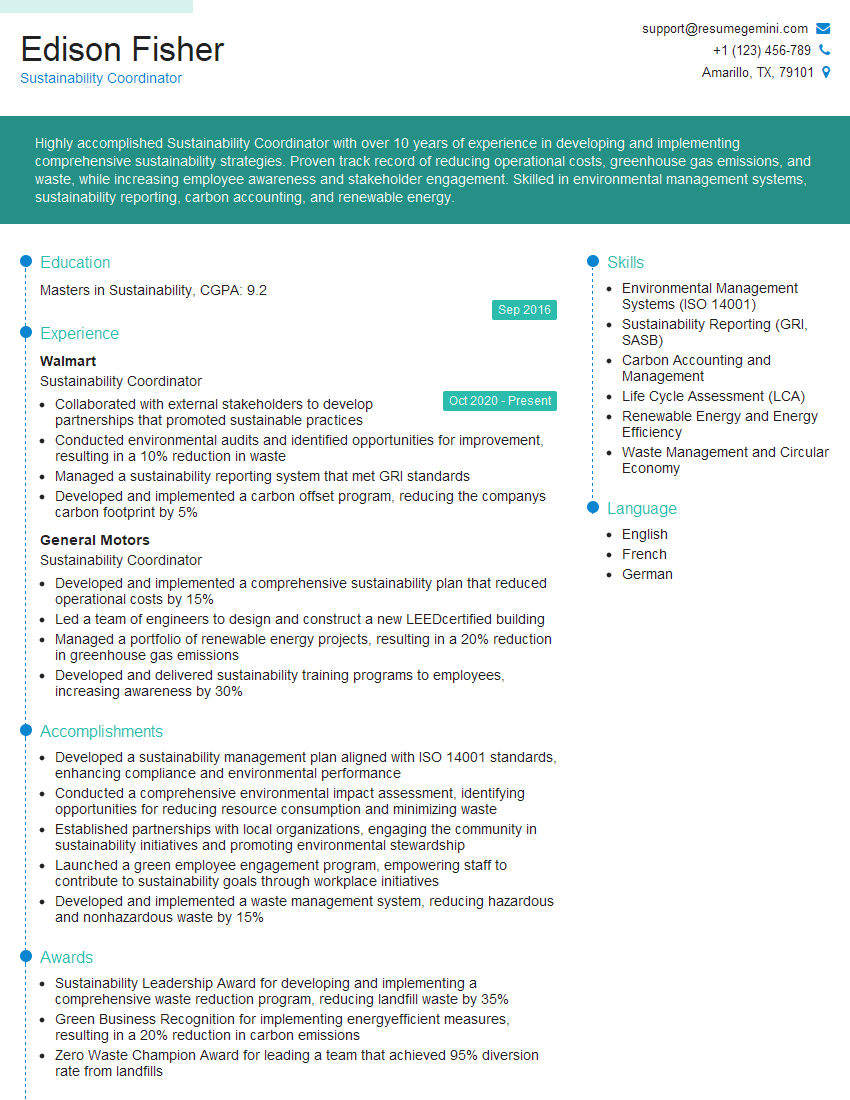
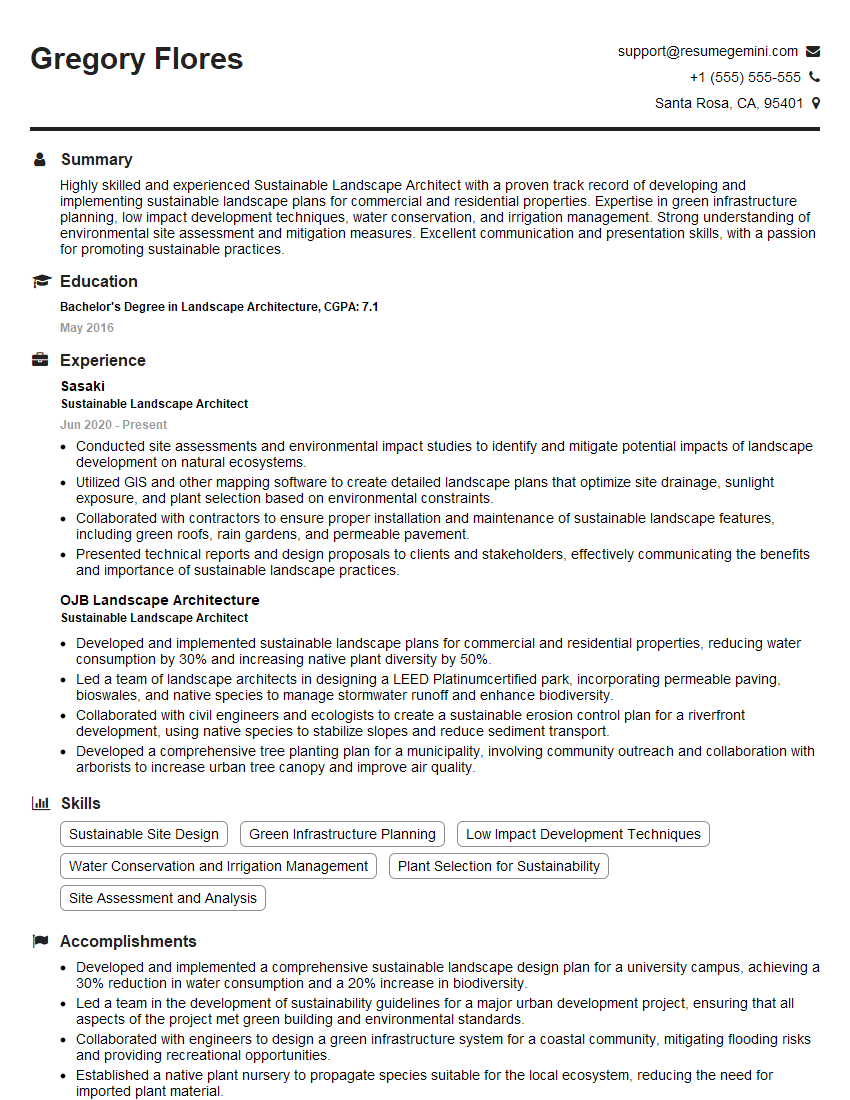
Mastering Sustainable Design and Construction Practices is crucial for career advancement in the growing green building industry. It demonstrates a commitment to environmental responsibility and positions you as a valuable asset to any organization. To maximize your job prospects, create an ATS-friendly resume that highlights your skills and experience effectively. ResumeGemini is a trusted resource to help you build a professional and impactful resume. Examples of resumes tailored to Sustainable Design and Construction Practices are available to guide you.
Explore more articles
Users Rating of Our Blogs
Share Your Experience
We value your feedback! Please rate our content and share your thoughts (optional).
What Readers Say About Our Blog
To the interviewgemini.com Webmaster.
Very helpful and content specific questions to help prepare me for my interview!
Thank you
To the interviewgemini.com Webmaster.
This was kind of a unique content I found around the specialized skills. Very helpful questions and good detailed answers.
Very Helpful blog, thank you Interviewgemini team.