The thought of an interview can be nerve-wracking, but the right preparation can make all the difference. Explore this comprehensive guide to Tile Adhesive Selection and Application interview questions and gain the confidence you need to showcase your abilities and secure the role.
Questions Asked in Tile Adhesive Selection and Application Interview
Q 1. What are the different types of tile adhesives available and their applications?
Tile adhesives come in various types, each suited for specific applications. The choice depends on factors like tile size, substrate, and the environment.
- Thin-set mortar: This is the most common type, ideal for most ceramic and porcelain tiles. It’s a cement-based adhesive that comes in powdered form, mixed with water before application. It offers good strength and is versatile for various tile sizes and substrates.
- Modified thin-set mortar: This improved version contains polymers that enhance its bonding strength, flexibility, and water resistance. It’s suitable for larger tiles, exterior applications, and substrates prone to movement.
- Large-format tile adhesive: Specifically designed for large, heavy tiles (often over 24×24 inches), these adhesives are high-performance and provide extra strength and support to prevent cracking or slippage.
- Epoxy adhesive: A two-part adhesive (resin and hardener) offering exceptional strength and chemical resistance. It’s ideal for demanding applications like commercial kitchens or areas with heavy chemical exposure. However, it’s more expensive and requires careful mixing and application.
- Mastics: Pre-mixed adhesives, often used for smaller tiles and less demanding applications. They are convenient but generally have lower bonding strength than mortars and are less suitable for large or heavy tiles.
For example, a bathroom renovation using standard 12×12 inch ceramic tiles would likely use a standard modified thin-set mortar. Conversely, a commercial kitchen with large porcelain tiles might benefit from an epoxy adhesive for superior durability.
Q 2. How do you select the appropriate tile adhesive for different substrates (e.g., concrete, drywall, plywood)?
Substrate selection is crucial for adhesive choice. Different substrates have varying porosity and strength, impacting adhesive performance.
- Concrete: Typically a strong, stable substrate. A standard modified thin-set mortar usually suffices. Ensure the concrete is clean, dry, and free from dust, laitance (a weak surface layer), or curing compounds that can inhibit adhesion.
- Drywall: A weaker and more porous substrate compared to concrete. Requires a modified thin-set mortar designed for drywall or cement backer board. Using a standard thin-set on drywall increases the risk of tile failure. Moreover, using a fiberglass mesh tape to reinforce joints is highly recommended.
- Plywood: Similar to drywall, plywood needs a modified thin-set specifically designed for use on plywood, often requiring a waterproof membrane underneath to prevent moisture damage. The plywood must also be extremely stable and properly installed.
Imagine tiling a shower floor (concrete) versus a bathroom wall (drywall). The shower floor benefits from the strength of concrete, permitting a simpler adhesive choice. The bathroom wall, being less robust, demands a modified thin-set, potentially with additional support to prevent cracking or tile displacement.
Q 3. Explain the importance of proper surface preparation before applying tile adhesive.
Proper surface preparation is paramount for successful tile installation. Inadequate preparation is the single most common cause of tile adhesive failure. Think of it like painting a wall; you wouldn’t paint directly onto a dirty, flaky surface, would you?
- Clean the substrate: Remove all dust, debris, grease, oil, paint, and any loose materials. Pressure washing or a stiff brush might be necessary.
- Repair cracks and imperfections: Fill any cracks or holes with appropriate patching compound, allowing ample drying time before proceeding.
- Prime porous substrates: This improves adhesion, especially for drywall and plywood. Use a primer recommended for the specific substrate and tile adhesive.
- Ensure the substrate is dry: Excessive moisture can weaken the bond between the adhesive and substrate, leading to tile failure. Use a moisture meter to check moisture content.
For example, failure to properly prime a drywall substrate will lead to poor adhesion, resulting in tile detachment and potentially expensive repairs. This is a critical step that can’t be overlooked.
Q 4. Describe the correct mixing ratio and techniques for different tile adhesives.
The mixing ratio is critical; always follow the manufacturer’s instructions precisely. Improper mixing can severely compromise the adhesive’s performance.
Generally, powdered thin-set mortars are mixed with water in a ratio specified on the packaging (e.g., 1 part water to 3 parts powder). Use clean containers and tools. Mixing should be thorough, creating a smooth, lump-free consistency. The goal is a creamy, spreadable paste – not too runny or too thick. For epoxy adhesives, follow the manufacturer’s instructions meticulously, as they usually involve a two-part mixing process with precise ratios and mixing times. Using a specialized mixer is often recommended for a consistent mix.
Mixing techniques involve gradually adding water to the powder while mixing continuously with a paddle mixer or drill with a mixing attachment. Avoid adding too much water at once, which can weaken the bond. Ensure there are no dry spots or clumps left in the mix.
Q 5. What are the signs of improper adhesive mixing or application?
Signs of improper mixing or application often manifest as problems with the tiling itself:
- Lumps or dry spots in the adhesive: Indicates incomplete mixing, resulting in weak bonding areas. These areas are likely to fail.
- Excessive cracking or crumbling of the adhesive: Usually caused by either too little water (too dry mix) or incorrect application, such as improper trowel usage.
- Uneven tile setting: Some tiles might be higher or lower than others, indicating inconsistent adhesive application or uneven substrate preparation. This can lead to poor grout joints and potential cracking.
- Hollow-sounding tiles: Tapping on tiles should produce a solid sound. A hollow sound suggests insufficient adhesive coverage or poor adhesion to the substrate. A hollow-sounding tile is likely to fail sooner rather than later.
- Tile popping or cracking: These are clear signs of adhesive failure and may be caused by poor mixing, improper application, or substrate issues.
Q 6. How do you ensure proper open time and working time of the adhesive?
Open time and working time are crucial for successful tile installation. Open time is how long the adhesive remains workable before setting. Working time is the time the adhesive remains workable once applied to the substrate.
Both open and working times depend on the adhesive type, the environmental conditions (temperature and humidity), and the substrate. Check the manufacturer’s instructions for guidelines. In hotter, drier conditions, the adhesive will set quicker. In cooler, more humid conditions, the setting time will be prolonged. It’s crucial to work within these specified timeframes to ensure proper adhesion. If working with large areas, use a time management strategy, apply the adhesive in manageable sections, and proceed with the tile installation before the open time expires.
Applying the adhesive in small batches at a time is one method to prevent premature setting in warmer conditions.
Q 7. What are the common causes of tile adhesive failure?
Tile adhesive failure can stem from multiple factors; addressing them proactively ensures a successful project.
- Improper surface preparation: This is by far the most common cause. Dust, grease, moisture, and loose materials prevent proper bonding.
- Incorrect adhesive selection: Using the wrong type of adhesive for the substrate or tile type can lead to failure.
- Incorrect mixing: A lumpy, too-thin, or too-dry mix will compromise the bond strength.
- Improper application: Insufficient adhesive coverage, incorrect trowel size, or poor spreading techniques can all lead to failure.
- Excessive moisture: Moisture in the substrate or from the environment weakens the bond.
- Substrate movement: Movement in the substrate, such as flexing in drywall, can cause stress and cracking in the adhesive.
- Temperature extremes: Extreme heat or cold can affect the setting and curing of the adhesive.
For instance, using a standard thin-set mortar on a plywood substrate without proper priming is a recipe for disaster. Similarly, mixing the adhesive incorrectly or applying it too thinly can weaken the adhesive and lead to tile failures.
Q 8. How do you address issues like hollow tiles or adhesive slumping?
Hollow tiles and adhesive slumping are common problems in tile installation, stemming from improper adhesive application or substrate preparation. Hollow tiles, characterized by a drumming sound when tapped, indicate insufficient adhesive contact, leading to poor bond strength and potential cracking. Adhesive slumping occurs when the adhesive sags or slides before the tile is set, resulting in uneven surfaces and weak bonds. Addressing these issues requires a multi-pronged approach.
For hollow tiles: Prevention is key. Ensure the substrate is clean, dry, and properly primed. Use the correct adhesive type and trowel size for the tile size and substrate. Apply adhesive evenly to both the substrate and the back of the tile (back-buttering, discussed later) to maximize contact. If you encounter hollow tiles after installation, carefully remove the affected tile, clean the area, and reapply adhesive, ensuring complete contact this time. A tapping device can help identify hollow tiles before grouting.
For adhesive slumping: Use a modified thin-set mortar which has increased viscosity, preventing sagging. Ensure the substrate is perfectly level and vertical, reducing the chances of uneven distribution. Apply smaller amounts of adhesive at a time, working in manageable sections. Avoid using excessive adhesive. Consider using a notched trowel with the right size to provide appropriate coverage without excess.
Q 9. What safety precautions should be taken when handling and applying tile adhesives?
Safety is paramount when working with tile adhesives. These products often contain chemicals that can irritate skin and eyes. Always wear appropriate personal protective equipment (PPE), including safety glasses, gloves, and a dust mask. Proper ventilation is crucial to minimize inhalation of dust and fumes. Follow the manufacturer’s safety data sheet (SDS) meticulously for specific handling instructions and first-aid measures. Keep adhesives out of reach of children and pets. Clean up spills immediately and dispose of waste according to local regulations. In case of contact with eyes or skin, rinse immediately with plenty of water and seek medical attention if necessary.
Working at heights requires additional safety precautions, like using proper scaffolding and fall protection equipment.
Q 10. How do you handle different tile sizes and shapes during installation?
Handling diverse tile sizes and shapes requires adaptability and careful planning. Large format tiles often require additional support, potentially using larger amounts of adhesive and potentially a backer board. Smaller mosaic tiles require precise placement and potentially a different adhesive consistency. Irregular shapes demand careful cutting and meticulous positioning. Always use the appropriate trowel size for each tile type and use spacers to ensure consistent grout lines. Pre-planning and layout are crucial to minimise waste and ensure a cohesive and aesthetically pleasing finish. Practice with offcuts before committing to the main installation to get comfortable with cutting and placement techniques.
Q 11. Explain the concept of back-buttering tiles and when it’s necessary.
Back-buttering involves applying thin-set mortar to the back of the tile in addition to the substrate. This technique is particularly useful for larger format tiles, uneven surfaces, or when extra bond strength is needed. It ensures complete contact between the tile and the substrate, minimizing the risk of hollow tiles and improving adhesion, especially with porous tiles. It’s not typically necessary for smaller tiles or when using a modified thin-set with excellent adhesion properties. However, with larger or more delicate tiles, it offers superior performance and significantly reduces the risk of problems down the line. The amount of back-buttering should be sufficient to cover the back, without excessive build up, otherwise it could lead to the tile not sitting properly.
Q 12. What are the differences between thin-set mortar and modified thin-set mortar?
Thin-set mortar and modified thin-set mortar are both cement-based adhesives used for tile installation, but they differ in their composition and properties. Thin-set mortar is a basic cement-based adhesive with minimal additives. It provides good adhesion for standard tile applications on interior walls and floors. Modified thin-set mortar contains polymers or other additives that enhance its performance. This results in increased flexibility, improved bond strength, longer open time (the time the adhesive remains workable), and better resistance to slumping, making it ideal for larger tiles, exterior applications, and areas subject to movement or vibration.
Choosing between them depends on the project requirements. For simple interior installations with small to medium tiles, standard thin-set might suffice. However, for demanding projects involving large format tiles, exterior applications, or substrates prone to movement, modified thin-set provides superior reliability and long-term performance.
Q 13. How do you account for expansion and contraction of tiles and substrates?
Tiles and substrates expand and contract with temperature fluctuations and humidity changes. Failing to account for this can result in cracking or other damage. Control joints, or movement joints, must be incorporated into the substrate to accommodate this movement. These are gaps built into the substrate (e.g., using expansion joint tape) at intervals to allow for expansion and contraction. These joints should extend through the tiling layer to the grout. The appropriate spacing depends on tile size and the type of substrate. It is crucial to use flexible grout to maintain movement capabilities within the joints.
Furthermore, the choice of tile adhesive plays a role. A modified thin-set mortar, with its flexibility, is better suited to handle these movements than a standard thin-set.
Q 14. What are the appropriate trowel sizes for different tile sizes and adhesive types?
Trowel size is critical for achieving proper adhesive coverage and bond strength. An improperly sized trowel can lead to hollow tiles, poor adhesion, and increased material waste. The general rule is to match the trowel size to the tile size and the type of adhesive. Larger tiles require larger trowel notches to ensure adequate coverage, while smaller tiles benefit from smaller notches to avoid excessive adhesive. Modified thin-set mortars generally require smaller notches than standard thin-set mortars, due to their increased viscosity.
Examples: Small mosaic tiles might use a 1/8” square notched trowel, while large-format porcelain tiles might necessitate a 1/2” square notched or even a larger trowel. Always refer to the tile manufacturer’s recommendations and the adhesive manufacturer’s instructions for specific trowel size guidance.
Q 15. How do you ensure proper bonding between the tile and the substrate?
Proper bonding between tile and substrate is paramount for a durable and long-lasting installation. It hinges on three key factors: substrate preparation, adhesive selection, and application technique.
- Substrate Preparation: The substrate (the surface you’re tiling, like concrete, backer board, or drywall) must be clean, dry, and free of dust, debris, grease, or any loose material. Think of it like preparing a canvas for painting – a smooth, clean surface ensures optimal adhesion. Any imperfections or contaminants will weaken the bond. This often involves using a primer or a bonding agent, depending on the substrate’s porosity.
- Adhesive Selection: Choosing the right adhesive is critical. Different adhesives are formulated for various substrates and tile types. For example, a modified thin-set mortar is ideal for most ceramic and porcelain tiles on standard substrates, while a specific adhesive might be needed for natural stone or large-format tiles. Always check the manufacturer’s recommendations for compatibility.
- Application Technique: The adhesive must be applied evenly and thoroughly, ensuring full contact between the tile and the substrate. Using a notched trowel creates grooves that help distribute the adhesive and allow for air release, preventing voids that can lead to cracking or debonding. The size and type of notch depends on the tile size and type.
For instance, I once worked on a project where the previous installer had skipped proper cleaning of the substrate. As a result, the tiles started to lift after a few months. We had to remove all the affected tiles, thoroughly clean and prime the surface, and reinstall them using the correct adhesive and technique. The result was a completely stable and aesthetically pleasing finish.
Career Expert Tips:
- Ace those interviews! Prepare effectively by reviewing the Top 50 Most Common Interview Questions on ResumeGemini.
- Navigate your job search with confidence! Explore a wide range of Career Tips on ResumeGemini. Learn about common challenges and recommendations to overcome them.
- Craft the perfect resume! Master the Art of Resume Writing with ResumeGemini’s guide. Showcase your unique qualifications and achievements effectively.
- Don’t miss out on holiday savings! Build your dream resume with ResumeGemini’s ATS optimized templates.
Q 16. What are the best practices for cleaning excess adhesive?
Cleaning excess adhesive is crucial for achieving a professional finish and preventing staining. The best practices depend on the type of adhesive and the time elapsed since application.
- Fresh Adhesive: For freshly applied adhesive, a damp sponge is usually sufficient. Wipe away excess adhesive immediately, before it sets. Avoid scrubbing vigorously, as this can damage the tile surface.
- Set Adhesive: Removing hardened adhesive is more challenging. Specialized adhesive removers are available for this purpose. Always test the remover in an inconspicuous area first to ensure it won’t damage the tile or grout. Mechanical methods such as a scraper or putty knife can also be employed with caution, to avoid scratching the tile surface. Remember to always wear appropriate safety gear.
A common mistake is leaving excess adhesive to dry and then attempting to remove it later. This significantly increases the difficulty of cleaning and can lead to surface damage. Remember, prevention is better than cure.
Q 17. What is the importance of grout selection and application after tile installation?
Grout selection and application are as critical as tile and adhesive selection. Grout fills the gaps between tiles, preventing water penetration and providing structural support. The wrong grout can lead to cracking, staining, and mold growth.
- Grout Selection: The choice of grout depends on the tile type, the location of the installation (interior or exterior), and the desired aesthetic. Epoxy grouts are highly durable, water-resistant, and ideal for high-traffic areas or wet environments, but they are more challenging to apply. Cement-based grouts are more commonly used and are less expensive but offer less water resistance.
- Grout Application: Grout should be applied evenly and firmly, completely filling the gaps between tiles. Excess grout should be removed immediately with a damp sponge to prevent staining. Once the grout is set, it should be sealed to further enhance water resistance and stain protection.
For instance, choosing a grout that isn’t compatible with the tile could lead to grout discoloration or cracking. Using an epoxy grout in a high-moisture area like a shower guarantees lasting protection against water damage.
Q 18. How do you troubleshoot common tile installation problems?
Troubleshooting tile installation problems requires a systematic approach. It starts with identifying the problem, determining its cause, and then implementing the appropriate solution.
- Lippage (uneven tile height): This often results from inconsistent adhesive application or improper substrate preparation. Solutions include using a leveling system during installation or regrouting.
- Cracking: Cracks can be caused by poor substrate preparation, improper adhesive selection, or excessive movement in the substrate. Addressing the underlying cause, whether through improved substrate preparation, using a flexible adhesive, or implementing crack isolation membranes, is key.
- Hollow Tiles: This indicates insufficient adhesive bonding. The solution involves removing the affected tiles and reinstalling them with proper adhesive application.
For example, I once encountered a case of widespread cracking in a large tiled area. After investigation, we discovered that the concrete substrate had not been properly prepared and contained significant expansion and contraction issues. We addressed this by using a flexible adhesive and a crack isolation membrane, preventing future cracking.
Q 19. Describe your experience with different types of tiles (e.g., ceramic, porcelain, natural stone).
My experience encompasses a wide range of tile types. Each requires a tailored approach to installation.
- Ceramic Tiles: Relatively easy to work with, ceramic tiles are versatile and come in various finishes. Standard modified thin-set mortars are usually appropriate.
- Porcelain Tiles: Denser and more durable than ceramic tiles, porcelain tiles often require a more precise installation technique. Modified thin-set mortars, sometimes with additives for enhanced bonding, are used.
- Natural Stone Tiles (Marble, Granite, etc.): These tiles are delicate and require special care during handling and installation. Specific adhesives designed for natural stone are necessary to prevent staining or damage. The substrate may require additional preparation, such as the use of a specific primer.
The key difference in working with these tile types lies in understanding their unique properties and selecting the correct materials and techniques to ensure a successful and long-lasting installation. For example, I would never use the same adhesive for installing delicate marble tiles as I would for robust porcelain tiles.
Q 20. How do you determine the quantity of tile adhesive needed for a project?
Accurately determining the quantity of tile adhesive needed is crucial for efficient project management and cost control. Several factors influence this calculation.
- Tile Size and Type: Larger tiles require more adhesive. Porous tiles absorb more adhesive than non-porous ones.
- Substrate Type: Porous substrates like concrete may require more adhesive than non-porous substrates.
- Trowel Size: The size of the notched trowel used directly affects the adhesive consumption. Larger notches require more adhesive.
- Surface Area: Accurate measurements of the tiling area are essential. Consider accounting for waste during cutting.
Manufacturers often provide guidance on adhesive coverage per square foot, usually expressed in terms of a coverage rate per trowel size. I typically add a 10-15% buffer to account for waste and unexpected issues.
Q 21. How do you handle challenging installations, such as curved surfaces or intricate designs?
Challenging installations, like curved surfaces or intricate designs, demand specialized techniques and materials.
- Curved Surfaces: Flexible adhesives are crucial to accommodate movement and prevent cracking. Smaller tiles might be preferable, and careful manipulation is needed to ensure proper fitting and coverage.
- Intricate Designs: Precise cutting and careful planning are essential. Using templates, spacers, and potentially custom-mixed adhesives can aid in achieving desired results. A methodical and patient approach is crucial.
For example, in one project involving a curved wall, I used a flexible, modified thin-set mortar and carefully cut the tiles to fit the curvature. This required patience and precision, but the result was a visually stunning and structurally sound installation.
Q 22. What tools and equipment are essential for proper tile adhesive application?
Proper tile adhesive application requires a range of tools and equipment, ensuring a smooth and efficient installation. The specifics will depend on the project scale and tile type, but here’s a comprehensive list:
- Notched Trowels: These are crucial for creating consistent adhesive coverage and the appropriate depth for the tile thickness. Different notch sizes (e.g., 1/4” x 1/4”, 3/8” x 3/8”) are selected based on tile size and type.
- Mixing Buckets and Paddle Mixer: For even mixing of the adhesive according to manufacturer instructions. A drill with a mixing paddle speeds up this process significantly.
- Measuring Tools: Accurate measuring cups and a tape measure are essential for precise material quantities and layout planning.
- Level: A spirit level is vital for ensuring flat, level surfaces. It prevents uneven tile setting and potential cracking.
- Spacers: Maintain consistent grout lines. Plastic spacers come in various sizes.
- Rubber Mallet or Float: Used to gently seat tiles and ensure good adhesive contact.
- Tile Cutter or Wet Saw: Necessary for cutting tiles to size and achieving precise fits.
- Safety Gear: Safety glasses, gloves, and dust masks are essential for protecting yourself from dust, chemicals, and flying debris.
- Clean-up Tools: Sponges, buckets, and rags are necessary for cleaning excess adhesive and maintaining a clean workspace.
Investing in quality tools not only improves the final result but also boosts efficiency and reduces the risk of errors.
Q 23. Explain your understanding of industry standards and building codes related to tile installation.
Adherence to industry standards and building codes is paramount for ensuring a safe, durable, and aesthetically pleasing tile installation. These standards address aspects like substrate preparation, adhesive selection, waterproofing, and accessibility requirements.
For example, the ANSI A108.02 standard (American National Standards Institute) provides guidelines for thin-set mortar (tile adhesive) applications. These guidelines specify requirements for substrate preparation, adhesive type selection based on the substrate and tile, and application techniques. Similarly, local building codes frequently dictate specific moisture mitigation strategies, especially in wet areas like showers or bathrooms, often requiring the use of waterproofing membranes before tile installation.
Ignoring these standards can lead to costly repairs, structural damage, and even safety hazards. For instance, improper substrate preparation can cause tile cracking or detachment. Failure to use appropriate waterproofing in wet areas can lead to mold growth and water damage. Therefore, staying updated on the relevant codes and standards in the area of work is crucial.
Q 24. How do you manage time effectively on a tile installation project?
Effective time management is crucial for successful tile installation projects. My approach involves a multi-step process:
- Thorough Planning: Before starting, I meticulously plan the project, including substrate preparation, tile layout, material ordering, and a detailed work schedule. This includes calculating material quantities to minimize waste and delays.
- Efficient Workflows: I establish efficient workflows to minimize wasted movement. This could include preparing substrates in sections before moving on to adhesive application and tiling in those sections.
- Prioritization of Tasks: I prioritize tasks based on their dependency, ensuring I focus on the most critical aspects first. For example, substrate preparation takes precedence over actual tile setting.
- Realistic Scheduling: Realistic scheduling that incorporates potential unforeseen delays is vital, such as material delivery delays or unexpected substrate issues.
- Teamwork and Communication: On larger projects, I work closely with my team, clear communication helps to address issues promptly and keeps the project on track.
I’ve found that accurate planning and efficient execution are key. On a recent large bathroom remodel, this approach allowed us to finish a week ahead of schedule, impressing the client and keeping the project within budget.
Q 25. Describe your experience with different types of substrates and their preparation methods.
Experience with various substrates is fundamental to successful tile installation. Each substrate necessitates unique preparation methods to ensure proper bonding and prevent problems down the line. Here are some examples:
- Concrete: Requires cleaning to remove dust, debris, and curing compounds. It often needs to be primed to improve adhesion, especially with porous concrete.
- Drywall: Must be properly primed with a bonding primer designed for tile adhesive. It’s more susceptible to cracking and requires a highly flexible adhesive.
- Backer Board (Cement Board): A common substrate choice for wet areas. Requires screwing and taping seams for water resistance and proper bonding. This is often the preferred method for bathrooms and shower installations, requiring special attention to sealing edges and corners.
- Existing Tile: Installing over existing tile requires careful evaluation to ensure the stability and adhesion of the existing tiles. Special considerations for surface preparation are often necessary, sometimes requiring removal of existing tiles.
Failure to properly prepare a substrate, regardless of type, increases the likelihood of tile failure—delamination, cracking, or even falling off—making substrate preparation one of the most crucial steps in tile installation.
Q 26. How do you maintain a clean and organized worksite during tile installation?
Maintaining a clean and organized worksite isn’t just about aesthetics; it’s about safety and efficiency. My approach involves several key strategies:
- Designated Material Areas: Setting aside designated areas for materials, tools, and waste significantly minimizes tripping hazards and improves workflow.
- Regular Clean-Up: Consistent, even frequent clean-up throughout the installation process prevents build-up of debris and keeps the workspace manageable.
- Waste Disposal System: Having a dedicated system for disposing of waste, particularly broken tiles and excess adhesive, ensures a tidy environment.
- Protective Covering: Protecting surrounding areas with drop cloths or masking tape prevents damage to existing finishes and simplifies post-installation cleaning.
- Tool Organization: I always organize my tools systematically, making them easily accessible and preventing loss or damage.
A clean and organized workspace not only minimizes risks but also enhances the overall quality of work. A messy site can be a safety hazard and leads to rushed work and errors.
Q 27. What are your strategies for working efficiently and minimizing waste?
Working efficiently and minimizing waste are key to successful tile installations and profitability. Here are some of my strategies:
- Precise Measurement and Cutting: Accurate measuring and cutting minimize material waste. I use a combination of measuring tools, tile cutters, and wet saws to maximize material utilization.
- Optimized Layout Planning: Careful planning, including analyzing tile sizes and patterns, minimizes cuts and waste by strategically placing whole tiles.
- Material Ordering: Precise material ordering based on accurate calculations minimizes excess material purchase and potential waste. I always add a small buffer for unforeseen circumstances but avoid over-ordering.
- Reusing Materials: Where possible, I reuse cutoffs for smaller areas or infill areas, reducing waste further.
- Efficient Adhesive Application: Using the correct size notched trowel and consistent application techniques ensures optimal adhesive coverage and minimizes waste.
For example, on a recent project, by meticulously planning and using optimized layout techniques, I reduced tile waste by over 15%, which translated directly to cost savings for the client.
Q 28. How do you ensure quality control throughout the tile installation process?
Quality control is an ongoing process, not a one-time check. My approach incorporates checks throughout the installation process:
- Substrate Inspection: I thoroughly inspect the substrate before starting to ensure it’s level, clean, and properly prepared. Any defects are addressed before tile installation begins.
- Adhesive Consistency: I always check the consistency and mix of the tile adhesive according to the manufacturer’s instructions, ensuring it’s suitable for the substrate and tile.
- Levelness of Tiles: I use a level to check the levelness of each tile during installation, adjusting as necessary to prevent unevenness.
- Grout Line Consistency: Consistent grout lines ensure a professional finish. Properly sized spacers are used to maintain consistent gaps between tiles.
- Final Inspection: After the adhesive has cured, I perform a thorough final inspection to check for any loose tiles, uneven surfaces, or other defects.
Proactive quality control minimizes costly rework and ensures client satisfaction. It’s much easier and more cost-effective to identify and correct problems early in the process.
Key Topics to Learn for Tile Adhesive Selection and Application Interview
- Understanding Tile Types and Their Adhesive Requirements: Learn to identify different tile materials (ceramic, porcelain, natural stone, etc.) and match them with the appropriate adhesive type based on porosity, size, and weight.
- Adhesive Properties and Performance Characteristics: Grasp the concepts of open time, pot life, slip resistance, and bond strength. Understand how these properties affect application and long-term performance.
- Substrate Preparation and Surface Treatment: Master the techniques for preparing various substrates (concrete, drywall, wood) for optimal tile adhesion, including cleaning, priming, and leveling.
- Correct Adhesive Mixing and Application Techniques: Learn the best practices for mixing adhesives according to manufacturer instructions, achieving the right consistency, and applying it evenly to ensure strong bonding.
- Troubleshooting Common Problems: Develop your problem-solving skills to identify and address issues such as hollow tiles, poor adhesion, efflorescence, and cracking. Understand preventative measures.
- Health and Safety Regulations: Familiarize yourself with relevant safety procedures and regulations concerning handling and application of tile adhesives, including personal protective equipment (PPE) and waste disposal.
- Advanced Application Methods: Explore specialized techniques like large-format tile installation, thin-set application, and the use of various trowel sizes and notches.
- Understanding Building Codes and Standards: Become familiar with relevant building codes and standards related to tile installation and adhesive selection to ensure compliance and safety.
Next Steps
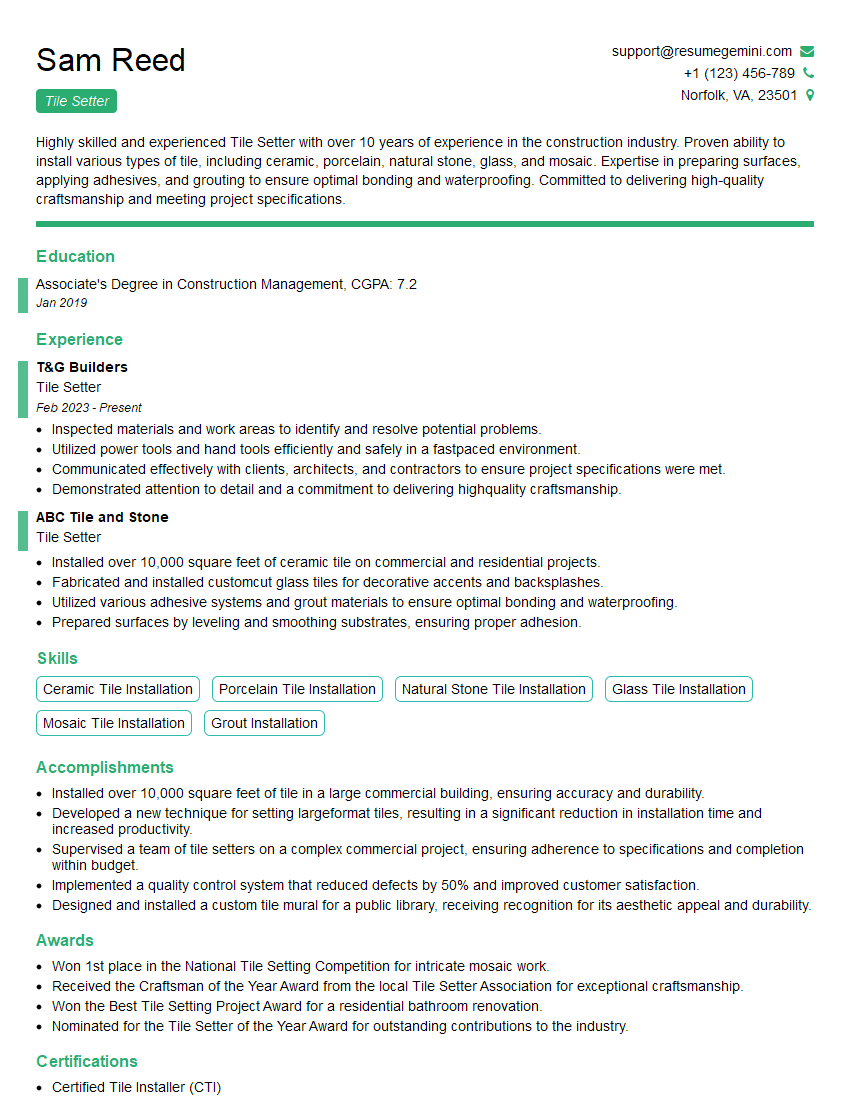
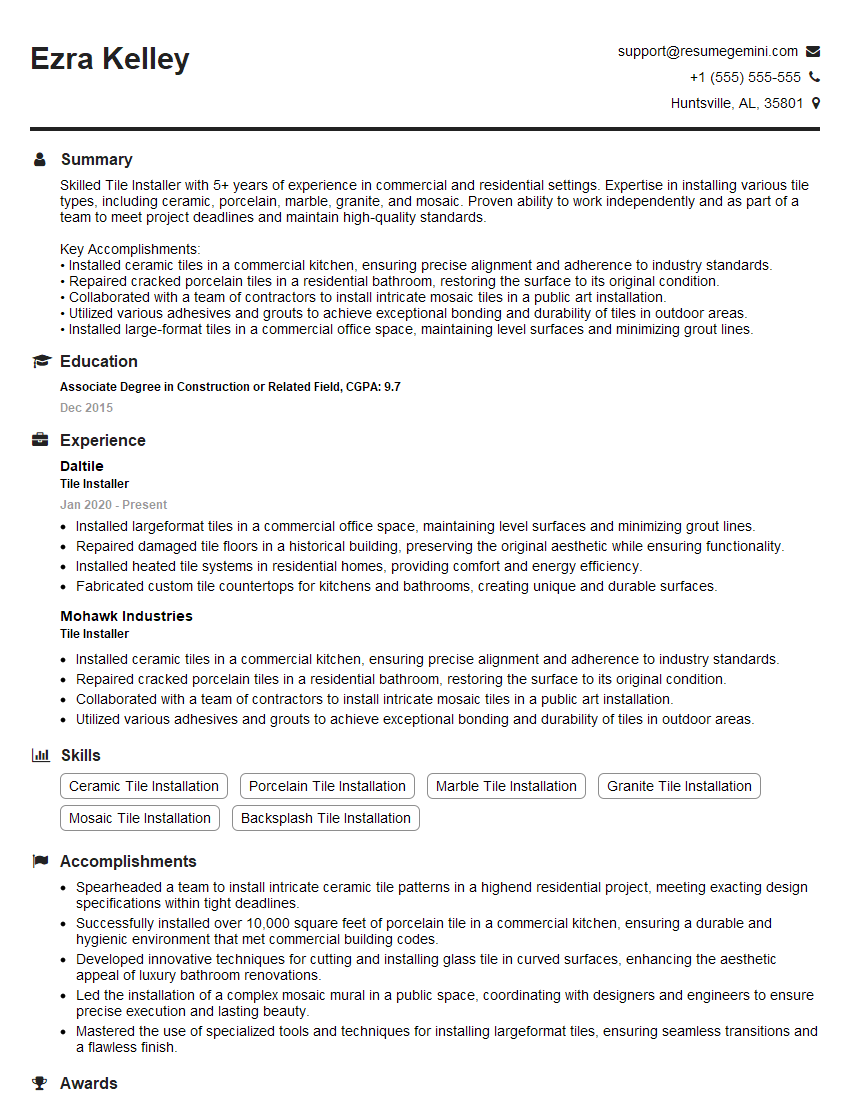
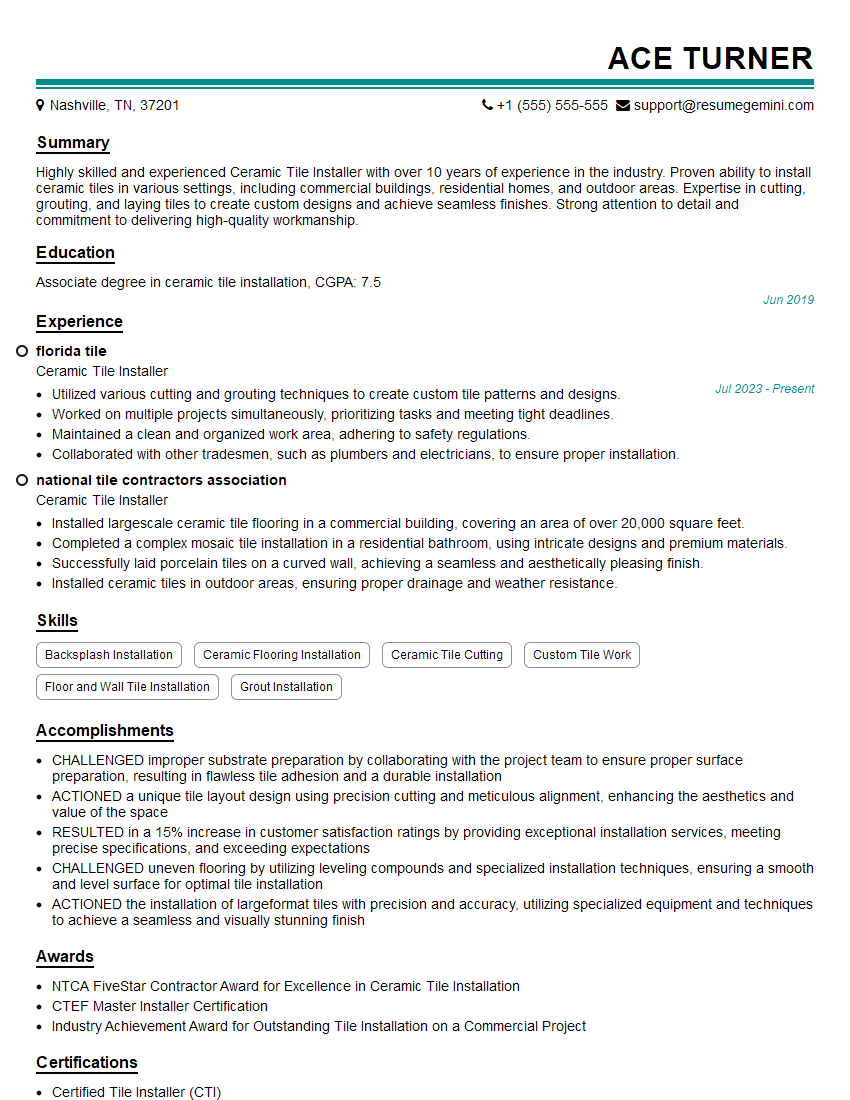
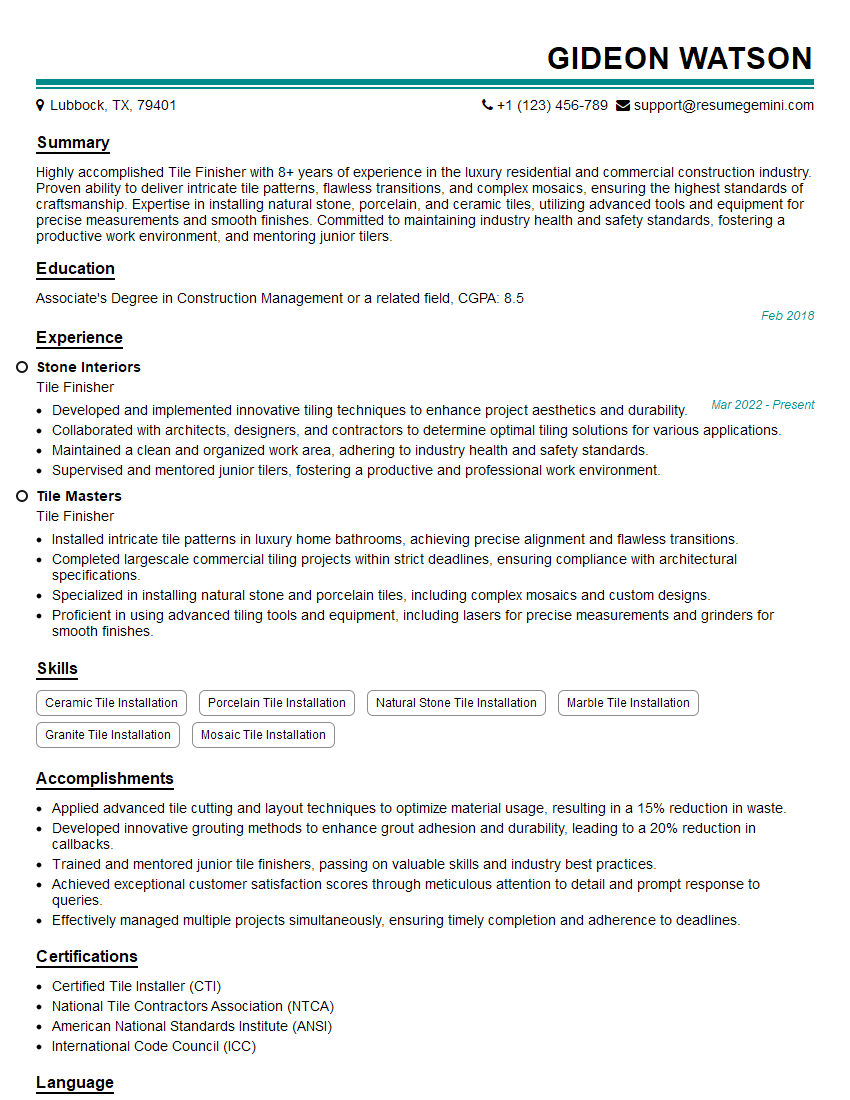
Mastering tile adhesive selection and application is crucial for career advancement in the construction and tiling industries. A strong understanding of these skills demonstrates competence and professionalism, opening doors to more challenging and rewarding opportunities. To maximize your job prospects, create an ATS-friendly resume that highlights your expertise. ResumeGemini is a trusted resource to help you build a professional and impactful resume, showcasing your skills effectively. Examples of resumes tailored to Tile Adhesive Selection and Application are available to guide you. Invest in your future; invest in a great resume.
Explore more articles
Users Rating of Our Blogs
Share Your Experience
We value your feedback! Please rate our content and share your thoughts (optional).
What Readers Say About Our Blog
To the interviewgemini.com Webmaster.
Very helpful and content specific questions to help prepare me for my interview!
Thank you
To the interviewgemini.com Webmaster.
This was kind of a unique content I found around the specialized skills. Very helpful questions and good detailed answers.
Very Helpful blog, thank you Interviewgemini team.