Unlock your full potential by mastering the most common Toolroom Experience interview questions. This blog offers a deep dive into the critical topics, ensuring you’re not only prepared to answer but to excel. With these insights, you’ll approach your interview with clarity and confidence.
Questions Asked in Toolroom Experience Interview
Q 1. Describe your experience with various machining processes used in a toolroom.
My toolroom experience encompasses a wide range of machining processes. Think of it like having a sophisticated toolbox filled with different tools for different jobs. I’m proficient in milling – both conventional and CNC – where I can precisely remove material from a workpiece to create intricate shapes. Turning is another key skill, used to create cylindrical parts by rotating a workpiece against a cutting tool. I’m also experienced in grinding, which is essential for achieving extremely high surface finishes and precise dimensions. Additionally, I’m skilled in drilling, tapping, and reaming, which are crucial for creating holes and internal threads. For more complex geometries, I utilize Electrical Discharge Machining (EDM), a process that uses electrical sparks to erode material away, enabling the creation of incredibly precise and complex shapes, even in hard-to-machine materials. Each process requires a deep understanding of machine operation, tool selection, and material properties to achieve the desired results.
- Example: I once used a combination of CNC milling and EDM to create a precision mold for a plastic injection part with extremely tight tolerances and undercuts, which would be impossible to achieve with milling alone.
Q 2. Explain your proficiency in using CAD/CAM software for tool design.
My proficiency in CAD/CAM software is integral to my toolmaking process. Think of CAD (Computer-Aided Design) as the blueprint phase, where I create the 3D model of the tool using software like SolidWorks or Fusion 360. Then, CAM (Computer-Aided Manufacturing) takes over, translating that 3D model into instructions for the CNC machines. I’m adept at generating efficient toolpaths, selecting appropriate cutting parameters (like feed rates and depth of cut), and simulating the machining process to avoid collisions and optimize efficiency. I’m also proficient in using CAM software to program complex operations like multi-axis machining and wire EDM.
- Example: For a recent project involving a complex progressive die, I used SolidWorks for the design and Mastercam for CAM programming, optimizing the toolpaths to minimize machining time and maximize surface finish quality. The simulation feature in Mastercam allowed me to identify and correct potential collisions before starting the machining process.
Q 3. How do you ensure the accuracy and precision of tools you manufacture?
Accuracy and precision are paramount in toolmaking. It’s like building a house – if the foundation isn’t accurate, the whole structure will be compromised. I employ several strategies to ensure high precision. First, careful selection of raw materials is crucial. I check material certificates to ensure they meet the required specifications. Second, precise machine setup is vital. This involves meticulous alignment of the machine axes, verification of tool offsets, and proper workpiece clamping. Third, I use high-precision measuring instruments like CMM (Coordinate Measuring Machines), dial indicators, and micrometers to verify dimensions throughout the manufacturing process. Finally, I implement regular machine maintenance to ensure consistent accuracy.
- Example: To ensure the accuracy of a precision jig, I used a CMM to measure key dimensions after each machining operation, comparing them against the CAD model and adjusting the toolpath if any deviations were found.
Q 4. Describe your experience with different types of tooling materials and their applications.
Tooling materials selection is critical for optimal tool performance and longevity. It’s like choosing the right material for a construction project; using wood for a skyscraper would be a disaster. I’m familiar with a variety of materials, including high-speed steel (HSS), carbide, and ceramic. HSS is a versatile and cost-effective material suitable for general-purpose tooling. Carbide is much harder and more wear-resistant, ideal for high-speed machining and tough materials. Ceramics offer even greater hardness and wear resistance but are more brittle. The selection depends on the application; for instance, HSS might suffice for soft materials, while carbide or ceramic are necessary for hard metals.
- Example: For machining aluminum, HSS tools are sufficient. However, for machining hardened steel, carbide tools with appropriate coatings are essential for extended tool life.
Q 5. How do you troubleshoot and resolve issues during the toolmaking process?
Troubleshooting is an inherent part of toolmaking. Problems can range from simple issues like dull tools to more complex issues like machine malfunctions or programming errors. My troubleshooting approach is systematic. I start by carefully examining the problem, noting all relevant factors. I then investigate potential causes, checking tool wear, machine settings, and the programmed toolpath. I often use diagnostic tools built into the CNC machine to pinpoint the source of the problem. For example, a machine alarm might indicate a problem with the spindle or coolant system. Systematic elimination of potential causes, combined with a thorough understanding of the process, is key.
- Example: I once encountered a problem where a CNC milled part had dimensional inaccuracies. By systematically checking the toolpath, machine settings, and workpiece clamping, I discovered that a slight misalignment in the machine’s axes was the root cause. After correcting the alignment, the problem was resolved.
Q 6. What quality control measures do you employ to ensure tool quality?
Quality control is woven into every stage of my toolmaking process. It’s not just a final step but a continuous cycle of checks and balances. This includes visual inspection for defects, dimensional checks using precision measuring instruments, and functional testing to ensure the tool meets its intended purpose. I regularly maintain detailed records of each tool’s production process, including material specifications, machining parameters, and inspection results. Statistical Process Control (SPC) charts can be implemented for monitoring critical dimensions over time. This meticulous approach ensures that the tools I produce are consistently reliable and high-quality.
- Example: Before releasing a batch of punches for a stamping die, I perform a complete dimensional inspection using a CMM and verify the functionality of each punch by performing a test run on a sample material.
Q 7. Explain your understanding of GD&T (Geometric Dimensioning and Tolerancing).
GD&T (Geometric Dimensioning and Tolerancing) is the language of precision engineering. It’s a standardized system for specifying tolerances and geometric controls on engineering drawings. It goes beyond simply specifying a single dimension and its tolerance. It specifies the allowed variations in form, orientation, location, and runout of features. Understanding GD&T is crucial for interpreting engineering drawings and ensuring that manufactured parts meet the specified requirements. Symbols such as position, perpendicularity, flatness, and circularity are used to define these geometric controls. This ensures that the parts fit and function correctly within the assembled component.
- Example: A drawing might specify a hole’s position with a positional tolerance zone. This indicates the acceptable range of deviation from the hole’s ideal location. Without GD&T, only a single dimension would be specified, potentially leading to misinterpretations and functional issues.
Q 8. Describe your experience with jig and fixture design and manufacturing.
Jig and fixture design is crucial for efficient and accurate manufacturing. A jig guides a tool during machining, ensuring consistent results, while a fixture holds a workpiece securely in place. My experience encompasses the entire process, from understanding the part’s design and required tolerances to creating detailed 2D and 3D models using CAD software like SolidWorks or AutoCAD. I then oversee the manufacturing process, selecting appropriate materials (like hardened steel or aluminum) and machining techniques to ensure durability and precision. For example, I recently designed a jig for drilling precise holes in a complex automotive component. This involved analyzing the part’s geometry, calculating necessary tolerances, and designing a robust jig that could withstand the rigors of repetitive use. The result was a significant improvement in production speed and accuracy, reducing scrap and rework.
Beyond design, I’m proficient in manufacturing these tools, utilizing various machining techniques including milling, turning, and EDM (Electrical Discharge Machining) based on the material and design complexity. I’m also adept at incorporating features like quick-change mechanisms and adjustable clamping systems for improved efficiency and versatility. I always prioritize manufacturability and cost-effectiveness in my designs.
Q 9. How do you maintain and organize tools and equipment in the toolroom?
Maintaining a well-organized toolroom is essential for efficiency and safety. My approach combines a structured system with meticulous record-keeping. Tools are categorized and stored according to their type and function, using clearly labelled cabinets, drawers, and shadow boards. Each tool has a designated place, and regular audits ensure everything is accounted for. We employ a color-coding system to quickly identify tools with specific characteristics, for example, those requiring extra care or those assigned to specific projects. This helps to minimize search time and reduces the risk of damage or loss. Equipment is regularly serviced and calibrated according to manufacturer specifications to maintain accuracy and prevent malfunctions. Detailed maintenance logs are kept, recording service dates, performed actions, and any issues identified. This proactive approach ensures that equipment remains in optimal working condition, minimizing downtime and maximizing productivity.
Q 10. What safety precautions do you take while working in a toolroom environment?
Safety is paramount in a toolroom. I strictly adhere to all safety regulations and company policies. This starts with always wearing appropriate Personal Protective Equipment (PPE), including safety glasses, hearing protection, and steel-toed boots. I regularly inspect machinery before operation, ensuring guards are in place and functioning correctly. I’m trained in lockout/tagout procedures to prevent accidental machine startups during maintenance or repairs. Safe handling procedures for all materials and tools are strictly followed. For example, I handle cutting fluids with care, avoiding spills and skin contact. Furthermore, I proactively identify potential hazards, such as worn tools or cluttered workspaces, and immediately report them to the supervisor. Regular safety training sessions are essential to reinforce safe practices and stay updated with new regulations and best practices. In short, maintaining a safe working environment is not just a policy, but a personal responsibility I take extremely seriously.
Q 11. Explain your experience with different types of measuring instruments.
My experience with measuring instruments is extensive. I’m proficient in using a wide range of tools, from basic calipers and micrometers to advanced coordinate measuring machines (CMMs) and laser scanners. Calipers and micrometers are used for routine measurements, ensuring accuracy within the required tolerances. I’m familiar with different types like vernier calipers, digital calipers, and outside/inside micrometers. CMMs offer high precision for complex part inspections, producing detailed reports for quality control. Laser scanners are used for non-contact surface measurements, providing precise 3D data. I can interpret the data obtained from these instruments and use it to make informed decisions about part acceptance or necessary corrections. I’m also well-versed in using optical comparators for inspecting parts against master templates, particularly for intricate features. Accurate and precise measurements are critical for quality assurance; therefore, regular calibration and maintenance of these instruments are integral to my process.
Q 12. How do you interpret engineering drawings and blueprints?
Interpreting engineering drawings and blueprints is fundamental to my role. I’m proficient in reading and understanding various drafting standards, including ANSI and ISO. I can accurately identify dimensions, tolerances, surface finishes, and material specifications. I understand different view types (orthographic, isometric, sectional) and can visualize the 3D representation of the part from 2D drawings. I use my understanding of GD&T (Geometric Dimensioning and Tolerancing) to ensure that the manufactured parts meet the required specifications. For instance, I can interpret symbols representing surface roughness, positional tolerances, and form tolerances, ensuring my work aligns with the design intent. If any ambiguity exists, I proactively seek clarification from the design engineers before starting any work, preventing potential errors and ensuring a high-quality final product.
Q 13. Describe your experience with CNC machining centers and programming.
I have significant experience operating and programming CNC machining centers, primarily using Fanuc and Siemens controls. I’m proficient in creating CNC programs using CAM software such as Mastercam and PowerMill. This involves importing CAD models, defining toolpaths, selecting appropriate cutting parameters (feed rate, speed, depth of cut), and simulating the machining process to identify and prevent potential collisions. I’m capable of programming various machining operations, including milling, drilling, turning, and boring. I understand the importance of optimizing toolpaths to minimize machining time and improve surface finish. Furthermore, I can troubleshoot and resolve errors during the machining process, and possess the expertise to adjust cutting parameters to compensate for tool wear or material variations. My experience extends to maintaining and performing routine upkeep on the CNC machines, ensuring their operational readiness and accuracy. For example, I recently programmed a complex five-axis milling operation to create a highly intricate aerospace component. This required meticulous planning and precise programming to achieve the required tolerances and surface finish.
Q 14. How do you handle tight deadlines and prioritize tasks in a fast-paced environment?
Working in a fast-paced toolroom environment requires efficient task management and prioritization. I employ a structured approach using tools such as Kanban boards or project management software to visualize tasks and track progress. I break down large projects into smaller, manageable tasks and prioritize them based on urgency and importance. I effectively manage multiple projects concurrently, allocating time and resources efficiently. Open communication with colleagues and supervisors is key; I regularly provide updates on my progress and proactively address potential delays. When faced with tight deadlines, I utilize my problem-solving skills to identify and eliminate bottlenecks. For example, if a critical tool is unavailable, I’ll explore alternative solutions or communicate the delay promptly to the relevant stakeholders. Working effectively under pressure is a skill I’ve honed over my years in the industry, and it’s a skill I am confident I can leverage to help your team succeed.
Q 15. Explain your experience with EDM (Electrical Discharge Machining) processes.
Electrical Discharge Machining (EDM) is a subtractive manufacturing process that uses electrical discharges (sparks) to erode material from a workpiece. I have extensive experience with both Wire EDM and Sinker EDM. Wire EDM is ideal for intricate shapes and thin cuts, as a thin wire electrode precisely cuts through the material. I’ve used it extensively to create complex dies and molds with very fine detail. For example, I successfully utilized Wire EDM to produce a mold for a high-precision plastic component requiring 0.005mm tolerances. Sinker EDM, on the other hand, uses a shaped electrode to remove material, which is great for creating complex cavities and features. In one project, I used Sinker EDM to create a cavity for a titanium part, a challenging material known for its hardness and heat resistance, using graphite electrodes and dielectric fluid.
My experience encompasses selecting appropriate parameters like pulse duration, current, voltage, and flushing methods to achieve the desired surface finish and accuracy. I also understand the importance of electrode design and material selection in achieving optimal machining results. I am proficient in troubleshooting common EDM issues such as electrode wear, surface cracking and short-circuiting. I am experienced using both CNC controlled EDM machines and troubleshooting the automated processes.
Career Expert Tips:
- Ace those interviews! Prepare effectively by reviewing the Top 50 Most Common Interview Questions on ResumeGemini.
- Navigate your job search with confidence! Explore a wide range of Career Tips on ResumeGemini. Learn about common challenges and recommendations to overcome them.
- Craft the perfect resume! Master the Art of Resume Writing with ResumeGemini’s guide. Showcase your unique qualifications and achievements effectively.
- Don’t miss out on holiday savings! Build your dream resume with ResumeGemini’s ATS optimized templates.
Q 16. Describe your experience with grinding and lapping techniques.
Grinding and lapping are crucial finishing processes for achieving precise dimensions and superior surface finishes on tools. Grinding uses an abrasive wheel to remove material, while lapping uses a very fine abrasive slurry to produce an extremely smooth surface. I have significant experience with both surface grinding and cylindrical grinding, using various types of abrasive wheels depending on the material and desired finish. For instance, I used surface grinding to produce a flat and parallel surface on a hardened steel tool with a surface roughness of Ra 0.2µm. For cylindrical grinding, I have honed my skills on internal and external cylindrical grinding, achieving very precise diameters and roundness. I’ve also used centerless grinding for high-volume production runs.
Lapping, on the other hand, is typically used as a final finishing step to create a mirror-like surface. I’ve applied lapping techniques to improve the flatness and parallelism of precision gauge blocks and to create extremely smooth surfaces on highly stressed parts to reduce wear and friction. I understand the importance of selecting the correct abrasive grit and pressure to prevent damaging the workpiece.
Q 17. What is your experience with tool maintenance and repair?
Tool maintenance and repair are critical for maximizing tool life and ensuring consistent performance. My experience encompasses preventive maintenance, regular inspections, and prompt repairs. Preventive maintenance includes regular cleaning, lubrication, and sharpening of cutting tools, as well as checking for wear and tear on machinery. I am skilled in identifying and addressing issues like chipped cutting edges, worn bearings, and misaligned components.
I’ve repaired numerous tools, ranging from simple hand tools to complex CNC cutting tools. For example, I successfully repaired a broken carbide cutting tool by brazing a replacement carbide tip, restoring it to full functionality. I also have expertise in regrinding worn cutting tools, ensuring they meet the required specifications. I’m very familiar with tool storage and handling procedures to ensure their longevity.
Q 18. How do you work effectively as part of a team in a toolroom setting?
Effective teamwork is essential in a toolroom environment. I’m a strong believer in open communication, collaboration, and mutual respect. In my previous roles, I’ve consistently worked effectively as part of a team, contributing my skills and expertise while also actively listening to and learning from my colleagues. I’m comfortable sharing my knowledge and experience to help others and I’m equally comfortable seeking assistance when needed.
We regularly had team meetings to discuss project priorities, potential challenges, and solutions. We utilized shared workspaces and documented all procedures thoroughly to enable effective knowledge transfer and minimize downtime. For example, on one project, we successfully collaborated to meet a tight deadline for producing a complex set of fixtures by dividing tasks based on individual strengths and expertise, resulting in excellent teamwork and a successful outcome.
Q 19. Describe your experience with different types of cutting tools and their applications.
I have extensive experience with a wide variety of cutting tools, including high-speed steel (HSS), carbide, and ceramic tools. My understanding extends to the selection of the appropriate cutting tool for a specific material and machining operation, considering factors like hardness, machinability, and desired surface finish. HSS tools are versatile and cost-effective for many applications; however, I understand that carbide tools offer superior wear resistance and can operate at higher speeds and feeds for improved productivity. Ceramic tools are excellent for finishing operations and provide very high surface quality, especially on hard materials.
Examples include using HSS drills for general-purpose drilling, carbide end mills for high-precision milling operations, and ceramic inserts for finishing hard materials like hardened steel. I also have experience with specialized tools such as reamers, taps, and form tools, each with specific applications. I’m adept at selecting the correct tool geometry and applying appropriate cutting parameters to ensure high quality and efficiency of the process.
Q 20. Explain your understanding of heat treating processes for tools.
Heat treating is a critical process for enhancing the mechanical properties of tools, particularly their hardness, strength, and wear resistance. My understanding encompasses different heat treating methods, including annealing, normalizing, hardening, and tempering. Annealing is used to soften the material, making it easier to machine. Normalizing refines the grain structure for improved strength and toughness. Hardening increases the hardness of the tool by rapid cooling, while tempering reduces brittleness and enhances toughness.
I understand that the choice of heat treatment method depends on the material and the desired properties of the tool. I’m familiar with various furnace types and control systems, as well as the importance of precise temperature control and cooling rates to achieve the desired results. For example, I’ve used induction hardening to selectively harden critical areas of a tool, leaving other sections more ductile to improve its overall performance. Understanding the metallurgical transformations that occur during each process is crucial for optimizing the heat treatment process.
Q 21. How do you ensure the longevity and durability of the tools you produce?
Ensuring the longevity and durability of tools is paramount. This involves several key strategies. First, selecting the correct material for the application is crucial. Second, precise machining and finishing processes are vital to prevent early wear or damage. Third, proper heat treatment is essential for enhancing the mechanical properties of the tools. Finally, proper storage and handling procedures are critical in protecting the tools from damage and corrosion.
In addition to these factors, I consistently monitor tools for wear, damage, or any signs of deterioration during use. Regular preventative maintenance, such as sharpening, cleaning, and lubrication, extends tool life considerably. I also collaborate with the machinists to optimize cutting parameters to minimize wear and tear. By carefully considering all of these factors, I help ensure that the tools produced meet stringent quality standards and offer exceptional durability and longevity in their intended applications.
Q 22. Describe your experience with surface finishing techniques.
Surface finishing techniques are crucial for achieving the desired functionality and aesthetic appeal of a manufactured part. My experience encompasses a wide range, from basic techniques to advanced methods. This includes:
- Mechanical Finishing: This involves using abrasive materials to remove surface imperfections. I’m proficient in techniques like lapping, honing, polishing, and grinding, each chosen based on the required surface finish and material properties. For example, I used lapping to achieve a mirror-like finish on a precision gauge block, requiring meticulous control of pressure and abrasive grit size.
- Chemical Finishing: Techniques like electropolishing and chemical etching are used for specific surface treatments. Electropolishing provides a smoother, brighter surface and improved corrosion resistance, while chemical etching allows for creating intricate patterns or improving surface adhesion. I’ve utilized electropolishing on stainless steel parts to enhance their corrosion resistance in a medical device application.
- Electroplating: This process involves depositing a thin layer of metal onto a substrate to provide improved wear resistance, corrosion protection, or aesthetic enhancement. I have experience plating parts with various materials, such as chromium, nickel, and gold, carefully selecting the plating process and parameters to achieve the desired result. For instance, I plated a complex part with hard chromium to dramatically improve its wear resistance in a high-stress application.
Selecting the appropriate surface finishing technique requires a thorough understanding of material science, machining processes, and the part’s intended use. Each method has its own advantages and disadvantages, and choosing correctly is crucial to optimizing the performance and longevity of the final product.
Q 23. How familiar are you with different types of tooling materials, such as high-speed steel, carbide, and cermet?
Tooling material selection is critical in toolroom operations. My experience encompasses a deep understanding of the properties and applications of various materials:
- High-Speed Steel (HSS): HSS is a versatile material known for its high hardness and toughness, making it suitable for a wide range of applications. It’s cost-effective but has limitations in terms of wear resistance compared to other materials. I’ve frequently used HSS for general-purpose cutting tools and forming dies where high speed and toughness are crucial, but the expected lifespan is relatively shorter.
- Carbide: Carbide tools exhibit superior wear resistance and hardness compared to HSS, allowing for higher cutting speeds and improved tool life. However, they are more brittle and require careful handling. I’ve worked extensively with carbide tooling for high-production machining operations, such as milling complex geometries in aluminum and steel components, where tool life is paramount.
- Cermet: Cermets offer a balance between the toughness of HSS and the wear resistance of carbide. They are particularly useful in applications requiring high-temperature stability. I’ve utilized cermet inserts in machining operations where both wear resistance and impact toughness are important, for instance, when machining cast iron components.
Choosing the right material involves considering factors such as the material being machined, the desired surface finish, the required cutting speed, and the overall cost-effectiveness. Often, the optimal choice involves balancing these competing factors.
Q 24. What is your experience with the design and manufacturing of progressive dies?
Progressive dies are complex tooling systems designed for high-volume stamping operations. My experience encompasses the entire process, from initial design to final manufacturing and testing.
- Design: I’m proficient in using CAD/CAM software to design progressive dies, carefully considering factors such as material flow, blank size, punch and die geometry, and stripper plate design. I also incorporate tolerance analysis and simulation to minimize potential issues.
- Manufacturing: I have hands-on experience in manufacturing progressive dies, which includes machining the various components, assembling the die, and performing the necessary adjustments. This involves using a variety of machining techniques such as wire EDM, CNC machining, and hand fitting.
- Testing: Before implementing a progressive die in production, rigorous testing is essential. I perform trial runs with sample materials, closely monitoring the stamped parts for dimensional accuracy, surface quality, and overall functionality. Any necessary adjustments are made to optimize performance.
Designing and manufacturing a progressive die requires extensive knowledge of stamping processes, material properties, and tooling design principles. A well-designed progressive die is crucial for achieving high production rates and consistent part quality.
Q 25. Explain your understanding of tolerance stack-up analysis.
Tolerance stack-up analysis is a critical process in ensuring the dimensional accuracy of a manufactured part. It involves evaluating how individual component tolerances accumulate to affect the overall dimensional tolerance of an assembly.
For example, consider a simple assembly with three parts, each with a specified tolerance. If Part A has a tolerance of ±0.1mm, Part B has ±0.2mm, and Part C has ±0.1mm, and they’re assembled linearly, the total tolerance could be ±0.4mm (sum of individual tolerances). However, this is a simplified approach. A more accurate analysis considers the statistical distribution of tolerances (e.g., using root sum square (RSS) method) and the effects of manufacturing processes.
I utilize various techniques including worst-case analysis, RSS analysis, and Monte Carlo simulations to determine the impact of tolerance variations on the final assembly’s dimensions and functionality. This allows for proactive identification and mitigation of potential assembly issues and ensures that the part meets the required specifications.
Q 26. How do you handle deviations from the design specifications during the manufacturing process?
Deviations from design specifications during the manufacturing process are inevitable. My approach to handling these deviations involves a systematic process:
- Identify the Deviation: The first step is to precisely identify and document the nature and magnitude of the deviation using appropriate measuring tools and techniques.
- Root Cause Analysis: Once the deviation is identified, a thorough root cause analysis is conducted to determine the underlying reasons for the problem. This might involve examining the machining process, tooling condition, material properties, or even the design itself.
- Corrective Action: Based on the root cause analysis, appropriate corrective actions are implemented to address the problem. This might involve adjusting the machining parameters, replacing worn tooling, modifying the fixturing, or even revising the design.
- Verification: After implementing corrective actions, the manufacturing process is closely monitored to ensure that the deviations have been eliminated and that the parts meet the design specifications.
- Documentation: All deviations, root cause analyses, corrective actions, and verification results are carefully documented to prevent future occurrences of similar problems.
This approach ensures that quality is maintained throughout the manufacturing process and enables continuous improvement.
Q 27. How do you document and track tool production processes?
Accurate documentation and tracking of tool production processes are essential for maintaining quality, ensuring repeatability, and facilitating continuous improvement. I employ a combination of methods:
- Digital Documentation: I utilize Computer-Aided Design (CAD) and Computer-Aided Manufacturing (CAM) software to create detailed drawings, process plans, and tooling designs. These digital records are stored securely and accessible to relevant personnel.
- Tool Tracking System: A robust tool tracking system is in place to manage the lifecycle of tools, from initial design and manufacture to maintenance and disposal. This system usually includes unique identification numbers, detailed specifications, and maintenance records.
- Manufacturing Logs: Detailed logs of the manufacturing process are maintained, including the machine used, the settings employed, the materials consumed, and any deviations observed. This data provides valuable insights for process improvement.
- Quality Control Records: Quality control records are maintained, documenting the results of inspections and tests performed at various stages of the tool production process. This ensures compliance with design specifications and quality standards.
This integrated approach provides a complete history of each tool, facilitating accurate traceability and allowing for efficient troubleshooting and continuous improvement of the tool manufacturing process.
Q 28. Describe your experience with using various hand tools and power tools in a toolroom.
Proficiency with both hand tools and power tools is fundamental in a toolroom environment. My experience includes extensive use of various tools:
- Hand Tools: I’m adept at using various hand tools such as files, hacksaws, chisels, punches, and measuring instruments like calipers and micrometers. These tools are often used for precise finishing operations, intricate adjustments, and deburring.
- Power Tools: I have substantial experience operating power tools including milling machines, lathes, grinding machines, drilling machines, and surface grinders. The use of these machines requires a high level of skill and precision, ensuring the safe and efficient manufacturing of tooling components.
- Specialized Tools: Furthermore, I’m proficient with specialized tools such as wire EDM machines, which are essential for creating intricate shapes in hard materials, and various types of measuring equipment including CMMs (Coordinate Measuring Machines) for accurate inspection and verification.
Safety is paramount when working with hand and power tools. I always adhere to safety protocols and use appropriate personal protective equipment (PPE) to prevent accidents and injuries. My experience includes proper machine operation, tool maintenance, and adherence to all safety regulations.
Key Topics to Learn for Toolroom Experience Interview
- Tooling Design & Selection: Understanding the principles of tool design, material selection, and their impact on manufacturing processes. Consider applications like choosing the right material for a specific die based on wear resistance and cost.
- CNC Machining & Programming: Familiarity with CNC machine operation, programming languages (e.g., G-code), and troubleshooting common machining issues. Practical application would include explaining the process of setting up a CNC mill for a specific part.
- Tooling Maintenance & Repair: Knowledge of preventative maintenance, troubleshooting techniques, and repair procedures for various tooling components. This includes examples like diagnosing the cause of tool chatter and implementing corrective actions.
- Metrology & Inspection: Understanding precision measurement techniques, using various inspection tools (e.g., CMM, calipers, micrometers), and interpreting inspection data. A practical application would be explaining how to use a CMM to inspect a complex part for dimensional accuracy.
- Quality Control & Improvement: Implementing quality control measures, identifying and addressing defects, and contributing to continuous improvement initiatives within the toolroom. This may involve examples of using statistical process control (SPC) techniques.
- Safety Procedures & Regulations: Adherence to safety protocols and regulations within a toolroom environment. This includes examples of safe machine operation and the use of appropriate personal protective equipment (PPE).
- Blueprint Reading & Interpretation: Ability to accurately interpret engineering drawings and specifications to create and modify tools. This might involve examples of understanding GD&T (Geometric Dimensioning and Tolerancing).
Next Steps
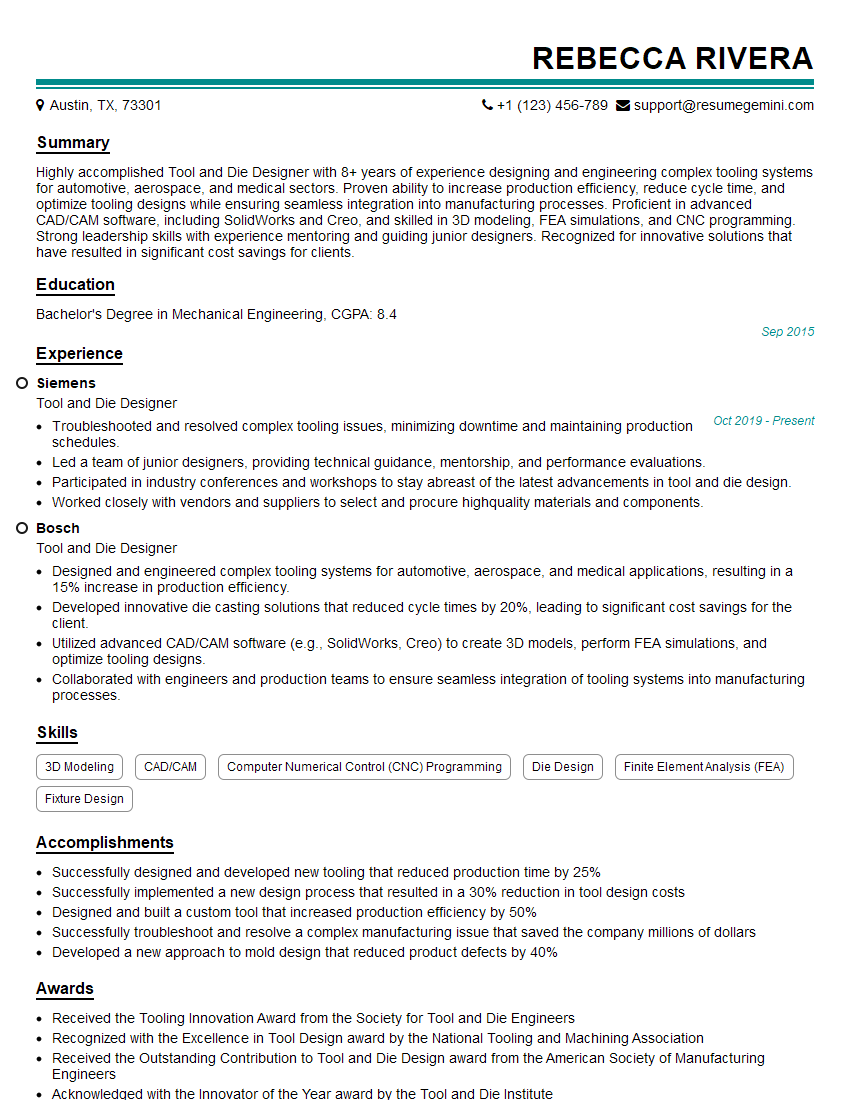
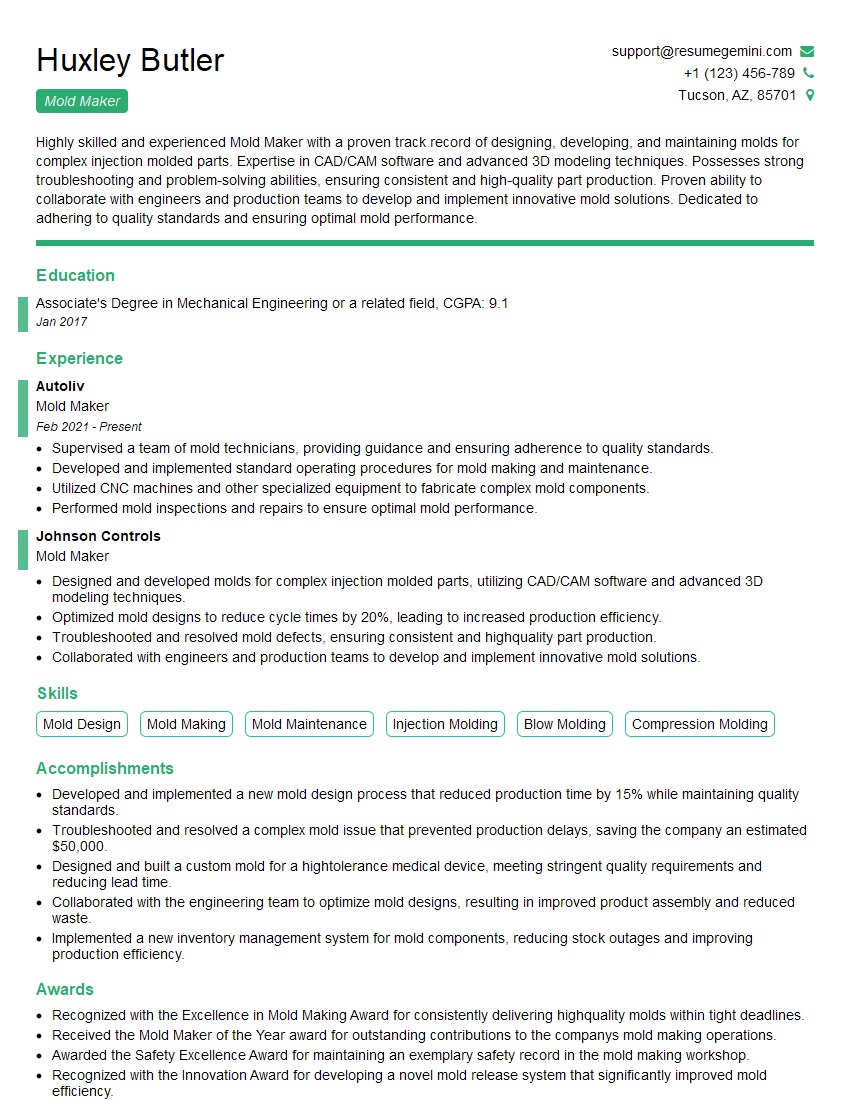
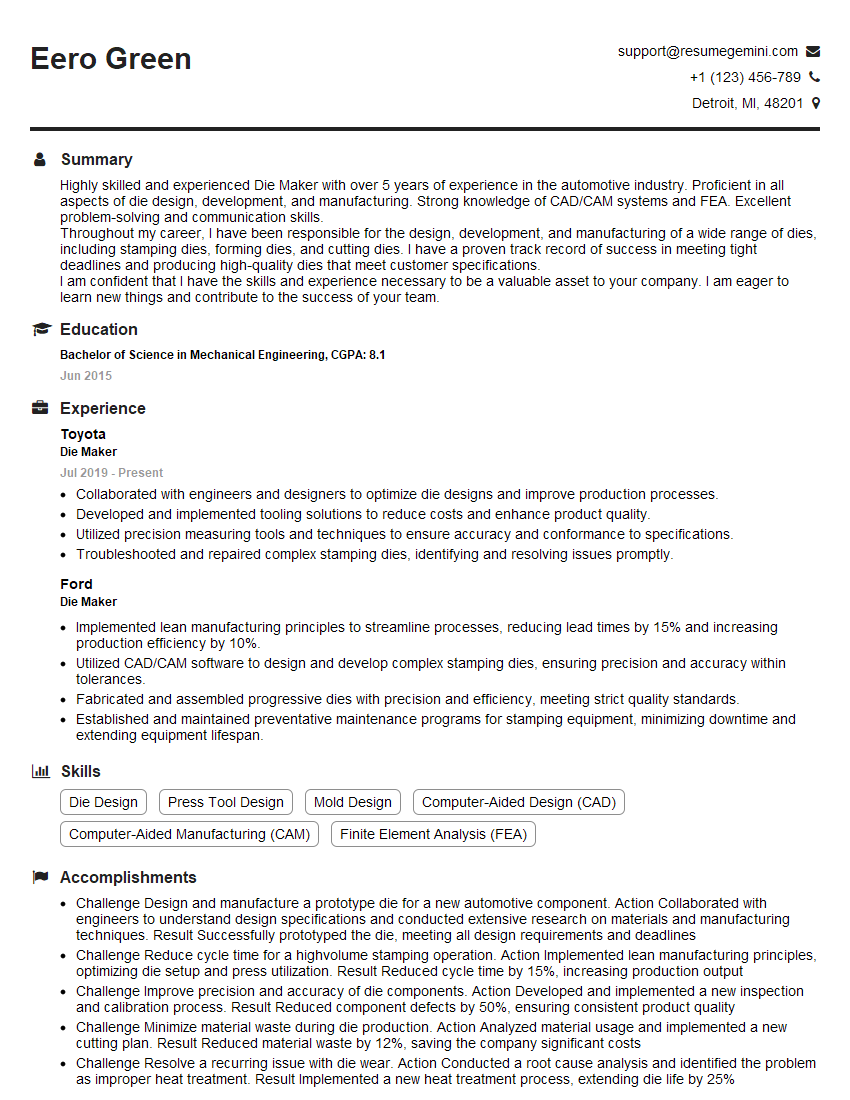
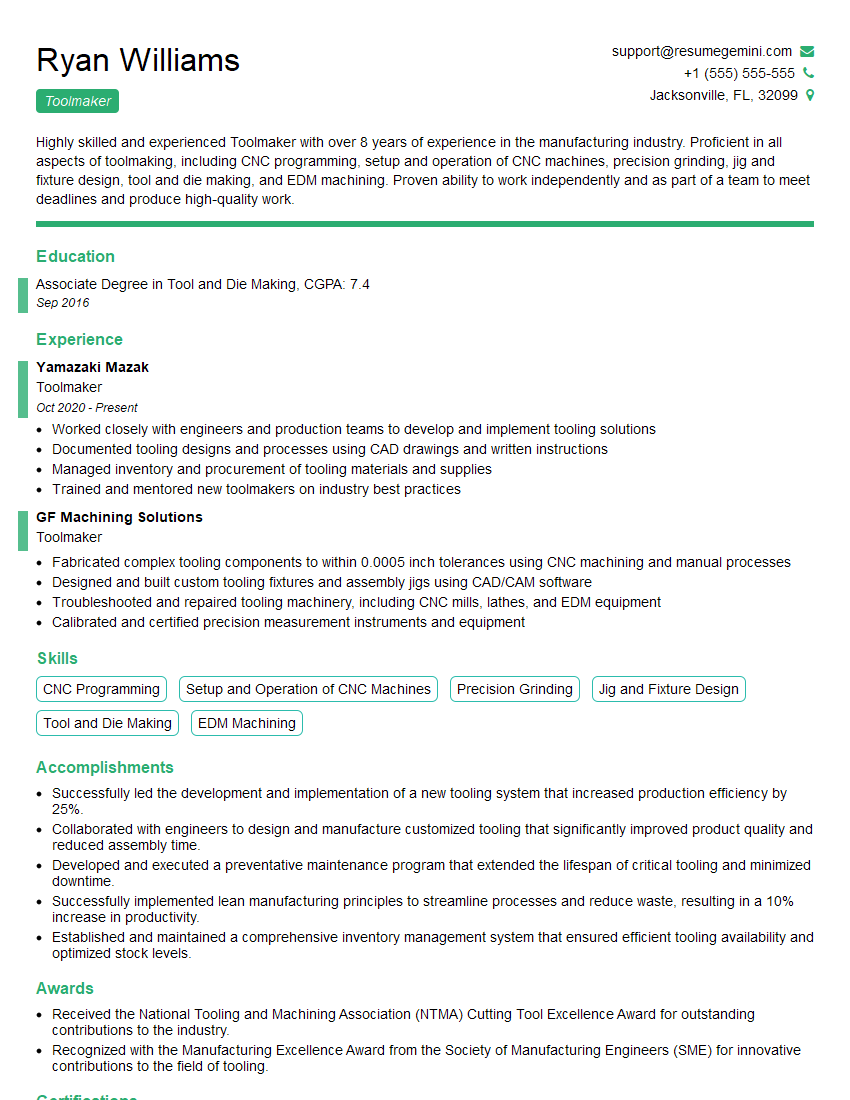
Mastering Toolroom Experience is crucial for career advancement in manufacturing and engineering. A strong understanding of these skills demonstrates your capabilities and increases your marketability. To maximize your job prospects, it’s essential to create an ATS-friendly resume that effectively highlights your skills and experience. We strongly encourage you to utilize ResumeGemini, a trusted resource for building professional resumes. Examples of resumes tailored to Toolroom Experience are provided to help you showcase your expertise effectively. Invest time in crafting a compelling resume—it’s your first impression on potential employers.
Explore more articles
Users Rating of Our Blogs
Share Your Experience
We value your feedback! Please rate our content and share your thoughts (optional).
What Readers Say About Our Blog
To the interviewgemini.com Webmaster.
Very helpful and content specific questions to help prepare me for my interview!
Thank you
To the interviewgemini.com Webmaster.
This was kind of a unique content I found around the specialized skills. Very helpful questions and good detailed answers.
Very Helpful blog, thank you Interviewgemini team.