Feeling uncertain about what to expect in your upcoming interview? We’ve got you covered! This blog highlights the most important Tractor and Implement Maintenance interview questions and provides actionable advice to help you stand out as the ideal candidate. Let’s pave the way for your success.
Questions Asked in Tractor and Implement Maintenance Interview
Q 1. Describe your experience diagnosing and repairing diesel engine problems in agricultural machinery.
Diagnosing diesel engine problems requires a systematic approach. I begin by listening for unusual noises – knocking, rattling, or unusual whistling – which can pinpoint issues like worn bearings, damaged injectors, or air leaks. Next, I check vital signs: engine oil pressure, coolant temperature, and fuel delivery. Low oil pressure suggests a failing pump or worn bearings; high coolant temperature points towards a faulty thermostat, radiator issues, or a failing water pump. Analyzing the exhaust smoke (black, blue, or white) helps diagnose fuel-air mixture problems, worn piston rings, or a blown head gasket. Using diagnostic tools like a compression tester to measure cylinder pressure, and a fuel pressure gauge to check injector performance, are crucial for accurate diagnosis. For example, I once diagnosed a low compression issue in a John Deere tractor that resulted from a cracked cylinder head, which we successfully repaired by replacing the head and performing a thorough head gasket replacement. I then always check fuel filters for blockages, ensuring proper fuel flow to the injectors. This entire process helps pinpoint the root cause, leading to effective repair strategies tailored to the specific problem.
Q 2. Explain the process of troubleshooting a hydraulic system malfunction on a tractor.
Troubleshooting hydraulic malfunctions starts with a visual inspection for leaks. Even small leaks can point towards a failing seal or hose. Next, I check the hydraulic fluid level and its condition – milky fluid often indicates water contamination. I then move on to functionality testing. I check the responsiveness of the hydraulic actuators (cylinders and motors) by operating each function separately. Slow or sluggish response suggests insufficient fluid flow – potentially caused by a blocked filter, a faulty pump, or issues within the valve block. Testing the hydraulic pressure using a pressure gauge is essential. Low pressure usually indicates problems with the pump or relief valves. High pressure can mean issues with the control valves. I often use a hydraulic schematic to trace the flow paths and identify potential problems. I remember one instance where a seemingly simple problem of a non-responsive three-point hitch was traced to a faulty control valve solenoid, a relatively inexpensive and quick fix.
Q 3. What are the common causes of overheating in agricultural tractors, and how do you address them?
Overheating in tractors is often due to coolant system problems. A low coolant level due to leaks, a faulty radiator (clogged fins or leaks), a malfunctioning thermostat (stuck closed), or a failing water pump are common culprits. Other factors include a faulty fan clutch (inadequate cooling airflow) and issues with the engine itself, such as a failing head gasket causing coolant leakage into the cylinders. Addressing overheating requires a methodical approach. First, check the coolant level and inspect for leaks. Then, test the radiator for proper flow by observing the flow of coolant as the engine runs. If the radiator fans aren’t running when the engine is hot, inspect the fan clutch or electrical connections. A thorough check of the thermostat and water pump follows. Finally, a pressure test on the cooling system can identify leaks not readily apparent by visual inspection. Addressing these issues often involves replacing faulty components; preventative measures include regular coolant flushes and checking the cooling system regularly for leaks and obstructions.
Q 4. How do you maintain and repair tractor electrical systems, including wiring harnesses and sensors?
Maintaining and repairing tractor electrical systems requires a combination of troubleshooting skills and electrical knowledge. I start by visually inspecting the wiring harnesses for damage, frayed wires, or loose connections. A multimeter is invaluable for testing voltage, current, and continuity. Identifying faulty sensors involves using diagnostic equipment specific to the tractor model to read sensor data. For example, a malfunctioning speed sensor can result in poor transmission performance, while a problematic PTO (power take-off) sensor could lead to issues engaging implements. I’ve often encountered issues with corrosion in connectors, especially in environments with high humidity. A systematic approach is crucial: tracing the circuit from the power source to the component, using a wiring diagram is essential. For repairs, I use the correct gauge wiring, proper crimping tools, and sealed connectors to ensure a reliable connection. It’s also critical to follow manufacturer’s specifications for replacement parts to ensure compatibility and safety.
Q 5. What are your troubleshooting skills for identifying and resolving issues with tractor transmissions?
Troubleshooting transmission problems requires a systematic approach and often involves listening for unusual noises (whining, grinding, or clunking). These can indicate problems like worn gears, low fluid levels, damaged bearings, or clutch issues. I begin with a visual inspection of the transmission for leaks. I then check the transmission fluid level and condition. Low fluid, discolored fluid (dark or burnt), or metal particles in the fluid are indicative of significant issues. Testing the transmission functionality under load is important. Difficulty shifting gears, slipping gears, or a complete lack of power transfer all point towards specific problems. I use diagnostic tools specific to the tractor’s transmission to read error codes and determine internal problems. I once found that a slow response in a tractor’s transmission was due to a worn clutch pack which required rebuilding the transmission. Understanding the transmission’s hydraulic control system is often key for diagnosing the root cause of a transmission fault.
Q 6. Describe your experience with maintaining and repairing various agricultural implements (e.g., plows, planters, harvesters).
My experience with agricultural implements spans a wide range, including plows, planters, harvesters, and balers. Maintenance and repair vary greatly depending on the implement. Plows require attention to the share, moldboard, and other wear parts; regular sharpening and replacement are essential. Planters need careful inspection of seed metering mechanisms, fertilizer distribution systems, and seed tubes, often requiring careful calibration and adjustment. Harvesters (combines) involve a complex array of moving parts—from the cutting mechanism to the threshing and cleaning systems. Maintenance involves checking belts, chains, cutting knives, and ensuring that all threshing components are in good working order. For balers, attention is needed to the pickup, needles, and twine mechanisms. Preventative maintenance, including cleaning and lubrication, is crucial. Troubleshooting involves diagnosing issues such as poor seed placement, improper fertilizer distribution, or inefficient harvesting. This necessitates a thorough understanding of the implement’s operating principles and mechanics. For instance, a recent repair on a planter involved replacing a broken seed metering wheel, improving planting accuracy significantly.
Q 7. How familiar are you with preventative maintenance schedules for agricultural equipment?
I am very familiar with preventative maintenance schedules for agricultural equipment. These schedules vary based on the make, model, and operating conditions of the machine but generally involve regular inspections, lubrication, and fluid changes. A typical schedule includes daily checks (e.g., fluid levels, tire pressure, visual inspection for damage), weekly lubrication of moving parts, and regular fluid changes (engine oil, transmission oil, hydraulic fluid). More extensive maintenance tasks, such as filter replacements, component inspections, and adjustments, are scheduled at longer intervals (monthly, annually, or seasonally). Following a manufacturer’s recommended preventative maintenance schedule is key to extending the life of the equipment, minimizing downtime, and improving safety. Detailed records of all maintenance activities are essential for tracking repairs and predicting potential future issues. Preventative maintenance is not just about cost savings; it is a vital component of ensuring operational readiness during critical periods like planting and harvest seasons.
Q 8. Explain your understanding of safety procedures when working with agricultural machinery.
Safety is paramount when working with agricultural machinery. It’s not just about following rules; it’s about developing a safety-first mindset. This begins with a thorough pre-operation inspection of the machine, checking for any leaks, loose parts, or damaged components. Think of it like a pre-flight checklist for a plane – crucial for safe operation.
- Personal Protective Equipment (PPE): Always wear appropriate PPE, including safety glasses, hearing protection, gloves, sturdy boots, and high-visibility clothing. This protects you from flying debris, loud noises, and potential hazards.
- Lockout/Tagout Procedures: Before performing any maintenance or repair, always follow lockout/tagout procedures to isolate power sources (electrical, hydraulic, PTO). This prevents accidental start-ups that could lead to serious injury. Imagine this as ‘turning off the gas’ before working on a gas stove – absolutely essential!
- Awareness of Surroundings: Be constantly aware of your surroundings, paying attention to other equipment, personnel, and obstacles. Agricultural machinery can create blind spots, so operate cautiously and avoid distractions like cell phones.
- Proper Lifting Techniques: Many repairs involve lifting heavy parts. Use proper lifting techniques to avoid back injuries. If a part is too heavy, get assistance.
- Emergency Procedures: Familiarize yourself with emergency procedures and know the location of first-aid kits and emergency contact information.
I’ve personally witnessed a near-miss where a colleague forgot to engage the parking brake before servicing a tractor. Luckily, nobody was hurt, but it reinforced the importance of rigorous adherence to safety protocols.
Q 9. How do you use diagnostic tools and equipment to identify problems in agricultural machinery?
Diagnosing problems in agricultural machinery involves a systematic approach using a combination of diagnostic tools and my experience. I start with visual inspections, looking for obvious signs of damage or leaks. Then, I utilize various diagnostic tools depending on the system in question.
- Multimeters: Used to check voltage, current, and continuity in electrical circuits. For example, a multimeter can help determine if a faulty sensor is causing a problem with the engine’s control system.
- Pressure Gauges: Used to measure hydraulic pressure. Low pressure might indicate a leak, while high pressure could signal a blocked line.
- Scan Tools: Modern tractors often have onboard diagnostic systems (OBD) accessible through scan tools. These tools can read diagnostic trouble codes (DTCs), providing clues to the problem’s location. It’s like a car’s ‘check engine’ light but much more detailed.
- Compression Testers: Used to assess engine cylinder compression. Low compression indicates worn piston rings or valves.
- Leak Detectors: Useful for finding hydraulic and fuel leaks.
For instance, recently, I used a scan tool to diagnose an intermittent engine misfire on a combine harvester. The scan tool identified a faulty injector, which I then replaced, successfully resolving the issue.
Q 10. What is your experience with repairing and maintaining GPS guidance systems on agricultural implements?
I have extensive experience with GPS guidance systems, encompassing both troubleshooting and maintenance. These systems are crucial for precision agriculture, and downtime can significantly impact productivity. My experience includes working with various brands and models of GPS systems, including:
- Troubleshooting Signal Issues: This involves checking antenna connections, signal strength, and potential interference from trees or buildings. Poor GPS signal reception can manifest as inaccurate guidance or complete system failure.
- Calibration and Base Station Setup: I’m proficient in calibrating GPS systems and setting up base stations for improved accuracy. Accurate calibration is essential for optimal performance.
- Software Updates and Upgrades: Keeping the system’s software up-to-date is crucial for bug fixes and access to new features. I have experience downloading and installing software updates.
- Repairing Wiring and Connections: I can identify and repair damaged wires, connectors, and other components within the GPS system.
I once resolved a case where a farmer’s GPS system was consistently giving inaccurate readings. Through methodical troubleshooting, I discovered a loose connection at the antenna, highlighting the importance of regularly checking wiring and connections.
Q 11. How do you handle complex repair situations where multiple systems are malfunctioning?
Tackling complex repair situations involving multiple system malfunctions requires a methodical and systematic approach. It’s like solving a complex puzzle; you need to identify the individual pieces and how they fit together.
- Prioritize Issues: I start by identifying the most critical malfunction that needs immediate attention. For example, a complete hydraulic failure takes precedence over a minor electrical fault.
- Isolate Problems: Systematically test each system to determine the extent of the problem and whether malfunctions are related or independent events. This helps avoid unnecessary repairs.
- Use Diagnostic Tools: Employ diagnostic tools like scan tools, multimeters, and pressure gauges to pinpoint the root cause of each malfunction.
- Consult Manuals and Schematics: Refer to the machine’s service manuals and wiring diagrams to understand the interaction between different systems.
- Document Findings: Maintain detailed records of the diagnostic steps taken, the findings, and the repairs performed. This is crucial for troubleshooting in the future and for communicating with other technicians or the client.
I remember a situation where a tractor experienced both hydraulic and electrical issues. Through careful diagnosis, I determined that a damaged wiring harness was causing both problems. Repairing the harness resolved both issues simultaneously, demonstrating the importance of identifying interconnected problems.
Q 12. Describe your experience with welding and fabrication in relation to agricultural equipment repair.
Welding and fabrication skills are invaluable in agricultural equipment repair. Many repairs require the ability to create custom parts or repair damaged components. My welding experience encompasses:
- MIG Welding: Used for joining various metals, such as steel and aluminum, commonly found in tractor chassis and implements.
- TIG Welding: Provides precise welds for delicate work and joining dissimilar metals. This is crucial for repairing parts requiring high precision and strength.
- Stick Welding: A robust welding method for repairing heavy-duty components in challenging environments.
- Cutting and Shaping Metal: Using cutting torches, plasma cutters, and grinders to prepare metal for welding and fabrication. This ensures a proper fit and finish for welded repairs.
For example, I recently fabricated a custom mounting bracket for a piece of equipment using MIG welding. The original bracket had been severely damaged, and fabricating a replacement saved significant time and cost compared to replacing the entire component.
Q 13. What is your experience with hydraulic fluid analysis and interpretation?
Hydraulic fluid analysis is essential for preventative maintenance. By analyzing the fluid, I can detect potential problems before they lead to costly repairs. The analysis usually involves:
- Visual Inspection: Checking the fluid’s color, clarity, and presence of any contaminants like metal particles or water.
- Particle Count Analysis: Determining the concentration of wear particles in the fluid, which indicates the level of wear and tear within the hydraulic system.
- Viscosity Measurement: Ensuring the fluid’s viscosity is within the manufacturer’s specifications. Incorrect viscosity can affect pump performance and system efficiency.
- Contaminant Analysis: Identifying the presence of water, glycol, or other contaminants that can damage hydraulic components.
A high particle count can indicate wear in the hydraulic pump or other components, allowing for preventative maintenance like filter changes before a major failure occurs. This proactive approach saves time and money in the long run. I once identified a developing problem in a hydraulic system by noticing a significant increase in the particle count during routine fluid analysis, preventing a catastrophic failure.
Q 14. How familiar are you with different types of tractor PTO systems and their maintenance?
Tractor PTO (Power Take-Off) systems are critical for powering implements like mowers, balers, and tillers. Understanding their maintenance is crucial. Different tractors use various PTO systems, but some common types include:
- 540 RPM PTO: A standard PTO speed for many implements.
- 1000 RPM PTO: Used for high-speed implements requiring faster rotation.
- Ground-Drive PTO: Power is transferred from the tractor’s wheels to the PTO.
- Independent PTO: Allows the PTO to operate independently of the tractor’s transmission.
Maintenance involves regular inspections of the PTO shaft for damage, checking the PTO clutch for proper engagement and disengagement, and lubricating the PTO shaft and components according to the manufacturer’s recommendations. Ignoring PTO maintenance can lead to costly repairs or even accidents involving broken shafts.
I’ve seen firsthand the consequences of neglecting PTO maintenance. A farmer’s PTO shaft sheared because of insufficient lubrication, resulting in considerable downtime and repair costs. This incident highlighted the critical importance of regular inspection and maintenance of the PTO system.
Q 15. Explain your understanding of tire pressure management and its importance for agricultural equipment.
Proper tire pressure is crucial for agricultural equipment. Underinflation leads to increased fuel consumption, reduced traction, uneven tire wear, and potential damage to the tire and rim. Overinflation can result in decreased traction, a harsher ride, and increased risk of tire failure. Think of it like a bicycle tire – too little air and it’s wobbly and inefficient; too much and it’s prone to bursting.
Effective tire pressure management involves regularly checking tire pressure using a reliable gauge, and adjusting it based on the load, terrain, and manufacturer recommendations. For instance, a tractor hauling a heavy load across a field will require higher tire pressure than one lightly loaded on a paved road. Many modern tractors feature tire pressure monitoring systems (TPMS) that provide real-time pressure readings and alerts, significantly improving efficiency and safety.
- Regular Checks: Daily checks are ideal, especially before beginning work.
- Load Considerations: Heavier loads require higher pressures (within the manufacturer’s recommendations).
- Terrain Impact: Softer terrains like muddy fields might necessitate lower pressures for better traction.
- Temperature Effects: Temperature fluctuations affect pressure; account for these changes.
Career Expert Tips:
- Ace those interviews! Prepare effectively by reviewing the Top 50 Most Common Interview Questions on ResumeGemini.
- Navigate your job search with confidence! Explore a wide range of Career Tips on ResumeGemini. Learn about common challenges and recommendations to overcome them.
- Craft the perfect resume! Master the Art of Resume Writing with ResumeGemini’s guide. Showcase your unique qualifications and achievements effectively.
- Don’t miss out on holiday savings! Build your dream resume with ResumeGemini’s ATS optimized templates.
Q 16. Describe your experience with repairing and maintaining different types of agricultural engines (e.g., gasoline, propane, diesel).
My experience spans a wide range of agricultural engines – gasoline, propane, and diesel. I’m proficient in diagnosing and repairing issues across all three, understanding their unique characteristics and maintenance requirements. For example, gasoline engines often require more frequent carburetor cleaning than diesels, while diesel engines necessitate regular fuel filter changes to prevent contamination. Propane engines require careful inspection of fuel lines and regulators for leaks.
I’ve worked extensively on both naturally aspirated and turbocharged engines, troubleshooting issues such as poor starting, low power, excessive smoke, and overheating. This includes diagnosing problems using compression testing, fuel system pressure checks, and engine diagnostics software. I’m comfortable performing major repairs such as overhauling engines, replacing components like pistons, rings, and bearings, and rebuilding fuel injection systems.
One memorable experience involved diagnosing a seemingly intractable starting issue on an older diesel tractor. Through systematic checks, I discovered a faulty glow plug relay, a relatively simple and inexpensive fix that restored the tractor to full functionality, highlighting the importance of methodical troubleshooting.
Q 17. How do you ensure compliance with safety regulations and environmental standards during maintenance procedures?
Safety and environmental compliance are paramount in my work. I meticulously follow all relevant OSHA (Occupational Safety and Health Administration) and EPA (Environmental Protection Agency) guidelines during all maintenance procedures. This includes proper handling and disposal of hazardous materials like used engine oil, antifreeze, and filters. I always use appropriate personal protective equipment (PPE), such as gloves, safety glasses, and respirators, when working with chemicals or potential hazards.
Specific examples include: ensuring proper ventilation when working in enclosed spaces; using spill kits to contain any potential fluid leaks; and adhering to strict procedures for the proper disposal of spent fluids at designated recycling centers. I also maintain detailed records of all maintenance activities, including parts used and waste disposal, for traceability and compliance auditing.
Furthermore, I’m knowledgeable about the regulations governing the handling and disposal of refrigerants used in air conditioning systems on some agricultural machinery. This includes using proper recovery and recycling equipment to prevent harmful emissions.
Q 18. Describe your experience with using computer-aided diagnostics tools for agricultural machinery.
I have extensive experience using computer-aided diagnostic (CAD) tools for agricultural machinery. These tools are invaluable for quickly identifying and resolving complex problems. Many modern tractors and implements employ sophisticated onboard computer systems that provide diagnostic trouble codes (DTCs). I use specialized software and scan tools to read these codes, interpret their meaning, and identify the root cause of the malfunction.
For example, I might use a diagnostic tool to identify a faulty sensor in the engine’s fuel injection system or a problem within the electronic control unit (ECU). These tools often provide detailed data logs and graphs that can be invaluable in understanding the performance of various systems over time, allowing for preventative maintenance. My proficiency extends beyond simple code reading; I can analyze data to interpret the underlying issues, saving time and preventing unnecessary component replacements. I am familiar with different brands of diagnostic software and hardware, and I am continually updating my skills to stay current with advancements in technology.
Q 19. How do you handle emergency repairs in the field?
Emergency repairs in the field require quick thinking, resourcefulness, and a methodical approach. My first priority is always safety – securing the equipment and ensuring the safety of myself and others. I follow a structured approach:
- Assess the Situation: Determine the nature and severity of the problem.
- Immediate Actions: Take any immediate steps to mitigate the situation, such as disconnecting power or preventing further damage.
- Diagnosis: Perform a quick diagnosis to identify the cause of the problem, using whatever tools are available.
- Temporary Fix: If possible, implement a temporary fix to allow the equipment to be moved to a safer location or continue operating until a proper repair can be performed. This might involve using makeshift repairs or replacing a component with a suitable substitute.
- Communication: Communicate the situation to relevant parties, including the farm operator and any necessary repair services.
- Documentation: Document the emergency repair, including actions taken and parts used.
For example, I once repaired a broken hydraulic hose in the field using a temporary repair kit, allowing the harvester to continue operating until a replacement hose could be sourced and installed.
Q 20. Explain your experience with ordering and managing parts for agricultural equipment.
Efficient parts management is critical for minimizing downtime. I utilize a combination of methods to order and manage parts, ensuring the right parts are available when needed. I typically maintain a running inventory of common parts, regularly checking stock levels and replenishing supplies as needed.
For less common or specialized parts, I rely on established supplier relationships and online ordering systems. This involves obtaining quotes from multiple suppliers to compare prices and lead times. I meticulously track part numbers, suppliers, order dates, and costs to maintain accurate records. These records are invaluable for cost tracking, budgeting, and identifying trends in part usage. The software I use helps manage inventory, forecast demand, and generate automated purchase orders, reducing the risk of delays due to part shortages.
Q 21. How do you prioritize maintenance tasks based on urgency and equipment importance?
Prioritizing maintenance tasks involves considering both urgency and equipment importance. I use a combination of factors to determine the order of tasks:
- Criticality: Tasks that affect the safety or operability of critical equipment are prioritized. A faulty brake system on a tractor, for example, takes precedence over a minor cosmetic repair.
- Urgency: Tasks with imminent deadlines or potential for significant downtime are prioritized.
- Impact: The impact of equipment failure on overall productivity and farm operations is considered.
- Preventative vs. Corrective: Preventive maintenance is crucial for preventing major breakdowns and is strategically scheduled. Corrective maintenance addresses existing issues.
- Cost-Benefit Analysis: The cost of the maintenance compared to the potential costs of equipment failure is evaluated.
I often use a computerized maintenance management system (CMMS) to schedule and track maintenance activities, ensuring a proactive and organized approach to equipment upkeep. This software helps manage work orders, track maintenance history, and provide alerts for upcoming maintenance tasks.
Q 22. Describe your experience with working on various brands of agricultural machinery.
Throughout my 15-year career, I’ve gained extensive experience working on a wide range of agricultural machinery, encompassing major brands like John Deere, Case IH, Massey Ferguson, and New Holland. My experience extends beyond routine maintenance; I’ve tackled complex repairs and troubleshooting on diverse models, from compact tractors to large-scale harvesters. I’m familiar with their unique engine systems, hydraulics, and electronic control systems, enabling me to diagnose and resolve issues efficiently. For instance, I recently resolved a recurring hydraulic leak on a John Deere 8430 tractor by identifying a faulty seal in the main hydraulic pump, saving the farm significant downtime and repair costs. This experience has instilled in me a deep understanding of the intricacies of various machinery designs and their corresponding maintenance needs.
Q 23. What is your understanding of different types of lubricants used in agricultural equipment and their applications?
Understanding lubricants is critical in agricultural equipment maintenance, as they’re crucial for protecting moving parts from wear and tear. Different lubricants cater to specific applications and operating conditions. For instance:
- Engine Oils: These are usually multi-grade oils (like 15W-40) designed to handle high temperatures and pressures within the engine. The choice depends on the engine type and manufacturer’s recommendations. Using the wrong viscosity can lead to reduced engine life.
- Gear Oils: These are thicker, designed for heavy loads and gear meshing, commonly used in transmissions and differentials. Hypoid gear oils are often specified for rear axles due to the extreme pressures they endure.
- Hydraulic Oils: These need to be compatible with hydraulic seals and components. They often contain additives to prevent oxidation and wear. The correct viscosity is crucial for optimal system performance.
- Grease: Used for lubricating bearings and other moving parts, offering long-lasting lubrication and protection against contaminants. Different greases have different properties suited to specific operating conditions, such as extreme temperatures or high loads.
Regular oil analysis is crucial to monitor lubricant condition and detect potential engine problems before they become catastrophic. We use these results to guide maintenance schedules and make informed decisions about replacement intervals.
Q 24. How do you stay updated on the latest technology and developments in agricultural equipment maintenance?
Staying current in this rapidly evolving field requires a multi-pronged approach. I actively participate in manufacturer training programs offered by John Deere, Case IH, and other key players. These programs provide hands-on experience with the latest technology and diagnostic tools. I also subscribe to industry publications like Farm Equipment and Progressive Farmer, and I regularly attend industry conferences and workshops to learn about the newest maintenance techniques and technologies. Furthermore, online forums and manufacturer websites offer valuable resources and updates. This ongoing learning allows me to adapt quickly to new machinery and troubleshoot problems efficiently, even on cutting-edge equipment.
Q 25. Explain your experience working independently and as part of a team in a maintenance environment.
My experience encompasses both independent and team-based work. I’m adept at working independently, diagnosing problems, sourcing parts, and completing repairs with minimal supervision. This self-sufficiency is crucial in situations requiring quick turnaround times. However, I equally appreciate the value of teamwork. In larger maintenance projects, I readily collaborate with others, sharing expertise, brainstorming solutions, and ensuring tasks are completed efficiently and safely. My experience in a team setting involves not only mechanical expertise but also strong communication and coordination skills, essential for optimal team dynamics and project success. For example, on a recent large-scale combine repair, I worked with electricians and hydraulic specialists to pinpoint and fix a complex issue involving the header’s electrical system and hydraulic drive.
Q 26. Describe a challenging repair you successfully completed and the steps you took to resolve the issue.
One particularly challenging repair involved a Case IH combine experiencing intermittent power loss. The problem was elusive, as the power loss occurred randomly. My initial diagnostics revealed no obvious electrical faults or fuel system issues. Through systematic troubleshooting, I eventually discovered a faulty sensor in the combine’s advanced electronic control unit (ECU). The sensor was responsible for monitoring engine speed, and its intermittent failure was causing the power loss. This was challenging because the ECU was sophisticated and required specialized diagnostic software. The steps I took were:
- Thorough inspection: I started with a visual inspection, checking all wiring harnesses and connections for damage or loose connections.
- Diagnostic software: Using the manufacturer’s diagnostic software, I systematically scanned the ECU for error codes.
- Sensor testing: I focused on sensors related to engine performance, and identified the faulty speed sensor.
- Part replacement: After ordering the replacement sensor, I carefully replaced it, ensuring proper installation and connection.
- Testing and verification: After replacement, I conducted thorough testing under various operating conditions to verify the repair’s success.
Successfully resolving this issue required patience, systematic troubleshooting, and access to advanced diagnostic tools. It underscored the importance of a thorough understanding of the combine’s electronic systems and diagnostic capabilities.
Q 27. How do you document your work and maintain accurate records of repairs and maintenance?
Accurate record-keeping is paramount for efficient maintenance and troubleshooting. I meticulously document all repairs and maintenance tasks using a combination of digital and physical records. For each repair, I create a detailed work order that includes:
- Date and time of service
- Equipment identification (make, model, serial number)
- Problem description
- Steps taken to diagnose and resolve the issue
- Parts used (part numbers and quantities)
- Labor hours
- Final test results and verification
Digital records are maintained using a computerized maintenance management system (CMMS), allowing for efficient tracking and reporting. I also keep physical records, such as repair invoices and parts receipts, as backup documentation. This comprehensive system allows for easy access to repair history, facilitating proactive maintenance, cost analysis, and improved equipment management. It also ensures accountability and enables me to quickly address recurring issues or track equipment performance over time.
Q 28. What are your salary expectations for this role?
Considering my experience and expertise in agricultural equipment maintenance, my salary expectations are in the range of $75,000 to $90,000 annually. This is based on my comprehensive knowledge of various brands, my proven problem-solving skills, and my commitment to maintaining high standards of efficiency and safety. I am confident that my contributions would significantly benefit your organization.
Key Topics to Learn for Tractor and Implement Maintenance Interview
- Engine Systems: Understanding diesel engine operation, preventative maintenance schedules (oil changes, filter replacements), troubleshooting common engine problems (low compression, fuel delivery issues), and diagnosing engine malfunctions using diagnostic tools.
- Hydraulic Systems: Knowledge of hydraulic components (pumps, valves, cylinders), understanding hydraulic fluid properties and maintenance, troubleshooting hydraulic leaks and malfunctions, and performing basic hydraulic repairs.
- Electrical Systems: Familiarity with tractor electrical systems (wiring diagrams, batteries, alternators, starters), troubleshooting electrical faults, understanding safety precautions related to electrical work, and diagnosing problems using multimeters.
- Transmission and Drivetrain: Understanding different transmission types (manual, automatic, hydrostatic), performing routine maintenance on clutches and differentials, diagnosing drivetrain problems (slipping clutches, gear malfunctions), and knowing how to adjust and repair drivetrain components.
- Implement Maintenance: Knowledge of various agricultural implements (plows, planters, harvesters), understanding their operational principles and maintenance requirements, performing preventative maintenance, and troubleshooting common implement problems.
- Safety Procedures: Thorough understanding of all safety regulations and procedures related to tractor and implement operation and maintenance, including lockout/tagout procedures, personal protective equipment (PPE) usage, and safe handling of hazardous materials.
- Preventive Maintenance Schedules: Ability to create and follow preventative maintenance schedules, understanding the importance of regular inspections and lubrication, and knowing how to record maintenance activities accurately.
- Troubleshooting and Problem-Solving: Developing systematic approaches to diagnosing and resolving mechanical and electrical problems, using diagnostic tools effectively, and documenting repair procedures.
Next Steps
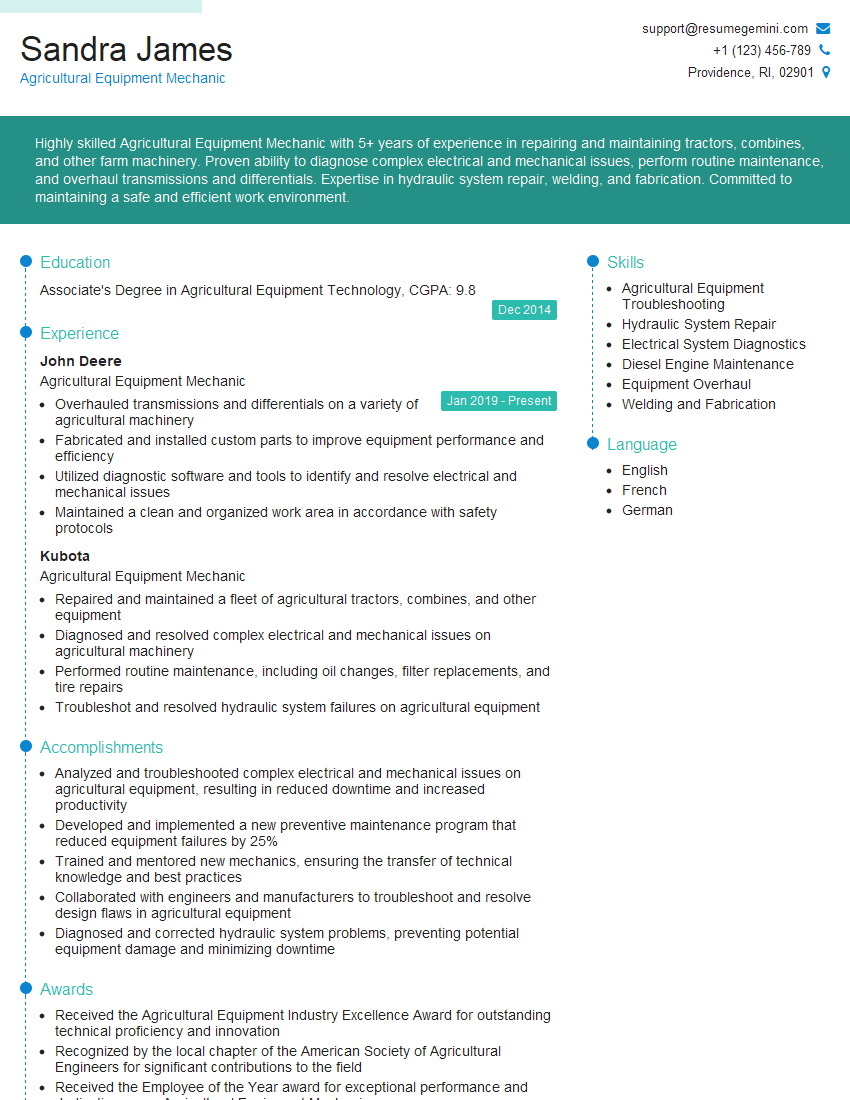
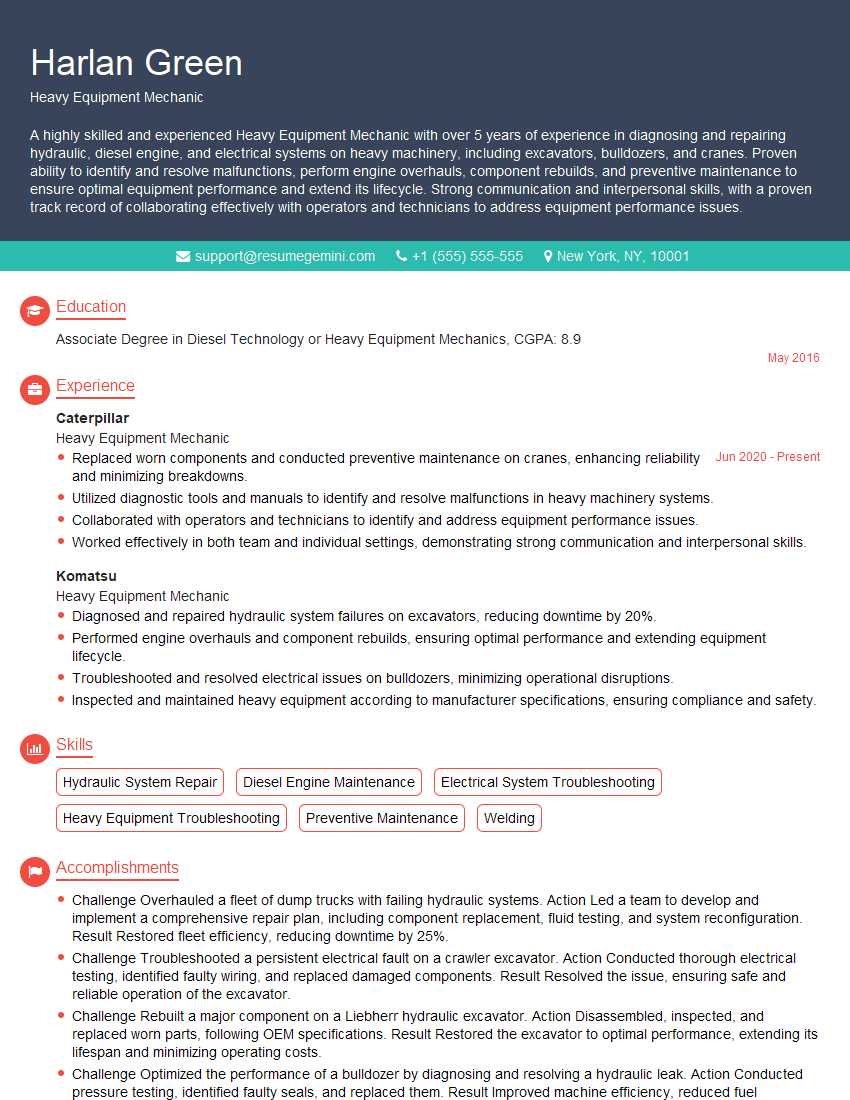
Mastering Tractor and Implement Maintenance is crucial for career advancement in the agricultural sector, opening doors to higher-paying positions and increased responsibilities. A strong resume is your key to unlocking these opportunities. To ensure your qualifications shine, creating an ATS-friendly resume is paramount. ResumeGemini is a trusted resource that can help you build a professional, impactful resume that gets noticed by recruiters. ResumeGemini provides examples of resumes tailored specifically to Tractor and Implement Maintenance, giving you a head start in crafting your winning application.





Explore more articles
Users Rating of Our Blogs
Share Your Experience
We value your feedback! Please rate our content and share your thoughts (optional).
What Readers Say About Our Blog
To the interviewgemini.com Webmaster.
Very helpful and content specific questions to help prepare me for my interview!
Thank you
To the interviewgemini.com Webmaster.
This was kind of a unique content I found around the specialized skills. Very helpful questions and good detailed answers.
Very Helpful blog, thank you Interviewgemini team.