Interviews are opportunities to demonstrate your expertise, and this guide is here to help you shine. Explore the essential Transmission Line Inspection and Fault Analysis interview questions that employers frequently ask, paired with strategies for crafting responses that set you apart from the competition.
Questions Asked in Transmission Line Inspection and Fault Analysis Interview
Q 1. Explain the different methods used for transmission line inspection.
Transmission line inspection employs various methods to assess the condition of lines and identify potential problems. These methods can be broadly categorized into visual inspections, automated inspections, and specialized testing.
- Visual Inspection: This traditional method involves physically inspecting the line using helicopters, drones, or ground patrols. Inspectors look for sagging conductors, damaged insulators, vegetation encroachment, corrosion, and other visible defects. Think of it like a thorough visual check-up for the power line. This method is cost-effective for smaller lines but can be time-consuming and may miss subtle defects.
- Automated Inspections: These methods leverage technology for more efficient and comprehensive inspections. Drones equipped with high-resolution cameras and thermal imaging capabilities can cover vast stretches of line quickly, capturing detailed images and videos. Helicopters with similar equipment provide even greater coverage. Specialized sensors can detect corona discharge, a precursor to insulator failure. This technology dramatically improves the speed and detail of inspections compared to manual methods.
- Specialized Testing: This includes advanced techniques like Partial Discharge (PD) testing, which detects minute electrical discharges in insulators that often precede failure. Ultrasonic testing can evaluate the condition of conductors and other components. These tests provide deeper insights into the health of the line beyond visual observation. Think of these tests as detailed medical scans for the transmission line.
The choice of method depends on factors like line length, terrain, budget, and the level of detail required.
Q 2. Describe the various types of faults that can occur in a transmission line.
Transmission lines can experience various faults, broadly categorized as:
- Phase-to-ground faults: One phase conductor makes contact with the ground, causing a current to flow to the earth. This is the most common type of fault. Imagine a tree branch falling and touching a power line.
- Phase-to-phase faults: Two phase conductors come into contact, creating a short circuit between them. This might happen due to strong winds or conductor oscillations.
- Three-phase faults: All three phase conductors make contact, resulting in a complete short circuit. This is a severe fault, often leading to a complete power outage.
- Open conductor faults: A conductor breaks, resulting in an interruption in the power supply. This can be caused by corrosion, overloading, or lightning strikes.
The severity and impact of these faults depend on their location, duration, and the protection system’s response. For example, a phase-to-ground fault close to a substation might have a different impact than one far out in the line.
Q 3. What are the common causes of transmission line failures?
Transmission line failures stem from a variety of causes, including:
- Lightning Strikes: These are a major cause of outages, particularly in areas with frequent thunderstorms. A direct strike can cause significant damage to conductors, insulators, and other equipment.
- Weather Conditions: Strong winds, ice accumulation, and heavy snow can damage lines, causing conductors to sag, break, or short-circuit. Think of the impact of a blizzard on power lines.
- Vegetation Encroachment: Trees and other vegetation growing near lines can cause short circuits or ground faults when they come into contact with conductors.
- Equipment Aging and Degradation: Insulators, conductors, and other components degrade over time due to weathering, corrosion, and electrical stress. This gradual deterioration increases the risk of failure.
- Overloading: Exceeding the rated capacity of the line can lead to overheating and eventual failure of conductors.
- Sabotage and Vandalism: Acts of vandalism or malicious damage can also lead to line failures.
Understanding these causes is crucial for implementing preventative maintenance and improving the reliability of transmission systems.
Q 4. How do you identify and locate faults on a transmission line?
Fault location and identification in transmission lines involve a combination of techniques:
- Protective Relaying: Protective relays monitor the line’s electrical parameters and automatically isolate faulted sections. They provide an indication of the fault’s location and type.
- Fault Indicators: These devices are installed along the line and indicate the occurrence of a fault. They provide a general area but may not pinpoint the precise location.
- Distance Relay Measurements: Distance relays measure the impedance to the fault and provide a more accurate location estimate.
- Power System Simulation Software:Sophisticated software can model the transmission network and analyze fault data to pinpoint the fault location more accurately.
- Line Patrols and Inspections: Following a fault, physical inspections help to verify the fault location and assess the damage.
A combination of these methods ensures precise fault identification and timely repair.
Q 5. Explain the process of fault analysis using protective relaying.
Fault analysis using protective relaying involves a multi-step process:
- Fault Detection: Protective relays continuously monitor voltage, current, and other parameters. When a fault occurs, the relays detect abnormal conditions.
- Fault Classification: The relays determine the type of fault (phase-to-ground, phase-to-phase, etc.) based on the measured parameters. This is often done using sophisticated algorithms.
- Fault Location Estimation: Distance relays, for example, estimate the fault’s distance from the relay location using impedance measurements. Other types of relays might utilize different algorithms.
- Protective Action: Based on the detected fault type and location, the relays initiate protective actions such as circuit breakers tripping to isolate the faulted section. This prevents further damage and minimizes the impact of the fault.
- Post-Fault Analysis: After the fault is cleared, relay data is reviewed to analyze the fault’s characteristics, verify the correct operation of the protection system, and identify areas for potential improvements.
This process ensures rapid fault clearance and minimizes the disruption to power supply.
Q 6. What are the different types of protective relays used in transmission systems?
Transmission systems utilize various types of protective relays, each with specific functions:
- Distance Relays: Measure the impedance to the fault to estimate its location. They are crucial for protecting long transmission lines.
- Overcurrent Relays: Detect excessive current flow, indicating a fault. They provide fast protection but might be less accurate in locating the fault.
- Differential Relays: Compare currents entering and leaving a protected zone. Any difference indicates a fault within that zone.
- Pilot Relays: Use communication channels to exchange information between relays at both ends of a line. They offer highly sensitive and selective protection.
- Ground Fault Relays: Detect ground faults, specifically those involving one or more phases making contact with earth.
The choice of relay type depends on the specific application and the characteristics of the protected equipment.
Q 7. Describe the function of a distance relay.
A distance relay measures the impedance between the relay location and the fault point. It uses this measurement to determine the distance to the fault along the transmission line. Imagine it as a sophisticated ‘electrical ruler’ measuring the fault’s distance.
This measurement is typically based on the ratio of voltage and current at the relay location. Different types of distance relays use different algorithms to calculate the impedance. For instance, some relays measure impedance using the ratio of the voltage and current phasors, while others may use other more sophisticated methods.
The distance measured by the relay is compared to pre-set zones. If the fault falls within a defined zone, the relay initiates tripping of the circuit breakers to isolate the faulted section. The zones are set to ensure that the relay operates only for faults within its protection zone and avoids unnecessary tripping. This precise measurement helps in quickly isolating the fault, minimizing the affected area, and enhancing the overall system reliability.
Q 8. Explain the principle of impedance measurement in fault location.
Impedance measurement is a fundamental technique in fault location on transmission lines. It relies on the principle that a fault on a line changes its overall impedance. By measuring the impedance at one end of the line, and knowing the line’s characteristics (like its length and impedance per unit length), we can calculate the distance to the fault. Imagine it like finding a blockage in a water pipe – the pressure drop (analogous to impedance change) tells you how far down the blockage is.
The process typically involves injecting a known current into the line and measuring the resulting voltage. The ratio of voltage to current gives the impedance. Different techniques exist, such as the ‘single-ended’ method (measuring from one end) or ‘double-ended’ method (measuring from both ends), each with its advantages and disadvantages in terms of accuracy and required equipment.
For instance, a simple calculation using the single-ended method involves:
- Measuring the impedance (Zfault) at the substation.
- Knowing the characteristic impedance (Z0) of the line.
- Calculating the distance to the fault (d) using the formula: d = (Zfault – Z0) / Z’, where Z’ is the impedance per unit length of the line.
Sophisticated algorithms and software are often used to refine these calculations, compensating for factors like line configuration and frequency effects. These methods offer high accuracy but might need specialized equipment and data.
Q 9. What are the limitations of different fault location techniques?
Various fault location techniques have their limitations. For example, the impedance-based methods mentioned earlier are susceptible to errors due to inaccurate knowledge of line parameters (like the impedance per unit length), and can be affected by distributed capacitance, especially on long lines. They also struggle with faults close to the source or terminal ends of the line.
Traveling wave methods, which analyze the speed of the wave generated by the fault, are often limited by the quality of the fault recording system and the presence of reflections in the line. These reflections can distort the wave patterns making accurate fault location difficult. Moreover, these methods are very sensitive to the accuracy of time synchronization at different points of the transmission line.
Other methods, like those using artificial intelligence (AI), are still under development and refinement. While they hold promise for improved accuracy, they might still be dependent on the quality and quantity of training data, which limits their broad applicability currently. Each technique needs to be carefully chosen based on line characteristics, fault type, and available resources.
Q 10. How do you interpret fault waveforms?
Interpreting fault waveforms involves understanding the characteristic signatures associated with different types of faults (phase-to-ground, phase-to-phase, three-phase). Oscilloscopes are crucial for recording these waveforms. A typical three-phase fault will show a significant drop in voltage in all three phases accompanied by high fault currents. A phase-to-ground fault might involve a large current in the faulted phase, and smaller currents in the other phases depending on the system’s grounding configuration.
The steepness of the voltage collapse and the shape of the current waveform provide valuable information. A sudden, steep drop indicates a sudden fault, while a gradual change might suggest a developing fault. Furthermore, the frequency components in the waveform can help distinguish between different fault types. The presence of high-frequency components, for instance, might indicate arcing or insulator flashover.
Specialized software packages are widely used to analyze the waveforms and extract key parameters like the fault’s inception time and magnitude. These parameters are vital for selecting the appropriate fault location technique and assessing the impact of the fault.
Q 11. Describe different types of transmission line insulators and their failure modes.
Transmission line insulators are critical for isolating conductors from the tower and ground. Several types exist, each with specific strengths and weaknesses:
- Pin insulators: These are the simplest type, using a single insulator unit fixed on a pin. They are susceptible to flashover under high voltage stress and prone to damage due to insulator cracks.
- Suspension insulators: These are more robust and are used for high voltage lines. Multiple insulator units are strung together, providing enhanced insulation. Their failure modes include puncture, flashover, and damage to the cement or porcelain, often exacerbated by environmental factors.
- Strain insulators: Used at line angles to withstand mechanical tension. The failure modes are similar to suspension insulators, however, with high impact, these insulators are prone to structural cracks and fractures.
- Polymer insulators: These are increasingly popular due to their higher strength-to-weight ratio and hydrophobic properties. However, their long-term performance and aging characteristics are still being closely monitored, as they can be vulnerable to UV degradation, causing cracks and subsequent flashover.
In general, insulator failure often leads to ground faults, causing disruptions and potential safety hazards.
Q 12. What is the significance of corona effect on transmission lines?
The corona effect is a partial discharge phenomenon that occurs on high voltage transmission lines when the electric field around the conductor exceeds the air’s dielectric strength. This causes ionization of the air molecules surrounding the conductor, leading to a faint glow, hissing sound, and power loss.
The significance of the corona effect is multifaceted:
- Power loss: Corona discharges result in energy losses, reducing the transmission line’s efficiency.
- Radio interference: The corona discharges generate radio noise, which can interfere with radio and television signals.
- Ozone generation: Corona effects produce ozone, a harmful gas that can cause environmental damage and insulator degradation.
- Conductor erosion: Over time, the continuous discharge can erode the conductor surface.
Mitigating the corona effect involves using conductors with larger diameters or employing corona rings to reduce the electric field gradient around the conductor.
Q 13. Explain the importance of regular maintenance in preventing transmission line faults.
Regular maintenance is paramount in preventing transmission line faults. It involves a combination of visual inspections, testing, and preventive measures that aim to identify and rectify potential issues before they lead to failures.
The importance of regular maintenance stems from:
- Early detection of faults: Inspections can identify weak insulators, damaged conductors, or vegetation encroachment early on, allowing for timely repairs.
- Prevention of cascading failures: Addressing minor problems before they escalate prevents larger-scale outages.
- Improved system reliability: Routine maintenance enhances the overall reliability and availability of the transmission system, ensuring consistent power supply.
- Cost savings: Preventing major failures through proactive maintenance is far more cost-effective than dealing with large-scale outages.
Maintenance schedules should be tailored to line characteristics, environmental conditions, and historical fault data. This approach enhances the grid’s resilience and helps prevent costly disruptions.
Q 14. What safety measures are essential during transmission line inspection and repair?
Safety is paramount during transmission line inspection and repair. The high voltages involved necessitate strict adherence to safety procedures. Essential measures include:
- Lockout/Tagout procedures: Ensuring the line is completely de-energized before any work commences is critical. Lockout/Tagout procedures guarantee that the line will remain de-energized throughout the maintenance process.
- Personal Protective Equipment (PPE): This includes insulated gloves, safety helmets, arc flash suits, and safety harnesses. Specific PPE is vital to minimize risk.
- Grounding: Thorough grounding of the line and equipment is essential to prevent accidental energization. This step ensures a path for fault currents, preventing injury to workers.
- Trained personnel: Only qualified and trained personnel should undertake such work. Their expertise ensures proper adherence to safety protocols and reduces the chances of human error.
- Emergency response plan: A well-defined emergency response plan is crucial to manage unforeseen situations and minimize the consequences of accidents.
Regular safety training and audits are vital to maintain a safe work environment. Safety should not be compromised, and all measures should be meticulously followed.
Q 15. How do you assess the condition of transmission line conductors?
Assessing the condition of transmission line conductors involves a multi-faceted approach combining visual inspection, electrical testing, and sometimes, advanced analytical techniques. We look for signs of wear and tear, corrosion, and damage.
- Visual Inspection: This is the first step, often performed from the ground or using aerial platforms like helicopters or drones. We look for broken strands, corrosion, sagging, and any physical damage caused by weather, wildlife, or other external factors. For example, a noticeable sag could indicate a conductor is overheating or experiencing significant mechanical stress.
- Electrical Testing: This is crucial for detecting internal flaws not visible to the naked eye. Techniques like corona testing can identify partial discharges that weaken the conductor’s insulation. Resistance measurements help determine whether there’s a significant increase in resistance due to corrosion or damage which causes increased power loss.
- Advanced Techniques: For critical lines or where more detailed information is required, advanced methods are employed. These could include ultrasonic testing to detect internal flaws or thermography to identify hotspots indicative of high resistance connections or overheating.
By carefully combining these methods, we build a comprehensive picture of the conductor’s condition and predict its remaining useful life, helping to prevent outages and maintain the integrity of the power grid.
Career Expert Tips:
- Ace those interviews! Prepare effectively by reviewing the Top 50 Most Common Interview Questions on ResumeGemini.
- Navigate your job search with confidence! Explore a wide range of Career Tips on ResumeGemini. Learn about common challenges and recommendations to overcome them.
- Craft the perfect resume! Master the Art of Resume Writing with ResumeGemini’s guide. Showcase your unique qualifications and achievements effectively.
- Don’t miss out on holiday savings! Build your dream resume with ResumeGemini’s ATS optimized templates.
Q 16. Describe the use of thermal imaging in transmission line inspection.
Thermal imaging, also known as infrared thermography, is a powerful non-destructive testing technique used extensively in transmission line inspection. It uses a thermal camera to detect variations in temperature, which can reveal potential problems that are invisible to the naked eye.
For instance, a faulty connection in a splice or a connector will have a higher resistance than a good connection, which causes excessive heat. This heat signature is picked up by the thermal camera, giving us a clear indication of the problem.
Similarly, overheating conductors can indicate high current flows, potentially caused by overloading or a developing fault. Even corona discharge, where high voltage ionizes the air around the conductor, produces a noticeable temperature increase which can be seen as hot spots.
Thermal imaging allows for quick and efficient inspection, saving time and cost compared to other methods. The data is easily recorded and provides objective evidence for maintenance scheduling and decision-making.
Q 17. Explain the role of GIS in transmission line management.
Geographic Information Systems (GIS) are invaluable tools for managing transmission lines. They provide a visual, spatial representation of the entire power network, including the location of transmission towers, conductors, substations, and other related infrastructure.
GIS allows us to overlay various data layers – such as line schematics, terrain data, vegetation density, and weather information. This helps in efficient planning, risk assessment, and maintenance scheduling. For example, we can easily identify areas prone to vegetation encroachment, facilitating targeted vegetation management programs to prevent outages.
GIS also simplifies the process of visualizing and analyzing various types of data related to a transmission line’s health. For instance, we can combine thermal imaging data with the GIS map to precisely pinpoint the location of a fault based on the coordinates of the hotspot. This streamlined approach enhances decision making, planning, and response time during emergencies.
Q 18. What are the advantages and disadvantages of using drones for transmission line inspection?
Drones, or Unmanned Aerial Vehicles (UAVs), have revolutionized transmission line inspection, offering several significant advantages:
- Improved Accessibility: Drones can easily reach areas inaccessible or difficult to reach by traditional methods, such as remote towers or areas with challenging terrain. This makes inspections safer and more efficient.
- Enhanced Safety: By replacing human inspectors in hazardous locations, drones significantly reduce the risk of accidents and injuries.
- Higher Resolution Imagery: Drones equipped with high-resolution cameras provide detailed images of conductors, insulators, and towers allowing for early detection of minor defects that could escalate into major problems.
- Cost-effectiveness: In the long run, drones can reduce inspection costs by decreasing the need for expensive helicopters and specialized crews.
However, there are also disadvantages:
- Weather Dependency: Drone operations are susceptible to weather conditions. Strong winds, rain, or fog can severely limit their effectiveness.
- Regulatory Restrictions: Regulations governing the use of drones vary across different regions, which can be complex to navigate.
- Limited Flight Time: Drone batteries have a limited flight time, restricting the scope of a single inspection mission.
- Data Processing: Processing the large amounts of data collected by drones requires specialized software and skilled personnel.
Despite these limitations, the advantages of drone technology generally outweigh the drawbacks, making it a valuable tool in modern transmission line inspection.
Q 19. How do you analyze data obtained from transmission line monitoring systems?
Analyzing data from transmission line monitoring systems involves a multi-step process combining data visualization, statistical analysis, and advanced signal processing techniques.
Firstly, the raw data which includes voltage, current, power, frequency, and temperature readings, from various points along the transmission line are collected. Then, this data is cleaned and pre-processed to remove any outliers or noise that might interfere with the analysis.
Next, we use visualization tools to create graphs and charts that allow us to identify trends and patterns in the data. Statistical methods help us analyze these trends. We might look for correlations between different parameters – for example, is there a relationship between current and temperature? If so, a correlation above a certain threshold could point towards a potential overheating problem.
Advanced techniques like machine learning and artificial intelligence (AI) are increasingly used to identify anomalies and predict potential faults. AI algorithms are trained on historical data to learn patterns associated with faults. When new data shows similar patterns, the system can flag potential issues, even before they cause an outage. This proactive approach enables preventative maintenance measures to avoid major disruptions.
Q 20. Explain the concept of power system stability and its relevance to transmission lines.
Power system stability refers to the ability of the power system to maintain its equilibrium after being subjected to a disturbance. Transmission lines play a crucial role in this stability, as they form the backbone of the network, transferring power from generating plants to load centers.
There are two primary types of power system stability:
- Angle stability (rotor angle stability): This concerns the ability of synchronous generators to remain synchronized with each other following a disturbance. Transmission lines, with their reactance, significantly influence the transfer of power between generators and the system’s ability to maintain synchronism. A loss of a transmission line, for instance, can dramatically reduce the power transfer capability and potentially lead to generator instability, causing a blackout.
- Frequency stability: This involves the system’s capacity to maintain its frequency following a disturbance (e.g., a sudden loss of generation). The ability of the transmission network to transmit sufficient power to meet demand is crucial in restoring frequency stability. Transmission line capacity and reactance affect this balance.
Maintaining power system stability is paramount to ensuring reliable electricity supply. It requires careful planning and coordination, with the transmission network playing a pivotal role in ensuring the system’s ability to withstand disturbances and recover quickly to maintain service.
Q 21. Describe the impact of lightning on transmission lines and protection methods.
Lightning strikes pose a significant threat to transmission lines, potentially causing damage to conductors, insulators, and tower structures. Direct strikes can lead to conductor failure, while nearby strikes can induce voltage surges that can damage equipment.
The impact of a lightning strike can range from minor damage such as insulator flashover to catastrophic failures causing widespread outages. The damage mechanism might include melting of conductors, insulator failure, or even structural damage to towers.
Several protection methods are employed to mitigate the risk of lightning damage:
- Lightning arresters: These are crucial components designed to divert lightning currents to ground, protecting the equipment from voltage surges. They are strategically placed along the transmission line and at substations.
- Overhead ground wires (OGWs): Also known as shield wires, OGWs are placed at the top of transmission towers to intercept lightning strikes and conduct the current safely to the ground, preventing it from reaching the conductors.
- Insulator design: Insulators are designed to withstand high voltage surges, though there’s a risk of flashover (breakdown of insulation). Choosing insulators with high withstand voltages reduces the likelihood of damage.
- Proper grounding: Effective grounding of transmission towers and equipment is essential to minimize the duration and intensity of lightning currents flowing through the system.
Implementing a combination of these protection measures minimizes the risk of lightning damage, enhancing the reliability and safety of transmission line operations.
Q 22. What are the different types of grounding systems used for transmission lines?
Transmission line grounding systems are crucial for protecting equipment and personnel from electrical surges and faults. The primary goal is to provide a low-impedance path to earth for fault currents, minimizing voltage rise and preventing damage. Several types exist, each suited to different needs:
- Solid Grounding: This is the most common type, where the neutral point of the transformer is directly connected to the earth through a low-impedance path. This ensures rapid fault current dissipation, but it can lead to higher fault currents.
- Resistance Grounding: Here, a resistor is inserted between the neutral point and the earth. This limits the fault current, reducing stress on equipment, but it can allow higher transient overvoltages.
- Reactance Grounding: A reactor is used instead of a resistor. This offers a compromise between solid grounding and resistance grounding, limiting fault currents while offering better protection against overvoltages. It’s often used in high-voltage systems.
- Peterson Coil Grounding: This system uses a resonant coil to neutralize the capacitive current of the line, thus minimizing the fault current. It’s effective for smaller networks, but requires precise tuning and is less effective for higher fault currents.
The choice of grounding system depends on factors like the system voltage, fault current levels, and the type of equipment being protected. For instance, a large power system might use reactance grounding to balance fault current limitation and overvoltage protection, whereas a smaller distribution system might employ resistance grounding for simpler implementation.
Q 23. How do you determine the appropriate size and type of conductor for a transmission line?
Selecting the right conductor size and type for a transmission line is a critical design decision. It involves a delicate balance between cost, power loss, and voltage drop. Several factors are considered:
- Power Transmission Capacity: Higher power transmission demands larger conductors to reduce resistive losses (I²R losses) and voltage drop along the line. This is calculated using load current, line length, and allowable voltage drop.
- Voltage Level: Higher voltage lines require conductors with better insulation and often larger sizes to handle the increased electrical stress.
- Environmental Conditions: Factors like temperature, wind, and ice loading influence the mechanical strength required of the conductor. In areas with heavy icing, for example, larger conductors or specialized designs may be needed.
- Conductor Material: Common materials include aluminum conductor steel-reinforced (ACSR) for its high conductivity and strength, and aluminum conductor alloy reinforced (ACAR) for increased corrosion resistance. The choice depends on the trade-off between conductivity, strength, and cost.
Engineers use specialized software and calculation methods to determine the appropriate conductor size. These calculations take into account the factors mentioned above to optimize for efficiency and safety. For instance, a long transmission line carrying high power would likely require larger ACSR conductors compared to a shorter, lower-power line.
Q 24. Explain the concept of line sag and its influence on transmission line design.
Line sag refers to the vertical distance between the conductor’s lowest point and its support points (towers). Sag is inevitable due to the weight of the conductor and the effects of temperature changes. The sag significantly influences transmission line design:
- Ground Clearance: Excessive sag can lead to insufficient ground clearance, posing a safety hazard. This must be carefully considered based on terrain and environmental factors.
- Span Length: Sag increases with span length (the distance between towers). Optimizing span length is crucial for managing sag and material costs.
- Conductor Tension: Sag is directly related to conductor tension. High tension reduces sag but can increase stress on conductors and towers, potentially leading to failure. A balance must be achieved.
- Conductor Material and Temperature: Different conductor materials have different sag characteristics. Temperature changes also significantly impact sag. Sag calculations often incorporate temperature correction factors.
Imagine a guitar string: a tighter string (higher tension) has less sag, while a looser string (lower tension) sags more. Similarly, in transmission lines, we carefully control conductor tension and span lengths to maintain sufficient ground clearance while minimizing material costs. Improper sag management can result in conductor failure, safety issues, and operational problems.
Q 25. Describe different types of transmission line towers and their applications.
Transmission line towers are designed to support the conductors and withstand various environmental loads. Different types exist, each suited to specific applications:
- Lattice Towers: These are common for high-voltage transmission lines. They consist of interconnected steel members forming a lattice structure, providing high strength and stability. Sub-types include delta, delta-modified, and suspension towers.
- Self-Supporting Towers: These are designed to carry the weight of the conductors without requiring guy wires or other external support. They are suitable for rugged terrain or areas where guy wires are impractical.
- Suspension Towers: These are designed to support conductors at different levels, often used in areas where changes in elevation or terrain require changes in conductor height.
- Angle Towers: Used at points where the transmission line changes direction, providing the necessary support to change the line’s trajectory.
- Dead-end Towers: These are used at the end points of the transmission line or where a conductor’s termination is required. They provide extra support to withstand higher tensions.
The selection of a tower type depends on factors such as voltage level, terrain, environmental conditions, and the overall line design. For example, a mountainous region might utilize self-supporting towers due to the challenging terrain, while a flat area might use lattice towers for their cost-effectiveness.
Q 26. How do you handle emergency situations during transmission line maintenance?
Emergency situations during transmission line maintenance require a swift and organized response. A well-defined emergency plan is essential:
- Immediate Isolation: The first step is to isolate the affected section of the line by de-energizing it using circuit breakers. This prevents further damage and protects personnel.
- Safety Assessment: A thorough risk assessment is conducted to identify potential hazards, such as energized equipment, damaged conductors, or environmental factors.
- Emergency Personnel Response: Specialized crews equipped with appropriate safety gear respond to address the situation. This might involve line repair, fire suppression, or first aid.
- Communication and Coordination: Clear communication between on-site crews, control centers, and emergency services is crucial for coordinated action and efficient resource allocation.
- Restoration of Service: After the immediate emergency is handled, efforts focus on safely restoring service. This might involve temporary repairs followed by more extensive work later.
A practical example: If a tree falls onto a transmission line, the immediate priority is to de-energize the line. Then, trained personnel assess the damage, clear the debris, and repair the line, ensuring the safety of personnel and the public. Regular training and drills are essential for handling emergencies effectively.
Q 27. Explain the difference between a short circuit and an open circuit fault.
Short circuit and open circuit faults are two common types of faults in transmission lines, each with distinct characteristics:
- Short Circuit Fault: This occurs when an unintended low-impedance path is created between two conductors or between a conductor and ground. It leads to a large fault current flowing through the system, potentially damaging equipment. Short circuits can be caused by insulation failure, lightning strikes, or physical damage to conductors.
- Open Circuit Fault: This occurs when a break in the conductor interrupts the flow of current. This results in a loss of power supply to the affected section of the line. Open circuits are often caused by broken conductors, damaged insulators, or switching equipment malfunctions.
Imagine a water pipe: a short circuit is like a hole in the pipe, allowing water (current) to escape uncontrolled. An open circuit is like a completely broken pipe, stopping the flow of water completely. Fault detection and protection systems are designed to identify and isolate these faults to prevent damage and ensure system stability.
Q 28. What is the role of communication systems in transmission line monitoring and control?
Communication systems play a vital role in modern transmission line monitoring and control. They provide the necessary infrastructure for data acquisition, remote control, and efficient fault management:
- SCADA (Supervisory Control and Data Acquisition): SCADA systems use communication networks to gather data from remote substations and transmission lines. This data, including voltage, current, and temperature readings, allows for real-time monitoring of the system’s health.
- Remote Control and Automation: Communication systems enable remote control of circuit breakers and other switching devices, allowing for rapid response to fault conditions and improved system stability.
- Fault Location and Isolation: Communication systems are crucial for quickly identifying and isolating fault locations, minimizing the impact of outages and enabling faster restoration of service.
- Protection System Communication: Communication networks allow protection relays to coordinate their actions during faults, ensuring accurate and timely tripping of circuit breakers.
For instance, a lightning strike on a transmission line might be detected by sensors. The sensors transmit this information via communication networks to a control center. The control center, based on this information, automatically isolates the affected section, minimizing the impact on the grid. This fast response would be impossible without advanced communication systems.
Key Topics to Learn for Transmission Line Inspection and Fault Analysis Interview
- Transmission Line Components & Design: Understanding conductors, insulators, towers, and grounding systems is fundamental. Consider the impact of different materials and designs on performance and fault susceptibility.
- Inspection Techniques: Familiarize yourself with various inspection methods, including visual inspection, infrared thermography, drone-based inspections, and partial discharge testing. Be prepared to discuss the advantages and limitations of each.
- Fault Types & Mechanisms: Master the classification of faults (e.g., short circuits, open circuits, ground faults) and their underlying causes (e.g., insulator failure, conductor breakage, lightning strikes). Understand how different fault types manifest.
- Fault Location Techniques: Learn about methods used to pinpoint faults along transmission lines, such as distance protection relays, impedance measurements, and traveling wave techniques. Be ready to compare their effectiveness.
- Protective Relaying Systems: Gain a strong understanding of how protective relays operate to detect and isolate faults, minimizing damage and ensuring system stability. Consider different relay types and their applications.
- Data Analysis & Interpretation: Develop skills in interpreting data from various inspection methods and diagnostic tools. Practice analyzing trends and identifying potential problems before they escalate.
- Safety Procedures & Regulations: Demonstrate knowledge of relevant safety protocols and industry regulations pertaining to transmission line work. This is crucial for any role in this field.
- Preventive Maintenance Strategies: Discuss the importance of proactive maintenance in preventing faults and extending the lifespan of transmission lines. Consider different maintenance scheduling approaches.
- Advanced Topics (Optional): Depending on the seniority of the role, you may want to explore topics like power system stability, transient analysis, or advanced diagnostic techniques.
Next Steps
Mastering Transmission Line Inspection and Fault Analysis opens doors to exciting and rewarding careers in the power industry. This specialized knowledge is highly sought after, leading to greater job security and career advancement opportunities. To maximize your job prospects, creating a strong, ATS-friendly resume is crucial. ResumeGemini is a trusted resource to help you build a professional and impactful resume that highlights your skills and experience effectively. Examples of resumes tailored to Transmission Line Inspection and Fault Analysis are available to help guide you.
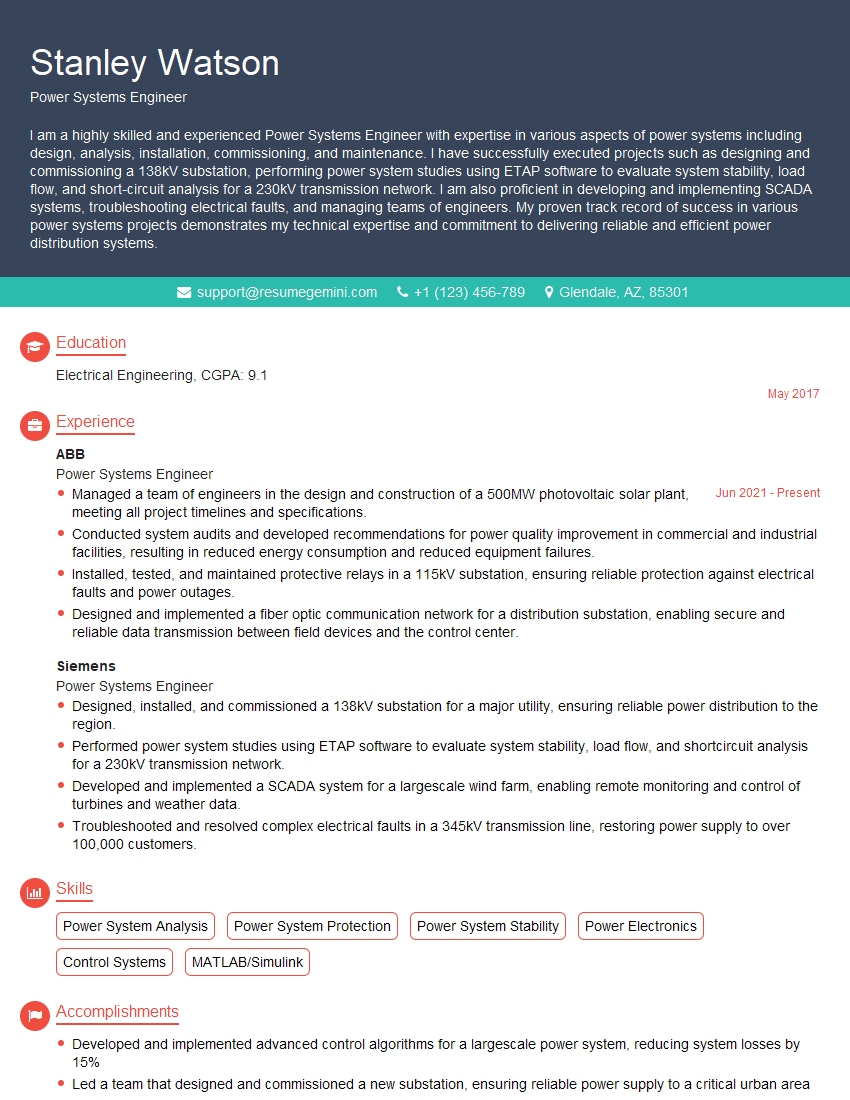
Power Systems Engineer Resume Sample

Protection Engineer Resume Sample
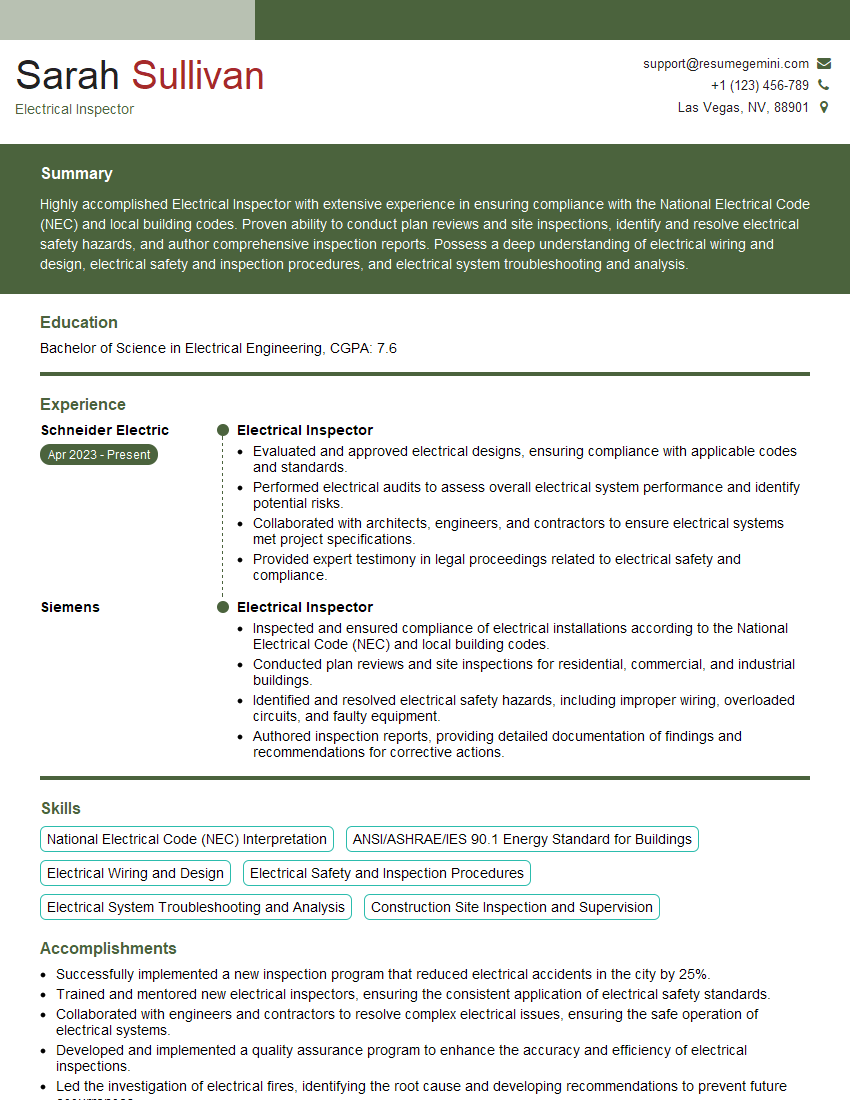
Electrical Inspector Resume Sample
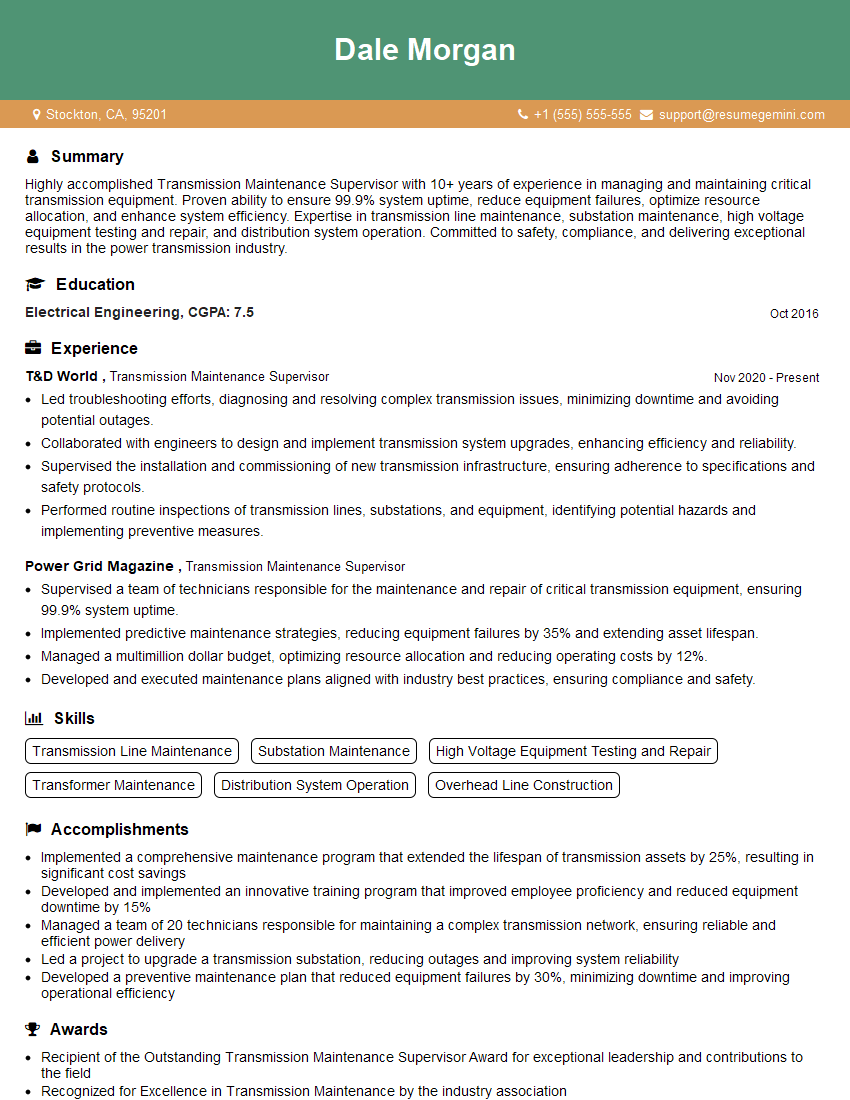
Transmission Maintenance Supervisor Resume Sample

Electrical Maintenance Technician Resume Sample
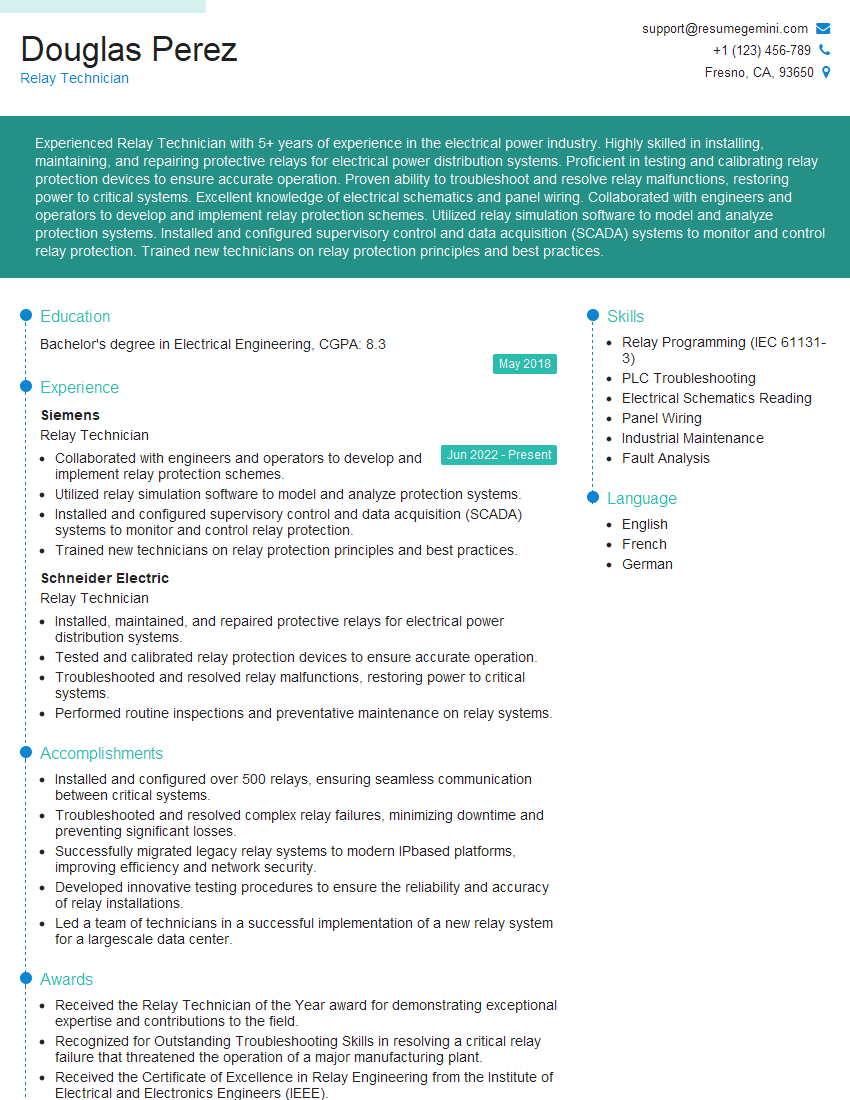
Relay Technician Resume Sample
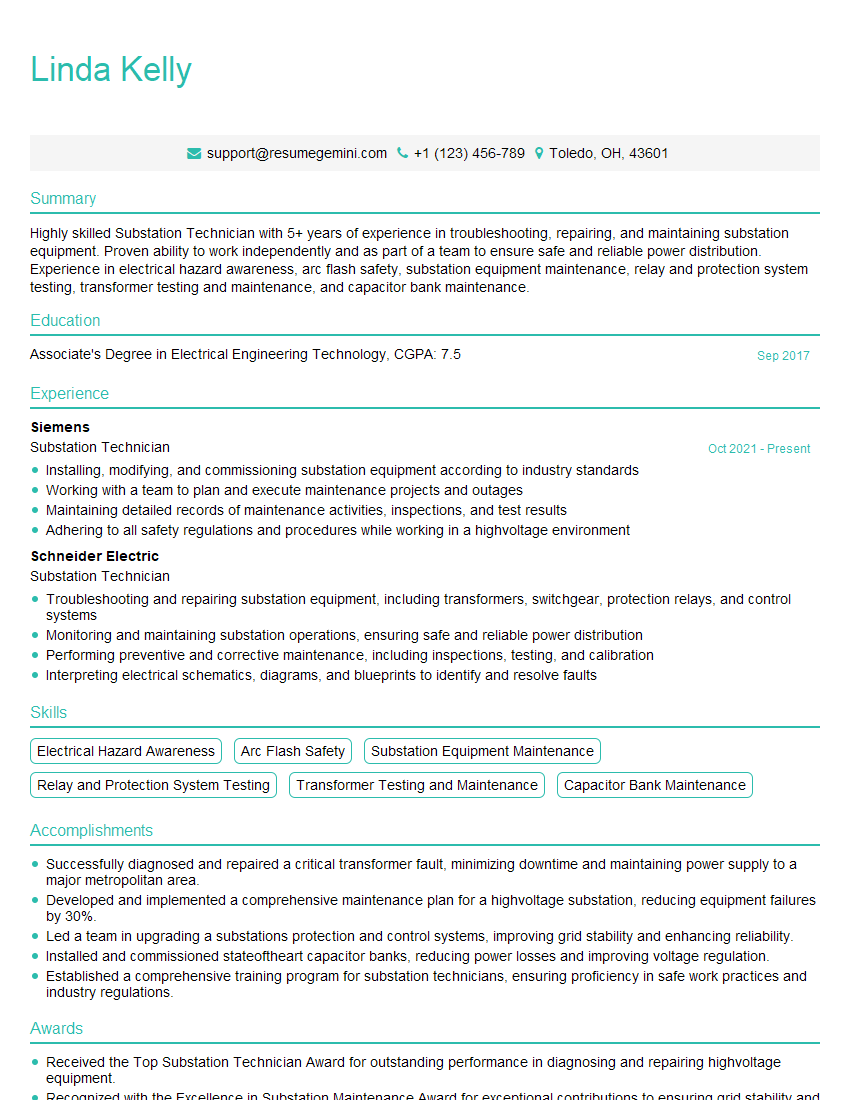
Substation Technician Resume Sample
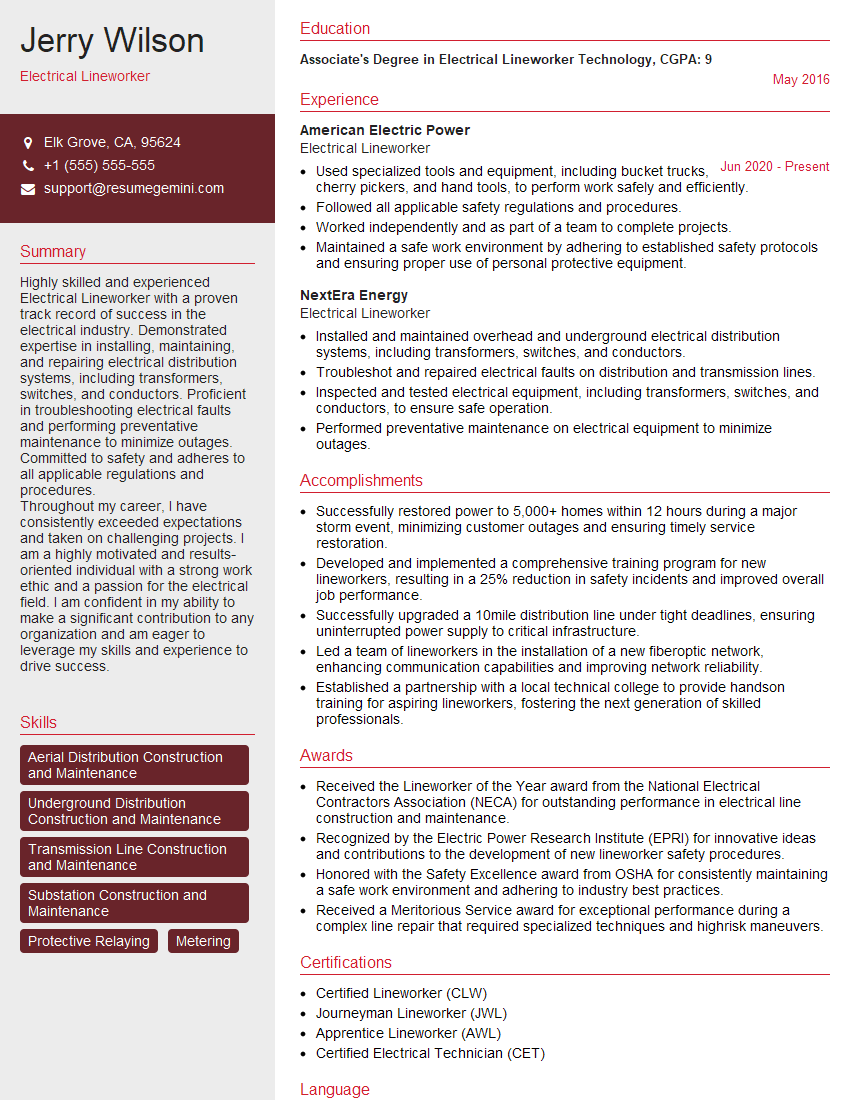
Electrical Lineworker Resume Sample
Explore more articles
Users Rating of Our Blogs
Share Your Experience
We value your feedback! Please rate our content and share your thoughts (optional).
What Readers Say About Our Blog
To the interviewgemini.com Webmaster.
Very helpful and content specific questions to help prepare me for my interview!
Thank you
To the interviewgemini.com Webmaster.
This was kind of a unique content I found around the specialized skills. Very helpful questions and good detailed answers.
Very Helpful blog, thank you Interviewgemini team.