Interviews are more than just a Q&A session—they’re a chance to prove your worth. This blog dives into essential Transmission System Monitoring interview questions and expert tips to help you align your answers with what hiring managers are looking for. Start preparing to shine!
Questions Asked in Transmission System Monitoring Interview
Q 1. Explain the role of SCADA in Transmission System Monitoring.
SCADA, or Supervisory Control and Data Acquisition, is the nervous system of a transmission system. Think of it as the central control room, constantly monitoring and controlling the entire network. It collects real-time data from various points in the transmission system – substations, power lines, transformers – through Remote Terminal Units (RTUs) and intelligent electronic devices (IEDs). This data includes voltage, current, power flow, and equipment status. SCADA then presents this information visually on operator consoles, allowing engineers to monitor the health of the system and take corrective actions. For example, if a line overload is detected, SCADA will alert operators, who can then manually shed load or re-dispatch power to prevent a blackout. Essentially, SCADA provides the visibility and control necessary for safe and efficient grid operation.
Q 2. Describe the different types of protective relays used in transmission systems.
Protective relays are the first line of defense against faults in a transmission system. They are essentially sophisticated microcomputers that continuously monitor line parameters. When a fault condition – like a short circuit or ground fault – is detected, these relays instantly isolate the faulty section of the grid to prevent cascading failures. Different types of relays are designed for various fault conditions:
- Overcurrent Relays: These are the most common, tripping when the current exceeds a preset threshold. They’re like circuit breakers on steroids, protecting lines from excessive current.
- Distance Relays: These measure the impedance to the fault, allowing for faster tripping even in cases where the fault current is low. They’re particularly useful for protecting long transmission lines.
- Differential Relays: These compare currents entering and leaving a protected zone. Any discrepancy signals a fault within that zone. Think of them as comparing inflow and outflow – if there’s a leak, they detect it.
- Pilot Relays: These use communication channels to coordinate tripping between two ends of a transmission line, providing faster fault clearing.
- Ground Fault Relays: These specifically detect faults involving ground connections, crucial for safety and preventing earth-fault currents.
The selection of relays depends on the specific characteristics of the transmission line and the type of faults most likely to occur.
Q 3. What is state estimation and why is it crucial in transmission system operation?
State estimation is a mathematical process that uses real-time measurements from SCADA and other sources to create the most accurate possible representation of the transmission system’s operating state. Think of it as a sophisticated ‘best guess’ of voltage and power flow at every point in the network. This is not a direct measurement but a calculation, refining the data to account for measurement errors and missing data. It’s crucial because having an accurate picture of the system’s state is essential for:
- Security assessment: Identifying potential overloads and voltage violations.
- Optimal power flow (OPF): Efficiently managing power dispatch and minimizing losses.
- Emergency control: Making informed decisions during contingencies.
- Fault location and analysis: Pinpointing the exact location and cause of faults.
Without accurate state estimation, decisions made for grid operation could be incorrect, possibly leading to instability or even blackouts.
Q 4. How does Wide Area Monitoring Systems (WAMS) enhance grid stability?
Wide Area Monitoring Systems (WAMS) provide a holistic view of the entire transmission grid, significantly enhancing grid stability. Unlike traditional SCADA, which is largely localized, WAMS utilizes advanced communication technologies (like Phasor Measurement Units – PMUs) and synchronized measurements across a wide geographical area. This allows for real-time monitoring of system-wide oscillations and dynamic events. WAMS’ enhanced situational awareness enables faster detection of instability, facilitating proactive control actions such as:
- Early warning of instability: Identifying developing oscillations before they escalate into major disturbances.
- Improved control strategies: Implementing more sophisticated control actions based on system-wide information.
- Faster fault response: Enabling quicker fault location and isolation.
- Enhanced situational awareness: Providing operators with a much clearer understanding of the entire power system’s behavior.
Imagine WAMS as a high-resolution radar compared to SCADA’s more localized view; it paints a much broader and more dynamic picture, improving situational awareness and responsiveness to system events.
Q 5. Explain the concept of fault location, isolation, and service restoration (FLISR).
Fault Location, Isolation, and Service Restoration (FLISR) is a critical process for minimizing the impact of faults on power systems. It’s a systematic approach to deal with outages, broken down into three key steps:
- Fault Location: Pinpointing the precise location of the fault using various techniques, including distance relays, impedance measurements, and advanced algorithms.
- Isolation: Quickly disconnecting the faulty section from the rest of the network using protective relays and circuit breakers to prevent the fault from spreading. This is like surgically removing the affected area.
- Service Restoration: Systematically restoring power to affected areas, usually starting with essential services like hospitals and prioritizing load restoration based on pre-defined strategies. This phase involves reclosing circuits, rerouting power, and coordinating the reconnection process.
Effective FLISR minimizes outage duration, improves system reliability, and safeguards grid stability. A well-designed FLISR strategy is crucial for ensuring swift recovery from faults and minimizing disruption to customers.
Q 6. Describe different communication protocols used in transmission system monitoring.
Communication protocols are the backbone of transmission system monitoring, enabling seamless data exchange between various devices and control centers. Several protocols are used, each with its strengths and weaknesses:
- IEC 60870-5-104: A widely used protocol for SCADA systems, known for its reliability and efficiency in handling real-time data.
- IEC 61850: A newer standard designed for intelligent electronic devices (IEDs) in substations, offering improved interoperability and flexibility.
- DNP3: Another popular protocol for SCADA and RTUs, offering good performance and security features.
- Modbus: A simpler protocol, often used for communicating with sensors and actuators, though less robust for large-scale transmission systems.
- Ethernet and IP-based protocols: Increasingly used for their high bandwidth and ability to handle large amounts of data, often integrating with other network technologies.
The choice of protocol depends on factors such as the type of equipment, network topology, and required performance levels.
Q 7. What are the key performance indicators (KPIs) used to assess transmission system health?
Key Performance Indicators (KPIs) are used to assess the health and performance of a transmission system. These metrics provide insights into the system’s reliability, efficiency, and overall performance. Some essential KPIs include:
- System Average Interruption Duration Index (SAIDI): The average duration of interruptions experienced by customers.
- System Average Interruption Frequency Index (SAIFI): The average number of interruptions experienced by customers per year.
- Customer Average Interruption Duration Index (CAIDI): The average duration of an interruption for a single customer.
- Transmission line outage rate: The number of outages per unit of transmission line length.
- Transformer outage rate: The number of transformer outages per unit of transformer capacity.
- Voltage deviation: The difference between actual voltage and nominal voltage.
- Power losses: The amount of power lost during transmission.
Monitoring these KPIs helps identify areas for improvement, optimize grid operations, and enhance system reliability. Regular analysis of KPIs allows for proactive maintenance and upgrades to ensure a robust and efficient transmission system.
Q 8. How do you identify and analyze voltage stability issues in a transmission network?
Identifying and analyzing voltage stability issues in a transmission network is crucial for reliable grid operation. Voltage instability can lead to cascading outages and widespread blackouts. We use a combination of techniques to assess this:
- Power Flow Studies: These studies, using software like PSS/E or PowerWorld Simulator, calculate voltage magnitudes and angles at each bus under various loading conditions. A significant voltage drop at a particular bus, or a low voltage margin, indicates a potential stability problem.
- Voltage Stability Indices: These metrics, such as the L-index or the proximity to voltage collapse, provide quantitative measures of the system’s vulnerability to voltage instability. Lower values indicate higher risk.
- Time-Domain Simulations: These simulations model the dynamic behavior of the system under disturbances, allowing us to see how voltages respond over time. This helps identify weak points and potential instability scenarios.
- Contingency Analysis: This involves simulating the impact of various disturbances (e.g., loss of a generator or transmission line) on the system voltage profile. This helps us understand potential vulnerabilities and prioritize remedial actions.
For example, imagine a large industrial load suddenly switching on. A power flow study might reveal a significant voltage drop at nearby buses. This alerts us to a potential voltage stability issue, prompting further investigation with time-domain simulations to assess the system’s resilience to this type of event.
Q 9. Explain the concept of power flow analysis and its application in transmission system monitoring.
Power flow analysis is the backbone of transmission system monitoring. It’s a mathematical method to determine the flow of real and reactive power throughout the network under steady-state conditions. Think of it as a detailed map of electricity’s journey across the grid.
We use it in various applications:
- Network Planning and Expansion: Power flow studies help determine the optimal placement and sizing of new transmission lines, transformers, and generation units to meet future demand while maintaining voltage stability.
- Operational Planning and Scheduling: Daily or hourly power flow analysis helps optimize generator dispatch, ensuring sufficient power supply while minimizing transmission losses and voltage deviations.
- Fault Analysis: By modeling the system after a fault, we can predict the impact on power flow and identify potential overload situations or voltage collapse scenarios.
- State Estimation: Power flow analysis forms the basis for state estimation, which combines real-time measurements to provide a more accurate picture of the system’s current operating state.
For instance, before commissioning a new wind farm, we perform a power flow study to assess its impact on the existing network, ensuring that voltage limits are respected and the grid can accommodate the increased generation.
Q 10. What are the challenges in integrating renewable energy sources into the transmission grid?
Integrating renewable energy sources (RES) like solar and wind into the transmission grid presents several challenges:
- Intermittency and Variability: RES generation is inherently unpredictable, fluctuating with weather conditions. This poses challenges for maintaining grid stability and frequency control.
- Voltage Fluctuations: The intermittent nature of RES can cause significant voltage fluctuations, potentially exceeding acceptable limits.
- Ramp Rate Limits: The rapid change in generation from RES can exceed the capabilities of conventional generators to respond quickly, potentially leading to instability.
- Reverse Power Flows: RES can inject power back into the grid, causing unexpected power flows and stressing the system’s equipment beyond its rated capacity.
- Increased Short-Circuit Currents: A large concentration of RES may significantly increase short-circuit currents, requiring careful protection coordination.
Addressing these challenges requires advanced control systems, energy storage solutions, and robust grid planning and management techniques. For example, smart inverters are increasingly employed in RES installations to provide voltage support and improve grid integration.
Q 11. Discuss the role of phasor measurement units (PMUs) in enhancing transmission system monitoring.
Phasor Measurement Units (PMUs) are game-changers in transmission system monitoring. These devices provide synchronized measurements of voltage and current phasors at various points in the grid. Their high sampling rate and precise time synchronization, using GPS, provide a much more detailed and accurate picture of the system’s dynamic behavior compared to traditional SCADA systems.
PMUs enhance monitoring by:
- Real-Time System State Estimation: Providing accurate and reliable real-time estimation of system state, enabling faster response to disturbances and improved situational awareness.
- Wide-Area Monitoring and Control: Enabling wide-area visualization of the grid’s dynamics, facilitating early detection of cascading failures and enhancing coordinated control actions.
- Improved Fault Location and Isolation: Precise measurements help pinpoint fault locations more rapidly, enabling faster fault clearing and minimizing outage duration.
- Enhanced Protection Systems: PMU data can be used to improve the speed and accuracy of protection systems, enhancing grid security.
Imagine a large disturbance affecting a wide area. With PMUs, we can observe the disturbance propagation in real-time, understand its impact, and take appropriate control actions to prevent a wider cascading outage – something impossible with conventional systems.
Q 12. Explain the importance of cybersecurity in transmission system monitoring.
Cybersecurity is paramount in transmission system monitoring. The increasing reliance on digital technologies and interconnected systems makes the grid vulnerable to cyberattacks, which can have devastating consequences.
Threats include:
- Data breaches: unauthorized access to sensitive data, compromising grid operations or intellectual property.
- Denial-of-service attacks: Disrupting network connectivity, hindering monitoring capabilities and control functions.
- Malicious control actions: Manipulating control signals to disrupt grid operation or cause physical damage.
Mitigating these risks requires a multi-layered approach:
- Network Security: Implementing firewalls, intrusion detection systems, and other network security measures to protect the system from unauthorized access.
- Data Security: Encrypting sensitive data both in transit and at rest to protect it from unauthorized access and modification.
- Access Control: Implementing strict access control measures to limit access to critical system components based on the principle of least privilege.
- Regular Security Audits: Regularly testing the security of the system to identify and address vulnerabilities.
Protecting the grid’s operational technology (OT) infrastructure from cyber threats is no longer an optional feature but a critical necessity for ensuring reliable and secure electricity service.
Q 13. Describe different types of transmission line faults and their impact on the system.
Transmission line faults significantly impact system stability and reliability. They can range from minor events to catastrophic failures. Common types include:
- Phase-to-ground faults: One phase of the line makes contact with the ground. This is the most frequent type of fault.
- Phase-to-phase faults: Two phases come into contact with each other, leading to a disruption in the power flow.
- Three-phase faults: All three phases are simultaneously shorted, resulting in a complete interruption of power flow. This is a severe event.
- Line-to-line-to-ground faults: Two phases and the ground are simultaneously involved.
The impact of these faults depends on their location, type, and duration. Faults can cause:
- Voltage dips and sags: Affecting connected loads and potentially leading to equipment damage.
- Loss of generation: Protective relays often trip generators to isolate the fault, leading to a temporary reduction in power supply.
- Islanding: A portion of the grid can become electrically isolated from the rest, leading to frequency and voltage instability.
- Cascading outages: If not quickly cleared, faults can trigger a chain reaction, leading to widespread blackouts.
Sophisticated protection systems, including relays and breakers, are essential for detecting and isolating faults quickly, minimizing their impact on the grid.
Q 14. How do you handle data from multiple sources in a transmission system monitoring environment?
Handling data from multiple sources in a transmission system monitoring environment requires a robust and integrated approach. Data typically comes from:
- SCADA (Supervisory Control and Data Acquisition) systems: Provide real-time measurements of voltage, current, power, and other parameters.
- PMUs (Phasor Measurement Units): Offer synchronized phasor measurements with high temporal resolution.
- Energy Management Systems (EMS): Integrate data from various sources for system-wide analysis and control.
- Protection Relays: Provide data on fault events and protective actions.
To handle this diverse data, we rely on:
- Data Acquisition Systems: These systems collect data from various sources, often using communication protocols like IEC 61850 or DNP3.
- Data Historians: Store large volumes of historical data for analysis and trend identification.
- Data Fusion and Integration platforms: Combine and harmonize data from diverse sources, addressing inconsistencies and ensuring data quality.
- Advanced Analytics: Applying machine learning and other advanced analytical methods to identify patterns, anomalies, and potential problems.
A crucial aspect is ensuring data quality and consistency across various sources. Data validation, error detection, and correction mechanisms are essential to avoid inaccurate or misleading information that could lead to wrong operational decisions.
Q 15. What is the difference between real-time and off-line data analysis in transmission system monitoring?
Real-time and off-line data analysis in transmission system monitoring differ primarily in their timing and application. Real-time analysis processes data as it’s acquired from sensors and other monitoring equipment, providing immediate insights into the current state of the transmission system. This is crucial for immediate decision-making, such as identifying and responding to faults or managing system stability. Think of it like a doctor constantly monitoring a patient’s vital signs – immediate action is needed if something goes wrong.
Off-line analysis, on the other hand, involves analyzing historical data, often over longer periods, to identify trends, patterns, and potential weaknesses in the system. This is used for planning, system optimization, and identifying areas for improvement. It’s like conducting a post-mortem after a surgery; analyzing what worked well, what could be improved, and how to prevent similar issues in future operations.
For example, real-time analysis might detect an overload on a specific transmission line, prompting immediate action like load shedding or redispatching generation. Off-line analysis might reveal a recurring overload pattern during peak hours, leading to long-term solutions such as upgrading the line or adding new capacity.
Career Expert Tips:
- Ace those interviews! Prepare effectively by reviewing the Top 50 Most Common Interview Questions on ResumeGemini.
- Navigate your job search with confidence! Explore a wide range of Career Tips on ResumeGemini. Learn about common challenges and recommendations to overcome them.
- Craft the perfect resume! Master the Art of Resume Writing with ResumeGemini’s guide. Showcase your unique qualifications and achievements effectively.
- Don’t miss out on holiday savings! Build your dream resume with ResumeGemini’s ATS optimized templates.
Q 16. Explain the concept of load forecasting and its importance for transmission system operation.
Load forecasting is the process of predicting future electricity demand. It’s paramount for transmission system operation because it allows operators to proactively manage the system and ensure reliable power delivery. Accurate load forecasts enable efficient generation scheduling, optimal power flow, and the prevention of system instability or blackouts.
Imagine a stadium hosting a major sporting event; you wouldn’t want to be caught underprepared. Similarly, without accurate load forecasts, the transmission system might not have enough generating capacity to meet the sudden spike in demand, potentially leading to outages.
Load forecasting utilizes historical data, weather patterns, economic indicators, and even social media trends to create predictive models. These models are constantly refined and updated to improve accuracy. The importance is clear: efficient planning, cost savings through optimized resource utilization, and a stable and reliable power supply for consumers.
Q 17. How do you ensure the accuracy and reliability of data in a transmission system monitoring system?
Ensuring data accuracy and reliability in transmission system monitoring involves a multi-faceted approach. First, data acquisition from sensors and other devices must be accurate and consistent. This involves regular calibration and maintenance of the equipment, using redundant sensors for critical parameters, and implementing robust error detection and correction mechanisms. Think of it like a high-precision weighing scale in a laboratory – regular calibration is crucial.
Second, data transmission and storage must be secure and reliable. This includes using robust communication protocols, implementing data encryption, and utilizing redundant data storage systems. Data integrity checks and validation routines further enhance data quality. If the data is corrupted or lost during transmission, the entire system’s integrity is jeopardized.
Third, data processing and analysis algorithms should be carefully designed and tested to minimize errors and biases. This involves rigorous validation and verification processes, and incorporating quality control checks throughout the entire data pipeline. Regular audits and independent verification of the system’s accuracy are critical.
Q 18. Describe the role of artificial intelligence (AI) and machine learning (ML) in transmission system monitoring.
AI and ML are revolutionizing transmission system monitoring. AI algorithms, particularly deep learning models, can analyze massive datasets to detect anomalies, predict failures, and optimize system operations with greater accuracy and speed than traditional methods.
For instance, ML algorithms can learn to identify patterns indicative of impending equipment failures by analyzing historical data on vibration, temperature, and current readings. Early detection allows for proactive maintenance, preventing costly outages. Similarly, AI can optimize power flow in real-time, reducing transmission losses and enhancing system efficiency.
AI’s ability to handle complex, high-dimensional data makes it ideally suited for the challenges of modern power grids. This includes handling the integration of renewable energy sources, improving situational awareness, and enhancing grid resilience. However, careful validation and verification are necessary to ensure reliable performance and mitigate potential biases within the AI models.
Q 19. How do you address data redundancy and inconsistencies in transmission system monitoring?
Data redundancy and inconsistencies are common challenges in large-scale systems like transmission system monitoring. Addressing these issues requires a combination of strategies.
Data redundancy can be handled through data deduplication techniques, ensuring that only unique data points are stored and processed. This reduces storage costs and improves processing efficiency. Imagine storing thousands of near-identical images; deduplication identifies and keeps only one copy, saving significant space.
Data inconsistencies are tackled using data cleansing and validation techniques. This might involve identifying and correcting errors, resolving conflicts between multiple data sources, and applying data normalization to ensure consistency in units and formats. For example, if some data points are in degrees Celsius and others in Fahrenheit, converting all to a single unit enhances data quality.
A robust data governance framework, including clear data quality standards and validation procedures, is essential for maintaining data integrity and minimizing the impact of redundancy and inconsistencies.
Q 20. Explain the concept of power system stability and its relation to transmission system monitoring.
Power system stability refers to the ability of the system to maintain synchronism between generators and loads following a disturbance. Transmission system monitoring plays a crucial role in maintaining this stability. By providing real-time data on system parameters, such as voltage, frequency, and power flows, the monitoring system allows operators to quickly detect and respond to events that could threaten stability.
For example, a sudden loss of a large generation unit can cause a significant frequency drop. The transmission system monitoring system will detect this drop and trigger alarms, allowing operators to take corrective action, such as increasing generation from other units or shedding load to prevent a widespread blackout. The system’s ability to provide quick, accurate information is crucial for preserving stability and preventing cascading failures. Real-time monitoring provides an early warning system, enabling preventive actions.
Q 21. What are the different types of disturbances that can affect a transmission system?
Transmission systems can be affected by various disturbances. These can be broadly categorized as:
- Faults: Short circuits, line breaks, and equipment failures are major disturbances that can disrupt power flow and damage equipment.
- Load changes: Sudden increases or decreases in demand can stress the system, particularly during peak hours or unexpected events.
- Generator outages: Loss of generation capacity, whether planned or unplanned, can lead to frequency deviations and voltage instability.
- Natural events: Severe weather like storms, hurricanes, and earthquakes can cause widespread damage and disruption to transmission lines and substations.
- Cyberattacks: Malicious attacks on control systems can compromise the integrity and security of the power grid, leading to outages or manipulated data.
- Protection system malfunctions: Failure of protective relays or circuit breakers can lead to cascading failures if faults are not isolated effectively.
Effective transmission system monitoring is vital for detecting these disturbances quickly and responding appropriately to prevent or mitigate their impact on system reliability and stability.
Q 22. How do you use historical data to improve the performance of a transmission system monitoring system?
Historical data is crucial for enhancing the performance of a transmission system monitoring system (TSMS). We use it primarily for predictive maintenance, improved alarm management, and performance optimization. Think of it like a doctor using a patient’s medical history – it informs diagnosis and treatment.
Predictive Maintenance: By analyzing past data on equipment failures, load variations, and weather patterns, we can identify trends and predict potential future issues. For example, if a transformer consistently shows increased winding temperature during peak summer loads, we can schedule preventative maintenance before a catastrophic failure occurs.
Improved Alarm Management: Historical data helps refine alarm thresholds. If a specific alarm frequently triggers without indicating a genuine problem (a false positive), we adjust the threshold to reduce nuisance alarms, thereby improving operator efficiency and focus on true critical events. Conversely, if a critical alarm is consistently missed due to a low threshold, we adjust it upward.
Performance Optimization: Analyzing historical load flow data can reveal inefficiencies in the system. For example, we can identify overloaded lines or transformers and suggest corrective measures, such as upgrading equipment or re-routing power flow. This leads to improved grid stability and reduced operational costs.
We use statistical methods, machine learning, and data visualization tools to extract meaningful insights from this historical data. The key is to choose the appropriate analytical techniques depending on the specific data and the desired outcome.
Q 23. Describe the process of identifying and mitigating potential risks in a transmission system.
Identifying and mitigating risks in a transmission system is a continuous process that involves a multi-layered approach. It begins with a comprehensive risk assessment, followed by implementing mitigation strategies and ongoing monitoring.
Risk Assessment: This involves identifying potential hazards (e.g., extreme weather events, equipment failures, cyberattacks) and assessing their likelihood and potential impact. We use various techniques like Failure Modes and Effects Analysis (FMEA) and Hazard and Operability studies (HAZOP) to systematically identify vulnerabilities.
Mitigation Strategies: Once risks are identified, we implement strategies to reduce their likelihood and impact. This could include things like upgrading equipment, implementing protective relays, improving cybersecurity measures, developing emergency response plans, and implementing appropriate maintenance procedures.
Monitoring and Review: The TSMS continuously monitors the system for anomalies and potential problems. Real-time data analysis and alerts help us identify emerging risks early on. Regular reviews of the risk assessment are crucial to adapt to changes in the system and its environment.
For example, in a region prone to hurricanes, we might implement stronger transmission towers, improve vegetation management around lines, and develop a comprehensive plan for system restoration in the event of a major outage.
Q 24. Explain the use of digital twins in transmission system monitoring.
Digital twins are virtual representations of physical assets and systems. In transmission system monitoring, a digital twin allows for real-time simulation and analysis of the power grid. This improves operational efficiency, reduces downtime, and enhances decision-making.
Real-time Monitoring and Simulation: The digital twin incorporates real-time data from sensors and SCADA systems, allowing for accurate representation of the grid’s current state. We can then simulate various scenarios (e.g., load variations, equipment outages) to predict the system’s response and identify potential issues before they occur.
Predictive Maintenance: By analyzing data from the digital twin, we can predict equipment failures and optimize maintenance schedules. For example, we can simulate the effects of aging on a transformer and determine when preventative maintenance is necessary to avoid a failure.
Training and Education: Digital twins provide a safe and controlled environment for training operators and engineers on emergency response procedures and system operations. This reduces the risk of human error during real-world events.
Imagine a flight simulator for pilots; a digital twin provides a similar environment for power system operators, allowing them to practice managing complex situations without risking real-world consequences.
Q 25. What are some common challenges in implementing a new transmission system monitoring system?
Implementing a new TSMS can present several challenges, from technical hurdles to organizational and financial constraints. These challenges often intersect and require careful planning and execution.
Data Integration: Integrating data from various sources (SCADA systems, sensors, weather data) can be complex and require significant effort. Data inconsistencies and format variations need to be addressed.
Cybersecurity: Ensuring the security of the new system is paramount. Protecting against cyberattacks and unauthorized access to critical infrastructure is vital and requires stringent security measures.
Cost and Resources: Implementing a new TSMS involves significant upfront investment in hardware, software, and skilled personnel. Proper budgeting and resource allocation are essential for successful implementation.
Legacy Systems: Integrating the new system with legacy systems can be challenging, especially if the older systems are outdated or poorly documented.
Training and Support: Adequate training and ongoing support are essential to ensure that operators and engineers can effectively use the new system.
Overcoming these challenges requires meticulous planning, strong project management, and collaboration among various stakeholders. A phased rollout approach can help manage complexity and mitigate risks.
Q 26. How do you ensure compliance with regulatory requirements in transmission system monitoring?
Compliance with regulatory requirements is non-negotiable in transmission system monitoring. We achieve this through a combination of rigorous processes, technology, and documentation.
Regulatory Knowledge: We maintain a deep understanding of all applicable regulations, including those related to data security, system reliability, and reporting requirements. This understanding is critical in designing and implementing the TSMS.
System Design and Implementation: The TSMS is designed and implemented in accordance with all relevant standards and regulations. This includes implementing appropriate security measures and ensuring the system’s reliability and accuracy.
Data Recording and Reporting: We maintain detailed records of system performance and any incidents or events. This data is used to generate reports for regulatory bodies as required. The format and content of these reports must strictly adhere to regulatory guidelines.
Audits and Inspections: We cooperate fully with regulatory audits and inspections, providing all necessary documentation and information to demonstrate compliance.
Failure to comply can result in significant penalties, and more importantly, it jeopardizes the safety and reliability of the power grid. Therefore, compliance is not merely a regulatory obligation, but a core principle of our operations.
Q 27. Describe your experience with specific transmission system monitoring software or hardware.
I have extensive experience with several leading TSMS software and hardware solutions. My work has involved the implementation and maintenance of systems using OSI Soft PI System, GE Digital Energy’s PowerOn, and ABB’s MicroSCADA systems.
OSI Soft PI System: I’ve utilized this platform for its robust data acquisition, archiving, and analysis capabilities. Specifically, I’ve used it to develop custom applications for real-time monitoring, alarm management, and reporting.
GE Digital Energy’s PowerOn: My experience with this system included developing and deploying advanced applications for power flow analysis, state estimation, and contingency analysis. This involved configuring the software, integrating it with various data sources, and customizing its functionality to meet specific needs.
ABB’s MicroSCADA systems: This experience focused on the configuration and maintenance of these systems, primarily for substation automation and monitoring. I’ve worked on troubleshooting system issues, implementing firmware upgrades, and ensuring the system’s overall reliability and security.
In each case, my role involved not just technical implementation, but also close collaboration with operations teams to ensure the system effectively addresses their needs and integrates seamlessly into their workflow. I believe in a practical, user-centric approach to system design and implementation.
Key Topics to Learn for Transmission System Monitoring Interview
- Power System Stability: Understanding transient and steady-state stability, including concepts like rotor angle stability and voltage stability. Practical application: Analyzing system response to disturbances and identifying potential instability issues.
- State Estimation: Learn the principles and algorithms used for real-time estimation of system state variables (voltage, power flow). Practical application: Detecting and isolating measurement errors in a large-scale power system.
- Protection and Control Systems: Familiarize yourself with various protection schemes (e.g., distance protection, differential protection) and their coordination. Practical application: Analyzing the impact of protection system malfunctions on system operation.
- SCADA and Data Acquisition: Understand the architecture and functionality of SCADA systems used for monitoring and controlling transmission systems. Practical application: Interpreting SCADA data to identify operational issues and optimize system performance.
- Wide Area Monitoring Systems (WAMS): Explore the capabilities of WAMS in enhancing system observability and control. Practical application: Utilizing PMU data for advanced state estimation and fault location.
- Real-time Monitoring and Control: Understand the challenges and approaches to managing a large-scale transmission system in real-time. Practical application: Developing strategies for effective system operation during contingencies.
- Power Flow Analysis: Mastering power flow calculations and their application in transmission system planning and operation. Practical application: Assessing the impact of new generation or transmission lines on system loading.
- Fault Analysis and Transient Simulation: Understanding the tools and techniques used to analyze system behavior during faults. Practical application: Determining the impact of faults on system stability and identifying areas for improvement.
Next Steps
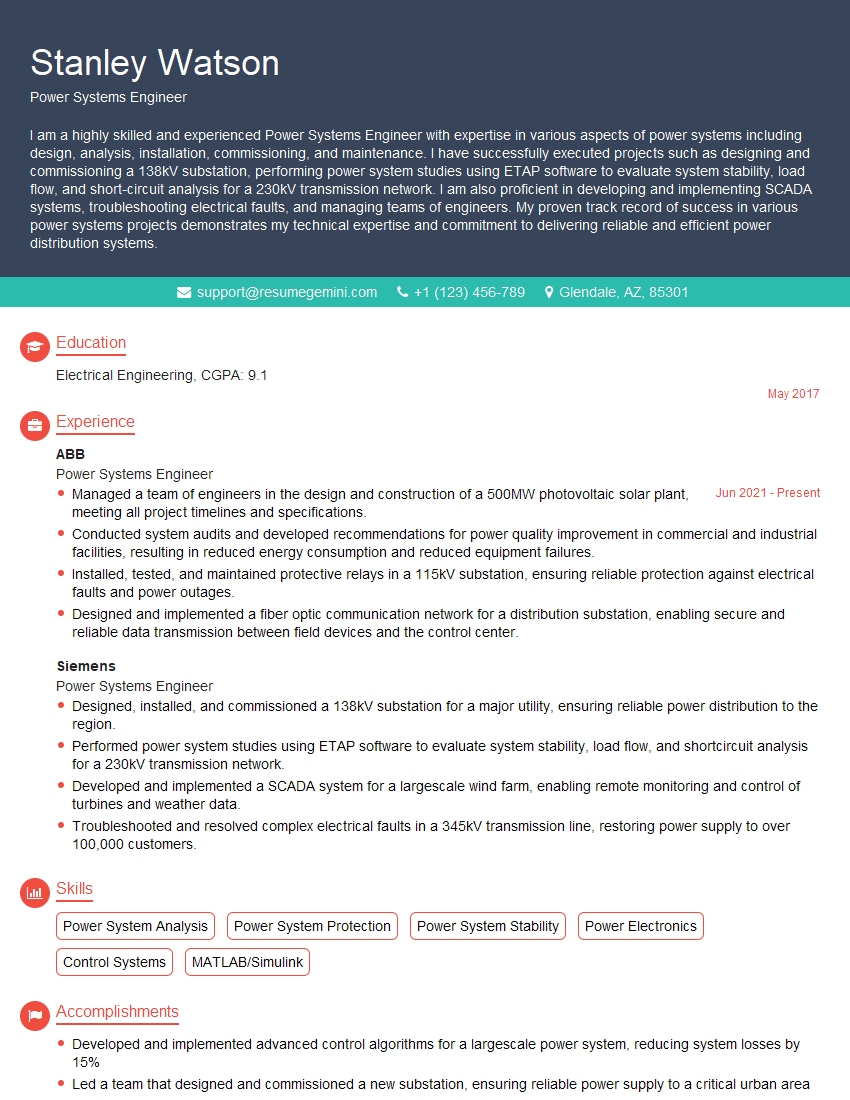
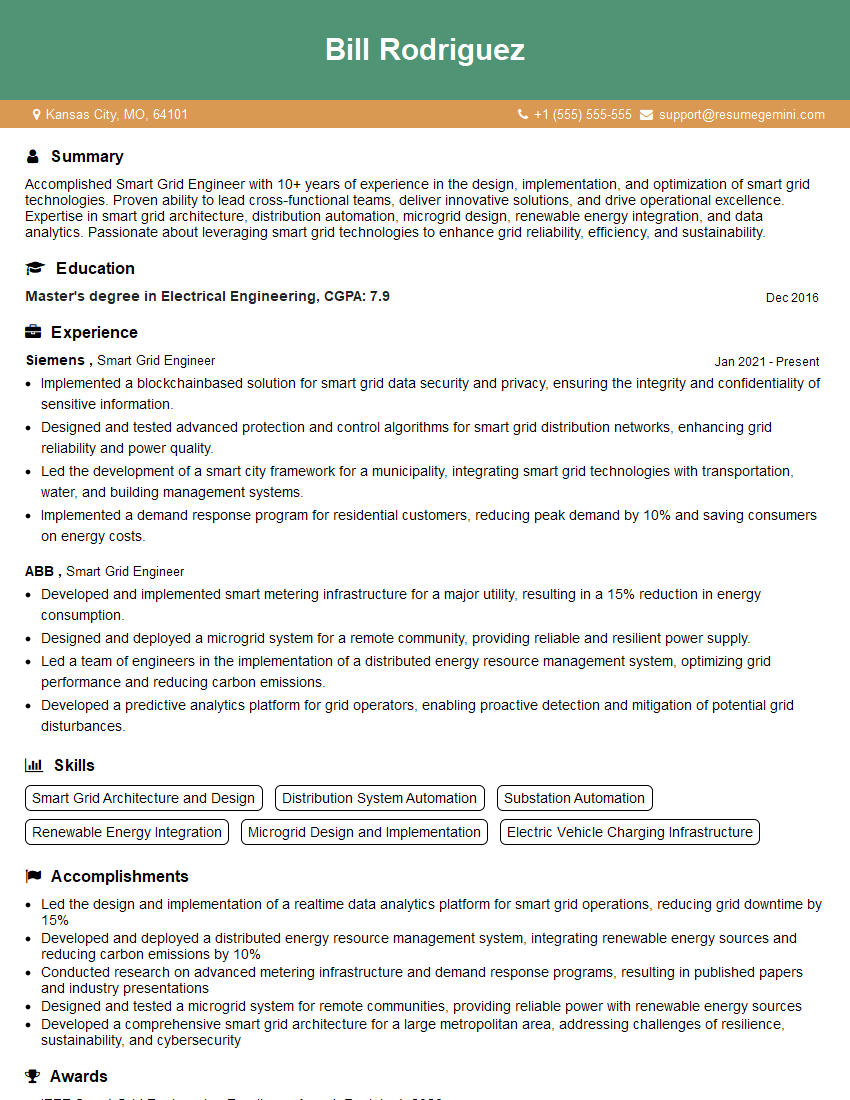
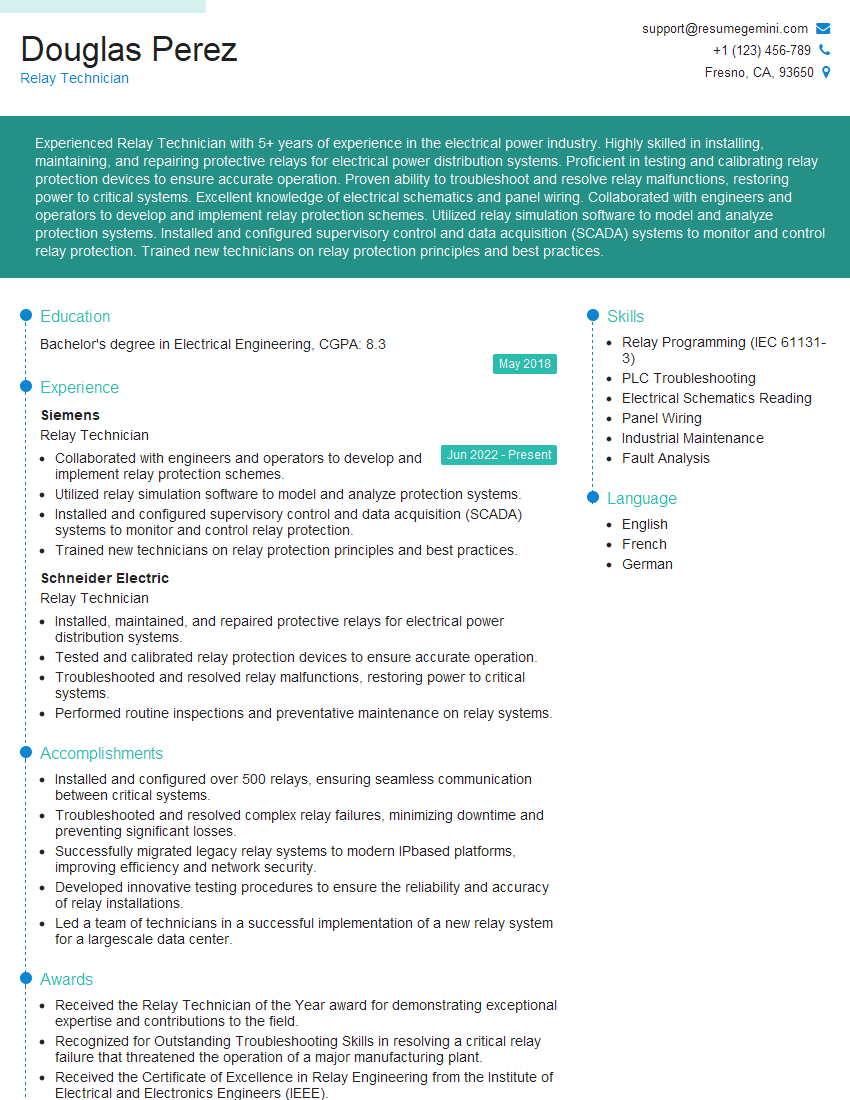
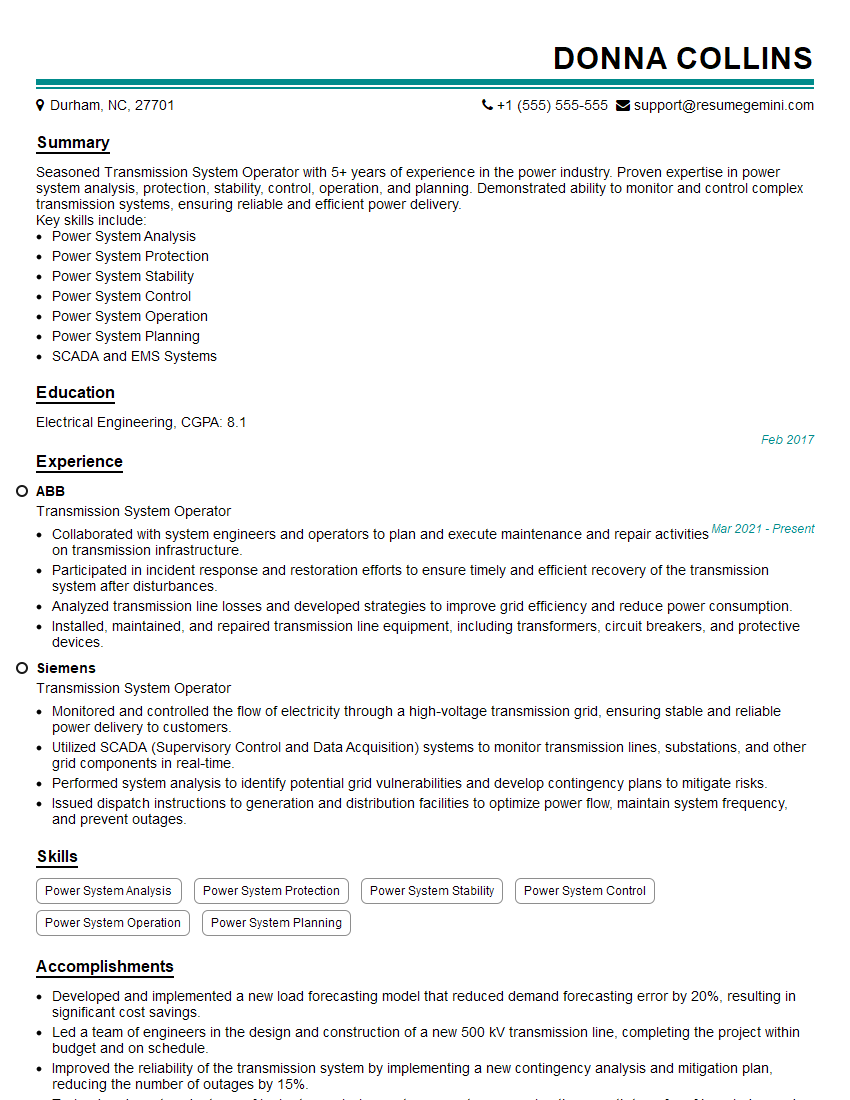
Mastering Transmission System Monitoring opens doors to exciting career opportunities in power system operation, control, and planning. It’s a highly sought-after skillset that demonstrates a strong understanding of complex power systems. To maximize your job prospects, create a compelling and ATS-friendly resume that highlights your key skills and experiences. We highly recommend using ResumeGemini to build a professional and impactful resume tailored to the Transmission System Monitoring field. Examples of resumes optimized for this sector are available to help you get started.



Explore more articles
Users Rating of Our Blogs
Share Your Experience
We value your feedback! Please rate our content and share your thoughts (optional).
What Readers Say About Our Blog
To the interviewgemini.com Webmaster.
Very helpful and content specific questions to help prepare me for my interview!
Thank you
To the interviewgemini.com Webmaster.
This was kind of a unique content I found around the specialized skills. Very helpful questions and good detailed answers.
Very Helpful blog, thank you Interviewgemini team.