Interviews are more than just a Q&A session—they’re a chance to prove your worth. This blog dives into essential Transnasal Endoscopy interview questions and expert tips to help you align your answers with what hiring managers are looking for. Start preparing to shine!
Questions Asked in Transnasal Endoscopy Interview
Q 1. Describe the indications for transnasal endoscopy.
Transnasal endoscopy is primarily indicated for diagnosing and treating conditions affecting the nasal cavity and paranasal sinuses. Think of it as a minimally invasive ‘window’ into these areas. It allows us to visualize and access structures otherwise difficult to reach.
- Sinusitis: Chronic or recurrent sinusitis, where inflammation and infection block the sinus openings, is a major indication. Endoscopy helps identify the source of the blockage and guide treatment.
- Nasal Polyps: These benign growths can obstruct breathing and drainage. Endoscopy allows for precise removal, minimizing damage to surrounding tissue.
- Septal Deviations: A deviated septum, a crooked nasal wall, can restrict airflow. Endoscopy allows visualization and potential correction of the deviation.
- Nasal Tumors: Suspicious lesions within the nasal cavity or sinuses are examined endoscopically to guide biopsies or surgical planning.
- Foreign Body Removal: Small objects lodged in the nose can be identified and removed endoscopically, especially in children.
- CSF Leaks: Endoscopy plays a vital role in identifying and repairing cerebrospinal fluid (CSF) leaks, a potentially serious complication after head trauma or surgery.
In essence, any condition causing nasal obstruction, persistent sinus infections, or suspected pathology within the nasal and sinus cavities can be evaluated and often treated with transnasal endoscopy.
Q 2. What are the contraindications for transnasal endoscopy?
While transnasal endoscopy is generally safe, certain conditions contraindicate the procedure. These are primarily situations where the risks outweigh the potential benefits.
- Severe Coagulopathy: Patients with bleeding disorders are at significantly higher risk for uncontrolled bleeding during the procedure. Careful assessment of clotting factors is crucial.
- Active Severe Infection: The presence of an acute, serious infection in the nasal passages might worsen with instrumentation.
- Uncontrolled Hypertension: Elevated blood pressure increases the risk of bleeding and complications.
- Recent Stroke or Transient Ischemic Attack (TIA): Patients with recent cerebrovascular events are at increased risk of complications.
- Patient Refusal: Ultimately, informed consent is paramount. A patient’s refusal to undergo the procedure must be respected.
A thorough pre-operative evaluation is essential to identify and manage any potential contraindications. For instance, a patient with mild hypertension might be cleared after medication adjustment, but severe, uncontrolled hypertension would necessitate postponement of the procedure.
Q 3. Explain the different types of endoscopes used in transnasal procedures.
The choice of endoscope depends on the specific procedure and the surgeon’s preference. Generally, rigid and flexible endoscopes are used, each with its own advantages and disadvantages. Imagine them as specialized cameras allowing us to explore the nasal cavity.
- Rigid Endoscopes: These offer superior image quality and allow for surgical maneuvers through working channels. They are the standard for endoscopic sinus surgery (ESS), providing excellent visualization and facilitating instrument placement during the procedure. Different diameters (e.g., 0°, 30°, 70°) are available depending on the surgical approach.
- Flexible Endoscopes: These are more maneuverable and allow for navigation around difficult anatomical areas. They are useful for diagnostic procedures and less invasive therapeutic interventions. The image quality may be slightly less sharp compared to rigid endoscopes.
The use of endoscopes with integrated cameras and high-definition screens allows real-time visualization of the surgical field, enhancing precision and minimizing trauma.
Q 4. Detail the steps involved in performing a transnasal endoscopic sinus surgery.
Transnasal endoscopic sinus surgery (FESS) is a minimally invasive procedure. The steps involve careful planning, precise instrumentation, and meticulous technique to achieve the best possible outcome while minimizing complications.
- Preparation: The patient is anesthetized and positioned appropriately. Topical vasoconstrictors might be used to minimize bleeding.
- Endoscope Insertion: The selected endoscope is carefully inserted into the nasal cavity.
- Visualization and Identification: The surgeon uses the endoscope to visualize the anatomy of the nasal passages and sinuses, identifying areas of inflammation, obstruction, or pathology.
- Surgical Maneuvers: Using specialized instruments passed through the endoscope’s working channels, the surgeon removes diseased tissue, polyps, or other obstructions. This may involve techniques such as microdebrider use or careful dissection.
- Hemostasis: Bleeding is controlled throughout the procedure using various techniques (described in the next answer).
- Wound Debridement: Any remaining debris or inflammatory tissue is removed.
- Irrigation: The surgical site is thoroughly irrigated with saline solution.
- Closure: In most cases, no sutures are required, although a small nasal pack might be placed temporarily for hemostasis.
The entire procedure is guided by real-time visualization through the endoscope, enabling a precise and controlled approach.
Q 5. How do you manage bleeding during a transnasal endoscopic procedure?
Bleeding is a potential complication of any nasal surgery. Effective hemostasis is crucial during FESS to ensure a safe and successful procedure. A multi-pronged approach is employed to manage bleeding.
- Topical Vasoconstriction: Before the procedure, topical vasoconstrictors like cocaine or phenylephrine are applied to shrink blood vessels and reduce bleeding.
- Electrocautery: A small electric current is used to cauterize bleeding vessels. This is a very precise method for controlling bleeding from small vessels.
- Surgical Technique: Gentle dissection techniques and meticulous hemostasis throughout the procedure are vital. Avoidance of unnecessary trauma minimizes bleeding.
- Packing: In cases of significant bleeding, absorbable nasal packing can be used to apply pressure and control bleeding. This is typically a temporary measure.
- Suture Ligature: For larger bleeding vessels, direct suture ligature can be used.
The management of bleeding is a dynamic process. The surgeon assesses the source and severity of bleeding and chooses the most appropriate technique accordingly. Persistent bleeding, however, might necessitate more extensive intervention or even postponement of the procedure.
Q 6. What are the potential complications of transnasal endoscopy?
While generally safe, transnasal endoscopy and FESS can have potential complications, although these are relatively infrequent with experienced surgeons.
- Bleeding: As discussed, bleeding is a common risk, ranging from minor oozing to significant hemorrhage.
- Infection: Post-operative infection is a possibility. Prophylactic antibiotics are often administered.
- Orbital Complications: Damage to the eye or optic nerve is rare but a serious risk, requiring careful surgical technique to avoid.
- CSF Leak: Accidental penetration of the skull base can lead to a cerebrospinal fluid (CSF) leak, a potentially life-threatening complication.
- Sinus Obstruction: In some cases, inadequate surgical debridement or scarring can lead to recurrent sinus obstruction.
- Damage to Cranial Nerves: Injury to cranial nerves is a rare but serious complication requiring specialized management.
Pre-operative planning, meticulous surgical technique, and post-operative care are vital to minimizing these risks.
Q 7. How do you diagnose and manage CSF leaks post-transnasal endoscopy?
Diagnosis and management of CSF leaks after transnasal endoscopy are crucial due to the potential for serious complications like meningitis. The diagnosis involves a combination of clinical findings and imaging.
- Clinical Examination: The presence of clear rhinorrhea (leakage from the nose) is suggestive of a CSF leak. The fluid can be tested for glucose and β2-transferrin to confirm the presence of CSF.
- Imaging: CT scans or MRI scans can help identify the location of the leak and assess for associated complications such as pneumocephalus (air in the cranial cavity).
Management: Management of CSF leaks usually involves conservative measures initially, such as bed rest and head elevation to reduce intracranial pressure. However, if conservative management fails, surgical repair is necessary. This often involves endoscopically identifying the leak point and repairing it using various techniques like tissue grafts or fibrin sealant.
Post-operative monitoring for signs of meningitis, such as fever, headache, and nuchal rigidity, is crucial. Early diagnosis and treatment are vital in managing CSF leaks and preventing life-threatening complications.
Q 8. Describe your experience with image-guided navigation in transnasal surgery.
Image-guided navigation in transnasal surgery significantly enhances precision and safety. It involves using pre-operative imaging, such as CT scans, to create a 3D model of the patient’s anatomy. This model is then integrated with a navigation system, usually involving a camera and tracking device attached to the endoscope. During surgery, the system overlays the real-time endoscopic view with the 3D model, showing the surgeon the exact location of their instruments relative to critical structures like the skull base, optic nerves, and carotid arteries. This minimizes the risk of iatrogenic injury. For example, in a case of a complex sphenoid sinus surgery, image guidance allows precise removal of diseased tissue while avoiding damage to the internal carotid artery, a major blood vessel located very close to the surgical field. My experience has shown a marked reduction in complications and improved surgical outcomes with the use of image-guided navigation, particularly in challenging cases.
Q 9. What are the advantages and disadvantages of transnasal versus external approaches to sinus surgery?
The choice between transnasal and external approaches to sinus surgery depends on the specific pathology and patient factors. Transnasal endoscopy, performed through the nose, offers several advantages: it’s minimally invasive, leading to less pain, shorter recovery times, and reduced scarring. It avoids external incisions, minimizing the risk of infection and cosmetic concerns. However, the transnasal approach can be technically challenging, particularly in cases of severe anatomical distortion or complex pathologies. External approaches, in contrast, provide a more direct view and potentially easier access to certain areas, but are associated with greater pain, longer recovery, and visible scarring. They may be preferred when extensive resection is necessary or the transnasal approach is deemed infeasible. The decision is always individualized and is made after careful consideration of the patient’s anatomy, the extent of disease, and the surgeon’s expertise.
Q 10. Explain your familiarity with different surgical instruments used in transnasal endoscopy.
My familiarity with transnasal endoscopic instruments is extensive. The core instruments include various endoscopes (0°, 30°, 70°), providing different angles of view. We utilize a range of micro-forceps, scissors, and curettes for tissue dissection and removal. Suction devices are crucial for maintaining a clear field of view. Specialized instruments, such as powered shavers or drills, are sometimes used for more extensive procedures. The choice of instrument is tailored to the specific procedure and the surgeon’s preference. I’m also proficient with image-guided navigation systems and related instrumentation as mentioned earlier. Proper instrument handling and maintenance are paramount to ensuring patient safety and surgical precision.
Q 11. How do you handle unexpected findings during a transnasal endoscopic procedure?
Unexpected findings during transnasal endoscopic procedures are not uncommon. The management strategy depends on the nature of the finding. For instance, if an unexpected cerebrospinal fluid (CSF) leak is encountered, the procedure is immediately stopped to assess the extent of the leak, and meticulous repair is performed. Similarly, if a significant vascular structure is unexpectedly exposed, the bleeding is controlled using various techniques (cautery, packing, etc.), and the surgical plan may be adapted. In cases of extensive inflammation or unexpected pathology, the procedure might be paused to re-evaluate the findings, possibly involving intraoperative imaging or consultation with colleagues. Documentation of unexpected findings and their management is meticulously recorded in the patient’s medical record. My approach emphasizes patient safety and adaptability. Thorough preoperative planning, including reviewing imaging studies carefully, can help minimize, but not eliminate, unexpected findings.
Q 12. Describe your experience with various types of nasal packing.
Various types of nasal packing are employed post-transnasal endoscopic surgery, depending on the extent of the procedure and the surgeon’s preference. These include traditional gauze packing, which is gradually removed over several days. Merocel, a type of absorbable sponge, offers gentler removal and can reduce patient discomfort. Balloon catheters provide controlled pressure and can help prevent bleeding and promote hemostasis. The choice of packing material is crucial in achieving optimal hemostasis, preventing complications, and providing patient comfort. The type of packing used is carefully documented, and patients are given clear instructions on expected post-operative drainage and potential complications. In certain cases, no packing may be necessary at all.
Q 13. What are the postoperative care instructions for patients undergoing transnasal endoscopy?
Postoperative care instructions after transnasal endoscopy are crucial for optimal recovery. Patients are typically advised to avoid strenuous activity and heavy lifting for a period of time, typically a few weeks. They are instructed on proper nasal hygiene and the use of saline nasal sprays to keep the nasal passages clean and moist. Pain medication is prescribed as needed. Patients are also informed about potential complications such as bleeding, infection, or CSF leak, and are advised to contact their doctor if they experience any concerning symptoms. Clear and concise instructions, both written and verbal, are provided to ensure the patient understands the care plan and can monitor their recovery effectively. A follow-up appointment is scheduled to assess healing progress and address any concerns.
Q 14. How do you assess the efficacy of transnasal endoscopic procedures?
Assessing the efficacy of transnasal endoscopic procedures involves a multi-faceted approach. Immediate post-operative assessment focuses on the absence of complications (e.g., bleeding, infection). Long-term assessment considers symptom improvement: reduction in nasal obstruction, improved sense of smell, and resolution of sinus infections. Objective measures such as endoscopic evaluation, imaging studies (CT scans), and validated questionnaires (e.g., Sino-Nasal Outcome Test-22, SNOT-22) help quantify the improvement. For example, comparing pre-operative and post-operative SNOT-22 scores provides a quantitative measure of symptom improvement. Success is defined by a combination of objective findings and patient-reported outcomes, ensuring a holistic evaluation of the procedure’s effectiveness.
Q 15. What are your preferred methods for pain management in transnasal endoscopic surgery?
Pain management in transnasal endoscopic surgery is crucial for patient comfort and a successful procedure. My approach is multimodal and tailored to the individual patient. It typically involves a combination of strategies.
- Topical Anesthesia: Before the procedure, we use a topical anesthetic spray or gel, such as lidocaine and phenylephrine, to numb the nasal passages. This significantly reduces discomfort during the insertion of the endoscope and instruments.
- Local Anesthesia: Once the endoscope is in place, we often inject a local anesthetic, usually lidocaine with or without epinephrine, directly into the surgical site. This provides deeper and more effective pain relief.
- Sedation: Depending on the complexity of the surgery and the patient’s anxiety level, we may administer intravenous sedation to help them relax and minimize discomfort. This allows for a more comfortable experience without compromising the surgeon’s ability to work.
- Postoperative Analgesia: Following the procedure, we prescribe appropriate analgesics, such as NSAIDs or opioids, to manage any residual pain. The type and dosage are chosen based on the extent of the surgery and the patient’s overall health.
For example, in a patient undergoing a functional endoscopic sinus surgery (FESS), the combination of topical and local anesthesia often suffices. However, for more extensive procedures like skull base surgery, intravenous sedation might be necessary for both patient comfort and surgical precision.
Career Expert Tips:
- Ace those interviews! Prepare effectively by reviewing the Top 50 Most Common Interview Questions on ResumeGemini.
- Navigate your job search with confidence! Explore a wide range of Career Tips on ResumeGemini. Learn about common challenges and recommendations to overcome them.
- Craft the perfect resume! Master the Art of Resume Writing with ResumeGemini’s guide. Showcase your unique qualifications and achievements effectively.
- Don’t miss out on holiday savings! Build your dream resume with ResumeGemini’s ATS optimized templates.
Q 16. Describe your experience with minimally invasive transnasal surgical techniques.
My extensive experience with minimally invasive transnasal surgical techniques has led me to appreciate their significant advantages over traditional open approaches. These techniques allow for smaller incisions, reduced trauma to surrounding tissues, shorter hospital stays, faster recovery times, and improved cosmetic outcomes.
I routinely perform a wide array of minimally invasive transnasal procedures, including functional endoscopic sinus surgery (FESS), transnasal pituitary surgery, and repair of skull base defects. The use of advanced endoscopic instrumentation, including smaller diameter endoscopes and specialized micro-instruments, has enabled me to consistently achieve excellent surgical outcomes with minimal invasiveness.
For instance, in a recent case of a patient with a pituitary adenoma, I successfully removed the tumor via a minimally invasive transnasal approach. The patient experienced significantly less postoperative pain and discomfort, and his recovery was remarkably quick, allowing him to return to his normal activities within a few weeks.
Q 17. What are the key differences between transnasal and transoral endoscopy?
Transnasal and transoral endoscopy both utilize endoscopes to visualize and access the relevant anatomy, but they differ significantly in their access points and surgical applications.
- Access Point: Transnasal endoscopy utilizes the nasal passages as the access route, while transoral endoscopy accesses the surgical area through the mouth.
- Surgical Applications: Transnasal endoscopy is primarily used for procedures involving the paranasal sinuses, skull base, and anterior cranial fossa. Transoral endoscopy is more commonly used for procedures of the pharynx, larynx, and upper aerodigestive tract.
- Anatomical Considerations: The anatomy traversed differs significantly. Transnasal approaches require navigating the complex nasal turbinates and bony structures of the sinuses and skull base. Transoral approaches necessitate navigating the oral cavity, pharynx, and potentially the larynx.
- Surgical Complexity: Often, transnasal approaches to areas such as the skull base are technically more demanding than their transoral counterparts.
In essence, the choice between transnasal and transoral endoscopy hinges on the specific location and nature of the surgical target.
Q 18. How do you prevent complications like orbital injury or brain injury during transnasal endoscopy?
Preventing complications like orbital injury or brain injury during transnasal endoscopy is paramount. It requires meticulous surgical planning, precise technique, and a thorough understanding of the relevant anatomy.
- Preoperative Imaging: Detailed imaging studies, such as CT scans and MRI scans, are essential to accurately identify anatomical landmarks and potential variations. This helps in planning the surgical approach and anticipating any potential challenges.
- Careful Dissection: During surgery, meticulous dissection techniques are employed, using instruments such as micro-forceps and micro-scissors to carefully separate tissues and avoid inadvertent injury to vital structures. Constant visualization with the endoscope is key.
- Anatomical Awareness: A deep understanding of the intricate anatomy of the nasal cavity, paranasal sinuses, and surrounding structures is crucial. Knowing the location of the optic nerve, carotid artery, and other critical structures is fundamental to preventing injury.
- Surgical Navigation: In complex cases, image-guided navigation systems can assist in precisely locating anatomical structures and guiding instrument placement, further minimizing the risk of complications.
- Intraoperative Monitoring: Depending on the location and complexity of the surgery, intraoperative monitoring, such as neuromonitoring, may be utilized to detect any potential injury to critical structures in real-time.
For example, during a transnasal approach to a pituitary adenoma, maintaining awareness of the optic nerves’ proximity to the surgical field is critical to avoid visual impairment.
Q 19. Describe your experience with the use of powered instruments during transnasal surgery.
Powered instruments have revolutionized transnasal surgery, enhancing precision, efficiency, and minimizing tissue trauma. I have extensive experience with a range of powered instruments, including drills, shavers, and lasers.
- High-Speed Drills: These are invaluable for precise bone removal in procedures such as FESS, allowing for controlled and efficient opening of sinus ostia and removal of bony septa.
- Shavers: These instruments are used for the removal of diseased tissue, such as polyps or inflammatory mucosa. The ability to precisely remove tissue while minimizing damage to surrounding healthy structures is a significant advantage.
- Lasers: Lasers offer precise tissue ablation with minimal collateral damage. This is particularly useful in delicate areas such as the skull base, enabling precise removal of lesions while preserving adjacent neural structures.
The use of these powered instruments necessitates a high level of skill and experience. Proper training and careful attention to technique are critical to avoid unintended injury to healthy tissues and critical structures. For instance, when using a drill near the skull base, meticulous care must be taken to avoid perforating the dura mater.
Q 20. Explain your understanding of endoscopic anatomy relevant to transnasal approaches.
A thorough understanding of endoscopic anatomy is fundamental to successful transnasal surgery. This encompasses the nasal cavity, paranasal sinuses, skull base, and their relationship to adjacent structures like the orbits and brain.
Key anatomical landmarks include the nasal septum, turbinates (superior, middle, and inferior), ethmoid sinuses (anterior, middle, and posterior), sphenoid sinus, maxillary sinus, frontal sinus, cribriform plate, and the relationship of these structures to the optic nerves, carotid arteries, and cranial nerves. The variations in these structures are substantial between individuals, highlighting the importance of detailed preoperative imaging and intraoperative adaptability.
A working knowledge of the surgical corridors, including the natural pathways and potential access routes, is also vital. Understanding the relationship of blood vessels and nerves to bony landmarks is crucial for safe and effective surgery.
Q 21. How do you manage patients with difficult anatomy during transnasal endoscopic procedures?
Managing patients with difficult anatomy during transnasal endoscopic procedures necessitates flexibility, adaptability, and advanced surgical skills. The strategies I employ include:
- Preoperative Planning: Careful review of preoperative imaging, often including 3D reconstructions, is critical for identifying anatomical variations and planning the optimal surgical approach. This might include adapting the surgical strategy based on findings such as septal deviation, concha bullosa, or other anatomical anomalies.
- Intraoperative Adjustments: During the procedure, I’m prepared to adjust my approach based on the intraoperative findings. This might involve using different instruments or accessing the target area through an alternative route.
- Advanced Endoscopic Techniques: My proficiency in advanced endoscopic techniques, including the use of specialized instruments and navigation systems, allows me to overcome anatomical challenges and reach the target area safely and effectively.
- Surgical Modifications: In some cases, modifications to the standard surgical approach might be necessary. This could involve creating additional access points or using different surgical techniques to address the specific anatomical variation.
For example, a patient with a severely deviated nasal septum might require a septoplasty before proceeding with a FESS to facilitate appropriate access and visualization of the sinuses. Such flexibility is crucial for success in these cases.
Q 22. What are your strategies for minimizing postoperative discomfort and recovery time?
Minimizing postoperative discomfort and recovery time after transnasal endoscopy is crucial for patient satisfaction and faster return to normal activities. My strategy is multi-pronged and begins even before the procedure.
- Preoperative optimization: This includes addressing any underlying nasal conditions like allergies or sinusitis that could prolong recovery. We may prescribe nasal corticosteroids or saline washes prior to surgery.
- Gentle surgical technique: During the procedure, I meticulously minimize tissue trauma, using smaller instruments where appropriate and employing precise maneuvers to reduce bleeding and swelling. This is particularly important given the delicate nature of the nasal passages.
- Pain management: Postoperatively, I utilize a multimodal approach to pain control. This might involve topical nasal sprays, oral analgesics tailored to the patient’s needs, and in some cases, local anesthetic injections during the procedure itself. We often avoid narcotics whenever possible to minimize side effects.
- Early mobilization and education: Patients are encouraged to gently blow their nose (with instruction) and use saline nasal rinses to keep the nasal passages clean and prevent crusting. Detailed postoperative instructions are provided to reduce anxiety and promote adherence to the recovery plan.
- Close follow-up: Regular post-operative appointments allow for monitoring progress, addressing concerns, and making any necessary adjustments to the pain management strategy. A prompt response to any complications can shorten the recovery period.
For example, a patient with pre-existing allergies might receive a pre-operative course of antihistamines and nasal corticosteroids. This helps reduce inflammation and promotes faster healing, leading to less postoperative discomfort.
Q 23. How do you counsel patients about the risks and benefits of transnasal endoscopy?
Counseling patients about transnasal endoscopy involves a careful balance of informing them about the potential benefits and risks in a way that’s easy to understand and doesn’t induce undue anxiety. I start by explaining the procedure in simple terms, using analogies where helpful. For instance, I might describe the endoscope as a tiny camera that allows me to see inside the nasal passages and sinuses.
Benefits are explained clearly, focusing on how the procedure can address specific symptoms like nasal congestion, sinus infections, or nasal polyps. I always emphasize the potential for improved breathing, reduced headaches, and an enhanced quality of life.
Risks are addressed openly and honestly. This includes the potential for bleeding, infection, damage to surrounding structures (although rare with experienced surgeons), and temporary changes in smell or taste. I explain the probability of these complications and the steps taken to minimize them. For instance, I might say something like, ‘While there’s always a slight risk of infection, we take many precautions, including sterile techniques and antibiotic prophylaxis when necessary, to minimize this risk.’
The conversation is tailored to the patient’s individual circumstances and level of understanding, ensuring they feel comfortable asking questions and expressing any concerns.
Q 24. Describe your approach to informed consent for transnasal endoscopic procedures.
Informed consent for transnasal endoscopic procedures is a critical aspect of ethical and legal practice. My approach is to make sure that the patient completely understands the procedure and gives their consent willingly, without coercion. It’s a process, not just a form.
- Detailed explanation: I begin by explaining the procedure in clear, simple language, avoiding medical jargon as much as possible. I use diagrams or models to visually illustrate the anatomy involved and the steps of the procedure.
- Discussion of benefits and risks: I thoroughly discuss the potential benefits of the procedure, as well as the risks, however small. This includes potential complications, recovery time, and alternative treatment options.
- Answering questions: I encourage patients to ask questions, and I answer them thoroughly and patiently. This ensures they feel comfortable and have all the information they need to make an informed decision.
- Documenting consent: Once the patient has all the necessary information and understands the risks and benefits, I obtain their written consent. The consent form clearly outlines the procedure, the risks, the benefits, and the alternative treatment options. This ensures a clear record that the patient provided informed consent.
I always emphasize that the patient has the right to refuse the procedure at any time, even after signing the consent form. The goal is not just to obtain a signature, but to ensure the patient’s understanding and voluntary agreement.
Q 25. Explain your experience with different types of endoscopic imaging techniques.
My experience encompasses a range of endoscopic imaging techniques, each offering unique advantages depending on the clinical scenario. The most commonly used is standard white-light endoscopy, providing excellent visualization of the nasal cavity and paranasal sinuses.
- White-light endoscopy: This remains the cornerstone of transnasal endoscopy, allowing for detailed visualization of anatomical structures and pathology. I regularly use this technique to assess the nasal cavity, identify polyps, tumors, and inflammation, and to guide surgical maneuvers.
- Narrow-band imaging (NBI): NBI enhances the visualization of mucosal vasculature, which can be particularly helpful in identifying early neoplastic changes or subtle inflammatory patterns. It aids in distinguishing benign from malignant lesions.
- Fluorescence endoscopy: Using certain fluorescent dyes, this technique can highlight areas of abnormal tissue, such as areas of infection or dysplasia. This is a developing area with exciting potential.
I am always keen to incorporate the most advanced and appropriate imaging modality to improve the accuracy and efficacy of my assessment and surgical planning. Choosing the right technique depends on the suspected pathology and the clinical question being addressed.
Q 26. How do you utilize endoscopic findings to guide treatment decisions?
Endoscopic findings are absolutely paramount in guiding treatment decisions in transnasal endoscopy. The information gleaned from the endoscopic examination dictates the surgical approach, the extent of the procedure, and even whether surgery is indicated at all. For instance:
- Identification of pathology: Endoscopy allows for the precise identification of the location, size, and nature of the pathology. This dictates the surgical strategy. A small, localized polyp might be removed with minimally invasive techniques, while a large, complex tumor may require a more extensive surgical approach.
- Assessment of disease severity: The extent of inflammation, the presence of structural abnormalities, and the degree of sinus involvement all inform the treatment strategy. A mild sinusitis might be managed medically, while a severe case may necessitate surgical intervention.
- Surgical planning: The intraoperative endoscopic view guides the surgical maneuvers in real-time. I can assess the extent of disease, plan the appropriate surgical resection, and identify potential complications during the procedure itself.
- Post-operative monitoring: Post-operative endoscopy is critical to assess the success of the surgery, identify any residual disease, and address any complications.
In essence, endoscopic findings provide a comprehensive, real-time map that guides every decision throughout the entire process, from diagnosis to post-operative care.
Q 27. Describe your experience with revision transnasal endoscopic procedures.
Revision transnasal endoscopic procedures are often more challenging than initial procedures, requiring advanced surgical skills and careful planning. They typically involve addressing complications from prior surgeries or dealing with recurrent disease. My approach emphasizes meticulous preoperative planning, advanced surgical techniques, and a cautious approach to avoid further complications.
- Careful preoperative assessment: A thorough review of the patient’s medical history, prior surgical reports, and imaging studies (CT scans, MRI) is crucial to understand the anatomy, the nature of the previous surgery, and the cause of the revision surgery. This informs the planning for the revision procedure.
- Advanced surgical techniques: Revision procedures often require more complex surgical maneuvers, like using specialized instruments, addressing scar tissue, and managing potential adhesions. A deep understanding of the anatomical variations is crucial.
- Image-guided surgery: Navigation systems or intraoperative imaging can be invaluable in guiding the dissection through scarred or distorted tissue.
- Patient communication: Clear communication with the patient about the complexities of revision surgery, the potential risks, and the expected outcome is crucial. Realistic expectations are set to avoid disappointment.
For example, a revision surgery might involve removing scar tissue that is obstructing airflow, re-establishing sinus drainage, or addressing recurrent polyps. Each case requires a tailored approach based on the individual circumstances and prior surgical history.
Q 28. How do you stay updated on the latest advancements in transnasal endoscopic techniques?
Staying updated in the rapidly evolving field of transnasal endoscopy is a continuous process requiring a multi-faceted approach. It’s critical for providing the best possible care to my patients.
- Participation in professional organizations: Active membership in organizations like the American Rhinologic Society and the American Academy of Otolaryngology provides access to conferences, publications, and networking opportunities with leading experts.
- Continuing medical education (CME): Regular participation in CME courses and workshops keeps me abreast of the latest techniques, technologies, and treatment modalities. This includes both in-person and online courses.
- Review of peer-reviewed literature: I consistently review leading journals in otolaryngology and related fields to stay informed about the latest research findings and clinical trials.
- Collaboration and mentorship: Collaboration with colleagues and seeking mentorship from experienced surgeons provides valuable insights and opportunities for learning and sharing best practices.
- Observation of surgical procedures: Whenever possible, I observe experienced surgeons performing transnasal endoscopic procedures to learn new techniques and refine my skills.
For instance, I recently attended a workshop on the use of image-guided surgery in revision transnasal endoscopy, which has significantly enhanced my ability to perform complex revision procedures safely and effectively.
Key Topics to Learn for Transnasal Endoscopy Interview
- Anatomy and Physiology of the Nasal Cavity and Paranasal Sinuses: Thorough understanding of relevant anatomical structures and their physiological functions is crucial for safe and effective procedure performance.
- Instrumentation and Equipment: Familiarize yourself with various endoscopes, light sources, and ancillary equipment used in transnasal endoscopy, including their functionalities and limitations.
- Surgical Techniques and Approaches: Master the different techniques used in transnasal endoscopic procedures, including diagnostic and therapeutic approaches. Focus on understanding the rationale behind each technique.
- Indications and Contraindications: Clearly define the medical conditions where transnasal endoscopy is indicated and the situations where it’s contraindicated. Understand the decision-making process involved.
- Complications and Management: Be prepared to discuss potential complications associated with transnasal endoscopy and the strategies for their prevention and management. This demonstrates a proactive and safety-conscious approach.
- Image Interpretation and Diagnosis: Develop your ability to interpret endoscopic images accurately, recognizing normal and abnormal findings and correlating them with clinical presentations.
- Post-operative Care and Patient Management: Understand the post-procedure care protocols and how to manage potential complications or patient concerns.
- Ethical Considerations and Informed Consent: Discuss the ethical implications of transnasal endoscopy and the importance of obtaining informed consent from patients.
Next Steps
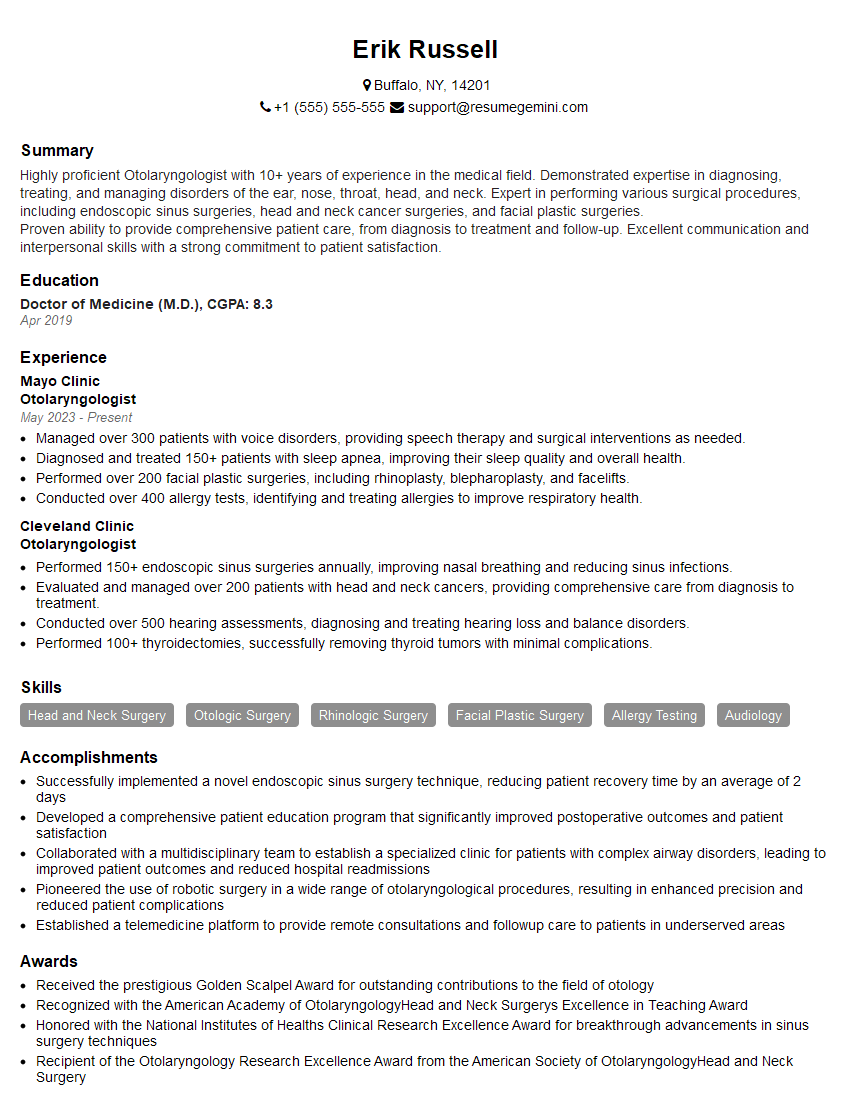
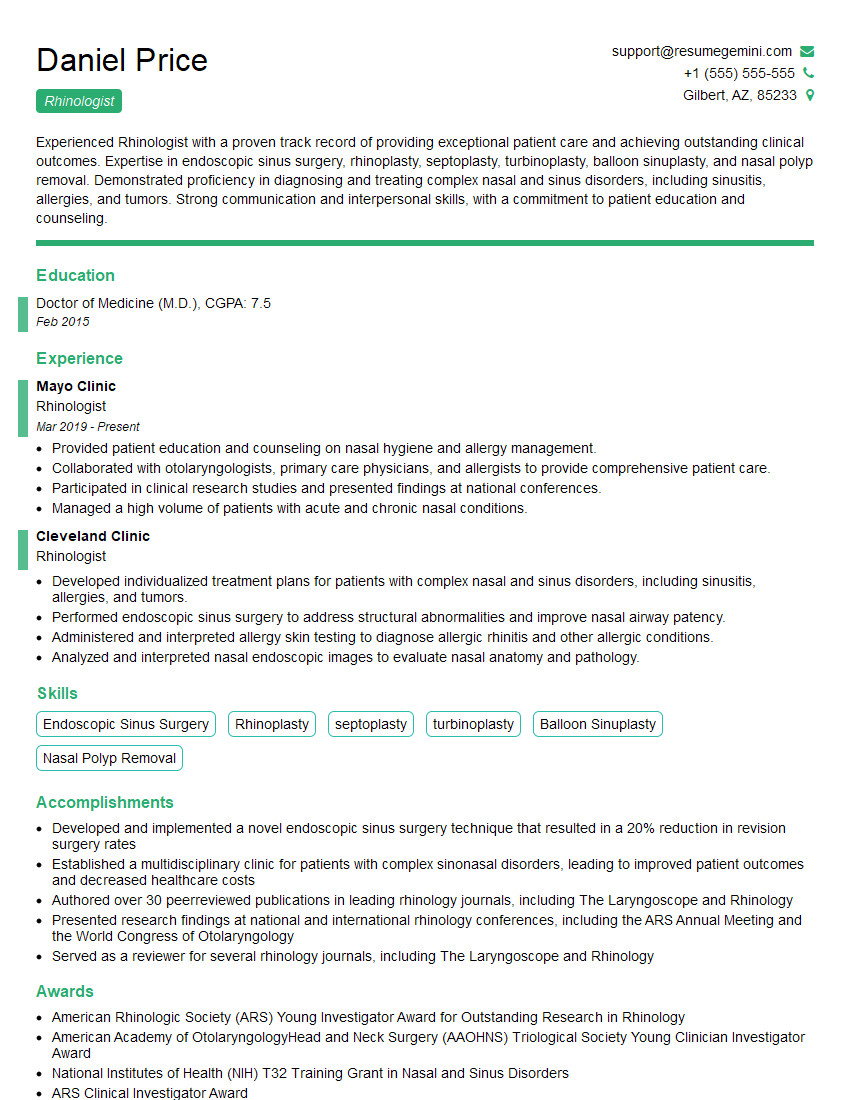
Mastering transnasal endoscopy opens doors to exciting career opportunities and allows you to contribute significantly to patient care. To enhance your job prospects, creating a compelling and ATS-friendly resume is essential. ResumeGemini is a trusted resource that can help you build a professional and effective resume tailored to the specific requirements of this specialized field. Examples of resumes tailored to Transnasal Endoscopy are available, showcasing successful approaches to highlighting your skills and experience.
Explore more articles
Users Rating of Our Blogs
Share Your Experience
We value your feedback! Please rate our content and share your thoughts (optional).
What Readers Say About Our Blog
To the interviewgemini.com Webmaster.
Very helpful and content specific questions to help prepare me for my interview!
Thank you
To the interviewgemini.com Webmaster.
This was kind of a unique content I found around the specialized skills. Very helpful questions and good detailed answers.
Very Helpful blog, thank you Interviewgemini team.